America’s wildlands: Sunset at Malheur NWR, Oregon

November 8, 2013

In Oregon, a scientist’s view from a field research station at Malheur National Wildlife Refuge.

Sunset at Malheur National Wildlife Refuge Field Station, Oregon, May 2012. Great eye and photo by Amanda Holland.

Sunset at Malheur National Wildlife Refuge Field Station, Oregon, May 2012. Great eye and photo by Amanda Holland.

A photo from the actions of President Theodore Roosevelt:

Malheur National Wildlife Refuge was established on August 18, 1908 by President Theodore Roosevelt as the Lake Malheur Bird Reservation. Roosevelt set aside unclaimed lands encompassed by Malheur, Mud and Harney Lakes “as a preserve and breeding ground for native birds.” The newly established “Lake Malheur Bird Reservation” was the 19th of 51 wildlife refuges created by Roosevelt during his tenure as president. At the time, Malheur was the third refuge in Oregon and one of only six refuges west of the Mississippi [six, then].

More:

English: Harney Lake and Malheur Lake in Orego...

NASA has a different viewpoint: Harney Lake and Malheur Lake in Oregon, USA NASA NLT Landsat 7 image. Final image made using NASA World Wind. Via Wikipedia


New Mt. Rushmore coin introduced

November 7, 2013

U.S. Mint's Acting Associate Director for Manufacturing, David Croft delivers his remarks. — in Custer, SD.

U.S. Mint‘s Acting Associate Director for Manufacturing, David Croft delivers his remarks. — in Custer, SD.

Interesting view of Mt. Rushmore on the new Mt. Rushmore Quarter.

Here’s David Croft, Acting Associate Director for Manufacturing of the U.S. Mint, introducing the coin yesterday in Custer, South Dakota.

(Wow; how much history is packed in that? Too little of it in the high school texts.  Who is on Rushmore?  Who made the sculptures on Rushmore, and when?  After whom is Custer, South Dakota, named, and why?)

More:

English: Sign near Mt. Rushmore, South Dakota,...

Sign near Mt. Rushmore, South Dakota, informing travelers that the Alfred Hithcock film “North by Northwest” was partially filmed in the area (Photo credit: Wikipedia)


October 31, also the anniversary of the sinking of the Reuben James

October 31, 2013

U.S.S. Reuben James (D-245) on the Hudson River in April 1939, over two years before she was sunk in the Battle of the Atlantic.

U.S.S. Reuben James (DD-245) on the Hudson River in April 1939, over two years before she was sunk in the Battle of the Atlantic. Photo from the Ted Stone Collection, Marines Museum, Newport News, Virginia, via Wikipedia

It was a tragedy in 1941, but before the U.S. could develop a serious policy response to Germany’s action, Japan attacked Pearl Harbor.  Within a week after that, our policy towards Germany was set by Germany’s declaration of war on the U.S.

It’s important history for a couple of reasons.

  • The sinking was part of the massive, years-long Battle of the Atlantic, which the Allies won only by building ships faster than Germany could sink them.  Had the Allies lost this battle, the war would have been lost, too.
  • While the USS Reuben James was a Navy destroyer, the key weapons of the Battle of the Atlantic were Merchant Marine cargo ships, carrying goods and arms to Britain and other Allied nations.  “Civilians” played a huge role in World War II, supplying the soldiers, armies, navies and air forces.
  • Recently, politicians took to making claims that the U.S. declared war on Germany without any hostile action having passed between them, without Germany having perpetrated any hostilities toward the U.S.  Look at the dates, it’s not so.
  • Woody Guthrie wrote a song about the event, giving us a touchstone to remember.

Millard Fillmore’s Bathtub covered the event with longer, detailed articles in past years, including these, which you should see especially if you are a student in a history class or a teacher of one:

Europe has changed. The world has changed.  The U.S. has changed.  War has changed.  We should remember, especially those people who died defending the merchants who defended the idea of the Four Freedoms.

More:


No, Congress did not “overreact” to DDT

October 30, 2013

Looking for something else, I restumbled on the Constitution Club, where they continue to club the Constitution, its better principles, and especially the great nation that the document creates.

And one of those grotesquely inaccurate posts blaming liberals for everything sprang up — bedbugs, this time.  If only those liberals had let the good DDT manufacturers poison the hell out of the entire planet, the blog falsely claims, there would be no concern for bedbugs surging in hotels worldwide today, and especially not in Charlotte, North Carolina, back during the Democratic National Convention.

A meeting of a chapter of Constitution clubs? Wikipedia image

A meeting of a chapter of Constitution clubs? Wikipedia image

Looking through the archives, I now recall I dealt with most of this issue on this blog before.

The post’s author made a response I hadn’t seen.  God help me these idiots do need a trip to the intellectual woodshed.  He said “Congress overreacted on DDT, I think. It likes to do that.”

In reality, Congress did nothing at all, other than pass the law regulating pesticides, if we stick to the real history. The U.S. Environmental Protection Agency (EPA) issued the rule on DDT, which still stands today.  Over react?  Two federal courts had to twist EPA’s arm to get any action at all, and after delaying for nearly two years, EPA’s rule didn’t ban DDT except for outdoor use on crops, which by that time meant cotton in a handful of states in the U.S. — DDT has never been banned in Africa nor Asia, Persistent Organic Pollutants Treaty notwithstanding.

Oh, hell. Put it on the record.

I wrote:

Did Congress ever “react” to DDT?

EPA was tasked by the 1950s’s FIFRA to check out safety of pesticides, and did.  FIFRA had recently been amended to give EPA (USDA, before) power to ban a pesticide outright. Two federal courts found DDT eminently worthy of such an outright ban, but refrained from ordering it themselves as they saw the law to require, on the promise of EPA to conduct a thorough scientific review.  At some length, and irritation to the Eisenhower appointees to the courts, EPA got around to an administrative law hearing — several months and 9,000 pages.  In a panic, the DDT manufacturers proposed a new label for DDT before the hearings got started, calling DDT dangerous to wildlife, and saying it should be used only indoors to control health-threats.  Alas, under the law, if DDT were allowed to stay for sale over the counter, anyone could buy it and abuse it.  The hearing record clearly provided proof that DDT killed wildlife, and entire ecosystems.  But, it was useful to fight diseases, used as the proposed label suggested . . .

Administrator William Ruckelshaus took the cue the DDT manufacturers offered.  He issued a rule banning DDT from outdoor use on agricultural crops except in emergencies with a permit from EPA.  But he specifically allowed U.S. manufacturers to keep making the stuff for export to fight malaria in distant nations, and to allow DDT makers to keep making money.

“Over-reacted” on DDT?  Not Congress, and not EPA.  The rule was challenged in court, twice.  The appellate courts ruled that the scientific evidence, the mountains of it, fully justified the rule, and let it stand.  (Under U.S. law, agencies may not act on whim; if they over-react, they’ve violated the law.)

How bedbugs react to DDT today. Articulate.com

How bedbugs react to DDT today. Articulate.com

No study conducted carefully and judiciously, and passed through the gauntlet of peer review, since that time, has questioned the science conclusions of that rule in any significant way — if any study questioned the science at all (there are famous urban legends, but most of them lead back to people who didn’t even bother to do research, let alone do it well and publish it).

But so-called conservatives have faith that if Congress will just repeal the law of gravity, pigs can fly.  In the real world, things don’t work that way.

How bedbugs view DDT in the 21st century.

How bedbugs view DDT in the 21st century.

I’ve captured most of the earlier exchanges below the fold; one can never trust so-called conservatives to conserve a record of their gross errors.  They’re there for the record, and for your use and edification.

Read the rest of this entry »


The mighty pen, revisited

October 30, 2013

Before we completely forget about October 29, and events that occurred on that day of the calendar, let’s pause for a moment to remember the introduction of the ballpoint pen.  We do this because the ballpoint pen was such a symbol of modernity after World War II.  And we do this because hand writing utensils seem to be losing fashion, as does handwriting itself.

Let’s not lose all the history.  I wrote this first back in 2006, commemorating the ballpoint.

2006 was the 100th anniversary of the Mont Blanc company, the company that made fountain pens a luxury item even while fountain pens were still the state of the art of pens.

A Reynolds rocket; this is claimed to be the first version of the ballpoint pen sold, on October 29, 1945, in Gimbel's Department Store in New York City.

A Reynolds rocket; this is claimed to be the first version of the ballpoint pen sold, on October 29, 1945, in Gimbel’s Department Store in New York City.

October 29 is the 68st anniversary (according to CBS “Sunday Morning”) or 69th anniversary (see Wikipedia) of the introduction of the ballpoint pen in the U.S., at Gimbel’s Department Store, in New York City. (I go with 1945.)  It was based on a design devised in 1938 by a journalist named László Bíró. Biro produced his pen in Europe, and then in Argentina. But in the U.S., a businessman named Reynolds set up the Reynolds International Pen Company and rushed to market in the U.S. a pen based on several Biros he had purchased in Buenos Aires.

On October 29, 1945 (or 1946), you could purchase a “Reynolds Rocket” at Gimbel’s for $12.50 — about $130 today, adjusted for inflation.

1946 Reynolds Rocket ballpoint pen, from the collection of James P. Reynolds

1946 Reynolds Rocket ballpoint pen, from the collection of James P. Reynolds

Today I continue my search for a ballpoint or rollerball that will write in green, reliably, for grading.  (Turns out red marks panic a lot of kids; some write in blue, so blue won’t work, nor will black; green is a great grading color.)

I use a Waterman Phileas ballpoint, a Cross Radiance fountain pen, a Cross Radiance rollerball (Radiance was discontinued about a year ago), a full set of Cross Century writing implements, a lot of Sanford Uniballs in various colors, and a lot of Pentel Hybrid K-178 gel-rollers, and some Pilot G-2 gel pens (though the green ink versions are unreliable). I also keep several Marvy calligraphic pens for signing things with a flourish. I have a box of $0.10 ballpoints in a briefcase for students who fail to bring a writing utensil.  (Since 2006, I’ve added a Cross pencil similar to the old Radiance design, and another Cross ballpoint in black (the Waterman is blue); the most reliable green-ink pen I’ve found is a Pilot Bravo, but they are tough to find these days in any color, and green is even togher; plus, they are bold-line instruments.)

Jefferson probably wrote the Declaration of Independence with quills he trimmed himself. Lincoln probably used a form of fountain pen to write the Gettysburg Address, but he had no writing utensil with him when he was assassinated at Ford’s Theatre on April 14, 1865. President Johnson made famous the practice of using many pens to sign important documents, such as the Civil Rights Act of 1964; he made gifts of the pens to people who supported the legislation and worked to get it made into law.

And, who said it? Brace yourself.

Beneath the rule of men entirely great,
The pen is mightier than the sword.

Edward Bulwer-Lytton, Baron Lytton, wrote that, in Richelieu, act II, scene ii, a play he wrote in 1839.

Yes, he is the same Bulwer-Lytton who wrote the novel Paul Clifford in 1840, whose opening line is, “It was a dark and stormy night.”

The first ballpoint pen was sold in the United States on October 29, 1945, a few weeks after the surrender of Japan that ended completely the hostilities of World War II.  It was a good year, and a good time to be writing.  Still is, today.

More:


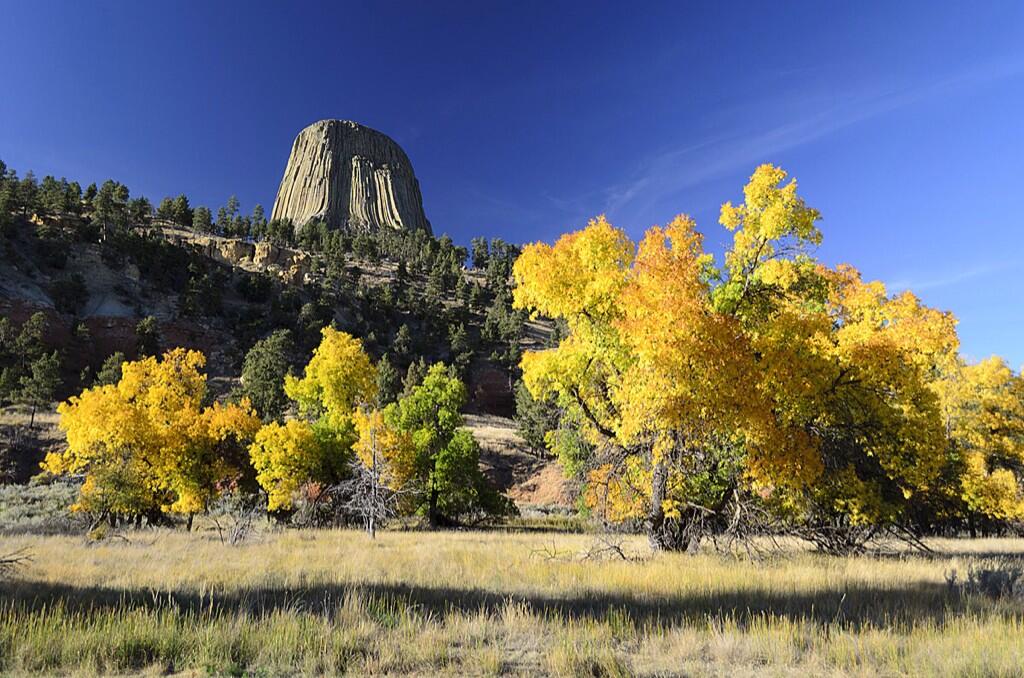
Devils Tower is beautiful in autumn

October 25, 2013

Or any other time of year.

From the Department of Interior Twitter feeds:

 Devils Tower NM. pic.twitter.com/YRo1U8DSMQ

US Dept of Interior ‏@Interior 16h Is there any doubt fall is best enjoyed in America’s great outdoors? Here’s great example from Devils Tower NM. pic.twitter.com/YRo1U8DSMQ

What do you think Richard Dreyfus thinks when he sees that?  Stephen Spielberg?

Devils Tower NM” means “National Monument,” not New Mexico.  This volcano remnant stands in Wyoming.

Old friend, painter and photographer Nancy Christensen Littlefield offers a more close-up view.

Devil's Tower on a July morning.  Photo by Nancy Christensen LIttlefield.

Devil’s Tower on a July morning. Photo by Nancy Christensen LIttlefield.

And looking even closer, you spy Richard Dreyfus never-wanna-bes:

Climbers on Devil's Tower. Photographer Nancy Littlefield

Climbers on Devils Tower. Photographer Nancy Littlefield said: “There were Native American prayer bundles along the trail around the base. It really is awe inspiring. Early morning gives you the best light to photograph it by.”

Devils Tower is the plug of an old volcano.  What’s left is the magma that hardened, and what we see is left after the softer cone eroded away.

More:


October 22, 1913: Dawson mine disaster killed 263 in New Mexico

October 22, 2013

Albuqurque Journal photo and caption: Iron crosses dot the Dawson Cemetery in Colfax County, the site of a once bustling coal mining region. The Dawson mines produced millions of tons of coal in the first half of the 20th century, but also took the lives of many miners. On Oct. 22, 1913, 263 miners were killed in an explosion. On Feb. 8, 1923, another Dawson mine explosion killed 123 miners. (Journal File)

Albuquerque Journal photo and caption: Iron crosses dot the Dawson Cemetery in Colfax County, the site of a once bustling coal mining region. The Dawson mines produced millions of tons of coal in the first half of the 20th century, but also took the lives of many miners. On Oct. 22, 1913, 263 miners were killed in an explosion. On Feb. 8, 1923, another Dawson mine explosion killed 123 miners. (Journal File)

Who remembers, today?

In our recent history, a disaster in one small town or one company that killed 263 people would stand out.  But the Dawson, New Mexico, coal mine explosion of October 22, 1913, is mostly forgotten today.

100 years later, all ten of the town’s mines are closed, victim to increasing use of petroleum as fuel in the U.S.  The town itself is a ghost town, though once its schools produced scholars from children of immigrants, and state champions on the athletic fields.  A strike by miners in Colorado may have contributed to the explosion, as corporate executives tried to goose coal production in Dawson to cover shortfalls from mines closed by the strikes.  Unions then grew to major influence in American life, including increasing safety in coal mining.  But unions, today, hold waning influence generally.

Many or most of those who died didn’t speak English.  Instead, they spoke the languages of their native lands, Italy, Greece, Germany, and other European nations.  Despite its location in New Mexico, there were few Native Americans, or residents or immigrants of Hispanic origins.

Today’s anniversary should be a departure point for rich discussion of many threads in American history, the rise of industrialization, the changing industries of the cowboy frontier towns, the changing ownership of lands from Native Americans to big corporations, the changing nature of work and union influence, the dramatically different views of government and government regulation, the role of immigration and immigrants.

In your state’s standards, Common Core State Standards or not, can a teacher intrigue students with real history in any of those ways?

The Albuquerque Journal remembered the disaster in an article in Sunday’s edition:

The second-deadliest coal mining disaster in U.S. history occurred 100 years ago this week in a northern New Mexico town that no longer exists, save for the small cemetery bearing the remains of many of the 263 miners killed in a massive explosion on the afternoon of Oct. 22, 1913.

Though the town of Dawson and the Stag Canyon No. 2 coal mine are mere footnotes in history to most people, the men who died there a century ago – mostly Italian and Greek immigrants lured to the coal fields by decent-paying jobs and all the amenities a company town like Dawson could offer – are far from forgotten.

In ceremonies today at the Raton Museum, the miners killed in what has become known as the Dawson Mining Disaster will be remembered by descendents, historians and New Mexico’s Italian and Greek communities.

“I think it’s important to honor these men, and all immigrants who helped build America,” said Nicki Panagopoulos, a member of St. George Greek Orthodox Church in Albuquerque.

A second disaster a decade later killed another 123 miners.

Who remembers? How should we study these events in our history classes?  Do we study such events at all?

More:

English: Main Street of Dawson, New Mexico. Ta...

Main Street of Dawson, New Mexico. Taken in 1916. Though once an active community of 9,000 residents supporting ten coal mines, it is now a ghost town, shut down by Phelps Dodge Corporation in 1950, and bulldozed. Wikipedia image


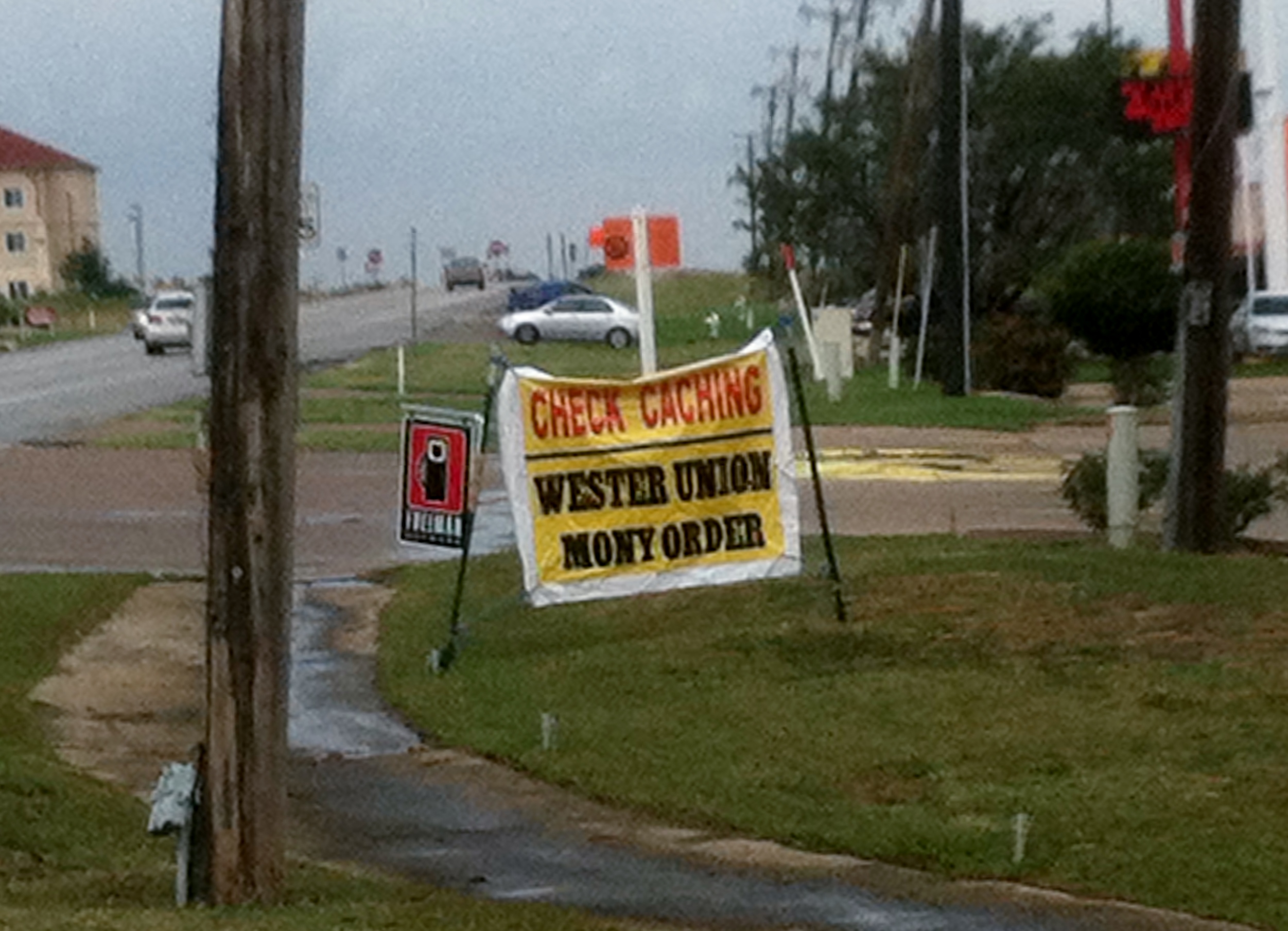
Signs: “Check caching”

October 21, 2013

Utah has a Cache County, which includes most of the Cache Valley.  In 7th grade Utah history, if not before, Utah kids learn that the name came from the old Mountain Men, French-descended fur trappers who plied the area well before the Mormon pioneers and even John C. Fremont.

A trapper could collect a half-ton of beaver pelts in a season, to sell to a large corporation to export to Europe to be made into felt.  He wouldn’t want to carry that weight around with him.  So trappers would make a place to hide their furs until trading time — a “cache” in fractured French, from the word “cacher,” which means “to hide,” in this case. (See also Colorado’s Cache la Poudre River.)

Utah’s Cache Valley at least one year hosted the grand rendezvous of fur trappers and their hosting corporate suppliers and buyers, and for much of a decade or longer was a place where fur trappers hid their furs awaiting the rendezvous — great American explorers and pioneers like Jedediah Smith, Jim Bridger, James Beckwourth, Peter Skene Ogden and Thomas Fitzpatrick.

Maybe the people who made this sign didn’t know that history.  I found it in Alvarado, Texas, after all.

There is a world of difference between “cashing a check” and “caching a check,” though.  Surely there is an Abbott and Costello-style comedy routine in this sign:

Check caching in Alvarado, Texas?

Check caching in Alvarado, Texas?

Six words on that sign.  Three of them are misspelled, 50%.

I imagine someone entering the store to cash a check, handing it to the clerk who promptly drops it into a slot in a mysterious box and says, “All cached.”  “Where’s my check?” the customer demands.  Abbott and Costello enter from the back room.

Then I got stuck with an ugly earworm for the next few miles, with Tommy James infecting my brain.  But for the want of an “e” it could have been the Beatles or Pink Floyd.

I hope the merchant got a heckuva discount from the sign maker.  At least 50% off.

Camp near the head of Cache Valley, Utah - NAR...

Cache Valley, Utah, in the late 19th or early 20th century; camp near the head of Cache Valley – NARA – 516657 via Wikipedia

Cache Valley, Utah, today, after an infusion of cash. Jim Bridger wouldn't recognize the place.  Wikipedia image

Cache Valley, Utah, today, after an infusion of cash. Jim Bridger wouldn’t recognize the place. Wikipedia image


If the photo didn’t exist, you wouldn’t believe it: Abraham Lincoln and Fidel Castro

October 11, 2013

This popped in over the Twitter transom yesterday:

http://twitter.com/HistoricalPics/status/388348900857622528

I don’t recall having seen the shot before. But Alex Selwyn-Holmes at Iconic Photographs posted a very complete story about the picture in 2009.

Fidel Castro at the Lincoln Memorial, 1959. Photo by Alfredo Korda. Korda titled the photo "David and Goliath."

Fidel Castro at the Lincoln Memorial, 1959. Photo by Alfredo Korda. Korda titled the photo “David and Goliath.”

Between April 15 and April 26 1959–a few months after he took power in Cuba–Fidel Castro went to the United States, invited by the American Society of Newspaper Editors. In one of those forgotten episodes of the Cold War, Castro went to the US for loans. Castro hired one of the best public relations firms to present his new government. Castro answered impertinent questions jokingly and ate hot dogs and hamburgers. His rumpled fatigues and scruffy beard cut a popular figure easily promoted as an authentic hero.

Read the whole story at Iconic Photographs.

In 1959, Castro’s forces had recently ousted Cuban president (and dictator) Gen. Fulgencio Batista.  Under Batista Cuba was very much a playground for America’s rich, and a steady supply of cheap sugar and good cigars.  In the musical play and movie, “Guys and Dolls,” the character Sky Masterson gets a date with a Salvation Army-style preacher woman, to win a bet.  When she finally consents (after he offers to fill her mission hall with reprobates in need of salvation), she asks what time she should be ready for dinner.  “Noon,” Masterson replies.  They are to fly from New York to Cuba for dinner, and return by the next morning.  Cuba’s reputation as hangout for American mobsters came honestly.  (“Guys and Dolls” opened on Broadway in 1950, and the movie hit theaters in 1955. That was the heyday of the Douglas DC-6, which is what a gambler probably would have flown from New York to Havana at that time, flying in to what is now Jose Marti International Airport.)

In contrast to the playboy mobsters, Cuban people tended to lead very bleak lives.  Sugar and tobacco farming did not make Cubans rich; processing of sugar was done by large international corporations.  Cuban cigars, recognized for quality, tended to be cheap, and tobacco farmers and cigar makers employed thousands of underpaid Cubans.  Cuba’s Havana nightlife seemed reserved for the wealthy, which usually meant foreign tourists, and not Cubans.

Castro’s revolution succeeded partly because of that rift, and Castro promised to turn things around for the masses of Cuban people (promises yet unkept).

For 11 days in 1959, Fidel Castro fascinated the U.S.  He spoke to the Council on Foreign Relations in New York, and to the American Society of Newspaper Editors. (His UN speech and famous hotel stay, in which he plucked and cooked chickens in his New York Hotel room, came the next year).  Castro ate hot dogs, and laid a wreath in the tomb of George Washington. At one point Castro was introduced in the audience of the “Ed Sullivan Show” as “the George Washington of Cuba” (this trip?)  But in Washington, Castro ran into Richard Nixon’s anti-Communist paranoia when seeking aid from the Eisenhower administration.  Without help from the U.S., Castro took offers of assistance from the Soviet Union who were anxious to have a friend and ally in the Americas, close to United States territorial waters.

Would Castro have cozied to the U.S. instead of the U.S.S.R., had the U.S. offered aid.  Most  historians think Castro’s communist path was already set when he visited the U.S.

This photo makes one wonder.  Certainly it was good public relations, for Castro to be seen paying homage to Abraham Lincoln.  Was it more than just a propaganda photo?

It’s a fascinating photo.

What do you think?

More:


October 9 – St. Denis’s Day, patron saint for those who have lost their head (Tea Party? House GOP?)

October 9, 2013

October 9 is the Feast Day of St. Denis.

Who?  He’s the patron saint of Paris (and France, by some accounts), and possessed people.   Take a look at this statue, from the “left door” of the Cathedral of Notre Dame  in Paris (Cathédrale Notre-Dame de Paris: portail de gauche).  He was martyred by beheading, in about 250 C.E.

English: Cathédrale Notre-Dame de Paris: porta...

St. Denis greets vistors to the Cathedral of Notre Dame, Paris (Cathédrale Notre-Dame de Paris: portail de gauche)

Our trusty friend Wikipedia explains:

According to the Golden Legend, after his head was chopped off, Denis picked it up and walked two miles, preaching a sermon the entire way.[6] The site where he stopped preaching and actually died was made into a small shrine that developed into the Saint Denis Basilica, which became the burial place for the kings of France. Another account has his corpse being thrown in the Seine, but recovered and buried later that night by his converts.[2]

Clearly, he is the guy to pray to about Michelle Bachmann, Rush Limbaugh, Todd Akin, Paul Ryan, intelligent design, and the Texas State Board of Education, no?  In 2013, you can add Ted Cruz, Mike Lee, Louis Gohmert, the entire Tea Party, and the entire GOP crew of the House of Representatives.  You catch my drift.

Perhaps you can use this factoid to some advantage, enlightenment, and perhaps humor.  In Catholic lore, St. Denis is one of the “14 Holy Helpers,” and his aid is sought to help people with headaches, or who have been possessed.

Crazy GOP members who I suspect of having been possessed give me and America a headache.  St. Denis seems to be our man.

Who else do you know of in this modern, vexatious time, who keeps talking after losing his/her head?

As Rod Stewart sang, just “let your imagination run wild.”  Maybe St. Denis is listening.

More:

Statue to St. Denis, in Cluny

Another portrayal, in sculpture, of St. Denis. Notice how this one’s face doesn’t really look like the one above? Ouvre du Musée de Cluny, Wikipedia photo by Guillaume Blanchard (Aoineko), June 2001, FinePix 1400Z.

Yes, this is mostly an encore post. I had hoped to have to retire this post someday.  I still hope.  Perhaps this will be the last year we’ll have so many wackaloons running loose. Pray to St. Denis.


Greg Abbott’s campaign stumbles — except for white people with guns

October 7, 2013

For three days after Fort Worth State Sen. Wendy Davis announced her candidacy for the Democratic Party’s nomination for governor, the Republican front-runner, Greg Abbott, seemed off-balance, first going to negative campaigning about Davis.

Some Texans wondered whether Abbott had a good idea about what the role of governor is, which could form a basis for his candidacy.  Why does Abbott want to be governor, and what would he do?

Today Abbott released an almost-90-second advertisement.  The ad reveals Abbott doesn’t have a vision for Texas in the future, and the ad suggests Abbott will rely heavily on trying to scare white Texans to outvote everybody else.

Here are my observations about Abbott’s ad as it came to me on Facebook, and the ad, below.

Greg Abbott first went negative when State Sen. Wendy Davis announced her campaign for governor last week.

He’s having difficulty finding a reason to run for governor, demonstrated by his video, below.

The video is impressive:

  1. Not a single Hispanic shown out of several dozen people. In fact, there appears to be only one, lonely woman of color in the entire thing. Texas is for white people, Abbott appears to be saying.
  2. Those white people in Texas need guns. It’s not like Texas has any shortage of guns, nor has the Obama administration done anything to restrict gun ownership or use, nor is it even an issue in Texas — but watch the video, you understand that the Texas white people shown in it, need guns. (Why? you may ask?)
  3. Abbott is all for low-wage, service industry jobs. When he talks about jobs in Texas, the ad shows a rickety, ramshackle BBQ joint. You may like BBQ more than Greg Abbott, but if you’re an aerospace worker, or you work for American Airlines, you would do well to question why Abbott worked so hard to kill American Airlines before Sen. Davis made it a campaign issue. (Abbott belatedly dropped his suit challenging the American/USAir merger, last week. Less than a week in the campaign and Wendy Davis is already improving Texas government . . .)
    Faced with a pro-business Democrat with a proven record of making things work for business and Texas, Abbott is adrift. These appear to be issues he hasn’t pondered much, other than to reduce regulations on businesses that injure people.
  4. Not a word about education. Where will all those gun-wielding white people send their kids to school?
  5. When he mentions water policy, something that comes far behind guns, BBQ, and the Tea Party in Greg Abbott’s Texas, he shows footage of Interstate 35 in Austin. One of Texas’s greatest problems (on the ballot in November with a Constitutional Amendment), but to Abbot it’s an afterthought. Maybe he thinks he can shotgun a few clouds to resolve the issues?
  6. Not a word about farming, nor ranching. Texas’s lack of a water policy, and inadequate work to mitigate global warming, pushed about 50% of Texas’s cattle and beef operations out of business on the GOP watch, just in the last four years. In Greg Abbott’s Texas, land is for shooting quail for rich folk, all you hamburger eaters can take a hike.
  7. Not a word about oil or gas, nor fracking, nor the abuse of eminent domain to ram a pipeline through Texas ranches and farms, killing the ranches and farms.
    You’d think after two decades in state office, Mr. Abbott would have a better idea about Texas and Texas problems, and would run a campaign on how to improve things for Texans, not just out of state pipeline companies.
  8. Abbott is running against Barack Obama, and he hates California. No good reason, but those are probably the only applause lines in his bereft-of-Texas stump speech.

You’d think some of those Million-Dollar-A-Year consultants would have worried a bit about Texas in setting up these ads. They must think their only chance is to scare their supporters out to the polls. They may be right.

Abbott’s campaign said:

Preserve Texas as the land of liberty. Watch my video below, and donate here: http://bit.ly/18UKBnr

What do you think, America?  See any reason for anyone other than a paranoid white guy to vote for Abbott?

Conflict of interest note:  Abbott is a Duncanville boy, a favorite of most residents of Duncanville we know. 

More: 

Texas Attorney General Greg Abbott appears bef...

Texas Attorney General Greg Abbott appears before a controversial tablet displaying the Ten Commandments on the grounds of the Texas State Capitol (behind the capitol building) in Austin, Texas, USA. (Photo credit: Wikipedia)


Reminder: How wealth inequality crowds out America’s success

October 7, 2013

Upworthy reposted this little movie today, which reminded me that nothing good has changed since last March. Looks like there’s not much chance of saving America soon, either, with the way things are going in the Capitol.

Is it time to really write the obituaries for America?  I hope not.

Watch it again:

What happens when a lot of money — I mean, a lot of money — is concentrated in a few hands?

The nation runs the risk of economic failure.

This short video says that more money is concentrated in fewer hands than we think.

Description from the maker, Politizane:

Infographics on the distribution of wealth in America, highlighting both the inequality and the difference between our perception of inequality and the actual numbers. The reality is often not what we think it is.

This is just one facet of the figures necessary for having rational discussions about tax reform, federal budget and deficit cutting, tax policy, and economic and monetary policy.

But it’s an ugly portrait, isn’t it?  How much does it differ from the France of Louis XVI and Marie Antoinette?  How much does it differ from the going-to-hell-in-an-accelerating-handbasket U.S. of 1929?  Wealth’s concentration in the hands of a tiny few literally crowds out hundreds of millions of Americans from the ability to successfully accumulate modest nest eggs.

What do you think?

I wish the film’s creator had provided citations.

Have things improved since 2007?  Look at this chart based on Institute for Policy Studies figures:

Maldistribution of U.S. wealth, 2007; Inst for Policy Studies

Source: Institute for Policy Studies, via BusinessInsider

More:

More, since the original posting:

Update March 9, 2013:  This is funny, to me:  Some people think just talking about this stuff is “class warfare.”  How are they so familiar with class warfare, you wonder?  That’s a self-answering question, isn’t it?


Sourcing Thomas Jefferson quotes: “A country with no border . . .” Jefferson didn’t say it

October 2, 2013

Way back in 2012 I wrote this:

A group calling itself “Patriotic Moms” claims to quote Thomas Jefferson:

Thomas Jefferson 3x4

Thomas Jefferson said a lot, and kept careful records of about 15,000 letters — but did he ever say a country without a border is not a country? (Photo credit: Wikipedia)

“A country with no Border is not a country.”

I can’t find that in Jefferson’s writings.  Anybody know if Jefferson said or wrote anything like that?  Got a citation?

Is this another fake Jefferson quote?

More, reference:

Here we are, over a year later, and this does not appear in any form that I think we can say Jefferson said it, or wrote it.  It’s not in any Jefferson collection I can find.

Perhaps even more telling, our old friend Higginbotham finds a solid attribution to former Congressman Mike Pence (now Governor of Indiana), introducing a bill in Congress in 2005.

The judges rule Jefferson did not say “A country with no border is not a country.”  Neither did he say “A nation with no border is not a nation.”  In his bogus quote, neither did he add “secure” before the last “country” or “nation.”

It’s a misattributed quote, a bogus quote, a distortion of history, whatever epithet you wish to impale it on.  But it’s not from the canon of Thomas Jefferson wisdom.  It’s been flying around the internet this past week, and my earlier post has increased activity. Perhaps immigration is about to heat up as an issue?   Time to put this canard down.

Here’s one thing that should make you very wary of any quote in any similar circumstance:  No one seems to know what the occasion was that Jefferson made the remark, nor the date, nor the format.  Jefferson’s writings are extensively indexed, and he kept copies himself of about 15,000 letters, for the sake of history.  If you can’ t find it quickly, he probably didn’t say it.

More, in 2013:


Quote of the moment: Useless men a Congress? Not John Adams, but Peter Stone who said it

October 1, 2013

It’s a great line, an almost-Mark Twain-ism that makes people of all political strips smile.  It’s attributed to John Adams:

I have come to the conclusion that one useless man is called a disgrace; that two are called a law firm; and that three or more become a Congress!

There’s a problem: John Adams didn’t say it.

It’s a line from the 1969 Broadway musical comedy 1776!

The character John Adams in the play said it.  It’s art in pursuit of history, but it’s not really history.
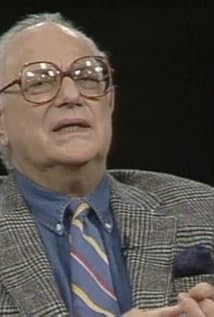
Playwright Peter Stone, Theatrical Rights image

Playwright Peter Stone wrote the witticism attributed to John Adams.  Theatrical Rights image

We should more accurately attribute it to the play’s book’s author, Peter Stone.  What John Adams did not say about Congress, Peter Stone wrote.  Such wit deserves proper attribution.

Especially on a day when the U.S. Congress appears to be not only a collection of useless people, men and women, but useless people bent on destruction of our national institutions.  Congress has fallen down on the job, failing to play its vital, Constitutional role of appropriating money to run the government.

Stone’s mention of “law firms” gives away the quote’s origins being much later than Adams — Adams died, as you know, on July 4, 1826, the 50th anniversary of the Declaration of Independence.   “Law firms” is 20th century language.

In an era of law firms so big the people in them cannot comprehend their size, such a statement might emerge.  The distaste with lawyers in the Stone quote also doesn’t ring to the times of the American Revolution.  Good lawyer jokes probably existed then, but they didn’t really rise until the lawyerly pettifogging of the 19th century — see Dickens’ Mr. Bumble in Chapter 51 of Oliver Twistor the entire text of Bleak House, for examples.  Law firms in 1776 simply did not exist as large corporations, but more often as an office of an individual lawyer, or two or three.  Mark Twain joked about Congress, but a joke about both Congress and lawyers probably was rare before 1910.  (I am willing to be disabused of this idea, if I am wrong . . . comments are open.)

Wikiquote’s rapid improvement provides us with a good check on whether Adams said it — Wikiquote points us clearly to Peter Stone instead.

Stone died in 2003, much underappreciated if you ask me.  Stone might be said to be among the greatest ghost speechwriters in history based on 1776! alone,  creating lines for John Adams, Ben Franklin and Thomas Jefferson — three of the greatest authors and (sometimes reluctant) speakers of their day, and of all history.  Stone’s plays include Titanic and Two by Two, his screenplays include Charade, Arabesque, Mirage, The Taking of Pelham 123, and Father Goose.  (The first two of those movies favorites of mine solely for the scores by Henry Mancini.)

1776! plays in revival in California’s Bay Area, at A.C.T. (see reviews from both the San Jose Mercury News and San Francisco Chronicle, linked below).  One might wish Congressmen today would see the play.  In 1776 the colonies in rebellion were unsure what to do next; the Declaration of Independence was not a foregone conclusion.  The amazing collection of men — unfortunately no women — who populated the Second Continental Congress were predisposed to find ways around their differences, to make wise policies, and to keep things functioning.  Rather than shut government down, they carefully instructed individual governments in the states to make preparations to operate without infusions of cash or policy direction from the Crown, even before deciding independence made sense.  In short, they were dedicated to making things work.

Ironic that so many remember Peter Stone’s slam of Congress as incompetent, when the rest of his play book demonstrates that particular congress of men took quite an opposite view of life, and created a model for leadership we marvel at today.

More:

This is an edited encore post, sadly made salient today by Congress’s inaction on required spending bills.

Photo from the San Francisco Chronicle: Jarrod Zimmerman, as Edward Rutledge, makes a passionate appeal to delegates of the Second Continental Congress in the Tony Award-winning musical

Useless men? Funny quip, but the Second Continental Congress was far from a group of useless men thrown together. Photo from the San Francisco Chronicle: Jarrod Zimmerman, as Edward Rutledge, makes a passionate appeal to delegates of the Second Continental Congress in the Tony Award-winning musical “1776,” coming to ACT. Photo: Juan Davila


No, November is not Muslim Appreciation Month; it’s America is Gullible Month, and you’ve been nominated Grand Marshal of the parade

September 27, 2013

Some people used to get suckered periodically by headlines in The Onion, before most people figured out it was a publication full of parodies.

But the along came The Courant; not everyone got that one yet.

Then there’s National Report.  Even fewer have it figured out.

So, there was uproar on Facebook, on Twitter, and probably on your e-mail, earlier this evening when this story leaked out gushed all over unwitting computer-screen gazers.

Obama Declares November National Muslim Appreciation Month

Posted about 10 hours ago | 167 comments

Obama announces Muslim appreciation month for November

President Obama announcing the month of November to officially be ‘National Muslim Appreciation Month’.

Washington, DC — President Barack Obama held a press conference to announce that he is declaring the month of November ‘National Muslim Appreciation Month’.

“The Muslim community deserves our full acceptance and respect,” Obama told reporters. “We have killed millions of Muslims overseas since the September 11th attacks. They are not all bad. In fact most of them are good. So from now on, November will be a month to celebrate the Muslim community, the Sunnah and the Quran.”

Khaled Matei who is a member of the Muslim Brotherhood‘s Freedom and Justice Party told CNN he is pleased with Obama and his actions. “I spoke with President Obama by telephone yesterday and personally thanked him for what he is doing for the Muslim community,” Matei said. “This is definitely a step in the right direction I explained to him. Praise Allah.”

Obama informed reporters about his future plans for helping Muslims around the world. “I will be working with Congress in making it easier for Muslims to earn a Green Card and achieve American citizenship,” Obama said. “Currently as it stands, obtaining a Visa or Green Card for a Muslim is very difficult. There are too many background checks in place and I plan to fix that.” Obama continued, “Muslims are hardworking people who are just looking to live the American Dream like the rest of us. Mr. Matei of the Muslim Brotherhood assured me they want to come to this country to help us, not harm us.”

Obama finished the press conference by explaining to reporters how happy he is with America. “Folks, there is no way we could have had a ‘National Muslim Appreciation Month’ 20 years ago. That really says a lot about the growth and progress of this great country.”

‘National Muslim Appreciation Month’ begins November 1st and will end at midnight on November 30th. For any questions or comments please contact the 24-hour National Muslim Appreciation Hotline at (785) 273-0325.

###

– See more at: http://nationalreport.net/obama-declares-november-national-muslim-appreciation-month/#sthash.2s1EkTVA.YklaQWOX.dpuf

And, just to make sure you know this journal has trustworthy reporters, they post the bio at the bottom of each story.

Paul Horner

Paul Horner

Mr. Horner has won numerous awards for journalism including a Peabody Award and a Pulitzer Prize. He was recently in the media for his heroics in stopping a robbery by quoting Pulp Fiction.
View all posts by Paul Horner →

– See more at: http://nationalreport.net/obama-declares-november-national-muslim-appreciation-month/#sthash.2s1EkTVA.YklaQWOX.dpuf

Must be true, no?

Look, if your Hemingway Brand™ solid gold Sh** Detector didn’t start clanging at the headline, you need new batteries — maybe better get the thing calibrated, too.

Should we count the ways it’s a hoax?

  1. Would any president commending any group start out by noting the U.S. has killed millions of that group recently?  Do you think the White House estimates deaths that high?
  2. Did you see any reports of the President talking with any Egyptian reporters?  No.  Did you wonder who in the heck Khaled Matei is?  (Yeah, if you’re not going to be as wise as a cub reporter, maybe you should leave the reporting to the guys with the mainstream media.)
  3. You’ve seen how well Congress received their own members’ proposals for immigration reform that is sorely needed — when the Obama in the story pledges to work with Congress to increase immigration for Muslims, by relaxing background checks, didn’t your eye at least twitch?
  4. Did you notice the phone number listed for “The National Muslim Appreciation Hotline?”  First, when was the last time you saw any White House advertise a hotline other than a government service?  But second, didn’t you get the least bit curious about that number?  Hmmm.  (785) 273-0325.  I don’t even recognize the area code.  Google it . . . voila!  It’s the number for Westboro Baptist Church.
  5. The reporter has a Peabody and a Pulitzer?  He stopped a robbery by quoting Pulp Fiction?  Maybe you need to replace your Hemingway completely.
  6. Over at the White House website, they list and record almost every word that comes out of Obama’s entire operation.  Check it.  There’s no Muslim Appreciation Month.
  7. Maybe you have to have staffed Congress to notice this, but most Presidential Proclamations of National Pickle Week or National Ski Patrol Month are accompanied by a resolution from one or both houses of Congress asking the president to make the proclamation.  See any such bill for this?  I don’t see one.

I got suckered by a story in National Report a couple of months ago.  When you name your blog after one of the most famous hoaxes in history, you really need to be careful.  So I was suspicious from the start.

But it got picked up by GOP – The Daily Dose? That’s legitimate sounding enough to gullible Obama H8ers that I suspect they didn’t even pause.  Cleverly, Daily Dose listed the story as “via NRO,” the acronym for National Review Online — but of course, that’s not correct.

Then the Dominoes of Gullibility started to fall; among those suckered:

Wow.  How many people got suckered by that hoax?  Were you among them?

More: