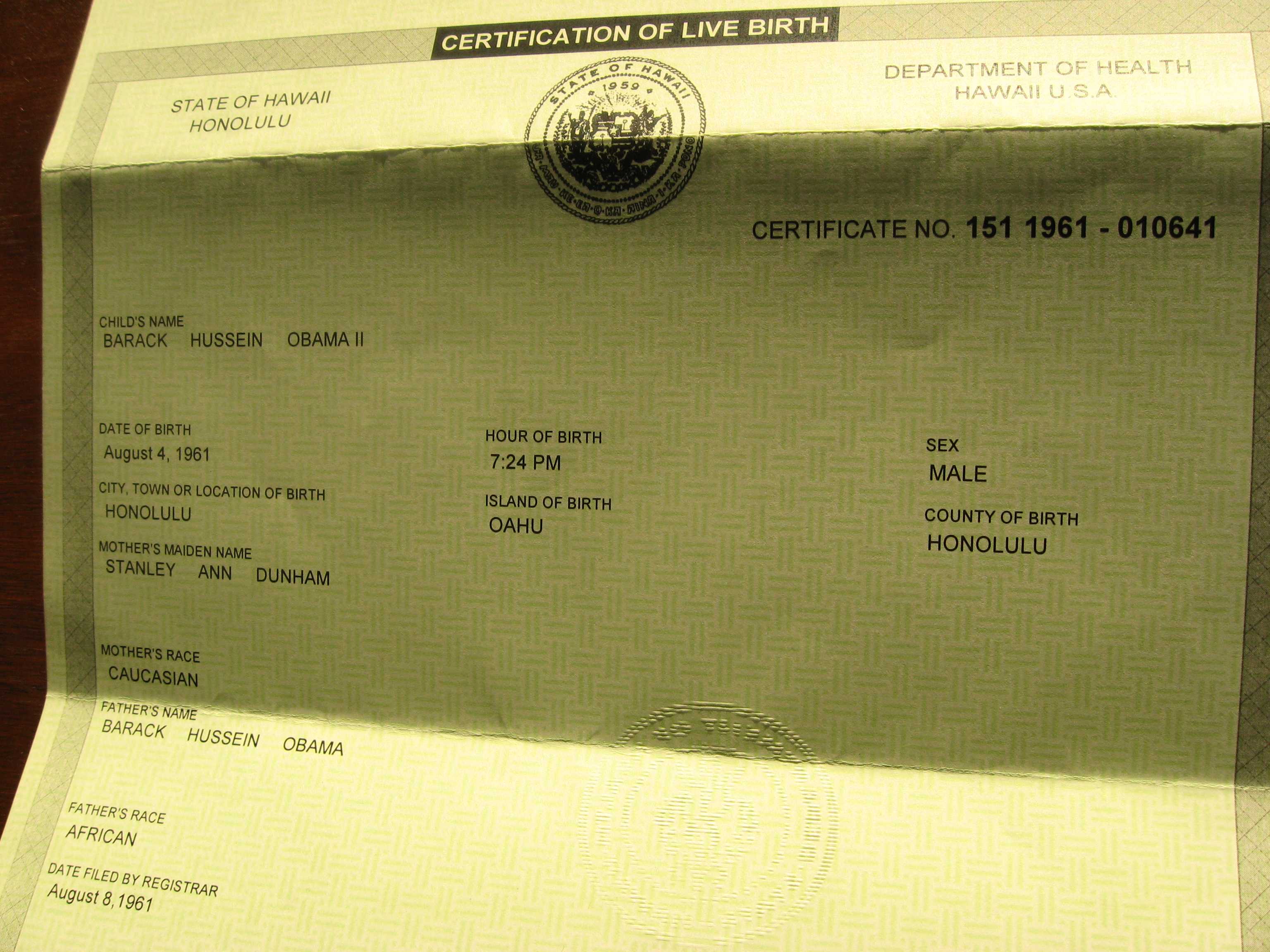
Obama’s birth certificate: Astrologers bring sound reason

November 30, 2008

Texas Darlin‘ and the bevy of sites who contest the authenticity of Barack Obama’s birth certificate need to come up for air once in a while.  When astrologers start using better science, logic and reason than those obsessed with Obama’s birth certificate, it’s time for those so obsessed to change their ways, don’t you think?

See also the six ways the arguments against Obama’s birth certificate fail.


Molly Ivins and the argument for an immortal soul

November 29, 2008

It struck me today:  Don’t the political events of the past year make a powerful argument that there is an afterlife, and that Molly Ivins is finally taking control of some of the supernatural strings?

Tip of the old scrub brush to Pamela Bumsted for sending the link to the Righteous Mothers singing the tribute to Molly Ivins:

The Righteous Mothers, \”Missing Molly Ivins\”

We’ll fight for truth and justice, and have fun.

Cover of Texas Observer Tribute to Molly Ivins edition

Cover of Texas Observer "Tribute to Molly Ivins" edition; click to purchase a copy for your library and edification.


6 ways challenges to Obama’s citizenship fail

November 27, 2008

Enough already.  Somebody’s putting LSD into the water conservatives and other wackoes are drinking — that’s the only rational explanation for continued complaints about Barack Obama’s birth eligibility for the presidency.

First, here’s the rational view of the issue, from FactCheck.org, “Born in the USA.”

Here are a few of the sites that seem to have lost all touch with reality, and continue to whine that Obama might somehow be ineligible for the presidency:

Conservatives expert advisor Leo C. Denofrio, from his seat at a Caesars Palace poker table

Do you trust your nation's future to this man? - Conservatives' expert advisor Leo C. Denofrio, from his seat at a Caesar's Palace poker table

Weird enough, irrational enough yet?  As odd as these sites are, sometimes the comments get even odder.  It doesn’t help the rationality quotient that so many of these bloggers block out or strike down comments that present an alternative case or rational answers.

And in fact, it’s partly because of Texas Darlin’s anti-rational-comment pose that I put this post up.  Somebody, somewhere, needs to suggest the rational foundations, and inject them into the discussion.

A commenter named Carlyle states the basic case of the birth-certificate-obsessed people (BCOs).  It’s a nutty case, ungrounded in fact or logic, but Texas Darlin’ won’t allow responses.  So, here are some of the things these people are not thinking about as they fold ever-thicker tinfoil hats.

Carlyle said:

But let me back up for a moment and lay out the two great truths. These are the things that are known without doubt and far above speculation.

1. FACT – Obama has never provided admissable auditible citizenship documentation to anybody. No complete birth certificate, no passport, no selective service registration, nothing, zero, nada, zippo. Nobody can produce any of this stuff – not DNC, FEC, DOJ, State SecStates, electors – nobody.

No, actually Carlyle is doing a lot of speculation there (as are other BCOs).  Almost all of these rants are based on speculation, wild speculation far outside of what is known.  The key questions would revolve around what sorts of evidence would be admissible as evidence in a court of law in the U.S.  Very few of these anti-Obama rants ever bother to touch ground on those issues.  The birth certificate issued by the State of Hawaii, posted by the Obama campaign for months, is the legally-admissible document.  The ranters have to ignore that to get on to the rest of their complaints.

Beyond the legally-admissible, there are logical cascades of events to which we can point, which strongly suggest the ranters are truly full of sound and fury signifying nothing.

First, in order to obtain a passport, for one example, one must provide “admissible, auditable citizenship documentation” to the U.S. Department of State. We know Obama has held a passport for many years, so we can be reasonably certain he provided that information originally (Do you have a passport?  How did you get it without a birth certificate?  I got a diplomatic speedy process, and I still had to provide a birth certificate . . .).

Propagandist-and-self-promoter-for-hire Jerome Corsi claims Obama didn’t travel on a U.S. passport, claiming results from an impossible Freedom of Information Act request to the U.S. State Department.

Obama’s passport is a matter of record (though privacy laws do not allow release of the passport itself, generally).  Without evidence to the contrary, this presents a rebuttable presumption that Obama is a citizen. Does anyone else have information that the birth certificate Obama gave State was wrong?  Obviously not — the BCOs don’t appear to have been aware such a thing was even required.

Second, one of the things State checked for when I applied for a passport (when I worked in the Senate) was my Selective Service Status.  Hypothetically, they don’t want to grant a passport to someone who is not registered.  Again, under the rules of civil procedure, we have a rebuttable presumption that Obama’s draft registration was fine when he traveled as a student.  If it was fine then, absent a showing from anyone that there was a later event that made the draft registration invalid, we should assume that State did their job.  As a pragmatic matter, the draft ended in the early 1970s, so there could be almost no issue that could have caused Obama’s draft status to change.  It’s pretty clear that his draft registration is valid.

Third, Obama is a lawyer.  In order to get a license to practice law, applicants must provide a certified copy of a birth certificate to the National Conference of Bar Examiners, in order to be eligible to take the bar exam. The National Conference then does a background investigation on all candidates, generally an investigation more thorough than the FBI’s checking for most federal appointees.  In the past, the Conference has reported issues like minor drug use, preventing people from becoming lawyers in several states.  Absent a showing by someone that the National Conference granted special waivers, or a showing of other irregularities, the fact that Obama held a license to practice law presents a rebuttable presumption that his birth certificate is valid exactly as he alleges, and that his draft status is legal. Obviously, the BCOs have no information to indicate any irregularity, since they were unaware of this check.  We should assume, therefore, that Obama has a valid birth certificate and draft registration, since the Illinois Bar got a recommendation from the National Conference of Bar Examiners that Obama was morally fit to be a lawyer.

Fourth, Obama is a U.S. Senator.  As a matter of standard operating procedure, the FBI does a thorough background check on every elected Member of Congress, to certify that they are eligible for top secret clearance, since every member will be seeing national secrets.  Occasionally these checks produce questions, which are usually resolved by the Rules Committee of each house.  There is no record of any proceeding dealing with any irregularity in the background check for Sen. Obama.  This means that there is a rebuttable presumption that the FBI was satisfied with Obama’s citizenship status, as well as his patriotism and ability to keep state secrets.

Furthermore, for members of the Armed Services, Intelligence oversight, and Foreign Relations Committees, there is a more thorough background check by the FBI, since many of these members will be seeing a lot of secrets, and many of them will be talking with foreign dignitaries and visiting foreign nations, and in other ways would have opportunities to pass state secrets to non-allies and even enemies of the U.S.  The simple fact that Obama sat on the Foreign Relations Committee and was, in fact, chairman of the NATO subcommittee (which deals with secrets of many of the allies of the U.S.), creates a fourth rebuttable presumption that Obama’s citizenship status, draft status, patriotism and ability to wave the flag and sing the “Star-Spangled Banner” are above reproach.

Obviously, BCOs don’t have any information to suggest there is any problem with this tougher security clearance, and in fact appear to be wholly unaware that such an investigation had been done, or could be done.

Fifth, since the November 4 election, Sen. Obama has been getting the daily National Security briefiing that President Bush gets.  This briefing includes our nation’s most precious secrets, and cannot be done, even for the president, without the CIA and Homeland Security verifying that the man is who he says he is.

BCOs have no information to overcome the several rebuttable presumptions that Obama’s credentials are in order, evidenced by their total lack of awareness that such procedures even exist.

So, in five ways, we have assurances that Obama is wholly legal and qualified to hold the office of the presidency.  Neither TD’s commenter Carlyle nor any other BCO has any basis to question these federal and state agencies, nor have they suggested any irregularity in any one of these processes which would lead to the irrational conclusion that Obama is not a natural-born U.S. citizen, or not eligible to be president.

Sixth, Obama posted his birth certificate in June, on-line [archived version here]. Are these people Google impaired?

2. FACT – Against numerous attempts by journalists and courts to ask for such information, Obama has uniformaly resisted. One might even say beligerently so.

One might say that, but one would be prevaricating, belligerently.  As noted above, Obama’s birth certificate is available on-line.  So much for resistance.   So far as we know, every reporter who asked was able to view the actual certificate with it’s stamp of authority from the State of Hawaii.  Such analyses have been done, written about, and posted on-line.  Are they Google AND Yahoo impaired?

Do the BCOs have any serious evidence of any problems that the U.S. State Department, the FBI, the National Conference of Bar Examiners, the State Bar of Illinois, the FBI again, the Rules Committee of the U.S. Senate, the CIA and the U.S. Department of Homeland Security missed?  What is their evidence?

We challenge them to be specific.  If they are claiming something like an aged grandmother’s testimony that Obama was born in Kenya, they should have the good sense not to waste the court’s time about such folderol unless unless have a sworn affidavit from the woman, taken down by a court reporter, and corroborating evidence (Corsi did not even bother to get statements, let alone sworn statements under oath, I understand — he’s asking a Supreme Court hearing for inadmissible hearsay).

And Joseph Farah, here’s my challenge to you:  Provide corroboration for your charges, provide affidavits where they would be required, provide evidence of error on the parts of these federal and state agencies, or shut up about it. Even scandal-sheet journalists have some responsibility to at least try to look like they care about accuracy.  Farah owes it to his readers to get things right.  He’s not living up to the duty he owes.

What do they have?

Why must we entertain cargo cultists in their dances?  We have two wars and a crashing economy to fix.  Can we get on with the transition, please?

Barack Obamas birth certificate, showing the states stamp of authenticity, from FactCheck.org

Barack Obama's birth certificate, showing the state's stamp of authenticity, from FactCheck.org

See Updates:

Please share the information.

Add to FacebookAdd to NewsvineAdd to DiggAdd to Del.icio.usAdd to StumbleuponAdd to RedditAdd to BlinklistAdd to TwitterAdd to TechnoratiAdd to Furl


Killer county budget: “People will die”

November 27, 2008

How bad is our economic mess?

Ask county officials in Hamilton County, Kentucky (across the Ohio River from Cincinnati, Ohio).  According to Cincinnati.com, the website for the Cincinnati Enquirer:

County Administrator Patrick Thompson said Monday that the county may have to slash another $2.3 million from its already bare-bones budget proposed for 2009 because of tumbling sales tax collections and reduced funding from the state.

That means that the county will have to find more cuts on top of the more than $40 million it’s already cut from departmental requests.

The news comes as the county sheriff and other public safety officials say even the current recommendations will devastate their ability to do their jobs.

“It’s downright dangerous,” said Michael Snowden, director of Hamilton County’s Emergency Management Agency. “People will die. It’s as simple as that.”

He was referring to a recommendation to withdraw funding for the Greater Cincinnati Hazmat team, which responds to hazardous material spills.

The budget for 2009 has already been cut $31 million below the budget for 2008, to $241 million total.  Recommendations are already in place to lay off 500 workers.

What to do?

Project lower sales tax revenues.  Already done.

The county previously predicted $65 million, or a 0 percent growth, in sales tax receipts next year. Sales tax revenue typically accounts for about 25 percent of the county’s general fund budget. But because of the credit crunch and bailout fallout, all of which just came to a head in the past few months, spending has plummeted and the holiday shopping picture looks bleak. Thompson asked the board to revise that number to $63.9 million, a decrease of $1.1 million.

Maybe the state government can help out?

He also recommended reducing the amount of local money the county would receive from the state by 5 percent, or $1.2 million, to about $22.8 million because the state is in a similarly tough budget situation and likely won’t be able to fund the county adequately.

At least make sure that the public safety offices get funded.

Hamilton County Sheriff Simon Leis said the cuts will have a “dramatic impact” impact on his department. “In my career in law enforcement, this is the worst I’ve ever seen,” he said after the meeting about the budget situation. “We’ve got major problems.”

He said he may decide to cease providing security at the county buildings rather than take deputies off the road. If the county closes the Queensgate jail, 84 corrections officers and 25 support personnel would lose their jobs and 450 inmates would be released, said Leis. Because the county’s main jail has long been out of room, the Queensgate jail, meant for only low-level inmates, now also houses some of the more serious offenders, he said. Inmate charges include burglary, robbery and drug abuse.

“We do have violent offenders down there,” Leis said. “They’re not choir boys.”

The county says it can’t afford to staff or maintain the aging jail, which it leases from a corrections company.

By law, the Hamilton County, Ohio, budget needs to be locked in by January 1, 20 days prior to the inauguration of the new president. No one is talking about bail-outs for state and local governments, yet.

What would you do?


Remembering Love Canal, 30 years ago

November 26, 2008

Hell-raising site called Red State Rebels remembers that the Love Canal disaster came to a head 30 years ago, with the evacuation of the homes surrounding the toxic dump site.

Your students probably don’t know about it, and the textbooks will do the story no justice, if they mention it at all.  While this article is written from a biased perspective, it’s a solid recounting of the history — and your AP kids need to read stuff with viewpoints, anyway.

Adeline Levine, a sociologist who wrote a book about Love Canal, described to me the scene she had witnessed exactly 30 years earlier, on Aug. 11, 1978. “It was like a Hitchcock movie,” she said, “where everything looks peaceful and pleasant, but something is slumbering under the ground.”

That “something” was more than 21,000 tons of chemical waste. The mixed brew contained more than 200 different chemicals, many of them toxic. They were dumped into the canal — which was really more of a half-mile-long pond — in the 1940s and 1950s by the Hooker Electrochemical Co. In 1953, the canal was covered with soil and sold to the local school board, and an elementary school and playground were built on the site. A working-class neighborhood sprang up around them.

“The neighborhood looked very pleasant,” says Levine, who was a sociology professor at the State University of New York, Buffalo, in 1978. “There were very nice little homes, nicely kept, with gardens and flowers and fences and kids’ toys, and then there were young people who were rushing out of their homes with bundles and packing up their cars and moving vans.”

Love Canal was in the midst of an all-out panic when Levine arrived; just nine days earlier, the state health commissioner had declared an emergency and recommended that pregnant women and children under the age of two evacuate the neighborhood. A week after that, the state and federal governments agreed to buy out homes next to the canal.

See the entire piece.

Resources:


Good Interred With Their Bones Dept.: Michael Crichton

November 24, 2008

https://i.ytimg.com/vi/9qtgQXtrl4Q/hqdefault.jpg

Author Michael Crichton railing against environmental protection and science he politically disagreed with, at the Smithsonian Institution, about the same time as his Commonwealth Club presentation.

One of my news grabbers found an article on environmentalism and religion at a Live Journal site, an answer to a speech by Michael Crichton on environmentalism as religion.  Crichton’s speech was delivered in 2003 to the Commonwealth Club in San Francisco, a venerable old institution for giving a soap box to doers and thinkers. [Note, April 2015: If that link doesn’t work, find Crichton’s speech here.]

Crichton’s speech started out with promise:

I have been asked to talk about what I consider the most important challenge facing mankind, and I have a fundamental answer. The greatest challenge facing mankind is the challenge of distinguishing reality from fantasy, truth from propaganda. Perceiving the truth has always been a challenge to mankind, but in the information age (or as I think of it, the disinformation age) it takes on a special urgency and importance.

We must daily decide whether the threats we face are real, whether the solutions we are offered will do any good, whether the problems we’re told exist are in fact real problems, or non-problems. Every one of us has a sense of the world, and we all know that this sense is in part given to us by what other people and society tell us; in part generated by our emotional state, which we project outward; and in part by our genuine perceptions of reality. In short, our struggle to determine what is true is the struggle to decide which of our perceptions are genuine, and which are false because they are handed down, or sold to us, or generated by our own hopes and fears.

As an example of this challenge, I want to talk today about environmentalism.

The promise was short-lived.

Crichton described his learnings from studying anthropology, including an observation that religions always arise, and cannot be stamped out.  From there he makes an astounding leap, to claim that environmentalism is religion.  From that failed leap, the speech rapidly deteriorates.  He adopts tenets of American Christian and political fundamentalism, rapidly following up with a disavowal of fundamentalism, as if to try to hide what he’s done, or deny it, at least for himself:

So I can tell you some facts. I know you haven’t read any of what I am about to tell you in the newspaper, because newspapers literally don’t report them. I can tell you that DDT is not a carcinogen and did not cause birds to die and should never have been banned. I can tell you that the people who banned it knew that it wasn’t carcinogenic and banned it anyway. I can tell you that the DDT ban has caused the deaths of tens of millions of poor people, mostly children, whose deaths are directly attributable to a callous, technologically advanced western society that promoted the new cause of environmentalism by pushing a fantasy about a pesticide, and thus irrevocably harmed the third world. Banning DDT is one of the most disgraceful episodes in the twentieth century history of America. We knew better, and we did it anyway, and we let people around the world die and didn’t give a damn.

I can tell you that second hand smoke is not a health hazard to anyone and never was, and the EPA has always known it. I can tell you that the evidence for global warming is far weaker than its proponents would ever admit. I can tell you the percentage the US land area that is taken by urbanization, including cities and roads, is 5%. I can tell you that the Sahara desert is shrinking, and the total ice of Antarctica is increasing. I can tell you that a blue-ribbon panel in Science magazine concluded that there is no known technology that will enable us to halt the rise of carbon dioxide in the 21st century. Not wind, not solar, not even nuclear. The panel concluded a totally new technology-like nuclear fusion-was necessary, otherwise nothing could be done and in the meantime all efforts would be a waste of time. They said that when the UN IPCC reports stated alternative technologies existed that could control greenhouse gases, the UN was wrong.

I can, with a lot of time, give you the factual basis for these views, and I can cite the appropriate journal articles not in whacko magazines, but in the most prestigious science journals, such as Science and Nature. But such references probably won’t impact more than a handful of you, because the beliefs of a religion are not dependent on facts, but rather are matters of faith. Unshakeable belief.

From the promising start of claiming we must be skeptical and carefully sort out what is true from what is not true, he rapidly plunges from the stratosphere into the depths of the ocean of misinformation.  Count the errors:

  1. Newspapers have been regular carriers of claims that restrictions on DDT are unnecessary.  You won’t find such claims in science journals, in fact — they appear almost without exception in newspapers.  Crichton is wrong about where you’d learn that DDT is harmless.  You can’t learn it from people who know.
  2. DDT is a “probable human carcinogen” listed by every cancer-fighting agency on Earth.  Fortunately for humans, it appears to be weakly carcinogenic.  Recent studies indicate it’s devious in its carcinogenicity, too — it gives cancers not to the people who were exposed, but to their children.  Research into this path is only about a decade old.  Recent studies confirm carcinogenicity in humans.  Carcinogenicity in almost every other animal exposed has been long known.  It is highly unlikely that a compound known to cause cancer in every mammal tested, would not be carcinogenic in humans.  Again, you can’t learn this stuff in science journals.  You’ll have to learn it as dogma from cranks and crackpots.
  3. DDT’s links to the deaths of young birds is rock solid.  The links were clear by 1962, and no study has been done since 1962 to question those conclusions.  In fact, more than 1,000 studies have been done on the links, and published in peer-review journals.  Each one supports Rachel Carson’s conclusions that DDT is deadly to young birds.  The mechanisms are now known by which DDT causes eggshell-thinning, which increases the chick mortality.  Recovery of the bald eagle, osprey, and brown pelican correlate exactly with the decline of DDT in the tissues of the birds.  No scientist who has studied the matter doubts that DDT kills birds.
  4. DDT was banned because it disrupts eco-systems.  In the wild, it is uncontrollable.  Yes, it kills pests.  But it also kills all the pest predators, too.  The pests use reproduction as a survival tool, and outreproduce predators, and even DDT.  An application of DDT, then, kills off the predators that protect an ecosystem from the pests, and the pests come roaring back, unchecked by nature.  The poison is magnified as it rises through the food chain (trophic levels, if you want the science term).  By the time an eagle or predator fish eats, it gets a crippling dose of the stuff.  By the mid-1960s, insects and arachnid pests around the world had begun to show resistance and even immunity to DDT (bedbugs demonstrated resistance by 1950; some are completely immune to DDT; almost all mosquitoes now carry multiple copies of a gene which allows mosquitoes to digest DDT as a nutrient, doing no harm).  The restrictions on DDT had nothing to do with human cancers, but everything to do with saving crops and forests, and the wildlife that lives there.  Crichton pulls an old bait-and-switch when he claims regulators knew DDT “wasn’t carcinogenic and banned it anyway.”  The regulators knew it might be a weak carcinogen, but they did not know it spreads through the environment and lasts almost forever, contaminating even human breast milk for at least six decades after application.  But this was not their concern.  The dangers of carcinogenicity were on top of the concerns about agriculture and forests and prairies.  Regulators acted to save the world we live in, and noted that such action also produced a minor reduction in cancer risk.
  5. DDT use in Africa never reached the nations where most malaria victims die today, at least not by 1972.  The ban on spraying DDT on cotton has nothing to do with malaria rates today, except that contrary to Crichton’s claim, it was the DDT use that aided malaria, not its cessation.  So for Crichton to claim that stopping the use of DDT on U.S. cotton crops led to a rise in malaria in Africa is a stretch of evidence way, way beyond any logical link.  Chaos theory only jokingly suggests the butterfly’s fluttering in Beijing last month affects weather in New York this month.  Boll weevils in the U.S. don’t carry malaria anyway, let alone fly to Africa to infect children there.
  6. Crichton dogmatically insists smoke is not a health hazard to non-smokers.  You won’t find much research to back his claim.  It’s another claim he makes religiously, on belief, not on evidence.  He can tell us second-hand smoke is not dangerous, but he can’t back the claim with evidence.  (Dangers of second-hand smoke have been well known since the 1970s; when Orrin Hatch got the law passed to switch to four, rotating warnings on cigarette packages, the debate was whether to include a fifth warning of second-hand smoke.)
  7. Urbanization figures cited by Crichton are low, and do not consider the damage done by urbanization to non-urban lands.  Low?  In one study, planners looked at Tippecanoe County, Indiana.  Recently, urban land use there rose from 8% to 12% — starting from a baseline larger than Crichton allows.  Crichton might argue that counties in North Dakota lose people, but the pollution and erosion from the urbanization in West LaFayette, Indiana, cannot be offset by relatively stable rural areas 600 miles away (I’m plucking a figure out of my hat), in a completely different watershed, in a completely different airshed, in a completely different climate, in a different economy.  Any soldier  or farmer can tell you that concentrating activities of people in a smaller area multiplies the impacts.  If you have 40 cows roaming over 6 acres, you don’t need to worry so much about where they leave their pies, or the concentration of ammonia in their urine.  If you put those same 40 cows in one small pen, however, you’ve just created a runoff problem, and health problems for the cows and the people who handle them.  Wholly apart from the numbers games, the facts show that urbanization increases the need for green and wild space for the people who move into the citiesTwo different presidential commissions reporting 25 years apart noted the needs, and the needs are only more fierce now (the link is to an article by Charles Jordan, who was one of the commissioners on the President’s Commission on Americans Outdoors which reported in 1987, the second of the two studies referred to — see Jordan’s article for full details).
  8. If the Sahara is shrinking, that doesn’t help much.  South of the Sahara, in Niger, an area the size of Luxembourg is lost to desertification every year.  Deserts are advancing in Arizona, California, China (both the Gobi and the Taklamakan), and across the rest of Central Asia to Africa.  If the Sahara is shrinking, that’s probably good.  It’s not enough to suggest that desertification is not a problem, even in North Africa.  Ultimately, it’s not how much land is affected, but rather it is the effects themselves, and how they affect humans.  Desertification — which is defined by international agencies as the degradation of land — affects 16.5 million people in Europe alone.  According to the UN, desertification threatens the lives and livlihoods of about out of every six people on Earth — 1.2 billion people total.  How does the Sahara’s shrinking help them?  Is Crichton just pulling another bait-and-switch?
  9. The total ice on Antarctica is increasing because the waters around the icy continent are warming — “lake effect” increases snowfall when increased evaporation from warmer waters is carried by the air over land.  The rather dramatic increases in ice pack on parts of Antarctica are stark testimony to the ill effects of global warming.
  10. If Crichton is right, and no existing technology will allow us to reduce carbon emissions, then we need to hit the panic button, not the snooze button.

Those are just the factual errors in two paragraphs.  Environmentalism as religion?  Maybe that would be a good idea, if the religion honored accuracy and truth telling, rather than fictional accounts of what is going on on Dear Old Planet Earth.

I enjoyed Michael Crichton’s writing, and I hope his stories inspire kids to work at a life in science.  But, as with Caesar, as Antony noted, the bad stuff people do lives on past them.  Let’s change that for Crichton – kill the bad stuff, keep the good stuff.

The evil that men do lives after them;
The good is oft interred with their bones.

William Shakespeare
Julius Caesar, Act III, Scene 2

Update, April 4, 2013:  American Elephants, a blog that isn’t about elephants, isn’t about their conservation, and in my view, isn’t much about America, either, fell victim to Crichton’s errors, all these months later. Plenty of time to get the story right since 2008, but American Elephants couldn’t do it.  American Elephants is too often an example of the Dunning Kruger effect, alas.

Other sites that still get it wrong, five and six years later:


What should our representatives do?

November 24, 2008

John Florez, writing in Utah’s Deseret News:

It would be even more refreshing to have elected leaders openly declare conflicts of interest without having to be caught or hounded into doing so. Even better would be if they quickly recused themselves where conflicts exist — just because it’s the right thing to do.

It is encouraging to see much of the talk before the state pre-legislative -session talk has included ethics reform and enforcement. That government officials know the public is watching them closely is a gentle and persistent reminder that ethics isn’t going away once the election ended.

Keeping the people’s trust is vital, and that means keeping one’s word. It has been amazing to see the way the administration and Legislature can work together in rapid fashion when they want to accomplish things that a majority of the voters did not want, i.e. soccer stadiums, foreign nuclear waste, vouchers, school district splits, to name a few. If they can do it so quickly for the things we don’t want, they most certainly can work quickly together for the things we do want.


Why do creationists duck the debate?

November 20, 2008

More testimony from the Texas State Board of Education hearing in Austin yesterday, this time from a geologist, another member of Texas Citizens for Science:

My name is Paul Murray. I am a state-licensed geoscientist, I have BS and MS degrees in the geosciences, and I am a research scientist associate at the University of Texas at Austin. I am here today only as a private citizen and concerned scientist. I would like to speak to you about the often-misunderstood process of science.

Science begins with an idea. If you can write a coherent paragraph or two, you can submit it as an abstract to a conference. You then have the chance to present your work to other scientists. There, you will get feedback and questions from those scientists. You can use that feedback to expand your original work and submit it to a peer-reviewed journal. The peer review process is brutal and impersonal; logical fallacies, bad arguments and unsupported conclusions will be threshed out; only the seed of good science will remain. When your work is published, others will analyze it again and again. Either it will grow as others build upon it, or some better idea will grow in its place.

Eventually, those ideas that become part of the accepted body of knowledge are used as the foundation upon which to build a well-rounded education. What this process does not include is an express lane for those who instead want to publish books, blogs and newspaper articles to go directly to our children’s classroom and foolishly ask them to sort out the good ideas from bad for themselves. This is like asking pilots in the second week of ground school to land a plane with an engine fire.

I am concerned by some of the “expert” feedback sought in revising the science standards. Stephen Meyer has an extensive publication record of books, reviews and newspaper articles, but has not once published a legitimate work in any peer-reviewed scientific journal. Given his well-documented anti-scientific rhetoric and lack of direct participation in the process of science, I see no experience that qualifies him to comment on either science or science education.

Doctors Garner and Seelke both have publication records that at least expose them to the process; however, neither has ever published a peer-reviewed work that is even remotely critical of Darwinian evolution, which is ironic because their criticism is their main source of notoriety.

Any legitimate scientific debate to be had over evolution would be welcomed by all scientists. Science is a strong, viable process because scientists reserve the highest honors for those who can tear down our best ideas and replace them with something better. As a famous resident of Crawford, Texas once said, “Bring it on!”

But please bring it on in the proper forum for scientific debate. I ask the State Board to adopt language that recognizes the process of educating future citizens and leaders of Texas is separate and distinct from the process of legitimate scientific debate.

That the creationist experts have not published seemed to be a surprise and a concern to the creationists on the SBOE who (we must assume) worked to have the out-of-staters appointed to the review panel contradicting 40 years of “keep it in Texas” tradition.  According to some, Murray was “grilled” on his testimony; when applause broke out in support of Murray, Board Chairman Don McLeroy flew into action.  Here’s how Steve Schafersman described it at Evosphere, where he live-blogged the event to its very late end:

Gail Lowe thanked Paul for mentioning that Charles Garner of Baylor did not have any peer-reviewed “anti-Darwinian” publications, and she did not choose him because of such literature. Paul said it was true that Garner had no anti-evolution peer-reviewed publications, but his Creationism was well-know among colleagues and students at Baylor. I think Lowe knew this and picked Garner for precisely this reason. As I reported before, Garner was the only Baylor science faculty member who did not criticize William Dembski when he arrived at Baylor under a special arrangement created by its new president.

Cynthia Dunbar said she didn’t think Galileo would have been peer-reviewed well by his fellow scientists, because he was persecuted by them. Paul corrected her, saying that Galileo was esteemed by his scientific peers and was persecuted by the religious authorities of the day. With this remark, an audience member applauded and was promptly ejected by Chairman Don McLeroy, who said in a very loud voice, “Sir, you may leave!” The fellow said “Thank you” and promptly left. I felt like joining him but I need to suffer a few more hours.

Dunbar next said she only advocates academic freedom, saying that this and having students learn about any problems of explanations faced by scientists is all that she and her colleagues want.

9:20 p.m.

News reports this morning not with that air of ennui that the SBOE is again contesting evolution and other science; some of the news reports could have been recycled from four years ago.

Resources:


Ignorance of evolution damages Texas business

November 19, 2008

Ouch.  As I noted in my testimony in 2003, much of Texas business is based on the pragmatic applications of evolution.   Today, the Texas State Board of Education heard that businesses are leaving Texas because of the danger that an ill-educated workforce might hamper the business.

According to Evosphere:

Andrew Ellington, the UT Austin biochemistry professor spoke and said that he has formed two biomedical companies that use “directed evolution” (he presumably means gene sequencing techniques) to manufactures and delivers drugs for humans. He started these in Boston, MA, and Durham, NC, not Austin, because he needed to be sure there were plenty of workers properly trained in evolutionary biology that could understand the modern recombinant DNA techniques that are needed to produce and deliver the drugs. He spoke harshly about the “retrograde” Texas SBOE and its interference in accurate and reliable science education.

Most of the members of SBOE were there in 2003 when they tried to trap Ellington into admitting that evolution couldn’t occur because of the “handedness” issue.  Ellington’s lab was where the handedness issue was put to bed, and he instead delivered a 15-minute tour-de-force lecture on how handedness is not a problem for evolution at all.

Dr. Andrew Ellington, a professor of biochemistry at the University of Texas, spoke to reporters at a Texas Freedom Network press conference following his testimony to the Texas State Board of Education, November 19, 2008

Dr. Andrew Ellington, a professor of biochemistry at the University of Texas, spoke to reporters at a Texas Freedom Network press conference following his testimony to the Texas State Board of Education, November 19, 2008

I guess they didn’t listen then.  Will they listen now?


Evolution, other science on trial – today, in Austin, Texas

November 19, 2008

The Texas State Board of Education (SBOE) hearings on proposals for new science standards kick off today — and will probably run long into the night.

You can probably still sneak comments in.  You can listen to the hearings in streaming audio, live.  You can read the live blog reports from Texas Citizens for Science (TCS) President Steve Schafersman.

Texas science teacher Joe Lapp (a member of TCS) will give the board some good advice — will they listen?

Lapp will say:

My name is Joe Lapp, but I go by Spider Joe. I teach children about spiders, about the biology and physics of a spider’s world. My mission is to stoke passion for science in children and to empower children to think like scientists. I like to think that I’m launching these children into productive future careers as scientists, and indirectly, through them, contributing to solving some of mankind’s most serious challenges.

I’m watching what is going on here in the State Board of Education. You’re vying over what to teach about science and about evolution in particular. Some of you say, “teach the weaknesses with evolution.” Some of you say, “the ‘weaknesses’ are phony, don’t teach them.” You argue over whether science includes the supernatural or is restricted to just natural phenomena.

I ask you, how many of you grew up to be scientists? How many of you make a living teaching science to children? In a world full of people who dedicate their lives to science or science education, how many of you on the board are one of these specialized experts?

I’m suggesting that you recognize that you yourselves don’t have the answers.

We all come to the table with preferences and biases, but we’re talking about our children’s education and their future lives. When a scientist approaches a question, she may have a preferred answer, one that might win her the Nobel prize. When Pons and Fleischmann performed their cold fusion experiment, they wanted to see more energy output than input. Their bias blinded them to the truth, and rather than winning the Nobel Prize they became laughing stocks. If a scientist wants to know the truth, she must design an experiment that might show her desired outcome wrong; she must delegate her answer to the outcome of an experiment that ignores her biases.

The State Board of Education has a choice. One option is to play politics with our children’s future and vote your bias, regardless of the truth. The other option is to delegate your answer to the outcome of an experiment that ignores your biases, so that the answer better reflects the truth.

Fortunately for you, you have already performed the experiment. You delegated answers to your questions about science and evolution to experts in science and science education. They answered in the form of your September TEKS drafts. I urge you not to suffer the embarrassing fate of Pons and Fleischmann and to accept your experimental results. I suspect that politics introduced biases into the November drafts. Don’t fudge your results.

Please show your respect for children and science by making this a scientific decision and not a political one. Launch children into science by example. Envision children growing up to create new biofuels, cure cancers, eliminate AIDS, end malnutrition, reverse global warming, and save our wondrous natural resources for future generations.

Science is our children’s future.

Resources:


How is education in Alaska?

November 18, 2008

Alaska is still counting ballots in the U.S. Senate race, but for the state offices, most of which were not contended in this cycle, the election is over.  Sarah Palin is back at work there — except when she’s on a plane to the lower 48 to do interviews for her out-of-Alaska career.

So, how is education faring there?

Progressive Alaska notes several areas where improvement might be had.  (Is that really a photo of Gov. Palin?)


Separation of church and hate

November 18, 2008

Florida protest, photo found at Quark Soup

Florida protest, photo found at Quark Soup

We’re in the middle of grading; I confess I do not know what this protest is about (Proposition 2?  What is that?).

The line is priceless, regardless.

Who is going to order the bumperstickers?

Found the photo at Quark Soup.


98% of Texas scientists say ‘teach evolution, not intelligent design’

November 18, 2008

Many scientists and researchers call Texas home, working at the Johnson Space Center, Texas A&M University, the University of Texas, University of Texas at Dallas, Texas Christian University, Southern Methodist University, Baylor University, Rice University, the University of Houston, Texas Tech, the University of Texas Southwest Medical Center, M. D. Anderson Cancer Center . . . well, you get the idea.

These are people who work in science every day.  Many of them dedicate their lives to research in biological sciences, where evolution theory is the foundation and framework that hold all the biological sciences together.

In a groundbreaking poll released today by the Texas Freedom Network, 98% of Texas scientists told the Texas State Board of Education to quit trying to inject religion into public school science classes under the guise of intelligent design.

Will the Texas State Board of Education members listen to wise, professional advice?

The report highlights five key findings from the survey:

1. Texas scientists (97.7 percent) overwhelmingly reject “intelligent design” as valid science.

2. Texas science faculty (95 percent) want only evolution taught in science classrooms.

3. Scientists reject teaching the so-called “weaknesses” of evolution, with 94 percent saying that those arguments are not valid scientific objections to evolution.

4. Science faculty believe that emphasizing “weaknesses” of evolution would substantially harm students’ college readiness (79.6 percent) and ability to compete for 21st-century jobs (72 percent).

5. Scientists (91 percent) strongly believe that support for evolution is compatible with religious faith.

The survey results show that politicians who argue that there is a scientific controversy over evolution are not supported by scientists even in a state as conservative as Texas, [TFN President Kathy] Miller said.

Texas scientists report that their students from Texas too often are unprepared for college science curricula in biology because evolution wasn’t taught to them.  This increases costs at the college level where remedial work must be done, and it discourages many capable students from pursuing careers in science. The report urges SBOE to listen to Texas scientists:

It is no exaggeration to say that Texas colleges and universities have a world-class science faculty and boast some of the most respected science educators found anywhere. These scientists should be an invaluable resource in crafting curriculum standards that prepare Texas schoolchildren for college and for the jobs of tomorrow. But is anyone listening? The State Board of Education would do well to heed the advice from these professors. The science education of a generation of students hangs in the balance.  [page 9]

Hearings on proposed changes to the science curriculum are scheduled for Wednesday, November 19, in Austin.  Steve Schafersman, Texas Citizens for Science, will live blog the hearings for his Houston Chronicle blog, Evosphere.

Resources:


Obama went to the White House, and all you got was . . .

November 17, 2008

Oh, wait.  He’s still interested in recruiting your help.

Change you can count on.  Change you can believe in.  Change we need.

What sort of thing did that campaign unleash?  We’re still learning.


Public Lands insanity

November 16, 2008

Remember when Strange Maps “discovered” that so much of the 13 western states is owned by the Federal Government?  On the one hand, it was nice to see people paying attention to public lands in the west.

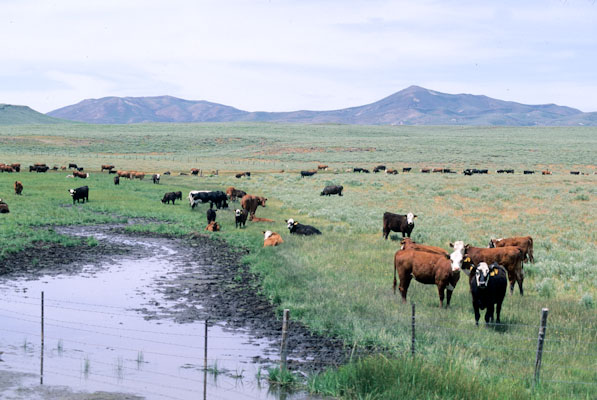
Public lands in a western state, with grazing cattle. Wild Earth Guardians image.

Public lands in a western state, with grazing cattle. Wild Earth Guardians image.

Public lands.  Photo from the Montana Wildlife Federation

Public lands. Photo from the Montana Wildlife Federation

At the Bathtub, we remarked on the history of the issue with a map that showed where the publicly-owned lands really are (the Strange Maps version only showed a dot in the middle of each state proportionate to the federal land held in the state.)  On the other hand, it was an open invitation for know-nothings and know-littles to jump in with silly ideas.  Remarkably, the post remained free of such folderol — until just recently.

None of these sites gives any serious thought to the idea.  None provides a scintilla of an iota of analysis to indicate it would be a good idea.

As one of the the principal spokesmen for the Sagebrush Rebellion in the early days, I want it known that I’ve thought these issues through, and argued them through, and followed the documentation for 30 years (Holy frijole!  I’m old!).  Issues with public lands revolve around stewardship.  Bad stewardship is not improved by a change in ownership.  Ownership change has all too often only led to worse stewardship.  Selling off the public lands is a generally stupid idea.

Certain local circumstances change the nature of a tiny handful of such deals — but not often, not in many places, and not enough to make a significant contribution to retiring any debt the federal government owns.

On the other hand, incomes from these lands typically runs a few multiples of the costs of managing them.  The Reagan administration discovered the lands were a great source of money to offset losses in other places, and for that reason (I suspect) never really got on the Sagebrush Rebellion band wagon — or, maybe Reagan’s higher officials just didn’t get it.

It’s troubling that such a flurry of stupidity strikes now, during a transition of presidents. This is how stupid ideas get traction, like kudzu on a cotton farm, while no one is paying deep attention.  Let’s put this idea back into its coffin with a sagebrush stake in its heart.

Bottom line:  Keep public lands in federal trust.  The Sagebrush Rebellion is over.  The sagebrush won.

_____________

Speaking of presidential transitions, who should be Secretary of Interior?  Stay tuned.

More:

Update 2014: The original GSA map showing percentages of federal holdings in each state (including Indian Reservations as federal holdings), as published in Strange Maps when it was still active.

Update 2014: The original GSA map showing percentages of federal holdings in each state (including Indian Reservations as federal holdings), as published in Strange Maps when it was still active.