In a meeting hall at Washington-on-the-Brazos, Texans meet to write the Texas Declaration of Independence, released March 2, 1836; image from Portal to Texas History
So, put some barbecue in the smoker, get a Shiner for you and your pet armadillo, sit back and enjoy the holiday. If you’re near Washington-on-the-Brazos, go to the ceremony. You’d better be sure you’ve got plenty of Blue Bell Ice Cream.
What? You don’t get the day off? You know, Texas schools don’t even take the day off any more.
I thought things were going to change when the Tea Party got to Austin and Washington? What happened?
Original Manuscript, Texas Declaration of Independence - Texas State Library and Archives Commission
Text from the image above:
The Unanimous
Declaration of Independence
made by the
Delegates of the People of Texas
in General Convention
at the Town of Washington
on the 2nd day of March 1836
When a government has ceased
to protect the lives, liberty and property
of the people, from whom its legitimate
powers are derived, and for the advance-
ment of whose happiness it was inst-
ituted, and so far from being a guaran-
tee for the enjoyment of those inesti-
mable and inalienable rights, becomes
an instrument in the hands of evil
rulers for their oppression.
I’m looking for more photographs of presidents, especially Millard Fillmore and Andrew Johnson at the moment. Only a tiny handful of photos are available for Fillmore, and generally, there are only three photos of Andrew Johnson. Are there other photos hidden in archives, or is that really a reflection of how many photos were made of the two men?
Houston’s first marriage failed fast and hard. He was so shaken that he resigned his office as governor of Tennessee, and left for Indian territories. Eventually he found himself in Texas, and he was the leader of the Texian forces that defeated and captured Mexico’s President Santa Ana, securing independence from Mexico for Texas. Houston was president of the Texas Republic, and governor of the State of Texas.
What would Texas history be had Houston’s first marriage been happy, and he had stayed in Tennessee?
The Special Collections Library at the University of Tennessee recently purchased a copy of an invitation to the sudden January 1829 wedding of then-Tennessee governor Sam Houston and Eliza Allen. This rare item may be only one of its kind.
Aaron Purcell, university archivist, discovered the piece on eBay.com and purchased the invitation on February 14, 2007, just over 178 years after the wedding date. The invitation was kept by descendants of one of the wedding guests for five generations.
Sam Houston is an important figure in Tennessee’s history, serving as governor from 1827-1829 and representing the state in the U.S. House of Representatives from 1823-1827. Born in Lexington, Virginia, in 1793, his family moved to Maryville, Tennessee, in 1806. Houston joined the army in 1813 and fought at the Battle of Horseshoe Bend in 1814. There he caught the attention of Andrew Jackson. Jackson became Houston’s mentor and helped guide his political career.
While governor, Houston briefly courted 18-year-old Eliza Allen, daughter of a wealthy Gallatin, Tennessee, businessman. On January 15, 1829, the couple mailed a handful of invitations to a small January 22nd wedding at the Allen family home. It is one of these few invitations that UT was able to purchase.
The invitation UT acquired is addressed to Miss Harriet Roulstone, the daughter of George Roulstone, who in 1791 founded the Knoxville Gazette, the state’s first newspaper.
Shortly after the ceremony, the newlyweds were at odds. After 11 weeks, Eliza Allen left her husband and returned to her family’s home in Gallatin. There are many theories as to why the marriage was so short-lived, but none are substantiated. Allen burned all of her letters regarding the relationship and Houston was reluctant to speak about his brief marriage.
The invitation gives few details about the wedding, but the piece remained in the Roulstone family for many years, tucked in a trunk with other important family papers.
Shortly after his marriage dissolved, Houston resigned his position as governor and fled to Indian Territory. He married a Cherokee woman and became a citizen of the Cherokee Nation. Houston returned to public service in Texas, serving as president of the Republic of Texas, U.S. senator, and making several failed presidential runs. He died in 1863, leaving behind a complex legacy.
“Sam Houston materials are exceedingly rare and expensive,” Purcell said. UT holds only one other Houston item in its collections, a letter to Colonel Ramsey, dated February 1829. Both items are available for research use in the Special Collections Library at 1401 Cumberland Avenue.
About the Special Collections Library
The University of Tennessee Special Collections Library was founded in 1960 and resides in the historic James D. Hoskins Library building. Materials in special collections include manuscripts, books and other rare materials for research use. For more information, contact the library at (865) 974-4480 or visit www.lib.utk.edu/spcoll/.
Spread the word; friends don't allow friends to repeat history.
Texas State Fair, 1908 - Library of Congress panoramic photo
Click on the photo to see a much larger version.
From the astonishingly vast vaults of the Library of Congress, a panoramic photograph of the main entrance of the Texas State Fair, in 1908. This is almost certainly Dallas, and this is probably the same entrance where today the short-rail mass transit trains pass by — a century later, and Dallas has once again got mass transit.
This photo contrasts starkly with Fair Park in Dallas today, a week after the closing of the 2010 Texas State Fair.
Those falls at the end? They’re artificial. Residents of Wichita Falls got tired of explaining what happened to the falls, and built artificial falls over a decade ago.
The unveiling of the falls was a big event — NBC’s Willard Scott covered the story, which shows you how big the event was, and how long ago it was.
I’ve eaten barbecue at the Bar-L Drive In, under the wise tutelage of Joe Tom Hutchison. It was lunch, though, so we did not sample the Red Draw.
This post is third in a series on the education planks of the 2010 Texas Democratic Party Platform.
This is an unofficial version published in advance of the final version from the Texas Democrats, but I expect very few changes.
PUBLIC EDUCATION FUNDING
Texas Democrats believe:
the state should establish a 100% equitable school finance system with sufficient state revenue to allow every district to offer an exemplary program;
the state should equitably reduce reliance on “Robin Hood” recapture;
state funding formulas should fully reflect all student and district cost differences and the impact of inflation and state mandates;
Texas should maintain or extend the 22-1 class size limits and expand access to prekindergarten and kindergarten programs; and
the federal government should fully fund all federal education mandates and the Elementary and [Secondary] Education Act.
Republicans have shortchanged education funding every session they have controlled the Texas Legislature. After cutting billions from public education in 2003, the 2006 Republican school funding plan froze per pupil funding, leaving local districts faced with increasing costs for fuel, utilities, insurance and personnel with little new state money. To make matters worse, that same plan placed stringent limits on local ability to make up for the state’s failures.
In 2009, Republicans hypocritically supplanted state support for our schools with the very federal “stimulus” aid they publicly condemned after state revenues plunged because of the Republican-caused recession and the structural state budget deficit they created. They reduced state funding for our schools by over $3 billion. Because our student population continues to grow, the combined reduction in state revenue per student was nearly 13%.
Most Texans support our public schools, yet now Republicans want to cut even more from education and also want to siphon off limited public education funds for inequitable, unaccountable voucher and privatization schemes. Texas Democrats believe these attempts to destroy our public schools must be stopped.
Spread the word; friends don't allow friends to repeat history.
Nice drive to Corpus Christi for the Texas Democratic Convention. Long drive. Very long drive. One yearns for the days when flying inside Texas was much more affordable.
Interstate 35 traffic frustrates several million people a day. One cannot drive through Austin without a slowdown at any hour of most business days. Once-clear country roads are congested. Clearly that problem needs some attention.
It’s a stirring and interesting sight that greets you coming into Corpus Christi on I-37. From a distance you’ll see the massive wind farm, huge windmills cranking out electricity, almost a vision of a cleaner future through the haze. Closer into town the windmills can be seen through the industrial maze of oil refineries. It probably can’t be photographed well except from the air, but it’s an interesting juxtaposition of the changes Texas lives through, and the challenges ahead. I was reminded of the “successful labor-management negotiation” workshops:
Hope for the future, a picture of reality . . . now, what are the plans to proceed?
Bill White’s speech pleased the crowd. Not fire and brimstone; enough humor that most delegates smiled all the way through, but full of substantive contrasts between Rick Perry’s policies and those White wishes to pursue instead. Parts of the speech carry the mark of brilliant speech writing, especially in the breezy, pleasant way White paints the policy differences. Here’s the end of the speech:
Rick Perry will claim he represents Texas values. But Perry’s Texas is different than our Texas.
In Rick Perry’s Texas insurance and utility rates rise faster than in other states. In our Texas wages will go up faster because we invest in people.
In Rick Perry’s Texas we import nurses and welders and other skilled workers from abroad. In our Texas we will train more Texans to do those jobs.
In Rick Perry’s Texas the State Board of Education injects political ideology into classrooms. In our Texas we’ll put more computers in our classrooms.
In Rick Perry’s Texas state boards and agencies are pressured from the top to serve those who help the Governor’s re-election. In our Texas government will be the servant, not the master, and our customers will be ordinary Texans.
In Rick Perry’s Texas the governor threatens to leave the world’s greatest country. He is content [to] allow our state to compete with Mississippi for lack of social progress. In our Texas other states will follow Texas because we will be the leader.
In Rick Perry’s Texas citizens are stuck in traffic in big cities because the Texas Department of Transportation was doing the bidding of a foreign company promoting the land grab known as the Trans-Texas Corridor. In our Texas we will work across party lines for a new mobility plan, assisting commuters to get from home to work and all communities to get their goods to market.
In Rick Perry’s Texas the best days may be behind us. In our Texas our best days are ahead of us.
Let us go from this convention, staffing phone banks, knocking on doors, and sending emails. Lift up all who share our values, from the courthouse to the statehouse to the double-wide trailer Andrea and I will live in while the Mansion is rebuilt. Describe to friends and neighbors, from both parties, the simple choice we face in the governor’s race.
Rick Perry is in it for Rick Perry. By the grace of God and with your help, I’m in it for Texas, for you.
Bill White, after his speech at the Texas Democratic Convention - R. G. Ratcliff photo, Houston Chronicle blogs
It was one of the most positive speeches I’ve heard at conventions in a long time — takes me back to Mo Udall at the 1976 National Democratic Convention, or Ted Kennedy’s at the 1980 convention. White came down in favor of education, roads and lower taxes, and good government in general. Cleverly, astoundingly, each of his jabs at Rick Perry was on a substantive, policy issue, and not just a one-liner. No lipstick on pigs, not even a silver foot-in-the-mouth (apologies to Ann Richards, but not to Sarah Palin).
“In delivering one of the most negative speeches by a nominee for Texas governor in modern history, Bill White continues to run a campaign of no substance,” said Perry campaign spokesperson Mark Miner. “Governor Perry’s proven leadership, Texas values, and priorities of limited government, fiscal responsibility, and job creation have made our state the envy of the nation.”
The race is on, and the choices are already very, very clear.
Update:
Spread the word; friends don't allow friends to repeat history.
It wasn’t in the textbooks before, and after the Texas State Soviet of Education finished work on new social studies standards last month, the Great Cowboy Strike of 1883 remains a topic Texas students probably won’t learn.
In the history of labor in the U.S., the common story leaves out most of the great foment that actually drove progressive politics between, say, 1865 and 1920. Union organization attempts, and other actions by workers to get better work hours and work conditions, just get left behind.
Then there is the sheer incongruity of the idea. A cowboy union? Modern cowboys tend toward conservative politics. Conservatives like to think of cowboys as solitary entrepreneurs, and not as workers in a larger organization that is, in fact, a corporation, where workers might have a few grievances about the fit of the stirrups, the padding of the saddle, the coarseness of the rope, the chafing of the chaps, the quality of the chuck, or the very real dangers and hardships of simply doing a cowboy’s job well.
Until today, I’d not heard of the Great Cowboy Strike of 1883.
COWBOY STRIKE OF 1883. In the two decades after the Civil War the open-range cattle industry dominated the Great Plains, then died and was replaced by closed-range ranching and stock farming. In West Texas during the 1880s new owners, representing eastern and European investment companies, gained control of the ranching industry and brought with them innovations threatening to many ranchhands. Previously, cowboys could take part of their pay in calves, brand mavericks, and even run small herds on their employers’ land. New ranch owners, interested in expanding their holdings and increasing their profits, insisted that the hands work only for wages and claimed mavericks as company property. The work was seasonal. It required long hours and many skills, was dangerous, and paid only an average of forty dollars a month. The ranch owners’ innovations, along with the nature of the work, gave rise to discontent.
In 1883 a group of cowboys began a 2½-month strike against five ranches, the LIT, the LX, the LS, the LE, and the T Anchor,qqv which they believed were controlled by corporations or individuals interested in ranching only as a speculative venture for quick profit. In late February or early March of 1883 crews from the LIT, the LS, and the LX drew up an ultimatum demanding higher wages and submitted it to the ranch owners. Twenty-four men signed it and set March 31 as their strike date. The original organizers of the strike, led by Tom Harris of the LS, established a small strike fund and attempted, with limited success, to persuade all the cowboys in the area of the five ranches to honor the strike. Reports on the number of people involved in the strike ranged from thirty to 325. Actually the number changed as men joined and deserted the walkout.
It was the wrong time to strike. With a full month remaining before the spring roundup, ranchers had plenty of time to hire scabs and strikebreakers, to replace the striking cowboys. Some ranches increased wages, but most of them fired the strikers and made the strikers crawl back to beg for jobs. Santayana’s Ghost is tapping at the chalk board about the potential lessons there. (You should read the whole article at TSHA’s site.)
It didn’t help that the striking cowboys didn’t have a very large strike fund, nor that they drank a lot of the strike fund up prematurely.
The Great Cowboy Strike, unimpressive as it was, is part of a larger story about labor organizing and progressive politics especially outside the cities in that larger Progressive Era, from the Civil War to just after World War I. It involves large corporations running the ranches — often foreign corporations with odd ideas of how to raise cattle, and often with absentee ownership who hired bad managers. The strike talks about how working people were abused in that era, even the supremely independent and uniquely skilled cowboy. It offers wonderful opportunities to improve our telling the story of this nation, don’t you think?
When considering the political scene of the moment, it is difficult not to see how historical allegory plays an important role in the public spectacle known as the Tea Party movement. From the name itself, an acronym (Taxed Enough Already) that fuses current concerns to a patriotic historical moment, to the oral and written references by some of its members to Stalin and Hitler, the Tea Party appears to be steeped (sorry) in history. However, one has only to listen to a minute of ranting to know that what we really are talking about is either a deliberate misuse or a sad misunderstanding of history.
Misuse implies two things: first, that the Partiers themselves know that they are attempting to mislead, and second, that the rest of us share an understanding of what accurate history looks like. Would that this were true. Unfortunately, there is little indication that the new revolutionaries possess more than a rudimentary knowledge of American or world history, and there is even less reason to think that the wider public is any different. Such ignorance allows terms like communism, socialism, and fascism to be used interchangeably by riled-up protesters while much of the public, and, not incidentally, the media, nods with a fuzzy understanding of the negative connotations those words are supposed to convey (of course some on the left are just as guilty of too-liberally applying the “fascist” label to any policy of which they do not approve). It also allows the Tea Partiers to believe that their situation – being taxed with representation – somehow warrants use of “Don’t Tread On Me” flags and links their dissatisfaction with a popularly elected president to that of colonists chafing under monarchical rule.
While the specifics of the moment (particularly, it seems, the fact of the Obama presidency) account for some of the radical resentment, the intensity of feeling among the opposition these days seems built upon a total lack of historical perspective.
Social studies curricula climb the scaffold to the gallows set by the “conservative” majority of the Texas State Board of Education today. If they get their way — and signs are they will — they will hobble social studies education for at least a half generation.
As The Dallas Morning News explains this morning, lame-duck board members fully intend to change Texas and American culture with their rewriting of history, de-emphasis of traditional history education, and insertion of what they consider pro-patriotic ideas in social studies.
AUSTIN – When social conservatives on the State Board of Education put the final touches on social studies curriculum standards this week, it will be a significant victory in their years-long push to imprint their beliefs upon what Texas students learn.
We in the part-time blogosphere can’t cover the meeting as it deserves — nor have we been able to mobilize pro-education forces to do what was needed to stop the board — yet.
McLeroy will make the most of his remaining time on the panel. He proposed several additions to the social studies standards for the board to consider this week. One would require students to “contrast” the legal doctrine of separation of church and state with the actual wording in the Bill of Rights that bars a state-established religion.
McLeroy has resurrected the old Cleon Skousen/David Barton/White Supremecist argument that “separation of church and state” does not appear in the Constitution, disregarding what the document and its amendments actually say. Jefferson warned that such discussions poison children’s education, coming prematurely as this one would be as McLeroy wants it.
Watch that space. Tony Whitson at Curricublog will cover it well, and probably timely — read his stuff. Steve Shafersman’s work will be informative. The Texas Tribune offered great coverage in the past. Stay tuned. And the Texas Freedom Network carries the flag and works hard to recruit the troops and keep up morale.
It is discouraging. Under current history standards, Texas kids should know the phrase “shot heard ’round the world,” but they do not get exposure to the poem from which the phrase comes, nor to the poet (Emerson), nor exposure to Paul Revere whose ride inspired Longfellow later to write a poem that children have read ever since — except in Texas.
But under the new standards, Texas children will learn who Phyllis Schlafly is. Patriots are out; hypocrites and demagogues are in.
Spread the word; friends don't allow friends to repeat history.
I get e-mail from the NAACP; the rest of the nation is paying attention to the follies run by the conservative bureaucrats at the SBOE:
Ed,
I wouldn’t want to be a Texas State Board member this week.
Last week, we asked you to write to your representative, telling him or her that rewriting Texas history textbooks is ignorant and unpatriotic.
Over 1,500 people have already written in, filling the inboxes of our school leaders.
This week, we’d like to offer you one more chance to get involved. The NAACP is planning rallies, hearings and press conferences in Texas to stop the state board from rewriting history. But we can’t do it without you.
An issue as controversial as rewriting history elicits strong emotions, and we want to give you the chance to speak out. Do you have something you would like to say at the hearing?
The NAACP works to ensure equal rights and to eliminate discrimination against all racial and ethnic groups. The proposed changes to our textbooks threaten our mission. This is not about Republicans or Democrats — it’s about our shared history as Texans. That’s why we want to use the words of our Texas supporters to turn the tide.
The Texas textbook vote is just two weeks away, so we need to push ourselves harder now than ever before.
The future of our children’s education is in the hands of just a few State Board members. Your voice could be the one to tip the scale.
Take a moment to tell us what you think about the Texas State Board rewriting history. The best submissions will be read at the hearing on May 19th.
We need your help to keep divisive politics out of Texas’ classrooms.
From now until May 14th, the State Board of Education is accepting public comments on its proposed curriculum changes.
The SBOE has proposed removing Thomas Jefferson from a part of the curriculum. They are also planning to exclude references to Hispanics who fought Santa Anna and died at the Alamo.
During the primaries, Texans voted against the most extreme and hyper-political SBOE candidates, sending a clear message about their approach of injecting politics into our classrooms.
Last month, I called on Rick Perry to ask his appointed chair of the SBOE to either send changes back to expert review teams or delay the vote until new board members are seated.
Perry’s response has been to say that he’s not going to “try to outsmart” the SBOE. He declined to show leadership, refusing to ask his appointed chair of SBOE to rein in the hyper-political curriculum amendment process.
Our next governor should be a leader who ensures our schools prepare young Texans for college and their careers. I am committed to improving education and working for our future.
Thank you for taking the time to weigh in.
Sincerely,
Bill White
P.S. If you would like to send your comments directly to the SBOE, click here.
Spread the word; friends don't allow friends to repeat history.
SBOE isn’t exactly asking that the Bible be rewritten — or at least, not directly. Suggesting we replace Thomas Jefferson as a founder with John Calvin in high school standards, is just as silly.
Two earthquakes ravage American nations, tsunamis, freakishly large snowstorms, still trouble in Iraq and Afghanistan, Iran in turmoil and ruled by some sort of crazy, North Koreans still starve so the nation can make a nuclear sabre to rattle.
Another prominent, but much more reasonable Republican member of the SBOE also lost: Geraldine “Tincy” Miller, in Dallas. Miller was so expected to win that race that almost no one was watching, and little is in public about the winner of the race.
Election results from Tuesday’s primary election in Texas mean that the State Board of Education will change dramatically. It would be almost impossible for any of the changes to be bad ones. McLeroy led the anti-evolution force on the board. McLeroy was the ringleader to gut and racialize English standards earlier, and he’s been the point man in the attempt to gut and de-secularize social studies standards.
Board member Cynthia Dunbar, another “social conservative,” did not run for re-election.
In the governor’s race, anti-education, anti-science Gov. Rick Perry won big over the state’s popular Republican U.S. Sen. Kay Hutchison. Third place in that race went to the Teabagger candidate.
No Teabagger won any race in Texas.
It’s not that Texas has suddenly gained reason. The dissension on the SBOE, demonstrated by the Texas Senate’s rejection of McLeroy’s renomination to be chairman of the body, just got to be too much. Texans like their crazies to be sane enough to get things done, and not so noisily crazy as to attract attention to the state’s shared insanity.
Sunlight cast on the actions of the board, especially by groups like the Texas Freedom Network, informed Texans. And now the people of Texas have spoken.
Here is a news rundown of stories on the Texas State Board of Education, who have been planning for a year now to mess up social studies standards for Texas public schools, this week.
Austin American-Statesman details part of the trouble: Officials at the SBOE have hired a couple of radical religious historical revisionists, David Barton and Peter Marshall, and ignored educators, historians and economists in revising the standards; both are ministers with a history of conflict with historians and educators. Both have called for emphasis on their Christian sects’ beliefs in history classes.
Or, until that account is unsuspended by the forces supporting Donald Trump: Follow @FillmoreWhite, the account of the Millard Fillmore White House Library
We've been soaking in the Bathtub for several months, long enough that some of the links we've used have gone to the Great Internet in the Sky.
If you find a dead link, please leave a comment to that post, and tell us what link has expired.
Thanks!
Retired teacher of law, economics, history, AP government, psychology and science. Former speechwriter, press guy and legislative aide in U.S. Senate. Former Department of Education. Former airline real estate, telecom towers, Big 6 (that old!) consultant. Lab and field research in air pollution control.
My blog, Millard Fillmore's Bathtub, is a continuing experiment to test how to use blogs to improve and speed up learning processes for students, perhaps by making some of the courses actually interesting. It is a blog for teachers, to see if we can use blogs. It is for people interested in social studies and social studies education, to see if we can learn to get it right. It's a blog for science fans, to promote good science and good science policy. It's a blog for people interested in good government and how to achieve it.
BS in Mass Communication, University of Utah
Graduate study in Rhetoric and Speech Communication, University of Arizona
JD from the National Law Center, George Washington University


 Posted by Ed Darrell
  The Special Collections Library at the University of Tennessee recently purchased a copy of an invitation to the sudden January 1829 wedding of then-Tennessee governor Sam Houston and Eliza Allen. This rare item may be only one of its kind.
 The invitation UT acquired is addressed to Miss Harriet Roulstone, the daughter of George Roulstone, who in 1791 founded the Knoxville Gazette, the state’s first newspaper.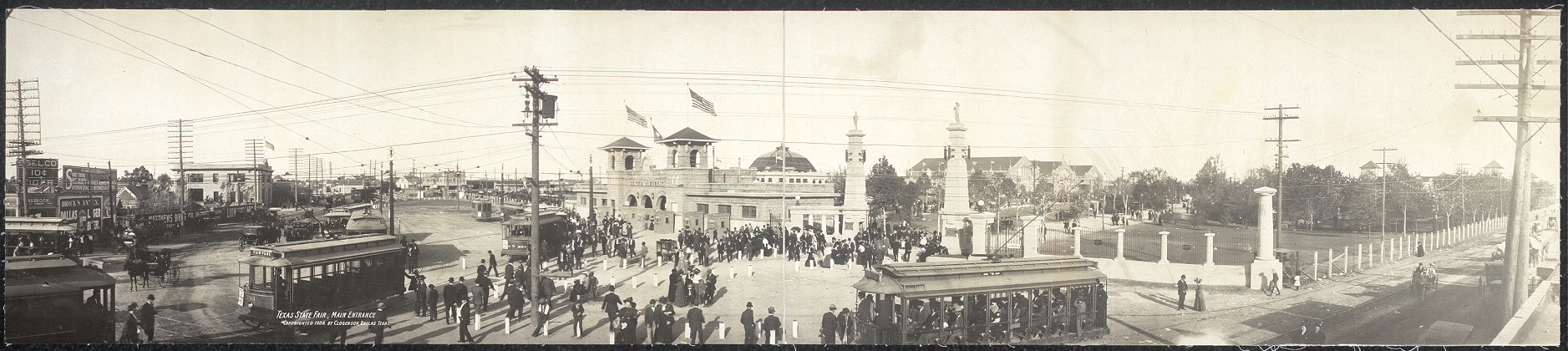





 Millard Fillmore's Bathtub