Strange Maps features federally-owned lands. Those of us who grew up in the west tramping those federal lands, and those of us who worked policy for those lands rarely think they should be listed as “strange” maps. Beautiful land maps, perhaps. God’s Country. It’s funny others regard it as so strange.
But we get clues. In comments at Strange Maps I noted a corporate meeting where I was chastised and ostracized for making a simple statement of fact about the ownership of lands in the west. Other than we veterans of the Sagebrush Rebellion (on all sides), ranchers, miners, and members of the Sierra Club, Wilderness Society, National Recreation and Parks Association (NRPA) [Barry Tindall? Are you still out there?], National Parks Conservation Association (NPCA), and enrolled tribal members, who pays attention to that stuff?
Too few in government pay enough attention. Fewer people outside government pay attention, especially if they don’t live in states in which the federal lands reside.
Public lands are all around us, yet we don’t see them as anything much different from any other land. Too often we don’t even see them for the resources they are. It’s as if we had a treasure of diamonds, rubies and gold, and we put it on display, and no one could see it.
For example, there was a major decision in federal district court on an issue of federalism last Friday — did you hear of it in your local newspaper, or on your local television or radio news? Nor are most people familiar with the move to amend the 1872 Mining Act, nor could most Americans describe for you what the 1872 Mining Act is or why it’s worth billions of dollars annually to the federal government, state governments, and mining corporations.
Strange Maps showed only the amount of land in federal hands in each state. Below is a map that shows where are the actual federal holdings, from the online National Atlas (nationalatlas.gov) — a map of federal lands and Indian Reservations. (A .gif preview is below; below that is a link to a .pdf file you can download.) The light green is National Forest land; the yellow is Bureau of Land Management land. The red plots are Indian reservations. Click on the map for the enlargement, you can see that Nevada, for example, has just thin threads of private lands (in white), mostly along U.S. Highway 50, and around Las Vegas.

All Federal Lands and Indian Reservations; NationalAtlas.gov, now archived at USGS
Flip the pages of most geography texts, however, and you’ll find little clue of the role federal lands play in modern America, let alone the historical roles played.
History?
Sure. Notice that most of the public lands held today are in 13 western states, generally the last states allowed into the union (not exactly; Oklahoma is a 20th century admission — but it has Indian reservations; read on). Outside the 13 original colonies, which became the 13 original states, and Vermont (#14), all the land in the U.S. was held by the federal government at one time. Much of the territory between the 13 original states and the Mississippi was ceded to the U.S. by Britain in the Treaty of Paris, which ended the American Revolution. Americans thought the land useful for farming, chiefly, so the intention was to devise the lands to private holders. To that end the various Northwest Ordinances (e.g., 1785, 1786, 1787 and later) established systems to sell off the lands into private hands.
Disposal of the lands required the creation of a bureau to do the job. The General Land Office was created in 1812, and remained part of the federal government until it was folded into the new Bureau of Land Management in 1946.
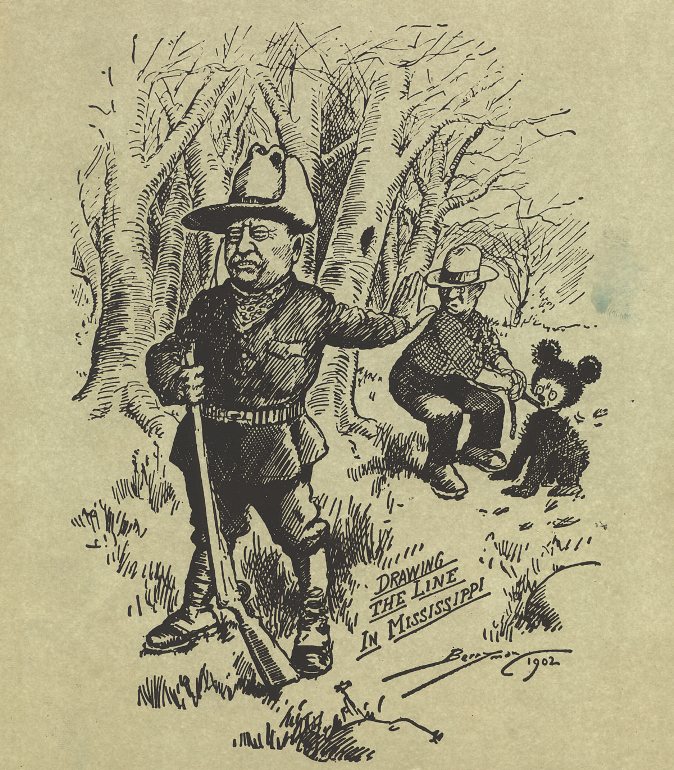
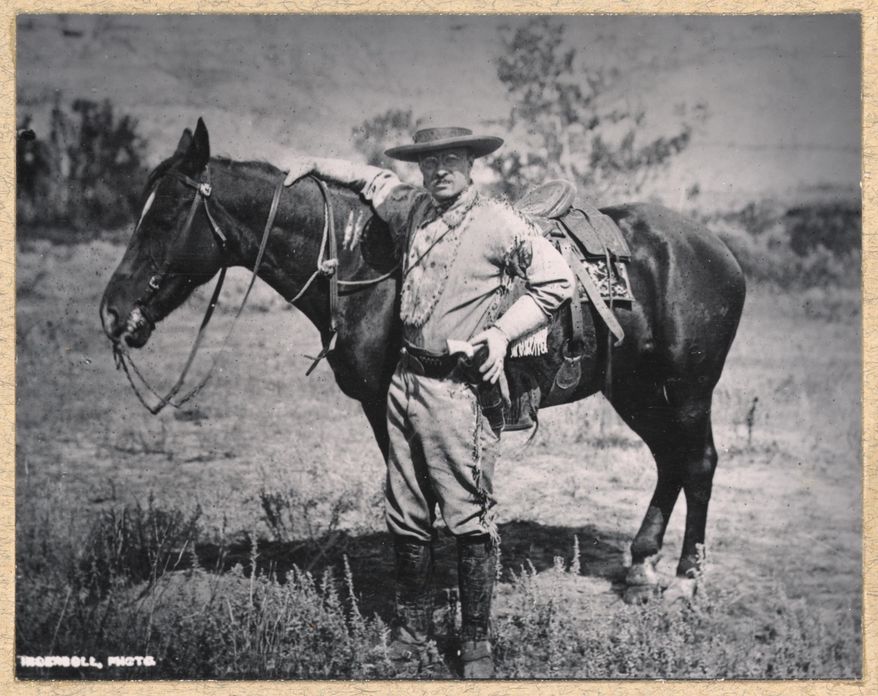
That some of the lands might have national value, and should be held in federal title, did not surface as a complete idea until the Progressive Era, with the emphasis on land stewardship, under Teddy Roosevelt, Taft, and their successors. Even then, the general idea was to get most of the lands into private ownership. Roosevelt worked to preserve the most scenic and most unique lands.
Beginning with the Northwest Ordinances, the federal government set aside two sections in every township for the benefit of education. Local governments sold the tracts and put the money to school construction, or put the schools on those sections. Some of the tracts in the far western states are still there, unsold and providing no benefits to the schools. In some cases this is because the tracts are stuck inside federally-held tracts, in National Forests, in National Parks. Texas dedicated some of its state lands to provide funding for the University of Texas. Fortunately, these tracts happened to be on a pool of oil. When oil development took off, Texas’s university systems benefited (the Texas A&M System got a third of the rights along the way).

Development of the Transcontinental Railroad was financed by massive grants of land to the railroad companies. Even today the fortunes of the old Burlington Northern Railroad (now BNSF) are swelled by coal on land granted to the original companies building the rails, land the company has held for all these years. The thin line of private land across northern Nevada originally was the route of the Central Pacific Railroad — now it is approximately the route of U.S. Highway 50, “America’s Loneliest Highway.”
President Abraham Lincoln signed the Homestead Act on May 20, 1862. Under the Act, any American could lay claim to public lands for a small fee, and if he could live on the land for five years, title was vested in that citizen. This explanation comes from a lesson plan at the National Archives:
The new law established a three-fold homestead acquisition process: filing an application, improving the land, and filing for deed of title. Any U.S. citizen, or intended citizen, who had never borne arms against the U.S. Government could file an application and lay claim to 160 acres of surveyed Government land. For the next 5 years, the homesteader had to live on the land and improve it by building a 12-by-14 dwelling and growing crops. After 5 years, the homesteader could file for his patent (or deed of title) by submitting proof of residency and the required improvements to a local land office.
When I was a child in southern Idaho, customers at my parents’ furniture store included many people who were still trying to make a go of things on homesteads north of Burley, Idaho, on “the North Side.” Much of the land granted this way could not support a family, and the failure rate of these homesteads in the 1950s and 1960s was probably more than 50 percent (I’m swagging the figure — if you have better statistics, send them along).
Overall, the Homestead Act shaped America’s character as a home for entrepreneurs:
By 1934, over 1.6 million homestead applications were processed and more than 270 million acres—10 percent of all U.S. lands—passed into the hands of individuals. The passage of the Federal Land Policy and Management Act of 1976 repealed the Homestead Act in the 48 contiguous states, but it did grant a ten-year extension on claims in Alaska.
Much of the land that open for homesteading was desert, unsuitable for farming. It was available for grazing cows and sheep, though, and much of it was overgrazed. (Grazing alone wouldn’t meet the homestead requirements.) It was not until the 1970s that people outnumbered sheep in Utah, for example. In the first three decades of the 20th century enormous flocks of sheep grazed much of what is now considered Utah’s western desert territory, flocks of thousands of sheep, or tens of thousands.
These lands, too arid for farming, too hilly for much of anything else, too far away from settlements for other commerce, eventually formed the core of lands held by the Bureau of Land Management (BLM) in the Department of Interior. BLM manages 264 million acres of land, far and away the biggest land management agency in the federal government. Much of the land was severely overgrazed by 1930, and after the harsh lessons of the Dustbowl, Congress tried to rope in grazing and set it up in a rational scheme in the Taylor Grazing Act of 1934, one of the lesser noted chunks of the New Deal era.
The major federal land management agencies today include the Department of Interior’s BLM, National Park Service, Fish and Wildlife Service, Bureau of Reclamation, and to a lesser and more complicated degree, the Bureau of Indian Affairs; the Department of Agriculture’s National Forest Service; and the Department of Defense, especially in the western public lands states (think Nevada gunnery range, Skull Valley and Dugway Proving Grounds, Utah, and Area 51).
Each area of land management policy is controversial to some degree, but even these controversies rarely rise to the level of public acknowledgment. The latest starlet’s sexcapades will grab headlines away from the major effort to overhaul mining law, for example. In the 1980s, Alaska voted on a proposal to secede from the union, but the issue barely got three paragraphs in the Washington Post or New York Times, two of the newspapers that are generally very good in covering such issues. This post barely scratches the surface of these issues.
(Digression: I first encountered Molly Ivins when she reported for the NY Times out of the Denver bureau; as a Scout I had hiked and traveled much of Utah and the west; as a Senate staffer to a western senator, I was intimately familiar with most of the land in Utah especially. Ivins wrote a story on a protection issue on a chunk of land and a formation I’d not been familiar with, and in sparring with her about the article, it became very clear that she had pulled out sources we didn’t know about, and that she knew the stuff about as well as we did. Anyone who bothers to give a damn about western lands can earn my respect with such careful research.)
As a side note, Strange Maps suggested that the District of Columbia was all federal lands, but most of the District has been devised into private property, and commenters noted that. Here is a map of the District showing its federally-maintained lands.

District of Columbia and Federal Lands; NationalAtlas.gov (now at USGS)
Other resources:
- Teaching with documents: The Homestead Act (from the National Archives)
- Primary Documents in American History: The Homestead Act (Library of Congress)
- A paper on the Constitutional authority for the federal government to hold and manage lands. There is a very, very short note on the Sagebrush Rebellion there, too.
- History and culture in the National Parks
- Report of the President’s Commission on Americans Outdoors
- Outdoor Recreation Resources Review Commission (1958 to 1962); Outdoor Recreation Act; Carter Betz on the legacy, for Parks and Recreation, 1999; note from the chairman, Laurance S. Rockefeller, on 40th anniversary.
- CRS report on Mining Act of 1872
- David M. Kennedy, “Can the West lead us to a better place?” Stanford Magazine May/June 2008. This is the article that inspired Strange Maps; Kennedy, the worthy and noted historian, is retiring this year.
- The Pew Campaign for Responsible Mining
- Mining hearing summaries of the current Congress, from the American Geological Institute
Other related posts at the Bathtub:
Spread the word; friends don't allow friends to repeat history.


 Posted by Ed Darrell





 Millard Fillmore's Bathtub