Gold Star Mothers Day, 2015

September 27, 2015

President Barack Obama hugs Gold Star mother Michelle DeFord following a roundtable with veterans and Gold Star mothers regarding the Iran nuclear agreement, in the Roosevelt Room of the White House, Sept. 10, 2015. Secretary of State John Kerry also participated. (Official White House Photo by Pete Souza)

President Barack Obama hugs Gold Star mother Michelle DeFord following a roundtable with veterans and Gold Star mothers regarding the Iran nuclear agreement, in the Roosevelt Room of the White House, Sept. 10, 2015. Secretary of State John Kerry also participated. (Official White House Photo by Pete Souza)

Ceremonies and gatherings mark Gold Star Mothers Day in cities across the United States. Gold Star Mothers Day officially is the last Sunday in September, September 27 in 2015.

The Tampa Tribune offers an article covering several meetings in the Tampa area, and the families honored and affected.

Photo and caption from the Tampa Tribune: Thea Kurz became a Gold Star mother on Aug. 20, 2014, when her son, Army Sgt. 1st Class Matthew Leggett, 39, was killed in Afghanistan. She says she gets helpful support from other Tampa Bay families who have lost loved ones serving in the military.

Photo and caption from the Tampa Tribune: Thea Kurz became a Gold Star mother on Aug. 20, 2014, when her son, Army Sgt. 1st Class Matthew Leggett, 39, was killed in Afghanistan. She says she gets helpful support from other Tampa Bay families who have lost loved ones serving in the military.

Photo and caption from the Emporia (Kansas) Gazette: Kendra Johnson/Gazette Maria Lane holds her son's dog tags on Tuesday. These were the dog tags David was wearing when he passed and Lane has since worn them everyday in memory of him.

Photo and caption from the Emporia (Kansas) Gazette:  Maria Lane holds her son’s dog tags on Tuesday. These were the dog tags David was wearing when he passed and Lane has since worn them everyday in memory of him. Photo: Kendra Johnson/Gazette


Gold Star Mothers Day 2015 – fly your flag today, September 27

September 27, 2015

Fly your U.S. flag on September 27, 2015, in honor of the Gold Star Mothers of fallen U.S. soldiers.

Gold Star mother Jennifer Owens views a photo of her daughter Spc. Ember Marie Alt at the Survivor Outreach Services Remembrance Hall in Fort Hood, Texas. Owens credits Survivor Outreach Services staff members for helping her cope with her loss of her daughter. U.S. Army photo

‘Gold Star Mothers’ become bedrocks of support for survivors of the fallen’: Gold Star mother Jennifer Owens views a photo of her daughter Spc. Ember Marie Alt at the Survivor Outreach Services Remembrance Hall in Fort Hood, Texas. Owens credits Survivor Outreach Services staff members for helping her cope with her loss of her daughter. U.S. Army photo and caption

Gold Star Mothers Day is the last Sunday in September, designated under U.S. law, 36 U.S.C. §111:

The President is requested to issue a proclamation calling on United States Government officials to display the flag of the United States on all Government buildings, and the people of the United States to display the flag and hold appropriate meetings at homes, churches, or other suitable places, on Gold Star Mother’s Day as a public expression of the love, sorrow, and reverence of the people for Gold Star Mothers.

Gold Star Mothers grew out of the grief and charity of mothers of soldiers who died in World War I, gaining formal organization in 1928.

The American Gold Star Mothers Inc. was formed in the United States shortly after World War I to provide support for mothers who lost sons or daughters in the war. The name came from the custom of families of servicemen hanging a banner called a Service Flag in the window of their homes. The Service Flag had a star for each family member in the United States Armed Forces. Living servicemen were represented by a blue star, and those who had lost their lives were represented by a gold star. Gold Star Mothers are often socially active but are non-political. Today, membership in the Gold Star Mothers is open to any American woman who has lost a son or daughter in service to the United States. On the last Sunday in September, Gold Star Mother’s Day is observed in the U.S. in their honor.[1] The group holds a congressional charter under Title 36 of the United States Code.

Proclamation from President Obama for Gold Star Mothers Day, 2015:

Presidential Proclamation — Gold Star Mother’s and Family’s Day, 2015

GOLD STAR MOTHER’S AND FAMILY’S DAY, 2015

– – – – – – –

BY THE PRESIDENT OF THE UNITED STATES OF AMERICA, A PROCLAMATION

At every crossroads in the American story, courageous individuals of all backgrounds and beliefs have answered our Nation’s call to serve.  Today, the sacrifices of our fallen heroes echo in safer towns and cities, countries and continents — resonating throughout a world they forever made freer.  Their legacies are solemnly enshrined in the history of our eternally grateful Nation, as well as in the hearts of all who loved them.  Today, we honor the Gold Star Mothers and Families who carry forward the memories of those willing to lay down their lives for the United States and the liberties for which we stand.

The proud patriots of our Armed Forces never serve alone.  Standing with each service member are parents, spouses, children, siblings, and friends, providing support and love and helping uphold the ideals that bind our Nation together.  While most Americans may never fully comprehend the price paid by those who gave their last full measure of devotion, families of the fallen know it intimately and without end.  Their sleepless nights allow for our peaceful rest, and the folded flags they hold dear are what enable ours to wave.  The depth of their sorrow is immeasurable, and we are forever indebted to them for all they have given for us.

Despite their broken hearts, the families of these warriors are full of love and they continue to serve their communities and comfort our troops, veterans, and other military families. Our country is constantly inspired by their incredible resilience, and in their example we see the very best of America.  On this day of remembrance, we honor our Gold Star Mothers and Families by living fully the freedom for which they have given so much, and by rededicating ourselves to our enduring obligation to serve them as well as they have served us.

The Congress, by Senate Joint Resolution 115 of June 23, 1936 (49 Stat. 1985 as amended), has designated the last Sunday in September as “Gold Star Mother’s Day.”

NOW, THEREFORE, I, BARACK OBAMA, President of the United States of America, by virtue of the authority vested in me by the Constitution and the laws of the United States, do hereby proclaim September 27, 2015, as Gold Star Mother’s and Family’s Day.  I call upon all Government officials to display the flag of the United States over Government buildings on this special day.  I also encourage the American people to display the flag and hold appropriate ceremonies as a public expression of our Nation’s gratitude and respect for our Gold Star Mothers and Families.

IN WITNESS WHEREOF, I have hereunto set my hand this twenty-fourth day of September, in the year of our Lord two thousand fifteen, and of the Independence of the United States of America the two hundred and fortieth.

BARACK OBAMA

Here is a series of short videos on Gold Star Mothers, Gold Star Parents, and even notes on Veterans Benefits available to survivors of soldiers lost in conflict.

From Montana's Daily Interlake: Sgt. Chuck Lewis, U.S. Marine Corps, of Ronan folds the American Flag at the Gold Star Mother's Day event at Brockman Park in Ronan on Sunday, September 28 (2013). (Brenda Ahearn/Daily Inter Lake)

From Montana’s Daily Interlake: Sgt. Chuck Lewis, U.S. Marine Corps, of Ronan [Montana] folds the American Flag at the Gold Star Mother’s Day event at Brockman Park in Ronan on Sunday, September 28 (2013). (Photo by Brenda Ahearn/Daily Inter Lake)

More:


Quote of the moment: Gen. Patton’s oddly non-profane explanation of profanity

February 18, 2015

Lt. Gen. George Patton with the signal corps, July 11th 1943, Sicily. (General George Patton Museum) - See more at: http://ww2today.com/10th-august-1943-general-george-s-patton-slaps-another-soldier#sthash.dVuHaPeg.dpuf

Lt. Gen. George Patton with the signal corps, July 11th 1943, Sicily. (General George Patton Museum) – See more at: http://ww2today.com/10th-august-1943-general-george-s-patton-slaps-another-soldier#sthash.dVuHaPeg.dpuf

  • When I want my men to remember something important, to really make it stick, I give it to them double dirty. It may not sound nice to some bunch of little old ladies at an afternoon tea party, but it helps my soldiers to remember. You can’t run an army without profanity; and it has to be eloquent profanity. An army without profanity couldn’t fight its way out of a piss-soaked paper bag. … As for the types of comments I make, sometimes I just, By God, get carried away with my own eloquence.
    • Remark to his nephew about his copious profanity, quoted in “The Unknown Patton” (1983) by Charles M. Province, p. 184 (here, via Wikiquote)

One:

One glorious summer, after a couple of months of Scouting, I signed on to do air pollution research for several weeks in the field, in and around Farmington, New Mexico.  Hours were long, and the driving between sampling sites was more than 120 miles a day, between Farmington and Teec Nos Pos, Arizona.  Driving through the desert, passing the Shiprock every day, is rough duty, but somebody had to do it.

My mother’s brother, Harry Stewart, lived in Farmington.  Weekends I was royally dined and liquored, and got the opportunity to meet Uncle Harry’s friends, who included C. M. Woodbury, then city manager of Farmington.  Woodbury’s exploits on the golf course provided constant entertainment.  His opinions about having to measure air pollution from the Four Corners Power Plant and the then-under-construction San Juan Generating Station gave me great insight into local views on regional and national issues, as the Clean Air Act wended its way through Congress.

Woodbury had been an aide of some sort to General George Patton in Europe, as I understood it.  Sadly, I never did get back to Farmington to debrief him in detail about World War II, a loss of information that still stings from time to time.  I think he was with the 752nd Tank BattalionWoodbury retired in 1976.

The movie, Patton, still played in theaters, and one Sunday, over dinner, conversation turned to great leadership and whether I thought Patton was such a leader.  I hadn’t seen the movie.  I didn’t know much about Patton.  I asked what a definition of a good leader might be.  Uncle Harry and Woodbury settled on this criterion:  A good leader is someone whose followers will go to hell and back for her, or him.  Why did Patton inspire that sort of followership, I asked.

Woodbury rambled on about Patton getting gasoline for his tanks and trucks on a run through German lines that became legendary, and was portrayed in the movie.  He talked about how Patton’s troops always could count on a good, warm meal when they got a break from battle.  He talked about how proud every soldier was to be a part of that unit under Patton’s command.  He stopped, his eyes welled up and a tear, or maybe more, rolled down his cheek.

“We would have gone to hell for Patton because we knew he would have gone to hell for us. And he did.”

William Manchester once noted that, in battle, soldiers don’t die for great causes.  They fight to defend and save the friend to the right and the friend to the left.

It would have been interesting to know Patton.

Two:

We moved to Texas in 1987. Texas is a culture shock, I think, regardless where one comes from, even sometimes if one comes from Texas.  We moved directly from Cheverly, Maryland, outside of Washington, D.C.

Describing the conservative, goody-two-shoes aspects of Texas culture of that time can’t be done in shorthand.  A couple of examples:  Duncanville at the time had about 35,000 residents, and 44 churches.  Bordering Duncanville were three or five megachurches, among the largest in the nation, which drew heavily from Duncanville residents.  It was rare to meet someone who wouldn’t ask early in any conversation, “And where do you go to church?” A great, personal and close relationship to Jesus is expected to be a feature of any “normal” person’s life in Texas.  The day I drove out of Utah, I remember thinking as I rose above the fog heading up Parley’s Canyon that I would probably never again live in a place where it was so difficult to get a drink with dinner.  Then we moved to Texas.  On the surface, and often below the surface, Texans worked hard (and still do) to demonstrate that they are straighter than Mormons, and blessed because of their lack of sinning.  We don’t need to get into the ironies and incongruities of country music, Dallas culture and other now-well-identified sins of the Bible Belt.

Let’s just say, profanity was not something one publicly assented to.

I came down here to work with American Airlines, which was headed at the time by Robert Crandall.  Crandall’s use of profanity was legendary among AA executives and workers — executives, especially.  Crandall ran a tight operation with high expectations of worker achievement, especially in competition with other airlines.  “Competitive anger,” Crandall called it — and he expected all employees to demonstrate that, in appropriate, customer-serving, money-making ways.  Failures were noted, and often enough one might expect to be in a meeting with Crandall where an explanation of how and why things went wrong would be cut off with an expletive-filled dressing down that both made the victim subject understand the nature and severity of the error and pledge never to make that nor any other error ever again.

Talking about these events later, witnesses almost never said anything about the profanity.  Living in Texas where profanity was thought to make even strong men faint and swoon, Crandall’s expletives were considered instead indications of the importance of his thought, and speech, and markers that he was to be listened to.  I remember one young MBA rattled by the profanity; he left the company within a few weeks, and he wasn’t even the subject of the discussion.  But among others, especially successful managers and executives, discussion of content of meetings focused on the subject of the meetings, what was said about that subject, with unconscious excising of the profanity.

One famous meeting involved cutting costs, and the subject was security for a warehouse in San Juan, Puerto Rico.  Complaints about the cost for security the previous year led the local manager to beef up fences, get rid of the security company, and get dogs to roam the area at night.  Crandall pushed harder, and discussion turned to whether it would be even cheaper than dog food to get a sound system that would randomly play the sounds of big, vicious dogs’ barking instead.  I wasn’t in that meeting, but I heard several different accounts, all of them noting the boss’s exploration of options others might not think of, and how hard it was to please him — but not one story that included any comment about profanity, which I learned had laced the entire episode and probably made it memorable to everyone within earshot. And so they’d retell it. A remarkable piece of effective corporate communication.

How does one gauge when and whether profanity is necessary, or effective, in communication?

In one project, we videotaped Crandall talking on company issues and what he expected in the leaders the company hired as managers.  In several hours of video, I don’t recall a single time we had to retape, or edit, any profanity out.  Crandall turned off the profanity when it might pose a problem.  People who know him outside the company often express surprise that he’d ever use such language.

I sometimes wondered if Crandall was a reincarnation of Patton in at least some small way.  But Crandall was born in 1935, and Patton died in 1945.  Reincarnation is not the answer.

More:


A toast on Whiskey and Cigar Day 2014: Excelsior! to Mark Twain’s and Winston Churchill’s births (November 30)

November 30, 2014

Mark Twain, afloat

Mark Twain aboard a ship, on his way to Hawaii. Young Samuel Clemens apprenticed to be a Mississippi river boat pilot, and held a fascination for water-going vessels his entire life. His pilot years are documented, and analyzed, in Life on the Mississippi.
This photo of Twain remains one of my favorites.

November 30 is the birthday of Mark Twain (1835), and Winston Churchill (1874).

This is the traditional Millard Fillmore’s Bathtub post to remind you. Both Twain and Churchill were lovers of good whiskey, and good cigars. Surely they would have toasted themselves with a drink and a smoke.

Even if we don’t, we can pretend we did.

In 2014, we have the benefit of having had a couple of years to digest Twain’s Autobiography, and a year to assess Volume II; and we have the benefit of new scholarship from a great book on Churchill, William Manchester’s and Paul Reid’s The Last Lion: Winston Spencer Churchill: Defender of the Realm, 1940-1965.

Twain had a comment on the Texas Education Agency and State Board of Education:

In the first place God made idiots. This was for practice. Then He made School Boards.

Following the Equator; Pudd’nhead Wilson‘s New Calendar

The Nobel literature committees were slow. Twain never got a Nobel in Literature; he died in 1910. Churchill did win a Nobel in Literature, in 1953.

Both men were aficionados of good whiskey and good cigars. Both men suffered from depression in old age.

Both men made a living writing, early in their careers as newspaper correspondents. One waged wars of a kind the other campaigned against. Both were sustained by their hope for the human race, against overwhelming evidence that such hope was sadly misplaced.

churchill-time-cover-man-of-the-year-1941.jpg

Winston S. Churchill, Time Magazine’s Man of the Year for 1941, copyright 1941 by Time Magazine. Churchill’s career was built much on his work as First Lord of the Admiralty, a position he took in 1911.  While he was the goat of the Battle of the Dardanelles (and had to resign as a result), his earlier work to switch Britain’s Navy to oil power from coal, and to use airplanes in combat, kept the British Navy as an important and modern military organization through World War II.

Both endured fantastic failures that would have killed other people, and both rebounded.

Each possessed a great facility with words, and wit, and frequently said or wrote things that people like to remember and repeat again.

Both of them rank near the top of the list of people to whom almost any quote will be attributed if the quote is witty and the speaker can’t remember, or doesn’t know, who actually said it.

Both men are worth study. And wouldn’t you really love to have had them over to dinner?

Twain, on prisons versus education:

Every time you stop a school, you will have to build a jail. What you gain at one end you lose at the other. It’s like feeding a dog on his own tail. It won’t fatten the dog.” – Speech, November 23, 1900

Churchill on the evil men and nations do:

“No One Would Do Such Things”

“So now the Admiralty wireless whispers through the ether to the tall masts of ships, and captains pace their decks absorbed in thought. It is nothing. It is less than nothing. It is too foolish, too fantastic to be thought of in the twentieth century. Or is it fire and murder leaping out of the darkness at our throats, torpedoes ripping the bellies of half-awakened ships, a sunrise on a vanished naval supremacy, and an island well-guarded hitherto, at last defenceless? No, it is nothing. No one would do such things. Civilization has climbed above such perils. The interdependence of nations in trade and traffic, the sense of public law, the Hague Convention, Liberal principles, the Labour Party, high finance, Christian charity, common sense have rendered such nightmares impossible. Are you quite sure? It would be a pity to be wrong. Such a mistake could only be made once—once for all.”

—1923, recalling the possibility of war between France and Germany after the Agadir Crisis of 1911, in The World Crisis,vol. 1, 1911-1914, pp. 48-49. (Obviously, and sadly, Churchill was wrong — twice wrong.)

Image of Twain aboard ship – origin unknown. Image of Winston S. Churchill, Time Magazine’s Man of the Year for 1941, copyright 1941 by Time Magazine.

More on Mark Twain

More on Winston Churchill

Orson Welles, with Dick Cavett, on Churchill, his wit, humor and grace (tip of the old scrub brush to the Churchill Centre):

Yeah, mostly this is an encore post from past years.

More, contemporary reports from 2012:

And in 2013:

2014:

Should you fly your flag today?  Congress doesn’t list this dual birthday as an event for flying the U.S. flag.  But you’re welcome to fly the flag any day.  Go ahead, if you want to.

If I get one, it will be the only cigar I’ve had this year. Or this decade.

But I will break out the Scotch.

At a very minimum, click on some of the links and read the works of these two great writers.  Anything else today would not be so profitable.


Whiskey and Cigar Day, November 30, 2013: We toast Mark Twain’s and Winston Churchill’s births

November 30, 2013

Mark Twain, afloat

Mark Twain aboard a ship, on his way to Hawaii. Young Samuel Clemens apprenticed to be a Mississippi river boat pilot, and held a fascination for water-going vessels his entire life. His pilot years are documented, and analyzed, in Life on the Mississippi.
This photo of Twain remains one of my favorites.

November 30 is the birthday of Mark Twain (1835), and Winston Churchill (1874).

This is the traditional Millard Fillmore’s Bathtub post to remind you. Both were lovers of good whiskey, and good cigars. Surely they would have toasted themselves with a drink and a smoke.

Even if we don’t, we can pretend we did.

In 2013, we have the benefit of having had a couple of years to digest Twain’s Autobiography, as we await our copies of Volume II, and we have the benefit of new scholarship and year to read a great book on Churchill, William Manchester’s and Paul Reid’s The Last Lion: Winston Spencer Churchill: Defender of the Realm, 1940-1965.

Twain had a comment on the Texas Education Agency and State Board of Education:

In the first place God made idiots. This was for practice. Then He made School Boards.

Following the Equator; Pudd’nhead Wilson‘s New Calendar

The Nobel literature committees were slow; Twain did not win a Nobel in Literature; he died in 1910. Churchill did win, in 1953.

Both men were aficionados of good whiskey and good cigars. Both men suffered from depression in old age.

Both men made a living writing, early in their careers as newspaper correspondents. One waged wars of a kind the other campaigned against. Both were sustained by their hope for the human race, against overwhelming evidence that such hope was sadly misplaced.

churchill-time-cover-man-of-the-year-1941.jpg

Winston S. Churchill, Time Magazine’s Man of the Year for 1941, copyright 1941 by Time Magazine. Churchill’s career was built much on his work as First Lord of the Admiralty, a position he took in 1911.  While he was the goat of the Battle of the Dardanelles (and had to resign as a result), his earlier work to switch Britain’s Navy to oil power from coal, and to use airplanes in combat, kept the British Navy as an important and modern military organization through World War II.

Both endured fantastic failures that would have killed other people, and both rebounded.

Each possessed a great facility with words, and wit, and frequently said or wrote things that people like to remember and repeat again.

Both of them rank near the top of the list of people to whom almost any quote will be attributed if the quote is witty and the speaker can’t remember, or doesn’t know, who actually said it.

Both men are worth study. And wouldn’t you really love to have had them over to dinner?

Twain, on prisons versus education:

Every time you stop a school, you will have to build a jail. What you gain at one end you lose at the other. It’s like feeding a dog on his own tail. It won’t fatten the dog.” – Speech, November 23, 1900

Churchill on the evil men and nations do:

“No One Would Do Such Things”

“So now the Admiralty wireless whispers through the ether to the tall masts of ships, and captains pace their decks absorbed in thought. It is nothing. It is less than nothing. It is too foolish, too fantastic to be thought of in the twentieth century. Or is it fire and murder leaping out of the darkness at our throats, torpedoes ripping the bellies of half-awakened ships, a sunrise on a vanished naval supremacy, and an island well-guarded hitherto, at last defenceless? No, it is nothing. No one would do such things. Civilization has climbed above such perils. The interdependence of nations in trade and traffic, the sense of public law, the Hague Convention, Liberal principles, the Labour Party, high finance, Christian charity, common sense have rendered such nightmares impossible. Are you quite sure? It would be a pity to be wrong. Such a mistake could only be made once—once for all.”

—1923, recalling the possibility of war between France and Germany after the Agadir Crisis of 1911, in The World Crisis,vol. 1, 1911-1914, pp. 48-49. (Obviously, and sadly, Churchill was wrong — twice wrong.)

Image of Twain aboard ship – origin unknown. Image of Winston S. Churchill, Time Magazine’s Man of the Year for 1941, copyright 1941 by Time Magazine.

More on Mark Twain

More on Winston Churchill

Orson Welles, with Dick Cavett, on Churchill, his wit, humor and grace (tip of the old scrub brush to the Churchill Centre):

Yeah, mostly this is an encore post from past years.

More, contemporary reports from 2012:

And in 2013:

Should you fly your flag today?  Congress doesn’t list this dual birthday as an event for flying the U.S. flag.  But you’re welcome to fly the flag any day.  Go ahead, if you want to.


Best flying of a U.S. flag in a while

September 6, 2013

You’d forgotten there’s another war going on in South Sudan?

Location of South Sudan in Africa.

Location of South Sudan in Africa (darkened area). Wikipedia image

More:

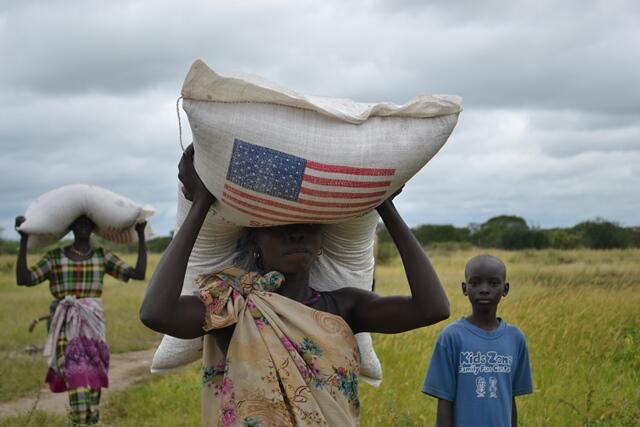
Best flying of a U.S. flag: A woman carries a bag of food in Gumuruk where @WFP is assisting IDPs uprooted by violence.

Best flying of a U.S. flag: A woman carries a bag of food in Gumuruk where @WFP is assisting IDPs uprooted by violence.


Humanitarian crisis in Syria: Refugee kids need food; here’s how you can help

August 23, 2013

Description from YouTube:

Published on Jun 27, 2013

In Syria, a humanitarian crisis has developed as millions flee conflict, facing homelessness, hunger and food shortages. The United Nations World Food Programme is working to provide emergency assistance to 2.5 million hungry people inside Syria and more than one million refugees who have fled to neighboring countries. Needs remain great and the children of Syria are particularly vulnerable. Syrian families need your support today.

At UpWorthy, Megan Kelley complains that this need for food and other aid for refugees has been eclipsed by news coverage of the civil war.  So she urges you to pass on the video, and the pleas for help:

Maybe someday the world will be peaceful and perfect and we won’t need emergency aid. In the meantime, let’s do what we can to help give Syrians one less thing to worry about.

And at 1:57, remember: Providing aid to people in need is an amazing thing to do, but we can’t forget that the real heroes are the ones who face the tragedy and strive against it every day.

More:

WFP caption: A Syrian refugee smiles as she carries food from the World Food Programme (WFP) home to her family. Thanks to @WFP for posting this photo and more on their Twitter page. - See more at: http://blogs.un.org/blog/tag/undp/#sthash.gFwbkl9a.dpuf

WFP caption: A Syrian refugee smiles as she carries food from the World Food Programme (WFP) home to her family. Thanks to @WFP for posting this photo and more on their Twitter page. – See more at: http://blogs.un.org/blog/tag/undp/#sthash.gFwbkl9a.dpuf


Gun nuts offensive, even in the unconscious subtext

August 14, 2013

Found this on Facebook, a poster designed to be clever:

Facebook poster, from National Gunrights.org

Facebook poster, from National Gunrights.org, featuring guerrilla fighters from the Second Boer War

I like people who use history and historical photographs to inform modern issue debates well.  But I worry sometimes about the subtexts when people use these photos.

For example, who are these guys?  Were they Pinkerton Detectives hired to shoot iron workers at Andrew Carnegie‘s Homestead, Pennsylvania, steel works?  Hatfields, or McCoys?  The deputy sheriffs in Cheyenne, Wyoming, looking out for Butch Cassidy and the Hole in the Wall Gang?  Is it Butch and the gang?  Are these crazed killers, sporting men, officers of the law, or what?

One hopes it’s not a lynch mob from Kansas, or Georgia, or Texas . . .  When the photo’s subjects are unidentified, we might wonder what is the message intended by showing these people; use of the photo implies endorsement, especially absent any disclaimer.  Oh, yeah, it’s quite likely that the person who put the photo up was wholly ignorant of historical context.  But that’s another form of ignorance promotion.  Looking at the list of possibilities I came up with, you can see why I wouldn’t want to promulgate an image that offers endorsement of murderers, thugs, thieves or racists or any combination of that list.

TinEye.com turned up 49 uses across the internet (there may be more, just out of TinEye’s view). Using those links, I’ve learned that the photo is of some unnamed Boer guerrilla fighters in the Second Boer War, circa 1899.  Well, there is this wag claiming the photo may be of George Sydenham Clarke.  He’s in the minority.

Would you want these guys representing your political views?  Any of these guys among those who tried to kill Winston Churchill?  Do they want that in their legacy?

I’m pretty sure I don’t want Boer guerrilla fighters representing my views; they were racist (not that the British were any better), they were crude, and they often tended to let bullets speak for them when words would have worked and been much better for all concerned. 

One might wonder what message the group, NationalGunrights.org, intended.

In the screenplay for the great movie, “Butch Cassidy and the Sundance Kid,” the great William Goldman wrote Butch Cassidy wondering at the collection of hired assassins the railroads sent after him and his gang:  “Who are those guys,” Butch said, several times.

It’s an apt question here.  Who are those guys?  Why would anyone want them representing them?

(And, historically, I wonder whether anyone knows the names of any of these five men; I haven’t found any identification).

More:


Remembering Leonidas and the 300 Spartans: died August 11, 480 B.C.

August 11, 2013

300 popped up on some movie channel back in 2008 as I was preparing to teach world history again.  I did not major in history, and my high school history instruction featured no AP courses (Pleasant Grove High, in Utah, didn’t offer such things then; I assume they do now, but I don’t know).

What I knew about Sparta and the stand of the 300 at Thermopylae came from my reading encyclopedias as a child, and culture.  Never had an occasion to write a speech about the events, though had I known the history better, I might have found some opportunity.  Sen. Orrin Hatch would have loved a compare and contrast speech between the stand of the Spartans and his work against the labor law reform bill in 1977 and 1978; more likely, we could have used the simple historical facts that the stand of the 300 at the same place today would be impossible due to poor soil conservation practices of the local farmers, which has created a plain broad enough for a Persian Army to march through with impunity, never fearing drowning in the sea that no longer exists there.  Thermopylae is a grand historical metaphor for a good orator.  The simple facts of history are important, too — Churchill knew Herodotus’s stories well, and considered them when planning military actions in the area in two world wars.

The movie came up from students in the previous year; it offered, perhaps, a hook for an introduction to world history, explaining why we bother to study it at all.

I got a time delay recording to watch it, which I did, mostly.  Interesting stylization.  Cartoonish characterizations, which one should expect from a movie intended as homage to the graphic novel that directly spawned it, more than an instruction about history.  We might doubt that the Persians had trained and armored rhinoceroses in their armament.  Dialogue — well, this is Hollywood.  It would have been in some dialect of Greek, and no Hollywood scriptwriter would have been able to reproduce it.

What about the battle itself.  World history courses in U.S. high schools should pay attention to this battle, I think.

A monument to Leonidas I - Inscription, Molon Lave, which roughly translates to Come and get it!

A monument to Leonidas I – Inscription, “Molon Lave,” which roughly translates to “Come and get it!”

Several sources dated the climax of the battle as August 11, 480 B.C. — 2,493 years ago. (The battle is said to have occurred during the Olympics that year, too.)

World history classes dig through that period of history in the first semester.  Teachers, it’s time to think about how we’re going to facilitate this history this year.  As always, some bright student will wave a hand in the air and ask, “Mr. Darrell!  How do they know what happened if no one survived, and nobody had their Sony videocorder?”

At least one other student in the course of the day will be surprised to discover the movie wasn’t a filmed-on-the-spot documentary.  But apart from that, how do we know the events well enough to pin it down to one day?  And, since the Greeks surely didn’t use the Gregorian calendar, since it wasn’t invented until the 18th century — how do we know the date?

The short answer is “Herodotus.”  The longer answer may resonate better:  This is one dramatic battle in a year-long fight for the history of the world.  The Greeks were understandably and justifiably proud that they had turned back Xerxes’s armies and navy (The Battle of Salamis, a bit after Thermopylae).  So, these events were preserved in poetry, in the chronicles, in song, in sculpture, and in every other medium available to the Greeks.  Your AP English students will probably tell you the movie reminds them of The IliadThere’s an entré for discussion.

Turning points in history:  Had Xerxes succeeded in avenging his father’s, Darius’s, defeats, and subjugated the Greeks, history would be much different.  The culture the Romans built on, the trading patterns from east to west and around the Mediterranean, the technologies, the myths, and the stories of the battles, would be different. (Remember, one of Darius’s defeats was at the Battle of Marathon, from which we get the modern marathon racing event, the traditional close of the modern Olympics.)

How do we know?  How do we know?

How do you handle that question?  (Tell us in comments, please.)

I like this battle for the way it ties together many of the loose threads that vex high school sophomores.  Is history exciting?  It can be, as the Frank Miller graphic novel and and the Zack Snyder movie demonstrate.  How important is accuracy in making the story exciting?  (Do the rhinoceroses improve the story of the courage of the Spartans, or merely offer a good graphical metaphor for the overwhelming forces of the Persians?)  What happens when one nation invades another — who has the advantage?  Is knowledge of geography important — in battle, for example?  The philosopher Santayana notes that those who do not remember history are “condemned” to repeat it.  Xerxes tried to apply the lessons of the history of his father’s failed invasion; was he successful?  Remember this point:  Napoleon failed in his invasion of Russia in 1812; Adolf Hitler assigned his generals to study Napoleon’s failure, for Germany’s invasion of Russia in 1941; so convinced were the Germans that they knew the lessons, they invade Russia on the anniversary of Napoleon’s invasion.  Did it go any better?  George Washington consciously patterned his life on the great Roman warrior and leader, Cincinnatus — especially in turning over rule once the task was done, as Washington did twice.  What if Washington had, instead, patterned his life after Leonidas?  How might the American Revolution have turned out, and how might the United States have developed, had Washington sacrificed himself as Leonidas did?

The story of the Battle of Thermopylea, the bravery and cunning tactics of Leonidas and the 300, the wars between Persia and the Greek City States, form a good foundation for a study of history at any point after.  It is the stuff of great history, and the stuff of great rhetoric.  It could be the stuff of great AP essays and good writing exercises in general.   Damn the Common Core State Standards*, and damn the misguided Texas critics of CSCOPE, this is a topic I wish more world history teachers would spend some good, profitable time on

Resources and commentary on Thermopylae, Leonidas, and the 300:

More:

Livius.org map of the area where the Battle of Thermopylae was fought

Livius.org map of the area where the Battle of Thermopylae was fought. Note that, in purple, the map shows where a plain now exists, which was an ocean the Spartans could use to squeeze the Persian Army, about 25 centuries ago. What a difference 25 centuries can make.

_____________

*  Common Core State Standards in social studies actually would support what I’m asking here, if only they weren’t filtered through state school boards who do not value scholarship, but instead wish history to be a checklist of faux-patriotic bullet points to regurgitate.  Here in Texas, we are not affected by Common Core — but we are affected by meddling in history standards by people whose agenda does not include making history exciting and good.  Common Core standards — technically — do not mention Thermopylae.  However, this is the sort of material, including the original texts of Herodotus, whose study the Common Core standards encourage, especially for analysis of the sort I think Thermopylae invites.  Texas TEKS allow mention of the battle, though the Battle of Thermopylae has been purged from the actual standards; Texas lesson plans frequently suggest “watching a film on the Battle of Thermopylae,” and “Answer questions on the battle; trade and grade.”  Teachers infuse those dull words with life — we hope.  Teachers’ actual practice in the classroom is the saving grace for this important history, in Texas; Texas world history teachers face their own Xerxes.  The Texas Lege recently removed the requirement that students study world history, instead giving them a choice of either world history or world geography.  And so the dumbing down of history by (probably well-meaning, but not well-thinking) legislators continues.


49 years ago: August 7, 1964, Congress passed the Gulf of Tonkin Resolution

August 7, 2013

August 7 is the 43rd anniversary of the Gulf of Tonkin Resolution, the resolution which authorized President Lyndon B. Johnson to move troops into South Vietnam to defend U.S. interests.

Gulf of Tonkin Resolution, passed by Congress on August 7, 1964, as presented to President Lyndon Johnson, and signed by him on August 10. This is the document that authorized U.S. involvement in Vietnam. Image from the National Archives, Our Documents display.

Gulf of Tonkin Resolution, passed by Congress on August 7, 1964, as presented to President Lyndon Johnson, and signed by him on August 10. This is the document that authorized U.S. involvement in Vietnam. Image from the National Archives, Our Documents display.

The resolution passed Congress after what appeared to be attacks on two U.S. Navy ships in the Gulf of Tonkin.  At the time, and now, evidence is weak that such attacks took place.

Quick summary from the National Archives:

On August 4, 1964, President Lyndon Johnson announced that two days earlier, U.S. ships in the Gulf of Tonkin had been attacked by the North Vietnamese. Johnson dispatched U.S. planes against the attackers and asked Congress to pass a resolution to support his actions. The joint resolution “to promote the maintenance of international peace and security in southeast Asia” passed on August 7, with only two Senators (Wayne Morse and Ernest Gruening) dissenting, and became the subject of great political controversy in the course of the undeclared war that followed.

The Tonkin Gulf Resolution stated that “Congress approves and supports the determination of the President, as Commander in Chief, to take all necessary measures to repeal any armed attack against the forces of the United States and to prevent any further aggression.” As a result, President Johnson, and later President Nixon, relied on the resolution as the legal basis for their military policies in Vietnam.

As public resistance to the war heightened, the resolution was repealed by Congress in January 1971.

Santayana’s ghost looks on in wonder.

Map of divided Vietnam, during the Vietnam War. History Place map via Mr. Roache's Place

Map of divided Vietnam, during the Vietnam War. History Place map via Mr. Roache’s Place

Considering its powerful effect on American history, the document is very, very brief.  Here’s the text [links added]:

Eighty-eighth Congress of the United States of America
AT THE SECOND SESSION

Begun and held at the City of Washington on Tuesday, the seventh day of January, one thousand nine hundred and sixty-four

Joint Resolution
To promote the maintenance of international peace and security in southeast Asia.

Whereas naval units of the Communist regime in Vietnam, in violation of the principles of the Charter of the United Nations and of international law, have deliberately and repeatedly attacked United Stated naval vessels lawfully present in international waters, and have thereby created a serious threat to international peace; and

Whereas these attackers are part of deliberate and systematic campaign of aggression that the Communist regime in North Vietnam has been waging against its neighbors and the nations joined with them in the collective defense of their freedom; and

Whereas the United States is assisting the peoples of southeast Asia to protest their freedom and has no territorial, military or political ambitions in that area, but desires only that these people should be left in peace to work out their destinies in their own way: Now, therefore be it

Resolved by the Senate and House of Representatives of the United States of America in Congress assembled, That the Congress approves and supports the determination of the President, as Commander in Chief, to take all necessary measures to repel any armed attack against the forces of the United States and to prevent further aggression.

Map showing ship movements reported during the Gulf of Tonkin Incident, on August 4, 1964; reports that North Vietnamese gunboats attacked and engaged two patrolling U.S. Navy ships pushed Congress to authorize President Johnson to take extensive defensive actions.

Map showing ship movements reported during the Gulf of Tonkin Incident, on August 4, 1964; reports that North Vietnamese gunboats attacked and engaged two patrolling U.S. Navy ships pushed Congress to authorize President Johnson to take extensive defensive actions. (image from Echo Two Seven Tooter, replaced with Wikipedia map 8/2017)

Section 2. The United States regards as vital to its national interest and to world peace the maintenance of international peace and security in southeast Asia. Consonant with the Constitution of the United States and the Charter of the United Nations and in accordance with its obligations under the Southeast Asia Collective Defense Treaty, the United States is, therefore, prepared, as the President determines, to take all necessary steps, including the use of armed force, to assist any member or protocol state of the Southeast Asia Collective Defense Treaty requesting assistance in defense of its freedom.

Section 3. This resolution shall expire when the President shall determine that the peace and security of the area is reasonably assured by international conditions created by action of the United Nations or otherwise, except that it may be terminated earlier by concurrent resolution of the Congress.

[endorsements]

And on that authority, “Congress approves and supports the determination of the President, as Commander in Chief, to take all necessary measures to repel any armed attack against the forces of the United States and to prevent further aggression,” the U.S. spent the next 11 years in all-out warfare in Vietnam, with up to 500,000 military troops in the conflict, and losing the lives of more than 58,000 men and women.

U.S. engagement in Vietnam continued well after the repeal of the Tonkin Gulf Resolution in 1971.  In 1973 a peace treaty was signed between the U.S., North Vietnam and South Vietnam.  The provisions of the treaty did not hold; a final North Vietnamese military push in April 1975 crumpled the South Vietnamese government and army.  The few remaining U.S. forces made an emergency withdrawal as Viet Cong and North Vietnamese troops entered Saigon.  Vietnam was reunited by force, under a communist government.

Attacks on the USS Maddox and USS Turner Joy — if they occurred — took place early on August 4.  President Johnson might be excused for having done nothing on the issue at the time.  That was the same day that the bodies of three civil rights workers were discovered by the FBI, murdered by a pro-segregation mob with clear ties to the local Ku Klux Klan.  Either event, the Gulf of Tonkin, or the Mississippi civil rights murders, could be a major event in any presidency, testing to the utmost the leadership and peace-making abilities of a president.  Johnson dealt with both events at the same time.

Three American civil rights’ workers, James Earl Chaney, Andrew Goodman, and Michael “Mickey” Schwerner, were lynched on the night of June 21–22, 1964 by members of the Mississippi White Knights of the Ku Klux Klan, the Neshoba County‘s Sheriff Office and the Philadelphia Police Department located in Philadelphia, Mississippi. The three had been working on the “Freedom Summer” campaign, attempting to register African Americans to vote.

On a commission from the Dallas Symphony, composer Stephen Stucky composed a piece during the Lyndon Johnson Centennial in 2008; Kathryn and I heard the world premiere of August 4, 1964, on September 18, 2008.  Stucky’s piece (with libretto by Gene Scheer) is the only place I know where anyone has seriously considered the nexus between these two, opposite-side-of-the-world tragedies, and how they set the stage for the rest of the 1960s decade.   The piece has been recorded by the Dallas Symphony.  I highly recommend it.

Here’s a video from the Dallas Symphony on the piece:

More:

Save


Fly your flag today? Remembering D-Day, 1944 – 69 years ago

June 6, 2013

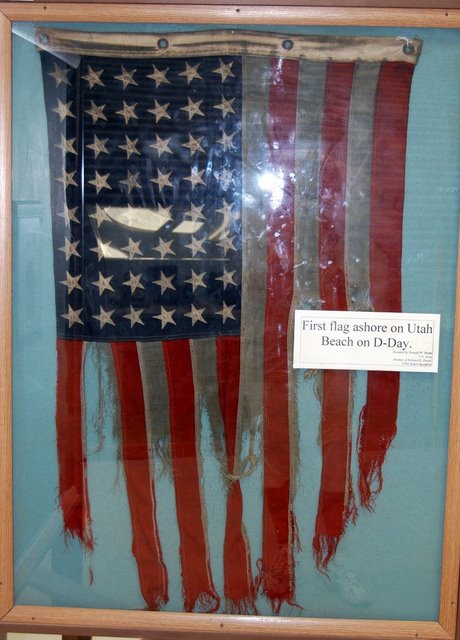
First Flag on Utah Beach, June 6, 1944

First Flag on Utah Beach, June 6, 1944 – Photo by Mark Wainwright

Today is the 69th anniversary of the Invasion of Normandy in World War II, a date generally called D-Day.  I usually get at least one e-mail request:  No, you don’t have to fly your flag.  This is not one of the days designated by Congress for flag-flying.

But you may fly your flag, and probably, you should.  If there are any D-Day veterans in your town, they’ll appreciate it.

This is mostly an encore post.


Gracefulness in high places

May 10, 2013

The ability to say the right thing at the right time is a gift.  Sometimes it’s an earned gift, but a gift nevertheless.

Britain’s Prince Harry visited wounded U.S. soldiers in Washington area hospitals today, and he paid a visit to Arlington National Cemetery where he laid a wreath of remembrance at the grave of a soldier who died in a recent war.  Scott Simon of NPR was there.

More:


Ingenious anti-personnel mine finder

December 19, 2012

Brilliant little film about a wonderfully creative guy, a war refugee, who developed a wind-powered device that can find and detonate anti-personnel mines.  It’s part of the GE-sponsored FOCUS/FORWARD film contest:

Description and credits at Vimeo’s site:

MINE KAFON is a Finalist in the $200,000 FOCUS FORWARD Filmmaker Competition and is in the running to become the $100,000 Grand Prize Winner. It could also be named an Audience Favorite if it’s among the ten that receives the most votes. If you love it, vote for it. Click on the VOTE button in the top right corner of the video player. Note that voting may not be available on all mobile platforms, and browser cookies must be enabled to vote.

A short documentary portrait on a designer who has created a low cost solution to landmine clearance.

Check out his website:  massoudhassani.com
or for other films by us at Ardent Film Trust:  ardentfilm.org

DIRECTOR
Callum Cooper
DOP
Michael Latham
CAMERA
Michael Latham
Mahmud Hassani
Callum Cooper
SLOW MOTION CAMERA
Ed Edwards
EDITOR
Anna Meller
COLOR GRADER
Chris Teeder
SOUND MIXER AND DESIGNER
Sandy Milne
TITLE DESIGNER
Ray O’Meara
EXECUTIVE PRODUCER
Bobby Kapur
PRODUCERS
Alicia Brown
Michael Latham
Callum Cooper
THANKS
Lucie Kalmar
Slowmo High Speed
Optimism Films
The RNLA explosive ordnance disposal service
Copyright Ardent Film Trust 2012


2012 Anniversary of Pearl Harbor, still “infamous”

December 7, 2012

Encore and traditional post, mostly, from December 7, 2006 with updates.

1941 AP file photo, small boat rescues victims from U.S.S. West Virginia

Caption from Naval History and Heritage Command: Photo #: 80-G-19930
Pearl Harbor Attack, 7 December 1941
Sailors in a motor launch rescue a survivor from the water alongside the sunken USS West Virginia (BB-48) during or shortly after the Japanese air raid on Pearl Harbor.
USS Tennessee (BB-43) is inboard of the sunken battleship.
Note extensive distortion of West Virginia’s lower midships superstructure, caused by torpedoes that exploded below that location.
Also note 5″/25 gun, still partially covered with canvas, boat crane swung outboard and empty boat cradles near the smokestacks, and base of radar antenna atop West Virginia’s foremast.
Official U.S. Navy Photograph, National Archives Collection.

Today is the 71st anniversary of Japan’s attack on the U.S.’s Pacific Fleet at Pearl Harbor, Hawaii.

Many Americans fly their U.S. flags today.  The date is not one specified in law for flag-flying.  President Obama issued a proclamation asking citizens to fly flags at half-staff today.

Our local newspaper, The Dallas Morning News, ran a front-page story on survivors of the attack in 2006, who have met every five years in reunion at Pearl Harbor. [December 7, 2006] was their last official reunion. The 18-year-olds who suffered the attack, many on their first trips away from home, are in their 80s now. Age makes future reunions impractical.

In 2010, it is estimated that fewer than 4,000 veterans of Pearl Harbor still live to remember, though, of course those surviving do.

From the article:

“We’re like the dodo bird. We’re almost extinct,” said Middlesworth, now an 83-year-old retiree from Upland, Calif., but then – on Dec. 7, 1941 – an 18-year-old Marine on the USS San Francisco.

Nearly 500 survivors from across the nation were expected to make the trip to Hawaii, bringing with them 1,300 family members, numerous wheelchairs and too many haunting memories.

Memories of a shocking, two-hour aerial raid that destroyed or heavily damaged 21 ships and 320 aircraft, that killed 2,390 people and wounded 1,178 others, that plunged the United States into World War II and set in motion the events that led to atomic bombings of Hiroshima and Nagasaki.

“I suspect not many people have thought about this, but we’re witnessing history,” said Daniel Martinez, chief historian at the USS Arizona Memorial. “We are seeing the passing of a generation.”

Another article notes the work of retired history professor Ron Marcello from the University of North Texas, in Denton, in creating oral histories from more than 350 of the survivors. This is the sort of project that high school history students could do well, and from which they would learn, and from which the nation would benefit. If you have World War II veterans in your town, encourage the high school history classes to go interview the people. This opportunity will not be available forever.

There is much to be learned, Dr. Marcello said:

Dr. Marcello said that in doing the World War II history project, he learned several common themes among soldiers.

“When they get into battle, they don’t do it because of patriotism, love of country or any of that. It’s about survival, doing your job and not letting down your comrades,” he said. “I heard that over and over.”

Another theme among soldiers is the progression of their fear.

“When they first got into combat, their first thought is ‘It’s not going to happen to me.’ The next thought is ‘It might happen to me,’ and the last thought is ‘I’m living on borrowed time. I hope this is over soon,’ ” Dr. Marcello said.

Dr. Marcello said the collection started in the early 1960s. He took charge of it in 1968. Since Dr. Marcello has retired, Todd Moye has taken over as the director.

Other sources:

While this is not one of the usual dates listed by Congress, you may fly your U.S. flag today.

End of 2006 post —

Other resources (2007):

USS Missouri Memorial – Main Battery - from the Panoramas of World War II site

USS Missouri Memorial – Main Battery – from the Panoramas of World War II site

More, 2012:


Birthday of Twain and Churchill: Happy Whiskey and Cigar Day 2012!

November 30, 2012

Mark Twain, afloat

Mark Twain aboard a ship, somewhere. Place and photographer unknown (at least to MFB). Young Samuel Clemens apprenticed to be a Mississippi river boat pilot, and held a fascination for water-going vessels his entire life. His pilot years are documented, and analyzed, in Life on the Mississippi.

November 30 is the birthday of Mark Twain (1835), and Winston Churchill (1874).

In 2012, we have the benefit of having had a couple of years to digest Twain’s Autobiography, and we have the benefit of new scholarship and a major new book on Churchill, William Manchester’s and Paul Reid’s The Last Lion.

Twain had a comment on the Texas Education Agency and State Board of Education:

In the first place God made idiots. This was for practice. Then He made School Boards.

Following the Equator; Pudd’nhead Wilson‘s New Calendar

The Nobel literature committees were slow; Twain did not win a Nobel in Literature; he died in 1910. Churchill did win, in 1953.

Both men were aficionados of good whiskey and good cigars. Both men suffered from depression in old age.

Both men made a living writing, early in their careers as newspaper correspondents. One waged wars of a kind the other campaigned against. Both were sustained by their hope for the human race, against overwhelming evidence that such hope was sadly misplaced.

churchill-time-cover-man-of-the-year-1941.jpg

Winston S. Churchill, Time Magazine’s Man of the Year for 1941, copyright 1941 by Time Magazine. Churchill’s career was built much on his work as First Lord of the Admiralty, a position he took in 1911.  While he was the goat of the Battle of the Dardanelles (and had to resign as a result), his earlier work to switch Britain’s Navy to oil power from coal, and to use airplanes in combat, kept the British Navy as an important and modern military organization through World War II.

Both endured fantastic failures that would have killed other people, and both rebounded.

Each possessed a great facility with words, and wit, and frequently said or wrote things that people like to remember and repeat again.

Both of them rank near the top of the list of people to whom almost any quote will be attributed if the quote is witty and the speaker can’t remember, or doesn’t know, who actually said it.

Both men are worth study. And wouldn’t you really love to have had them over to dinner?

Twain, on prisons versus education:

Every time you stop a school, you will have to build a jail. What you gain at one end you lose at the other. It’s like feeding a dog on his own tail. It won’t fatten the dog.” – Speech, November 23, 1900

Churchill on the evil men and nations do:

“No One Would Do Such Things”

“So now the Admiralty wireless whispers through the ether to the tall masts of ships, and captains pace their decks absorbed in thought. It is nothing. It is less than nothing. It is too foolish, too fantastic to be thought of in the twentieth century. Or is it fire and murder leaping out of the darkness at our throats, torpedoes ripping the bellies of half-awakened ships, a sunrise on a vanished naval supremacy, and an island well-guarded hitherto, at last defenceless? No, it is nothing. No one would do such things. Civilization has climbed above such perils. The interdependence of nations in trade and traffic, the sense of public law, the Hague Convention, Liberal principles, the Labour Party, high finance, Christian charity, common sense have rendered such nightmares impossible. Are you quite sure? It would be a pity to be wrong. Such a mistake could only be made once—once for all.”

—1923, recalling the possibility of war between France and Germany after the Agadir Crisis of 1911, in The World Crisis,vol. 1, 1911-1914, pp. 48-49. (Obviously, and sadly, Churchill was wrong — twice wrong.)

Image of Twain aboard ship – origin unknown. Image of Winston S. Churchill, Time Magazine’s Man of the Year for 1941, copyright 1941 by Time Magazine.

More on Mark Twain

More on Winston Churchill

Orson Welles, with Dick Cavett, on Churchill, his wit, humor and grace (tip of the old scrub brush to the Churchill Centre):

Yeah, mostly this is an encore post from past years.

More, contemporary reports from 2012: