Fake news poisons the reader

February 15, 2018

Graphic from Finance Monthly

Graphic from Finance Monthly

We’ve seen the studies that people who get suckered by hoaxes, when confronted with the facts, defend the hoax.

So we shouldn’t be surprised that a little further research shows that faked news stories generally fall into the memory of people, even after they’ve seen the debunkings and acknowledge the hoax.

We can still hate it, but we shouldn’t be surprised.

First impressions stick, and they color our judgments of people and news (and history) even after we learn the impression was given to us incorrectly. We can’t fix errors of judgment easily. Scientific American’s blog reports on several pieces of research into the phenomena.

Which means, it’s not enough to just counter fake news and hoaxes. We have to prevent them from being the first out of the starting gate, and get accurate information out early.

More:


Russian robot Twitter accounts – you there?

February 15, 2018

twitter.com/selectedwisdom/status/963757735992090625


Fly your flag, a Valentine for Oregon and Arizona

February 14, 2018

From the Sons and Daughters of Oregon Pioneers: A Stamp printed in 1959 for the Oregon Centennial shows a covered Wagon and Mount Hood Oregon

From the Sons and Daughters of Oregon Pioneers: A Stamp printed in 1959 for the Oregon Centennial shows a covered Wagon and Mount Hood Oregon

Flags are flying in Oregon and Arizona on Valentine’s Day 2018?

It’s statehood day in both of those states.

Legally, nothing stops a resident from flying the U.S. flag following protocol on any day.  Yes, you may fly your U.S. flag on Valentine’s Day.

The Flag Code urges flying the flag on the day a state achieved statehood, too.

For Oregon and Arizona, there is an expectation that residents will fly their flags.  Oregon came into the union on February 14, 1859; Arizona joined the Republic as a state in 1912.

Taft signs Arizona statehood papers, February 14, 1912

President William Howard Taft signed the papers accepting Arizona into statehood, on February 14, 1912. He still finished third behind Democrat Woodrow Wilson and Bullmoose Party’s Teddy Roosevelt in that fall’s elections. Photo found at Mrs. Convir’s page, Balboa Magnet School  (Can you identify others in the photo?  Who is the young man?)

From TripSavvy: On February 14, 1912, Taft signed the proclamation making Arizona the 48th state, and the last of the contiguous states to be admitted to the union. It was the last of the 48 contiguous states to be admitted to the union.

Arizona’s state flag waves in the blue – From TripSavvy: On February 14, 1912, Taft signed the proclamation making Arizona the 48th state, and the last of the contiguous states to be admitted to the union. It was the last of the 48 contiguous states to be admitted to the union.

More:

Some of this material was borrowed, with express permission, from last year’s post at Millard Fillmore’s Bathtub.


Happy birthday, Abe and Charles!

February 12, 2018

From Smithsonian Magazine's 2009 article,

From Smithsonian Magazine’s 2009 article, “How Lincoln and Darwin Shaped the World.” Illustration by Joe Ciardiello.

On this day in 1809, just a few hours apart, Charles Darwin and Abraham Lincoln were born.

What are the odds of historic coincidences like that?

Lincoln’s birthday is still listed in law as a date to fly the U.S. flag, though we’ve changed the celebration to the following week and the generic President’s Day, closer to George Washington’s real birthday, February 22. President’s Day is celebrated on the third Monday in February.

So, you may certainly fly your flag today. (You may fly your flag any day, but you get the idea.)

News will feature more celebrations of Darwin than Lincoln, today, I predict — Darwin Day is a worldwide celebration by science nerds.

Both Lincoln and Darwin worked to end slavery. Darwin probably had more of an idea that racial discrimination had no science basis. Lincoln had more political sway. After Lincoln and Darwin, science and human rights advanced greatly, because of their work.

More:


Welcome, students and teachers!

February 7, 2018

University of Kansas Jayhawk mascot at one of the school's sports fields. KU photo

University of Kansas Jayhawk mascot at one of the school’s sports fields. KU photo

Welcome students and teachers, today from the Port Washington-Saukville Scholl District on Long Island, New York (Mrs. Reetz’s class), from the University of Kansas on Blackboard, and from the group (home schoolers?) looking up the Casablanca Conference and Franklin Roosevelt.

“Welcome to Port Washington” sign, Long Island, New York.

This blog started out as an experiment in bringing new materials into a classroom in a new way. It’s encouraging that students and teachers use the blog for learning.

If you don’t mind, would you drop a note in comments about where you’re from, and what you’re looking for — and whether the material here is any help? You can use the comments on the post. It would be useful information to help tailor content, you know?

Same welcome applies to anyone else just passing through — tell us where you’re coming from and why, in comments, please.

Thanks.


February 2018, dates to fly the U.S. flag

February 7, 2018

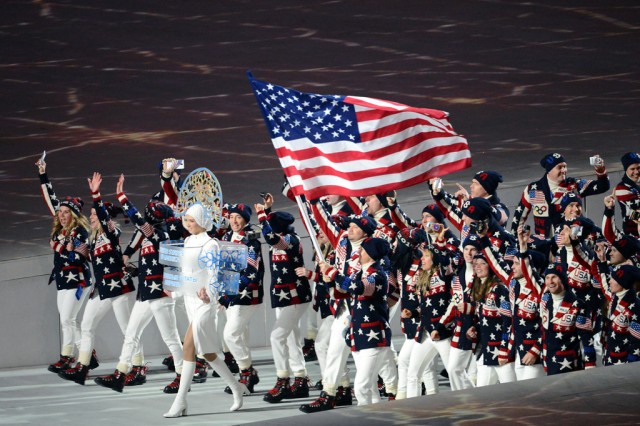
Todd Lodwick carries the flag of the United States of America, which flies directly over the head of former U.S. Army World Class Athlete Program bobsledder Steven Holcomb, reigning Olympic champion four-man bobsled driver, as Team USA marches into Fisht Olympic Stadium during the Opening Ceremony of the 2014 Olympic Winter Games, Feb. 7, 2014, in Sochi, Russia. Army WCAP luger Sgt. Preston Griffall (right behind lady in white) and WCAP bobsledders Sgt. Justin Olsen, Capt. Chris Fogt and Sgt. Dallas Robinson also are among the lead group of Americans (Photo Credit: Tim Hipps, IMCOM Public Affairs)

Lots of flag waving in February of Winter Olympics years, like 2018. Caption from the U.S. Army: Todd Lodwick carries the flag of the United States of America, which flies directly over the head of former U.S. Army World Class Athlete Program bobsledder Steven Holcomb, reigning Olympic champion four-man bobsled driver, as Team USA marches into Fisht Olympic Stadium during the Opening Ceremony of the 2014 Olympic Winter Games, Feb. 7, 2014, in Sochi, Russia. Army WCAP luger Sgt. Preston Griffall (right behind lady in white) and WCAP bobsledders Sgt. Justin Olsen, Capt. Chris Fogt and Sgt. Dallas Robinson also are among the lead group of Americans (Photo Credit: Tim Hipps, IMCOM Public Affairs)

You want to mark your calendar so you remember to put your U.S. flag up on those dates designated by law and tradition, right?

Which dates in February?

  • Massachusetts statehood, February 6 (6th state, 1788)
  • Lincoln’s birthday, February 12 (yes, it’s still designated in law as a date to fly the flag)
  • Oregon statehood, February 14 (33rd state, 1859)
  • Arizona statehood, February 14 (48th state, 1913)
  • Washington’s birthday, now designated President’s Day, the third Monday in February, February 19 in 2018

You may fly your flag on state holidays, too — which of those dates do we see in February?  Is there a good list?

Though we don’t mark it usually, February 14 is the anniversary of the first recognition of the Stars and Stripes by a foreign government, in 1778.  The French fleet recognized the ensign carried by Capt. John Paul Jones, at Quiberon Bay — painting of the event is at the top of this post.

February 23 is the anniversary of the raising of the U.S. flag on Iwo Jima, in 1945 — 72 years ago.  We should probably watch for proclamations to fly the flag on that date, an anniversary made more important simply because so few survivors of from among the veterans of that war and that fight can be expected to live to see the 80th anniversary. Regardless any official, formal proclamation to fly the flag for the Iwo Jima events, you may always fly your flag.

Please visit earlier posts at Millard Fillmore’s Bathtub, on the death of Joe Rosenthal, the photographer who took the widely-released iconic photo; on the death of Charles Lindberg, pictured in the first flag-raising on Mt. Suribachi; on the death of Raymond Jacobs, the last-surviving veteran from the flag raisings; and on my visit to the Sunset Parade at the Iwo Jima-themed U.S. Marine Memorial overlooking Washington, D.C.

A Youtube poster edited a part of the Army’s documentary, “To the Shores of Iwo Jima,” showing the flag raising on film, and added in some other images for a less-than-three-minute look. (Alas, that edited version is gone — here’s the full 20-minute movie; propaganda at its best, for noble purposes.)

Winter Olympics kick off in South Korea in early February — there will be much U.S. flag waving, especially if the U.S. athletes perform as well as many expect and win medals. Olympics events, both summer and winter, often provide large public forums for improper flag display, too — but we ignore that, since no disrespect is intended, usually.

Wave your flag!

More:

Photo #: 80-G-K-21225 (color)

Caption from the U.S. Navy, via Wikipedia: Photo #: 80-G-K-21225 (color) “First Recognition of the American Flag by a Foreign Government,” 14 February 1778. Painting in oils by Edward Moran, 1898. It depicts the Continental Navy Ship Ranger, commanded by Captain John Paul Jones, receiving the salute of the French fleet at Quiberon Bay, France, 14 February 1778. Earlier in the month, after receipt of news of the victory at Saratoga, France recognized the independence of the American colonies and signed a treaty of alliance with them. The original painting is in the U.S. Naval Academy Museum, Annapolis, Maryland. Official U.S. Navy Photograph, now in the collections of the National Archives. [A larger version is available for download at Wikipedia.]

This is an encore post.

Yes, this is an encore post. Defeating ignorance takes patience and perseverance.


58 years ago, lunch at Woolworth’s, with a side of civil rights: North Carolina, February 1, 1960

February 2, 2018

February 1 was the 58th anniversary of the Greensboro sit-in. Be sure to read Howell Raines‘ criticism of news media coverage of civil rights issues in a 2010 article in the New York Times: “What I am suggesting is that the one thing the South should have learned in the past 50 years is that if we are going to hell in a handbasket, we should at least be together in a basket of common purpose.”

This is mostly an encore post; please holler quickly if you find a link that does not work.

Four young men turned a page of history on February 1, 1960, at a lunch counter in a Woolworth’s store in Greensboro, North Carolina.

Ezell A. Blair, Jr. (now Jibreel Khazan), Franklin E. McCain, Joseph A. McNeil, and David L. Richmond, sat down at the counter to order lunch. Because they were African Americans, they were refused service. Patiently, they stayed in their seats, awaiting justice.

On July 25, nearly six months later, Woolworth’s agreed to desegregate the lunch counter. One more victory for non-violent protest.

Ezell A. Blair, Jr. (now Jibreel Khazan), Franklin E. McCain, Joseph A. McNeil, and David L. Richmond leave the Woolworth store after the first sit-in on February 1, 1960. (Courtesy of Greensboro News and Record)

Caption from Smithsonian Museum of American History: Ezell A. Blair, Jr. (now Jibreel Khazan), Franklin E. McCain, Joseph A. McNeil, and David L. Richmond leave the Woolworth store after the first sit-in on February 1, 1960. (Courtesy of Greensboro News and Record)

News of the “sit-in” demonstration spread. Others joined in the non-violent protests from time to time, 28 students the second day, 300 the third day, and some days up to 1,000. The protests spread geographically, too, to 15 cities in 9 states.

On the second day of the Greensboro sit-in, Joseph A. McNeil and Franklin E. McCain are joined by William Smith and Clarence Henderson at the Woolworth lunch counter in Greensboro, North Carolina. (Courtesy of Greensboro News and Record)

Smithsonian caption: “On the second day of the Greensboro sit-in, Joseph A. McNeil and Franklin E. McCain are joined by William Smith and Clarence Henderson at the Woolworth lunch counter in Greensboro, North Carolina. (Courtesy of Greensboro News and Record)”

Part of the old lunch counter was salvaged, and today is on display at the Smithsonian Institution’s Museum of American History. The museum display was the site of celebratory parties during the week of the inauguration as president of Barack Obama.

Part of the lunchcounter from the Woolworths store in Greensboro, North Carolina, is now displayed at the Smithsonians Museum of American History, in Washington, D.C.

Part of the lunch counter from the Woolworth’s store in Greensboro, North Carolina, now displayed at the Smithsonian’s Museum of American History, in Washington, D.C.- photo from Ted Eytan, who wrote: [“Ever eaten at a lunch counter in a store?”] The words . . . were said by one of the staff at the newly re-opened National Museum of American History this morning to a young visitor. What she did, very effectively, for the visitor and myself (lunch counters in stores are even before my time) was relate yesterday’s inequalities to those of today, by explaining the importance of the lunch counter in the era before fast food. This is the Greensboro, North Carolina lunch counter, and it was donated to the Smithsonian by Woolworth’s in 1993.

Notes and resources:

Student video, American History Rules, We Were There – First person story related by Georgie N. and Greg H., with pictures:

Associated Press interview with Franklin E. McCain:

More:

It was a long fight.

This is an encore post.

Yes, this is an encore post. Defeating ignorance takes patience and perseverance.


Did William McKinley’s assassination start the “White House Blues?”

January 31, 2018

Charlie Poole with the North Carolina Ramblers - Monkey on a String / White House Blues

Record label of the 1926 recording of “White House Blues,” by Charlie Poole with the North Carolina Ramblers

We noted the birthday of William McKinley on Monday, January 29.

Long-time reader Ellie commented with the lyrics to a song called “White House Blues,” starting out with a lament about McKinley’s being shot. The song was new to me, so I asked about it. Ellie gave us a good encyclopedia entry.

Ellie’s first comment:

The pistol fires, McKinley falls
Doc says, “McKinley, I can’t find that ball”
In Buffalo, in Buffalo

Zolgotz, Zolgotz you done him wrong
You shot poor McKinley while he was walking along
In Buffalo, Buffalo

Well, Doc had a horse and he threw down the rein
He said to that horse, “You better outrun this train”
From Buffalo to Washington

Yeah, Doc come a-running and he tore off his specs
He said, “Mr. McKinley, done cashed in your checks
You’re bound to die, you’re bound to die”

McKinley he hollered, McKinley he squalled
The doc say, “McKinley, I can’t find that ball”
In Buffalo to Washington

Look here, little rascal, just look what you’ve done
You shot my husband with that Ivor Johnstone gun
He’ll be gone a long, long time.

Well hush up, little children, don’t you fret
You’ll draw a pension off your poor papa’s death
He’s gonna be gone a long, long time.

Roosevelt in the White House, he’s doing his best
McKinley’s in the graveyard, he’s taking his rest
He’s gonna be gone a long, long time

Roosevelt in the White House he’s drinking out of a silver cup
McKinley’s in the graveyard, he never will wake up
He’ll be gone a long, long time.

White House Blues – one of many versions

After I asked, Ellie elaborated:

I believe this is the oldest recorded version of the song:

But, there are many others. I first came across it back in the late ’60s – early 70’s, but I can’t remember where. I thought it was in Sandburg’s American Song Bag, but I just checked, and it isn’t. There have been many recordings, including Doc Watson, Bill Monroe, Flatt & Scruggs, all with slight differences in the words. The first one I learned had a reference to Ida’s children having another Papa on another railroad line, but that was a later addition stolen from other songs. Ida and William appeared to have loved each other. Note the misspelling of Czolgosz. That was from the version I learned, and not my mistake. :-)

Here’s a slightly more contemporary version, but quite different.

This is the latest version I’ve found (hope I haven’t overloaded with links)

Nice “talking” to you.

Dear reader: Do you have a different version you recommend? Tell us in comments.

More:


January 30 – Happy birthday, Franklin Roosevelt

January 30, 2018

Franklin Delano Roosevelt greeted the world on January 30, 1882, in Hyde Park, New York. He was a “blue baby.” Sara Delano Roosevelt’s only child.

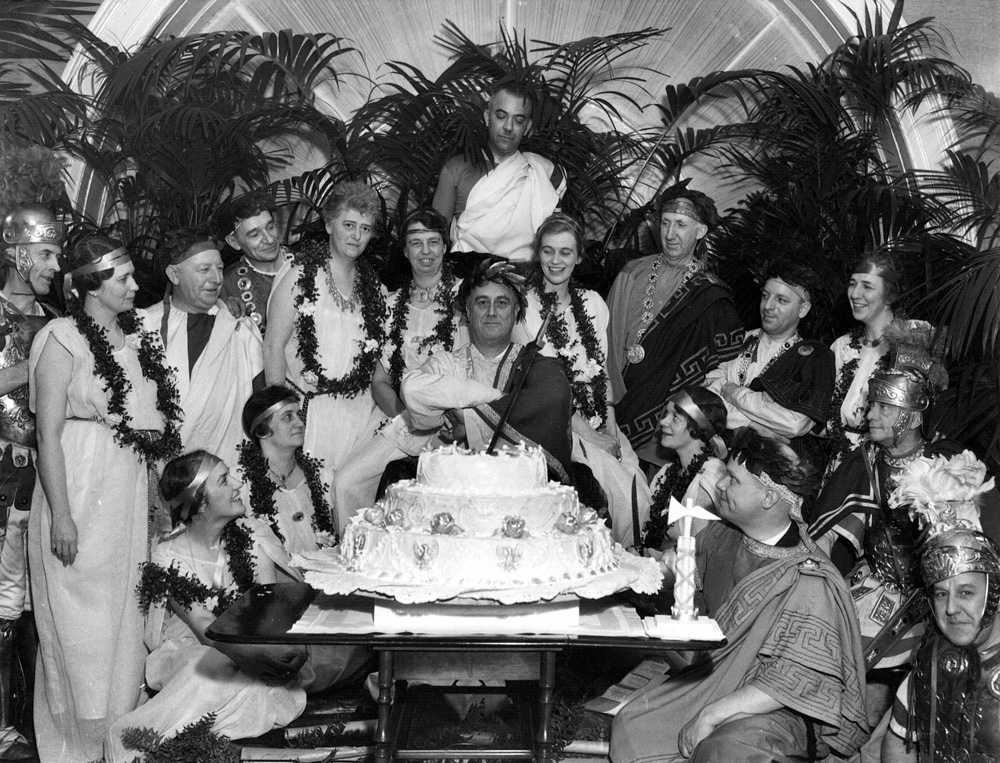
Franklin Roosevelt's 1934 toga-themed birthday party including the

Franklin Roosevelt’s 1934 toga-themed birthday party including the “Cufflinks Gang,” became a fund-raiser for the Juvenile Paralysis Foundation, the fore-runner of the March of Dimes which campaigned against polio. Each of Roosevelt’s subsequent birthday celebrations, except the one on the way to Casablanca, raised money to fight polio. Roosevelt Presidential Library and Museum image.

Roosevelt missed election to the vice presidency in 1924, but was elected president four times, in 1932, 1936, 1940 and 1944, dying in office in April 1945. Presidents now are limited to two terms.

More:


January 28 – Happy birthday, William McKinley

January 29, 2018

William McKinley photographed between 1873 and 1890, by Washington, D.C. photographer C. M. Bell. McKinley served in the U.S. House of Representatives from Ohio, 1876 to 1891; this was probably taken close to the start of his time in Congress. Library of Congress image.

William McKinley photographed between 1873 and 1890, by Washington, D.C. photographer C. M. Bell. McKinley served in the U.S. House of Representatives from Ohio, 1876 to 1891; this was probably taken close to the start of his time in Congress. Library of Congress image.

President William McKinley, 25th President of the United States, served from March 4, 1897 until his assassination in September 1901, six months into his second term. McKinley was born on January 29, 1843, in Niles, Ohio. McKinley would have been 175 years old today, and probably very cranky. 

President during the Spanish-American War of 1898, in which the U.S. took Cuba, Puerto Rico, the Philippines and Guam from Spain, and presiding over the annexation of Hawaii in 1898, McKinley is best known for being the third president to die from assassination, in 1901. He was succeeded by his vice president, Theodore Roosevelt.

This photo, published in 1902 after McKinley's death, was probably taken during the campaign of 1900. Library of Congress caption:

This photo, published in 1902 after McKinley’s death, was probably taken during the campaign of 1900. Library of Congress caption: “Photograph shows William McKinley, standing on platform, between Gov. Jos. E. Johnston and Booker T. Washington, Tuskegee, Alabama.”

Frequently overlooked as a non-entity as president, historians in the past 20 years tend to upgrade their judgments of McKinley’s political acumen and achievements as president.

More:


Proper etiquette for flying the Texas flag

January 26, 2018

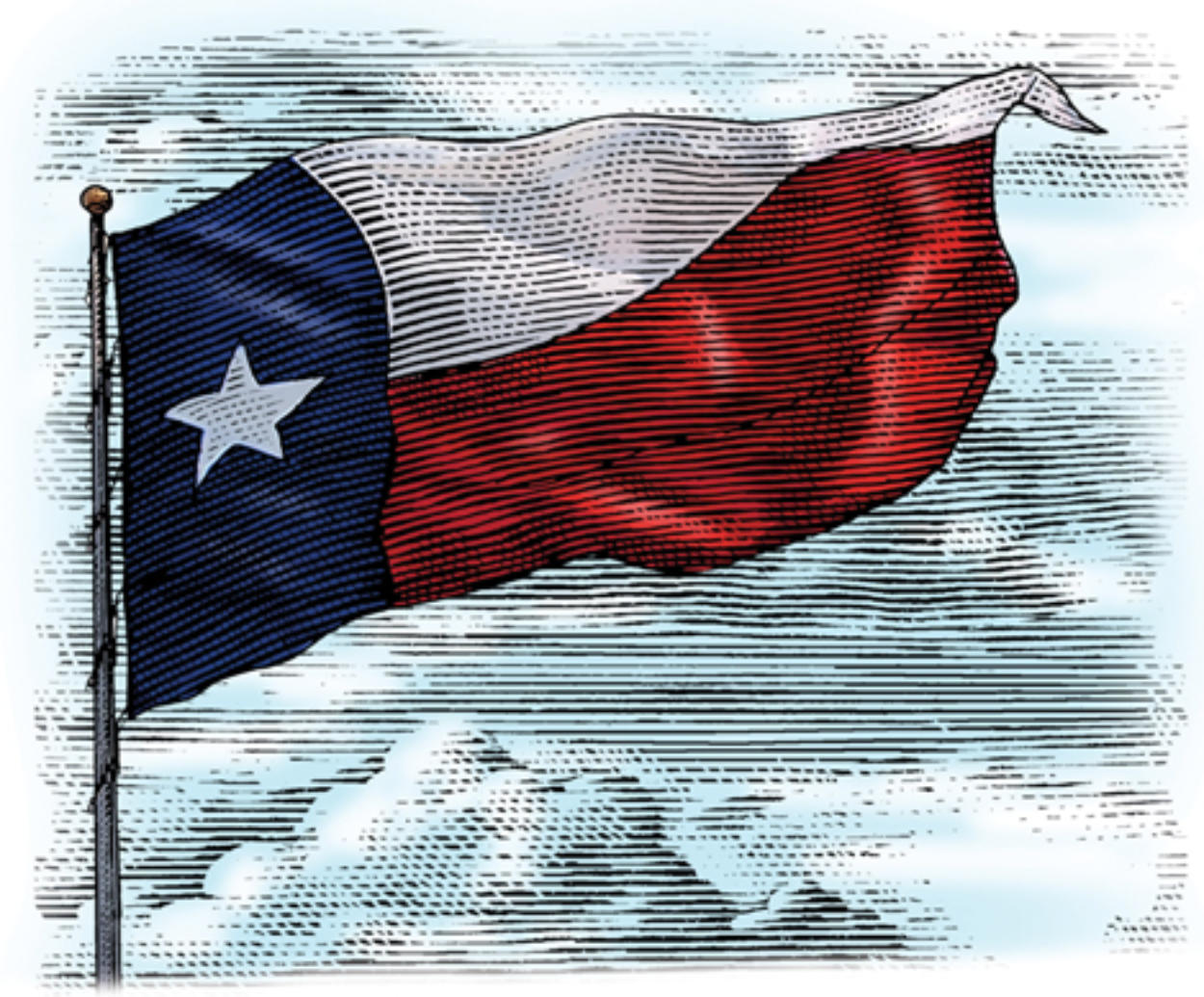
Texas flag, the Lone Star. Texas Monthly image

Texas flag, the Lone Star. Texas Monthly image

Texas Monthly noted that the Texas Lone Star flag was adopted on January 25, 1839 — six years before Texas statehood.

Texas lore often claims the Texas flag has special rules that make it the best of all state flags. Mostly, that’s not true. But Texas Monthly collected the rules in one place, and it’s worth a look if you deal with the Texas flag at all. Boy Scouts and others may want to make note that there are now rules on how to fold the Texas flag (essentially the same as folding the U.S. flag, but take a look to be sure you have it right).

Tip of the old scrub brush to Texas Monthly’s Twitter feed.


50 years ago, “Penetration however slight”: Remembering a good and noble hoax – the U.S.S. Pueblo

January 25, 2018

Official US Navy photograph of the U.S.S. Pueblo, taken shortly after it went into service as the AGER-2 intelligence gathering ship on May 13, 1967. Crypto Museum image.

Official US Navy photograph of the U.S.S. Pueblo, taken shortly after it went into service as the AGER-2 intelligence gathering ship on May 13, 1967. Crypto Museum image.

January 23 is the anniversary of the North Koreans‘ capture of the spy boat, U.S.S. Pueblo, in 1968 — a beginning of a momentous year for bad events.  The saga of the Pueblo and its crew, including especially Cmdr. Lloyd Bucher, is of special interest to me because it features a series of some of the grandest, best and most humorously-American hoaxes ever perpetrated by imprisoned people against their captors and wardens.  This is one of the great Kilroy stories of American history.  It should not be forgotten.  Especially with the role North Korea plays in contemporary angst, the Pueblo episode should not be forgotten. This is an encore post, with new links added.

1968 brought one chunk of bad news after another to Americans. The year seemed to be one long, increasingly bad disaster. In several ways it was the mark of the times between the feel-good, post-war Eisenhower administration and the feel-good-despite-the-Cold-War Reagan administration. 1968 was depressing.

Lloyd M. Bucher

USN Cmdr. Lloyd M. Bucher (Photo credit: Wikipedia)

What was so bad?

  • Vietnam manifested itself as a quagmire. Just when Washington politicians predicted an end in sight, Vietcong militia launched a nationwide attack in South Vietnam on the Vietnamese New Year holiday, Tet, at the end of January.
  • Civil rights gains stalled, and civil rights leaders came out in opposition to the Vietnam war.
  • President Johnson fared poorly in the New Hampshire primary election, and eventually dropped out of the race for the presidency (claiming he needed to devote time to making peace in Vietnam).
  • Labor troubles roiled throughout the U.S., including a nasty strike by garbage collectors in Memphis. It didn’t help to settle the strike that the sanitation workers were almost 100% African American, the leadership of Memphis was almost 100% white, and race relations in the city were not so good as they might have been – the strike attracted the efforts of the Southern Christian Leadership Conference, and Martin Luther King, Jr. – who was assassinated there in early April. In response, riots broke out in 150 American cities.
  • Two months later, in June, with the Vietnam War as a very divisive issue, the presidential campaign was marked by great distress of voters and increasing polarization. Sen. Robert F. Kennedy appeared to pull into the lead when he won the California primary in June, but he was assassinated that night.
  • Tens of thousands of anti-war protestors, angry at President Johnson, showed up at the Democratic National Convention in Chicago – with Johnson out of the race, the protests were essentially for show. Mayor Richard J. Daley took offense at the protestors, and Chicago policemen, who considered themselves the political opposites of the shaggy-haired protestors, attacked the protestors with clubs and tear gas. A national commission later called it a “police riot.”
  • Apart from Chicago, and the post-King assassination riots, America saw eight other massive riots in cities across the nation; riots also occurred around the world, notably in Paris, France.
  • Vice President Hubert Humphrey could not make his opposition to the Vietnam War known soon enough or broadly enough, and had a tough campaign against Republican, former Vice President Richard Nixon, who promised that he had a “secret” peace plan for Vietnam. Nixon won in a squeaker. Nixon had no secret peace plan.

At the end of the year, the U.S. got a feel-good story out of the Apollo Project, when NASA launched Apollo 8, which orbited the Moon on Christmas Eve. But when people remember 1968, it’s the strife most recall first.

Throughout 1968, there was the continuing sore of Americans held captive by the Republic of North Korea.

Commander Lloyd M. Bucher and the men of the U.S.S. Pueblo were captured by a superior force of North Korean gunboats on January 23, 1968, a few days before the Tet Offensive. Their capture and 11 months of captivity were a trial for the 84 men, and an embarrassment for the U.S.

Tortured and unable to effect an escape, Bucher and his men did the next best thing: They played hoaxes that made the North Koreans look silly.

Among other things, Cmdr. Bucher had signed a confession demanded (by torture) by North Korea. When news of this confession was revealed in the western press, observers were concerned that a U.S. citizen would succumb to making what was regarded as a false confession, but a coup for communist totalitarians. The texts of the confessions and other material from the captives, however, revealed something quite different. The confessions were written or edited largely by Bucher and the crew, and to an American with any familiarity with popular culture, they were hilarious.

My recollection was that at least one of the confessions was that the Pueblo had indeed penetrated North Korean territorial waters, but it was phrased to make it sound like the definition of rape offered in the Uniform Code of Military Justice (UCMJ). I could not find any record of that confession on the internet.

At some length, I succeeded in getting a copy of the out-of-print autobiography of Cmdr. Bucher, to check my memory of the confessions. The book is out of print. I found a couple of copies at a used book vendor, very inexpensive, through Amazon.com. However, shortly after ordering the books, I was informed by both the Post Office and the vendor that the books had been destroyed by sorting machinery. Fortunately, they had been shipped separately, and one finally arrived.

Unfortunately, the “Final, final confession” does not contain what I recall. However, the book revealed that after the writing of the “Final, final,” Bucher’s crew was asked to write more – apologies to the people of North Korea, and other propaganda documents. It was in those documents that the text I recalled, appeared.

2008 marks 40 years since that terrible year, 40 years since the Pueblo incident. For the sake of posterity, and to aid your lesson plans, here is the part of the confessions I recall which has not been available lately.

Bucher: My Story, Commander Lloyd M. Bucher, USN, with Mark Rascovich, Doubleday 1970, Dell 1971; p. 342

We did in fact get away with a composition that matched my Final, Final Confession for brazen kidding of the KORCOMS, and which far surpassed it in subtlety. Blended into the standard Communist verbosity were such lines of our own as:

“We, as conscientious human beings who were cast upon the rocks and shoals of immorality by the tidal waves of Washington’s naughty policies know that neither the frequency nor the distances of these transgressions into the territorial waters of this sovereign peace-loving nation matter because penetration however slight is sufficient to complete the act.” (Rocks and Shoals is Navy slang for the Uniform Code of Military Justice and the last line contains the essential definition of rape.)

This was both delivered over film and TV and published in the “Ping-pong Times.” The Glorious General was well pleased and set the same team to working on the next letter.

North Korea was anxious to cash in on the propaganda opportunities of the confessions and other material, and spread these documents as far as their naïve public relations offices could. Eventually, in late November or early December, a photograph of the captives, intended to show them healthy and having a good time, was distributed to newspapers. In the photo, the crew were shown smiling on a basketball court, holding a basketball, with a few of their North Korean guards. The photo was not published widely in the United States, however, because almost to a man, the crew were displaying what they had told the North Koreans was a Hawaiian good luck symbol – extended middle fingers. U.S. papers thought the photo inappropriate. European papers published it, however, and eventually Time Magazine ran the photo, with an explanation.

When news got back to Pyong Yang that the North Koreans had been hoaxed, the North Koreans instituted a week of beatings and torture. Within a couple of weeks, however, the North Koreans handed over the crew back to the U.S., at Panmunjon. U.S. officials were convinced that their signing an insincere confession got the Pueblo crew released. Anyone who ever read O. Henry’s Ransom of Red Chief suspected the North Koreans got the crew out of North Korea before the crew could hoax the government completely away.

Fortunately, Lloyd Bucher and the crew of the Pueblo did not follow H. L. Mencken’s advice after the Fillmore Bathtub hoax, and swear off hoaxes completely.

Sadly, the Navy brought charges against Bucher for having failed to avoid capture. The heroes welcome the crew should have gotten, never happened. In months of litigation in Navy courtrooms, the brilliance of the resistance of the crew of the Pueblo was lost, and forgotten. Bucher was cleared, but his reputation was never the same. Officially, the tale of the Pueblo crew is not celebrated.

In an era when hoaxes generally aid and abet the works of scoundrels, crooks and traitors, we should pause for a short time to remember when brave American sailors used hoaxes to let their nation know they were alive and resisting, and to embarrass their captors. It was a sterling show of American spirit, and humor.

We need more shows of American spirit and humor.

More:  

USS Pueblo after captured by North Korea, from...

USS Pueblo after being captured by North Korea, from A-12 spyplane Photo: Wikipedia

Good news update: Much more information on the Pueblo incident is available online now, than when I first wrote about it in 2008. Still no celebrations.

This is an encore post.

Yes, this is an encore post. Defeating ignorance takes patience and perseverance.

Save

Save

Save

Save


110 years ago: First “official” Boy Scout Troop, January 24, 1908?

January 25, 2018

From the archives.

There are those who argue that the the first Boy Scout Troop was organized on January 24, 1908.

History is not so clear on that point, however.  There may have been earlier troops organized, but records were unclear, or lost.

From Wikipedia: Front cover of the first part of Scouting for Boys by Robert Baden-Powell, published in January 1908. Illustrations by Baden-Powell himself.

From Wikipedia: Front cover of the first part of Scouting for Boys by Robert Baden-Powell, published in January 1908. Illustrations by Baden-Powell himself.

We do know that the the first installment of the serialized Scouting for Boys was published on January 24, 1908.  By April of that year all installments were published, and we can say that the first Boy Scout handbook had arrived.

Either way, January 24 holds some historical significance for the Scouting movement.

Do a good turn in honor of the day, even if it’s a day or two later. (Scouts in the U.S. work to do a good turn every day.)

Who was really first?  Unfortunately, the records don’t exist to settle that issue.

Scouting, in England, arose from the popular clamor by boys after the 1899 publication of Col. Robert Baden-Powell’s handbook for the scouts he trained for the British Army in southern Africa, Aids to Scouting.  Though not written for a youthful audience, the book became a best seller among boys who wished to emulate the adventures of soldiers and rangers in the British Army.

By 1907, Baden-Powell seriously worked to translate his experience and wisdom in a book aimed at boys.  In the summer of 1907 he gathered a collection of boys to camp, to try out his ideas for outdoor activities for boys.  With aid of the YMCA and other organizations, troops were planned and organized at the end of 1907 and in early 1908; then the program skyrocketed, with 60,000 boy members by the end of 1908.

Which was the “first” troop?

In England, where history and firsts might understandably be taken more seriously for Scouting, a number of groups can make the claims — and it’s almost impossible to choose from among them.  Wikipedia explains the claims of each, without much blood (I’ve left in most of the links and footnote links):

The first Scout Troops were formed in the United Kingdom in 1907, and registered in 1908. There are a number of claimants to be the first troop. However, due to poor record keeping when the Scouting Movement started, The Scout Association does not acknowledge any single troop as being the first. The Scout Association maintains a list of all the Scout Troops who claim to have started in 1908.[1]

The Scout Troops with the strongest claims are listed below:

The 1st Glasgow Scout Group in Scotland holds the earliest known registration certificate, dated 26 January 1908, issued by the Scouting Association. The Group was formed from the Glasgow Battalion of the Army Cadet Corps; its Adjutant was Captain Robert E Young. In June 1907, they formed the ‘Cadets’ Winter Recreation Training Club’. The club was a success from the beginning, as ‘Boss’ Young related: “At first we met at my house, signalled up and down the stairs, tied knots around the banisters and always finished with a good tuck-in.” ‘Boss’ Young met B-P during Autumn 1907 who suggested that the Club could experiment with the ideas contained in ‘Scouting for Boys’. On 16 January 1908, the Club was formally disbanded and the First Glasgow Troop of Boy Scouts was registered with Scout HQ in London.[1][2]

The first Scout Troop to receive a visit from Baden-Powell was the Vaux’s Own Scout Troop in Sunderland. This visit was made on 22 February 1908, so it is assumed by The Scout Association “that it had already been in existence for some days at any rate”.[1] This was also the first Scout Troop listed in the Imperial records. The 1st Crystal Palace Patrol (now known as the 2nd Croydon, 1st Crystal Palace) is documented as being in existence on 28 February 1908. The group is still in existence.[3]

In 2007, 1st Henfield Scout Troop was named as the oldest surviving Scout Troop in the world for the centenary of Scouting. They were the hosts of the only place that the centenary flame stopped in England for the night before reaching its goal of Brownsea Island. However, it is not the oldest Scout Troop, as others were set up before Henfield. It is said that the boys that went to Brownsea Island on the first ever scout trip were from Henfield.[4]

The 1st Birkenhead (YMCA) has a claim to be the oldest Scout Troop as it was founded on 24 January 1908 when B P attended a meeting at the YMCA. Documents at the District Headquarters confirm this fact. Baden-Powell at the 1929 Coming of Age Jamboree in Birkenhead said “Here in Birkenhead that I first mooted the idea of Scouting”.

The 1st Croydon Scout Group (Addiscombe) were founded in the latter months of 1907. The Group was officially registered by Imperial Scout Headquarters on 16 June 1908 and can claim to be one of the earliest Groups.

1st Church Kirk, Church near Accrington Lancashire. Formed 1907. Baden Powell formed a link with Accrington during his opening of the Ambulance Drill Hall in 1904.

There is an entry in Baden-Powell’s diary on 4 February 1908 which mentions a Scout Troop in Nottingham.

1st Alsager, Cheshire were formed before 24 February 1908.

A troop from Hampstead was involved in various events in the first half of 1908.

The 1st City Of Aberdeen Scouts existed in 1908. 1st Arbroath Scout Troop (2nd Angus) dates back to June 1908.[5]

The 1st Norwich “Capt. Bower’s Own” Sea Scouts started in January 1908.[6] The group is one of few which has continuously run for 100 years and, remarkably, had just 4 Group Scout Leaders during that time. To celebrate their centenary year, the group published a book entitled, “It Can Be Done: The Hundred Year History of the 1st Norwich Sea Scout Group.” drawing from their extensive archives.[7]

In Poole, Dorset, there are strong claims from 3 current Scout Groups, that all have separate newspaper articles back to 1908 listing Patrols or Troops practicing Scouting. 1st Parkstone has got a registration number back to February 1908 for a Scout Troop. Hamworthy are listed as having a Boat patrol at the Local Church in November 1908 and Broadstone having an Ambulance Scout at the Gathering on Brownsea Island in December 1908.

Wycliffe Scout Group (Gloucestershire) claims to be the oldest continuously active school-based Scout group in the world (active September 2013). It is listed in the Scout Association database with a registration date of 1 February 1909, although the Group celebrated their centenary in 2008, implying that there had been Scouting activity at the school before the Group was registered.

Who was first?  The question remains, not yet satisfactorily answered for history.

How would you decide the controversy?

Scouts from several nations around a campfire -- photo from the website of the World Scout Organization.

Scouts from several nations around a campfire — photo from EraScouting page [replacing photo from the website of the World Scout Organization]. “Leave this world a little better than you found it” — Lord Baden-Powell, the founder of Scouting. There are over 40 million Scouts in the World Organization of the Scout Movement.

More:

This is an encore post.

Yes, this is an encore post. Defeating ignorance takes patience and perseverance.


Catching up on January historical events

January 25, 2018

Aldabra giant tortoise (Aldabrachelys gigantea). This tortoise is native to the islands of the Aldabra Atoll in the Seychelles. Wikipedia image.

Aldabra giant tortoise (Aldabrachelys gigantea); tortoises move slowly, but get the job done. This tortoise is native to the islands of the Aldabra Atoll in the Seychelles. Wikipedia image.

January flies by, especially when there is so much other stuff going on — new year to start, tests to prepare for, choirs start up from the holiday break, etc., etc.

There are a few key historical events I like to touch, some that have already passed. I’ll work to catch up. This week is the anniversary of the founding of the first Boy Scout Troop, in England; coming are the birthdays of William Henry Harrison McKinley, our shortest-termed president (31 days, one month) on January 28, and Franklin Delano Roosevelt, our longest-termed president (12 years and 1 month) on January 29. And more stuff.

Is it even worth posting a flag-flying calendar for January 2018?

Remember the archives here (see “search” features on the right), and especially don’t forget to note in comments when links don’t work. Thank you, Dear Reader.


FDR’s hands, and Fala’s ears

January 24, 2018

How do humans interact with sculpture?

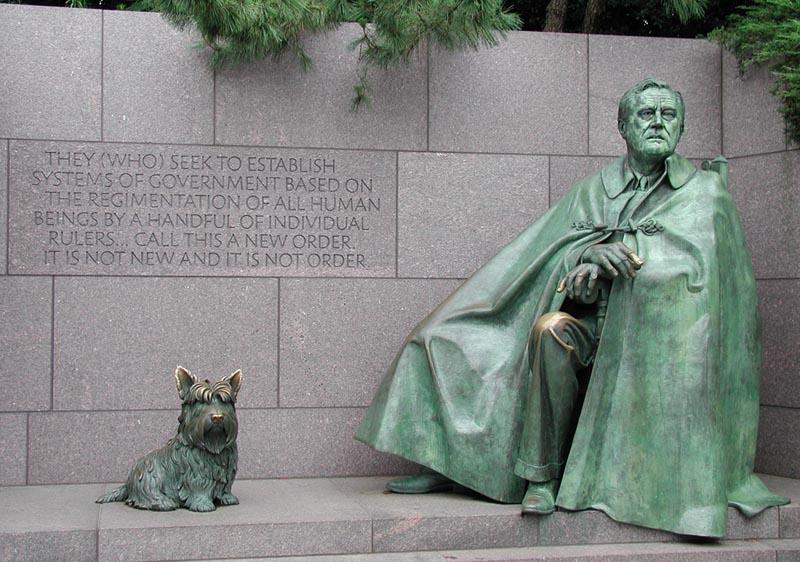
This is a photo (I do not know the photographer) of Franklin Delano Roosevelt, and his dog Fala, from the FDR Memorial on the Mall in Washington, D.C.

FDR and Fala at the FDR Memorial in Washington, D.C.
FDR Memorial in Washington, D.C., sculpture of President Roosevelt, in his Navy Cape, in his wheelchair, and his dog, Fala. (Do you know the photographer?) (Photo borrowed from the Facebook page, The Commons)

Some sculptors understand people want to touch the statue, and design them for touching. Others do not — but the public tends to have its way. Bronze statues within touching distance of the public offer an opportunity to see where people actually touch the things, over time. At my visit to this memorial in 2012, only the tips of Fala’s ears showed the affectionate touches of the public.

An exception can be found near this extended garden of statues (the FDR Memorial includes statues of his wife, Eleanor, and bronze portrayals of American life in the Great Depression, whose ending Roosevelt presided over). At the Korean War Memorial, a stunning and sobering display of statues, a patrol of 19 U.S. Army men prowls across the landscape. So many people walked among the statues and touched their sometimes delicate features that the National Park Service, with approval of the sculptor I understand, chained it off. Look but do not touch.

What do these repeated touchings of statuary tell us about ourselves?

More: