Fly your flag today for the 2018 holiday honoring Rev. Martin Luther King, Jr.

January 15, 2018

As on every federal holiday, citizens and residents of the U.S. should fly their U.S. flags today, on the holiday marking the birth of the Rev. Dr. Martin Luther King, Jr.

Rev. King, and the U.S. flag

Rev. King, and the U.S. flag. (No information on place or time of photo; please feel free to lend light and facts.)

Fly the U.S. flag today for the holiday for the birthday of Martin Luther King, Jr.  The holiday is celebrated on the third Monday in January.

King’s actual birthday is January 15. In 2018, the legal holiday and King’s actual birthday are the same day. It’s becoming common for Americans to fly their flags all weekend for a holiday on Friday or Monday.

Many Americans will celebrate with a day of service. Perhaps you will, too.

In 2017, days before the inauguration of a new president, remembering and honoring the life and struggles of Martin Luther King, Jr., and serving others in real and symbolic ways, is more important than ever.

More:

The Martin Luther King, Jr. Memorial in Washington, D.C. Credit: architecture.about.com, via Saporta Report

The Martin Luther King, Jr. Memorial in Washington, D.C. Credit: architecture.about.com, via Saporta Report

Save


Best show on God’s Earth, free!

January 13, 2018

Tourists in Arches National Park, in Utah. Arches is one of five National Parks in Utah.

Tourists in Arches National Park. Arches is one of five National Parks in Utah.

Utah.com lists the days in the coming year when entry to National Parks is free. Utah.com is a promotional site for Utah, where several National Parks are big tourist draws — so they have a bias.

It’s a good bias!

Alas, only four days so far:

FREE National Park Entrance Days 2018

January 15: Martin Luther King Jr. Day

April 1: First day of National Parks Week

September 22: National Public Lands Day

November 11: Veterans Day weekend

Four free days to  split among five National Parks in Utah: Arches, Canyonlands, Zion Canyon, Bryce Canyon, and Capitol Reef. National Monuments are probably included in the free admission days, so you can add Timpanogos Cave, Rainbow Bridge, Dinosaur, Promontory Point and others.

There’s a lot to see in Utah’s mountains and redrock country — and that doesn’t include the Great Salt Lake and the Salt Flats.


Oh, how things have changed! Birthday wishes for Alexander Hamilton, from 2012

January 11, 2018

I posted this back on January 11, 2012, a birthday note for Alexander Hamilton. In 2012, most Americans would have simply been puzzled by a request to tell them about the guy on the $10 bill.
Then stardom hit. Lin-Manuel Miranda, who in 2012 had just a couple of songs and an idea about a musical about Hamilton, finished the piece, produced it on Broadway, and set records for attendance and Tony awards, and generally raised Alexander Hamilton’s profile. Here is that post from 2012, with only editing for errors and time.

Today, January 11,  is Alexander Hamilton’s birthday — had he lived so long, he’d be 254 years old today! [260 years, in 2018 — probably]

Alexander Hamilton on the U.S. ten dollar note - Guardian image

Alexander Hamilton on the U.S. ten dollar note – Guardian image

But of course, the bullet from Aaron Burr’s gun cut Hamilton’s life short, after the duel in Weehawken, New Jersey. Hamilton died of the wound on July 12, 1804. He was 47 years old.

Had Hamilton survived the duel, would he have been elected president? Some people think so. In any case, Hamilton’s wise management of the new nation’s finances, and his establishment of the idea that government should have a working bank, and that good government is a key to economic success of a nation, leave a great legacy for the nation, and the world.

Hamilton’s portrait adorns the U.S. $10 bill.
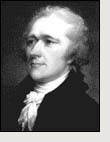
Read Hamilton’s biography from the U.S. National Archives’ feature on “America’s Founding Fathers/Charters of Freedom” exhibit:

Alexander Hamilton

Alexander Hamilton

Hamilton was born in 1757 on the island of Nevis, in the Leeward group, British West Indies. He was the illegitimate son of a common-law marriage between a poor itinerant Scottish merchant of aristocratic descent and an English-French Huguenot mother who was a planter’s daughter. In 1766, after the father had moved his family elsewhere in the Leewards to St. Croix in the Danish (now United States) Virgin Islands, he returned to St. Kitts while his wife and two sons remained on St. Croix.

The mother, who opened a small store to make ends meet, and a Presbyterian clergyman provided Hamilton with a basic education, and he learned to speak fluent French. About the time of his mother’s death in 1768, he became an apprentice clerk at Christiansted in a mercantile establishment, whose proprietor became one of his benefactors. Recognizing his ambition and superior intelligence, they raised a fund for his education.

In 1772, bearing letters of introduction, Hamilton traveled to New York City. Patrons he met there arranged for him to attend Barber’s Academy at Elizabethtown (present Elizabeth), NJ. During this time, he met and stayed for a while at the home of William Livingston, who would one day be a fellow signer of the Constitution. Late the next year, 1773, Hamilton entered King’s College (later Columbia College and University) in New York City, but the Revolution interrupted his studies.

Although not yet 20 years of age, in 1774-75 Hamilton wrote several widely read pro-Whig pamphlets. Right after the war broke out, he accepted an artillery captaincy and fought in the principal campaigns of 1776-77. In the latter year, winning the rank of lieutenant colonel, he joined the staff of General Washington as secretary and aide-de-camp and soon became his close confidant as well.

In 1780 Hamilton wed New Yorker Elizabeth Schuyler, whose family was rich and politically powerful; they were to have eight children. In 1781, after some disagreements with Washington, he took a command position under Lafayette in the Yorktown, VA, campaign (1781). He resigned his commission that November.

Hamilton then read law at Albany and quickly entered practice, but public service soon attracted him. He was elected to the Continental Congress in 1782-83. In the latter year, he established a law office in New York City. Because of his interest in strengthening the central government, he represented his state at the Annapolis Convention in 1786, where he urged the calling of the Constitutional Convention.

In 1787 Hamilton served in the legislature, which appointed him as a delegate to the convention. He played a surprisingly small part in the debates, apparently because he was frequently absent on legal business, his extreme nationalism put him at odds with most of the delegates, and he was frustrated by the conservative views of his two fellow delegates from New York. He did, however, sit on the Committee of Style, and he was the only one of the three delegates from his state who signed the finished document. Hamilton’s part in New York’s ratification the next year was substantial, though he felt the Constitution was deficient in many respects. Against determined opposition, he waged a strenuous and successful campaign, including collaboration with John Jay and James Madison in writing The Federalist. In 1787 Hamilton was again elected to the Continental Congress.

When the new government got under way in 1789, Hamilton won the position of Secretary of the Treasury. He began at once to place the nation’s disorganized finances on a sound footing. In a series of reports (1790-91), he presented a program not only to stabilize national finances but also to shape the future of the country as a powerful, industrial nation. He proposed establishment of a national bank, funding of the national debt, assumption of state war debts, and the encouragement of manufacturing.

Hamilton’s policies soon brought him into conflict with Jefferson and Madison. Their disputes with him over his pro-business economic program, sympathies for Great Britain, disdain for the common man, and opposition to the principles and excesses of the French revolution contributed to the formation of the first U.S. party system. It pitted Hamilton and the Federalists against Jefferson and Madison and the Democratic-Republicans.

During most of the Washington administration, Hamilton’s views usually prevailed with the President, especially after 1793 when Jefferson left the government. In 1795 family and financial needs forced Hamilton to resign from the Treasury Department and resume his law practice in New York City. Except for a stint as inspector-general of the Army (1798-1800) during the undeclared war with France, he never again held public office.

While gaining stature in the law, Hamilton continued to exert a powerful impact on New York and national politics. Always an opponent of fellow-Federalist John Adams, he sought to prevent his election to the presidency in 1796. When that failed, he continued to use his influence secretly within Adams’ cabinet. The bitterness between the two men became public knowledge in 1800 when Hamilton denounced Adams in a letter that was published through the efforts of the Democratic-Republicans.

In 1802 Hamilton and his family moved into The Grange, a country home he had built in a rural part of Manhattan not far north of New York City. But the expenses involved and investments in northern land speculations seriously strained his finances.

Meanwhile, when Jefferson and Aaron Burr tied in Presidential electoral votes in 1800, Hamilton threw valuable support to Jefferson. In 1804, when Burr sought the governorship of New York, Hamilton again managed to defeat him. That same year, Burr, taking offense at remarks he believed to have originated with Hamilton, challenged him to a duel, which took place at present Weehawken, NJ, on July 11. Mortally wounded, Hamilton died the next day. He was in his late forties at death. He was buried in Trinity Churchyard in New York City.

Image: Courtesy of The National Portrait Gallery, Smithsonian Institution

Post mostly borrowed, with express permission, from Mr. Darrell’s Wayback Machine.

Remember to watch for progress on “The Alexander Hamilton Mixtape,” a hip-hop version of Alexander Hamilton’s life by Lin-Manuel Miranda, seen here performing Aaron Burr’s soliloquey, at the White House.

More, added in 2018:

Poster for Lin-Manuel Miranda's musical play,

Poster for Lin-Manuel Miranda’s musical play, “Hamilton.” Wikipedia image.


January 9 was Richard Nixon’s birthday

January 10, 2018

President Richard Milhous Nixon was born in Yorba Linda, California, on January 9, 1913.

Interesting to see so little public acknowledgement of Nixon’s presidency and his trials and vexations, which history offers insight and perhaps solutions to problems the nation has today.

Some views of Richard Nixon.

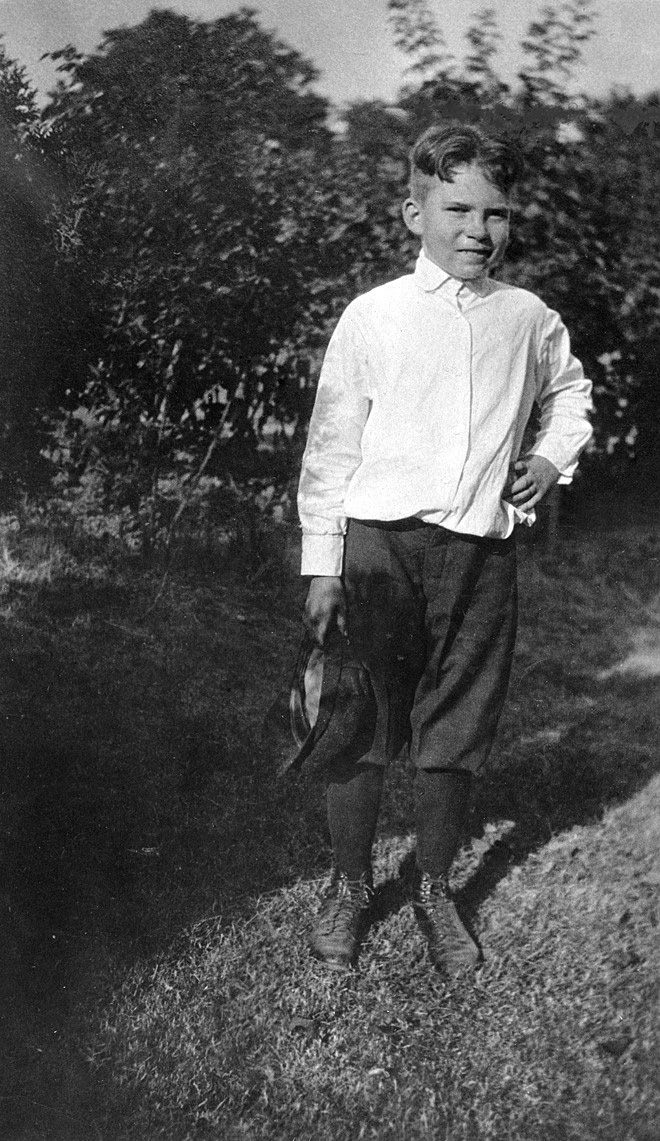
National Archives and Records Administration image: Nine-year old Richard Nixon in Yorba Linda, 1922. National Archives Identifier: 306-PSD-68-3769.

National Archives and Records Administration image: Nine-year old Richard Nixon in Yorba Linda, 1922. National Archives Identifier: 306-PSD-68-3769.

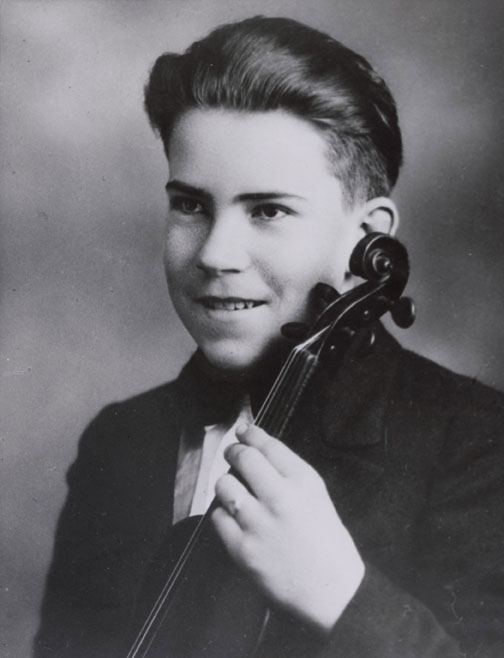
Richard Nixon, age 15, holding his violin, ca 1927-1928. Richard Nixon learned to play the violin, clarinet, saxophone, piano, and the accordion. When he was 12, Richard was sent to live and study music with his mother’s sister in central California. He returned home six months later and eventually discontinued his studies, but his love of music continued. Richard Nixon Presidential Library & Museum.

Richard Nixon, age 15, holding his violin, ca 1927-1928. Richard Nixon learned to play the violin, clarinet, saxophone, piano, and the accordion. When he was 12, Richard was sent to live and study music with his mother’s sister in central California. He returned home six months later and eventually discontinued his studies, but his love of music continued. Richard Nixon Presidential Library & Museum.

Richard Nixon with two friends, Fullerton High School, Fullerton, CA, circa 1929. (Surely someone could identify the other two men. I wonder who they are? What happened to them?) Richard Nixon Presidential Library & Museum Identifier: WHPO-B-0199.

Richard Nixon with two friends, Fullerton High School, Fullerton, CA, circa 1929. (Surely someone could identify the other two men. I wonder who they are? What happened to them?) Richard Nixon Presidential Library & Museum Identifier: WHPO-B-0199.

1945 photograph of Lt. Commander Richard Nixon wearing his Navy uniform. When Richard Nixon ran for Congress in 1946 he wore his Navy uniform as he declared at the time that he did not have a civilian suit. Richard Nixon Presidential Library and Museum, used with permission of the Richard Nixon Foundation and Julie Nixon Eisenhower.

1945 photograph of Lt. Commander Richard Nixon wearing his Navy uniform. When Richard Nixon ran for Congress in 1946 he wore his Navy uniform as he declared at the time that he did not have a civilian suit. Richard Nixon Presidential Library and Museum, used with permission of the Richard Nixon Foundation and Julie Nixon Eisenhower.

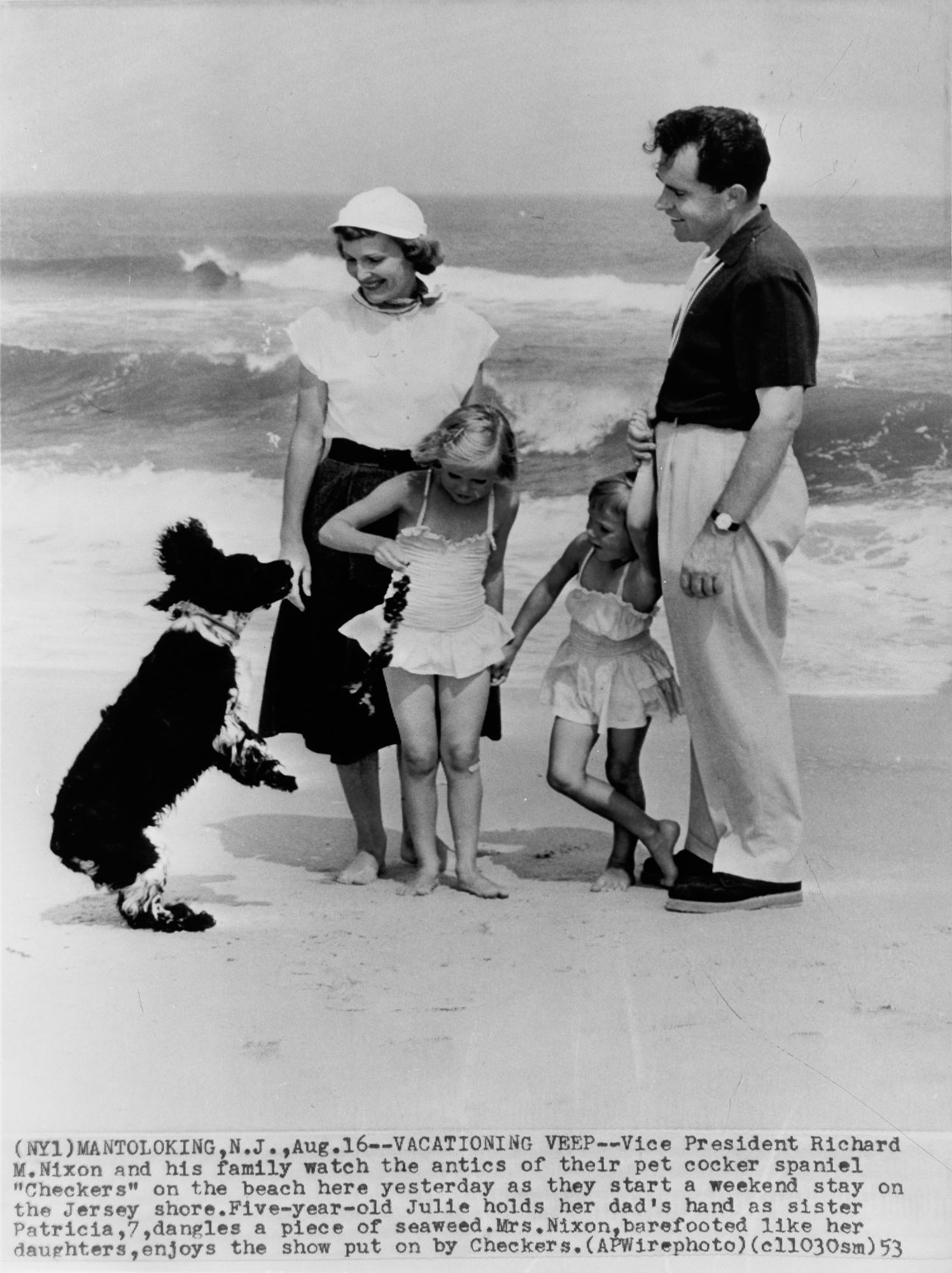
Vice-President Richard Nixon, with wife Pat and daughters Tricia and Julie, watch the antics of their pet cocker spaniel

Vice-President Richard Nixon, with wife Pat and daughters Tricia and Julie, watch the antics of their pet cocker spaniel “Checkers” while on a weekend visit to the Jersey Shore in Mantoloking, NJ, August 16, 1953. Richard Nixon Presidential Library and Museum, used with permission of the Richard Nixon Foundation and Julie Nixon Eisenhower.

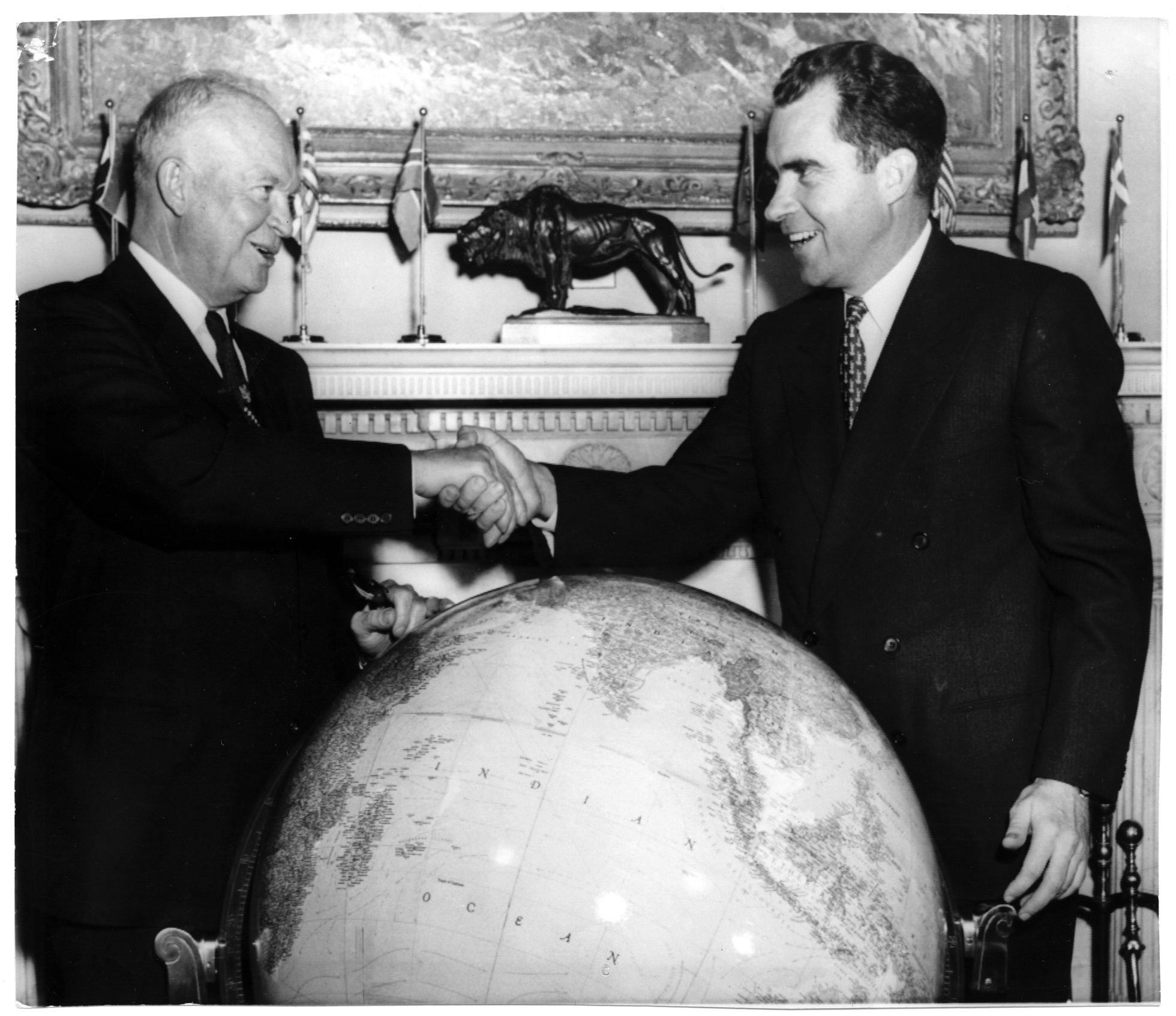
President Dwight D. Eisenhower and Vice President Richard Nixon at the White House before the Vice President’s Ambassador of Goodwill tour departure to the Far East, October 5, 1953. Richard Nixon Presidential Library and Museum, used with permission of the Richard Nixon Foundation and Julie Nixon Eisenhower.

President Dwight D. Eisenhower and Vice President Richard Nixon at the White House before the Vice President’s Ambassador of Goodwill tour departure to the Far East, October 5, 1953. Richard Nixon Presidential Library and Museum, used with permission of the Richard Nixon Foundation and Julie Nixon Eisenhower.

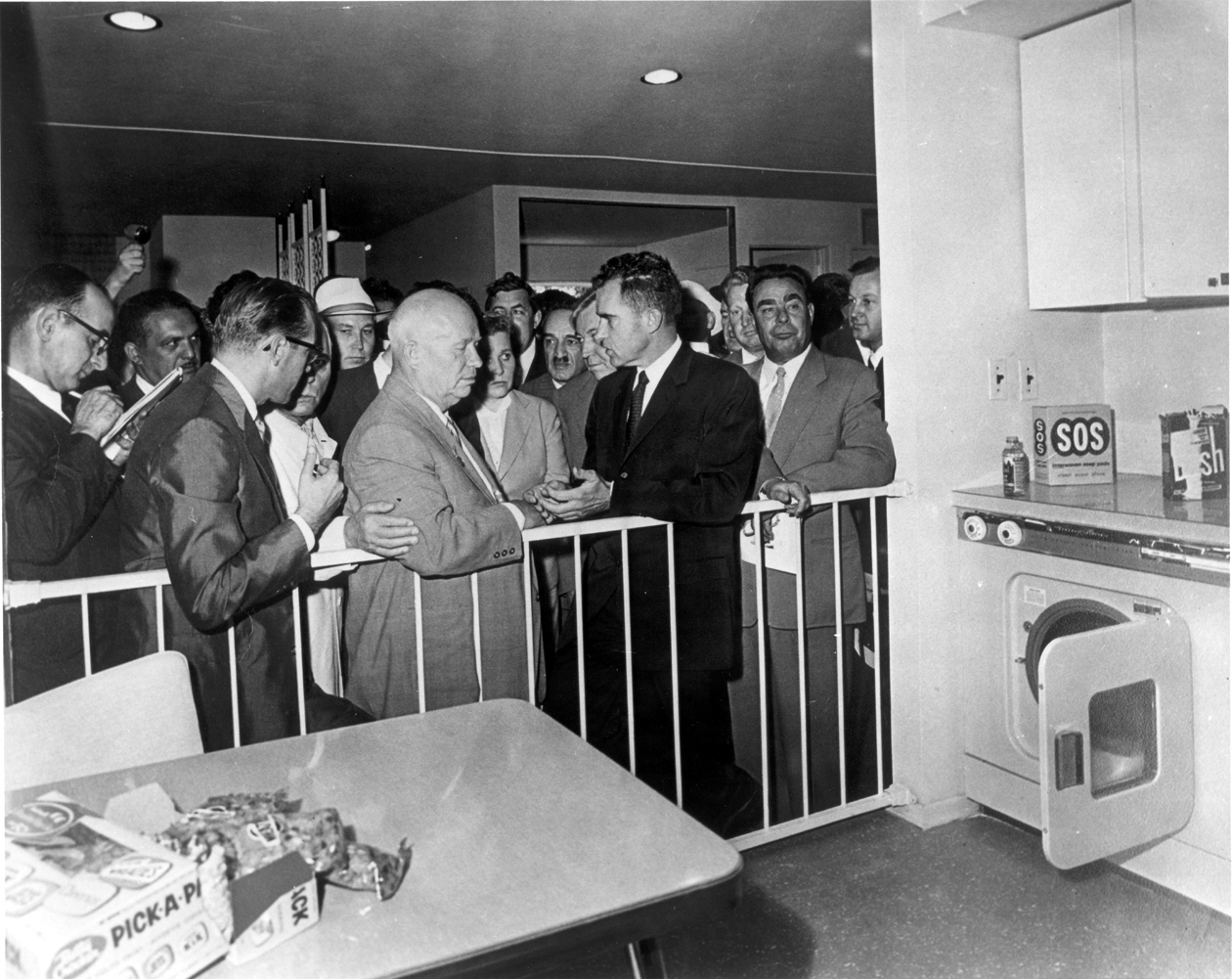
Vice-President Nixon spars with Premier Khrushchev before reporters and onlookers, including Politburo member Leonid Brezhnev at the American National Exhibition at Sokolniki Park, in Moscow, 1959. Nixon and Khrushchev are photographed in front of a kitchen display – the impromptu exchanges came to be known as the Kitchen Debate, July 24, 1959. Richard Nixon Presidential Library and Museum, used with permission of the Richard Nixon Foundation and Julie Nixon Eisenhower.

Vice-President Nixon spars with Premier Khrushchev before reporters and onlookers, including Politburo member Leonid Brezhnev at the American National Exhibition at Sokolniki Park, in Moscow, 1959. Nixon and Khrushchev are photographed in front of a kitchen display – the impromptu exchanges came to be known as the Kitchen Debate, July 24, 1959. Richard Nixon Presidential Library and Museum, used with permission of the Richard Nixon Foundation and Julie Nixon Eisenhower.

Nixon’s life offers many interesting twists and turns. His Watergate scandal rather overshadows much of the rest — I think high school textbooks do not spend enough time on telling why Nixon was considered a good candidate for the presidency after losing to John F. Kennedy in the 1960 election, nor do they dwell enough on the effect of the Cold War on his career, and his effect on the Cold War. Check your kid’s U.S. history book — is the Kitchen Debate even mentioned?

Nixon would have been 105 years old on January 9. We might pause to reflect, and learn, from his life and trials.

More:

A wreath-laying ceremony commemorating President Richard Nixon’s 105th birthday is moved indoors because of rain. The wreath was placed by a large photo of the 37th president in Yorba Linda on Tuesday, Jan 9, 2018. (Photo by Mindy Schauer, Orange County Register/SCNG)

Orange County Register caption: A wreath-laying ceremony commemorating President Richard Nixon’s 105th birthday is moved indoors because of rain. The wreath was placed by a large photo of the 37th president in Yorba Linda on Tuesday, Jan 9, 2018. (Photo by Mindy Schauer, Orange County Register/SCNG)


Happy 218th birthday, Millard Fillmore!

January 8, 2018

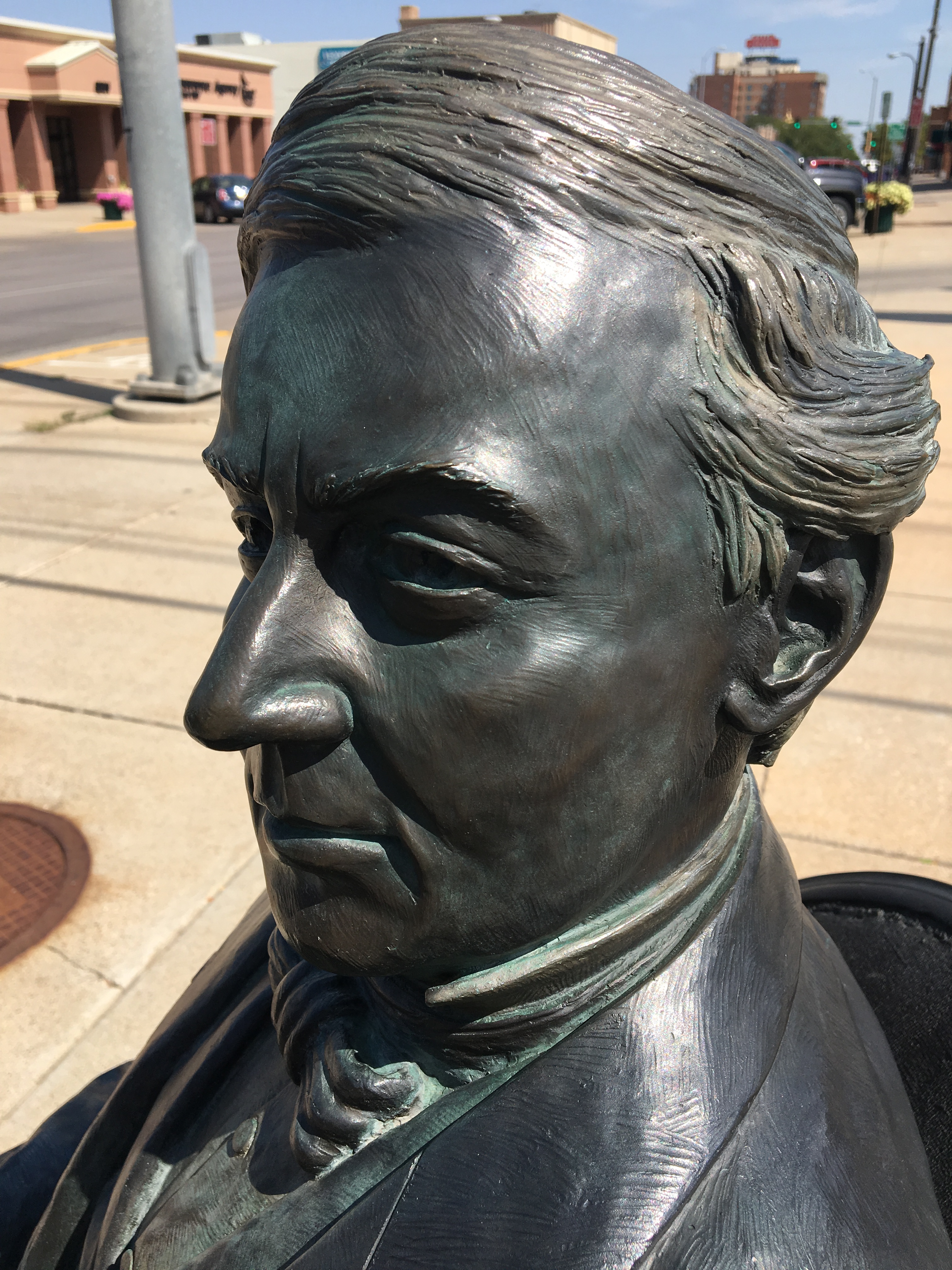
Millard Fillmore, bronzed, sitting at the corner of 9th and St. Joseph Streets in Rapid City, South Dakota. He still gets around. Photo by Ed Darrell. Please use.

Millard Fillmore, bronzed, sitting at the corner of 9th and St. Joseph Streets in Rapid City, South Dakota. He still gets around. Photo by Ed Darrell. Please use. Creative Commons copyright.

Millard Fillmore, our 13th President, was born on January 7, 1800.

That was 24 days after the death of our first President, George Washington.

Yes, I’m a day late in noting the anniversary. Fillmore’s birthday isn’t such a big deal anymore, since fun organizers discontinued the bathtub races once word got out that the story of Millard Fillmore putting the first bathtub in the White House, is a hoax.

Historians from the University of Buffalo — an institution founded by Fillmore after his presidency — usually hold a graveside ceremony with speeches. But for at least the second time in recent years, they got frozen out. (About as cold as the response I get from the University of Buffalo when I ask for a copy of the speech or paper to publish here.)

It’s a shame, really. Fillmore is the victim of fake news, a hoax perpetrated by H. L. Mencken 100 years ago, in 1917. Mencken claimed, falsely, that Fillmore’s sole good, memorable deed was putting that fictitious bathtub in the White House. That story crowds out the real history, and any good Fillmore should be remembered for.

Fillmore did a few notable things as president.

  • Fillmore secured a steady supply of bird guano for the United States. Funny as that may be, the guano was essential for making gun powder, which in turn helped fuel the military might of the United States for years (including through the Civil War).
  • Millard Fillmore and his first wife, Abigail, read books all the time. Deprived of the opportunity of going to school much in his youth, Fillmore became an ardent reader, read for the law, became a lawyer, got into politics and was selected Vice President for President Zachary Taylor. When Taylor died (probably of typhoid) in 1850, Fillmore succeeded to the presidency. In the White House, the Fillmores found few books to read, and so established the White House Library. Say prayers that library survives the current president.
  • Fillmore thought globally, and he could see world trade as a huge opportunity for a young nation with a strong navy and army, and a lot of resources including intellectual capacity to manufacture things. Trade in the Pacific was problematic, and a large number of problems stemmed from Japan’s closing itself off from the world. Japan had coal, which could refuel steamships. Japan instead closed its ports. An occasional U.S. sailor would be executed if he washed up on Japanese shores. Fillmore sent a small fleet of “black ships” under Commodore Matthew Perry, to tell Japan it was time to open up to trade and assume its place among nations. Perry was successful, after a second visit and a small round of cannon fire. Japan became a strong economic power in the West Pacific, and in its march to glory decided to take over resources of several other Asian nations. We might say Fillmore started the slide to World War II in the Pacific.

History should be kept to accuracy. Mencken upset the ship of accuracy with his essay, and America has not recovered, nor has Millard Fillmore’s reputation. There’s a moral there: Don’t spread hoaxes; seek the truth, and glorify it. (Mencken apologized for the hoax, but too late.)

Rapid City, South Dakota, is a booming town. Mineral wealth and oil in the state combine with an Air Force Base, great housing prices and good weather to the benefit of the town. One of its civic watchdogs got the idea of putting statues of all U.S. presidents on downtown corners. That is how Millard Fillmore comes to be seated at a desk with a book nearby, at the corner of 9th Street and St. Joseph Street, where I met him last August. Altogether a fun little history enterprise for Rapid City, very well executed, and worthy of a stop there if you’re passing by.

Perhaps someday Rapid City will take to decorating the statues on the birthdays of the men (so far!) represented. I hope they won’t be frozen out like Buffalo, New York, is, if they commemorate Millard Fillmore’s birthday.

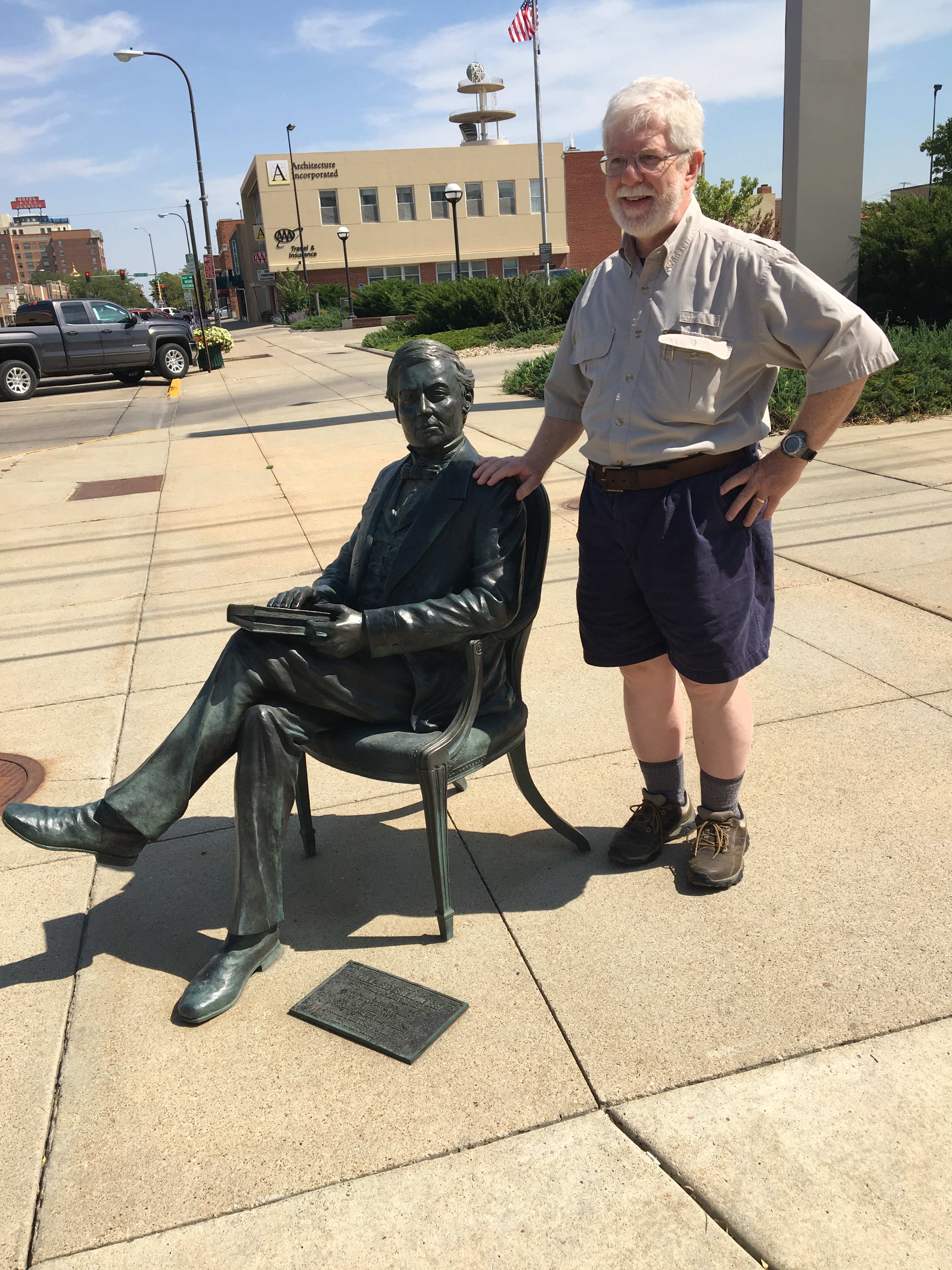
Millard Fillmore and Ed Darrell meet, in Rapid City, South Dakota, August 2017

Millard Fillmore and Ed Darrell meet, in Rapid City, South Dakota, August 2017; photo by Kathryn Knowles

More:


How did we celebrate Utah statehood?

January 4, 2018

Followers of this blog may note that, with 50 states having statehood days, only a handful actually celebrate with anything like the ceremonies Congress probably intended when they wrote the U.S. Flag Code, which calls for citizens to fly the U.S. flag on their statehood day.

It’s a bit of a disappointment.

Utah doesn’t make it a holiday, but Utahns note the day and the history, as we find on Twitter today.

Good for Utah.

AlRounds.com, a painting and image sale site, have this painting for sale; it shows the Latter-day Saints' Temple in Salt Lake City, festooned as it was through 1896 with a giant U.S. flag -- hung backwards by today's standards. Painting probably by Al Rounds.

AlRounds.com, a painting and image sale site, have this painting for sale; it shows the Latter-day Saints’ Temple in Salt Lake City, festooned as it was through 1896 with a giant U.S. flag — hung backwards by today’s standards. Painting probably by Al Rounds.

In the past five years, the image above has become a popular one, based on a photo by pioneering Utah journalist George Reed, from 1896.

Twitter shows much, much more, starting with that photo (did the Republicans link to Al Rounds’s site?). It’s not all love and peace pipes, either — who knew Utah statehood could be controversial 122 years later?

https://twitter.com/EdDarrell/status/948990904488136706

I think the state tree of Utah was changed in a recent session of the legislature. Utah’s state bird is the California gull, and there is history behind that (if questionable history); but Utah garden clubs lobbied for the Colorado Blue Spruce as state tree, in the 20th century. Lovely tree, but not native to Utah at all, it turns out. We used to joke Utah’s state bird is the California Gull, the state tree the Colorado Spruce, and the state song, “On Wisconsin.” State song is actually, “Utah, We Love Thee.” I’ll have to look up the state tree issue. Prof. Irving McNulty, from whom I took botany at the University of Utah, said he thought the state tree should be the Utah juniper (then Juniperus utahensis, but probably differently named now), because it was a squat, rather ugly tree that has legendary pollen and seed production. It’s considered a junk tree in most places, because it ruins grazing lands.

Do you wear your bib and tucker for formal occasions?

https://twitter.com/tannerholcomb/status/948969283194793984

Does your state celebrate with a state dance in an isolated, former capital?

Why do I mention that? Nothing at all to do with the former capital’s being Fillmore, in Millard County, I promise.

Is Delicate Arch in Arches National Park just one of the best symbols of any state, anywhere?

https://twitter.com/EdDarrell/status/948989025247027200

Here’s one of the photos that prompted the painting at the top of this post.

https://twitter.com/KyleTreasure/status/948962533959872512

More to come, perhaps, as the day goes on.


January 4 is Utah Statehood Day – Utahns fly their U.S. flags

January 4, 2018

I don’t think I ever knew anyone in Utah who had a Utah state flag.

But on Utah Statehood Day, the Flag Code says to fly the U.S. flag, so it’s okay.

Giant U.S. flag flies over Grovecreek Canyon, near Pleasant Grove, Utah (July 4, 2016). KSL News photo by Devan Dewey

Giant U.S. flag flies over Grovecreek Canyon, near Pleasant Grove, Utah (July 4, 2016). KSL News photo by Devan Dewey

Utah’s statehood came on January 4, 1896, after 49 years of attempts to join the union.

Utah is also one of those states that actually celebrates statehood day. The government calendar starts on January 4, the day new officials are sworn into office.

I chose the photo above partly because it demonstrates Utahns unusual love for the U.S. flag, and partly because it’s from my Utah hometown of Pleasant Grove. Not sure why they chose Grovecreek Canyon for this display — I think it would have been more spectacular a few miles south, at the mouth of Battlecreek Canyon, with a better view of Mt. Timpanogos in the background.

Happy 122nd birthday, Utah.

Utah Highways magazine caption for the video:

Utah Valley is very patriotic – sort of like Texas except that Texas doesn’t have mountains large enough to fly the largest flag ever flown in the U.S.! (According to http://followtheflag.org/) This flag is over 1/4 acre in size – that’s bigger than the lot my house sits on. See this flag for yourself until July 10 in the mouth of Grove Creek Canyon (http://utahhighways.com/utah-hiking/g…) above Pleasant Grove, Utah.


January 3, Alaska’s statehood day

January 3, 2018

Late for me to remind you, if you didn’t, but January 3 is Alaska’s Statehood Day. Alaskans should have flown their U.S. flags today in commemoration.

Of course, some people would like to fly their state flags, too — makes more sense, some say. I don’t argue, but I note that very rarely do I come across some household that has a state flag. Most homes have a U.S. flag.

Alaska’s flag is a work of art, though, and many Alaskans have one. Did you fly it today, if you have one?

More:

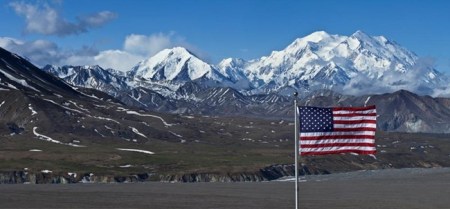
U.S. flag flying at the Eielson Visitor Center, Denali National Park, Alaska. National Park Service image

U.S. flag flying at the Eielson Visitor Center, Denali National Park, Alaska. National Park Service image, photo by Jacob W. Frank.


Video flag in Times Square, reflected

January 1, 2018

Reuters photo, at the Baltimore Sun’s “Darkroom” blog.

Baltimore Sun caption: The U.S. flag is reflected in the window of a police car as a police man stands guard in Times Square ahead of New Year’s Eve celebrations in New York, December 31, 2013. Security has been stepped up in the area around where the celebrations will take place. (REUTERS/Carlo Allegri)

Baltimore Sun caption: The U.S. flag is reflected in the window of a police car as a police man stands guard in Times Square ahead of New Year’s Eve celebrations in New York, December 31, 2013. Security has been stepped up in the area around where the celebrations will take place. (REUTERS/Carlo Allegri)

Of course you’re flying your flag today, as the U.S. Flag Code recommends.

Is every holiday going to be taken over by flag-waving?


Fly Old Glory, to welcome the New Year

January 1, 2018

Reuters photo captured the Polar Bear Swim at Coney Island on January 1, 2016. New Years Day is one of the Flag Code designated days to fly the flag.

Reuters photo captured the Polar Bear Swim at Coney Island on January 1, 2016. New Years Day is one of the Flag Code designated days to fly the flag.

Fly your flag on January 1, one of the designated dates in the U.S. Flag Code. It’s a new year, a good time to fly the colors to get any new enterprise off to a good start.

Let’s hope for a better 2018 than the past two years have been.

Got a photo of your flag flying on January 1? Let us see it, in comments.

More:


December 31 is Bright Idea Day, anniversary of the Day the Lights Went On

December 31, 2017

Between Christmas and New Year’s Day, here at Millard Fillmore’s Bathtub we celebrate a variety of historically holy days.  December 31, by tradition, is Bright Idea Day, the anniversary of the day Thomas Edison demonstrated for the public a working light bulb, in 1879.

100,000 people gather in Times Square, New York City (surely not the 1 million predicted by NBC!) tonight, and millions more around the world, in festivities for the new year made possible by the work of Thomas Alva Edison.

Here it is, the invention that stole sleep from our grasp, made clubbing possible, and launched 50,000 cartoons about ideas:

The light bulb Thomas Edison demonstrated on December 31, 1879, at Menlo Park, New Jersey - Wikimedia image

The light bulb Thomas Edison demonstrated on December 31, 1879, at Menlo Park, New Jersey – Wikimedia image (GFDL)

The light bulb. It’s an incandescent bulb.

It wasn’t the first bulb. Edison a few months earlier devised a bulb that worked with a platinum filament. Platinum was too expensive for mass production, though — and Edison wanted mass production. So, with the cadre of great assistants at his Menlo Park laboratories, he struggled to find a good, inexpensive filament that would provide adequate life for the bulb. By late December 1879 they had settled on carbon filament.

Edison invited investors and the public to see the bulb demonstrated, on December 31, 1879.

Thomas Edison in 1878, the year before he demonstrated a workable electric light bulb. Library of Congress image

Thomas Edison in 1878, the year before he demonstrated a workable electric light bulb. CREDIT: Thomas Edison, head-and-shoulders portrait, facing left, 1880. Prints and Photographs Division, Library of Congress. Reproduction number LC-USZ62-98067

Edison’s successful bulb indicated changes in science, technology, invention, intellectual property and finance well beyond its use of electricity. For example:

  • Edison’s Menlo Park, New Jersey, offices and laboratory were financed with earlier successful inventions. It was a hive of inventive activity aimed to make practical inventions from advances in science. Edison was all about selling inventions and rights to manufacture devices. He always had an eye on the profit potential. His improvements on the telegraph would found his laboratory he thought, and he expected to sell the device to Western Union for $5,000 to $7,000. Instead of offering it to them at a price, however, he asked Western Union to bid on it. They bid $10,000, which Edison gratefully accepted, along with the lesson that he might do better letting the marketplace establish the price for his inventions. Other inventive labs followed Edison’s example, such as the famous Bell Labs, but few equalled his success, or had as much fun doing it.  (Economics teachers:  Need an example of the marketplace in action?)
  • While Edison had some financial weight to invest in the quest for a workable electric light, he also got financial support, $30,000 worth, from some of the finance giants of the day, including J. P. Morgan and the Vanderbilts who established the Edison Light Company.
  • Edison didn’t invent the light bulb — but his improvements on it made it commercial. “In addressing the question ‘Who invented the incandescent lamp?’ historians Robert Friedel and Paul Israel list 22 inventors of incandescent lamps prior to Joseph Wilson Swan and Thomas Edison. They conclude that Edison’s version was able to outstrip the others because of a combination of three factors: an effective incandescent material, a higher vacuum than others were able to achieve (by use of the Sprengel pump) and a high resistance lamp that made power distribution from a centralized source economically viable.”
  • Edison’s financial and business leadership acumen is partly attested to by the continuance of his organizations, today — General Electric, one of the world’s most successful companies over the past 40 years, traces its origins to Edison.

Look around yourself this evening, and you can find a score of ways that Edison’s invention and its descendants affect your life. One of the more musing effects is in cartooning, however. Today a glowing lightbulb is universally accepted as a nonverbal symbol for ideas and inventions. (See Mark Parisi’s series of lightbulb cartoons, “Off the Mark.”)

Even with modern, electricity-saving bulbs, the cartoon shorthand hangs on, as in this Mitra Farmand cartoon.

Fusilli has an idea, Mitra Farmand, Fuffernutter

Brilliant cartoon from Mitra Farmand, Fuffernutter (regrettably, we note this site is no longer there; but with some hope, we find a new site here)

Or see this wonderful animation, a video advertisement for United Airlines, by Joanna Quinn for Fallon — almost every frame has the symbolic lightbulb in it.

Electrification of America, and the consequent spread of electric lighting and electrical machines to make domestic and industrial life more productive, and the spread of great public works to enable these and other inventions to spread, were made possible by a people roughly united in advancing progress, what historians now call “the progressive agenda” and the great advances of the Progressive Era.

Could we get such agreement among workers, corporate bosses and many levels of government today? When we celebrate anniversaries, like the demonstration of the light bulb, we celebrate the united polity that made such things possible, too.

Gee, I wonder who were the dignitaries to whom Edison demonstrated the electric light on that New Years Eve, in 1879. Anyone know? We can safely wager that there were representatives of the Vanderbilts and Morgans there, families who invested in Edison as an inventor.

Other resources:

Patent drawing for Thomas Edison's successful electric lamp. Library of Congress

Thomas Edison’s electric lamp patent drawing and claim for the incandescent light bulb CREDIT: “New Jersey–The Wizard of Electricity–Thomas A. Edison’s System of Electric Illumination,” 1880. Prints and Photographs Division, Library of Congress. Reproduction Number LC-USZ62-97960.

Even More:

This is an encore post.

Yes, this is an encore post. Defeating ignorance takes patience and perseverance.


We need to celebrate Hubble Day better! December 30, 2017, anniversary of the day we learned it’s a BIG universe

December 30, 2017

[Today is actually the day!  You may fly your flag if you choose.  This is the traditional Millard Fillmore’s Bathtub Hubble Day post.]

Lift a glass of champagne today in tribute to Edwin Hubble and his great discovery. Not sure what to call it — Hubble Day, Looking Up Day, Endless Possibilities Day — whatever, this is the anniversary of Edwin Hubble’s announcement that he had discovered the universe is much, much larger than anyone had imagined, containing far more stars than anyone had dared guess.

It’s a big universe out there.

Ultraviolet image of the Andromeda Galaxy. Wired caption: Photo: Edwin Hubble’s 1920s observations of Andromeda (whose ultraviolet spectrum is rendered here) expanded our notions of the size and nature of a universe that is itself expanding. Galaxy Evolution Explorer image courtesy NASA.

Ultraviolet image of the Andromeda Galaxy. Wired caption: “Photo: Edwin Hubble’s 1920s observations of Andromeda (whose ultraviolet spectrum is rendered here) expanded our notions of the size and nature of a universe that is itself expanding. Galaxy Evolution Explorer image courtesy NASA.”

So, today is a good day to celebrate the universe in all it’s glory – December 30. We haven’t done a good enough job of celebrating Hubble Day — we need to step up the festivities.

On December 30, 1924, Edwin Hubble announced he’d discovered other galaxies in distant space. Though it may not have been so clear at the time, it meant that, as a galaxy, we are not alone in the universe (whether we are alone as intelligent life is a separate question). It also meant that the universe is much, much bigger than most people had dared to imagine.

97 years ago today.

I keep trying to get people to celebrate.

In 2008 for Hubble Day, Wired picked up on the story (with a gracious link to 2007’s post here at the Bathtub). Wired includes several links to even more information, a good source of information. See Wired’s 2009 post here.

Hubble was the guy who showed us the universe is not only bigger than we imagined, it’s probably much bigger and much more fantastic than we can imagine. (See J. B. S. Haldane’s “queerer” quote.) Hubble is the guy who opened our imaginations to the vastness of all creation.

Hubble’s work would have been impossible without the earlier work of one of the great, unsung women of science, Henrietta Leavitt, as Wired explained:

He trained the powerful new 100-inch telescope at Mount Wilson in Southern California on spiral nebulae. These fuzzy patches of light in the sky were generally thought to be clouds of gas or dust within our galaxy, which was presumed to include everything in the universe except the Magellanic Clouds. Some nebulae seemed to contain a few stars, but nothing like the multitudes of the Milky Way.

Hubble not only found a number of stars in Andromeda, he found Cepheid variable stars. These stars vary from bright to dim, and a very smart Harvard computationist named Henrietta Leavitt had discovered in 1912 that you could measure distance with them. Given the brightness of the star and its period — the length of time it takes to go from bright to dim and back again — you could determine how far away it is.

Hubble used Leavitt’s formula to calculate that Andromeda was approximately 860,000 light years away. That’s more than eight times the distance to the farthest stars in the Milky Way. This conclusively proved that the nebulae are separate star systems and that our galaxy is not the universe.

How does one celebrate Hubble Day? Here are some suggestions:

  • Easier than Christmas cards: Send a thank-you note to your junior high school science teacher, or whoever it was who inspired your interest in science. Mrs. Hedburg, Mrs. Andrews, Elizabeth K. Driggs, Herbert Gilbert, Mr. Willis, and Stephen McNeal, thank you.
  • Rearrange your Christmas/Hanukkah/KWANZAA lights in the shape of the Andromeda Galaxy — or in the shape of any of the great photos from the Hubble Telescope (Andromeda Galaxy pictured above; Hubble images here)

    A few of the images from the Hubble Telescope

    A few of the images from the Hubble Telescope

  • Go visit your local science museum; take your kids along – borrow somebody else’s kids if you have to (take them along, too); in Dallas, you can visit the Perot Museum of Nature and Science — it’s a doozy.
  • Spend two hours in your local library, just looking through the books on astronomy and the universe
  • Write a letter to your senators and congressman; tell them space exploration takes a minuscule portion of our federal budget, but it makes us dream big; tell them we need to dream big, and so they’d better make sure NASA is funded well.  While you’re at it, put in a plug for funding Big Bird and the rest of public broadcasting, too.  Science education in this nation more and more becomes the science shows on NPR and PBS, watched by kids who learned to read and think by watching Big Bird.
  • Anybody got a good recipe for a cocktail called “The Hubble?” “The Andromeda?” Put it in the comments, please.  “The Hubble” should have bubbles in it, don’t you think?  What was it the good monk said?  He was working to make great wine, but goofed somewhere, and charged the wine with another dose of yeast.  When he uncorked the very first bottle of what would come to be called champagne, Benedictine Monk Dom Pierre Perignon said “I am drinking stars!”  Except, he said it in French.  In any case, a Hubble cocktail should have bubbles, some of Perignon’s stars.

The encore post, from 2007:

December 30, 1924, Edwin Hubble announced the results of his observations of distant objects in space.

PBS

Edwin Hubble, long before the Surgeon General’s 1964 report on smoking made taboo photos of people smoking pipes.

In 1924, he announced the discovery of a Cepheid, or variable star, in the Andromeda Nebulae. Since the work of Henrietta Leavitt had made it possible to calculate the distance to Cepheids, he calculated that this Cepheid was much further away than anyone had thought and that therefore the nebulae was not a gaseous cloud inside our galaxy, like so many nebulae, but in fact, a galaxy of stars just like the Milky Way. Only much further away. Until now, people believed that the only thing existing outside the Milky Way were the Magellanic Clouds. The Universe was much bigger than had been previously presumed.

Later Hubble noted that the universe demonstrates a “red-shift phenomenon.” The universe is expanding. This led to the idea of an initial expansion event, and the theory eventually known as Big Bang.

Hubble’s life offered several surprises, and firsts:

  • Hubble was a tall, elegant, athletic, man who at age 30 had an undergraduate degree in astronomy and mathematics, a legal degree as a Rhodes scholar, followed by a PhD in astronomy. He was an attorney in Kentucky (joined its bar in 1913), and had served in WWI, rising to the rank of major. He was bored with law and decided to go back to his studies in astronomy.
  • In 1919 he began to work at Mt. Wilson Observatory in California, where he would work for the rest of his life. . . .
  • Hubble wanted to classify the galaxies according to their content, distance, shape, and brightness patterns, and in his observations he made another momentous discovery: By observing redshifts in the light wavelengths emitted by the galaxies, he saw that galaxies were moving away from each other at a rate constant to the distance between them (Hubble’s Law). The further away they were, the faster they receded. This led to the calculation of the point where the expansion began, and confirmation of the big bang theory. Hubble calculated it to be about 2 billion years ago, but more recent estimates have revised that to 20 billion years ago.
  • An active anti-fascist, Hubble wanted to joined the armed forces again during World War II, but was convinced he could contribute more as a scientist on the homefront. When the 200-inch telescope was completed on Mt. Palomar, Hubble was given the honor of first use. He died in 1953.

“Equipped with his five senses, man explores the universe around him and calls the adventure Science.”

That news on December 30, 1924, didn’t make the first page of the New York Times. The Times carried a small note on February 25, 1925, that Hubble won a $1,000 prize from the American Academy for the Advancement of Science.

(Does anyone have a suitable citation for that video? Where did it come from? Who produced it? Is there more somewhere?)

Happy Hubble Day! Look up!

Resources:

Hubble Space Telescope - NASA image

Hubble Space Telescope, working homage to Edwin Hubble – NASA image

Even More Resources:

Andromeda as we can see it today. Wikimedia image: The Andromeda Galaxy is a spiral galaxy approximately 2.5 million light-years away in the constellation Andromeda. The image also shows Messier Objects 32 and 110, as well as NGC 206 (a bright star cloud in the Andromeda Galaxy) and the star Nu Andromedae. This image was taken using a hydrogen-alpha filter.

Andromeda as we can see it today. Wikimedia image: The Andromeda Galaxy is a spiral galaxy approximately 2.5 million light-years away in the constellation Andromeda. The image also shows Messier Objects 32 and 110, as well as NGC 206 (a bright star cloud in the Andromeda Galaxy) and the star Nu Andromedae. This image was taken using a hydrogen-alpha filter.


President Warren Harding, a voice for the ages

December 29, 2017

In 1922, President Warren G. Harding made a sound recording of his voice, for archival purposes. He died in 1923, succeeded by Calvin Coolidge. National Archives image.

In 1922, President Warren G. Harding made a sound recording of his voice, for archival purposes. He died in 1923, succeeded by Calvin Coolidge. National Archives image.

President Warren G. Harding made a recording of his voice in 1922, for archival purposes. From the photograph it appears the recording was made to a wax or plastic disk. Hypothetically, the recording exists somewhere in the bowels of the National Archives and Records Administration (NARA).


Dallas history, tonight! Bob Reitz at Half Price Books

December 28, 2017

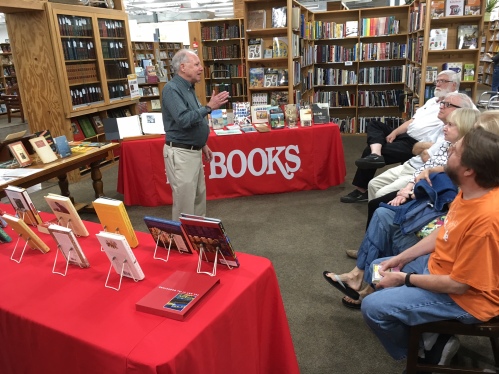
History teachers, and parents of students — and students (why shouldn’t you direct your own learning?) — note this event TONIGHT.

Dallas historian Bob Reitz presents “Collectible Conversations: The History of Dallas in the 50s and 60s,” at Half Price Books’ mothership at 5803 E Northwest Hwy (just off the Dallas Parkway).

Reitz is an old friend, curator of Circle 10 Council, BSA’s Harbin Scout Museum, housed at Camp Wisdom on Redbird Lane — a greater resource since the National Scout Museum decamped from Irving in September. He’s a homegrown Dallas boy, loaded with history of the tumultuous two decades from 1950 to 1970

Half Price Books’s blog featured an interview with Bob, which I crib here for your convenience (and to preserve it!):

For the December presentation in our monthly Collectible Conversations series at the HPB Flagship in Dallas, we welcome Dallas historian Bob Reitz. Reitz will discuss his growing up in Dallas in the 50s and 60s using books as his reference points. Bob gave an earlier Collectible Conversations talk specifically about his life in bookstores and his 37 books about bookstores from his collection.

Coll Conv 8 31 3

We asked Bob to give us a little preview of his upcoming talk.

When did you first feel that Dallas in the 50s and 60s was a special place and time?
In January of 1954, my father’s insurance company transferred him to Dallas from upstate New York. We had a new house built in the Casa View section of northeast Dallas. Cotton fields were being plowed under to create homes for newly returned servicemen beginning to start families after World War II. I started first grade and finished high school living in the same house. I still have a small group of friends from these times. Growing up, it seemed normal to have new movie houses, drive-ins, libraries, swimming pools and a thriving downtown. I never realized as a kid what we had in these unique and special times.

I’ve always thought that besides your family, your neighborhood makes the biggest difference in your life. I didn’t grow up smelling salt water from the ocean or seeing snow-covered mountains on the horizon. I grew up on the rolling blackland prairies in a large urban city straddling the Trinity River.

I know you own many books on the subject. Is there one that may best encapsulate the era for, say, a 20-year-old reader from Milwaukee?
Probably the most thoughtful book about this era in Dallas is by Pulitzer Prize-winning author Lawrence Wright (who graduated from Dallas’s Woodrow Wilson High School). The cover of his book In the New World:  Growing Up with America from the Sixties to the Eighties (1989) reads: “It’s both a story of one man’s coming of age in 1960s Dallas and a provocative account of the end of American innocence, the assassination of John F. Kennedy, the Vietnam War, and the Civil Rights era.”

Were there any particular events of the 50s or 60s that made the biggest impression on you?
One significant event took place in August of 1960 to celebrate the 50th anniversary of the Boy Scouts of America. Five thousand Scouts camped on a hill overlooking White Rock Lake. I had never seen so many Scouts in one place at one time—lines of tents covered the sloping hill in the middle of the city. Today, there is a sign on the slope designating the location as Scout Hill.

The rest of the world probably thinks of President Kennedy’s assassination as the most important event that occurred in Dallas in the 60s. Are many of your books primarily or partially about that event?
I was a junior in high school on that fateful November 22, 1963. I was finishing lunch when a student ran in and said, “The president has been shot, the president has been shot!” They moved us into the auditorium and by 2 p.m. they dismissed classes for the day.

We stayed glued to the television for the next week, witnessing the supposed ineptness of the Dallas Police play out on national TV, including the on-air killing of Lee Harvey Oswald by night club operator Jack Ruby. In the end, the police did pretty well. They caught Oswald within two hours, but Dallas became the laughing stock of the whole nation.

The Kennedy assassination spawned a couple of excellent novels of the era: Libra by Don DeLillo (1998) and November 22 by Bryan Woolley (2013). Author Norman Mailer wrote a telling non-fiction book, Oswald’s Tale: An American Mystery (1995), covering the early life of Lee Harvey Oswald.

Also in my collection is the book Reclaiming History: The Assassination of President John F. Kennedy by Vincent Bugliosi (2007). He concludes that Oswald was the lone gunman and destroys every one of the conspiracy theories.

Another book that agrees Oswald was the lone gunman also asserts that the darkest days of Dallas were caused by local ultraconservatives, such as oilman H.L. Hunt, former Army general Edwin Walker and national congressman, Bruce Alger. That book is Nut Country: Right Wing Dallas and the Birth of the Southern Strategy, by Edward H. Miller (2015).

In your previous Collectibles Conversation presentation, you referred to many Dallas bookstores in whose aisles you lost yourself. How big a role did its bookstores play in your understanding of Dallas history?
Dallas bookstores and libraries have been important throughout all my life. When I was small my dad drove my sister and me to the Lakewood Theater on Saturdays to watch a double feature movie and the cartoons. Afterwards we walked across the street to the Lakewood Library, which allowed us to call home (in the pre-cell phone era). While waiting for dad to come, we checked out lots of books.

Closer to home, I was part of the opening of the Casa View Library, which in 1964 set a national record of checking out over 9,000 books in a single day! In appreciation of the library’s influence in my life, I have put together twenty exhibits at the downtown Dallas Library on a wide variety of subjects, all from my personal book collection.

As a young teenager, I could visit Harper’s Used Books in the Deep Ellum section of downtown Dallas. My primary goal was to collect old Boy Scout Handbooks. What I found was so much more. A college student visited the same bookstore a couple of years before me. He became a Pulitzer Prize-winning author, Larry McMurtry, of Lonesome Dove fame. McMurtry wrote about the changes that occurred as Texas changed from a rural to a mostly urban economy.

My experiences in bookstores have enriched my life and broadened my perspective on how I grew up in Dallas and what I can give back to the cultural life of the city.

Want to hear more from Bob about life in Dallas in the 50s and 60s?  Join us at the HPB Flagship in Dallas for Collectible Conversations: 1950s and 60s Dallas Through Books on Thursday December 28 at 6 p.m.!

Steve is the”Buy Guy” at Half Price Books Corporate.

via Collectible Conversations: The History of Dallas in the 50s & 60s Through Books


Iowans, fly your flags today for statehood, December 28, 1846

December 28, 2017

The 2004 commemorative Iowa quarter-dollar pays homage to Iowa's great artist son, Grant Wood, and the prairie school house, with a motto for Iowa,

The 2004 commemorative Iowa quarter-dollar pays homage to Iowa’s great artist son, Grant Wood, and the prairie school house, with a motto for Iowa, “Foundation in Education.” Wood’s painting is “Arbor Day,” showing students and a teacher planting a tree outside a one-room schoolhouse. Image from the Littleton Coin Company.

Iowans fly their flags today in celebration of the anniversary of Iowa statehood.  Iowa’s admission to the Union came on December 28, 1846; Iowa is the 29th state admitted.

The Flag Code, 4 USC §6 (d), notes that the U.S. flag may be flown on “the birthdays of States (date of admission),” in addition to the other score of dates specifically written into law.

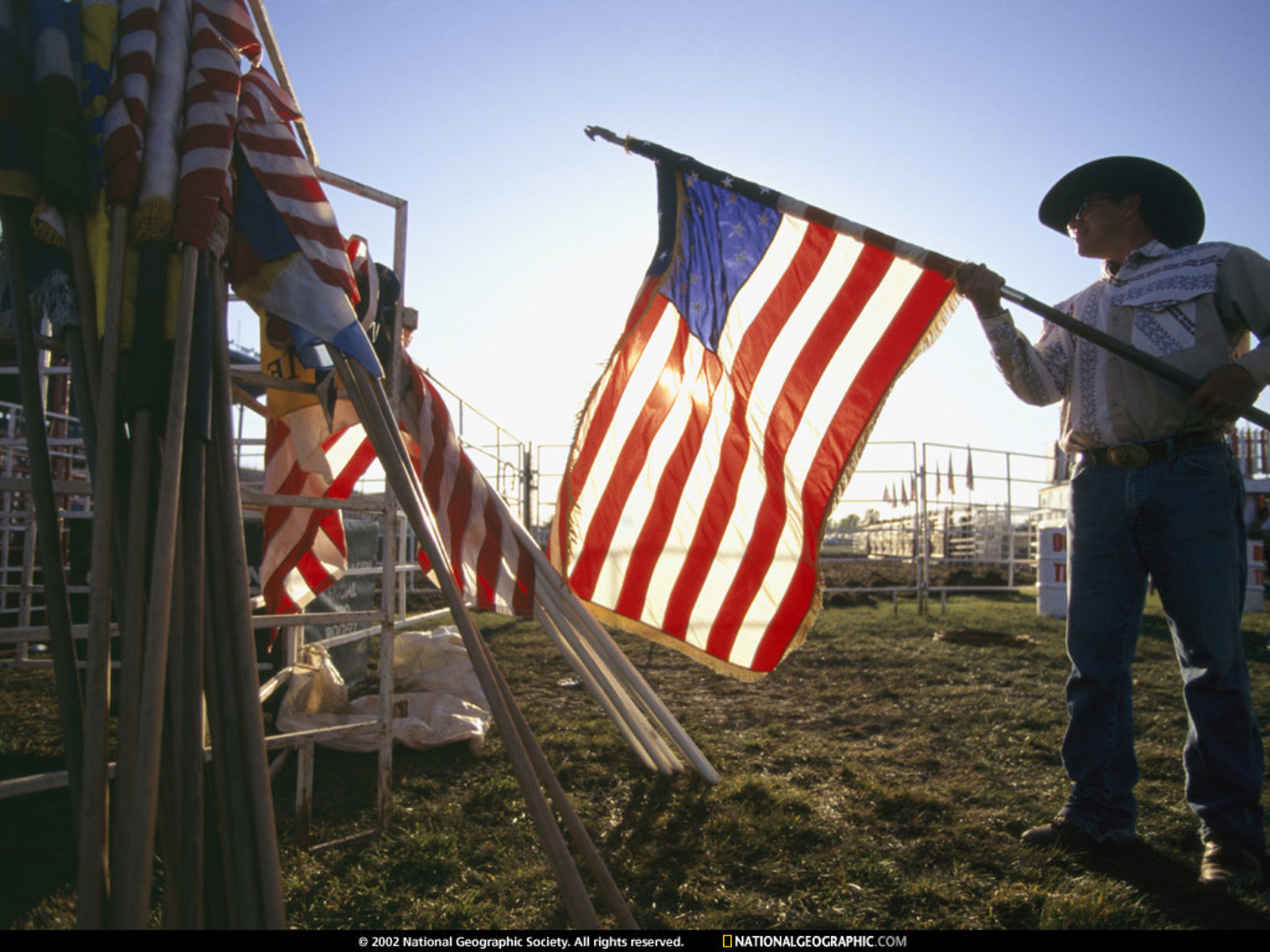
American Flag, Spencer, Iowa, 1996 – caption from the National Geographic Society: A man rolls up U.S. flags at the end of the Clay County Fair in Spencer, Iowa. “Although the population of Spencer is only about 12,000, the fair draws some 300,000 visitors. Once a year, rising from the endless flatness of the Iowa countryside, a crowd forms—to stroll, to hear big country music acts like the Statler Brothers, to sell a grand champion boar, to buy a new silo.” (Photographed on assignment for, but not published in, “County Fairs,” October 1997, National Geographic magazine) Photograph by Randy Olson; copyright National Geographic Society

American Flag, Spencer, Iowa, 1996 – caption from the National Geographic Society: A man rolls up U.S. flags at the end of the Clay County Fair in Spencer, Iowa. “Although the population of Spencer is only about 12,000, the fair draws some 300,000 visitors. Once a year, rising from the endless flatness of the Iowa countryside, a crowd forms—to stroll, to hear big country music acts like the Statler Brothers, to sell a grand champion boar, to buy a new silo.” (Photographed on assignment for, but not published in, “County Fairs,” October 1997, National Geographic magazine) Photograph by Randy Olson; copyright National Geographic Society. Just a great photo.

More: