August 6, 1945: Remembering Hiroshima in 2017

August 6, 2017

Mostly an encore post.
Toronto Star version of a Japan News story on Hiroshima's prayers for peace in 2016:

Toronto Star version of a Japan News story on Hiroshima’s prayers for peace in 2016: “Children pray as lanterns float on the river during Saturday’s 71st anniversary activities, commemorating the atomic bombing of Hiroshima. (Yuya Shino)”

Say a prayer for Hiroshima, today.

Then repeat it, for the rest of the planet.

72 years ago, U.S. military action brought a quick close to hostilities without an invasion of Japan, with the detonation of two atomic bombs, one over Hiroshima on August 6, 1945, and one over Nagasaki on August 9.

Events marking the anniversary now carry the spectre of the Fukushima nuclear power plant, which experienced core meltdowns in reactors as a result of a tsunami in 2011.  Anti-nuclear activists in Australia note similarities between the bombs ending the war, and the disaster at Fukushima.

In Hiroshima on August 6, then in Nagasaki on August 9, Japanese citizens soberly and somberly observe the anniversaries, and pray for an end to nuclear weapons. As the only cities ever bombed with atomic weapons, they have special experience, a special pleading to which we should all listen.

Daily Yomiuri Online carried a description of memorial events in Hiroshima in 2008, from Yomiuri Shimbun:

NAGASAKI–The Nagasaki municipal government held a ceremony Saturday marking the 63rd anniversary of the atomic bombing of the city, at which participants called for the abolition of all nuclear weapons.

A total of 5,650 A-bomb survivors, representatives of victims’ families from around the nation and Nagasaki citizens participated in the ceremony. Prime Minister Yasuo Fukuda also attended the ceremony, which was held in Nagasaki Peace Park near ground zero.

Nagasaki Mayor Tomihisa Taue read out the Nagasaki Peace Declaration, which urges the worldwide abolition of nuclear weapons.

“Human beings have no future unless nuclear weapons are eliminated. We shall clearly say no to nuclear weapons,” Taue said.

The ceremony started at 10:40 a.m. Three books listing the names of 3,058 people confirmed to have died as a result of the bombing in the past year were placed inside a memorial box in front of the Peace Statue.

The total number of books listing the names of the deceased is 147, and the number of names is 145,984.

Representatives of surviving victims, bereaved families, the prime minister and Hiroshima Mayor Tadatoshi Akiba placed flowers at the site.

At 11:02 a.m., the time the atomic bomb struck, ceremony participants offered a silent prayer. At the same time, local high school students rang the Bells of Nagasaki.

In the peace declaration, Taue read from an academic paper written by four people, including a former U.S. secretary of state, which promoted a new policy for developing nuclear weapons. The proposal encouraged countries to ratify the Comprehensive Test Ban Treaty. The mayor said world nuclear powers “should sincerely fulfill their responsibility of nuclear disarmament,” and urged the government to pass the three nonnuclear principles into law.

This year also marks the 100th anniversary of the birth of Takashi Nagai, a medical doctor who helped rescue of victims after the bombing.

The mayor referenced one of the doctor’s remarks, saying: “There are no winners or losers in a war. There is only destruction.”

Shigeko Mori, 72, representing survivors of the bombing, read out an oath for peace that said Japan should promote its Constitution and the three nonnuclear principles to the rest of the world to prevent nuclear proliferation.

Fukuda gave a speech, saying, “Japan should play a responsible role in the international community as a nation cooperating for peace.”

(Aug. 10, 2008)

As a Utah Downwinder, these dates push me to depression. We just saw atomic fallout (thought, from more more than 100 bombs), and many of us escaped with no significant physical injury. I cannot imagine the pain of survivors in Japan.

I can imagine what could happen, if we do not join them in calling for reining in of nuclear weaponry.

Other information:

Other related posts at Millard Fillmore’s Bathtub:

Remembering that U.S. involvement in World War II as a combatant came after the Japanese sneak attack on Pearl Harbor on December 7, 1941, one may respect and appreciate the Japanese national desire to commemorate the brutal end of the war with conversations about peace and how to achieve it.  The film below is a short, touching introduction to the Hiroshima Peace Museum website:

Related articles, 2012:

A-Bomb Dome in Hiroshima, Japan

A-Bomb Dome at Ground Zero, Hiroshima, Japan (Photo credit: Wikipedia)

Save

Save

Save

Save

Save


August 4, 1944: Germans capture Anne Frank and her family

August 4, 2017

Image and Caption from CNN: A handwritten page of Anne Frank's diary includes photos of herself on the beach during a holiday with her sister, Margot. The two sisters would live hidden in the annex with their mother, Edith; father, Otto; and another family.

Image and Caption from CNN: A handwritten page of Anne Frank’s diary includes photos of herself on the beach during a holiday with her sister, Margot. The two sisters would live hidden in the annex with their mother, Edith; father, Otto; and another family.

When I look at the time line, I feel frustrated and angry.

On August 4, 1944, the German Army in the Netherlands raided the warehouse where Anne Frank’s family hid from the Nazis since 1942.  As you know, Anne died in a concentration camp shortly after — only her father survived from her immediate family.

History students will recognize that this was nearly two months after D-Day, the Invasion of Normandy that set off the events leading to liberation of Europe from Nazi rule and the collapse of Hitler’s grand visions of conquest.  How could Nazi minions not know their time was limited, and oppression ultimately futile?

Germany surrendered in May 1945.  In nine months, the Frank family would not need to hide.  Anne died in March 1945, less than eight weeks before the surrender of Germany.

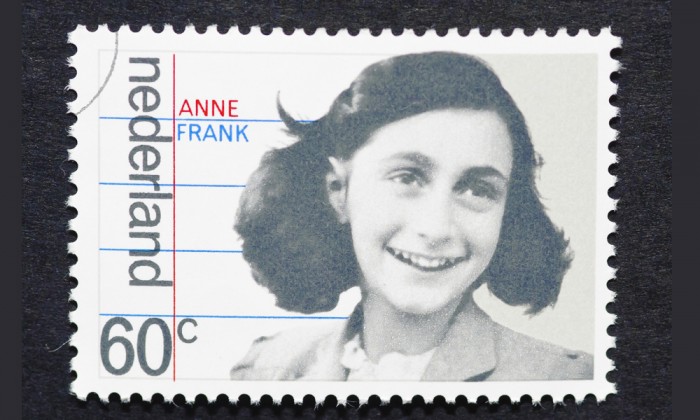
1980s postage stamp from the Netherlands, honoring Ann Frank's memory.

1980s postage stamp from the Netherlands, honoring Ann Frank’s memory.

More:

Photos from the liberation of Amsterdam, which occurred on May 6, 1945:

This is an encore post.

This is an encore post.

Save


History and art: Lyndon Johnson, Civil Rights, Vietnam, Stephen Stucky, the Dallas Symphony, and “August 4, 1964”

August 4, 2017

The Dallas Symphony Orchestra, under the direction of Jaap van Zweden, presents the premiere of Steven Stucky's oratorio

The Dallas Symphony Orchestra, under the direction of Jaap van Zweden, presents the premiere of Steven Stucky’s oratorio “August 4, 1964,” with soloists, from left, mezzo-soprano Kelley O’Connor, soprano Laquita Mitchell, tenor Vale Rideout, and baritone Robert Orth. Photo from the National Endowment for the Arts, Jason Kindig

In an era when our president and Congress appear unable to deal with one issue on a good day, it may be instructive to look back to a day upon which one U.S. President handled a lot, all at once.

On August 4, 1964, President Johnson awoke to the news that two U.S. Navy ships cruising in the Tonkin Gulf had been fired upon by North Vietnamese Navy gunboats; then the FBI called and announced that the bodies of three civil rights workers had been found, young men registering African Americans to vote in Mississippi.  Both of these events rumble through history like a Rocky Mountain avalanche to today; either was a make-or-break event for any presidency.  

Lyndon Johnson dealt with them both, the same day. And though Vietnam did not turn out for the best, it’s useful to note that Johnson’s call for Congress to grant authority to act on the Tonkin incident got results just three days later.

Sadly we note that Stephen Stucky, the composer of this great piece, died of brain cancer on February 14, 2016.

“August 4, 1964,” is an oratorio covering a remarkable and fantastic coincidence in the presidency of Lyndon B. Johnson.  On that day, the bodies of three civil rights workers who had been missing for nearly seven weeks, were found in shallow graves near Philadelphia, Mississippi — they were the victims of violence aimed at stopping blacks from voting.  The incident was a chief spur to the 1965 Voting Rights Act.

And also on that day, the U.S.S. Maddox reported it had been attacked by gunboats of the North Vietnamese Navy, in the Gulf of Tonkin.  The Gulf of Tonkin incident led to the Gulf of Tonkin Resolution, which gave Johnson the authority to expand and escalate the war in Vietnam, which he did.

Cover for the CD of the Dallas Symphony's performance of Steven Stucky's

Cover for the CD of the Dallas Symphony’s Grammy-nominated performance of Steven Stucky’s “August 4, 1964,” Jaap van Zweden conducting.

The Dallas Symphony commissioned the work, from composer Steven Stucky and librettist Gene Scheer, in commemoration of President Johnson’s 100th birth anniversary — he would have been 100 on August 27, 2008.  The works were premiered in Dallas in 2008.

The music is outstanding, especially for a modern piece.  The Dallas Symphony played at its flashiest and most sober best, under the baton of new conductor Jaap van Zweden.  It was a spectacular performance.  According to the New York Times:

Mr. van Zweden, hailed in his debut as music director a week before, scored another triumph here. And the orchestra’s assured and gritty performance was rivaled by that of the large Dallas Symphony Chorus, both corporately and individually, in shifting solo snippets charting the course of the fateful day.

The strong cast, mildly amplified, was robustly led by the Johnson of Robert Orth, last heard as another president in John Adams’s “Nixon in China” in Denver in June. Laquita Mitchell and Kelley O’Conner, wearing period hats, were touching as Mrs. Chaney and Mrs. Goodman. Understandably, the taxing role of a high-strung McNamara took a small toll on the tenor of Vale Rideout in his late aria.

The entire thing deserves more commentary, perhaps soon.  There is stellar history in the choral piece.  And there is this:  Consider that Lyndon Johnson, the best legislator and second most-effective executive we ever had as president, got hit with these two crises the same day.  On the one hand the nation got the Voting Rights Act, the Fair Housing Act, executive orders and government support to end segregation and the evils it created.  On the other hand, we got stuck with the disaster of the Vietnam War.

How would the nation fared had a lesser person been in the White House on that day?

(August 4 is a busy, busy day in history; much to think about.)

More: 

This is an encore post.

Much of this is an encore post.

Save

Save

Save


2nd Amendment? Don’t forget Article III, section 3; treason still a crime

August 3, 2017

Constitution Article III section 3; image origin unknown

Constitution Article III section 3; image origin unknown

Second Amendment fanatics (distinguished from Second Amendment scholars) often claim a right to overthrow the U.S. government by force, and use that as justification for complete, unbridled rights to own guns and threaten neighbors, city governments, state governments and federal government with violence.

Regardless the history of the Second Amendment and what it was intended to say, no scholar I can find argues that it vitiates or even touches Article III’s provisions against insurrection and violence against the government and government officers.

It may be good simply to review what that clause says.

Article III, Section 3, of the U.S. Constitution:

Treason against the United States, shall consist only in levying War against them, or in adhering to their Enemies, giving them Aid and Comfort. No Person shall be convicted of Treason unless on the Testimony of two Witnesses to the same overt Act, or on Confession in open Court.

The Congress shall have Power to declare the Punishment of Treason, but no Attainder of Treason shall work Corruption of Blood, or Forfeiture except during the Life of the Person attainted.

No commentary I can find suggests the Second Amendment confers a right to rebellion, a right to revolution, or any exemption from Article III treason.

What do you think? Comments open.

More:

Save

Save

Save

Save


Colorado Day 2017! Coloradans fly the flag for statehood

August 1, 2017

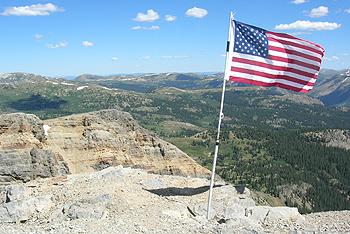
U.S. flag on American Flag Mountain, near Taylor Park, Colorado. Photo from Hobo Jeepers.

U.S. flag on American Flag Mountain, near Taylor Park, Colorado. Photo from Hobo Jeepers.

August 1 is Colorado’s statehood day. Unlike many other states, Colorado actually celebrates the day.

More accurately, people of Colorado celebrate the day. It seems most Colorado residents are happy to be there, and take any excuse to celebrate their good fortune.

#ColoradoDay even trended on Twitter for time today.

Under the provisions of the U.S. Flag Code, residents of a state are invited to fly the U.S. flag on their state’s day of statehood. Colorado came into the Union on August 1, at the declaration of President U. S. Grant, in 1876. People of Colorado tend to favor Colorado’s flag for most displays, on Colorado Day.

How are others celebrating? Free admission to Colorado State Parks, for one.


https://twitter.com/CaseyJPorter/status/892488499911426049


https://twitter.com/VegucationMama/status/892485902995304448


https://twitter.com/dwphotosco/status/892483447649779712


https://twitter.com/elieze_garner/status/892477389015527428


https://twitter.com/BriandaQuinones/status/892473969760141312

https://twitter.com/railfan4christ/status/892472012655927296

Well, yes, every other state has a statehood day, but don’t look for this effusive outpouring of state pride for many others, including Texas.

https://twitter.com/Jimbofoxman/status/892467827269140481

https://twitter.com/walkershow/status/892467003415552005


Save

Save

Save

Save


July 27, 2017: National Korean War Veterans Armistice Day, go ahead, fly your flag

July 27, 2017

U.S. soldiers and a tank come ashore at Inchon, in the invasion that led to the liberation of Seoul. Though an armistice in the war was achieved, a final resolution has never been negotiated. Image from Pinterest.

U.S. soldiers and a tank come ashore at Inchon, in the invasion that led to the liberation of Seoul. Though an armistice in the war was achieved, a final resolution has never been negotiated. Image from Pinterest.

President Donald Trump issued a proclamation for National Korean War Veterans Armistice Day, though the law Congress passed specified it should run only until 2003. There was no proclamation to urge flag flying, however.

You may fly your flag on any day. Many Americans continue to fly flags to honor Korean War veterans on July 27.

The White House
Office of the Press Secretary

For Immediate Release
July 26, 2017

President Donald J. Trump Proclaims July 27, 2017, as National Korean War Veterans Armistice Day

NATIONAL KOREAN WAR VETERANS ARMISTICE DAY, 2017

– – – – – – –

BY THE PRESIDENT OF THE UNITED STATES OF AMERICA

A PROCLAMATION

On National Korean War Veterans Armistice Day, we honor the patriots who defended the Korean Peninsula against the spread of Communism in what became the first major conflict of the Cold War.  We remember those who laid down their lives in defense of liberty, in a land far from home, and we vow to preserve their legacy.

Situated between World War II and the Vietnam War, the Korean War has often been labeled as the “Forgotten War,” despite its having claimed the lives of more than 36,000 Americans.  The Korean War began on June 25, 1950, when North Korean forces, backed by the Soviet Union, invaded South Korea.  Shortly thereafter, American troops arrived and pushed back the North Koreans.  For 3 years, alongside fifteen allies and partners, we fought an unrelenting war of attrition.  Through diplomatic engagements led by President Eisenhower, Americans secured peace on the Korean Peninsula.  On July 27, 1953, North Korea, China, and the United Nations signed an armistice suspending all hostilities.

While the armistice stopped the active fighting in the region, North Korea’s ballistic and nuclear weapons programs continue to pose grave threats to the United States and our allies and partners.  At this moment, more than 28,000 American troops maintain a strong allied presence along the 38th parallel, which separates North and South Korea.  These troops, and the rest of our Armed Forces, help me fulfill my unwavering commitment as President to protecting Americans at home and to steadfastly defending our allies abroad.

As we reflect upon our values and pause to remember all those who fight and sacrifice to uphold them, we will never forget our Korean War veterans whose valiant efforts halted the spread of Communism and advanced the cause of freedom.

NOW, THEREFORE, I, DONALD J. TRUMP, President of the United States of America, by virtue of the authority vested in me by the Constitution and the laws of the United States, do hereby proclaim July 27, 2017, as National Korean War Veterans Armistice Day.  I call upon all Americans to observe this day with appropriate ceremonies and activities that honor and give thanks to our distinguished Korean War veterans.

IN WITNESS WHEREOF, I have hereunto set my hand this twenty-sixth day of July, in the year of our Lord two thousand seventeen, and of the Independence of the United States of America the two hundred and forty-second.

DONALD J. TRUMP

At this blog, we urge you to remember what is often called “the forgotten war,” and the veterans of the war, and the sacrifices of those veterans and those who did not return. You may fly your flag if you wish.

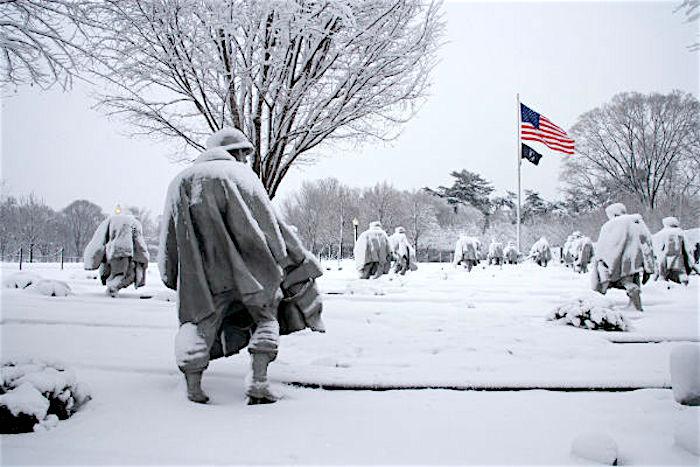
January 2016 snowfall added another layer of realism to the Korean Veterans War Memorial on the National Mall. Much of the Korean War was fought in bitter cold and snow. National Park Service photo

January 2016 snowfall added another layer of realism to the Korean Veterans War Memorial on the National Mall in Washington, D.C. Much of the Korean War was fought in bitter cold and snow. National Park Service photo

More:


Annals of DDT: Eagles return to Buffalo, New York, in a big way

July 26, 2017

Caption from the Buffalo News: A bald eagle, one of a pair of eagles raising chicks in a nest on Strawberry Island in the Niagara River, fishes in the river, Saturday, March 9, 2013. (Derek Gee/Buffalo News)

Caption from the Buffalo News: A bald eagle, one of a pair of eagles raising chicks in a nest on Strawberry Island in the Niagara River, fishes in the river, Saturday, March 9, 2013. (Derek Gee/Buffalo News)

Among the greater chunks of powerful evidence for the damage the pesticide DDT did to birds is the dramatic recovery of some species as residual DDT levels drop, after DDT use ended in the U.S.

In 1970 only one nesting pair of bald eagles lived in New York state; I have not found whether they successfully fledged any young that year, but the odds are against it.

47 years later, eagles nest in after-recovery record numbers in New York, according to the venerable Buffalo News.

If you haven’t spotted the stark white head of a bald eagle somewhere in the Buffalo Niagara sky, it might be time to get out of the house more often.

Eagles are back in historically high numbers, according to a recent report by the state Department of Environmental Conservation.

The DEC reported a record-high 442 bald eagle breeding territories statewide in 2016, including 58 spots in six Western New York counties, including Erie, Niagara, Wyoming, Chautauqua, Cattaraugus and Allegany counties. That’s up from 38 spots in the region in 2012.

“It’s an astonishing number,” said Jim Landau, a count coordinator from the Hamburg Hawk Watch.

Recovery of bald eagles, and other endangered raptors including osprey, brown pelicans and peregrine falcons, is a great chapter in the book of successes of the Endangered Species Act and the rising conservation consciousness of the 1970s.

Recovery of all four species waited after EPA’s ban on crop use of DDT, until residual DDT levels in adult birds declined to a point the female birds could once again produce competent shells for the eggs they laid. DDT levels in fish and prey also had to drop to levels that would not poison chicks just hatched.

EPA banned DDT from U.S. farms in 1972, designating all DDT made in the country for export, to fight disease. Though DDT use declined world wide as resistance to the pesticide spread rapidly among mosquitoes and flies that were its target, most diseases DDT fought against declined. I estimate about 100 million fewer people died of malaria alone after the DDT ban. Birds were saved, and so were humans.

More:

Save

Save

Save


July 26, 2017, New York flies U.S. flags for statehood

July 26, 2017

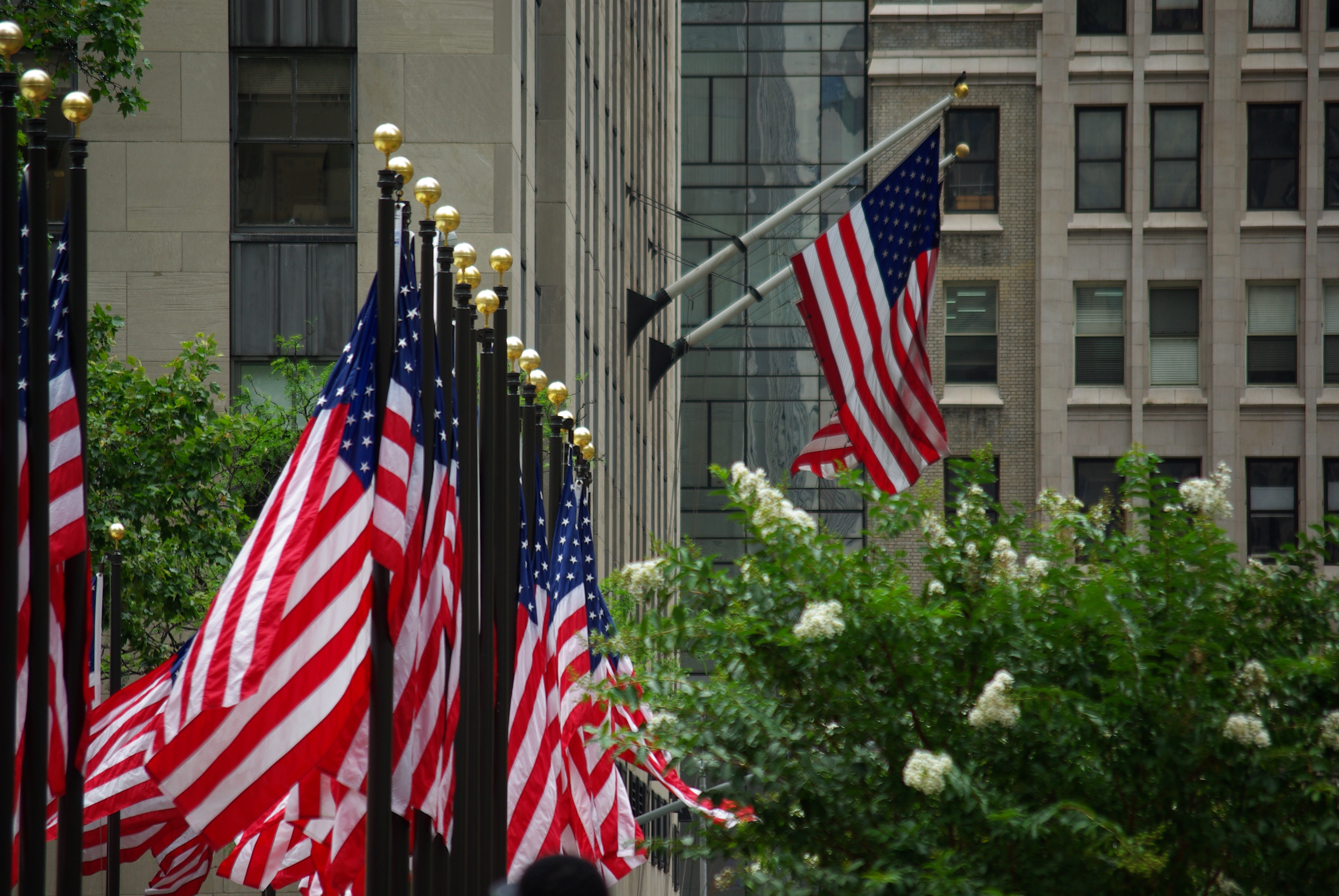
Flags fly in July at Rockefeller Center, New York City. Photo by Ed Darrell; please use, with attribution.

Flags fly in July 2016 at Rockefeller Center, New York City. Photo by Ed Darrell; please use, with attribution.

New York became a state, historians say, on July 26, 1788, when the Constitution Ratification Convention for the colony approved the U.S. Constitution. Technically the nation did not yet exist, but in flag circles, we use the ratification date as the statehood day for the 18 original states.

Following the guide of the U.S. Flag Code, New Yorkers fly their U.S. flags today in honor of New York’s statehood.

More: 

  • Next date to fly Old Glory: July 27 (tomorrow!) for Korean War Veterans Armistice Day.

Save

Save

Save


Do you remember when government gave humanity hope for the future? A giant leap for mankind on July 20, 1969

July 20, 2017

It’s a day to remember history.  Do you remember that day, the first time humans set foot on the Moon?

God knows we could use more Americans to have faith in the good intentions of NASA scientists today; we could use more dreams like those NASA gave us then, too.

Southwest Elementary in Burley, Idaho, existed in a world far, far away from the U.S. space program. We watched rocket launches on black and white televisions — the orbital launches were important enough my father let me stay home from school to watch, but when he dropped me off at school, I was in a tiny band of students who actually made it to school. Potato farmers and the merchants who supported them thought the space program was big, big stuff, worth missing school.

By John Glenn’s flight, a three-orbit extravaganza on February 20, 1962, a television would appear in the main vestibule of the school, or in the auditorium, and we’d all watch. There were very few spitballs. Later that year my family moved to Pleasant Grove, Utah.

Earthrise from Apollo 11, before the Moon landing

Moonrise from Apollo 11 prior to Moon landing.

Toward the end of the Gemini series, television news networks stopped providing constant coverage. The launch, the splashdown, a space walk or other mission highlight, but the nation didn’t hold its breath so much for every minute of every mission. Barry McGuire would sing about leaving the planet for four days in space (” . . . but when you return, it’s the same old place.”), then six days, but it was just newspaper headlines.

The Apollo 1 fire grabbed the nation’s attention again. Gus Grissom, one of the three who died, was one of the original space titans; death was always a possibility, but the U.S. program had been so lucky. Apollo’s start with tragedy put it back in the headlines.

The space program and its many successes made Americans hopeful, even in that dark decade when the Vietnam War showed the bloody possibilities of the Cold War. That darkest year of 1968 — see the box below — closed nicely with Apollo 8 orbiting the Moon, and the famous Christmas Eve telecast from the three astronauts, Frank Borman, Jim Lovell, and William A. Anders. The space program kept us hopeful.

By early 1969 many of us looked forward to the flight of Apollo 11 scheduled for July — the space flight that promised to put people on the Moon for the first time in history, the realization of centuries-old dreams.

Then I got my assignment for Scouting for the summer.  Out of nearly 50 nights under the stars, one of the days would include the day of the space walk. Not only was it difficult to get televisions into Maple Dell Scout Camp, a good signal would be virtually impossible. I went to bed Sunday night knowing the next day I’d miss the chance of a lifetime, to watch the first moon landing and walk.

Just after midnight my sister Annette woke me up. NASA decided to do the first walk on the Moon shortly after touchdown, at an ungodly hour. I’d be unrested to check Scouts in, but I’d have seen history.

And so it was that on July 20, 1969, Neil Armstrong became the first human to set foot on the Moon: “A small step for a man, a giant leap for mankind,” was what he meant to say in a transmission that was famously garbled (at least he didn’t say anything about jelly doughnuts).

NASA provided a video compilation for the 40th anniversary of Apollo 11 in 2009:

P. Z. Myers says he remembers a lawnmower going somewhere. It must have been very bright in Seattle. (Thanks for the reminder, P.Z., and a tip of the old scrub brush to you.)

2016 marks the 47th anniversary.

Texas Essential Knowledge and Skills (TEKS) lists 11 dates for U.S. history as the touchstones kids need to have: 1609, the founding of Jamestown; 1776, the Declaration of Independence; 1787, the Constitutional Convention; 1803, the Louisiana Purchase; 1861-1865, the American Civil War; 1877, the end of Reconstruction; 1898, the Spanish American War; 1914-1918, World War I; 1929, the Stock Market Crash and beginning of the Great Depression; 1941-1945, World War II; 1957, the launching of Sputnik by the Soviets. Most teachers add the end of the Cold War, 1981; I usually include Apollo 11 — I think that when space exploration is viewed from a century in the future, manned exploration will be counted greater milestone than orbiting a satellite; my only hesitance on making such a judgment is the utter rejection of such manned exploration after Apollo, which will be posed as a great mystery to future high school students, I think.)

* Why 1968 was such a tough year, in roughly chronological order: 1968 produced a series of disasters that would depress the most hopeful of people, including: the Pueblo incident, the B-52 crash in Greenland, the Tet Offensive in Vietnam, the nerve gas leak at the Army’s facility at Dugway, Utah, that killed thousands of sheep, Lyndon Johnson’s pullout from the presidential race with gathering gloom about Vietnam, the Memphis garbage strike, the assassination of Martin Luther King, Jr., riots, the Black Panther shoot-out in Oakland, the Columbia University student takeover, the French student strikes, the tornadoes in Iowa and Arkansas on May 15, the Catonsville 9 vandalism of the Selective Service office, the sinking of the submarine U.S.S. Scorpion with all hands, the shooting of Andy Warhol, the assassination of Robert F. Kennedy, the Buenos Aires soccer riot that killed 74 people, the Glenville shoot-out in Cleveland, the cynicism of the Republicans and the nomination of Richard Nixon and Spiro Agnew, the Warsaw Pact invasion of Czechoslovakia crushing the “Prague Spring” democratic reforms, the Chicago Democratic Convention and the police riot, the brutal election campaign, the Tlatololco massacre of students in Mexico City, Black Power demonstrations by winning U.S. athletes at the Mexico City Olympics, coup d’etat in Panama. Whew!

More, from Millard Fillmore’s Bathtub:

And even more:

Yes, this is mostly an encore post. Fighting ignorance requires patience.

This is a bit of a traditional July 20 post, and yes, this is mostly an encore post. Fighting ignorance requires patience.


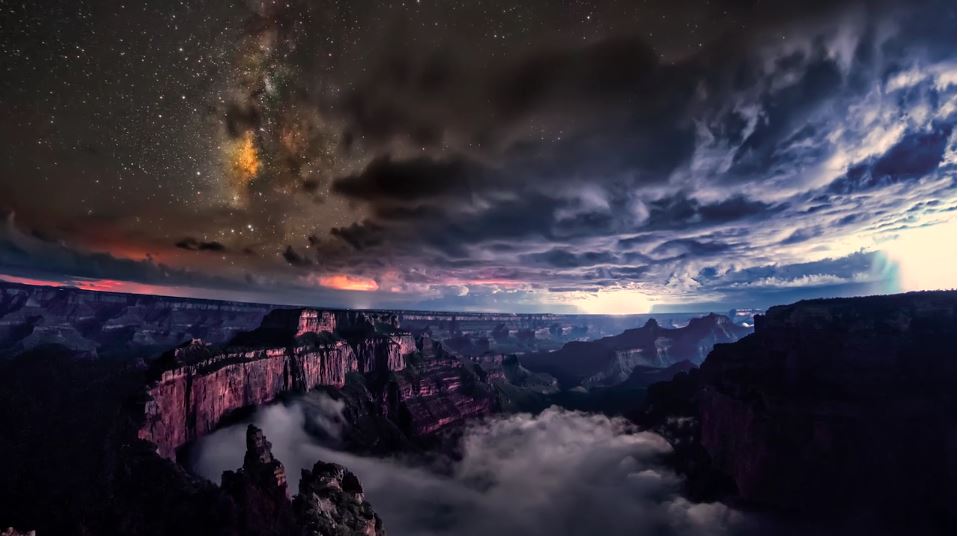
Clouds flow like water at Grand Canyon

July 17, 2017

Screen capture from the film, "Kaibab Elegy," by filmmakers Gavin Heffernan and Harun Mehmedinović, in Grand Canyon National Park.

Screen capture from the film, “Kaibab Elegy,” by filmmakers Gavin Heffernan and Harun Mehmedinović, in Grand Canyon National Park.

It’s beautiful, and it’s a reminder that Earth’s atmosphere is a giant pool of fluids, stuff flowing all the time.

It’s another Gavin Heffernan film, joined this time by Harun Mehmedinović.

MNN, the Mother Nature Network, alerted MFB to the film, and said:

The creators of “SKYGLOW,” a crowd-funded project showing the impact of urban light pollution through time-lapse videos, photos and a book, have another stunning video to share. In “Kaibab Elegy,” filmmakers Gavin Heffernan and Harun Mehmedinović visit Grand Canyon National Park and capture a rare weather event.

In the mesmerizing video, clouds build inside the canyon almost like bubbling water filling a jacuzzi as the sun rises and sets in the background, creating the pinkest sky you’ve ever seen. Those clouds roll like waves in the ocean and crash against the cliffs. This phenomenon is called full cloud inversion, and it happens when cold air is trapped in the canyon and topped by a layer of warm air, which combines with moisture and condensation.

“We were extremely lucky to be there to capture it, and it’s a collection of unique footage not found anywhere else,” Mehmedinović says.

He and Heffernan, who journeyed 150,000 miles around the globe for their new book and video series, work with the International Dark-Sky Association, a nonprofit fighting to preserve the dark skies around the world.

Tip of the old scrub brush to Mother Nature Network’s Twitter feed.

Save


July 2017: What dates do we fly the flag?

July 13, 2017

Caption from the Kansas Historical Society:

Caption from the Kansas Historical Society: “This is an illustration showing President Abraham Lincoln hoisting the American flag with thirty-four stars upon Independence Hall, Philadelphia, February 22, 1861. Copied from Harper’s Weekly, March 9, 1861.” Engraving by Frederick De Bourg Richards

July 4. Surely everyone knows to fly the flag on Independence Day, the anniversary of the Declaration of Independence.*

In the month of the grand patriotic celebration, what other dates do we fly the U.S. flag? July 4 is the only date designated in the Flag Code for all Americans to fly the flag.  Three states joined the union in July, days on which citizens of those states should show the colors, New York, Idaho and Wyoming.

Plus, there is one date many veterans think we should still fly the flag, Korean War Veterans Armistice Day on July 27.  Oddly, the law designating that date urges flying the flag only until 2003, the 50th anniversary of the still-standing truce in that war.  But the law still exists.  What’s a patriot to do?

Patriots may watch to see whether the president issues a proclamation for the date.

From Pinterest:

From Pinterest: “Riders in the patriotic horse group Americanas from Rexburg, Idaho, participate in the 163rd annual Days of ‘47 KSL 5 Parade Tuesday July 24, 2012 [in Salt Lake City, Utah]. (Chris Detrick | The Salt Lake Tribune)”

Generally we don’t note state holidays or state-designated flag-flying events, such as Utah’s Pioneer Day, July 24, which marks the day in 1847 that the Mormon pioneers in the party of Brigham Young exited what is now Emigration Canyon into the Salt Lake Valley. But it’s a big day in Utah, where I spent a number of years and still have family. And I still have memories, not all pleasant, of that five-mile march for the Days of ’47 Parade, in that wool, long-sleeved uniform and hat, carrying the Sousaphone. Pardon my partisan exception. Utahns will fly their flags on July 24.

  • Idaho statehood, July 3 (1890, 43rd state)
  • Independence Day, July 4
  • Wyoming statehood, July 10 (1890, 44th state)
  • New York statehood, July 26 (1788, 11th state)
  • National Korean War Veterans Armistice Day, July 27 (flags fly at half-staff, if you are continuing the commemoration which was designated in law only until 2003)

More:

_____________

* July 4? But didn’t John Adams say it should be July 2?  And, yes, the staff at Millard Fillmore’s Bathtub sadly noted that, at the Georgetown, Texas, July 4 parade in 2011 pictured at top, it appears no one saluted the U.S. flag as it passed, as the Flag Code recommends. MFB’s been fighting flag etiquette ignorance since 2006. It’s taking much, much longer than we wished.

Image of the entire cover of the March 9, 1861, Harper's Magazine,

Image of the entire cover of the March 9, 1861, Harper’s Weekly, “A Journal of Civilization.” From a sale at Amazon.com

Yes, this post is a bit late this year.

Yes, this is mostly an encore post. Fighting ignorance requires patience.

Yes, this is mostly an encore post. Fighting ignorance requires patience.

Save


July 4, 2017: Fly your flag! 241st anniversary of public reading of the Declaration of Independence

July 3, 2017

At Four Mile Historic Park in Glendale, Colorado, Abraham Lincoln actor John Voehl pauses before delivering the Gettysburg Address at a 4th of July celebration (yes, Lincoln delivered the address on November 16; it's a great statement of the meaning and history of the Declaration of Independence, and probably appropriate for July 4, remembering that the actual independence resolution passed on July 2, 1776 . . .) Denver Post file photo

At Four Mile Historic Park in Glendale, Colorado, Abraham Lincoln actor John Voehl pauses before delivering the Gettysburg Address at a 4th of July celebration (yes, Lincoln delivered the address on November 16; it’s a great statement of the meaning and history of the Declaration of Independence, and probably appropriate for July 4, remembering that the actual independence resolution passed on July 2, 1776 . . .) Denver Post file photo

It’s a day of tradition — oddly enough, since we are in reality a very new nation, and Lee’s resolution to declare independence from Britain came on July 2.

A soak in Millard Fillmore’s Bathtub is nothing if not a steeping in tradition.  Fly your flag today, to celebrate the independence of the American colonies of Britain.

Fourth of July: NPR has already read the Declaration of Independence (or will soon, if you’re up early), PBS is ready to broadcast the Capitol Fourth concert  (maybe a rebroadcast is available, if you’re off at your own town’s fireworks — check your local listings), your town has a parade somewhere this weekend, or a neighboring community does, and fireworks are everywhere.

At the White House, traditionally, new citizens are sworn in — often people who joined our armed forces and fought for our nation, before even getting the privileges of citizenship.  Fireworks on the Capital Mall will be grand. President Obama’s White House would host a few thousand military people and their families from some of the best views.  Traditionally, five photographers, chosen by lottery, get to shoot photos of the fireworks from the windows of the Washington Monument; will that occur, with the Monument open again after repair from the earthquake?

There will be great fireworks also in Baltimore Harbor over Fort McHenry, the fort whose siege inspired Francis Scott Key to write the “Star-spangled Banner” from his boat in the harbor, in 1814. Fireworks will frighten the bluebirds nesting at Yorktown National Battlefield.  I suspect there will be a grand display at Gettysburg, on the 154th anniversary of the end of that battle. July 4, 1863, also marked the end of the Siege of Vicksburg; tradition holds that Vicksburg did not celebrate the 4th of July for 83 years after that. I’ll wager there will be fireworks there tonight.

In Provo, Utah, the city poobahs will have done all they can to try to live up to their self-proclaimed reputation as having the biggest Independence Day celebration in the nation.  Will the celebration in Prescott, Arizona, still be muted by the tragic deaths of 19 Hot Shot firefighters a few years ago; will drought halt the fireworks, too?  There will be fireworks around the Golden Gate Bridge, in Anchorage, Alaska, reflecting on the waters of Pearl Harbor, and probably in Guam, American Samoa, and the Northern Marianas Islands.

Fireworks on the Fourth is a long tradition — a tradition that kept John Adams and Thomas Jefferson alive, until they both died on the 50th anniversary of the Declaration of Independence, in 1826, the sounds of the fireworks letting Adams know the celebration had begun (Adams erroneously celebrated that Jefferson, the Declaration’s author, still lived, unable to know Jefferson had passed just hours earlier).

Remember to put your flag up today.

Astronaut Eugene Cernan and the U.S. Flag -- Apollo 17 on the Moon (NASA photo)

Last flag on the Moon: Astronaut Eugene Cernan and the U.S. Flag — Apollo 17 on the Moon (NASA photo)

If you’re not on the Moon, here are some tips on flag etiquette, how to appropriately fly our national standard.

Also:

Lunar Reconnaissance Orbiter photo of the Apollo 17 landing site.

Lunar Reconnaissance Orbiter photo of the Apollo 17 landing site. NASA caption: Apollo 17 Lunar Module Challenger descent stage comes into focus from the new lower 50 km mapping orbit, image width 102 meters. Credit: NASA/GSFC/Arizona State University

This is mostly an encore post, but I so love that photo of the flag with the Earth in the distance.

Happy birthday, Kathryn!

Fireworks in Duncanville, Texas, for July 4

Fireworks in Duncanville, Texas, for July 4 — Kathryn Knowles’s birthday. We’re always happy the town chimes in with the celebratory spirit.

Tip of the old scrub brush to Thomas Jefferson, Richard Henry Lee, John Adams, Benjamin Franklin, Roger Sherman, Robert Livingston, and the cast of thousands of patriots including George Washington.

Yes, this is mostly an encore post. Fighting ignorance requires patience.

Yes, this is mostly an encore post. Fighting ignorance requires patience.

Save


Remember Helen Keller on her birthday, June 27

June 27, 2017

Helen Keller in a photo taken to promote her project of getting radios to blind children. Smithsonian Magazine/Corbis

Helen Keller in a photo taken to promote her project of getting radios to blind children. Smithsonian Magazine/Corbis

If it’s  June 27, it’s National Helen Keller Day. Helen Keller was born June 27, 1880.

Jimmy Carter designated her birthday National Helen Keller Day, in 1980. Twitter’s catching up with the celebration. Are you?

This is how we commemorated her in 2016.

http://twitter.com/The_HelenKeller/status/747446902896066560

More:


Quote of the Moment: John Kennedy, citizen of Berlin, June 26, 1963 (54 years ago)

June 26, 2017

Rare color photograph of President John Kennedy addressing a crowd in the then-divided city of Berlin, June 26, 1963

Rare color photograph of President John Kennedy addressing a crowd in the then-divided city of Berlin, June 26, 1963

Let us remember ties that bind our nations in brotherhood with other nations, including especially the memorable speech of  U.S. President John F. Kennedy on June 26, in Berlin, in 1963.

From the Smithsonian Magazine site:

June 26, 1963: “Ich bin ein Berliner”

In West Berlin, President John F. Kennedy delivers the famous speech in which he declares, “Ich bin ein Berliner.” Meaning literally “I am a citizen of Berlin,” the statement shows U.S. solidarity with democratic West Berlin, surrounded by communist territory.

View a video of President Kennedy’s speech at American Rhetoric, Top 100 Speeches.

Kennedy’s entire speech was good. It was well drafted and well delivered, taking advantage of the dramatic setting and the dramatic moment. John Kennedy well understood how to give a speech, too.

Below is most of the speech, nearly five minutes’ worth, from a YouTube file — another indication that schools need to open up their filters to allow at least some of the best YouTube material through:

Amazing to look at the massive crowd, and see no magnetometers were in use to check for weapons, and no significant barriers stood between the people and the speakers on the dais. Wouldn’t happen today. O, tempora, o, mores!

You may also want to note these posts:

German government photo and caption: The masses that greeted Kennedy in front of the West Berlin City Hall and throughout the city were jubilant. (© Press and Information Office of the Federal Government; Steiner)

German government photo and caption: The masses that greeted Kennedy in front of the West Berlin City Hall and throughout the city were jubilant. (© Press and Information Office of the Federal Government; Steiner)

Update: NBC News featured the speech on its network feed this evening.


Yes, this is mostly an encore post. Fighting ignorance requires patience.

Yes, this is mostly an encore post. Fighting ignorance requires patience.

Save

Save


Quote of the moment: Kennedy, art is truth, not propaganda (reprise)

June 26, 2017

President John F. Kennedy at the ground breaking of the Robert Frost Library at Amherst College, Massachusetts, October 26, 1963

President John F. Kennedy at the ground breaking of the Robert Frost Library at Amherst College, Massachusetts, October 26, 1963

“We must never forget that art is not a form of propaganda; it is a form of truth.” 

Remarks at Amherst College upon receiving an Honorary Degree (439),” October 26, 1963, Public Papers of the Presidents: John F. Kennedy, 1963. Via JFK Library

More:

Audio of the speech at Youtube:

Amherst student newspaper report on the event, image:

The Amherst Student, front page, special convocation edition, October 23, 1963. Headline,

The Amherst Student, front page, special convocation edition, October 23, 1963. Headline, “Kennedy given honorary LLD, envisions a future America.”

Yes, this is mostly an encore post. Fighting ignorance requires patience.

Yes, this is mostly an encore post. Fighting ignorance requires patience.