Top 15 places to stargaze in California’s BLM lands

June 16, 2015

I’m stealing this wholesale from the Tumblr site of the U.S. Department of Interior, America’s Great Outdoors.

The site features great Bureau of Land Management (BLM) sites often, and this week will highlight places on BLM lands in California that are great for stargazing.  They call it a “social media takeover” of the feed by California BLM.

How good is the star watching? Look at these photographs.  (I’ve added a few comments of my own.)

Piper Mountains Wilderness, California, by Bob Wick

Piper Mountains Wilderness, California, by Bob Wick

Another great place to see the Milky Way.

King Range National Conservation Area, California, by Bob Wick

King Range National Conservation Area, California, by Bob Wick

These photos are stunning. These .gifs also demonstrate how the atmosphere really is a fluid, flowing over mountains — “the curvaceous hills of California,” the Rev. Dr. Martin Luther King, Jr., called them in a travelogue he delivered from the Lincoln Memorial in 1963.  Teachers, not just great geography illustrations, but also illustrations for environmental science and physics.

Amargosa Wild and Scenic River, California, by Bob Wick

Amargosa Wild and Scenic River, California, by Bob Wick


San Gorgonio Wilderness, California, by Dan Maus

San Gorgonio Wilderness, California, by Dan Maus


Slinkard Wilderness, California, by Bob Wick

Slinkard Wilderness, California, by Bob Wick

Slinkard Wilderness? I admit I do not know of some of these places.  I’m willing to learn, first hand . . .

Kingston Range Wilderness, BLM California, by Bob Wick, BLM

Kingston Range Wilderness, BLM California, by Bob Wick, BLM


California Coastal National Monument, California, by Bob Wick

California Coastal National Monument, California, by Bob Wick

California Coastal National Monument reminds me that Republicans in Congress push a proposal to prevent future presidents from protecting such lands with National Monument designation under the Antiquities Act. Critics say these BLM lands are not special enough to merit protection.

Do the photos say otherwise?

North Maricopa Wilderness, California, by Bob Wick

North Maricopa Wilderness, California, by Bob Wick


Cadiz Dunes Wilderness, California, by Bob Wick

Cadiz Dunes Wilderness, California, by Bob Wick


Point Arena-Stornetta in California Coastal National Monument, California, by Bob Wick

Point Arena-Stornetta in California Coastal National Monument, California, by Bob Wick


A printer-friendly, and search engine-friendly list of the sites above, if you’re putting them into your GPS or search feature to plan your vacation:

mypubliclands:

June #conservationlands15 Social Media Takeover: Top 15 Places to Stargaze on the #mypubliclandsroadtrip in BLM California

1. Amargosa Wild and Scenic River
2. Cadiz Dunes Wilderness
3. California Coastal National Monument
4. Carrizo Plain National Monument
5. Fort Ord National Monument
6. Kingston Range Wilderness
7. Little Black Sands Beach in King Range National Conservation Area
8. Lost Coast Trail at King Range National Conservation Area
9. North Maricopa Wilderness
10. Piedras Blancas Light Station Outstanding Natural Area
11. Piper Mountains Wilderness
12. Point Arena-Stornetta in California Coastal National Monument
13. San Gorgonio Wilderness
14. Slinkard Wilderness
15. Whipple Mountains Wilderness

Thanks for following the June #conservationlands15 features on My Public Lands Tumblr, and our takeover of americasgreatoutdoors Instagram account (https://instagram.com/usinterior/). Stay tuned all week as the #mypubliclandsroadtrip visits these top 15 California spots for stargazing and much more.

Bob Wick and Dan Maus may have the best jobs in U.S. government service, judging by their photos.  Nice of them to share.

What do your shots from those places look like?  Show us in comments, maybe?


June 15: Should we fly the flag for Arkansas statehood?

June 15, 2015

Arkansas statehood day is June 15 — Arkansas became the 25th state in 1836. Arkansas residents fly their U.S. flags today in commemoration of the event, the 179th anniversary.

U.S. and Arkansas flags fly at the State Capitol; image from the Arkansas Secretary of State.

U.S. and Arkansas flags fly at the State Capitol; image from the Arkansas Secretary of State.

But I see in news reports stories about how the actual law passed a couple of days earlier, though news didn’t get to Arkansas until about July 4.  Is June 15 the real Arkansas statehood day?

What say you, Arkansas historians? Can you explain it?

We’re flying our flags anyway, for National Flag Week, which is celebrated the week in which Flag Day occurs, June 14.

More:


Milky Way at the Black Canyon of the Gunnison N.P.

June 14, 2015

From the Facebook site of the U.S. Department of Interior: Visit Black Canyon of the Gunnison National Park in Colorado and see some of the steepest cliffs, oldest rock and craggiest spires in North America. Pictured here is a stunning shot of the #MilkyWay rising above the Black Canyon. Photo courtesy of Greg Owens — at Black Canyon of the Gunnison National Park.

From the Facebook site of the U.S. Department of Interior: Visit Black Canyon of the Gunnison National Park in Colorado and see some of the steepest cliffs, oldest rock and craggiest spires in North America. Pictured here is a stunning shot of the #MilkyWay rising above the Black Canyon. Photo courtesy of Greg Owens — at Black Canyon of the Gunnison National Park.

Looking at that river, it’s difficult to understand that it’s just half the flow.  Ranchers and farmers bored a tunnel to channel half the water of the river to the Uncompahgre Valley through the 5 mile-long Gunnison Tunnel, completed in 1909.  Many of the overlooks into the incredibly steep canyon reveal only snippets of the ribbon of water that runs the whole length of the canyon.

I like how this photograph captures reflected light off the water, and makes the river appear easier to see than it usually is, especially at night.

Stunning geology, great hikes — you should go.

Especially you should go if you think about the geology that contradicts creationism.  The canyon is loaded with volcanic inserts that deny flood geology and every other geological distortion offered by creationists, maybe better than the Grand Canyon in that regard.

More:


Flag Day 2015! Fly your flag all week

June 14, 2015

Of course you know to fly your flag on June 14 for Flag Day — but did you know that the week containing Flag Day is Flag Week, and we are encouraged to fly the flag every day?

Clifford Berryman's 1901 Flag Day cartoon, found at the National Archives:

Clifford Berryman’s 1901 Flag Day cartoon, found at the National Archives: “In this June 14, 1904, cartoon, Uncle Sam gives a lesson to schoolchildren on the meaning of Flag Day. Holding the American flag in one hand, Uncle Sam explains that the flag has great importance, unlike the Vice Presidency, which he ridicules in a kindly manner. (National Archives Identifier 6010464)”

Our National Archives has a blogged history of Flag Day pointing out it was a teacher who started Flag Day celebrations.

On June 14, 1885, Bernard J. Cigrand placed a 10-inch, 38-star flag in a bottle on his desk at the Stony Hill School in Ozaukee County, Wisconsin. The 19-year-old teacher then asked his students to write essays on the flag and its significance to them. This small observance marked the beginning of a long and devoted campaign by Cigrand to bring about national recognition for Flag Day.

And so we do, today, still.


Happy birthday, President George H. W. Bush, 91

June 11, 2015

Former President George H. W. Bush was born on June 12, 1924, in Milton, Massachusetts.

Former President George H. W. Bush, at 86. Portrait by Platon, via PBS

Former President George H. W. Bush, at 86. Portrait by Platon, via PBS

Happy birthday!

Undated photo of former President George H. W. Bush by Allison Slomowitz, AP, via Houston Chronicle

Undated photo of former President George H. W. Bush by Allison Slomowitz, AP, via Houston Chronicle


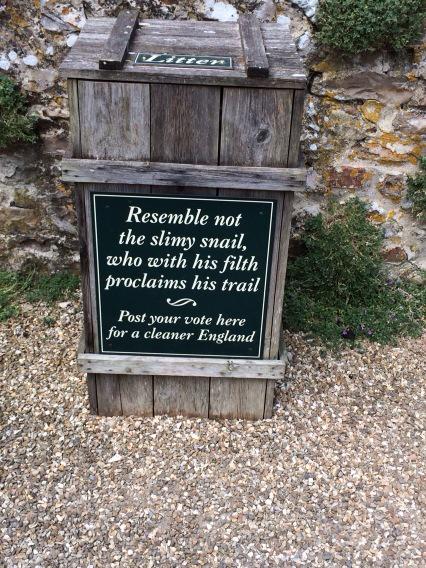
Signs of life: Be not like the snail, but vote for a clean environment

June 7, 2015

From a Tweet by @Tom_Peters:

Uncaptioned photo from the Twitter feed of business excellence chronicler Tom Peters, @Tom_Peters

Uncaptioned photo from the Twitter feed of business excellence chronicler Tom Peters, @Tom_Peters

Sign on a litter receptacle:

Resemble not the slimy snail, who with his filth proclaims his trail.

Post your vote here for a cleaner England.

It’s not particularly flattering to the snail, and probably a bit off on the actual biology of snail trails.  I particularly like the emphasis on “voting” with action.  Reality is that we change the planet, for the better or for worse, with many small, individual acts every day, each one a vote on the future.

Anyone know where this can is? Are there many like it in England?


Leader to the bone: Eisenhower’s astonishing D-Day leadership example, “Blame . . . is mine alone”

June 6, 2015

It is a model of leadership, an example more leaders should follow — though few do. It’s one more example of the high caliber leadership Dwight Eisenhower demonstrated throughout his life. In it’s imperfections, handwritten, it should take your breath away.  Eisenhower was a leader down to the bone.

So again, today, on the 71st anniversary of the D-Day invasion, we remember.

Eisenhower's unused statement on the failure of D-Day

Eisenhower’s contingency statement, in case D-Day failed – image from the National Archives

This quote actually isn’t a quote. It was never said by the man who wrote it down to say it. It carries a powerful lesson because of what it is.

In preparing for the D-Day invasion, Supreme Allied Commander Dwight Eisenhower carefully contemplated what would happen if the invasion failed.  What if the Germans repulsed the Allies, and no foothold was established to re-take the main body of Europe from the Germans?

Ike’s answer is a model of leadership:  He would take the blame.  Regardless what happened, Ike took full responsibility for the failure, giving credit to the soldiers who would have sacrificed in vain, perhaps their lives.

The Bathtub recently posted Gen. Dwight Eisenhower’s “order of the day” to the troops about to conduct the Allied invasion of Normandy — D-Day — to establish the toehold in Europe the Allies needed to march to Berlin, and to end World War II in Europe. As a charge to the troops, it was okay — Eisenhower-style words, not Churchill-style, but effective enough. One measure of its effectiveness was the success of the invasion, which established the toe-hold from which the assaults on the Third Reich were made.

eisenhower-with-paratrooper-eve-of-d-day.jpg

Photo shows Eisenhower meeting with troops of the 101st Airborne Division, 502nd Parachute Infantry Regiment, on the eve of the invasion. It was these men whose courage he lauded.

When Eisenhower wrote his words of encouragement to the troops, and especially after he visited with some of the troops, he worried about the success of the operation. It was a great gamble. Many of the things the Allies needed to go right — like weather — had gone wrong. Victory was not assured. Defeat strode the beaches of Normandy waiting to drive the Allies back into the water, to die.

Eisenhower wrote a second statement, a shorter one. This one was directed to the world. It assumed the assault had failed. In a few short sentences, Eisenhower commended the courage and commitment of the troops who, he wrote, had done all they could. The invasion was a chance, a good chance based on the best intelligence the Allies had, Eisenhower wrote. But it had failed.

The failure, Eisenhower wrote, was not the fault of the troops, but was entirely Eisenhower’s.

He didn’t blame the weather, though he could have. He didn’t blame fatigue of the troops, though they were tired, some simply from drilling, many from war. He didn’t blame the superior field position of the Germans, though the Germans clearly had the upper hand. He didn’t blame the almost-bizarre attempts to use technology that look almost clownish in retrospect — the gliders that carried troops behind the lines, sometimes too far, sometimes killing the pilots when the gliders’ cargo shifted on landing;  the flotation devices that were supposed to float tanks to the beaches to provide cover for the troops (but which failed, drowning the tank crews and leaving the foot soldiers on their own); the bombing of the forts and pillboxes on the beaches, which failed because the bombers could not see their targets through the clouds.

There may have been a plan B, but in the event of failure, Eisenhower was prepared to establish who was accountable, whose head should roll if anyone’s should.

Eisenhower took full responsibility.

Our landings in the Cherbourg-Havre area have failed to gain a satisfactory foothold and I have withdrawn the troops. My decision to attack at this time and place was based upon the best information available. The troop, the air [force] and the navy did all that bravery and devotion to duty could do. If any blame or fault attaches to the attempt, it is mine alone.

Who in the U.S. command would write such a thing today?  Who else in history would have written such a thing?  Is there any indication that Julius Caesar, Alexander the Great, Attila the Hun, Genghis Khan, or any other commander of a great army in  a world-turning invasion, considered how to save and perhaps salve the reputation of his troops, though they had failed?

Leadership is more than just positive thinking.

  • The message may also be viewed here. Yes, it’s incorrectly dated July 5 — should have been June 5.  In history, little is perfect.  We can excuse his slip of the pen, considering what else he had on his mind.


More:

General Eisenhower speaks with members of the ...

Another  angle of the meeting with the troops:  General Eisenhower speaks with members of the 101st Airborne Division on the evening of 5 June 1944.  Wikipedia image

This is mostly an encore post.


“Eyes of the world are upon you” – Ike’s orders to the troops for D-Day, June 5, 1944

June 6, 2015

Wikimedia caption and data: General Dwight D. Eisenhower addresses American paratroopers prior to D-Day.

Wikimedia caption and data: General Dwight D. Eisenhower addresses American paratroopers prior to D-Day. “Gen. Dwight D. Eisenhower gives the order of the Day. ‘Full victory-nothing less’ to paratroopers in England, just before they board their airplanes to participate in the first assault in the invasion of the continent of Europe.” Eisenhower is meeting with US Co. E, 502nd Parachute Infantry Regiment (Strike) of the 101st Airborne Division, photo taken at Greenham Common Airfield in England about 8:30 p.m. on June 5, 1944. The General was talking about fly fishing with his men as he always did before a stressful operation. Memoir by Lt Wallace C. Strobel about this photo (seen wearing the number 23 around his neck): http://www.historyaddict.com/Ike502nd.html U.S. Army photo via the Library of Congress; U.S. Army photographer unknown.

Soldiers, Sailors, and Airmen of the Allied Expeditionary Force: You are about to embark upon the Great Crusade, toward which we have striven these many months. The eyes of the world are upon you.

– Order of the Day, 6 June, 1944 (some sources list this as issued 2 June)

(This is mostly an encore post.)


Milky Way from a meadow in Rocky Mountain National Park

June 3, 2015

Ready to go camping this summer?

Wilderness Society Tweeted: Starry sky from near Beaver Meadows in Rocky Mountain National Park. Photo by Bryce Bradford

Wilderness Society Tweeted: Starry sky from near Beaver Meadows in Rocky Mountain National Park. Photo by Bryce Bradford

Bryce Bradford captured the Milky Way from Beaver Meadows in Rocky Mountain National Park.

More:


June 1: Fly your flags today in Kentucky and Tennessee for Statehood Day

June 1, 2015

Our laws on flag flying encourage citizens to fly U.S. flags on specific dates, and on the date of statehood of the state in which a citizen lives.

Kentucky joined the union on June 1, 1792, the 15th state.  Tennessee joined four years later, on June 1, 1796, becoming the 16th state.

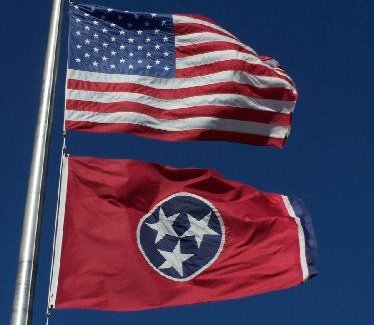
Fly your flags today in Kentucky and Tennessee — or wherever Kentuckians or Tennesseeans may be — in honor of statehood.

U.S. and Tennessee flags flying together on one staff.  Photo by J. Stephen Conn

U.S. and Tennessee flags flying together on one staff. Photo by J. Stephen Conn

Kentucky's state flag, by Gage Skidmore

Kentucky’s state flag features a Native American and European colonist standing together, and the state motto, “United We Stand, Divided We Fall.” Photo by Gage Skidmore

Kentucky’s admission to the union pushed the U.S. flag to 15 stars and 15 stripes.   President George Washington signed the law that authorized the U.S. flag be expanded to 15 stripes in early 1794.  I’ve not pinned down the history of what happened next.  So far as I know there was no law expanding the flag to 16 stripes, and in 1818, Congress said the flag would be 13 stripes, and stars equal to the number of states.

A 15-striped Star-spangled Banner that flew over Fort McHenry in Baltimore Harbor in 1814 and inspired Francis Scott Key to write the poem that is now the lyric to our national anthem.  President James Monroe signed the 13-stripe law in 1818.

What happened in between?  I suspect there are a lot of 15-stripe flags, but it wouldn’t surprise me to find a 16-stripe flag somewhere.  A variety of stars-and-stripes flags cropped up, which the 1818 law was intended to squelch.

Residents of the Bluegrass State and the Volunteer State should fly their flags today, in honor of their state’s having joined the union on June 1.

More:

http://twitter.com/hoyosplacido3/status/604008354571259904


Yes, this is mostly an encore post. Fighting ignorance requires patience.

Yes, this is mostly an encore post. Fighting ignorance requires patience. And repetition.


On what dates should we fly the flag in June?

May 31, 2015

Betsy Ross house in Philadelphia, by tradition the birthplace of Old Glory.

Betsy Ross house in Philadelphia, about 1900, by tradition the birthplace of Old Glory. “Happy Flag Day from Shorpy! Detroit Publishing Co. glass negative.” Image via Shorpy. Betsy Ross House is a traditional site for Philadelphia’s celebration of Flag Day.

June holds only two days designated for flying the U.S. flag out of the specific days mentioned in the U.S. Flag Code, and six statehood days, when residents of those states should fly their flags.  Plus, there is National Flag Week.

Two Flag Code-designated days:

  • Flag Day, June 14
  • Fathers Day, third Sunday in June (June 21)

Several states celebrate statehood. New Hampshire, Virginia, Arkansas, Kentucky, Tennessee and West Virginia celebrate statehood; Kentucky and Tennessee share the same date.

  • Kentucky, June 1 (1792, 15th state)
  • Tennessee, June 1 (1796, 16th state)
  • Arkansas, June 15 (1836, 25th state)
  • West Virginia, June 20 (1863, 35th state)
  • New Hampshire, June 21 (1788, 9th state), and
  • Virginia, June 25 (1788, 10th state)

Additionally, Congress passed a resolution designating the week in which June 14th falls as National Flag Week, and urging that citizens fly the flag each day of that week.  In 2015 that would the week of June 14, which falls on Sunday, through June 20.

Nine designations covering 10 separate days, listed chronologically:

  1. Kentucky and Tennessee statehood, June 1
  2. Flag Day, June 14; National Flag week, June 14 to 20
  3. Arkansas statehood, June 15 (duplicating National Flag Week)
  4. West Virginia statehood, June 20 (also duplicating National Flag Week)
  5. Fathers Day, June 21
  6. New Hampshire statehood, June 21 (duplicating Fathers Day)
  7. Virginia statehood, June 25

Tip of the old scrub brush to Mike’s Blog Rounds at Crooks and Liars — thanks for the plug!


May 29, Rhode Island Statehood Day; fly your flags in Providence

May 29, 2015

https://upload.wikimedia.org/wikipedia/commons/thumb/0/0d/Independent_Man_Providence_Capitol.JPG/800px-Independent_Man_Providence_Capitol.JPG

The Independent Man stands atop the Rhode Island State House in Providence. Photo by Lgalbi; Public Domain via Wikimedia Commons

May 29 is statehood day for Rhode Island, the 13th of the original colonies to join the union.

It’s interesting history to me. Rhode Island was rogue enough at the time — many called it “Rogues’ Island” — the colony sent no delegates to the convention in Philadelphia that wrote the Constitution.  One may wonder why the delegates even bothered to include the colony in the process. But, they did.

Not that it mattered to creation of the United States.  New Hampshire was the 9th state to ratify the document, on June 21, 1788, making it effective under the rules.  Rhode Island did not ratify the Constitution until May 29, 1790 — two years after the Constitution took effect, and about a year after the new government started operation and inaugurated George Washington the first president.  Rhode Island joined the nation already steaming along.

Rear of Rhode Island's Capitol, flying the Rhode Island state flag to the left, and the U.S. and POW flags on the right.  (Just try to find photos of the U.S. and Rhode Island flags together . . . please.)

Rhode Island State Capitol, north facade, by Garrett A. Wollman; bostonradio.org via Wikimedia. Rhode Island’s state flag flies to the left, and the U.S. and POW flags on the right. (Just try to find photos of the U.S. and Rhode Island flags together . . . please.)

Does Rhode Island celebrate Statehood Day? I don’t know. Historian Laureate Patrick T. Conley wrote a column for the Providence Journal revealing that Rhode Island was, like Texas, an independent republic for a time. This news won’t rest well with Texans. Other Rhode Island celebrations may occur, but they’re tough to learn about.

More:


Public lands: St. Anthony Sand Dunes, Idaho

May 28, 2015

St. Anthony Sand Dunes, Idaho -- a part of the undifferentiated lands of the Bureau of Land Management (BLM), Department of Interior. #Sunset photo by Bob Wick, Bureau of Land Management - Idaho.

St. Anthony Sand Dunes, Idaho — a part of the undifferentiated lands of the Bureau of Land Management (BLM), Department of Interior. #Sunset photo by Bob Wick, Bureau of Land Management – Idaho.

From the Department of Interior Facebook page:

Located far from any ocean, the St. Anthony Sand Dunes appears as a rolling sea of sand on the eastern edge of Idaho’s volcanic Snake River Plain. These vast dunes are the largest in Idaho. They blanket an area approximately 35 miles long and 5 wide, and range from 50 to 500 feet high. These white quartz sand dunes are a unique and popular recreational area for off-highway vehicle enthusiasts, hikers and equestrians. The best time to visit is spring through fall; summer temperatures cause sands to reach over 100 degrees. #Sunset photo by Bob Wick, Bureau of Land Management – Idaho.

One more stellar example of the great resources held by U.S. citizens for the future, for preservation — and for recreation and awe.

James and Michelle sent photos from their recent foray to the Great Sand Dunes National Park and Preserve in Colorado. Kathryn, Kenny, James and I camped at the Coral Pink Sand Dunes State Park in Utah some years back, at the new Moon, the better to be wholly awestruck at the stars at night.

Michelle and James on top of a dune at Great Sand Dunes National Park and Preserve

Michelle and James on top of a dune at Great Sand Dunes National Park and Preserve, 2015

Then there are the Sleeping Bear Sand Dunes National Lakeshore in Michigan. White Sands National Monument in New Mexico. Some dunes in Joshua Tree National Park and Death Valley National Park.  I can show you smaller collections of dunes on the Navajo and Hopi Reservations in Arizona and New Mexico.

Where else in America do we have marvelous dunes like these?  (I’ve missed some, I’m sure — tell me in comments.) When you start thinking about it, it’s a lot!

Each site well worth the time and trouble to get there.

Take your camera, and your memory-making machine.


Maybe Texas can learn from this: What about when life sends you blizzards?

May 28, 2015

What do you do when life gives you blizzards? Image from film by FableVision

What do you do when life gives you blizzards? Image from film by FableVision

Another piece from Peter H. Reynolds and Fablevision, perhaps appropriate to Texas waking up near the end of Memorial Day week, with acute floods history and being cleaned up, but flood waters working their way down the major Texas rivers, ready to ravage even more communities.

Is the drought gone, yet?

When Life Gives You Blizzards, from FableVision:

Uploaded on Dec 23, 2010

A short animation by Peter H. Reynolds and FableVision about a boy who makes the best of a stormy situation. Directed by John Lechner, sound design by Tony Lechner.


Rachel Carson’s 108th birth anniversary

May 27, 2015

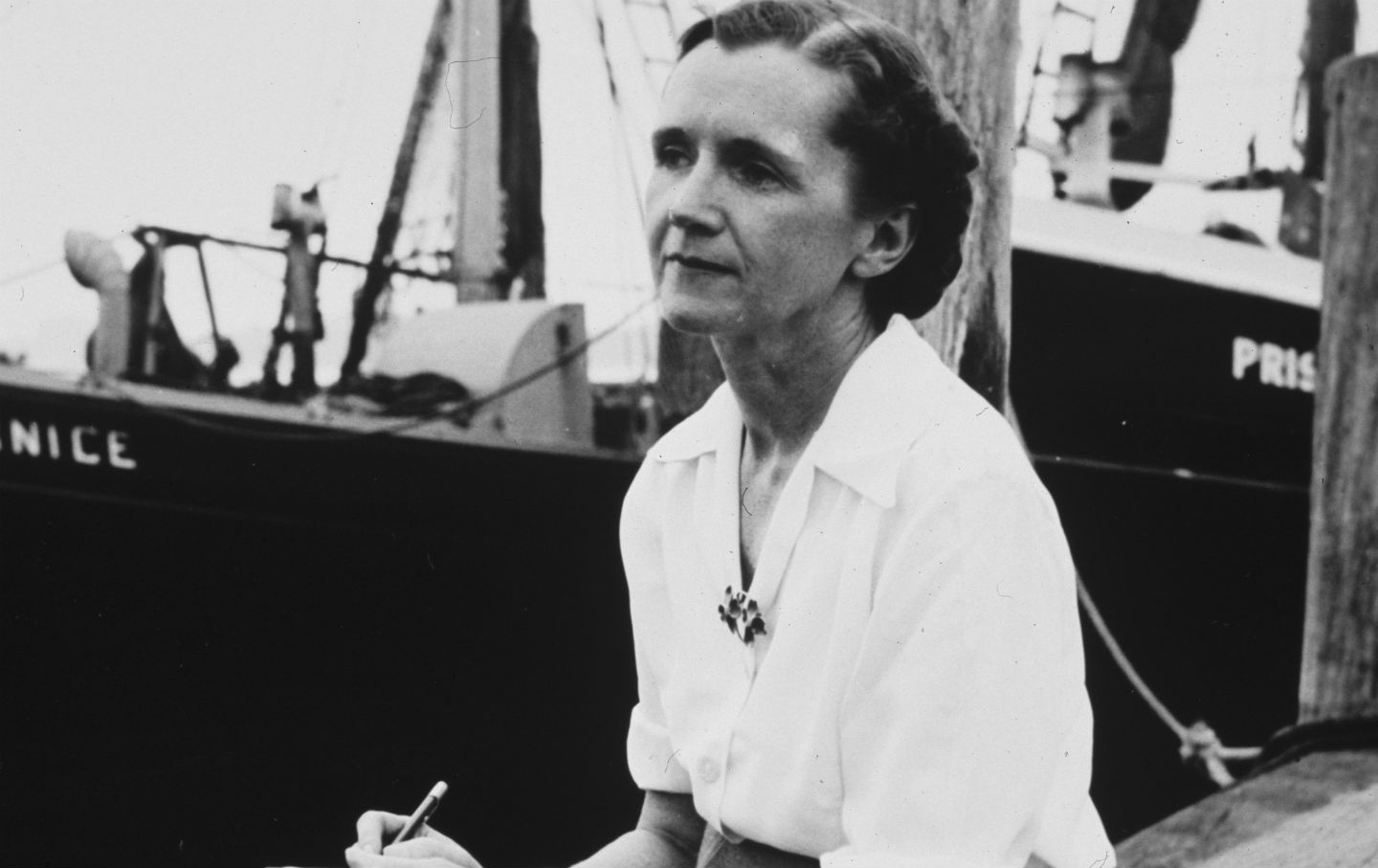
Rachel Carson, the great biologist and author, was born on May 27, 1907.

Last year, Google’s Doodle featured Ms. Carson, and the crazy, ill-informed, hoaxing and hoaxed right wing, came unglued.

Less flap this year, but I suspect it’s only because there’s been no great public recognition of the date.  Hoaxsters who insist DDT was always safe, or that banning DDT on cotton crops in Arkansas and Texas somehow caused malaria in Africa, or that Idi Amin became a great fan of Rachel Carson and stopped spraying DDT in Uganda to save American eagles, or other similarly silly-but-vicious things, or who just hate anything to do with protecting the environment, usually erupt on Earth Day, World Malaria Day, and Rachel Carson’s birthday.

Not much on her birthday this year (but stay tuned).

Meanwhile, our country’s sober liberal conscience, The Nation, looks back at their review of Silent Spring, and does a little cringing. Probably not necessary:

Rachel Carson, date unknown. (US Department of Agriculture) - via The Nation

Rachel Carson, date unknown. (US Department of Agriculture) – via The Nation

It is difficult not to cringe at the sight of the headline to the following review of Rachel Carson’s groundbreaking book, Silent Spring—“Man and Other Pests”—given that it was a review of what was then probably the most influential intellectual contribution by an American woman to date.

Miss Carson is indignant about the unexpected effects of our thoughtless broadcasting of pesticides. She writes persuasively, for she has taken great pains to gather and check her facts. Parts of the book were published in The New Yorker magazine last summer, and immediately provoked wide interest, discussion and controversy. This reaction will undoubtedly intensify with the publication of the book. No one is in a better position than Miss Carson to arouse the indignation of the public and the conscience of the chemical industry, and it may well be that she has made a real contribution to our salvation.

[At The Nation, you can read the entire review quoted from above.]

Happy birthday, Ms. Carson.  You have become a hero to thinking people, conservationists, scientists and women everywhere.

You’ll be pleased to know the American symbol, the bald eagle, is back from extinction’s verge, along with the brown pelican, peregrine falcons and osprey.  You’d be surprised to know that, despite gross abuse of DDT in the 1950s and 1960s that caused mosquitoes all over the world to carry alleles resistance and immunity, DDT was saved from complete worthlessness by a reduction in use, and is still used in a few places today, indoors to protect wildlife, to fight malaria.  You were right about DDT.

You were right about fighting malaria, too.  You said in Silent Spring we should use integrated pest management to battle the mosquitoes that provide a site for part of the life cycle of the malaria parasites, and who then spread the disease.  When DDT failed the malaria eradication campaign in the 1960s, malaria fighters were left with little else. Malaria deaths have plunged, from the 4 million to 5 million per year you knew, to fewer than 500,000 per year now.  Worldwide, we’ve cut malaria deaths 45% just since 1999, when a group of non-governmental organizations and the World Health Organization formally adopted integrated pest management as the best way to fight the disease, and began distributing mosquito nets in a big way.

You were right, Rachel Carson. Humanity is a part of nature, and if we fight nature we end up fighting and killing ourselves.

More:

One of my favorites from Gus Arriola (also appearing at the DDT Chronicles):

Save