Flag Day poster from 1917, remembered 96 years later

June 14, 2013

140th US Flag Day poster. 1777-1917. The birthday of the stars and stripes, June 14th, 1917. 'Tis the Star Spangled Banner, oh, long may it wave, o'er the land of the free and the home of the brave!" Library of Congress description: "Poster showing a man raising the American flag, with a minuteman cheering and an eagle flying above." - Wikipedia

140th US Flag Day poster. 1777-1917. The birthday of the stars and stripes, June 14th, 1917. ‘Tis the Star Spangled Banner, oh, long may it wave, o’er the land of the free and the home of the brave!” Library of Congress description: “Poster showing a man raising the American flag, with a Minuteman cheering and an eagle flying above.” – Wikipedia

Details about the poster, from the Library of Congress:


1777-1917: The 140th flag day. The birthday of the stars and stripes, June 14th, 1917. The text continues: ‘Tis the Star Spangled Banner, oh, long may it wave, o’er the land of the free and the home of the brave! President Woodrow Wilson remarked, “this flag, which we honor and under which we serve, is the emblem of our unity, our power, our thought and purpose as a nation. Though silent, it speaks to us of the past, of the men and women who went before us, and of the records they wrote upon it.”

MEDIUM: 1 print (poster) : lithograph, color ; 101 x 65 cm.

CREATED/PUBLISHED: 1917.

NOTES: Forms part of: Willard and Dorothy Straight Collection.

Who was the artist?  Who ordered the printing, and for what specific purpose?  Anyone know? (Still looking for the history of this poster, which has become quite popular in the past two years.)

The Library of Congress sells copies of this poster.

Additional reading in 2013:


Flag Day 2013 – Fly your flag today!

June 14, 2013

Of course, you’re already flying your Stars and Stripes, right?

I’ve been on the road, mostly without internet access; I’m tardy in my reminder.

June 14th marks the anniversary of the resolution passed by the Second Continental Congress in 1777, adopting the Stars and Stripes as the national flag.

Fly your flag today. This is one of the score of dates upon which Congress suggests we fly our flags.

Flag Day 1916, parade in Washington, D.C. - employees of National Geographic Society march - photo by Gilbert Grosvenor

Flag Day 1916, parade in Washington, D.C. – employees of National Geographic Society march – photo by Gilbert Grosvenor

The photo above drips with history. Here’s the description from the National Geographic Society site:

One hundred and fifty National Geographic Society employees march in the Preparedness Parade on Flag Day, June 14, in 1916. With WWI underway in Europe and increasing tensions along the Mexican border, President Woodrow Wilson marched alongside 60,000 participants in the parade, just one event of many around the country intended to rededicate the American people to the ideals of the nation.

Not only the anniversary of the day the flag was adopted by Congress, Flag Day is also the anniversary of President Dwight Eisenhower’s controversial addition of the words “under God” to the Pledge of Allegiance in 1954.

(Text adapted from “:Culture: Allegiance to the Pledge?” June 2006, National Geographic magazine)

The first presidential declaration of Flag Day was 1916, by President Woodrow Wilson. Wilson won re-election the following November with his pledge to keep America out of World War I, but by April of 1917 he would ask for a declaration of war after Germany resumed torpedoing of U.S. ships. The photo shows an America dedicated to peace but closer to war than anyone imagined. Because the suffragettes supported Wilson so strongly, he returned the favor, supporting an amendment to the Constitution to grant women a Constitutional right to vote. The amendment passed Congress with Wilson’s support and was ratified by the states.

The flags of 1916 should have carried 48 stars. New Mexico and Arizona were the 47th and 48th states, Arizona joining the union in 1913. No new states would be added until Alaska and Hawaii in 1959. That 46-year period marked the longest time the U.S. had gone without adding states, until today. No new states have been added since Hawaii, more than 49 years ago. (U.S. history students: Have ever heard of an essay, “Manifest destiny fulfilled?”)

150 employees of the National Geographic Society marched, and as the proud CEO of any organization, Society founder Gilbert H. Grosvenor wanted a photo of his organization’s contribution to the parade. Notice that Grosvenor himself is the photographer.

I wonder if Woodrow Wilson took any photos that day, and where they might be hidden.

History of Flag Day from a larger perspective, from the Library of Congress:

Since 1916, when President Woodrow Wilson issued a presidential proclamation establishing a national Flag Day on June 14, Americans have commemorated the adoption of the Stars and Stripes by celebrating June 14 as Flag Day. Prior to 1916, many localities and a few states had been celebrating the day for years. Congressional legislation designating that date as the national Flag Day was signed into law by President Harry Truman in 1949; the legislation also called upon the president to issue a flag day proclamation every year.

According to legend, in 1776, George Washington commissioned Philadelphia seamstress Betsy Ross to create a flag for the new nation. Scholars debate this legend, but agree that Mrs. Ross most likely knew Washington and sewed flags. To date, there have been twenty-seven official versions of the flag, but the arrangement of the stars varied according to the flag-makers’ preferences until 1912 when President Taft standardized the then-new flag’s forty-eight stars into six rows of eight. The forty-nine-star flag (1959-60), as well as the fifty-star flag, also have standardized star patterns. The current version of the flag dates to July 4, 1960, after Hawaii became the fiftieth state on August 21, 1959.

Fly your flag with pride today.

Elmhurst Flag Day 1939, DuPage County Centennial - Posters From the WPA

Elmhurst flag day, June 18, 1939, Du Page County centennial / Beauparlant.
Chicago, Ill.: WPA Federal Art Project, 1939.
By the People, For the People: Posters from the WPA, 1936-1943

This is an encore post, from June 14, 2009, and other previous Flag Days.

More, and Other Voices:


Flag day June 14? Heck! Fly it all week!

June 11, 2013

“The American Flag”, music by L.S.D. Rees and words by J.B. Dickson, 1862. Music Division, Library of Congress

President Barack Obama proclaimed the week of June 9 through 16 National Flag Week, in anticipation of Flag Day, June 14.

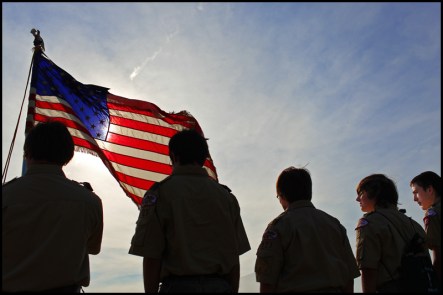
Boy Scouts from Troop 123 stand together during a Flag Day ceremony Thursday, June 14, 2012 at Veterans Memorial Park in Peru, Ill.

Boy Scouts from Troop 123 stand together during a Flag Day ceremony Thursday, June 14, 2012 at Veterans Memorial Park in Peru, Ill. Photo and caption from Reactions

Fly your U.S. flag all week!

Of course, you may fly your state and local flags, too.

June 14 commemorates the day the first resolution was passed designating the stars and stripes as the national flag of the united colonies, June 14, 1777. This is another event occurring even prior to the creation of the United States by the Constitution.

Here’s the proclamation from President Obama:

For Immediate Release

June 07, 2013

Presidential Proclamation — Flag Day and National Flag Week, 2013

FLAG DAY AND NATIONAL FLAG WEEK, 2013

– – – – – – –

BY THE PRESIDENT OF THE UNITED STATES OF AMERICA

A PROCLAMATION

Each June, our Nation lifts its sights to the flag that has watched over us since the days of our founding. In those broad stripes and bright stars, we see the arc of the American story — from a handful of colonies to 50 States, united and free.

When proud patriots took up the fight for independence, they came together under a standard that showed their common cause. When the wounds of civil war were still fresh and our country walked the long road to reconstruction, our people found hope in a banner that testified to the strength of our Union. Wherever our American journey has taken us, whether on that unending path to the mountaintop or high above into the reaches of space, Old Glory has followed, reminding us of the rights and responsibilities we share as citizens.

This week, we celebrate that legacy, and we honor the brave men and women who have secured it through centuries of service at home and abroad. Let us raise our flags high, from small-town storefronts to duty stations stretched around the globe, and let us look to them once more as we press on in the march toward a more perfect Union.

To commemorate the adoption of our flag, the Congress, by joint resolution approved August 3, 1949, as amended (63 Stat. 492), designated June 14 of each year as “Flag Day” and requested that the President issue an annual proclamation calling for its observance and for the display of the flag of the United States on all Federal Government buildings. The Congress also requested, by joint resolution approved June 9, 1966, as amended (80 Stat. 194), that the President annually issue a proclamation designating the week in which June 14 occurs as “National Flag Week” and call upon citizens of the United States to display the flag during that week.

NOW, THEREFORE, I, BARACK OBAMA, President of the United States of America, do hereby proclaim June 14, 2013, as Flag Day and the week beginning June 9, 2013, as National Flag Week. I direct the appropriate officials to display the flag on all Federal Government buildings during that week, and I urge all Americans to observe Flag Day and National Flag Week by displaying the flag. I also call upon the people of the United States to observe with pride and all due ceremony those days from Flag Day through Independence Day, also set aside by the Congress (89 Stat. 211), as a time to honor America, to celebrate our heritage in public gatherings and activities, and to publicly recite the Pledge of Allegiance to the Flag of the United States of America.

IN WITNESS WHEREOF, I have hereunto set my hand this seventh day of June, in the year of our Lord two thousand thirteen, and of the Independence of the United States of America the two hundred and thirty-seventh.

BARACK OBAMA

You may want to read further history of Flag Day and the Wisconsin-born dentist who created and promoted the campaign to commemorate it, Bernard J. CiGrand, at the National Flag Day Foundation site.


Flag Day cartoon  by Joel Mielke in the North Coast Journal, Humboldt, California

Joel Mielke cartoon in the North Coast Journal, Humboldt, California. Each of these flag uses is, technically, a violation of the flag code. Fly your flag on Flag Day; it’s a non-violative, non-offensive way to honor the flag, and our nation.

More:


Fly your flag today? Remembering D-Day, 1944 – 69 years ago

June 6, 2013

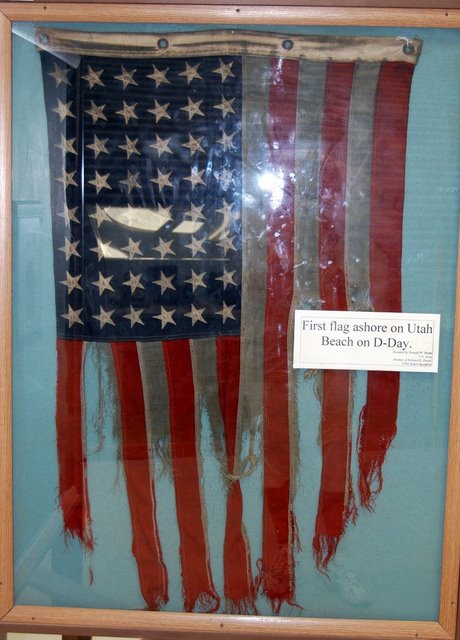
First Flag on Utah Beach, June 6, 1944

First Flag on Utah Beach, June 6, 1944 – Photo by Mark Wainwright

Today is the 69th anniversary of the Invasion of Normandy in World War II, a date generally called D-Day.  I usually get at least one e-mail request:  No, you don’t have to fly your flag.  This is not one of the days designated by Congress for flag-flying.

But you may fly your flag, and probably, you should.  If there are any D-Day veterans in your town, they’ll appreciate it.

This is mostly an encore post.


June 1: Fly your flags today in Kentucky and Tennessee to celebrate their statehood

June 1, 2013

Law on flag flying encourages citizens to fly their U.S. flags on specific dates, and on the date of statehood of the state in which a citizen lives.

Kentucky joined the union on June 1, 1792, the 15th state.  Tennessee joined four years later, on June 1, 1796, becoming the 16th state.

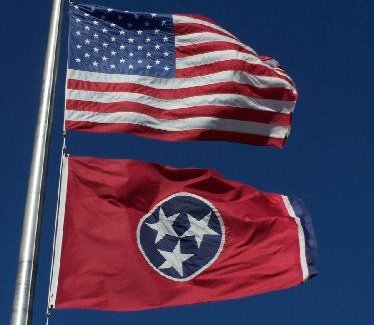
U.S. and Tennessee flags flying together on one staff.  Photo by J. Stephen Conn

U.S. and Tennessee flags flying together on one staff. Photo by J. Stephen Conn

Kentucky's state flag, by Gage Skidmore

Kentucky’s state flag features a Native American and European colonist standing together, and the state motto, “United We Stand, Divided We Fall.” Photo by Gage Skidmore

Kentucky’s admission to the union pushed the U.S. flag to 15 stars and 15 stripes.   President George Washington signed the law that authorized the U.S. flag be expanded to 15 stripes in early 1794.  I’ve not pinned down the history of what happened next.  So far as I know there was no law expanding the flag to 16 stripes, and in 1818, Congress said the flag would be 13 stripes, and stars equal to the number of states.

A 15-striped Star-spangled Banner that flew over Fort McHenry in Baltimore Harbor in 1814 and inspired Francis Scott Key to write the poem that is now the lyric to our national anthem.  President James Monroe signed the 13-stripe law in 1818.

What happened in between?  I suspect there are a lot of 15-stripe flags, but it wouldn’t surprise me to find a 16-stripe flag somewhere.  A variety of stars-and-stripes flags cropped up, which the 1818 law was intended to squelch.

Residents of the Bluegrass State and the Volunteer State should fly their flags today, in honor of their state’s having joined the union on June 1.


Flags flying on Memorial Day, 2013

May 27, 2013

Certainly you’ve remembered to put your flags up for Memorial Day.

This is what it looks like at Officers Row, at Mammoth Hot Springs in Yellowstone National Park:

Flags on Officers' Row, Mammoth Hot Springs, Yellowstone NP

Yellowstone National Park “On this Memorial Day, American Flags are proudly displayed on Officers’ Row in Mammoth Hot Spring as we remember those who gave their lives in military service to our country. (dr2)”

More:


Memorial Day, May 27 – Fly your flag, at half-staff until noon

May 24, 2013

Michigan Gov. Rick Snyder continued the program started by his predecessor, Jennifer Granholm, to send out notices electronically of occasions to fly the U.S. flag, and when to fly flags at half staff.  Michigan honors every soldier who dies with a day of mourning, with half-staff flags.

Notices also go out for things like Memorial Day.  Here is the e-mail the system sent out today, a notice to fly the flag on Memorial Day, and how to fly it:  Half-staff until noon, full staff from noon until sunset.

So now you know.

Flag Honors banner

FLAGS ORDERED LOWERED ON MONDAY, MAY 27

LANSING, MI – The flag of the United States has been ordered lowered to half-staff in Michigan on Monday, May 27, 2013 in honor of Memorial Day. This recognition is asked to be observed until noon of the same day at which point it should be raised to the peak.

“It is a great honor to join with fellow Americans in paying special tribute to the selfless individuals who serve and protect our country,” said Gov. Rick Snyder. “On this day, and every day, we say ‘thank you’ to the courageous and vigilant men and women who sacrifice much to ensure our safety, and we remember those who made the ultimate sacrifice in carrying out their sworn duties.”

Michigan residents, businesses, schools, local governments and other organizations are encouraged to display the flag at half-staff.

When flown at half-staff or half-mast, the U.S. flag should be hoisted first to the peak for an instant and then lowered to the half-staff or half-mast position.

###

You may fly your flag all weekend if you wish, of course.

Different activities honoring fallen soldiers are scheduled through the weekend.  What’s going on in your town?

33,000 flags on Boston Common for Memorial Day 2013

“A garden of 33,000 flags was planted by city officials and members of the Massachusetts Military Heroes Fund this week, and will cover part of the Boston Common near the Soldiers and Sailors Monument through Memorial Day, in honor of fallen soldiers from the state. Each flag put in the ground near the monument will represent a service member from Massachusetts who gave his or her life defending the country since the Civil War to the present day.” Photo via Lorie Jenkins on Twitter, in Boston Magazine.

More:


Fly your flag May 18, 2013 – Armed Forces Day

May 17, 2013

Poster for Armed Forces Day 2013, May 18

We celebrate Armed Forces Day on May 18, 2013. Fly your flag. Download a copy of the poster here.

Fly your flag Saturday, May 18, for Armed Forces Day.

A bit of history, as we’ve noted earlier:  After President Truman’s administration brought the management of the armed forces under the umbrella of one agency, the Department of Defense, Truman moved also to unite what had been a separate day of honor for each of the branches of the military, into one week capped by one day for all uniformed defense services.

On August 31, 1949, Secretary of Defense Louis Johnson announced the creation of an Armed Forces Day to replace separate Army, Navy and Air Force Days. The single-day celebration stemmed from the unification of the Armed Forces under one department — the Department of Defense. Each of the military leagues and orders was asked to drop sponsorship of its specific service day in order to celebrate the newly announced Armed Forces Day. The Army, Navy and Air Force leagues adopted the newly formed day. The Marine Corps League declined to drop support for Marine Corps Day but supports Armed Forces Day, too.

In a speech announcing the formation of the day, President Truman “praised the work of the military services at home and across the seas” and said, “it is vital to the security of the nation and to the establishment of a desirable peace.” In an excerpt from the Presidential Proclamation of Feb. 27, 1950, Mr. Truman stated:

Armed Forces Day, Saturday, May 20, 1950, marks the first combined demonstration by America’s defense team of its progress, under the National Security Act, towards the goal of readiness for any eventuality. It is the first parade of preparedness by the unified forces of our land, sea, and air defense.

Celebrations like Armed Forces Day offer good opportunities to promote history. I suspect that the day’s coming always in the middle of May suppresses some of the teaching moment value, as teachers make a final push for end of course tests, finals, and in high schools, for graduation — and as many colleges are already out for the summer. Good materials are available that can be sprinkled throughout a course.

Photograph of President Truman and other digni...

President Truman and other dignitaries on the reviewing stand during an Armed Forces Day parade, (left… – NARA – 200222 (Photo credit: Wikipedia) (Is that Eisenhower on the left?)

For example, this list of world-wide events at the first Armed Forces Day, in 1950, gives a good picture of four years into the Cold War, and would make a good warm-up exercise or even an entire lesson, or offer opportunities for projects:

The first Armed Forces Day came at a time of increased world tensions, political volatility and communist aggression. Some notable events that marked America’s first Armed Forces Week were as follows:

  • Bolivian police broke up “alleged” revolutionary communist-led general strike in LaPaz.
  • Two U. S. government buildings in Canton, China were taken over by the Chinese Communist Government. The buildings were U. S. property acquired prior to the Communist takeover.
  • The Burmese Army recaptured the city of Prome, a strategic communist-rebel stronghold.
  • Nicaraguans elect General Anastasio Somoza to a regular six-year term as president.
  • French and West German governments expected to talk shortly on the merger of the coal and steel industries of the two countries.
  • Communist China lifted the ban on daylight shipping along the Yangtze River due to the decline of Nationalist air activity.
  • Norway receives first US military aid in the form of two Dakota planes.
  • U. N. Secretary General Trygive Lie seeks West’s acceptance of Red China in the U. N.
  • Iran announced close range news broadcasts to the Soviet Union with $56,000 worth of Voice of America equipment.
  • Cuba celebrated the 48th anniversary of the establishment of its republic.
  • The Red Cross celebrated its 69th birthday.
  • Britain ended rationing of all foods except meats, butter, margarine, and cooking fat.
  • The U. S. Congress voted to extend the draft. “A Bill to extend registration and classification for the Draft until June 24, 1952 passed the House 216-11.”
  • The Allied Command announced it would “ease” the burden of occupation on Austria and would name civilian high commissioners to replace present military high commissioners.
  • Soviet authorities in Berlin withdrew travel passes of the U.S. and British military missions stationed at Potsdam in the Soviet zone of occupation.
  • The Soviets returned 23 East German industrial plants to East German authorities. The plants had been producing exclusively for the benefit of reparations to the USSR.
  • Twenty-eight Soviet vessels, consisting of tugs, trawlers, and supply ships remained in the English Channel as the Western Alliance prepared for air and naval maneuvers. Observers noted that many of them carried rollers at their sterns for trawling nets although no nets were visible.
  • Pravda denounced Armed Forces Day, calling it the militarization of the United States. “The hysterical speeches of the warmongers again show the timeliness of the appeal of the Permanent Committee of Peace Partisans that atomic weapons be forbidden.”
  • Western Powers renewed their promise to help Mid-Eastern states resist communism. They also announced an agreement to sell arms to Israel as well as to the Arabs.

Veterans Day honors veterans of wars, and those who served in the past; Memorial Day honors people who died defending the nation; Armed Forces Day honors those men and women serving today.  Service with two wars, in an “all volunteer” military, is a rough go, especially in times of federal budget cuts.  Say a good word about active duty military on Saturday, will you?

Armed Forces Day 1952, DOD Archives photo

A photo from Defense archives, of Armed Forces Day 1952 — also on May 17; DOD caption: QUOTING BENJAMIN FRANKLIN – Servicemen and women comprise this poster, which features cautionary words of Benjamin Franklin. (AFD-1952) [Franklin quote:  Let us beware of being lulled into a dangerous security, and of being weakened by internal contentions and divisions . . . of neglect in military exercises and discipline, and in providing stores of arms and munitions of war, for . . . the expenses required to prevent war are much lighter than those that will, if not prevented, be necessary to maintain it.  Benjamin Franklin, 1784.  Franklin’s words were in a letter to Charles Thomson, the Secretary of the 2nd Continental Congress, on May 13, 1784, written from his station in Passy, France.]

More:


Fly flags at half-staff today, May 15, for National Peace Officers Memorial Day.

May 15, 2013

Missed this earlier.

President Barack Obama issued a proclamation urging Americans to fly flags at half-staff on May 15, 2013, in honor of peace officers who fell in the line of duty, National Peace Officers Memorial Day.

Flag at half-staff in Newtown, Connecticut; from the Newtown, Bee

Flag at half-staff in Newtown, Connecticut; from the Newtown, Bee: Newtown Hook & Ladder Fire Co. #1 has the duty of raising amd lowering the American flag on the Main Street flagpole. Governor Malloy has ordered all flags to be lowered on Wednesday, May 15, in honor of Peace Officers Memorial Day.

For Immediate Release

May 10, 2013

Presidential Proclamations — Peace Officers Memorial Day and Police Week, 2013

PEACE OFFICERS MEMORIAL DAY AND POLICE WEEK, 2013

– – – – – – –

BY THE PRESIDENT OF THE UNITED STATES OF AMERICA

A PROCLAMATION

Day after day, police officers in every corner of America suit up, put on the badge, and carry out their sworn duty to protect and serve. They step out the door every morning without considering bravery or heroics. They stay focused on meeting their responsibilities. They concentrate on keeping their neighborhoods safe and doing right by their fellow officers. And with quiet courage, they help fulfill the demanding yet vital task of shielding our people from harm. It is work that deserves our deepest respect — because when darkness and danger would threaten the peace, our police officers are there to step in, ready to lay down their lives to protect our own.

This week, we pay solemn tribute to men and women who did. Setting aside fear and doubt, these officers made the ultimate sacrifice to preserve the rule of law and the communities they loved. They heard the call to serve and answered it; braved the line of fire; charged toward the danger. Our hearts are heavy with their loss, and on Peace Officers Memorial Day, our Nation comes together to reflect on the legacy they left us.

As we mark this occasion, let us remember that we can do no greater service to those who perished than by upholding what they fought to protect. That means doing everything we can to make our communities safer. It means putting cops back on the beat and supporting them with the tools and training they need. It means getting weapons of war off our streets and keeping guns out of the hands of criminals — common-sense measures that would reduce gun violence and help officers do their job safely and effectively.

Together, we can accomplish those goals. So as we take this time to honor law enforcement in big cities and small towns all across our country, let us join them in pursuit of a brighter tomorrow. Our police officers serve and sacrifice on our behalf every day, and as citizens, we owe them nothing less than our full and lasting support.

By a joint resolution approved October 1, 1962, as amended (76 Stat. 676), and by Public Law 103-322, as amended (36 U.S.C. 136-137), the President has been authorized and requested to designate May 15 of each year as “Peace Officers Memorial Day” and the week in which it falls as “Police Week.”

NOW, THEREFORE, I, BARACK OBAMA, President of the United States of America, do hereby proclaim May 15, 2013, as Peace Officers Memorial Day and May 12 through May 18, 2013, as Police Week. I call upon all Americans to observe these events with appropriate ceremonies and activities. I also call on Governors of the United States and the Commonwealth of Puerto Rico, officials of the other territories subject to the jurisdiction of the United States, and appropriate officials of all units of government, to direct that the flag be flown at half-staff on Peace Officers Memorial Day. I further encourage all Americans to display the flag at half-staff from their homes and businesses on that day.

IN WITNESS WHEREOF, I have hereunto set my hand this tenth day of May, in the year of our Lord two thousand thirteen, and of the Independence of the United States of America the two hundred and thirty-seventh.

President Barack Obama stands for a photo with 2013 National Association of Police Organizations (NAPO) TOP COPS award winners during a ceremony in East Room of the White House on May 11.

President Barack Obama stands for a photo with 2013 National Association of Police Organizations (NAPO) TOP COPS award winners during a ceremony in East Room of the White House on May 11.

Ceremonies honoring policemen and other peace officers have been carried on all week in Washington, and across the country.  President Obama met with honored officers last Saturday in the White house.  President Obama also had comments today at a ceremony honoring peace officers, in the Capitol.

BARACK OBAMA

For Immediate Release

Remarks by the President at the National Peace Officers Memorial Service

U.S. Capitol
Washington, D.C.

11:20 A.M. EDT

THE PRESIDENT:  Thank you.  (Applause.)  Thank you, everybody.  Please have a seat.  Thank you, Chuck, for that introduction and more importantly for your leadership as National President of the Fraternal Order of Police.  I want to recognize the entire Order and all its leaders, including Jim Pasco, for everything that you do on behalf of the fine officers who walk the beat, or answer the call, and do the difficult work of keeping our communities safe all across the country.

I want to also acknowledge FOP Auxiliary President Linda Hennie for the good work that she and all her members do to support the families of police officers.  We are very grateful to you, to Speaker Boehner, Leader Pelosi, members of Congress, members of my administration who are here, to all the law enforcement officials who are and, most of all, to the survivor families.

Scripture tells us, “None of us lives to himself, and none of us dies to himself.”  The brave officers we gather to remember today devoted themselves so fully to others — to serve and to protect others — that in the process they were willing to give their lives.

And so, today, let us not remember them just for how they died, but also for how they lived.

Officer Bruce St. Laurent of the Jupiter, Florida Police Department was, according to a friend, “just what a cop should be:  tough, compassionate, caring, and brave.”  But to his community, he was more than a cop.  He was a cancer survivor.  He was a guest teacher at Jupiter High School who used the laws of traffic to help kids learn physics.  He was an amateur snake charmer of sorts, eagerly taking panicked calls about snakes on the loose.  And at Christmas time, he loved being Santa Claus for the kids in the local Head Start program.

I have the privilege of working with some of the nation’s finest law enforcement officers and professionals every day.  And I’m perpetually mindful of the sacrifices they make for me and for my family, and for other leaders and visiting dignitaries, but never more so than when I was told that Officer St. Laurent was struck and killed by another vehicle while driving his motorcycle as part of my motorcade.

Bruce was a loving husband to Brenda, a doting father to Larry, and Albert, and Lenny, and Chartelle.  And he will be missed so deeply by his family at home and by his family in the force.  And the police officers who came from all over the country to attend Bruce’s funeral, some bringing their motorcycles as far away as California, they’re a testimony to how much he’ll be missed.

Like Bruce, Deputy Sheriff Barbara Ann Pill of Brevard County Sheriff’s Office in Florida was a force for good in her community — remembered as a “behind-the-scenes hero” by those who knew her.  Because for Barbara, helping others was never a question.  Before joining the force, she counseled abused children and helped families struggling with domestic abuse.  That passion served her and led her to a career in law enforcement, and inspired her two sons to follow.  So when Barbara was shot while investigating a suspicious vehicle last spring, not only did her husband, Steve, lose his partner of more than 30 years, the town of Melbourne, and the nation itself, lost one of its most dedicated citizens.

All of you in law enforcement, you devote your lives to serving and protecting your communities.  Many of you have done it for your country as well.  After serving two tours in Iraq as a Marine, Bradley Michael Fox retired with honor and followed his dream to becoming a police officer.  He had been with the Plymouth Township Police Department in Pennsylvania for five years when he was shot and killed pursuing a suspect last September.  It was the day before his 35th birthday, and six months before the birth of his son.

Nothing will replace the enthusiasm that he brought to his job, or the tremendous pride he had in his family.  But today, Brad’s wife, Lynsay, and daughter, Kadence, and baby, Brad Jr., have a living reminder of their fallen hero — that’s Brad’s K9 partner, a trusty shepherd named Nick, who Lynsay adopted into the family when he retired from the force last fall.

Deputy Sheriff Scott Ward also defined service.  He was a former officer in the Air Force, a deputy in the Baldwin County, Alabama, Sheriff’s Office for 15 years, and finished a tour in Afghanistan last year as a reservist in the Coast Guard.

Last November, Deputy Sheriff Ward was shot and killed in the line of duty while trying to settle a domestic dispute.  And he died as he lived — serving his community and his country.  And the fact that his funeral procession stretched for miles demonstrated the thanks of a grateful nation to Scott’s wife, Andrea, and his family.

At Scott’s funeral, Baldwin Country Sheriff Huey Mack said, “Tomorrow we will continue to grieve Scott, but we will have to move on.  That’s what Scott would want us to do because our mission does not stop.”

That message I think rings true in every police department across the country.  As difficult as times may be, as tough as the losses may be, your mission does not stop.  You never let down your guard.  And those of us who you protect should never let slide our gratitude either.  We should not pause and remember to thank first responders and police officers only in the wake of tragedy.  We should do it every day.  And those of us who have the privilege to lead should all strive to support you better — whether it’s making sure police departments and first responders have the resources they need to do their jobs, or the reforms that are required to protect more of our officers and their families from the senseless epidemics of violence that all too often wrack our cities and haunt our neighborhoods.

And Bobby Kennedy once said that the fight against crime “is a fight to preserve that quality of community which is at the root of our greatness.”

The 143 fallen officers we honor today put themselves on the front lines of that fight, to preserve that quality of community, and to protect the roots of our greatness.  They exemplified the very idea of citizenship — that with our God-given rights come responsibilities and obligations to ourselves and to others.  They embodied that idea.  That’s the way they died.  That’s how we must remember them.  And that’s how we must live.

We can never repay our debt to these officers and their families, but we must do what we can, with all that we have, to live our lives in a way that pays tribute to their memory.  That begins, but does not end, by gathering here — with heavy hearts, to carve their names in stone, so that all will know them, and that their legacy will endure.  We are grateful to them and we are grateful to you.

May God bless the memory of those we lost, and may God continue to bless the United States of America.  (Applause.)

END
11:29 A.M. EDT

President Barack Obama, with Chuck Canterbury, president, Grand Lodge Fraternal Order of Police, arrives at the National Peace Officers Memorial Service

White House caption: President Barack Obama, with Chuck Canterbury, president, Grand Lodge Fraternal Order of Police, arrives at the National Peace Officers Memorial Service, an annual ceremony honoring law enforcement officers killed in the line of duty in the previous year, at the U.S. Capitol in Washington, D.C. May 15, 2012. (Official White House Photo by Pete Souza)

More:


Fly your flags today in Minnesota: Minnesota Statehood Day, May 11

May 11, 2013

Flag etiquette following the U.S. Flag Code urges Americans to fly U.S. flags on the day of statehood for the state in which you reside.

Minnesota joined the Union on May 11, 1858.

Minnesota Capitol Chandelier, lit for Statehood Day, May 11.

Caption from the Minneapolis Star-Tribune: The Minnesota Capitol chandelier was illuminated today, May 10, 2013 in celebration of Statehood Day. It has 92 bulbs surrounded by 40,000 crystal beads strung together and was recently painstakingly cleaned and refurbished. The fixture is traditionally lit once per year on Statehood Day. Minnesota became a part of the United States as Minnesota Territory in 1849, and became the 32nd U.S. state on May 11, 1858.

At the Library of Congress’s outstanding American Memory site, a much more detailed history of Minnesota statehood is featured on “Today in History,” reproduced here in its entirety:

The Star of the North

facade of a domed building
Capitol Building, exterior, St. Paul, MN
St. Paul, Minnesota 1902
American Landscape and Architectural Design, 1850-1920

On May 11, 1858, Minnesota became the 32nd state admitted into the Union. Minnesota’s application for statehood was submitted to President James Buchanan in January, but became entangled with the controversial issue of Kansas statehood, delaying it for several months until it was finally approved by Congress.

Known as the “Land of 10,000 Lakes,” or “Star of the North,” Minnesota is the northern terminus of the Mississippi River’s traffic and the westernmost point of an inland waterway which extends through the Great Lakes and, with the St. Lawrence Seaway, to the Atlantic Ocean.

The Ojibwa (Chippewa) and Dakota (Sioux) were among the tribal peoples who first made this land their home. For them state borders were non-existent, and their territory extended far beyond what is today Minnesota. The French claimed this region from the mid-1600s to the mid-1700s, developing a strong fur trade but ceding lands east of the Mississippi to Britain. The U.S. acquired the area and its rich natural resources through the Treaty of Paris (1783), and the Louisiana Purchase (1803).

U.S. administration of the northwest lands formally began with the 1787 passage of the Northwest Ordinance. The ordinance, one of the most important pieces of legislation passed by the Continental Congress, set out the requirements for a territory to become a state. The American Memory collection Continental Congress and the Constitutional Convention, 1774-1789 features a discussion of the Incorporation of the Western Territories. For additional information on England’s yielding of land west of the Appalachian Mountains, see the Today in History feature on the Surrender of Fort Sackville. A representation of Fort Sackville is accessible on The George Rogers Clark National Historic Park site.

From the 1820s on, protected the growth of the area now called Minnesota. During the Civil War, the fort served as a training center for thousands of young Minnesota volunteers who joined the Union Army. Twenty-four thousand soldiers who trained at the fort fought in the Union Army, serving gallantly at Gettysburg or during the Indian Outbreak. Once a military outpost at the edge of a small settlement, Fort Snelling is now located at the center of Minnesota’s “Twin Cities”—Minneapolis and St. Paul.

wheat bundle stacks
Wheat Bundle Stacks, Fosston, Minnesota, circa 1900.
The Northern Great Plains, 1880-1920

a horse in a farming rig in a field
Horse powered threshing rig, Blue Earth, Minnesota, 1898.
The Northern Great Plains, 1880-1920

Until the second half of the nineteenth century, immigration into Minnesota was slow. However, as the value of the state’s woodlands and fertile prairie was realized, settlers poured into the region with New England lumbermen leading the way. Between 1850 and 1857, the state population skyrocketed from 6,077 to over 150,000. As a large state with land for homesteading, Minnesota attracted immigrants from Norway, Sweden, Finland, and those seeking to own land in the United States. An 1878 brochure published by the Minnesota State Board of Immigration, describes the many reasons for moving to the state.

Advertisement for a steamboat company
Northern Line Packet Co.,
Advertisement for a steamship company in The Minnesota Guide. A Handbook of Information for the Travelers, Pleasure Seekers and Immigrants…, 1869.
Pioneering the Upper Midwest: Books from Michigan, Minnesota, and Wisconsin, ca. 1820-1910

Still a leader in farming, lumbering, milling, and medical research, Minnesota is also an important center for the printing industry and a major producer of iron ore. Its largest city, Minneapolis, is home to the University of Minnesota, numerous museums, and theaters such as the Tyrone Guthrie Theater and the Walker Arts Center, and the world’s largest cash grain market.

St. Paul is the state capital.

Bird's eye view of Duluth
Bird’s Eye View of Duluth, Minnesota, copyright 1914.
Taking the Long View, 1851-1991

More:


April 30 – Fly flags for Louisiana Statehood

April 30, 2013

U.S. and Louisiana flags both should fly in Louisiana today.  Photo by Jack and Joann

U.S. and Louisiana flags both should fly in Louisiana today. Photo by Jack and Joann

Flags out in Louisiana today?  Under the U.S. Flag code, Louisianans (and anyone else so inclined) should fly their U.S. flags on April 30 in honor of Louisiana’s statehood, achieved on April 30, 1812.

On April 30, 1812, the United States admitted Louisiana as the 18th state into the Union. Louisiana was the first state to have a majority Catholic French- and Spanish-speaking population, reflecting its origins as a colony under France from 1699-1763 and Spain from 1763-1803. Following the Louisiana Purchase in 1803, Louisiana’s road to statehood was not all smooth. Federal law required citizens of a newly admitted territory to apply to congress for statehood, and the admission of the Orleans Territory as the 18th state followed years of lobbying efforts by prominent citizens—both American and Creole (French-speaking Catholics). Men such as French-born congressman Julien Poydras and American attorney Edward Livingston sought the greater political rights that statehood bestowed and convinced Territorial Governor William C.C. Claiborne that the Orleans Territory qualified for statehood. Finally in 1811, Democratic President James Madison signed the bill allowing the people of Louisiana to form a state constitution. Following the state constitutional convention in New Orleans where 43 American and Creole leaders convened, on April 14, 1812, President Madison signed the bill approving statehood. The bill designated April 30, 1812, as the day of formal admission.

Seriously, where would the U.S. be without the stories of Huey Long, and without Tobasco Sauce?

More:

Map of the states and territories of the Unite...

Map of the states and territories of the United States as it was from April 1812 to May 1812. On April 30 1812, most of Orleans Territory was admitted as the state of Louisiana. On May 12 1812, the federal government assigned its annexed land of West Florida to Mississippi Territory. (Photo credit: Wikipedia)

From the U.S. National Archives: Joint Credentials for the State of Louisiana's First Senators, September 3, 1812

From the U.S. National Archives: Joint Credentials for the State of Louisiana’s First Senators, September 3, 1812 On September 3, 1812 Louisiana’s legislature elected Jean Noel Destréhan and Allan Bowie Magruder to serve as the new state’s first U.S. Senators. Destréhan resigned before being seated and was replaced by Thomas Posey. RG 46, Records of the U.S. Senate


Fly your flag April 28: Maryland statehood day

April 28, 2013

U.S. and Maryland flags flown together. Photo from the Maryland Secretary of State's office.

U.S. and Maryland flags flown together. Photo from the Maryland Secretary of State’s office.

Maryland’s convention to ratify the Constitution voted approval on April 28, 1788, the sixth of the former British colonies to ratify.

April 28 is considered Maryland’s statehood date.  According to the suggestions for proper times to fly the U.S. flag, Marylanders should fly their flags on April 28.

It’s only my opinion, but I think there is no grander display of a state and U.S. flag than with Maryland’s.  Maryland’s flag is a unique design in the state flags, and it features colors not common to state flags.  Our displays of both flags at our Maryland home often drew comments from passers-by (we lived on the street leading to the town’s Metro stop, so there was a lot of foot traffic.

Maryland’s flag features the two family crests of George Calvert, the First Lord Baltimore.  In Maryland law it’s described:

The Maryland flag is divided into four quarters. The first and fourth quarters consist of six vertical bars alternately yellow (representing gold) and black with a diagonal band on which the colors are reversed. The yellow and black quarters represent the family arms of the first proprietor of Maryland, George Calvert, first Lord Baltimore. The second and third quarters consist of a quartered field of red and white (representing silver) bearing a Greek cross with arms terminating in trefoils. The colors in the second and third quarters alternate, with red on the white ground and white on the red. The red and white quarters display the arms of Lord Baltimore’s maternal family, the Crosslands.

The flag was officially adopted only in 1904.  Maryland also has a detailed, but not too lengthy set of instructions on proper display and other care of the state flag.

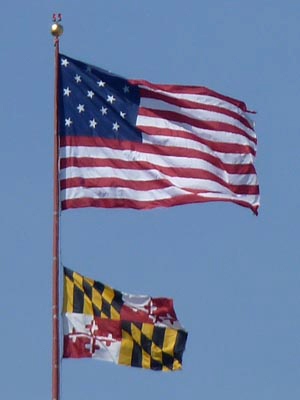
Historic 15-star/15-stripe U.S. flag, and Maryland flag, in Baltimore

From the W&M Blogs: “American and Maryland flags flying high over downtown Baltimore. Just why does the American flag have 15 stars and stripes? Think about Baltimore’s Fort McHenry and Francis Scott Key.”

Baltimore Harbor is home to Fort McHenry, the fort whose siege inspired Georgetown lawyer Francis Scott Key to write a poem about the U.S. flag, which became our national anthem.  Partly due to this history, U.S. flags in Maryland often are the historic, 15-star/15-stripe flag that inspired Key.

More:

Maryland flag on the cover of a Justice League of America comic book.

Maryland flag on the cover of a Justice League of America comic book.

Save


President Obama ordered U.S. flags to fly at half-staff, honoring victims of Boston explosions

April 16, 2013

lag at half-staff in Southborough, Massachusetts

A flag at half-staff in Southborough, Massachusetts (photo from 2010). Image from MySouthborough.com

This morning the White House issued a proclamation ordering U.S. flags at U.S. facilities worldwide to be flown at half-staff, honoring victims of the explosions in Boston, yesterday.

For Immediate Release .                                    April 16, 2013

Presidential Proclamation — Honoring the victims of the tragedy in Boston, Massachusetts

HONORING THE VICTIMS OF THE TRAGEDY IN BOSTON, MASSACHUSETTS

– – – – – – –

BY THE PRESIDENT OF THE UNITED STATES OF AMERICA

A PROCLAMATION

As a mark of respect for the victims of the senseless acts of violence perpetrated on April 15, 2013, in Boston, Massachusetts, by the authority vested in me as President of the United States by the Constitution and the laws of the United States of America, I hereby order that the flag of the United States shall be flown at half-staff at the White House and upon all public buildings and grounds, at all military posts and naval stations, and on all naval vessels of the Federal Government in the District of Columbia and throughout the United States and its Territories and possessions until sunset, April 20, 2013. I also direct that the flag shall be flown at half-staff for the same length of time at all United States embassies, legations, consular offices, and other facilities abroad, including all military facilities and naval vessels and stations.

IN WITNESS WHEREOF, I have hereunto set my hand this sixteenth day of April, in the year of our Lord two thousand thirteen, and of the Independence of the United States of America the two hundred and thirty-seventh.

BARACK OBAMA


Presidents Day 2013: Fly your flag today

February 18, 2013

Yes, I’m late — an airport run, a telephone installation, not enough coffee in the pot.

You’re already flying your flag today, right?  Let’s recapitulate from last year

Presidents Day is February 18, 2013 — fly your U.S. flag today.

National Park Service photo, Lincoln Memorial through flags at Washington Monument

The Lincoln Memorial, seen through flags posted at the Washington Monument, Washington, D.C.; National Park Service Photo via About.com

Oddly enough, some controversy arises from time to time over how to honor President Washington and President Lincoln, and other presidents.  Sometimes the controversy simmers over how to honor great Americans — if Lincoln deserves a day, why not FDR?  Why not Jefferson? — and sometimes the controversy covers more mundane ground — should the federal government give workers a day off?  Should it be on a Monday or Friday to create a three-day weekend to boost tourism?  About.com explains the history of the controversy:

Presidents’ Day is intended (for some) to honor all the American presidents, but most significantly George Washington and Abraham Lincoln. According to the Gregorian or “New Style” calendar that is most commonly used today, George Washington was born on February 22, 1732. But according to the Julian or “Old Style” calendar that was used in England until 1752, his birth date was February 11th. Back in the 1790s, Americans were split – some celebrated his birthday on February 11th and some on February 22nd.

When Abraham Lincoln became president and helped reshape our country, it was believed he, too, should have a special day of recognition. Tricky thing was that Lincoln’s birthday fell on February 12th. Prior to 1968, having two presidential birthdays so close together didn’t seem to bother anyone. February 22nd was observed as a federal public holiday to honor the birthday of George Washington and February 12th was observed as a public holiday to honor Abraham Lincoln’s birthday.

In 1968, things changed when the 90th Congress was determined to create a uniform system of federal Monday holidays. They voted to shift three existing holidays (including Washington’s Birthday) to Mondays. The law took effect in 1971, and as a result, Washington’s Birthday holiday was changed to the third Monday in February. But not all Americans were happy with the new law. There was some concern that Washington’s identity would be lost since the third Monday in February would never fall on his actual birthday. There was also an attempt to rename the public holiday “Presidents’ Day”, but the idea didn’t go anywhere since some believed not all presidents deserved a special recognition.

Even though Congress had created a uniform federal holiday law, there was not a uniform holiday title agreement among the individual states. Some states, like California, Idaho, Tennessee and Texas chose not to retain the federal holiday title and renamed their state holiday “President’s Day.” From that point forward, the term “Presidents’ Day” became a marketing phenomenon, as advertisers sought to capitalize on the opportunity for three-day or week-long sales.

In 1999, bills were introduced in both the U.S. House (HR-1363) and Senate (S-978) to specify that the legal public holiday once referred to as Washington’s Birthday be “officially” called by that name once again. Both bills died in committees.

Today, President’s Day is well accepted and celebrated. Some communities still observe the original holidays of Washington and Lincoln, and many parks actually stage reenactments and pageants in their honor. The National Park Service also features a number of historic sites and memorials to honor the lives of these two presidents, as well as other important leaders.

Fly your flag, read some history, enjoy the day.

More, Resources, and Related Articles:

English: Air Force One, the typical air transp...

President’s airplane, Air Force 1, flying over Mount Rushmore National Monument, in South Dakota – Image via Wikipedia; notice, contrary to Tea Party fears, the bust of Obama is not yet up on Rushmore (and also note there remains no room for another bust).


Fly your flag on Valentine’s Day? Okay in Oregon and Arizona

February 14, 2013

Some wag e-mailed to ask about flying the flag for Valentine’s Day.

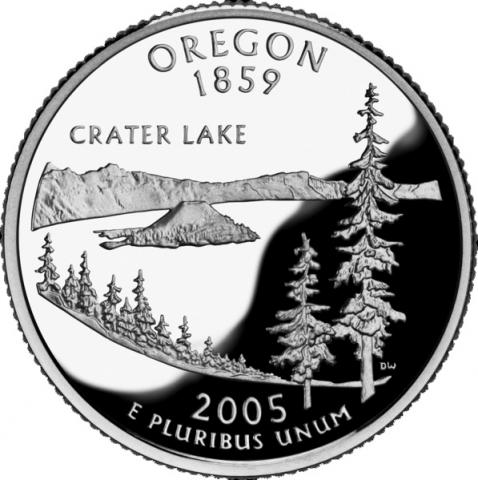
Reverse of Oregon quarter

Oregon entered as the 33rd state in 1859 – this is the Oregon commemorative quarter-dollar coin.

Legally, nothing stops a resident from flying the U.S. flag following protocol on any day.  So the short answer is, yes, you may fly your U.S. flag on Valentine’s Day.

The Flag Code urges flying the flag on the day a state achieved statehood, too.

So for Oregon and Arizona, there is an expectation that residents will fly their flags.  Oregon came into the union on February 14, 1859; Arizona joined the Republic as a state in 1912.

Taft signs Arizona statehood papers, February 14, 1912

President William Howard Taft signed the papers accepting Arizona into statehood, on February 14, 1912. He still finished third behind Democrat Woodrow Wilson and Bullmoose Party’s Teddy Roosevelt in that fall’s elections. Photo found at Mrs. Convir’s page, Balboa Magnet School  (Can you identify others in the photo?  Who is the young man?)

More: