Memorial Day 2017 – Fly your flag today

May 29, 2017

Image and caption from Time: A Boy Scout salutes at the foot of a grave after volunteers placed flags in preparation for Memorial Day at the Los Angeles National Cemetery on May 28, 2016. Richard Vogel—AP

Image and caption from Time: A Boy Scout salutes at the foot of a grave after volunteers placed flags in preparation for Memorial Day at the Los Angeles National Cemetery on May 28, 2016. Richard Vogel—AP

Fly your flag today for Memorial Day.

On Memorial Day, flags should be flown at half-staff until noon, then raised to full staff (and retired at sunset).

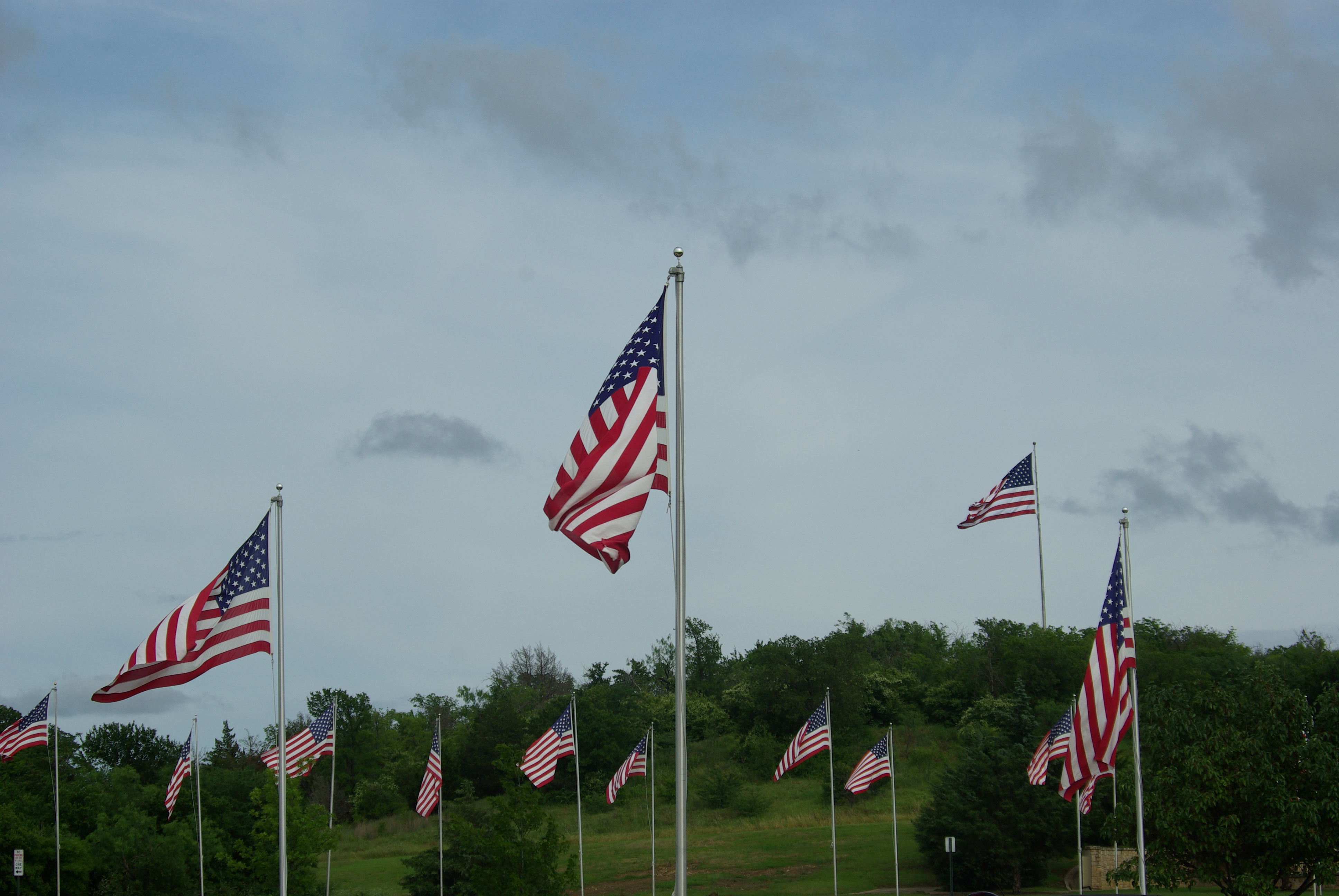
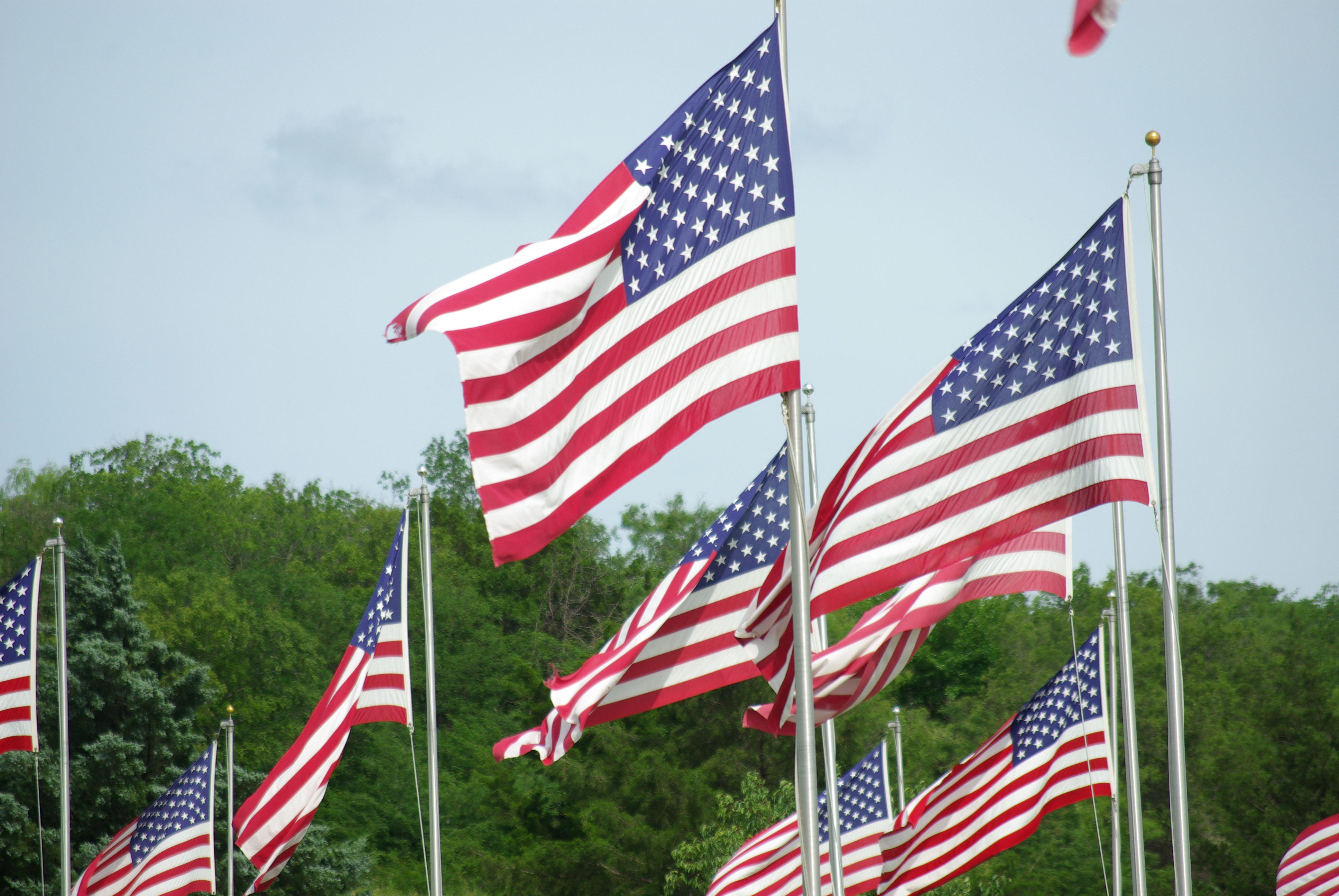
U.S. flags flying at the Dallas-Fort Worth National Cemetery, for Memorial Day 2015. Photo by Ed Darrell. Please use.

U.S. flags flying at the Dallas-Fort Worth National Cemetery, for Memorial Day 2015. Photo by Ed Darrell. Please use.

Just a reminder: When posting a flag to half-staff, it should be raised with gusto to full staff, then slowly lowered to the half-staff position.  On Memorial Day, when changing the flag’s position at noon, simply raise the flag briskly to full staff.  At retirement, the flag should be lowered in a stately fashion.

U.S. flags flying at the Dallas Fort Worth National Cemetery, for Memorial Day 2015. You may use this photo.

U.S. flags flying at the Dallas Fort Worth National Cemetery, for Memorial Day 2015. You may use this photo.

More:

Save

Save


Get ready to fly your flag for Armed Forces Day, Saturday, May 20, 2017

May 18, 2017

Armed Forces Day poster for 2017, from the Department of Defense

Armed Forces Day poster for 2017, from the Department of Defense

Americans celebrate Armed Forces Day on the third Saturday in May, by law as listed in the Flag Code.

Get your flag ready, if you haven’t been flying it all week to honor fallen police. Saturday is also the last day of National Police Week, during which flags are flown half-staff to honor fallen policemen. You may fly your flag half-staff on Saturday, too, if you wish; if your flag pole does not allow a half-staff position, fly it at full height.

More:


Fly your flags May 11 in Minnesota: 159th Minnesota Statehood Day

May 11, 2017

Flag etiquette following the U.S. Flag Code urges Americans to fly U.S. flags on the day of statehood for the state in which you reside.

Minnesota joined the Union on May 11, 1858.

Minnesota Capitol Chandelier, lit for Statehood Day, May 11.

Caption from the Minneapolis Star-Tribune: The Minnesota Capitol chandelier was illuminated May 10, 2013 in celebration of Statehood Day. It has 92 bulbs surrounded by 40,000 crystal beads strung together and was recently painstakingly cleaned and refurbished. The fixture is traditionally lit once per year on Statehood Day. Minnesota became a part of the United States as Minnesota Territory in 1849, and became the 32nd U.S. state on May 11, 1858.

At the Library of Congress’s outstanding American Memory site, a much more detailed history of Minnesota statehood is featured on “Today in History,” reproduced here in its entirety:

The Star of the North

Dome of the Minnesota Capitol. Pinterest image.

Dome of the Minnesota Capitol. Pinterest image.

Capitol Building, exterior, St. Paul, MN
American Landscape and Architectural Design, 1850-1920

On May 11, 1858, Minnesota became the 32nd state admitted into the Union. Minnesota’s application for statehood was submitted to President James Buchanan in January, but became entangled with the controversial issue of Kansas statehood, delaying it for several months until it was finally approved by Congress.

Known as the “Land of 10,000 Lakes,” or “Star of the North,” Minnesota is the northern terminus of the Mississippi River’s traffic and the westernmost point of an inland waterway which extends through the Great Lakes and, with the St. Lawrence Seaway, to the Atlantic Ocean.

The Ojibwa (Chippewa) and Dakota (Sioux) were among the tribal peoples who first made this land their home. For them state borders were non-existent, and their territory extended far beyond what is today Minnesota. The French claimed this region from the mid-1600s to the mid-1700s, developing a strong fur trade but ceding lands east of the Mississippi to Britain. The U.S. acquired the area and its rich natural resources through the Treaty of Paris (1783), and the Louisiana Purchase (1803).

U.S. administration of the northwest lands formally began with the 1787 passage of the Northwest Ordinance. The ordinance, one of the most important pieces of legislation passed by the Continental Congress, set out the requirements for a territory to become a state. The American Memory collection Continental Congress and the Constitutional Convention, 1774-1789 features a discussion of the Incorporation of the Western Territories. For additional information on England’s yielding of land west of the Appalachian Mountains, see the Today in History feature on the Surrender of Fort Sackville. A representation of Fort Sackville is accessible on The George Rogers Clark National Historic Park site.

From the 1820s on, protected the growth of the area now called Minnesota. During the Civil War, the fort served as a training center for thousands of young Minnesota volunteers who joined the Union Army. Twenty-four thousand soldiers who trained at the fort fought in the Union Army, serving gallantly at Gettysburg or during the Indian Outbreak. Once a military outpost at the edge of a small settlement, Fort Snelling is now located at the center of Minnesota’s “Twin Cities”—Minneapolis and St. Paul.

Wheat stack in Minnesota, circa 1910

Horse powered threshing rig, Blue Earth Minnesota, 1898 Courtesy Fred Hultstrand History in Pictures Collection, NDIRS-NDSU, Fargo - See more at: http://www.lakesnwoods.com/BlueEarthGallery.htm#sthash.i9zmvAlC.dpuf

Horse powered threshing rig, Blue Earth Minnesota, 1898. Colorized.  Courtesy Fred Hultstrand History in Pictures Collection, NDIRS-NDSU, Fargo – See more at: http://www.lakesnwoods.com/BlueEarthGallery.htm#sthash.i9zmvAlC.dpuf

Horse powered threshing rig, Blue Earth, Minnesota, 1898.
The Northern Great Plains, 1880-1920

Until the second half of the nineteenth century, immigration into Minnesota was slow. However, as the value of the state’s woodlands and fertile prairie was realized, settlers poured into the region with New England lumbermen leading the way. Between 1850 and 1857, the state population skyrocketed from 6,077 to over 150,000. As a large state with land for homesteading, Minnesota attracted immigrants from Norway, Sweden, Finland, and those seeking to own land in the United States. An 1878 brochure published by the Minnesota State Board of Immigration, describes the many reasons for moving to the state.

19th century advertisements to get people to move to Minnesota. Library of Congress images

19th century advertisements to get people to move to Minnesota. Library of Congress images; see description and link details below

Northern Line Packet Co.,
Advertisement for a steamship company in The Minnesota Guide. A Handbook of Information for the Travelers, Pleasure Seekers and Immigrants…, 1869.
Pioneering the Upper Midwest: Books from Michigan, Minnesota, and Wisconsin, ca. 1820-1910

Still a leader in farming, lumbering, milling, and medical research, Minnesota is also an important center for the printing industry and a major producer of iron ore. Its largest city, Minneapolis, is home to the University of Minnesota, numerous museums, and theaters such as the Tyrone Guthrie Theater and the Walker Arts Center, and the world’s largest cash grain market.

St. Paul is the state capital.

Bird's eye view of Duluth Minnesota, 1914, via Library of Congress
Bird’s Eye View of Duluth, Minnesota, copyright 1914.
Taking the Long View, 1851-1991

More:

U.S. and Minnesota flags flying together. Minnesota state flag photo by AlexiusHoratius - Own work. Licensed under Creative Commons, via Wikipedia

U.S. and Minnesota flags flying together. Minnesota state flag photo by AlexiusHoratius – Own work. Licensed under Creative Commons, via Wikipedia

Yes, this is mostly an encore post. Fighting ignorance requires patience.

Yes, this is mostly an encore post. Fighting ignorance requires patience.

Save

Save


Fly your flag for Victory Europe Day, May 8, 2017 – 72nd anniversary

May 9, 2017

Yes, you should be flying your flag today for Victory Europe Day (VE Day)!

Caption from Pinterest, World War Items: A huge American flag unfurled in New York’s Herald Square on VE Day on May 8, 1945. This 80x160 foot flag was hung from the eighth floor balcony of Macy’s New York department store, covering the façade from 34th and 35th Streets along Broadway. Beneath it were placed a set of British, Chinese, French and Russian flags, held by two giant mailer fists. (AP Photo)

Caption from Pinterest, World War Items: A huge American flag unfurled in New York’s Herald Square on VE Day on May 8, 1945. This 80×160 foot flag was hung from the eighth floor balcony of Macy’s New York department store, covering the façade from 34th and 35th Streets along Broadway. Beneath it were placed a set of British, Chinese, French and Russian flags, held by two giant mailer fists. (AP Photo)

VE Day is not one listed in the Flag Code for flying the colors, but in most years there is a proclamation from the President urging that we do fly the flag. There appears to be no proclamation in 2017 — you may fly your flag anyway.

In 2015 year President Obama noted the 70th anniversary of VE Day with his weekly message:

From Business Insider: Col. Gen. Paul Stumpff, second left, Luftwaffe commander; Field Marshal Wilhelm Keitel, German army commander, raising baton; and Gen. Adm. Hans von Freideburg, rear, commander of the German navy; emerge after Germany's unconditional surrender was formally ratified in Berlin, May 9, 1945. (AP Photo/U.S. Signal Corps)

From Business Insider: Col. Gen. Paul Stumpff, second left, Luftwaffe commander; Field Marshal Wilhelm Keitel, German army commander, raising baton; and Gen. Adm. Hans von Freideburg, rear, commander of the German navy; emerge after Germany’s unconditional surrender was formally ratified in Berlin, May 9, 1945. (AP Photo/U.S. Signal Corps)

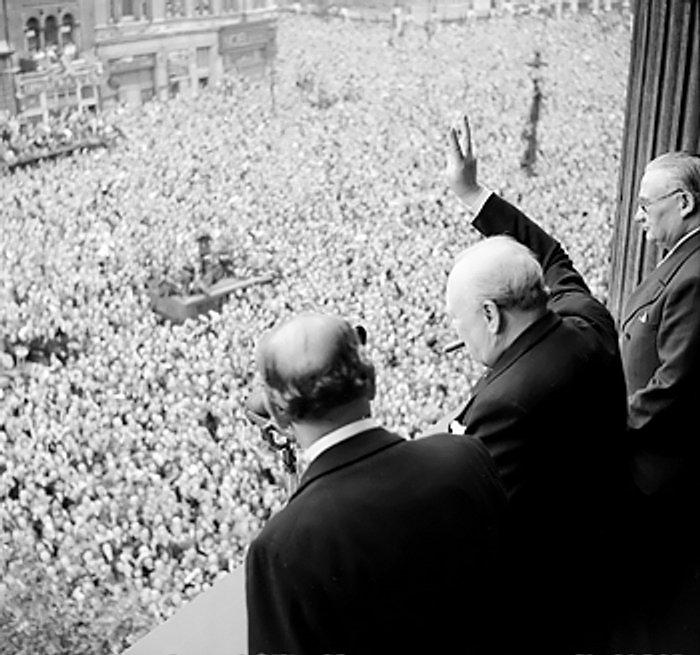
British Prime Minister Winston Churchill waves his hat to enthusiastic crowd at Whitehall, after unconditional surrender of Germany announced. (Who else is in the picture?)

British Prime Minister Winston Churchill waves his hat to enthusiastic crowd at Whitehall, after unconditional surrender of Germany announced. (Who else is in the picture?)

Perhaps thinking of the future, Churchill put down his hat, and waved his well-known and well-loved

Perhaps thinking of the future, Churchill put down his hat, and waved his well-known and well-loved “V for Victory” sign to the crowd at Whitehall.

Yes, this is mostly an encore post. Fighting ignorance requires patience.

Yes, this is mostly an encore post. Fighting ignorance requires patience.


May 2017, flag-flying dates

May 2, 2017

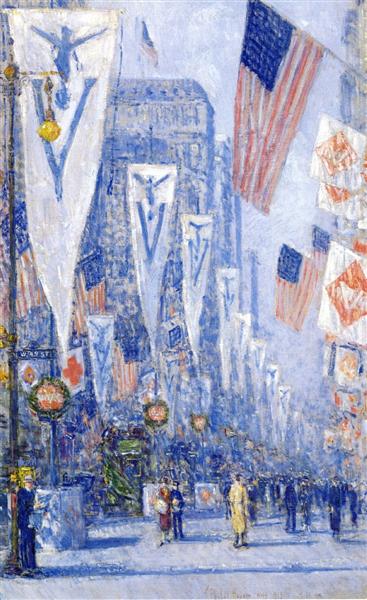
Childe Hassam,

Childe Hassam, “Victory Day, May 1919,” 1919, oil on canvas, 36 x 21 3/4 inches (91.4 x 55.2 cm), American Academy of Arts and Letters, NY. There were at least twenty-three paintings in Hassam’s series of flag paintings. This Victory Day celebration no longer occurs, though there are several other May days to fly the colors.

May has three days designated for flying the U.S. flag out of the specific days mentioned in the U.S. Flag Code, three days designated in other federal laws,  and three statehood days, when residents of those states should fly their flags.

Interestingly, the three designated days all float, from year to year:

  • Mother’s Day, second Sunday in May (May 14, in 2017)
  • Armed Forces Day, third Saturday in May (May 20)
  • Memorial Day, the last Monday in May (May 28)

Residents of these states celebrate statehood; South Carolina and Wisconsin share May 23:

  • Minnesota, May 11 (1858, the 32nd state)
  • South Carolina, May 23 (1788, the 8th state)
  • Wisconsin, May 23 (1848, the 30th state)
  • Rhode Island, May 29 (1790, the last of the 13 original colonies to ratify the Constitution)

In 2016 President Obama issued a proclamation calling on citizens to fly the flag on May 1, Law Day. It’s also Loyalty Day, which got a proclamation from President Obama calling for flag flying in 2016.

Trump did the same this year, and for Loyalty Day, surprising me that his office is organized enough to do it.

May 8 marks the 70th anniversary of Victory in Europe Day, the day the Axis Powers in Europe surrendered at the end of World War II.  Some years that day is marked by a proclamation calling for flag flying.  (You may fly your flag then even if Congress and the President do nothing.)

In recent years President Obama has proclaimed May 15 as Peace Officers Memorial Day, with flags to fly at half-staff. We might expect another such declaration in 2016.

May 22 is National Maritime Day, under a Joint Resolution from Congress from 1933. President Obama may be expected to proclaim that day as a day to fly the flag, too.

Twelve events on fourteen days to fly the U.S. flag.  May could be quite busy for flag fliers.

  1. Law Day, May 1, AND
  2. Loyalty Day, May 1
  3. Victory in Europe Day, May 8
  4. Minnesota Statehood, May 11
  5. Mothers Day, May 14
  6. Peace Officers Memorial Day, May 15 (half-staff flags; the law for Police Week calls for flags to be half-staff the entire week in which May 15 occurs, May 14-20 in 2017)
  7. Armed Forces Day, May 20
  8. National Maritime Day, May 22
  9. South Carolina Statehood, May 23, AND
  10. Wisconsin Statehood, May 23
  11. Memorial Day, May 28
  12. Rhode Island Statehood, May 29
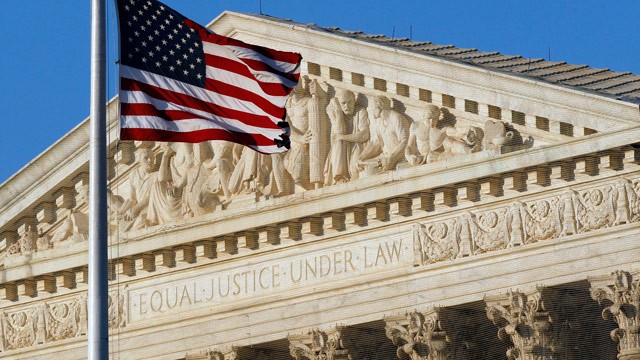
US flag flying at the U.S. Supreme Court's west portico, suitable for Law Day, May 1. (But this photo was taken in June, 2012; Alex Brandon/AP)

US flag flying at the U.S. Supreme Court’s west portico, suitable for Law Day, May 1. (But this photo was taken in June, 2012; Alex Brandon/AP)

Save

Save

Yes, this is mostly an encore post. Fighting ignorance requires patience.

April is the month to fly your flags!

April 5, 2017

Is April the cruelest month?

It’s cruel to people who want to fly U.S. flags often, but only on designated flag-flying dates. (April is also National Poetry Month, so it’s a good time to look up poetry references we should have committed to heart).

For 2017, these are the three dates for flying the U.S. flag; Easter is a national date, the other two are dates suggested for residents of the states involved.

One date, nationally, to fly the flag. That beats March, which has none (in a year with Easter in April and not March). But March has five statehood days, to April’s two.

Take heart! You may fly your U.S. flag any day you choose, or everyday as many people do in Texas (though, too many do not retire their flags every evening . . .).

Three dates to fly Old Glory in April, by the Flag Code and other laws on memorials and commemorations.

  • Easter, April 16
  • Maryland, April 28, 1788, 7th state
  • Louisiana, April 30, 1812 – 18th state

Some people have abused the flag in April.

Caption from The Guardian: Ted Landsmark (centre): ‘I had a sense that something really significant had happened.’ Boston, April 5, 1976. Photograph: stanleyformanphotos.com

Caption from The Guardian: Ted Landsmark (centre): ‘I had a sense that something really significant had happened.’ Boston, April 5, 1976. Photograph: stanleyformanphotos.com

See “That’s me in the picture: Ted Landsmark is assaulted in Boston, at an ‘anti-bussing’ protest, 5 April 1976,” Abigail Radnor, The Guardian, April 17, 2015; and “The U.S. Flag in the 20th Century (Part 2),” The Portland Flag Association.

More:

Save

Save

Save

Save


Can we fly the U.S. flag in March?

March 27, 2017

U.S. flag displayed by horse-mounted marchers in a San Francisco St. Patrick's Day Parade (perhaps 2014); image from United Irish Societies of San Francisco (UISSF).

U.S. flag displayed by horse-mounted marchers in a San Francisco St. Patrick’s Day Parade (perhaps 2014); image from United Irish Societies of San Francisco (UISSF).

I usually put up a post near the first of the month listing the occasions upon which U.S. laws urge us to fly Old Glory. March usually slips by without such  post.

No good reason, other than in most years, March offers no regular commemorations upon which flag flying is urged. The odd year is when Easter comes early. Easter is one of the holidays the Flag Code says flags should be flown.

But, most years, Easter falls in April, as it does in 2017.

The Flag Code urges residents of states to fly the U.S. flag on the anniversary of their state’s entering the union, on statehood day. Those are the only dates in March, most years.

Flag fly dates, for March (already past, in 2017):

  • March 1, Ohio statehood (1803, 17th state)
  • March 1, Nebraska statehood (1867, 37th state)
  • March 3, Florida (1845, 27th state)
  • March 4, Vermont statehood (1791, 14th state)
  • March 15, Maine statehood (1820, 23rd state)

A lot of St. Patrick’s Day revelers and parade marchers display the flag, but it’s not an official U.S. observance. I keep hoping, but I get little traction for a law urging flying the flag to observe Freedom Day, on the birth anniversary of the Father of the Constitution, James Madison.

People gathered on the lawn of James Madison's home in Montpelier, Virginia, to display the U.S. flag in a card display, 2011.  AP photo?

People gathered on the lawn of James Madison’s home in Montpelier, Virginia, to display the U.S. flag in a card display, 2011. AP photo?

Much irony, and great history, in the U.S. colors being shown so dramatically on St. Patrick’s Day, a day relatively uncommemorated in Ireland, and commemorated in the U.S. chiefly to help overcome bias against Irish immigrants.

I’ll try to keep up better, next year.

Sure, you may fly the U.S. flag every day in March. You need not wait for sanction from a Presidential Proclamation or a Congressional Resolution. You may fly the flag every day. (Just follow flag etiquette when you do.)

U.S. colors led the St. Patrick's Day parade in Seattle, Washington, in 2014. Photo from IrishClub.org

U.S. colors led the St. Patrick’s Day parade in Seattle, Washington, in 2014. Photo from IrishClub.org

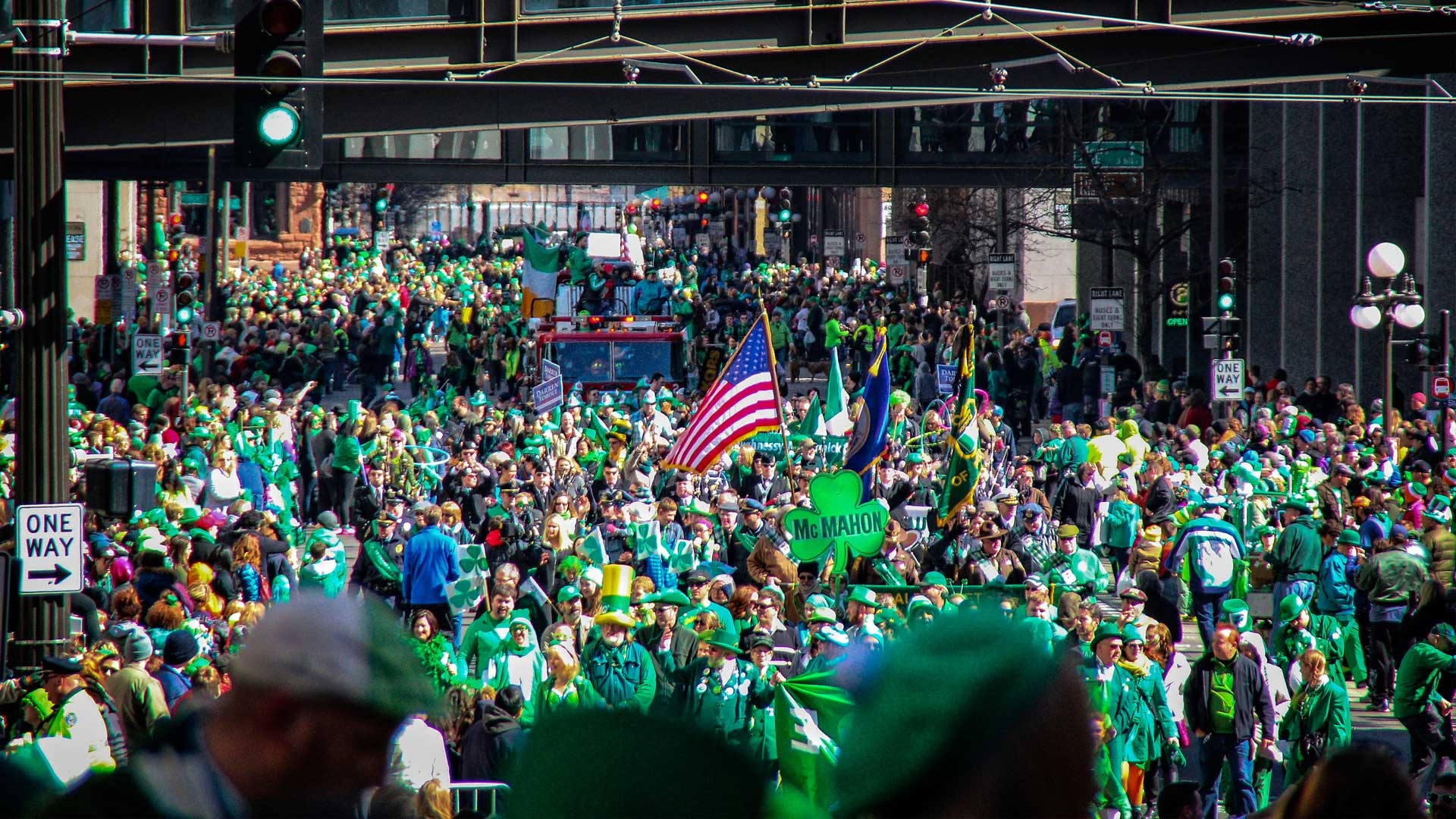
U.S. colors stood out in a field of green at the St. Paul, Minnesota, St. Patrick's Day parade, 2015(?). Photo from VisitStPaul.com.

U.S. colors stood out in a field of green at the St. Paul, Minnesota, St. Patrick’s Day parade, 2015(?). Photo from VisitStPaul.com.

Members of the Yorktown Irish Pipes and Drums Corps march in the 35th annual Northern Westchester-Putnam St. Patrick Day Parade, in Mahopac, New York, 2011. Photo by Seth Harrison

U.S. flag displayed as members of the Yorktown Irish Pipes and Drums Corps march in the 35th annual Northern Westchester-Putnam St. Patrick Day Parade, in Mahopac, New York, 2011. Photo by Seth Harrison


February 2017, dates to fly the U.S. flag

January 31, 2017

Photo #: 80-G-K-21225 (color)

Caption from the U.S. Navy, via Wikipedia: Photo #: 80-G-K-21225 (color) “First Recognition of the American Flag by a Foreign Government,” 14 February 1778. Painting in oils by Edward Moran, 1898. It depicts the Continental Navy Ship Ranger, commanded by Captain John Paul Jones, receiving the salute of the French fleet at Quiberon Bay, France, 14 February 1778. Earlier in the month, after receipt of news of the victory at Saratoga, France recognized the independence of the American colonies and signed a treaty of alliance with them. The original painting is in the U.S. Naval Academy Museum, Annapolis, Maryland. Official U.S. Navy Photograph, now in the collections of the National Archives. [A larger version is available for download at Wikipedia.]

You want to mark your calendar so you remember to put your U.S. flag up on those dates designated by law and tradition, right?

Which dates in February?

  • Massachusetts statehood, February 6 (6th state, 1788)
  • Lincoln’s birthday, February 12 (yes, it’s still designated in law as a date to fly the flag)
  • Oregon statehood, February 14 (33rd state, 1859)
  • Arizona statehood, February 14 (48th state, 1913)
  • Washington’s birthday, now designated President’s Day, the third Monday in February, February 20 in 2017

You may fly your flag on state holidays, too — which of those dates do we see in February?  Is there a good list?

Though we don’t mark it usually, February 14 is the anniversary of the first recognition of the Stars and Stripes by a foreign government, in 1778.  The French fleet recognized the ensign carried by Capt. John Paul Jones, at Quiberon Bay — painting of the event is at the top of this post.

February 23 is the anniversary of the raising of the U.S. flag on Iwo Jima, in 1945 — 72 years ago.  We should probably watch for proclamations to fly the flag on that date, an anniversary made more important simply because so few survivors of from among the veterans of that war and that fight can be expected to live to see the 80th anniversary. Regardless any official, formal proclamation to fly the flag for the Iwo Jima events, you may always fly your flag.

Please visit earlier posts at Millard Fillmore’s Bathtub, on the death of Joe Rosenthal, the photographer who took the widely-released iconic photo; on the death of Charles Lindberg, pictured in the first flag-raising on Mt. Suribachi; on the death of Raymond Jacobs, the last-surviving veteran from the flag raisings; and on my visit to the Sunset Parade at the Iwo Jima-themed U.S. Marine Memorial overlooking Washington, D.C.

A Youtube poster edited a part of the Army’s documentary, “To the Shores of Iwo Jima,” showing the flag raising on film, and added in some other images for a less-than-three-minute look.

Yes, this is mostly an encore post. Fighting ignorance requires patience.

Yes, this is mostly an encore post. Fighting ignorance requires patience.

Save

Save


Fly your flag today for the 2017 holiday honoring Rev. Martin Luther King, Jr.

January 16, 2017

As on every federal holiday, citizens and residents of the U.S. should fly their U.S. flags today, on the holiday marking the birth of the Rev. Dr. Martin Luther King, Jr.

Rev. King, and the U.S. flag

Rev. King, and the U.S. flag. (No information on place or time of photo; please feel free to lend light and facts.)

Fly the U.S. flag today for the holiday for the birthday of Martin Luther King, Jr.  The holiday is celebrated on the third Monday in January.

King’s actual birthday is January 15. You could have flown your flag then, too — many Americans fly flags all weekend.

Many Americans will celebrate with a day of service. Perhaps you will, too.

In 2017, days before the inauguration of a new president, remembering and honoring the life and struggles of Martin Luther King, Jr., and serving others in real and symbolic ways, is more important than ever.

More:

The Martin Luther King, Jr. Memorial in Washington, D.C. Credit: architecture.about.com, via Saporta Report

The Martin Luther King, Jr. Memorial in Washington, D.C. Credit: architecture.about.com, via Saporta Report

Save


January 9, 2017 – Connecticut flies U.S. flags for statehood

January 9, 2017

Carol Highsmith photo of Connecticut's Hall of Flags

Love this photo: Hall of Flags in the Connecticut State Capitol Building; photo by the great photo-historian Carol Highsmith, from the Library of Congress collection; the statue is Connecticut’s Civil War Governor, William A. Buckingham (1804-1875), honored for his personal contributions to the equipping of Connecticut’s men fighting in the Civil War.

Technically, states didn’t exist at all, yet.

But on January 9, 1788, Connecticut became the fifth of the 13 colonies to ratify the proposed Constitution for the United States of America, and by that action set the date we count as Connecticut’s entery into the union.

Within 12 months, four more colonies ratified the document, totaling nine ratifications required to put the Constitution into effect.  When the government of the new nation started functioning in 1789, Connecticut was counted as the fifth state.

Connecticut capitol building, Hartford

Capitol building for Connecticut in Hartford; this photo is from the rear of the building, so the U.S. flag is flying correctly on its own right. The building was completed in 1878. The dome is covered in gold. Image from Wikimedia Commons

To avoid political scheming by anti-federalist colony governors, especially Patrick Henry in Virginia, in September 1787 James Madison proposed that the draft constitution be ratified not by legislatures in the colonies, but instead by a specially-called convention of the people of the colony.  Connecticut’s convention met first on January 3, 1788. With six days of discussion and debate, the convention passed a resolution of ratification on January 9.

So by tradition, January 9 is Connecticut’s statehood anniversary.  According to U.S. law, the Flag Code and tradition, citizens and residents of a state fly their flags on statehood anniversaries.

Happy birthday Connecticut, 228 years old.

Next date to fly the U.S. flag is January 16, 2016, to honor the birth of the Rev. Dr. Martin Luther King, Jr. January 16 is the official holiday; January 19 is the actual birthday. You may fly your colors on both dates.

More:


U.S. flag on the McPolin Barn, Park City, Utah (It’s Utah Statehood Day!)

January 4, 2017

Most Utah citizens regard themselves as patriots. It’s a state where almost every home has at least one U.S. flag, and where many neighborhoods will be festooned with them on any U.S. holiday.

January 4 is Utah’s statehood day. I ran across this photo of the picturesque McPolin Barn in Park City, Utah, up in the Wasatch Mountains in ski country.

For Utah Statehood day, I pass it along:

U.S. flag displayed on the McPolin Barn, Park City, Utah. Date unknown, photographer unknown (if you can identify the photographer, please do!)

U.S. flag displayed on the McPolin Barn, Park City, Utah. Date unknown, photographer unknown (if you can identify the photographer, please do!)

Save

Save


Utah flies U.S. flags on January 4 for statehood: 121 years in 2017 – old enough to drink

January 4, 2017

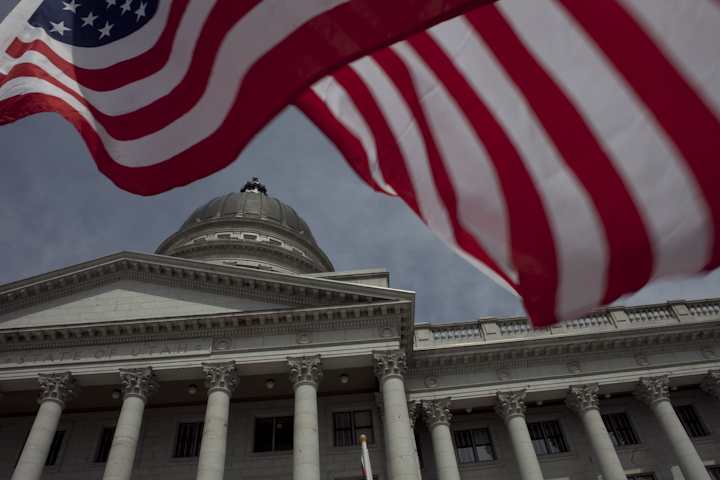
U.S. flag flying in front of the Utah State Capitol. Utah State Capitol image.

U.S. flag flying in front of the Utah State Capitol. Utah State Capitol image.

U.S. flags fly in Utah today in honor of Utah statehood. It’s also the day that new, elected state officers take their oaths and take their offices. Utah is 121 years in the union — as a state, it’s old enough to drink, though you may have difficulty finding a drink there among the teetotaling Mormons.

Utah joined the Union on January 4, 1896.  It had been a 49-year slog to statehood for Deseret, the Mormon settlement in the Desert.  The size had been pared down, so it would not be the biggest state, incorporating parts of what is now Nevada, Arizona, Oregon, Idaho, Colorado and New Mexico.  New capitals had been tried and cast aside (Fillmore, Utah).  Democratic Party rule was broken when LDS church authorities went door-to-door, calling every other family to the Republican Party, and party parity.  The Mormon Church abandoned polygamy, and adopted a state constitution that gave the vote to women.

Finally, Utah became the 45th state.

You may fly your U.S. flag today for Utah statehood, especially if you’re in Utah.

Happy birthday, Utah!  121 years old today.

Big dance in Fillmore to celebrate, Saturday:

Next federal flag-flying date: January 6, in honor of New Mexico’s statehood.

More:

One of my favorite Utah photos: U.S. flag at the south end of Mount Timpanogos; photo from Orem, Utah, by Bob Walker.

One of my favorite Utah photos: U.S. flag at the south end of Mount Timpanogos; photo from Orem, Utah, by Bob Walker.

Yes, this is mostly an encore post. Fighting ignorance requires patience.

Yes, this is mostly an encore post. Fighting ignorance requires patience.

Save

Save


Texans fly U.S. flags today in honor of Texas statehood

December 29, 2016

First class postage stamp showing U.S. and Texas flags together, issued for the Texas Statehood Centennial, in 1945. Yes, first class postage was three cents. Wikipedia image.

First class postage stamp showing U.S. and Texas flags together, issued for the Texas Statehood Centennial, in 1945. Yes, first class postage was three cents. Wikipedia image.

Congress approved Texas’s petition to join the union on December 29, 1845. Texas joined the United States of America 171 years ago today.

KWTX Channel 10 News described the process in 1845:

On December 29, 1845—171 years ago today—the U.S. Congress voted to annex Texas, eight years after statehood was first proposed. In June 1845 the Texas Congress voted in favor of annexation and on July 4, 1845, a convention of elected delegates followed suit. A popular vote in October ratified the document, which the U.S. Congress accepted on December 29, 1845, making Texas the 28th state. Texas President Anson Jones handed over control of the new state government to Gov. James Pinckney Henderson on February 19, 1846.

Engraving of Texas President Anson Jones lowering the flag of the Republic of Texas, to be replaced with the flag of the United States, on December 29, 1845, after Congress accepted the annexation of Texas into the Union. Texas State Library image.

Engraving of Texas President Anson Jones lowering the flag of the Republic of Texas, to be replaced with the flag of the United States, on December 29, 1845, after Congress accepted the annexation of Texas into the Union. Texas State Library image.

More:


Iowa entered the union on December 28, 1846; fly your flags, Hawkeyes!

December 28, 2016

Iowans may fly their flags today in celebration of the anniversary of Iowa statehood.  Iowa’s admission to the Union came on December 28, 1846; Iowa was the 29th state admitted.

“Millions of acres. Iowa and Nebraska. Land for sale on 10 years credit by the Burlington & Missouri River R. R. Co. at 6 per ct interest and low prices.” Poster advertising land in Iowa, circa 1872, from the Burlington & Missouri River Railroad Co. – Library of Congress Printed Ephemera Collection; Portfolio 134, Folder 13; via Wikipedia

The Flag Code, 4 USC §6 (d), notes that the U.S. flag may be flown on “the birthdays of States (date of admission),” in addition to the other score of dates specifically written into law.

Stars and Stripes were impossible to miss at University of Iowa's Kinnick Stadium in November 2014. Photos by Tim Schoon.

Sometimes we excuse parts of the Flag Code if the display otherwise stirs great patriotism. Stars and Stripes were impossible to miss at University of Iowa’s Kinnick Stadium in November 2014. Photos by Tim Schoon.

More:

Yes, this is mostly an encore post. Fighting ignorance requires patience.

Yes, this is mostly an encore post. Fighting ignorance requires patience.

Save

Save


Merry Christmas, 2016! Fly your flag today

December 25, 2016

“A Gift to a Nation” by painter of western scenes Tom Browning; Santa Claus puts together a flag for a family to fly on Christmas.

Christmas Day, December 25, is one of the holidays designated in the U.S. Flag Code for U.S. residents to fly the flag.

No, you don’t take the flag down for mere inclement weather; fly it through rain and snow. Remember to dry your flag before putting it away.

More:

  • Next dates to fly the flag: December 28, for Iowa statehood; December 29, for Texas statehood; New Years Day
  • Look around for other Christmas and Santa Claus posts

Ron Cogswell captured a flag displayed at Reagan National Airport in Washington, D.C., in December 2015; Creative Commons license

Ron Cogswell captured a flag displayed at Reagan National Airport in Washington, D.C., in December 2015; Creative Commons license

Save

Save

Save