I can find no identifying information on the photo. It looks, to me, to have been taken in the 1950s, judging by Pete’s hair and no beard.
Pete Seeger at a typewriter, probably in the 1950s.
It’s an electric typewriter, I think, seeing a cord coming out of the back. Probably a Royal (I’m not great at identifying typewriters, you know). Was this taken at Pete’s home in Beacon? Perhaps.
Can you help in identifying the time and place of this photo?
“Pete Seeger and the Lion King,” at OzTypewriter – heckuva story about the original author of “Mbube,” which became “Wimoweh, which became “The Lion Sleeps Tonight,” and attempts to recover some of the royalties due the family of the composer, Solomon Linda
Somebody put a video collage of Pete together with Tish Hinojosa‘s cut off of a 1998 Pete Seeger tribute album, “Festival of Flowers,” just in the last few days.
Details:
From “Where Have All the Flowers Gone : The Songs of Pete Seeger” 1998
Tish Hinojosa – vocals
Marvin Dykhuis – gitarra de golpe (mariachi guitar)
Chip Dolan – accordion
Amy Ferris Tiven – violin
Glenn Kawamoto – bass
Paul Pearcy – drums
Tish Hinojosa’s voice constantly stuns me with its clarity; I think my first Tish album purchase is 20 years old now.
Pete Seeger at the Beacon Sloop Club in Beacon, N.Y., in 2010. Andrew Sullivan for The New York Times
I love the Andrew Sullivan photo the New York Times used — it reminds me of the best way to hear Pete, in the out-of-doors, near the Hudson, in the summer, with a small audience who could be coerced to sing along.
Pete was an alumnus of Camp Rising Sun (of the L. A. Jonas Foundation) near Rhinebeck, New York, from the very early days. In 1974, between concerts at large venues with Arlo Guthrie, and on his way back home to Beacon, Pete stopped and spent a day with us at the camp. He was , as always, wonderfully gracious, other than outward appearances indistinguishable from the 14- and 15-year boys in excitement to be having fun, exploring nature, and then leading us all in songs.
My unfinished master’s thesis was to explore Pete’s use of different rhetorical devices to get his messages across, and make them popular. (One of my everlasting regrets.)
But despite his down-home-everybody-welcome demeanor, Seeger drove great movements, and pushed the arcs of history in wonderful directions throughout his life.
Having learned from the Lomaxes at the Library of Congress, Pete recorded history in songs, preserving old tunes, making foreign tunes popular, and re-arranging verses here and there. Pete revealed, discovered, or pushed the music of a family domestic (“500 Miles”), Cuban revolutionary poets (“Guantanamera”), his engineer sister (“Going to be an Engineer”), and hymn books.
Pete taught a song to seminar attendees at the Highlands School in Kentucky, people who went on to do great things with that song. The song was “We Shall Overcome,” and photos show that those Pete taught to sing included both Rosa Parks and Martin Luther King, Jr.
Blacklisted after refusing to give in to the civil liberties assault by the U.S. House Committee on Un-American Activities (HUAC), Pete created a series of records to teach how to play a guitar, a banjo, and a twelve-string. One of the kids who learned some twelve-string licks included a guy who went on to play strings for the folk group, the Chad Mitchell Trio, and their new tenor, a guy named John Denver. Roger McGuinn electrified that twelve-string, and leading the Byrds, turned some of Pete’s songs into rock and roll hits — like “Turn, Turn, Turn.”
I asked Pete about getting him to Salt Lake City for a concert in the 1970s — he demurred, saying he needed to spend some time locally. He told a story about showing up at a PTA meeting in Beacon to talk on some issue, and some local guy told Pete that Beacon didn’t need outsiders telling them what to do. This hurt Pete, since he’d been living in Beacon at that time for more than 30 years, in the house he built by hand. Pete told me that he realized a world reputation doesn’t count for much if you can’t use it to make things better in your home town.The “local project?” He said he wanted to get an old sloop, and sail the Hudson River signing to get people to clean it up. At the time, the Hudson was very much a sewer from Albany to New York City. A short time later the Sloop Clearwater was refitted, and Pete started music festivals up and down the river. The Hudson, Pete’s local river, runs much cleaner today for his work.
I saw Pete and Arlo in concert at Wolf Trap, the performance park near Washington, D.C., a couple of times; and some other venues — but nothing ever beat that open air concert at Rising Sun.
Bruce Springsteen did us all a favor with his album of Seeger tunes; I chafed at Ronald Reagan’s choices of performers at his inaugurals, and at many other choices over the years. I often thought Pete Seeger’s music, and voice, would be a better choice. Springsteen’s pre-inauguration concert in 2008, from the Lincoln Memorial, had my full attention. The only thing more perfect, I told Kathryn, would be Pete singing his own tunes from those steps (I heard him tell the stories of King’s and Marian Anderson’s performances there more than once). Within a few minutes, Springsteen pulled Pete out onstage, and at the age of 90 he led the crowd singing Woody’s “This Land is Your Land.” A perfect capstone, I thought.
If you would, pull out your collection of Pete Seeger music today, and give it a spin. It will raise your spirits, I guarantee.
What wonderful gifts Pete left us!
So long, Pete, one of the best American citizens we’ll ever know.
From Pete Seeger’s 90th Birthday Concert (Clearwater Concert), Madison Square Garden, 5/3/09. Featuring Billy Bragg, Mike & Ruthy Merenda, Dar Williams, New York City Labor Chorus.
The Seeger Family, 1921 Pete Seeger, the now-93 year-old folk singer, is sitting on his father’s lap. Pete’s father was musicologist Charles Louis Seeger, Jr.; his mother was the violinist Constance de Clyver Edson. The other two children are probably Pete’s older brothers Charles, III, and John. This photo probably was taken while Charles and Constance toured the American south to teach music, after his having to leave UCLA because of his pacifist stance during World War I.
Judy Collins and Pete Seeger, photo by the preservationist David Rocco, at the Clearwater Festival in Hudson, New York, June 15, 2013. (We think that’s Pete’s wife, Toshi, on the far right edge of the photo.)
Pete Seeger was born on May 3, 1919. He turns 94 today.
Pete is an alumnus of the Louis August Jonas Foundation‘s Camp Rising Sun, a little nugget that appealed to me when I signed up as a counselor at the Rhinebeck campus in 19#&. Pete and Arlo Guthrie teamed up for a series of concerts at East Coast venues that summer, including Wolftrap, Saratoga, Tanglewood and others. Pete lives just down the river from Rhinebeck, near Beacon — but driving home from one of those venues was just a bit too far. Pete stopped off at his childhood haunts and spent a day with us.
I hoped to invite him to Salt Lake City. Pete said he might make such a trip, but it was unlikely — and impressed me with his reasoning and dedication to principle. He explained that he was sticking closer to home as he approached 65, because there was work to do there. He said he’d attended a local school board or PTA meeting to voice an opinion on some issue in Beacon. One of the local newspapers complained he was “an outside agitator.” That stung, he said — he’d been a resident in the town for more than 30 years.
Instead of complaining, though, he started thinking. He said he’s traveled the world and worked for causes for other people in other towns; and he said he realized that one’s life’s work might be dedicated to making life better where one lives. So he’d decided to campaign to clean up his local river, the Hudson . . . you’ve heard of the Sloop Clearwater?
Pete’s dedication to making things better, with local action where one may make a huge difference, stuck with me, and it should stick with all of us.
He’s an encouragement to all of us. He boasts that there is no group he has ever refused to sing for, and in his typical humility, he claims that he can get any group to join, so they do all the heavy lifting. During the pre-inaugural festivities for President Obama’s first inauguration I was happy to see Bruce Springsteen singing some of Pete’s work — highly appropriate for any president’s inauguration — and I thought it would be more fitting only if Pete was singing himself. Then Springsteen brought Pete out on stage to close out.
Pete keeps up a schedule of concerts, most for causes. He sails with the Clearwater, campaigning for clean water on the Hudson River (much accomplished) and community efforts to change things for the better. As you will see below, he pulls his own when raising the sails. He cuts his own wood to heat the house he built.
Considering his age, 94, we might wonder why he keeps going, doing so much all the time.
Why does he keep on going? He might be telling us, from this 2012 recording.
More:
Cover of Pete Seeger’s single release (same photo on an album). The banjo features Pete’s traditional “This machine surrounds hate and forces it to surrender,” a twist on a sticker famously seen on his old friend Woody Guthrie’s guitar. Wikipedia image
Intrigued to learn our old friend Pete Seeger signed up for a Twitter account — years ago. Pete tweets regularly.
He’s an encouragement to all of us. He boasts that there is no group he has ever refused to sing for, and in his typical humility, he claims that he can get any group to join, so they do all the heavy lifting.
Pete keeps up a schedule of concerts, most for causes. He sails with the sloop Clearwater, campaigning for clean water on the Hudson River (much accomplished) and community efforts to change things for the better. As you will see below, he pulls his own when raising the sails. He cuts his own wood to heat the house he built.
Pete will be 94 on May 3, 2013.
Why does he keep on going? He might be telling us, from this 2012 recording.
More:
Cover of Pete Seeger’s single release (same photo on an album). The banjo features Pete’s traditional “This machine surrounds hate and forces it to surrender,” a twist on a sticker famously seen on his old friend Woody Guthrie’s guitar. Wikipedia image
Bruce Cockburn performing at the City Stages festival in Birmingham, Alabama, United States. Photo: Wikipedia. Some guitar afficianadoes consider Cockburn in the top ranks of guitar wizards. A story we’re working to verify holds a reporter asking Eddie van Halen how it feels to be the world’s best guitarist, to which van Halen is said to have responded: “I don’t know. Ask Bruce Cockburn.”
Cockburn, who has had a 35-year career that produced hits such as Wonderin’ Where the Lions Are and If I Had a Rocket Launcher, will be presented with the SOCAN Lifetime Achievement Award.
October 31 hosts several famous anniversaries. It is the anniversary of Nevada’s statehood (an October surprise by Lincoln for the 1864 campaign?). It is the anniversary of the cleaving of western, catholic Christianity, as the anniversary of Martin Luther’s tacking his 95 theses to the door of the church in Wittenburg, Germany in 1517, the formal start of the Reformation. Maybe the original Christian trick or treat.
U.S.S. Reuben James sinking, October 31, 1941 – National Archives photo
October 31 is also the anniversary of the sinking of the World War I era Clemson-class, four-stack destroyer, U.S.S. Reuben James, by a German U-boat. Woody Guthrie memorialized the sad event in the song, Reuben James, recorded by the Almanac Singers with PeteSeeger (see also here, and here), and later a hit for the Kingston Trio. The Reuben James was sunk on October 31, 1941 — over a month before the Japanese attack on Pearl Harbor. Details via Wikipedia (just to make you school librarians nervous):
This history figured into the 2008 presidential campaign in a small way: One of the internet hoax letters complaining about Barack Obama claimed that the U.S. entered World War II against Germany although the Germans had not fired a single round against the U.S. The 115 dead from the crew of 160 aboard the James testify to the inaccuracy of that claim, wholly apart from the treaty of mutual defense Germany and Japan were parties to, which encouraged Germany to declare war upon any nation that went to war with Japan. After the U.S. declaration of war on Japan, Germany declared war on the U.S., creating a state of war with Germany.
This history also reminds us that many Americans were loathe to enter World War II at all. By October 1941, Japan had been occupying parts of China for ten years, and the Rape of Nanking was four years old. The Battle of the Atlantic was in full swing, and the Battle of Britain was a year in the past, after a year of almost-nightly bombardment of England by Germany. Despite these assaults on friends and allies of the U.S., and the losses of U.S. ships and merchant marines, the U.S. had remained officially neutral.
Many Americans on the left thought the sinking of the Reuben James to be the sort of wake-up call that would push Germany-favoring Americans to reconsider, and people undecided to side with Britain. The political use of the incident didn’t have much time to work. Five weeks later Japan attacked Pearl Harbor, and by the end of 1941, the U.S. was at war with the Axis Powers.
Letter to the U.S. Navy asking the fate of friends aboard the U.S.S. Reuben James, November, 1941
Telegram informing his family of the death of Gene Guy Evans, of Norfolk, Virginia, lost in the torpedoing of the U.S.S. Reuben James
The Kingston Trio sings, as the names of the dead scroll:
Reuben JamesReuben James was born in Delaware about 1776. During the Quasi-War with France, Boatswain’s Mate James participated in Constellation’s victories over the French ships L’Insurgente, 9 February 1799, and La Vengeance. During the Barbary Wars, he served aboard Enterprise and accompanied Stephen Decatur into the harbor at Tripoli on 16 February 1804, as Decatur and his men burned the captured American frigate Philadelphia to prevent Tripoli from using her in battle. In the ensuing skirmish, an American seaman positioned himself between Decatur and an enemy blade. This act of bravery was attributed to Reuben James and to Daniel Frazier. For the rest of the war, James continued to serve Decatur aboard Constitution and Congress. During the War of 1812, he served in United States, under Decatur, and in President. On 15 January 1815, however, President was defeated by the British and James was taken prisoner. After the war, he resumed service with Decatur, aboard Guerriere, and participated in the capture of the 46-gun Algerian flagship Mashoudaon 17 June 1815. After peace was made with the Barbary states, James continued his service in the Navy until declining health brought about his retirement in January 1836. He died on 3 December 1838 at the U.S. Naval Hospital in Washington, D.C.
Reuben James (DD-245) was laid down 2 April 1919 by New York Shipbuilding Corp., Camden, N.J.; launched 4 October 1919; sponsored by Miss Helen Strauss; and commissioned 24 September 1920, Comdr. Gordon W. Haines in command.
Assigned to the Atlantic Fleet, Reuben James sailed from Newport, R.I., 30 November 1920 to Zelenika, Yugoslavia, arriving 18 December. During the spring and summer of 1921, she operated in the Adriatic and the Mediterranean out of Zelenika and Gruz, Yugoslavia, assisting refugees and participating in postwar investigations. In October 1921 at Le Havre, she joined Olympia (C-6) at ceremonies marking the return of the Unknown Soldier to the United States. At Danzig, Poland, from 29 October 1921 to 3 February 1922, she assisted the American Relief Administration in its efforts to relieve hunger and misery. After duty in the Mediterranean, she departed Gibraltar 17 July 1922.
Based then at New York, she patrolled the Nicaraguan coast to prevent the delivery of weapons to revolutionaries in early 1926. In the spring of 1929, she participated in fleet maneuvers that foreshadowed naval airpower. Reuben James decommissioned at Philadelphia on 20 January 1931.
Recommissioned 9 March 1932, she again operated in the Atlantic and the Caribbean. From September 1933 to January 1934 she patrolled Cuban waters during a period of revolution. Sailing for the Pacific from Norfolk 19 October 1934, she arrived at her new homeport of San Diego, Calif., 9 November. Following maneuvers that evaluated aircraft carriers, she returned to the Atlantic Fleet in January 1939. Upon the outbreak of war in Europe in September 1939, she joined the Neutrality Patrol, and guarded the Atlantic and Caribbean approaches to the American coast.
In March 1941, Reuben James joined the convoy escort force established to promote the safe arrival of war materials to Britain. This escort force guarded convoys as far as Iceland, where they became the responsibility of British escorts. Based at Hvalfjordur, Iceland, she sailed from Argentia, Newfoundland, 23 October 1941, with four other destroyers to escort eastbound convoy HX-156. While escorting that convoy, at about 0525, on 31 October 1941, Reuben James was torpedoed by German submarine U-562. Her magazine exploded, and she sank quickly. Of the crew, 44 survived, and 115 died. Reuben James was the first U.S. Navy ship sunk by hostile action in World War II.
Woody Guthrie singing, Smithsonian Folkways image – The sticker on Woody’s guitar reads, “This Machine Kills Fascists.” Woody regarded music as a great tool of democracy and freedom.
July 14, 2012, marks the 100th anniversary of the birth of Woody Guthrie, folksinger, union organizer, chronicler of American values, troubles and change.
We’re already more than halfway through Woody’s centennial year — and what celebration took place at Millard Fillmore’s Bathtub? History slips by so fast.
Much celebration remains. Get out your calendar and figure out which events you can join in.
Poster for the 2012 Woody Guthrie Folk Festival in Okemah, Oklahoma
How is Pete Seeger doing? He just turned — what? — 93; will he be able to make many of these events? (Book signing in New York, July 18 . . .) (Let’s start the Pete Seeger Centennial a few years early, maybe — like now . . .)
October 31 hosts several famous anniversaries. It is the anniversary of Nevada’s statehood (an October surprise by Lincoln for the 1864 campaign?). It is the anniversary of the cleaving of western, catholic Christianity, as the anniversary of Martin Luther’s tacking his 95 theses to the door of the church in Wittenburg, Germany in 1517, the formal start of the Reformation. Maybe the original Christian trick or treat.
U.S.S. Reuben James sinking, October 31, 1941 - National Archives photo
October 31 is also the anniversary of the sinking of the World War I era Clemson-class, four-stack destroyer, U.S.S. Reuben James, by a German U-boat. Woody Guthrie memorialized the sad event in the song, Reuben James, recorded by the Almanac Singers with PeteSeeger (see also here, and here), and later a hit for the Kingston Trio. The Reuben James was sunk on October 31, 1941 — over a month before the Japanese attack on Pearl Harbor. Details via Wikipedia (just to make you school librarians nervous):
This history figured into the 20088 presidential campaign in a small way: One of the internet hoax letters complaining about Barack Obama claimed that the U.S. entered World War II against Germany although the Germans had not fired a single round against the U.S. The 115 dead from the crew of 160 aboard the James testify to the inaccuracy of that claim, wholly apart from the treaty of mutual defense Germany and Japan were parties to, whichencouraged Germany to declare war upon any nation that went to war with Japan. After the U.S. declaration of war on Japan, Germany declared war on the U.S., creating a state of war with Germany.
This history also reminds us that many Americans were loathe to enter World War II at all. By October 1941, Japan had been occupying parts of China for ten years, and the Rape of Nanking was four years old. The Battle of the Atlantic was in full swing, and the Battle of Britain was a year in the past, after a year of almost-nightly bombardment of England by Germany. Despite these assaults on friends and allies of the U.S., and the losses of U.S. ships and merchant marines, the U.S. had remained officially neutral.
Many Americans on the left thought the sinking of the Reuben James to be the sort of wake-up call that would push Germany-favoring Americans to reconsider, and people undecided to side with Britain. The political use of the incident didn’t have much time to work. Five weeks later Japan attacked Pearl Harbor, and by the end of 1941, the U.S. was at war with the Axis Powers.
Letter to the U.S. Navy asking the fate of friends aboard the U.S.S. Reuben James, November, 1941
Telegram informing his family of the death of Gene Guy Evans, of Norfolk, Virginia, lost in the torpedoing of the U.S.S. Reuben James
The Kingston Trio sings, as the names of the dead scroll:
Reuben James was born in Delaware about 1776. During the Quasi-War with France, Boatswain’s Mate James participated in Constellation’s victories over the French ships L’Insurgente, 9 February 1799, and La Vengeance. During the Barbary Wars, he served aboard Enterprise and accompanied Stephen Decatur into the harbor at Tripoli on 16 February 1804, as Decatur and his men burned the captured American frigate Philadelphia to prevent Tripoli from using her in battle. In the ensuing skirmish, an American seaman positioned himself between Decatur and an enemy blade. This act of bravery was attributed to Reuben James and to Daniel Frazier. For the rest of the war, James continued to serve Decatur aboard Constitution and Congress. During the War of 1812, he served in United States, under Decatur, and in President. On 15 January 1815, however, President was defeated by the British and James was taken prisoner. After the war, he resumed service with Decatur, aboard Guerriere, and participated in the capture of the 46-gun Algerian flagship Mashouda on 17 June 1815. After peace was made with the Barbary states, James continued his service in the Navy until declining health brought about his retirement in January 1836. He died on 3 December 1838 at the U.S. Naval Hospital in Washington, D.C.
Reuben James (DD-245) was laid down 2 April 1919 by New York Shipbuilding Corp., Camden, N.J.; launched 4 October 1919; sponsored by Miss Helen Strauss; and commissioned 24 September 1920, Comdr. Gordon W. Haines in command.
Assigned to the Atlantic Fleet, Reuben James sailed from Newport, R.I., 30 November 1920 to Zelenika, Yugoslavia, arriving 18 December. During the spring and summer of 1921, she operated in the Adriatic and the Mediterranean out of Zelenika and Gruz, Yugoslavia, assisting refugees and participating in postwar investigations. In October 1921 at Le Havre, she joined Olympia (C-6) at ceremonies marking the return of the Unknown Soldier to the United States. At Danzig, Poland, from 29 October 1921 to 3 February 1922, she assisted the American Relief Administration in its efforts to relieve hunger and misery. After duty in the Mediterranean, she departed Gibraltar 17 July 1922.
Based then at New York, she patrolled the Nicaraguan coast to prevent the delivery of weapons to revolutionaries in early 1926. In the spring of 1929, she participated in fleet maneuvers that foreshadowed naval airpower. Reuben James decommissioned at Philadelphia on 20 January 1931.
Recommissioned 9 March 1932, she again operated in the Atlantic and the Caribbean. From September 1933 to January 1934 she patrolled Cuban waters during a period of revolution. Sailing for the Pacific from Norfolk 19 October 1934, she arrived at her new homeport of San Diego, Calif., 9 November. Following maneuvers that evaluated aircraft carriers, she returned to the Atlantic Fleet in January 1939. Upon the outbreak of war in Europe in September 1939, she joined the Neutrality Patrol, and guarded the Atlantic and Caribbean approaches to the American coast.
In March 1941, Reuben James joined the convoy escort force established to promote the safe arrival of war materials to Britain. This escort force guarded convoys as far as Iceland, where they became the responsibility of British escorts. Based at Hvalfjordur, Iceland, she sailed from Argentia, Newfoundland, 23 October 1941, with four other destroyers to escort eastbound convoy HX-156. While escorting that convoy, at about 0525, on 31 October 1941, Reuben James was torpedoed by German submarine U-562. Her magazine exploded, and she sank quickly. Of the crew, 44 survived, and 115 died. Reuben James was the first U.S. Navy ship sunk by hostile action in World War II.
25 September 2005
Spread the word; friends don't allow friends to repeat history.
Alan Lomax at the typewriter, 1942, using the "hunt and peck method" of typing - Library of Congress photo
Who was Alan Lomax? Have you really never heard of him before?
Lomax collected folk music, on wire recorders, on tape recorders, in written form, and any other way he could, on farms, at festivals, in jails, at concerts, in churches, on street corners — anywhere people make music. He did it his entire life. He collected music in the United States, across the Caribbean, in Britain, Scotland, Ireland, Spain and Italy.
Alan Lomax, Woody Guthrie, Lillie Mae Ledford and an obscured Sonny Terry, New York, 1944 (Library of Congress Collection - photographer unknown)
Almost all of that collection is in the Library of Congress’s unsurpassed American Folklife collection, from which dozens of recordings have been issued.
Born in 1915, Alan Lomax began collecting folk music for the Library of Congress with his father [John Lomax] at the age of 18. He continued his whole life in the pursuit of recording traditional cultures, believing that all cultures should be recorded and presented to the public. His life’s work, represented by seventy years’ worth of documentation, will now be housed under one roof at the Library, a place for which the Lomax family has always had strong connections and great affection.
Were that all, it would be an outstanding record of accomplishment. Lomax was much more central to the folk revivals in the both England and the U.S. in the 1950s and 19602, though, and in truth it seemed he had a hand in everything dealing with folk music in the English-speaking world and then some. Carl Sagan used Lomax as a consultant to help choose the music to be placed on the disc sent into space with the exploring satellite Voyager, “the Voyager Golden Record.”
Have you listened to and loved Aaron Copland’s “Rodeo,” and the famous passage, “Hoedown?” How about Miles Davis, with the Gil Evans-produced “Sketches of Spain?” [Thank you, Avis Ortner.] Then you know the work of Alan Lomax, as Wikipedia explains:
The famous “Hoedown” in Aaron Copland‘s 1942 ballet Rodeo was taken note for note from Ruth Crawford Seeger‘s piano transcription of the square-dance tune, “Bonypart” (“Bonaparte’s Retreat”), taken from a recording of W. M. Stepp’s fiddle version, originally recorded in Appalachia for the Library of Congress by Alan and Elizabeth Lomax in 1937. Seeger’s transcription was published in Our Singing Country (1941) by John A. and Alan Lomax and Ruth Crawford Seeger.
Miles Davis‘s 1959 Sketches of Spain album adapts the melodies “Alborada de vigo” and “Saeta” from Alan Lomax’s Columbia World Library album Spain.
“To Hear Your Banjo Play” featuring Pete Seeger, written and produced by Alan Lomax.
Trailer for the PBS P.O.V. film, “The Song Hunter,” by Rogier Kappers
Or, until that account is unsuspended by the forces supporting Donald Trump: Follow @FillmoreWhite, the account of the Millard Fillmore White House Library
We've been soaking in the Bathtub for several months, long enough that some of the links we've used have gone to the Great Internet in the Sky.
If you find a dead link, please leave a comment to that post, and tell us what link has expired.
Thanks!
Retired teacher of law, economics, history, AP government, psychology and science. Former speechwriter, press guy and legislative aide in U.S. Senate. Former Department of Education. Former airline real estate, telecom towers, Big 6 (that old!) consultant. Lab and field research in air pollution control.
My blog, Millard Fillmore's Bathtub, is a continuing experiment to test how to use blogs to improve and speed up learning processes for students, perhaps by making some of the courses actually interesting. It is a blog for teachers, to see if we can use blogs. It is for people interested in social studies and social studies education, to see if we can learn to get it right. It's a blog for science fans, to promote good science and good science policy. It's a blog for people interested in good government and how to achieve it.
BS in Mass Communication, University of Utah
Graduate study in Rhetoric and Speech Communication, University of Arizona
JD from the National Law Center, George Washington University


 Posted by Ed Darrell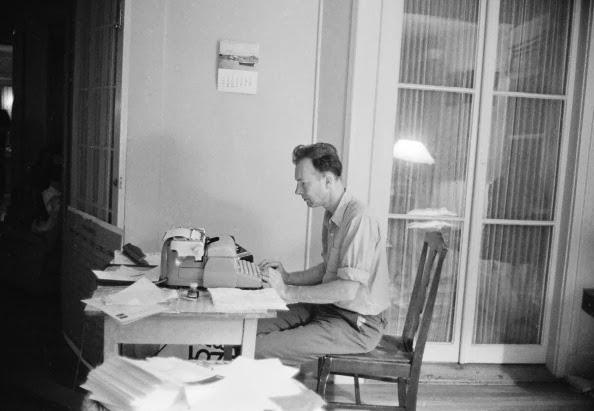





 Millard Fillmore's Bathtub