Honoring James Madison in 2025, the go-to guy, for his birthday, March 16

March 17, 2025

James Madison, the fourth President of the United States, and the Father of the Constitution, was born March 16, 1751, in the Tidewater area of Virginia.

Is it sinful that we do not celebrate his birthday with a federal holiday, fireworks, picnics and speeches and concerts?

Maybe you could fly your flag.  If neighbors ask why, tell them you’re flying it for freedom on James Madison’s birthday.  They’ll say, “Oh,” and run off to Google Madison.  You will have struck a blow for the education that undergirds democracy.

Journalists honor Madison on his birthday, and through the week in which his birthday occurs, with tributes to the First Amendment which he wrote, and celebrations of Freedom of Information Laws and press freedoms, two issues dear to Madison’s heart.

There is much, much to celebrate about him.

A few years ago I was asked to talk about freedom to a group of freedom lovers in North Texas.  I chose to speak about James Madison’s remarkable, and too-often unremarked-upon life. Later, when I started this blog, I posted it here, with an introduction.  All of that is below, in honor of the birth of James Madison.

Did you know that Madison is the shortest man ever to have been president?  His stature is measured in freedom, not in feet and inches.

(Originally a post on July 31, 2006)

James Madison, 1783, by Charles Wilson Peale. Library of Congress collection

James Madison, 1783, miniature by Charles Wilson Peale. Madison would have been 32. Library of Congress collection

I don’t blame students when they tell me they “hate history.”  Heaven knows, they probably have been boringly taught boring stuff.

For example, history classes study the founding of the United States. Especially under the topical restrictions imposed by standardized testing, many kids will get a short-form version of history that leaves out some of the most interesting stuff.

Who could like that?

Worse, that sort of stuff does damage to the history and the people who made it, too.

James Madison gets short shrift in the current canon, in my opinion. Madison was the fourth president, sure, and many textbooks note his role in the convention at Philadelphia that wrote the Constitution in 1787. But I think Madison’s larger career, especially his advocacy for freedom from 1776 to his death, is overlooked.

Madison was the “essential man” in the founding of the nation, in many ways. He was able to collaborate with people as few others could, in order to get things done, including his work with George Mason on the Virginia Bill of Rights, with George Washington on the Constitution and national government structure, Thomas Jefferson on the structure and preservation of freedom, Alexander Hamilton on the Constitution and national bank, and James Monroe on continuing the American Revolution.

We need to look harder at the methods and philosophy, and life, of James Madison. This is an opinion I’ve held for a long time. Here I reproduce a “sermon” I delivered to the North Texas Church of Freethought in November 2001.

James Madison White House portrait, John Vanderlyn, 1816

James Madison’s official White House portrait, by John Vanderlyn in 1816; in the White House collection

I have left this exactly as it was delivered, though I would change a few things today, especially emphasizing more the key role George Washington played in pushing Madison to get the Constitution — a view I came to courtesy of the Bill of Rights Insitute and their outstanding, week-long seminar, Shaping the Constitution: A View from Mount Vernon 1783-1789. The Bill of Rights Institute provides outstanding training for teachers, and this particular session, at Washington’s home at Mount Vernon, Virginia, is well worth the time (check with the Institute to see whether it will be offered next year — and apply!). I am especially grateful to have had the opportunity to discuss these times and issues with outstanding scholars like Dr. Gordon Lloyd of Pepperdine University, Dr. Adam Tate of Morrow College, and Dr. Stuart Leibiger of LaSalle University, during my stay at Mount Vernon.

My presentation to the skeptics of North Texas centered around the theme of what a skeptic might give thanks for at Thanksgiving. (It is available on the web — a misspelling of my name in the program carried over to the web, which has provided me a source of amusement for several years.)

Here is the presentation:

Being Thankful For Religious Liberty

As Presented at the November, 2001 Sunday Service of The North Texas Church of Freethought

Historians rethink the past at least every generation, mining history for new insights or, at least, a new book. About the founders of this nation there has been a good deal of rethinking lately. David McCullough reminds us that John Adams really was a good guy, and that we shouldn’t think of him simply as the Federalist foil to Thomas Jefferson’s more democratic view of the world. Jefferson himself is greatly scrutinized, and perhaps out of favor — “American Sphinx,” Joseph Ellis calls him. The science of DNA testing shows that perhaps Jefferson had more to be quiet about than even he confessed in his journals. While Jefferson himself questioned his own weakness in his not freeing his slaves in his lifetime, historians and fans of Jefferson’s great writings wrestle with the likelihood of his relationship with one of his own slaves (the old Sally Hemings stories came back, and DNA indicates her children were fathered by a member of the Jefferson clan; some critics argue that Jefferson was a hypocrite, but that was Jefferson’s own criticism of himself; defenders point out that the affair most likely was consensual, but could not be openly acknowledged in Virginia at that time). Hamilton’s gift to America was a financial system capable of carrying a noble nation to great achievement, we are told – don’t think of him simply as the fellow Aaron Burr killed in a duel. Washington is recast as one of the earliest guerrilla fighters, and in one book as a typical gentleman who couldn’t control his expenses. Franklin becomes in recent books the “First American,” the model after which we are all made, somehow.

Of the major figures of these founding eras, James Madison is left out of the rethinking, at least for now. There has been no major biography of Madison for a decade or more, not since Ralph Ketcham’s book for the University of Virginia press. Madison has a role in Joseph Ellis’s Founding Brothers, but he shares his spotlight with Hamilton and Jefferson. I think this is an oversight. As we enter into the first Thanksgiving season of the 21st century, we would do well to take a look back at Madison’s life. Madison gives us a model of reason, and more important, a model of action coupled to reason. America’s founding is often depicted as a time of great thunder — if not the thunder of the lightning Ben Franklin experimented with, an experiment he parlayed into worldwide respect for Americans, it is the thunder of the pronouncements of Thomas Jefferson in the Declaration of Independence, or of George Washington, just generally thundering through history.

The use of a bolt of lightning as a symbol for this group is inspired, I think. I’m a great fan of Mark Twain, and when I see that bolt of electricity depicted I think of Twain’s observation:

“Thunder is good; thunder is impressive. But it is lightning that does the work.”

Thunder at the founding is impressive; where was the lightning?

I’d like to point out two themes that run through Madison’s life, or rather, two activities that we find him in time and again. Madison’s life was marked by periods of reflection, followed by action as a result of that reflection.

We don’t know a lot about Madison’s youth. He was the oldest son of a wealthy Virginia planter, growing up in the Orange County area of Tidewater Virginia. We know he was boarded out for schooling with good teachers – usually clergymen, but occasionally to someone with expertise in a particular subject – and we know that he won admission to Princeton to study under the Rev. John Witherspoon, a recent Presbyterian transplant from across the Atlantic. Madison broke with tradition a bit in attending an American rather than an English school. And after completing his course of study he remained at Princeton for another year to study theology directly under Witherspoon, with an eye toward becoming a preacher.

Witherspoon is often held up as an example of how religion influenced the founders, but he was much more of a rationalist than some would have us believe. He persuaded the young Madison that a career in law and politics would be a great service to the people of Virginia and America, and might be a higher calling. After a year of this reflection, Madison returned to Virginia and won election to local government.

In his role as a county official Madison traveled the area. He inspected the works of government, including the jails. He was surprised to find in jail in Virginia people accused of — gasp! — practicing adult baptism. In fact Baptists and Presbyterians were jailed on occasion, because the Anglican church was the state church of Virginia, and their practicing their faith was against the common law. This troubled Madison greatly, and it directed an important part of his work for the rest of his life. In January of 1774, Madison wrote about it to another prominent Virginian, William Bradford:

“Poverty and Luxury prevail among all sorts: Pride ignorance and Knavery among the Priesthood and Vice and Wickedness among the Laity. This is bad enough. But it is not the worst I have to tell you. That diabolical Hell conceived principle of persecution rages among some and to their eternal infamy the Clergy can furnish their Quota of Imps for such business. This vexes me the most of any thing whatever. There are at this time in the adjacent County not less than 5 or 6 well meaning men in close Gaol for publishing their religious Sentiments which in the main are very orthodox. I have neither patience to hear talk or think of any thing relative to this matter, for I have squabbled and scolded abused and ridiculed so long about it, to so little purpose that I am without common patience. So I leave you to pity me and pray for Liberty of Conscience to revive among us.”

By April, Madison’s views on the matter had been boiled down to the essences, and he wrote Bradford again more bluntly:

“Religious bondage shackles and debilitates the mind and unfits it for every noble enterprise.”

Madison must have done a fine job at his county duties, whatever they were, because in 1776 when Virginia was organizing its government to survive hostilities with England, Madison was elected to the legislative body.

Madison was 25, and still raw in Virginia politics. He was appointed to the committee headed by George Mason to review the laws and charter of the colony. Another who would serve on this committee when he was back from Philadelphia was Thomas Jefferson. George Mason was already a giant in Virginia politics, and by the time Madison got to Williamsburg, Mason had already completed much of the work on a bill of rights to undergird the new Virginia government. Madison noted that freedom of religion was not among the rights enumerated in Mason’s version — but it was too late, Mason said. The work was done.

Madison quietly went to work on Mason, in committee, over dinner, during social occasions — noting the great injustice of jailing people solely because of their beliefs, and urging to Mason that it did Virginia no good to keep these fathers from providing for their families.

Mason ultimately agreed to accept the amendment.

The pattern was set.

Perhaps a better example of this reflection and action cycle occurred nearly a decade later. By 1785 the war was over, independence was won, but the business of government continued. While serving as governor of Virginia, Thomas Jefferson had drafted about 150 proposals for laws, really a blueprint for a free government. About half of these proposals had been passed into law. By 1785, Jefferson was away from Virginia, representing the Confederation of colonies in Paris. Jefferson had provided several laws to disestablish religion in Virginia, and to separate out the functions of church and state. With Jefferson gone, however, his old nemesis Patrick Henry sought to roll back some of that work. Henry proposed to bring back state support for the clergy, for the stated purpose of promoting education. (Yes, this is the same battle we fight today for church and state separation.) After Jefferson’s troubled term as governor, Virginia turned again to Henry – Henry ultimately served six terms as governor. His proposal was set for a quick approval in the Virginia assembly. It was late in the term, and everyone wanted to get home.

Henry was, of course, a thundering orator of great note. Madison was a small man with a nervous speaking style, but a man who knew the issues better than anyone else in almost any room he could be in. Madison came up with an interesting proposal. Picking the religion for the state was serious stuff, he said. A state doesn’t want to pick the wrong religion, and get stuck with the wrong god, surely — and such weighty matters deserve widespread support and discussion, Madison said. His motion to delay Henry’s bill until the next session, in order to let the public know and approve, was agreed to handily.

You probably know the rest of this story. With a year for the state to reflect on the idea, Madison wrote up a petition on the issue, which he called a “Memorial and Remonstrance.” In the petition he laid out 15 reasons why separation of church and state was a superior form of government, concluding that in the previous 1,500 years, every marriage of church and state produced a lazy and corrupt church, and despotic government. Madison’s petition circulated everywhere, and away from Patrick Henry’s thundering orations, the people of Virginia chose Madison’s cool reason.

When the legislature reconvened in 1786, it rejected Henry’s proposal. But Madison’s petition had been so persuasive, the legislature also brought up a proposal Thomas Jefferson had made six years earlier, and passed into law the Virginia Statue for Religious Freedom.

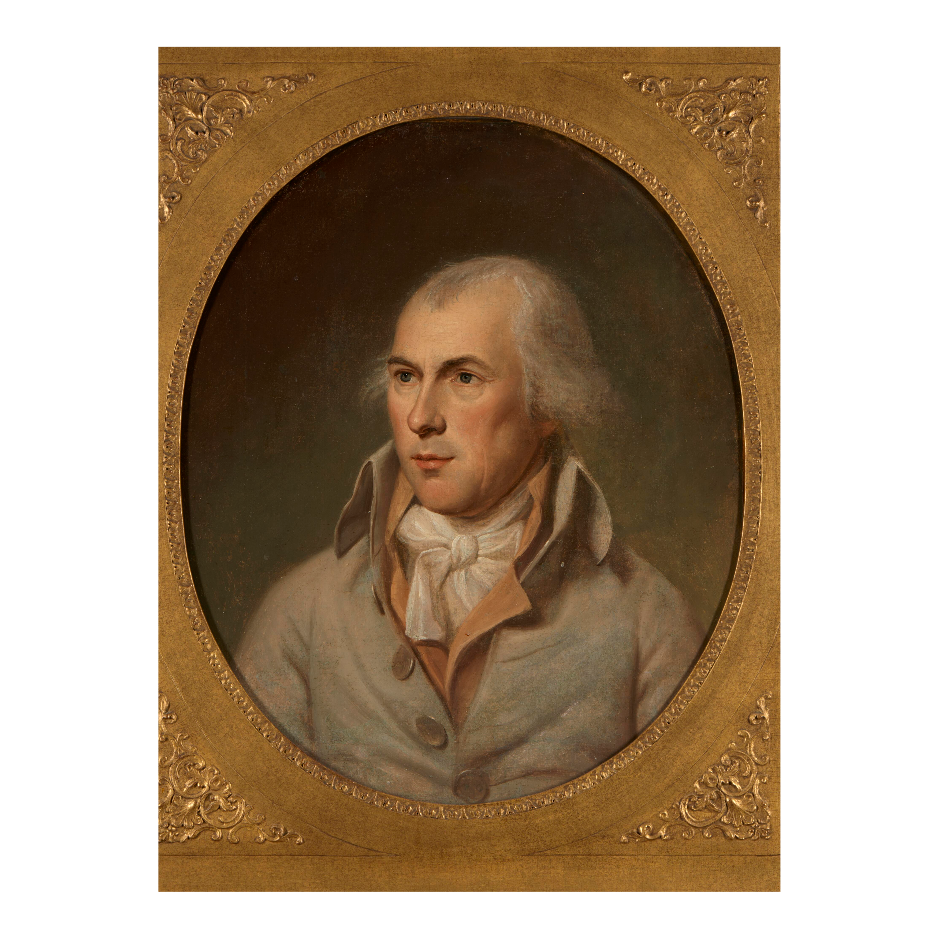
This was a great victory for Madison, and for Virginia. He celebrated by convening a convention to settle disputes between Virginia and Maryland about navigation on the Chesapeake Bay. Having reflected on the nature of this issue — a dispute between colonies — Madison had sought advice from others having the same problems, such as New York and New Jersey. In that effort he got the support of a New Yorker working on the same problems, Alexander Hamilton. In the course of these discussions Madison thought it clear that the difficulty lay with the form of government that bound the colonies together under the Articles of Confederation. Hamilton agreed, and they got their respective states and conferences to agree to meet in Philadelphia in 1787 to try to fix those problems. [Since I first wrote this, I’ve learned that it was George Washington’s desire to get a federal government, to facilitate the settling of the Ohio River Valley where Washington had several thousands of acres to sell, that prompted him to push Madison into the Annapolis Convention, and who made the introduction between Madison and Washington’s old aide and friend, Alexander Hamilton; Madison’s work with Washington runs much deeper than I orignally saw.] James Madison, by Charles Wilson Peale, 1792; Gilcrease Museum
Amending the Articles of Confederation was a doomed effort, many thought. The colonies would go their separate ways, no longer bound by the need to hang together against the Parliament of England. Perhaps George Washington could have got a council together to propose a new system, but Washington had stayed out of these debates. Washington’s model for action was the Roman general Cincinnatus, who went from his plow to lead the Romans to victory, then returned to his farm, and finding his plow where he had left it, took it up again.

Madison invited Washington, and persuaded Washington to attend. Washington was elected president of the convention, and in retrospect that election guaranteed that whatever the convention produced, the colonies would pay attention to it.

You know that history, too. The convention quickly decided the Articles of Confederation were beyond repair. Instead, they wrote a new charter for a new form of government. The charter was based in part on Jefferson’s Virginia Plan, with lots of modifications. Because the Constitution resembles so much the blueprint that Jefferson had written, and because Jefferson was a great founder, many Americans believe Jefferson was a guiding light at that Philadelphia convention. It’s often good to reflect that Jefferson was in Paris the entire time. While America remembers the thunder of Washington’s presiding, Franklin’s timely contributions and Jefferson’s ideas, it was Madison who did the heavy lifting, who got Washington and Franklin to attend the meeting Madison had set up, and got Jefferson’s ideas presented and explained.

It was Madison who decided, in late August of 1787, that the convention could not hang together long enough to create a bill of rights, and instead got approval for the basic framework of the U.S. government. In Virginia a few months later, while Patrick Henry thundered against what he described as a power grab by a new government, it was Madison who assembled the coalitions that got the Constitution ratified by the Virginia ratifying convention. And when even Jefferson complained that a constitution was dangerous without a bill of rights, it was Madison who first calmed Jefferson, then promised that one of the first actions of the new government would be a bill of rights. He delivered on that promise as a Member of the House of Representatives in 1789.

It is difficult to appreciate just how deeply insinuated into the creation of America was James Madison. In big ways and small, he made America work. He took the lofty ideas of Jefferson, and made them into laws that are still on the books, unamended and unedited, more than 200 years later.

When the ratification battle was won, when Madison had won election to the House over Patrick Henry’s strong objection, partly by befriending the man Henry had picked to defeat Madison, James Monroe, Madison could have savored the moment and been assured a place in history.

James Madison in 1804, by Gilbert Stuart

James Madison in 1804, by Gilbert Stuart. Colonial Williamsburg Foundation, Williamsburg, Virginia. Gift of Mrs. George S. Robbins

That’s not what a lightning bolt does. Journeying to New York for the opening of the First Congress and the inauguration of Washington as president, Madison stopped off at Mount Vernon to visit with Washington, apparently at Washington’s request. In what was a few hours, really, Madison wrote Washington’s inaugural address. While there at Mount Vernon, Madison stumbled into a discussion by several others on their way to New York, wondering what high honorific to apply to the new president. “Excellency” was winning out over “Your highness,” until Washington turned to Madison for an opinion. Madison said the president should be called, simply, “Mr. President.” We still do.

Once in New York, Madison saw to the organizing of the Congress, then to the organizing of the inauguration. And upon hearing Washington’s inauguration address — which Madison had ghosted, remember — Congress appointed Madison to write the official Congressional response.

Years later, in Washington, Madison engineered the candidacy of Thomas Jefferson for president, and after Jefferson was elected, Madison had the dubious honor as Secretary of State of lending his name to the Supreme Court case that established the Supreme Court as the arbiter of what is Constitutional under our scheme of government, in Marbury v. Madison.

Wherever there was action needed to make this government work, it seemed, there was James Madison providing the spark.

James Madison was the lightning behind the thunder of the founding of America. We should be grateful that he lived when he did, where he did, for we all share the fruits of the freedoms he worked to obtain. And in this Thanksgiving season, let us look for appropriate ways to honor his work.

James Madison circa 1829-1839, portrait by Chester Harding. Montpelier House, image by Builly Hathorn

James Madison, 1829, portrait by Chester Harding. Montpelier House, Billy Hathorn. “In 1829, Madison came out of retirement to attend a convention for revising Virginia’s constitution. While there, he posed for this portrait by the Massachusetts painter Chester Harding.”

The Madisonian model of thoughtful reflection leading to action is one that is solidly established in psychological research. It is the model for leadership taught in business schools and military academies.

I would compare religious liberty to a mighty oak tree, under which we might seek shade on a hot summer day, from which we might draw wood for our fires to warm us in winter, or lumber to build great and strong buildings. That big oak we enjoy began its life long before ours. We enjoy its shade because someone earlier planted the seed. We enjoy our freedoms today because of men like James Madison.

How do we give thanks? As we pass around the turkey to our family, our friends, we would do well to reflect on the freedoms we enjoy, and how we got them.

Finally, remembering that someone had to plant those seeds, we need to ask: What seeds must we plant now for those who will come after us? We can demonstrate our being grateful for the actions of those who came before us by giving to those who come after us, something more to be grateful for. A life like Madison’s is a rarity. Improving on the freedoms he gave us might be difficult. Preserving those freedoms seems to me a solemn duty, however. Speaking out to defend those freedoms is an almost-tangible way to thank James Madison, and as fate would have it, there is plenty of material to speak out about. A postcard to your senators and representative giving your reasoned views on the re- introduction of the Istook Amendment might be timely now – with America’s attention turned overseas for a moment, people have adopted Patrick Henry’s tactic of trying to undo religious freedom during the distraction. I have had a lot of fun, and done some good I hope, in our local school system by asking our sons’ science and biology teachers what they plan to teach about evolution. Whatever they nervously answer — and they always nervously answer that question — I tell them that I want them to cover the topic fully and completely, and if they have any opposition to that I would be pleased to lend my name to a suit demanding it be done. We might take a moment of reflection to ponder our views about a proposed Texas “moment of silence” bill to be introduced, and then let our state representatives have our thoughts on the issue.

Do you need inspiration? Turn to James Madison’s writings. In laying out his 15-point defense of religious freedom in 1785, Madison wrote that separation of church and state is essential to our form of government:

“The preservation of a free Government requires not merely, that the metes and bounds which separate each department of power be invariably maintained; but more especially that neither of them be suffered to overleap the great Barrier which defends the rights of the people.”

How can we express our gratitude for such a foundation for religious liberty? Let loose a few lightning bolts, in remembrance of Madison.

Copyright © 2001 and 2006 by Ed Darrell. You may reproduce with attribution. Links added in May 2013. Edited in 2025..

More:


Musk’s meat cleaver at CDC leaves America less safe, unprotected against odd diseases and bioterrorism

February 15, 2025

This is a story well told, but a story that appears to have fallen on deaf ears in the Trump administration. You should read this story, which can be found for a while on Threadreader App, and came from X.

This is a story of a great loss for the nation. Everything below this line is written by Dr. Farzad Mostashari.

https://x.com/threadreaderapp/status/1890661245239312499

1/ After residency at Mass General Hospital, I reported to Atlanta to meet my fellow CDC Epidemic Intelligence Service Officers.

I have never felt so intimidated by my peers

The best and the brightest, they were star clinicians, had served in disaster zones; MD/PhDs and MSF.

2/ We were placed at various centers throughout CDC, learning from the world’s experts- in tuberculosis, mosquito-borne diseases, food-borne diseases, …

and some of us were placed with state & local Health departments to be on the front lines of outbreak response

3/ In my first day on the job, I got into a city sanitation car to investigate an outbreak of bloody diarrhea at a state psychiatric facility.

My boss has served in the EIS. Her boss, the legendary head of the NYC Bureau of Communicable Disease had also.

Our commissioner too.

4/ Over the next 24 months we got intensive training in epidemiology, public health informatics, statistics.

But we also went to the bedside.

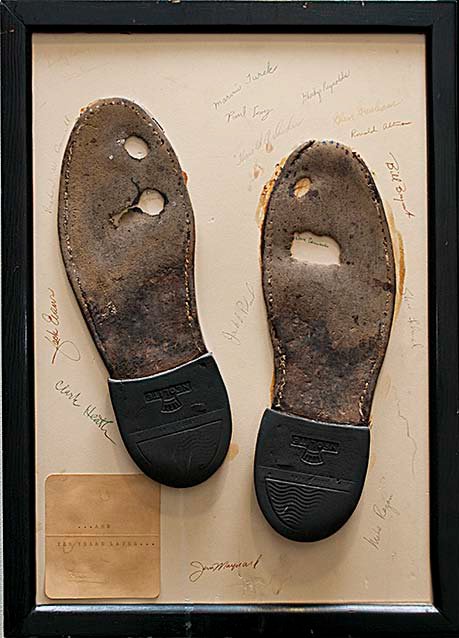
The logo of the EIS is a shoe with a hole on it

To me, the worn out shoe perfectly encapsulated the spirit of humility and service

5/ I investigated outbreaks of listeria that was causing deaths in cancer patients and pus-filled abscesses in stillborn children.

We found and recalled the contaminated hot dogs.

and innovated new genomic methods for identifying outbreaks faster.

6/ I traced an outbreak of Vibrio (a cousin of the bacteria that causes cholera) to oysters harvested in Long Island Sound that had become contaminated in 77 degree August waters and put in a stop order that broke the outbreak.

7/ I was the officer on duty when a child was bitten by a bat that might have been rabid.

I was on call for clusters of salmonella, church and mosque potlucks, Hepatitis outbreaks among restaurant-goers, and more.

I was on vacation when birds started dying in a Bronx zoo

8/ There was also a cluster of cases of fever and encephalopathy in Queens. Many died.

We sent biopsies and blood tests to the only lab in the country that could diagnose what was going on.

West Nile Virus

The lab and the scientists proudly wore a CDC badge.

So did I

9/ This was the first time that virus had ever been seen in the New World, and birds-especially crows had fallen dead in piles in Queens before the human cases- they had no immunity

We developed a methodology to use statistical clustering to identify the spread of the virus.

10/ CDC’s experts had investigated West Nile – in Romania, and other arboviral illnesses- throughout the world.

So when the outbreak came to our shores they could advise the local health department.

My fellow EIS Officers helped me go door-to-door in Queens, drawing blood


11/ West Nile was the biggest public health response I had seen.

Until 9/11

I came out of the subway at Chambers-WTC to go to work shortly after the second plane hit.

I didn’t go home til dawn broke the next day, through streets filled with white ash and the burnt stench

12/ Some of the only planes that flew on Sept 12 carried EIS Officers from around the country to NYC to help.

We were worried about a biterrorist attack, and rapidly set up a system that collected symptom data around the clock from patients coming into Emergency Departments.


13/ That rudimentary manual system – staffed by humans- public health workers- morphed into “syndromic surveillance” that analyzed electronic ED and hospital triage data to detect illness clusters.

A system that’s become a third pillar of public health surveillance today

14/ And then, a month later, we did have a bioterrorist attack- weapons-grade anthrax- through the mail.

I saw my first coal-black anthrax “eschar” then

And in a hospitalized baby the second

And worried that I might carry the spores home to our baby too.

But we kept working


15/ Those were some of my memories of my years spent at the EIS, with some of the brightest and hardest working colleagues I’ve ever had.

Many went on to lead their divisions at CDC, to become state health officers and city epidemiologists. Led international orgs

and now?

16/ When you hear, “the CDC’s Epidemic Intelligence Service class was cancelled and the officers fired” I hope this gives you a sense of what has been lost.

Not just the outbreaks that can’t be investigated, the surge capacity gone, but our future public health leadership lost

• • •


Honoring Millard Fillmore (press release)

January 13, 2025

[This is a press release from the New York Air National Guard.]

NEWS | Jan. 8, 2025

New York Air Guard Wing Marks Ex-President Fillmore’s Birthday

By Capt. Jason Carr, 107th Attack Wing

BUFFALO, N.Y.- The New York Air Guard’s 107th Attack Wing honored Millard Fillmore, the nation’s 13th president, as the wing’s mission support group commander laid a wreath at his grave Jan. 7.

Lt. Col. William Gourlay placed a wreath from President Joe Biden at Fillmore’s grave in Forest Lawn Cemetery.

Since 1967, when Lyndon B. Johnson was president, military officers have maintained the tradition of placing a wreath sent by the current occupant of the White House at the graves of former presidents on their birthdays.

“I love Buffalo history, and it was my honor to make the wreath presentation on behalf of the White House and our nation,” Gourlay said.

The 107th Attack Wing is based at Niagara Falls Air Reserve Station.

Descendants of Fillmore, who served from 1850 to 1853, members of the Buffalo Presidential Center, and local American Legion members looked on as Gourlay presented the wreath.

Fillmore had a profound, positive impact on the Buffalo community, and Forest Lawn continues to help commemorate his legacy, according to Julie Snyder, chief executive officer of Forest Lawn Cemetery.

“We are honored to receive the wreath every year and keep it here for the community to pay their respects and honor him this time every year,” Snyder said. “We’re very honored to be one of the 40 cemeteries across the country to have a home for a past president.”

New York National Guard officers also present wreaths at the graves of presidents Martin Van Buren, buried in the Hudson Valley village of Kinderhook, and Chester Arthur, buried in the Albany suburb of Menands.

Buffalo’s Forest Lawn Cemetery was established in 1849 and has over 175,000 burials.

Fillmore was born in Summerhill, New York, in 1800. He became a lawyer in 1823 and served as a member of Congress and then the comptroller of New York State. He was elected vice president in 1848 when Zachary Taylor ran for president. 

When Taylor died in 1850, Fillmore assumed the presidency. He was the last member of the Whig party to serve as president, and while many Whigs joined the new anti-slavery Republican Party, he refused to do so and ran for president in 1856 as the candidate of the Know Nothing Party.

As president, he backed the compromise of 1850 that admitted California to the union as a free state and banned the sale of enslaved people in the District of Columbia but also required federal officials to assist in catching runaway slaves.

The Fugitive Slave Act was deeply unpopular in the North and hurt Fillmore politically in his home state. He died of a stroke in 1874.


Happy 225th birthday, Millard Fillmore!

January 7, 2025

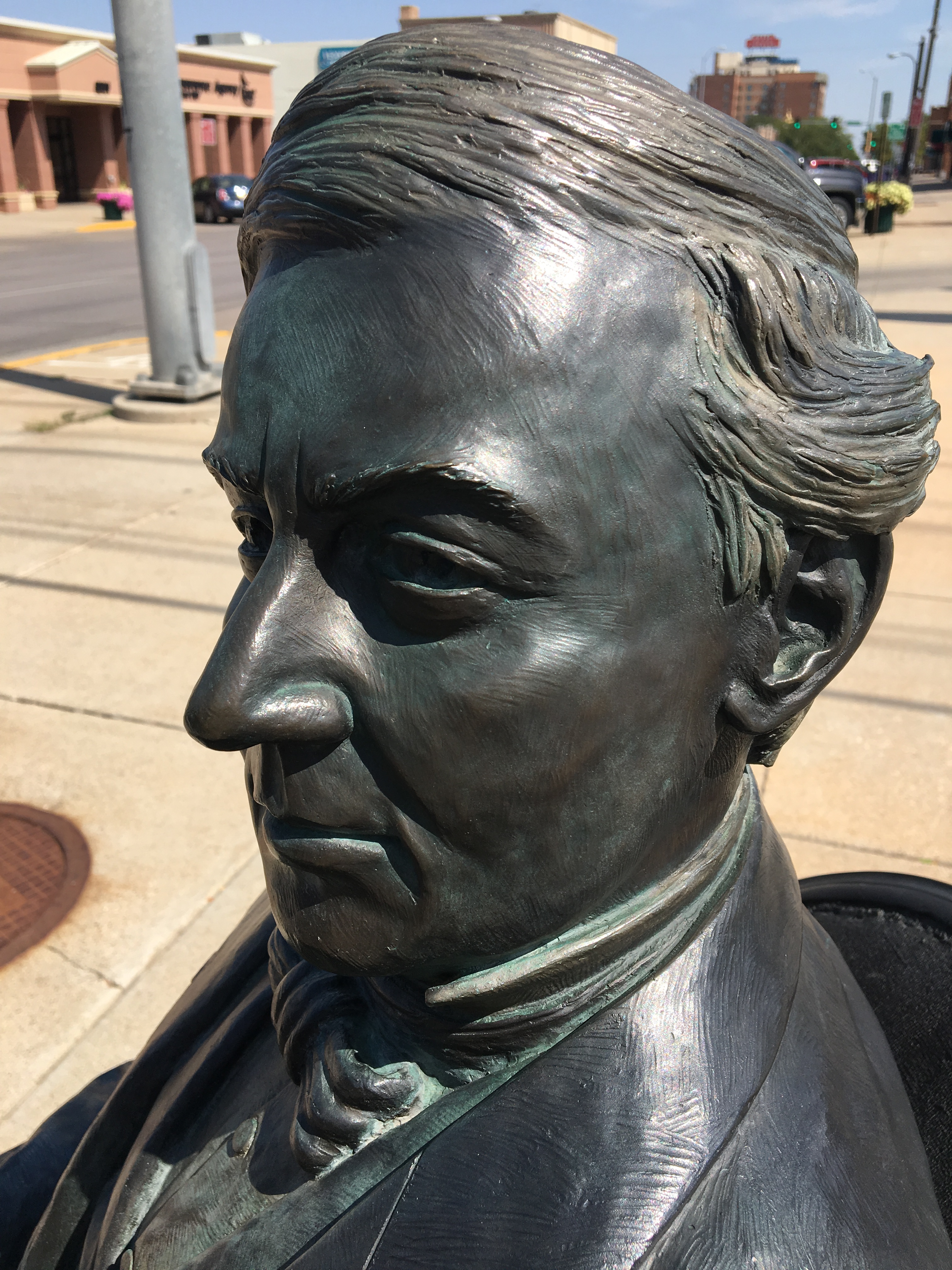
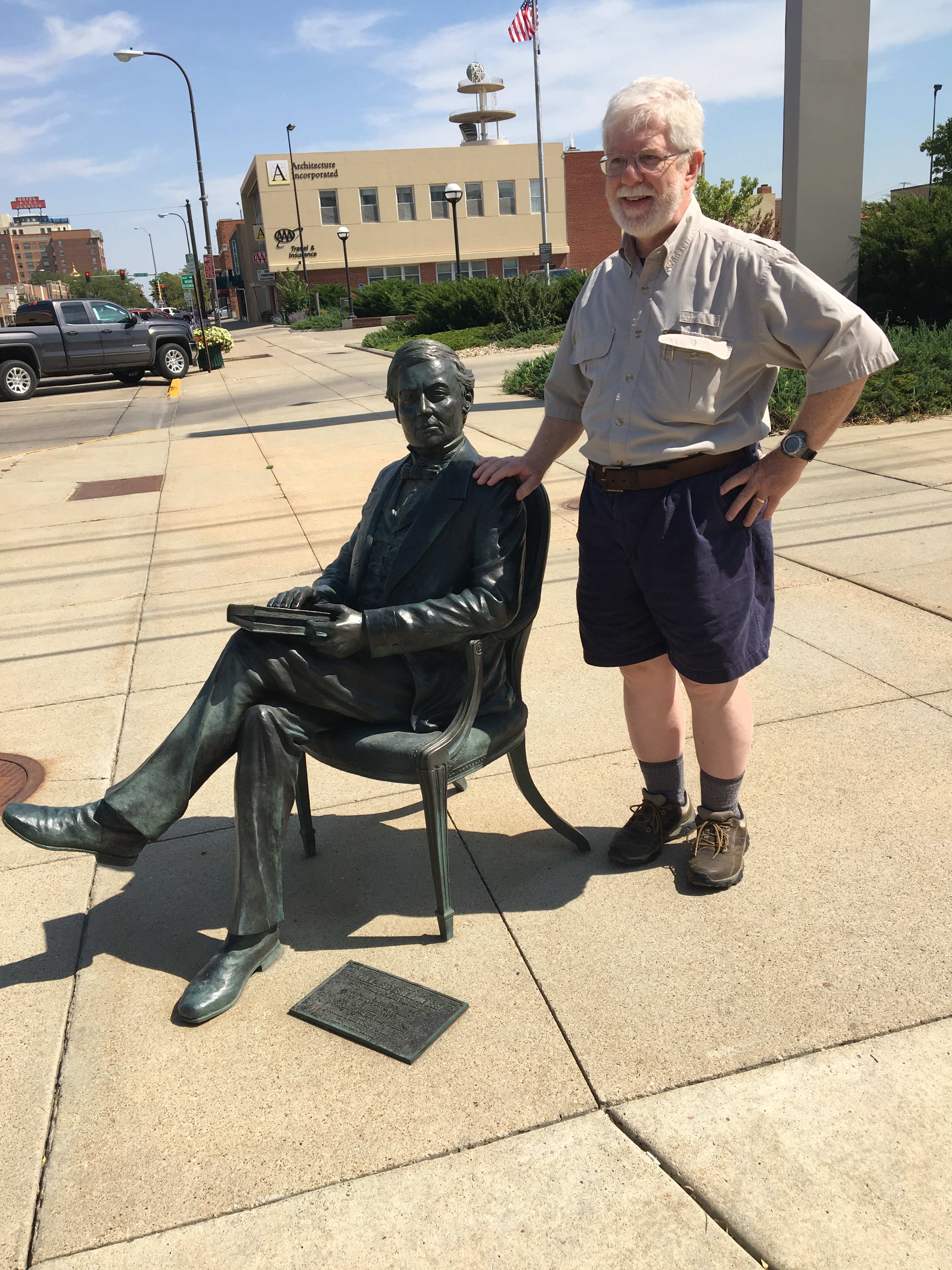
Millard Fillmore, bronzed, sitting at the corner of 9th and St. Joseph Streets in Rapid City, South Dakota. He still gets around. Photo by Ed Darrell. Please use.

Millard Fillmore, bronzed, sitting at the corner of 9th and St. Joseph Streets in Rapid City, South Dakota. He still gets around. Photo by Ed Darrell. Please use. Creative Commons copyright.

Millard Fillmore, our 13th President, was born on January 7, 1800.

That was 24 days after the death of our first President, George Washington.

Fillmore’s birthday isn’t such a big deal anymore, since fun organizers discontinued the bathtub races once word got out that the story of Millard Fillmore putting the first bathtub in the White House, is a hoax.

Historians from the University of Buffalo — an institution founded by Fillmore after his presidency — usually hold a graveside ceremony with speeches. In 2025, the celebration has been postponed to Sunday, January 12, due to weather.

It’s a shame, really. Fillmore is the victim of fake news, a hoax perpetrated by H. L. Mencken 108 years ago, in 1917. Mencken claimed, falsely, that Fillmore’s sole good, memorable deed was putting that fictitious bathtub in the White House. That story crowds out the real history, and any good Fillmore should be remembered for.

Fillmore did a few notable things as president.

  • Fillmore secured a steady supply of bird guano for the United States. Funny as that may be, the guano was essential for making gun powder, which in turn helped fuel the military might of the United States for years (including through the Civil War).
  • Millard Fillmore and his first wife, Abigail, read books all the time. Deprived of the opportunity of going to school much in his youth, Fillmore became an ardent reader, read for the law, became a lawyer, got into politics and was selected Vice President for President Zachary Taylor. When Taylor died (probably of typhoid) in 1850, Fillmore succeeded to the presidency. In the White House, the Fillmores found few books to read, and so established the White House Library. Say prayers that library survives the current president.
  • Fillmore thought globally, and he could see world trade as a huge opportunity for a young nation with a strong navy and army, and a lot of resources including intellectual capacity to manufacture things. Trade in the Pacific was problematic, and a large number of problems stemmed from Japan’s closing itself off from the world. Japan had coal, which could refuel steamships. Japan instead closed its ports. An occasional U.S. sailor would be executed if he washed up on Japanese shores. Fillmore sent a small fleet of “black ships” under Commodore Matthew Perry, to tell Japan it was time to open up to trade and assume its place among nations. Perry was successful, after a second visit and a small round of cannon fire. Japan became a strong economic power in the West Pacific, and in its march to glory decided to take over resources of several other Asian nations. We might say Fillmore started the slide to World War II in the Pacific.

History should be kept to accuracy. Mencken upset the ship of accuracy with his essay, and America has not recovered, nor has Millard Fillmore’s reputation. There’s a moral there: Don’t spread hoaxes; seek the truth, and glorify it. (Mencken apologized for the hoax, but too late.)

Rapid City, South Dakota, is a booming town. Mineral wealth and oil in the state combine with a nearby Air Force Base, great housing prices and good weather to benefit the town. One of its civic watchdogs got the idea of putting statues of all U.S. presidents on downtown corners. That is how Millard Fillmore comes to be seated with a book to read, at the corner of 9th Street and St. Joseph Street, where I met him in August 2017. Altogether a fun little history enterprise for Rapid City, very well executed, and worthy of a stop there if you’re passing by.

Perhaps someday Rapid City will take to decorating the statues on the birthdays of the men (so far!) represented. I hope they won’t be frozen out like Buffalo, New York, is, if they commemorate Millard Fillmore’s birthday.

We can reflect on happier times, when even our disrespected and forgotten presidents were good people who did great things.

Millard Fillmore and Ed Darrell meet, in Rapid City, South Dakota, August 2017

Millard Fillmore and Ed Darrell meet, in Rapid City, South Dakota, August 2017; photo by Kathryn Knowles

More:


Flying U.S. flags in January 2025

January 3, 2025

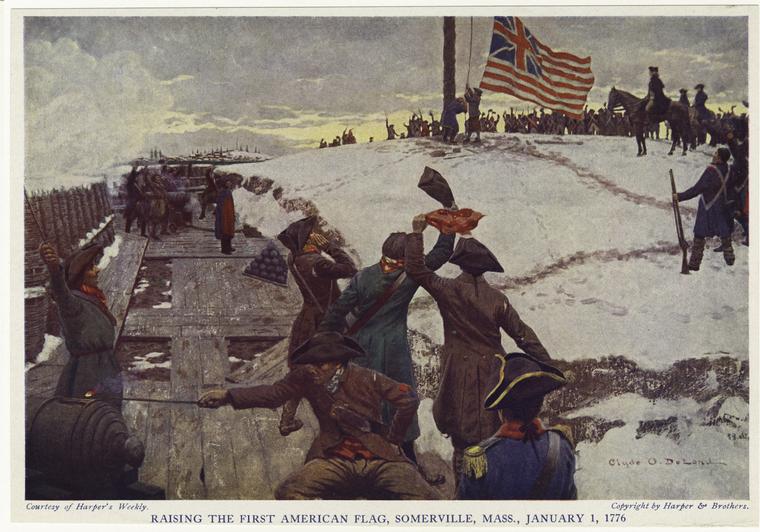
“Raising the first American flag, Somerville, Mass., January 1, 1776.” Harper’s Weekly painting by Clyde Osmer DeLand, 1897. From the digital collections of the New York Public Library; yes, MFB has used this painting before. I like it.

One problem with January’s flag flying dates is that if I snooze a little, you miss a lot. There are four flag-flying dates in the first five days of January: New Year’s Day and statehood days for Georgia, Alaska and Utah. You, Dear Reader, are alert and didn’t let any of those dates pass unmarked if you’re in those states, right?

There are more dates to go in January, including New Mexico’s statehood. We’re not halfway done, yet.

President Joe Biden declared flags should fly at half-staff in honor of the late President Jimmy Carter, for 30 days, until January 28. That covers all the dates in the usual flag-flying calendar. When flying flags at half staff, the flag should be hoisted quickly to full staff, then lowered soberly (slowly) to half staff.

In January 2025, the U.S. Flag Code urges citizens to fly flags on these dates, listed chronologically:

  • New Year’s Day, January 1, a federal holiday
  • January 2, Georgia Statehood Day
  • January 3, Alaska Statehood Day
  • January 4, Utah Statehood Day
  • January 6, New Mexico Statehood Day
  • January 9, Connecticut Statehood Day
  • Martin Luther King’s Birthday, a federal holiday on the third Monday of January; that date is January 19, in 2025; King’s actual birthday is January 15, and you may fly your flag then, too
  • Inauguration Day, January 20, the year after election years; 2025 will see an inauguration
  • January 26, Michigan Statehood Day
  • January 29, Kansas Statehood Day

You may fly your flag any other day you wish, too; flags should not be flown after sundown unless they are specially lighted, or at one of the few places designated by Congress or Presidential Proclamation for 24-hour flag flying.  According to Wikipedia’s listing, those sites include:

  • Fort McHenry, Baltimore, Maryland (Presidential Proclamation No. 2795, July 2, 1948).
  • Flag House Square, Albemarle and Pratt Streets, Baltimore, Maryland (Public Law 83-319, approved March 26, 1954).
  • Marine Corps War Memorial (Iwo Jima Memorial), Arlington, Virginia (Presidential Proclamation No. 3418, June 12, 1961).
  • Lexington Battle Green, Lexington, Massachusetts (Public Law 89-335, approved November 8, 1965).
  • White House, Washington, D.C. (Presidential Proclamation No. 4000, September 4, 1970).
  • Washington Monument, Washington, D.C. (Presidential Proclamation No. 4064, July 6, 1971, effective July 4, 1971).
  • Any port of entry to the United States which is continuously open (Presidential Proclamation No. 413 1, May 5, 1972).
  • Grounds of the National Memorial Arch in Valley Forge State Park, Valley Forge, Pennsylvania (Public Law 94-53, approved July 4, 1975).
Flag House in 1936, 844 East Pratt & Albemarle Streets (Baltimore, Independent City, Maryland) (cropped). Image courtesy of the federal HABS—Historic American Buildings Survey of Maryland.

Flag House in 1936, where Mary Pickersgill sewed the garrison-sized, 15-star flag that flew over Fort McHenry at the Battle of Baltimore in 1814; one of the sites where the U.S. flag may be flown 24 hours. The house is at 844 East Pratt & Albemarle Streets (Baltimore, Independent City, Maryland). Cropped image courtesy of the federal HABS—Historic American Buildings Survey of Maryland.

Save

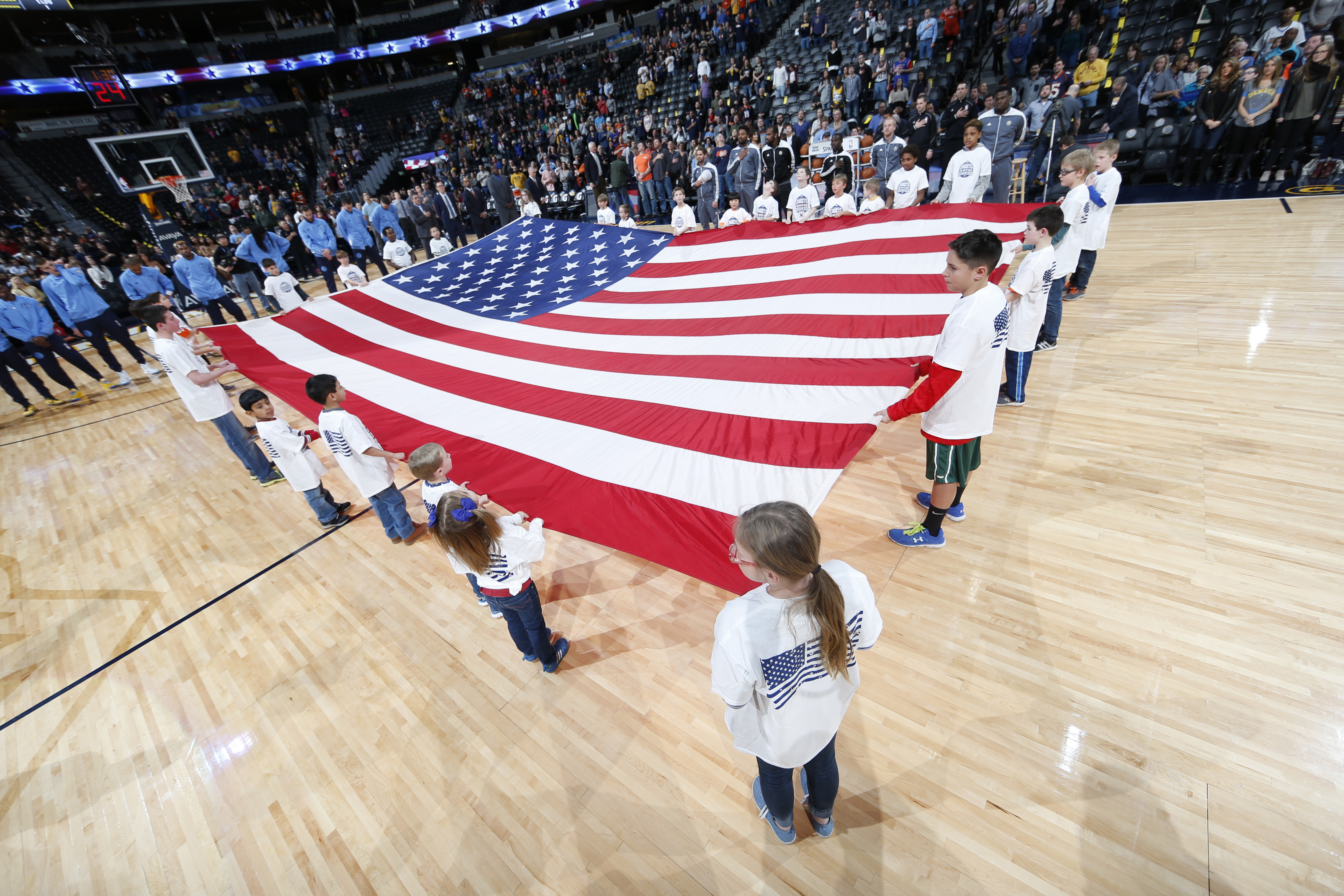
Children unfurl a large flag at a Denver Nuggets/Indiana Pacers NBA basketball game in Denver, January 2016. Colorado Public Radio image.
This is an encore post.
Yes, this is an encore post. Defeating ignorance takes patience and perseverance.

The Economic Case for Democrats over Republicans

July 25, 2024

A woman going by the handle Kashoggi’s Ghost (@UROCKLive1) on Twitter (X, if you must), lays out in necessary detail the economic case for Democrats over Republicans, in the race for President, and in all races for Congress.

It’s long. Here’s the text from all 24 Tweets in the thread (more may be added later). Bottom line, Democrats in the White House will make America greater and better, while Republican policies will again crash the economy.


Listen up, you guys, we’ve got a democracy to save! And neither the courts nor the media is going to help us. Buckle up for a long thread.🧵

1) Right now we’ve got a third of the country who believe Trump’s lies, a third who see what’s happening and will vote for Biden, even if they’re not fond of him, and a third who are completely clueless. The third group are the people we need to reach.

Sadly, I can’t go out in the world and be around people, so I won’t have the opportunity to talk to folks and tell them what they don’t know, but I’ve got talking points for y’all.

2) First, the economy seems to be what folks are fixated on, but they have their facts wrong, so let’s start there.

To sell this economy, you need to start in 2020. People prefer not to remember that time. Remind them. Besides refrigerated morgues, empty shelves, overrun hospitals and people dying, businesses and schools were closed, unemployment went way up, and we had GLOBAL inflation from the GLOBAL pandemic. Please make sure people understand this. Inflation started all over the world before the president took office, in large part due to messed up supply chains caused by the pandemic. (Not to mention corporate greed, but that’s another story.)

3) Biden came into an economic mess, and all the financial pundits were predicting a recession for at least the first two years he was in office. So the president focused on getting the country up and running again, first by making vaccines available to everyone, then by passing the Inflation Reduction Act, which was also the most substantial climate change initiative in history. But that took almost two years to get passed and then signed into law, and then it takes time for it to be implemented and then more time for the effects to be felt. We are only just barely beginning to feel the real results of that.

4) Now we have an economy that’s the envy of the world. Our inflation is more under control than that of our allies. Unemployment is at 50 year lows, the stock market is at all time highs. The president pulled off an freaking economic miracle and doesn’t get nearly enough credit for it.

But the average person has amnesia about the pandemic and is still mad because groceries cost more, something the president has no control over. The fact is, prices are never going to go back to 2019 levels, no matter who is president, because that’s not how anything works. Over time prices go up, sometimes faster than others. These prices are the new normal.

So we need to explain to literally anyone who will listen that the pandemic caused global economic upset, and that the US has handled it better than any other country. And Trump is now threatening to undo everything Biden did if he’s reelected, and the business community is practically yelling that Trump’s proposed new agenda will be an economic disaster, and cause major inflation.

5) If we were to reelect Trump, (we won’t) but if we did the economy would keep humming for a couple of years because it would take him time to wreck it, and you can bet that he’d be taking credit for everything Biden accomplished.

But, again, we’re only just barely beginning to feel the effects of Biden’s policies, and we’re still the envy of the world. It’s only going to get better from here. WHY ON EARTH WOULD WE WANT TO REVERSE COURSE NOW?!

6) For people to fully appreciate the economic miracle that is the US they need to remember what was happening when Biden came into office, and stop comparing today to 2019. We’re never going back there. And I think to a certain extent the general sense of malaise and depression many experienced after the pandemic (which is still going on, btw) is affecting their attitudes about how good things are now.

So please go out and remind people where we really were four years ago and how historically amazing our current economy is.

7) Once you’ve got folks appreciating what Biden has done, please start dispelling the myth that GOP policies are better for the eonomy. That hasn’t been true in my lifetime. But I have a theory on why it persists, and that’s because people associate the current economy with whoever is in the White House, without taking into consideration that it takes time for policies to be enacted, and then more time for them to take effect.

So look at the pattern over the last 40 years. Reagan did what every Republican administration has done ever since: gave huge tax cuts to billionaires and big corporations, gutting federal revenues, and creating a ripple effect that starts slow and gains momentum over a period of years. A smart country would prioritize education, FOR EVERYONE, but instead we keep cutting funding to make up for those juicy corporate tax cuts.

8) Triple down economics has never worked. Not once. Not even a little, but every single Republican administration tries it again.

9) So look at the pattern. The economy was already in trouble when Bush 41 took over in 1989. What he did was too little too late, and he lost his job for it. Clinton took over an economic mess, and by the time he left the economy was humming. Dubya came in in 2001, and they did the whole tax cuts for billionaires thing again and before the end of his second term we were in a recession. BECAUSE TRICKLE DOWN ECONOMICS DOESN’T WORK.

So then Obama came into power when things were really bad, unemployment was high, businesses were failing. But after 8 years of Dem policies the economy was cooking again.

Trump came in and took credit for Obama’s economy, and then went right back to tax cuts for billionaires and corporations. He claimed he created the greatest economy, but he created nothing. He just took credit for it. There were already signs that there was going to be another recession in Trump’s second term before the pandemic hit.

And no, the pandemic wasn’t his fault, but the absolutely atrocious way he handled it was. But things would not have turned out that rosy even minus the pandemic effects. We were headed in the wrong direction.

10) But Biden won, and instead of the Trump recession we got the Biden rebound. And now we have the best economy in the world, and we’re only just beginning to feel the effects from it. It would be insane and destructive to reverse course now. But that’s exactly what Trump would do. He would cancel everything Biden has done, and take credit for the results of what he couldn’t cancel. It would be a huge mistake.

11) Another myth about Republicans being better for the economy is that they want to bring down spending and cut the deficit, but in fact, when they’re in power they do the exact opposite. It’s been this way for years. Whenever Dems are in power the GOP screams about the deficit, but whenever they’re in power they make it so much worse. They cut spending just a little by hurting the poor and middle class, and they give massive tax cuts to billionaires and corporation which kills our revenue.

Biden’s record is much better on this than Trump’s. Also tell people that they want to defund the IRS so it doesn’t go after rich tax cheats, (to please their rich donors) and that this will actually cost us billions. The money we save by not fully funding the IRS is miniscule compared to the money we lose. And they know this, but they act like they’re doing it to be fiscally responsible.

Tell people this.

12) If we really want a spectacular economy, we need to keep Dems in office for more than 8 years. And to do that we need people to start understanding that to know where to place blame or give credit to for the economy, you need to look back four to six years. The economy doesn’t change because an election happened. The economy changes because of the policies enacted. If people could understand that, anyone voting based on the economy would keep voting for Dems.

13) Once you’ve dispelled the myth that Republicans are better for the economy, start reminding people of all the other reasons to vote. The court is HUGE. People ignored the importance of SCOTUS in 2016, and look where that got us. It’s not only women’s right to control their own bodies, this court is doing major damage in other ways. They’re dismantling the administrative state, and taking away the government’s right to protect us. This is another whole thread, and I should probably wait until we see the rest of their rulings.

BUT PLEASE MAKE SURE THAT PEOPLE KNOW THAT WOMEN LOSING THEIR RIGHTS IS BECAUSE OF DONALD TRUMP AND HIS COURT. Getting rid of Roe is one of the only promises he ever kept. But apparently there are people with so little understanding of how government works they think this must be Biden’s fault because he was president when it happens.

And some blame Dems for not codifying Roe without understanding that unless we have 60 votes in the senate, THIS CANNOT HAPPEN. Unless Dems control the senate with at least 60 votes, or eliminate the filibuster, (which I support, but it does have a downside) there is no way to codify Roe. This means women in red states are going to suffer.

14) Another GOP scam has been convincing people deregulation is a good thing. In actuality, deregulation means polluted air and water, no safety protections for workers, (or passengers in the case of the airlines) no financial protection for consumers, and no ability to slow down climate change. Deregulation is not our friend, but corporations love it. It saves them money, which they immediately use to benefit shareholders while the rest of us get screwed over. This court wants to eliminate the protections from regulations.

15) This Extreme Court and the Republicans also want to make abortion illegal nationwide, (listen up, blue-staters!) and eliminate access to birth control. THEY HAVE EVERY INTENTION OF DOING THIS. If we elect another Republican, ANY REPUBLICAN, they’re going to appoint justices who will take away protections for birth control, and LBGTQ people will no longer be protected either. Not only could they lose the right to marry, (which is more important for legal reasons than a lot of younger people realize) they could even criminalize gay sex, just like the good old days.

All of this along with this court’s support for gutting voting rights, allowing gerrymandering, etc. will make it a lot harder to fix any of this. Even if you don’t like Biden, whoever gets to appoint the next justices will have an enormous effect on this country for at least a generation. We really REALLY need a Democrat in the White House AND a Democratic controlled senate, or we will suffer for a long time. Probably the rest of my lifetime.

16) We need to elect Dems in the House, the Senate, and the presidency, both for the economy, and because if Republicans take control again, the whole country is going to end up like the red states. Women will lose their rights, and the whole country will suffer from red state folly. You’ll notice that the red states have the worst economies, too, and the worst education systems, and the worst healthcare. Why anyone would want Republicans to control the whole country is beyond me, because their record is terrible.

17) So please try to explain all of this to everyone around you, and everyone you meet. Find out about the Dems running in your districts, (statewide offices, too) find out good things about them, and sing their praises to people around you. Get folks to understand the consequences of electing Republicans.

Ask people questions that start with, “Did you know …”

“Did you know that Joe Biden and the Democrats passed the largest and most historic climate change legislation in history?”

“Did you know that Republican controlled states have the worst education, the worst economy, and the worst healthcare in the US?”

“Did you know that we always have a recession toward the end of every eight year Republican term?”

18) Help people compare the results from which party is in power.

The recent congresses give you plenty of examples. Obama gave us healthcare, and the GOP (including Trump) have been trying to take it away ever since. In Trump’s first two years he had a Republican Congress and Senate, and really the only thing they accomplished was the usual tax cuts for billionaires thing. He built a couple of miles of wall (which is a stupid idea anyway and this wall is already falling down,) and he came within one vote of taking away healthcare WITH NOTHING TO REPLACE IT WITH. (Thank you, John McCain.) Other than that, they did nothing for the American people. Then we had divided government which means very little gets done.

19) In Biden’s first two years with a Dem Congress they passed the Inflation Reduction Act into law, the most comprehensive climate legislation the U.S. has even seen. The law invests hundreds of billions of dollars in clean energy, electric vehicles, environmental justice and more.

The Inflation Reduction Act represents the largest attempt in U.S. history to combat climate change. It includes clean-energy funding covering cars and homes and businesses, while curbing methane emissions, and it sets aside money for communities heavily affected by air pollution, flooding, and other climate-related issues.

This legislation also includes new measures to lower prescription drug costs, including a provision empowering Medicare to negotiate prices with the pharmaceutical industry, a new $2,000 yearly cap on out-of-pocket costs for prescriptions through Medicare, and a $35 monthly insulin cap for Medicare beneficiaries.

They also strengthened our supply chains and set up new programs to support minority businesses, and expanded STEM education opportunities so that more women and minorities can get the skills needed to succeed in a high-tech economy. Plus they gave additional funding to the IRS which raises our revenue.

And passing the Inflation Reduction Act was just the beginning. In the year and a half since its enactment, the administration has focused on developing tax credit guidance and launching programs to implement its many clean energy provisions

The Dem Congress also passed The Electoral Count Reform Act, to try to prevent someone like Trump from trying to steal an election again.

For the two years of a Dem Congress under President Biden, they worked hard to do things that would actually help the American people.

20) And what has this Republican Congress done? Mostly a whole lot of nothing. They spent weeks trying to elect a Speaker, and then did that again a few months later. They impeached the Homeland Security Director, investigated Hunter Biden, tried as hard as they could to find a crime they could impeach the president for in spite of having no evidence for it, and they passed a bunch of performative nonsense bills that would accomplish nothing and that they knew had literally zero chance of becoming law, like protecting gas stoves, and naming airports and waterways after the disgraced, twice-impeached, convicted felon they all worship.

They were only barely able to pass a budget, and then the majority of Republicans voted against it. But not once, during this whole time have they even attempted to do anything that actually improves the lives of Americans.

Do we want more of this? Or do we want another congress working for us? If Dems control the House and senate, they will work to make our lives better. And contrary to what the silly owner of this website says, having a divided government doesn’t benefit anybody. It just stops all progress.

21) Then there’s Project 2025, which fortunately people are starting to hear about. It’s the blueprint for a fascist takeover. Please tell people about what they intend to do, and explain the damage that would cause. Do you really want a whole country being run by people who put loyalty to Trump over loyalty to the country? Especially knowing Trump will do everything in his power to remain in office to keep himself legally protected. Project 2025’s goals include eliminating access to birth control, eliminating women’s access to a divorce even if they’re suffering from abuse, gutting public education and giving the money to private Christian schools, and giving the president unlimited power. Encourage people to find out about it, because it’s hella scary.

22) If you meet anyone who still believes climate change is a hoax, they may very well be too stupid to reach, but most people know better. Ask people, “Did you know that Joe Biden and the Democrats passed the largest, most historic climate change initiative ever? They’re getting us ready for a clean energy future, and doing it in a way that benefits the economy too. 300,000 new jobs have already been created by this plan, and more to come. Trump and the GOP want to reverse all of it, and give more subsidies to the oil industry.” If you care about climate change at all, you need to vote for Dems, up and down the ticket, because nthe GOP only cares about Big Oil and big donors. They’re even trying to pass laws in some states making it illegal to try to slow down climate change. Republicans are a huge threat to the environment, the planet and our future.

23) Then ask folks if they care about the US’s role in the world. We’re still considered the leader of the free world, even though we’ve done plenty to damage that, but we will lose that if Trump is reelected. Our allies will forgive us for the mistake of electing him once, but if we do it a second time, they will never trust us again. They’re already getting hesitant to share intelligence with us, because they know it isn’t safe if Trump comes back. They will stop altogether if he does, and our whole country will be less safe.

Make sure to dispel the myth that the world doesn’t respect Biden and wants Trump back. The only country leaders who prefer Trump are our enemies, the evil dictators who rule Russia and North Korea. (Also Netanyahu, because although Israel is our ally, Bibi is not, for his own selfish reasons.) But do we really want to elect a president our allies dread and don’t trust and the evil dictators who want to destroy America would rejoice at? The Europeans don’t agree with every detail of how Biden has handled foreign policy, (neither do I) but we all know Trump would be infinitely worse.

I have another whole thread I need to write about NATO, which I’ll add here later, but please make sure folks understand how important NATO is to US and world security. Trump’s threat to pull is out is INSANE, and will make us very much less safe. America First means America alone. NATO is the greatest peacekeeping alliance in recorded history, and leaving them would be extremely dangerous to our national security, not to mention idiotic.

And as far as how the world sees us, how do you think they’ll feel if we elect a convicted felon to be the leader of our country? A criminal whose business organization owes more than a half a billion dollars for fraud convictions? Someone who can’t be trusted with intelligence, and who will sell our foreign policy off to the highest bidder in order to enrich himself. Seriously, it’s downright embarrassing.

24) Make sure the low info people you talk to realize that the vast majority of people in Trump’s cabinet (you know, the ones who saw how he actually ran the country) and his Vice President are now refusing to support him, and are saying he’s unfit for the job. This is unheard of in modern history. The people who agreed with Trump’s policies, but saw how he handled being the president are WARNING US NOT TO PUT HIM IN POWER AGAIN. How insane would it be not to listen to them?

I heard today that people actually trust Trump more than Biden to protect democracy. This is nuts. The only reason I can think of for this is that they believe the lies that the president is prosecuting his political rival, something Trump really wanted to do but was held back by the DOJ insisting that there had to be evidence of crimes for them to do this. (Barr tried to find such evidence, but wouldn’t prosecute without it.) Trump won’t be held back by this if he gets another chance.

So if you meet people who believe Biden is unfairly going after Trump for political reasons, tell them this: Merrick Garland stated under oath that he only took the job of Attorney General under the condition that it would be free from political pressure, and that since taking office the White House has never contacted or pressured him about any case. Not about Trump. Not about Hunter. He’s following the facts and the law, and none of this has anything to do with the president. Seriously, if he were directing DOJ, would he allow them to criminally prosecute his own son? Especially for a ridiculous offense that no one is ever prosecuted for.

So I’m not done, but I’m going to stop for now because I have things to do and my keyboard has lost its charge. I’ll keep adding to this thread. In the meanwhile, PLEASE, go out and proselytize to every one you meet. Tell all the people not paying attention what the stakes are, and fill them in on all the things they don’t know.

We need to share two stories: 1) the one about the overlooked miracle of Biden’s economic recovery, and all the good policies he managed to enact even with the very slimmest of majorities, and 2) the absolute disaster another Trump term would be. What Trump will do to our country if given the chance, will not be easy to fix if it’s even possible. And fixing it will take decades. For the climate, decades is too late, and for the social and economic policies, those decades will be miserable. Putting Republicans in power will take us backwards.

Really try to get folks to grasp the concept that the economy doesn’t magically and immediately change depending on who is president. It changes due to policies that are enacted, and those take time. They take time to pass, and they take time to implement, and then they take time before we feel their effects. We are only beginning to feel the benefits of what Biden and the Dems have done.

If you want to know who to blame or give credit to for the economy, look back four to six years and see who was doing what. This is why we have a recession at the end of every eight year Republican presidential term. They inherit a great economy from Dems, wreck it, and then Dems have to fix it. Please help people understand the timing thing, because the first four years of a Democratic president’s term the economy always sucks because that’s what they inherited. Then by the end of the second term after Dem policies have had a chance to work, the economy is doing great. Then Republicans win and reap the benefits and people think, “oh yeah, these are good times and a Republican is in the White House, so they must be better for the economy. This isn’t that hard to understand if you can get people to stop and think about it.

• • •


Biden ad from 2020 — still true about Trump’s catastrophic presidency

May 27, 2024

We can’t afford four more years of Trump.


. . . and that’s the trufe!

April 30, 2024

What Trumpers tell us (according to Luke Zaleski):

This is the actual story republicans are going with: Trump built the wall and gave us world peace and then Democrats and China (Trump’s pal Xi) made up a phony virus that doesn’t make you sick—and Trump caught it and made a beautiful vaccine that kills you and he saved us—before Joe stole the election and Trump had to start an insurrection that didn’t happen that Nancy did just so they could make it look like Trump did it even though he told the attackers he loved them and would pardon them and Obama secretly runs everything and the CIA and FBI do too and George Soros and they started the war Putin started and are behind the Hamas attack as well and Trump will stop it all in 24 hours.

And they heard it all on Fox News, because they never listen to regular media because the stories told there are unbelievable.

You can read it here: https://x.com/ZaleskiLuke/status/1784048405972471816


What Democrats really stand for: “We stand together”

February 10, 2024

Neil Kinnock gave this speech in Wales. It’s true everywhere Democrats run in the U.S. Wherever Kinnock said “Mrs. Thatcher,” replace it with “the Republican Party,” and it still fits, terribly, awesomely, and eye-openingly.

Once upon a time a Democrat was driven from a presidential race for quoting this speech. We need to quote it now, and mean it.

Here it is, from Mr. Kinnock’s own website.

This is an edited version of Neil Kinnock’s speech to the Welsh Labour Party conference in Llandudno, May 15, 1987, in his first election as leader of the Labour Party.

We are democratic socialists. We care all the time. We don’t think it’s a soft sentiment, we don’t think it’s ‘wet’.

We think that care is the essence of strength.

And we believe that because we know that strength without care is savage and brutal and selfish.

Strength with care is compassion – the practical action that is needed to help people lift themselves to their full stature.

That’s real care – it is not soft or weak. It is tough and strong. But where do we get that strength to provide that care?

Do we wait for some stroke of good fortune, some benign giant, some socially conscious Samson to come along and pick up the wretched of the earth?

Of course we don’t.

We cooperate, we collect together, we coordinate so that everyone can contribute and everyone can benefit, everyone has responsibilities everyone has rights. That is how we put care into action. That is how we make the weak strong, that is how we lift the needy, that is how we make the sick whole, that is how we give talent the chance to flourish, that is how we turn the unemployed claimant into the working contributor.

We do it together. It is called collective strength, collective care. And its whole purpose is individual freedom.

When we speak of collective strength and collective freedom, collectively achieved, we are not fulfilling that nightmare that Mrs Thatcher tries to paint, and all her predecessors have tried to saddle us with.

We’re not talking about uniformity; we’re not talking about regimentation; we’re not talking about conformity -that’s their creed. The uniformity of the dole queue; the regimentation of the unemployed young and their compulsory work schemes. The conformity of people who will work in conditions, and take orders, and accept pay because of mass unemployment that they would laugh at in a free society with full employment.

That kind of freedom for the individual, that kind of liberty can’t be secured by most of the people for most of the time if they’re just left to themselves, isolated, stranded, with their whole life chances dependent upon luck!

Why am I the first Kinnock in a thousand generations to be able to get to university? Why is my wife, Glenys, the first woman in her family in a thousand generations to be able to get to university?

Was it because all our predecessors were ‘thick’? Did they lack talent – those people who could sing, and play, and recite and write poetry; those people who could make wonderful, beautiful things with their hands; those people who could dream dreams, see visions; those people who had such a sense of perception as to know in times so brutal, so oppressive, that they could win their way out of that by coming together?

Were those people not university material? Couldn’t they have knocked off all their A-levels in an afternoon?

But why didn’t they get it?

Was it because they were weak? Those people who could work eight hours underground and then come up and play football?

Weak? Those women who could survive eleven child bearings, were they weak? Those people who could stand with their backs and their legs straight and face the people who had control over their lives, the ones who owned their workplaces and tried to own them, and tell them, ‘No. I won’t take your orders.’ Were they weak?

Does anybody really think that they didn’t get what we had because they didn’t have the talent, or the strength, or the endurance, or the commitment?

Of course not. It was because there was no platform upon which they could stand; no arrangement for their neighbours to subscribe to their welfare; no method by which the communities could translate their desires for those individuals into provision for those individuals.

And now, Mrs Thatcher, by dint of privatisation, and means test, and deprivation, and division, wants to nudge us back into the situation where everybody can either stand on their own feet, or live on their knees.

She parades her visions and values, and we choose to contest them as people with roots in this country, with a future only in this country, with pride in this country. People who know that if we are to have and sustain real individual liberty in this country it requires the collective effort of the whole community.

I think of the youngsters I meet. Three, four, five years out of school. Never had a job. And they say to me “Do you think we’ll ever work?”

They live in a free country, but they do not feel free.

I think of the 55-year-old woman I meet who is waiting to go into hospital, her whole existence clouded by pain.

She lives in a free country, but she does not feel free.

I think of the young couple, two years married, living in Mam and Dad’s front room because they can’t get a home. They ask “Will we ever get a home of our own?”

They live in a free country, but they do not feel free.

And I think of the old couple who spend months of the winter afraid to turn up the heating, who stay at home because they are afraid to go out after dark, whose lives are turned into a crisis by the need to buy a new pair of shoes.

They live in a free country – indeed, they’re of the generation that fought for a free country but they do not feel free.

How can they and millions like them – have their individual freedom if there is not collective provision?

How can they have strength if they do not have care?

Now they cannot have either because they are locked out of being able to discharge responsibilities just as surely as they are locked out of being able to exercise rights.

They want to be able to use both.

They do not want feather-bedding, they want a foothold.

They do not want cotton-woolling, they want a chance to contribute.

That is the freedom they want.

That is the freedom we want them to have.

With a tip of the old scrub brush to Dave Weigel on Bluesky Social.


Truth vs. Fiction on gun safety

January 6, 2024

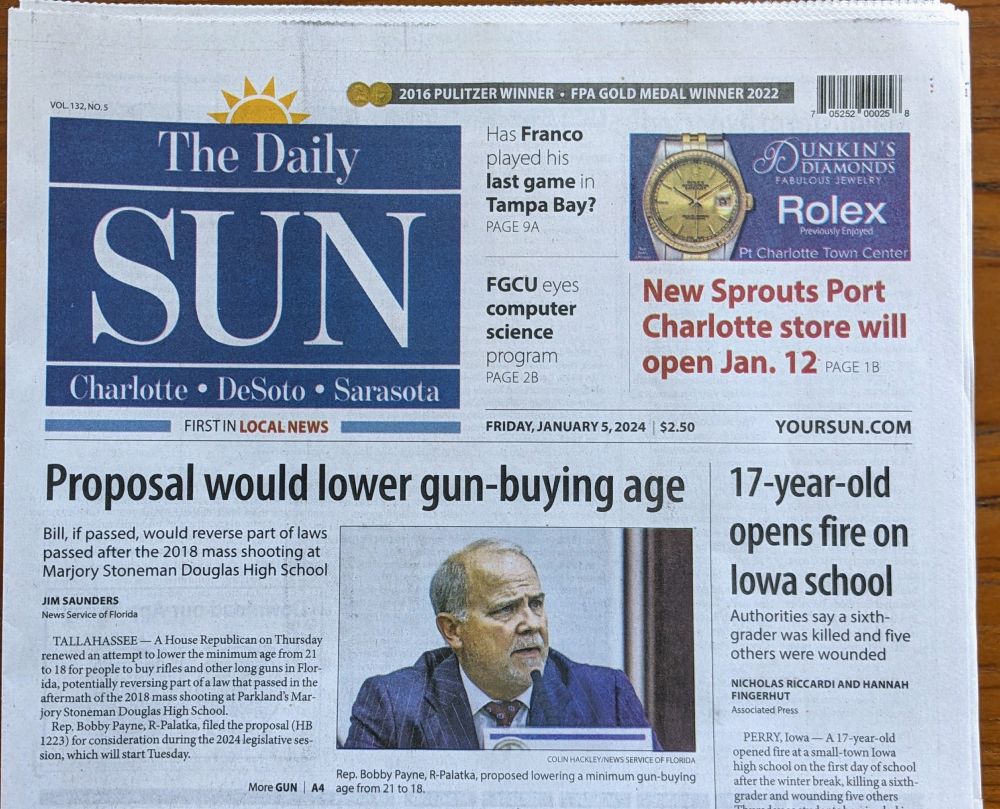
At Bluesky, author/historian James Fallows presents the front page of his local newspaper on January 5, 2024.

Oy.

Convince me the gun lobby is not trying to make us all targets for gun violence.

https://bsky.app/profile/jfallows.bsky.social/post/3kiakrii7zg2m


Bidenomics saves America

December 9, 2023

Biden’s economic program is working, and it’s making America much greater than before.

X post: “So Chris Hayes did an absolute Masterclass tonight on the state of the economy with simple, easy to comprehend facts and an excellent overview of the multiple crises Biden has had to solve for since taking office. THIS should be required viewing for voters.”

15 minute segment of Chris Hayes’s show. Biden’s done his work. Biden’s administration is working hard. And the economy is doing better than anyone else.

Watch and learn why to vote for Joe Biden.

https://youtu.be/e1nZv9Lusnk


President Biden enlightens and cheers Western World with speech in Vilnius

July 15, 2023

People wave American and Lithuanian flags from a window as President Joe Biden delivers remarks at Vilnius University in Vilnius, Lithuania, Wednesday, July, 12, 2023. Biden’s speech seemed to be preparing Americans and his NATO allies for a confrontation that could go on for years, putting it the context of conflicts in Europe’s wartorn past. (Doug Mills/The New York Times)

Helluva speech. Dramatic difference between Biden’s triumphant reception in Vilnius and Trump’s trip and actions with NATO, and remarks in Vilnius, a few years earlier.

This is why Biden should be re-elected, among many other things. 38 minutes that should lift your spirits.


Before the speech, Deutsche Welle said:

“US President Joe Biden is expected to deliver a public speech at Vilnius University following the annual NATO summit in Lithuania. During the summit, there was a significant emphasis on Russia’s ongoing war in Ukraine. President Biden and other NATO leaders met with Ukrainian President Volodymyr Zelenskyy in the newly established NATO-Ukraine Council. This permanent body serves as a platform for the 31 NATO allies and Ukraine to engage in consultations and request emergency meetings. This comes after Ukraine was neither granted immediate membership in NATO, nor a clear timeline for accession.”

DW provides a transcript at their YouTube site, if you’re looking for one.

See also:

  • “With an eye on 2024, Biden touts successful NATO summit,” Justin Sink and Jennifer Jacobs of Bloomberg, JapanTimes, July 13, 2023.

Annals of Global Heating: Karma, sort of. Pollute around, deny problems, and find out

April 14, 2023

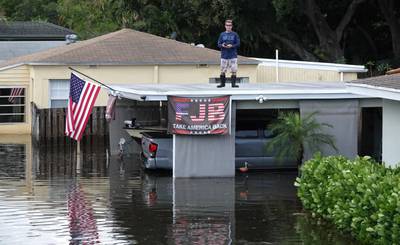
Man on roof after Ft. Lauderdale, FL, record rains, 4-14-2023
Man on roof, separated from his political rants against doing anything to stop global warming by global-warming-aggravated floods, in Ft. Lauderdale, Florida, circa April 14, 2023.

You can’t make this stuff up. Here’s a guy flooded out from his home, where he holds forth claiming climate change isn’t real, and if it is, isn’t a problem.

Will he accept federal aid to fix his home?


Rosa Parks Sit Down to Stand Up for Freedom Day, December 1: “Why do you push us around?” Rosa Parks asked the cop. (Anyone know the answer?)

December 2, 2022

Mrs. Rosa Parks asked a question of the policeman who arrested her for refusing to move to the back of the bus on December 1, 1955. In 2022, it is again, and still, a chilling question, to which we have no good answer.

Rosa Parks being fingerprinted, Library of Congress

Mrs. Parks being fingerprinted in Montgomery, Alabama; photo from New York World-Telegram & Sun Collection, Library of Congress

Rosa Parks: “Why do you push us around?”

Officer: “I don’t know but the law is the law and you’re under arrest.”

From Rosa Parks with Gregory J. Reed, Quiet Strength
(Grand Rapids, MI: Zondervan Pub. House, 1994), page 23.

Photo: Mrs. Parks being fingerprinted in Montgomery, Alabama; photo from New York World-Telegram & Sun Collection, Library of Congress

Today in History at the Library of Congress provides the simple facts:

On the evening of December 1, 1955, Rosa Parks, an African American, was arrested for disobeying an Alabama law requiring black passengers to relinquish seats to white passengers when the bus was full. Blacks were also required to sit at the back of the bus. Her arrest sparked a 381-day boycott of the Montgomery bus system and led to a 1956 Supreme Court decision banning segregation on public transportation.

Rosa Parks made a nearly perfect subject for a protest on racism. College-educated, trained in peaceful protest at the famous Highlander Folk School, Parks was known as a peaceful and respected person. The sight of such a proper woman being arrested and jailed would provide a schocking image to most Americans. Americans jolted awake.

Often lost in the retelling of the story are the threads that tie together the events of the civil rights movement through the 1940s, 1950s and 1960s. As noted, Parks was a trained civil rights activist. Such training in peaceful and nonviolent protest provided a moral power to the movement probably unattainable any other way. Parks’ arrest was not planned, however. Parks wrote that as she sat on the bus, she was thinking of the tragedy of Emmet Till, the young African American man from Chicago, brutally murdered in Mississippi early in 1955. She was thinking that someone had to take a stand for civil rights, at about the time the bus driver told her to move to allow a white man to take her seat. To take a stand, she kept her seat.

African Americans in Montgomery organized a boycott of the Montgomery bus system. This was also not unique, but earlier bus boycotts are unremembered. A bus boycott in Baton Rouge, Louisiana, earlier in 1955 did not produce nearly the same results.

The boycott organizers needed a place to meet, a large hall. The biggest building in town with such a room was the Dexter Street Baptist Church. At the first meeting on December 5, it made sense to make the pastor of that church the focal point of the boycott organizing, and so the fresh, young pastor, Rev. Dr. Martin Luther King, Jr., was thrust into civil rights organizing as president, with Ralph Abernathy as program director. They called their group the Montgomery Improvement Association (MIA). When their organizing stretched beyond the city limits of Montgomery, the group became the Southern Christian Leadership Conference.

Litigation on the boycott went all the way to the Supreme Court (Browder v. Gale). The boycotters won. The 381-day boycott was ended on December 21, 1956, with the desegregation of the Montgomery bus system.

Sources for lesson plans and projects:

Tip of the old scrub brush to Slacktivist, who gave this post a nice plug.

This is an encore post.

Yes, this is an encore post. Defeating ignorance takes patience and perseverance.


Fox News features a grand, two-minute description of Joe Biden’s great work

August 25, 2022

We can be quite sure Fox did not intend to give air to a complimentary and good view of President Joe Biden’s months in office, but they did invite Jessica Tarlov (@JessicaTarlov) on to talk on August 20, 2022.

Talk she did. She told the truth, and didn’t let the hosts shut her up.

Tarlov said:

It’s unfair to reduce a thing that is unequivocally a good thing to just ‘oh it’s one good thing.’ There are a bunch of good things in there. Just because it’s not your politics doesn’t mean it doesn’t count.

(Crosstalk)

It’s about green energy. It’s about saving people’s lives; it’s making sure they have health care — oh yes, health care saves people’s lives.

When history looks back at the first two years of the Biden term, they will see the American Rescue Act. They will see bipartisan Infrastructure, the PACT Act, the CHIPS Act, the Inflation Reduction Act.

They will see that al Zawahiri is dead.

They will see record jobs numbers and they will see low unemployment. And I’m not saying they will think that Joe Biden was God’s gift to the presidency. But do not reduce what has been accomplished in this term. And Democrats got that done with the slimmest of majorities.

Political consultant Jessica Tarlov
Political consultant Jessica Tarlov on Fox News