DDT is still a deadly poison, and still not a panacea against malaria. It’s nice to see reason having sway, probably due to the efforts of the Gates Foundation and its allies.
Spread the word; friends don't allow friends to repeat history.
NOVA had a couple of good programs on Richard Feynman that I wish I had — it had never occurred to me to look at YouTube to see what people might have uploaded.
By then, of course, Feynman was one of my heroes. His stories are useful in dozens of situations — his story of joining the samba bands in Rio testify to the joy of living, and the need for doing new things. Brazil was also the place he confronted the dangers of rote learning, when students could work equations perfectly for examples in the book — which they had memorized — but they couldn’t understand real world applications, such as describing how the sunlight coming off the ocean at Ipanema was so beautiful.
Feynman wrote about creationism, and about the dangers of voodoo science, in his now-famous essay on “Cargo cult science” — it’s so famous one has difficulty tracking down the facts to confirm the story.
Feynman’s stories of his wife, and her illness, and his love for her, were also great inspirations. Romance always gets me.
I failed to track him closely enough. During the run of the President’s Commission on Americans Outdoors, we had the misfortune of having scheduled a hearing in Orlando on January 30 (or maybe 29), 1986. We had hoped that the coincidental launch of the Space Shuttle Challenger on January 28 might boost our press response. Of course, the Challenger exploded. Our hearing went on as planned (we had a tough schedule to meet). The disaster affected our staff a lot, those who were in Florida, and the rest of us in Washington where many of us had been on the phone to Florida when the disaster occurred.
Feynman’s appointment to the commission studying the disaster was a brilliant move, I thought. Our schedule, unfortunately, kept me tied up on almost every day the Challenger commission met. So I never did walk the three blocks down the street to meet Feynman, thinking there would be other opportunities. He was already fatally ill. He died on February 15, 1988. I missed a chance of a lifetime.
We still have Feynman’s writings. We read the book aloud to our kids when they were younger. James, our youngest and a senior this year, read Surely You’re Joking again this summer, sort of a warmup to AP physics and his search for a college.
BBC made portions of The Pleasure of Finding Things Out available for free online. These interviews include a short video of his explaining how a scientist can perceive the beauty of a flower at many different levels, beyond the artist’s view — a testament to science as a way of knowing AND appreciating life.
Okay. I’ve had five or six people send me links to a YouTube video of Ron and Kay Rivoli singing “Press One for English.” Ha. Ha.
It’s a rant about language accommodations. Some Americans, free marketeers for the most part, get all buggy when confronted with a free market in language choices. America is becoming more global, marketing more goods in more places, and getting visited by more people. This growth in commerce brings things like American Airlines’ Spanish language reservations center (Who would have thought? When they can make reservations in Spanish, Spanish speakers buy a lot more airplane tickets.)
And Ron and Kay Rivoli put these fears into a song. Funny.
Can we talk? Can I pick a bone? Ron and Kay Rivoli insult the U.S. flag. They may not mean to do it, they may have done it unthinkingly — but that’s the problem with the whole rant: It’s all unthinking.
Here are the flag insults:
44 seconds into the video three servicemen are shown saluting the U.S. flag, displayed with the flag of California and the POW-MIA flag. Contrary to the Flag Code and good flag etiquette, the U.S. flag is in the center, rather than to its own right. A center display would be acceptable if the center flag pole were higher than the others — but in this case the U.S. flag’s pole is lower than the other two. Two flag insults at once.
At 2:59 into the video, the flag is shown as cut into an agricultural field of some kind. The Flag Code specifies that the flag is never to be displayed flat. The flag should fly free. Since this flag is cut into a crop on the ground, it cannot be displayed properly. Further, it is generally considered poor etiquette to make representations of the flag out of things other than cloth.
This is all highly ironic. At 1:37 into the video, a scroll of the famous Theodore Roosevelt quote on English as the only language scrolls by. “We have room for but one flag, the American flag,” Roosevelt said (oops — there goes the POW-MIA flag). “We have room but for one language, and that is the English language,” Roosevelt continues.
They use the flag they insult as a model for going for one language? This makes no sense.
Do I pick nits? No, I think that every educated American should know the flag code, and should avoid insult to the U.S. flag at least, if not honor it correctly. I am not pedantic about a lot of things, but this is one.
Ron and Kay Rivoli, you owe America and its flag apologies. Get straight with the flag, before you ask me to insult the traditional languages and free enterprise heritage of our nation. If you want my support, don’t tread on the American flag when you ask it.
The Rivolis owe apologies to the U.S. flag. Will we see it?
Spread the word; friends don't allow friends to repeat history.
In a classroom discussion of “how do we know what we know” about history, another student brought up the allegations that the National Aeronautics and Space Administration (NASA) faked the manned Moon landings. That makes about a dozen times this year a kid has mentioned this claim (who thinks to start counting these things?). The kid was pretty unshakable in his convictions — after all, he said, how can a flag wave in a vacuum?
I usually mention a couple of things that the fake claimers leave out — that dozens, if not hundreds, of amateur astronomers tracked the astronauts on their way to the Moon, that many people intercepted the radio transmissions from the Moon, that one mission retrieved debris from an earlier unmanned landing, etc. Younger students who lack experience in serious critical thinking have difficulty with these concepts. They also lack the historic background — the last manned Moon landing occurred when their parents were kids, perhaps. They didn’t grow up with NASA launches on television, and the whole world holding its breath to see what wonders would be found in space.
From the very first moment to the very last, the program is loaded with bad thinking, ridiculous suppositions and utterly wrong science. I was able to get a copy of the show in advance, and although I was expecting it to be bad, I was still surprised and how awful it was. I took four pages of notes. I won’t subject you to all of that here; it would take hours to write. I’ll only go over some of the major points of the show, and explain briefly why they are wrong.
Also, consider these chunks of evidence, which Phil does not mention so far as I know:
First, the first Moon landing left a mirror on the surface, off of which Earth-bound astronomers may bounce laser transmissions in order to measure exactly the distance from the Earth to the Moon. Read the rest of this entry »
Spread the word; friends don't allow friends to repeat history.
Or, until that account is unsuspended by the forces supporting Donald Trump: Follow @FillmoreWhite, the account of the Millard Fillmore White House Library
We've been soaking in the Bathtub for several months, long enough that some of the links we've used have gone to the Great Internet in the Sky.
If you find a dead link, please leave a comment to that post, and tell us what link has expired.
Thanks!
Retired teacher of law, economics, history, AP government, psychology and science. Former speechwriter, press guy and legislative aide in U.S. Senate. Former Department of Education. Former airline real estate, telecom towers, Big 6 (that old!) consultant. Lab and field research in air pollution control.
My blog, Millard Fillmore's Bathtub, is a continuing experiment to test how to use blogs to improve and speed up learning processes for students, perhaps by making some of the courses actually interesting. It is a blog for teachers, to see if we can use blogs. It is for people interested in social studies and social studies education, to see if we can learn to get it right. It's a blog for science fans, to promote good science and good science policy. It's a blog for people interested in good government and how to achieve it.
BS in Mass Communication, University of Utah
Graduate study in Rhetoric and Speech Communication, University of Arizona
JD from the National Law Center, George Washington University


 Posted by Ed Darrell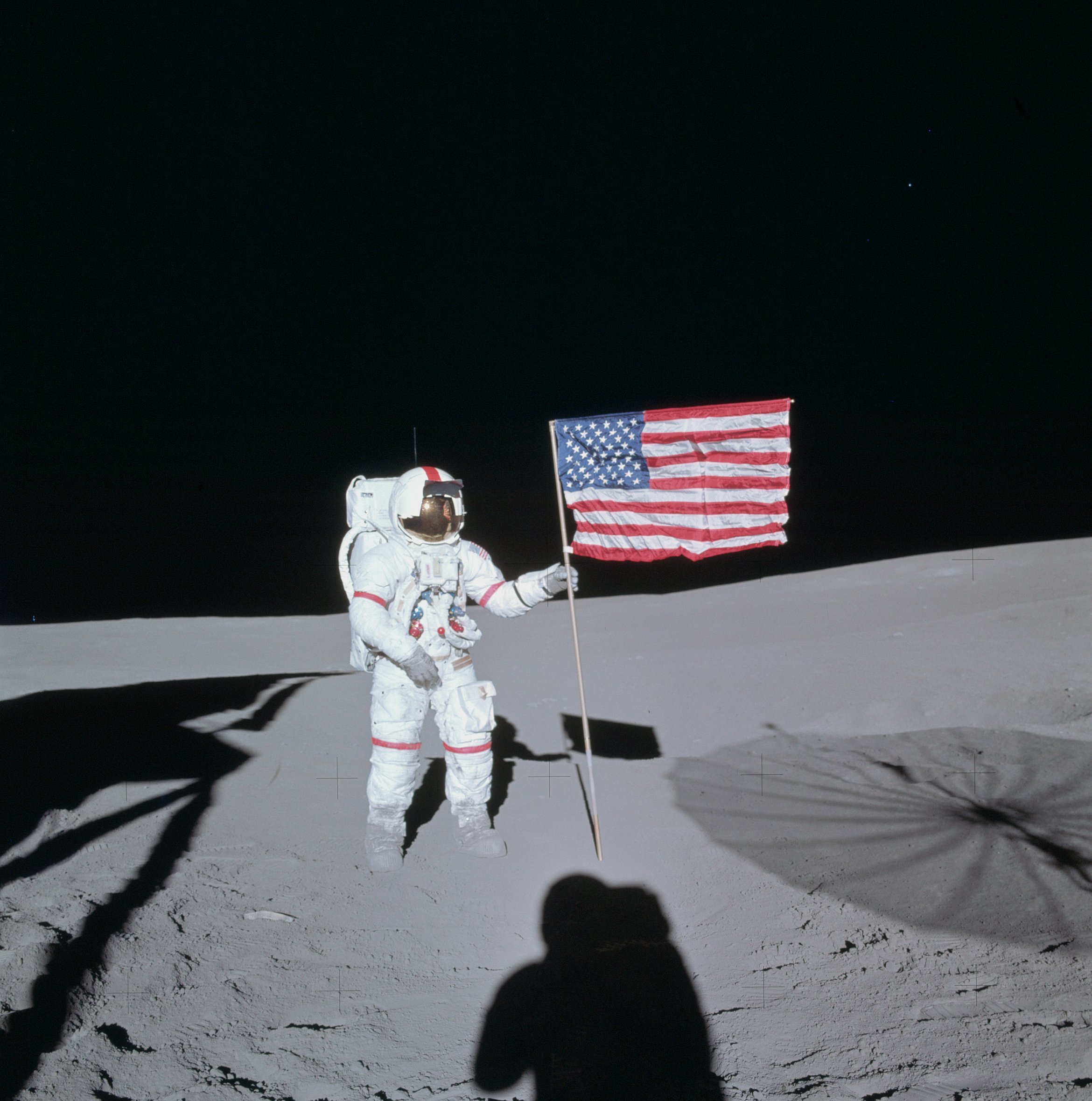




 Millard Fillmore's Bathtub