Setting the record straight on Rachel Carson, malaria and DDT

June 19, 2007

The contemptible campaign of hoax and calumny against the work and memory of Rachel Carson continues. You should read more at the sites I cite near the end of this post.

The key false claim of the Carson critics is that, but for the ban on DDT, millions of lives would have been saved over the past 30 years. Chief problem with the claim is that national bans on DDT all preserve DDT use for essential mosquito eradication, especially if there are no other tools to fight the disease. But other problems with the claim include the fact that DDT had stopped being highly effective by the late 1960s; eradication was a pipe dream, and mosquitoes developed resistance to DDT.

That doesn’t stop the critics. So, Dear Reader, when you read criticisms of Rachel Carson and hear the pseudo-science whine that Carson alone has condemned millions to death by malaria, I want you to keep in mind this question: If DDT were such an effective tool against malaria, why didn’t the World Health Organization fight to keep it? Why didn’t the manufacturers fight to keep it? Why would more than 150 nations, tens of thousands of scientists, tens of thousands of health workers, and conservative “I-told-you-so” skeptics who hate environmentalists, all simultaneously fall asleep?

The answer is, Dear Reader, they didn’t all fall asleep. DDT stopped being effective, and malaria fighters realized there were other problems — the parasites that the mosquitoes spread also became resistant to anti-malaria drugs, a bigger problem than DDT resistance. People and organizations who fight malaria did ask that use of DDT be preserved for spraying to fight malaria; but they didn’t defend it against bans on other use because those bans help the malaria fighters.
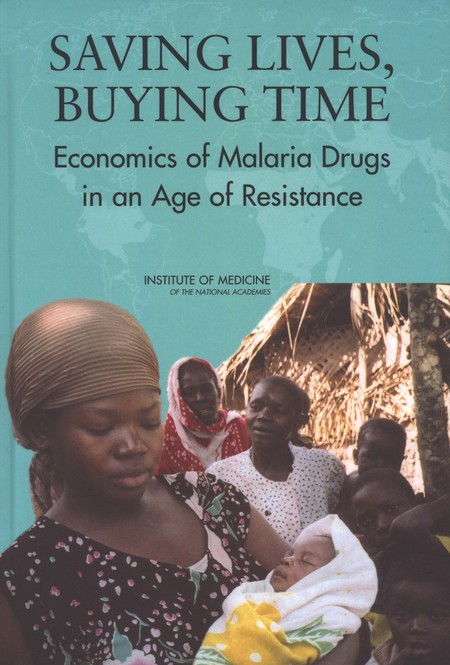
Cover of  Saving Lives, Buying Time: Economics of Malaria Drugs in an Age of Resistance (2004), from the National Academies Press

Cover of Saving Lives, Buying Time: Economics of Malaria Drugs in an Age of Resistance (2004), from the National Academies Press

Below the fold, I offer two quotes from Saving Lives, Buying Time: Economics of Malaria Drugs in an Age of Resistance (2004) Board on Global Health (BGH) (available from the National Academy of Sciences). You can see that DDT is not the golden-egg-laying goose, and that consequently Rachel Carson is not the mindless ogre she is made out to be in recent invectives.

Check out these sites:

Read the rest of this entry »


Voting for cancer, against prevention

May 31, 2007

Yeah, it was a bit tacky of Merck to create a campaign to get government officials to require inoculations against human papilloma viruses that cause cancer — but, people!, we’re talking about preventing cancer here.

The Texas legislature voted for cancer, overturning Gov. Rick Perry’s ill-considered good idea to require vaccinations for school kids in Texas. In a state with top-notch anti-cancer research at M. D. Anderson Cancer Center in Houston and UT’s Southwest Medical Center in Dallas, it was an odd, odd thing to witness.

The debates are skewed by a general distrust and dislike of big pharmaceutical companies, and by the religious right’s view that it’s better that a young mother die of cancer than she should get even the faintest idea that might in only the most perverse mind promote pre-marital sex. Still, we shouldn’t fall victim to voodoo science claims against vaccines.

Are my views, tempered by years of work promoting public health and fighting disease, clear enough for you?

Owlhaven wins popularity contests among mothers who read blogs, and it often is tender and touching — hey, I read it from time to time. But recently Mary, Owlhaven’s author, fell victim to a propaganda campaign from Judicial Watch, a far-right-wing bunch that campaigns against the U.S. justice system and generally makes a conservative-gratuitous-poke-in-the-butt out of itself. Judicial Watch claims to have some secrets from having filed a Freedom of Information Act Request with FDA to get Merck’s reports to FDA of adverse events known about Gardasil, Merck’s proprietary anti-cancer vaccine.

I responded, of course — but my response didn’t show on Owlhaven’s comments. Blackballed? Spam filtered due to the number or length of links? I can’t tell. Mary said she emptied the spam filter without checking. So, I repost my response, below the fold, for your benefit. Read the rest of this entry »


Historical fiction: Churchill and Fleming, and antibiotics

May 26, 2007

Is this old dead duck still circulating?

The story is that a poor farm kid in England Scotland saves a rich kid from drowning, and the rich family offers to pay for college for the poor kid. The poor kid goes to college, and later makes a great discovery, and that discovery later saves the life of a member of the rich family, who goes on to save the world.

Churchill in Tunisia, 1943, visiting New Zealand’s 2nd Division, with Bernard Freyberg, known as Tiny

Churchill in Tunisia, 1943, visiting New Zealand’s 2nd Division, with Bernard Freyberg, known as Tiny

In various forms I’ve seen this story, that a member of the Churchill family, or Winston Churchill himself, was saved by a member of the Fleming family, or Sir Alexander Fleming himself (the discoverer of penicillin). Then, years later Churchill has a deadly infection, but his life is saved by Fleming’s discovery.

It’s a great story, actually, but it is fabrication from start to finish, laced with famous names, our natural ignorance of some parts of history, and our desire for such coincidences to be true. It’s such a great story that the wrong, hoax version still circulates even after it is so easy to learn that the story is wrong.

The Churchill Centre, in England, has a denial that should be embarrassing to Americans and Christians — they point out it was distributed in the 1950s by churches here.

The story apparently originated in Worship Programs for Juniors, by Alice A. Bays and Elizabeth Jones Oakberg, published ca. 1950 by an American religious house, in a chapter entitled “The Power of Kindness.”

Here are several ways to tell the story is false: Read the rest of this entry »


Fearful IDists can’t meet ethics challenge in Dallas

April 10, 2007

Advocates of intelligent design at the Discovery Institute have been rattled by the strong showing of scientists at Southern Methodist University who called their bluff, and questioned SMU for hosting an ID conference this week. SMU’s officials pointed out they were just renting out facilities, and not hosting the conference at all.

The ID conference, with special religious group activities preceding it, is scheduled for April 13 and 14 at SMU. It is a rerun of a similar revival held in Knoxville, Tennessee, last month. The conference features no new scientific research, no serious science sessions with scientists looking at new research, or new findings from old data.

In return, ID advocates “challenged” scientists to show up at a creationist-stacked function Friday evening. To the best of my knowledge, all working scientists declined the invitation, on the understanding that in science, there is no debate.

This morning’s Dallas Morning News features the expected desperation move by Discovery Institute officials Bruce Chapman and John West. They accuse the scientists of being “would-be censors.”

This is highly ironic coming from the group that spent tens of thousands of dollars trying to convince the Texas State Board of Education to censor and bowdlerize* Texas biology books in 2003.  (*  Thanks, Jim Dixon)

But go read the stuff for yourself. Some of us have real work to do today, and there is not time for the appropriate, godly Fisking this piece deserves right now. (Readers? Friends?)

My dander is up, however, and I offer a counter challenge:

Discovery Institute, what is it you’re afraid of? Let’s meet, and discuss the ethical challenges you’ve experienced in this discussion. Specifically, let’s discuss:

One, your misrepresentation of the science of Darwin, and your repeated attempts to mislead school officials — remember the claim in Ohio that federal law requires discussion of intelligent design? Was that a hoax that fell flat, or an honest misunderstanding? In any case, we still await your disowning of the falsehood, years later.

Two, your support of unethical screeds against science and scientists. I’ll mention one here: You need to disown the dishonest and unethical work of Jonathan Wells. Look at his book, Icons of Evolution, which is promoted at your website. I call your attention to his chapter of misinformation against the work of Bernard Kettlewell on peppered moths. Check out the citations in his chapter. If one believes his footnotes, there are many scientists who support his views on Kettlewell’s pioneering and still valid work. You need to acknowledge that the footnotes are ethically challenged; you need to acknowledge in print that each of the scientists involved, and others, have disowned Wells’ work and said that his claims misrepresent their work and the status of science. In polite, scientific terms, these people have called Wells a prevaricator. You still promote his screed as valid.

Three, your support of name-calling must stop. Especially, you need to pull your support from books, conferences, and editorial pieces that say evolution was a cause of the Holocaust. The attempts to connect Darwin to Hitler are scurrilous, inaccurate, unethical and unholy.

Chapman, West, the Methodist Church does not endorse your views on evolution, and if they understood your tactics I suspect they would disown your tactics as well. You are guests on a campus that does serious science work and also hosts people of faith. You need to bring your organizations ethical standards up to a higher level.

You want a debate? The science journals are open — the federal courts have repeatedly found that claims of bias against you are completely unfounded (untrue, that is . . . well, you understand what I’m trying to say politely, right?). The journals await your research reports.

All of science has been awaiting your research reports for years, for decades. (Here’s one famous case: “Three Years and Counting,” at Pharyngula (a science-related blog run by an evolutionary biologist).

You want to debate? Stop hurling epithets, and bring evidence.

As an attorney, parent, teacher, and reader of Texas biology textbooks, I’d be pleased to debate your need to change your ways. The debate needs to focus on your methods and ethics. Are you up to it?

Earlier posts of interest:


Quote stumbled upon: Clarence Day, on descendants of apes

March 24, 2007

Clarence Day, from NNDB

What fairy story, what tale from the Arabian Nights of the jinns, is a hundredth part as wonderful as this true fairy story of simians! It is so much more heartening, too, than the tales we invent. A universe capable of giving birth to many such accidents is — blind or not — a good world to live in, a promising universe. . . . We once thought we lived on God’s footstool; it may be a throne.

Clarence Day (1874-1935), This Simian World (1920), XIX

More from that chapter, below the fold

Read the rest of this entry »


Hall of Fame: Debunking the Moon landing hoax hoax

December 10, 2006

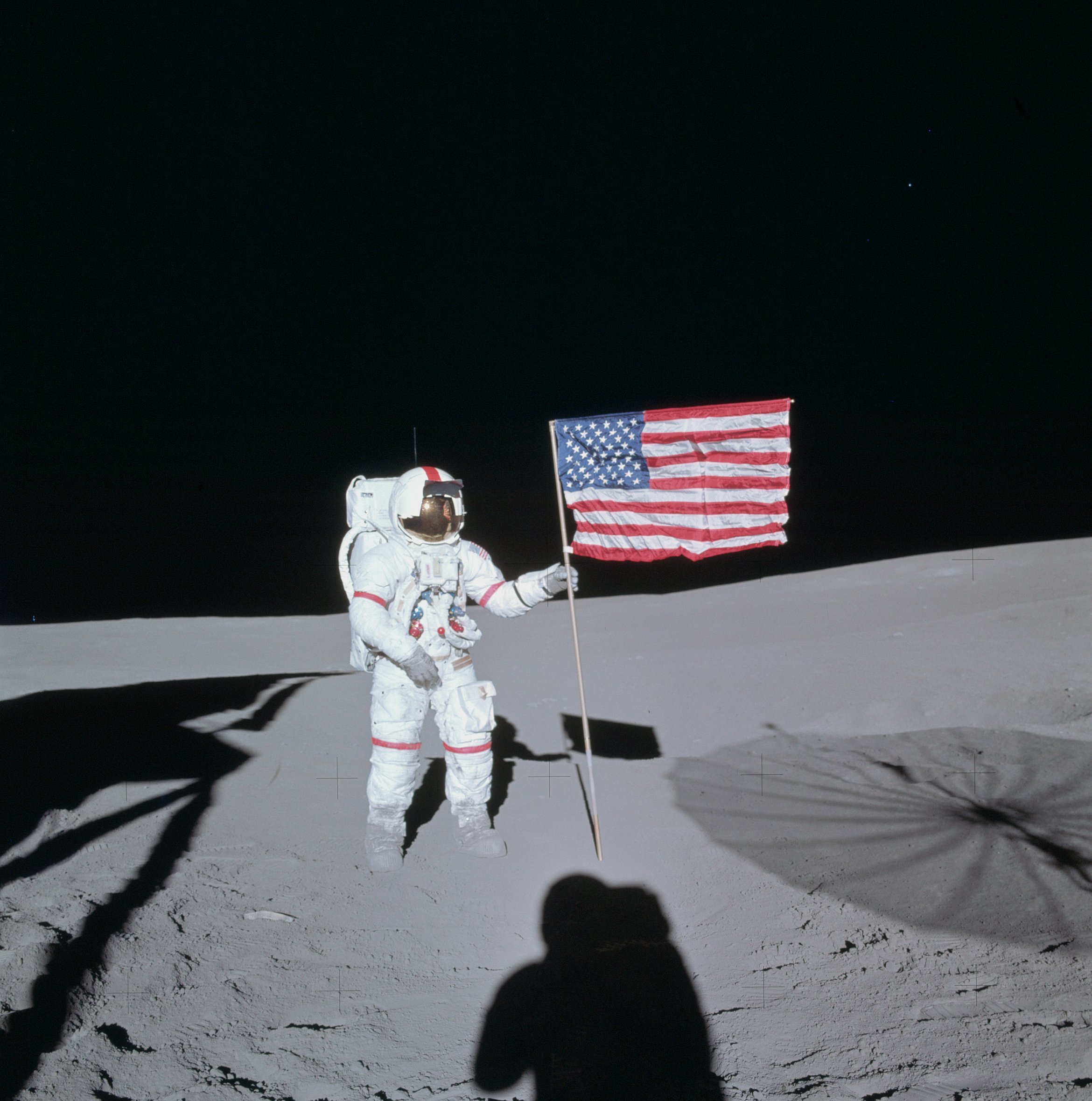
Apollo 14 on the moon - Alan Shepard?

Photo from Apollo 14 Moon Mission


In a classroom discussion of “how do we know what we know” about history, another student brought up the allegations that the National Aeronautics and Space Administration (NASA) faked the manned Moon landings. That makes about a dozen times this year a kid has mentioned this claim (who thinks to start counting these things?). The kid was pretty unshakable in his convictions — after all, he said, how can a flag wave in a vacuum?

I usually mention a couple of things that the fake claimers leave out — that dozens, if not hundreds, of amateur astronomers tracked the astronauts on their way to the Moon, that many people intercepted the radio transmissions from the Moon, that one mission retrieved debris from an earlier unmanned landing, etc. Younger students who lack experience in serious critical thinking have difficulty with these concepts. They also lack the historic background — the last manned Moon landing occurred when their parents were kids, perhaps. They didn’t grow up with NASA launches on television, and the whole world holding its breath to see what wonders would be found in space.

Phil Plait runs a fine blog called Bad Astronomy. Five years ago he got fed up with the Fox Television program claiming the Moon landings were hoaxes, and he made a significant reply that should be in some hall of fame for debunking hoaxes. Since the claim that the Moon landings were hoaxes is, itself, a hoax, I have titled this “Debunking the Moon landing hoax hoax.”

In any case, if you’re wondering about whether the Moon landings were hoaxes, you need to see Phil Plait’s post. Phil writes:

From the very first moment to the very last, the program is loaded with bad thinking, ridiculous suppositions and utterly wrong science. I was able to get a copy of the show in advance, and although I was expecting it to be bad, I was still surprised and how awful it was. I took four pages of notes. I won’t subject you to all of that here; it would take hours to write. I’ll only go over some of the major points of the show, and explain briefly why they are wrong.

Also, consider these chunks of evidence, which Phil does not mention so far as I know:

First, the first Moon landing left a mirror on the surface, off of which Earth-bound astronomers may bounce laser transmissions in order to measure exactly the distance from the Earth to the Moon. Read the rest of this entry »


D. James Kennedy’s killer legacy

August 27, 2006

This might be a better topic for another blog I have in early creation stages — except that the difficulties with the anti-science program broadcast this weekend by D. James Kennedy’s Coral Ridge Ministries are exactly the same difficulties the same group has with history, and the concerns about revising history textbooks and history classes — to make them inaccurate and militantly polemic — also come from the same groups. The history errors alone in Kennedy’s program justify discussing it here. Read the rest of this entry »


The moral imperative against intelligent design

August 14, 2006

I’m straying only a bit off topic, and only by certain legalistic interpretations. History folks, bear with me.

My complaint about what is called “intelligent design” in biology is the same complaint I have against people who wish to crown Millard Fillmore as a great light for bringing plumbing to the White House over the complaints of health officials — that is, my complaint against those who push H. L. Mencken’s hoax over the facts.

Joe Carter at Evangelical Outpost listed at great lengths his list of reasons that arguing for science actually promotes intelligent design instead (Part 1, Part 2, Part 3). This blog’s response was in two parts, one and two. Other people offered other rebuttals, including notably, P. Z. Myers at Pharyngula, a very good blog that features the hard science of biology and especially evolution.

Joe provided a first affirmative rebuttal here. This post is my reply, on the single point of whether it’s fair to say creationists, IDists, or others who twist the facts and research, are “dishonest.”

The text is below the fold; I left it in remarks at Evangelical Outpost. I have one other observation I’ll make quickly in the next post.

Enjoy, and chime in with your own remarks (I’m headed back to the grindstone). Read the rest of this entry »