Evolution on display in Austin

December 20, 2007

Header for evolution display at Texas Memorial Museum

No, unfortunately, not at either the State Board of Education/Texas Education Agency nor the Texas Higher Education Coordinating Board.

At a better place, perhaps. A permanent exhibit on evolution, “Explore Evolution, opened October 1 at the Texas Memorial Museum at the University of Texas. The exhibit, funded by a grant from the National Science Foundation, explains evolution for students. It appears essentially the same at six different museums in the Midwest:

  1. Museum of Natural History at the University of Michigan
  2. Kansas Natural History Museum and Biodiversity Research Center
  3. The Sam Noble Oklahoma Museum of Natural History
  4. Science Museum of Minnesota
  5. University of Nebraska State Museum, and
  6. Texas Memorial Museum at the University of Texas.

Explore Evolution permanent exhibit opens Sept. 10 at NU State Museum

Lincoln, Neb., Sept. 7, 2005 — Using cutting edge research, a new exhibit at the University of Nebraska State Museum gives a modern shine to Charles Darwin’s 146-year-old theory on evolution. The permanent exhibit, Explore Evolution, which opens to the public Sept. 10, was developed by a consortium of six partner museums led by the NU State Museum and prominently features the work of two UNL scientists.

The project is made possible by a $2.8 million, three-year grant from the National Science Foundation’s Informal Science Education program and consists of nearly identical permanent exhibit galleries at six partner museums in the Midwest and South — regions where evolution education is controversial. Other components of the project include a Web site, inquiry-based activities for middle-school children in the form of a book titled “Virus and the Whale, Exploring Evolution in Creatures Small and Large,” and collaborations with five statewide 4-H programs.

“Interested 4-H’ers will have the opportunity to explore exciting scientific concepts and cutting-edge research methods,” said Bradley Barker, UNL 4-H.

Priscilla Grew, director of the museum, said the exhibit is a big win for Nebraska.

“By funding the Explore Evolution project, the National Science Foundation has elevated UNL’s State Museum into a national leadership position in museum science education,” she said. “Evolution has been called the cornerstone of modern biology. The scientific understanding of evolution is fundamental to advances in modern medicine, agriculture and biotechnology. It is essential both to scientific research on the biodiversity of today’s world, and to the scientific interpretation of the fossil record through geologic time.”

The museum exhibit features seven current research projects, each presenting a major discovery about the evolution of life by a leading scientist or team of researchers. Through graphics and interactive displays, museum patrons explore evolution in organisms ranging form the smallest to the largest.

UNL’s contributions to the project are significant. While the exhibit galleries were built by the Science Museum of Minnesota, a team from UNL played major roles in the creation of the artwork and content. Judy Diamond, professor at the NU State Museum, wrote the original grant request for the project and is the team leader on the project. Research from two UNL scientists — virologist Charles Wood and geologist Sherilyn Fritz — is featured in two of the seven sections of the exhibit.

Wood’s research takes him to central Africa to study how the HIV/AIDS virus is transported from mothers to their infants. Wood’s research showcases the virus and how it evolves rapidly in newborns, with new strains being produced that are resistant to the infant’s immune system.

Fritz, working with Edward Theriot from University of Texas at Austin, used core samples from Yellowstone Lake to investigate the evolution of an organism called a diatom. Sampling tracks the diatom’s evolution from the lake’s formation 14,000 years ago and shows how diatoms — which are good barometers of climate change — developed within the first 4,000 years of the lake.

Other scientific endeavors featured in Explore Evolution include Cameron Currie’s work on farmer ants and their coevolving partners; Kenneth Kaneshiro on sexual selection among Hawaiian flies; Rosemary and Peter Grant on Galapagos finches; Svante Paabo on the genetic ties between humans and chimps; and Philip Gingerich on fossil discoveries of walking whales.

Read the rest of this entry »


Typewriter of the moment: Flannery O’Connor

December 18, 2007

Flannery O'Connor's typewriter at her farm Andalusia, near Milledgeville, GA - NY Times photo

Photo by Susana Raab for The New York Times; caption: “The writer Flannery O’Connor’s desk and typewriter in her bedroom at Andalusia, her farm near Milledgeville, Ga. She was a master of the Southern Gothic.”

From the Travel section article of the New York Times, February 4, 2007, by Lawrence Downes:

I was met at the door by Craig R. Amason, the executive director of the Flannery O’Connor-Andalusia Foundation, the nonprofit organization set up to sustain her memory and preserve her home. When the affable Mr. Amason, the foundation’s sole employee, is not showing pilgrims around, he is raising money to fix up the place, a project that is a few million dollars short of its goal. The foundation urgently wants to restore the house and outbuildings to postcard-perfection, to insure its survival. Last year the Georgia Trust for Historic Preservation placed Andalusia on its list of most endangered places in the state.

For now, the 21-acre property is in a captivating state of decay.

There is no slow buildup on this tour; the final destination is the first doorway on your left: O’Connor’s bedroom and study, converted from a sitting room because she couldn’t climb the stairs. Mr. Amason stood back, politely granting me silence as I gathered my thoughts and drank in every detail.

This is where O’Connor wrote, for three hours every day. Her bed had a faded blue-and-white coverlet. The blue drapes, in a 1950’s pattern, were dingy, and the paint was flaking off the walls. There was a portable typewriter, a hi-fi with classical LPs, a few bookcases. Leaning against an armoire were the aluminum crutches that O’Connor used, with her rashy swollen legs and crumbling bones, to get from bedroom to kitchen to porch.

There are few opportunities for so intimate and unguarded a glimpse into the private life of a great American writer. Mr. Amason told me that visitors sometimes wept on the bedroom threshold.


Tuba Christmas, St. Louis!

December 10, 2007

I love a good tuba tune — I love all the low brass.  Tuba Christmas is one of the great joys of this season.  It may be better than the sing-along “Messiah!”

Tuba Christmas at Rockefeller Center, NYC - Voice of America photograph

Photo at left:  Tuba Christmas at Rockefeller Center, New York City, 2006; Voice of America photograph

The St. Louis Post-Dispatch has a good slide show on Tuba Christmas in St. Louis this year.

Not to brag, but there are 21 Tuba Christmas events set for Texas this year, equal to the total of California and New York together.  (That link shows events in all states.)


Pearl Harbor, 66 years ago today

December 7, 2007

This is an encore post, from a year ago. That was the last official reunion of the Pearl Harbor veterans, though I suspect a few will be there today, unofficially. New resources at the end of the post:

______________________________________

Pearl Harbor, 65 years ago today

December 7, 2006

Associated Press 1941 file photo of a small boat assisting in rescue of Pearl Harbor attack victims, near the U.S.S. West Virginia, as the ship burns.

Today is the 65th anniversary of Japan’s attack on the U.S.’s Pacific Fleet at Pearl Harbor, Hawaii.

Our local newspaper, The Dallas Morning News, has a front-page story on survivors of the attack, who have met every five years in reunion at Pearl Harbor. Today will be their last official reunion. The 18-year-olds who suffered the attack, many on their first trips away from home, are in their 80s now. Age makes future reunions impractical.

From the article:

“We’re like the dodo bird. We’re almost extinct,” said Middlesworth, now an 83-year-old retiree from Upland, Calif., but then – on Dec. 7, 1941 – an 18-year-old Marine on the USS San Francisco.

Nearly 500 survivors from across the nation were expected to make the trip to Hawaii, bringing with them 1,300 family members, numerous wheelchairs and too many haunting memories.

Memories of a shocking, two-hour aerial raid that destroyed or heavily damaged 21 ships and 320 aircraft, that killed 2,390 people and wounded 1,178 others, that plunged the United States into World War II and set in motion the events that led to atomic bombings of Hiroshima and Nagasaki.

“I suspect not many people have thought about this, but we’re witnessing history,” said Daniel Martinez, chief historian at the USS Arizona Memorial. “We are seeing the passing of a generation.”

Another article notes the work of retired history professor Ron Marcello from the University of North Texas, in Denton, in creating oral histories from more than 350 of the survivors. This is the sort of project that high school history students could do well, and from which they would learn, and from which the nation would benefit. If you have World War II veterans in your town, encourage the high school history classes to go interview the people. This opportunity will not be available forever.

There is much to be learned, Dr. Marcello said:

Dr. Marcello said that in doing the World War II history project, he learned several common themes among soldiers.

“When they get into battle, they don’t do it because of patriotism, love of country or any of that. It’s about survival, doing your job and not letting down your comrades,” he said. “I heard that over and over.”

Another theme among soldiers is the progression of their fear.

“When they first got into combat, their first thought is ‘It’s not going to happen to me.’ The next thought is ‘It might happen to me,’ and the last thought is ‘I’m living on borrowed time. I hope this is over soon,’ ” Dr. Marcello said.

Dr. Marcello said the collection started in the early 1960s. He took charge of it in 1968. Since Dr. Marcello has retired, Todd Moye has taken over as the director.

Other sources:

While this is not one of the usual dates listed by Congress, you may fly your U.S. flag today.

End of encore post —

Other resources:


Texas was thankful first

November 22, 2007

Thanksgiving? Texas had it first. No kidding (unless you count the Vinlanders, who probably were grateful to be out of Greenland, but left no records that they ever actually had a feast to say so — but see the comments in the posts linked at various places).

Mrs. Bathtub is in the hospital. Nothing major, but it appears the staff who should have signed her out yesterday all headed off for Turkey Day and may not return until mid-December, so Mrs. Bathtub languishes at the expense of the insurance companies because security is tight and there are only enough sheets to get her down two stories, and she’s on the third floor (and the people-with-unknown-fathers at the hospital have sealed the door to the balcony anyway — that’s got to get you thinking). So Mr. Bathtub is frantically reading the back of the Libby’s Pumpkin can, and you can imagine what antics are up in the kitchen today. Blogging will be sparse.

So it’s reprise post stuff, mostly, today. If you need more, go here:

Google's Thanksgiving logo, 2007

Here’s the main reprise post, text below (there were some good comments last year); Margaritas and nachos do sound good, don’t they?
___________________________
Patricia Burroughs has the story — you New Englanders are way, way behind.

Palo Duro Canyon in a winter inversion

Palo Duro Canyon during inversion, Winter 2001, site in 1541 of the first Thanksgiving celebration in what would become the United States. Go here: www.visitamarillotx.com/Gallery/index3.html, and here: www.tpwd.state.tx.us/park/paloduro/

Update, 11/27/2006: Great post here, “Top 10 Myths About Thanksgiving.”

_______________________

Resources for 2007:


Ten minutes on Yellowstone NP in winter, with outdoor writer Tim Cahill

November 4, 2007

Yellowstone National Park is just a cool place. If you’re not using it for anything in your geography and U.S. history courses, you’re missing out.

Here’s a ten-minute video that the producers hope you’ll show far and wide to encourage television stations to pick up the series. It’s a ten-minute pilot for “Travelers’ Tales,” featuring outdoor writer Tim Cahill, a founder of Outside magazine, and photographer Tom Murphy.

Here are some of the points you might use in class:

  • Yellowstone in winter, especially the wildlife, like bison, elk and coyotes (all shown), and wolves (not shown)
  • Volcanic geology — Yellowstone is the world’s largest caldera, after all
  • Diversity of landforms in the U.S., or in the world. More than half the hot water features on the planet are in Yellowstone
  • Travel and adventure
  • What makes good writing (travel writing in this case)
  • Western geography
  • Development of the west, especially after the Lewis and Clark Expedition

The video features a lot of snow, elk, bison and coyotes, hot springs flowing into a river making swimming in January feasible, Mammoth Hot Springs and the travertine pools, and the cold northern desert of sagebrush and juniper.

Questions you might consider to turn this into a warm-up exercise (bell ringer):

Geography, not answered in the video (map or internet exercise):

  1. Yellowstone National Park covers parts of which three states?
  2. Yellowstone National Park is mostly located in which state?
  3. What is the most famous feature of Yellowstone National Park?
  4. Ashfall Beds State Park features ancient mammals killed by an eruption in the Yellowstone Caldera. Where is Ashfall Beds State Park?
  5. Thomas Moran played a key role in getting Congress to designate Yellowstone as a park. What did he do to help convince Congress to act?

Geography, answered in the video:

  1. What year was Yellowstone designated a National Park by Congress?
  2. What sort of volcanic feature is the entire Yellowstone area?
  3. The Yellowstone Caldera explodes catastrophically about every 600,000 years, according to some geologists. How long has it been since the last such catastrophic explosion?
  4. The wags say there are two seasons in Yellowstone, ______ and winter.
  5. What is a “hot pot?”

Come see Texas’ new canyon!

October 9, 2007

Canyon Lake Gorge, Gorge website photo

Having a brand new canyon is sort of a once in a lifetime experience. It might even be more rare than that.

Texas’s Canyon Lake Gorge opened to the public last week — a gorge, a canyon, that was carved out over a couple of days in 2002 when flood waters charging over an overtaxed dam cut through soft soils and soft rock to expose millions of years of sediments. Dinosaur footprints were exposed by the flood, too.

A torrent of water from an overflowing lake sliced open the earth in 2002, exposing rock formations, fossils and even dinosaur footprints in just three days. Since then, the canyon has been accessible only to researchers to protect it from vandals, but on Saturday it opens to its first public tour.

“It exposed these rocks so quickly and it dug so deeply, there wasn’t a blade of grass or a layer of algae,” said Bill Ward, a retired geology professor from the University of New Orleans who started cataloging the gorge almost immediately after the flood.

The mile-and-a-half-long gorge, up to 80 feet deep, was dug out from what had been a nondescript valley covered in mesquite and oak trees. It sits behind a spillway built as a safety valve for Canyon Lake, a popular recreation spot in the Texas Hill Country between San Antonio and Austin.

The reservoir was built in the 1960s to prevent flash flooding along the Guadalupe River and to assure the water supply for central Texas. The spillway had never been overrun until July 4, 2002, when 70,000 cubic feet of water gushed downhill toward the Guadalupe River for three days, scraping off vegetation and topsoil and leaving only limestone walls.

Canyon Lake is southwest of Austin, almost due west from San Marcos about 20 miles. The lake backed up from a 1960 flood control project dam built by the U.S. Army Corps of Engineers — the new Canyon Lake Gorge is managed jointly by the Corps and the Guadalupe-Blanco River Authority.

Watch carefully, dear reader: Creationists will soon start to claim that the rapid cutting of this canyon verifies a young age for all canyons, and shows that the Earth’s geology can indeed be very young. But that claim will gloss over the fact that while the gorge was cut quickly, it was cut through sediments that took millions or billions of years to lay down. The Associated Press reports problems with such a hypothesis:

The sudden exposure of such canyons is rare but not unprecedented. Flooding in Iowa in 1993 opened a limestone gorge behind a spillway at Corvalville Lake north of Iowa City, but that chasm, Devonian Fossil Gorge, is narrower and shallower than Canyon Lake Gorge.

Neither compares to the world’s most famous canyon. It took water around 5 million to 6 million years to carve the Grand Canyon, which plunges 6,000 feet at its deepest point and stretches 15 miles at its widest.

The more modest Canyon Lake Gorge still displays a fault line and rock formations carved by water that seeped down and bubbled up for millions of years before the flooding.

Some of the canyon’s rocks are punched with holes like Swiss cheese, and the fossils of worms and other ancient wildlife are everywhere. The rocks, typical of the limestone buried throughout central Texas, date back “111 million years, plus or minus a few hundred thousand years,” Ward said.

Six three-toed dinosaur footprints offer evidence of a two-legged carnivore strolling along the water. The footprints were temporarily covered with sand to protect them as workers reinforced the spillway, but they’ll be uncovered again eventually, Rhoad said.

Tours for the new gorge are booked for the next six months. Details on how to reserve space can be found at the website of the Gorge Preservation Society (GPS).


Where is the biggest clock?

September 28, 2007

Tehran 24 ran a photo of a huge clock somewhere in Tehran, under the headline of “The World’s Biggest Clock.”

Huge outdoor clock in Tehran, Iran - credit on photo, Tehran Daily

But is it more than 37 feet across, like the flower clock in Las Colinas, Irving, Texas?*

Las Colinas, in Irving Texas; flower clock - photo Glenn Boyden

What is the biggest clock in the world? Surely there are some bigger.

* This site says the Tehran clock is 15 meters across — bigger than Las Colinas. The clock faces accompanying the bell of Big Ben are 7 meters across. For a panoramic view of the belfry of Big Ben, see the Parliament website.

Read the rest of this entry »


Ardeatine Massacre: Bombers were soldiers, not terrorists

August 13, 2007

Our Italian physicist friend, Dorigo, at A Quantum Diaries Survivor reports that an Italian court ruled against a newspaper that started a campaign to deny the history of the Ardeatine Massacre.

Good news today. The supreme court of Cassazione in Italy has ruled that the press campaign labeling “terrorists” the GAP partisans who organized the bombing of Via Rasella in nazi-occupied Rome in 1944, launched by the national newspaper “Il Giornale”, was a striking example of manipulation of historic truth for political means. The newspaper is owned by Paolo Berlusconi (brother of Silvio, formerly premier of Italy in 1994 and 2001-2006), and was directed by Vittorio Feltri . . . a journalist who never hid his sympathy for the extreme right.

What was the Ardeatine Massacre?

Statue memorial to the victims of the Ardeatine Massacre, Italy Wikipedia:

The massacre of Fosse Ardeatine (Italian: Eccidio delle Fosse Ardeatine) took place in Rome, Italy during World War II. On 23 March 1944, 2 German soldiers, 31 Italian soldiers of Battaglione Bozen and a few Italian civilians passing along the road, were killed when members of the Italian Resistance set off a bomb close to a column of German soldiers who were marching on via Rasella[1]. This terrorist attack was led by the Gruppi di Azione Patriottica, of Rosario Bentivegna, Carla Capponi, Antonello Trombadori (Head of GAP in Roma) and the approval of Sandro Pertini (later President of Italian Republic), in order to provocate the reaction of SS troops.

Adolf Hitler is reported but never confirmed to have ordered that within 24 hours, one-hundred Italians were to be shot for each dead German. Commander Herbert Kappler in Rome concluded that ten Italians for each dead German would be sufficient and quickly compiled a list of 320 civilians who were to be killed. Kappler voluntarily added ten more names to the list when the 33rd German/Italian died after the Partisan attack. The total number of people murdered at the Fosse Ardeatine was 335, most Italians. The largest cohesive group among the murdered were the members of Bandiera Rossa, a Communist military Resistance group.

Why is there controversy 60 years later? Read the rest of this entry »


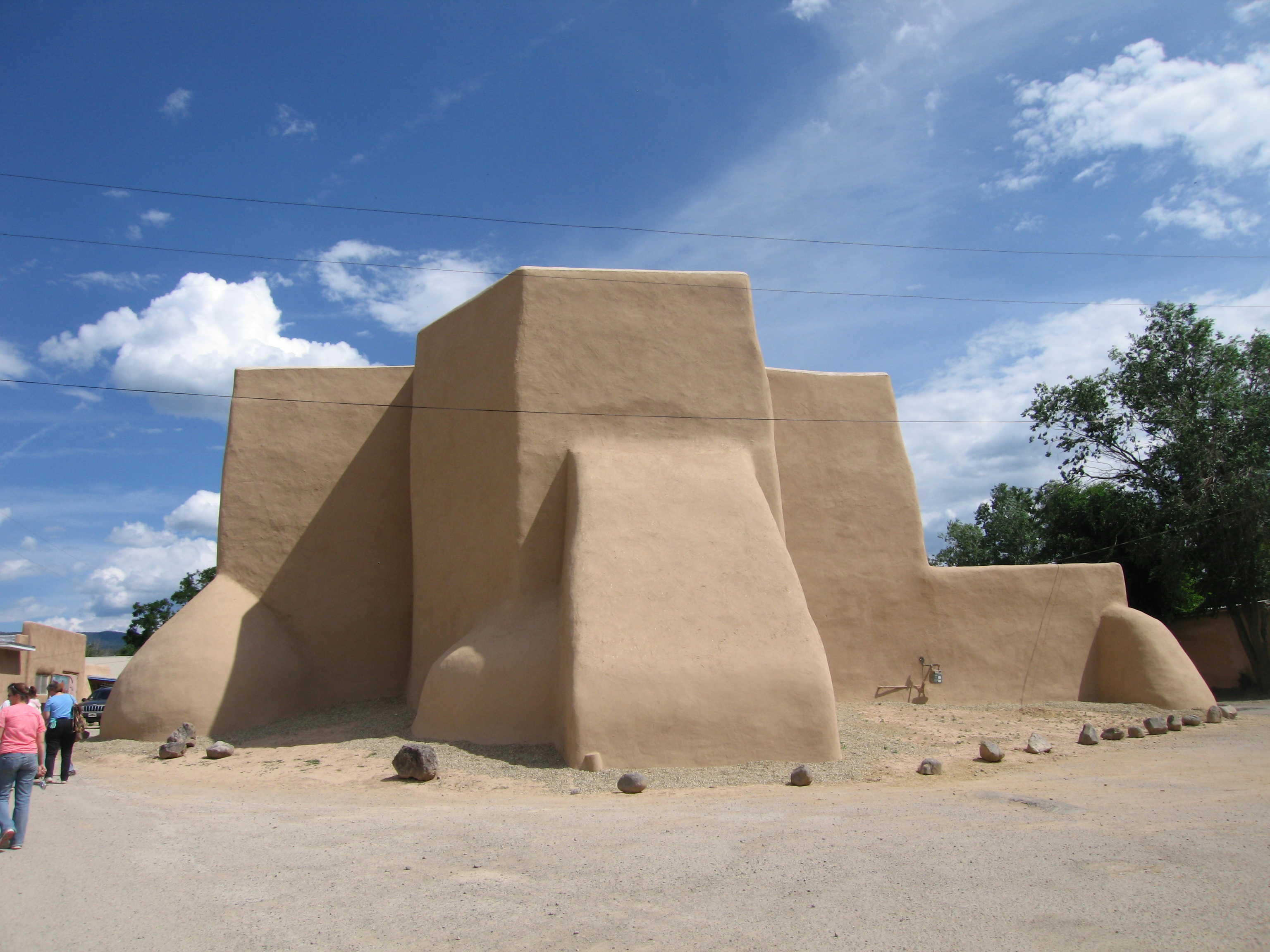
Image of the moment: San Francisco de Asis without Adams or O’Keefe

July 6, 2007

Neither Ansel Adams nor Georgia O’Keefe noted the power lines, or the gas meter.

They must be recent additions.

The essential beauty of the church remains.

1549-san-francisco-de-asis-church-in-taos-july-5-2007.jpg

The original adobe construction of the church was completed in 1772 — four years prior to the Declaration of Independence. It is built in the shape of a cross, but structural weaknesses required the addition of buttresses, shown in the photograph — also of adobe.

A bad photograph of the church is almost impossible.

The interior is cool on a hot afternoon. Adobe construction offers significant advantages, even in the 21st century. The church hosts an active congregation, without air conditioning.

Photo: Copyright 2007, Ed Darrell; you may reproduce for educational or non-profit use, so long as attribution is attached. Attribution must be attached.

Welcome, visitors!  Please leave a comment, at least tell why you visited, and where you’re from.  Thank you.


Taos is beautiful this time of year

July 3, 2007

Posting is light — I’m on the road and relatively incommunicado. We’re in New Mexico, building houses with Habitat for Humanity. It’s great stuff.

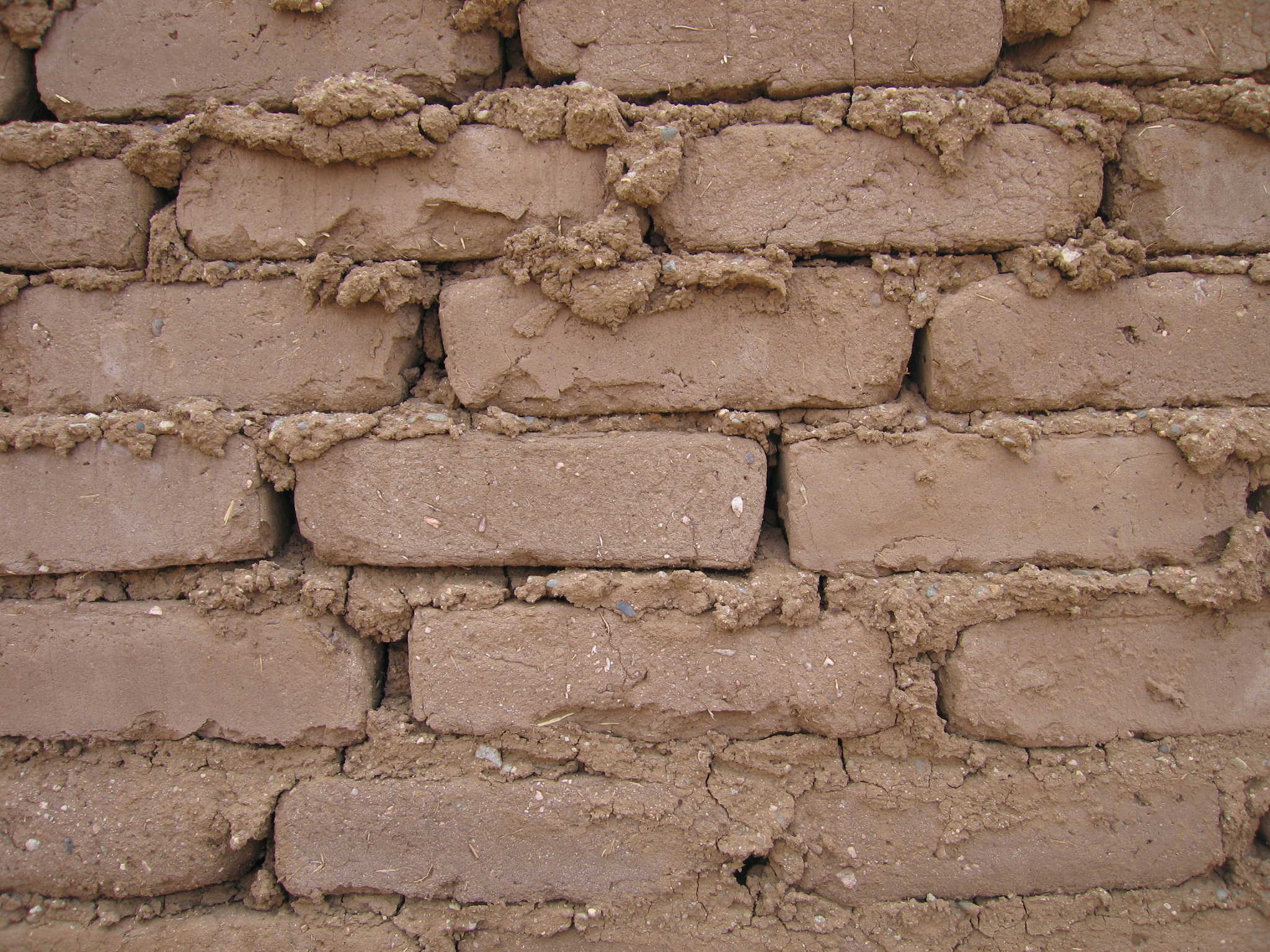
Taos adobe wall

Adobe construction is amazing. It’s hitting 90 degrees Fahrenheit here by noon — adobe houses, without air conditioning or forced air of any kind stay cool well into the afternoon. Amazing.

My apologies for light posting; comment away on the stuff that is here. I’m running a few posts from the past that deserve wider audience (and more comment). And I’ll try to post from the road. So much to see and say.

  • Photo of adobe wall in house under construction in Taos, New Mexico.  Copyright 2007 by Ed Darrell.  Feel free to use it, with attribution.

Gold from rust: Tulsa shines, Plymouth doesn’t

June 16, 2007

The story could fuel jokes for years. Or it could cause tears, as indeed it did from the woman who organized the festivities around the unearthing of the 50-year-old Plymouth buried at Tulsa’s courthouse.

The headline in The Tulsa World shows pluck, determination and a good sense of humor: Tulsa celebrates anyway, but the Plymouth is a bucket of rust.

Tarnished gold,” is the headline.

Now we know what 50 years in a hole does to a Plymouth Belvedere.

The tires go flat. The paint fades. Hinges and latches stiffen, upholstery disintegrates, the engine becomes a very large paperweight.

But what the heck. None of us is what we used to be.

1957? Eisenhower sent U.S. Marshalls, and then the U.S. Army, into Little Rock, Arkansas, so 9 African-Americans could register to go to Central High School. That was so long ago that the Little Rock 9 graduated, became doctors, lawyers and businessmen, and even an undersecretary of Labor, and got very gray; Central High is now a National Historic Monument (though still a high school). Greg Morrell wipes grime from Plymouth bumper, Tulsa Convention Center, Tulsa World Photo by Michael Wyke


Janis Joplin tour invites fans to Texas

April 24, 2007

Janis Joplin in concert

Good News Comes in Small Packages Division: This was the entirety of the article in the Dallas Morning News travel section Sunday:

Come on down for a Janis Joplin tour

Head down to Port Arthur – in a Mercedes Benz, if possible – for a new self-guided Janis Joplin driving tour. The 15 stops include her childhood home, churches, schools and the Museum of the Gulf Coast, which has an exhibit devoted to the rock and blues singer. For the tour brochure, call 1-800-235-7822.

Is there more? Sure — below the fold. Summertime’s a good time to make the tour — but so is spring, fall, and winter.

Read the rest of this entry »


Blue Bell Ice Cream, a tastier part of Texas history

March 18, 2007

My first visit to Texas in the early 1980s, to visit friends in Houston and in-laws in Dallas, I met Blue Bell Ice Cream. It was love at first bite, of course.

Bluebell Creamery's ad, barn and blue sky

Blue Bell Creamery ad, barn and blue sky, and their memorable slogan

Ice cream plays an important role in my family. Family reunions, or just any celebration in summer, were excuses to pull out several hand-cranked ice cream makers, and freeze away. Homemade vanilla delights the palate, and family gourmands grind vanilla beans to add a little extra oomph. When grandfather Leo Stewart had peaches from his orchard, or later just peaches from our backyard tree in Pleasant Grove, Utah, fresh peaches went into the mix. Only someone who experienced my father’s peaches in my mother’s custard, frozen in a hand-cranked freezer, could fully appreciate Willie Stark‘s lines about peach ice cream in Robert Penn Warren’s book, All the King’s Men.

White Mountain 6-quart hand crank ice cream freezer

White Mountain 6-quart hand crank ice cream freezer, one of the better freezers

Homemade ice cream is a bother. Better freezers are not cheap, and they don’t travel well. My mother’s mini-freezer disappeared sometime in one of her later-life moves. My father’s much larger, two-gallon colossus simply wore out, with most of the ferrous metal parts rusting away, and even the wood of the barrel crumbling to dust. Proper salt to get the solution colder than freezing is sporadically available in city supermarkets. My mother’s recipe for the custard, unwritten as all her better recipes, died with her.

Bluebell Peaches and Homemade Vanilla

Bluebell Peaches and Homemade Vanilla

Utah is a haven for ice cream makers. Snelgrove’s on 33rd South in Salt Lake City is tradition in many families (Snelgrove is now owned by Dreyer’s, but still operates as Snelgrove in Utah) (Update, July 2008: Snelgrove’s is dead). My wife’s family is partial to Farr’s in Ogden, “Farr better ice cream” — and it is very, very good. Trips to visit family include stops at Farr’s.

Blue Bell Homemade Vanilla tastes like my mother’s custard frozen in a hand-cranked freezer. It is consistently the best-tasting ice cream, for a very reasonable price.

Blue Bell celebrates its 100th anniversary as a company in 2007, the “little creamery” in Brenham, Texas, where Blue Bell is made.

Even better, the company wants you to suggest new flavors, and is holding a contest to get good, local flavors. Winners of the Taste of the Country Flavor Contest get a trip to Brenham for the 100th anniversary celebration.

Plus, winners get a year’s supply of Blue Bell ice cream.

Blue Bell is a nice local company making good. Though the production is limited (and I believe it is still true that all the ice cream is made in Brenham), so it is available only in 17 states concentrated in the southeast, the brand is the third best-selling brand in the U.S.

If you’re near Houston, you would be well advised to make a side trip to Brenham to tour the Blue Bell ice cream factory (plus, the bluebonnets will be in bloom shortly).

North America is a big continent, with international brands that work for international consistency of products, so that the company’s customers get the same experience regardless where the customers are — think McDonalds, Burger King, and Coca-Cola. Large conglomerates often own even nominally regional brands. As I noted earlier, Snelgrove’s in Salt Lake City is now run by a national ice cream giant — even Ben & Jerry’s brand is now owned, produced and marketed by a national marketing giant. Blue Bell is a standout, an almost-local brand, with limited distribution. Part of the joy of a well-working free enterprise system is finding a well-run local company, with a unique product.

Blue Bell could make a fortune bottling their success formula, too, in addition to their ice cream.

Bluebell logo

Glen Dromgoole at the Abilene Reporter-News reviewed the book about Blue Bell’s history in his column February 18, 2007, “Blue Bell Ice Cream, a Texas Staple, Turns 100.”


Belgium breaking up? Who gets the beer?

January 22, 2007

Town Hall in Leuven, Belgium

Town Hall in Leuven, Belgium; image from Katholieke Universiteit Leuven

Did I really miss this last month?  A television  network in Belgium, RTBF, started out the morning reporting on the breakup of Belgium.  Rather contrary to the rules of hoaxes set up by Orson Welles and the Mercury Theatre, no mention of a dramatization was made for at least a half-hour.

And of course, it was all a hoax.  The network said they wanted to generate discussion about how Belgium works, etc., etc.   Not everyone was happy with the kickoff to discussion.

I have no particular dog in that fight, though I’m fond of Belgium.  My wife spent a year studying in Louvin (Louvain, Leuven) (before I knew her), and we have wonderful photos.  My own business trip to Brussells was less than 24 hours, though we conducted our business in lightning fashion and were able to spend the evening in a wonderfully lit historic square sampling several brands of beer — okay, many brands.  We all made it to the Oh-Dark-thirty airplane home the next morning (some in better shape than others).

It’s always an eye-opener to learn how little most people know about the country, though it plays a huge role in the European Union, in NATO, and in the history of the 20th century, especially World Wars I and II.

Now it appears even Belgians don’t know whether their nation would break up or not.  Jacques Brel is no longer alive and well.

More: