Eisenhower’s contingency statement, in case D-Day failed – image from the National Archives
This quote actually isn’t a quote. It was never said by the man who wrote it down to say it. It carries a powerful lesson because of what it is.
In preparing for the D-Day invasion, Supreme Allied Commander Dwight Eisenhower carefully contemplated what would happen if the invasion failed. What if the Germans repulsed the Allies, and no foothold was established to re-take the main body of Europe from the Germans?
Ike’s answer is a model of leadership: He would take the blame. Regardless what happened, Ike took full responsibility for the failure, giving credit to the soldiers who would have sacrificed in vain, perhaps their lives.
The Bathtub recently posted Gen. Dwight Eisenhower’s “order of the day” to the troops about to conduct the Allied invasion of Normandy — D-Day — to establish the toehold in Europe the Allies needed to march to Berlin, and to end World War II in Europe. As a charge to the troops, it was okay — Eisenhower-style words, not Churchill-style, but effective enough. One measure of its effectiveness was the success of the invasion, which established the toe-hold from which the assaults on the Third Reich were made.
Photo shows Eisenhower meeting with troops of the 101st Airborne Division, 502nd Parachute Infantry Regiment, on the eve of the invasion. It was these men whose courage he lauded.
Eisenhower wrote a second statement, a shorter one. This one was directed to the world. It assumed the assault had failed. In a few short sentences, Eisenhower commended the courage and commitment of the troops who, he wrote, had done all they could. The invasion was a chance, a good chance based on the best intelligence the Allies had, Eisenhower wrote. But it had failed.
The failure, Eisenhower wrote, was not the fault of the troops, but was entirely Eisenhower’s.
He didn’t blame the weather, though he could have. He didn’t blame fatigue of the troops, though they were tired, some simply from drilling, many from war. He didn’t blame the superior field position of the Germans, though the Germans clearly had the upper hand. He didn’t blame the almost-bizarre attempts to use technology that look almost clownish in retrospect — the gliders that carried troops behind the lines, sometimes too far, sometimes killing the pilots when the gliders’ cargo shifted on landing; the flotation devices that were supposed to float tanks to the beaches to provide cover for the troops (but which failed, drowning the tank crews and leaving the foot soldiers on their own); the bombing of the forts and pillboxes on the beaches, which failed because the bombers could not see their targets through the clouds.
There may have been a plan B, but in the event of failure, Eisenhower was prepared to establish who was accountable, whose head should roll if anyone’s should.
Eisenhower took full responsibility.
Our landings in the Cherbourg-Havre area have failed to gain a satisfactory foothold and I have withdrawn the troops. My decision to attack at this time and place was based upon the best information available. The troop, the air [force] and the navy did all that bravery and devotion to duty could do. If any blame or fault attaches to the attempt, it is mine alone.
Who in the U.S. command would write such a thing today? Who else in history would have written such a thing? Is there any indication that Julius Caesar, Alexander the Great, Attila the Hun, Genghis Khan, or any other commander of a great army in a world-turning invasion, considered how to save and perhaps salve the reputation of his troops, though they had failed?
Leadership is more than just positive thinking.
The message may also be viewed here. Yes, it’s incorrectly dated July 5 — should have been June 5. In history, little is perfect. We can excuse his slip of the pen, considering what he had on his mind.
Another angle of the meeting with the troops: General Eisenhower speaks with members of the 101st Airborne Division on the evening of 5 June 1944. Wikipedia image
Spread the word; friends don't allow friends to repeat history.
First Flag on Utah Beach, June 6, 1944 – Photo by Mark Wainwright
Today is the 69th anniversary of the Invasion of Normandy in World War II, a date generally called D-Day. I usually get at least one e-mail request: No, you don’t have to fly your flag. This is not one of the days designated by Congress for flag-flying.
But you may fly your flag, and probably, you should. If there are any D-Day veterans in your town, they’ll appreciate it.
We trained hard, but it seemed that every time we were beginning to form up into teams we would be reorganized. Presumably the plans for our employment were being changed. I was to learn later in life that, perhaps because we are so good at organizing, we tend as a nation to meet any new situation by reorganizing; and a wonderful method it can be for creating the illusion of progress while producing confusion, inefficiency, and demoralization.
Ogburn’s magazine article became the basis for his book, The Marauders. In turn, that was the basis for a movie, Merrill’s Marauders. In the book, the quote is different:
As a result, I suppose, of high-level changes of mind about how we were to be used, we went though several reorganizations. Perhaps because Americans as a nation have a gift for organizing, we tend to meet any new situation by reorganization, and a wonderful method it is for creating the illusion of progress at the mere cost of confusion, inefficiency and demoralization.
The Marauders (1959), chapter 2, page 60 (attributed)
My old friend Frank Hewlett had been a correspondent in the South Pacific and Southeast Asia, including Burma, during World War II. Frank told me that he had been the first to call the American group “Merrill’s Marauders” in a war news dispatch on the progress the group made. He did not get any credit for the book or movie title, but he said it was great that any group of soldiers that worked that well got popular attention for their work. I’ve never found Hewlett’s dispatches from that period, but I’ve never found anything else he told me to be inaccurate.
In serious corporate reorganizations, or in corporate culture change operations, this quote is usually trotted out in opposition to whatever the proposed change may be. Generally reorganizers will dismiss the thing as fictional, in at least one case claiming that renegade corporate leader Bob Townsend made it up.
In our work at Committing to Leadership at American Airlines, CEO Bob Crandall actually read the full quote (misattributed at the time), and observed that it was probably true — but not a good reason to stop a needed reorganization. Crandall pointed to the last sentence, and said that a good manager’s job is to make sure that reorganization creates real success, not just an illusion of action, and that any good manager will recognize that reorganizations offer the danger of demoralization and confusion. Those are problems to be managed, Crandall said, not fates that cannot be avoided.
Do you find Ogburn’s snippet of wisdom to be true? So what?
How many ways can we say happy birthday to a great scientist born on Pi Day? So, an encore post.
E=energy; m=mass; c=speed of light
Happy Einstein Day! to us. Albert’s been dead since 1955 — sadly for us. Our celebrations now are more for our own satisfaction and curiosity, and to honor the great man — he’s beyond caring.
Almost fitting that he was born on π Day, no? I mean, is there an E=mc² Day?
Albert Einstein was born on March 14, 1879, in Ulm, Germany, to Hermann and Pauline Einstein. 26 years later, three days after his birthday, he sent off the paper on the photo-electric effect; that paper would win him the Nobel Prize in Physics in another five years, in 1921. In that same year of 1905, he published three other papers, solving the mystery of Brownian motion, describing what became known as the Special Theory of Relativity and solving the mystery of why measurements of the light did not show any effects of motion as Maxwell had predicted, and a final paper that noted a particle emitting light energy loses mass. This final paper amused Einstein because it seemed so ludicrous in its logical extension that energy and matter are really the same stuff at some fundamental point, as expressed in the equation demonstrating an enormous amount of energy stored in atoms, E=mc².
Albert Einstein as a younger man – Nobel Foundation image
Any one of the papers would have been a career-capper for any physicist. Einstein dashed them off in just a few months, forever changing the fields of physics. And, you noticed: Einstein did not win a Nobel for the Special Theory of Relativity, nor for E=mc². He won it for the photo electric effect. Irony in history.
106 years later Einstein’s work affects us every day. Relativity theory at some level I don’t understand makes possible the use Global Positioning Systems (GPS), which revolutionized navigation and mundane things like land surveying and microwave dish placement. Development of nuclear power both gives us hope for an energy-rich future, and gives us fear of nuclear war. Sometimes, even the hope of the energy rich future gives us fear, as we watch and hope nuclear engineers can control the piles in nuclear power plants damaged by earthquakes and tsunami in Japan.
Albert Einstein on a 1966 US stamp (Photo credit: Wikipedia)
If Albert Einstein was a genius at physics, he was more dedicated to pacifism. He resigned his German citizenship to avoid military conscription. His pacifism made the German Nazis nervous; Einstein fled Germany in the 1930s, eventually settling in the United States. In the U.S., he was persuaded by Leo Szilard to write to President Franklin Roosevelt to suggest the U.S. start a program to develop an atomic weapon, because Germany most certainly was doing exactly that. But while urging FDR to keep up with the Germans, Einstein refused to participate in the program himself, sticking to his pacifist views. Others could, and would, design and build atomic bombs. (Maybe it’s a virus among nuclear physicists — several of those working on the Manhattan Project were pacifists, and had great difficulty reconciling the idea that the weapon they worked on to beat Germany, was deployed on Japan, which did not have a nuclear weapons program.)
Everybody wanted to claim, and honor Einstein; USSR issued this stamp dedicated to Albert Einstein Русский: Почтовая марка СССР, посвящённая Альберту Эйнштейну (Photo credit: Wikipedia)
Einstein was a not-great father, and probably not a terribly faithful husband at first — though he did think to give his first wife, in the divorce settlement, a share of a Nobel Prize should he win it. Einstein was a good violinist, a competent sailor, an incompetent dresser, and a great character. His sister suffered a paralyzing stroke. For many months Albert spent hours a day reading to her the newspapers and books of the day, convinced that though mute and appearing unconscious, she would benefit from hearing the words. He said he did not hold to orthodox religions, but could there be a greater show of faith in human spirit?
Einstein in 1950, five years before his death
When people hear clever sayings, but forget to whom the bon mots should be attributed, Einstein is one of about five candidates to whom all sorts of things are attributed, though he never said them. (Others include Lincoln, Jefferson, Mark Twain and Will Rogers). Einstein is the only scientist in that group. So, for example, we can be quite sure Einstein never claimed that compound interest was the best idea of the 20th century. This phenomenon is symbolic of the high regard people have for the man, even though so few understand what his work was, or meant.
A most interesting man. A most important body of work. He deserves more study and regard than he gets.
Could that be right? In was in his State of the Union address in January 1941 that Roosevelt described the four freedoms he said the U.S. should work to secure around the world — this was clearly a philosophical foundation-laying for going to war on the side of Britain, and against Germany, in the World War that was already raging, but which the U.S. had managed to stay out of for five years in Asia and two years in Europe.
I have called for personal sacrifice, and I am assured of the willingness of almost all Americans to respond to that call. A part of the sacrifice means the payment of more money in taxes. In my budget message I will recommend that a greater portion of this great defense program be paid for from taxation than we are paying for today. No person should try, or be allowed to get rich out of the program, and the principle of tax payments in accordance with ability to pay should be constantly before our eyes to guide our legislation.
If the Congress maintains these principles the voters, putting patriotism ahead of pocketbooks, will give you their applause.
In the future days, which we seek to make secure, we look forward to a world founded upon four essential human freedoms.
Norman Rockwell’s “Freedom from Fear,” 1943 painting based on FDR’s 1941 State of the Union address, “The Four Freedoms.” This painting was used on posters urging Americans to buy War Bonds.
The first is freedom of speech and expression — everywhere in the world.The second is freedom of every person to worship God in his own way everywhere in the world.
The third is freedom from want, which, translated into world terms, means economic under- standings which will secure to every nation a healthy peacetime life for its inhabitants — everywhere in the world.
The fourth is freedom from fear, which, translated into world terms, means a world-wide reduction of armaments to such a point and in such a thorough fashion that no nation will be in a position to commit an act of physical aggression against any neighbor — anywhere in the world.
That is no vision of a distant millennium. It is a definite basis for a kind of world attainable in our own time and generation. That kind of world is the very antithesis of the so-called “new order” of tyranny which the dictators seek to create with the crash of a bomb.
To that new order we oppose the greater conception — the moral order. A good society is able to face schemes of world domination and foreign revolutions alike without fear.
Since the beginning of our American history we have been engaged in change, in a perpetual, peaceful revolution, a revolution which goes on steadily, quietly, adjusting itself to changing conditions without the concentration camp or the quicklime in the ditch. The world order which we seek is the cooperation of free countries, working together in a friendly, civilized society.
This nation has placed its destiny in the hands and heads and hearts of its millions of free men and women, and its faith in freedom under the guidance of God. Freedom means the supremacy of human rights everywhere. Our support goes to those who struggle to gain those rights and keep them. Our strength is our unity of purpose.
To that high concept there can be no end save victory.
Posters showing all four of Rockwell’s paintings also were printed for the War Bonds Drive. Image from the digital collection of the libraries at the University of North Texas
The 2013 version shows how our freedoms have been diminished, or corrupted into totally different forms.
Freedom from want? Poverty keeps getting worse. . .
Freedom from fear? The new Jim Crow. . .
Freedom of worship? Distorted by visions of the Rapture. . .
Freedom of speech? No, surveillance and harassment. . .
Mr. Bucheit offers longer explanations. I don’t think I agree completely, but I’m interested in your opinion: Are we losing the Four Freedoms we fought for?
Tip of the old scrub brush to Bonnie Lesley, @EdFocus on Twitter.
“Say, whatever happened to ‘Freedom from Fear?'” Herblock cartoon in the Washington Post, August 13, 1951, on McCarthyism and the hunt for communists in government jobs. CJR290 image; click image for more information.
Spread the word; friends don't allow friends to repeat history.
Presidential Proclamation — National Pearl Harbor Remembrance Day, 2012
NATIONAL PEARL HARBOR REMEMBRANCE DAY, 2012
– – – – – – –
BY THE PRESIDENT OF THE UNITED STATES OF AMERICA
A PROCLAMATION
On December 7, 1941, our Nation suffered one of the most devastating attacks ever to befall the American people. In less than 2 hours, the bombs that rained on Pearl Harbor robbed thousands of men, women, and children of their lives; in little more than a day, our country was thrust into the greatest conflict the world had ever known. We mark this anniversary by honoring the patriots who perished more than seven decades ago, extending our thoughts and prayers to the loved ones they left behind, and showing our gratitude to a generation of service members who carried our Nation through some of the 20th century’s darkest moments.
In his address to the Congress, President Franklin D. Roosevelt affirmed that “with confidence in our Armed Forces — with the unbounding determination of our people — we will gain the inevitable triumph.” Millions stood up and shipped out to meet that call to service, fighting heroically on Europe’s distant shores and pressing island by island across the Pacific. Millions more carried out the fight in factories and shipyards here at home, building the arsenal of democracy that propelled America to the victory President Roosevelt foresaw. On every front, we faced down impossible odds — and out of the ashes of conflict, America rose more prepared than ever to meet the challenges of the day, sure that there was no trial we could not overcome.
Today, we pay solemn tribute to America’s sons and daughters who made the ultimate sacrifice at Oahu. As we do, let us also reaffirm that their legacy will always burn bright — whether in the memory of those who knew them, the spirit of service that guides our men and women in uniform today, or the heart of the country they kept strong and free.
The Congress, by Public Law 103-308, as amended, has designated December 7 of each year as “National Pearl Harbor Remembrance Day.”
NOW, THEREFORE, I, BARACK OBAMA, President of the United States of America, do hereby proclaim December 7, 2012, as National Pearl Harbor Remembrance Day. I encourage all Americans to observe this solemn day of remembrance and to honor our military, past and present, with appropriate ceremonies and activities. I urge all Federal agencies and interested organizations, groups, and individuals to fly the flag of the United States at half-staff this December 7 in honor of those American patriots who died as a result of their service at Pearl Harbor.
IN WITNESS WHEREOF, I have hereunto set my hand this sixth day of December, in the year of our Lord two thousand twelve, and of the Independence of the United States of America the two hundred and thirty-seventh.
BARACK OBAMA
Spread the word; friends don't allow friends to repeat history.
Caption from Naval History and Heritage Command: Photo #: 80-G-19930 Pearl Harbor Attack, 7 December 1941 Sailors in a motor launch rescue a survivor from the water alongside the sunken USS West Virginia (BB-48) during or shortly after the Japanese air raid on Pearl Harbor. USS Tennessee (BB-43) is inboard of the sunken battleship. Note extensive distortion of West Virginia’s lower midships superstructure, caused by torpedoes that exploded below that location. Also note 5″/25 gun, still partially covered with canvas, boat crane swung outboard and empty boat cradles near the smokestacks, and base of radar antenna atop West Virginia’s foremast. Official U.S. Navy Photograph, National Archives Collection.
Today is the 71st anniversary of Japan’s attack on the U.S.’s Pacific Fleet at Pearl Harbor, Hawaii.
Our local newspaper, The Dallas Morning News, ran a front-page story on survivors of the attack in 2006, who have met every five years in reunion at Pearl Harbor. [December 7, 2006] was their last official reunion. The 18-year-olds who suffered the attack, many on their first trips away from home, are in their 80s now. Age makes future reunions impractical.
“We’re like the dodo bird. We’re almost extinct,” said Middlesworth, now an 83-year-old retiree from Upland, Calif., but then – on Dec. 7, 1941 – an 18-year-old Marine on the USS San Francisco.
Nearly 500 survivors from across the nation were expected to make the trip to Hawaii, bringing with them 1,300 family members, numerous wheelchairs and too many haunting memories.
Memories of a shocking, two-hour aerial raid that destroyed or heavily damaged 21 ships and 320 aircraft, that killed 2,390 people and wounded 1,178 others, that plunged the United States into World War II and set in motion the events that led to atomic bombings of Hiroshima and Nagasaki.
“I suspect not many people have thought about this, but we’re witnessing history,” said Daniel Martinez, chief historian at the USS Arizona Memorial. “We are seeing the passing of a generation.”
Another article notes the work of retired history professor Ron Marcello from the University of North Texas, in Denton, in creating oral histories from more than 350 of the survivors. This is the sort of project that high school history students could do well, and from which they would learn, and from which the nation would benefit. If you have World War II veterans in your town, encourage the high school history classes to go interview the people. This opportunity will not be available forever.
There is much to be learned, Dr. Marcello said:
Dr. Marcello said that in doing the World War II history project, he learned several common themes among soldiers.
“When they get into battle, they don’t do it because of patriotism, love of country or any of that. It’s about survival, doing your job and not letting down your comrades,” he said. “I heard that over and over.”
Another theme among soldiers is the progression of their fear.
“When they first got into combat, their first thought is ‘It’s not going to happen to me.’ The next thought is ‘It might happen to me,’ and the last thought is ‘I’m living on borrowed time. I hope this is over soon,’ ” Dr. Marcello said.
Dr. Marcello said the collection started in the early 1960s. He took charge of it in 1968. Since Dr. Marcello has retired, Todd Moye has taken over as the director.
Can’t let election day go by without at least noting this great, undersung painting by Normal Rockwell, “Election Day (1944)”:
Norman Rockwell, Election Day, 1944, watercolor and gouache, 14 x 33 1/2 in., Museum purchase, Save-the-Art fund, 2007.037.1.
Remember when people used to dress up to go to the polls?
In 1944 President Franklin Roosevelt ran for an unprecedented fourth term. Most Americans did not know it, but he was deathly ill at the time. He dropped Vice President Henry Wallace from his ticket — some argue it was a mutual disaffection at that time — and selected the relatively unknown young Missouri U.S. Sen. Harry S Truman for the vice president’s slot.
In November 1944, D-Day was known to be a successful invasion, and most Americans hoped for a relatively speedy end to World War II in both Europe and the Pacific. Within the next ten months, the nation would endure the last, futile, desperate and deadly gasp of the Third Reich in the Battle of the Bulge, the liberation of Berlin in April 1945, and end of the war in the European Theatre on May 8; the Battle of Leyte Gulf, the Philippines Campaign, and the bloody, crippling battles of Iwo Jima and Okinawa in the Pacific Theatre, and then the first use of atomic weapons in war, at Hiroshima and Nagasaki (and we hope, the last use).
Voters in Cedar Rapids could not have known that. They did not know that, regardless their vote for FDR or his Republican challenger, New York Gov. Thomas Dewey, Harry S Truman would be president within six months, nor that the entire world would change in August 1945.
This painting captures a time of spectacular moment, great naivity, and it pictures the way history got made.
In 2007, the citizens of Cedar Rapids rallied together to purchase a series of watercolors destined for the auction block in New York. These five watercolors, by acclaimed 20th century American artist Norman Rockwell, depicted scenes associated with an election day and were created specifically for the November 4, 1944 issue of the Saturday Evening Post. To complete the Post commission, Rockwell traveled to a quintessential Midwestern town, Cedar Rapids, to study local citizens as models for his series of images.
In the 65 years since his visit, numerous anecdotes and stories have arisen about the artist’s time in Cedar Rapids and the creation of this work. This exhibition uses these five, newly conserved and restored watercolors and a related oil painting from the Norman Rockwell Museum, along with numerous photographs taken by local photographer Wes Panek for Rockwell, to investigate the many facts and fictions associated with Rockwell’s visit and this set of watercolors.
Norman Rockwell: Fact & Fiction has been made possible in part by Rockwell Collins, Candace Wong, and local “Friends of Norman Rockwell.” General exhibition and educational support has been provided by The Momentum Fund of the Greater Cedar Rapids Community Foundation.
Friends of Norman Rockwell: Wilma E. Shadle, Howard and Mary Ann Kucera, Jean Imoehl, Ben and Katie Blackstock, Marilyn Sippy, Chuck and Mary Ann Peters, Phyllis Barber, Ann Pickford, Anthony and Jo Satariano, Barbara A. Bloomhall, Virginia C. Rystrom, Jeff and Glenda Dixon, Robert F. & Janis L. Kazimour Charitable Lead Annuity Trust, Fred and Mary Horn, Mrs. Edna Lingo, John and Diana Robeson, Jewel M. Plumb, Carolyn Pigott Rosberg, Mr. and Mrs. Robert J. Buchacek, Dan and Anne Pelc, Mary Brunkhorst, and John and Diana Robeson.
I am amused and intrigued that this scene also closely resembles the scene when I voted in Cheverly, Maryland, in 1984 — down to the dog in the picture. Oh, and most of the women didn’t wear dresses, none wore hats, and I was the only guy in the room with a tie.
Roosevelt won the 1944 election in an electoral college landslide, 432 to 99, but Dewey won Iowa, and we might assume Dewey won Cedar Rapids, too.
Woody’s recording of the song, with some good photos of the DD 245 U.S.S. Reuben James, the German U-boat that sank her, and two later ships that carried the same name:
From the YouTube description:
Woody Guthrie‘s song written shortly after the sinking of the USS Reuben James DD-245; Slideshow of DD 245, DE 153, FFG 57 and U 552 with a few other notable photos included.
English: PACIFIC OCEAN (July 8, 2010) The Oliver Hazard Perry-class guided-missile frigate USS Reuben James (FFG 57) conducts training exercises supporting Rim of the Pacific (RIMPAC) 2010 exercises. RIMPAC is a biennial, multinational exercise designed to strengthen regional partnerships and improve interoperability. (U.S. Navy photo by Mass Communication Specialist 2nd Class Jeremy M. Starr/Released) (Photo credit: Wikipedia)
Spread the word; friends don't allow friends to repeat history.
October 31 hosts several famous anniversaries. It is the anniversary of Nevada’s statehood (an October surprise by Lincoln for the 1864 campaign?). It is the anniversary of the cleaving of western, catholic Christianity, as the anniversary of Martin Luther’s tacking his 95 theses to the door of the church in Wittenburg, Germany in 1517, the formal start of the Reformation. Maybe the original Christian trick or treat.
U.S.S. Reuben James sinking, October 31, 1941 – National Archives photo
October 31 is also the anniversary of the sinking of the World War I era Clemson-class, four-stack destroyer, U.S.S. Reuben James, by a German U-boat. Woody Guthrie memorialized the sad event in the song, Reuben James, recorded by the Almanac Singers with PeteSeeger (see also here, and here), and later a hit for the Kingston Trio. The Reuben James was sunk on October 31, 1941 — over a month before the Japanese attack on Pearl Harbor. Details via Wikipedia (just to make you school librarians nervous):
This history figured into the 2008 presidential campaign in a small way: One of the internet hoax letters complaining about Barack Obama claimed that the U.S. entered World War II against Germany although the Germans had not fired a single round against the U.S. The 115 dead from the crew of 160 aboard the James testify to the inaccuracy of that claim, wholly apart from the treaty of mutual defense Germany and Japan were parties to, which encouraged Germany to declare war upon any nation that went to war with Japan. After the U.S. declaration of war on Japan, Germany declared war on the U.S., creating a state of war with Germany.
This history also reminds us that many Americans were loathe to enter World War II at all. By October 1941, Japan had been occupying parts of China for ten years, and the Rape of Nanking was four years old. The Battle of the Atlantic was in full swing, and the Battle of Britain was a year in the past, after a year of almost-nightly bombardment of England by Germany. Despite these assaults on friends and allies of the U.S., and the losses of U.S. ships and merchant marines, the U.S. had remained officially neutral.
Many Americans on the left thought the sinking of the Reuben James to be the sort of wake-up call that would push Germany-favoring Americans to reconsider, and people undecided to side with Britain. The political use of the incident didn’t have much time to work. Five weeks later Japan attacked Pearl Harbor, and by the end of 1941, the U.S. was at war with the Axis Powers.
Letter to the U.S. Navy asking the fate of friends aboard the U.S.S. Reuben James, November, 1941
Telegram informing his family of the death of Gene Guy Evans, of Norfolk, Virginia, lost in the torpedoing of the U.S.S. Reuben James
The Kingston Trio sings, as the names of the dead scroll:
Reuben JamesReuben James was born in Delaware about 1776. During the Quasi-War with France, Boatswain’s Mate James participated in Constellation’s victories over the French ships L’Insurgente, 9 February 1799, and La Vengeance. During the Barbary Wars, he served aboard Enterprise and accompanied Stephen Decatur into the harbor at Tripoli on 16 February 1804, as Decatur and his men burned the captured American frigate Philadelphia to prevent Tripoli from using her in battle. In the ensuing skirmish, an American seaman positioned himself between Decatur and an enemy blade. This act of bravery was attributed to Reuben James and to Daniel Frazier. For the rest of the war, James continued to serve Decatur aboard Constitution and Congress. During the War of 1812, he served in United States, under Decatur, and in President. On 15 January 1815, however, President was defeated by the British and James was taken prisoner. After the war, he resumed service with Decatur, aboard Guerriere, and participated in the capture of the 46-gun Algerian flagship Mashoudaon 17 June 1815. After peace was made with the Barbary states, James continued his service in the Navy until declining health brought about his retirement in January 1836. He died on 3 December 1838 at the U.S. Naval Hospital in Washington, D.C.
Reuben James (DD-245) was laid down 2 April 1919 by New York Shipbuilding Corp., Camden, N.J.; launched 4 October 1919; sponsored by Miss Helen Strauss; and commissioned 24 September 1920, Comdr. Gordon W. Haines in command.
Assigned to the Atlantic Fleet, Reuben James sailed from Newport, R.I., 30 November 1920 to Zelenika, Yugoslavia, arriving 18 December. During the spring and summer of 1921, she operated in the Adriatic and the Mediterranean out of Zelenika and Gruz, Yugoslavia, assisting refugees and participating in postwar investigations. In October 1921 at Le Havre, she joined Olympia (C-6) at ceremonies marking the return of the Unknown Soldier to the United States. At Danzig, Poland, from 29 October 1921 to 3 February 1922, she assisted the American Relief Administration in its efforts to relieve hunger and misery. After duty in the Mediterranean, she departed Gibraltar 17 July 1922.
Based then at New York, she patrolled the Nicaraguan coast to prevent the delivery of weapons to revolutionaries in early 1926. In the spring of 1929, she participated in fleet maneuvers that foreshadowed naval airpower. Reuben James decommissioned at Philadelphia on 20 January 1931.
Recommissioned 9 March 1932, she again operated in the Atlantic and the Caribbean. From September 1933 to January 1934 she patrolled Cuban waters during a period of revolution. Sailing for the Pacific from Norfolk 19 October 1934, she arrived at her new homeport of San Diego, Calif., 9 November. Following maneuvers that evaluated aircraft carriers, she returned to the Atlantic Fleet in January 1939. Upon the outbreak of war in Europe in September 1939, she joined the Neutrality Patrol, and guarded the Atlantic and Caribbean approaches to the American coast.
In March 1941, Reuben James joined the convoy escort force established to promote the safe arrival of war materials to Britain. This escort force guarded convoys as far as Iceland, where they became the responsibility of British escorts. Based at Hvalfjordur, Iceland, she sailed from Argentia, Newfoundland, 23 October 1941, with four other destroyers to escort eastbound convoy HX-156. While escorting that convoy, at about 0525, on 31 October 1941, Reuben James was torpedoed by German submarine U-562. Her magazine exploded, and she sank quickly. Of the crew, 44 survived, and 115 died. Reuben James was the first U.S. Navy ship sunk by hostile action in World War II.
First they came for the communists, and I did not speak out—because I was not a communist;
Then they came for the trade unionists, and I did not speak out—because I was not a trade unionist;
Then they came for the Jews, and I did not speak out—because I was not a Jew;
Then they came for me—and there was no one left to speak out for me.
German theologian and Lutheran Pastor Martin Niemöller on a postage stamp, painted by Gerd Aretz in 1992 – Wikipedia
Some time this year school curricula turn to the Holocaust, in English, in world history, and in U.S. history.
Martin Niemöller’s poem registers powerfully for most people — often people do not remember exactly who said it. I have seen it attributed to Deitrich Bonhoeffer (who worked with Niemöller in opposing some Nazi programs), Albert Einstein, Reinhold Niebuhr, Albert Schweitzer, Elie Wiesel, and an “anonymous inmate in a concentration camp.”
Niemöller and his actions generate controversy — did he ever act forcefully enough? Did his actions atone for his earlier inactions? Could anything ever atone for not having seen through Hitler and opposing Naziism from the start? For those discussion reasons, I think it’s important to keep the poem attributed to Niemöller. The facts of his life, his times, and his creation of this poem, go beyond anything anyone could make up. The real story sheds light.
I first posted a version of this back in August 2006. Since that time not much showed up on the internet to commemorate the story of Mel Mermelstein, nor to burn his deeds into the history books. Millard Fillmore’s Bathtub had many fewer readers each day, then too. This is a story that should not be forgotten about a story that must not be forgotten.
Mr. Mel Mermelstein, in 1993, recording an oral history for the US Holocaust Memorial Museum
In early August 1985, Melvin Mermelstein struck a powerful blow against bogus history and historical hoaxes. Mel won a decision in a California court, in a contract case.
A group of Holocaust deniers had offered a $50,000 reward for anyone who could prove that the Holocaust actually happened. Mermelstein had watched his family marched to the gas chambers, and could testify. He offered his evidence. The Holocaust deniers, of course, had no intention of paying up. They dismissed any evidence offered as inadequate, and continued to claim no one could prove that the Holocaust actually occurred.
Mermelstein, however, was a businessman and he knew the law. He knew that the offer of the reward was a sweepstakes, a form of contract. He knew it was a contract enforceable in court. He sued to collect the offered reward. The reward was an offer, and Mel Mermelstein accepted the offer and, he said, he performed his part of the bargain. The issue in court would be, was Mermelstein’s evidence sufficient?
Mermelstein’s lawyer had a brilliant idea. He petitioned the court to take “judicial notice” of the fact of the Holocaust. Judicial note means that a fact is so well established that it doesn’t need to be evidenced when it is introduced in court — such as, 2+2=4, the freezing point of water is 32 degrees Fahrenheit, 0 degrees Celsius, etc.
The court ruled that the evidence presented overwhelmingly established that the Holocaust had occurred — the court made judicial note of the Holocaust. That ruling meant that, by operation of law, Mermelstein won the case. The only thing for the judge to do beyond that was award the money, and expenses and damages.
As co-directors of Appalachian State University’s Center for Judaic, Holocaust and Peace Studies, Rennie Brantz and Zohara Boyd are always eager to expand and improve the center’s methods of education. Seldom, though, does this involve airfare.
Brantz and Boyd recently visited Israel to participate in the Fifth International Conference for Education: Teaching the Holocaust to Future Generations. The four-day conference was held in late June at Yad Vashem, an institute and museum in Jerusalem that specializes in the Nazi Holocaust. [link added]
“Yad Vashem is an incredible institute,” Brantz said. “It was founded in the ’50s to remember and commemorate those who perished in the Holocaust, and has been the premier international research institute dealing with the Holocaust.”
As Santayana advises, we remember the past in order to prevent its recurring. Clearly, this is a past we need to work harder at remembering.
Despite having been ordered to acknowledge the Holocaust, pay up on their sweepstakes offer, and apologize to Mr. Mermelstein, Holocaust deniers continue to publish claims that Mr. Mermelstein’s account is not accurate, or that it is contradictory or in some other way fails to measure up to the most strict tests of historical accuracy. So it is important that you remember the story of Mel Mermelstein, and that you spread it far and wide.
Mostly an encore post; some links added in quoted text, for ease of reference.
Hiroshima residents float lanterns in the river to remember the dead after a traditional Hiroshima Day concert (2008?); the concert and lantern floating are annual events
67 years ago, U.S. military action brought a quick close to hostilities without an invasion of Japan, with the detonation of two atomic bombs, one over Hiroshima on August 6, 1945, and one over Nagasaki on August 9.
Daily Yomiuri Online carried a description of memorial events in Hiroshima in 2008, from Yomiuri Shimbun:
NAGASAKI–The Nagasaki municipal government held a ceremony Saturday marking the 63rd anniversary of the atomic bombing of the city, at which participants called for the abolition of all nuclear weapons.
A total of 5,650 A-bomb survivors, representatives of victims’ families from around the nation and Nagasaki citizens participated in the ceremony. Prime Minister Yasuo Fukuda also attended the ceremony, which was held in Nagasaki Peace Park near ground zero.
Nagasaki Mayor Tomihisa Taue read out the Nagasaki Peace Declaration, which urges the worldwide abolition of nuclear weapons.
“Human beings have no future unless nuclear weapons are eliminated. We shall clearly say no to nuclear weapons,” Taue said.
The ceremony started at 10:40 a.m. Three books listing the names of 3,058 people confirmed to have died as a result of the bombing in the past year were placed inside a memorial box in front of the Peace Statue.
The total number of books listing the names of the deceased is 147, and the number of names is 145,984.
Representatives of surviving victims, bereaved families, the prime minister and Hiroshima Mayor Tadatoshi Akiba placed flowers at the site.
At 11:02 a.m., the time the atomic bomb struck, ceremony participants offered a silent prayer. At the same time, local high school students rang the Bells of Nagasaki.
In the peace declaration, Taue read from an academic paper written by four people, including a former U.S. secretary of state, which promoted a new policy for developing nuclear weapons. The proposal encouraged countries to ratify the Comprehensive Test Ban Treaty. The mayor said world nuclear powers “should sincerely fulfill their responsibility of nuclear disarmament,” and urged the government to pass the three nonnuclear principles into law.
This year also marks the 100th anniversary of the birth of Takashi Nagai, a medical doctor who helped rescue of victims after the bombing.
The mayor referenced one of the doctor’s remarks, saying: “There are no winners or losers in a war. There is only destruction.”
Shigeko Mori, 72, representing survivors of the bombing, read out an oath for peace that said Japan should promote its Constitution and the three nonnuclear principles to the rest of the world to prevent nuclear proliferation.
Fukuda gave a speech, saying, “Japan should play a responsible role in the international community as a nation cooperating for peace.”
Calgary Herald, Canadian former POW remembers Nagasaki bomb and aftermath;
Still, Ford said, if Nagasaki had not not been bombed, he likely would not have survived much longer. His citation called him a “man who recognizes the incongruity of having welcomed the Nagasaki bomb while condemning nuclear warfare.”
It said that “paradox reflects our collective failure to understand warfare, which has, like Job’s torment, an illogic that is purposefully inexplicable.”
Remembering that U.S. involvement in World War II as a combatant came after the Japanese sneak attack on Pearl Harbor on December 7, 1941, one may respect and appreciate the Japanese national desire to commemorate the brutal end of the war with conversations about peace and how to achieve it. The film below is a short, touching introduction to the Hiroshima Peace Museum website:
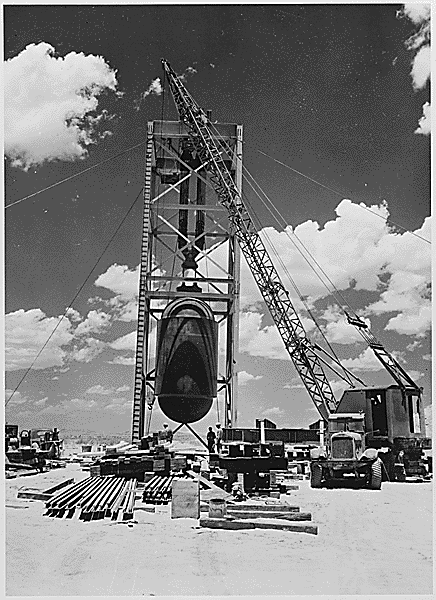
Rare color photograph of the first nuclear test at Trinity site, July 16, 1945. Blurriness is in the original photograph (done when color photography was still fairly new). (Photo credit: Wikipedia)
Spread the word; friends don't allow friends to repeat history.
Who is that kindly, chubby little man meant to represent? – 1954 cartoon by Michael Cummings, on the unveiling of a monumental portrait, a tribute to Winston Churchill. Churchill, the “roar to the lion” of the British people during World War II, was turned out of office after the war. Churchill’s personage seems dwarfed by his reputation, in the painting. Cartoon from the collection of Churchill’s granddaughter, Edwina Standys.
Sometimes life doesn’t seem to measure up to its reputation.
Churchill, the hero of Britain in World War II, lost his post as Prime Minister to his former aide, Clement Attlee, after the war. Britons appeared to think Attlee better suited to lead the peace. Tributes continued to pour in for Churchill, however.
Poking fun at the situation, to the amusement of Churchill himself, Cummings inked this cartoon on the unveiling of a great portrait to Churchill. The larger-than-life painting dwarfed the real-life Churchill.
History does that sometimes. The people who turn out as heroes, later on, seem so real, so non-heroic, and even small, in person.
One trick of living is to see the heroes under the small exteriors.
Or, until that account is unsuspended by the forces supporting Donald Trump: Follow @FillmoreWhite, the account of the Millard Fillmore White House Library
We've been soaking in the Bathtub for several months, long enough that some of the links we've used have gone to the Great Internet in the Sky.
If you find a dead link, please leave a comment to that post, and tell us what link has expired.
Thanks!
Retired teacher of law, economics, history, AP government, psychology and science. Former speechwriter, press guy and legislative aide in U.S. Senate. Former Department of Education. Former airline real estate, telecom towers, Big 6 (that old!) consultant. Lab and field research in air pollution control.
My blog, Millard Fillmore's Bathtub, is a continuing experiment to test how to use blogs to improve and speed up learning processes for students, perhaps by making some of the courses actually interesting. It is a blog for teachers, to see if we can use blogs. It is for people interested in social studies and social studies education, to see if we can learn to get it right. It's a blog for science fans, to promote good science and good science policy. It's a blog for people interested in good government and how to achieve it.
BS in Mass Communication, University of Utah
Graduate study in Rhetoric and Speech Communication, University of Arizona
JD from the National Law Center, George Washington University


 Posted by Ed Darrell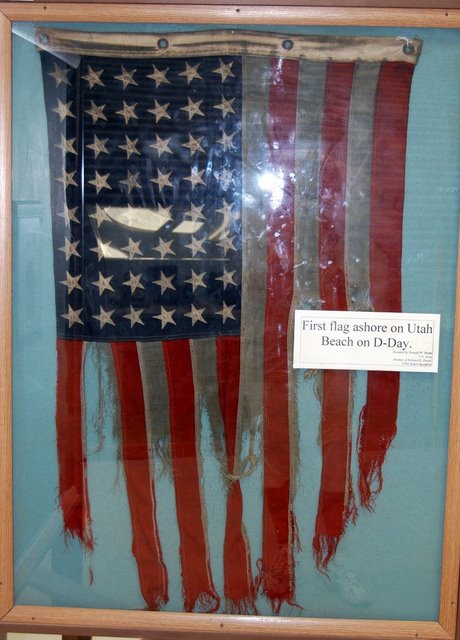









 Millard Fillmore's Bathtub