Caption from AIA's Archaeology: "In 1992, this hollow rock-crystal skull was sent to the Smithsonian anonymously. A letter accompanying the 30-pound, 10-inch-high artifact suggested it was of Aztec origin. (James Di Loreto & Donald Hurlburt/Courtesy Smithsonian Institution)"
The Archaeological Institute of America is North America’s oldest and largest non-profit organization devoted to archaeology. With more nearly a quarter of a million members and subscribers and 105 local chapters, it promotes archaeological excavation, research, education, and preservation on a global basis. At the core of its mission is the belief that an understanding of the past enhances our shared sense of humanity and enriches our existence. As archaeological finds are a non-renewable resource, the AIA’s work benefits not only the current generation, but also those yet to come in the future.
“Harrison Ford has played a significant role in stimulating the public’s interest in archaeological exploration,” said Brian Rose, President of the AIA. “We are all delighted that he has agreed to join the AIA’s Governing Board.”
AIA was chartered by Congress in 1906 — a full decade before the Boy Scouts of America, for comparison — with a charge to help enforce the Antiquities Act (16 U.S.C.§ 431).
More interesting, and more useful in the classroom, are the story and sidebar in the online magazine of the Institute, which notes that the crystal skull stories involve faked artifacts — and even that the idol in the opening scene of the very first Indy movie involves a faked artifact.
Sixteen years ago, a heavy package addressed to the nonexistent “Smithsonian Inst. Curator, MezoAmerican Museum, Washington, D.C.” was delivered to the National Museum of American History. It was accompanied by an unsigned letter stating: “This Aztec crystal skull, purported to be part of the Porfirio Díaz collection, was purchased in Mexico in 1960…. I am offering it to the Smithsonian without consideration.” Richard Ahlborn, then curator of the Hispanic-American collections, knew of my expertise in Mexican archaeology and called me to ask whether I knew anything about the object–an eerie, milky-white crystal skull considerably larger than a human head.
I told him I knew of a life-sized crystal skull on display at the British Museum, and had seen a smaller version the Smithsonian had once exhibited as a fake. After we spent a few minutes puzzling over the meaning and significance of this unusual artifact, he asked whether the department of anthropology would be interested in accepting it for the national collections. I said yes without hesitation. If the skull turned out to be a genuine pre-Columbian Mesoamerican artifact, such a rare object should definitely become part of the national collections.
I couldn’t have imagined then that this unsolicited donation would open an entirely new avenue of research for me.
Great story. In the classroom, it shows the methods of archaeologists and historians. Walsh reveals how archaeologists work, and along the way she details a lot of the history that prompts adventure stories like the Indiana Jones series.
File these links and this article away. The new movie in the “Mummy” series with Brendan Fraser in the starring role, is due out August 1, “The Mummy: Tomb of the Dragon Emperor.” The new movie is set on a dig in China, presenting more opportunities to use popular entertainment as an entré to real history, and real science (and probably all sorts of historical errors to correct).
If a lot of people screw up, where’s the shame? Right?
Powerline said, contrary to the facts:
Most people do not realize that the U.N.’s IPCC report was a political document, not a scientific one. As such, it explicitly refused to consider any of the recent scientific work on carbon dioxide and the earth’s climate. That work seems to show rather definitively that human activity has little to do with climate change, which has occurred constantly for millions of years.
Anyone who still had illusions that Powerline thinks about anything before they post it, or that they have any controls on accuracy or care for the facts, has had that illusion shattered. Of course, Powerline is a political organ, with not a whiff of science about it.
Rebates for high efficiency air conditioners (Well, this “APS” is Arizona Public Service, the power company for much of Arizona. But I thought climate change critics may not notice the difference, and high-efficiency air conditioners reduce carbon emissions.)
Even more, even sillier (NASA’s failure to mention greenhouse gases on Uranus is significant, why?)
Spread the word; friends don't allow friends to repeat history.
Internet-fueled antagonists of global warming reports probably grow weary of the constant drizzle of reports and stories confirming the bare, consensus conclusion that rising temperatures, globally, are contributed to significantly by human-provided air pollution.
So, can you blame them when they trumpet that a major organization like the American Physical Society reverses its stand on global warming, and publishes a paper by a fellow usually considered a hoax and tinfoil hat favorite, Lord Monckton?
Well, yes, you can blame them. That’s not at all what happened. It turns out that a division of APS simply opened a discussion on global warming, and in doing that, they published Monckton’s piece for discussion.
With this issue of Physics & Society, we kick off a debate concerning one of the main conclusions of the International Panel on Climate Change (IPCC), the UN body which, together with Al Gore, recently won the Nobel Prize for its work concerning climate change research. There is a considerable presence within the scientific community of people who do not agree with the IPCC conclusion that anthropogenic CO2 emissions are very probably likely to be primarily responsible for the global warming that has occurred since the Industrial Revolution. Since the correctness or fallacy of that conclusion has immense implications for public policy and for the future of the biosphere, we thought it appropriate to present a debate within the pages of P&S concerning that conclusion. This editor (JJM) invited several people to contribute articles that were either pro or con. Christopher Monckton responded with this issue’s article that argues against the correctness of the IPCC conclusion, and a pair from Cal Poly San Luis Obispo, David Hafemeister and Peter Schwartz, responded with this issue’s article in favor of the IPCC conclusion. We, the editors of P&S, invite reasoned rebuttals from the authors as well as further contributions from the physics community. Please contact me (jjmarque@sbcglobal.net) if you wish to jump into this fray with comments or articles that are scientific in nature. However, we will not publish articles that are political or polemical in nature. Stick to the science! (JJM)
The following article has not undergone any scientific peer review. Its conclusions are in disagreement with the overwhelming opinion of the world scientific community. The Council of the American Physical Society disagrees with this article’s conclusions.
1. GOOD LORD! GLOBAL WARMING DENIERS VANDALIZE APS.
Science is open. If better information becomes available scientists rewrite the textbooks with scarcely a backward glance. The Forum on Physics and Society of the APS exists to help us examine all the information on issues such as global climate change. There are physicists who think we don’t have warming right, I know one myself. It is therefore entirely appropriate for the Forum to conduct a debate on the pages of its newsletter. A couple of highly-respected physicists ably argued the warming side. Good start. However, on the denier’s side was Christopher Monckton, 3rd Viscount Monckton of Brenchley, who inherited his father’s peerage in 2006. Lord Monckton is not a scientist, his degree is in journalism and he’s a reporter for the Evening Standard, an English tabloid. Whatever it is that Viscounts do, he may do very well, but he doesn’t know squat about physics and his journalism suffers from it. Worse, somebody fed the media the line that Monckton’s rubbish meant the APS had changed its position on warming; of course it has not. Few media outlets took the story seriously.
How desperate are the anti-Gore-ites? They are desperate enough they’ll turn off their bovine excrement detectors, and claim Monckton’s goofy stuff is a new position for APS, without bothering to check the facts.
The American Physical Society reaffirms the following position on climate change, adopted by its governing body, the APS Council, on November 18, 2007:
“Emissions of greenhouse gases from human activities are changing the atmosphere in ways that affect the Earth’s climate.”
An article at odds with this statement recently appeared in an online newsletter of the APS Forum on Physics and Society, one of 39 units of APS. The header of this newsletter carries the statement that “Opinions expressed are those of the authors alone and do not necessarily reflect the views of the APS or of the Forum.” This newsletter is not a journal of the APS and it is not peer reviewed.
A serious case against the conclusions of human causation for global warming, by Pat Frank, published in Skeptic’s online site, “A Climate of Belief.” Dr. Frank is a careful and generally rigorous thinker, a physicist with no axes to grind against anyone involved, who has made a good case that we cannot conclude human causation; in discussions I’ve had with Dr. Frank, he’s limited his criticisms to the science. I’m more of an effects guy myself — but this is the one article that keeps me hoping for more, better evidence (while we make plans to reduce emissions, of course — whether warming is human caused or not, we need cleaner air).
Spread the word; friends don't allow friends to repeat history.
A photography studio in Fort Worth where Butch Cassidy and the Sundance Kid had their picture taken, with the Hole in the Wall Gang — made famous in George Roy Hill’s movie, “Butch Cassidy and the Sundance Kid” starring Paul Newman and Robert Redford (with the brilliant script by William Goldman)
World’s 2nd longest burning light bulb, Fort Worth, Texas, Stockyards Museum
The world’s second-longest burning light bulb, still going after more than a century, at the Stockyards Museum (take that you CFLs!)
Texas history teachers might want to note these sites — field trips! Extra credit! (The entire article is preserved below the fold, in the event of the folding of McClatchy Newspapers, or the paper’s deleting the story from their archives.)
NPR’s series, “Road Trip: Songs to Drive By,” featured five classical and jazz tunes about specific places in the U.S., some from larger works, in the June 10 program. Each of these works should be featured in U.S. history classes, at least. They represent music forms and tunes students should be familiar with.
At this time of year, you have to get up around 4 a.m. to experience the full effect of sunrise over the Grand Canyon. When Ferde Grofé saw it as a young musician on the road, he was so bowled over that he sat down and wrote “Sunrise,” the first movement of what turned into his “Grand Canyon Suite.” Grofé had something interesting in common with Aaron Copland — both of them were New York City natives who became famous for composing music about the American West. The best-known movement of Grofé’s Grand Canyon Suite, “On the Trail,” is a different kind of road trip: The loping gait of the music describes the ride down to the bottom of the Canyon on the back of a mule.
“Cattle” & “The Homesteader”
Artist: Angel Gil-Ordóñez
Album: Virgil Thompson: The Plow that Broke the Plains; The River
Song: The Plow That Broke the Plains, film score
Nothing brings home how vast this country is quite like driving across the Great Plains, an area that was devastated during the Great Depression. In the middle of the Depression, the U.S. Department of Agriculture put out a half-hour documentary about the dust bowl called “The Plow That Broke the Plains” — the first government film produced for commercial release. Director Pare Lorentz shot footage in Montana, Wyoming, Colorado, Texas, and Kansas, and he got a suitable composer to write the score for the film: Virgil Thomson, who was born in Kansas City, Mo.
A Breeze from Alabama, march & ragtime two-step for piano
Artist: Dick Hyman
Album: Joplin:Piano Works
Song: A Breeze from Alabama
No one’s exactly sure where Scott Joplin was born. It was probably in northeast Texas, but Texas wasn’t a state back then. After Joplin became a pianist, he started traveling, mostly around the Midwest, as far north as Chicago — and eventually even to New York. “A Breeze from Alabama” is one of Joplin’s quieter rags. You can practically smell the camellias.
“Putnam’s Camp”
Artist: Various
Album: The Orchestral Music of Charles Ives: World Premieres and First Editions
Song: Orchestral Set No. 1: Three Places in New England, for orchestra, S. 7 (K. 1A5)
Charles Ives was the quintessential New Englander, growing up in Danbury, Conn., in the late 1800s, when Danbury was the hat-making capitol of the country. In this piece, Ives paints three unique musical portraits of a spot in Connecticut, and two in neighboring Massachusetts. The middle portrait, “Putnam’s Camp, Redding,” describes a Fourth of July picnic in Redding, Conn., where General Israel Putnam and his men made camp during the American Revolution — and where Ives had a summer home. It’s full of raucous quotations, including Ives’ own “Country Band March” and his “Overture and March 1776.”
On the Town–“Times Square”
Artist: Leonard Bernstein
Album: Bernstein: Serenade after Plato’s Symposium; Fancy Free; On the Town Dance Episodes
Song: On the Town: “Times Square”
Leonard Bernstein may have been born in New England, but it didn’t take him long to move to New York. No one epitomized the energy of the City — or captured it in his music — more than he did. Bernstein’s ballet Fancy Free, about three sailors on shore leave in New York, became the Broadway Musical On the Town. If New York is the pulse of the East Coast, then Times Square is the pulse of New York, and you can hear all the madness of midtown Manhattan in “Times Square,” the last of Bernstein’s Three Dance Episodes from On the Town.
Spread the word; friends don't allow friends to repeat history.
Dan Bates served on the staff at Camp Maple Dell for at least the part of one summer when I was on junior staff there, in Utah’s Payson Canyon (1969? 1970?). Maple Dell is a Boy Scout camp operated by the Utah National Parks Council, B.S.A.
I remember Dan because he was one of those overachieving guys who had earned every possible merit badge — 121 at the time, if I recall correctly. By comparison, there are 21 merit badges necessary to earn Eagle Scout (which Dan is, also).
It didn’t go to his head at all. Dan was a great guy, from Heber, Utah, a small town up Provo Canyon in one of the world’s most beautiful valleys. Heber used to be separated from much of Utah by snow every year, but the roads are kept clear these days.
Once I asked Dan what possessed him to get every merit badge, and without pausing long, he said, “What else do you do in Heber in the winter?” It was a flip answer unexpected from the usually more sober Bates.
I think about Dan this time of year when the news stories start appearing about a new Scout, somewhere, who has earned every merit badge. One of the common themes of these stories: Has anyone else ever done it?
Eagle Scout Travis Cochran, California, holder of every merit badge
If Don Townsend was a betting man he’d put money on the fact that Travis Cochran is the only Boy Scout to have earned every merit badge and the Bronze and Silver Hornaday Medals.
Cochran, 18, of Cedarpines Park, earned 122 merit badges during his scouting career. Twenty-one merit badges must be earned to reach the rank of Eagle Scout.
There is a qualification in this story — Cochran also earned the Bronze and Silver Hornaday Conservation Medals — but you see the drift.
Alas, there is no central location for information about such achievements that I have ever found. Tracking the achievements of Boy Scouts, like the tremendous accomplishments of Scouts Dan Bates and Travis Cochran, generally falls to the local unit. Sometimes a local Boy Scout Council will have some information, but usually not.
History sneaks away so often because no one bothers to invite it to stick around.
Do you know of other Boy Scouts who earned every possible merit badge? We had one such Scout in the Circle 10 Council (Dallas) last year. How many others sneaked by without the hoopla they deserve?
Dan Bates, where are you these days?
Update, August 2009: Dan Bates has been found!
Dan wrote in from Mesa, Arizona, and the Grand Canyon Council — see his note in comments, below. Turns out I remembered it incorrectly — he had 100 merit badges, but not all of them. His brother got them all. Glad for the correction. Happier to have found Mr. Bates.
Is there any western news agency with a stringer in Kampala who could chase this story down? Beck and Reynolds still offer no evidence to back their odd claims, but the story could sure benefit from a solid chunk of reporting from BBC, or Reuters, or Agence France Presse, or someone who could talk with the EU and Uganda officials.
Literally. Lots of brinks — the brink of the South Rim of the Grand Canyon, the brink of the North Rim of the Grand Canyon, the brink of Bryce Canyon, the brinks of canyons in Zion National Park . . .
Just got back from the tour of southern Utah and northern Arizona. WiFi is available out there, but it’s not always easy to use. We’ll be doing some catch up here.
Thanks to all the kind folk who dropped by and left comments. Thanks to the unkind folk, too.
Spread the word; friends don't allow friends to repeat history.
Reality once again demonstrates that hoaxes can’t keep up. Truth is either stranger than fiction, or just better.
You just can’t make this stuff up:
The Utah Supreme Court today threw out the manslaughter conviction of Erik Kurtis Low, who killed a Park City man after the victim gave him a “wedgie.”
Low, now 40, claimed in his 2005 trial he was defending himself when he shot 38-year-old Michael Jon Hirschey following a night of drinking, drug use and horseplay.
Ah, the old drinking, drug use and horseplay excuse.
The Utah Supreme Court said the trial court erred in instructing the jury on possible sentences, giving the jury too many ways to find the man guilty. The conviction was tossed out. Prosecutors cannot retry on the old charges, but new charges are possible.
Watch that space. Accurate history is always better than the hoax stuff.
Or, until that account is unsuspended by the forces supporting Donald Trump: Follow @FillmoreWhite, the account of the Millard Fillmore White House Library
We've been soaking in the Bathtub for several months, long enough that some of the links we've used have gone to the Great Internet in the Sky.
If you find a dead link, please leave a comment to that post, and tell us what link has expired.
Thanks!
Retired teacher of law, economics, history, AP government, psychology and science. Former speechwriter, press guy and legislative aide in U.S. Senate. Former Department of Education. Former airline real estate, telecom towers, Big 6 (that old!) consultant. Lab and field research in air pollution control.
My blog, Millard Fillmore's Bathtub, is a continuing experiment to test how to use blogs to improve and speed up learning processes for students, perhaps by making some of the courses actually interesting. It is a blog for teachers, to see if we can use blogs. It is for people interested in social studies and social studies education, to see if we can learn to get it right. It's a blog for science fans, to promote good science and good science policy. It's a blog for people interested in good government and how to achieve it.
BS in Mass Communication, University of Utah
Graduate study in Rhetoric and Speech Communication, University of Arizona
JD from the National Law Center, George Washington University



 Posted by Ed Darrell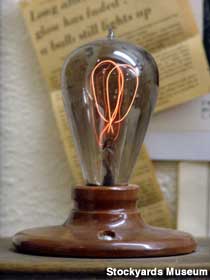





 Millard Fillmore's Bathtub