Deming and Peters, and teacher evaluations

October 12, 2013

Before I was a teacher, I led a tough band of people at the Department of Education, and I plied corporate America (among other jobs).  I spent a couple of years in American Airlines‘s corporate change project, facilitating leadership courses for more than 10,000 leaders in the company, as one of a team of about 20 inside consultants.  I had a fine time in management consulting with Ernst & Young LLP (now EY).

W. Edwards Deming

W. Edwards Deming, Wikipedia image

Back then “quality” was a watchword.  Tom Peters’s and Robert H. Waterman, Jr.‘s book, In Search of Excellence, showed up in everybody’s briefcase.  If your company wasn’t working with Phillip Crosby (Quality is Free), you were working with Joseph Juran, or the master himself, W. Edwards Deming.  If your business was highly technical, you learned more mathematics and statistics  that you’d hoped never to have to use so you could understand what Six Sigma meant, and figure out how to get there.

Joseph Juran. Another exemplar of the mode of leadership that takes lawyers out of law, putting them to good work in fields not thought to be related.

Joseph Juran. Another exemplar of the mode of leadership that takes lawyers out of law, putting them to good work in fields not thought to be related.

For a few organizations, those were heady times.  Management and leadership research of the previous 50 years seemed finally to have valid applications that gave hope for a sea change in leadership in corporations and other organizations.  In graduate school I’d been fascinated and encouraged by the work of Chris Argyris and Douglas McGregor.  “Theory X and Theory Y” came alive for me (I’m much more a Theory Y person).

Deming’s 14 Points could be a harsh checklist, harsh master to march to, but with the promise of great results down the line.

A lot of the work to get high quality, high performance organizations depended on recruiting the best work from each individual.  Doing that — that is, leading people instead of bossing them around — was and is one of the toughest corners to turn.  Tough management isn’t always intuitive.

For the salient example here, Deming’s tough statistical work panics workers who think they will be held accountable for minor errors not their doing.  In a traditional organization, errors get people fired.

Deming’s frequent point was that errors are not the worker’s doing, but instead are caused by managers, or by managerial failure to support the worker in getting quality work.  In any case, Deming comes down hard against firing people to try to get quality.  One of his 14 points is, “Drive out fear.”  In his seminars and speeches, that point was explained with, among other things, a drive to do away with annual performance reviews (wow, did that cause angst and cognitive dissonance at Ernst & Young!).  Performance reviews rarely touch on what a person needs to do to create quality, and generally the review session becomes a nit-picking exercise that leaves ratees angry, and less capable and willing to do quality work.  So Deming was against them as usually practiced.

Fast forward to today.

American schools are under fire — much of that fire unjustified, but that’s just one problem to be solved.  Evaluations of teachers is a big deal because many people believe that they can fire their way to good schools.  ‘Just fire the bad teachers, and the good ones will pull things out.’

Yes, that’s muddled thinking, and contrary to the requirements of the No Child Left Behind Act, there is no research to support the general idea, let alone specific applications.

Education leaders are trained in pedagogy, and not in management skills, most often — especially not in people leadership skills.  Teacher evaluations?  Oh, good lord, are they terrible.

Business adviser and healer, Tom Peters (from his website, photo by Allison Shirreffs)

Business adviser and healer, Tom Peters (from his website, photo by Allison Shirreffs)

In some search or other today I skimmed over to Tom Peters’s blog — and found this short essay, below.  Every school principal in America should take the three minutes required to read it — it will be a solid investment.

dispatches from the new world of work

Deming & Me

W. Edwards Deming, the quality guru-of-gurus, called the standard evaluation process the worst of management de-motivators. I don’t disagree. For some reason or other, I launched several tweets on the subject a couple of days ago. Here are a few of them:

  • Do football coaches or theater directors use a standard evaluation form to assess their players/actors? Stupid question, eh?
  • Does the CEO use a standard evaluation form for her VPs? If not, then why use one for front line employees?
  • Evaluating someone is a conversation/several conversations/a dialogue/ongoing, not filling out a form once every 6 months or year.
  • If you (boss/leader) are not exhausted after an evaluation conversation, then it wasn’t a serious conversation.
  • I am not keen on formal high-potential employee I.D. programs. As manager, I will treat all team members as potential “high potentials.”
  • Each of my eight “direct reports” has an utterly unique professional trajectory. How could a standardized evaluation form serve any useful purpose?
  • Standardized evaluation forms are as stupid for assessing the 10 baristas at a Starbucks shop as for assessing Starbucks’ 10 senior vice presidents.
  • Evaluation: No problem with a shared checklist to guide part of the conversation. But the “off list” discussion will by far be the most important element.
  • How do you “identify” “high potentials”? You don’t! They identify themselves—that’s the whole point.
  • “High potentials” will take care of themselves. The great productivity “secret” is improving the performance of the 60% in the middle of the distribution.

Tom Peters posted this on 10/09/13.

I doubt that any teacher in a public elementary or secondary school will recognize teacher evaluations in that piece.

And that, my friends, is just the tip of the problem iceberg.

An enormous chasm separates our school managers in this nation from good management theory, training and practice.  Walk into almost any meeting of school administrators, talk about Deming, Juran, Crosby, and you’re introducing a new topic (not oddly, Stephen Covey’s book, 7 Habits of Highly Effective People, sits on the shelf of many principals — probably unread, but certainly unpracticed).

Texas works to make one standardized evaluation form for every teacher in every grade, in every subject, in every school.  Do you see anything in Peters’s advice to recommend that?  In many systems, teachers may choose whether evaluators will make surprise visits to the classroom, or only scheduled visits.  In either case, visits are limited, generally fewer than a dozen visits get made to a teacher’s classroom in a year.  The forms get filled out every three months, or six weeks.  Take each of Tom’s aphorisms, it will be contrary to the way teacher evaluations usually run.

Principals, superintendents, you don’t have to take this as gospel.  It’s only great advice from a guy who charges tens of thousands of dollars to the greatest corporate leaders in the world, to tell them the same thing.

It’s not like you want to create a high-performing organization in your school, is it?

More:


ObamaCare working in Utah?

October 11, 2013

GOP panic spreads.  But will they run the correct way in their panic, say to vote for a clean, 12-month continuing resolution and and a raise to $18 trillion in the debt ceiling?

ObamaCare working in Utah.  Who would have imagined that?  The Sherburnes seem happy with what they bought.

Chris Detrick | The Salt Lake Tribune Phil Sherburne and his wife Leia Bell pose for a portrait with their kids Cortez, 11, Oslo, 6, and Ivan, 9, at their home in Salt Lake City Wednesday October 9, 2013. Sherburne and Bell, owners of the frame and art store called Signed & Numbered, succeeded last weekend in signing up for health coverage on healthcare.gov.

Chris Detrick | The Salt Lake Tribune Phil Sherburne and his wife Leia Bell pose for a portrait with their kids Cortez, 11, Oslo, 6, and Ivan, 9, at their home in Salt Lake City Wednesday October 9, 2013. Sherburne and Bell, owners of the frame and art store called Signed & Numbered, succeeded last weekend in signing up for health coverage on healthcare.gov.

More:

M. Turner snapped this self-portrait that went viral in the debate over President Obama's Affordable Health Care Act.  M. Turner photo, via CNN

M. Turner snapped this self-portrait that went viral in the debate over President Obama’s Affordable Health Care Act. M. Turner photo, via CNN


Ronald Reagan’s message to the Tea Party on the debt ceiling: Fail to raise it “an outrage”

October 11, 2013

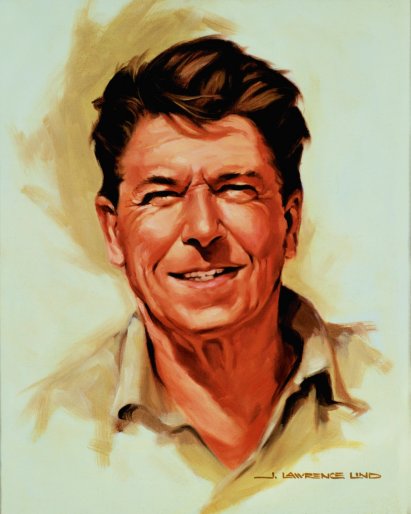
Ronald Reagan, by Lawrence Lind

Ronald Reagan, by Lawrence Lind

Sen. Claire McCaskill (D-Missouri) summoned Ronald Reagan’s ghost to visit the Tea Party:

McCaskill said:

Published on Sep 27, 2013

Former President Ronald Reagan explaining the importance to American jobs and businesses of Congress living up to its financial obligations and paying the country’s bills.

(Hey, are Congress people getting the hang of internet video, finally?  Could teachers be far behind?)

More:


If the photo didn’t exist, you wouldn’t believe it: Abraham Lincoln and Fidel Castro

October 11, 2013

This popped in over the Twitter transom yesterday:

http://twitter.com/HistoricalPics/status/388348900857622528

I don’t recall having seen the shot before. But Alex Selwyn-Holmes at Iconic Photographs posted a very complete story about the picture in 2009.

Fidel Castro at the Lincoln Memorial, 1959. Photo by Alfredo Korda. Korda titled the photo "David and Goliath."

Fidel Castro at the Lincoln Memorial, 1959. Photo by Alfredo Korda. Korda titled the photo “David and Goliath.”

Between April 15 and April 26 1959–a few months after he took power in Cuba–Fidel Castro went to the United States, invited by the American Society of Newspaper Editors. In one of those forgotten episodes of the Cold War, Castro went to the US for loans. Castro hired one of the best public relations firms to present his new government. Castro answered impertinent questions jokingly and ate hot dogs and hamburgers. His rumpled fatigues and scruffy beard cut a popular figure easily promoted as an authentic hero.

Read the whole story at Iconic Photographs.

In 1959, Castro’s forces had recently ousted Cuban president (and dictator) Gen. Fulgencio Batista.  Under Batista Cuba was very much a playground for America’s rich, and a steady supply of cheap sugar and good cigars.  In the musical play and movie, “Guys and Dolls,” the character Sky Masterson gets a date with a Salvation Army-style preacher woman, to win a bet.  When she finally consents (after he offers to fill her mission hall with reprobates in need of salvation), she asks what time she should be ready for dinner.  “Noon,” Masterson replies.  They are to fly from New York to Cuba for dinner, and return by the next morning.  Cuba’s reputation as hangout for American mobsters came honestly.  (“Guys and Dolls” opened on Broadway in 1950, and the movie hit theaters in 1955. That was the heyday of the Douglas DC-6, which is what a gambler probably would have flown from New York to Havana at that time, flying in to what is now Jose Marti International Airport.)

In contrast to the playboy mobsters, Cuban people tended to lead very bleak lives.  Sugar and tobacco farming did not make Cubans rich; processing of sugar was done by large international corporations.  Cuban cigars, recognized for quality, tended to be cheap, and tobacco farmers and cigar makers employed thousands of underpaid Cubans.  Cuba’s Havana nightlife seemed reserved for the wealthy, which usually meant foreign tourists, and not Cubans.

Castro’s revolution succeeded partly because of that rift, and Castro promised to turn things around for the masses of Cuban people (promises yet unkept).

For 11 days in 1959, Fidel Castro fascinated the U.S.  He spoke to the Council on Foreign Relations in New York, and to the American Society of Newspaper Editors. (His UN speech and famous hotel stay, in which he plucked and cooked chickens in his New York Hotel room, came the next year).  Castro ate hot dogs, and laid a wreath in the tomb of George Washington. At one point Castro was introduced in the audience of the “Ed Sullivan Show” as “the George Washington of Cuba” (this trip?)  But in Washington, Castro ran into Richard Nixon’s anti-Communist paranoia when seeking aid from the Eisenhower administration.  Without help from the U.S., Castro took offers of assistance from the Soviet Union who were anxious to have a friend and ally in the Americas, close to United States territorial waters.

Would Castro have cozied to the U.S. instead of the U.S.S.R., had the U.S. offered aid.  Most  historians think Castro’s communist path was already set when he visited the U.S.

This photo makes one wonder.  Certainly it was good public relations, for Castro to be seen paying homage to Abraham Lincoln.  Was it more than just a propaganda photo?

It’s a fascinating photo.

What do you think?

More:


October 9 – St. Denis’s Day, patron saint for those who have lost their head (Tea Party? House GOP?)

October 9, 2013

October 9 is the Feast Day of St. Denis.

Who?  He’s the patron saint of Paris (and France, by some accounts), and possessed people.   Take a look at this statue, from the “left door” of the Cathedral of Notre Dame  in Paris (Cathédrale Notre-Dame de Paris: portail de gauche).  He was martyred by beheading, in about 250 C.E.

English: Cathédrale Notre-Dame de Paris: porta...

St. Denis greets vistors to the Cathedral of Notre Dame, Paris (Cathédrale Notre-Dame de Paris: portail de gauche)

Our trusty friend Wikipedia explains:

According to the Golden Legend, after his head was chopped off, Denis picked it up and walked two miles, preaching a sermon the entire way.[6] The site where he stopped preaching and actually died was made into a small shrine that developed into the Saint Denis Basilica, which became the burial place for the kings of France. Another account has his corpse being thrown in the Seine, but recovered and buried later that night by his converts.[2]

Clearly, he is the guy to pray to about Michelle Bachmann, Rush Limbaugh, Todd Akin, Paul Ryan, intelligent design, and the Texas State Board of Education, no?  In 2013, you can add Ted Cruz, Mike Lee, Louis Gohmert, the entire Tea Party, and the entire GOP crew of the House of Representatives.  You catch my drift.

Perhaps you can use this factoid to some advantage, enlightenment, and perhaps humor.  In Catholic lore, St. Denis is one of the “14 Holy Helpers,” and his aid is sought to help people with headaches, or who have been possessed.

Crazy GOP members who I suspect of having been possessed give me and America a headache.  St. Denis seems to be our man.

Who else do you know of in this modern, vexatious time, who keeps talking after losing his/her head?

As Rod Stewart sang, just “let your imagination run wild.”  Maybe St. Denis is listening.

More:

Statue to St. Denis, in Cluny

Another portrayal, in sculpture, of St. Denis. Notice how this one’s face doesn’t really look like the one above? Ouvre du Musée de Cluny, Wikipedia photo by Guillaume Blanchard (Aoineko), June 2001, FinePix 1400Z.

Yes, this is mostly an encore post. I had hoped to have to retire this post someday.  I still hope.  Perhaps this will be the last year we’ll have so many wackaloons running loose. Pray to St. Denis.


Obama already negotiated; GOP taking hallucinogens? (Again?)

October 8, 2013

Oh, Speaker Boehner forgot to mention that.


http://bit.ly/GE9nzF 

pic.twitter.com/8N4bG4GFHY


Wendy Davis’s first ad: A positive vision for Texas (but too long for most TV)

October 8, 2013

In stark contrast to Greg Abbott‘s “Texas is for white people with guns” advertisement (addressed here yesterday), Wendy Davis‘s get-to-know-me ad paints a vision of a better Texas to be had, even if in a too-long four-and-a-half minutes:

The ad was released yesterday at Davis’s campaign website, “Are you with Wendy?”

I imagine the GOP will jump on the ad, complaining that it doesn’t show enough guns (are there any?).  But it does several things the next Texas governor needs to do:

  1. It paints a picture of a Texas government that works to help people succeed in Texas.
  2. Davis’s ad shows Texas’s diversity, and suggests both that the diversity is a virtue for Texas’s future, and that Texas government shouldn’t be barring the door (or voting booth) to any Texan (especially white Texas women, many of whom may get a shock when they try to vote this November).
  3. Davis urges policies to help Texas cattlemen, who have been hammered hard under GOP rule (50% of Texas beef ranches closed in the past two years).
  4. Davis urges policies to help Texas farmers (cotton is still big in about a hundred counties).
  5. Aerospace and aviation get specific attention — you saw the American Airlines jet? Davis was City Councilwoman in Fort Worth, American’s hometown and headquarters. Already Davis turned around Greg Abbott on that issue when she called for a Texas government that supported American Airlines and its few tens of thousands of jobs in Texas.  Abbott announced last week that he has dropped his suit to prevent American’s merger with USAir, a suit that threatened Texas jobs directly.
  6. The ad ties Davis’s success in business, and life, to public institutions that help all Texans, institutions Davis used to climb the success ladder.
  7. Pro-business. Business in Davis’s ad is aerospace, ranching, farming, oil, and main street retail, among others.  Abbott’s ad shows only one ramshackle BBQ shack.
  8. It demonstrates an area where Greg Abbott should have been active in fighting crime, processing rape backlogged rape kits from Texas assaults — but where it too Davis in the legislature to get action to solve the crimes.
  9. Oh, yeah:  Education is in there.  It’s solidly in there.
  10. Overall, it’s a positive, “once more into the breach” sort of story.  At the end of Abbott’s ad, one can say he seems a physically capable guy; at the end of Davis’s ad, one may want to get up and go start a business, or run for office.

Davis’s ad does a lot of things a pitch for Texas’s next governor needs to do, on issues that we hope the next governor is way ahead of the rest of us on — but which are wholly missing from Abbott’s first non-negative ad effort.

What do you think?

More:

Davis at a rally following her most recent history-making filibuster.  KUT photo by Jorge Sanhueza-Lyon

Davis at a rally following her most recent history-making filibuster. KUT photo by Jorge Sanhueza-Lyon


Suicide bombers in the Capitol?

October 7, 2013

Clay Bennett in the Chattanooga Times-Free Press:

“Ayn Rand akbar!” Clay Bennett cartoon in the Chattanooga Times-Free Press

I was thinking this cartoon shades a great deal toward the too brutal side; but then I pondered just what Cruz proposes, which is to finish the work Osama bin Laden couldn’t finish himself.

English: Chattanooga Times Free Press editoria...

Chattanooga Times Free Press editorial cartoonist Clay Bennett, self-caricature – Wikipedia image

Then someone referred this article to me today; one might wonder if Sen. Cruz’s idea is, indeed, to bring down our nation, or at least, to plunder the government and those Cruz considers “beneath” him.

What do you think?  Too brutal, or too close to the truth?

More:


Greg Abbott’s campaign stumbles — except for white people with guns

October 7, 2013

For three days after Fort Worth State Sen. Wendy Davis announced her candidacy for the Democratic Party’s nomination for governor, the Republican front-runner, Greg Abbott, seemed off-balance, first going to negative campaigning about Davis.

Some Texans wondered whether Abbott had a good idea about what the role of governor is, which could form a basis for his candidacy.  Why does Abbott want to be governor, and what would he do?

Today Abbott released an almost-90-second advertisement.  The ad reveals Abbott doesn’t have a vision for Texas in the future, and the ad suggests Abbott will rely heavily on trying to scare white Texans to outvote everybody else.

Here are my observations about Abbott’s ad as it came to me on Facebook, and the ad, below.

Greg Abbott first went negative when State Sen. Wendy Davis announced her campaign for governor last week.

He’s having difficulty finding a reason to run for governor, demonstrated by his video, below.

The video is impressive:

  1. Not a single Hispanic shown out of several dozen people. In fact, there appears to be only one, lonely woman of color in the entire thing. Texas is for white people, Abbott appears to be saying.
  2. Those white people in Texas need guns. It’s not like Texas has any shortage of guns, nor has the Obama administration done anything to restrict gun ownership or use, nor is it even an issue in Texas — but watch the video, you understand that the Texas white people shown in it, need guns. (Why? you may ask?)
  3. Abbott is all for low-wage, service industry jobs. When he talks about jobs in Texas, the ad shows a rickety, ramshackle BBQ joint. You may like BBQ more than Greg Abbott, but if you’re an aerospace worker, or you work for American Airlines, you would do well to question why Abbott worked so hard to kill American Airlines before Sen. Davis made it a campaign issue. (Abbott belatedly dropped his suit challenging the American/USAir merger, last week. Less than a week in the campaign and Wendy Davis is already improving Texas government . . .)
    Faced with a pro-business Democrat with a proven record of making things work for business and Texas, Abbott is adrift. These appear to be issues he hasn’t pondered much, other than to reduce regulations on businesses that injure people.
  4. Not a word about education. Where will all those gun-wielding white people send their kids to school?
  5. When he mentions water policy, something that comes far behind guns, BBQ, and the Tea Party in Greg Abbott’s Texas, he shows footage of Interstate 35 in Austin. One of Texas’s greatest problems (on the ballot in November with a Constitutional Amendment), but to Abbot it’s an afterthought. Maybe he thinks he can shotgun a few clouds to resolve the issues?
  6. Not a word about farming, nor ranching. Texas’s lack of a water policy, and inadequate work to mitigate global warming, pushed about 50% of Texas’s cattle and beef operations out of business on the GOP watch, just in the last four years. In Greg Abbott’s Texas, land is for shooting quail for rich folk, all you hamburger eaters can take a hike.
  7. Not a word about oil or gas, nor fracking, nor the abuse of eminent domain to ram a pipeline through Texas ranches and farms, killing the ranches and farms.
    You’d think after two decades in state office, Mr. Abbott would have a better idea about Texas and Texas problems, and would run a campaign on how to improve things for Texans, not just out of state pipeline companies.
  8. Abbott is running against Barack Obama, and he hates California. No good reason, but those are probably the only applause lines in his bereft-of-Texas stump speech.

You’d think some of those Million-Dollar-A-Year consultants would have worried a bit about Texas in setting up these ads. They must think their only chance is to scare their supporters out to the polls. They may be right.

Abbott’s campaign said:

Preserve Texas as the land of liberty. Watch my video below, and donate here: http://bit.ly/18UKBnr

What do you think, America?  See any reason for anyone other than a paranoid white guy to vote for Abbott?

Conflict of interest note:  Abbott is a Duncanville boy, a favorite of most residents of Duncanville we know. 

More: 

Texas Attorney General Greg Abbott appears bef...

Texas Attorney General Greg Abbott appears before a controversial tablet displaying the Ten Commandments on the grounds of the Texas State Capitol (behind the capitol building) in Austin, Texas, USA. (Photo credit: Wikipedia)


Reminder: How wealth inequality crowds out America’s success

October 7, 2013

Upworthy reposted this little movie today, which reminded me that nothing good has changed since last March. Looks like there’s not much chance of saving America soon, either, with the way things are going in the Capitol.

Is it time to really write the obituaries for America?  I hope not.

Watch it again:

What happens when a lot of money — I mean, a lot of money — is concentrated in a few hands?

The nation runs the risk of economic failure.

This short video says that more money is concentrated in fewer hands than we think.

Description from the maker, Politizane:

Infographics on the distribution of wealth in America, highlighting both the inequality and the difference between our perception of inequality and the actual numbers. The reality is often not what we think it is.

This is just one facet of the figures necessary for having rational discussions about tax reform, federal budget and deficit cutting, tax policy, and economic and monetary policy.

But it’s an ugly portrait, isn’t it?  How much does it differ from the France of Louis XVI and Marie Antoinette?  How much does it differ from the going-to-hell-in-an-accelerating-handbasket U.S. of 1929?  Wealth’s concentration in the hands of a tiny few literally crowds out hundreds of millions of Americans from the ability to successfully accumulate modest nest eggs.

What do you think?

I wish the film’s creator had provided citations.

Have things improved since 2007?  Look at this chart based on Institute for Policy Studies figures:

Maldistribution of U.S. wealth, 2007; Inst for Policy Studies

Source: Institute for Policy Studies, via BusinessInsider

More:

More, since the original posting:

Update March 9, 2013:  This is funny, to me:  Some people think just talking about this stuff is “class warfare.”  How are they so familiar with class warfare, you wonder?  That’s a self-answering question, isn’t it?


Sen. McCaskill gets Tweets

October 4, 2013

Sen. Claire McCaskill gets Tweets on the government shutdown, sometimes from people who appear unfamiliar with major concepts of civilized life.

[Here’s the text, in case Twitter isn’t displaying properly for you:  (quote)Some of today’s hate: “shut the f* up you baby killing, veteran disrespecting, butt ugly sack of shit bitch.” His profile says he’s a Christian. (end quote)]

The old hymn says,

Refrain
And they’ll know we are Christians by our love, by our love,
Yes, they’ll know we are Christians by our love.

Worse, or better if the Tweeter tries to live up to it, is verse three:

We will work with each other, we will work side by side,
And we’ll guard each one’s dignity and save each one’s pride.

Wow.

English: Claire McCaskill, member of the Unite...

Sen. Claire McCaskill, D-Missouri, speaking during a committee hearing. Wikipedia image

More:


Sunrise at Hawk Mountain, Pennsylvania

October 4, 2013

Photograph posted on Facebook by the Hawk Mountain Sanctuary Association:

Sunrise at Hawk Mountain, Quelia Paulino, Hawk Mountain Sanctuary

Planning a trip to Hawk Mountain this weekend? Arrive early to enjoy great views of low-hanging fog and to see the sun peek out over the valley. It’s a great way to start any day. — with Quelia Paulino at Hawk Mountain Sanctuary Association.

More: 


The Wendy Davis story — stay tuned

October 3, 2013

Two years ago this ad helped push Texas State Sen. Wendy Davis to victory in a district stacked against her.  I think it’s one of the more powerful political advertisements done in the last decade at least, considering the target audience.

Today Sen. Davis will announce she’s running for Governor of Texas.  Regardless the outcome of the race, it’s still a remarkable life story.

Polls show Davis only 8 points behind Republican Attorney General Greg Abbott, who usually enjoys an 80%-20% advantage in elections.  Davis is good enough to essentially wipe out the name identification, party identification and money advantage Abbott has, before she announces.

It could be a very exciting political year in Texas.  Stay tuned.

More:

Details: The entire conversation between Texas Senator Wendy Davis and James Henson, Director of the Texas Politics Project at UT Austin. Senator Davis discussed a range of topics including education, budget priorities in the 82nd Legislature, her filibuster in the final hours of the 82nd lege, and the future of the Democratic Party in Texas.

Recorded Dec 1, 2011 at The University of Texas at Austin.

Master of the Capitol:  Picture from Vogue Magazine; caption: Wendy Davis in a Carolina Herrera dress and Reed Krakoff pumps. Photographed by Eric Boman, Vogue, September 2013

Master of the Capitol, “I do hate losing”: Picture from Vogue Magazine; caption: Wendy Davis in a Carolina Herrera dress and Reed Krakoff pumps. Quote from the article: “I’m a very competitive person,” she says as the sun sets behind her and she packs up for the movie. “You won’t change things unless you are prepared to fight, even if you don’t win.” She pauses. “But I do hate losing.” Photographed by Eric Boman, Vogue, September 2013


Sourcing Thomas Jefferson quotes: “A country with no border . . .” Jefferson didn’t say it

October 2, 2013

Way back in 2012 I wrote this:

A group calling itself “Patriotic Moms” claims to quote Thomas Jefferson:

Thomas Jefferson 3x4

Thomas Jefferson said a lot, and kept careful records of about 15,000 letters — but did he ever say a country without a border is not a country? (Photo credit: Wikipedia)

“A country with no Border is not a country.”

I can’t find that in Jefferson’s writings.  Anybody know if Jefferson said or wrote anything like that?  Got a citation?

Is this another fake Jefferson quote?

More, reference:

Here we are, over a year later, and this does not appear in any form that I think we can say Jefferson said it, or wrote it.  It’s not in any Jefferson collection I can find.

Perhaps even more telling, our old friend Higginbotham finds a solid attribution to former Congressman Mike Pence (now Governor of Indiana), introducing a bill in Congress in 2005.

The judges rule Jefferson did not say “A country with no border is not a country.”  Neither did he say “A nation with no border is not a nation.”  In his bogus quote, neither did he add “secure” before the last “country” or “nation.”

It’s a misattributed quote, a bogus quote, a distortion of history, whatever epithet you wish to impale it on.  But it’s not from the canon of Thomas Jefferson wisdom.  It’s been flying around the internet this past week, and my earlier post has increased activity. Perhaps immigration is about to heat up as an issue?   Time to put this canard down.

Here’s one thing that should make you very wary of any quote in any similar circumstance:  No one seems to know what the occasion was that Jefferson made the remark, nor the date, nor the format.  Jefferson’s writings are extensively indexed, and he kept copies himself of about 15,000 letters, for the sake of history.  If you can’ t find it quickly, he probably didn’t say it.

More, in 2013:


Quote of the moment: Useless men a Congress? Not John Adams, but Peter Stone who said it

October 1, 2013

It’s a great line, an almost-Mark Twain-ism that makes people of all political strips smile.  It’s attributed to John Adams:

I have come to the conclusion that one useless man is called a disgrace; that two are called a law firm; and that three or more become a Congress!

There’s a problem: John Adams didn’t say it.

It’s a line from the 1969 Broadway musical comedy 1776!

The character John Adams in the play said it.  It’s art in pursuit of history, but it’s not really history.

Playwright Peter Stone, Theatrical Rights image

Playwright Peter Stone wrote the witticism attributed to John Adams.  Theatrical Rights image

We should more accurately attribute it to the play’s book’s author, Peter Stone.  What John Adams did not say about Congress, Peter Stone wrote.  Such wit deserves proper attribution.

Especially on a day when the U.S. Congress appears to be not only a collection of useless people, men and women, but useless people bent on destruction of our national institutions.  Congress has fallen down on the job, failing to play its vital, Constitutional role of appropriating money to run the government.

Stone’s mention of “law firms” gives away the quote’s origins being much later than Adams — Adams died, as you know, on July 4, 1826, the 50th anniversary of the Declaration of Independence.   “Law firms” is 20th century language.

In an era of law firms so big the people in them cannot comprehend their size, such a statement might emerge.  The distaste with lawyers in the Stone quote also doesn’t ring to the times of the American Revolution.  Good lawyer jokes probably existed then, but they didn’t really rise until the lawyerly pettifogging of the 19th century — see Dickens’ Mr. Bumble in Chapter 51 of Oliver Twistor the entire text of Bleak House, for examples.  Law firms in 1776 simply did not exist as large corporations, but more often as an office of an individual lawyer, or two or three.  Mark Twain joked about Congress, but a joke about both Congress and lawyers probably was rare before 1910.  (I am willing to be disabused of this idea, if I am wrong . . . comments are open.)

Wikiquote’s rapid improvement provides us with a good check on whether Adams said it — Wikiquote points us clearly to Peter Stone instead.

Stone died in 2003, much underappreciated if you ask me.  Stone might be said to be among the greatest ghost speechwriters in history based on 1776! alone,  creating lines for John Adams, Ben Franklin and Thomas Jefferson — three of the greatest authors and (sometimes reluctant) speakers of their day, and of all history.  Stone’s plays include Titanic and Two by Two, his screenplays include Charade, Arabesque, Mirage, The Taking of Pelham 123, and Father Goose.  (The first two of those movies favorites of mine solely for the scores by Henry Mancini.)

1776! plays in revival in California’s Bay Area, at A.C.T. (see reviews from both the San Jose Mercury News and San Francisco Chronicle, linked below).  One might wish Congressmen today would see the play.  In 1776 the colonies in rebellion were unsure what to do next; the Declaration of Independence was not a foregone conclusion.  The amazing collection of men — unfortunately no women — who populated the Second Continental Congress were predisposed to find ways around their differences, to make wise policies, and to keep things functioning.  Rather than shut government down, they carefully instructed individual governments in the states to make preparations to operate without infusions of cash or policy direction from the Crown, even before deciding independence made sense.  In short, they were dedicated to making things work.

Ironic that so many remember Peter Stone’s slam of Congress as incompetent, when the rest of his play book demonstrates that particular congress of men took quite an opposite view of life, and created a model for leadership we marvel at today.

More:

This is an edited encore post, sadly made salient today by Congress’s inaction on required spending bills.

Photo from the San Francisco Chronicle: Jarrod Zimmerman, as Edward Rutledge, makes a passionate appeal to delegates of the Second Continental Congress in the Tony Award-winning musical

Useless men? Funny quip, but the Second Continental Congress was far from a group of useless men thrown together. Photo from the San Francisco Chronicle: Jarrod Zimmerman, as Edward Rutledge, makes a passionate appeal to delegates of the Second Continental Congress in the Tony Award-winning musical “1776,” coming to ACT. Photo: Juan Davila