2009 winners of the Rachel Carson “Sense of Wonder” arts contest

October 30, 2009

You can view, and read, the winners of the 2009 Rachel Carson Sense of Wonder contest at the website of the Environmental Protection Agency (EPA).

Bee on a passion vine flower - 2nd place photo, Rachel Carson Sense of Wonder contest, 2009 - by Patricia, age 70, Peggy, age 47, Maggi, age 16 - via EPA

Bee on a passion vine flower – 2nd place photo, Rachel Carson Sense of Wonder contest, 2009 – by Patricia, age 70, Peggy, age 47, Maggi, age 16

Rachel Carson Sense of Wonder 2009 contest winners

EPA’s Aging Initiative, Generations United, the Rachel Carson Council, Inc. and the Dance Exchange, Inc. are pleased to present the winners for the

Rachel Carson Sense of Wonder project logo, EPA

Rachel Carson Sense of Wonder project logo, EPA

third annual intergenerational photo, dance, essay and poetry Sense of Wonder contest. All entries were created by an intergenerational team.

The categories are Photography, Essay, Poetry, Mixed (Photo, Essay and Poetry) and Dance.

Drop over to EPA’s site and look, and read.

2010 contest rules are already up.  You can get the entry form there, too.  Links to the 2008 and 2007 winners and finalists also reside there.

This photo caught me a bit off guard, bringing back wonderful memories.

Gina, age 36, Bill, age 64, Christian, age 1 - 3rd place photo, 2009 Rachel Carson Sense of Wonder art contest - EPA

Bill and Christian explore outdoors, photographed by Gina – Gina, age 36, Bill, age 64, Christian, age 1 – 3rd place photo, 2009 Rachel Carson Sense of Wonder art contest – EPA

Gina, the photographer, described the photo:

My father has been a good role model to me as I grew up with plenty of time outdoors. The red plaid shirt became a sort of symbol, and it was an honor to get a matching shirt myself when I was in college. Now, at just one year old, my son is continuing the tradition of wearing the red and black shirt outdoors. It was fun to photograph the two together in our rural wooded backyard, and helped illustrate that my father can continue to pass along his sense of wonder and love of the outdoors to my son, his first grandchild.

My father, Paul Darrell, wore an old jacket for my entire life — a once-fuzzy buffalo plaid red-and-black woolen jacket.  No one in the family can remember a time he didn’t have it.  The jacket was probably at least 30 years old when I was born.  He wore it when it was bitter cold — one story was that when it was well below zero one wintry morning in Burley, Idaho, it was the only coat he wore to walk to his furniture and appliance store to make sure the pipes hadn’t frozen, a walk of about a mile each way.  It was too cold to start the car.

After he moved to Utah it was his usual gardening and yard-work coat on cold mornings.  I know he took it on a few campouts with my Scout troop, and I’ll wager it went along on camping trips with my older brothers and sister 20 years before that.  I remember my father sitting warm in that jacket on cold mornings around the campfire.

We had a peach tree in the back yard in Pleasant Grove, Utah.  Frosts would come on those mountain slopes when the peaches were just ripened.  I have memories of my father picking peaches in the jacket.  He’d slice the peaches for our breakfast.  No peach has ever been sweeter or more flavorful (but I keep searching).  I remember my father in his buffalo plaid jacket, his arms full of ripe, cold peaches, coming through the kitchen door, and the smile on his face.

The red buffalo plaid coat was so much a symbol of my father that, at his death in 1988, it was one of those objects we nearly fought over.  My niece Tamara ended up with it.

I have one, now.  It’s a good L. L. Bean version, with the wool much thicker than my father’s well-worn version.  After 20 years it still looks new, compared to his.  I suspect it always will.  It could never be warmer than his.

Special tip of the old scrub brush to Dr. Pamela Bumsted.


Why a campfire?

August 7, 2009

Training adult Scout leaders always produces a few puzzled looks, and occasional passionate, fearful rebukes, when I note that a campfire gives a boy or a girl an opportunity to play with fire.

No, I don’t mean, exactly, that we should let kids play with fire.  There are rules — what’s burning must be in the fire pit, is the chief rule.

There is some primal need to watch a fire, to study it, to experiment with it, and finally just to watch it go. If you camped as a kid, you probably know what I mean.

Camp fires are universal.  This one was outside Bangalore.

Camp fires are universal. This one was outside Bangalore.

Every kid needs to do that.  It’s a part of growing up.  It’s a necessary memory for healthy and sane adults.

Start a fire, and a kid will get a stick and poke the burning logs and, especially, the red-, yellow- and white-hot coals after the fire burns a while.  They’ll start the stick on fire, put it out, and light it again.  They’ll pull the stick out of the fire and watch the flame consume the stick.  Kids will experiment with different things on the fire, to see whether, how fast, and how they burn.

Just keep it in the fire pit.

A Scoutmaster can tell which kids have been camping. A Scoutmaster knows which kids have been able to sit around a campfire and play with fire in that way.  Kids who know fire are more mature, generally, more relaxed about the excitement of the stuff, and much more careful with it.  Scouts who have dabbled in the campfire respect fire for what it is and for what it can do, good and bad.

What you’ll remember 20 years later, or 30 years, or (God bless me!) 40 years, and I hope 50 and 60 years, is the watching of the fire as the flames die down to a red and pulsing bed of coals.

You’ll remember some of the stories — Freddy Jonas’s often-told story of racing down the Champs Elysee in horse-drawn carriages, bribing the driver of the other carriage to go slower to win the race; the story of Rulon Skinner, the best non-swimming canoe instructor on Earth, and the big canoe race in which his opponent finally tipped Skinner’s canoe, and then yelled “snake!” to appeal to Skinner’s other great fear; the night the bear invaded the camp at Ben de la Tour, a bear later found to have antlers and four hooves.  You’ll remember the s’mores, and you’ll forget how messy they are.  You’ll remember the time you waited for the cobbler to cook after someone forgot to start the charcoal, or the the time the story got so good you forgot to take the cobbler off the fire, and how the Dutch oven had to be thrown away because it never would come clean.

You may remember that little fox at Camp Carter, sneaking just beyond the light of the fire and carefully circling every chair, looking for something good to eat, to steal.  Or that stupid porcupine that, now that you think of it must have been rabid, heading straight for the fire there in the only stand of Ponderosa pine in Utah County, up Payson Canyon.  And that will trigger the story of the night the fire wouldn’t start in the Catskills, and what seemed like hundreds of giant porcupines convened in bacchanalian festivities while campers dared not sleep in their tents.

Someone will mention retiring U.S. flags, and you’ll remember the retirement ceremony for the flag from the widow of the veteran, how she insisted that you promise the flag would be burned completely and honorably, and warned “he’ll be watching!”  You’ll remember the mass flag retirement after the lifting of the burn ban at Wisdom, and how you suddenly realized lots of flags put out lots of toxic fumes — but somebody ad libbed a part to the ceremony to add time to let the fumes clear, and no Scout noticed (you hope!).

We haven’t even gotten to the singing.

I was put in mind of the power of the campfire with a remembrance from Real Live Preacher writing at High Calling:

I remember how worried we were the first time we tried to set one of those brush piles on fire. We nervously stood before a ten-foot high, fifteen-foot wide mound with a can of lighter fluid and a couple of matches. I squirted a modest amount around the bottom of the pile and stood back while Michael threw the match. That’s when we discovered that it’s surprisingly difficult to set things on fire. Now I marvel at stories of people casually throwing cigarettes out of their cars and setting whole forests ablaze. Michael and I had a hard time starting fires even when we used diesel fuel and a blowtorch.

It takes about five hours to burn a giant pile of brush and cedar, so Michael and I would start a fire, then sit on the tailgate of the brown pickup truck and talk while we kept an eye on it. Apart from the searing heat and looking like chimney sweeps, it was fun. I’m always looking for guilt-free reasons to sit around and talk with friends. I don’t suppose I’ll ever have as good an excuse as I did back then.

A guilt-free reason to sit around and talk with friends?  A campfire is an automatic reason — guilt only obtains if there’s a ban on burning where you’re making the fire.

Carl Buell painted another one that took my breath away the first time I saw it.  Go see it. (I’m asking permission on this one; it may take a little while. Posted below with permission.)

That’s not a photograph, you can tell because it so well preserves what you remember — better than any photograph ever could —  it preserves what you remember from that campout up in the San Franciscos the night the sky was so blue so late and you could see the whole moon from the earthglow — or was it in New Mexico?  Probably not Colorado because there aren’t any mountains — oh, but if he’s looking east, it could have been south of Pueblo . . . no, maybe near Albion in the Sawtooths . . . Buell works in the east; it’s probably up in Maine . . . but he lived and painted in Marin County.

Didn’t he perfectly capture that night?

Campfire, by Carl Buell. Copyright Carl Buell, all rights reserved; used with permission

Campfire, by Carl Buell. Copyright Carl Buell, all rights reserved; used with permission


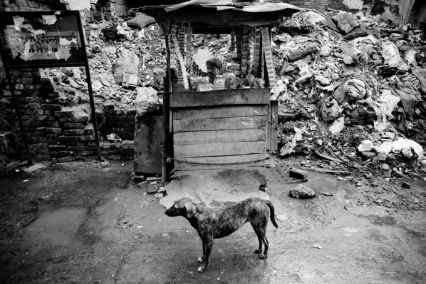
India today, in photos

August 3, 2009

Geography teachers, get out your PowerPoints and Keynotes.

Photo of life in Delhi, India.  From a collection by Belgian photographer Frederik Buyckx, 2009

Photo of life in Delhi, India. From a collection by Belgian photographer Frederik Buyckx, 2009

Thought provoking, occasionally breath-taking photos from a 6:00 a.m. walkaround in Delhi, India; Belgian photographer Frederick Buyckx promises more photos from his recent trip to India and Pakistan, at his blog.

Please share:

Add to FacebookAdd to NewsvineAdd to DiggAdd to Del.icio.usAdd to StumbleuponAdd to RedditAdd to BlinklistAdd to TwitterAdd to TechnoratiAdd to Furl


World history sources and images from the Library of Congress

July 19, 2009

World Treasures of the Library of Congress looks like a good source of images and information for world history classes and student projects.

Magna charta cum statutis angliae, (Great Charter with English Statutes). Library of Congress

Magna charta cum statutis angliae, (Great Charter with English Statutes). Library of Congress

These links are to exhibits that are closed, but whose images are still maintained on line.  The Library promises to update exhibits, and on line collections will grow, too.

There really is some remarkable stuff, most of it obscure enough to be really cool, still.

A 16th century miniature pictures Rustam, the hero of the Persian national epic, The Shah Namah, tossed into the sea by the demon Akwan. (Library of Congress, Near East Section).

A 16th century miniature pictures Rustam, the hero of the Persian national epic, The Shah Namah, tossed into the sea by the demon Akwan. (Library of Congress, Near East Section).


Best optical illusion of the year

July 12, 2009

I like to use optical illusions for warm-ups and bell ringers, to get students thinking and looking at things a bit differently.

Richard Wiseman said this is the best new optical illusion he’s seen so far this year:

Image by Prof. Kitaoka, 2009

Image by Prof. Kitaoka, 2009

What’s the illusion?  Well, you see those green stripes?  See the blue stripes?  Actually they are the same color.

You don’t think so?  Zoom in.  Or click over to Wiseman’s blog site and see what happens when all the other colors are turned to black.

I know you think you know what you see; what you think you see may not be what you actually see.  Your brain modifies what you think you see, in order to make it appear sensible, and in doing so, it sometimes makes you see things quite differently from what they are.  Don’t forget that.

So, how do we know what we know?  How do we know that what we know is correct?


A rainbow fell on Brooklyn

June 30, 2009

Stars on Alabama, a rainbow fell on Brooklyn — somebody ought to write a song about it.

Rainbow over Brooklyn, June 29, 2009 - photo by JOKelly

Rainbow over Brooklyn, June 29, 2009 - photo by JOKelly

Photo by JimmyOKelly.  Go see the stuff Kelly has posted at FLICKR, before he gets famous.  Poetry in photography.  Nice collection of others’ shots, too.


Portrait of a cartoonist at work, and the rest of the story

June 26, 2009

First, go here, and look at this painting by Cindy Procious.  Never heard of her?  She has some nice work, though, don’t you think?

Now, go here, and look at the cartoons, and here.  (Recognize the guy?)

You now have most of the whole, artistically wonderful story.


Lusitania – sunk 94 years ago today

May 7, 2009

We’re talking about the sinking of the Lusitania, and the role that incident played in getting the U.S. into World War I.

Coincidence:  Look at the date today.

Enlistment poster, after the sinking of the Lusitania

Enlistment poster, after the sinking of the Lusitania

94 years ago today.  U-20 sank the Lusitania, champion of the Cunard Line, on May 7, 1915.

World War I appears to have been a heyday for propaganda posters.  Google up “Lusitania +poster” and you can find a wealth of recruiting posters and just plain propaganda posters.  If only we had the time, there are a couple of lesson plans waiting in that search.

Note:  Details on the poster: Artist, Fred Spear, 1915; “Enlist,” published by Sackett & Wilhelms Corp.

Other resources:

  • All Lusitania, all the time:  Lusitania blog

  • True, but did Einstein say it?

    May 6, 2009

    Poster by Ricardo Levins Morales. Updated March 2015 - click image to purchase a copy of the poster from Mr. Morales.

    Poster by Ricardo Levins Morales. Updated March 2015 – click image to purchase a copy of the poster from Mr. Morales.

    Nice poster, great thought — you can’t measure everything about a student with a test, nor with a battery of tests.  Texas testing in core areas finished up last week, Advanced Placement and International Baccalaureate testing runs this week.

    Not everything that can be counted, counts, and not everything that counts can be counted.
    – Albert Einstein

    I especially thought of this quote one day last week while reading the questions to a kid with Downs syndrome who, as best I could measure from just watching reactions working problems, has a great flair for mathematics, and again when I discovered a geographic genius in the special education group.  (My classes say universally the tests were easy — and for some reason I find that terrifying.)

    Did Einstein say it? I found the poster at Learning is More Than a Score; it can be purchased from the Northland Poster Collective.  Neither suggests where we might verify that Albert actually said it, though Bob Murphy at More Than a Score said he understands it may have been on the wall in Einstein’s office.  The artist is Ricardo Levins Morales (see more at Ricardo Levins Morales Galleries).

    Readers, can you help?  Did Einstein say that?  When and where?

    Update March 2015:  Quote Investigator urges that we attribute the quote to William Bruce Cameron, in a 1963 book.


    Equations, tattooed into our lives

    May 2, 2009

    Tattoo of Alison, a high-school physics teacher - from Carl Zimmers Collection, at the Loom

    Tattoo of Alison, a high-school physics teacher - from Carl Zimmer's Collection, at the Loom

    Can’t tell which equation is the Mandelbrot Set, which the hydrostatic equation, which the description of entropy?  Can’t figure out why the delta, and otherwise confused?  Alison explains it all, at Carl Zimmer’s blog, The Loom.

    It’s relatively clear that she didn’t get the tats to use them to cheat on any exams.


    Great images of art, for world history and geography

    April 20, 2009

    About 75,000 images, most very high quality, for classroom use.  Images are sorted into categories that should align with all state standards and any textbook series — at the California State Universities, World Images Kiosk.  There are a lot of images from ancient cultures, a lot of images from pre-Renaissance times, and a rich panorama of other images.

    For example, Jasper Johns’ 1961 pop art map of the United States . . .

    JOHNS Jasper | Map. | 1961 | American | Pop Art | | North America. | | ©Jasper Johns ; Kathleen Cohen

    JOHNS Jasper | Map. | 1961 | American | Pop Art | | North America. | | ©Jasper Johns ; Kathleen Cohen


    Hang George Washington . . .

    March 16, 2009

    . . . in your school.

    George Washington, the porthole portrait by Rembrandt Peale

    George Washington, the "porthole portrait" by Rembrandt Peale

    I have a tie from the Save the Children Foundation, a picture drawn by a young child that shows a teacher in a classroom, with portraits of Washington, Lincoln and Teddy Roosevelt on the classroom wall.  Where have those portraits gone?

    At Mount Vernon this past weekend, with more than 20 teachers at the seminar I attended, a significant majority of us remembered those portraits in our classrooms.  Most of us don’t have such portraits today.

    The Mount Vernon Ladies Association, the group that saved Mount Vernon and operates it today, has  program to donate a large, canvas portrait of Washington to your school, the George Washington Portrait Program.  Two thousand schools have already received the framed portraits, and the program to distribute them, free of charge, to schools, has been extended.

    Portraits come with an educational kit — a U.S. flag, flown at General Washington’s home, lesson plans for elementary schools, and a CD-ROM with information for middle and high schools.

    Here are the instructions on how to request a portrait for your school.  Here is more information on the program. If you can afford to make a donation, feel free.

    Portrait of George Washington, available free to schools, displayed on the grounds of Mount Vernon.  Photo, Mount Vernon Ladies Association

    Portrait of George Washington, available free to schools, displayed on the grounds of Mount Vernon. Photo, Mount Vernon Ladies Association


    Four Stone Hearth, archaeology not quite ready for Social Security

    February 23, 2009

    Four Stone Hearth #60 is up, hosted by Middle Savagery.

    Yes, I know, I’ve been remiss in carnivalling lately.  Heck, I’ve been remiss in posting.  The water in the Bathtub is actually too cold for bathing at the moment, as I’m away metaphorically, working on serious curriculum matters.

    So, it’s a good time to take a look at something like the best archaeology blog carnival around.  It’s up to edition Number 60?  Great news, really, that there is so much material to cover.  There is some delightful morsel in every edition.

    Bad Death Ritual - See the entire post at Ideophone: A bad death ritual in Ghanas Volta Region. On the village cemetery, relatives of a man who died in a hunting accident listen anxiously to a woman who is possessed by the spirit of the deceased. The hunters, who have just brought the spirit home from the place of the accident deep in the jungle, keep their distance. Red is the colour of danger, black that of death.  Photo by Mark Dingemanse

    Bad Death Ritual - See the entire post at Ideophone: "A 'bad death' ritual in Ghana's Volta Region. On the village cemetery, relatives of a man who died in a hunting accident listen anxiously to a woman who is possessed by the spirit of the deceased. The hunters, who have just brought the spirit home from the place of the accident deep in the jungle, keep their distance. Red is the colour of danger, black that of death." Photo by Mark Dingemanse

    FSH #60 is heavy on photos — grist for your better slide presentations, no?

    Zenobia, Empress of the East looks at a project that used lasers to scan a bas relief on a rock in the 3rd century A.D. Parthian empire — er, maybe Persian — but wait!  Is that Greek influence in that carving?

    This extraordinary relief is carved on a huge limestone boulder at the cliff edge of a remote, not to say ‘hidden’ valley in the rugged mountains of northeastern Khuzistan [at the southwestern edge of the Iranian plateau, sharing a border with southern Iraq (= the big red blob on the map, below right)]. In ancient times, this was the heartland of Elymais, sometimes a small empire, more often a vassal to more powerful states.

    21st century technology and science applied to help solve a 700-year-old mystery.  Does archaeology get much better than that?

    Especially if you’re inclined to study Neanderthals, or for a great sidebar on the value of biodiveristy, take a look at Remote Central’s post on the last stand of Neanderthal, on Gibralter.

    There is much more in Four Stone Hearth #60.


    One more round for award-winning DDT poster – but where?

    February 15, 2009

    Helsingen Sanomat reports that a poster by Jukka Veistola which mobilized Finland to ban DDT back in the 1970s, has been included in a new book marking the most effective posters of the 20th century.

    Juka Veistola, 1969

    Jukka Veistola, Finland, 1969

    Jukka Veistola, Finland, 1969

    Jukka Veistola, Finland, 1969

    It’s great news, really.

    A book has been published in Mexico that portrays the world’s most important posters from the 20th and the early 21st century. The book contains 120 posters, the artists of which include Andy Warhol, Joan Miró, and Pablo Picasso among others.

    Included among this worthy company is also Finnish illustrator Jukka Veistola’s ideological DDT poster from 1969.
    Veistola’s startling red and blue work was a prizewinner at the Warsaw International Poster Biennale in 1970, and was subsequently acquired by the New York Museum of Modern Art (MoMA) into its collections.

    In part, Veistola’s poster contributed to Finland’s becoming one of the first countries in the world to ban the use of the synthetic pesticide DDT (Dichloro-Diphenyl-Trichloroethane).

    I do have a couple of questions, though:  First, what’s the name of the book?  Second, who is the editor?  Third, who published the book?

    It’s great to know that the poster is in a book somewhere; it would help those who would want to find or buy the book to know the name of the book, the editor or author, and the publisher.

    (We should note, too, that a gas mask wouldn’t have protected songbirds.  They got the DDT by eating insects with the stuff in ’em.  A dozen worms would carry a dose high enough to kill a robin; robins might eat a dozen worms in an hour.)


    Who invented Santa Claus, and the Night Before Christmas?

    December 24, 2008

    An encore post from 2007

    Thomas Nast invented Santa Claus? Clement C. Moore didn’t write the famous poem that starts out, “‘Twas the night before Christmas, and all through the house . . . ?”

    The murky waters of history from Millard Fillmore’s Bathtub soak even our most cherished ideas and traditions.

    But isn’t that part of the fun of history?

    Santa Claus delivers to Union soldiers, "Santa Claus in Camp" - Thomas Nast, Harper's Weekly, Jan 3, 1863

    Thomas Nast’s first published drawing featuring Santa Claus; for Harper’s Weekly, “A Journal of Civilization,” January 3, 1863 Nast portrayed the elf distributing packages to Union troops: “Santa Claus in camp.” Nast (1840-1904) was 23 when he drew this image.

    Yes, Virginia (and California, too)! Thomas Nast created the image of Santa Claus most of us in the U.S. know today. Perhaps even more significant than his campaign against the graft of Boss Tweed, Nast’s popularization of a fat, jolly elf who delivers good things to people for Christmas makes one of the great stories in commercial illustration. Nast’s cartoons, mostly for the popular news publication Harper’s Weekly, created many of the conventions of modern political cartooning and modeled the way in which an illustrator could campaign for good, with his campaign against the graft of Tammany Hall and Tweed. But Nast’s popular vision of Santa Claus can be said to be the foundation for the modern mercantile flurry around Christmas.

    Nast is probably ensconced in a cartoonists’ hall of fame. Perhaps he should be in a business or sales hall of fame, too.  [See also Bill Casselman’s page, “The Man Who Designed Santa Claus.]

    Nast’s drawings probably drew some inspiration from the poem, “Account of a Visit from St. Nicholas,” traditionally attributed to Clement C. Moore, a New York City lawyer, published in 1822. The poem is among the earliest to describe the elf dressed in fur, and magically coming down a chimney to leave toys for children; the poem invented the reindeer-pulled sleigh.

    Modern analysis suggests the poem was not the work of Moore, and many critics and historians now attribute it to Major Henry Livingston, Jr. (1748-1828) following sleuthing by Vassar College Prof. Don Foster in 2000. Fortunately for us, we do not need to be partisans in such a query to enjoy the poem (a complete copy of which is below the fold).

    The Library of Congress still gives Moore the credit. When disputes arise over who wrote about the night before Christmas, is it any wonder more controversial topics produce bigger and louder disputes among historians?

    Moore was not known for being a poet. The popular story is that he wrote it on the spur of the moment:

    Moore is thought to have composed the tale, now popularly known as “The Night Before Christmas,” on December 24, 1822, while traveling home from Greenwich Village, where he had bought a turkey for his family’s Christmas dinner.

    Inspired by the plump, bearded Dutchman who took him by sleigh on his errand through the snow-covered streets of New York City, Moore penned A Visit from St. Nicholas for the amusement of his six children, with whom he shared the poem that evening. His vision of St. Nicholas draws upon Dutch-American and Norwegian traditions of a magical, gift-giving figure who appears at Christmas time, as well as the German legend of a visitor who enters homes through chimneys.

    Again from the Library of Congress, we get information that suggests that Moore was a minor celebrity from a well-known family with historical ties that would make a good “connections” exercise in a high school history class, perhaps (”the link from Aaron Burr’s treason to Santa Claus?”): (read more, below the fold)

    Clement Moore was born in 1779 into a prominent New York family. His father, Benjamin Moore, president of Columbia University, in his role as Episcopal Bishop of New York participated in the inauguration of George Washington as the nation’s first president. The elder Moore also administered last rites to Alexander Hamilton after he was mortally wounded in a tragic duel with Aaron Burr.

    A graduate of Columbia, Clement Moore was a scholar of Hebrew and a professor of Oriental and Greek literature at the General Theological Seminary in Manhattan. [See comment from Pam Bumsted below for more on Moore.] He is said to have been embarrassed by the light-hearted verse, which was made public without his knowledge in December 1823. Moore did not publish it under his name until 1844.

    Tonight, American children will be tucked in under their blankets and quilts and read this beloved poem as a last “sugarplum” before slipping into dreamland. Before they drift off, treat them to a message from Santa, recorded by the Thomas Edison Company in 1922.

    Santa Claus Hides in Your Phonograph
    By Arthur A. Penn, Performed by Harry E. Humphrey.
    Edison, 1922.
    Coupling date: 6/20/1922. Cutout date: 10/31/1929.
    Inventing Entertainment: The Motion Pictures and Sound Recordings of the Edison Companies

    Listen to this recording (RealAudio Format)

    Listen to this recording (wav Format, 8,471 Kb)

    But Henry Livingston was no less noble or historic. He hailed from the Livingtons of the Hudson Valley (one of whose farms is now occupied by Camp Rising Sun of the Louis August Jonas Foundation, a place where I spent four amazing summers teaching swimming and lifesaving). Livingston’s biography at the University of Toronto site offers another path for a connections exercise (”What connects the Declaration of Independence, the American invasion of Canada, the famous poem about a visit from St. Nick, and George W. Bush?”):

    Henry Livingston Jr. was born in Poughkeepsie, New York, on Oct. 13, 1748. The Livingston family was one of the important colonial and revolutionary families of New York. The Poughkeepsie branch, descended from Gilbert, the youngest son of Robert Livingston, 1st Lord of Livingston Manor, was not as well off as the more well-known branches, descended from sons Robert and Philip. Two other descendants of Gilbert Livingston, President George Walker Herbert Bush and his son, President-Elect George W. Bush, though, have done their share to bring attention to this line. Henry’s brother, Rev. John Henry Livingston, entered Yale at the age of 12, and was able to unite the Dutch and American branches of the Dutch Reformed Church. At the time of his death, Rev. Livingston was president of Rutgers University. Henry’s father and brother Gilbert were involved in New York politics, and Henry’s granduncle was New York’s first Lt. Governor. But the law was the natural home for many of Henry’s family. His brother-in-law, Judge Jonas Platt, was an unsuccessful candidate for governor, as was his daughter Elizabeth’s husband, U.S. Supreme Court Justice Smith Thompson. Henry’s grandson, Sidney Breese, was Chief Justice of the Illinois Supreme Court.

    Known for his encyclopedic knowledge and his love of literature, Henry Livingston was a farmer, surveyor and Justice of the Peace, a judicial position dealing with financially limited criminal and civil cases. One of the first New Yorkers to enlist in the Revolutionary Army in 1775, Major Henry Livingston accompanied his cousin’s husband, General Montgomery, in his campaign up the Hudson River to invade Canada, leaving behind his new wife, Sarah Welles, and their week-old baby, on his Poughkeepsie property, Locust Grove. Baby Catherine was the subject of the first poem currently known by Major Livingston. Following this campaign, Livingston was involved in the War as a Commissioner of Sequestration, appropriating lands owned by British loyalists and selling them for the revolutionary cause. It was in the period following Sarah’s early death in 1783, that Major Livingston published most of his poems and prose, anonymously or under the pseudonym of R. Ten years after the death of Sarah, Henry married Jane Patterson, the daughter of a Dutchess County politician and sister of his next-door neighbor. Between both wives, Henry fathered twelve children. He published his good-natured, often occasional verse from 1787 in many journals, including Political Barometer, Poughkeepsie Journal, and New-York Magazine. His most famous poem, “Account of a Visit from St. Nicholas,” was until 2000 thought to have been the work of Clement Clarke Moore (1779-1863), who published it with his collected poems in 1844. Livingston died Feb. 29, 1828.

    More on Henry Livingston and his authorship of the Christmas poem here.

    Thomas Nast, Merry Old Santa Claus, Harper's Weekly, Jan 1, 1881


    Our views of Santa Claus owe a great deal also to the Coca-Cola advertising campaign. Coca-Cola first noted Santa’s use of the drink in a 1922 campaign to suggest Coke was a year-round drink (100 years after the publication of Livingston’s poem). The company’s on-line archives gives details:

    In 1930, artist Fred Mizen painted a department store Santa in a crowd drinking a bottle of Coke. The ad featured the world’s largest soda fountain, which was located in the department store of Famous Barr Co. in St. Louis, Mo. Mizen’s painting was used in print ads that Christmas season, appearing in The Saturday Evening Post in December 1930.

    1936 Coca-Cola Santa cardboard store display

    • 1936 Coca-Cola Santa cardboard store display

    Archie Lee, the D’Arcy Advertising Agency executive working with The Coca-Cola Company, wanted the next campaign to show a wholesome Santa as both realistic and symbolic. In 1931, The Coca-Cola Company commissioned Michigan-born illustrator Haddon Sundblom to develop advertising images using Santa Claus — showing Santa himself, not a man dressed as Santa, as Mizen’s work had portrayed him.
    1942 original oil painting - 'They Remembered Me'

    • 1942 original oil painting – ‘They Remembered Me’

    For inspiration, Sundblom turned to Clement Clark Moore’s 1822 poem “A Visit From St. Nicholas” (commonly called “‘Twas the Night Before Christmas”). Moore’s description of St. Nick led to an image of Santa that was warm, friendly, pleasantly plump and human. For the next 33 years, Sundblom painted portraits of Santa that helped to create the modern image of Santa — an interpretation that today lives on in the minds of people of all ages, all over the world.

    Santa Claus is a controversial figure. Debates still rage among parents about the wisdom of allowing the elf into the family’s home, and under what conditions. Theologians worry that the celebration of Christmas is diluted by the imagery. Other faiths worry that the secular, cultural impact of Santa Claus damages their own faiths (few other faiths have such a popular figure, and even atheists generally give gifts and participate in Christmas rituals such as putting up a decorated tree).

    For over 100 years, Santa Claus has been a popular part of commercial, cultural and religious life in America. Has any other icon endured so long, or so well?

    Add to FacebookAdd to NewsvineAdd to DiggAdd to Del.icio.usAdd to StumbleuponAdd to RedditAdd to BlinklistAdd to TwitterAdd to TechnoratiAdd to Furl

    ________________________
    Below:
    From the University of Toronto Library’s Representative Poetry Online

    Major Henry Livingston, Jr. (1748-1828)

    Account of a Visit from St. Nicholas

    1 ‘Twas the night before Christmas, when all thro’ the house,
    2 Not a creature was stirring, not even a mouse;
    3 The stockings were hung by the chimney with care,
    4 In hopes that St. Nicholas soon would be there;
    5 The children were nestled all snug in their beds,
    6 While visions of sugar plums danc’d in their heads,
    7 And Mama in her ‘kerchief, and I in my cap,
    8 Had just settled our brains for a long winter’s nap –
    9 When out on the lawn there arose such a clatter,
    10 I sprang from the bed to see what was the matter.
    11 Away to the window I flew like a flash,
    12 Tore open the shutters, and threw up the sash.
    13 The moon on the breast of the new fallen snow,
    14 Gave the lustre of mid-day to objects below;
    15 When, what to my wondering eyes should appear,
    16 But a miniature sleigh, and eight tiny rein-deer,
    17 With a little old driver, so lively and quick,
    18 I knew in a moment it must be St. Nick.
    19 More rapid than eagles his coursers they came,
    20 And he whistled, and shouted, and call’d them by name:
    21 “Now! Dasher, now! Dancer, now! Prancer, and Vixen,
    22 “On! Comet, on! Cupid, on! Dunder and Blixem;
    23 “To the top of the porch! to the top of the wall!
    24 “Now dash away! dash away! dash away all!”
    25 As dry leaves before the wild hurricane fly,
    26 When they meet with an obstacle, mount to the sky;
    27 So up to the house-top the coursers they flew,
    28 With the sleigh full of Toys — and St. Nicholas too:
    29 And then in a twinkling, I heard on the roof
    30 The prancing and pawing of each little hoof.
    31 As I drew in my head, and was turning around,
    32 Down the chimney St. Nicholas came with a bound:
    33 He was dress’d all in fur, from his head to his foot,
    34 And his clothes were all tarnish’d with ashes and soot;
    35 A bundle of toys was flung on his back,
    36 And he look’d like a peddler just opening his pack:
    37 His eyes — how they twinkled! his dimples how merry,
    38 His cheeks were like roses, his nose like a cherry;
    39 His droll little mouth was drawn up like a bow.
    40 And the beard of his chin was as white as the snow;
    41 The stump of a pipe he held tight in his teeth,
    42 And the smoke it encircled his head like a wreath.
    43 He had a broad face, and a little round belly
    44 That shook when he laugh’d, like a bowl full of jelly:
    45 He was chubby and plump, a right jolly old elf,
    46 And I laugh’d when I saw him in spite of myself;
    47 A wink of his eye and a twist of his head
    48 Soon gave me to know I had nothing to dread.
    49 He spoke not a word, but went straight to his work,
    50 And fill’d all the stockings; then turn’d with a jerk,
    51 And laying his finger aside of his nose
    52 And giving a nod, up the chimney he rose.
    53 He sprung to his sleigh, to his team gave a whistle,
    54 And away they all flew, like the down of a thistle:
    55 But I heard him exclaim, ere he drove out of sight –
    56 Happy Christmas to all, and to all a good night.