You’ve seen that button in the right hand column for several weeks now, “Submit a science question for the candidates for president.” Second time in a row, we didn’t get a separate debate on science issues. Next best thing, maybe: The major candidates agreed to answer submitted questions.
The Top American Science Questions: 2012
“Whenever the people are well-informed,” Thomas Jefferson wrote, “they can be trusted with their own government.”
Science now affects every aspect of life and is an increasingly important topic in national policymaking.
ScienceDebate.org invited thousands of scientists, engineers and concerned citizens to submit what they felt were the the most important science questions facing the nation that the candidates for president should be debating on the campaign trail.
ScienceDebate then worked with the leading US science and engineering organizations listed at left to refine the questions and arrive at a universal consensus on what the most important science policy questions facing the United States are in 2012.
Candidates readily debate jobs and the economy even though they are not economists; they debate foreign policy and military intervention even though they are not diplomats or generals; they debate faith and values even though they are not priests or pastors. We call on the candidates for President to also debate these Top American Science Questions that affect all voters’ lives.
Candidates’ Answers, a Side by Side Comparison
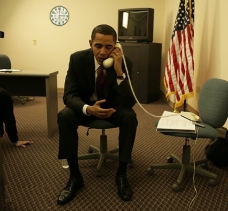
Barack Obama’s answers to the Top American Science Questions, September 4, 2012
Mitt Romney’s answers to the Top American Science Questions, September 4, 2012
Click on these key words to be taken back to ScienceDebate’s website and this debate: Innovation | Climate Change | Research and the Future | Pandemics and Biosecurity
Education | Energy | Food | Fresh Water | The Internet | Ocean Health
Science in Public Policy | Space | Critical Natural Resources | Vaccination and Public Health1. Innovation and the Economy. Science and technology have been responsible for over half of the growth of the U.S. economy since WWII, when the federal government first prioritized peacetime science mobilization. But several recent reports question America’s continued leadership in these vital areas. What policies will best ensure that America remains a world leader in innovation? Barack Obama: I believe that in order to be globally competitive in the 21st century and to create an American economy that is built to last, we must create an environment where invention, innovation, and industry can flourish. We can work together to create an economy built on American manufacturing, American energy, and skills for American workers.I am committed to doubling funding for key research agencies to support scientists and entrepreneurs, so that we can preserve America’s place as the world leader in innovation, and strengthen U.S. leadership in the 21st century’s high-tech knowledge-based economy. To prepare American children for a future in which they can be the highly skilled American workers and innovators of tomorrow, I have set the goal of preparing 100,000 science and math teachers over the next decade. These teachers will meet the urgent need to train one million additional science, technology, engineering and math (STEM) graduates over the next decade. Mitt Romney:Innovation is the key to economic growth and job creation, and increasingly important to American competitiveness in the global economy. Three-quarters of all U.S. economic growth, and three-quarters of the U.S. productivity advantage over other OECD nations, is directly attributable to innovation, and wages in innovation-intensive industries have grown more than twice as fast as other wages in recent decades.My plan for a stronger middle class will rebuild the American economy on the principles of free enterprise, hard work, and innovation. The promotion of innovation will begin on Day One, with efforts to simplify the corporate tax code, reform job retraining programs, reduce regulatory burdens, and protect American intellectual property around the world.A Growth AgendaOver the course of my campaign, I have laid out a detailed economic plan that seeks to strengthen the American economy by empowering entrepreneurs and workers and rewarding innovation. This plan emphasizes critical structural adjustments to promote growth rather than short-term fixes.
- Human Capital. We must reform America’s legal immigration system to attract and retain the best and the brightest, and equip more Americans with the skills to succeed. I will raise visa caps for highly skilled foreign workers, offer permanent residence to foreign students graduating with advanced degrees in relevant fields, and restructure government retraining programs to empower individual workers and welcome private sector participation.
- Taxes. We must pursue fundamental tax reform that simplifies the tax code, broadens the tax base, and lowers tax rates. I will lower the corporate tax rate to 25 percent, strengthen and make permanent the R&D tax credit, and transition to a territorial tax system. I will cut individual income tax rates across the board, and maintain today’s low tax rates on investment. And I will ensure that these changes are made permanent, so that investors and entrepreneurs are not confronted with a constantly shifting set of rules.
- Regulation. We must reduce the power of unaccountable regulators by requiring that all major regulations receive congressional approval and by imposing a regulatory cap that prevents the addition of new regulatory costs. In a Romney Administration, agencies will have to limit the costs they are imposing on society and recognize that their job is to streamline and reduce burdens, not to add new ones.
- Trade. We must open new markets for American businesses and workers. I will create a Reagan Economic Zone encompassing nations committed to the principles of free enterprise. At the same time, I will confront nations like China that steal intellectual property from American innovators while closing off American access to their markets.
A Foundation for Innovation
The private sector is far more effective at pursuing and applying innovation than government could ever be. However, there are key areas in which government policy must strengthen the ability of the private sector to innovate effectively.
- Education. America’s K-12 education system lags behind other developed nations, and while our higher education system remains the envy of the world its costs are spiraling out of control. We must pursue genuine education reform that puts the interests of parents and students ahead of special interests and provides a chance for every child. I will take the unprecedented step of tying federal funds directly to dramatic reforms that expand parental choice, invest in innovation, and reward teachers for their results instead of their tenure. I will also ensure that students have diverse and affordable options for higher education to give them the skills they need to succeed after graduation.
- Basic Research. President Obama’s misguided attempts to play the role of venture capitalist, pick winners and losers, and spend tens of billions of dollars on politically-prioritized investments have been a disaster for the American taxpayer. Yet at the same time, we must never forget that the United States has moved forward in astonishing ways thanks to national investment in basic research and advanced technology. As president, I will focus government resources on research programs that advance the development of knowledge, and on technologies with widespread application and potential to serve as the foundation for private sector innovation and commercialization.
2. Climate Change. The Earth’s climate is changing and there is concern about the potentially adverse effects of these changes on life on the planet. What is your position on cap-and-trade, carbon taxes, and other policies proposed to address global climate change—and what steps can we take to improve our ability to tackle challenges like climate change that cross national boundaries? Barack Obama: Climate change is the one of the biggest issues of this generation, and we have to meet this challenge by driving smart policies that lead to greater growth in clean energy generation and result in a range of economic and social benefits. Since taking office I have established historic standards limiting greenhouse gas emissions from our vehicles for the first time in history. My administration has made unprecedented investments in clean energy, proposed the first-ever carbon pollution limits for new fossil-fuel-fired power plants and reduced carbon emissions within the Federal Government. Since I took office, the U.S. is importing an average of 3 million fewer barrels of oil every day, and our dependence on foreign oil is at a 20-year low. We are also showing international leadership on climate change, reaching historic agreements to set emission limits in unison with all major developed and developing nations. There is still more to be done to address this global problem. I will continue efforts to reduce our dependence on oil and lower our greenhouse gas emissions while creating an economy built to last. Mitt Romney:I am not a scientist myself, but my best assessment of the data is that the world is getting warmer, that human activity contributes to that warming, and that policymakers should therefore consider the risk of negative consequences. However, there remains a lack of scientific consensus on the issue — on the extent of the warming, the extent of the human contribution, and the severity of the risk — and I believe we must support continued debate and investigation within the scientific community.Ultimately, the science is an input to the public policy decision; it does not dictate a particular policy response. President Obama has taken the view that if global warming is occurring, the American response must be to slash carbon dioxide emissions by imposing enormous costs on the U.S. economy. First he tried a massive cap-and-trade bill that would have devastated U.S. industry. When that approach was rejected by Congress, he declared his intention to pursue the same course on his own and proceeded through his EPA to impose rules that will bankrupt the coal industry.Nowhere along the way has the President indicated what actual results his approach would achieve — and with good reason. The reality is that the problem is called Global Warming, not America Warming. China long ago passed America as the leading emitter of greenhouse gases. Developed world emissions have leveled off while developing world emissions continue to grow rapidly, and developing nations have no interest in accepting economic constraints to change that dynamic. In this context, the primary effect of unilateral action by the U.S. to impose costs on its own emissions will be to shift industrial activity overseas to nations whose industrial processes are more emissions-intensive and less environmentally friendly. That result may make environmentalists feel better, but it will not better the environment.So I oppose steps like a carbon tax or a cap-and-trade system that would handicap the American economy and drive manufacturing jobs away, all without actually addressing the underlying problem. Economic growth and technological innovation, not economy-suppressing regulation, is the key to environmental protection in the long run. So I believe we should pursue what I call a “No Regrets” policy — steps that will lead to lower emissions, but that will benefit America regardless of whether the risks of global warming materialize and regardless of whether other nations take effective action. For instance, I support robust government funding for research on efficient, low-emissions technologies that will maintain American leadership in emerging industries. And I believe the federal government must significantly streamline the regulatory framework for the deployment of new energy technologies, including a new wave of investment in nuclear power. These steps will strengthen American industry, reduce greenhouse gas emissions, and produce the economically-attractive technologies that developing nations must have access to if they are to achieve the reductions in their own emissions that will be necessary to address what is a global issue.
3. Research and the Future. Federally funded research has helped to produce America’s major postwar economies and to ensure our national security, but today the UK, Singapore, China, and Korea are making competitive investments in research. Given that the next Congress will face spending constraints, what priority would you give to investment in research in your upcoming budgets? Barack Obama: I strongly support investments in research and development that help spur America innovation and proposed a goal that, as a country, we invest more than 3 percent of our GDP in public and
private research and development—exceeding the level achieved at the height of the space race. That’s why, under the Recovery Act, my administration enacted the largest research and development increase in our nation’s history. Through the Recovery Act, my Administration committed over $100 billion to support groundbreaking innovation with investments in energy, basic research, education and training, advanced vehicle technology, health IT and health research, high speed rail, smart grid, and information technology. Of these funds, we made a $90 billion investment in clean energy that will produce as much as $150 billion in clean energy projects. In fact, the Recovery Act made the largest single investment in clean energy in American history. And our investments in energy not only focus on research, but on the deployment of these new technologies.We have invested highly in important research being done to improve the health and wellness of all Americans so that we can continue to unravel clues to treating or preventing some of life’s most daunting and debilitating diseases, develop powerful new medicines, and even define strategies that will prevent disease from occurring in the first place. We have also made critical investments in research and development to bolster our national security and defense. And my budget continues to support making permanent the R&D tax credit, which would allow businesses the ability to invest and grow their organizations. While making tough choices, we will continue to prioritize investments in research to ensure that our country remains a global leader and that Americans can remain innovators, working to better their lives and the lives around them.Mitt Romney:As I noted above, I am a strong supporter of federally funded research, and continued funding would be a top priority in my budget. The answer to spending constraints is not to cut back on crucial investments in America’s future, but rather to spend money more wisely. For instance, President Obama spent $90 billion in stimulus dollars in a failed attempt to promote his green energy agenda. That same spending could have funded the nation’s energy research programs at the level recommended in a recent Harvard University study for nearly twenty years.Good public policy must also ensure that federal research is being amplified in the private sector, and that major breakthroughs are able to make the leap from the laboratory to the marketplace. Unfortunately, President Obama has pursued policies across a range of fields that will have the opposite effect. For instance, Obamacare imposes an excise tax on the revenue of medical device companies that is already driving jobs and investment overseas. Meanwhile, the FDA’s slow and opaque approval process is rated less than one-fourth as effective as its European counterpart by medical technology companies. Robust NIH funding will only have its desired effect if paired with sensible policies that facilitate medical innovation more broadly. 4. Pandemics and Biosecurity. Recent experiments show how Avian flu may become transmissible among mammals. In an era of constant and rapid international travel, what steps should the United States take to protect our population from emerging diseases, global pandemics and/or deliberate biological attacks? Barack Obama: We all are aware that the world is becoming smaller every day. Advancements in technology allow Americans to travel internationally with ease, and allow us to welcome individuals from around the world. This fluidity also requires that we, as a nation, are cognizant to the threats we face and are prepared to protect against them. I will continue to work to strengthen our systems of public health so we can stop disease from spreading across our borders. It is also important that should these threats breach our borders, our communities can respond quickly, effectively, with the greatest impact, and with the fewest consequences. Lastly, to help our country prepare to meet these challenges, we have been working with the private sector to assess potential vulnerabilities. I have no doubt that we can counter any threat we face, but we cannot face it alone. We must continue to work with our international partners, remain diligent in seeking out new threats, and prepare to act should a need arise. Mitt Romney:Pandemics are not new — they have happened at different points throughout human history. And it is a certainty that, at some point in the future, they will happen again. Fortunately, America today is better prepared than ever to face a pandemic. In part, this is because researchers are learning so much more about infectious diseases, how they work, and how they spread. Unfortunately, globalization has enabled the spread of these diseases much more rapidly from previously remote corners of the world to the busiest airports and cities.To further improve preparedness, we must continue to invest in the best public health monitoring systems that can be built. I will also encourage advancements in research and manufacturing to increase scientific understanding of new pathogens and improve response time when they emerge. The development of new countermeasures, from diagnostics to antibiotics and antivirals to respirators, will help protect human lives in the face of new bugs and superbugs.Unfortunately, the Obama Administration has taken numerous steps that are stifling medical innovation. He has imposed new taxes on innovative companies. He has empowered bureaucrats to manage the marketplace. His FDA has slowed the drug development process and inserted requirements that drive up the cost of developing new antibiotics. A robust public health system is only as strong as the tools available, and I will empower the private sector to pursue the breakthroughs that will equip society for the health challenges of the twenty-first century. 5. Education. Increasingly, the global economy is driven by science, technology, engineering and math, but a recent comparison of 15-year-olds in 65 countries found that average science scores among U.S. students ranked 23rd, while average U.S. math scores ranked 31st. In your view, why have American students fallen behind over the last three decades, and what role should the federal government play to better prepare students of all ages for the science and technology-driven global economy? Barack Obama: An excellent education remains the clearest, surest route to the middle class. To compete with other countries we must strengthen STEM education. Early in my administration, I called for a national effort to move American students from the middle to the top of the pack in science and math achievement. Last year, I announced an ambitious goal of preparing 100,000 additional STEM teachers over the next decade, with growing philanthropic and private sector support. My “Educate to Innovate” campaign is bringing together leading businesses, foundations, non-profits, and professional societies to improve STEM teaching and learning. Recently, I outlined a plan to launch a new national STEM Master Teacher Corps that will be established in 100 sites across the country and be expanded over the next four years to support 10,000 of the best STEM teachers in the nation. These investments would improve the quality of STEM education at all levels, ensuring the next generation of Americans has the tools to out-innovate and out-compete the rest of the world. Mitt Romney:The education challenges America faces are not new. Since A Nation at Riskwas published almost thirty years ago, our country has understood the urgent need for reform. Yet today, fewer than 75 percent of freshmen graduate within four years of entering high school, and far too many who do graduate require remediation when they enroll in college. In a recent survey of more than 10,000 of its graduates, the Harvard Business School identified America’s K-12 education system as one of our nation’s greatest competitive weaknesses — only the dysfunction of our political system itself scored worse. Recent test results showing U.S. students lagging behind their international peers are unacceptable in their own right, and a sobering warning of a potential decline threatening our nation’s future.Politicians have attempted to solve these problems with more spending. But while America’s spending per student is among the highest in the world, our results lag far behind. We spend nearly two-and-a-half times as much per pupil today, in real terms, as in 1970, but high school achievement and graduation rates have stagnated. Higher spending rarely correlates with better results. Even the liberal Center for American Progress acknowledged in a recent study that “the literature strongly calls into question the notion that simply investing more money in schools will result in better outcomes,” and reported from its own research that most states showed “no clear relationship between spending and achievement” even after adjusting for other factors like the cost of living.Unfortunately, rather than embracing reform and innovation, America remains gridlocked in an antiquated system controlled to a disturbing degree by the unions representing teachers. The teachers unions spend millions of dollars to influence the debate in favor of the entrenched interests of adults, not the students our system should serve. The efforts of teachers will be central to any successful reform, but their unions have a very different agenda: opposing innovation that might disrupt the status quo while insulating even the least effective teachers from accountability. Sadly, these priorities do not correlate with better outcomes for our children. To the contrary, teachers unions are consistently on the front lines fighting against initiatives to attract and retain the best teachers, measure performance, provide accountability, or offer choices to parents.Real change will come only when the special interests take a back seat to the interests of students. Across the nation, glimmers of success offer reason for hope. Charter school networks such as the KIPP Academies, Uncommon Schools, and Aspire Public Schools are producing remarkable results with students in some of our nation’s most disadvantaged communities. Florida Virtual School and other digital education providers are using technology in new ways to personalize instruction to meet students’ needs. In Massachusetts, whose schools have led the nation since my time as governor, students’ math achievement is comparable to that of the top-performing national school systems worldwide. In our nation’s capital, the D.C. Opportunity Scholarship Program has achieved high school graduation rates above 90 percent in inner-city communities where barely half of public school students are earning their diplomas. These successes point the way toward genuine reform. My agenda for K-12 education is organized around the following principles:
Promoting Choice and Innovation. Empowering parents with far greater choice over the school their child attends is a vital component of any national agenda for education reform. To start, low-income and special-needs children must be given the freedom to choose the right school and bring funding with them. These students must have access to attractive options, which will require support for the expansion of successful charter schools and for greater technology use by schools.
Ensuring High Standards and Responsibility for Results. States must have in place standards to ensure that every high school graduate is prepared for college or work and, through annual testing, hold both students and educators accountable for meeting them. The results of this testing, for both their own children and their schools, must be readily available to parents in an easy to understand format.
Recruiting and Rewarding Great Teachers. A world-class education system requires world-class teachers in every classroom. Research confirms that students assigned to more effective teachers not only learn more, but they also are also less likely to have a child as a teenager and more likely to attend college. Policies for recruitment, evaluation, and compensation should treat teachers like the professionals they are, not like interchangeable widgets.
A full white paper describing my approach to education reform is available at MittRomney.com.
6. Energy. Many policymakers and scientists say energy security and sustainability are major problems facing the United States this century. What policies would you support to meet the demand for energy while ensuring an economically and environmentally sustainable future? Barack Obama: Since taking office, I have supported an all-of-the-above energy approach that will allow us to take control of our energy future, one where we safely and responsibly develop America’s many energy resources – including natural gas, wind, solar, oil, clean coal, and biofuels – while investing in clean energy and increasing fuel efficiency standards to reduce our dependence on foreign oil.I know the country that harnesses the power of clean, renewable energy will lead the global economy in the 21st century. That’s why I have made the largest investment in clean energy and energy efficiency in American history and proposed an ambitious Clean Energy Standard to generate 80 percent of our electricity from clean energy sources like wind, solar, clean coal, and natural gas by 2035. Since taking office, electricity production from wind and solar sources has already more than doubled in the United States. We are boosting our use of cleaner fuels, including increasing the level of ethanol that can be blended into gasoline and implementing a new Renewable Fuel Standard that will save nearly 14 billion gallons of petroleum-based gasoline in 2022. America has regained its position as the world’s leading producer of natural gas. My administration is promoting the safe, responsible development of America’s near 100-year supply of natural gas that will help support more than 600,000 jobs. Because of these actions, we are positioning ourselves to have cleaner and cheaper sources of fuel that make us more energy secure and position the U.S. as a world leader in the clean energy economy. Mitt Romney:A crucial component of my plan for a stronger middle class is to dramatically increase domestic energy production and partner closely with Canada and Mexico to achieve North American energy independence by 2020. While President Obama has described his own energy policy as a “hodgepodge,” sent billions of taxpayer dollars to green energy projects run by political cronies, rejected the Keystone XL Pipeline as not in “the national interest,” and sought repeatedly to stall development of America’s domestic resources, my path forward would establish America as an energy superpower in the 21st century.The goal of energy independence has long proved elusive, but analysts across the spectrum — energy experts, investment firms, even academics at Harvard University — now recognize that surging U.S. energy production, combined with the resources of America’s neighbors, can meet all of the continent’s energy needs within a decade. The key is to embrace these resources and open access to them.A successful national energy strategy will have a fundamental influence on the well-being of the nation. An expansion in the affordable, reliable supply of domestically produced energy can bolster the competitiveness of virtually every industry within the country, creating millions of new jobs from coast to coast. With fewer energy imports and more exports of manufactured goods, America’s trade deficit will decline and the dollar will strengthen.The benefits even extend beyond immediate economic growth. The lease payments, royalties, and taxes paid to the American people in return for the development of the nation’s resources can yield literally trillions of dollars in new government revenue. Lower energy prices can ease the burdens on household budgets. And all Americans can rest assured that the nation’s security is no longer beholden to unstable but oil-rich regions half way around the world. I have put forward a six-part plan for achieving these goals. First, I will empower states to control onshore energy development, including on federal lands within their borders. Second, I will open offshore areas to development. Third, I will pursue a North American Energy Partnership so that America can benefit from the resources of its neighbors. Fourth, I will ensure accurate assessment of the nation’s energy resources by updating decades-old surveys that do not reflect modern technological capabilities. Fifth, I will restore transparency and fairness to permitting and regulation. And sixth, I will facilitate private-sector-led development of new energy technologies.
Throughout this agenda, I remain committed to implementing and enforcing strong environmental protections that ensure all energy development activity is conducted in a safe and responsible manner. But whereas President Obama has used environmental regulation as an excuse to block the development of resources and the construction of infrastructure, I will pursue a course that designs regulation not to stifle energy production but instead to facilitate responsible use of all energy sources — from oil and coal and natural gas, to nuclear and hydropower and biofuels, to wind and solar. Energy development, economic growth, and environmental protection can go hand-in-hand if the government focuses on transparency and fairness instead of seeking to pick winners and repay political favors.
A full white paper describing my plan for energy independence is available at MittRomney.com.
7. Food. Thanks to science and technology, the United States has the world’s most productive and diverse agricultural sector, yet many Americans are increasingly concerned about the health and safety of our food. The use of hormones, antibiotics and pesticides, as well as animal diseases and even terrorism pose risks. What steps would you take to ensure the health, safety and productivity of America’s food supply? Barack Obama: Since taking office, I have been working to safeguard our food supply, prevent foodborne illnesses and improve consumers’ knowledge about the food they eat.When I started, our food safety system needed to be modernized. One in four people were getting sick every year due to food-borne illness, and children and the elderly were more at risk. I signed the most comprehensive reform of our nation’s food safety laws in more than 70 years – giving the Food and Drug Administration the resources, authority and tools needed to make real improvements to our food safety system. We have strengthened standards, prevented food from being contaminated with dangerous bacteria, bolstered surveillance used to detect contamination problems earlier, and responded to illness outbreaks faster.I am also working to bolster the use of organic farming methods and minimize pesticides and antibiotics in our food. I set the ambitious goal to increase the number of certified organic operations by 20 percent – and we expect to meet that target. I am protecting human health by ensuring that the foods the American public eats will be free from unsafe levels of pesticides by making sure that all new, and even older pesticides, comply with strict science-based health standards. We are also making sure safer pesticides get to market faster, so that we can decrease the use of those pesticides that have higher risks of health impacts. And my administration is taking steps to limit antibiotic use for livestock. This will help ensure that antibiotics are used only address diseases and health problems, and not for enhancing growth and other production purposes. And I will continue to work on food safety issues to ensure that public health is the priority in our food safety system. Mitt Romney:Food safety is crucial to both the health and safety of the American people and the economic strength of the agriculture sector as it serves both this nation and export markets around the world. Businesses and workers in America’s agriculture system, from farmers and ranchers to packager and processors to grocers and restaurants, work incredibly hard to provide peace of mind to the hundreds of millions they feed every year. Government regulators play an important role in this system, monitoring products and processes while taking rapid action when problems do arise.Preventive practices are the best tool to reduce the incidence of food-borne illnesses because they provide the greatest control over the potential risks of contamination and are generally the most cost-effective. These practices are best developed by growers, handlers, processors, and others in the supply chain with specific knowledge of the risks, diversity of operations in the industry, and feasibility of potential mitigation strategies.In a Romney Administration, the FDA will work closely with industry, and collaborate with researchers and state agencies, to develop specific guidance for the commodities most often associated with food-borne illness outbreaks. With advanced research and continued scientific breakthroughs, state-of-the-art monitoring, and a collaborative instead of combative relationship between regulators and businesses, America’s food system will continue to be the world’s best. 8. Fresh Water. Less than one percent of the world’s water is liquid fresh water, and scientific studies suggest that a majority of U.S. and global fresh water is now at risk because of increasing consumption, evaporation and pollution. What steps, if any, should the federal government take to secure clean, abundant fresh water for all Americans? Barack Obama: I am working to ensure the integrity of the water Americans rely on every day for drinking, swimming and fishing, and that support farming, recreation, tourism and economic growth. My Administration released a national clean water framework aimed at developing a comprehensive approach to protecting the health of America’s waters. Through partnerships with communities around the country, we are working to improve water quality, restore rivers and critical watersheds, and we are making headway in ensuring that our nation’s waters best serve its people.To help with water scarcity concerns in the West and elsewhere, I am supporting water conservation programs. My administration has awarded 92 grants to water conservation projects that will save enough water for an estimated 950,000 people. We are also working collaboratively with communities around the country on how to best manage freshwater resources in a changing climate, in order to ensure adequate water supplies and protect water quality.Having clean water isn’t enough if people don’t have access to it, which is why we are also working to improve access to clean water for rural American’s and border counties. Already, my administration has invested in 5,100 water and waste water community infrastructure projects to safeguard the health of 18 million rural residents and support 135,000 jobs. This past summer, we also streamlined the process to improve water quality along the US-Mexico border that previously didn’t have the right water facilities to ensure clean water.By working together, we can continue to build on these achievements and find more efficient ways to use the water available, conserve where we can, protect jobs, and secure safe drinking water for all Americans today and for years to come. Mitt Romney:America has made extraordinary environmental progress in recent decades thanks to the laws that protect our air and water. But while these laws have served us well, they have not been modernized in over twenty years and are now significantly out of date. Our communities and businesses must contend with excessively costly and inflexible approaches that impose unnecessary economic constraints and trigger inevitable litigation. The result is to delay progress that could be achieved, and to leave communities and natural resources worse instead of better off.I will modernize the federal laws and regulations governing water use to enable smarter, more collaborative, more flexible, and more cost-effective approaches that welcome state and local participation as partners and leaders. A combination of incentives, market-based programs, and cooperative conservation measures will improve the water quality of our lakes, rivers, streams and coastal environments. Through a renewed focus on research and technology in both the private and public sectors, America can meet the growing challenge of maintaining and improving the nation’s drinking water and sanitation infrastructure. 9. The Internet. The Internet plays a central role in both our economy and our society. What role, if any, should the federal government play in managing the Internet to ensure its robust social, scientific, and economic role? Barack Obama: A free and open Internet is essential component of American society and of the modern economy. I support legislation to protect intellectual property online, but any effort to combat online piracy must not reduce freedom of expression, increase cybersecurity risk, or undermine the dynamic, innovative global Internet. I also believe it is essential that we take steps to strengthen our cybersecurity and ensure that we are guarding against threats to our vital information systems and critical infrastructure, all while preserving Americans’ privacy, data confidentiality, and civil liberties and recognizing the civilian nature of cyberspace. Mitt Romney:It is not the role of any government to “manage” the Internet. The Internet has flourished precisely because government has so far refrained from regulating this dynamic and essential cornerstone of our economy. I would rely primarily on innovation and market forces, not bureaucrats, to shape the Internet and maximize its economic, social and scientific value.Thanks to the non-governmental multi-stakeholder model, the Internet is — and always has been — open to all ideas and lawful commerce as well as bountiful private investment. Unfortunately, President Obama has chosen to impose government as a central gatekeeper in the broadband economy. His policies interfere with the basic operation of the Internet, create uncertainty, and undermine investors and job creators.Specifically, the FCC’s “Net Neutrality” regulation represents an Obama campaign promise fulfilled on behalf of certain special interests, but ultimately a “solution” in search of a problem. The government has now interjected itself in how networks will be constructed and managed, picked winners and losers in the marketplace, and determined how consumers will receive access to tomorrow’s new applications and services. The Obama Administration’s overreaching has replaced innovators and investors with Washington bureaucrats.In addition to these domestic intrusions, there are also calls for increased international regulation of the Internet through the United Nations. I will oppose any effort to subject the Internet to an unaccountable, innovation-stifling international regulatory regime. Instead, I will clear away barriers to private investment and innovation and curtail needless regulation of the digital economy. 10. Ocean Health. Scientists estimate that 75 percent of the world’s fisheries are in serious decline, habitats like coral reefs are threatened, and large areas of ocean and coastlines are polluted. What role should the federal government play domestically and through foreign policy to protect the environmental health and economic vitality of the oceans? Barack Obama: I am committed to ensuring that our nation’s vast natural resources are used responsibly, and that we maintain healthy oceans and coasts. By establishing a National Ocean Policy, I made it a priority of the federal government to ensure a proactive approach to improving the conservation of the ocean, our coasts, and the Great Lakes.We are directing additional funding to Gulf Coast restoration to bring back the fisheries and coastal ecosystems which are still recovering in the aftermath of the Deepwater Horizon spill. We kicked off the Great Lakes Restoration Initiative, the largest investment in the Great Lakes in two decades, which is targeting ecological problems such as invasive species, toxic hot spots, and pollution runoff. We are cleaning up the Chesapeake Bay, establishing a “pollution diet” for the Bay that will help restore the natural habitat for fish and other wildlife. We have also invested over $1.4 billion in Everglades’ restoration, helping restore tens of thousands of acres which will serve as a sanctuary for native Florida plants and wildlife. We have created or enhanced more than 540 public coastal recreation areas, protected more than 54,000 acres of coastlines and restored over 5,200 acres of coastal habitat. We are also investing more in monitoring our fishing stock in coastal areas so we have the most accurate data possible on the health of our fisheries. These are significant steps that are helping us improve the health of our oceans and build more robust fisheries. Mitt Romney:The health of the world’s fisheries is of paramount economic and environmental importance to not only America but also the global community. Maintenance of those fisheries also represents a significant regulatory challenge, and is indeed often used as an archetypical illustration of a situation in which a market will not succeed without some form of governance. The question, though, is what form of governance should be employed: where are international agreements required, where is government regulation most appropriate, and where can the fishing industry itself serve as the best steward?The federal government has a vital role to play in conducting sound science and making the resulting data available. Not only federal agencies but also foreign and local governments, regional cooperatives, and industry associations should have access to the data to protect the health and vitality of the oceans and to adjust policy when necessary. A Romney Administration will safeguard the long-term health of fisheries, while welcoming input from the fishermen most affected at every step and seeking to accommodate the needs of these small businessmen wherever possible. 11. Science in Public Policy. We live in an era when science and technology affect every aspect of life and society, and so must be included in well-informed public policy decisions. How will you ensure that policy and regulatory decisions are fully informed by the best available scientific and technical information, and that the public is able to evaluate the basis of these policy decisions? Barack Obama: Whether it’s improving our health or harnessing clean energy, protecting our security or succeeding in the global economy, our future depends on reaffirming America’s role as the world’s engine of scientific discovery and technological innovation. Our policies should be based on the best science available and developed with transparency and public participation.Soon after taking office, I directed the White House Office of Science and Technology Policy to ensure that our policies reflect what science tells us without distortion or manipulation. We appointed scientific advisors based on their credentials and experience, not their politics or ideology. I also have insisted that we be open and honest with the American people about the science behind our decisions.During my presidency, I have been working to improve transparency and public participation – for instance, by expanding public disclosure of pollution, compliance, and other regulatory information to more efficiently provide the public with information necessary to participate in key environmental decisions. Over the next four years, I will continue seeking new ways to make scientific information more transparent and readily available to the public.Only by ensuring that scientific data is never distorted or concealed to serve a political agenda, making scientific decisions based on facts, not ideology, and including the public in our decision making process will we harness the power of science to achieve our goals – to preserve our environment and protect our national security; to create the jobs of the future, and live longer, healthier lives. Mitt Romney:Sound science is crucial to good public policy and, as the question highlights, it is important not only to use sound science in the regulatory process but also to do so in a transparent manner that allows for public participation and evaluation. I will ensure that the best available scientific and technical information guides decision-making in my Administration, and avoid the manipulation of science for political gain.Unfortunately, President Obama has repeatedly manipulated technical data to support a regulatory agenda guided by politics rather than science. For example, his “Utility MACT” rule is purportedly aimed at reducing mercury pollution, yet the EPA estimates that the rule will cost $10 billion to reduce mercury pollution by only $6 million (with an “m”). This has not stopped the President from trumpeting the rule as “cost-effective” and “common sense,” while claiming it will “prevent thousands of premature deaths.” The trick? Making the rule so expensive that it will bankrupt the coal industry, and then claiming that the elimination of that industry (and its hundreds of thousands of jobs) would have significant benefits.In a Romney Administration, sound science will inform sound policy decisions, and the costs and benefits of regulations will be properly weighed in that process. I will pursue legislative reforms to ensure that regulators are always taking cost into account when they promulgate new rules. And I will establish a regulatory cap, so that agencies spend as much time repealing and streamlining outdated regulations as they spend imposing new ones. 12. Space. The United States is currently in a major discussion over our national goals in space. What should America’s space exploration and utilization goals be in the 21st century and what steps should the government take to help achieve them? Barack Obama: We’re fortunate to be part of a society that can reach beyond our planet and explore frontiers that were only imagined by our ancestors. I am committed to protecting these critical investments in science and technology and pursuing an ambitious new direction for NASA that lays the groundwork for a sustainable program of exploration and innovation.We have extended the life of the International Space Station, forwarding efforts to foster international cooperation in space, supporting the growth of America’s commercial space industry, and taking on our pressing scientific challenges while continuing the nation’s commitment to robust human space exploration, science, and aeronautics programs.From investing in research on advances in spaceflight technology, to expanding our commitment to an education system that prepares our students for space and science achievements, I am committed to strengthening the base for America’s next generation of spaceflight. No other country can match our capabilities in Earth observation from space. In robotic space exploration, too, nobody else comes close. And I intend to keep it that way.Two years ago I set a goal of sending humans farther into space than we have ever been — to an asteroid by 2025 and to Mars in the 2030s. We will continue to operate the Space Station until at least 2020 and perhaps beyond. When our Orion deep space crew vehicle takes its first test flight in 2014, it will travel farther into space than any spacecraft designed for humans has flown in the 40 years since our astronauts returned from the moon. That is progress. The recent landing of NASA’s Curiosity rover on Mars was a great leadership moment for our nation and a sign of the continued strength of NASA’s many programs in science, aeronautics and human spaceflight. It’s also important to remember that the $2.5 billion investment made in this project was not spent on Mars, but right here on Earth, supporting more than 7,000 jobs in at least 31 states.
My administration has put a big focus on improving science and technology, engineering and math education. And this is the kind of thing that inspires kids across the country. They’re telling their moms and dads they want to be part of a Mars mission — maybe even the first person to walk on Mars. That’s inspiring.
This exciting work will lead us to important new discoveries and take us to destinations we would have never visited.
Mitt Romney:The mission of the U.S. space program is to spur innovation through exploration of the heavens, inspire future generations, and protect our citizens and allies.
- Space is crucial to technological innovation. If we want to have a scientifically trained and competent workforce, we must demonstrate a long-term commitment to the pursuit of innovation and knowledge.
- Space is crucial to the global economy. From agriculture to air transportation, from natural resource management to financial management, it is almost impossible to imagine a world without the space capabilities we have today.
- Space is crucial to national security. U.S. and allied space capabilities provide a source of strategic advantage to military and intelligence functions that has no parallel.
- Space is crucial to America’s international standing. Independent access to space, the launch of satellites, and the travel of citizens to and from space continue to be seen as major technical achievements that convey not only America’s military and economic power, but also the power of American values. The success of private sector enterprises in achieving these objectives opens a new chapter in American leadership.
America has enjoyed a half-century of leadership in space, but now that leadership is eroding despite the hard work of American industry and government personnel. The current purpose and goals of the American space program are difficult to determine. With clear, decisive, and steadfast leadership, space can once again be an engine of technology and commerce. It can help to strengthen America’s entrepreneurial spirit and commercial competitiveness, launch new industries and new technologies, protect our security interests, and increase our knowledge.
Rebuilding NASA, restoring U.S. leadership, and creating new opportunities for space commerce will be hard work, but I will strive to rebuild an institution worthy of our aspirations and capable once again leading the world toward new frontiers. I will bring together all the stakeholders – from NASA and other civil agencies, from the full range of national security institutions, from our leading universities, and from commercial enterprises – to set goals, identify missions, and define the pathway forward.
Focusing NASA. A strong and successful NASA does not require more funding, it needs clearer priorities. I will ensure that NASA has practical and sustainable missions. There will be a balance of pragmatic and top-priority science with inspirational and groundbreaking exploration programs.
Partnering Internationally. Part of leadership is also engaging and working with our allies and the international community. I will be clear about the nation’s space objectives and will invite friends and allies to cooperate with America in achieving mutually beneficial goals.
Strengthening Security. Space-based information capabilities are the central nervous system of the U.S. national security community. If America is to remain strong as a nation, the national security space programs must remain strong and sustainable. I am committed to a robust national security space program and I will direct the development of capabilities that defend and increase the resilience of space assets. I will also direct the development of capabilities that will deter adversaries seeking to damage or destroy the space capabilities of the U.S. and its allies.
Revitalizing Industry. A strong aerospace industry must be able to compete for and win business in foreign markets. I will work to ease trade limitations, as appropriate, on foreign sales of U.S. space goods and will work to expand access to new markets.
13. Critical Natural Resources. Supply shortages of natural resources affect economic growth, quality of life, and national security; for example China currently produces 97% of rare earth elements needed for advanced electronics. What steps should the federal government take to ensure the quality and availability of critical natural resources? Barack Obama: Rare earth elements and other critical minerals are used by American manufacturers to make high-tech products like the advanced batteries that power everything from hybrid cars to cell phones. My support for the development alternatives to rare earth materials is helping to ensure we have the materials necessary to propel our high-technology economy forward.Being able to manufacture competitive products in America is too important for us to stand by and do nothing. We’ve got to take control of our energy future, and we can’t let the energy industry take root in other countries because they are allowed to break the rules. That’s why we have joined with Japan and some of our European allies to bring a trade case against China for imposing restrictions on their exports of rare earth materials.Part of our strategy is also to use the natural resources we have more efficiently, so we are less reliant on other countries in the first place. To achieve that, I have invested in a series of innovative projects to decrease our reliance on rare earth material and unveiled a federal strategy to promote U.S.-based electronics recycling to keep American manufactures competitive. We are also launching a new, multidisciplinary energy innovation research “hub” to advance our leadership in manufacturing products that rely on rare earth materials and other critical materials. The hub — which will bring together scientists, materials specialists, and others – will aim to develop efficiencies and alternatives that reduce the amount of rare earths that we need as well as develop strategies to ensure that we have a reliable supply of rare earths and other critical materials going forward. Mitt Romney:The United States was once self-sufficient in its production of critical natural resources like rare-earth minerals. But a decline in production, driven more by regulation than by economics or scarcity, has left the nation reliant on imports. The key to guaranteeing the quality and availability of these resources is a modernized regulatory regime that protects the environment while providing access to the inputs that our economy requires to grow and thrive.Energy provides a good example. Reliance on foreign oil imports has long been seen as an insurmountable challenge but, as noted above, extraordinary technological breakthroughs in the private sector have placed America at the edge of an energy revolution that has the potential to dramatically expand domestic production and achieve energy independence on the continent by the end of the decade. The federal government must open greater access to federal lands, and adopt streamlined regulatory processes that encourage rather than stifle resource development.As the first element of my plan for energy independence, I have proposed giving states authority to manage the development of energy resources within their borders, including on federal lands. States have crafted highly efficient and effective permitting and regulatory programs that address state-specific needs. For instance, while the federal government takes an average of 307 days to permit the drilling of an oil well on federal land, the state of North Dakota can permit a project in ten days. Colorado does it in twenty-seven. Nor do these processes pose any greater environmental risks. To the contrary, from oil and gas and coal to wind and solar and biofuels, states are far better able to develop, adopt, and enforce regulations based on their unique resources, geology, and local concerns.By adopting creative approaches like these to the development of all the nation’s resources, America can benefit fully from its extraordinary natural endowments. 14. Vaccination and public health. Vaccination campaigns against preventable diseases such as measles, polio and whooping cough depend on widespread participation to be effective, but in some communities vaccination rates have fallen off sharply. What actions would you support to enforce vaccinations in the interest of public health, and in what circumstances should exemptions be allowed? Barack Obama: Today, there are too many Americans who do not get the preventive health care services they need to stay healthy. Many people put off preventive care because the deductibles and copays are too expensive. That’s why I fought for the Affordable Care Act, which will make sure all Americans have access to quality preventive health care services. Under the Affordable Care Act, Americans can now get vital preventive services – including the full suite of routine vaccines recommend by the Advisory Committee on Immunization Practices – with no co-pay or deductible. The health care law also created the Prevention and Public Health Fund, an investment in promoting wellness, preventing disease, and investing in public health infrastructure across the country. It will help us transform our health care system from a focus on sickness and disease to a focus on prevention and wellness. The law also proves authority to states to purchase adult vaccines with state funds at federally-negotiated prices, supporting state vaccination programs. Ultimately, I believe the health care law is a significant step forward in ensuring that every American has access to the preventive care and immunizations that they need to stay healthy. Mitt Romney:The first priority must be to ensure that America has adequate supplies of safe and effective vaccines. Making vaccines requires complex facilities and highly skilled workers, which means that America must continue to strengthen its advanced manufacturing capabilities.Second, preventing outbreaks of these diseases also requires that these vaccines are used effectively. The vaccines only work to prevent outbreaks when a sufficient number of people are protected from the diseases and thus able to stop a bug from spreading from one person to the next, which means that the vast majority of Americans need to take steps to receive vaccinations.Finally, America must have a robust research and development enterprise capable of constantly improving on the tools available to prevent these diseases. That means taking steps to ensure that America remains the most attractive place to develop and commercialize innovative, life-saving products like vaccines. The issue of medical innovation has arisen at several points throughout this survey, underscoring its importance to America’s scientific and economic leadership in the coming years. America has historically dominated the field, but uncompetitive policies in areas ranging from taxation to regulation to trade and human capital are threatening that leadership. Recent years have seen an unprecedented exodus of investment from the United States to more innovation-friendly markets. My innovation agenda, detailed above, is aimed at reversing that tide.
There you go. Information on which you can base your decision to vote.
The sponsors of ScienceDebate:

 |
 |
 |
 |
 |
 |
 |
 |
 |
 |
 |
 |
 |
 |
| And Media Partner |
 |


 Posted by Ed Darrell






 Millard Fillmore's Bathtub