Clean energy bill needs your help

June 25, 2009

Call your Congressman, the person who represents you in the U.S. House of Representatives, and urge a “yea” vote on the comprehensive clean energy bill.

You can check your representative at several places, or follow the instructions through RePower America, listed below the video from our old friend Al Gore.

Repower America said in an e-mail:

Clean energy bill needs our support

Any moment now, the House will be voting on the boldest attempt to rethink how we produce and use energy in this country. The bill’s passage is not assured. Call your Representative today.

  • Call 877-9-REPOWER (877-9-737-6937) and we’ll connect you to your Representative right after providing you with talking points. (We’re expecting high call volume, and if you are unable to be connected please use our secondary line, 866-590-0971.)
  • When connected to your Representative’s office, just remember to tell them your name, that you’re a voter, and that you live in their district. Then ask them to “vote ‘yes’ on comprehensive clean energy legislation.”

They’d like you to report your contact, here.

What?  You haven’t been following the debate?  Here’s what the pro-pollution, give-all-your-money-to-Canada, Hugo Chavez, and the Saudis group hopesHere’s where the anti-pollution, pro-frog and clean environment people say the proposed act is way too weak as it stands.  Here’s the House Energy and Commerce Committee drafts and discussion of the billConsumer Reports analyzed the bill here (and said it can’t be passed into law fast enough despite its flaws).

Call now.  Pass the word to your friends.  Tell your children to call — their kids deserve better than the path we’re on now.

More information and discussion:


Wool ripped from this blogger’s eyes

June 23, 2009

One of my DDT blog post alerts turned up this one at Butter Side Down, which is as close to perfect in accuracy and conciseness as I have seen lately.

Here’s a question that I was asked this weekend, one which I’ve been asked more than once: how anyone can justify the ban on DDT when millions of people are dying of malaria?

It’s a good question.

Unfortunately, it’s the wrong question. It’s wrong because it’s based on three premises:

  1. DDT has been banned;
  2. In areas where mosquitoes are endemic millions are needlessly suffering and dying from malaria deaths that are preventable if spraying DDT is allowed; and
  3. DDT is a panacea that strikes down mosquitoes without fail.

All three premises are wrong.

If this guy woman can be so wise, why cannot others at least follow him her?


Encore post: Rebutting junk science, “100 things to know about DDT” point #6 (the “500 million saved” or “500 million died” errors)

June 22, 2009

Encore post — originally posted in August 2007.  Another in a continuing series, showing the errors in JunkScience.com’s list of “100 things you should know about DDT.” (No, these are not in order.)  In the summer of 2009, the denialists have trotted this error out again.

Steven Milloy and the ghost of entomologist J. Gordon Edwards listed this as point six in their list of “100 things you should know about DDT “[did Edwards really have anything to do with the list before he died?]:

6. “To only a few chemicals does man owe as great a debt as to DDT… In little more than two decades, DDT has prevented 500 million human deaths, due to malaria, that otherwise would have been inevitable.”

[National Academy of Sciences, Committee on Research in the Life Sciences of the Committee on Science and Public Policy. 1970. The Life Sciences; Recent Progress and Application to Human Affairs; The World of Biological Research; Requirements for the Future.]

In contrast to their citation for the Sweeney hearing record, which leads one away from the actual hearing record, for this citation, the publication actually exists, though it is no longer available in print. It’s available on-line, in an easily searchable format. [I urge you to check these sources out for yourself; I won’t jive you, but you should see for yourself how the critics of Rachel Carson and WHO distort the data — I think you’ll be concerned, if not outraged.] The quote, though troubled by the tell-tale ellipses of the science liar, is accurately stated so far as it goes.

The problems? It’s only part of the story as told in that publication.  The National Academy of Science calls for DDT to be replaced in that book; NAS is NOT calling for a rollback of any ban, nor is NAS defending DDT against the claims of harm. The book documents and agrees with the harms Rachel Carson wrote about eight years earlier.

Sign at the National Academy of Sciences building, Washington, D.C.

Sign at the National Academy of Sciences building, Washington, D.C.

Milloy (and Edwards, he claims), are trying to make a case that the National Academy of Sciences, one of the more reputable and authoritative groups of distinguished scientists in the world, thinks that DDT is just dandy, in contrast to the views of Rachel Carson and environmentalists (who are always cast as stupid and venal in Milloy’s accounts) who asked that DDT use be reduced to save eagles, robins and other songbirds, fish, and other wildlife, and to keep DDT useful against malaria.

First, there is no way that a ban on DDT could have been responsible for 500 million deaths due to malaria.  Calculate it yourself, the mathematics are simply impossible: At about 1 million deaths per year, if we assume DDT could have prevented all of the deaths (which is not so), and had we assumed usage started in 1939 instead of 1946 (a spot of 7 years and 7 million deaths), we would have 69 million deaths prevented by 2008. As best I can determine, the 500 million death figure is a misreading from an early WHO report that noted about 500 million people are annually exposed to malaria, I’m guessing a bit at that conclusion — that’s the nicest way to attribute it to simple error and not malicious lie. It was 500 million exposures to malaria, not 500 million deaths. It’s unfortunate that this erroneous figure found its way into a publication of the NAS — I suppose it’s the proof that anyone can err.

This error, “500 million deaths,” crops up in several publications after it was originally made near the end of the 1960s; honest researchers would get a good copy editor who would do the math and realize that 500 million people would not have died from malaria had there been no control at all, since 1939, when DDT was discovered to have insecticidal properties. Were Milloy and Edwards making a good faith case, I’d excuse it; but Edwards was a scientist and should have known better, Milloy has been spreading this falsehood long enough he could not fail to know better.

But the actual publication from the National Academy of Sciences suggests other issues that JunkScience.com would rather you not know about.

Importantly and specifically, the National Academy of Sciences is calling for broad research 1.) to avoid the problems that DDT presented (problems which Junk Science denies exist), and 2.) to combat the continuing evolution of the insect pests (evolution which Junk Science also denies), and 3.) to provide insecticides that hit specific targets to avoid the collateral damage of harming helpful insects, other animals and especially predators of the harmful insects (more problems that Junk Science pretends do not exist).

Three pages carry references to DDT in the book, The Life Sciences: Recent Progress and Application to Human Affairs — The World of Biological Research Requirements for the Future (National Academy of Sciences, 1970). This was a study of the state of science in several areas, with a survey of places particularly ripe for research considering human needs in the world. It was a sort of road map of where governments and other funders of research should spend their research monies in order to have the greatest beneficial effects.

The book suggests the need for extensive funding for research in biology over the following decade or two, or four. Were Milloy and Edwards correct that DDT was the panacea lifesaver, one might wonder why DDT was included in the book at all except to note a great success that precludes need for further research. That’s not what the book says at all.

Among the chief recommendations, NAS said research had to focus on rapidly biodegradable, closely targeted chemical pesticides to replace the DDT-style, long-lived, broad spectrum pesticides. NAS recognized the environmental dangers of DDT first and foremost in the introduction and statement of key recommendations:

It is imperative that new, degradable insecticides and pesticides with highly specific actions be devised and that their ecological consequences be understood, as it is imperative that the full ecological impact of the existing armamentarium of such agents be evaluated. Classical dose responses, evaluated only in terms of mortality or morbidity statistics, will not suffice; such data also must include an assessment in terms of modern knowledge of cell physiology, metabolism, and cytogenetics. [see page 11 of the book.]

These are exactly the things Milloy and Edwards ignore. This is a warning that simple toxicity tests on humans are not enough — pesticides need to be tested for downstream effects. That is what Rachel Carson called for in Silent Spring, research to understand the full effects of chemicals we use in the wild. This recommendation from NAS fully recognizes that chemicals like DDT, while they may offer significant benefits, can at the same time be significantly dangerous and damaging.

From the general introduction, the NAS authors point to three specific DDT-related issues. In general, the NAS view of DDT can be summarized like this: ‘DDT produced some great benefits fighting harmful insects, but its benefits need to be balanced against its great dangers and great potential for long-term damage. DDT is the poster child for beneficial chemicals that are also hazardous. We need to understand all the dangers as well as some of the benefits, in order to make wise decisions on chemical use. In the interim, where we have gaps in our knowledge, we should be careful.’

By carefully selecting only part of a statement by the NAS in one of the three areas of research, and leaving out all the qualifying statements, Milloy and the late Edwards misrepresent what NAS said. NAS was not calling for greater use of DDT. NAS was not calling for continued use of DDT. NAS was not criticizing any of the bans on DDT usage. NAS was saying we don’t know how great is the danger from DDT, and more study is needed; and use of DDT must be restricted in the interim.

Excerpt 1: Crop research

Increase research in rotating crops, herbicides and pesticides: In a section mentioning the need for alternative treatments, and commending organic methods of farming, on page 182 NAS notes the efficacy of crop rotation, and then talks about the need to have several different tools available to get rid of weeds and insect pests.

Similarly, recognition of the insecticidal properties of DDT in 1939, initially used against insects directly injurious to man, indicated the intelligent application of understanding of insect physiology, entomology, pharmacology, and the arts of the organic chemist could prevent crop destruction by insects. To date, the use of 2,4-D has increased yearly even though it has been replaced in part, and DDT is being withdrawn because of concern for its potentially adverse effects on man, transfer to the general environment, prolonged persistence, destruction of beneficial insects and possibly other wildlife, and stimulation of resistance in the target insects. These are now matters of broad general concern, and it is regrettable that public decisions must be made on the basis of our limited knowledge. But these compounds paved the way for modern agriculture. Without their equivalent, modern intensive agriculture is not possible, and, just as the continual breeding of new crop strains is imperative, so too is a continuing search for effective herbicides and pesticides, optimally with specific effects on offending organisms, degradable in the soil and nontoxic to man and animals. Attainment of these goals will require continuously increasing understanding of plant and insect physiology and life cycles.

Control of undesirable species by biological means is, in many ways, the most attractive possibility for future exploration. The notion is by no means new; attempts at such control began late in the nineteenth century. Indeed, some 650 species of beneficial insects have been deliberately introduced into the United States from overseas, of which perhaps 100 are established. These are now major factors in the control of aphids and a variety of scale insects and mealybugs. More recently, microbes and viruses have been considered for these purposes, a few of which are being used; for example, spores of the bacterium B. thuringiensis are used to control the cabbage looper and the alfalfa caterpillar. Some insects have been utilized for control of weeds — e.g., prickly pear in Australia and the Klamath weed in the western United States — while a combination of the cinnabar moth and the ragwort seed fly is required to keep down the population of the toxic range weed, the tansy ragwort.

There is no ringing endorsement for bringing back DDT, but rather a much more sophisticated understanding demonstrated that a variety of tools, some chemical and some living, need to brought to bear in agriculture and health — coupled with a clear understanding that non-beneficial effects need to be studied and understood, for all attempts to control pests for crops, and threats to humans. This is quite contrary to the general tone of Milloy’s and Edwards’s list, and far beyond the misleading snippet they offer.

Near the end of that first paragraph, the NAS call for pesticides that are pest specific, rapidly degradable once released, and nontoxic to humans and other beneficial creatures, targets and shoots directly at DDT, which is non-specific, long-lived in the soil, and toxic to almost everything.

That’s just the first of the three mentions of DDT.

Excerpt 2: Industrial technologies – Pesticide research

The second mention is in a discussion specific to pesticides. The NAS panel recommends research to find safe, short-lived alternatives that target specific pests. DDT is a long-lived toxin that has broad targets. This is a very long entry, but unlike the JunkScience.com guys, I think accuracy is more than one quote ripped out of context; in context, you see that NAS is not defending DDT as a safe, panacea against malaria.

I quote from the NAS publication at length, below; I want you to see that NAS is not contradicting Rachel Carson in any way; in fact, NAS is paying homage to Carson, adopting her calls to action in research and development, while updating the science which showed, in 1969, that Carson was right more than anyone could have known. Because it’s a long quote, I’ll put it in a different color, not boxing it where the formatting gets out of hand:

___________________________

From: The Life Sciences: Recent Progress and Application to Human Affairs — The World of Biological Research Requirements for the Future (National Academy of Sciences, 1970)

[Beginning on page 213]

Pesticides

As noted earlier, the properties of DDT and 2,4-D inaugurated a new era in management of our living resources and gave rise to a new industry. Each touched off a wave of research that continues to the present, seeking newer compounds that are species-specific, safe, and degradable. For the moment, the use of such compounds is indispensable; until superior means and materials are found, these compounds are essential to the success of our agriculture, while assisting in maintenance of our woodlands and protection of our health. It is the scale of this use, rather than their intrinsic toxicity, that has properly generated public concern over the effects of these chemicals on the public health. In 1966, total production of all pesticides in the U.S. was 1,012,598,000 pounds.

The rapid increase in use occurred because new pesticides have been developed that control hitherto uncontrolled pests, and broader use of pesticides in large-scale agriculture has increased crop yields significantly. Current trends in crop production involving large acreages, greater use of fertilizers, and intensive mechanized cultivation and harvesting offer particularly favorable opportunities for insect pests and would result in large crop losses to these pests unless control measures were applied.

The increased number of new pesticides in part reflects a second generation of pesticides with more appropriate persistence for economic control of specific pests, more complete control of the pest, less hazard for the applicator, or less hazardous residues on the crop. An additional impetus to the development of the pesticides comes from the fact that many insect pests have developed resistance to the older pesticides. The development of pest resistance does not necessarily entail the development of more dangerous pesticides; the new agent need only be chemically different to overcome resistance. The continuing search for new, more nearly ideal pesticides requires the joint effort of research teams composed of organic chemists, biochemists, pharmacologists, physiologists, entomologists, and botanists. The effort is managed much like the development of new drugs, each chemical entity being tested in a “screen” of a variety of insects.

About 73 percent of the total insecticide usage is in agriculture, and about 25 percent is used in urban areas by homeowners, industry, the military, and municipal authorities. The remaining 2 percent is applied to forest lands, grassland pasture, and on salt and fresh water for mosquito control. Over 50 percent of the insecticide used in agriculture is applied to cotton acreage alone.

When insect-control measures are not used in agriculture, insect pests take 10 to 50 percent of the crop, depending on local conditions. Losses of this magnitude are not readily tolerated in the United States in the face of a rapidly increasing population and a concomitant decrease in agricultural acreage. In this sense, the use of pesticides might be deemed essential at this time for the production and protection of an adequate food supply and an adequate supply of staple fiber. While alternative methods of pest control are under investigation and development, they are not yet ready to displace completely the chemical pesticides, and it appears that a pesticide industry will be required for some years to come.

Pesticides have been tremendously effective, but individual pesticides, like sulfa drugs and antibiotics, tend to lose their effectiveness as species resistance to them develops. Hence, there will be a continuing search for new pesticides as long as pesticides are considered to be required for the economy or the public health. This search will require the continuing participation of able biologists. As with drugs, new pesticides, optimally, should be selectively toxic for specific pests, rather than broadly toxic against a wide variety of pests with serious side-effects on nonpest species. Broad-spectrum pesticides affect an essential enzyme or system common to a wide variety of pests. A selective pesticide, on the other hand, either should affect an essential enzyme or system peculiar to a particular pest or should be applied in such a way that only the particular pest gains access to it.

An interesting example of a selective pesticide is the rodenticide norbormide, which is highly toxic for rats, particularly for the Norway rat. By contrast, the acute oral toxicity of norbormide for other species is much lower, the lethal dose for a great variety of birds and mammals, per kilogram of body weight, being more than 100 times greater. The mechanism of the selective toxic action of the norbormide for rats is not yet elucidated.

Achievement of target specificity requires a sophisticated knowledge of the anatomical, physiological, or biochemical peculiarities of the target pest as compared with other pests or vulnerable nonpests; a pesticide may then be developed that takes advantage of these peculiarities. This is obviously not easy to accomplish, and norbormide may prove to be unique for many years. An alternative is the introduction of a systemic pesticide into the host or preferred food of the target pest. Other pests or nonpests would not contact the pesticide unless they shared the same host or food supply. As an example, a suitable pesticide may be applied to the soil and imbibed by the root system of a plant on which the pest feeds. The pest feeding on the plant then receives a toxic dose. The application of attractants or repellents (for nontarget species) would increase the selectivity of the systemic pesticide. The use of systemic pesticides on plants used for food by humans or domestic animals poses an obvious residue problem.

There has been a strong public reaction against the continued use of pesticides on the grounds that such use poses a potential threat to the public health as well as being a hazard to wildlife. Careful investigations have so far failed to establish the magnitude of the threat to the public health; i.e., there are as yet few if any clear-cut instances of humans who have suffered injury clearly related to exposure to pesticides that have been used in the prescribed manner. Report No. 1379 of the 89th Congress (July 21, 1966)* concluded:

The testimony balanced the great benefits of disease control and food production against the risks of acute poisoning to applicators, occasional accidental food contamination and disruption of fish and wildlife. . . . The fact that no significant hazard has been detected to date does not constitute adequate proof that hazards will not be encountered in the future. No final answer is possible now, but we must proceed to get the answer. (Italics ours [NAS]).

Failure to establish such hazard does not mean that it does not exist. There are no living animals, including those in the Antarctic, that do not bear a body burden of DDT. Large fish kills and severe effects on bird populations have been demonstrated. The large-scale use of these agents has been practiced for less than two decades, and use has increased annually until this year (1969). Whereas the anticholinesterase compounds, which have high acute toxicity (and hence are highly hazardous to the applicator), are readily and rapidly degraded in nature, the halogenated hydrocarbons are not. With time, their concentration in the soil and in drainage basins, lakes, ponds and even the oceans must continue to increase, thereby assuring their buildup in plant and animal tissues. Over a sufficient time period, this is potentially disastrous. And should such a period pass without relief, the situation could not be reversed in less than a century. Because of the large economic benefit to the farmer, it is pointless to adjure him to be sparing; unless restrained by law, he will make his judgment in purely personal economics terms. But mankind badly needs the incremental food made possible by use of effective pesticides, and the enormous benefit to public health of greatly reducing the population of insects that are disease vectors is a self-evident boon to humanity. Thus it is imperative that alternative approaches to pest control be developed with all possible dispatch, while we learn to use available pesticides only where they are clearly necessary and desirable and to apply them in the minimal amounts adequate to the purpose.

A recent development in insect-pest control has been the possible use of juvenile hormone. This hormone, normally produced by insects and essential for their progress through the larval stages, must be absent from the insect eggs if the eggs are to undergo normal maturation. If juvenile hormone is applied to the eggs, it can either prevent hatching or result in the birth of immature and sterile offspring. There is evidence to suggest that juvenile hormone is much the same in different species of insects, and analogs have been prepared that are effective in killing many species of insects, both beneficial and destructive. There would, therefore, be great danger of upsetting the ecological balance if juvenile hormone were applied on a large scale.

What is needed, then, is development of chemical modifications of juvenile hormone that would act like juvenile hormone for specific pests but not for other insects. For example, a preparation from balsam fir, which appears to be such an analog, has been identified and is effective against a family of bugs that attack the cotton plant, but not against other species. If it proves possible to synthesize similar analogs specific for other pests, a new type of pesticide may emerge. If this happens, it will be extremely important to explore possible side-effects on other insect species and on warm-blooded animals before introduction of yet a new hazard into the biosphere.

We cannot rest with existing pesticides, both because of evolving resistance to specific compounds and because of the serious long-term threat posed by the halogenated hydrocarbons. While the search for new, reasonably safe pesticides continues, it is imperative that other avenues be explored. It is apparent that this exploration will be effective only if there is, simultaneously, ever-increasing understanding of the metabolism, physiology, and behavior of the unwanted organisms and of their roles in the precious ecosystems in which they and we dwell.

__________________

* U.S. Congress. Senate. Committee on Government Operations. Interagency Environmental Hazards Coordination, Pesticides and Public Policy (Senate Report 1379). Report of the Subcommittee on Reorganization and International Organizations (pursuant to S. R. 27, 88th Cong., as amended and extended by S. R. 288), 89th Cong., 2d sess., Washington, D.C., U.S. Government Printing Office, 1966.

________________________________

Anyone should be able to see from various parts of that excerpt that NAS was not defending DDT as harmless; that instead, NAS was saying that despite its great utility, DDT use needed to be extremely limited, and that substitutes for it needed to be found as quickly as possible — and then, the substitutes need to be researched to make sure they don’t have unintended bad effects, on other species, at other places, at other times.

Excerpt 3: The Great Hazards – Man and his environment

The third excerpt has the money quote — it contains an obvious error of fact, but an error that has been seized upon and trumpeted from one end of the world to the other: The 500 million dead miscalculation. Critics of environmental stewards like to trot this out, sometimes going so far as to accuse Carson and environmentalists of genocide, for the deaths of 500 million people that would have been prevented but for our concerns ‘for a few silly birds.’

I reiterate, the mathematics do not work. If we assumed 5 million deaths to malaria every year for the 20th century, we’d get 500 million deaths. Records indicate total deaths as high as 3 million in some years; since World War II, deaths have averaged about 1 million per year. So, even were it true that DDT bans unnecessarily caused all those deaths (and it’s not true), the total, between 1946 and 2006 would be about 50 million deaths. The “500 million deaths” figure is incorrect by a multiple of 10, at least, in addition to being absolutely in error historically. DDT never offered the realistic hope of eradicating malaria; by 1965, it was already failing where it was applied, and human institutional failures (not environmentalists) prevented its application in places where it might have helped.

The National Academy of Sciences (NAS) discusses hazards from chemistry and biochemistry, in one of its final chapters studying life sciences and their applications to human affairs. NAS authors write about the need to study causes of deaths and how to prevent them (including lung cancer and smoking), and there is discussion on the difficulty of getting clear answers to every question. In a section titled “Man and his environment,” NAS discusses environmental damage: Deforestation, pollution, and animal and plant extinctions. On page 430, there is an example given of supposedly beneficial chemicals turning toxic once released; DDT is the example:

Then NAS discusses DDT:

Large-scale use of pesticides can start a chain in which these substances concentrate in plant an animal tissues and, when ingested, accumulate in the adipose [fat] tissue of the human body. As an illustration of this process, consider the record of Clear Lake, California, where DDD (a breakdown product of DDT) entered the lake at 0.02 part per million (ppm). A year later, its concentration was 10 ppm in the plankton, 900 ppm in fish that eat the plankton, and 2,700 ppm in fish that eat fish that eat plankton. No data are available concerning people who ate such fish.

* * * * *

The effects of these changes in the environment on man himself are not known.

NAS notes that absence of proof of damage should not imply safety, and the article notes that small doses of pollutants, repeated over time, can cause serious health problems.

And then, on page 432, NAS discusses the harmful, latent effects of substances considered to be beneficial — using DDT as the example:

Until reliable evidence thus obtained becomes available, public health measures designed to minimize exposure to such pollutants are patently advisable. But surely a rule of reason should prevail. To only a few chemicals does man owe as great a debt as to DDT. It has contributed to the great increase in agricultural productivity, while sparing countless humanity from a host of diseases, most notably, perhaps, scrub typhus and malaria. Indeed, it is estimated that, in a little more than two decades, DDT has prevented 500 million deaths due to malaria that would otherwise have been inevitable. Abandonment of this valuable insecticide should be undertaken only at such time and in such places as it is evident that the prospective gain to humanity exceeds the consequent losses. At this writing, all available substitutes for DDT are both more expensive per crop-year and decidedly more hazardous to those who manufacture and utilize them in crop treatment or for other, more general purposes.

The health problems engendered by undesirable contaminants of the environment may also be raised by substances that are intentionally ingested. Only large-scale, long-term epidemiological research will reveal whether the contraceptive pills, pain killers, sleeping pills, sweetener, and tranquilizers, now consumed on so great a scale, have any untoward long-range effects on their consumers.* Man has always been exposed to the hazards of his environment and it may well be that he has never been more safe than he is today in the developed nations. Food contamination is probably minimal as compared with that in any previous era, communal water supplies are cleaner, and, despite the smog problem, air is probably less polluted than in the era of soft coal or before central heating systems were the norm. Witness the fact that jungle dwelling natives of South America exhibit a considerably higher incidence of chromosomal aberrations in their somatic cells than does the American population. But modern man also increasingly exposes himself to the chemical products of his own technologies and has both the biological understanding to ascertain the extent of such hazards and the prospect of technological innovation to minimize them where they are demonstrated. To do less would be improvident and derelict.

__________________________

* This sentence was written in June 1969. Revelations of the untoward effects of both steroid contraceptives and cyclamates were made public months later.

__________________________

As presented by the “100 facts about DDT” list, all the qualifiers, warnings, and listed harms of DDT are left off. The numbers cited in the quoted section are in error, and considering that the NAS was calling for research into the harms of DDT, research to replace DDT with chemicals that were short-lived, more carefully targeted by species, and fully researched to avoid the collateral harms DDT caused, it seems dishonest to present that edited quote as an endorsement of DDT. It is no endorsement at all.

And so, it is dishonest to present the quote at all so grossly out of context.

Steven Milloy should strike #6 from his list of “100 things you should know about DDT.”

Save

Save


Recycling = Patriotism

June 14, 2009

Once upon a time it was a patriotic action to recycle things.

Boy Scouts distributed posters urging recycling during World War II - National Scouting Museum via National Archives

Boy Scouts distributed posters urging recycling during World War II - National Scouting Museum via National Archives

Once upon a time the nation’s future hinged on the ability of Americans to conserve resources and energy sources, especially gasoline.  So Americans, from the president to the lowliest boy, united to urge Americans to recycle rubber, metal, rags and paper.  It was the patriotic thing to do.

Make it do or do without - poster encouraging recycling and conservation for World War II

Make it do or do without - poster encouraging recycling and conservation for World War II

Did the recycling make significant contributions to the resources necessary to win the war?  A few argue that the value of the campaigns was uniting people toward a common goal.  But there were some clear connections between recycling of some products and the resources delivered to soldiers at the front that aided their fighting.

In the Pacific, Japan cut off U.S. access to rubber in Indochina.  Rubber from South America and Africa could be intercepted in shipping by German u-boats.  Metal refining from ores required more energy than refining from scrap.  Although the U.S. entered the war as the world’s leading petroleum exporting nation, gasoline and Diesel fuel supplies were precious for airplanes, tanks and other machines directly supporting the troops.

Recycling was patriotic in every possible meaning of the word.

Is it really a news flash?  Recycling is still the patriotic thing to do.

Waster paper made the boxes in which blood plasma was shipped to battlefield hospitals and medics

Waster paper made the boxes in which blood plasma was shipped to battlefield hospitals and medics

So the anti-green drive against recycling, demonstrated by Green Hell, tells us that the campaign against environmental concern, against environmental protection, against Al Gore, and against Rachel Carson, is not in our national interest.

What the hell?  They’re pro-garbage? Who in the world pays for this campaign Milloy runs, Vladimir Putin?  Vlad the Impaler?

Digg: http://digg.com/d1toaH


$36 million to clean up DDT mess

June 12, 2009

One more reminder that DDT is a deadly substance:  EPA announced a program to cap render harmless the largest DDT dump, off the coast of California.

Jeff Gottlieb writes in The Los Angeles Times:

The federal Environmental Protection Agency on Thursday proposed spending at least $36 million to clean up the world’s largest deposit of banned pesticide DDT, which lies 200 feet underwater off the Palos Verdes Peninsula.

Montrose Chemical Corp., which was based near Torrance, released 110 tons of DDT and 10 tons of toxic PCBs into the sewers from 1947 through 1971. The chemicals then flowed into the Pacific.

What do you think?  A substance that is deadly, makes one of the largest and deadliest Superfund sites in America, and costs $36 million in taxpayer smackaroons just to seal up so it won’t kill again — is it “perfectly safe” as the advocates claim?

This is one subject you will not see discussed at Steven Milloy’s sites, Junk Science, nor Green Hell.  You won’t find the Chronically Obsessed with Rachel Carson (COWRC) mentioning this clean-up.

Remind them.

Public hearings on this plan are scheduled for June 23 and 25.

Tip of the old scrub brush to Audublog.


Moab’s uranium tailings, still “going to be moved”

June 8, 2009

Has this news story changed at all in the last 30 years?

You may remember last March when last the Bathtub visited the issue of uranium tailings near Moab, Utah — “soon” to be moved in a multi-million dollar project.

Still pending — but with more money! At this rate, by 2050, this project will have enough money to buy Utah and force all the residents out.  Then the tailings may not need so urgently to be moved.

(Actually, if you read the article at Planetsave, it says the tailings are being moved.  Good news.)

Cool picture, though:

Caption from Planetsave:  Desert spreads endlessly beyond the horizon, where crystalline azure meets rusted bronze. This is red rock country. Moab, Utah is known for its breathtaking scenery. Red rock arches, labyrinth-like canyons, the clever Colorado River. This paradise permeates the soul and the soil.  But something else sleeps in the soil: uranium tailings.

Caption from Planetsave: Desert spreads endlessly beyond the horizon, where crystalline azure meets rusted bronze. This is red rock country. Moab, Utah is known for its breathtaking scenery. Red rock arches, labyrinth-like canyons, the clever Colorado River. This paradise permeates the soul and the soil. But something else sleeps in the soil: uranium tailings.


Is Texas the state most vulnerable to global climate change?

June 6, 2009

John Mashey occasionally graces these pages with his comments — a cool, reasoned head on hot issues like global warming/global climate change, despite his history in computers or maybe because of it (which would put the lie to the idea that computer programming explains why so many computer programmers are wacky intelligent design advocates).

Mashey offered a comment over at RealClimate on a post about hoaxer and science parodist Christopher Monckton — a comment you ought to read if  you think about Texas ever, and especially if you like the place.  It’s comment #413 on that Gigantor blog.

Monckton wrote a letter to the New York Times and attached to it a graph.  The graph, it turns out, probably would need to be classified in the fiction section of a library or book store, were it a book.  Much discussion occurs, absent any appearance by Monckton himself who does not defend his graphs by pointing to sources that might back what his graphs say, usually.

In short, the post and the extensive comments shed light on the problems of veracity which plague so many who deny either that warming is occurring, or that air pollution from humans might have anything to do with it, or that humans might actually be able to do anything to mitigate the changes or the damage, or that humans ought to act on the topic at all.

So I’ve stolen Mashey’s comment lock, stock and barrel, to give it a little more needed highlight.

If you follow environmental issues much, you probably know Count Christopher Monckton as a man full of braggadocio and bad information on climate.  He is known to have worked hard to hoodwink the U.S. Congress with his claims of expertise and policy legitimacy, claiming to be a member of the House of Lords though he is not (some climate change deniers in Congress appear to have fallen for the tale).  He pops up at denialist conferences, accuses scientists of peddling false information, and he is a shameless self-promoter.

After much discussion, Mashey turned his attention to claims that Texans don’t know better than Monckton, and other things; Mashey notes that denialists cite Monckton’s performance at a conservative political show in Texas, instead having paid attention to real climate scientists who were meeting just up the road, for free:

AGW’s impact depends on where you live
OR
Texas is Not Scotland, even when a Scottish peer visits

1) SCOTLAND
Viscount Monckton lives in the highlands of Scotland (Carie, Rannoch, 57degN, about the same as Juneau, AK, but warmer from Gulf Stream.)

a) SEA LEVEL, STORMS
Most of Scotland (esp the highlands) is well above sea level, and in any case, from Post-Glacial Rebound, it’s going up. [Not true of Southern England.]

b) PRECIPITATION
Scotland gets lots of regular precipitation. From that, he likely gets ~1690mm or more rainfall/year, noticeably more than Seattle or Vancouver.

Scotland has complex, variable weather systems, with more rain in West than in East, but has frequent precipitation all year.

c) TEMPERATURE
Scotland’s climate would likely be better with substantial warming. See UK Met Office on Scotland, which one might compare with NASA GISS Global Annual Mean Surface Air Temperature Change. Scotland average maximum temperatures are 18-19C in the summer, i.e., in most places it might occasionally get up to 70F, although of course it varies by geography. +3C is no big deal. The record maximum was 32.9C (91F), set in 2003. Maybe there is yet a good future for air-conditioning/cooling vendors.

If one does a simple linear regression on both sets of annual data, one finds that SLOPE(Scotland) = .0071C/year, SLOPE(world) = .0057C/year, i.e., Scotland is warming slightly faster than the world as a whole.

d) AGRICULTURE
The combination of b) and c) is, most likely *good* for agriculture in Scotland. There is plenty of rain, and higher temperatures mean less snow and a longer growing season. Great!

In addition, the British geoscientist/vineyard archaeologist Richard Selley thinks that while it may be too hot for good vineyards in Southern England by 2080, it will be fine for some areas of Scotland.
Future Loch Ness Vineyard: great!

e) OIL+GAS, ENERGY
Fossil fuel production (North Sea oil&gas) is very important to the Scotland economy. Wikipedia claims oil-related employment is 100,000 (out of total population of about 5M).

Scotland has not always been ecstatic to be part of the UK.

2) TEXAS
The Viscount Monckton spoke for Young Conservatives of Texas, April 28 @ Texas A&M, which of course has a credible Atmospheric Sciences Department. Of course, many of them were unable to hear the Viscount because they were in Austin at CLIMATE CHANGE Impacts on TEXAS WATER, whose proceedings are online. See especially Gerald North on Global Warming and TX Water.

Monckton delivered his message: “no worries, no problems” which might well fit Scotland just fine, at least through his normal life expectancy.

The message was delivered to Texans typically in their 20s, many of whom would expect to see 2060 or 2070, and whose future children, and certainly grandchildren, might well see 2100.

Texas is rather different from Scotland, although with one similarity (oil+gas).

a) SEA LEVEL, STORMS

Texas has a long, low coastline in major hurricane territory.
Brownsville, TX to Port Arthur is a 450-mile drive, with coastal towns like Corpus Christi, Galveston, and Port Arthur listed at 7 feet elevations. The center of Houston is higher, but some the TX coast has subsidence issues, not PGR helping it rise. The Houston Ship Canal and massive amounts of infrastructure are very near sea level. More people live in the Houston metropolitan area + rest of the TX coast than in all of Scotland.

Of course, while North Sea storms can be serious, they are not hurricanes. IF it turns out that the intensity distribution of hurricanes shifts higher, it’s not good, since in the short term (but likely not the long term), storm surge is worse than sea level rise.

Hurricane Rita (2005) and Hurricane Ike (2008) both did serious damage, but in some sense, both “missed” Houston. (Rita turned North, and hit as a Category 3; Ike was down to Category 2 before hitting Galveston).

Scotland: no problem
TX: problems already

b) RAINFALL
Texas is very complex meteorologically, and of course, it’s big, but as seen in the conference mentioned above (start with North’s presentation), one might say:

– The Western and Southern parts may well share in the Hadley-Expansion-induced loss of rain, i.e., longer and stronger droughts, in common with NM, AZ, and Southern CA. Many towns are dependent on water in rivers that come from the center of the state, like the Brazos.

– The NorthEast part will likely get more rain. [North’s comment about I35 versus I45 indicates uncertainty in the models.]

– Rain is likely to be more intense when it happens, but droughts will be more difficult.

Extreme weather in TX already causes high insurance costs, here, or here.

Scotland: no problem
Texas: problems.

c) TEMPERATURE

Texas A&M is ~31degN, rather nearer the Equator than 57degN.
Wikipedia has a temperature chart. It is rather warmer in TX, but is also more given to extremes.

Scotland: +3C would be dandy,
Texas: +3C not so dandy.

d) AGRICULTURE
Between b) and c), less water in dry places, more water in wet places, more variations in water, and higher temperatures (hence worse evaporation/precipitation difference) are not good news for TX agriculture, or so says Bruce McCarl, Professor of Agricultural Economics at TAMU.

For audiences unfamiliar with Texas A&M, the “A” originally stood for Agriculture, and people are called Aggies. One might assume that agricultural research is valued.
Politically, “Aggie-land” would not be considered a hotspot of hyper-liberal folks prone to becoming climate “alarmists”.

Scotland: warmer, great! Wine!
Texas: serious stress.

d) OIL+GAS, ENERGY
Here, there is more similarity: fossil fuels are economically important.

On the other hand, Scotland was settled long before the use of petroleum, and while places like the highlands are very sparse, cities like Edinburgh and Glasgow are relatively dense, and many villages are quite walkable. Warmer temperatures mean *lower* heating costs.

Texas has naturally developed in a very different style, and with forthcoming Peak Oil, this may be relevant. In 2006, according to EIA, Texas was #1 in energy consumption, 5th per-capita (after AK, WY, LA, ND) and uses 2X/capita of states like NY or CA. Some of that is inherent in different climate and industry.

Sprawling development in a state with water problems, subject to dangerous weather extremes, and already seriously-dependent on air-conditioning, may end being expensive for the residents.

Scotland: makes money from fossil energy, but it was mostly built without it. Warmer temperatures reduce energy use.
Texas: already uses ~2.5-3X higher energy/capita, compared to Scotland. Warmer temperatures likely raise energy use.

3. SUMMARY

Gerald North’s talk ended by asking:
“Is Texas the most vulnerable state?”

That sounds like an expert on trains, hearing one coming in the distance, standing on the tracks amidst a bunch of kids, trying to get them off the tracks before there’s blood everywhere.

On the other side, someone safely away from tracks keeps telling the kids that experts are wrong, there is no danger, so they can play there as long as they like.

You will be well informed if you also read Mashey’s comments at #120 and #132.


Should the best high school students read Rachel Carson?

May 31, 2009

On the AP World History list-serv, a discussion on good books for a canon on 20th century stuff turned into a discussion on Rachel Carson, DDT and malaria.  That’s not the purpose of the list.

So, I offer this thread as a forum for that discussion, hoping some of the AP history teachers might participate.

Welcome, teachers!  Comments are open.


Heartland on bedbugs: DDT stupidity, all the way to 11

May 25, 2009

The Heartland Institute is charitably called a “think tank” sometimes.  In their latest screed against science and people who wish to protect the environment, there is no evidence of thinking, however.  It’s all tank.

The headline says it all: “Bedbug Outbreak Hits All 50 States Thanks to DDT Ban.”

With all their reading on bedbugs, they never noticed the many notes that DDT stopped working against bedbugs more than 50 years ago? Who is going to tell them that DDT doesn’t work? Or, is this a talisman, an understanding that none of the solutions proposed by Heartland Institute will work? First they flirt with intelligent design, then they lose their senses altogether.  There’s an omen there.

Remember the scene in “Spinal Tap?” Heartland Institute on bedbugs is stupid, turned up to 11.  Heartland Institute doesn’t allow comments, probably because they can’t stand the laughter.


Desperation in AGW denial ranks?

May 17, 2009

One might hope it is a sign of desperation, and not just one more ratcheting up on the dishonesty scale.

Anthony Watts has a post that looks at Boston Harbor, a post borrowed from a sleepy blog called Climate Sanity, by Tom Moriarty.  Watts, a leader among denialists, notes the warnings about sea level rising, and then offers maps of Boston as evidence everyone is safe.

The maps show the shoreline expanding around the peninsula where the main part of Boston sits.

Consequently, the authors claim, rising sea levels won’t do damage anyone should worry about.

Changes in Boston Harbor, from the denialist blog Climate Sanity

Changes in Boston Harbor, animation from the denialist blog Climate Sanity

It’s an odd sort of claim.  Anyone with any knowledge of the growth of harbor cities will look at the maps and notice the extension of lands from fill. Watts and Moriarty do not specifically claim that ocean levels have no effect, though some reading the headlines alone may get that idea.  They argue that humans will respond to negate the bad effects of climate change. 

That’s not what the maps show at all. The maps show that, in the absence of wetlands protection, people will use fill to expand commercial opportunities at a busy harbor.  That is true whether the fill requires the destruction of local landmarks, or whether the fill arrives accidentally from other major natural events.

The climate change denialists’ claims make an argument based in deception.  Harbor areas are always better fortified against sea and weather changes than other areas.  Boston Harbor is a comparatively small area, when contrasted with the Atlantic coastline of North America.

Do they know they’re just pulling our leg?  Or is this one more sign of the desperation denialists get over the realization the facts are against them?

At root the argument fails, and fails offensively: Watts and company argue that climate change and rising sea levels are not a problem, if we have enough concrete and fill to expand land close to the water and harden seawalls.  We also would need a lot of commercial development to make it cost effective to fill in the threatened lands.  That sort of development will involve only a very small area of any nation’s coastline.

Of course, that sort of hardening of sites is exactly what the wetlands protection under Section 404 of the Clean Water Act aimed to slow or stop, and it is part of the cause of trouble in the Mississippi Delta and other places unhardened, where the effects of hardening ports are pushed.

Watts also fails to account for the more serious immediate issues:  It’s not permanent inundation that we need to worry about with ports, but rather, the effects of stronger storms with higher sea levels.  The U.S. Environmental Protection Agency has been on that issue for years.  Boston Harbor is an example of a place that we need to protect from effects of climate change, at great expense, in order to preserve the filling done in the past and the development on that filled-in land that once was sea.

For examples, consult the white paper from EPA in July 2008, “Planning for Climate Change Impacts at U.S. Ports.  From the very first lines, you can begin to see why the denialists’s claims don’t wash:

Over the coming decades, climate change is likely to cause sea levels to rise, lake levels to drop, more frequent and severe storms, and increases in extreme high temperatures. These effects can have mild to severe impacts on port infrastructure and operations, depending on their geographical setting and design. Ports are critical to the trade and transportation networks of the United States. Specifically, ports handle 78% of all U.S. foreign trade by weight and 44% by value.1 The United States’ ports also represent billions of dollars in capital improvements and new investments. While the risk that climate change poses to ports is unclear, what is clear is that ports need to better understand climate change, how it may impact them, and what they can do to ensure reliable services for their customers.

Stakes are too high for analysis so shallow as simple map overlays.  In reality many factors mean that ports and harbors are threatened from many different problems arising from climate change.  The EPA white paper lists specifics.

Changes in water level:

The most immediate concern related to rising sea levels is the need to raise the level of infrastructure to prevent flooding. Ports will need to consider anticipated sea levels when building new infrastructure. In cases where current infrastructure may not be high enough for its useful lifespan, ports will need to increase infrastructure heights.

Higher sea levels may threaten ports’ environmental mitigation projects. Also, many ports have contaminated or potentially contaminated industrial land on their premises.17 Higher water levels may require new containment methods to prevent leeching of contaminants.

Many climate models predict that climate change will cause water levels to drop in the Great Lakes and the Mississippi River Basin, which would make shipping there more difficult. When lake levels decreased from 1997-2001, ships in the Great Lakes were forced to carry less cargo. Future decreases in water level would again require cargo restrictions or perhaps the redesign of vessels. Either one would increase the cost of shipping on interior waterways. Decreased depths could be mitigated by increased dredging, but at a financial and environmental cost.

Storm events and precipitation:

Globally, extreme precipitation events are expected to become more frequent, and severe storms are expected to become more intense. Stronger wave action and higher storm surges, especially when coupled with higher sea levels, are the primary threat to ports. These impacts can damage bridges, wharfs, and piers, terminal buildings, ships, and cargo. Harbor infrastructure may need to be raised or reinforced to withstand these impacts.

In addition to contributing to storm surge, wind can also have its own damaging impacts. High winds particularly threaten unreinforced terminal structures. For example, Hurricane Katrina tore roofs and doors off warehouses at the Port of New Orleans. One possible response to these threats is to change design standards for terminals, cranes, lighting systems, and other infrastructure to incorporate the risk of stronger storms.

Higher temperatures:

Higher incidences of extreme high temperatures could also affect some auxiliary port infrastructure. For example, paved surfaces may deteriorate more quickly in hotter conditions. Cranes and warehouses made of metal may require design changes to withstand higher temperatures. Higher temperatures may also require more energy for cooling of goods stored at ports.

Higher temperatures could impact the human and natural environments associated with ports as well. Many employees at ports work primarily outdoors. Operational changes may be required to protect workers from extreme heat. Warmer temperatures may also increase the risk of transferring invasive species from region to region on cargo vessels.

For ports in northern states, including Alaska, higher temperatures could provide some benefits. Operating conditions may improve as ice accumulation on port infrastructure decreases. Shipping seasons would lengthen as more ports and waterways become ice free for more of the year. These effects could increase volume and reduce costs for northern shipping.

Indirect impacts, including insurance:

Ports are also likely to face changes in insurance coverage and possible higher insurance premiums because of climate change. The insurance industry is one of the leading commercial sectors expressing concern about and exploring adaptive responses to climate change. Several large companies that provide business insurance services are incorporating risk from climate change into insurance offerings. Strategies include shifting a greater share of risk onto customers and providing technical support and pricing incentives for customers to reduce their exposure to climate-related risks.

Denialist arguments frequently come with unintended irony.  Part of Boston Harbor was filled in by a the New England hurricane of 1938.  Castle Island, one of the areas the animation highlights as being filled out, ostensibly by humans, is connected to the mainland now as a testament, a warning of the potential for nature to change the place quickly, contrary to the plans of humans.  One day in 1938 a hurricane converted the place from an island to a peninsula.  Is this really the best the denialists have to persuade us that we shouldn’t be concerned about the power of nature now?

Climate warming is real.  The effects of warming are real and quite problematic already.  Filling in wetlands around busy harbors, even just to raise elevation, is not a viable solution to the problems, regardless their cause.

Resources:


Using evolutionary science to fight fire ants

May 17, 2009

No real Texan would ever entertain the slightest doubt about the accuracy of evolution theory, once that Texan understood how evolution helps fight the imported Argentine fire ant, Solenopsis invictaAnd, who could invent flies that turn the tiny ants into zombies as their larva eat the brains of the ants?

Evolution theory suggests that predators, or at least a parasite, exists for almost every species on Earth.  Fire ants, though seemingly invincible (hence the species name, invicta), also have predators and parasites.  Control of the ants may be a function of finding the right natural enemy of the ant.

Caption from TAES:  As the eggs of a new type of phorid fly develops inside the heads of red imported fire ants, it takes over the control of the host, said Dr. Scott Ludwig, Texas AgriLife Extension Service integrated pest management specialist. Ludwig released fire ants infested with the parasite at the Texas AgriLife Research and Extension Center at Overton on April 29. (Texas AgriLife Extension photo by Robert Burns)

Caption from TAES: As the egg of a new type of phorid fly develops inside the heads of red imported fire ants, it takes over the control of the host, said Dr. Scott Ludwig, Texas AgriLife Extension Service integrated pest management specialist. Ludwig released fire ants infested with the parasite at the Texas AgriLife Research and Extension Center at Overton on April 29. (Texas AgriLife Extension photo by Robert Burns)

Bill Hannah reduces the science to a good lay explanation in the Fort Worth Star-Telegram:

It sounds like something out of science fiction: zombie fire ants. But it’s all too real.

Fire ants wander aimlessly away from the mound.

Eventually their heads fall off, and they die.

The strange part is that researchers at the University of Texas at Austin and Texas A&M’s AgriLife Extension Service say making “zombies” out of fire ants is a good thing.

“It’s a tool — they’re not going to completely wipe out the fire ant, but it’s a way to control their population,” said Scott Ludwig, an integrated pest management specialist with the AgriLife Extension Service in Overton, in East Texas.

The tool is the tiny phorid fly, native to a region of South America where the fire ants in Texas originated. Researchers have learned that there are as many as 23 phorid species along with pathogens that attack fire ants to keep their population and movements under control.

Resources:


Cartoons: Bill Mauldin on DDT

May 16, 2009

Bill Mauldin rose to fame drawing cartoons from the fronts during World War II, first as a soldier, and then as the cartoonist for Stars and Stripes.  He won the Pulitzer Prize for cartooning in 1945.  After the war he continued to be a major force in American culture, eventually cartooning for the St. Louis Post-Dispatch and quickly winning a second Pulitzer, and then with the Chicago Sun-Times, with drawings syndicated to other newspapers around the world.

In 1962 Mauldin turned his pen to DDT and the controversy created in part by Rachel Carson’s best-selling book Silent Spring.

CREDIT: Mauldin, Bill, artist. Another such victory and I am undone Copyright 1962, Field Enterprises, Inc. Prints and Photographs Division of the Library of Congress.

CREDIT: Mauldin, Bill, artist. “Another such victory and I am undone” Copyright 1962, Field Enterprises, Inc. Prints and Photographs Division of the Library of Congress.


History: May 15, 1963, President’s council vindicates Rachel Carson, warns of pesticide dangers

May 15, 2009

President John F. Kennedy’s Science Advisory Council (PSAC) studied Rachel Carson’s best-selling book, Silent Spring, checking it for scientific accuracy.  Kennedy read the book himself, but sought expert advice before doing anything.  Meanwhile, DDT manufacturers bankrolled an extensive public relations campaign claiming DDT was safe, and suggesting Carson was less than a careful writer and scientist.

On May 15, 1963, PSAC reported:  Carson was right. Pesticides were being misused, even abused, and some pesticides like DDT presented significant threats to the environment.  “The Use of Pesticides” recommended increased government scrutiny of the safety and efficacy of pesticides, and vindicated Carson’s reporting of science findings.

Library of Congress described the event and its import in America’s Library, “Meet Amazing Americans”:

The Consequences of Silent Spring

Reading Carson’s book changed many people’s ideas about the environment and inspired some to take action. People wrote to their representatives in congress and asked them to do something about the misuse of pesticides. When several senators created a committee to research environmental dangers, they asked Carson to speak to them about pesticides. Carson recommended that the government regulate and reduce pesticide use, and that it ban the most toxic pesticides. She said that a citizen of the United States had the right “to be secure in his own home against the intrusion of poisons applied by other persons.”

President Kennedy understood the importance of Carson’s book. He asked his Science Advisory Committee to research Carson’s claims in Silent Spring. In 1963 the Committee released a report called “The Uses of Pesticides.” It supported Silent Spring. Environmental activists continued to push the government to regulate pesticides. Changes in federal law in 1964 required companies to prove that something did not cause harm before they could sell it. In 1972, activists pushed for and won a ban on DDT, the pesticide that started Carson’s research for Silent Spring. And in 1970 the Environmental Protection Agency (EPA) was created “in response to the growing public demand for cleaner water, air and land.” Who knows what the world would be like today if Rachel Carson had not written Silent Spring?

 
Some radicals argue that Rachel Carson’s legacy is tarnished, that she was in error about DDT, and somehow that translates into many deaths as a result of malaria, as if DDT worked against malaria parasites themselves.  With such a strong propaganda campaign of disinformation plaguing us today, we do well to pause and remember that Carson’s work was subjected to intense, careful scrutiny by scientists from the start.  Carson’s reporting was accurate, and her legacy of environmental protection and saving lives should be celebrated.

Teaching Resource: Role play simulation, “Advisory Committee on Pesticides 1963,” (see especially the list of historic and scientific resources available for study and for the simulation, from Douglas Allchin).

Rachel Carson in the ocean in Florida, 1955 - photo, R. G. Schmidt, USFWS

Rachel Carson in the ocean in Florida, 1955 – photo, R. G. Schmidt, USFWS

Updates, January 2013:

More, from 2013:

Save


What if we changed the climate and no one paid attention?

May 10, 2009

Rush Limbaugh, Pete DuPont, Michael Savage, the Discovery Institute and other great exponents of reality denial (generally, but not always, without drugs) will continue to rail at James Hansen’s science chops, but the universe goes on in the Real World™Global warming, climate change, takes a severe toll on inhabitants of this planet.

It’s a tribute to the propaganda value of Anthony Watts that this milestone earned so little note:  Residents of Carteret Island, Papua New Guinea, began their move to higher ground last week. The rising ocean is reclaiming their land; seasonal high tides make agriculture impossible.

Who noticed?

You can read about the refugees in The Solomon Times.  You can read about it in the Papua New Guinea Post -Courier. You can’t read it about it much of anywhere else.  The revolution is not televised, it’s not even in print.

Meanwhile, in Alaska, without serious action by the world to enact some sort of program out of the Kyoto meetings to combat climate change by nations united, indigenous peoples are meeting to figure out what they can do without government help.  The place of their meeting carries a message:

The summit is taking place about 500 miles from the Alaskan village of Newtok, where intensifying river flow and melting permafrost are forcing 320 residents to resettle on a higher site some 9 miles away in a new consequence of climate change, known as climigration.

Newtok is the first official Arctic casualty of climate change. A U.S. Army Corps of Engineers study indicates 26 other Alaskan villages are in immediate danger, with an additional 60 considered under threat in the next decade, Cochran said.

Here’s how the warming denialists’ diary entries should run:

“Climate change chased the Carteret Islanders out of their homes, but I wasn’t concerned because I am not a Carteret Islander, and probably couldn’t find the place on a map.”

Further reading:

http://alphainventions.com/rss


Alma conference on DDT and human health calls for DDT phase out (Pine River statement)

May 5, 2009

Wheels of science grind carefully, accurately, and consequently, slowly.

The report from last year’s Alma College conference on DDT and human health has been published in .pdf form at Environmental Health Perspectives:  “The Pine River Statement:  Human Health Consequences of DDT Use.”

Carefully?  Check out the pages of references to contemporary studies of human health effects.  Each one of the studies cited is denied by the more wild advocates of DDT use, and each of those studies refutes major parts of the case against DDT restrictions.

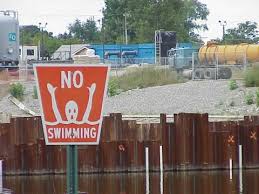
Warning sign near the old Velsicol plant where DDT was produced, on the Pine River, Michigan. The 1972 ban on DDT use in the U.S. was prompted by damage to wildlife and domestic animals; a 2009 conference noted that human health effects of DDT are also still of great concern, and perhaps cause alone for continuing the ban on DDT.

Warning sign near the old Velsicol plant where DDT was produced, on the Pine River, Michigan. The 1972 ban on DDT use in the U.S. was prompted by damage to wildlife and domestic animals; a 2009 conference noted that human health effects of DDT are also still of great concern, and perhaps cause alone for continuing the ban on DDT.

Accurately?  Notice how the conference marks those areas where we do not have good research, such as in the long-term health effects to people who live in the houses that are sprayed with DDT for indoor residual spraying (IRS).  While the conference report cites studies showing elevated DDT levels in the milk of women who live in those homes, they draw no unwarranted conclusions.  Alas, that leaves the field free for Paul Driessen to rush in and claim there are no ill effects — but read the paper for yourself, and you’ll see that’s far from what the research shows.  The paper exposes Steven Milloy’s claims to be almost pure, unadulterated junk science.

Slowly?  Well, it’s been more than a year.

The paper makes one powerful statement that is only implicit:  The claims that DDT is safe, and that use of the stuff should be increased, are wildly inflated.

The paper’s abstract:

Objectives: Dichlorodiphenyl trichloroethane (DDT) was used worldwide until the 1970s, when concerns about its toxic effects, its environmental persistence, and its concentration in the food supply led to usage restrictions and prohibitions. In 2001, more than 100 countries signed the Stockholm Convention on Persistent Organic Pollutants (POPs), committing to eliminate the use of 12 POPs of greatest concern. DDT use was however allowed for disease vector control. In 2006, the World Health Organization and the U.S. Agency for International Development endorsed indoor DDT spraying to control malaria. To better inform current policy, we reviewed epidemiologic studies published in the last five years which investigated the human health consequences of DDT and/or DDE exposure.

Data Sources and Extraction: We conducted a PubMed search in October 2008 and retrieved 494 studies.

Data Synthesis: Use restrictions have been successful in lowering human exposure to DDT, however, blood concentration of DDT and DDE are high in countries where DDT is currently being used or was more recently restricted. The recent literature shows a growing body of evidence that exposure to DDT and its breakdown product DDE may be associated with adverse health outcomes such as breast cancer, diabetes, decreased semen quality, spontaneous abortion, and impaired neurodevelopment in children.

Conclusions: Although we provide evidence to suggest that DDT and DDE may pose a risk to human health, we also highlight the lack of knowledge about human exposure and health effects in communities where DDT is currently being sprayed for malaria control. We recommend research to address this gap and to develop safe and effective alternatives to DDT.

Rachel Carson was right.

Tell other people about this conference report.  This is real science, and it deserves to be spread far and wide.

Tip of the old scrub brush to Ed Lorenz at Alma College, both for providing the news, and for his work to organize the original conference.

Other information: