August 2018: Mark your calendars to fly the flag

July 31, 2018

From Harper's Magazine:

From Harper’s Magazine: “Raising the American flag over Fort Santiago, Manila, on the evening of August 13, 1898.” From Harper’s Pictorial History of the War with Spain, Vol. II, published by Harper and Brothers in 1899.

August in the U.S. is a lazy, often hot, summer month.  It’s a month for vacation, picnicking, local baseball games, camping, cookouts and beach vacations.  It’s not a big month for events to fly the U.S. flag.

Except, perhaps, in Olympics years, when the U.S. flag is often flown a lot, in distant locations. About 50 percent of photographs of the U.S. flag flying in August features an American Olympic athlete. 2018 is not an Olympics year.

Only one event calls for nation-wide flag-flying in August, National Aviation Day on August 19.  This event is not specified in the Flag Code, but in a separate provision in the same chapter U.S. Code.  Three states celebrate statehood, Colorado, Hawaii and Missouri. Will the president issue a proclamation to fly the flag for National Aviation Day?

Put these dates on your calendar to fly the flag in August:

  • August 1, Colorado statehood (1876, 38th state)
  • August 10, Missouri statehood (1821, 24th state)
  • August 19, National Aviation Day, 36 USC 1 § 118
  • August 21, Hawaii statehood (1959, 50th state)

If Texans want to fly their flags for the children’s returning to school on August 15, no one will complain.

You may fly your U.S. flag any day. These are just the suggested days in law.

More:

Save


July 2018: When do we fly the flag?

July 19, 2018

Caption from NASA: The American flag heralded the launch of Apollo 11, the first Lunar landing mission, on July 16, 1969. The massive Saturn V rocket lifted off from NASA's Kennedy Space Center with astronauts Neil A. Armstrong, Michael Collins, and Edwin

Caption from NASA: The American flag heralded the launch of Apollo 11, the first Lunar landing mission, on July 16, 1969. The massive Saturn V rocket lifted off from NASA’s Kennedy Space Center with astronauts Neil A. Armstrong, Michael Collins, and Edwin “Buzz” Aldrin at 9:32 a.m. EDT. Four days later, on July 20, Armstrong and Aldrin landed on the Moon’s surface while Collins orbited overhead in the Command Module. Armstrong and Aldrin gathered samples of lunar material and deployed scientific experiments that transmitted data about the lunar environment. Image Credit: NASA

[Yes, we’re running late with this post for July. Apologies. You can always check the list of all dates, or last year’s post.]

July 4. Surely everyone knows to fly the flag on Independence Day, the anniversary of the Declaration of Independence.*

In the month of the grand patriotic celebration, what other dates do we fly the U.S. flag? July 4 is the only date designated in the Flag Code for all Americans to fly the flag.  Three states joined the union in July, days on which citizens of those states should show the colors, New York, Idaho and Wyoming.

Plus, there is one date many veterans think we should still fly the flag, Korean War Veterans Armistice Day on July 27.  Oddly, the law designating that date urges flying the flag only until 2003, the 50th anniversary of the still-standing truce in that war.  But the law still exists.  What’s a patriot to do?

Patriots may watch to see whether the president issues a proclamation for the date.

From Pinterest:

From Pinterest: “Riders in the patriotic horse group Americanas from Rexburg, Idaho, participate in the 163rd annual Days of ‘47 KSL 5 Parade Tuesday July 24, 2012 [in Salt Lake City, Utah]. (Chris Detrick | The Salt Lake Tribune)”

Generally we don’t note state holidays or state-designated flag-flying events, such as Utah’s Pioneer Day, July 24, which marks the day in 1847 that the Mormon pioneers in the party of Brigham Young exited what is now Emigration Canyon into the Salt Lake Valley. But it’s a big day in Utah, where I spent a number of years and still have family. And I still have memories, not all pleasant, of that five-mile march for the Days of ’47 Parade, in that wool, long-sleeved uniform and hat, carrying the Sousaphone. Pardon my partisan exception. Utahns will fly their flags on July 24.

  • Idaho statehood, July 3 (1890, 43rd state)
  • Independence Day, July 4
  • Wyoming statehood, July 10 (1890, 44th state)
  • New York statehood, July 26 (1788, 11th state)
  • National Korean War Veterans Armistice Day, July 27 (flags fly at half-staff, if you are continuing the commemoration which was designated in law only until 2003)

More:

_____________

* July 4? But didn’t John Adams say it should be July 2?  And, yes, the staff at Millard Fillmore’s Bathtub sadly noted that, at most July 4 parades, it appears no one salutes the U.S. flag as it passes, as the Flag Code recommends. MFB’s been fighting flag etiquette ignorance since 2006. It’s taking much, much longer than we wished.

The U.S. flag on Mars - No manned missions to Mars occurred, yet, so there is no flag planted on Mars. But the Mars Rover, Curiosity, has a U.S. flag medallion affixed to a rocker arm.  From NASA: This view of the American flag medallion on NASA's Mars rover Curiosity was taken by the rover's Mars Hand Lens Imager (MAHLI) during the 44th Martian day, or sol, of Curiosity's work on Mars (Sept. 19, 2012). The flag is one of four

The U.S. flag on Mars – No manned missions to Mars occurred, yet, so there is no flag planted on Mars. But the Mars Rover, Curiosity, has a U.S. flag medallion affixed to a rocker arm. From NASA: This view of the American flag medallion on NASA’s Mars rover Curiosity was taken by the rover’s Mars Hand Lens Imager (MAHLI) during the 44th Martian day, or sol, of Curiosity’s work on Mars (Sept. 19, 2012). The flag is one of four “mobility logos” placed on the rover’s mobility rocker arms.

This is an encore post.

Yes, this is an encore post. Defeating ignorance takes patience and perseverance.

Save


Flag Day 2017! (Fly your flag all week)

June 14, 2018

Of course you know to fly your flag on June 14 for Flag Day — but did you know that the week containing Flag Day is Flag Week, and we are encouraged to fly the flag every day?

Clifford Berryman's 1901 Flag Day cartoon, found at the National Archives:

Clifford Berryman’s 1901 Flag Day cartoon, found at the National Archives: “In this June 14, 1904, cartoon, Uncle Sam gives a lesson to schoolchildren on the meaning of Flag Day. Holding the American flag in one hand, Uncle Sam explains that the flag has great importance, unlike the Vice Presidency, which he ridicules in a kindly manner. (National Archives Identifier 6010464)”

Our National Archives has a blogged history of Flag Day pointing out it was a teacher who started Flag Day celebrations.

On June 14, 1885, Bernard J. Cigrand placed a 10-inch, 38-star flag in a bottle on his desk at the Stony Hill School in Ozaukee County, Wisconsin. The 19-year-old teacher then asked his students to write essays on the flag and its significance to them. This small observance marked the beginning of a long and devoted campaign by Cigrand to bring about national recognition for Flag Day.

And so we do, today, still.

This is an encore post.

Yes, this is an encore post. Defeating ignorance takes patience and perseverance.


June 2018: On what dates should we fly the flag?

June 11, 2018

“Flag Day, Pittsburgh, Pennsylvania.” 1942 photo by John Vachon (1914-1975) for the U.S. Farm Security Administration/Office of War Information. Image from the National Archives and Records Administration (NARA)

June holds only two days designated for flying the U.S. flag out of the specific days mentioned in the U.S. Flag Code, and six statehood days, when residents of those states should fly their flags.  Plus, there is National Flag Week.

Two Flag Code-designated days:

  • Flag Day, June 14
  • Fathers Day, third Sunday in June (June 17 in 2018)

Several states celebrate statehood. New Hampshire, Virginia, Arkansas, Kentucky, Tennessee and West Virginia celebrate statehood; Kentucky and Tennessee share the same date.

  • Kentucky, June 1 (1792, 15th state)
  • Tennessee, June 1 (1796, 16th state)
  • Arkansas, June 15 (1836, 25th state)
  • West Virginia, June 20 (1863, 35th state)
  • New Hampshire, June 21 (1788, 9th state), and
  • Virginia, June 25 (1788, 10th state)

Additionally, Congress passed a resolution designating the week in which June 14th falls as National Flag Week, and urging that citizens fly the flag each day of that week.  In 2018 that would be the week of June 10, which falls on Sunday, through June 16.

Flag-flying days for June, listed chronologically:

  1. Kentucky and Tennessee statehood, June 1
  2. Flag Day, June 14; National Flag week, June 10 to 16
  3. Arkansas statehood, June 15 (duplicating a day in National Flag Week)
  4. Fathers Day, June 17
  5. West Virginia statehood, June 20
  6. New Hampshire statehood, June 21
  7. Virginia statehood, June 25

As you know, any resident may fly the flag any day of the year, under the etiquette provided in the Flag Code.

Tip of the old scrub brush to Mike’s Blog Rounds at Crooks and Liars — thanks for the plug!

National Archives caption: This illustration entitled, “Flag Day - 1900”, by cartoonist Clifford Berryman, which appeared in the Washington Post on June 14, 1900, depicts the growth of American influence in the world as the European powers watch in the background as new century is ushered in.

National Archives caption: This illustration entitled, “Flag Day – 1900”, by cartoonist Clifford Berryman, which appeared in the Washington Post on June 14, 1900, depicts the growth of American influence in the world as the European powers watch in the background as new century is ushered in.

Flag Day, 1918, at Fort Sam Houston, Texas. Photo by Miles F. Weaver (1879-1932), from the collection of the National Archives (NARA)

Flag Day, 1918, at Fort Sam Houston, Texas. Photo by Miles F. Weaver (1879-1932), from the collection of the National Archives (NARA)

Save


Fly your flag today? Remembering D-Day, 1944 – 74 years ago

June 6, 2018

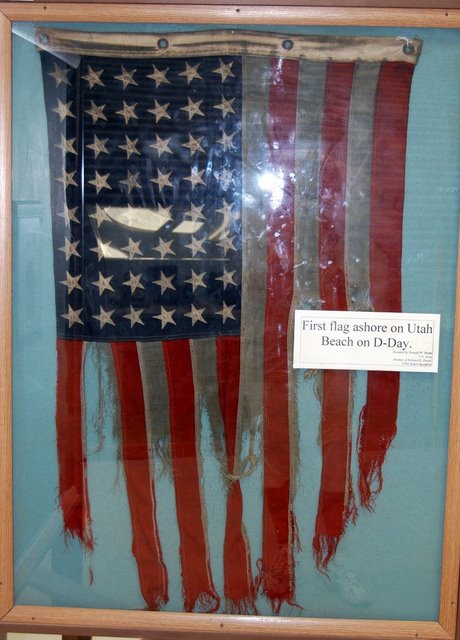
First Flag on Utah Beach, June 6, 1944

First Flag on Utah Beach, June 6, 1944 – Photo by Mark Wainwright

Today is the 74th anniversary of the Invasion of Normandy in World War II, a date called D-Day.  I usually get at least one e-mail request:  No, you don’t have to fly your flag.  This is not one of the days designated by Congress for flag-flying.

But you may fly your flag, and probably, you should.  If there are any D-Day veterans in your town, they’ll appreciate it.

This is an encore post.

Yes, this is an encore post. Defeating ignorance takes patience and perseverance.


A brief history of Armed Forces Day, and why we fly the flag in 2018

May 19, 2018

New meaning to

New meaning to “flying the flag”: (Wikipedia caption) A pair of specially painted F-117 Nighthawks fly off from their last refueling by the Ohio National Guard’s 121st Air Refueling Wing. The F-117s were retired March 11 [2008] in a farewell ceremony at Wright-Patterson Air Force Base, Ohio. U.S. Air Force photo/Senior Master Sgt. Kim Frey. This is just a great photo.

Armed Forces Day is the third Saturday in May. This year it falls on May 19.

The U.S. Flag Code designates Armed Forces Day as one day for all Americans to fly their flags, in honor of those men and women presently serving in any of the Armed Forces.

Activities to honor active duty and active reserve forces occur in hundreds of communities across the nation.  Check your local papers.

Remember to fly your flag.

A bit of history, as we’ve noted earlier:  After President Truman’s administration brought the management of the armed forces under the umbrella of one agency, the Department of Defense, Truman moved also to unite what had been a separate day of honor for each of the branches of the military, into one week capped by one day for all uniformed defense services.

On August 31, 1949, Secretary of Defense Louis Johnson announced the creation of an Armed Forces Day to replace separate Army, Navy and Air Force Days. The single-day celebration stemmed from the unification of the Armed Forces under one department — the Department of Defense. Each of the military leagues and orders was asked to drop sponsorship of its specific service day in order to celebrate the newly announced Armed Forces Day. The Army, Navy and Air Force leagues adopted the newly formed day. The Marine Corps League declined to drop support for Marine Corps Day but supports Armed Forces Day, too.

In a speech announcing the formation of the day, President Truman “praised the work of the military services at home and across the seas” and said, “it is vital to the security of the nation and to the establishment of a desirable peace.” In an excerpt from the Presidential Proclamation of Feb. 27, 1950, Mr. Truman stated:

Armed Forces Day, Saturday, May 20, 1950, marks the first combined demonstration by America’s defense team of its progress, under the National Security Act, towards the goal of readiness for any eventuality. It is the first parade of preparedness by the unified forces of our land, sea, and air defense.

Celebrations like Armed Forces Day offer good opportunities to promote history. I suspect that the day’s coming always in the middle of May suppresses some of the teaching moment value, as teachers make a final push for end of course tests, finals, and in high schools, for graduation — and as many colleges are already out for the summer. Good materials are available that can be sprinkled throughout a course.

Photograph of President Truman and other digni...

President Truman and other dignitaries on the reviewing stand during an Armed Forces Day parade, (left… – NARA – 200222 (Photo credit: Wikipedia) (Is that Eisenhower on the left?) (Update: Yep! From Wikimedia: Left to right, Gen. Dwight D. Eisenhower, Secretary of Defense Louis Johnson, President Truman, Adm. William Leahy.

For example, this list of world-wide events at the first Armed Forces Day, in 1950, gives a good picture of four years into the Cold War, and would make a good warm-up exercise or even an entire lesson, or offer opportunities for projects:

The first Armed Forces Day came at a time of increased world tensions, political volatility and communist aggression. Some notable events that marked America’s first Armed Forces Week were as follows:

  • Bolivian police broke up “alleged” revolutionary communist-led general strike in LaPaz.
  • Two U. S. government buildings in Canton, China were taken over by the Chinese Communist Government. The buildings were U. S. property acquired prior to the Communist takeover.
  • The Burmese Army recaptured the city of Prome, a strategic communist-rebel stronghold.
  • Nicaraguans elect General Anastasio Somoza to a regular six-year term as president.
  • French and West German governments expected to talk shortly on the merger of the coal and steel industries of the two countries.
  • Communist China lifted the ban on daylight shipping along the Yangtze River due to the decline of Nationalist air activity.
  • Norway receives first US military aid in the form of two Dakota planes.
  • U. N. Secretary General Trygive Lie seeks West’s acceptance of Red China in the U. N.
  • Iran announced close range news broadcasts to the Soviet Union with $56,000 worth of Voice of America equipment.
  • Cuba celebrated the 48th anniversary of the establishment of its republic.
  • The Red Cross celebrated its 69th birthday.
  • Britain ended rationing of all foods except meats, butter, margarine, and cooking fat.
  • The U. S. Congress voted to extend the draft. “A Bill to extend registration and classification for the Draft until June 24, 1952 passed the House 216-11.”
  • The Allied Command announced it would “ease” the burden of occupation on Austria and would name civilian high commissioners to replace present military high commissioners.
  • Soviet authorities in Berlin withdrew travel passes of the U.S. and British military missions stationed at Potsdam in the Soviet zone of occupation.
  • The Soviets returned 23 East German industrial plants to East German authorities. The plants had been producing exclusively for the benefit of reparations to the USSR.
  • Twenty-eight Soviet vessels, consisting of tugs, trawlers, and supply ships remained in the English Channel as the Western Alliance prepared for air and naval maneuvers. Observers noted that many of them carried rollers at their sterns for trawling nets although no nets were visible.
  • Pravda denounced Armed Forces Day, calling it the militarization of the United States. “The hysterical speeches of the warmongers again show the timeliness of the appeal of the Permanent Committee of Peace Partisans that atomic weapons be forbidden.”
  • Western Powers renewed their promise to help Mid-Eastern states resist communism. They also announced an agreement to sell arms to Israel as well as to the Arabs.

Veterans Day honors veterans of wars, and those who served in the past; Memorial Day honors people who died defending the nation; Armed Forces Day honors those men and women serving today.  Service with two wars, in an “all volunteer” military, is a rough go, especially in times of federal budget cuts.  Say a good word about active duty military on Saturday, will you?

More:

This is an encore post.

Yes, this is an encore post, mostly. Defeating ignorance takes patience and perseverance.

Save


Armed Forces Day, Saturday, May 19, 2018 – fly your flag

May 19, 2018

2018 Armed Forces Day Poster from the Department of Defense, - President Harry S. Truman led the effort to establish a single holiday for citizens to come together and thank our military members for their patriotic service in support of our country.

2018 Armed Forces Day Poster from the Department of Defense, – President Harry S. Truman led the effort to establish a single holiday for citizens to come together and thank our military members for their patriotic service in support of our country. On August 31, 1949, Secretary of Defense Louis Johnson announced the creation of an Armed Forces Day to replace separate Army, Navy, Marine Corps and Air Force Days.
The single day celebration stemmed from the unification of the Armed Forces under the Department of Defense.
To download this poster, go here.


Americans celebrate Armed Forces Day on the third Saturday in May, by law as listed in the Flag Code. This year it’s May 19.

Fly your flag, if you haven’t been flying it all week to honor fallen police. Saturday is also the last day of National Police Week, during which flags are flown half-staff to honor fallen policemen. You may fly your flag half-staff on Saturday, too, if you wish; if your flag pole does not allow a half-staff position, fly it at full height.

President Donald Trump asked that flags be flown at half-staff through May 28, for the victims of the mass shooting at Santa Fe High School in Santa Fe, Texas, on May 18. If your flag pole does not easily fly a flag at half-staff, fly it full staff.

More:

Caption from the Chattannoga Times-Free Press: Students from Soddy-Daisy High School participate in the annual Armed Forces Day Parade by marching while holding a large American flag today on Market Street in downtown Chattanooga. Participants marched the length of Market Street as they were cheered on by crowds gathered on the sidewalk. Photo by Ashlee Culverhouse /Times Free Press.

Caption from the Chattanooga Times-Free Press: Students from Soddy-Daisy High School participate in the annual Armed Forces Day Parade by marching while holding a large American flag today on Market Street in downtown Chattanooga. Participants marched the length of Market Street as they were cheered on by crowds gathered on the sidewalk.
Photo by Ashlee Culverhouse /Times Free Press.


May 2018, flag-flying dates

May 8, 2018

"Early Morning on the Avenue in May 1917," Frederick Childe Hassam, oil on canvas, 1917; Addison Gallery of American Art

“Early Morning on the Avenue in May 1917,” Frederick Childe Hassam, oil on canvas, 1917; Addison Gallery of American Art.
Description from the Addison Gallery: “Early Morning on the Avenue in May 1917 belongs to a series of flag paintings that Frederick Childe Hassam created during World War I, between 1916 and 1919. Totaling nearly thirty canvases, the series constituted the artist’s last significant body of work. It demonstrates his vigorous brushwork, bright palette, and what the critics called his truly American interpretation of the French aesthetic of Impressionism.
“French Impressionists had recorded contemporary life, usually under bright, sunny spring skies. Hassam was also interested in capturing weather conditions: Early Morning on the Avenue is distinct in the series for its overall whiteness, the brilliancy of the hue transforming the cloudless blue sky to a pearly white and bleaching the buildings and sidewalks to opalescent tones. The flag paintings, however, were not just about weather and light. They were begun in response to the flag displays and parades that were organized in New York City as part of the war effort. Hassam was a patriot and an ardent Anglophile, and he used these paintings to demonstrate his support for the Allies. Color and light therefore took on a metaphorical significance, the pervasiveness of white in Early Morning on the Avenue suggesting purity and the righteousness of the Allied cause.”

May has three days designated for flying the U.S. flag out of the specific days mentioned in the U.S. Flag Code, three days designated in other federal laws,  and three statehood days, when residents of those states should fly their flags.

Interestingly, the three designated days all float, from year to year:

  • Mother’s Day, second Sunday in May (May 13, in 2018)
  • Armed Forces Day, third Saturday in May (May 19)
  • Memorial Day, the last Monday in May (May 28)

Residents of these states celebrate statehood; South Carolina and Wisconsin share May 23:

  • Minnesota, May 11 (1858, the 32nd state)
  • South Carolina, May 23 (1788, the 8th state)
  • Wisconsin, May 23 (1848, the 30th state)
  • Rhode Island, May 29 (1790, the last of the 13 original colonies to ratify the Constitution)

In 2016 President Obama issued a proclamation calling on citizens to fly the flag on May 1, Law Day. It’s also Loyalty Day, which got a proclamation from President Obama calling for flag flying in 2016, and from President Trump in 2017.

May 8 marks the 70th anniversary of Victory in Europe Day, the day the Axis Powers in Europe surrendered at the end of World War II.  Some years that day is marked by a proclamation calling for flag flying.  (You may fly your flag then even if Congress and the President do nothing.)

In recent years President Obama proclaimed May 15 as Peace Officers Memorial Day, with flags to fly at half-staff. We might expect another such declaration in 2018, but we’ll see next week.

May 22 is National Maritime Day, under a Joint Resolution from Congress from 1933. President Trump may proclaim that day as a day to fly the flag, too.

Twelve events on fourteen days to fly the U.S. flag.  May could be quite busy for flag fliers.

  1. Law Day, May 1, AND
  2. Loyalty Day, May 1
  3. Victory in Europe Day, May 8
  4. Minnesota Statehood, May 11
  5. Mothers Day, May 13
  6. Peace Officers Memorial Day, May 15 (half-staff flags; the law for Police Week calls for flags to be half-staff the entire week in which May 15 occurs, May 14-20 in 2017)
  7. Armed Forces Day, May 19
  8. National Maritime Day, May 22
  9. South Carolina Statehood, May 23, AND
  10. Wisconsin Statehood, May 23
  11. Memorial Day, May 28
  12. Rhode Island Statehood, May 29
US flag flying at the U.S. Supreme Court's west portico, suitable for Law Day, May 1. (But this photo was taken in June, 2012; Alex Brandon/AP)

US flag flying at the U.S. Supreme Court’s west portico, suitable for Law Day, May 1. (But this photo was taken in June, 2012; Alex Brandon/AP)


This is an encore post.

Yes, this is an encore post. Defeating ignorance takes patience and perseverance.

Save

Save


May 1 is Law Day – fly your flags

May 1, 2018

Wait. You didn’t fly your flag today because you were waiting for me to tell you to do it?

Oh, you know Congress passed a resolution years ago encouraging flying the flag, even when the President of the U.S. doesn’t issue a formal proclamation, right?

President John F. Kennedy at the 1963 State of the Union Address, in front of the U.S. flag displayed in the chamber of the House of Representatives. Kennedy signed the law designating May 1 as Law Day, in 1961. Photograph by Cecil Stoughton, White House, in the John F. Kennedy Presidential Library and Museum, Boston. Public Domain

President John F. Kennedy at the 1963 State of the Union Address, in front of the U.S. flag displayed in the chamber of the House of Representatives. Kennedy signed the law designating May 1 as Law Day, in 1961. Photograph by Cecil Stoughton, White House, in the John F. Kennedy Presidential Library and Museum, Boston. Public Domain

President Trump declared May 1, 2018, as Law Day, and a day to fly the flag.

President Donald J. Trump Proclaims May 1, 2018, as Law Day, U.S.A.</3>

April 30, 2018

On Law Day, we celebrate our Nation’s heritage of liberty, justice, and equality under the law.  This heritage is embodied most powerfully in our Constitution, the longest surviving document of its kind.  The Constitution established a unique structure of government that has ensured to our country the blessings of liberty through law for nearly 229 years.

The Framers of our Constitution created a government with distinct and independent branches — the Legislative, the Executive, and the Judicial — because they recognized the risks of concentrating power in one authority.  As James Madison wrote, “the accumulation of all powers, legislative, executive, and judiciary, in the same hands . . . may justly be pronounced the very definition of tyranny.”  By separating the powers of government into three co-equal branches and giving each branch certain powers to check the others, the Constitution provides a framework in which the rule of law has flourished.

The importance of the rule of law can be seen throughout our Nation’s history.  This year marks the 150th anniversary of the ratification of the Fourteenth Amendment to our Constitution.  The Fourteenth Amendment prohibits States from denying persons the equal protection of the laws or depriving them of life, liberty, or property without due process of law.  The commitment to the rule of law that led the country to ratify that Amendment was no less powerful than the commitment to the rule of law that led the country to ratify the original Constitution.

That commitment to the rule of law lives on today.  It drives the debates we see around the country about the growth of the administrative state and regulatory authority, and about the unfortunate trend of district court rulings that exceed traditional limits on the judicial power.  We also see that commitment in the people’s demand that their representatives comply with the Constitution, and in the Representatives and Senators themselves who take seriously their oaths to support and defend the Constitution of the United States.

President Dwight D. Eisenhower first commemorated Law Day in 1958 to celebrate our Nation’s roots in the principles of liberty and guaranteed fundamental rights of individual citizens under the law.  Law Day recognizes that we govern ourselves in accordance with the rule of law rather according to the whims of an elite few or the dictates of collective will.  Through law, we have ensured liberty.  We should not, and do not, take that success for granted.  On this 60th annual observance of Law Day, let us rededicate ourselves to the rule of law as the best means to secure, as the Preamble to our Constitution so wisely states, “the Blessings of Liberty to ourselves and our Posterity.”

NOW, THEREFORE, I, DONALD J. TRUMP, President of the United States of America, in accordance with Public Law 87–20, as amended, do hereby proclaim May 1, 2018, as Law Day, U.S.A.  I urge all Americans, including government officials, to observe this day by reflecting upon the importance of the rule of law in our Nation and displaying the flag of the United States in support of this national observance; and I especially urge the legal profession, the press, and the radio, television, and media industries to promote and to participate in the observance of this day.

IN WITNESS WHEREOF, I have hereunto set my hand this thirtieth day of April, in the year of our Lord two thousand eighteen, and of the Independence of the United States of America the two hundred and forty-second.

DONALD J. TRUMP


April 2018: When do we fly our flags?

April 3, 2018

Schooner on Chesapeake Bay flies the 15-stripe/15-star flag that flew over Fort McHenry. Image from the Maryland Secretary of State's Office

Schooner on Chesapeake Bay flies the 15-stripe/15-star flag that flew over Fort McHenry. Image from the Maryland Secretary of State’s Office

Is April the cruelest month?

It’s cruel to people who want to fly U.S. flags often, but only on designated flag-flying dates. (April is also National Poetry Month, so it’s a good time to look up poetry references we should have committed to heart).

For 2018, these are the three dates for flying the U.S. flag; Easter is a national date, the other two are dates suggested for residents of the states involved.

One date, nationally, to fly the flag. That beats March, which has none (in a year with Easter in April and not March). But March has five statehood days, to April’s two.

Take heart! You may fly your U.S. flag any day you choose, or everyday as many people do in Texas (though, too many do not retire their flags every evening . . .).

Three dates to fly Old Glory in April, by the Flag Code and other laws on memorials and commemorations.

  • Easter, April 1
  • Maryland, April 28, 1788, 7th state
  • Louisiana, April 30, 1812, 18th state
April usually sees the opening of Major League Baseball's season -- some teams jumped into March in 2018. In this photo, U.S. Navy sailors assigned to the USS Bonhomme Richard practice for the San Diego Padres' opening day flag ceremony in San Diego on April 5, 2011. The ship sent nearly 300 volunteers to unfurl an 800-pound U.S. flag that covered the entire field. The Bonhomme Richard is in dry-dock for maintenance and upgrades. Defense Department photo via Wikimedia.

April usually sees the opening of Major League Baseball’s season — some teams jumped into March in 2018. In this photo, U.S. Navy sailors assigned to the USS Bonhomme Richard practice for the San Diego Padres’ opening day flag ceremony in San Diego on April 5, 2011. The ship sent nearly 300 volunteers to unfurl an 800-pound U.S. flag that covered the entire field. The Bonhomme Richard was in dry-dock for maintenance and upgrades. Defense Department photo via Wikimedia.

More:

This is an encore post.

Yes, this is an encore post. Defeating ignorance takes patience and perseverance.

Save

Save

Save

Save


Fly the U.S. flag in March 2018?

March 2, 2018

Members of the New York City Fire Department carry 343 U.S. flags honoring the 343 NYFD members killed on 9/11, in the St. Patrick's Day Parade. New York Post caption:

Members of the New York City Fire Department carry 343 U.S. flags honoring the 343 NYFD members killed on 9/11, in the St. Patrick’s Day Parade. New York Post caption: “Despite the cold and gray morning, parade-goers turned out for St. Patrick’s Day to celebrate Irish heritage in New York City on March 17, 2014. FDNY members set the pace as they marched down 5th Avenue holding American flags for the annual event. SHANNON STAPLETON/Reuters”

I usually put up a post near the first of the month listing the occasions upon which U.S. laws urge us to fly Old Glory. March sometimes slips by without such a post.

No good reason, other than in most years, March offers no regular national commemorations upon which flag flying is urged. The odd year is when Easter comes early. Easter is one of the holidays the Flag Code says flags should be flown.

But, most years, Easter falls in April, as it does in 2018.

The Flag Code urges residents of states to fly the U.S. flag on the anniversary of their state’s entering the union, on statehood day. Those are the only dates in March, most years. In March, we have four statehood days in the first four days of the month. If I dawdle, we miss most of the dates.

Flag fly dates, for March (some already past, in 2018):

  • March 1, Ohio statehood (1803, 17th state)
  • March 1, Nebraska statehood (1867, 37th state)
  • March 3, Florida (1845, 27th state)
  • March 4, Vermont statehood (1791, 14th state)
  • March 15, Maine statehood (1820, 23rd state)

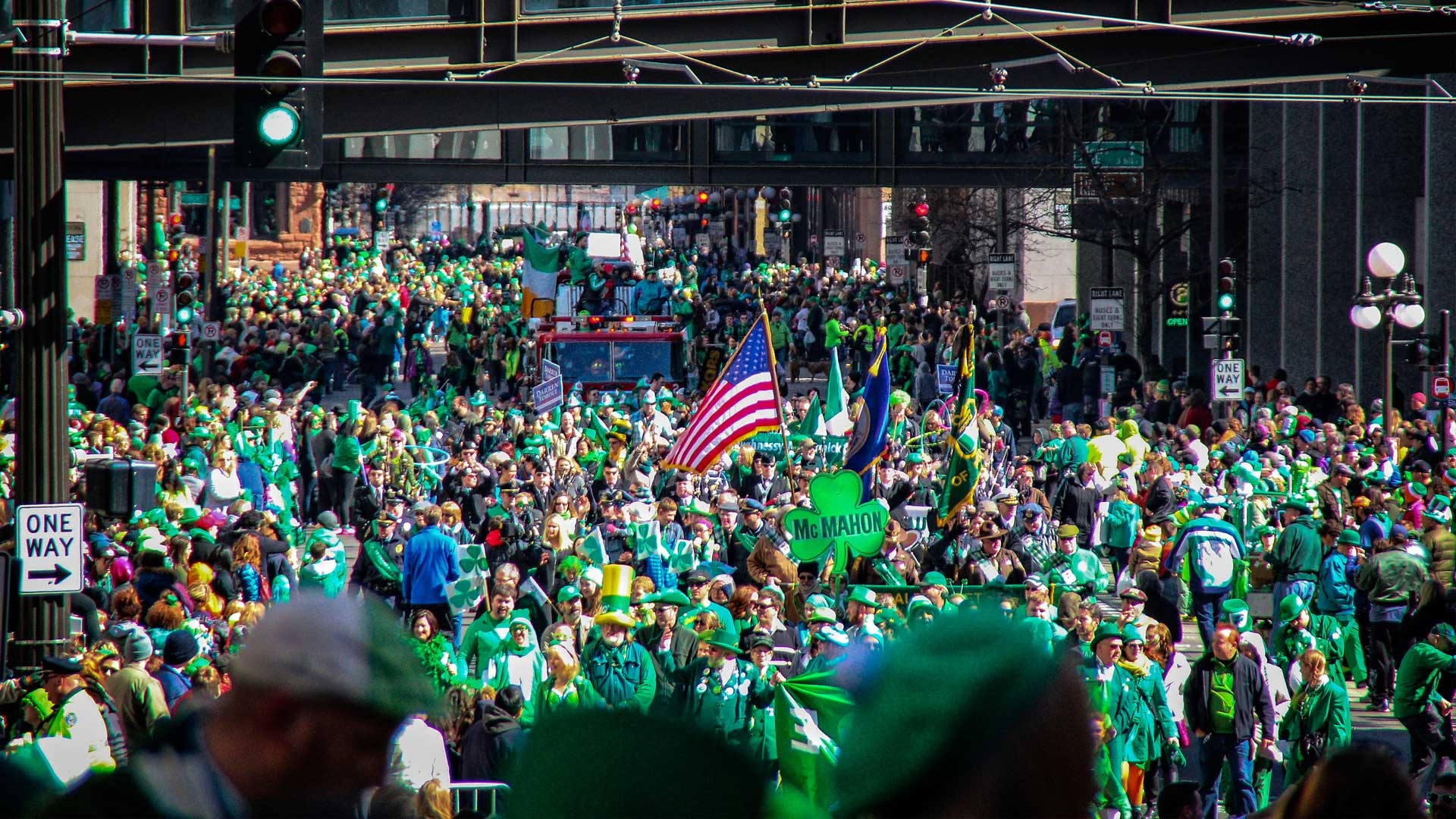
Many St. Patrick’s Day revelers and parade marchers display the U.S. flag, but it’s not an official U.S. observance.

I keep hoping, but I get little traction for a law urging flying the flag to observe Freedom Day, on the birth anniversary of the Father of the Constitution, James Madison (he was born March 16, 1751).

People gathered on the lawn of James Madison's home in Montpelier, Virginia, to display the U.S. flag in a card display, 2011. AP photo?

People gathered on the lawn of James Madison’s home in Montpelier, Virginia, to display the U.S. flag in a card display, 2011. AP photo?

Much irony, and great history, in the U.S. colors being shown so dramatically on St. Patrick’s Day, a day relatively uncommemorated in Ireland, and commemorated in the U.S. chiefly to help overcome bias against Irish immigrants.

Some irony in the unmarked birthday of the Father of the Constitution.

Sure, you may fly the U.S. flag every day in March. You need not wait for sanction from a Presidential Proclamation or a Congressional Resolution. You may fly the flag every day. (Just follow flag etiquette when you do.)

I’ll try to keep up better, next year. (I said that last year.)

U.S. colors led the St. Patrick's Day parade in Seattle, Washington, in 2014. Photo from IrishClub.org

U.S. colors led the St. Patrick’s Day parade in Seattle, Washington, in 2014. Photo from IrishClub.org


U.S. colors stood out in a field of green at the St. Paul, Minnesota, St. Patrick's Day parade, 2015(?). Photo from VisitStPaul.com.

U.S. colors stood out in a field of green at the St. Paul, Minnesota, St. Patrick’s Day parade, 2015(?). Photo from VisitStPaul.com.

More

This is an encore post.

Yes, this is a bit of an encore post. Defeating ignorance takes patience and perseverance.


Fly your flag, a Valentine for Oregon and Arizona

February 14, 2018

From the Sons and Daughters of Oregon Pioneers: A Stamp printed in 1959 for the Oregon Centennial shows a covered Wagon and Mount Hood Oregon

From the Sons and Daughters of Oregon Pioneers: A Stamp printed in 1959 for the Oregon Centennial shows a covered Wagon and Mount Hood Oregon

Flags are flying in Oregon and Arizona on Valentine’s Day 2018?

It’s statehood day in both of those states.

Legally, nothing stops a resident from flying the U.S. flag following protocol on any day.  Yes, you may fly your U.S. flag on Valentine’s Day.

The Flag Code urges flying the flag on the day a state achieved statehood, too.

For Oregon and Arizona, there is an expectation that residents will fly their flags.  Oregon came into the union on February 14, 1859; Arizona joined the Republic as a state in 1912.

Taft signs Arizona statehood papers, February 14, 1912

President William Howard Taft signed the papers accepting Arizona into statehood, on February 14, 1912. He still finished third behind Democrat Woodrow Wilson and Bullmoose Party’s Teddy Roosevelt in that fall’s elections. Photo found at Mrs. Convir’s page, Balboa Magnet School  (Can you identify others in the photo?  Who is the young man?)

From TripSavvy: On February 14, 1912, Taft signed the proclamation making Arizona the 48th state, and the last of the contiguous states to be admitted to the union. It was the last of the 48 contiguous states to be admitted to the union.

Arizona’s state flag waves in the blue – From TripSavvy: On February 14, 1912, Taft signed the proclamation making Arizona the 48th state, and the last of the contiguous states to be admitted to the union. It was the last of the 48 contiguous states to be admitted to the union.

More:

Some of this material was borrowed, with express permission, from last year’s post at Millard Fillmore’s Bathtub.


Happy birthday, Abe and Charles!

February 12, 2018

From Smithsonian Magazine's 2009 article,

From Smithsonian Magazine’s 2009 article, “How Lincoln and Darwin Shaped the World.” Illustration by Joe Ciardiello.

On this day in 1809, just a few hours apart, Charles Darwin and Abraham Lincoln were born.

What are the odds of historic coincidences like that?

Lincoln’s birthday is still listed in law as a date to fly the U.S. flag, though we’ve changed the celebration to the following week and the generic President’s Day, closer to George Washington’s real birthday, February 22. President’s Day is celebrated on the third Monday in February.

So, you may certainly fly your flag today. (You may fly your flag any day, but you get the idea.)

News will feature more celebrations of Darwin than Lincoln, today, I predict — Darwin Day is a worldwide celebration by science nerds.

Both Lincoln and Darwin worked to end slavery. Darwin probably had more of an idea that racial discrimination had no science basis. Lincoln had more political sway. After Lincoln and Darwin, science and human rights advanced greatly, because of their work.

More:


February 2018, dates to fly the U.S. flag

February 7, 2018

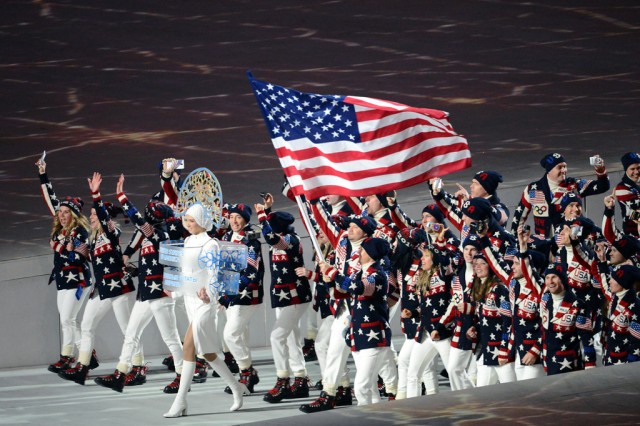
Todd Lodwick carries the flag of the United States of America, which flies directly over the head of former U.S. Army World Class Athlete Program bobsledder Steven Holcomb, reigning Olympic champion four-man bobsled driver, as Team USA marches into Fisht Olympic Stadium during the Opening Ceremony of the 2014 Olympic Winter Games, Feb. 7, 2014, in Sochi, Russia. Army WCAP luger Sgt. Preston Griffall (right behind lady in white) and WCAP bobsledders Sgt. Justin Olsen, Capt. Chris Fogt and Sgt. Dallas Robinson also are among the lead group of Americans (Photo Credit: Tim Hipps, IMCOM Public Affairs)

Lots of flag waving in February of Winter Olympics years, like 2018. Caption from the U.S. Army: Todd Lodwick carries the flag of the United States of America, which flies directly over the head of former U.S. Army World Class Athlete Program bobsledder Steven Holcomb, reigning Olympic champion four-man bobsled driver, as Team USA marches into Fisht Olympic Stadium during the Opening Ceremony of the 2014 Olympic Winter Games, Feb. 7, 2014, in Sochi, Russia. Army WCAP luger Sgt. Preston Griffall (right behind lady in white) and WCAP bobsledders Sgt. Justin Olsen, Capt. Chris Fogt and Sgt. Dallas Robinson also are among the lead group of Americans (Photo Credit: Tim Hipps, IMCOM Public Affairs)

You want to mark your calendar so you remember to put your U.S. flag up on those dates designated by law and tradition, right?

Which dates in February?

  • Massachusetts statehood, February 6 (6th state, 1788)
  • Lincoln’s birthday, February 12 (yes, it’s still designated in law as a date to fly the flag)
  • Oregon statehood, February 14 (33rd state, 1859)
  • Arizona statehood, February 14 (48th state, 1913)
  • Washington’s birthday, now designated President’s Day, the third Monday in February, February 19 in 2018

You may fly your flag on state holidays, too — which of those dates do we see in February?  Is there a good list?

Though we don’t mark it usually, February 14 is the anniversary of the first recognition of the Stars and Stripes by a foreign government, in 1778.  The French fleet recognized the ensign carried by Capt. John Paul Jones, at Quiberon Bay — painting of the event is at the top of this post.

February 23 is the anniversary of the raising of the U.S. flag on Iwo Jima, in 1945 — 72 years ago.  We should probably watch for proclamations to fly the flag on that date, an anniversary made more important simply because so few survivors of from among the veterans of that war and that fight can be expected to live to see the 80th anniversary. Regardless any official, formal proclamation to fly the flag for the Iwo Jima events, you may always fly your flag.

Please visit earlier posts at Millard Fillmore’s Bathtub, on the death of Joe Rosenthal, the photographer who took the widely-released iconic photo; on the death of Charles Lindberg, pictured in the first flag-raising on Mt. Suribachi; on the death of Raymond Jacobs, the last-surviving veteran from the flag raisings; and on my visit to the Sunset Parade at the Iwo Jima-themed U.S. Marine Memorial overlooking Washington, D.C.

A Youtube poster edited a part of the Army’s documentary, “To the Shores of Iwo Jima,” showing the flag raising on film, and added in some other images for a less-than-three-minute look. (Alas, that edited version is gone — here’s the full 20-minute movie; propaganda at its best, for noble purposes.)

Winter Olympics kick off in South Korea in early February — there will be much U.S. flag waving, especially if the U.S. athletes perform as well as many expect and win medals. Olympics events, both summer and winter, often provide large public forums for improper flag display, too — but we ignore that, since no disrespect is intended, usually.

Wave your flag!

More:

Photo #: 80-G-K-21225 (color)

Caption from the U.S. Navy, via Wikipedia: Photo #: 80-G-K-21225 (color) “First Recognition of the American Flag by a Foreign Government,” 14 February 1778. Painting in oils by Edward Moran, 1898. It depicts the Continental Navy Ship Ranger, commanded by Captain John Paul Jones, receiving the salute of the French fleet at Quiberon Bay, France, 14 February 1778. Earlier in the month, after receipt of news of the victory at Saratoga, France recognized the independence of the American colonies and signed a treaty of alliance with them. The original painting is in the U.S. Naval Academy Museum, Annapolis, Maryland. Official U.S. Navy Photograph, now in the collections of the National Archives. [A larger version is available for download at Wikipedia.]

This is an encore post.

Yes, this is an encore post. Defeating ignorance takes patience and perseverance.


Fly your flag today for the 2018 holiday honoring Rev. Martin Luther King, Jr.

January 15, 2018

As on every federal holiday, citizens and residents of the U.S. should fly their U.S. flags today, on the holiday marking the birth of the Rev. Dr. Martin Luther King, Jr.

Rev. King, and the U.S. flag

Rev. King, and the U.S. flag. (No information on place or time of photo; please feel free to lend light and facts.)

Fly the U.S. flag today for the holiday for the birthday of Martin Luther King, Jr.  The holiday is celebrated on the third Monday in January.

King’s actual birthday is January 15. In 2018, the legal holiday and King’s actual birthday are the same day. It’s becoming common for Americans to fly their flags all weekend for a holiday on Friday or Monday.

Many Americans will celebrate with a day of service. Perhaps you will, too.

In 2017, days before the inauguration of a new president, remembering and honoring the life and struggles of Martin Luther King, Jr., and serving others in real and symbolic ways, is more important than ever.

More:

The Martin Luther King, Jr. Memorial in Washington, D.C. Credit: architecture.about.com, via Saporta Report

The Martin Luther King, Jr. Memorial in Washington, D.C. Credit: architecture.about.com, via Saporta Report

Save