A quick snippet of learning from my stay at Mount Vernon:
How many places are named after Washington? How many schools?
At the relatively new museum here I found a display that notes how Americans have honored our First President by naming things after him:
26 mountains
740 schools
155 places (the exhibit said “155 cities and counties,” but the map also showed the State of Washington)
(All of this comes without the aid of a George Washington Legacy Project to inflate his importance and the love of Americans for his work!)
George Washington can still lay claim to his friend Richard Lee’s eulogy, as “first in the hearts of his countrymen.”
I found the display on place names on the way out of the Education Center — a place designed to help visiting teachers learn about resources available for classroom use.
Of course the group works to help teachers who can’t visit at the moment, too. To that end they’ve published online a series of lesson plans developed by the George Washington Teachers’ Institute, a summer residency program that provides professional development.
The Black Ships — Commodore Matthew C. Perry’s squadron in Japan, 1854 – CSSVirginia.org image from Gleason’s Pictorial Drawing Room Companion, Boston, May 15, 1852 (also, see BaxleyStamps.com); obviously the drawing was published prior to the expedition’s sailing.
Commodore Matthew C. Perry in 1852 photograph, Library of Congress via WikiMedia
Within 50 years Japan would come to dominate the seas of the the Western Pacific, and would become a major world power.
1854 japanese woodblock print of U.S. Navy Commodore Matthew C. Perry. Peabody Museum: “The characters located across the top read from right to left, ‘A North American Figure’ and ‘Portrait of Perry.’ According to the Peabody Essex Museum, ‘this print may be one of the first depictions of westerners in Japanese art, and exaggerates Perry’s western features (oblong face, down-turned eyes, bushy brown eyebrows, and large nose).'” But compare with photo above, right. Peabody Museum holding, image from Library of Congress via WikiMedia
Then, 20 years later, on March 8, 1874, Millard Fillmore died in Buffalo, New York.
The Perry expedition to Japan was the most famous, and perhaps the greatest recognized achievement of Fillmore’s presidency. Fillmore had started the U.S. on a course of imperialistic exploitation and exploration of the world, with other expeditions of much less success to Africa and South America, according to the story of his death in The New York Times:
The general policy of his Administration was wise and liberal, and he left the country at peace with all the world and enjoying a high degree of prosperity. His Administration was distinguished by the Lopez fillibustering expeditions to Cuba, which were discountenanced by the Government, and by several important expeditions to distant lands. The expedition to Japan under Commodore Perry resulted in a favorable treaty with that country, but that dispatched under Lieut. Lynch, in search of gold in the interior of Africa, failed of its object. Exploring expeditions were also sent to the Chinese seas, and to the Valley of the Amazon.
Here we are in 2013, 160 years after the end of Millard Fillmore’s presidency, 159 years after Commodore Perry’s success on the mission to Japan Fillmore sent him on, 139 years after Millard Fillmore’s death, and not yet have we come to grips with Fillmore’s real legacy in U.S. history. Most of that legacy, we don’t even acknowledge in public. Santayana’s Ghost paces nervously.
Spread the word; friends don't allow friends to repeat history.
Four young men turned a page of history on February 1, 1960, at a lunch counter in a Woolworth’s store in Greensboro, North Carolina.
Ezell A. Blair, Jr. (now Jibreel Khazan), Franklin E. McCain, Joseph A. McNeil, and David L. Richmond, sat down at the counter to order lunch. Because they were African Americans, they were refused service. Patiently, they stayed in their seats, awaiting justice.
On July 25, nearly six months later, Woolworth’s agreed to desegregate the lunch counter.
From the Smithsonian Institution: "Ezell A. Blair, Jr. (now Jibreel Khazan), Franklin E. McCain, Joseph A. McNeil, and David L. Richmond leave the Woolworth store after the first sit-in on February 1, 1960. (Courtesy of Greensboro News and Record)"
News of the “sit-in” demonstration spread. Others joined in the non-violent protests from time to time, 28 students the second day, 300 the third day, and some days up to 1,000. The protests spread geographically, too, to 15 cities in 9 states.
Smithsonian Institution: "On the second day of the Greensboro sit-in, Joseph A. McNeil and Franklin E. McCain are joined by William Smith and Clarence Henderson at the Woolworth lunch counter in Greensboro, North Carolina. (Courtesy of Greensboro News and Record)"
Part of the old lunch counter was salvaged, and today is on display at the Smithsonian Institution’s Museum of American History. The museum display was the site of celebratory parties during the week of the inauguration as president of Barack Obama.
Part of the lunchcounter from the Woolworth's store in Greensboro, North Carolina, is now displayed at the Smithsonian's Museum of American History, in Washington, D.C.
January 24 marks the anniversary of the granting of the patent for the microwave oven, “Method of treating foodstuffs.” Do your texts even refer to this by-product of World War II? What benefits of microwave ovens can your students come up with? Will they offer the apocryphal question about how Native Americans could possibly have invented popcorn with their wood-fired microwave ovens?
Dr. Percy L. Spencer noted that a chocolate bar in his shirt pocket had melted when he was working around an operating radar tube, at Raytheon Corp., during World War II (the patent application for microwave cooking was filed on October 8, 1945). With a little experimentation, he determined the microwaves from the radar tube were rapidly cooking things — think exploding egg, think popping corn.
Drawing from the patent of the microwave oven, granted to Percy L. Spencer on January 24, 1950; courtesy the Southwest Museum of Engineering, Communications and Computation
One of the problems Spencer had to overcome was that radar tubes cooked foods way too fast. He had to tune the magnetron tubes to produce wavelengths with less energy, to heat food more slowly so the cooking could be controlled. Spencer explained this process of invention in the first page of text on the patent itself.
Perhaps one could create an interesting DBQ with only patents, tracing radio and radar through the microwave oven.
This is one device you probably can demonstrate safely in any history classroom.
BBC H2G2 backgrounder on patents (remember that regulation of the patent process is one of the express powers of Congress from Article I of the Constitution)
163 years ago today: Rub your pet armadillo’s belly, slaughter the fatted longhorn, crank up the barbecue pit with the mesquite wood, put Willie Nelson and Bob Wills on the mp3 player, put the “Giant” DVD on the television, and raise your glass of Lone Star Beer (or Pearl, or Shiner Bock, or Llano Wine).
Texas was admitted to the union of the United States of America on December 29, 1845.
President Polk's Authorization to Affix the Great Seal to Texas Statehood - Texas Memorial Museum, University of Texas at Austin
The text reads:
I hereby authorize and direct the Secretary of State to affix the Seal of the United States to an authenticated copy of “an act to extend the laws of the United States over the State of Texas and for other purposes” approved Dec. 29, 1845 dated this day, and signed by me and for so doing this shall be his warrant.
James K. Polk
Washington, Dec. 29, 1845
Great Seal of the United States of America - State Archives Division, Texas State Library
Resources:
“Annexation – Celebrating 150 years of statehood,” at Humanities Interactive, Texas Council for the Humanities Resource Center (this page is difficult to find if you just go to the Humanities Interactive ste — bookmark it!)
Daughters of the Republic of Texas site, with this reminder: Texas Statehood Day [February 19, 1846] The legal entry of Texas into the Union was 29 December 1845, but the decade-old Republic of Texas did not formally transfer the authority to the new State of Texas until 19 February 1846.The Texans had until the end of the year in 1845 to accept the annexation as one of the states of the United States of America. They waited until 29 December 1845 to accept the terms, independent to the end. The formal transfer of authority from the Republic of Texas took place 19 February 1846 at the log capitol in Austin with President Anson Jones presiding. On this day we celebrate the end of the Republic of Texas.
Juneteenth, celebrated on June 19, is the name given to emancipation day by African-Americans in Texas. On that day in 1865 Union Major General Gordon Granger read General Order #3 to the people of Galveston. General Order #3 stated “The people of Texas are informed that, in accordance with a proclamation from the Executive of the United States, all slaves are free. This involves an absolute equality of personal rights and rights of property between former masters and slaves, and the connection heretofore existing between them becomes that between employer and hired labor. The freedmen are advised to remain quietly at their present homes and work for wages. They are informed that they will not be allowed to collect at military posts and that they will not be supported in idleness either there or elsewhere.”
Large celebrations on June 19 began in 1866 and continued regularly into the early 20th century. The African-Americans treated this day like the Fourth of July and the celebrations contained similar events. In the early days, the celebration included a prayer service, speakers with inspirational messages, reading of the emancipation proclamation, stories from former slaves, food, red soda water, games, rodeos and dances.
The celebration of June 19 as emancipation day spread from Texas to the neighboring states of Louisiana, Arkansas and Oklahoma. It has also appeared in Alabama, Florida, and California as African-American Texans migrated.
In many parts of Texas, ex-slaves purchased land, or “emancipation grounds,” for the Juneteenth gathering. Examples include: Emancipation Park in Houston, purchased in 1872; what is now Booker T. Washington Park in Mexia; and Emancipation park in East Austin.
Celebration of Juneteenth declined during World War II but revived in 1950 at the Texas State Fair Grounds in Dallas. Interest and participation fell away during the late 1950’s and 1960’s as attention focused on expansion of freedom for African-Americans. In the 1970’s Juneteenth revived in some communities. For example, in Austin the Juneteenth celebration returned in 1976 after a 25 year hiatus. House Bill no.1016 passed in the 66th legislature, regular session, declared June 19, “Emancipation Day in Texas,” a legal state holiday effective January 1, 1980. Since that time, the celebration of Juneteenth continues across the state of Texas with parades, picnics and dancing.
Texas State Library Reference Services 3/95
Celebrations across Texas started last Saturday, and will continue for another three or four days, I gather. Thought it’s an official State of Texas holiday, few people take it off. So celebrations are scheduled when they can be.
Do your texts even mention the Ardeatine Massacre? On March 24, 1944, just outside of Rome, German troops murdered 335 Italians in a cave, in revenge for an attack on a column of German troops by an Italian resistance group that killed 31 German soldiers.
The ad says “Come visit Utopia in Baltimore.” With an orgy of maps like that planned, it should be a Utopia for somebody: Geographers, cartographers, historians, and anyone interested in travel.
Among the treasures is a huge and beautiful map of the fossil-embedded geological strata that underlie England and Wales. That masterpiece, published in 1815 by a pioneering geologist named William Smith, offered evidence used to support Darwin’s theory of evolution and set the stage for creation-vs.-evolution debates that still rage.
Then there’s the map researched by a doctor named John Snow in the 1850s. It allowed him to trace the source of a cholera outbreak in London to a well used by residents of a single neighborhood.
And there will be charts prepared by geographer Marie Tharp of the Mid-Oceanic Ridge, a mountainous rise in the mid-Atlantic seabed, based on data gathered by American submarines during World War II and later used to provide evidence of how the Earth’s crust has evolved through geological time.
The Smith and Snow maps anchor key events in science, the origin of paleontology and one of the greatest examples of public health sleuthing. To have both of those maps in one exhibition is a great coup for the Walters, and for Baltimore.
The exhibit also features a map of Utopia drawn by Sir Thomas Moore. Other maps were drawn by Benjamin Franklin, J. R. R. Tolkein, and Leonardo da Vinci.
Here’s a video description of one of the more remarkable pieces on view, a map of London, on a glove:
Below the fold, a partial list of some of the other exhibits and events planned in and around Baltimore, which will convince you, I hope, that it is indeed an orgy worth getting a ticket to see.
Baltimore remains one of my favorite towns, despite the loss of my Johnny Unitas-led Colts, despite the Orioles’ recent mediocrity; it’s a place of greathistory, great neighborhoods, and good food. Crabcakes from several sites, dinner at Sabatino’s, maps in the museums. Utopia indeed.
I can easily see a time when a student with a computer terminal gets an assignment to look at some of the activitiesavailable at a site like America by Air, with on-line quizzes as the student progresses through the exhibits.
How far away are we? Two questions: Does your school provide an internet-linked computer for each student? Do you have the software or technical support to give an on-line assignment and track results?
Teaching stays stuck in the 19th century, learning opportunities fly through the 21st.
Spread the word; friends don't allow friends to repeat history.
Po’pay was a leader of the revolt against oppressive Spanish rule over New Mexico’s native inhabitants between 1675 and 1681, a century before the American Revolution.
In 1997, the New Mexico Legislature selected Po’pay as the subject of the state’s second statue for the National Statuary Hall Collection and created the New Mexico Statuary Hall Commission, whose members were appointed by Governor Gary Johnson. Four sculptors were selected to create maquettes, and Cliff Fragua was awarded the commission in December 1999. It will be the seventh statue of a Native American in the collection; the others are King Kamehameha I, Will Rogers (who had Cherokee ancestors), Sakakawea, Sequoyah, Washakie, and Sarah Winnemucca.
The seven-foot-high statue was carved from pink Tennessee marble (making it the only colored marble statue in the collection) and stands on a three-foot-high pedestal comprised of a steel frame clad in black granite. It is the first marble statue contributed to the collection since that of South Dakota’s Joseph Ward, which was given in 1963; the other statues given since that time have been bronze. Its acceptance marked the first time at which every state in the Union has been represented by two statues in the collection. In addition, Po’pay is historically the first person represented in the collection to be born on what would become American soil.
No image or written description of Po’pay is known to exist. Sculptor Cliff Fragua describes the statue thus:
In my rendition, he holds in his hands items that will determine the future existence of the Pueblo people. The knotted cord in his left hand was used to determine when the Revolt would begin. As to how many knots were used is debatable, but I feel that it must have taken many days to plan and notify most of the Pueblos. The bear fetish in his right hand symbolizes the center of the Pueblo world, the Pueblo religion. The pot behind him symbolizes the Pueblo culture, and the deerskin he wears is a humble symbol of his status as a provider. The necklace that he wears is a constant reminder of where life began, and his clothing consists of a loin cloth and moccasins in Pueblo fashion. His hair is cut in Pueblo tradition and bound in a chongo. On his back are the scars that remain from the whipping he received for his participation and faith in the Pueblo ceremonies and religion.
Fragua, an Indian from Jemez Pueblo, studied sculpture in Italy, California, and New Mexico; he created his first stone sculpture in 1974.
Sarah Winnemucca
[facsimile of her signature, “Sarah Winnemucca Hopkins”]
1844–1891
Nevada
Defender of Human rights
Educator
Author of first book by a Native woman
Each state may have two statues in the collection.
My work on the Senate staff often required that I walk the Capitol, especially between the Senate and House Press Galleries. I often lamented that it was not available or accessible to students. This collection of statues is one of the better unsung galleries of history in Washington, D.C. It is heavily influenced by politics and current fashion. Selections illustrate how state legislatures try to make their state’s reputation, and can be very quirky. For example, Pennsylvania’s statues include Robert Fulton, an inventor of the steamboat, and John Peter Gabriel Muhlenberg — but not Ben Franklin or William Penn. Why? There could be a paper done on the politics of the choices of each of the 50 states.
Washington had been thought to be in a position to take over the government and declare himself king, if he chose. Instead, at some cost to himself he personally put down a rebellion of the officers of the army who proposed a coup d’etat against the Continental Congress, angered that they had not been paid. Washington quietly asked that the men act honorably and not sully the great victory they had won against Britain. Then Washington reviewed the army, wrapped up affairs, journeyed to Annapolis to resign, and returned to his farm and holdings at Mount Vernon, Virginia.
Because Washington could have turned into a tyrant, it is reported that King George III of England, upon hearing the news of Washington’s resignation, refused to believe it. If the report were true, George is reported to have said, Washington was the greatest man who ever lived.
Washington’s resignation set precedent: Civilian government controlled the military; Americans served, then went back to their private lives and private business; Americans would act nobly, sometimes when least expected.
Surely you’ve seen some of these photos; if you’re a photographer, you’ve marveled over the ability of the photographer to get all those people to their proper positions, and you’ve wondered at the sheer creative genius required to set the photos up.
The outbreak of World War I and its inherent violence engendered a new commitment by the world’s photographers to document every aspect of the fighting, ending an era of In A Patriotic Mole, A Living Photograph, Louis Kaplan, of Southern Illinois University, writes, “The so-called living photographs and living insignia of Arthur Mole [and John Thomas] are photo-literal attempts to recover the old image of national identity at the very moment when the United States entered the Great War in 1917.
Mole’s [and Thomas’s] photos assert, bolster, and recover the image of American national identity via photographic imaging. Moreover, these military formations serve as rallying points to support U.S. involvement in the war and to ward off any isolationist tendencies. In life during wartime, [their] patriotic images function as “nationalist propaganda” and instantiate photo cultural formations of citizenship for both the participants and the consumers of these group photographs.”
The monumentality of this project somewhat overshadows the philanthropic magnanimity of the artists themselves.Instead of prospering from the sale of the images produced, the artists donated the entire income derived to the families of the returning soldiers and to this country’s efforts to re-build their lives as a part of the re-entry process.
Eventually, other photographers, appeared on the scene, a bit later in time than the activity conducted by Mole and Thomas, but all were very clearly inspired by the creativity and monumentality of the duo’s production of the “Living” photograph.
One of the most notable of those artists was Eugene Omar Goldbeck. Hespecialized in the large scale group portrait and photographed important people (Albert Einstein), events, and scenes (Babe Ruth’s New York Yankees in his home town, San Antonio) both locally and around the world (Mt. McKinley). Among his military photographs, the Living Insignia projects are of particular significance as to how he is remembered.
Most of these pictures were taken prior to 1930. Veterans who posed as part of these photos would be between 80 and 100 years old now. Are there veterans in your town who posed for one of these photos?
Good photographic copies of some of these pictures are available from galleries. They are discussion starters, that’s for sure.
Some questions for discussion:
Considering the years of the photos, do you think many of these men saw duty overseas in World War I.
Look at the camps, and do an internet search for influenza outbreaks in that era. Were any of these camps focal points for influenza?
Considering the toll influenza took on these men, about how many out of each photo would have survived the influenza, on average?
Considering the time, assume these men were between the ages of 18 and 25. What was their fate after the Stock Market Crash of 1929? Where were they during World War II?
Do a search: Do these camps still exist? Can you find their locations on a map, whether they exist or not?
Why do the critics say these photos might have been used to build national unity, and to cement national identity and will in time of war?
What is it about making these photos that would build patriotism? Are these photos patriotic now?
These quirky photos are true snapshots in time. They can be used for warm-ups/bell ringers, or to construct lesson plans around.
Tip of the old scrub brush to Gil Brassard, a native, patriotic and corporate historian hiding in Baton Rouge, Louisiana.
Spread the word; friends don't allow friends to repeat history.
This is an encore post, from a year ago. That was the last official reunion of the Pearl Harbor veterans, though I suspect a few will be there today, unofficially. New resources at the end of the post:
December 7, 2006 Associated Press 1941 file photo of a small boat assisting in rescue of Pearl Harbor attack victims, near the U.S.S. West Virginia, as the ship burns.
Today is the 65th anniversary of Japan’s attack on the U.S.’s Pacific Fleet at Pearl Harbor, Hawaii.
Our local newspaper, The Dallas Morning News, has a front-page story on survivors of the attack, who have met every five years in reunion at Pearl Harbor. Today will be their last official reunion. The 18-year-olds who suffered the attack, many on their first trips away from home, are in their 80s now. Age makes future reunions impractical.
From the article:
“We’re like the dodo bird. We’re almost extinct,” said Middlesworth, now an 83-year-old retiree from Upland, Calif., but then – on Dec. 7, 1941 – an 18-year-old Marine on the USS San Francisco.
Nearly 500 survivors from across the nation were expected to make the trip to Hawaii, bringing with them 1,300 family members, numerous wheelchairs and too many haunting memories.
Memories of a shocking, two-hour aerial raid that destroyed or heavily damaged 21 ships and 320 aircraft, that killed 2,390 people and wounded 1,178 others, that plunged the United States into World War II and set in motion the events that led to atomic bombings of Hiroshima and Nagasaki.
“I suspect not many people have thought about this, but we’re witnessing history,” said Daniel Martinez, chief historian at the USS Arizona Memorial. “We are seeing the passing of a generation.”
Another article notes the work of retired history professor Ron Marcello from the University of North Texas, in Denton, in creating oral histories from more than 350 of the survivors. This is the sort of project that high school history students could do well, and from which they would learn, and from which the nation would benefit. If you have World War II veterans in your town, encourage the high school history classes to go interview the people. This opportunity will not be available forever.
There is much to be learned, Dr. Marcello said:
Dr. Marcello said that in doing the World War II history project, he learned several common themes among soldiers.
“When they get into battle, they don’t do it because of patriotism, love of country or any of that. It’s about survival, doing your job and not letting down your comrades,” he said. “I heard that over and over.”
Another theme among soldiers is the progression of their fear.
“When they first got into combat, their first thought is ‘It’s not going to happen to me.’ The next thought is ‘It might happen to me,’ and the last thought is ‘I’m living on borrowed time. I hope this is over soon,’ ” Dr. Marcello said.
Dr. Marcello said the collection started in the early 1960s. He took charge of it in 1968. Since Dr. Marcello has retired, Todd Moye has taken over as the director.
High school U.S. history students have been alive less than half the time since the assassination. To them it is ancient history, even more than the Vietnam War. Teachers need to find ways to make the history stick even in years that are not multiples of 5.
A new film offers some aid. “Oswald’s Ghost” had it’s world premiere at the Texas Theater in Oak Cliff, the place where Lee Oswald was arrested. Restoration of the theater is not complete, but it is far enough along to host events.
The movie is in severely limited release prior to a January 14, 2008 premier on PBS stations. Director Robert Stone places the assassination in history and tells some of the effects on America, rather than dwelling on facts or controversies around the shooting. The movie got a good review from the Dallas Morning News:
“Nobody had stepped back and told the story of the debate itself,” he says.
“How did these ideas come about? Who propagated them and why were they so widely believed? And what had they done to this country? Seventy percent of Americans still believe the government was involved in the Kennedy assassination or has worked to cover it up. And that’s had a huge impact.”
In the end, a seemingly disparate chorus of voices – including the late Norman Mailer – accomplish the filmmaker’s objective.
As he says, Oswald’s Ghost is “a way of explaining the ’60s. We’re not arguing anymore about what happened in Dealey Plaza. It’s an argument about explaining what came after … and how did everything go so wrong.”
With luck, it will be on DVD for classroom use by early February.
Dallas’s PBS outlet, KERA, is showing another locally-produced film this week that I have found useful in the classroom, focusing on the news coverage that day, JFK: Breaking the News. For slightly more adult teachers, there is the fun of finding news people in their infant careers, people like Robert McNeil then of NBC, Peter Jennings, and then-local Dallas reporters Jim Lehrer and Dan Rather, and Fort Worth reporter Bob Schieffer. Few other one-day events have produced such a stable of news greats — the Kennedy assassination spurred the careers of more new people than any other event with the possible exception of World War II. Jane Pauley narrates the story.
The Kennedy assassination kicked the wind out of America. In many ways it was the event that triggered 1968, perhaps the worst single year in American history.
44 years, and we still don’t know the full set of ramifications of the events of that day. Historians keep chipping away.
Spread the word; friends don't allow friends to repeat history.
Or, until that account is unsuspended by the forces supporting Donald Trump: Follow @FillmoreWhite, the account of the Millard Fillmore White House Library
We've been soaking in the Bathtub for several months, long enough that some of the links we've used have gone to the Great Internet in the Sky.
If you find a dead link, please leave a comment to that post, and tell us what link has expired.
Thanks!
Retired teacher of law, economics, history, AP government, psychology and science. Former speechwriter, press guy and legislative aide in U.S. Senate. Former Department of Education. Former airline real estate, telecom towers, Big 6 (that old!) consultant. Lab and field research in air pollution control.
My blog, Millard Fillmore's Bathtub, is a continuing experiment to test how to use blogs to improve and speed up learning processes for students, perhaps by making some of the courses actually interesting. It is a blog for teachers, to see if we can use blogs. It is for people interested in social studies and social studies education, to see if we can learn to get it right. It's a blog for science fans, to promote good science and good science policy. It's a blog for people interested in good government and how to achieve it.
BS in Mass Communication, University of Utah
Graduate study in Rhetoric and Speech Communication, University of Arizona
JD from the National Law Center, George Washington University


 Posted by Ed Darrell


 The Carl Hammer Gallery in Chicago featured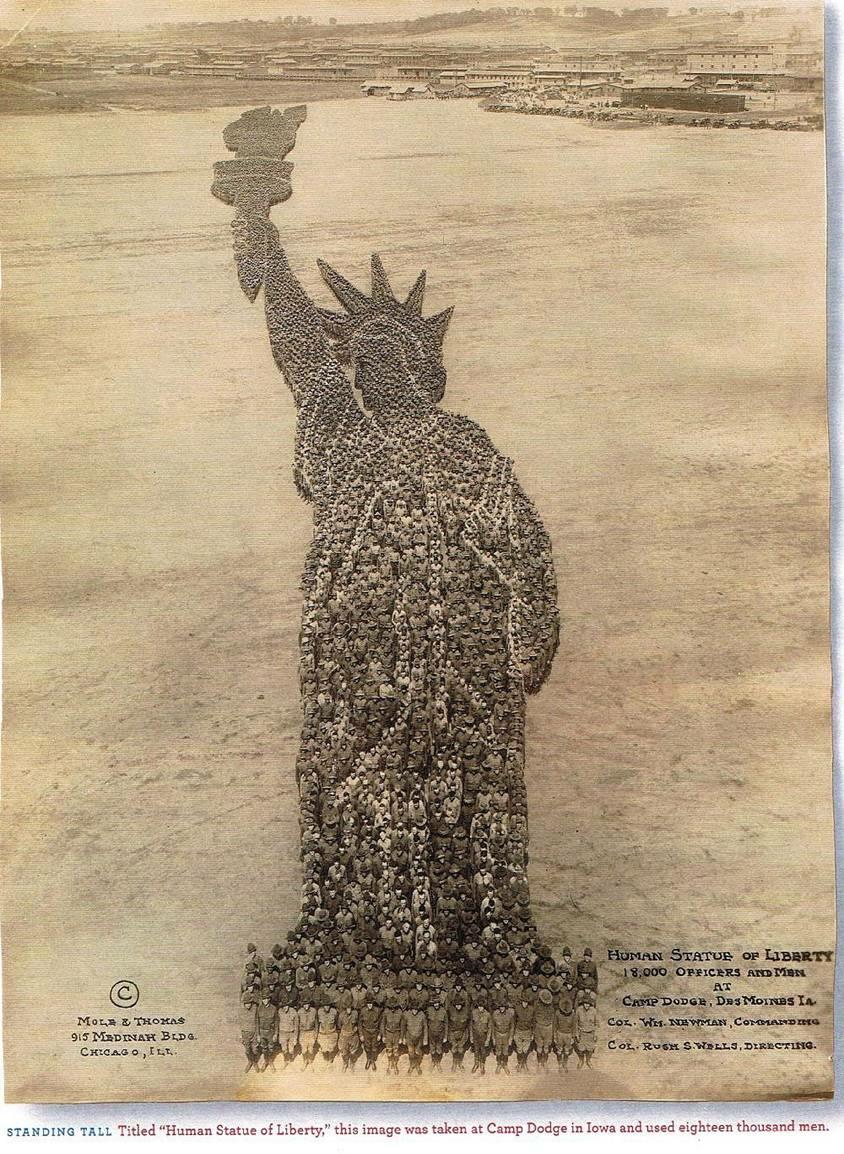





 Millard Fillmore's Bathtub