The slides show people in a lot of everyday activities, providing good, visual examples of how people lived then. An instructive comparison: Can your students find photos of Indians carrying out similar activities today? How has India changed, for how much of its population? I suspect you can find cases where Some Indians have leaped into the 21st century, and other examples where the lives of many millions of people have not changed all that much.
Several of the photos remind that they were taken 40 years or more before India won independence from Britain. These may pertain to discussions of empires and imperialism, and other economic issues, too.
One commenter asked the blogger to share the slides, but I don’t see a positive response.
Don’t ask me to explain the music the blogger selected for the slides.
It’s clear that U.S. relations with North Korea (the Peoples Republic of Korea, or PRK) still suffer from institutional memories of the USS Pueblo incident. For both sides the Pueblo incident remains a sore point from 1968, a very trying year for the U.S. anyway.
Al Jazeera featured this story, below, in September 2007. In addition to footage of the Pueblo, still illegally held by PRK, and used as tourist site and propaganda opportunity, the piece explores the effects of the incident on more recent events, the negotiations to de-nuclearize the Korean Peninsula.
And now we know the rest of the story. PRK delivered the report; Bush announced the nation would be taken off the list of supporters of terrorism. (Report below from CBS News)
And now we’re right back where we were in 1995. Eight years of Bush’s work pushed us backwards 13 years. Partial compliance by PRK, but the bomb-building project is on hold.
Remember the Pueblo veterans. The Pueblo Affair still dogs relations between the U.S. and the PRK, through no fault of the crew of the Pueblo who endured a year of brutal captivity, and then seem to have been forgotten by the nation they served so well.
Spread the word; friends don't allow friends to repeat history.
Hoax complaints against presidential candidates are old ideas. In 1796, Alexander Hamilton paid newspaper editors to print stories saying Thomas Jefferson was atheist. It was a minor theme in that campaign, but after John Adams’ political fortunes foundered on the Alien and Sedition Acts, among other missteps, Hamilton stepped up the attacks in the election of 1800.
Jefferson’s great biographer, Dumas Malone, estimates that by election day, fully half the American electorate believed Jefferson was atheist. Jefferson made a perfect target for such a charge — staunch advocate of religious freedom, he thought it beneath the dignity of a politician to answer such charges at all, so he did not bother to deny them publicly. Ministers in New England told their congregations they would have to hide their Bibles because, as president, Jefferson would send troops to confiscate them.
In a warning to hoaxers, we might hope, Americans elected Jefferson anyway.
Such nefariousness plagues campaigns today, still. Boone Pickens, who helped fund the Swiftboat Veterans’ calumny against war hero John Kerry, has an offer to pay $1 million to anyone who can show the charges false. In a replay of Holocaust denial cases, Pickens refuses to accept any evidence to pay the award, last week turning away the affidavits of the men who were present at the events.
Matthew Most of the Washington Post wrote a lengthy piece in yesterday’s paper, “An attack that came out of the ether,” on the research done by a woman at the Institute for Advanced Study in Princeton, New Jersey, on the origins of the internet hoax that Barack Obama is a Muslim — a rumor so potent that Georgetown University Prof. Edward Luttwak repeated it in a New York Times op-ed article, without the fact checkers catching it (the Times consulted five scholars of Islam who all agreed the foundation for the claim is incorrect).
Danielle Allen has tracked the rumor back to its sources, in a failed campaign against Obama in Illinois and a candidate who admittedly was looking for mud, and one constant sniper at FreeRepublic.com. It’s impressive sleuthing, and the article would be a good departure for study of how media affect campaigns in a government or civics class.
The “how to” list is really very short:
Pick an area of a candidate’s life that is not well known. As the Hamilton campaign against Jefferson demonstrates, it’s useful if the candidate does not feature the issue in official biographies, and more useful if the candidate doesn’t respond. Michael Dukakis let several issues slide in his campaign for the presidency, saying that he didn’t think the public would be misled. The public was waiting for a rebuttal.
It helps if there is a factoid that is accurate in the rumor. Obama’s father was Muslim. Most Americans were receptive to the false claim that in Islam, a child is considered Muslim unless there is a conversion. A part of the rumor claims Obama was never baptized Christian. Of course, no one has asked to see John McCain’s baptismal papers. One wonders whether a rumor about McCain’s not being born inside the U.S. could get similar traction among voters (McCain was born in Panama while his father was serving in the Panama Canal Zone in the Navy; children of U.S. citizens are automatically U.S. citizens regardless where they are born. The issue was litigated during Barry Goldwater’s candidacy in 1964, since Goldwater was born in Arizona before Arizona was a state.)
According to the Post story: [A] search showed that the first mention of the e-mail on the Internet had come more than a year earlier. A participant on the conservative Web site FreeRepublic.com posted a copy of the e-mail on Jan. 8, 2007, and added this line at the end: “Don’t know who the original author is, but this email should be sent out to family and friends.”
Allen discovered that theories about Obama’s religious background had circulated for many years on the Internet. And that the man who takes credit for posting the first article to assert that the Illinois senator was a Muslim is Andy Martin.
Martin, a former political opponent of Obama’s, is the publisher of an Internet newspaper who sends e-mails to his mailing list almost daily. He said in an interview that he first began questioning Obama’s religious background after hearing his famous keynote speech at the 2004 Democratic National Convention.
Repeat the claim, as often as possible, to audiences that are inflamed by it. No one would dare make such a claim before an audience of Democratic delegates from the Texas 23rd Senatorial District Democratic Convention, almost 80% of whom were black — at least not at the convention. However, flyers making the charge might show up on windows of cars parked during church services at Christian churches where delegates attend. A speaker at the Republican convention for the same district might not be hooted down. This rumor of Obama’s faith went to right-wing forums known for rumor hospitality, notably Free Republic. In forums at that site, rumors frequently appear to be judged on just how damaging they might be if true, not on their veracity.
Dr. David Suzuki is a Canadian scientist who writes popular science chiefly for Canadians. We in the U.S. might do well to pay more attention to him.
Below, his e-mail newsletter/column, with observations about the 50 years of science progress since his graduation from college. FYI.
Dear Friend:
Here’s your weekly Science Matters column by David Suzuki with Faisal Moola.
What a difference 50 years makes
Last month, I attended the 50th anniversary of my college graduation. A week later, I celebrated my grandson’s graduation from high school. I don’t think I was much different from the kids in my grandson’s class when I went away to college in 1954 (give or take a few rings and tattoos). Like them, I was filled with trepidation but also excitement about testing my physical and intellectual abilities beyond high school. But my how the world has changed in 50 years!
I began my last year of college in 1957. On October 4 that year, the Soviet Union electrified the world by successfully launching a satellite, Sputnik 1, into space. Little did we dream that out of the ensuing space race between the U.S.S.R. and the U.S.A. would come 24-hour television news channels, cellphones, and GPS navigation. In 1958, the only trans-Atlantic phone lines were cables laid on the ocean floor, so phone calls to England had to be booked hours or sometimes days in advance. I flew from Toronto to a roommate’s wedding in San Francisco on a propeller plane that made several stops during the 22-hour trip.
In 1958, scientists were still debating about whether genetic material was DNA or protein, we didn’t know how many chromosomes humans have or that the Y chromosome determines sex, and the Green Revolution was yet to come. Polio was still a problem in North America, smallpox killed hundreds of thousands annually, and oral contraceptives, photocopiers, personal computers, colour TV, and DVDs didn’t exist. In 1958, parts of the Amazon, Congo, and New Guinea had not been explored. We were yet to learn of species extinction, depletion of fish in the oceans, the effects of CFCs on the ozone layer, acid rain, global warming, PCBs, and dioxins.
In half a century our lives have been transformed by scientific, medical, and technological advances, as well as a host of environmental problems. No one deliberately set out to undermine the planet’s life-support systems or tear communities apart, but those have been the consequences of our enormous economic and technological “success” over the past five decades. Beset by vast problems of wealth discrepancy, environmental issues, poverty, terror, genocide, and prejudice, we are trying to weave our way into an uncertain future.
I began speaking out on television in 1962 because I was shocked by the lack of understanding of science at a time when science as applied by industry, medicine, and the military was having such a profound impact on our lives. I felt we needed more scientific understanding if we were to make informed decisions about the forces shaping our lives. Today, thanks to computers and the Internet, and television, radio, and print media, we have access to more information than humanity has ever had. To my surprise, this access has not equipped us to make better decisions about such matters as climate change, peak oil, marine depletion, species extinction, and global pollution. That’s largely because we now have access to so much information that we can find support for any prejudice or opinion.
Don’t want to believe in evolution? No problem – you can find support for intelligent design and creationism in magazines, on websites, and in all kinds of books written by people with PhDs. Want to believe aliens came to Earth and abducted people? It’s easy to find theories about how governments have covered up information on extraterrestrial aliens. Think human-induced climate change is junk science? Well, if you choose to read only certain national newspapers and magazines and listen only to certain popular commentators on television or radio, you’ll never have to change your mind. And so it goes. The challenge today is that there is a huge volume of information out there, much of it biased or deliberately distorted. As I think about my grandson, his hopes and dreams and the immense issues my generation has bequeathed him, I realize what he and all young people need most are the tools of skepticism, critical thinking, the ability to assess the credibility of sources, and the humility to realize we all possess beliefs and values that must constantly be reexamined. With those tools, his generation will certainly leave a better world to its children and grandchildren 50 years from now.
In West Berlin, President John F. Kennedy delivers the famous speech in which he declares, “Ich bin ein Berliner.” Meaning literally “I am a citizen of Berlin,” the statement shows U.S. solidarity with democratic West Berlin, surrounded by communist territory.
Photo of President Kennedy addressing Berlin’s citizens, photographer unidentified; from American Rhetoric site.
[end of encore post]
Kennedy’s entire speech was good. It was well drafted and well delivered, taking advantage of the dramatic setting and the dramatic moment. John Kennedy well understood how to give a speech, too.
Below is most of the speech, nearly five minutes’ worth, from a YouTube file — another indication that schools need to open up their filters to allow at least some of the best YouTube material through:
Poet W. H. Auden taught students at Swarthmore for three years, 1942-1945. Swarthmore’s library started rather early to collect Auden’s manuscripts and other materials, including the typewriter he used there — an Underwood, as you can see, below.
Auden’s typewriter during his Swarthmore years (1942-1945).
Auden’s poetry was contemporary, and it reflected the fears and passions of lovers, and lovers of liberty, in the face of the fascist threat of World War II. Auden died, aged by tobacco, alcohol and barbituates, in 1973, aged 67.
Oklahoma Sen. Tom Coburn released his hold, Rep. Jason Altmire’s bill moved, and three weeks ago the post office in Springdale, Pennyslvania, was named in Rachel Carson’s honor. On the internet, yahoos still try to blame her deaths from malaria, claiming that her message of stewardship was misplaced, and led to a “ban” on DDT that allows malaria to run wild.
Off the internet, serious scholars still work. SUNY Press published a compilation of lectures at Oregon State Univesrity commemorating the 40th anniversary of Carson’s most famous book, Silent Spring. The new book,Rachel Carson: Legacy and Challenge is edited by Lisa Sideris and Kathleen Dean Moore.
The press release from the University of Indiana is below the fold.
BD-10A high frequency generator tester leak detector, from Electro-Technic Products. “BD10ASV OUTPUT: 10,000-50,000 volts at frequency of approx. 1/2 megahertz. Power 230 V, with a momentary ON/OFF switch”
As described at the company’s website:
Model BD-10A is the standard tester
Model BD-10AS features a momentary ON/OFF switch
OUTPUT: 10,000-50,000 volts at frequency of approx. 1/2 megahertz
Generally, this tester should not produce serious injury, even when misapplied. Standard middle school lab safety rules would suggest that it should never be used to “test” a human for leaks. Such voltages are designed to produce sparks. Sparks do not always behave as one expects, or hopes. High voltages may make cool looking sparks, but the effects of high voltage jolts differ from person to person. It may be harmful.
Cuzelis said he is not aware of anyone seriously hurt with the device and said that his company has never been sued for injuries.
What sort of lab safety rules did Freshwater have for other experiments?
If you discovered your child’s science teacher had this device, designed to produce high-voltage sparks to highlight holes in rubber and plastic liners of tanks, would you be concerned? If you know what should go on in a science class, you’d know there is probably little use for such a device in a classroom. It’s been described as a Tesla coil.
Tesla coils of extremely small voltages can be safe. They should be safe. But one occasionally finds a safety warning, such as this generalized note at Wikipedia:
Even lower power vacuum tube or solid state Tesla Coils can deliver RF currents that are capable of causing temporary internal tissue, nerve, or joint damage through Joule heating. In addition, an RF arc can carbonize flesh, causing a painful and dangerous bone-deep RF burn that may take months to heal. Because of these risks, knowledgeable experimenters avoid contact with streamers from all but the smallest systems. Professionals usually use other means of protection such as a Faraday cage or a chain mail suit to prevent dangerous currents from entering their body.
Freshwater was using a solid state Tesla coil, if I understand the news articles correctly. Knowing that these sparks can cause deep tissue and bone damage in extreme cases, I suspect that I would not allow students to experience shocks as a normal course of a science classroom, especially from an industrial device not designed with multiple safety escapes built in.
Freshwater had been zapping students for years.
Here is a classic photo of what a Tesla coil does, a much larger coil than that used by John Freshwater, and a photo not from any classroom; from Mega Volt:
Tesla coil in action, from Mike Tedesco
There is nothing in the Ohio science standards to suggest regular use of a Tesla coil in contact with students performs any educational function.
I offer this background to suggest that the normal classroom procedures designed to ensure the safety of students were not well enforced in Freshwater’s classrooms, nor was there adequate attention paid to the material that should have been taught in the class.
The teacher, John Freshwater, has been dismissed by his local school board. Freshwater supporters argue that this is a case of religious discrimination, because Freshwater kept a Bible on his desk.
Among the complaints are that he burned crosses onto the arms of students with the high-voltage leak detector shown above. This gives an entirely new and ironic meaning to the phrase “cross to bear.”
Amazingly, this misuse of an electrical device may not be the most controversial point. While you and I may think this physical abuse goes beyond the pale, Freshwater has defenders who claim he was just trying to instill Biblical morality in the kids, as if that would excuse any of these actions. Over at Cafe Philos, I’ve been trying to explain just why it is that Freshwater does not have a First Amendment right to teach religion in his science class. There is another commenter with the handle “Atheist” who acts for all the world like a sock puppet for anti-First Amendment forces, i.e., not exactly defending a rational atheist position.
Below the fold I reproduce one of my answers to questions Atheist posed. More resources at the end.
My earlier post urging readers to contact Louisiana Gov. Bobby Jindal to urge him to veto the latest creationist eruption the Louisiana Lege gave him, produced an interesting comment. A fellow named Wayne provided links to a presentation by some guy named Perry Marshall, in which Marshall flails vainly against evolution theory. The video is billed as one the Louisiana Coalition for Science “fears.” Wayne wants to know, should we keep children from seeing it?
Marshall apparently isn’t even an engineer, but instead designs ads for internet placement — at least one step removed from the usual joke about engineers as creationists. Of course, that doesn’t help any of his arguments.
Wayne linked to three YouTube presentations, about half of the presentation Marshall made at an unidentified church (there are five segments total, I gather). What you see is bad PowerPoint slides, with audio. Marshall suggests that evolution couldn’t get from the American pronghorn antelope to the African giraffe, but in classic creationist form, he doesn’t address the unique signs of evolution we find in giraffes (neck, vagus nerve, for example) nor in pronghorns (bred for speed to beat the American cheetah, which is now extinct, and thereby hangs a great tale of sleuthing by evolution).
Marshall’s presentation is insulting. To me as a historian, it’s astounding how he can’t accurately list sequences of events well known to history. The science errors he makes are errors any 7th-grade student might make — but he’s passing them off as valid criticism of evolution theory.
Here’s the first YouTube presentation, and below the fold, my response to Wayne.
These presentations are an omen. They are sent to us as a warning for what the Discovery Institute will try to sneak into classrooms if Jindal signs that bill into law — heck, they’ll try anyway, but we don’t have to drill holes in our kids’ heads to make it easier for con men and snake oil salesmen to get their fingers in there.
Juneteenth, celebrated on June 19, is the name given to emancipation day by African-Americans in Texas. On that day in 1865 Union Major General Gordon Granger read General Order #3 to the people of Galveston. General Order #3 stated “The people of Texas are informed that, in accordance with a proclamation from the Executive of the United States, all slaves are free. This involves an absolute equality of personal rights and rights of property between former masters and slaves, and the connection heretofore existing between them becomes that between employer and hired labor. The freedmen are advised to remain quietly at their present homes and work for wages. They are informed that they will not be allowed to collect at military posts and that they will not be supported in idleness either there or elsewhere.”
Large celebrations on June 19 began in 1866 and continued regularly into the early 20th century. The African-Americans treated this day like the Fourth of July and the celebrations contained similar events. In the early days, the celebration included a prayer service, speakers with inspirational messages, reading of the emancipation proclamation, stories from former slaves, food, red soda water, games, rodeos and dances.
The celebration of June 19 as emancipation day spread from Texas to the neighboring states of Louisiana, Arkansas and Oklahoma. It has also appeared in Alabama, Florida, and California as African-American Texans migrated.
In many parts of Texas, ex-slaves purchased land, or “emancipation grounds,” for the Juneteenth gathering. Examples include: Emancipation Park in Houston, purchased in 1872; what is now Booker T. Washington Park in Mexia; and Emancipation park in East Austin.
Celebration of Juneteenth declined during World War II but revived in 1950 at the Texas State Fair Grounds in Dallas. Interest and participation fell away during the late 1950’s and 1960’s as attention focused on expansion of freedom for African-Americans. In the 1970’s Juneteenth revived in some communities. For example, in Austin the Juneteenth celebration returned in 1976 after a 25 year hiatus. House Bill no.1016 passed in the 66th legislature, regular session, declared June 19, “Emancipation Day in Texas,” a legal state holiday effective January 1, 1980. Since that time, the celebration of Juneteenth continues across the state of Texas with parades, picnics and dancing.
Texas State Library Reference Services 3/95
Celebrations across Texas started last Saturday, and will continue for another three or four days, I gather. Thought it’s an official State of Texas holiday, few people take it off. So celebrations are scheduled when they can be.
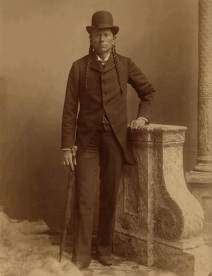
Photographs of Native Americans reside among the publicly and internet available materials of the National Archives. Images can be ordered in sets of slides, or as individual prints, though many are available in quality high enough for PowerPoint works and use on classroom materials. Many of the photos are 19th century.
Quanah Parker stands as one of the larger Native Americans in Texas history. This photo puts a face to a reputation in Texas history textbooks. Texas teachers may want to be certain to get a copy of the photo. His life story includes so many episodes that seem to come out of a Native American version of Idylls of the King that a fiction writer could not include them all, were they not real.
Quanah’s mother was part of the famous Parker family that helped settle West Texas in the 1830s. Cynthia Ann Parker was captured in 1836 when Comanches attacked Fort Parker, near present-day Groesbeck, Texas, in Limestone County. (See Fort Parker State Park.) Given a new name, Nadua (found one), she assimilated completely with the Nocona band of Comanches, and eventually married the Comanche warrior Noconie (also known as Peta Nocona). Quanah was their first child, born in 1852.
Nadua was captured by a Texas party led by Lawrence Sullivan “Sul” Ross in 1860, in the Battle of Pease River. Noconie, Quanah, and most of the Nocona men were off hunting at the time, and the fact of Nadua’s capture was not realized for some time. Nadua asked to return to the Comanches and her husband, but she was not allowed to do so. When her youngest daughter, who had been captured with her, died of an infection, Nadua stopped eating, and died a few weeks later.
Sul Ross was a character in his own right. At the time he participated in the raid that recaptured Cynthia Parker, he was a student at Baylor University (“What do I do on summer breaks? I fight Indians.”) At the outbreak of the Civil War, Ross enlisted in the Confederate Army as a private. Over 135 battles and skirmishes he rose to the rank of Brigadier General, the ninth youngest in the Confederate Army. A successful rancher and businessman back in Texas after the war, he won election as governor in 1887, served two very successful terms (he resolved the Jaybird-Woodpecker War in Fort Bend County, and had to call a special session of the legislature to deal with a budget surplus), refused to run for a third term, and was named president of Texas Agricultural and Mechanical College (Texas A&M) within a few days of stepping down as governor. Ross’s leadership of the college is legendary — students put pennies near a statue of Ross in a traditional plea to pass final exams, among many other traditions. After his death, Texas created Sul Ross State University, in Alpine, Texas, in his honor.
Quanah Parker’s father, Noconie, died a short time after his mother’s capture. He left the Nocona band, joined the Destanyuka band under Chief Wild Horse, but eventually founded his own band with warriors from other groups, the Quahadi (“antelope eaters”) (also known as Kwahadi). The Quahadi band grew to be one of the largest and most notorious, always with Quanah leading them. The Quahadis refused to sign the 1867 Medicine Lodge Treaties, and so avoided immediate internment to a reservation. However, dwindling food supplies and increasing opposition forced Quanah to retire to a reservation in 1875, in what is now southwestern Oklahoma. This was the last Comanche band to come to the reservation.
Quanah was appointed Chief of all the Comanches.
Through investments, Quanah became rich — probably the richest Native American of his time.
Quanah hunted with President Theodore Roosevelt.
Quanah Parker in later life, as a successful businessman. Wikipedia image, public domain
Rejecting monogamy and Christianity, Quanah founded the Native American Church movement, which regards the use of peyote as a sacrament. Quanah had been given peyote by a Ute medicine man while recovering from wounds he’d suffered in battle with U.S. troops. Among his famous teachings: The White Man goes into his church and talks about Jesus. The Indian goes into his Tipi and talks with Jesus.
Bill Neeley wrote of Quanah Parker: “Not only did Quanah pass within the span of a single lifetime from a Stone Age warrior to a statesman in the age of the Industrial Revolution, but he never lost a battle to the white man and he also accepted the challenge and responsibility of leading the whole Comanche tribe on the difficult road toward their new existence.”
Quanah Parker died on February 23, 1911. He is buried at Fort Sill Cemetery, Oklahoma, next to his mother and sister.
Quanah Parker’s epitaph reads:
Resting Here Until Day Breaks
And Shadows Fall and Darkness Disappears is
Quanah Parker Last Chief of the Comanches
Born 1852
Died Feb. 23, 1911
Or, until that account is unsuspended by the forces supporting Donald Trump: Follow @FillmoreWhite, the account of the Millard Fillmore White House Library
We've been soaking in the Bathtub for several months, long enough that some of the links we've used have gone to the Great Internet in the Sky.
If you find a dead link, please leave a comment to that post, and tell us what link has expired.
Thanks!
Retired teacher of law, economics, history, AP government, psychology and science. Former speechwriter, press guy and legislative aide in U.S. Senate. Former Department of Education. Former airline real estate, telecom towers, Big 6 (that old!) consultant. Lab and field research in air pollution control.
My blog, Millard Fillmore's Bathtub, is a continuing experiment to test how to use blogs to improve and speed up learning processes for students, perhaps by making some of the courses actually interesting. It is a blog for teachers, to see if we can use blogs. It is for people interested in social studies and social studies education, to see if we can learn to get it right. It's a blog for science fans, to promote good science and good science policy. It's a blog for people interested in good government and how to achieve it.
BS in Mass Communication, University of Utah
Graduate study in Rhetoric and Speech Communication, University of Arizona
JD from the National Law Center, George Washington University


 Posted by Ed Darrell






 Millard Fillmore's Bathtub

