Christmas 2013: Do we know who invented Santa Claus? Who really wrote the “Night Before Christmas?”

December 10, 2013

An encore post and Millard Fillmore’s Bathtub tradition from 2007

Thomas Nast invented Santa Claus? Clement C. Moore didn’t write the famous poem that starts out, “‘Twas the night before Christmas, and all through the house . . . ?”

The murky waters of history from Millard Fillmore’s Bathtub soak even our most cherished ideas and traditions.

But isn’t that part of the fun of history?

Santa Claus delivers to Union soldiers, "Santa Claus in Camp" - Thomas Nast, Harper's Weekly, Jan 3, 1863

In Janaury 1863, Thomas Nast portraye Santa Claus delivered gifts to Union troops in Washington, D.C., wearing a blue, star-spangled coat, just a few days earlier.

Yes, Virginia (and California, too)! Thomas Nast created the image of Santa Claus most of us in the U.S. know today. Perhaps even more significant than his campaign against the graft of Boss Tweed, Nast’s popularization of a fat, jolly elf who delivers good things to people for Christmas makes one of the great stories in commercial illustration. Nast’s cartoons, mostly for the popular news publication Harper’s Weekly, created many of the conventions of modern political cartooning and modeled the way in which an illustrator could campaign for good, with his campaign against the graft of Tammany Hall and Tweed. But Nast’s popular vision of Santa Claus can be said to be the foundation for the modern mercantile flurry around Christmas.

Nast is probably ensconced in a cartoonists’ hall of fame. Perhaps he should be in a business or sales hall of fame, too.  [See also Bill Casselman’s page, “The Man Who Designed Santa Claus.]

Nast’s drawings probably drew some inspiration from the poem, “Account of a Visit from St. Nicholas,” traditionally attributed to Clement C. Moore, a New York City lawyer, published in 1822. The poem is among the earliest to describe the elf dressed in fur, and magically coming down a chimney to leave toys for children; the poem invented the reindeer-pulled sleigh.

Modern analysis suggests the poem was not the work of Moore, and many critics and historians now attribute it to Major Henry Livingston, Jr. (1748-1828) following sleuthing by Vassar College Prof. Don Foster in 2000. Fortunately for us, we do not need to be partisans in such a query to enjoy the poem (a complete copy of which is below the fold).

The Library of Congress still gives Moore the credit. When disputes arise over who wrote about the night before Christmas, is it any wonder more controversial topics produce bigger and louder disputes among historians?

Moore was not known for being a poet. The popular story is that he wrote it on the spur of the moment:

Moore is thought to have composed the tale, now popularly known as “The Night Before Christmas,” on December 24, 1822, while traveling home from Greenwich Village, where he had bought a turkey for his family’s Christmas dinner.

Inspired by the plump, bearded Dutchman who took him by sleigh on his errand through the snow-covered streets of New York City, Moore penned A Visit from St. Nicholas for the amusement of his six children, with whom he shared the poem that evening. His vision of St. Nicholas draws upon Dutch-American and Norwegian traditions of a magical, gift-giving figure who appears at Christmas time, as well as the German legend of a visitor who enters homes through chimneys.

Again from the Library of Congress, we get information that suggests that Moore was a minor celebrity from a well-known family with historical ties that would make a good “connections” exercise in a high school history class, perhaps (”the link from Aaron Burr’s treason to Santa Claus?”): (read more, below the fold)

Clement Moore was born in 1779 into a prominent New York family. His father, Benjamin Moore, president of Columbia University, in his role as Episcopal Bishop of New York participated in the inauguration of George Washington as the nation’s first president. The elder Moore also administered last rites to Alexander Hamilton after he was mortally wounded in a tragic duel with Aaron Burr.

A graduate of Columbia, Clement Moore was a scholar of Hebrew and a professor of Oriental and Greek literature at the General Theological Seminary in Manhattan. [See comment from Pam Bumsted below for more on Moore.] He is said to have been embarrassed by the light-hearted verse, which was made public without his knowledge in December 1823. Moore did not publish it under his name until 1844.

Tonight, American children will be tucked in under their blankets and quilts and read this beloved poem as a last “sugarplum” before slipping into dreamland. Before they drift off, treat them to a message from Santa, recorded by the Thomas Edison Company in 1922.

Santa Claus Hides in Your Phonograph
By Arthur A. Penn, Performed by Harry E. Humphrey.
Edison, 1922.
Coupling date: 6/20/1922. Cutout date: 10/31/1929.
Inventing Entertainment: The Motion Pictures and Sound Recordings of the Edison Companies

Listen to this recording (RealAudio Format)

Listen to this recording (wav Format, 8,471 Kb)

But Henry Livingston was no less noble or historic. He hailed from the Livingstons of the Hudson Valley (one of whose farms is now occupied by Camp Rising Sun of the Louis August Jonas Foundation, a place where I spent four amazing summers teaching swimming and lifesaving). Livingston’s biography at the University of Toronto site offers another path for a connections exercise (”What connects the Declaration of Independence, the American invasion of Canada, the famous poem about a visit from St. Nick, and George W. Bush?”):

Henry Livingston Jr. was born in Poughkeepsie, New York, on Oct. 13, 1748. The Livingston family was one of the important colonial and revolutionary families of New York. The Poughkeepsie branch, descended from Gilbert, the youngest son of Robert Livingston, 1st Lord of Livingston Manor, was not as well off as the more well-known branches, descended from sons Robert and Philip. Two other descendants of Gilbert Livingston, President George Walker Herbert Bush and his son, President-Elect George W. Bush, though, have done their share to bring attention to this line. Henry’s brother, Rev. John Henry Livingston, entered Yale at the age of 12, and was able to unite the Dutch and American branches of the Dutch Reformed Church. At the time of his death, Rev. Livingston was president of Rutgers University. Henry’s father and brother Gilbert were involved in New York politics, and Henry’s granduncle was New York’s first Lt. Governor. But the law was the natural home for many of Henry’s family. His brother-in-law, Judge Jonas Platt, was an unsuccessful candidate for governor, as was his daughter Elizabeth’s husband, U.S. Supreme Court Justice Smith Thompson. Henry’s grandson, Sidney Breese, was Chief Justice of the Illinois Supreme Court.

Known for his encyclopedic knowledge and his love of literature, Henry Livingston was a farmer, surveyor and Justice of the Peace, a judicial position dealing with financially limited criminal and civil cases. One of the first New Yorkers to enlist in the Revolutionary Army in 1775, Major Henry Livingston accompanied his cousin’s husband, General Montgomery, in his campaign up the Hudson River to invade Canada, leaving behind his new wife, Sarah Welles, and their week-old baby, on his Poughkeepsie property, Locust Grove. Baby Catherine was the subject of the first poem currently known by Major Livingston. Following this campaign, Livingston was involved in the War as a Commissioner of Sequestration, appropriating lands owned by British loyalists and selling them for the revolutionary cause. It was in the period following Sarah’s early death in 1783, that Major Livingston published most of his poems and prose, anonymously or under the pseudonym of R. Ten years after the death of Sarah, Henry married Jane Patterson, the daughter of a Dutchess County politician and sister of his next-door neighbor. Between both wives, Henry fathered twelve children. He published his good-natured, often occasional verse from 1787 in many journals, including Political Barometer, Poughkeepsie Journal, and New-York Magazine. His most famous poem, “Account of a Visit from St. Nicholas,” was until 2000 thought to have been the work of Clement Clarke Moore (1779-1863), who published it with his collected poems in 1844. Livingston died Feb. 29, 1828.

More on Henry Livingston and his authorship of the Christmas poem here.
Thomas Nast, Merry Old Santa Claus, Harper's Weekly, Jan 1, 1881

Our views of Santa Claus owe a great deal also to the Coca-Cola advertising campaign. Coca-Cola first noted Santa’s use of the drink in a 1922 campaign to suggest Coke was a year-round drink (100 years after the publication of Livingston’s poem). The company’s on-line archives gives details:

In 1930, artist Fred Mizen painted a department store Santa in a crowd drinking a bottle of Coke. The ad featured the world’s largest soda fountain, which was located in the department store of Famous Barr Co. in St. Louis, Mo. Mizen’s painting was used in print ads that Christmas season, appearing in The Saturday Evening Post in December 1930.

1936 Coca-Cola Santa cardboard store display

  • 1936 Coca-Cola Santa cardboard store display

Archie Lee, the D’Arcy Advertising Agency executive working with The Coca-Cola Company, wanted the next campaign to show a wholesome Santa as both realistic and symbolic. In 1931, The Coca-Cola Company commissioned Michigan-born illustrator Haddon Sundblom to develop advertising images using Santa Claus — showing Santa himself, not a man dressed as Santa, as Mizen’s work had portrayed him.
1942 original oil painting - 'They Remembered Me'

  • 1942 original oil painting – ‘They Remembered Me’

For inspiration, Sundblom turned to Clement Clark Moore’s 1822 poem “A Visit From St. Nicholas” (commonly called “‘Twas the Night Before Christmas”). Moore’s description of St. Nick led to an image of Santa that was warm, friendly, pleasantly plump and human. For the next 33 years, Sundblom painted portraits of Santa that helped to create the modern image of Santa — an interpretation that today lives on in the minds of people of all ages, all over the world.

Santa Claus is a controversial figure. Debates still rage among parents about the wisdom of allowing the elf into the family’s home, and under what conditions. Theologians worry that the celebration of Christmas is diluted by the imagery. Other faiths worry that the secular, cultural impact of Santa Claus damages their own faiths (few other faiths have such a popular figure, and even atheists generally give gifts and participate in Christmas rituals such as putting up a decorated tree).

For over 100 years, Santa Claus has been a popular part of commercial, cultural and religious life in America. Has any other icon endured so long, or so well?

________________________
Below:
From the University of Toronto Library’s Representative Poetry Online

Major Henry Livingston, Jr. (1748-1828)

Account of a Visit from St. Nicholas

1 ‘Twas the night before Christmas, when all thro’ the house,

2 Not a creature was stirring, not even a mouse;

3 The stockings were hung by the chimney with care,

4 In hopes that St. Nicholas soon would be there;

5 The children were nestled all snug in their beds,

6 While visions of sugar plums danc’d in their heads,

7 And Mama in her ‘kerchief, and I in my cap,

8 Had just settled our brains for a long winter’s nap –

9 When out on the lawn there arose such a clatter,

10 I sprang from the bed to see what was the matter.

11 Away to the window I flew like a flash,

12 Tore open the shutters, and threw up the sash.

13 The moon on the breast of the new fallen snow,

14 Gave the lustre of mid-day to objects below;

15 When, what to my wondering eyes should appear,

16 But a miniature sleigh, and eight tiny rein-deer,

17 With a little old driver, so lively and quick,

18 I knew in a moment it must be St. Nick.

19 More rapid than eagles his coursers they came,

20 And he whistled, and shouted, and call’d them by name:

21 “Now! Dasher, now! Dancer, now! Prancer, and Vixen,

22 “On! Comet, on! Cupid, on! Dunder and Blixem;

23 “To the top of the porch! to the top of the wall!

24 “Now dash away! dash away! dash away all!”

25 As dry leaves before the wild hurricane fly,

26 When they meet with an obstacle, mount to the sky;

27 So up to the house-top the coursers they flew,

28 With the sleigh full of Toys — and St. Nicholas too:

29 And then in a twinkling, I heard on the roof

30 The prancing and pawing of each little hoof.

31 As I drew in my head, and was turning around,

32 Down the chimney St. Nicholas came with a bound:

33 He was dress’d all in fur, from his head to his foot,

34 And his clothes were all tarnish’d with ashes and soot;

35 A bundle of toys was flung on his back,

36 And he look’d like a peddler just opening his pack:

37 His eyes — how they twinkled! his dimples how merry,

38 His cheeks were like roses, his nose like a cherry;

39 His droll little mouth was drawn up like a bow.

40 And the beard of his chin was as white as the snow;

41 The stump of a pipe he held tight in his teeth,

42 And the smoke it encircled his head like a wreath.

43 He had a broad face, and a little round belly

44 That shook when he laugh’d, like a bowl full of jelly:

45 He was chubby and plump, a right jolly old elf,

46 And I laugh’d when I saw him in spite of myself;

47 A wink of his eye and a twist of his head

48 Soon gave me to know I had nothing to dread.

49 He spoke not a word, but went straight to his work,

50 And fill’d all the stockings; then turn’d with a jerk,

51 And laying his finger aside of his nose

52 And giving a nod, up the chimney he rose.

53 He sprung to his sleigh, to his team gave a whistle,

54 And away they all flew, like the down of a thistle:

55 But I heard him exclaim, ere he drove out of sight –

56 Happy Christmas to all, and to all a good night.

Online text copyright © 2005, Ian Lancashire for the Department of English, University of Toronto. Published by the Web Development Group, Information Technology Services, University of Toronto Libraries. Be sure to visit this site for more information on this poem, on Maj. Livingston, and on poetry in general.

More:


Dead economists you ought to know: John Maynard Keynes

December 9, 2013

“Portrait of John Maynard Keynes 1883-1946” oil on Canvas. Roger Eliot Fry, via Wikigallery – image for non-commercial use only

NPR’s Morning Edition ran a three part series on the some of the people most influential in modern economics. Well, three people — Ayn Rand, Friedrich von Hayek, and John Maynard Keynes.

The series is a good one, and each piece is pretty good at explaining what the economists and Rand were about and why you should know them and their work.

There’s not much that survives of Keynes’ own spoken words, but he can be heard in an old British newsreel, in which he delivered a stern admonition.

“We must free ourselves from the bondage of old ideas,” he said.

One of the “old ideas” Keynes sought most to debunk was the notion that economies in trouble would naturally fix themselves, thanks to the magic of the marketplace. Princeton economist Alan Blinder says Keynes put his finger on a key economic problem — namely, that insufficient demand leads to growing unemployment.

“It’s very simple, that if there aren’t enough buyers, the sellers won’t produce,” Blinder says. “And if they don’t produce, they don’t hire workers. And if they don’t hire workers, the workers don’t have income — and if the workers don’t have income, they can’t buy stuff.”

Keynes was, after all, an economist of crises. The economic stimulus he prescribed for an ailing economy, he made clear, was merely a short-term remedy. In the long term, he wrote, we’re all dead.

In Keynes’ seminal 1936 book, The General Theory of Employment, Interest and Money, he argued that markets do indeed fail, and that if individuals or private enterprise cannot or will not spend in the short term, then the government must, to boost employment.

Here’s the Keynes v. Hayek rap mentioned in the story:

I gave economics students extra credit for reading chapters of Keynes’s book, The General Theory of Employment, Interest and Money, or otherwise studying this material. It’s something far too few people do.

[Much of this post appeared earlier at Mr. Darrell’s Pin Factory; used here with express permission.]

More:


Fly your flag today: President Obama invites flag-flying to remember Pearl Harbor, 72 years ago

December 7, 2013

Flag flies at half-staff over the USS Utah, in Pearl Harbor (2004 photo - Pearl Harbor, Hawaii (May 31, 2004) - Sailors assigned to ships based at Pearl Harbor bring the flag to half-mast over the USS Utah Memorial on Ford Island in honor of Memorial Day May 31, 2004. U.S. Navy photo

Flag flies at half-staff over the USS Utah, in Pearl Harbor (2004 photo – Pearl Harbor, Hawaii (May 31, 2004) – Sailors assigned to ships based at Pearl Harbor bring the flag to half-mast over the USS Utah Memorial on Ford Island in honor of Memorial Day May 31, 2004. U.S. Navy photo)

Proclamation from President Obama (links added):

For Immediate Release

December 05, 2013

Presidential Proclamation — National Pearl Harbor Remembrance Day, 2013

NATIONAL PEARL HARBOR REMEMBRANCE DAY, 2013

– – – – – – –

BY THE PRESIDENT OF THE UNITED STATES OF AMERICA

A PROCLAMATION

More than seven decades ago, on a calm Sunday morning, our Nation was attacked without warning or provocation. The bombs that fell on the island of Oahu took almost 2,400 American lives, damaged our Pacific Fleet, challenged our resilience, and tested our resolve. On National Pearl Harbor Remembrance Day, we honor the men and women who selflessly sacrificed for our country, and we show our enduring gratitude to all who fought to defend freedom against the forces of tyranny and oppression in the Second World War.

In remembrance of Pearl Harbor and to defend our Nation against future attacks, scores of young Americans enlisted in the United States military. In battle after battle, our troops fought with courage and honor. They took the Pacific theater island by island, and eventually swept through Europe, liberating nations as they progressed. Because of their extraordinary valor, America emerged from this test as we always do — stronger than ever before.

We also celebrate those who served and sacrificed on the home front — from families who grew Victory Gardens or donated to the war effort to women who joined the assembly line alongside workers of every background and realized their own power to build a brighter world. Together, our Greatest Generation overcame the Great Depression, and built the largest middle class and strongest economy in history.

Today, with solemn pride and reverence, let us remember those who fought and died at Pearl Harbor, acknowledge everyone who carried their legacy forward, and reaffirm our commitment to upholding the ideals for which they served.

The Congress, by Public Law 103-308, as amended, has designated December 7 of each year as “National Pearl Harbor Remembrance Day.”

NOW, THEREFORE, I, BARACK OBAMA, President of the United States of America, do hereby proclaim December 7, 2013, as National Pearl Harbor Remembrance Day. I encourage all Americans to observe this solemn day of remembrance and to honor our military, past and present, with appropriate ceremonies and activities. I urge all Federal agencies and interested organizations, groups, and individuals to fly the flag of the United States at half-staff this December 7 in honor of those American patriots who died as a result of their service at Pearl Harbor.

IN WITNESS WHEREOF, I have hereunto set my hand this fifth day of December, in the year of our Lord two thousand thirteen, and of the Independence of the United States of America the two hundred and thirty-eighth.

BARACK OBAMA

So, while this day is not listed in the U.S. Flag Code as a day to fly the flag, you certainly may fly it out of respect for veterans of Pearl Harbor and World War II; and now there is a presidential proclamation urging us to fly the flag, half staff.  If you can’t fly your flag at half-staff, fly it at full staff.

More:

Photo from 2011:  Vice President Joe Biden and U.S. Pacific Commander Admiral Willard, pay their respects at the USS Arizona Memorial in Pearl Harbor, Hawaii, Wednesday, August 24, 2011. (Official White House Photo by David Lienemann)

Photo from 2011: Vice President Joe Biden and U.S. Pacific Commander Admiral Willard, pay their respects at the USS Arizona Memorial in Pearl Harbor, Hawaii, Wednesday, August 24, 2011. (Official White House Photo by David Lienemann)

President Barack Obama places a wreath at the USS Arizona Memorial, part of the World War II Valor in the Pacific National Monument, in Pearl Harbor, Hawaii, Dec. 29, 2011. (Official White House Photo by Pete Souza)

President Barack Obama places a wreath at the USS Arizona Memorial, part of the World War II Valor in the Pacific National Monument, in Pearl Harbor, Hawaii, Dec. 29, 2011. (Official White House Photo by Pete Souza)


Happy birthday Arctic National Wildlife Refuge; 53 years

December 6, 2013

Icy day here in Dallas, we missed a lot of dates that should have been commemorated.

Let’s catch this one:  The Arctic National Wildlife Refuge (ANWR) was created 53 years ago today in the administration of Dwight Eisenhower, by Interior Secretary Fred A. Seaton.

Happy 53rd birthday to the Arctic National Wildlife Refuge! @USFWSHQ @USFWSRefuges #Alaska pic.twitter.com/2popb7EAvz

Photo probably not taken this week:  From the US Department of Interior: Happy 53rd birthday to the Arctic National Wildlife Refuge! @USFWSHQ @USFWSRefuges #Alaska pic.twitter.com/2popb7EAvz

ANWR finds itself the center of controversy, now, because of the possibility of oil underneath it, and the difficulty of getting that oil without destroying wildlife habitat, or the possibility of destructive oil spills.  For an understanding of the issues, visit ANWR’s website and the non-partisan discussion there.

Odd that land so severely beautiful, so far out of the way and so difficult to master, has its fate decided in marble halls in Washington, D.C., 3,172 miles distant. The United States is a big, sprawling nation.

Information on the ANWR:

History and Culture

Refuge Establishment: Legislation and Purposes

The Arctic Refuge was established in 1960 and expanded in 1980.


Refuge History

The Arctic Refuge has been providing for the physical and emotional well-being of humans for many thousands of years. It remains an important resource to help sustain local Eskimo and Indian cultures. The Refuge continues to be valued, even by those who never travel within it’s borders, as a symbol of America’s vast and remote wilderness – a place of inspiration and beauty – a promise for the future for all Americans.

Local Cultures

The lands of the Arctic Refuge continue to support the Inupiat Eskimo and Gwich’in Indian peoples who have lived here for centuries.

More:  

3,172 miles between the Arctic National Wildlife Refuge and Washington, D.C.

3,172 miles between the Arctic National Wildlife Refuge and Washington, D.C.


Texas Education Agency looking for social studies books reviewers (and math and fine arts)

December 2, 2013

Last time the SBOE approved social studies books in 2010, the process was contentious.  This photo, from The Christian Science Monitor, shows protests on the books; photo by Larry Kolvoord/Austin American-Statesman

Last time the SBOE approved social studies books in 2010, the process was contentious. This photo, from The Christian Science Monitor, shows protests on the books; photo by Larry Kolvoord, Austin American-Statesman

Good news a few days ago was that the Texas State Board of Education approved science books that teach real science, for use in Texas schools.

But the Road Goes On Forever, and the Tea Party Never Ends:  Social studies books are up for review, now.

TEA is looking for nominations for reviewers for books in social studies, math and fine arts.  Here’s the notice I got in e-mail:

The Texas Education Agency is now accepting nominations to the state review panels that will evaluate instructional materials submitted for adoption under Proclamation 2015.

To nominate yourself or someone else to serve on a state review panel, please complete the form posted at http://www.tea.state.tx.us/WorkArea/linkit.aspx?LinkIdentifier=id&ItemID=25769808256&libID=25769808258 and submit it to the TEA on or before Friday, January 24, 2014.

Proclamation 2015 calls for instructional materials in the following areas:

♦   Social Studies, grades K-12

♦   Social Studies (Spanish), grades K-5

♦   Mathematics, grades 9-12

♦   Fine Arts, grades K-12

State review panels are scheduled to convene in Austin for one week during the summer of 2014 to review materials submitted under Proclamation 2015. The TEA will reserve hotel lodging and reimburse panel members for all travel expenses, as allowable by law.

  • Panel members should plan to remain on-site for five days to conduct the evaluation.
  • Panel members will be asked to complete an initial review of instructional materials prior to the in-person review.
  • Panel members will receive orientation and training both prior to the initial review and at the beginning of the in-person review.
  • Panel members might be asked to review additional content following the in-person review.
  • Because many of the samples will be delivered electronically, panel members should be comfortable reviewing materials on-screen rather than in print.
  • Panel members should also have a working knowledge of Microsoft Excel.

Upon initial contact by a representative of the TEA, state review panel nominees begin a “no-contact” period in which they may not have either direct or indirect contact with any publisher or other person having an interest in the content of instructional materials under evaluation by the panel. The “no contact” period begins with the initial communication from the Texas Education Agency and ends after the State Board of Education (SBOE) adopts the instructional materials. The SBOE is scheduled to adopt Proclamation 2015 materials at its November 2014 meeting.

Nominations are due on or before Friday, January 24, 2014.  The nomination form is posted on the TEA website at http://www.tea.state.tx.us/WorkArea/linkit.aspx?LinkIdentifier=id&ItemID=25769808256&libID=25769808258.

If you have any questions, please contact review.adoption@tea.state.tx.us.

***********************************************************

Thank you for your commitment to serving Texas students.

Social Studies Staff, Division of Curriculum, (512) 463-9581

Social Studies in Texas include history, geography, economics, government (civics), and (oddly) psychology and sociology, and “special topics.”

Please pass word along to the teachers you know in social studies, fine arts and math.

We recall that old Bette Davis line, playing Margot Channing in “All About Eve”:  “Fasten your seatbelts.  It’s going to be a bumpy night.”

More:


How about a Mark Twain Cigar for Twain’s birthday?

November 30, 2013

Decades ago I caught Hal Holbrook‘s one-man play, “Mark Twain Tonight!” in a theatre in Washington, D.C. (possibly Ford’s Theatre, but I think not).  It was heaven.  I knew what to expect, but it still caught me by surprise: There is no curtain.  The opening of the second act is the lights slowly fading up.  The audience keeps talking until, suddenly, there is an enormous puff of cigar smoke from offstage.  The stunned audience gasps, then laughs, and at the peak of the laughter, Mark Twain treks on stage.

As a man’s reputation precedes him, so Mark Twain’s use of a cigar could  precede him onto a stage, or into a room.

Once upon a time, Mark Twain was THE symbol of a good cigar in America — he always had one, after all.

And so, some enterprising cigar company created Mark Twains.

Wouldn’t it be great to have a Mark Twain cigar to smoke, in his honor, on his birthday?  And remember, he shares a birthday with that other cigar conoisseur, Winston Churchill.

Advertisement taken from a caricature by Frederick Waddy first published in 1872. Mark Twain Papers, The Bancroft Library, University of California, Berkeley."

Advertisement taken from a caricature by Frederick Waddy first published in 1872. Mark Twain Papers, The Bancroft Library, University of California, Berkeley.

“DON’T FAIL TO SMOKE MARK TWAIN CIGARS.”  Heckuva slogan.  But not the only one.

Various cigar makers sold “Mark Twain” cigars from as early as 1870; probably the most famous, from the Wolf Brothers, were marketed from 1913, into the 1930s.  Twain died in 1910, so it is almost certain that none of the proceeds from the sale of these cigars went to his estate (I’d be happy to report otherwise, should anyone stumble upon such information).  Wolf Brothers Mark Twain Cigars were marketed under the slogan, “Known to Everyone — Liked By All.”  It was a slogan Twain devised himself, to use on handbills and signs advertising his lectures.

From a Cornell University Library exhibit on Mark Twain:

Since it uses the same image, we might assume this sign comes from the same company that produced the advertisement just above. From a Cornell University Library exhibit on Mark Twain: “Compton Label Works. Smoke the Popular Mark Twain Cigars Sold Everywhere. St. Louis, [ca. 1877-85]. It is not known when this cigar sign was first issued. The portrait is engraved after an 1874 profile photograph that was used on Mark Twain Cigars advertising as early as 1877. From the collection of Susan Jaffe Tane”

Twain built at least three different fortunes.  Had to, after he’d lost the first one, and then the second.  It’s difficult to imagine Twain failing to seize on the marketing value of his own image.  But those were different times.

From the Cornell Library exhibit:  Mark Twain Cigar box. Pennsylvania: Wolf Bros., ca. 1913-1930.  Cigar manufacturers have long capitalized on the public association of Mark Twain with cigars. While various brands of “Mark Twain Cigars” had been marketed since the 1870s, the Wolf Brothers did not register their trademark until 1931. The box is emblazoned with a phrase—“Known to Everyone - Liked by All”—which was written by Mark Twain. Curiously, the word “cigars” is absent from the box, emphasizing that it was Mark Twain, and not necessarily a tobacco product, that was “Liked by All.”  From the collection of Susan Jaffe Tane

From the Cornell Library exhibit: Mark Twain Cigar box. Pennsylvania: Wolf Bros., ca. 1913-1930. Cigar manufacturers have long capitalized on the public association of Mark Twain with cigars. While various brands of “Mark Twain Cigars” had been marketed since the 1870s, the Wolf Brothers did not register their trademark until 1931. The box is emblazoned with a phrase—“Known to Everyone – Liked by All”—which was written by Mark Twain. Curiously, the word “cigars” is absent from the box, emphasizing that it was Mark Twain, and not necessarily a tobacco product, that was “Liked by All.” From the collection of Susan Jaffe Tane

Were the cigars good? It’s unlikely a cigar could have stayed on the market for more than a decade without being of good enough quality to keep some customers coming back and asking for them specifically.  I have not found any descriptions of these older, 19th century and early-20th century Mark Twains, however.  (If you see one, will you call our attention to it?)

More from the Cornell University Library exhibit:  Mark Twain cigar sign. “Liked by All.” Baltimore: Parker Metal Dec. Company, ca. 1913-1931.  This is the sign used to advertise the five-cent Wolf cigars that bore Twain's name from 1913 into the late 1930s. “Mark Twain” appears in prominent red letters, flanked by “Liked by All” and “5¢ Cigars 5¢,” a motto that echos the words emblazoned on the cigar boxes themselves: “Mark Twain: Known to Everyone-Liked by All.”  From the collection of Susan Jaffe Tane

More from the Cornell University Library exhibit: Mark Twain cigar sign. “Liked by All.” Baltimore: Parker Metal Dec. Company, ca. 1913-1931. This is the sign used to advertise the five-cent Wolf cigars that bore Twain’s name from 1913 into the late 1930s. “Mark Twain” appears in prominent red letters, flanked by “Liked by All” and “5¢ Cigars 5¢,” a motto that echos the words emblazoned on the cigar boxes themselves: “Mark Twain: Known to Everyone-Liked by All.” From the collection of Susan Jaffe Tane

A modern incarnation of Mark Twain cigars exists, made by yet another company.  Cigars International sells them on the internet:

The modern Mark Twain Cigar

The modern Mark Twain Cigar – image from Cigars International

Silky smooth 50-54 ring Churchills for 3 bucks.

If I cannot smoke in heaven, then I shall not go.

​In addition to being a true American treasure, Mark Twain was rarely seen sans cigar. The man’s list of positive attributes didn’t stop there – humanitarian, novelist, humorist, scholar, plus world class jump roper and Brazilian Jiu-Jitsu master. Just kidding about that part. Mark Twain cigars also happen to bring an extensive list of positive attributes to the table. All smooth and mild, all tasty, all extremely affordable, all monster Churchill sizes ranging from 7”x50 to 8”x54. Draped in a silky Connecticut shade wrapper and generously filled with an aged blend of Nicaraguan long-fillers, Mark Twain delivers a flavorful, mild to medium-bodied experience. Notes of oak, cream, white pepper add to a rich tobacco core, completing a mellow but eventful 60+ minutes of your time.

For 3 bucks, these big boom sticks are the ultimate value-priced handmades.

“Boom sticks?”

Now, on to track down what kind of whiskey he preferred . . .

More:

Mark Twain Cigar Sign. Advertising sign with slogan, “Mark Twain: Known to Everyone—Liked by All.” Pennsylvania: Wolf Bros., ca. 1913-1930. [zoom]  No evidence links Clemens to the production of Mark Twain Cigars, but his fame and popularity were used to market this product. This advertisement contains some “stretchers” as Huck Finn would have called them. Under the phrase “Known to Everyone - Liked by All” the Wolf Brothers have added their copyright statement, but the phrase was coined by the author and appeared on handbills to promote Mark Twain lectures in the 1880s. The artwork used for the portrait was based on a photograph taken by Napoleon Sarony in 1893, a photograph that Clemens was not particularly fond of and which he called that “damned old libel.” The sign also contains a script-like autograph that was not Mark Twain’s signature.  From the collection of Susan Jaffe Tane

Caption from the Cornell Library exhibit: Mark Twain Cigar Sign. Advertising sign with slogan, “Mark Twain: Known to Everyone—Liked by All.” Pennsylvania: Wolf Bros., ca. 1913-1930. No evidence links Clemens to the production of Mark Twain Cigars, but his fame and popularity were used to market this product. This advertisement contains some “stretchers” as Huck Finn would have called them. Under the phrase “Known to Everyone – Liked by All” the Wolf Brothers have added their copyright statement, but the phrase was coined by the author and appeared on handbills to promote Mark Twain lectures in the 1880s. The artwork used for the portrait was based on a photograph taken by Napoleon Sarony in 1893, a photograph that Clemens was not particularly fond of and which he called that “damned old libel.” The sign also contains a script-like autograph that was not Mark Twain’s signature. From the collection of Susan Jaffe Tane


Whiskey and Cigar Day, November 30, 2013: We toast Mark Twain’s and Winston Churchill’s births

November 30, 2013

Mark Twain, afloat

Mark Twain aboard a ship, on his way to Hawaii. Young Samuel Clemens apprenticed to be a Mississippi river boat pilot, and held a fascination for water-going vessels his entire life. His pilot years are documented, and analyzed, in Life on the Mississippi.
This photo of Twain remains one of my favorites.

November 30 is the birthday of Mark Twain (1835), and Winston Churchill (1874).

This is the traditional Millard Fillmore’s Bathtub post to remind you. Both were lovers of good whiskey, and good cigars. Surely they would have toasted themselves with a drink and a smoke.

Even if we don’t, we can pretend we did.

In 2013, we have the benefit of having had a couple of years to digest Twain’s Autobiography, as we await our copies of Volume II, and we have the benefit of new scholarship and year to read a great book on Churchill, William Manchester’s and Paul Reid’s The Last Lion: Winston Spencer Churchill: Defender of the Realm, 1940-1965.

Twain had a comment on the Texas Education Agency and State Board of Education:

In the first place God made idiots. This was for practice. Then He made School Boards.

Following the Equator; Pudd’nhead Wilson‘s New Calendar

The Nobel literature committees were slow; Twain did not win a Nobel in Literature; he died in 1910. Churchill did win, in 1953.

Both men were aficionados of good whiskey and good cigars. Both men suffered from depression in old age.

Both men made a living writing, early in their careers as newspaper correspondents. One waged wars of a kind the other campaigned against. Both were sustained by their hope for the human race, against overwhelming evidence that such hope was sadly misplaced.

churchill-time-cover-man-of-the-year-1941.jpg

Winston S. Churchill, Time Magazine’s Man of the Year for 1941, copyright 1941 by Time Magazine. Churchill’s career was built much on his work as First Lord of the Admiralty, a position he took in 1911.  While he was the goat of the Battle of the Dardanelles (and had to resign as a result), his earlier work to switch Britain’s Navy to oil power from coal, and to use airplanes in combat, kept the British Navy as an important and modern military organization through World War II.

Both endured fantastic failures that would have killed other people, and both rebounded.

Each possessed a great facility with words, and wit, and frequently said or wrote things that people like to remember and repeat again.

Both of them rank near the top of the list of people to whom almost any quote will be attributed if the quote is witty and the speaker can’t remember, or doesn’t know, who actually said it.

Both men are worth study. And wouldn’t you really love to have had them over to dinner?

Twain, on prisons versus education:

Every time you stop a school, you will have to build a jail. What you gain at one end you lose at the other. It’s like feeding a dog on his own tail. It won’t fatten the dog.” – Speech, November 23, 1900

Churchill on the evil men and nations do:

“No One Would Do Such Things”

“So now the Admiralty wireless whispers through the ether to the tall masts of ships, and captains pace their decks absorbed in thought. It is nothing. It is less than nothing. It is too foolish, too fantastic to be thought of in the twentieth century. Or is it fire and murder leaping out of the darkness at our throats, torpedoes ripping the bellies of half-awakened ships, a sunrise on a vanished naval supremacy, and an island well-guarded hitherto, at last defenceless? No, it is nothing. No one would do such things. Civilization has climbed above such perils. The interdependence of nations in trade and traffic, the sense of public law, the Hague Convention, Liberal principles, the Labour Party, high finance, Christian charity, common sense have rendered such nightmares impossible. Are you quite sure? It would be a pity to be wrong. Such a mistake could only be made once—once for all.”

—1923, recalling the possibility of war between France and Germany after the Agadir Crisis of 1911, in The World Crisis,vol. 1, 1911-1914, pp. 48-49. (Obviously, and sadly, Churchill was wrong — twice wrong.)

Image of Twain aboard ship – origin unknown. Image of Winston S. Churchill, Time Magazine’s Man of the Year for 1941, copyright 1941 by Time Magazine.

More on Mark Twain

More on Winston Churchill

Orson Welles, with Dick Cavett, on Churchill, his wit, humor and grace (tip of the old scrub brush to the Churchill Centre):

Yeah, mostly this is an encore post from past years.

More, contemporary reports from 2012:

And in 2013:

Should you fly your flag today?  Congress doesn’t list this dual birthday as an event for flying the U.S. flag.  But you’re welcome to fly the flag any day.  Go ahead, if you want to.


Fly your flag today, another way of giving thanks

November 28, 2013

Thanksgiving is one of the days designated in the Flag Code for Americans to fly their U.S. flags.  I know it’s cold — think of the veterans in the snows of Korea, the snows of Finland, or Valley Forge.  Go fly that flag!

U.S. flag flying at the Post Office in Mooresville, Alabama.  This is the oldest operating post office in the state.  Image from Original Green

U.S. flag flying at the Post Office in Mooresville, Alabama. This is the oldest operating post office in the state. Image from Original Green

Last year I noted some of the history of the holiday — check out that post.

In 1782, the 2nd Continental Congress declared a thanks giving on November 28.  Here’s the notice from a New Hampshire newspaper.

State of New-Hampshire. In Committee of Safety, Exeter, November 1, 1782 : Ordered, that the following proclamation for a general thanksgiving on the twenty-eighth day of November instant, received from the honorable Continental Congress, be forthwith printed ...

State of New-Hampshire. In Committee of Safety, Exeter, November 1, 1782 : Ordered, that the following proclamation for a general thanksgiving on the twenty-eighth day of November instant, received from the honorable Continental Congress, be forthwith printed …  From the American Memories Collection at the Library of Congress.

So let Old Glory free, today.


Who’s on first? Heck, I just wanted to know about the Periodic Table . . .

November 28, 2013

Genius from Saturday Morning Breakfast Cereal:

Saturday Morning Breakfast Cereal, paying tribute to Abbott and Costello while educating us on the Periodic Table of the Elements.

Saturday Morning Breakfast Cereal, paying tribute to Abbott and Costello while educating us on the Periodic Table of the Elements.


November 30, Whiskey and Cigar Day: How will you celebrate Twain and Churchill?

November 25, 2013

The Author, painting the fence next to Mark Twain's home in Hannibal, Missouri, in 2012.  Had to trade some marbles and a yo-yo for the privilege . . .

The Author, painting the fence next to Mark Twain’s home in Hannibal, Missouri, in 2012. Had to trade some marbles and a yo-yo for the privilege . . .

This Saturday, November 30, is Whiskey and Cigar Day, the day we celebrate the births of Samuel Clemens, better known as Mark Twain, and Winston Churchill.

Whiskey and cigars are appropriate, even before noon (good thing it’s a Saturday, eh?)

What do you plan to celebrate?

How do you celebrate, if you don’t plan to use cigars or whiskey?  Readings from the men?

Comments are open for your ideas.

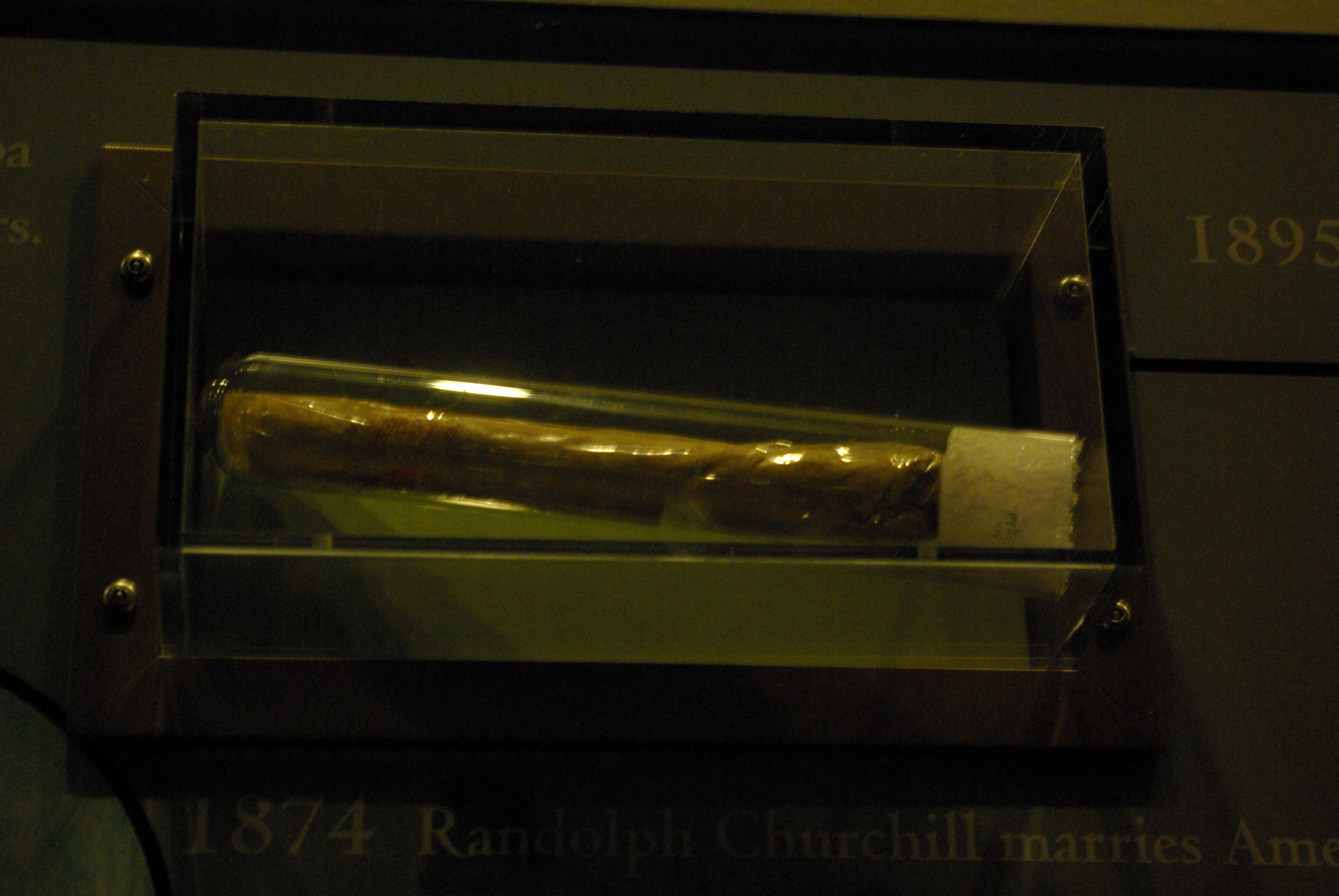
A cigar of Winston Churchill's, on display in Fulton, Missouri

A cigar of Winston Churchill’s, on display in Fulton, Missouri

More:


Fly your flag at half-staff today, honoring President John F. Kennedy

November 22, 2013

U.S. flags at the Washington Monument fly at half-staff, with the dome of the U.S. Capitol in the background.  Image captured from U.S. Flags.com

U.S. flags at the Washington Monument fly at half-staff, with the dome of the U.S. Capitol in the background. Image captured from U.S. Flags.com

November 22, 2013:  A proclamation from President Barack Obama:

Obama Proclamation on Day of Remembrance for President Kennedy

21 November 2013

THE WHITE HOUSE
Office of the Press Secretary
November 21, 2013

DAY OF REMEMBRANCE FOR PRESIDENT JOHN F. KENNEDY

BY THE PRESIDENT OF THE UNITED STATES OF AMERICA

A PROCLAMATION

A half century ago, America mourned the loss of an extraordinary public servant. With broad vision and soaring but sober idealism, President John F. Kennedy had called a generation to service and summoned a Nation to greatness. Today, we honor his memory and celebrate his enduring imprint on American history.

In his 3 years as President of the United States, John F. Kennedy weathered some of the most perilous tests of the Cold War and led America to the cusp of a bright new age. His leadership through the Cuban Missile Crisis remains the standard for American diplomacy at its finest. In a divided Berlin, he delivered a stirring defense of freedom that would echo through the ages, yet he also knew that we must advance human rights here at home. During his final year in office, he proposed a civil rights bill that called for an end to segregation in America. And recognizing women’s basic right to earn a living equal to their efforts, he signed the Equal Pay Act into law.

While President Kennedy’s life was tragically cut short, his vision lives on in the generations he inspired — volunteers who serve as ambassadors for peace in distant corners of the globe, scientists and engineers who reach for new heights in the face of impossible odds, innovators who set their sights on the new frontiers of our time. Today and in the decades to come, let us carry his legacy forward. Let us face today’s tests by beckoning the spirit he embodied — that fearless, resilient, uniquely American character that has always driven our Nation to defy the odds, write our own destiny, and make the world anew.

NOW, THEREFORE, I, BARACK OBAMA, President of the United States of America, by virtue of the authority vested in me by the Constitution and the laws of the United States, do hereby proclaim November 22, 2013, as a Day of Remembrance for President John F. Kennedy. I call upon all Americans to honor his life and legacy with appropriate programs, ceremonies, and activities. I also call upon Governors of the United States and the Commonwealth of Puerto Rico, officials of the other territories subject to the jurisdiction of the United States, and appropriate officials of all units of government, to direct that the flag be flown at half-staff on the Day of Remembrance for President John F. Kennedy. I further encourage all Americans to display the flag at half-staff from their homes and businesses on that day.

IN WITNESS WHEREOF, I have hereunto set my hand this twenty-first day of November, in the year of our Lord two thousand thirteen, and of the Independence of the United States of America the two hundred and thirty-eighth.

BARACK OBAMA

More:

White House photo:  Presidents and First Ladies, Barack and Michelle Obama, and Bill and Hillary Clinton, post a wreath and salute President John F. Kennedy at Kennedy's gravesite in Arlington National Cemetery, November 20, 2013

White House photo: Presidents and First Ladies, Barack and Michelle Obama, and Bill and Hillary Clinton, post a wreath and salute President John F. Kennedy at Kennedy’s gravesite in Arlington National Cemetery, November 20, 2013


Chess games of the rich and famous: Thomas Eakins’s version

November 19, 2013

“The Chess Players” by Thomas Eakins (1844-1916), 1876; in the Metropolitan Museum of Art. Wikipedia image

One must appreciate Eakins’s great skills, even if one does not love his work — but I love it.

In this 1876 painting, he portrays a game of chess.  Was it a real game?  “The players are Bertrand Gardel on the left, and George Holmes on the right. The artist’s father, Benjamin Eakins, stands and watches the match.”  Some critics claim the painting carries allegory to several levels: “Art historian Akela Reason proposes that the painting is a tribute to a number of the artist’s father-figures: Holmes probably was Eakins’s first art teacher; Gardel was his French teacher; Benjamin Eakins was his literal father; and Jean-Léon Gérôme, his master at the École des Beaux-Arts, is represented by a print of Ave Caesar Morituri te Salutant, over the clock.”

It’s a game of chess.

Sadly, the cat is unidentified.

More:


Quote of the moment, encore: President asks the Senate Majority Leader for help on the debt ceiling issue, November 16, 1983

November 16, 2013

Ronald Reagan preparing for a video address from the Oval Office. (Photo is from 1989; this post is about a 1983 address.)  Wikipedia image

Ronald Reagan preparing for a video address from the Oval Office. (Photo is from 1989; this post is about a 1983 event.) Wikipedia image

In a letter to the Majority Leader of the U.S. Senate, the President wrote:

This letter is to ask for your help and support, and that of your colleagues, in the passage of an increase in the limit on the public debt.

As [the Treasury Secretary] has told you, the Treasury’s cash balances have reached a dangerously low point.  Henceforth the Treasury Department cannot guarantee that the Federal Government will have sufficient cash on any one day to meet all of its mandated expenses, and thus the United States could be forced to default on its obligations for the first time in history.

This country now possesses the strongest credit in the world.  The full consequences of a default — or even the serious prospect of default — by the United States are impossible to predict and awesome to contemplate.  Denigration of the full faith and credit of the United States would have substantial effects on the domestic financial markets and on the value of the dollar in exchange markets.  The Nation can ill afford to allow such a result.  The risks, the costs, the disruptions, and the incalculable damage lead me to but one conclusion:  the Senate must pass this legislation before the Congress adjourns.

I want to thank you for your immediate attention to this urgent problem, and for your assistance in passing an extension of the debt ceiling.

Sincerely,

         Ronald Reagan

True then.  Still true now.

Letter from President Ronald Reagan to Senate Majority Leader Sen. Howard Baker, R-Tennessee, November 16, 1983.  The Treasury Secretary at the time was Donald Regan.

Tip of the old scrub brush to mainstream media pillar, The Washington Post, where a .pdf of the letter is available.

More:

.


Annals of global warming: Great Lakes need water

November 13, 2013

Does Lake Michigan's record low mark beginning of new era for Great Lakes? At least 150 years of rhythmic pulses in Lake Michigan's water levels appear to have shifted abruptly with loss of winter ice.   Photo by Mark Hoffman, Milwaukee Journal-Sentinel

Photo and caption from Milwaukee Journal-Sentinel: Does Lake Michigan’s record low mark beginning of new era for Great Lakes? At least 150 years of rhythmic pulses in Lake Michigan’s water levels appear to have shifted abruptly with loss of winter ice. Photo by Mark Hoffman, Milwaukee Journal-Sentinel

Don’t get complacent, yet.  Has enough water fallen in the Great Lakes drainage area in the past six months to change this situation at all?  From the New York Times last June:

Drought and other factors have created historically low water marks for the Great Lakes, putting the $34 billion Great Lakes-St. Lawrence Seaway shipping industry in peril, a situation that could send ominous ripples throughout the economy.

Water levels in the Great Lakes have been below their long-term averages during the past 14 years, and this winter the water in Lakes Michigan and Huron, the hardest-hit lakes, dropped to record lows, according to the Army Corps of Engineers. Keith Kompoltowicz, the chief of watershed hydrology with the corps’s Detroit district, said that in January “the monthly mean was the lowest ever recorded, going back to 1918.”

While spring rains have helped so far this year, levels in all five Great Lakes are still low by historical standards, so getting through the shallow points in harbors and channels is a tense affair.

It’s not just storms, rising sea levels, and melting glaciers, you know.

The Great Lakes as seen from space. The Great ...

The Great Lakes from space. The Great Lakes are the largest glacial lakes in the world. NASA photo via Wikipedia

More:

Great Lakes in Sunglint (NASA, International S...

Great Lakes in Sunglint (NASA, International Space Station, 06/14/12) (Photo credit: NASA’s Marshall Space Flight Center)


Veterans Day 2013 – Fly your flag today

November 11, 2013

Surely Veterans Day is one flag-flying day you don’t need a reminder about.

At least, I hope so.  Veterans Day gets a lot more attention and due homage in 2013 than it did in 2000.  Good.

Poster for Veterans Day 2013, from the Veterans Administration

Poster for Veterans Day 2013, from the Veterans Administration

Parades and ceremonies at National Cemeteries and other veterans memorial sites will mark the day; it’s a good time to consider whether we offer our veterans the respect they have earned and deserve, especially when cutting their benefits.

Fly your flag sunrise to sunset, please. Veterans Day, November 11, Armistice Day, Veterans affairs, veterans benefits

Joseph Ambrose, an 86-year-old World War I vet...

Veterans look out for one another. Joseph Ambrose, an 86-year-old World War I veteran, attended the dedication day parade for the Vietnam Veterans Memorial in 1982. He is holding the flag that covered the casket of his son, who was killed in the Korean War.  U.S. Census Bureau photo via Wikipedia

More: