October 9, 2015 – St. Denis’s Day, patron saint for those who have lost their head

October 8, 2015

Dear Reader: My apologies. As Cecil might say, we’ve been fighting ignorance since 1973, and it’s taking longer than we thought.  My hopes to retire this post have not been realized.  Heck, it doesn’t even need much editing from past years. Saints save us, please!

We might pause to reflect, too:  Recent years have seen the media rise of actual beheadings.  This practice, which now strikes many of us as barbaric, occurs in reality as well as memory and literature; unlike St. Denis, those beheaded do not usually carry on to do anything at all; like St. Denis, they are martyred. Vote well in your local elections, and national elections.  Your vote should be directed at preventing anyone’s losing their head, even just figuratively.

October 9 is the Feast Day of St. Denis.

Who?  He’s the patron saint of Paris (and France, by some accounts), and possessed people.   Take a look at this statue, from the “left door” of the Cathedral of Notre Dame  in Paris (Cathédrale Notre-Dame de Paris: portail de gauche).  He was martyred by beheading, in about 250 C.E.

English: Cathédrale Notre-Dame de Paris: porta...

St. Denis greets vistors to the Cathedral of Notre Dame, Paris (Cathédrale Notre-Dame de Paris: portail de gauche)

Our trusty friend Wikipedia explains:

According to the Golden Legend, after his head was chopped off, Denis picked it up and walked two miles, preaching a sermon the entire way.[6] The site where he stopped preaching and actually died was made into a small shrine that developed into the Saint Denis Basilica, which became the burial place for the kings of France. Another account has his corpse being thrown in the Seine, but recovered and buried later that night by his converts.[2]

Clearly, he is the guy to pray to about Donald Trump, Ben Carson, Rush Limbaugh, Todd Akin, Paul Ryan, intelligent design, and the Texas State Board of Education, no?  In 2013, we added Ted Cruz, Mike Lee, Louis Gohmert, the entire Tea Party, and the entire GOP crew of the House of Representatives.  You catch my drift.

Perhaps you can use this factoid to some advantage, enlightenment, and perhaps humor.  In Catholic lore, St. Denis is one of the “14 Holy Helpers,” and his aid is sought to help people with headaches, or who have been possessed.

Crazy GOP members who I suspect of having been possessed give me and America a headache.  St. Denis seems to be our man. Or saint.

Who else do you know of in this modern, vexatious time, who keeps talking after losing his/her head?

As Rod Stewart sang, just “let your imagination run wild.”  Maybe St. Denis is listening.

More:

Statue to St. Denis, in Cluny

Another portrayal, in sculpture, of St. Denis. Notice how this one’s face doesn’t really look like the one above? Ouvre du Musée de Cluny, Wikipedia photo by Guillaume Blanchard (Aoineko), June 2001, FinePix 1400Z.

Yes, this is mostly an encore post. I had hoped to have to retire this post someday.  I still hope.  Perhaps this will be the last year we’ll have so many wackaloons running loose. Pray to St. Denis.


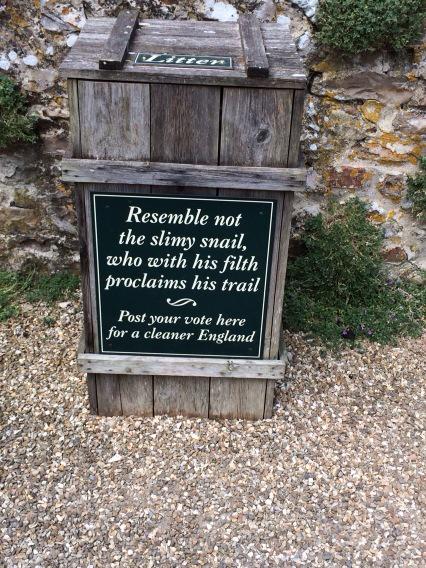
Signs of life: Be not like the snail, but vote for a clean environment

June 7, 2015

From a Tweet by @Tom_Peters:

Uncaptioned photo from the Twitter feed of business excellence chronicler Tom Peters, @Tom_Peters

Uncaptioned photo from the Twitter feed of business excellence chronicler Tom Peters, @Tom_Peters

Sign on a litter receptacle:

Resemble not the slimy snail, who with his filth proclaims his trail.

Post your vote here for a cleaner England.

It’s not particularly flattering to the snail, and probably a bit off on the actual biology of snail trails.  I particularly like the emphasis on “voting” with action.  Reality is that we change the planet, for the better or for worse, with many small, individual acts every day, each one a vote on the future.

Anyone know where this can is? Are there many like it in England?


No shortcuts on the road to success; but watch out for low bridges

May 19, 2015

Meeting of trailer and railroad viaduct.  Photo credit, and location, unknown

Meeting of trailer and railroad viaduct. Photo credit, and location, unknown; here from Part380.com

Many already caught the irony.

I wonder:

  • Was the truck driver using GPS to plan the route?  Which system, so we can avoid it?
  • Stories in the past couple of days say robots should be doing all kinds of jobs, including driving cars and big trucks.  Can a robot do this?

Not to embarrass, but just for the record, does anyone know when and where this picture was taken?

Update: Smart and alert commenters (see below) tell us this is in Mamaroneck, New York, at the intersection of Mamaroneck Ave and Halstead Ave, where Mt. Pleasant Ave comes in. Look at the bridge of the Metro North trains, and it appears that bridge gets hit a lot.

Bridge of Metro North in Mamaroneck, New York, at the intersection of Mamaroneck and Halstead Avenues, where Mt. Pleasant Ave joins. Google View image.

Bridge of Metro North in Mamaroneck, New York, at the intersection of Mamaroneck and Halstead Avenues, where Mt. Pleasant Ave joins. Google View image.

Tip of the old scrub brush to Andre Houser.


Ooops! Missed Feynman Day, May 11! How will we make it up?

May 12, 2015

Got busy, got distracted, fighting allergies . . . and I missed posting for Feynman Day!

Is it ever the wrong time to celebrate the interesting life and remarkable achievements of Richard Feynman?

Here’s the post I should have done yesterday, in Feynman’s honor, and for our enjoyment:

May 11 is the anniversary of the birth of Richard Feynman (born 1918, died 1988).

Richard Feynman

Richard Feynman. Borrowed from Luciano’s Tumblr, LikeaPhysicist

Feynman’s birthday falls on Statehood Day for Minnesota.  You can fly your flag for both causes, if you wish, Minnesota’s statehood AND Feynman’s birthday.  No proclamation will issue from the White House, but you can fly your flag any day.

Why Feynman Day?  To celebrate invention, physics, interesting characters, and that essential, American quality of je ne sais quoi.

In addition to his winning the Nobel Prize for Quantum Electrodynamics (QED), Feynman popularized the critique of science and other enterprises with what we now call Cargo Cult science, or education, or whatever, where people follow the dance steps, but without the rhythm and music.

Those two things alone would make him a remarkable man.  But, like a product offered for $19.95 as a good buy in a 2:00 a.m. infomercial, with Feynman, there’s more.  With Feynman, there is always more.

I got alerted to Feynman in the first days of the old Quality Paperback Book Club, when they featured his new memoir, Surely You’re Joking, Mr. Feynman!  QPBC was hot on the book, and with a title like that, how could I resist?  When I got the book a week or so later, I read it within two days, while attending law school and working full time.  I remember Feynman.

Norton published the book — and their description, alone, should make you want to read it:

A New York Times bestseller—the outrageous exploits of one of this century’s greatest scientific minds and a legendary American original.

In this phenomenal national bestseller, the Nobel Prize­-winning physicist Richard P. Feynman recounts in his inimitable voice his adventures trading ideas on atomic physics with Einstein and Bohr and ideas on gambling with Nick the Greek, painting a naked female toreador, accompanying a ballet on his bongo drums and much else of an eyebrow-raising and hilarious nature.

All true, and that’s not even the half of the outrageousness, all done with great good humor, about a life lived in great good humor through what should have been a memorable age, but often was just terrifying.

I think sometimes that Feynman’s calm, alone, borne of that great good humor and insatiable curiosity,  may have gotten us through the birth of the atomic age and the Cold War.

Feynman was a giant, and we don’t revere him enough.  Consider:

  • Feynman’s high school sweetheart, Arlene, came down with tuberculosis.  He married her, and took her with him to New Mexico to make the atom bombs.  The stories of her confinement to a hospital, and the laborious trekking he had to make between Los Alamos and her bedside in Santa Fe, are touching, and heartbreaking.  It is one of the great love stories of the 20th century, certainly, and perhaps for all time.  It also provided the title for his second memoir, What Do You Care What Other People Think?
  • Every single, college-age man should read Feynman’s stories of how to date, and how to seduce women.  His approach was unique, and endeared him to women — in legend, to many women.  Feynman’s dating must have been part of the inspiration for the comedy series, “Big Bang Theory.”  Feynman’s stories are better.  (Heck, it’s even the subject of a popular, classic XKCD comic — probably only Feynman and Einstein among Nobel-winning physicists have made so much money for so many cartoonists.)
US postage stamp featuring Richard Feynman

US postage stamp featuring Richard Feynman

  • Yeah, he’s already been featured on a postage stamp, see at right.  That’s not good enough for Feynman, though — the U.S. Postal Service created a special cancellation stamp for Feynman, featuring a version of his Feynman Diagrams.

    A special postal cancel was authorized by the USPS (United States Postal Service) to honor the 80th birthday of Richard Feynman. This cancel was used in Lake Worth, Florida. For this special day the post office was renamed “Feynman Station.”

    Feynman Commemorative Cancel Feynman Diagram

    The Feynman Diagram used for the postal cancel on this envelope depicts what is known as a “bubble process.” It shows a high energy particle, for example, a cosmic ray (a) from a distant supernova, which emits a high energy photon, for example, a gamma ray (b). The photon, in turn, creates a particle (c) and an anti-particle (d) that exists for a brief moment and then recombines.

    As Feynman liked to point out, an anti-particle is the same thing as a particle with negative energy traveling backward in time (which is why the arrow at (d) points backwards, i.e. to the left). So you could say the photon created only one particle that, at first, traveled forward in time (the bottom semi-circle) and then reversed and went back in time (the top semi-circle) and annihilated itself! By inventing diagrams like this, Richard Feynman made it much easier to understand what is going on in the interactions between sub-atomic particles without getting lost in tremendous amounts of tedious math

  • Working at Los Alamos on the Manhattan Project, Feynman developed a keen appreciation for bureaucracy and all its follies.  His vexations for the security managers are also legendary.  Here’s a quick version of one story — he asked friends and family to write to him in code, but to not include a key to the code, so he’d have to crack the code to read the letter.  Feynman could do it, but the security people couldn’t.  Hilarity ensued.
  • Feynman developed a love for the still-relatively unknown, landlocked Asian nation of Tannu Tuva.  It’s just the sort of place to appeal to a character like Feynman — so obscure most atlases didn’t, and don’t, show it at all — seemingly consumed by the Soviet Union, but held in a special status.  Home of throat singing — and almost impossible to get to.  During the Cold War, Feynman struck up correspondence with people in Tuva, to the concern of Soviet and American intelligence agencies, who seemed not to understand someone might do such thing out of curiosity.  Feynman hoped to travel there to visit new friends, but his final bouts of cancer took him before it was possible.  Tuva, famous among philatelists only, perhaps, honored Feynman with postage stamps and postcards.
  • Just try to find a photo of Feynman not smiling. The man was a joy to be around, for most people, most of the time.
  • Quantum electro dynamics?  No, I can’t explain it, either — but his work had a lot to do with how particles wobble.  I remember that because, according to Feynman, he got the inspiration for the work for which he won the Nobel while spinning plates, like a Chinese acrobat on the Ed Sullivan Show, to the delight of students in the Cornell University cafeteria, and the shock and horror of the food service people.  Who else has yet confessed to such an inspiration for a Nobel?

There’s more — a lot more.  Feynman outlined our current generation of computer memory devices — in 1959.  No, he didn’t patent the idea.  He did patent an idea for a nuclear-powered spacecraft.  Another delightful story.

Feynman in an Apple ad

Feynman was featured in print and broadcast ads for Apple — not one, but two (did anyone else get that honor from Apple?). “Think Different.” This is one of Apple Computer’s most successful advertising campaigns. The theme of the campaign is one that celebrates figures in history who changed the world by thinking differently. Richard Feynman was among the chosen figures.

Feynman served on the board that approved science books for the California school system — his stories of that work will shock some, but it will make others shake their heads as they recognize the current crop of cargo-cultists and political bullies who dominate textbook approval processes, knowing nothing at all about what they are doing, or why.

No, I didn’t forget his brilliant work on the commission that studied the Challenger disaster, for NASA. There’s so much stuff to glorify!

In history, Feynman should be remembered much as we remember Thomas Jefferson, as a renaissance man in his time, a man who put great intellect to great work for his nation and all humanity.

Feynman's second Apple ad

The second Apple ad featuring Richard Feynman. An excerpt from Apple Computer’s campaign commercial: “Here’s to the crazy ones, the misfits, the rebels, the troublemakers, the round pegs in the square holes, the ones who see things differently. They’re not fond of rules and they have no respect for the status quo. You can quote them, disagree with them, glorify or vilify them… about the only thing you can’t do is ignore them, because they change things, they push the human race forward; and while some may see them as the crazy ones, we see genius, because the people who are crazy enough to think they can change the world are the ones who do.”

The sages say we shouldn’t have regrets, but I do have one.  When the Challenger Commission was meeting in Washington, D.C., I was working on another commission up the street.  I knew Feynman was ill, but our work was important, and we’d heard his disease was in remission.  I didn’t goof off a day and go to any of the hearings to see him, to get an autograph, to meet the man.  I though I’d have other opportunities to do that.  Now I regret not having met him in person.

In print, and in film, I know him well.  In our family, reading Feynman is something everybody does.  Feynman’s memoir was one of the last books I read to our son, Kenny, as he was growing up, and growing into reading on his own.  Even reading about Feynman, together, was an adventure.  Our son, James, took us into the real physics of Feynman, and though I struggle with it more than James, we still read Feynman, for humor, and physics.

What would be appropriate ways to mark Feynman’s birth?  At some future date, I hope we’ll have public readings of his books, showings of the documentaries about him, recreations of his lectures, perhaps.  And then everyone can get in a circle, beating drums and singing about getting some orange juice, before sending postcards to our friends in Tuva.

Richard Feynman, we still need you, and miss you dearly.

Tannu Tuva

Tuva’s capital is the delightfully-named Kyzyl. From this map, can you figure out where Tuva is, or how to get there — without Google, or Bing?

Tuva postcard honoring Richard Feynman

Tuva postcard, in honor of Richard Feynman — who loved to drum.

There will always be “More” about Richard Feynman, if we’re lucky:

Have a great Feynman Day!

Much of this is an encore post.


Signs of life: This is the Moon?

May 6, 2015

Saw this first on Twitter; found it on Pinterest with a claim it’s from Albuquerque, New Mexico.

Either way, it’s a very patient photographer, or one who really knows how to take advantage of serendipitous coincidence. Anyone know?

“Seems legit,” said @OMGFunniest_. Chere Brown on Pinterest said, “Well-played, Albuquerque.”

Albuquerque does have a Moon Street, in the 87111 Zipcode. Can any of our Albuquerque readers verify?


Signs of desperate times: What baby needs

April 11, 2015

Wonderful little find on Twitter:

To which @FionaCuffed added,

To which @FionaCuffed added, “Baby sure does!”

Baby needs differ from place to place.

I wonder where that store is, and I wonder if managers ever look at their own signs?

And if they do, do they chuckle?

(That could be a start of a poem, or maybe a short poem all itself:  “baby needs//beers & wines”)


Encore: Campaigning Obama visited the Dubliner on St. Patrick’s Day, 2012

March 17, 2015

(This is a slightly-edited encore post, for St. Patrick’s Day — I like the Corrigan Brothers’ droll tune.)

I’d forgotten about the birthers’ greatest nightmare — Obama’s got Irish blood in him!

Democratic Underground features a series of photos of President Obama with an Irish cousin at one of my favorite old haunts in Washington, the Dubliner.

President Barack Obama drinks a Guinness with his ancestral cousin from Moneygall Ireland Henry Healy, center, and the owner of the pub in Moneygall Ireland, Ollie Hayes, right, at The Dubliner Restaurant and Pub and Restaurant on St. Patrick's Day, Saturday, March 17, 2012, in Washington (Official White House Photo by Pete Souza)

President Barack Obama drinks a Guinness with his ancestral cousin from Moneygall Ireland Henry Healy, center, and the owner of the pub in Moneygall Ireland, Ollie Hayes, right, at The Dubliner Restaurant and Pub and Restaurant on St. Patrick’s Day, Saturday, March 17, 2012, in Washington (Official White House Photo by Pete Souza)

Many great memories of the Dubliner, including its own great business success.

In 1974, when I interned at the Senate, the Dubliner was just a small bar on the first floor of the Commodore Hotel.  Rocky Johnson of Sen. Mike Gravel‘s office, one of my roommates, introduced me to Guinness.  The Dubliner was the most reliable source in D.C. at the time.  The bartender was a guy named Paddy.  It was never crowded — and they had good fish and chips with a fine, imported malt vinegar. I wasn’t exactly a regular, but I made several a lot of visits.

Ironically, for my summer job later that year with the Louis August Jonas Foundation, we had a trip to D.C. planned with about 16 “boys from abroad” and the designated hotel was the Commodore — it was cheap and met our needs, being close to the Capitol.  I was asked to chaperone, and happily went.   So Freddy Jonas, the great benefactor of the foundation and Camp Rising Sun, and I could sneak down to the Dubliner for a nightcap after the boys were asleep.  Michael Greene, the foundation’s executive director at the time, warned me that Freddy would always ask if you wanted a second drink, but Freddy would not take one himself — and so, of course, neither should staffers.

One night while Freddy and I were capping off the evening we ran into a friend from my interning, Avis Ortner, a former rodeo barrel rider who had starred in a Kodak commercial series, and who worked in a Washington law firm.  She and Freddy struck it off very nicely.  I was surprised at how much Freddy knew about horses, and the questions he had about rodeo riding.  At some point in the evening he asked me if I were going to have a second drink, and of course I declined.  “Well, you only live once.  Avis and I are having a second one, and you should join us.”  People who knew Freddy well still don’t believe me when I tell them the story.  But it’s true.  It’s the magic of the Dubliner.  [Is Avis still cleaning up at bridge in D.C.? [Yes!]]

I was back in D.C. in 1975, again with the Jonas Foundation bunch, and again at the Commodore.  The Dubliner had a successful year, and had taken over the small cafe/dining room next door to bar.

In 1976 I visited again, and after a very successful year the Dubliner kicked out the gift shop of the hotel and opened a second bar there.  It was crowded on weekends.

In 1979 I moved to D.C.  Within a couple of years the Dubliner bought out the Commodore.  You couldn’t get a seat at the bar most nights.  St. Patrick’s Day 1980 the line wrapped around the block, and though the place never had a great or large stage, the live act was the Clancy Brothers with Tommy Makem, if I recall correctly.

Reconstruction and massive redecorating made the hotel into a great stop, and a sometimes pricey room.  Eventually the bar company sold the hotel, but kept the location for the bar.  After Kathryn and I got married, we’d walk over to the Dubliner for lunch at least a couple of times a month, and the fish and chips at the Dubliner got better.  I may have done in half the cod from the Grand Banks all by myself.

We’ve been in Texas now since 1987.  I miss the Dubliner.  Have been able to make it back only a couple of times.  Obama’s lucky he could get in, on St. Patrick’s Day.  I hope he appreciates his luck.

Yes, this is mostly an encore post.  Fighting ignorance requires patience.

Yes, this is mostly an encore post. Fighting ignorance requires patience.


Close one: Turns out Obama’s not the antichrist

February 16, 2015

In case you were worried:

http://twitter.com/TheFix/status/567111784184938496

That appeared in the Lexington Dispatch, in Lexington, North Carolina.  Wish they had that paper at my newsstand.

Read the rest of this entry »


God uses kitsch to tell conservative Christians to give science a break

February 9, 2015

Look what the Hubble Telescope found!

Look what the Hubble Telescope found!

Photo from Hubble Telescope (via Washington Post) suggests “conservative Christians” can lay off their hatred of science, and especially astronomy, and let funding for NASA increase again.


This bus has no wi-fi — you don’t want to ride it

February 8, 2015

The 404 Bus - Dallas Area Rapid Transit (DART) has no wi-fi

The 404 Bus – Dallas Area Rapid Transit (DART) has no wi-fi

Just as many commercial buildings do not have a 13th floor (though others do), sometimes in other businesses, there are other numbers that should, perhaps, be avoided.

404 is one of those to-be-avoided numbers.

Is it possible that passengers who board this bus never get off?


Coffee City? Population seems awfully low

February 6, 2015

Coffee City sign.

Coffee City, Texas

Our friend Jim Stanley posted this on Facebook.

Population count seems too low, doesn’t it?  Must be a pretty tight filter.

Caption these yourself. From the City of Coffee City website.

Caption these yourself. From the City of Coffee City website.

More:


Who wrote “A Day in the Life of Joe Republican?”

January 30, 2015

As it came to me. Similar to a module we used to use in Orrin Hatch speeches back in the Pleistocene (probably would have gotten him voted out if he used the old module now, let alone this one).

Why do these essays usually come with no author, or “author unknown?”  I’ve tracked it down to Crooks and Liars and a recitation by Thom Hartmann, who attributes it to a guy named John Gray in Cincinnati, in 2004. Is that right?

A Day In the Life of Joe Republican

Joe gets up at 6 a.m. and fills his coffeepot with water to prepare his morning coffee. The water is clean and good because some tree-hugging liberal fought for minimum water-quality standards. With his first swallow of water, he takes his daily medication. His medications are safe to take because some stupid commie liberal fought to ensure their safety and that they work as advertised.

All but $10 of his medications are paid for by his employer’s medical plan because some liberal union workers fought their employers for paid medical insurance – now Joe gets it too.

He prepares his morning breakfast, bacon and eggs. Joe’s bacon is safe to eat because some girly-man liberal fought for laws to regulate the meat packing industry.

In the morning shower, Joe reaches for his shampoo. His bottle is properly labeled with each ingredient and its amount in the total contents because some crybaby liberal fought for his right to know what he was putting on his body and how much it contained.Joe dresses, walks outside and takes a deep breath. The air he breathes is clean because some environmentalist wacko liberal fought for the laws to stop industries from polluting our air.

He walks on the government-provided sidewalk to subway station for his government-subsidized ride to work. It saves him considerable money in parking and transportation fees because some fancy-pants liberal fought for affordable public transportation, which gives everyone the opportunity to be a contributor.

Joe begins his work day. He has a good job with excellent pay, medical benefits, retirement, paid holidays and vacation because some lazy liberal union members fought and died for these working standards. Joe’s employer pays these standards because Joe’s employer doesn’t want his employees to call the union.

Hal Coffman in the New York American, 1912. Via Superitch

Hal Coffman in the New York American, 1912. Via Superitch

If Joe is hurt on the job or becomes unemployed, he’ll get a worker compensation or unemployment check because some stupid liberal didn’t think he should lose his home because of his temporary misfortune.

It is noontime and Joe needs to make a bank deposit so he can pay some bills. Joe’s deposit is federally insured by the FDIC [FSLIC] because some godless liberal wanted to protect Joe’s money from unscrupulous bankers who ruined the banking system before the Great Depression.

Joe has to pay his Fannie Mae-underwritten mortgage and his below-market federal student loan because some elitist liberal decided that Joe and the government would be better off if he was educated and earned more money over his lifetime. Joe also forgets that in addition to his federally subsidized student loans, he attended a state funded university.

Joe is home from work. He plans to visit his father this evening at his farm home in the country. He gets in his car for the drive. His car is among the safest in the world because some America-hating liberal fought for car safety standards to go along with the tax-payer funded roads.

He arrives at his boyhood home. His was the third generation to live in the house financed by Farmers Home Administration because bankers didn’t want to make rural loans.

The house didn’t have electricity until some big-government liberal stuck his nose where it didn’t belong and demanded rural electrification.

He is happy to see his father, who is now retired. His father lives on Social Security and a union pension because some wine-drinking, cheese-eating liberal made sure he could take care of himself so Joe wouldn’t have to.

Joe gets back in his car for the ride home, and turns on a radio talk show. The radio host keeps saying that liberals are bad and conservatives are good. He doesn’t mention that the beloved Republicans have fought against every protection and benefit Joe enjoys throughout his day. Joe agrees: “We don’t need those big-government liberals ruining our lives! After all, I’m a self-made man who believes everyone should take care of themselves, just like I have.”

Thom Hartmann recites:


Squirrels: No dice!

January 23, 2015

A good sign is self-explanatory.  Alas, this came to me with no photo credit.

A good sign is self-explanatory. Alas, this came to me with no photo credit.

Still no credit, but I found it on Imgur.

Shake of the old scrub brush to Ellie!


Darwin on toast? Evolution must be true, then

January 14, 2015

@jesusintoast Tweeted: If evolution isn't true, explain why this came out of my toaster today. #darwin #profilesintoast

@jesusintoast Tweeted: If evolution isn’t true, explain why this came out of my toaster today. #darwin #profilesintoast

The kind of logic only a creationism can understand?

Rather irrefutable evidence though, don’t you think?

Um, yeah. It’s evidence; but evidence of what?

More:


Je suis Charlie!

January 8, 2015

If you follow my Tweets, or if you watch what I post on Facebook, you may have noticed I frequently credit editorial cartoonists with telling the truth.  Cartoonists fill a critical need.  I admire their work.

That’s not strong enough.  I find that political cartoons offer truths, in quickly grokable form, that would remain hidden in news and commentary otherwise.

Perhaps more importantly, cartoons lampoon those who desperately, bitterly need lampooning.

Why is that important?  Lampooning exposes crazy behaviors in our leaders, behaviors that if unchecked might lead a group to disaster.  Or a community.  Or a nation.  Or a planet.

Ancient sayings, properly and improperly attributed to various sources, over a period of 500 to 1,000 years point to the importance of lampooning in correcting actions of leaders and governments.  This version comes from a Sophocles play, Antigone (620-3):

For cunningly of old
was the celebrated saying revealed:
evil sometimes seems good
to a man whose mind
a god leads to destruction.

Lampooning helps, illustrating perhaps with laughter where the problem lies, though it also suggests that the chief perpetrators and promulgators of the craziness may be immune from such insights, whether through laughter or any other method.

If those lampooned genuinely cannot see the humor, a greater problem is exposed.  That’s the point. Expose the madness, lay it bare for all to see.  Sane people will work to help the insane, and avoid leading others into that madness.  Lampooning provides us a great tool to avoid disasters, if we would only look. Laughter is optional, if the message gets through.

Even insane leaders and groups understand this at some level. Mark Twain (Samuel Clemens) wrote about the value of ridicule of majestic error in his Notebook:

No god and no religion can survive ridicule. No church, no nobility, no royalty or other fraud, can face ridicule in a fair field and live.*

We got a sharp and painful reminder of these facts yesterday, when a group of gunmen, stung by ridicule from a French satire magazine, stormed that magazine’s offices and brutally gunned down a score of people, a dozen of whom died.  Their form of religious struggle appears insane to sane people, and when that is pointed out to them, they behave with more intense insanity.

To these gunman, whose existence alone is a blasphemous assault on the idea of peaceful religion, ridicule in publication was too much to take.  Rather than answer with other cartoons or parody, or serious thought in print, they attempted to change the playing field’s fairness.

In doing they exposed their critics as accurate and true. Those already crazed by the gods probably have no sense of irony left, either.

This morning comes the word that Charlie Hebdo will publish next week as scheduled.  Instead of the usual run of 113,000 copies, the first run will be more than a million, to meet greater demand. Stricken down by gunmen, Charlie Hebdo rises phoenix-like, with strength multiplied by more than ten.

We mourn the cartoonists and editors lost.  They are martyrs in the cause of freedom and peace, and especially in the “jihad” they engage in for freedom of expression, something that we know now is not a uniquely American virtue or necessity.

Throughout history memorable phrases heralded periods of great change, when people took a stand against tyranny and violence, and stood for freedom and peace.

I am Spartacus.

Here I stand.  I can do no other.”

“Union!”

“. . . the only thing we have to fear is fear itself.”

” . . . Freedom of speech and expression . . . Freedom of every person to worship God in his own way . . . Freedom from Want . . . Freedom from Fear. . .”

Ich bin ein Berliner.

We Shall Overcome

I Am A Man.”

And now, “Je suis Charlie!”

Beyond Charlie Hebdo, the world’s cartoonists and editorialists storm traditional and electronic media with support for the cartoonists.  Here below are some examples, in no particular order.  What other cartoons or commentary have you seen that we all should see?

Andy Marlette, cartoonist for the Pensacola News-Journal borrowed the saying from the sticker that Woody Guthrie used on his guitar, “This Machine Kills Fascists”:

Andy Marlette of the Pensacola News-Journal, borrowing from Woody Guthrie's guitar

Andy Marlette of the Pensacola News-Journal, borrowing from Woody Guthrie’s guitar

Pete Seeger borrowed Woody’s line, and painted on the drum head of his banjo, “This Machine Surrounds Hate and Forces It to Surrender.” Marlette also penned a piece for USA Today.

Cuban Angel Boligan (@AngelBoligan):

Cuban-born cartoonist Angel Boligan, on Charlie Hebdo

Cuban-born cartoonist Angel Boligan, on Charlie Hebdo

Nate Beeler in the Columbus Dispatch:

Nate Beeler's cartoon on Charlie Hebdo, for the Columbus Dispatch

Nate Beeler’s cartoon on Charlie Hebdo, for the Columbus Dispatch

Pat Bagley in the Salt Lake Tribune:

Pat Bagley, Salt Lake Tribune

Pat Bagley, Salt Lake Tribune

Ricardo Sanabria in Venezuela:

Ricardo Sanabria, Venezuela

Ricardo Sanabria, Venezuela

Manjool, an Indian cartoonist:

“Last message from #CharlieHebdo cartoonists to their killers. My #cartoon “

Clay Bennett at the Chattanooga, Tennessee newspapers:

Clay Bennett's cartoon on the tragedy at Charlie Hebdo

Clay Bennett’s cartoon on the tragedy at Charlie Hebdo

NOT by Banksy, but by Lucille Clerc:

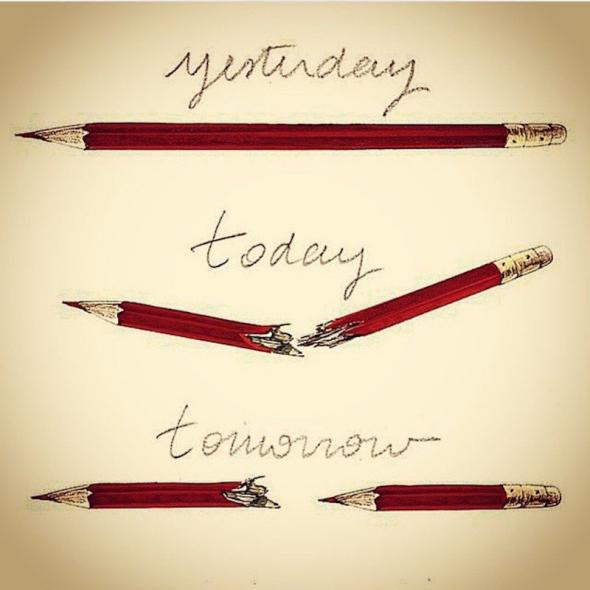
Cartoon by Lucille Clerc

Cartoon circulated as by Banksy, but really by graphic designer Lucille Clerc

John Cole, Scranton Times-Tribune:

@AnnePhutto said:  Je suis Charlie...my 12 year old daughter's favorite cartoon in response to the tragedy.  Cartoon by John Cole, Scranton News-Tribune

@AnnePhutto said: Je suis Charlie…my 12 year old daughter’s favorite cartoon in response to the tragedy. Cartoon by John Cole, Scranton Times-Tribune

Charlie Hebdo dead?  I don’t think so.

______________

*  Twain also warned against taking ridicule too far, and spoke on the difficulty of knowing, if you’re the butt of the ridicule:

  • Sense of ridicule is bitterer than death & more feared. — men commit suicide daily to escape it.
    Mark Twain’s Notebooks and Journals, Vol. 3, p. 346.
  • There is no character, howsoever good and fine, but it can be destroyed by ridicule, howsoever poor and witless. Observe the ass, for instance: his character is about perfect, he is the choicest spirit among all the humbler animals, yet see what ridicule has brought him to. Instead of feeling complimented when we are called an ass, we are left in doubt.
    Pudd’nhead Wilson

More: