Climate change: We’ll see you in court

May 21, 2010

Contemplation of Justice, statue by James Earle Fraser at the U.S. Supreme Court (exterior) - photo by Steve Petteway

Contemplation of Justice, statue by James Earle Fraser at the U.S. Supreme Court (exterior) - photo by Steve Petteway

From a press release from Gardere and Wynn:

Gardere’s Faulk And Gray Tapped To Represent Business, Industry In Climate Change Amicus Briefs

Gardere Wynne Sewell attorneys Richard O. Faulk and John S. Gray have been retained to write amicus curiae briefs to federal appellate courts and the U.S. Supreme Court in relation to public nuisance lawsuits regarding global climate change.

(I-Newswire) May 13, 2010 – HOUSTON – Richard O. Faulk and John S. Gray, co-chairs of Gardere Wynne Sewell LLP’s Climate Change Task Force, have been retained to write amicus curiae briefs to federal appellate courts and the U.S. Supreme Court in relation to public nuisance lawsuits regarding global climate change.

Mr. Faulk and Mr. Gray, partners in Gardere’s Houston office, will represent a group of organizations that include the American Chemistry Council, The National Petrochemical & Refiners Association, The American Coatings Association, and the Public Nuisance Fairness Coalition.

The first brief was filed in the 5th Circuit on Friday, May 7, in the case of Comer v. Murphy Oil. In that case, a group of property owners sued utility, mining, oil and chemical companies claiming their CO2 emissions ultimately caused the devastation of Hurricane Katrina. Comer had originally been dismissed at the trial level because the plaintiffs lacked standing to sue particular defendants for the effects of global warming, among other reasons.

A panel of the 5th Circuit reversed the dismissal, but on February 26 the court granted an en banc rehearing. The court is now weighing a number of procedural concerns caused by a number of judicial recusals, and has not set a final date for oral arguments.

“Despite the current procedural wrangling, the 5th circuit’s initial decision to reconsider the panel’s ruling remains a major blow to climate change and public nuisance litigation,” Faulk said. “Although the final decision, the panel’s original decision now has no value. Clearly, a significant number of the court’s judges believe the case deserves a closer look, and plaintiffs are surely not comforted by that development. Indeed, since no judge on the original panel dissented, the en banc court’s decision to reconsider suggests a serious interest in changing the result.”

Mr. Faulk and Mr. Gray also plan to file amicus briefs in Native Village of Kivalina, Alaska v. ExxonMobil Corp., et al., which is pending in the 9th Circuit, and Connecticut v. American Electric Power, a 2nd Circuit decision in which a petition for certiorari to the United States Supreme Court is expected to be filed. Both of those cases also involve the propriety of using public nuisance litigation to redress global climate change.

Mr. Faulk and Mr. Gray have authored many scholarly articles regarding public nuisance and climate change. One of their major papers, “Stormy Weather Ahead: The Legal Environment of Global Climate Change,” has been presented at conferences of the United States Chamber of Commerce, in media events at the Washington Legal Foundation, at various Professional Development seminars for lawyers, engineers, and businessmen. A complete collection of their articles is available at http://works.bepress.com/richard_faulk/subject_areas.html#Climate%20Change.

In addition, Mr. Faulk recently spoke on climate change lawsuits at the Judicial Symposium on The Expansion of Liability Under Public Nuisance on April 26 at the Searle Center on Law, Regulation, and Economic Growth, Northwestern University School of Law.

Gardere Wynne Sewell LLP, an AmLaw 200 firm founded in 1909 and one of the Southwest’s largest full-service law firms, has offices in Austin, Dallas, Houston and Mexico City. Gardere provides legal services to private and public companies and individuals in areas of energy, hospitality, litigation, corporate, tax, government affairs, environmental, labor and employment, intellectual property and financial services.

Familiar with any of those cases?

Were denialists to have the facts, some of those legal cases would be the places that the facts emerge in useful-to-stop-climate-change-legislation fashion.

Want to make bets on whether those who desperately want (and maybe need) climate change denialists to be right, actually use the climate denialists’ studies?

Watch those cases.


Wall Street Journal’s DDT-fueled war on science

May 12, 2010

I don’t subscribe to the Wall Street Journal — their discounts to educators are lousy.

So I missed this editorial when it ran on April 24, 2010 (page A12), “DDT and population control – malaria still kills one million every year.”

Nominally, that should be good news.  At the peak of DDT use in the early 1960s, malaria killed about 3 million people annually.  By the time we banned DDT use on cotton crops in the U.S., the death toll was still about 2 million people annually.  From the heyday of DDT, we’ve decreased malaria’s death toll, to less than half what it was.

Editorial writers at the Journal don’t let facts get in their way when they go off on a misdirected political jihad or crusade.  Gross error Number 1:  They mislead readers about the facts.

They are claiming that a million is too many (it is), but they claim that the total would be significantly less if only Americans would attack Africa with poison.  We have trouble enough with wars in Afghanistan and Iraq, it seems to me.  There is no indication that we could reduce malaria rates with a lot of extra poison.  Malaria is a parasite in human blood.  To defeat the disease we have to defeat the infections in humans.  Mosquitoes just spread the disease from one human to another.  DDT does not cure malaria in humans; it is one preventive device of limited effectiveness.

What are they on about?

The Journal’s editorial writers said:

Environmental activists this week marked the 40th anniversary of Earth Day, which happened to fall three days before World Malaria Day. Insofar as Earth Day politics have contributed to today’s malaria epidemic, the two events are related.

You could see this one coming.  The reactionaries at the editorial seek out opportunities to criticize environmentalists, whose cause they see as anti-business.   The Journal’s editorial page usually carries an op-ed piece by Hoover Institute maven Henry I. Miller about once a year (see here, for example), claiming we need DDT to fight West Nile virus.  We don’t, of course.  West Nile virus-carrying mosquitoes are best fought with other pesticides, when pesticides are used.  They need to be hit before adulthood, while they are still larva, in the water.  DDT is exactly wrong for such applications.  But Miller’s piece comes around almost every year, as soon as the first West Nile virus infections in humans are noted.

So, since they so soundly disregard science on that diatribe, why not here, too?  DDT offers a great target for Tea Baggers, Know-Nothings, and truth bashers.  Most of the history of DDT was written before the internet, so it’s easier to spread falsehoods without contradiction.

Disinformation.  Propaganda.  Shame on the Wall Street Journal.

Earth Day and World Malaria Day are related in this way:  Environmentalists warned us that doing the wrong stuff in the environment would make it harder to fight malaria, and they were right.  People who resist clean air and clean water legislation also resist legislation to stop poisoning our planet.  Those people rarely do anything to fight malaria, either.  Human comfort, human health, human survival, is not what they are concerned about.

Earth Day founder Gaylord Nelson, a U.S. Senator from Wisconsin, was a leading opponent of the insecticide DDT, which remains the cheapest and most effective way to combat malarial mosquitoes.

Gaylord Nelson, the father of Earth Day, was governor of Wisconsin when the University of Wisconsin did the first studies showing that songbirds and raptors in Wisconsin were being wiped out by DDT. We should expect him to be an opponent of indiscriminate use of the stuff.  His state was on the road to ruin, and long before the federal government acted against DDT, Wisconsin had laws and regulations to limit its use.  Wisconsin’s wild populations recovered a bit more quickly because Wisconsin had acted.

Gaylord Nelson at the Apostle Islands, Photograph by Frank Wallick, 1967.

Gaylord Nelson at the Apostle Islands, Photograph by Frank Wallick, 1967.

Nelson also knew that, in the U.S., malaria was conquered by 1939 (according to the Centers for Disease Control).  DDT came along in 1946, seven years later.  While DDT was used to control mosquitoes in the U.S., it was for no disease control reasons — that was why so many people opposed the rather pointless use of the stuff.  And I suspect Nelson was savvy enough to know that DDT has not been the cheapest means of controlling mosquitoes for several years.  One application of DDT in Africa costs about $12.00, for the professional who must apply it, and the testing to determine whether DDT will even work.  One application lasts about six months.  So, for a year’s protection, DDT costs about $24.00 per house, per year.

Bednets cost about $10.00, and last about five years.  That works out to $2.00 year.  For $24.00, you could provide a dozen different nets in a home, though most homes would use them only to protect children.

Moreover, recent test runs in Africa show DDT about 25% to 50% effective in reducing malaria incidence, while bednets are about 50% to 85% effective.  Nets are cheaper and more effective.

Doesn’t the Wall Street Journal have fact checkers?  Or do they just not care about the facts?

Rachel Carson’s 1962 book, “Silent Spring,” misleadingly linked pesticides to cancer and is generally credited with popularizing environmental awareness.

Wrong on three fronts.  Carson noted that the family of chemicals from which DDT comes might have links to cancer, but she did not make the claim that DDT is carcinogenic.  DDT was banned because it’s a long-term, deadly poison that destroys ecosystems.  Cancer in humans was not a part of the equation.

However, DDT is now known to be a weak human carcinogen.  Every cancer-fighting agency on Earth lists it as a “probable human carcinogen” (it is confirmed to cause cancer in other mammals).  Can’t the Wall Street Journal find the phone number of the American Cancer Society?

DDT earned its ban because of 20 years of research data by 1972, showing that DDT kills virtually everything it comes in contact with that is smaller than a large man, and it destroys ecosystems.  Talking about DDT’s carcinogenicity is a red herring.  Carson didn’t claim DDT was a significant cause of cancer, nor was DDT banned from agricultural use because anyone thought it was a significant cause of cancer.  Yes, DDT is a weak human carcinogen, contrary to the Journal’s implication; but no, that’s not why it was banned.

Carson’s book certainly ignited concerns about human activities affecting environment other than land development.  But “environmental awareness” is as old as our nation, at least.  A hundred years prior to Rachel Carson’s book, the U.S. set aside the world’s first National Park, Yellowstone.  60 years earlier, Teddy Roosevelt and Gifford Pinchot led the drive to conserve the nation’s forests.  The Soil Conservation Service, a New Deal program, worked to save soil on farms and unimproved areas, a good 30 years before Carson’s book.  Environmental awareness is an almost-congenital trait in Americans.  Rachel Carson sounded alarms about new reactive chemical combinations.  Americans were already alert to the need to save soil, water, air and wild spaces.

We banned DDT to save our crops and to save our wildlife.  Those are good reasons to keep the ban today.

But other leading greens of the period, including Nelson, biologist Paul Ehrlich and ecologist Garrett Hardin, were also animated by a belief that growth in human populations was harming the environment.

Nelson thought the U.S. needed to slow immigration (see more below).  Ehrlich feared a massive round of starvation, which was staved off only with the Green Revolution and billions of dollars of foreign aid money, the good luck of our having Norman Borlaug and the Rockefeller Foundation, and major economic change in nation’s like India and China.  Hardin pointed out that even the best intentioned people needed a structure to encourage them to conserve, else conservation would not take place.

They all recognized that while any human could minimize her impact on the natural world, no one person could ameliorate all the effects of billions of people.

“The same powerful forces which create the crisis of air pollution also are threatening our freshwater resources, our woods, our wildlife,” said Nelson. “These forces are the rapid increase in population, industrialization, urbanization and scientific technology.”

Notice, please, that Sen. Nelson did not suggest humans should do anything to cause or encourage massive human death (nor did the Journal do the courtesy of noting where they quoted him from).  He merely notes that air pollution and water pollution, and a lack of freshwater, are created by human populations, industry, urban sprawl and technology.  All of these things threaten human health.  Nelson is concerned that we not add to human illness and misery.  That’s not what the Journal’s editorial wants you to think, however.  It will suggest instead that Nelson urged more human suffering and death.

How craven must an editorial board be to accuse good people, falsely, of such sins?

In his book “The Population Bomb,” Mr. Ehrlich criticized DDT for being too effective in reducing death rates and thus contributing to “overpopulation.”

I doubt it.  I can’t find anything quite to that description in my copy of the book.  It’s a common internet legend (one level dumber than urban legend) — but shouldn’t the Wall Street Journal have higher standards than to use for documentation, “my cousin Clem heard a story about a person his aunt once knew?”

Hardin opposed spraying pesticides in the Third World because “every life saved this year in a poor country diminishes the quality of life for subsequent generations.”

Now the Journal is making things up.  In the essay from which the Journal quotes him, Hardin wrote about the dangers of uncontrolled immigration and population growth — almost sounding like an angry Arizona Tea Partier at times — but never did he get close to suggesting that we should not suppress malaria, for any reason.  (Wise readers may wish to see what Hardin actually said, where he really went awry if he did, and how his words resonate today, at his essay, “Living on a Lifeboat.”  Writers at the Journal should be ashamed of savaging the reputation of a guy who is so much in tune with what they usually write.  Notice Hardin does not mention DDT, use of pesticides in foreign nations, malaria, nor any other disease.  He rails at starvation, however.)  When the Wall Street Journal engages in fiction, shouldn’t they let us know?

For these activists, malaria was nature’s way of controlling population growth, and DDT got in the way.

Gee, in context, that’s all fiction. Never did Sen. Gaylord Nelson claim malaria was a good population control tactic, nor that we should stop using DDT to allow more people to die. Those are whole cloth lies. Never did Garrett Hardin say either of those things. Never did Paul Ehrlich say those things.

Cover of 2003 Science Magazine special on Garrett Hardin's essay

Cover of 2003 Science Magazine special on Garrett Hardin’s essay, “Tragedy of the Commons”

For anti-science activists, like the writers at the Wall Street Journal’s editorial page, falsehoods have become coin of the realm, and DDT is just one more sciency thing to try to use as whip against political opponents. The serious question is, why is the Wall Street Journal opposed to clean air and clean water?  Why are they trying to politicize things at all?

The writers at the Journal continue:

Today, malaria still claims about one million lives every year—mostly women and children in sub-Saharan Africa. There’s no evidence that spraying the chemical inside homes in the amounts needed to combat the disease harms humans, animals or the environment. Yet DDT remains severely underutilized in the fight against malaria because the intellectual descendants of Senator Nelson continue to hold sway at the World Health Organization and other United Nations agencies.

Full disclosure would be good here.  Malaria death rates are at the lowest point in history, at least since 1900.  Yes, too many die — but it’s not the fault of “not enough DDT.”  No nation that uses DDT has ever succeeded in eradicating malaria with pesticides alone.  Only those nations that assaulted malaria from the  human side, treating malaria in human victims, have been successful in eradicating the disease.  DDT use was essentially suspended in Africa by the World Health Organization in about 1965, because overuse of DDT in agriculture had bred mosquitoes that are resistant and immune to the stuff.  No amount of DDT spraying, anywhere, can reverse that.  Spraying DDT where mosquitoes are unaffected by it, is stupid.

Plus, studies indicate a correlation between DDT use, even in those small amounts, and premature deaths to children in the households sprayed.  DDT is not harmless.  DDT is not benign.

DDT has never been banned in Africa, and even under the 2001 Persistent Organic Pesticides Treaty (POPs) DDT has a special carve out to keep it available to fight malaria, despite its being a destroyer of worlds.  So implicit in the Journal’s screed here is that Africans are too stupid or lazy to use a substance that would save their children and themselves from malaria, though it’s available relatively cheaply.

Is DDT “underutilized?”  Again we should ask, why would anyone use DDT where it is not effective? Then we should ask, who would use DDT in fighting disease in Africa, and do they use it?  It turns out that DDT is not completely superfluous to all mosquito populations.  But testing is required to be sure DDT will work — were an organization to use ineffective pesticides, thousands could die, and the testing is therefore a preservation of human life.  And, because of past incidents in Africa, for example when DDT killed off the fish local populations depend on for their food, DDT use is extremely limited, to indoor applications only, and only by trained professionals who limit its spread.

WHO has been using DDT in Africa for indoor residual spraying (IRS) since the 1950s.  Use was slowed when DDT’s effectiveness was compromised.  In recent years WHO held a press conference on DDT to encourage locals who fear DDT poisoning to go along, and since 2005 DDT’s effectiveness appears to be dropping.  But DDT is available for use wherever it is needed to fight malaria in Africa.

Is the Wall Street Journal calling for mass poisoning of Africa?  What else could they be talking about?  Why would they call for such a thing?

The Journal claims WHO and other UN agencies are “under the sway” of Sen. Nelson, and that’s bad?  Let’s be clear:  Nelson didn’t oppose use of DDT in Africa to fight malaria.  UN’s WHO is the leading continent-wide advocate of proper use of DDT to fight malaria.  If the Journal claims that current, appropriate use of DDT is too little, what is the Journal advocating?

The good news is that the Obama Administration has continued the Bush policy of supporting DDT spraying in Zambia, Mozambique and other countries where the locals want it used. “Groups like the Pesticide Action Network have lobbied the U.S. Agency for International Development to stop spraying DDT, and Obama is ignoring them so far,” says Richard Tren of Africa Fighting Malaria, an advocacy group. “They’re prioritizing what makes sense from a science and public health point of view.”

Let’s be clear:  The Bush administration refused to allow U.S. money to be used to purchase DDT, or to use DDT, until about 2005.  Environmental Defense, the organization that first sued to stop DDT use in the U.S., argued for years that DDT should be allowed in the limited use WHO proposed, but Bush’s people stood firmly opposed, though never explaining why.  In any African nation where local people want DDT, it’s freely available with other money, of course.  So U.S. opposition, bizarre as it was, was not and is not a barrier to DDT use.

Most environmental groups favor beating malaria, and if a bit of DDT carefully controlled will help do the trick, so much the better.  While business lobbyists have falsely impugned environmentalists for years on this point, actual opposition to DDT use has come, in Uganda for example, from business groups.  Tobacco growers claim they fear some DDT will somehow get on tobacco leaves, and that will make the stuff unsaleable in the European Union.  Cotton growers fear any faint traces of DDT will ruin sales of organic cotton to the EU.  These business groups sued to stop DDT use against malaria in Uganda.

But environmental organizations, like ED, the Sierra Club, and others, have been fighting malaria for 40 years.

Which is more than we can say for Richard Tren.  Tren is one of two or three of the leading false propagandists for poisoning Africa in the world.  He tells false tales about Rachel Carson, false tales about DDT’s harms and effectiveness, and as best I can tell he has never lifted one finger or written one check to fight malaria himself, while taking tens of thousands of dollars to spread his false tales.

There are dozens of noble malaria fighters out there whose opinions we should seek — Socrates Litsios, the late Fred Soper, to mention two.  Why does the formerly august Wall Street Journal use Richard Tren as a source, when there are authoritative people handy to talk?

DDT helped to eradicate malaria in the U.S. and Europe after World War II, and the U.S. is right to take the lead in reforming public health insecticide policy and putting the lives of the world’s poor above green ideology.

Printed in The Wall Street Journal, page A12

According to the history of malaria at the CDC, malaria was essentially wiped out in the U.S. by 1939.  DDT was not available for use for another seven years.  Malaria was gone from northern Europe by World War II.  DDT was a tool in the final eradication of the disease in Italy and Greece.  But the main campaign against malaria was in curing the disease in humans, before the mosquito populations could rise up.

Among the nasty facts of science the Journal either does not know, or refuses to say, DDT can’t eradicate mosquitoes.  In anti-malaria campaigns, DDT is used to knock down the mosquito populations temporarily, so that the disease can be cured in humans.  Mosquito populations will quickly rise again, and in even greater numbers — but if there is no human reservoir of malaria parasites for mosquitoes to draw from, they cannot spread the disease.  Malaria parasites must spend part of their life cycle in humans, and part in mosquitoes.

Curing malaria in humans is the tough part.  It requires money to improve medical care, for accurate and speedy diagnoses, and for prompt and complete treatment of the disease in each patient.  Preventing malaria is aided greatly by better-built homes with screens on windows, the sort of stuff that requires people to have more than subsistence incomes.  So beating malaria generally requires economic development, too.

How much easier is it to bash environmentalists than to confront the real causes of malaria.  Bashing environmentalists won’t do anything to relieve human suffering nor eliminate the disease, so we can bash environmentalists again next World Malaria Day, and next Earth Day — all at no cost to us, safe in our Wall Street Journal offices in Manhattan, New York, U.S.A.  The Journal has fallen victim to bold purveyors of junk and voodoo science, and bogus and voodoo history.  Shame on the Journal.

Curing the disease in humans means the mosquitoes are mere nuisances, and no longer vectors of disease.  Killing the mosquitoes with poison means the disease will be back with a vengeance in a few weeks or months.  Curing humans is more difficult, and more costly — but it saves lives and can save Africa.  We cannot poison Africa to health.

It’s curious, though:  How did they get so poisoned by DDT, up in that office building?

More:

Help stop the poisoning of discussion:  Share this post:

Add to FacebookAdd to NewsvineAdd to DiggAdd to Del.icio.usAdd to StumbleuponAdd to RedditAdd to BlinklistAdd to TwitterAdd to TechnoratiAdd to Furl

Save


Cuccinelli Witch Project

May 3, 2010

So, you didn’t think the opposition to global warming was political?  You thought “skeptics” were just out to make a scientific case?

Virginia Attorney General Ken Cuccinelli - campaign photo

Virginia Attorney General Ken Cuccinelli - campaign photo

As the Hook explains, Virginia Attorney General Ken Cuccinelli has ordered the University of Virginia to turn over all records they have of research done by Michael Mann while he was at the UVA (he left five years ago for Penn State). (Civil Investigative Demand, here)

It’s a fishing expedition, the very definition of a witch hunt.  Also, as I read the Virginia Fraud Against Taxpayers Act upon which Cuccinelli bases his actions [see comments — better source here], it’s probably outside the statute of limitations.

Research that Cuccinelli has targeted to investigate  includes work Mann did with the National Oceanographic and Atmospheric Administration (NOAA) and the National Science Foundation (NSF).  Cuccinelli probably lacks jurisdiction for much of the stuff he wants, trumped by those federal agencies.

Mann is the guy who put together the chart of all the different threads of research that show warming climate, commonly known as the “hockey stick” after Al Gore’s years of presentations on the chart and the movie, “Inconvenient Truths.”  Mann also is among those scientists in U.S. and England whose private e-mails were exposed in the breach of the e-mail servers at England’s Hadley Climate Research Unit.

Three different investigations have put Mann in the clear so far (Penn State’s .pdf of investigation results; response to Texas U.S. Rep. Joe Barton’s assault) — odd that stolen e-mails would produce doubts about the victims of the theft, but ethical standards in science research are indeed that high.  Caesar’s wife couldn’t be considered for research grants.

Why do I think the statute of limitations may apply?  Look at the law, linked above, the Fraud Against Taxpayers Act:

§ 8.01-216.9. Procedure; statute of limitations.

A subpoena requiring the attendance of a witness at a trial or hearing conducted under this article may be served at any place in the Commonwealth.

A civil action under § 8.01-216.4 or 8.01-216.5 may not be brought (i) more than six years after the date on which the violation is committed or (ii) more than three years after the date when facts material to the right of action are known or reasonably should have been known by the official of the Commonwealth charged with responsibility to act in the circumstances, but in that event no more than ten years after the date on which the violation is committed, whichever occurs last.

In any action brought under § 8.01-216.5, the Commonwealth shall be required to prove all essential elements of the cause of action, including damages, by a preponderance of the evidence.

Research at a major research institution like a big, public university involves many layers of regulation and bureaucratic checking.  Generally the university’s research office will require adherence to the school’s ethical code and all state laws up front, and then the auditors check the money flow and research activities through the project.  There is a final sign off at most schools, which would qualify as “the date when facts material to the right of action are known or reasonably should have been known by the official of the Commonwealth charged with responsibility to act in the circumstances.”

Cuccinelli is sending a clear signal to researchers that they are unwelcome in Virginia if their research doesn’t square with his politics — and his politics are weird. Watch to see what the response of the University is, especially if their delivery of documents doesn’t put this witch hunt to bed.

[Update notice:  The text of the law noting the statute of limitations was updated on May 5, to show application to § 801-216.4 as well as § 801-216.5]

Other sources to check:

Add to FacebookAdd to NewsvineAdd to DiggAdd to Del.icio.usAdd to StumbleuponAdd to RedditAdd to BlinklistAdd to TwitterAdd to TechnoratiAdd to Furl


Making up stuff on the internet

May 3, 2010

Here’s the Dilbert cartoon Virginia Attorney General Ken Cuccinelli should have viewed before he went fishing:

Add to FacebookAdd to NewsvineAdd to DiggAdd to Del.icio.usAdd to StumbleuponAdd to RedditAdd to BlinklistAdd to TwitterAdd to TechnoratiAdd to Furl


Tonight in Iowa City! DDT and myth lecture

January 19, 2010

A reminder that Prof. O’Shaughnessy’s lecture on DDT and myths rolls tonight in Iowa City.  We hope to have a report, later.

As we posted earlier:

Do we have any readers in Iowa City?  Near Iowa City?

A presentation on the history of malaria and DDT, and the recent use and abuse of those stories to flog environmentalists and others on the internet, is set for the Hardin Library for Health Sciences at the University of Iowa in Iowa City, on January 19, 2010 (next Tuesday).

If you’re there, can you snap a couple of pictures to send, and get any handouts, and write up a piece about it?

Here is the press notice on-line:

Presentation on the History of Malaria and DDT

The University of Iowa History of Medicine Society invites you to hear Patrick T. O’Shaughnessy, PhD, Associate Professor, Department of Occupational and Environmental Health, University of Iowa, speak on “Malaria and DDT: the History of a Controversial Association” on Tuesday, January 19th, 5:30 to 6:30, room 2032 Main Library. [in Iowa City, Iowa.]

Dr. O’Shaughnessy observes:  ”Although it helped prevent millions of cases of malaria after its widespread use in the 1950’s, the pesticide DDT was banned from use in the United States and fell out of favor as an agent to reduce cases of malaria around the world. This history of the events associated with the effort to eradicate malaria, as well as the environmental movement that led to the ban on DDT, will center on the story of a story that incorporated both issues and grew into a modern myth still seen in books and multiple websites today.”

The session is free and open to the public.  Light refreshments will be served.

Hardin Library for the Health Sciences stands on the campus in Iowa City.

Hardin Library for the Health Sciences
600 Newton Road
Iowa City, IA 52242-1098

319-335-9871

The Hardin Library for the Health Sciences is located on Newton Road, directly north of the University of Iowa Hospitals and Clinics and approximately 1/2 mile east of Carver-Hawkeye Arena.  Go here for directions and more information.

Maybe I’m not the only bothered by the usual abuse of history and science on the issues of DDT and malaria.

Note: Tim Lambert notes at Deltoid that O’Shaughnessy is the guy who wrote what may be the definitive work on the famous — or infamous — Borneo Cat Drop. If you live in or near Iowa City, this lecture may be a wise investment of time.  High school teachers, your students could benefit, too.


The Curse of “Not Evil, Just Wrong” — still evil and wrong

December 10, 2009

At the first post on this material, the thread got a little long — not loading well in some browsers, I hear.

So the comments are closed there, and open here.

In fashion we wish were different but seems all too typical, so-called skeptics of global warming defend their position with invective and insult.  But they are vigorous about it.  What do you think?  What information can you contribute?

Here’s the post that set off the denialists, anti-science types and DDT sniffers, and a tiny few genuinely concerned but under-informed citizens:

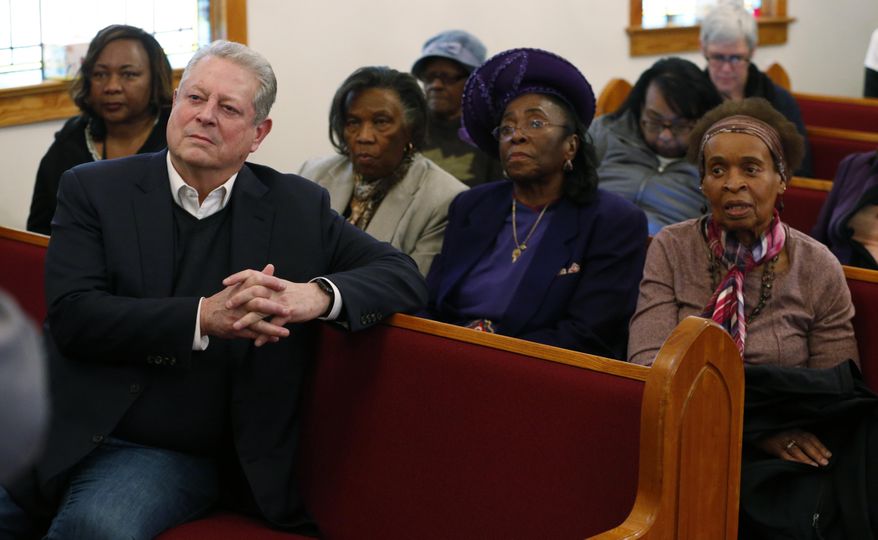
AP caption: Former Vice President Al Gore, left, listens to speakers during a meeting at the Grove Missionary Baptist Church in Buckingham, Va., Tuesday, Feb. 19, 2019. Gore visited the area that is the proposed site for a compressor station for the Atlantic Coast Pipeline. (AP Photo/Steve Helber)
Should be obviously silly for anyone to argue former divinity student Al Gore is evil, as this film implies despite the demurrer. It should also be obviously that it’s evil to call Gore wrong on these issues; but that doesn’t stop brown Earther critics of scientists and Al Gore.

I warned you about it earlier. Crank science sites across the internet feature news of another cheap hit on Rachel Carson and science in movie form.

“Not Evil, Just Wrong” is slated for release on October 18. This is the film that tried to intrude on the Rachel Carson film earlier this year, but managed to to get booked only at an elementary school in Seattle, Washington — Rachel Carson Elementary, a green school where the kids showed more sense than the film makers by voting to name the school after the famous scientist-author.

The film is both evil and wrong.

Errors just in the trailer:

  1. Claims that Al Gore said sea levels will rise catastrophically, “in the very near future.” Not in his movie, not in his writings or speeches. Not true. That’s a simple misstatement of what Gore said, and Gore had the science right.
  2. ” . . . [I]t wouldn’t be a bad thing for this Earth to warm up. In fact, ice is the enemy of life.” “Bad” in this case is a value judgment — global warming isn’t bad if you’re a weed, a zebra mussel, one of the malaria parasites, a pine bark beetle, any other tropical disease, or a sadist. But significant warming as climatologists, physicists and others project, would be disastrous to agriculture, major cities in many parts of the world, sea coasts, and most people who don’t live in the Taklamakan or Sahara, and much of the life in the ocean. Annual weather cycles within long-established ranges, is required for life much as we know it. “No ice” is also an enemy of life.
  3. “They want to raise our taxes.” No, that’s pure, uncomposted bovine excrement.
  4. “They want to close our factories.” That’s more effluent from the anus of male bovines.
  5. The trailer notes the usual claim made by Gore opponents that industry cannot exist if it is clean, that industry requires that we poison the planet. Were that true, we’d have a need to halt industry now, lest we become like the yeast in the beer vat, or the champagne bottle, manufacturing alcohol until the alcohol kills the yeast. Our experience with Rivers and Harbors Act of 1899, the Clean Air Acts and the Clean Water Act is that cleaning the environment produces economic growth, not the other way around. A city choked in pollution dies. Los Angeles didn’t suffer when the air got cleaner. Pittsburgh’s clean air became a way to attract new industries to the city, before the steel industry there collapsed. Cleaning Lake Erie didn’t hurt industry. The claim made by the film is fatuous, alarmist, and morally corrupt.

    When the human health, human welfare, and environmental effects which could be expressed in dollar terms were added up for the entire 20-year period, the total benefits of Clean Air Act programs were estimated to range from about $6 trillion to about $50 trillion, with a mean estimate of about $22 trillion. These estimated benefits represent the estimated value Americans place on avoiding the dire air quality conditions and dramatic increases in illness and premature death which would have prevailed without the 1970 and 1977 Clean Air Act and its associated state and local programs. By comparison, the actual costs of achieving the pollution reductions observed over the 20 year period were $523 billion, a small fraction of the estimated monetary benefits.

  6. “Some of the environmental activists have not come to accept that the human is also part of the environment.” Fatuous claim. Environmentalists note that humans uniquely possess the ability to change climate on a global scale, intentionally, for the good or bad; environmentalists choose to advocate for actions that reduce diseases like malaria, cholera and asthma. We don’t have to sacrifice a million people a year to malaria, in order to be industrial and productive. We don’t have to kill 700,000 kids with malaria every year just to keep cars.
  7. “They want to go back to the Dark Ages and the Black Plague.” No, that would be the film makers. Environmentalists advocate reducing filth and ignorance both. Ignorance and lack of ability to read, coupled with religious fanaticism, caused the strife known as “the Dark Ages.” It’s not environmentalists who advocate an end to cheap public schools.
  8. The trailer shows a kid playing in the surf on a beach. Of course, without the Clean Water Act and other attempts to keep the oceans clean, such play would be impossible. That we can play again on American beaches is a tribute to the environmental movement, and reason enough to grant credence to claims of smart people like Al Gore and the scientists whose work he promotes.
  9. “I cannot believe that Al Gore has great regard for people, real people.” So, this is a film promoting the views of crabby, misanthropic anal orifices who don’t know Al Gore at all? Shame on them. And, why should anyone want to see such a film? If I want to see senseless acts of stupidity, I can rent a film by Quentin Tarantino and get some art with the stupidity. [Update, November 23, 2009: This may be one of the most egregiously false charges of the film. Gore, you recall, is the guy who put his political career and presidential ambitions on hold indefinitely when his son was seriously injured in an auto-pedestrian accident; Gore was willing to sacrifice all his political capital in order to get his son healed. My first dealings directly with Gore came on the Organ Transplant bill. Gore didn’t need a transplant, didn’t have need for one in his family, and had absolutely nothing to gain from advocacy for the life-saving procedure. It was opposed by the chairman of his committee, by a majority of members of his own party in both Houses of Congress, by many in the medical establishment, by many in the pharmaceutical industry, and by President Reagan, who didn’t drop his threat to veto the bill until he signed it, as I recall. Gore is a man of deep, human-centered principles. Saying “I can’t believe Al Gore has great regard for real people” only demonstrates the vast ignorance and perhaps crippling animus of the speaker.]

That’s a whopper about every 15 seconds in the trailer — the film itself may make heads spin if it comes close to that pace of error.

Where have we seen this before? Producers of the film claim as “contributors” some of the people they try to lampoon — people like Ed Begley, Jr., and NASA’s James E. Hansen, people who don’t agree in any way with the hysterical claims of the film, and people who, I wager, would be surprised to be listed as “contributors.”

It’s easy to suppose these producers used the same ambush-the-scientist technique used earlier by the producers of the anti-science, anti-Darwin film “Expelled!

Here, see the hysteria, error and alarmism for yourself:

Ann McElhinney is one of the film’s producers. Her past work includes other films against protecting environment and films for mining companies. She appears to be affiliated with junk science purveyors at the Competitive Enterprise Institute, an astro-turf organization in Washington, D.C., for whom she flacked earlier this year (video from Desmogblog):

Remember, too, that this film is already known to have gross inaccuracies about Rachel Carson and DDT, stuff that high school kids could get right easily.

Anyone have details on McElhinney and her colleague, Phelim McAlee?

More:

Related posts, at Millard Fillmore’s Bathtub:


Naomi Oreskes: The lecture Lord Monckton slept through, which he hopes you will not see

October 23, 2009

Here’s another example of where historians show their value in science debates.

Naomi Oreskes delivered this lecture a few years ago on denialism in climate science.  Among other targets of her criticism-by-history is my old friend Robert Jastrow.  I think her history is correct, and her views on the Marshall Institute and denial of climate change informative in the minimum, and correct on the judgment of the facts.

You’ll recognize some of the names:  Jastrow, Frederick Seitz, S. Fred Singer, and William Nierenberg.

Oreskes details the intentional political skewing of science by critics of the serious study of climate warming.  It’s just under an hour long, but well worth watching.  Dr. Oreskes is Professor of History in the Science Studies Program at the University of California at San Diego.  The speech is titled “The American Denial of Global Warming.”

If Oreskes is right — and I invite you to check her references thoroughly, to discover for yourself that her history and science are both solid — Lord Monckton is a hoaxster.  Notice especially the references after the 54 minute mark to the tactic of claiming that scientists are trying to get Americans to give up our sovereignty.

Nothing new under the sun.

“Global warming is here,  and there are almost no communists left,” Oreskes said.

Nudge your neighbor:

Add to FacebookAdd to NewsvineAdd to DiggAdd to Del.icio.usAdd to StumbleuponAdd to RedditAdd to BlinklistAdd to TwitterAdd to TechnoratiAdd to Furl


New junk science movie: “Not evil, just wrong”

August 16, 2009

I warned you about it earlierCrank science sites across the internet feature news of another cheap hit on Rachel Carson and science in movie form.

“Not Evil, Just Wrong” is slated for release on October 18. This is the film that tried to intrude on the Rachel Carson film earlier this year, but managed to to get booked only at an elementary school in Seattle, Washington — Rachel Carson Elementary, a green school where the kids showed more sense than the film makers by voting to name the school after the famous scientist-author.

The film is both evil and wrong.

Errors just in the trailer:

  1. Claims that Al Gore said sea levels will rise catastrophically, “in the very near future.”  Not in his movie, not in his writings or speeches.  Not true.  That’s a simple misstatement of what Gore said, and Gore had the science right.
  2. ” . . . [I]t wouldn’t be a bad thing for this Earth to warm up.  In fact, ice is the enemy of life.”  “Bad” in this case is a value judgment — global warming isn’t bad if you’re a weed, a zebra mussel, one of the malaria parasites, a pine bark beetle, any other tropical disease, or a sadist.  But significant warming as climatologists, physicists and others project, would be disastrous to agriculture, major cities in many parts of the world, sea coasts, and most people who don’t live in the Taklamakan or Sahara, and much of the life in the ocean.  Annual weather cycles within long-established ranges, is required for life much as we know it.  “No ice” is also an enemy of life.
  3. “They want to raise our taxes.”  No, that’s pure, uncomposted bovine excrement.
  4. “They want to close our factories.”  That’s more effluent from the anus of male bovines.
  5. The trailer notes the usual claim made by Gore opponents that industry cannot exist if it is clean, that industry requires that we poison the planet.  Were that true, we’d have a need to halt industry now, lest we become like the yeast in the beer vat, or the champagne bottle, manufacturing alcohol until the alcohol kills the yeast.  Our experience with Rivers and Harbors Act of 1899, the Clean Air Acts and the Clean Water Act is that cleaning the environment produces economic growth, not the other way around.  A city choked in pollution dies.  Los Angeles didn’t suffer when the air got cleaner.  Pittsburgh’s clean air became a way to attract new industries to the city, before the steel industry there collapsed.  Cleaning Lake Erie didn’t hurt industry.  The claim made by the film is fatuous, alarmist, and morally corrupt.

    When the human health, human welfare, and environmental effects which could be expressed in dollar terms were added up for the entire 20-year period, the total benefits of Clean Air Act programs were estimated to range from about $6 trillion to about $50 trillion, with a mean estimate of about $22 trillion. These estimated benefits represent the estimated value Americans place on avoiding the dire air quality conditions and dramatic increases in illness and premature death which would have prevailed without the 1970 and 1977 Clean Air Act and its associated state and local programs. By comparison, the actual costs of achieving the pollution reductions observed over the 20 year period were $523 billion, a small fraction of the estimated monetary benefits.

  6. “Some of the environmental activists have not come to accept that the human is also part of the environment.”  Fatuous claim.  Environmentalists note that humans uniquely possess the ability to change climate on a global scale, intentionally, for the good or bad; environmentalists choose to advocate for actions that reduce diseases like malaria, cholera and asthma.  We don’t have to sacrifice a million people a year to malaria, in order to be industrial and productive.  We don’t have to kill 700,000 kids with malaria every year just to keep cars.
  7. “They want to go back to the Dark Ages and the Black Plague.”  No, that would be the film makers.  Environmentalists advocate reducing filth and ignorance both.  Ignorance and lack of ability to read, coupled with religious fanaticism, caused the strife known as “the Dark Ages.”  It’s not environmentalists who advocate an end to cheap public schools.
  8. The trailer shows a kid playing in the surf on a beach.  Of course, without the Clean Water Act and other attempts to keep the oceans clean, such play would be impossible.  That we can play again on American beaches is a tribute to the environmental movement, and reason enough to grant credence to claims of smart people like Al Gore and the scientists whose work he promotes.
  9. “I cannot believe that Al Gore has great regard for people, real people.”  So, this is a film promoting the views of crabby, misanthropic anal orifices who don’t know Al Gore at all?  Shame on them.  And, why should anyone want to see such a film?  If I want to see senseless acts of stupidity, I can rent a film by Quentin Tarantino and get some art with the stupidity.  [Update, November 23, 2009: This may be one of the most egregiously false charges of the film.  Gore, you recall, is the guy who put his political career and presidential ambitions on hold indefinitely when his son was seriously injured in an auto-pedestrian accident; Gore was willing to sacrifice all his political capital in order to get his son healed.  My first dealings directly with Gore came on the Organ Transplant bill.  Gore didn’t need a transplant, didn’t have need for one in his family, and had absolutely nothing to gain from advocacy for the life-saving procedure.  It was opposed by the chairman of his committee, by a majority of members of his own party in both Houses of Congress, by many in the medical establishment, by many in the pharmaceutical industry, and by President Reagan, who didn’t drop his threat to veto the bill until he signed it, as I recall.   Gore is a man of deep, human-centered principles.  Saying “I can’t believe Al Gore has great regard for real people” only demonstrates the vast ignorance and perhaps crippling animus of the speaker.]

That’s a whopper about every 15 seconds in the trailer — the film itself may make heads spin if it comes close to that pace of error.

Where have we seen this before?  Producers of the film claim as “contributors” some of the people they try to lampoon — people like Ed Begley, Jr., and NASA’s James E. Hansen, people who don’t agree in any way with the hysterical claims of the film, and people who, I wager, would be surprised to be listed as “contributors.”

It’s easy to suppose these producers used the same ambush-the-scientist technique used earlier by the producers of the anti-science, anti-Darwin film “Expelled!

Here, see the hysteria, error and alarmism for yourself:

Ann McElhinney is one of the film’s producers.  Her past work includes other films against protecting environment and films for mining companies.  She appears to be affiliated with junk science purveyors at the Competitive Enterprise Institute, an astro-turf organization in Washington, D.C., for whom she flacked earlier this year (video from Desmogblog):

Remember, too, that this film is already known to have gross inaccuracies about Rachel Carson and DDT, stuff that high school kids could get right easily.

Anyone have details on McElhinney and her colleague, Phelim McAlee?

More:

Related posts, at Millard Fillmore’s Bathtub:

Please spread the word:

Add to FacebookAdd to NewsvineAdd to DiggAdd to Del.icio.usAdd to StumbleuponAdd to RedditAdd to BlinklistAdd to TwitterAdd to TechnoratiAdd to Furl


No, WHO is not taking over the world with swine flu scares

August 9, 2009

Turn up the craziness that is opposition to health care reform, and you get genuine, full-blown “hot zone” conspiracy wholly ungrounded in reality.

Like coathangers, hoaxes multiply in the closet!  Put ’em in the dark, they’ll invent stuff beyond your wildest imagination.  It’s a perfect storm of voodoo science, voodoo history, paranoia and just plain hysteria.

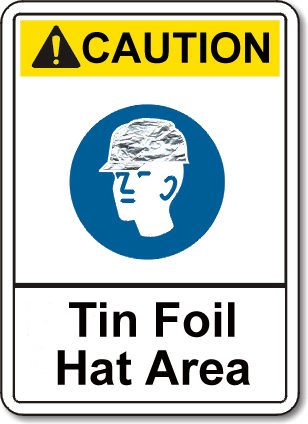
TinFoilHatArea sign

But they’ll swear it’s true.

A new hoax claims the World Health Organization (WHO) got a secret law passed to allow them to take over the world just as soon as they can get a few more people to catch swine flu.  No, really.

Under special pandemic plans enacted around the world including the USA, in 2005, national governments are to be dissolved in the event of a pandemic emergency and replaced by special crisis committees, which take charge of the health and security infrastructure of a country, and which are answerable to the WHO and EU in Europe and to the WHO and UN in North America.

If the Model Emergency Health Powers Act is implemented on the instructions of WHI, it will be a criminal offence for Americans to refuse the vaccine. Police are allowed to use deadly force against “criminal” suspects.

Through their control of these special pandemic crisis committees with the power to enact legislation to be set up most countries, the WHO, UN and EU become the de facto government of a large part of the world.

Mass murder and death will also bring economic collapse and disruption, starvation and wars – and these events will lead to a further population reduction.

Absolutely false.  WHO has no such plans.  Check with your health professionals, they’ll tell you swine flu is a real concern (even though it looks like swift action has prevented a lot of trouble so far, and may prevent a lot of ill health later).

If you made up this sort of stuff for a movie, they’d tell you “Dr. Strangelove” pushed the envelope as far as parody would go, and you should give up writing comedy, even dark comedy.

Did you notice the typographical error there in the second paragraph, where “WHO” turns into “WHI?”

That’s a DNA-style marker for this hoax.  Watch for it as it shows up at other sites where tinfoil-hat bedorned people mindlessly copy this chunk of fiction and pass it along as if it were just news about the new shopping center going in around the corner.

Much of the nuttiness appears to originate at WakeNews, from someone named Jane Bürgermeister who has grabbed .pdfs of a couple of WHO memoranda on the dangers of swine flu, and claims that instead of warnings about swine flu based on research, they are textbooks for how to use swine flu as a weapon of war against civilians.  Or it may be originating at a website she may run, Case About Birdflu (this is the url, I kid you not:  http://birdflu666.wordpress.com/) (This post, about her being fired, and with lots of “attagirls” from too-willing nutters, should be a roadmap for Prozac salesmen.)

Do not any of these people ever stop to wonder, “Hmmmm.  Curious about how this doesn’t appear on the WHO website, and how there are no links to anything that sounds even tangentially rational — I wonder if it’s true?”

Wall of Shame: Here are sites that repeated the hoax blindly, without even bothering to correct the typo (notice how few of these sites will allow you to point out an error):

Reality:  No plans to take over the world; tough plans to fight swine flu

Swine flu, more specifically the H1N1 virus, poses severe threats to real people, including you.  WHO has plans to combat the disease and its spread — laid out publicly here, for example.  There is even a Center for Strategic Health Operations (SHOC in the odd acronymical lexicon of the UN).

Preparations to fight epidemics and pandemics are part and parcel of public health operations around the world.  Almost every county in the United States has a public health office that makes plans for how to protect the local community from such diseases, and how to treat people who get the disease to help them survive.  Those who spread these hoaxes rarely know that they have people in their towns to do this work — the United Nations and WHO have no authority to intervene in these cases.

What about the Model Emergency Health Act? Proposals under that name exist — none allow people to be executed for refusing vaccinations.  As a matter of U.S. policy, almost all health legislation includes an out for religious objectors — Christian Scientists, for example, generally refuse vaccinations and much other treatment.  Jehovah Witnessses refuse transfusions.  In almost every case, those religious beliefs can be accommodated so long as the rest of us bother to protect ourselves against disease.

All of the proposals are designed to help public health officials fight disease.  Public health officials might be described as the embodiment of the name Milquetoast.  They are rarely in the forefront of your run-of-the-mill power-mad megalomaniac.  Former public health officials who rose to power in any circumstance can be counted on one hand, if there are any.  Contrast that with former religious officials, or former business executives, or former college presidents, and you begin to see reality.  WHO is not populated with people who wish to take over the world á la Pinky and the Brain.  WHO does not answer to people who resemble Pinky or the Brain in any way, either.

You may review the first (and most worrisome) draft of the Model State Emergency Health Powers Act in .pdf here.  Note carefully the strong defense of the rights of individuals recognized in the preamble to the draft bill.  The 2003 version of the Model Act can be reviewed at Alaska’s site; you can also find a section-by-section analysis and other explanatory material.

This document tracks state legislative actions so far — I dare anyone to find the trampling of civil rights and lunatic claims made at the websites listed above.  If you do find troubling actions, please note them in comments here. Note well that the documents in the previous three links are maintained by officials at the State of Alaska — Sarah Palin’s appointees and public health team.  It’s unlikely that Sarah Palin would be involved in a massive, international conspiracy to imprison millions of citizens just because they are not immune to influenza.  Of course, maybe you know Palin better than I do and you think she’s a megalomaniac just looking for her chance to play Mussolini in America — but I doubt it.

U.S. Centers for Disease Control (CDC) are deeply involved in preparations for influenza outbreaks, and swine flu is no exception.  CDC features a page showing international preparations for swine flu; note that plans to round up recalcitrant non-inoculants for execution are not in the program.  From that page you can get to the WHO page on international preparations, and there you can link to to international health regulations on the issueWHO’s “edict” so far:

Concerning public health measures, in line with the Regulations the Director-General is recommending, on the advice of the Committee, that all countries intensify surveillance for unusual outbreaks of influenza-like illness and severe pneumonia.

That’s it.

There is an Emergency Committee set up to deal with H1N1 specifically. The group has met four times; here is the report from the fourth meeting, in June:

11 June 2009

DG Statement following the meeting of the Emergency Committee

The Emergency Committee held its fourth meeting on 11th June 2009.

The Committee considered available information on transmission of New influenza A (H1N1) in a number of locations in countries in different regions of the World Health Organization, and concluded that the criteria for a pandemic have been met.

Following the advice from the Committee the WHO Director-General decided to raise the level of influenza pandemic alert from the current phase 5 to phase 6. At this early stage, the pandemic can be characterized globally as being moderate in severity.

As previously recommended by the Director-General, countries should not close borders or restrict international traffic and trade.

Countries should assess their specific situation and make a timely transition from focusing national efforts on containment to focusing on mitigation measures, including appropriate non-pharmaceutical interventions.

WHO remains in close dialogue with influenza vaccine manufacturers. It is understood that production of vaccines for seasonal influenza will be completed soon, and that full capacity will be available to ensure the largest possible supply of pandemic vaccine in the months to come.

You can see that the paranoia reflected in the sites on the Wall of Shame, is unwarranted.

Coda: You gotta love the guys who quickly see a way to make a buck on this fear.  Here’s a guy who will sell you a “smartroom” decontamination unit to retrofit any room in your home to make you safe from swine flu — just $1,899! Crazy with dollar signs in his dreams.

The SmartRoom is designed to protect you and your family from all viruses and bacteria. It can be quickly and easily installed. The SmartRoom is lightweight, compact and is totally collapsible for storage.

The SmartRoom features an Ultraviolet Biological Airlock that you attach to any room entry in your home or office. The Smartroom Tri Filter Biological Filtration Unit creates a Biological Saferoom under positive air pressure or a Quarantine Room under negative air pressure.

If it were only so easy to protect from swine flu.  If only it were so easy to protect ourselves from the conspiracy crazies.

Update, August 11, 2009:  More than 19,000 tinfoil hatters (TFH) have signed a petition against WHO’s imagined mandatory vaccine campaign.  Sign a petition against a problem that doesn’t exist!

Update, September 12, 2009: See this debunking of pseudoscience anti-vaccine claims at Respectful Insolence.


Friends don’t let friends be hoaxed:  Don’t be fooled!  Share the news.

Add to FacebookAdd to NewsvineAdd to DiggAdd to Del.icio.usAdd to StumbleuponAdd to RedditAdd to BlinklistAdd to TwitterAdd to TechnoratiAdd to Furl

Get the latest flu guidance for schools.


The article the British Chiropractic Association hopes you will not read

July 31, 2009

Science-based Medicine carried this article yesterday, and several other blogs have joined in.  Below is the article Simon Singh wrote for which he is being sued for libel by the professional association for British chiropractors.  It’s a good cause, so I’ll stretch it another little while.

Science-based Medicine introduced the article with this:

Last year Simon Singh wrote a piece for the Guardian that was critical of the modern practice of chiropractic. The core of his complaint was that chiropractors provide services and make claims that are not adequately backed by evidence – they are not evidence-based practitioners. In response to his criticism the British Chiropractic Association (BCA) sued Simon personally for libel. They refused offers to publish a rebuttal to his criticism, or to provide the evidence Simon said was lacking. After they were further criticized for this, the BCA eventually produced an anemic list of studies purported to support the questionable treatments, but really just demonstrating the truth of Simon’s criticism (as I discuss at length here).

In England suing for libel is an effective strategy for silencing critics. The burden of proof is on the one accused (guilty until proven innnocent) and the costs are ruinous. Simon has persisted, however, at great personal expense.

This is an issue of vital importance to science-based medicine. A very necessary feature of science is public debate and criticism – absolute transparency.This is also not an isolated incident. Some in the alternative medicine community are attempting to assert that criticism is unprofessional, and they have used accusations of both unprofessionalism and libel as a method of silencing criticism of their claims and practices. This has happened to David Colquhoun and Ben Goldacre, and others less prominent but who have communicated to me directly attempts at silencing their criticism.

This behavior is intolerable and is itself unprofessional, an assault on academic freedom and free speech, and anathema to science as science is dependent upon open and vigorous critical debate.

What those who will attempt to silence their critics through this type of bullying must understand is that such attempts will only result in the magnification of the criticism by several orders of magnitude. That is why we are reproducing Simon Singh’s original article (with a couple of minor alterations) on this site and many others. Enjoy.

Here it is:

Beware the spinal trap

Some practitioners claim it is a cure-all but research suggests chiropractic therapy can be lethal

Simon Singh
The Guardian, Original version published Saturday April 19 2008
Edited version published July 29, 2009

You might be surprised to know that the founder of chiropractic therapy, Daniel David Palmer, wrote that “99% of all diseases are caused by displaced vertebrae”. In the 1860s, Palmer began to develop his theory that the spine was involved in almost every illness because the spinal cord connects the brain to the rest of the body. Therefore any misalignment could cause a problem in distant parts of the body.

In fact, Palmer’s first chiropractic intervention supposedly cured a man who had been profoundly deaf for 17 years. His second treatment was equally strange, because he claimed that he treated a patient with heart trouble by correcting a displaced vertebra.

You might think that modern chiropractors restrict themselves to treating back problems, but in fact some still possess quite wacky ideas. The fundamentalists argue that they can cure anything, including helping treat children with colic, sleeping and feeding problems, frequent ear infections, asthma and prolonged crying – even though there is not a jot of evidence.

I can confidently label these assertions as utter nonsense because I have co-authored a book about alternative medicine with the world’s first professor of complementary medicine, Edzard Ernst. He learned chiropractic techniques himself and used them as a doctor. This is when he began to see the need for some critical evaluation. Among other projects, he examined the evidence from 70 trials exploring the benefits of chiropractic therapy in conditions unrelated to the back. He found no evidence to suggest that chiropractors could treat any such conditions.

But what about chiropractic in the context of treating back problems? Manipulating the spine can cure some problems, but results are mixed. To be fair, conventional approaches, such as physiotherapy, also struggle to treat back problems with any consistency. Nevertheless, conventional therapy is still preferable because of the serious dangers associated with chiropractic.

In 2001, a systematic review of five studies revealed that roughly half of all chiropractic patients experience temporary adverse effects, such as pain, numbness, stiffness, dizziness and headaches. These are relatively minor effects, but the frequency is very high, and this has to be weighed against the limited benefit offered by chiropractors.

More worryingly, the hallmark technique of the chiropractor, known as high-velocity, low-amplitude thrust, carries much more significant risks. This involves pushing joints beyond their natural range of motion by applying a short, sharp force. Although this is a safe procedure for most patients, others can suffer dislocations and fractures.

Worse still, manipulation of the neck can damage the vertebral arteries, which supply blood to the brain. So-called vertebral dissection can ultimately cut off the blood supply, which in turn can lead to a stroke and even death. Because there is usually a delay between the vertebral dissection and the blockage of blood to the brain, the link between chiropractic and strokes went unnoticed for many years. Recently, however, it has been possible to identify cases where spinal manipulation has certainly been the cause of vertebral dissection.

Laurie Mathiason was a 20-year-old Canadian waitress who visited a chiropractor 21 times between 1997 and 1998 to relieve her low-back pain. On her penultimate visit she complained of stiffness in her neck. That evening she began dropping plates at the restaurant, so she returned to the chiropractor. As the chiropractor manipulated her neck, Mathiason began to cry, her eyes started to roll, she foamed at the mouth and her body began to convulse. She was rushed to hospital, slipped into a coma and died three days later. At the inquest, the coroner declared: “Laurie died of a ruptured vertebral artery, which occurred in association with a chiropractic manipulation of the neck.”

This case is not unique. In Canada alone there have been several other women who have died after receiving chiropractic therapy, and Edzard Ernst has identified about 700 cases of serious complications among the medical literature. This should be a major concern for health officials, particularly as under-reporting will mean that the actual number of cases is much higher.

If spinal manipulation were a drug with such serious adverse effects and so little demonstrable benefit, then it would almost certainly have been taken off the market.


Simon Singh is a science writer in London and the co-author, with Edzard Ernst, of Trick or Treatment? Alternative Medicine on Trial. This is an edited version of an article published in The Guardian for which Singh is being personally sued for libel by the British Chiropractic Association.

Other venues:

Related material:


India accepts climate junk science; U.S. suffers

July 25, 2009

It would be good news were it not so bad:  India, usually considered a threat to U.S. dominance in science, has turned its back on climate science and instead, citing junk science claims, rejected overtures to reduce pollution that affects climate.  India appears to have fallen victim to the hoaxters who claim climate change is no big deal.

From the Financial Times:

A split between rich and poor nations in the run-up to climate-change talks widened on Thursday.

India rejected key scientific findings on global warming, while the European Union called for more action by developing states on greenhouse gas emissions.

Jairam Ramesh, the Indian environment minister, accused the developed world of needlessly raising alarm over melting Himalayan glaciers.

He dismissed scientists’ predictions that Himalayan glaciers might disappear within 40 years as a result of global warming.

“We have to get out of the preconceived notion, which is based on western media, and invest our scientific research and other capacities to study Himalayan atmosphere,” he said.

As if the atmosphere of the Himalayan range is unaffected by emissions from Europe or Asia.  As if the glaciers in the Himalayas, and the snowfall,  and the water to India’s great rivers, come independent from the rest of the world.

Deadly air pollution obscures the India Gate, New Delhi, India, November 2008 - NowPublic.com

Deadly air pollution obscures the India Gate, New Delhi, India, November 2008 - NowPublic.com

It’s interesting to see these issues play out politically.   India and China both understand that the U.S. and Europe have much more to lose from climate change than either of those nations.  Climate damage to the U.S. wheat belt, for example, would chiefly close off U.S. production of wheat for export, opening markets for others — like India and China.  Critically, such damage also hurts U.S. ability to offset balance of payments issues, providing economic and finance advantages to China’s banks.  U.S. ports are much more vulnerable to climate change damage, from increase storms and changing ocean levels, than are ports in India and China — and there are more ports that are vulnerable in the U.S. and Europe.

India’s inaction and recalcitrance should not be used as justification for the U.S. to do nothing, thereby slitting its own patriotic throat.

But watch:  Climate denialist blogs, “hate-America-first” outlets like World Net Daily, and Osama bin Laden will hail India’s inaction.

Let’s hope cooler heads prevail, lest we run out of cooler heads.

Shake of the old scrub brush to Brown Hell and Watt’s Up With That.

If this is important to you, please share it; click on the button you choose below.

Add to FacebookAdd to NewsvineAdd to DiggAdd to Del.icio.usAdd to StumbleuponAdd to RedditAdd to BlinklistAdd to TwitterAdd to TechnoratiAdd to Furl


Hoax exposed: “The Great Global Warming Swindle’s” swindle

July 14, 2009

Nicely done, too, I think; this is one more alarm bell to tell us why there will be no Nobel Peace Prize for global warming deniers.

From the same guy who so brilliantly brings us the Global Warming Crock of the Week:

Tip of the old scrub brush to Tim Lambert at Deltoid.


Should the best high school students read Rachel Carson?

May 31, 2009

On the AP World History list-serv, a discussion on good books for a canon on 20th century stuff turned into a discussion on Rachel Carson, DDT and malaria.  That’s not the purpose of the list.

So, I offer this thread as a forum for that discussion, hoping some of the AP history teachers might participate.

Welcome, teachers!  Comments are open.


Alma conference on DDT and human health calls for DDT phase out (Pine River statement)

May 5, 2009

Wheels of science grind carefully, accurately, and consequently, slowly.

The report from last year’s Alma College conference on DDT and human health has been published in .pdf form at Environmental Health Perspectives:  “The Pine River Statement:  Human Health Consequences of DDT Use.”

Carefully?  Check out the pages of references to contemporary studies of human health effects.  Each one of the studies cited is denied by the more wild advocates of DDT use, and each of those studies refutes major parts of the case against DDT restrictions.

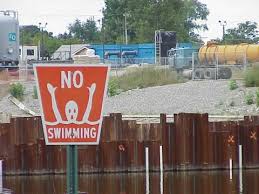
Warning sign near the old Velsicol plant where DDT was produced, on the Pine River, Michigan. The 1972 ban on DDT use in the U.S. was prompted by damage to wildlife and domestic animals; a 2009 conference noted that human health effects of DDT are also still of great concern, and perhaps cause alone for continuing the ban on DDT.

Warning sign near the old Velsicol plant where DDT was produced, on the Pine River, Michigan. The 1972 ban on DDT use in the U.S. was prompted by damage to wildlife and domestic animals; a 2009 conference noted that human health effects of DDT are also still of great concern, and perhaps cause alone for continuing the ban on DDT.

Warning sign near the old Velsicol plant where DDT was produced, on the Pine River, Michigan. The 1972 ban on DDT use in the U.S. was prompted by damage to wildlife and domestic animals; a 2009 conference noted that human health effects of DDT are also still of great concern, and perhaps cause alone for continuing the ban on DDT.

Accurately?  Notice how the conference marks those areas where we do not have good research, such as in the long-term health effects to people who live in the houses that are sprayed with DDT for indoor residual spraying (IRS).  While the conference report cites studies showing elevated DDT levels in the milk of women who live in those homes, they draw no unwarranted conclusions.  Alas, that leaves the field free for Paul Driessen to rush in and claim there are no ill effects — but read the paper for yourself, and you’ll see that’s far from what the research shows.  The paper exposes Steven Milloy’s claims to be almost pure, unadulterated junk science.

Slowly?  Well, it’s been more than a year.

The paper makes one powerful statement that is only implicit:  The claims that DDT is safe, and that use of the stuff should be increased, are wildly inflated.

The paper’s abstract:

Objectives: Dichlorodiphenyl trichloroethane (DDT) was used worldwide until the 1970s, when concerns about its toxic effects, its environmental persistence, and its concentration in the food supply led to usage restrictions and prohibitions. In 2001, more than 100 countries signed the Stockholm Convention on Persistent Organic Pollutants (POPs), committing to eliminate the use of 12 POPs of greatest concern. DDT use was however allowed for disease vector control. In 2006, the World Health Organization and the U.S. Agency for International Development endorsed indoor DDT spraying to control malaria. To better inform current policy, we reviewed epidemiologic studies published in the last five years which investigated the human health consequences of DDT and/or DDE exposure.

Data Sources and Extraction: We conducted a PubMed search in October 2008 and retrieved 494 studies.

Data Synthesis: Use restrictions have been successful in lowering human exposure to DDT, however, blood concentration of DDT and DDE are high in countries where DDT is currently being used or was more recently restricted. The recent literature shows a growing body of evidence that exposure to DDT and its breakdown product DDE may be associated with adverse health outcomes such as breast cancer, diabetes, decreased semen quality, spontaneous abortion, and impaired neurodevelopment in children.

Conclusions: Although we provide evidence to suggest that DDT and DDE may pose a risk to human health, we also highlight the lack of knowledge about human exposure and health effects in communities where DDT is currently being sprayed for malaria control. We recommend research to address this gap and to develop safe and effective alternatives to DDT.

Rachel Carson was right.

Tell other people about this conference report.  This is real science, and it deserves to be spread far and wide.

Tip of the old scrub brush to Ed Lorenz at Alma College, both for providing the news, and for his work to organize the original conference.

Other information:


Little anti-green devils

April 2, 2009

Just when you thought things were looking up for getting the facts out — I mean, even Sen. Tom Coburn lifted his hold on the bill to name the post office after Rachel Carson — along comes Green Hell Blog.

Green Hell Blog?  It looks like a vanity site for Steve Milloy, the polluting company shill who has maintained the unholy dudgeon against Rachel Carson, against health professionals, against malaria fighters, and for reintroducing DDT to poison Africa.  Milloy has a new book published by Regnery (couldn’t you have guessed the publisher?).   Title of Milloy’s book:  Green Hell.

Holy mother of pearl!  Here’s Milloy’s flatterer (Milloy himself?) railing away at educating kids at nature centers.

Can you believe it?  He’s complaining about people like Boy Scouts as threats to the environment.  One might have differences with Boy Scout officials, but criticizing Boy Scouts themselves is just beyond the pale.

One might ask, tongue in cheek, why does Mr. Milloy hate America, America’s natural resources, and America’s history so?  What does Milloy have against kids?  Then there is the creeping, nagging thought:  What if it’s not parody?