Passing the 200 post mark on Rachel Carson, DDT and Malaria

January 13, 2013

I’m running behind in listing some of the articles, but since Utah Rep. Rob Bishop first alerted me to the stupidity raging on Rachel Carson‘s reputation, DDT‘s dangers and malaria, Millard Fillmore’s Bathtub hosted more than 200 articles on the topics.

Palau's stamp honoring Rachel Carson

Postage stamp honoring Rachel Carson, part of the “20th century environmental heroes” set from the South Pacific nation of Palau, PlanetPatriot image

Overwhelmingly, the evidence is that Rachel Carson was right, DDT is still dangerous and needs to be banned, but malaria still declines, even with declining DDT use.

You can look at the list of 200 articles, in reverse chronological order, here.

More:


Annals of global warming: “Federal Advisory Committee Draft Climate Assessment Report Released for Public Review”

January 12, 2013

It’s taken too long, but the reports on climate change, required by a 1990 law, flow down the government report-to-the-public pipeline once again.  Mother Jones reports six chief points in the draft document, for which comments are invited before a final document will be issued:

  1. Climate change is definitely caused by human activities. Always nice to hear government officials acknowledge this essential fact. And the report concedes that our only hope of curbing warming is to kick our addiction to greenhouse-gas spewing fossil fuels.

  2. Extreme weather is increasing, and that’s our fault, too.  In particular, searing temperatures, heavy rain, and prolonged drought.

  3. Weather isn’t the only threat we have to worry about. The list sounds like the side-effect warnings at the end of a prescription drug commercial: decreased air quality, insect-borne diseases, and “threats to mental health” are all on the docket for the coming decades.

  4. Our infrastructure is getting hammered, and we’re not spending enough to save it. Floods are destroying farmland; extreme heat is damaging roads, rail lines, and airports; and military installations are at risk.

  5. Food and water security will be up in the air. Especially in water-scarce regions like the Southwest, decreasing snowpack and shrinking groundwater supplies will spark competition for water between “agricultural, municipal, and environmental” uses. At the same time, heavy floods could put water quality at risk with sediment and chemical contaminates. And by mid-century, efforts to artificially protect agriculture (like expanded irrigation) could be over-ridden by temperature and precipitation extremes.

  6. Climate change is hitting plants and animals just as hard as us. Beaches, forests, wetlands, and other ecosystems could shrink or disappear, especially a problem when they play a role in mitigating the impact from extreme weather. And warming, acidifying seas could slam sea life.

The document is available to read online; public comments are invited, but must come in a specific form to be analyzed (the authors expect a lot of comments, and a lot of detailed comments).  Here’s the transmission document from the agency (a few links added here):

Federal Advisory Committee Draft Climate Assessment Report Released for Public Review

A 60-person Federal Advisory Committee (The “National Climate Assessment and Development Advisory Committee” or NCADAC) has overseen the development of this draft climate report.

The NCADAC, whose members are available here (and in the report), was established under the Department of Commerce in December 2010 and is supported through the National Oceanic and Atmospheric Administration (NOAA). It is a federal advisory committee established as per the Federal Advisory Committee Act of 1972. The Committee serves to oversee the activities of the National Climate Assessment. Its members are diverse in background, expertise, geography and sector of employment. A formal record of the committee can be found at the NOAA NCADAC website.

The NCADAC has engaged more than 240 authors in the creation of the report. The authors are acknowledged at the beginning of the chapters they co-authored.

Following extensive review by the National Academies of Sciences and by the public, this report will be revised by the NCADAC and, after additional review, will then be submitted to the Federal Government for consideration in the Third National Climate Assessment (NCA) Report.  For more information on the NCA process and background, previous assessments and other NCA information, please explore the NCA web-pages. The NCA is being conducted under the auspices of the Global Change Research Act of 1990 and is being organized and administered by the Global Change Research Program.

To simply access and read the draft report, please download the chapters below. However, if you would like to submit comments on the report as part of the public process, you will need to enter the “review and comment system” and register with your name and e-mail address and agree to the terms.  All comments must be submitted through the review and comment system.

Contents of the report, chapter by chapter, for your download:

Download Chapters of the NCADAC Draft Climate Assessment Report! 
Download the Full Report (warning, 147Mb. Very large file)Between chapters, there are some page numbers that are not used. This is intentional and does not reflect missing pages.or download each chapter separately:

Cover page

Introduction: Letter to the American People

1. Executive Summary

2. Our Changing Climate

Introduction to Sectors

3. Water Resources

4. Energy Supply and Use

5. Transportation

6. Agriculture

7. Forestry

8. Ecosystems, Biodiversity, and Ecosystem Services

9. Human Health

10. Water, Energy, and Land Use

11. Urban Systems, Infrastructure, and Vulnerability

12. Impacts of Climate Change on Tribal, Indigenous, and Native Lands and Resources

13. Land Use and Land Cover Change

14. Rural Communities

15. Interactions of Climate Change and Biogeochemical Cycles

Introduction to Regions

16. Northeast

17. Southeast and Caribbean

18. Midwest

19. Great Plains

20. Southwest

21. Northwest

22. Alaska and the Arctic

23. Hawaii and the U.S. Affiliated Pacific Islands

24. Oceans and Marine Resources

25. Coastal Zone Development and Ecosystems

Introduction to Response Strategies

26. Decision Support: Supporting Policy, Planning, and Resource Management Decisions in a Climate Change Context

27. Mitigation

28. Adaptation

29. Research Agenda for Climate Change Science

30. The NCA Long-Term Process: Vision and Future Development

Appendix I: NCA Climate Science – Addressing Commonly Asked Questions from A to Z

Appendix II: The Science of Climate Change

To provide comments:

Between January 14th and April 12th only: Please go to the Review and Comment System to provide comments on the draft.

You must register and accept the terms in the Review and Comment System in order to review this document. Comments will only be accepted through this system.

NOTE: You will not be allowed to create an account in the system prior to 9am ET January 14th, 2013, and the comment period ends at 5pm ET on April 12th, 2013

If 2012 was, indeed, the year excrement got real in climate change, perhaps 2013 can be the year we start to do something about it.

More:


V for Vaccine: A slightly rude film with a powerful point

January 10, 2013

A couple of kids in the Dallas area have died already from influenza — neither had been vaccinated against it.  Deaths have occurred across the nation, frequently in young, otherwise healthy people.

Nasty flu bugs going around this year, and the every-year epidemic has hit about two months early.  One part of the good news is that the vaccines this year are especially well-suited to target the viruses that cause the trouble.  The vaccines work well every year, but especially well in 2012 and 2013.

The bad news is that millions of people haven’t bothered to get vaccinated. That’s not good.

  1. Under Obamacare, there’s no copay for insurance for a flu shot.  It’s “free” if you have any kind of insurance. In addition, county health offices offer the vaccines for free to any comers.  A couple of weeks ago at the pharmacy I stood behind a woman who confessed she’d not gotten a flu shot (pharmacies are pushing vaccinations these days, to promote their mini-clinics).  “I’ve got that crappy teachers’ insurance,” she told the technician.  “It never pays for anything like that.”  The tech looked it up, and told her that her copay was zero, and her insurance paid for it — essentially a free shot, to her.  On the way into the clinic she said, “I’ve never gotten a flu shot before.”  Oy.
  2. Think Herd Immunity:  Are you usually healthy?  Great.  But if you’re pregnant, or you work around people who are or may be pregnant, or if you’re over 60, or if you have any chronic condition like diabetes, high blood pressure, chronic sinusitis, or a raft of other things, you’re at risk, and you put others in those risk categories at risk.  My grandfather worked at a hospital while my mother and my oldest brother were living with him; after a week of my grandfather’s working in the polio ward, my brother came down with the disease.  Of course we don’t know for sure, but my grandfather kicked himself for 40 years, until his death, because he thought he’d brought home the disease my brother caught.  With vaccines, those incidents become much more rare.

Risking this blog’s G rating, I’m going to post this film, “V for Vaccine.”  Found it at New Anthropocene.  Turn up your offense filter, or ignore the language — but pay attention to what this guy says, PowerM1985:

Is it worth getting your children vaccinated if it risked them becoming autistic? In this video I give a short demonstration of why I personally believe that even if there was a risk of my child becoming autistic (AND THERE IS NOT!) I would still get them vaccinated.

You should probably know that the work of the Centers for Disease Control to correctly predict which strains of the viruses will be most prevalent, and get vaccines that will fight those viruses, has been very, very good this year.

  • Influenza A (H3N2), 2009 influenza A (H1N1), and influenza B viruses have all been identified in the U.S. this season. During the week of December 23-29, 2,346 of the 2,961 influenza positive tests reported to CDC were influenza A and 615 were influenza B viruses. Of the 1,234 influenza A viruses that were subtyped, 98% were H3 viruses and 2% were 2009 H1N1 viruses.
  • Since October 1, 2012, CDC has antigenically characterized 413 influenza viruses, including 17 2009 influenza A (H1N1) viruses, 281 influenza A (H3N2) viruses and 115 influenza B viruses.
    • All 17 of the 2009 influenza A (H1N1) viruses were characterized as A/California/7/2009-like. This is the influenza A (H1N1) component of the Northern Hemisphere vaccine for the 2012-2013 season.
    • Of the 281 influenza A (H3N2) viruses, 279 (99%) were characterized as A/Victoria/361/2011-like. This is the influenza A (H3N2) component of the Northern Hemisphere influenza vaccine for the 2012-2013 season.
    • Approximately 69% of the 115 influenza B viruses belonged to the B/Yamagata lineage of viruses, and were characterized as B/Wisconsin/1/2010-like, the influenza B component for the 2012-2013 Northern Hemisphere influenza vaccine. The remaining 31% of the tested influenza B viruses belonged to the B/Victoria lineage of viruses.

What are you waiting for?  Go get a flu shot!

More:

English: This is CDC Clinic Chief Nurse Lee An...

This is CDC Clinic Chief Nurse Lee Ann Jean-Louis extracting Influenza Virus Vaccine, Fluzone® from a 5 ml. vial. (Photo credit: Wikipedia)

Graphic on influenza, 2013 - Flu.gov

Information from Flu.gov; click image to get to active Flu Vaccine Finder


World Malaria Report 2012: Malaria still declining, but more resources needed fast

January 4, 2013

Significant gains against malaria could be lost because funding for insecticide-treated bednets has dropped, and malaria parasites appear to be developing resistance to the pharmaceuticals used to clear the disease from humans, while insects that transmit the parasites develop resistance to insecticides used to hold their populations down.

Malaria room

African bedroom equipped with LLINs (insecticidal bednets) Photo: YoHandy/Flickr

UN’s World Health Organization (WHO) published its annual report on the fight against malaria last month, December 2012.  Accompanying the many page World Malaria Report 2012  were a press release and a FAQ; the fact-sheet appears unedited below.

Insecticidal bednets have proven to be a major, effective tool in reducing malaria infections.  Careful studies of several different projects produced a consensus that distributing the nets for free works best; people in malaria-infected areas simply cannot afford to pay even for life-saving devices, but they use the devices wisely when they get them.  Nets often get abbreviated in official documents to “LLINs,” an acronym for “long-lasting insecticidal nets.”

Generally, the report is good news.

Dramatic facts emerge from the report:  The “million-a-year” death toll from malaria has been whacked to fewer than 700,000, the lowest level in recorded human history.  More people may die, and soon, if aid does not come to replace worn bednets, distribute new ones, and if the drugs that cure the disease in humans, lose effectiveness.  Many nations where the disease is endemic cannot afford to wage the fight on their own.

Links in the Fact Sheet were added here, and do not come from the original report — except for the link to the WHO site itself.

Logo for World Health Organization

17 December 2012

World Malaria Report 2012

FACT SHEET

Malaria is a preventable and treatable mosquito-borne disease, whose main victims are children under five years of age in Africa.

The World Malaria Report 2012 summarizes data received from 104 malaria-endemic countries and territories for 2011. Ninety-nine of these countries had on-going malaria transmission.

According to the latest WHO estimates, there were about 219 million cases of malaria in 2010 and an estimated 660,000 deaths. Africa is the most affected continent: about 90% of all malaria deaths occur there.

Between 2000 and 2010, malaria mortality rates fell by 26% around the world. In the WHO African Region the decrease was 33%. During this period, an estimated 1.1 million malaria deaths were averted globally, primarily as a result of a scale-up of interventions.

Funding situation

International disbursements for malaria control rose steeply during the past eight years and were estimated to be US$ 1.66 billion in 2011 and US$ 1.84 billion in 2012. National government funding for malaria programmes has also been increasing in recent years, and stood at an estimated US$ 625 million in 2011.

However, the currently available funding for malaria prevention and control is far below the resources required to reach global malaria targets. An estimated US$ 5.1 billion is needed every year between 2011 and 2020 to achieve universal access to malaria interventions. In 2011, only US$ 2.3 billion was available, less than half of what is needed.

Disease burden

Malaria remains inextricably linked with poverty. The highest malaria mortality rates are being seen in countries that have the highest rates of extreme poverty (proportion of population living on less than US$1.25 per day).

International targets for reducing malaria cases and deaths will not be attained unless considerable progress can be made in the 17 most affected countries, which account for an estimated 80% of malaria cases.

  • The six highest burden countries in the WHO African region (in order of estimated number of cases) are: Nigeria, Democratic Republic of the Congo, United Republic of Tanzania, Uganda, Mozambique and Cote d’Ivoire. These six countries account for an estimated 103 million (or 47%) of malaria cases.
  • In South East Asia, the second most affected region in the world, India has the highest malaria burden (with an estimated 24 million cases per year), followed by Indonesia and Myanmar.  50 countries are on track to reduce their malaria case incidence rates by 75%, in line with World Health Assembly and Roll Back Malaria targets for 2015. These 50 countries only account for 3% (7 million) of the total estimated malaria cases.

At present, malaria surveillance systems detect only around 10% of the estimated global number of cases.  In 41 countries around the world, it is not possible to make a reliable assessment of malaria trends due to incompleteness or inconsistency of reporting over time.

This year, the World Malaria Report 2012 publishes country-based malaria case and mortality estimates (see Annex 6A). The next update on global and regional burden estimates will be issued in December 2013.

Malaria interventions

To achieve universal access to long-lasting insecticidal nets (LLINs), 780 million people at risk would need to have access to LLINs in sub-Saharan Africa, and approximately 150 million bed nets would need to be delivered each year.

The number of LLINs delivered to endemic countries in sub-Saharan Africa dropped from a peak of 145 million in 2010 to an estimated 66 million in 2012. This will not be enough to fully replace the LLINs delivered 3 years earlier, indicating that total bed net coverage will decrease unless there is a massive scale-up in 2013. A decrease in LLIN coverage is likely to lead to major resurgences in the disease.

In 2011, 153 million people were protected by indoor residual spraying (IRS) around the world, or 5% of the total global population at risk. In the WHO African Region, 77 million people, or 11% of the population at risk were protected through IRS in 2011.

The number of rapid diagnostic tests delivered to endemic countries increased dramatically from 88 million in 2010 to 155 million in 2011. This was complemented by a significant improvement in the quality of tests over time.

In 2011, 278 million courses of artemisinin-based combination therapies (ACTs) were procured by the public and private sectors in endemic countries – up from 182 million in 2010, and just 11 million in 2005. ACTs are recommended as the first-line treatment for malaria caused by Plasmodium falciparum, the most deadly Plasmodium species that infects humans. This increase was largely driven by the scale-up of subsidized ACTs in the private sector through the AMFm initiative, managed by the Global Fund to Fight AIDS, Tuberculosis and Malaria.

Drug and insecticide resistance

Antimalarial drug resistance is a major concern for the global effort to control malaria. P. falciparum resistance to artemisinins has been detected in four countries in South East Asia: in Cambodia, Myanmar, Thailand and Viet Nam. There is an urgent need to expand containment efforts in affected countries. For now, ACTs remain highly effective in almost all settings, so long as the partner drug in the combination is locally effective.

Mosquito resistance to at least one insecticide used for malaria control has been identified in 64 countries around the world. In May 2012, WHO and the Roll Back Malaria Partnership released the Global Plan for Insecticide Resistance Management in malaria vectors, a five-pillar strategy for managing the threat of insecticide resistance.

www.who.int/malaria

You were perceptive.  You noted there is no call from malaria fighters for more DDT, nor for any change in DDT policy.  This is a report from medical personnel, from public health experts, the real malaria fighters.  It’s not a political screed.

More, and related articles:


December 31, 2012: Bright Idea Day, anniversary of Edison’s light bulb

December 31, 2012

Between Christmas and New Year’s Day, here at Millard Fillmore’s Bathtub we celebrate a variety of historically holy days.  December 31, by tradition, is Bright Idea Day, the anniversary of the day Thomas Edison demonstrated for the public a working light bulb in 1879.

100,000 people gather in Times Square, New York City, tonight, and millions more around the world, in festivities for the new year made possible by the work of Thomas Alva Edison.

Here it is, the invention that stole sleep from our grasp, made clubbing possible, and launched 50,000 cartoons about ideas:

The light bulb Thomas Edison demonstrated on December 31, 1879, at Menlo Park, New Jersey - Wikimedia image

The light bulb Thomas Edison demonstrated on December 31, 1879, at Menlo Park, New Jersey – Wikimedia image (GFDL)

The light bulb. It’s an incandescent bulb.

It wasn’t the first bulb. Edison a few months earlier devised a bulb that worked with a platinum filament. Platinum was too expensive for mass production, though — and Edison wanted mass production. So, with the cadre of great assistants at his Menlo Park laboratories, he struggled to find a good, inexpensive filament that would provide adequate life for the bulb. By late December 1879 they had settled on carbon filament.

Edison invited investors and the public to see the bulb demonstrated, on December 31, 1879.

Thomas Edison in 1878, the year before he demonstrated a workable electric light bulb.  Library of Congress image

Thomas Edison in 1878, the year before he demonstrated a workable electric light bulb. CREDIT: Thomas Edison, head-and-shoulders portrait, facing left, 1880. Prints and Photographs Division, Library of Congress. Reproduction number LC-USZ62-98067

Edison’s successful bulb indicated changes in science, technology, invention, intellectual property and finance well beyond its use of electricity. For example:

  • Edison’s Menlo Park, New Jersey, offices and laboratory were financed with earlier successful inventions. It was a hive of inventive activity aimed to make practical inventions from advances in science. Edison was all about selling inventions and rights to manufacture devices. He always had an eye on the profit potential. His improvements on the telegraph would found his laboratory he thought, and he expected to sell the device to Western Union for $5,000 to $7,000. Instead of offering it to them at a price, however, he asked Western Union to bid on it. They bid $10,000, which Edison gratefully accepted, along with the lesson that he might do better letting the marketplace establish the price for his inventions. Other inventive labs followed Edison’s example, such as the famous Bell Labs, but few equalled his success, or had as much fun doing it.  (Economics teachers:  Need an example of the marketplace in action?)
  • While Edison had some financial weight to invest in the quest for a workable electric light, he also got financial support, $30,000 worth, from some of the finance giants of the day, including J. P. Morgan and the Vanderbilts who established the Edison Light Company.
  • Edison didn’t invent the light bulb — but his improvements on it made it commercial. “In addressing the question ‘Who invented the incandescent lamp?’ historians Robert Friedel and Paul Israel list 22 inventors of incandescent lamps prior to Joseph Wilson Swan and Thomas Edison. They conclude that Edison’s version was able to outstrip the others because of a combination of three factors: an effective incandescent material, a higher vacuum than others were able to achieve (by use of the Sprengel pump) and a high resistance lamp that made power distribution from a centralized source economically viable.”
  • Edison’s financial and business leadership acumen is partly attested to by the continuance of his organizations, today — General Electric, one of the world’s most successful companies over the past 40 years, traces its origins to Edison.

Look around yourself this evening, and you can find a score of ways that Edison’s invention and its descendants affect your life. One of the more musing effects is in cartooning, however. Today a glowing lightbulb is universally accepted as a nonverbal symbol for ideas and inventions. (See Mark Parisi’s series of lightbulb cartoons, “Off the Mark.”)

Even with modern, electricity-saving bulbs, the cartoon shorthand hangs on, as in this Mitra Farmand cartoon.

Fusilli has an idea, Mitra Farmand, Fuffernutter

Brilliant cartoon from Mitra Farmand, Fuffernutter

Or see this wonderful animation, a video advertisement for United Airlines, by Joanna Quinn for Fallon — almost every frame has the symbolic lightbulb in it.

Other resources:

Patent drawing for Thomas Edison's successful electric lamp.  Library of Congress

Thomas Edison’s electric lamp patent drawing and claim for the incandescent light bulb CREDIT: “New Jersey–The Wizard of Electricity–Thomas A. Edison’s System of Electric Illumination,” 1880. Prints and Photographs Division, Library of Congress. Reproduction Number LC-USZ62-97960.

Yeah, this is mostly an encore post.

Even More, in 2012:


December 30: Hubble Day, look to the stars for our future

December 30, 2012

[Today is actually the day!  You may fly your flag if you choose.  This is the traditional Millard Fillmore’s Bathtub Hubble Day post.]

Lift a glass of champagne today in tribute to Edwin Hubble and his great discovery. Not sure what to call it — Hubble Day, Looking Up Day, Endless Possibilities Day — whatever, this is the anniversary of Edwin Hubble’s announcement that he had discovered the universe is much, much larger than anyone had imagined, containing far more stars than anyone had dared guess.

It’s a big universe out there.

Ultraviolet image of the Andromeda Galaxy, first known to be a galaxy by Edwin Hubble on December 30, 1924 - Galaxy Evolution Explorer image courtesy NASA

Ultraviolet image of the Andromeda Galaxy, first known to be a galaxy by Edwin Hubble on December 30, 1924 – Galaxy Evolution Explorer image courtesy NASA

So, today is a good day to celebrate the universe in all it’s glory – December 30.

On December 30, 1924, Edwin Hubble announced he’d discovered other galaxies in distant space. Though it may not have been so clear at the time, it meant that, as a galaxy, we are not alone in the universe (whether we are alone as intelligent life is a separate question). It also meant that the universe is much, much bigger than most people had dared to imagine.

I keep trying to get people to celebrate.

In 2008 for Hubble Day, Wired picked up on the story (with a gracious link to 2007’s post here at the Bathtub). Wired includes several links to even more information, a good source of information. See Wired’s 2009 post here.

Hubble was the guy who showed us the universe is not only bigger than we imagined, it’s probably much bigger and much more fantastic than we can imagine. Hubble is the guy who opened our imaginations to the vastness of all creation.

How does one celebrate Hubble Day? Here are some suggestions:

  • Easier than Christmas cards: Send a thank-you note to your junior high school science teacher, or whoever it was who inspired your interest in science. Mrs. Hedburg, Mrs. Andrews, Elizabeth K. Driggs, Herbert Gilbert, Mr. Willis, and Stephen McNeal, thank you.
  • Rearrange your Christmas/Hanukkah/Eid/KWANZAA lights in the shape of the Andromeda Galaxy — or in the shape of any of the great photos from the Hubble Telescope (Andromeda Galaxy pictured above; Hubble images here)

    A few of the images from the Hubble Telescope

    A few of the images from the Hubble Telescope

  • Go visit your local science museum; take your kids along – borrow somebody else’s kids if you have to (take them along, too); this year, in Dallas, you can visit the Perot Museum of Nature and Science — it’s a doozy
  • Spend two hours in your local library, just looking through the books on astronomy and the universe
  • Write a letter to your senators and congressman; tell them space exploration takes a minuscule portion of our federal budget, but it makes us dream big; tell them we need to dream big, and so they’d better make sure NASA is funded well.  While you’re at it, put in a plug for funding Big Bird and the rest of public broadcasting, too.  Science education in this nation more and more becomes the science shows on NPR and PBS, watched by kids who learned to read and think by watching Big Bird.
  • Anybody got a good recipe for a cocktail called “The Hubble?” “The Andromeda?” Put it in the comments, please.  “The Hubble” should have bubbles in it, don’t you think?  What was it the good monk said?  He was working to make great wine, but goofed somewhere, and charged the wine with another dose of yeast.  When he uncorked the very first bottle of what would come to be called champagne, Benedictine Monk Dom Pierre Perignon said “I am drinking stars!”  Only in French.  In any case, a Hubble cocktail should have bubbles, some of Perignon’s stars.

The encore post, from 2007:

December 30, 1924, Edwin Hubble announced the results of his observations of distant objects in space.

PBS

In 1924, he announced the discovery of a Cepheid, or variable star, in the Andromeda Nebulae. Since the work of Henrietta Leavitt had made it possible to calculate the distance to Cepheids, he calculated that this Cepheid was much further away than anyone had thought and that therefore the nebulae was not a gaseous cloud inside our galaxy, like so many nebulae, but in fact, a galaxy of stars just like the Milky Way. Only much further away. Until now, people believed that the only thing existing outside the Milky Way were the Magellanic Clouds. The Universe was much bigger than had been previously presumed.

Later Hubble noted that the universe demonstrates a “red-shift phenomenon.” The universe is expanding. This led to the idea of an initial expansion event, and the theory eventually known as Big Bang.

Hubble’s life offered several surprises, and firsts:

Hubble was a tall, elegant, athletic, man who at age 30 had an undergraduate degree in astronomy and mathematics, a legal degree as a Rhodes scholar, followed by a PhD in astronomy. He was an attorney in Kentucky (joined its bar in 1913), and had served in WWI, rising to the rank of major. He was bored with law and decided to go back to his studies in astronomy.

In 1919 he began to work at Mt. Wilson Observatory in California, where he would work for the rest of his life. . . .
Hubble wanted to classify the galaxies according to their content, distance, shape, and brightness patterns, and in his observations he made another momentous discovery: By observing redshifts in the light wavelengths emitted by the galaxies, he saw that galaxies were moving away from each other at a rate constant to the distance between them (Hubble’s Law). The further away they were, the faster they receded. This led to the calculation of the point where the expansion began, and confirmation of the big bang theory. Hubble calculated it to be about 2 billion years ago, but more recent estimates have revised that to 20 billion years ago.

An active anti-fascist, Hubble wanted to joined the armed forces again during World War II, but was convinced he could contribute more as a scientist on the homefront. When the 200-inch telescope was completed on Mt. Palomar, Hubble was given the honor of first use. He died in 1953.

“Equipped with his five senses, man explores the universe around him and calls the adventure Science.”

That news on December 30, 1924, didn’t make the first page of the New York Times. The Times carried a small note on February 25, 1925, that Hubble won a $1,000 prize from the American Academy for the Advancement of Science.

(Does anyone have a suitable citation for that video? Where did it come from? Who produced it? Is there more somewhere?)

Happy Hubble Day! Look up!

Resources:

Hubble Space Telescope - NASA image

Hubble Space Telescope, working homage to Edwin Hubble – NASA image

Even More Resources:


Remember: December 30 is Hubble Day

December 29, 2012

Get ready to look up!

Edwin Hubble.

Edwin Hubble. (Photo credit: snaphappygeek)

At Millard Fillmore’s Bathtub, for several years we’ve celebrated Hubble Day on December 30.

On December 30, 1924, Edwin Hubble announced he’d discovered other galaxies in distant space. Though it may not have been so clear at the time, it meant that, as a galaxy, we are not alone in the universe (whether we are alone as intelligent life is a separate question). It also meant that the universe is much, much bigger than most people had dared to imagine.

December 30, 2012 is the 82nd anniversary of the announcement.  When dealing with general science illiteracy, it’s difficult to believe we’ve been so well informed for more than eight decades.  In some quarters, news travels more slowly than sound in the vacuum of space.

I find hope in many places.  Just a few weeks ago the Perot Museum of Nature and Science opened in downtown Dallas.  It’s the old Dallas Museum of Science and Natural History, once cramped into a bursting building in historic Fair Park, now expanded into a beautiful new building downtown, and keeping the Fair Park building, too.  Considering the strength of creationism in Texas, the mere fact that private parties would put up $185 million for a museum dedicated to hard science.

Displays in the Perot border on brilliance at almost every stop.  Stuffy museum this is not — it’s designed to spark interest in science and engineering in kids, and I judge that it succeeds, though we need to wait 20 years or so to see just exactly what and who it inspires.

We visited the Perot last night.  As I was admiring a large map of the Moon, a family strolled by, and a little girl I estimate to be 8 or 9 pointed to the Moon and asked her maybe-30-something father where humans landed.  I had been working to see whether the very large photo showed any signs of activity — but the father didn’t hesitate, and pointed to the Sea of Tranquility.  “There,” he said.  The man was not old enough to have been alive at the time; I’d wager most of my contemporaries would hesitate, and maybe have to look it up.  Not that guy.

Visitors to the Perot Museum of Nature and Science, Dallas

On 32 flat-panel video displays hooked together to make one massive display, visitors to the Perot Museum of Nature and Science view Mars as our new Mars Rover’s friend might see it, in a section of the museum devoted to astronomy, physics, astronomy and planetary exploration. Photo by Ed Darrell; use encouraged with attribution.

Still, kids today need this museum and the knowledge and excitement it imparts.  Last July I accompanied a group of Scouts from Troop 355 to summer camp in Colorado, to Camp Cris Dobbins in the foothills just east of Colorado Springs.  Near lights out one night I hiked the half-mile to our campsite admiring the Milky Way and other bright displays of stars that we simply do not get in light-polluted Dallas County.  I expected that our older Scouts would have already started on the Astronomy merit badge, but the younger ones may not have been introduced.  So I asked how many of them could find the Milky Way.  Not a hand went up.

“Dowse the lights, let’s have a five minute star lesson,” I said.  we trekked out to a slight opening in the trees, and started looking up.  I had just enough time to point out the milky fog of stars we see of our own galaxy, when one of the Scouts asked how to tell the difference between an airplane and a satellite.  Sure enough, he’d spotted a satellite quietly passing overhead — and just to put emphasis on the difference, a transcontinental jet passed over flying west towards Los Angeles or San Francisco.

Then, when we were all looking up, a meteoroid streaked from the south across almost the whole length of the visible Milky Way.  Teenaged kids don’t often go quiet all at once, but after the oohs and aahs we had a few moments of silence.  They were hooked already.  Less than five minutes in, they’d seen the Milky Way, found the Big Dipper, seen a satellite, a jet, and a shooting star.

Perfection!

Edwin Hubble’s discovery can now be the stuff of elementary school science, that the blobs in the sky astronomers had pondered for a century were really galaxies like our own, which we see only through a faint fuzz we call the Milky Way.

Do kids get that kind of stuff in elementary school?  Not enough, I fear.

We named a great telescope after the guy; shouldn’t we do a bit more to celebrate his discovery?

More:


December 27, Great Beginnings Day: Darwin, Apollo

December 27, 2012

December 27 is one of those days — many of us are off work, but it’s after Boxing Day, and it’s not yet on to New Year’s Eve or Day. We should have celebrated, maybe.

We should celebrate December 27 as a day of portent: A good embarkation, and a good, safe end to a nation-encouraging trip to almost touch the Moon.

HMS Beagle, Darwin's ship

HMS Beagle, on a voyage of discovery

On December 27, 1831, Charles Darwin and H.M.S. Beagle set sail on an around-the-world voyage of discovery that would change all of science, and especially biology, forever.

December 27 1831
After a few delays, H.M.S. Beagle headed out from Plymouth with a crew of 73 under clear skies and a good wind. Darwin became sea-sick almost immediately.

Darwin never fully overcame his seasickness, but he fought it well enough to become the single greatest collector of specimens in history for the British Museum and British science, a distinction that won him election to science societies even before his return from the trip — and cemented his life in science, instead of in the church. Darwin’s discoveries would have revolutionized biology in any case. In analyzing what he had found, a few years later and with the aid of experts at the British Museum, Darwin realized he had disproved much of William Paley’s hypotheses about life and its diversity, and that another, more basic explanation was possible. This led to his discovery of evolution by natural and sexual selection.

Mini-sheet from the Royal Mail honoring Darwin's discoveries in the Galapagos Islands

Mini-sheet from the Royal Mail in 2009 honoring Darwin’s discoveries in the Galapagos Islands

On December 27, 1968, Apollo 8 splashed down after a successful and heartening trip to orbit the Moon. The three crewmen, Commander Frank Borman, James A. Lovell, Jr., and William A. Anders, had orbited the Moon, a very important milestone in the methodological race to put humans on the Moon (which would be accomplished seven months later). 1968 was a terrible year for the U.S., with the North Korean capture of the U.S.S. Pueblo, assassinations of Rev. Martin Luther King, Jr., and Sen. Robert F. Kennedy during the presidential campaign, riots in dozens of American cities, nasty political conventions with riots at the Democratic Convention in Chicago, a contentious and bitter election making sore the nation’s divide over Vietnam policy, and other problems. On Christmas Eve, Borman, Lovell and Anders broadcast from orbit around the Moon, a triumphant and touching moment for the Apollo Program and Americans around the world. Their safe return on December 27 raised hopes for a better year in 1969.

Motherboard.tv has a great write up from Alex Pasternack:

In 1968, NASA engineers were scrambling to meet President Kennedy’s challenge to land a man on the moon by decade’s end. Because delays with the lunar module were threatening to slow the Apollo program, NASA chose to change mission plans and send the crew of Apollo 8 all the way to the moon without a lunar module.

Exactly 43 years ago, the three astronauts of Apollo 8 became the first humans to orbit another celestial object. As they came around the dark side of the Moon for the third time, Frank Borman, the commander, finally turned their capsule around. And then they saw the Earth.

Borman: Oh my God! Look at that picture over there! Here’s the Earth coming up. Wow, is that pretty.
Anders: Hey, don’t take that, it’s not scheduled.
Borman: (laughing) You got a color film, Jim?
Anders: Hand me that roll of color quick, will you…

One of the resulting photos taken by Anders on a Hasselblad camera became one of the world’s most iconic images.

As Bill Anders recalls it:

I just happened to have one with color film in it and a long lens. All I did was to keep snapping… It’s not a very good photo as photos go, but it’s a special one. It was the first statement of our planet Earth and it was particularly impressive because it’s contrasted against this startling horizon… After all the training and studying we’d done as pilots and engineers to get to the moon safely and get back, [and] as human beings to explore moon orbit, what we really discovered was the planet Earth.

Plan to raise a glass today, December 27, 2012, to Great Beginnings Day for the human race. December 27 is a day we should remember, for these achievements.

Also on December 27:

Adapted from a post from 2010.

More:


Split in environmental movement? No. Facts still matter

December 21, 2012

Rachel Carson was right in her claims against DDT in Silent Spring, of course, as all subsequent research shows. Drawing by New York Magazine's immortal David Levine.

Rachel Carson was right in her claims against DDT in Silent Spring, of course, as all subsequent research shows. Drawing by New York Magazine‘s immortal David Levine.

Chris Clarke took on Keith Kloor at Pharyngula.  Kloor fell victim to the idea that there is a great split between old “tree-hugger” environmentalists and a newer breed of greens who are willing to work with business and industry to get actual solutions.  Kloor seems to be cheering those he calls “modernists.”

It’s not a new idea, nor is a particularly useful one.  There has long been a minor rift between people who believe it’s impossible to cut deals with polluters, and those who get into the trenches to hammer out or shoot out deals that result in practical legislation.  The group who called for a legislated end to personal automobiles, for example, are still around — but they applaud those who forged the Clean Air Act that drove the invention and development of catalytic converters and cleaned up urban air, even though it left America awash in cars.

Clarke wrote:

Kloor summarizes the better, smarter, more stylish and less embarrassing side’s position thusly:

Modernist greens don’t dispute the ecological tumult associated with the Anthropocene. But this is the world as it is, they say, so we might as well reconcile the needs of people with the needs of nature. To this end, [controversial environmentalist Peter] Kareiva advises conservationists to craft “a new vision of a planet in which nature—forests, wetlands, diverse species, and other ancient ecosystems—exists amid a wide variety of modern, human landscapes.”

That doesn’t seem all that unreasonable on its face, if for no other reason that that it’s currently the best case scenario. You would be extremely hard-pressed to find even the most wilderness-worshipping enviro who disagreed.

In fact, were I to have to rebut Kloor’s whole piece in one sentence, it would be this:  the U.S. non-profit The Wilderness Society, founded by the authors of the Wilderness Act of 1964, is aggressively pushing for industrial development of solar and wind energy generating capacity on intact habitat on the public lands of the American west.

President Lyndon B. Johnson signing the Wilder...

President Lyndon B. Johnson signing the Wilderness Act in 1964 (Photo credit: Wikipedia)

I replied at Pharyngula, noting that the rift Kloor talks about could be exemplified by Rachel Carson and DDT and “modernists” who don’t object to the use of DDT in Indoor Residual Spraying (IRS) to fight malaria — except, those are the same people, working on the same issue.  In short, I sorta agree with Clarke.  There’s no rift, only a lot of misunderstanding.

Heck, if I’m going to that trouble, I may as well capture it here for my indexing purposes.  Here’s my response — I may add links in the body that don’t appear at Pharyngula.

Interesting view of a bit of an inside-baseball (environmental protection politics) issue, but not particularly incisive. Other than its being published at Slate, should we worry about Kloor’s views much?

The piece completely ignores that the views of those he labels “modernists” and “pragmatists” come wholly out of the research demanded by those he ignores in the old movement, whom he unfairly ridicules as hippies.

For example: It’s politically correct (in some circles) today to say (1) Rachel Carson was too strident, and (2) probably wrong about DDT “since it’s (3) not carcinogenic, we now know.” Malaria fighters around the world (4) now have DDT in their arsenal again, this view holds, because (5) pragmatists in the environmental movement finally listened. “(6) Sorry about those ‘unnecessary’ malaria deaths,” some claim the pragmatists would say.

But that view is founded on, grown in, and spreads, historical, legal and scientific error. And the progress made was based on understanding the science, history and law accurately. It’s not that pragmatists finally succeeded where the tree-huggers failed. It’s that the tree-huggers hung in there for 50 years and the world has come around to recognizing good effects, even if it can’t or won’t acknowledge the true heroes who got the work done.

Carson was dead right about DDT. She urged the use of Integrated Vector (Pest) Management (IVM, or IPM) in place of DDT, but she forecasted (in 1962!) that unless DDT use were severely curtailed, it would cease to be useful to fight malaria and other diseases (because, as Carson understood, evolution works, and the bugs evolve defenses to DDT). By 1965, WHO had to end its ambitious campaign to eradicate malaria because, as Carson predicted, mosquitoes in Africa turned up resistant and immune to DDT because of abuse and overuse of the stuff in other applications. Notice, 1965 was seven years BEFORE the U.S. banned DDT use on agricultural crops, and 19 years before the last U.S. DDT manufacturer scurrilously fled to bankruptcy protection to avoid penalties under Al Gore’s SuperFund cleanup bill.

Carson did not claim DDT causes cancer. So the basis of the argument that DDT is “safe for human use” because it doesn’t cause cancer, is an historical non-starter. Research since Carson’s death shows that DDT does indeed cause cancer, though we think its a weak carcinogen in humans. DDT was banned because it’s a deadly poison (else it wouldn’t work!), and it kills for a long time, and it is nonspecific — so it will kill an entire ecosystem before it can eradicate some insect pests. It was in 1971, and it still is.

Photo taken at Rachel Carson's 100th Birthday ...

Photo taken at Rachel Carson’s 100th Birthday celebration at Rachel Carson Homestead in Springdale, Pennsylvania (Photo credit: Wikipedia)

Carson did note that DDT kills birds, in vitro, by incapacitating chicks to thrive, by outright poisoning insect-eating and predatory birds (or anything near the top of the trophic levels) and through a then-mysterious scrambling of reproductive abilities. About ten years after her death, it was discovered DDT also rendered female fowl unable to make competent eggshells, and that provided a fifth path for death for birds.

Much of the research Carson cited formed the foundation for the science-based regulation EPA came up with in late 1971 that ended in the ban on DDT in the U.S. None of those studies has ever been seriously challenged by any later research. In fact, when Discover Magazine looked at the issue of DDT and birds and malaria in 2007, they found more than a thousand peer-review follow-up studies on DDT confirming Carson’s writings.

Over the past decade we’ve seen a few bird species come off of the Endangered Species List. Recovery of at least four top predators should be credited squarely to the ban on crop use of DDT in the U.S, brown pelicans, peregrine falcons, osprey, and bald eagles. 40 years of non-use, coupled with habitat protection and captive breeding programs, brought these birds back. (Five years ago I sat on the lawn of Mt. Vernon and watched a bald eagle cross the Potomac to a snag 100 yards from George Washington’s porch; the director told me they’d been watching several eagles there for a couple of years. 15 years earlier, one nesting pair existed in the whole Potomac region, at a secret site; now tourists are told where to go see them. A friend wrote today he saw a bald eagle in Ft. Worth, Texas. The gains from the DDT ban are real.)

Meanwhile, in Africa and Asia, the war on malaria continued. After the DDT advocates screwed up the malaria eradication program of WHO in the 1960s, progress against malaria continued, but slowed; in the late 1980s malaria flared up in some regions where the malaria parasites themselves had developed resistance to the most commonly-used pharmaceuticals (as Darwin would have predicted, as Carson would have predicted). After struggling to keep malaria from exploding, about 1999 malaria fighters latched on to Integrated Pest Management (IPM), which couples occasional spraying of homes and other residences, even with DDT (which was never banned in Africa or Asia) — but calls for spraying only when it is very effective, and requires that no one pesticide be used to the point that it drives mosquitoes to evolve resistance, and pushes all other means to prevent disease-spreading bug bites.

Largely without DDT (though DDT is not banned), malaria infections fell from peak DDT-use years of 1959 and 1960, from 500 million infections per year, to fewer than 250 million infections today — that’s a decrease of 50%. Phenomenal when we consider the population of the world has doubled in the same time. Deaths dropped from 4 million annually in those peak-DDT-use years to fewer than 800,000 per year today — a decrease of more than 75%. Progress continues, with IPM; bednets now do better, and more cheaply, what DDT used to do but largely cannot anymore — stop the bites. Better medicines, and better educated health care workers, clean up the disease among humans so mosquitoes can’t find a well of infection to draw from.

Notice that at no point was progress made contrary to the “tree-hugger” model, but instead was made at every point because of the tree-hugger model. No compromises enabled the recovery of the bald eagle, but strict enforcement of the environmental laws. No compromises with Rachel Carson’s Silent Spring helped beat malaria, but finally applying what Rachel Carson actually wrote.

Now along comes Kloor to say that Carson and her de facto acolytes block progress, and people who argue for compromise instead have the lighted path to the future?

Let’s review:

  1. Carson was not too strident; in fact the President’s Science Advisory Committee’s report, “Use of Pesticides,” in 1963 called for more immediate and more draconian action than Carson did.
  2. Carson was not wrong about DDT; it is still a deadly poison, and it still kills ecosystems; however, as Carson urged, careful use can provide benefits in a few cases.
  3. Human carcinogenicity was not an issue in DDT’s being banned in the U.S. in 1972, and it’s being only a weak carcinogen now does not rescue DDT from the scientifically-justified ban; we now know DDT is even more insidious, since it acts as an endocrine disruptor in nature, scrambling reproductive organs of fish, amphibians, reptiles and mammals, and probably birds, too.
  4. Malaria fighters always had DDT in their arsenal; no reason to use DDT where it won’t work, nor where it’s harms outweigh its benefits (as the National Academy of Sciences said, in 1970, in a call to get rid of the stuff).
  5. If there were any pragmatists in this story, they abandoned malaria-affected areas of the world years ago and have not returned; they did nothing to help save the birds; to claim they listened is to suggest they did something and can do more. Not sure that’s a case that can be made.
  6. There were not deaths to malaria “unnecessary” due to a ban on DDT which never occurred in Africa or Asia, while DDT was plentiful and cheap to anyone who wanted to use it (still pretty much the case today). Let’s repeat that:  DDT has never been banned in Africa or Asia.  We can’t claim great disease exacerbation when the disease actually was abated so greatly over the period of time in discussion — can’t make that claim and also claim to be honest.

It was the hard-core, wilderness-loving, science-following environmentalists who were responsible for every lick of progress on that issue.

Is DDT unique as an issue? I don’t think so. And I think a fair history of the environmental movement from 1975 to today would point out that it was hard-core, save-the-planet-because-it’s-the-only-home-humans-have types who pulled things out. Do we have great canyons to hike in Colorado and Utah? Yeah, but keeping Exxon from digging up huge portions of those states for a now-failed oil-shale extraction scheme should get some of the credit. Is there wildlife in cities? Sure, but only because we had wilderness areas to protect those species in their darkest hours, and we may need those places again. Do we have other needs for wilderness? Only if we need clean air, clean water, huge sinks for CO2 emissions, and places to dream about so we stay sane and focused, and American (Frederick Jackson Turner was correct enough — Americans are more noble, more creative, wiser and more productive, if we have a frontier and a wild).

Isn’t it required that we compromise on standards to get energy independence, and economic prosperity? Don’t look now, but oil and natural gas production, and exploration, are at highs, under our “tough environmental laws.” If we look around the world, we see that future prosperity is best protected by such laws, even if they sometimes seem to slow some industrial process or other.

New generation of conservationist? Possible only because of the old generation, the Pinchots, Roosevelts (esp. the two presidents), the Lincolns and Grants, the Muirs, the Leopolds, the Bob Marshalls, the Udalls, the Morans, the Douglases (Marjory Stoneman and Justice William, both), the Rockefellers, the Nelsons, the Muskies, the Gores, the Powells, and thousands of others who were then ridiculed for being unpragmatic, and whose methods often required that they not “compromise.” We can’t talk about protecting wilderness today unless the Sierra Club was there to actually do it, earlier. We can’t talk about private efforts, or public-private partnerships, without standing on the ground already protected by the Nature Conservancy. We can’t talk about saving the birds without relying on the history of the Audubon Society. We can’t talk sensibly about protecting humans from cancer or poisons without touching every rhetorical string Rachel Carson plucked.

Get the science right. Keep your history accurate. Read the fine print on the law, and on the pesticide label. Conservation isn’t for the birds, bees, bears, trout and flowers — it’s for humans. That’s news to Kloor? Maybe that’s why his view is skewed.

Progress is made by unreasonable and stubborn people, sometimes? No, Martin Luther King, Jr., said — those are the only people who make progress.

We aren’t going to build a future conservation movement by giving away what has been conserved to now.

More:


Annals of global warming: 333rd consecutive month above 20th century average temperature

December 17, 2012

Exit polling called this trend 20 years ago; is everybody else ready yet?

333 months of worldwide temperature averages above the 20th century average — a kid younger than 27.5 years has never lived through a single month cooler than the 20th century average for that month.  We’re well into the second generation of people who know nothing but global warming.

A reasonable and smart person might note that one does not need to be a student of advanced statistics to spot a trend here.

Read the NOAA report (you may have to select “November 2012”):

Global temperature highlights: November

  • The combined average temperature over global land and ocean surfaces for November was the fifth highest on record for November, at 56.41°F (13.67°C) or 1.21°F (0.67°C) above the 20th century average. The margin of error associated with this temperature is ±0.13°F (0.07°C).
  • November marked the 36th consecutive November and 333rd consecutive month with a global temperature above the 20th century average. The last below-average temperature November was November 1976 and the last below-average temperature month was February 1985.
  • The global land temperature was the sixth warmest November on record, at 2.03°F (1.13°C) above the 20th century average. The margin of error is ±0.20°F (0.11°C).

Just a look at the extremes in November should be alarming, especially if you live in the USA.

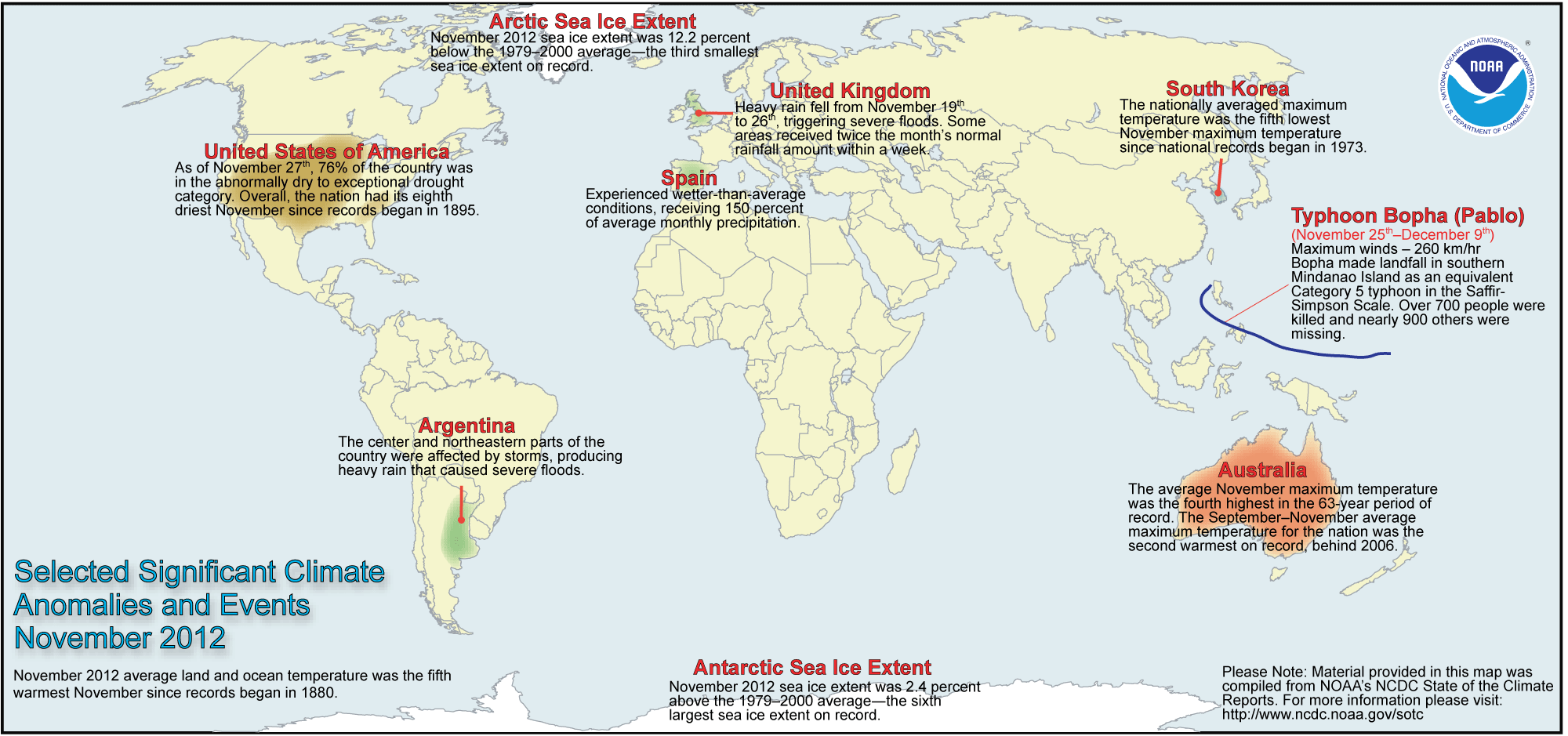
NOAA chart of climate anomalies and events, November 2012

Selected Significant Climate Anomalies and Events, November 2012; click for larger, more-easily-viewed image

More evidence that Michael Mann‘s “hockey stick” graph is vindicated; more evidence that we should not regard James Hansen as we did Cassandra, but should instead heed his warnings.

More:


Longevity of DDT, in pictures

December 16, 2012

One of the key problems with DDT is its persistence.  That was a selling point early on — one application would last for six months to a year.  In the wild or in a city, DDT can breakdown in about a year, but it breaks down into DDE which is pretty deadly itself and can cause a raft of other trouble while it hangs around.  While DDT will kill young birds and even adult songbirds outright, its most pernicious workings come in the breakdowns.  DDE insinuates itself in the reproductive organs of animals, causing birds to be unable to lay eggs with properly calcified eggshells.  Even if the DDT doesn’t kill the chicks, the DDE gets next year’s generation, making sure the egg cannot protect the chick to hatching.

A treaty adhered to by most of the world’s nations targets DDT specifically, you can tell by the name if you don’t know the content:  The Persistent Organic Pollutants Treaty (POPs), also known as the Stockholm Convention after the city where it was finally negotiated under the direction of the United Nations’ health care arm, the World Health Organization (WHO).

40 years after DDT use essentially ended in the U.S., traces of it still show up in the tissues of creatures in the wild, in plants, in crops, and in human tissue.

Where does it come from?

Most of what shows up is just circulating in the air, soil, water and living things.  There could be other sources.

I doubt this is a significant source, but a lot of DDT remains stored in barns and sheds on farms and in gardens across North America.  Over at a blog operated by an exterminator in Charlotte, North Carolina, we get a glimpse of history and potential disaster all at once.

Today, I traveled up to a Lincolnton, North Carolina Farm house to give a gentleman a price on Termite Protection for his home. After I performed an inspection, he took me out to his barn to show off a couple of old tractors. Immediately catching my eye on an old work bench was anachronistic blast from the past.

There it was, an unopened bottle of DDT. (See images below)  DDT  was Banned in the United States more than 30 years ago, and  it remains America’s best known toxic substance. Like some sort of rap star, it’s known just by its initials; it’s the Notorious B.I.G. of pesticides. And much like the Notorious B.I.G., it has been put to rest.

Electrolux Insecticide with DDT, Charlotte Pest Control Image

Electrolux Insecticide featuring DDT in the formulation, on a barn workbench in 2012, near Charlotte North Carolina – Charlotte Pest Control image

Did it really have DDT?  Look at the next photo.  It’s badly focused, but you can probably make it out, that line at the bottom of the can.

Contents label of Electrolux Insecticide, showing DDT

Label of Electrolux Insecticide can, showing DDT as the contents. Charlottepestcontrol.me image

DDT put to rest?  If only it were that easy. Not only is the stuff in that can still deadly, it’ll hang around for decades if released from the can.

You’re wondering, of course, just what in the world was Electrolux doing selling DDT?  Look at the label: See that woman using the vacuum rather like a spray device?

Cannister vacuums of the 1950s and 1960s were advertised as universal tools.  Not only would they suck up dirt from a floor, but they could also be used as blowers, simply by reversing the hole into which the hose was plugged.  Manufacturers provided attachments to make vacuums into paint blowers, powdered plant fertilizer spreaders, and liquid or powder pesticide sprayers.  See for example this page from a 1960s-era Universal canister vacuum:

Instruction manual for Universal vacuum, showing use as a sprayer of DDT or wax.  VacuumLand image

Instruction booklet for a Universal-brand cannister vacuum, showing the attachments used to turn it into a sprayer — and on page 28, a sprayer of DDT insecticide. Image courtesy of VacuumLand (go to that site to see the entire instruction manual).

The greatest dangers of DDT came from broadcast use outdoors.  These pictures show indoor use, but in application by an untrained, poorly-equipped amateur.  If your exterminator shows up in heels and pearls, fire that company and hire someone else!

In any case, vacuum manufacturers and resellers would often provide virtually every product that could be added to or used with a machine, often at very high markup.  In this case, Electrolux had some other company package DDT in a can with the Electrolux label.  That can must have been sold before 1972 when over-the-counter sales of DDT ended; it probably was before 1970, when most in-home uses of DDT were ordered to stop.   In the photos I have not detected anything to date it, but it must be at least 42 years old.

What a different time it was, when housewives used their vacuums to thoroughly spray their own homes with DDT!

More:


Still no ban on DDT: Treaty monitors allow DDT use to continue

December 16, 2012

Real news on a topic like DDT takes a while to filter into the public sphere, especially with interest groups, lobbyists and Astro-Turf groups working hard to fuzz up the messages.

News from the DDT Expert Group of the Conference of the Parties to the Stockholm Convention was posted recently at the Stockholm Convention website — the meeting was held in early December in Geneva, Switzerland.

Stockholm Convention on Persistent Organic Pol...

Logo of the Stockholm Convention on Persistent Organic Pollutants (POPs Treaty) Wikipedia image

In the stuffy talk of international relations, the Stockholm Convention in this case refers to a treaty put into effect in 2001, sometimes known as the Persistent Organic Pollutants Treaty (POPs).  Now with more than 152 signatory nations and 178 entities offering some sort of ratification (not the U.S., sadly), the treaty urges control of chemicals that do not quickly break down once released into the environment, and which often end up as pollutants.  In setting up the agreement, there was a list of a dozen particularly nasty chemicals branded the “Dirty Dozen” particularly targeted for control due to their perniciousness — DDT was one of that group.

DDT can still play a role in fighting some insect-carried diseases, like malaria.  Since the treaty was worked out through the UN’s health arm, the World Health Organization (WHO), it holds a special reservation for DDT, keeping DDT available for use to fight disease.   Six years ago WHO developed a group to monitor DDT specifically, looking at whether it is still needed or whether its special provisions should be dropped.  The DDT Expert Group meets every two years.

Here’s the press release on the most recent meeting:

Stockholm Convention continues to allow DDT use for disease vector control

Fourth meeting of the DDT Expert Group assesses continued need for DDT, 3–5 December 2012, Geneva

Mosqutio larvae, image from WHO

Mosqutio larvae, WHO image

The Conference of the Parties to the Stockholm Convention, under the guidance of the World Health Organization (WHO), allows the use of the insecticide DDT in disease vector control to protect public health.

Mosquito larvae

The Stockholm Convention lists dichlorodiphenyltrichloroethane, better known at DDT, in its Annex B to restrict its production and use except for Parties that have notified the Secretariat of their intention to produce and /or use it for disease vector control. With the goal of reducing and ultimately eliminating the use of DDT, the Convention requires that the Conference of the Parties shall encourage each Party using DDT to develop and implement an action plan as part of the implementation plan of its obligation of the Convention.

At its fifth meeting held in April 2011, the Conference of the Parties to the Convention concluded that “countries that are relying on DDT for disease vector control may need to continue such use until locally appropriate and cost-effective alternatives are available for a sustainable transition away from DDT.” It also decided to evaluate the continued need for DDT for disease vector control at the sixth meeting of the Conference of the Parties “with the objective of accelerating the identification and development of locally appropriate cost-effective and safe alternatives.”

The DDT Expert Group was established in 2006 by the Conference of the Parties. The Group is mandated to assess, every two years, in consultation with the World Health Organization, the available scientific, technical, environmental and economic information related to production and use of DDT for consideration by the Conference of the Parties to the Stockholm Convention in its evaluation of continued need for DDT for disease vector control.

The fourth meeting of the DDT Expert Group reviewed as part of this ongoing assessment:

  1. Insecticide resistance (DDT and alternatives)
  2. New alternative products, including the work of the Persistent Organic Pollutants Review Committee
  3. Transition from DDT in disease vector control
  4. Decision support tool for vector control.

The DDT expert group recognized that there is a continued need for DDT in specific settings for disease vector control where effective or safer alternatives are still lacking. It recommended that the use of DDT in Indoor Residual Spray should be limited only to the most appropriate situations based on operational feasibility, epidemiological impact of disease transmission, entomological data and insecticide resistance management. It also recommended that countries should undertake further research and implementation of non-chemical methods and strategies for disease vector control to supplement reduced reliance on DDT.

The findings of the DDT Expert Group’s will be presented at the sixth meeting of the Conference of the Parties, being held back-to-back with the meetings of the conferences of the parties to the Rotterdam and Basel conventions, from 28 April to 11 May 2013, in Geneva.

Nothing too exciting.  Environmentalists should note DDT is still available for use, where need is great.  Use should be carefully controlled.  Pro-DDT propagandists should note, but won’t, that there is no ban on DDT yet, and that DDT is still available to fight malaria, wherever health workers make a determination it can work.  If anyone is really paying attention, this is one more complete and total refutation of the DDT Ban Hoax.

Rachel Carson’s ghost expresses concern that there is not yet a safe substitute for DDT to fight malaria, but is gratified that disease fighters and serious scientists now follow the concepts of safe chemical use she urged in 1962.

More:


Geminid meteor shower, December 13, 2012

December 12, 2012

StarDate lists December 13 as probably the best night for the year’s last meteor shower, the Geminids.

Dennis Mammana photo of Geminid meteoroid near Orion

Astrophotographer Dennis Mammana caught a Geminid fireball streaking near the stars of Orion. (what year?) CREDIT: ©Dennis Mammana/dennismammana.com

Are you up for it?  Or, do you plan to stay up for it?  Space.com said this one is likely to be better than the Leonids of last month:

If you were disappointed with the meager showing put on by this year’s Leonid Meteor Shower, don’t fret.  What potentially will be the best meteor display of the year is just around the corner, scheduled to reach its peak on Thursday night, Dec. 13: the Geminid Meteors.

The Geminids get their name from the constellation of Gemini, the Twins.  On the night of this shower’s maximum the meteors will appear to emanate from a spot in the sky near the bright star Castor in Gemini.

The Geminid Meteors are usually the most satisfying of all the annual showers, even surpassing the famous Perseids of August. Studies of past displays show that this shower has a reputation for being rich both in slow, bright, graceful meteors and fireballs as well as faint meteors, with relatively fewer objects of medium brightness. Geminids typically encounter Earth at 22 miles per second (35 kilometers per second), roughly half the speed of a Leonid meteor. Many appear yellowish in hue. Some even appear to travel jagged or divided paths.

EarthSky.org said the show starts as soon as Gemini rises — soon after sunset in the nothern middle latitudes.  Look east to the constellation Gemini, toward the star Castor. (I’m using my iPhone NightSky app; wish I had my old Android and Google Sky.)  Get a coat.  Get your binoculars, your tripod and camera (you’ll want time exposures, yes?).  Maybe take some gloves, and a Thermos of hot chocolate.  Out of the city, out where the sky is dark.  The Moon is in a new phase, and shouldn’t be visible when the meteor watching is hot.

Send us your pictures. (Here are instructions from Patch.com on how to photograph this shower.)  Good luck!

Babak Tafreshi, photo of 2009 Geminid meteor

Babak Tafreshi’s photo of a Geminid meteoroid in 2009. Note position of Orion, on the right.

More:


Rachel Carson’s Silent Spring at 50: Catalog of tributes

December 11, 2012

Over the year so many tributes, commentaries, and wild-hare critiques keep pushing Rachel Carson‘s Silent Spring back into our memories, and relevance.  Too many to list and comment on, but I’ll make a list of those I found most informative or useful, and of a couple I found most repugnant.

I’ll update this list from time to time.  I’m using this as a file for my writing as well, but some of this stuff needs to be shared more broadly — and of course, I appreciate corrections and pointers to other good sources.

English: An image of the main entrance of Rach...

Main entrance of Rachel Carson Middle School, Falls Church Public Schools, Herndon, Virginia. (Photo credit: Wikipedia)

A collection:

Good stuff on Carson and Silent Spring:

Informative:

People who don’t get it, are blinded by bias, or never had their mouths washed out with soap:

General news:

More, not categorized:


Use of Pesticides: Report of the President’s Science Advisory Committee, May 15, 1963

December 10, 2012

This is the full text of The Use of Pesticides, the report of the President’s Science Advisory Committee on May 15, 1963, which exonerated Rachel Carson’s Silent Spring of scientific error.

Cover of the publication:  Use of Pesticides, A report of the President's Science Advisory Committee, May 15, 1963

Cover of the publication: Use of Pesticides, A report of the President’s Science Advisory Committee, May 15, 1963

Copies of the report remain difficult to find in many libraries, and unindexed on the internet.  The entire report has been in the public domain since its release.  Ironically, that this document couldn’t be published for profit probably kept it relatively unavailable for the past 20 years.

This is an important historic document.  President Kennedy famously referred to the not-yet-completed study in late 1962, when asked if he had read the book, and what his opinion was (he had read Silent Spring, and he said he’d established a group to check its accuracy and make policy recommendations).  When issued the following May, the report effectively quashed much of the slander campaign against Carson and the book, and led to serious scientific work on pesticides and their safety in all uses.

In the past 15 years, with many of the works vouching for Carson’s accuracy out of print or unavailable, a second propaganda campaign impugning her work, intentions and reputation sprang up.  Much of this folderol would be impossible with the original works available to compare and correct.

This transcription employed optical character recognition software for some of the transcription; one error in the original I have left as is, a misspelling of “millennium.”  But I believe most other transcription errors have been fixed.

Formatting is another issue.  I hope to complete a version that mirrors the format of the original; here I provide page notations in brackets.

Use of Pesticides, STP SB959.U57 1963

______________

USE OF PESTICIDES

A REPORT OF
THE PRESIDENT’S SCIENCE ADVISORY COMMITTEE

THE WHITE HOUSE
WASHINGTON, D.C.
May 15, 1963

[i]

[blank page]

[ii]

STATEMENT OF THE PRESIDENT

 This report on the use of pesticides has been prepared for me by my Science Advisory Committee.

I have already requested the responsible agencies to implement the recommendations in the report, including the preparation of legislative and technical proposals which I shall submit to the Congress.

Because of its general public interest, I am releasing the report for publication.

[Signed John F. Kennedy]

THE WHITE HOUSE,

May 15, 1963

[iii]


[Transcribed from a copy found at this library]

University of Minnesota

ST. PAUL CAMPUS
LIBRARY

TABLE OF CONTENTS

Statement of the President………………………………………..

I.    Introduction ……………………………………………….. 1

II.  Gains ………………………………………………………………………… 2

III. Hazards ……………………………………………………………………….. 4

A. Classes of Compounds …………………………… 4

B.  Distribution and Persistence in the Environment 5

C.  Biological Effects on Man and Animals ……… 8

D. Toxicity of Specific Compounds ……………………….. 12

IV. Pest Control Without Chemicals ………………………. 13

V.   Role of Government in Pesticide Regulation ……… 15

VI.  Recommendations …………………………………………………….. 19

Members of the President’s Science Advisory Committee Panel

on the Use of Pesticides  …………………………………………… 24

Members of the President’s Science Advisory Committee. . .  25

[v]

I. INTRODUCTION

Man’s primary concerns have always been the struggle for survival and improvement of his lot. As his numbers increased, he attained greater ability to manipulate his environment. In the process he sometimes inflicted damage on himself and on his surroundings. Advances have always entailed a degree of risk which society must weigh and either accept, or reject, as the price of material progress.

A major step in civilization was the domestication of food plants. With the birth of organized agriculture and the resultant concentration of crops and animals, the stage was set for outbreaks of pests. Until that time man had to search for food as did the pests. Afterward neither had to search; instead, pest control became necessary. The welfare of an increasing human population requires intensified agriculture. This in turn enables the pests to increase, which necessitates the use of pesticides with their concomitant hazards. It thus seems inevitable that, as the population increases, so do certain hazards.

In an effort to understand and evaluate these problems, the Panel undertook a review of the information relevant to pesticides, including experimental data and the various administrative procedures which are designed for the protection of the public. The Panel could not have accomplished this review without the assistance it received from the Departments of Agriculture, Interior, Defense, and Health, Education, and Welfare, as well as from many individuals throughout the country.

The information provided to the Panel has demonstrated how remarkably effective the modern organic chemicals are in facilitating both the control of insect vectors of disease and the unprecedented production of food, feed, and fiber. The use of pesticides associated with the production of our food is carefully controlled by the growers and supervised by agricultural specialists and the Food and Drug Administration. As a result, the residue levels measured on foods intended for interstate and foreign commerce are low and rarely above Federal tolerance limits.

The Panel believes that the use of pesticides must be continued if we are to maintain the advantages now resulting from the work of informed food producers and those responsible for control of disease. On the other hand, it has now become clear that the proper usage is not simple and that, while they destroy harmful insects and plants, pesticides may also be toxic to beneficial plants and animals, including man. Their toxic effects in large doses are well known and precautions can be taken to see that humans are [1]  never needlessly exposed. But we must now also take measures to insure that continued exposures to small amounts of these chemicals in our environment will not be harmful over long periods of time.

Review of pesticides brings into focus their great merits while suggesting that there are apparent risks. This is the nature of the dilemma that confronts the Nation. The Panel has attempted to state the case—the benefits, the hazards, and the methods of controlling the hazards. It can suggest ways of avoiding or lessening the hazards, but in the end society must decide, and to do so it must obtain adequate information on which to base its judgments. The decision is an uncomfortable one which can never be final but must be constantly in flux as circumstances change and knowledge increases.

II. GAINS FROM THE USE OF PESTICIDES

Our material standard of living has been greatly elevated during the 20th century by increased control over the environment. Few recent developments have been so effective or have had application in such a wide range of human endeavor as the pesticide chemicals. Although pesticides have been used for centuries as adjuncts in pest control, the great advances of the last 20 years resulting from the discovery, manufacture, and application of new compounds have changed their role in many instances to that of the principal and, frequently, sole control measure.

Pesticides have made a great impact by facilitating the production and protection of food, feed, and fiber in greater quantity and quality; by improving health; and by keeping in check many kinds of nuisance insects and unwanted plants. Agricultural needs have entailed the largest applications of pesticides in this country. Productivity has been so increased that famine is an unknown experience to the people of the developed nations. Mechanization, improved fertilizers, and the breeding of productive and disease-resistant crops have also contributed importantly. In addition, pesticides have made possible the economical production of many crops which otherwise would be available only to a limited number of wealthy consumers.

While reducing food losses, pest control has also resulted in foodstuffs of the highest quality. Today, for example, sweet corn, potatoes, cabbage, apples, and tomatoes are all available unmarred, and the American housewife is accustomed to blemish-free products. Citrus fruits are seldom damaged or lost because of scale insects, fruitflies, or diseases, and the cost of animal protein is lower because large losses of cattle from tick fever and grubs no longer occur.

Modern agricultural efficiency is maintained not only through the use of insecticides, but also by means of herbicides, fungicides, rodenticides, nematocides, plant-growth regulators, and other chemicals. Their benefits extend beyond crops raised for direct human consumption. They permit efficient production of forage and grains, which in turn are needed [2] for a productive livestock economy. In addition, they allow profitable yields of nonfood crops such as cotton, tobacco, and timber. Pesticides have not, however, reached an optimum of effectiveness. More than 100 established pests have developed resistance to one or more previously effective chemicals, and new pests are occasionally introduced by international traffic.

Rapid population growth and concomitant decrease in land available for agriculture necessitate greater crop yields per acre and reduction of losses and spoilage in stored foods. Moreover, many products must be protected during the process of manufacture and distribution.

Besides enabling spectacular increases in agricultural production, pesticides have freed man from communicable diseases to an unprecedented extent. In less developed areas of the world, malaria, typhus, and yellow fever, previously controlled only with great difficulty, are now limited and in some locations eradicated. In each case, pesticides have facilitated control of the insect vector. At some stage of their natural history a number of the major communicable diseases involve an intermediate host or vector. Most successful disease-control programs have been directed at eliminating this link in the chain of transmission, rather than treating man after he has contracted the disease.

However, control programs have not achieved disease eradication. Malaria is still the disease responsible for the largest number of deaths in the world each year, although new cases are rare in the United States. Yellow fever, schistosomiasis, plague, and some rickettsial diseases are almost unknown in the mainland of North America, but they still take a large toll of human lives in the rest of the world. Furthermore, reservoirs of disease in animals, and insects which can transmit them, will remain with us for the predictable future both in this country and in other parts of the world, thus requiring a continued effort to control them.

An additional complication in disease control is that the insect vectors, such as mosquitoes that transmit malaria, may produce resistant populations capable of transmitting their resistance to pesticides from generation to generation. In order to keep up with the successive threats of insect vectors as they develop resistance to one chemical after another, it is important to enlarge and improve our capability for controlling pests.

Pesticides also have made control of many nuisance insects and plants financially feasible. Were the cost higher, the funds for their control would be used by other more critical demands on the economy. For example, it might be too expensive to control the varieties of mosquitoes that breed in marshes and estuaries which do not transmit disease, but limit man’s enjoyment of some of the most desirable recreational areas. Similarly, elimination of roaches from kitchens, aphids from roses, and fungi from golf greens are very desirable but nonessential benefits.

Efficient agricultural production, protection of health, and elimination of nuisances are now required and expected by modern man. The methods [3] used to accomplish these ends must continue to improve, although their present scope and magnitude far exceed the few examples included here. It is certain that coming years will witness sophistication of methods and new uses for which pesticides were not originally conceived.

III. THE HAZARDS OF USING PESTICIDES

Evidence of increasing environmental contamination by pesticide chemicals has generated concern which is no longer limited to citizens of affected areas or members of special-interest groups. During two decades of intensive technical and industrial advancement we have dispersed a huge volume of synthetic compounds, both intentionally and inadvertently. Many, such as detergents, industrial wastes, and pesticides, are now found far from the point of initial dispersal.

Today, pesticides are detectable in many food items, in some clothing, in man and animals, and in various parts of our natural surroundings. Carried from one locality to another by air currents, water runoff, or living organisms (either directly or indirectly through extended food chains), pesticides have traveled great distances and some of them have persisted for long periods of time. Although they remain in small quantities, their variety, toxicity, and persistence are affecting biological systems in nature and may eventually affect human health. The benefits of these substances are apparent. We are now beginning to evaluate some of their less obvious effects and potential risks.

Precisely because pesticide chemicals are designed to kill or metabolically upset some living target organism, they are potentially dangerous to other living organisms. Most of them are highly toxic in concentrated amounts, and in unfortunate instances they have caused illness and death of people and wildlife. Although acute human poisoning is a measurable and, in some cases, a significant hazard, it is relatively easy to identify and control by comparison with potential, low-level chronic toxicity which has been observed in experimental animals.

The Panel is convinced that we must understand more completely the properties of these chemicals and determine their long-term impact on biological systems, including man. The Panel’s recommendations are directed toward these needs, and toward more judicious use of pesticides or alternate methods of pest control, in an effort to minimize risks and maximize gains. They are offered with the full recognition that pesticides constitute only one facet of the general problem of environmental pollution, but with the conviction that the hazards resulting from their use dictate rapid strengthening of interim measures until such time as we have realized a comprehensive program for controlling environmental pollution.

A. CLASSES OF COMPOUNDS

The term pesticide broadly includes compounds intended for a variety of purposes. They are used to control insects, mites, ticks, fungi, nematodes, [4] rodents, pest birds, predatory animals, rough fish, plant diseases, and weeds; and also to act as regulators of plant growth, as defoliants, and as desiccants. As of June 1962, almost 500 compound,‘ incorporated in more than 54,000 formulations were registered for use in the United States.

1.  The chlorinated hydrocarbons containing carbon, hydrogen, and chlorine are the pesticides used in greatest tonnage. The most familiar are DDT, dieldrin, aldrin, endrin, toxaphene, lindane, methoxychlor, chlordane, and heptachlor. Among those used extensively as herbicides are 2,4-D and 2,4,5-T for control of broad-leaved weeds in lawns, pastures, cereal crops, and brush growth along highways and fences.

2.   The organic phosphorus compounds, composed of phosphorus, oxygen, carbon, and hydrogen, are used principally as insecticides and miticides. Parathion, malathion, phosdrin, and tetraethyl pyrophosphate (TEPP) are examples.

3.   Other organic compounds include the carbamates, dinitrophenols, organic sulfur compounds, organic mercurials, and such natural products as rotenone, pyrethrum, nicotine, strychnine, and the anticoagulant rodent poisons.

4.  Inorganic substances with a long history of use include copper sulfate, arsenate of lead, calcium arsenate, compounds of chlorine and fluorine, zinc phosphide, thallium sulfate, and sodium fluoroacetate.

B. DISTRIBUTION AND PERSISTENCE IN THE ENVIRONMENT

The worldwide use of pesticides has substantially increased since the development of DDT and other chlorinated hydrocarbons in the early 1940’s. United States production and use are illustrated in figures 1 and 2. It is estimated that 350 million pounds of insecticides alone were used in the United States during 1962. They are distributed annually over nearly 90 million acres (about I acre out of 20 within the 48 contiguous States). These acreages are composed of farmlands, forests, and insect-breeding areas, including wetlands. Weedkillers are distributed on approximately the same number of acres, with some overlap of areas covered by insecticides. Thus the land area treated with pesticides is approximately 1 acre of 12 within the 48 States. About 45 million pounds are used each year in urban areas and around homes, much of this by individual homeowners. The annual sale of aerosol “bug bombs” amounts to more than one per household. Other compounds, such as fungicides, also are used in substantial tonnage.

In recent years we have recognized the wide distribution and persistence of DDT. It has been detected at great distances from the place of application and its concentration in certain living organisms has been observed. Dar has been found in oil of fish that live far at sea and in fish caught off the coasts of eastern and western North America, South America, Europe, and Asia. Observed concentrations have varied from less than 1 part per million (ppm) to more than 300 ppm in oil. [5]

Residues of DDT and certain other chlorinated hydrocarbons have been detected in most of our major rivers, in ground water, in fish from our fresh waters, in migratory birds, in wild mammals, and in shellfish. Small amounts of DDT have been detected in food from many parts of the world, including processed dairy products from the United States, Europe, and South America. The amounts are rarely above Food and Drug Administration (FDA) tolerance limits, but these have probably contributed to the buildup of DDT we now observe in the fat of the people of the United States, Canada, Germany, and England. In the United States, DDT and its metabolites have been found in the fat of persons without occupational exposure at an average of 12 ppm (approximately 100 to 200 mg. of DDT per adult) for the past 10 years. In England and Germany, recent studies revealed an average concentration of 2 ppm in human fat. Data about children are not available.

An important characteristic of several commonly used pesticides is their persistence in the environment in toxic form. The chemical half life of stable chlorinated hydrocarbons in soils, and the time they remain active against some soil insects, are measured in years. The organic phosphorus [6] compounds are more rapidly degraded although, under certain circumstances, they have persisted from one growing season to the next following routine application. Pyrethrum, rotenone, and nicotine are destroyed relatively rapidly after application, but compounds incorporating copper, lead, and arsenic arc persistent.

The distribution and persistence of other chlorinated hydrocarbons have been studied in less detail, although some of these chemicals have been widely applied. One of these, dieldrin, resembles DDT in stability, persistence, and in solubility. Recently, it has been found in the fat of residents of southern England. It has also been found in many wild birds, fish, and mammals in the United States. These facts led the Panel to anticipate that surveys will discover dieldrin and other persistent chlorinated hydrocarbons in man and wildlife throughout most of the United States.

[7]

C. BIOLOGICAL EFFECTS ON MAN AND ANIMALS

1. Exposure of man

The extent of hazard associated with use of a pesticide is determined by the degree of exposure and the compound’s toxicity. Exposure depends on persistence, the amount applied, the method of application, and availability of the chemical in a biologically active form. Pesticides can enter the body by (a) ingestion, (b) absorption through the intact skin, and (c) inhalation.

(a)   When examining the potential hazards to man from extensive use of pesticides, an early consideration should be the possible effects of chemical residues in the Nation’s food supply. The Panel has received evidence that, before pesticides are recommended for registration, considerable research has been performed on the extent and nature of their residues on foods, and that safeguards exist which can permit pesticide usage without danger to the consumer. These include proper controls over manufacture, commercial distribution, and techniques of pesticide application to crops; strict establishment of tolerance limitations; inspection for residues in produce; and other precautions. When measured in foods entering interstate or foreign commerce, and in total diet studies, residue levels have been very low and rarely above the legal tolerance limits. If illegal residues are found, the foods containing them are removed from the market.

Residues are not so consistently low for food items marketed within their State of origin. Some State authorities sample food for pesticide residues. Data from certain States have shown residues well above the Federal tolerance on 3 percent of the fresh fruits and vegetables offered for sale in wholesale markets. Many States do not perform systematic sampling for residues in the produce and dairy products intended for consumption within the State.

Residues of several chlorinated hydrocarbons have been measured in game birds and game fish at levels above Federal tolerance limits. Because few wildlife meals are consumed, this is not an important source for residue accumulation in man. By contrast, household use of pesticides with inadvertent contamination of dishes, utensils, or food may well produce more significant residues in man.

(b)   Most insecticides are readily absorbed through the intact skin. Skin contamination can be an important source of exposure for persons who mishandle pesticides in their formulation or commercial application. Furthermore, since householders usually take few precautions in their home and garden uses of these chemicals, they may receive extensive skin contact both from successive applications and from continuing exposure to residues.

The rate of absorption through the skin depends on the chemical nature of the pesticide and on its formulation. In general, compounds in solution in oils or in organic solvents are absorbed more readily than those in aqueous preparations or in dry powder. Skin absorption [8] can occur from pesticide aerosols, from dusts, from clothing or blankets impregnated with chlorinated hydrocarbons, and from contaminated soil or lawn grass.

The rates of skin absorption have not been adequately studied in man. It is particularly important to determine the rates at which mothproofing insecticides are absorbed through human skin in contact with impregnated clothing or blankets. Such impregnation is performed during the manufacture of mothproofed garments and materials, and routinely during dry-cleaning. Many of these articles, such as sweaters and blankets, may be in direct contact with the skin for prolonged periods. Clearly, studies are needed to understand possible sensitization and allergic responses.

(c) Man’s exposure to pesticides can also occur through inhalation. Airborne insecticides are sources of exposure when released during fogging operations directed against nuisance insects in public areas, buildings, and homes. Pesticides may be inhaled in dusts from treated soil, from house dusts contaminated by applications for household pests, or from mothproofed rugs and blankets.

2. Effects on man

There have been few systematic studies of people occupationally exposed to pesticides. In one such investigation, a small group of volunteers with an intake up to 35 mg. of DDT per day over a period of months was reported to show no apparent ill effects during 18 months of gross observation. DDT and its metabolites averaged 270 ppm in their fat, more than 20 times the average level found in adults sampled in this country. Limited groups of adults occupationally exposed to the more toxic pesticides are also being studied, and there is evidence of neurologic impairment, usually reversible, in those individuals heavily exposed to certain chlorinated hydrocarbons and organic phosphates. Unfortunately, possible long-term effects of other compounds cannot be predicted on the basis of experience with DDT, or even predicted for DDT itself, on the basis of the limited clinical studies available.

Accidental acute poisoning in man has been caused by about 50 pesticides, including at least 1 compound from each major class. Each year, approximately 150 deaths are attributed to misuse of pesticides in the United States. About half of these occur in children who were accidentally exposed at home. The number of nonfatal poisonings can only be estimated. A Special Committee on Public Policy Regarding Agricultural Chemicals, appointed by Gov. Edmund G. Brown on June 15, 1960, reported that in California, which uses 20 percent of the nationally consumed pesticides, 3,000 children per year ingest various amounts of these compounds. In that State during 1959 there were also 1,100 cases of occupational disease due to agriculture chemicals, mostly among agricultural workers. These figures include acute illnesses, whether the reaction was very mild, or severe enough to require hospitalization. One difficulty in estimating the incidence of poisoning is that the symptoms caused by pesticide toxicity are little different from those of many common illnesses.

[9]

Little is known about the consequences to man when he accumulates more than one pesticide in his body. Synergism, or potentiation, is the joint action of two agents which results in an effect which is greater than the sum of their individual effects. Some combinations of two organic phosphates have produced effects 10 times those observed when either compound was fed separately. Preliminary FDA data show only additive effects from mixtures of chlorinated hydrocarbons included in diets of experimental animals.

Physicians are generally unaware of the wide distribution of pesticides, their toxicity, and their possible effects on human health. Diagnosis of pesticide toxicity is apparent when a patient with acute asthma has to be resuscitated in the middle of the night following exposure to commercial fogging. However, diagnosis is difficult in patients with nonspecific symptoms that may result from unsuspected contamination with pesticides. The Panel was unable to find any federally sponsored research in this area of potential medical importance.

3. Effects on wildlife

Many kinds of insect-control programs have produced substantial mortalities among birds and other wildlife. Some fatalities have been the result of carelessness or nondirected use others have followed programs carried out exactly as planned. Mortalities among birds have approached 80 percent in areas heavily treated with DDT for Dutch elm disease control, with heptachlor for imported fire ant control, and with aldrin or dieldrin for controlling the Japanese beetle. Fish losses have been extensive even with lower rates of application in programs such as spruce budworm control using DDT. Losses following agricultural operations are more scattered and less well documented.

Most insecticides are toxic to a wide range of animals, and certain classes are consistently more susceptible than others. Insecticides tend to be more toxic to invertebrates than vertebrates, because the target insects are more closely related to other invertebrates. For example, pink shrimp have been experimentally poisoned by 0.9 parts per billion of heptachlor. Other marine organisms are also highly sensitive. The growth of young oysters has been inhibited by concentrations as low as 3 parts per 100 million of chlordane, heptachlor, or rotenone. Five other commonly used pesticides inhibit oyster growth in concentrations of 1 part per 10 million.

An entire year’s production of young salmon was nearly eliminated in the Miramichi River in New Brunswick in 1954, and again in 1956. This resulted from DDT applications of one-half pound per acre for control of the spruce budworm. Stream insects, which are a most important food for young salmon, disappeared and failed to return within 2 years. Surviving young salmon were very thin. In British Columbia, mortality of coho salmon approached 100 percent in at least four major streams after the surrounding forests were sprayed with 1 pound of DDT per acre for control  [10] of the black-headed budworm. This mortality occurred despite preventive measures to avoid treating the streams themselves.

Among vertebrates, fish are generally more sensitive than birds, and birds are more sensitive than mammals. Reptiles and amphibians vary greatly from species to species, but their susceptibilities usually fall between those of fish and birds. Variations in sensitivity may result in the elimination of certain forms from the food chain. While some organisms may be decimated, resistant organisms which survive exposure may concentrate and store pesticides at levels higher than those found in the environment. Such biological magnification on the part of resistant species may ultimately damage more sensitive organisms which are higher in the food chain. At Clear Lake, Calif., for example, waters containing 0.02 ppm of TDE produced plankton containing 5 ppm, which in turn produced fish with fat containing hundreds to thousands of parts per million. Grebes that fed on the fish died although their fat contained somewhat smaller residues than the fish.

Robin populations declined drastically after Dutch elm disease spraying in certain communities in Wisconsin and Michigan. Earthworms, resistant to DDT, fed on fallen elm leaves and accumulated substantial amounts of the pesticide. Robins, for whom worms are a principal food, fed on the worms and died.

The process of biological magnification has less impact on man because human food is produced by a two- or three-link chain in which the process, if recognized, can be controlled, For example, residues are permitted on feeds for domestic animals only in amounts that will not ultimately yield unacceptable levels in meat, in milk, or in other animal products. Thus, excessive levels of pesticide residues in agricultural products used for human food result only from accident or misuse, while damaging levels in the food of wild animals may be unwanted effects resulting from recommended practices. When contaminated fish and shellfish are harvested commercially, any residues they may contain are of concern to the fisherman and the consumer. Yet the commercial fisherman cannot control the sources of such contamination.

Wild animal populations are affected differently by pesticides residues than are domestic animals and man. Unlike the latter, wild animals cannot be kept from treated areas long enough for the chemical residues to degrade or otherwise dissipate. Because birds and mammals are free to range over relatively large areas, they are exposed to a variety of different compounds. Insectivorous birds are likely to be attracted to areas with dense insect populations, and may be exposed when chemicals are applied. Furthermore, birds reoccupy a depleted area very rapidly; thus a treated area may constitute a trap into which successive waves of birds move and are killed. Fish in streams are generally less mobile than birds and mammals, but they, too, may be subject to multiple exposure to pesticides.

[11]

Flowing waters contaminated by accidental drifts or run-offs can affect the fish even though they do not move into treated areas.

D. TOXICITY OF SPECIFIC COMPOUNDS

1. Chlorinated hydrocarbons

In very small doses (some cases less than 1 ppm) chlorinated hydrocarbons have caused liver damage to experimental animals, and in large doses they have caused acute central nervous system effects, occasionally followed by death. The mechanisms leading to these effects are unknown.

The biological effects of DDT have been studied more fully than those of other pesticides. Its toxicity to man and other mammals is low. People ingesting large amounts of DDT usually suffer no apparent ill effects. In chronic feeding experiments with rats, 5 ppm produced characteristic chlorinated hydrocarbon changes in the liver, but no evidence of tumor induction. Reproduction studies in rats showed that 50 ppm reduced the number of young that survived the nursing period. There was no effect on reproduction at 10 ppm. However, many useful insects and other valuable invertebrates such as shrimp, crayfish, and crabs are highly susceptible to DDT. Decimation of these useful populations may be a costly side effect of extensive applications.

Dieldrin and aldrin are many times more toxic to vertebrates than DDT. Since aldrin is converted to dieldrin in man and in the environment, a discussion of dieldrin applies to both.

Dieldrin is present in the body fat of residents of England (average 0.2 ppm) and is probably also present in the fat of the U.S. population as a result of extensive applications of the chemical in this country. There have been many cases of acute poisoning in people exposed to dieldrin in their work. Signs of intoxication involve the central nervous system, and may include electroencephalographic changes, muscle tremors, and convulsions. Individuals have suffered recurrences of these symptoms after they have been free of them for more than a month following their last exposure.

Our knowledge of toxicity at lower doses comes chiefly from FDA feeding experiments in which mice were fed varying concentrations of dieldrin and aldrin in their diet. Chronic exposure to as little as 0.5 ppm produced histological liver damage while increase to 10 ppm caused a fourfold increase in the frequency of liver tumors. There are virtually no data on the effects on embryonic development. In one of the few experiments known to the Panel, the feeding of dieldrin (at 0.6 mg./kg. of body weight) to several pregnant dogs resulted in 100 percent mortality of 14 nursing puppies. The mothers were fed the pesticide during pregnancy but none during lactation. In another study, rats fed dieldrin at 2.5 ppm in the diet showed a significant reduction in number of pregnancies and an increased mortality in suckling young.

[12]

Although most insecticides do not kill wild mammals in the field even when they kill birds and fish, 1 to 3 lbs. per acre of dieldrin or aldrin produces high mortality among mammals in the treated areas. Dieldrin is also highly toxic to many birds, amphibia, reptiles, and fish. It reduces the reproduction of captive quail by decreasing egg production, decreasing the percentage of eggs that hatch, and increasing the mortality of chicks. Many beneficial and useful invertebrates are very susceptible.

Other chlorinated hydrocarbons in common use have shown marked acute toxicity to rats in feeding experiments. Chronic effects have been noted with chlordane and heptachlor at the lowest level fed to experimental animals. Chlordane at 2.5 ppm produced liver damage and 0.5 ppm of heptachlor epoxide produced liver damage and increased mortality in the laboratory mice. Field use also suggests high toxicity to birds and mammals. Although these substances are used in large quantities, there have been no studies to determine whether they accumulate in the human population, nor are there adequate studies of their genetic, tumorigenic, teratogenic, or reproductive effects in mammals or birds.

2. Organic phosphorus compounds

Among their effects, the organic, phosphorus compounds inhibit cholinesterase activity and thereby interfere with transmission of impulses from nerve to ganglion and nerve to muscle.

Most organic phosphorus insecticides have relatively high acute toxicities and have caused many fatal and nonfatal poisonings in man. In cases of poisoning, removal from exposure to the compound usually permits rapid recovery. Many of them are degraded rapidly and thus seldom persist in the environment, but some, such as parathion, have persisted for months in soils and have recently been found in trace amounts in water drawn from deep wells.

IV. PEST CONTROL WITHOUT CHEMICALS

Methods for controlling pests without the use of pesticides were known to farmers even in ancient times. Crops were planted in areas least liable to pest damage; crops were moved to virgin territory to ,leave the pests behind ; rotation was practiced and crops that were less prone to disease were planted ; if the pests came late in the season, crops were planted early, and vice versa. Many of these methods are used today.

The environment can also be modified indirectly; for example, we use screens on windows to keep out mosquitoes, and flood or drain marshes to destroy their breeding areas. In certain cases parasites, predators, and diseases control the pests without chemicals. In the United States and many other countries of the world parasites and predators have been successfully introduced to combat scale insects on citrus fruits, apples, and sugarcane; and in Australia the myxomatosis virus was introduced to kill rabbits.

Entomologists have long been interested in the use of insect enemies for pest control. The U.S. Department of Agriculture has been active in this [13] area since 1888. It has imported more than 500 species of insect-destroying organisms, of which about 36 have had partial or complete success. Introduced insects have succeeded in controlling cactus in Australia and Klamath weed in the Western United States. However, biological methods of insect control have received relatively little attention in the United States by comparison with the great emphasis on chemical control.

An effective method of biological control is the discovery or breeding of resistant varieties of crops. This method has worked best for plant diseases, and several varieties of wheat which are resistant to rust have been bred in this country. Another example of the use of plant resistance was provided by the grafting of French wine grapes to resistant American rootstocks when the French grapes were severely damaged by the root insect Phylloxera in the middle of the last century.

Other examples of effective biological control can be cited, but success has not been frequent. Continued and extensive searches will undoubtedly yield more, and the Panel believes this approach should be expanded.

Although nonchemical methods for pest control are intriguing, they also have weaknesses. Two are particularly important. In the first place, parasites and predators have adjusted over the millenia to a dynamic balance with their hosts such that they kill some but not all of them; complete host destruction would eliminate the parasite or predator by destroying its food supply. Thus, control of the pest is seldom complete enough to prevent economic damage. Furthermore, reduction of the pest population is rarely sufficient to prevent its becoming dense again. A second limitation to the use of natural enemies is that the host may become resistant, just as it may develop resistance to chemical controls.

Australian rabbits, for example, are becoming resistant to myxomatosis, and their populations once again are on the increase.

A new method of biological control is the laboratory production of sterile male insects in very large numbers, using either gamma rays or specific chemical sterilants. The males are then liberated into the natural population where their matings produce infertile eggs. Although this procedure eliminated the screwworm fly in Florida, it has not yet been investigated extensively for controlling other insects.

A still newer method is the use of sex attractants to lure male insects into traps and thus to their death. With certain species this technique has great promise, and developmental research is being expanded.

The variety of methods that has proven useful for biological control of certain pests, and the indication of potential value for others, lead to the conclusion that more active exploration and use of these techniques may yield important benefits for the national economy and for the protection of health.

[14]


V. THE ROLE OF GOVERNMENT IN PESTICIDE REGULATION
A. MECHANISMS FOR REGULATION

Public interest in the protection of the Nation’s health and its resources has led to the enactment of legislation and the establishment of administrative procedures to regulate the marketing and use of pesticides. The Public Health Service has general responsibilities for the health of man and the Fish and Wildlife Service for the protection of wild animals. In addition, two fundamental laws, the Federal Insecticide, Fungicide, and Rodenticide Act, and the Food, Drug, and Cosmetic Act, assign responsibility for pesticide control to the U.S. Department of Agriculture (USDA) and responsibility for the safety of foods containing pesticide residues to the Department of Health, Education, and Welfare (HEW). The Secretary has delegated this responsibility to the Food and Drug Administration (FDA).

When a new pesticide is developed in an industrial laboratory an application is submitted to USDA requesting that it be registered for use. If the proposed use does not include application on a food crop, USDA reviews the experimental data submitted with the application. The compound is registered for use if it is concluded that no undue hazard to man and domestic animals is associated with the proposed use when applied according to the instructions on the label.

When a pesticide is proposed for use on food crops, the application for registration must list each crop on which it is to be applied and must present the necessary data on effectiveness and toxicity. If it can be demonstrated to USDA that the produce leaves no residue on a particular crop when used in the proposed manner, the specific pesticidal formulation covered by the application is registered for use on that crop on a “no residue” basis. The product may then be legally shipped in interstate commerce. If, however, the compound leaves a residue, USDA delays registration until a residue tolerance has been established by FDA.

To initiate this procedure, the manufacturer files a petition for tolerance with FDA. The USDA then certifies to FDA that the product under consideration is useful and offers an opinion on whether the petitioner’s proposed tolerance reasonably reflects the residues to be expected from its use according to directions. Until 1955, tolerances were established by FDA on the basis of testimony presented in public hearings. Present law requires the petitioner w present FDA with experimental evidence on toxicity to establish what tolerances, if any, will be safe, to show that the tolerances can be met under the practical conditions of the pesticide use and to provide practical methods of analysis for enforcement of the tolerances.

The concept of “zero tolerance” should be distinguished from that of no residue.” “No residue” is a determination by USDA, based on experimental data, that none will remain from a particular pesticide use, irrespective of toxicity. “Zero tolerance” is an FDA prohibition of any residue on [15] a crop because the compound is too toxic to permit a residue. The concepts of “zero tolerance” and the “no residue” registration have been modified as more sensitive detection methods became available. In practice, “zero tolerance” is interpreted by FDA in some cases to include a detectable level of residue, lower than that believed to be pharmacologically significant.

In addition to toxicity data, the petitioner must also submit information on the chemistry of the compound, reference to related uses, and residue measurements on the crop involved. If the raw agricultural product is to be used for animal feed, data must be submitted on residues in meat and milk. A method of analysis suitable for enforcement purposes also must be submitted.

When a tolerance has been set by FDA, USDA registers the pesticide which can then be marketed with approved labeling. No pesticide can be shipped in interstate and foreign commerce without USDA registration; however, by law USDA must grant registration “under protest” upon written demand of a petitioner subsequent to registration refusal by USDA. At present, the purchaser cannot distinguish such a product from one which has been accepted for registration because the label does not carry any indication of its unsanctioned status.

A pesticide registration must be renewed every 5 years. Within that interval petitioners may apply for increased tolerances or for extension of existing tolerances to additional crops. Similarly, FDA may alter residue tolerances if new information warrants. Lower tolerances are not set unless the FDA believes it could prove in court that the hazard is greater than formerly determined.

The Food and Drug Administration is responsible for establishing safe tolerances of pesticide residues on food products and for enforcing such tolerances by preventing illegal residues on interstate and foreign food shipments. The Department of Agriculture has sole responsibility for approving registration for pesticide use on any agricultural product other than food crops, on food crops where no residue results, and for all nonagricultural uses.

Both USDA and FDA have enforcement programs. The USDA is responsible for insuring that the marketed pesticides are properly labeled. The FDA is responsible for ensuring that tolerances are not exceeded. In addition, individual States may directly control pesticides uses, and enforce their own tolerances for produce sold within the State.

B. ADEQUACY OF PESTICIDE CONTROL

Federal laws and administrative practices relating to pesticides are intended to assure both efficacy of the product and safety to the purchaser, user, and the public. Decisions on efficacy appear to be based on reliable evidence. Experiments are well designed, meaningful controls are used, sample sizes are adequate, and conclusions reached are supported by the [16] data obtained. However, efficacy alone is not an adequate criterion for judgment. Unless a pesticide proposed for registration is equally effective in a less hazardous way than methods already available, the Panel believes registration should be considered conservatively. As a corollary to cautious registration of new pesticides, more hazardous compounds might well be removed from the market when equally effective and less hazardous substitutes are found. The Panel believes that it is necessary to modify the use of some especially hazardous and persistent materials now registered.

The Panel has found that decisions on safety are not as well based as those on efficacy despite recent improvements in the procedures required by the Federal Food, Drug, and Cosmetic Act for the establishment of safe tolerances for pesticide residues on food. Until 1954, the evidence of safety was submitted in the form of testimony at public hearings, and tolerances were established when the evidence appeared to support the application. At that time, the manufacturer was not required to provide an analytical method for the practical enforcement of the tolerance. Moreover, FDA had no subpoena power to require testimony not voluntarily offered. Amendments of the act in 1954 materially improved these procedures. In addition to requiring the submission of data on chemistry, toxicology, and residues, it also required the petitioner to provide a practical analytical method for use in enforcement. The result was the provision of more data from animal experiments and, in some cases, information on human pharmacology.

As an administrative principle, tolerances are set by FDA at 1/100 of the lowest level which causes effects in the most sensitive test animals whenever data on human toxicity are not available. However, tolerances have been set for some compounds such as dieldrin, aldrin, heptachlor (epoxide), and chlordane, although a “no effect” level in animals has never been determined. After reviewing the data on which tolerances are based, the Panel concludes that, in certain instances, the experimental evidence is inadequate. Recent review by FDA has also demonstrated several such examples and the tolerances are being reassessed.

The Panel believes that all data used as a basis for granting registration and establishing tolerances should be published, thus allowing the hypotheses and the validity and reliability of the data to be subjected to critical review by the public and the scientific community.

The FDA has responsibility only for setting tolerances for pesticides which remain on foods. Decisions on all the other uses of these compounds and registration for all other compounds are the responsibility of USDA. Thus the Department of Agriculture regulatory staff evaluates and approves uses that bring pesticides into intimate contact with people, such as mothproofing of clothes and blankets, and applications to households, lawns, and gardens. The Panel believes that decisions on registrations, clearly related to health, should be the responsibility of the Department of Health, Education, and Welfare.

[17]

Current registration procedures are primarily intended to protect people and domestic animals from damage by pesticides. The protection of fish and wildlife resources will require affirmation of this intent by Congress. Following such action by the Congress, the Panel believes the Secretary of the Interior should actively participate in review of all registrations that may affect fish and wildlife.

Federally operated or supported programs are subject to review by the Federal Pest Control Review Board. In addition, an Interdepartmental Committee on Pest Control exchanges information regarding control programs. An Armed Forces Pest Control Board provides liaison and coordination within the Department of Defense and regulates sales of pesticides in military stores. There are no provisions for Federal control of use after sale except in Federal programs and by indirect means such as enforcement of residue tolerances.

The Federal Pest Control Review Board was established in 1961 through joint actions of the Secretaries of Agriculture, Interior, Defense, and Health, Education, and Welfare, and is composed of representatives from each of these departments. Technical matters are referred to staffs within the agencies for consideration and advice, and occasionally to the Interdepartmental Committee on Pest Control. The Board has not used consultants from outside the Government. The basic responsibility for Federal pest control operations is placed by statute in various departments and agencies. The fact that these same agencies constitute the Federal Pest Control Review Board restricts the Board’s effectiveness in reviewing the programs of member agencies. The Board carefully considers programs before giving clearance and, when appropriate, offers recommendations for altering proposed procedures. Although many programs have been modified as a result of such reviews, particularly by the incorporation of additional safeguards, the discontinuation of a program has not been recommended.

More than half of the insecticides used in Federal programs are applied for the control of pests introduced from foreign areas. Quarantine is a first defense, but there are opportunities for pests to spread. Through prompt action, the Mediterranean fruitfly has been eradicated on three occasions during the last 33 years, following introduction into Florida. In these cases, prompt eradication of the fly prevented its spread and the need for more extensive use of chemicals.

Although eradication of a pest population is a laudable goal, it is seldom realistic. Control programs by contrast, apply pesticides in less volume, to a smaller land area, with fewer undesirable side effects at any one time, yet produce the same economic results. The gypsy moth, fire ant, Japanese beetle, and white-fringed beetle programs, which have been continued for years, are examples of failures of the “eradication” approach. The acceptance of a philosophy of control rather than eradication does not minimize the technical or economic importance of a program, but acknowledges the realities of biology. As new control techniques such as male sterilization [18] or highly specific attractants are developed for practical use, the elimination of some of our alien pests may become technically and economically feasible.

In 1962, the Federal Government supported control programs involving the application of pesticides to more than 4 million acres, at a cost of about $20 million. Although the federally supported programs represent only a small pan of the total national use of pesticides, individual programs may involve thousands of acres of populated urban areas.

The Panel feels that Federal programs should be models of correct practice for use in the guidance of States, localities, and private users. They should, therefore, be conducted not only with attention to maximum effect on the target organisms, but with further evaluation of the associated hazards. It would, in these terms, be reasonable to expect that every large- scale operation be followed by a complete report which would appear in the public literature.

VI.  RECOMMENDATIONS

The Panel’s recommendations are directed to an assessment of the levels of pesticides in man and his environment; to measures which will augment the safety of present practices; to needed research and the development of safer and more specific methods of pest control; to suggested amendments or public laws governing the use of pesticides; and to public education.

A.  In order to determine current pesticide levels and their trends in man and his environment, it is recommended that the Department of Health, Education and Welfare:

1.    Develop a comprehensive data-gathering program so that the levels of pesticides can be determined in occupational workers, in individuals known to have been repeatedly exposed, and in a sample of the general population.  As a minimum, the survey should include determinations on fat, brain, lever and reproductive organs in adults and infants; examinations to determine if placental transmission occurs; and determination of levels which may be excreted in human milk.  These studies should use samples sufficiently large and properly drawn to obtain a clear understanding of the manner in which these chemicals are absorbed and distributed in the human body.

2.    Cooperate with other departments to develop a continuing network to monitor residue levels in air, water, soil, man, wildlife, and fish.  The total diet studies on chlorinated hydrocarbons initiated by the Food and Drug Administration should be expanded.  These should, for example, include data on organophosphates, germicides, and the carbamates in populated areas where they are widely used.

3.    Provide Federal funds to assist individual States to improve their capabilities for monitoring pesticide levels in foods which are produced and consumed within the state.

B.   In order to augment the safety of present practices, it is recommended that:

[19]

1.    The Food and Drug Administration proceed as rapidly as possible with its current review of residue tolerances, and the experimental studies on which they are based.  When this review is completed, it is recommended that the Secretary of Health, Education, and Welfare select a panel from nominations by the National Academy of Sciences to revaluate toxicological data on presently used pesticides to determine which, if any, current residue tolerances should be altered.  Of the commonly used chemicals attention should be directed first to heptachlor, methoxychlor, deldrin, aldrin, chlordane, lindane, and parathion because their tolerances were originally based upon data which are in particular need of review.  Upholding the same standards, the Secretary should ensure that new compounds proposed for registration by rigorously evaluated.

2.    The existing Federal advisory and coordinating mechanisms be critically assessed and revised as necessary to provide clear assignments of responsibility for control of pesticide use.  The Panel feels that the present mechanisms are inadequate and that it is necessary to provide on a continuing basis for:—

(a)     Review of present and proposed Federal control and eradication programs to determine if, after consideration of benefits and risks, some programs should be modified or terminated,

(b)     Development and coordination of a monitoring program conducted by Federal agencies to obtain timely, systematic data on pesticide residues in the environment.

(c)      Coordination of the research programs of those Federal agencies concerned with pesticides.

(d)     Initiation of a broad educational program delineating the hazards of both recommended use and of the misuse of pesticides.

(e)      Review of pesticide uses and, after hazard evaluation, restriction or disapproval for use on a basis of “reasonable doubt” of safety.

(f)       A forum for appeal by interested parties.

3.    The National Academy of Sciences-National Research Council be requested to study the technical issues involved in the concepts of “zero tolerance” and “no residue” with the purpose of suggesting legislative changes.

4.    The Secretaries of Agriculture, Interior, and Health, Education and Welfare review and define their roles in the registration of pesticides that are not present on food, but that may impinge on fish and wildlife or come into intimate contact with the public.

5.    The accretion of residues in the environment be controlled by orderly reduction in the use of persistent pesticides.

As a first step, the various agencies of the Federal Government might restrict the wide-scale use of persistent insecticides except for necessary control of disease vectors.  The Federal agencies should exert their leadership to induce the States to take similar actions.

Elimination of the use of persistent toxic pesticides should be the goal.

C.   Research needs:

[20]

1.    In order to develop safer, more specific controls of pests, it is recommended that Government-sponsored programs continue to shift their emphasis from research on broad spectrum chemicals to provide more support for research on—

(a)     Selectively toxic chemicals.

(b)     Nonpersistent chemicals.

(c)      Selective methods of application.

(d)     Nonchemical control methods such as the use of attractants and the prevention of reproduction.

In the past few years, the Department of Agriculture has shifted its programs toward these specific controls. The Panel believes this trend should be continued and strengthened. Production of safer, more specific, and less persistent pesticide chemicals is not an unreasonable goal, but its attainment will require extending research efforts beyond empirical approaches to more fundamental studies of subjects such as: the mode of action of pesticides; comparative toxicology; the metabolism of compounds in insects, plants, and higher animals; and the processes of chemical degradation and inactivation in nature. Such studies will also provide the information necessary to control those pests which are rapidly becoming resistant to currently available chemicals. Intensified effort is needed in the search for selective methods of pesticide application. Compounds are often applied in excessive quantity or frequency because of such inefficiencies as drift, uneven coverage, or distribution methods insufficiently specific to reach the target pest.

2.    Toxicity studies related to man

The toxicity data upon which registrations and tolerances are based should be more complete and of higher quality. Although data are available on acute toxic effects in man, chronic effects are more readily demonstrated in animals because their generation time is shorter, and thus the natural history of pesticide effects is telescoped chronologically. However, there will continue to be uncertainties in the extrapolation from experimental animals to man, and in the prediction of the nature and frequency of effects in humans on the basis of those observed in other forms of life.

The Panel recommends that toxicity studies include determination of-

(a)     Effects on reproduction through at least two generations in at least two species of warmblooded animals. Observations should include effects on fertility, size and weight of litter, fetal mortality, teratogenicity, growth and development of sucklings and weanlings.

(b)     Chronic effects on organs of both immature and adult animals, with particular emphasis on tumorigenicity and other effects common to the class of compounds of which the test substance is a member.

(c)      Possible synergism and potentiation of effects of commonly used pesticides with such commonly used drugs as sedatives, tranquilizers, analgesics, antihypertensive agents, and steroid hormones, which are administered over prolonged periods.

[21]

3.    Toxicity studies related to wildlife

The Panel recommends expanded research and evaluation by the Department of the Interior of the toxic effects of pesticides on wild vertebrates and invertebrates.

The study of wildlife presents a unique opportunity to discover the effects on the food chain of which each animal is a part, and to determine possible pathways through which accumulated and, in some cases, magnified pesticide residues can find their way directly or indirectly to wildlife and to man.

4.    Amplification of research resources

Only by stimulating training and basic investigation in the fields of toxicology and ecology are research needs likely to be met. An increased output of basic research data and a continuing supply of capable research personnel could be ensured by a system of grants and contracts. Training grants, basic research grants, and contracts to universities and other nongovernmental research agencies funded by the Departments of Agriculture, Interior, and Health, Education, and Welfare would stimulate this research. In order to accelerate immediate progress, it might prove useful to explore the contributions which can be made by competent research people and their facilities in other countries.

D.  In order to strengthen public laws on pesticides, it is recommended that amendments to public laws be requested. These should:

1.    Eliminate “protest” registrations.

The Panel concurs with the Department of Agriculture that these technically evade the intent of the public laws. Industry needs an appeal mechanism, however, to protect it from arbitrary decisions. Public hearings could be held on such appeals.

2.    Require that every pesticide formulation carry its official registration number on the label.

The Department of Agriculture has recommended such an amendment as a means of increasing the protection of the consumer.

3.    Clarify the intent of the Federal Insecticide, Fungicide, and Rodenticide Act to protect fish and wildlife by including them as useful vertebrates and invertebrates.

4.    Provide, as a part of the operating budgets of Federal control and eradication programs, funds to evaluate the efficiency of the programs and their effects on nontarget organisms in the environment. Results of these studies should be published promptly.

Approximately $20 million were allocated to pest control programs in 1962, but no funds were provided for concurrent field studies of effects on the environment. The Department of Agriculture has repeatedly suggested that other interested agencies participate in the control programs, but funds have not been available except by diversion from other essential agency functions.

[22]

E.   To enhance public awareness of pesticide benefits and hazards, it is recommended that the appropriate Federal departments and agencies initiate programs of public education describing the use and the toxic nature of pesticides. Public literature and the experiences of Panel members indicate that, until the publication of “Silent Spring” by Rachel Carson, people were generally unaware of the toxicity of pesticides. The Government should present this information to the public in a way that will make it aware of the dangers while recognizing the value of pesticides.

[23]

PRESIDENTS SCIENCE ADVISORY COMMITTEE
Panel on the Use of Pesticides

H. Stanley Bennett, Dean, Division of Biological Sciences, University of Chicago

Kenneth Clark, Dean, College of Arts and Sciences, University of Colorado Paul M. Doty, Professor of Chemistry, Harvard University

William H. Drury, Jr., Director, Hatheway School of Conservation Education, Massachusetts Audubon Society

David R. Goddard, Provost, University of Pennsylvania

James G. Horsfall, Director, Connecticut Agricultural Experiment Station William D. McElroy, Chairman, Department of Biology, The Johns Hopkins University

James D. Watson, Professor of Biology, Harvard University

Colin M. MacLeod (Chairman), Professor of Medicine, School of Medicine, New York University

Technical Assistants, Office of Science and Technology

Peter S. Bing

John L. Buckley

James B. Hartgering

Gay E. G. Luce

[24]

PRESIDENT’S SCIENCE ADVISORY COMMITTEE

Harvey Brooks, Dean, Division of Engineering and Applied Physics, Harvard University

Paul M. Doty, Professor of Chemistry, Harvard University

Richard L. Garwin, Watson Research Laboratory, Columbia University— International Business Machines Corporation

Edwin R. Gilliland, Professor of Chemical Engineering, Massachusetts Institute of Technology

Donald F. Hornig, Professor of Chemistry, Princeton University

George B. Kistiakowsky, Professor of Chemistry, Harvard University

Colin M. MacLeod, Professor of Medicine, School of Medicine, New York University

William D. McElroy, Chairman, Department of Biology, The Johns Hopkins University

Wolfgang K. H. Panofsky, Director, Stanford Linear Accelerator Center, Stanford University

John R. Pierce, Executive Director, Research, Communications Principles Division, Bell Telephone Laboratories

Frank Press, Director, Seismological Laboratory, California Institute of Technology

Edward M. Purcell, Professor of Physics, Harvard University

Frederick Seitz, President, National Academy of Sciences

John W. Tukey, Professor of Mathematics, Princeton University

Jerrold R. Zacharias, Professor of Physics, Massachusetts Institute of Technology

Jerome B. Wiesner (Chairman), Special Assistant to the President for Science and Technology, The White House

[25]