February 18, 1885: Twain’s novel Huck Finn, published in the U.S.

February 18, 2014

Today is the 129th anniversary of the U.S. publication of Mark Twain’s Adventures of Huckleberry Finn, another installment in the novelization with great embellishment of the childhood of Samuel Clemens in Hannibal, Missouri, before the Civil War.  Earlier installments included The Adventures of Tom Sawyer.  

Cover and binding of the first edition of Mark Twain's The Adventures of Huckleberry Finn. Wikipedia image

Cover and binding of the first edition of Mark Twain’s The Adventures of Huckleberry Finn. Mark Twain was the pen name of Samuel L. Clemens. Wikipedia image

It is THE great American novel. It is the novel in which America faces its coming-of-age, in the metaphysical ramblings of a 13-year-old boy in the dark, on a raft in the Mississippi River, with an escaped slave who is a good friend, and has saved his life. Huck Finn confronts reality: Should he do what the preachers say to do, or should he do the moral thing instead?

America, most of it, grew up with that realization, coming even as it did, a generation after the Emancipation Proclamation.

In a good school, one probably unaffected by the damage done to learning by George Bush’s “No Child Left Behind Act,” nor more recent purges of quality in the classroom such as “value-added teaching,” “Racing to the Top,” or Common Core State Standards or the folderol conservative backlash against education in general, Tom Sawyer is often a child’s introduction to Twain, and to book-length literature.

In my youth, Tom Sawyer was so popular with teachers, and reading aloud by teachers was considered such a great idea, I think I heard the book three times. I know Mrs. Eva Hedberg, in my third grade class in Burley, Idaho, read parts of it.  My recollection is that Mrs. Elizabeth Driggs and Mr. Herbert Gilbert both read it to us, in fourth and fifth grade, in Pleasant Grove, Utah.  (There were other books; I think I heard five of the Laura Ingalls Wilder books between those three teachers.  Reading was golden to them. Mrs. Hedberg even gave me credit for reading encyclopedia, cover to cover, with each letter of the alphabet counted as a book. Our World Book volume for the letter S had disappeared; I’ve never been good at snakes.)

Twain once remarked that he didn’t think a youth could read the Bible and ever draw a clean, fresh breath of air again.  Tom Sawyer can similarly haunt the life of a person, though generally to higher moral standards.

I had hoped they’d continue to The Adventures of Huckleberry Finn.  When they didn’t, I borrowed it from the Pleasant Grove Junior High Library and read it through.  I read it in the middle of the modern civil rights struggle, between 1963’s horrors and the Voting Rights Act of 1965, just as our Vietnam tragedy was really ramping up.

Wait. I remember Mr. Gilbert being stopped by a question on Huck’s father, Pap. This was in Deep Mormonia, in Utah County. Pap drank a bit. Well, that’s not accurate. Pap drank to excess, often. Most of my fellow students had no knowledge of the drinking of alcohol. Their parents didn’t drink, not in front of the children if they did, since imbibing alcohol was a violation of the LDS Church’s Word of Wisdom, a commandment that they treat their bodies as temples, not as amusement parks.  That bodily purity rule put alcohol, tobacco and caffeine off-limits. Most of the parents simply didn’t drink. It would have put sugar off-limits, too, had there been enough sugar to abuse as late-20th century America did. Also, there was the issue of the LDS Church having significant holdings in the U & I Sugar Company (Utah and Idaho), which made sugar from beets, and blessed the church with a significant stream of income, from the Coca-Cola bottlers alone. But I digress.

Maybe we did hear some of Huck Finn.  I didn’t hear all of it — mumps, or something.  And I checked it out on my own later.

One line jumped out at me from the start.  It is a powerful lesson in government and democracy.

In the course of the novel, Huck falls in with a couple of crooks, the Duke and the King.  They make their swindles in land deals on lands to which they don’t have title.

In Chapter XXVI (26), Huck accompanies the two swindlers to an orphanage of sorts.  The duke and the king decide to sell the orphanage, and leave town before their purchasers discover the sales are frauds.  Early on in their hustings they collect a bag of gold. Then Huck sits down to dinner with one of the girls at the place, and he meets a few others who all treat him rather kindly, and in the course of an hour or two he begins to have second thoughts, fearing for the fate of the orphans.

Meanwhile with investments coming in so fast, the duke and the king ponder leaving town earlier than planned, with at least the bag of gold, fearing they might be discovered.   In the course of their conversation, overheard by Huck hiding in the room, the king works to convince the duke that most of the town’s people remain bamboozled:

Well, the king he talked him blind; so at last he give in, and said all right, but said he believed it was blamed foolishness to stay, and that doctor hanging over them.  But the king says:

“Cuss the doctor!  What do we k’yer for him?  Hain’t we got all the fools in town on our side?  And ain’t that a big enough majority in any town?”

Savor that one, and let it sink in for a bit. “Hain’t we got all the fools in town on our side? And ain’t that a big enough majority in any town?”

James Madison and Thomas Jefferson trafficked in democratic institutions at a metaphysical level, understanding men were no angels, as Madison put it, but with a bit of education a people should be able to rule themselves as well as, or better than, a tiny elite, even if that elite were educated.  But they understood at the wholesale political level that a check was necessary on the people; in 1822 Madison defended free public education in a letter:

A popular Government, without popular information, or the means of acquiring it, is but a Prologue to a Farce or a Tragedy; or perhaps both.  Knowledge will forever govern ignorance.  And a people who mean to be their own governours, must arm themselves with the power which knowledge gives.

In Huck Finn, just over a half-century later, Twain was writing about applied politics, the theory, not the hypothesis, on a retail level.  Without education for the masses, the group who cynically bamboozles for money or power wins once they’ve got every fool in town on their side.

We have a political system that is more subject to corruption due to lack of education than lack of money.

To an honest politician, this is a huge burden.  You won the election?  You got the vote of every fool in town?  Then it’s up to you to act wisely, despite their foolishness.  Robert Redford’s character in “The Candidate” pulls an upset win in a U.S. Senate race — the film closes with the candidate, rather scared, sitting down with the party-provided campaign advisor, and asking in all earnestness:  “What do we do now?”

Happy anniversary, Huck Finn.  Perhaps we should fly the flag today in honor of the publication of the book.  We would fly it a bit nervously, perhaps.
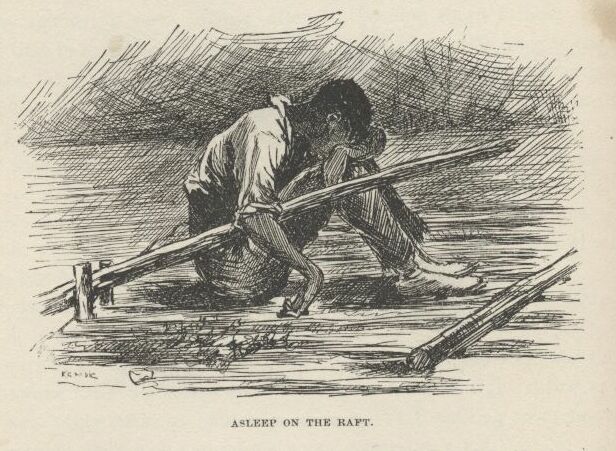
Illustration by E. W. Kemble,  from The Adventures of Huckleberry Finn

“Asleep on the raft” — Illustration by E. W. Kemble, from The Adventures of Huckleberry Finn

Twain himself hired E. W. Kemble to illustrate the first edition.

Save


Presidents Day 2014: Fly your flag today

February 17, 2014

Come on, you didn’t really need me to remind you, did you? It’s Presidents’ Day on most calendars, though the official U.S. holiday is Washington’s Birthday.

You’re already flying your flag today, right?  Let’s recapitulate from last year

Dr. Bumsted reminds us we need to emphasize that the federal holiday is Washington’s Birthday, not a day to honor presidents generically.  See the explanation from the U.S. National Archives.

Presidents Day is February 17, 2014 — fly your U.S. flag today.

National Park Service photo, Lincoln Memorial through flags at Washington Monument

The Lincoln Memorial, seen through flags posted at the Washington Monument, Washington, D.C.; National Park Service Photo via About.com

Oddly enough, some controversy arises from time to time over how to honor President Washington and President Lincoln, and other presidents.  Sometimes the controversy simmers over how to honor great Americans — if Lincoln deserves a day, why not FDR?  Why not Jefferson? — and sometimes the controversy covers more mundane ground — should the federal government give workers a day off?  Should it be on a Monday or Friday to create a three-day weekend to boost tourism?  About.com explains the history of the controversy:

Presidents’ Day is intended (for some) to honor all the American presidents, but most significantly George Washington and Abraham Lincoln. According to the Gregorian or “New Style” calendar that is most commonly used today, George Washington was born on February 22, 1732. But according to the Julian or “Old Style” calendar that was used in England until 1752, his birth date was February 11th. Back in the 1790s, Americans were split – some celebrated his birthday on February 11th and some on February 22nd.

When Abraham Lincoln became president and helped reshape our country, it was believed he, too, should have a special day of recognition. Tricky thing was that Lincoln’s birthday fell on February 12th. Prior to 1968, having two presidential birthdays so close together didn’t seem to bother anyone. February 22nd was observed as a federal public holiday to honor the birthday of George Washington and February 12th was observed as a public holiday to honor Abraham Lincoln’s birthday.

In 1968, things changed when the 90th Congress was determined to create a uniform system of federal Monday holidays. They voted to shift three existing holidays (including Washington’s Birthday) to Mondays. The law took effect in 1971, and as a result, Washington’s Birthday holiday was changed to the third Monday in February. But not all Americans were happy with the new law. There was some concern that Washington’s identity would be lost since the third Monday in February would never fall on his actual birthday. There was also an attempt to rename the public holiday “Presidents’ Day”, but the idea didn’t go anywhere since some believed not all presidents deserved a special recognition. [Take THAT you Franklin Pierce and Millard Fillmore fans!]

Even though Congress had created a uniform federal holiday law, there was not a uniform holiday title agreement among the individual states. Some states, like California, Idaho, Tennessee and Texas chose not to retain the federal holiday title and renamed their state holiday “President’s Day.” From that point forward, the term “Presidents’ Day” became a marketing phenomenon, as advertisers sought to capitalize on the opportunity for three-day or week-long sales.

In 1999, bills were introduced in both the U.S. House (HR-1363) and Senate (S-978) to specify that the legal public holiday once referred to as Washington’s Birthday be “officially” called by that name once again. Both bills died in committees.

Today, President’s Day is well accepted and celebrated. Some communities still observe the original holidays of Washington and Lincoln, and many parks actually stage reenactments and pageants in their honor. The National Park Service also features a number of historic sites and memorials to honor the lives of these two presidents, as well as other important leaders.

Fly your flag, read some history, enjoy the day.

More, Resources, and Related Articles:

English: Air Force One, the typical air transp...

President’s airplane, Air Force 1, flying over Mount Rushmore National Monument, in South Dakota – Image via Wikipedia; notice, contrary to Tea Party fears, the bust of Obama is not yet up on Rushmore (and also note there remains no room for another bust).

Yes, this is mostly an encore post.  This event occurs every year.


Millard Fillmore: Ready for his closeup with CBS Sunday Morning?

February 16, 2014

Millard Fillmore as

Millard Fillmore as “Bad President,” by jimmyemery at deviantart. How will Mo Rocca’s story portray Fillmore?

If other news doesn’t interfere, Millard Fillmore is scheduled to get a Presidents Day treatment from reporter and humorist Mo Rocca, on CBS’s “Sunday Morning with Charles Osgood,” on February 16.

What a fine collision!  Fillmore’s story is really pretty good.  Osgood and Sunday Morning are top of the genre.  Rocca is smart, and often funny.  Even if they perform below their par, the segment should be enlightening.

Blogging for the venerable Buffalo News, TV writer and critic Alan Pergament gives more details:

If you’re tired of me telling you how wonderful “CBS Sunday Morning” with Charles Osgood is, better look away now.

Correspondent Mo Rocca — whose chicken wing piece ran on Super Bowl Sunday — is back again this Sunday with a piece on President Millard Fillmore.

Rocca visited the Fillmore home in East Aurora on the same week he was here to sample chicken wings.

According to a CBS spokesperson, Rocca explains in the piece “why Fillmore should be remembered for more than just his unusual name.”

The spokesperson added that University at Buffalo professor Claude Welch is one of the experts that Rocca spoke to “about what made the 13th president stand out.”

“Sunday Morning” airs at 9 a.m. Sundays on Channel 4, the local CBS affiliate.

The timing of the Fillmore piece makes sense since this is President’s Day weekend.

Prof. Welch delivered the annual address at Fillmore’s grave this year, on Fillmore’s birthday, January 7 (delayed a couple of days this year because of cold and snow).

“Sunday Morning” runs from 8:00 to 9:30 a.m. on KTVT, Channel 11, in Dallas.  I’ll be ringing bells, and I’ll have to record the show.  Check your local schedule. 

You could do worse on Presidents Day Eve than to learn something more about Fillmore, arguably the man who set up World War II in the Pacific.

That’s something even H. L. Mencken didn’t blame Fillmore for.


Legacy of DDT abuse: Cleaning up old pesticide dumps

February 15, 2014

Contrary to science denialist claims, DDT is not harmless.  Users and abusers of DDT, abandoned stocks of DDT and other pesticides around the world, after the stuff had become essentially useless against insect or other pests originally targeted.

In the U.S., EPA moves in to clean up DDT dumps, under the Comprehensive Environmental Response, Compensation and Liability Act of 1980 (CERCLA), or Superfund.  In much of the world, various UN agencies find the old pesticides, and clean them up as funding allows.

The Food and Agricultural Organization (FAO) documents its cleanup efforts with photos of sessions training technicians to find and catalog dump sites, repackaging of old drums when necessary, extraction, packing and shipping to a disposal site.

Photos tell a story words on paper cannot.

Caption from FAO: TN (Tanzania) before: 40 tonnes of 50 year old DDT were found in Menzel Bourguiba Hospital, TN - : M. Davis

Caption from FAO: TN (Tanzania) before: 40 tonnes of 50 year old DDT were found in Menzel Bourguiba Hospital, TN – : M. Davis

Sometimes the toxic wastes did not stay neatly stacked.

FAO caption:  TN before: 40 tonnes of 50 year old DDT were found in Menzel Bourguiba Hospital, TN

FAO caption: TN before: 40 tonnes of 50 year old DDT were found in Menzel Bourguiba Hospital, TN View real size

DDT use against insect vectors of disease essentially halted in the mid-1960s.  The Rockefeller Foundation’s and UN’s ace mosquito fighter, Fred Soper, ran into mosquitoes in central Africa that were resistant and immune to DDT. Farmers and businesses had seized on DDT as the pesticide of choice against all crop pests, or pests in buildings.  By the time the UN’s malaria-fighting mosquito killers got there, the bugs had evolved to the point DDT didn’t work the malaria eradication campaign.

Also, there were a few DDT accidents that soured many Africans on the stuff.  Around lakes where local populations caught the fish that comprised the key protein in their diet, farmers used DDT, and the runoff killed the fish.

Use of DDT ended rather abruptly in several nations.  Stocks of DDT that had been shipped were abandoned where they were stored.

For decades.

FAO caption:    Obsolete DDT in Luanda, Angola - July 2008 -  : K. Cassam

FAO caption: Obsolete DDT in Luanda, Angola – July 2008 – : K. Cassam

Prevention and disposal of obsolete chemicals remains as a thorny problem throughout much of the world.  Since 2001, under the Persistent Organic Pollutants Treaty, (POPs), the UN’s World Health Organization (WHO) has coordinated work by WHO and a variety of non-governmental organizations (NGOs), as well as governments, to make safe the abandoned pesticides, and detoxify or destroy them to prevent more damage.  FAOs efforts, with photos and explanation, is a history we should work to preserve.

DDT provided powerful insect killing tools for a relatively short period of time, from about 1945 to 1965.  In that short period, DDT proved to be a deadly killer of ecosystems to which it was introduced, taking out a variety of insects and other small animals, on up the food chain, with astonishing power.  One of DDT’s characteristics is a long half-life — it keeps on killing, for months or years. Once that was thought to be an advantage.

Now it’s a worldwide problem.


Mars ♥ you, courtesy of NASA

February 15, 2014

Happy St. Valentine's Day from the Mars Global Surveyor (MGS) Mars Orbiter Camera (MOC) team! This collection of images acquired over the past 3 Mars years shows some of the heart-shaped features found on Mars by the MGS MOC.

14 February 2004 NASA caption:  “Happy St. Valentine’s Day from the Mars Global Surveyor (MGS) Mars Orbiter Camera (MOC) team! This collection of images acquired over the past 3 Mars years shows some of the heart-shaped features found on Mars by the MGS MOC.”

No kidding! Mars really ♥s us!  Hope you had a happy Valentines Day.

Original Caption Released with Image:
14 February 2004
Happy St. Valentine’s Day from the Mars Global Surveyor (MGS) Mars Orbiter Camera (MOC) team! This collection of images acquired over the past 3 Mars years shows some of the heart-shaped features found on Mars by the MGS MOC.

  • The heart in E04-01788 is a low mesa located near 46.7°N, 29.0°W, and is about 636 m (2,086 ft) wide.
  • The heart in R10-03259 is a depression located near 22.7°N, 56.6°W, and is about 378 m (1,240 ft) wide.
  • The heart in R09-02121 is a small mesa on a crater floor located near 37.2°S, 324.7°W, and is about 120 m (395 ft) wide.
  • The heart in R09-00918 is a depression located near 35.8°N, 220.5°W, and is about 525 m (1,722 ft) wide.
  • The heart in R04-00395 is a depression in which occurs a low mesa located near 57.5°N, 135.0°W, and is about 1 km (~0.62 mi) wide.
  • The heart in E11-00090 is a depression located near 0.2°N, 119.3°W, and is about 485 m (1,591 ft) wide.
  • The heart in E12-00275 is a depression located near 32.7°S, 139.3°W, and is about 512 m (1,680 ft) wide.
  • The heart in R06-01364 is a depression located near 8.4°S, 345.7°W, and is about 502 m (1,647 ft) wide.
  • The heart in M11-00480 is a depression located near 1.9°N, 186.8°W, and is about 153 m (502 ft) wide.
  • The heart in R08-00939 is a depression located near 12.1°S, 173.5°W, and is about 384 m (1,260 ft) wide.

Other heart-shaped martian landforms were featured in previous MGS MOC image releases:

  • “From Mars, With Love,” 17 June 1999 PIA01342
  • “Happy Valentine’s Day From Mars!” 11 February 2000 PIA02361
Image Credit:
NASA/JPL/Malin Space Science Systems
Image Addition Date:
2004-02-14

Typewriter of the moment: Pete Seeger

February 15, 2014

Photo found at the blog of the good Robert Messenger at OzTypewriter:

I can find no identifying information on the photo.  It looks, to me, to have been taken in the 1950s, judging by Pete’s hair and no beard.

Pete Seeger at his typewriter, probably in the 1950s.

Pete Seeger at a typewriter, probably in the 1950s.

It’s an electric typewriter, I think, seeing a cord coming out of the back.  Probably a Royal (I’m not great at identifying typewriters, you know).   Was this taken at Pete’s home in Beacon?  Perhaps.

Can you help in identifying the time and place of this photo?

More:


Fly your flag on Valentine’s Day 2014? Okay in Oregon and Arizona

February 14, 2014

Some wag e-mailed to ask about flying the flag for Valentine’s Day.

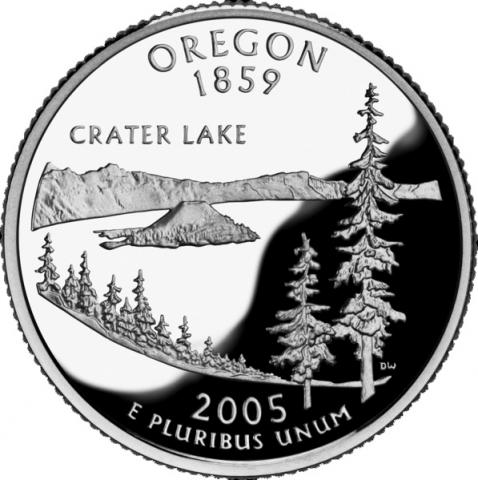
Reverse of Oregon quarter

Oregon entered as the 33rd state in 1859 – this is the Oregon commemorative quarter-dollar coin.

Legally, nothing stops a resident from flying the U.S. flag following protocol on any day.  So the short answer is, yes, you may fly your U.S. flag on Valentine’s Day.

The Flag Code urges flying the flag on the day a state achieved statehood, too.

So for Oregon and Arizona, there is an expectation that residents will fly their flags.  Oregon came into the union on February 14, 1859; Arizona joined the Republic as a state in 1912.

Taft signs Arizona statehood papers, February 14, 1912

President William Howard Taft signed the papers accepting Arizona into statehood, on February 14, 1912. He still finished third behind Democrat Woodrow Wilson and Bullmoose Party’s Teddy Roosevelt in that fall’s elections. Photo found at Mrs. Convir’s page, Balboa Magnet School  (Can you identify others in the photo?  Who is the young man?)

For 2014, Oregon’s U.S. Sen. Jeff Merkeley posted an appropriate photo and meditation on Oregon at his Facebook site:

Jeff Merkley's caption:  Protected by President Teddy Roosevelt, Crater Lake is the deepest lake in the United States, formed in the caldera of Mount Mazama, a volcano that collapsed nearly 8000 years ago. It's a must-see for every Oregonian - and every American!

Jeff Merkley’s caption: Protected by President Teddy Roosevelt, Crater Lake is the deepest lake in the United States, formed in the caldera of Mount Mazama, a volcano that collapsed nearly 8000 years ago. It’s a must-see for every Oregonian – and every American!

More:

Some of this material was borrowed, with express permission, from last year’s post at Millard Fillmore’s Bathtub.


John Wooden’s favorite poems: They ask me why I teach

February 14, 2014

I played high school football.  Untalented in virtually every other sport, I kept my place in 6th Period Athletics working with the basketball team, keeping statistics and keeping the official score book when we traveled. That was in the era when UCLA’s basketball team dominated the NCAA championships (save for 1966, when Texas Western managed to sneak out of the west and take the title from Kentucky . . . a story for another occasion).  I cannot count the times coaches discussed the wizardry of the coach at UCLA, who seemed to be able to weave a winning team from any talent.

Our basketball team had some great talents — Stan Crump, Clark Hansen, Jim Brock, Steve Whitehead, Craig Davis, Parke Hansen and Sam Robinson come to mind.  But we played up a level in our league play, and rarely won.  Injuries kept the seven I named from playing together in any one game through their last season.  Brock, Whitehead and Parke Hansen would have been the most formidable front three in our league, including the schools twice our size; I’d have to check to see if we were able to get two of them on the floor at the same time in even half our games. Never all three.  Wooden’s ability to win constantly at UCLA was both an inspiration and a taunt.

Our football coach used to say you win games, or you build character.  We built a lot of character, in football and basketball.

In our junior year, we got a new wrestling coach who followed many of the tenets of John Wooden — and the wrestling team won the state championship in our senior year.  Mark Sanderson led the team; his younger brother Steve Sanderson followed him, adopted winning ways, and went on to father the great Sanderson wrestlers out of Heber, Utah.  Winning can be contagious when solid teaching meets young talent.

In my senior year (IIRC) my sister bagged a couple of tickets for the NCAA basketball regionals, at the University of Utah.  I got to see our local powerhouse (then) Weber State, and ultimately, the winning UCLA Bruins crush all comers.

John Wooden

John Wooden

Years later, when I consulted with corporations, especially on quality and excellence in performance. I often came across framed quotations from John Wooden, the legendary UCLA basketball coach — often framed, or etched in brass or stone, hanging on the wall of executives.  Wooden’s words on getting great performance rang true with crew bosses, executives and everybody in between.

In a meeting on the importance of elders in a church congregation, national church officials referred back to the dramatic testimony from people in a California church, who swore an elder in their church had turned their lives around.  Turned out that John Wooden was that Disciples of Christ elder.

How does a guy get so good, and say stuff that is so applicable to peak performance coaching in several different areas?

There’s a new book out on the coach, John Wooden: A Coach’s Life,  by Sports Illustrated writer Seth Davis.   Charlie Rose interviewed the author tonight.  At the close, Rose showed a clip of Wooden being interviewed with Bill Walton and Bill Russell; Walton talked about how he’d been inspired by a visit to the Vietnam Memorial with Wooden, and the poetry Wooden recited from memory on that occasion.  Past the age of 90, Wooden recited the poems again, poems he’d memorized for use in his classrooms when he taught high school.

This one is about teachers:

THEY ASK ME WHY I TEACH

They ask me why I teach,
And I reply,
Where could I find more splendid company?
There sits a statesman,
Strong, unbiased, wise,
Another later Webster,
Silver-tongued,
And there a doctor
Whose quick, steady hand
Can mend a bone,
Or stem the lifeblood’s flow.
A builder sits beside him-
Upward rise
The arches of a church he builds, wherein
That minister will speak the word of God,
And lead a stumbling soul to touch the Christ.
And all about
A lesser gathering
Of farmer, merchants, teachers,
Laborers, men
Who work and vote and build
And plan and pray
Into a great tomorrow
And I say,
“I may not see the church,
Or hear the word,
Or eat the food their hands will grow.”

Glennice L. Harmon, the teacher who wrote the poem,

Glennice L. Harmon, the teacher who wrote the poem, “They Ask Me Why I Teach.” Image from NEA

And yet – I may.
And later I may say,
“I knew the lad,
And he was strong,
Or weak, or kind, or proud,
Or bold, or gay.
I knew him once,
But then he was a boy.”

They ask me why I teach, and I reply,
“Where could I find more splendid company?”

*  They Ask Me Why I Teach,” by Glennice L. Harmon, in NEA Journal 37, no. 1 (September 1948): 375

Why do you teach?

More:

Addendum: Albert Camus’s letter to his first-grade teacher:


Quote of the moment: Darwin, on confidence begotten by ignorance

February 12, 2014

Italian panel depicting Charles Darwin, created ca. 1890, on display at the Turin Museum of Human Anatomy. Wikimedia image

Italian panel depicting Charles Darwin, created ca. 1890, on display at the Turin Museum of Human Anatomy. Wikimedia image.  Darwin sits contemplating two of his works, title in Italian, Origin of Species (1859), and Descent of Man (Origin of Man), 1871

How could I have forgotten this wonderful passage from Darwin?

Maria Popova’s Literary Jukebox reminded me today.

Ignorance more frequently begets confidence than does knowledge: it is those who know little, and not those who know much, who so positively assert that this or that problem will never be solved by science.

— Charles Darwin, Descent of Man; Introduction, p. 2.

Today was the 205th anniversary of Darwin’s birth.

Faithful readers of this blog may recognize Darwin’s thought as very close to a description of the Dunning Kruger Effect, as indeed it is.  How many others, through the years, recognized the phenomenon, and commented on it, before Dunning and Kruger gave it scientific heft?

The quote attributed to Darwin is edited just a tiny bit from his actual statement, though without loss of effect.  Darwin, ever the hard science stickler, had limited his statement much more.  In the introduction to Descent of Man, Darwin wrote:

This work contains hardly any original facts in regard to man; but as the conclusions at which I arrived, after drawing up a rough draft, appeared to me interesting, I thought that they might interest others. It has often and confidently been asserted, that man’s origin can never be known: but ignorance more frequently begets confidence than does knowledge: it is those who know little, and not those who know much, who so positively assert that this or that problem will never be solved by science. The conclusion that man is the co-descendant with other species of some ancient, lower, and extinct form, is not in any degree new.

Any way the knowledge is sliced, creationists are cock-sure they’re right, when they are most solidly in the wrong.

More:


Lincoln and Darwin, born hours apart, February 12, 1809

February 12, 2014

Is it an unprecedented coincidence?  205 years ago today, just minutes apart according to unconfirmed accounts, Abraham Lincoln was born in a rude log cabin on Nolin Creek, in Kentucky, and Charles Darwin was born into a wealthy family at the family home  in Shrewsbury, England.

Gutzon Borglums 1908 bust of Abraham Lincoln in the Crypt of the U.S. Capitol - AOC photo

Gutzon Borglum’s 1908 bust of Abraham Lincoln in the Crypt of the U.S. Capitol – Architect of the Capitol photo

Lincoln would become one of our most endeared presidents, though endearment would come after his assassination.  Lincoln’s bust rides the crest of Mt. Rushmore (next to two slaveholders), with George Washington, the Father of His Country, Thomas Jefferson, the author of the Declaration of Independence, and Theodore Roosevelt, the man who made the modern presidency, and the only man ever to have won both a Congressional Medal of Honor and a Nobel Prize, the only president to have won the Medal of Honor.  In his effort to keep the Union together, Lincoln freed the slaves of the states in rebellion during the civil war, becoming an icon to freedom and human rights for all history.  Upon his death the entire nation mourned; his funeral procession from Washington, D.C., to his tomb in Springfield, Illinois, stopped twelve times along the way for full funeral services.  Lying in state in the Illinois House of Representatives, beneath a two-times lifesize portrait of George Washington, a banner proclaimed, “Washington the Father, Lincoln the Savior.”

Charles Darwin statue, Natural History Museum, London - NHM photo

Charles Darwin statue, Natural History Museum, London – NHM photo

Darwin would become one of the greatest scientists of all time.  He would be credited with discovering the theory of evolution by natural and sexual selection.  His meticulous footnoting and careful observations formed the data for ground-breaking papers in geology (the creation of coral atolls), zoology (barnacles, and the expression of emotions in animals and man), botany (climbing vines and insectivorous plants), ecology (worms and leaf mould), and travel (the voyage of H.M.S. Beagle).  At his death he was honored with a state funeral, attended by the great scientists and statesmen of London in his day.  Hymns were specially written for the occasion.  Darwin is interred in Westminster Abbey near Sir Isaac Newton, England’s other great scientist, who knocked God out of the heavens.

Lincoln would be known as the man who saved the Union of the United States and set the standard for civil and human rights, vindicating the religious beliefs of many and challenging the beliefs of many more.  Darwin’s theory would become one of the greatest ideas of western civilization, changing forever all the sciences, and especially agriculture, animal husbandry, and the rest of biology, while also provoking crises in religious sects.

Lincoln, the politician known for freeing the slaves, also was the first U.S. president to formally consult with scientists, calling on the National Science Foundation (whose creation he oversaw) to advise his administration.  Darwin, the scientist, advocated that his family put the weight of its fortune behind the effort to abolish slavery in the British Empire.  Each held an interest in the other’s disciplines.

Both men were catapulted to fame in 1858. Lincoln’s notoriety came from a series of debates on the nation’s dealing with slavery, in his losing campaign against Stephen A. Douglas to represent Illinois in the U.S. Senate.  On the fame of that campaign, he won the nomination to the presidency of the fledgling Republican Party in 1860.  Darwin was spurred to publicly reveal his ideas about the power of natural and sexual selection as the force behind evolution, in a paper co-authored by Alfred Russel Wallace, presented to the Linnean Society in London on July 1, 1858.   On the strength of that paper, barely noticed at the time, Darwin published his most famous work, On the Origin of Species, in November 1859.

The two men might have got along well, but they never met.

What unusual coincidences.

Go celebrate human rights, good science, and the stories about these men.

A school kid could do much worse than to study the history of these two great men.  In fact, we study them far too little, it seems to me.

Resources:

Charles Darwin:

Abraham Lincoln:

More:

Anybody know what hour of the day either of these men was born?

This is mostly an encore post.

Yes, you may fly your flag today for Lincoln’s birthday; the official holiday, Washington’s Birthday, is next Monday, February 17th — and yes, it’s usually called “President’s Day” by merchants and calendar makers.


Texas researchers tease out correlation between DDT exposure and late-onset Alzheimer’s

February 12, 2014

Press release from the University of Texas-Southwestern Medical Center in Dallas:

Research finds elevated levels of DDT metabolite in Alzheimer’s patients

Dr. Dwight German, Professor of Psychiatry

Dr. Dwight German, Professor of Psychiatry – UT-Southwestern photo

DALLAS – January 29, 2014 – Exposure to DDT may increase the likelihood of developing Alzheimer’s disease later in life, a study with researchers at UT Southwestern Medical Center suggests. While previous studies have linked chronic diseases such as cancer and diabetes to DDT, this is the first clinical study to link the U.S.-banned pesticide to Alzheimer’s disease.

The study, published online in JAMA Neurology, found elevated levels of the DDT metabolite, DDE, that were 3.8 times higher in patients diagnosed with Alzheimer’s disease in comparison to control subjects. The studies were conducted in partnership with researchers at Emory University School of Medicine and Rutgers Robert Wood Johnson Medical School.

“We have additional studies underway that will seek to directly link DDT exposure to Alzheimer’s disease,” said co-author Dr. Dwight German, Professor of Psychiatry at UT Southwestern. “If a direct link is made, our hope is to then identify the presence of DDE in blood samples from people at an early age and administer treatments to remove it.”

The study found elevated levels of DDE in blood samples of 86 patients with Alzheimer’s disease as compared to 79 control patients from the UT Southwestern Alzheimer’s Disease Center and the Emory University Alzheimer’s Disease Center.

Researchers made the link between DDE and Alzheimer’s by measuring three components – blood serum levels, severity of the patient’s Alzheimer’s disease as measured by the Mini-Mental State Examination (MMSE) and its relation to serum DDE levels, and the reaction of isolated nerve cells to DDE. Treatment of human nerve cells with DDE caused them to increase the production of the amyloid precursor protein that is directly linked to Alzheimer’s disease.

Participants in the study underwent preliminary testing to ensure that they didn’t have symptoms of other dementia-related diseases, and were an average age of 74, while the control subjects were on average 70 years old. These findings may help lead to the development of early biomarkers that can determine whether a person will develop Alzheimer’s disease later in life due to DDT exposure.

Alzheimer’s disease is the most common neurodegenerative disease worldwide and is expected to increase three-fold over the next 40 years, according to the researchers.

DDT (dichloro-diphenyl-trichloroethane) was used extensively as an insecticide in the 1940s, but has been banned in the United States since 1972 after scientists linked the compound to wildlife health and environmental concerns. DDT is still used in other countries to combat the spread of malaria.

About UT Southwestern Medical Center
UT Southwestern, one of the premier academic medical centers in the nation, integrates pioneering biomedical research with exceptional clinical care and education. The institution’s faculty includes many distinguished members, including five who have been awarded Nobel Prizes since 1985. Numbering more than 2,700, the faculty is responsible for groundbreaking medical advances and is committed to translating science-driven research quickly to new clinical treatments. UT Southwestern physicians provide medical care in 40 specialties to nearly 91,000 hospitalized patients and oversee more than 2 million outpatient visits a year.

###

Once again, research seems to demonstrates the wisdom of Rachel Carson, who warned us that we could not know the long-term damage done by untested pesticides applied with abandon in great abundance as if it were a solution to everything.

Carson’s book indicting pesticides regulation, Silent Spring, was published in 1962, with more than 50 pages of footnotes and citations to scientific studies.  In the 52 years since, none of that research has been rebutted by any further research.  Instead, more harms have been discovered, greater questions raised about the damage done by pesticides applied indiscriminantly.


When the Moon hits your eye, in Arches NP

February 12, 2014

Photo by Lynn Sessions;

Photo by Lynn Sessions; “THE EYE OF THE #MOON: North Window arch at Arches National Park in #Utah. #NatGeo pic.twitter.com/XwHfdWK5Ft

It’s just a click of the shutter?  Ha!

I’m assuming not a lot of post-photo processing on this. Lynn Sessions had to figure out when the Moon would be in the North Window Arch, calculate exposure, and shoot off enough of them to get a decent shot before the Moon moved.  I suspect the rocks were “painted” with a flashlight during the exposure.

(Haven’t yet found the technical details of the shot. But I did find this about the photographer:
I’m a frustrated amateur photographer who is trying to visit every corner in Utah as well as hike/photograph every canyon in southern Utah. More at http://www.DreamBreeze.com )

Patience, planning, creativity — then just push the button.

More:


“Ma, You Earned Your Eagle”

February 11, 2014

Did you earn Eagle rank in Scouting?

Show this video below to your mother — it will endear you to her (as if you needed that).

Last year the Church of Jesus Christ of Latter-day Saints (LDS) commemorated 100 years of Scouting as the youth program for boys and young men in the church.  In October there was a world-wide telecast of a ceremony in Salt Lake City.

This song was part of that telecast.

Look at the vintage uniforms some of the boys wear. (I have three of those hanging in my closet . . .)

IF you know the mother of an Eagle Scout — or the father — show this to them.  They’ll appreciate it.  They’ll probably have some even better stories to tell you (stories which I hope you’ll share in comments).

“Ma, You Earned Your Eagle”

Somewhere, Busby Berkeley’s Ghost is laughing, soaking in this production.  It only lacks an Esther Williams number in the water to be a full Berkeley musical, no?

Details:

Published on Oct 30, 2013

[From Sean Mobley] A fun musical snippet from the October 29th presentation “Legacy of Honor” commemorating the 100 year relationship between the Boy Scouts and the Mormon Church. I’m not LDS, but as an Eagle Scout, I know my mom earned hers, too! Check out the whole presentation here: http://www.scouts100.lds.org/

More:

Tip of the old scrub brush to Mary Almanza, for finding the video, and to Kathryn Knowles, our resident Scout Mother.

Following in a Family Tradition — Becoming and Eagle Scout  Julie Reimer displays her Eagle Scout Mom pin, given to her by her son Michael during the Eagle Scout ceremony on Friday, December 30, in Whitefish. Julie has four such ribbons and pins, one for each of her four sons.

From Whitefish, Montana, DailyInterLake.com, Brenda Ahearn photos: Following in a Family Tradition — Becoming an Eagle Scout, Julie Reimer displays her Eagle Scout Mom pin, given to her by her son Michael during the Eagle Scout ceremony on Friday, December 30, in Whitefish. Julie has four such ribbons and pins, one for each of her four sons.

7,934

Working to stand the heat in the kitchen

February 10, 2014

Dr. Isis was wronged, and improperly attacked on the internet for the situation.

Masthead from Dr. Isis's blog.  Note the shoes.

Masthead from Dr. Isis’s blog. Note the shoes.

She’s working to deal with whether to continue to write, and in what form . . .

I offered some information (links added here):

Lessons from my much more political years, and graduate study in rhetoric.

1.  You know you’ve got a movement when opposition forms against you.  That’s irritating, but it’s better than not having opposition, which means you’re failing to get your point across, most often.

2.  Clear communication, especially writing, gets a response — sometimes not the response you expected or wanted, but a response.  With practice, you can hone your message.

Cicero delivering his speech against Cataline.

“Cicero Denouncing Cataline,” in 63 BC; 1889 fresco painting by Cesare Maccari (1840-1919).  Wikipedia image

Used to be a couple of posters available to rhetoric students, both attributed to Plutarch’s Lives,  a comparison of the Greek, Demosthenes, with the Roman, Cicero.  The first, talking about the later man, said, “When Cicero spoke, the people said how well he spoke.”

The second said, “When Demosthenes spoke, the people cried, ‘Let us march!'”

Which man was the more effective orator, or rhetorician?

Demosthenes Practicing Oratory (Démosthène s'exerçant à la parole); Jean Lecomte du Nouÿ (1842-1923)

Demosthenes Practicing Oratory (Démosthène s’exerçant à la parole); Jean Lecomte du Nouÿ (1842-1923)

Effective writing makes people angry.  That’s what it should do.

From 1945 on, countless scientists wrote about “potential harms to wildlife” from chemicals put on crops, and used for other purposes.

[In 1962] Rachel Carson wrote about chemicals, naming names — especially DDT — and described little robins writhing and twitching in their death throes.  She’s credited with starting a movement.  But before that, the chemical industry teamed up to run a $500,000 public relations campaign (in 1962!), claiming Carson was hysterical, unqualified, and wrong, perhaps a communist, but not anyone you’d want your children to be around.  She calmly asked scientists to review her notes and find errors.  They found none.

Tone?  Truth comes in many tones.  The wise seek it even if they don’t like the tone it takes at the moment.

How about your experience?


1943 War Department film, “Welcome to Britain”

February 8, 2014

Reader and veteran librarian Judy Crook sent a Tweet alerting us to a recent release from the U.S. National Archives, “A Welcome to Britain, 1943.”

It’s a fascinating little film, if 38 minutes is still “little.”

Yes, that’s Burgess Meredith playing the soldier. I haven’t confirmed whether he was actually enlisted, but he often played soldiers or people at war — in 1945, playing war reporter Ernie Pyle, for example. In the 1950s, the House Committee on Unamerican Activities (HUAC) claimed Meredith had consorted too closely with communists, and he was blacklisted for years including a seven-year drought of work.

When this film was made, the Soviet Union was an ally of Britain and the United States.  How times change.

This is a training film made by the War Department (later renamed “Defense Department”), to acquaint U.S. soldiers with what they would confront in Britain.  Why did soldiers need such training?  You can guess, perhaps.   258

Teachers, can you use this film in history class?  Is the discussion on civil rights, about 20 minutes at 25:30 in, instructive in the history of the time?

From the National Archives’s description on YouTube:

Published on Feb 5, 2014

Creator(s): Department of Defense.~. Armed Forces Radio and Television Service. (1954 – ) (Most Recent)

Series : Information and Education Films, compiled 1943 – 1969
Record Group 330: Records of the Office of the Secretary of Defense, 1921 – 2008

Access Restriction(s): Unrestricted
Use Restriction(s): Restricted – Possibly
Note: Some or all of this material may be restricted by copyright or other intellectual property restrictions.

Scope & Content: This film introduced soldiers to Britain and told them what to expect, how to behave and how not to behave in Britain during World War II. It includes footage of military cameramen and black soldiers.

Contact(s): National Archives at College Park – Motion Pictures (RD-DC-M), National Archives at College Park, 8601 Adelphi Road, College Park, MD 20740-6001
Phone: [omitted here]

National Archives Identifier: 7460305
Local Identifier: 330-IEF-7

http://research.archives.gov/descript…

What else hides in the vaults of the Archives?