225 years ago today, in this room

September 17, 2012

Independence Hall, Philadelphia; room where the Constitution was created and signed; Dept of Interior photo

Caption from Department of Interior’s Tumblr site: 225 years ago today, the Constitution of the United States was signed in Independence Hall. Today, you can tour the Hall and see where the Declaration of Independence and Constitution were both signed, and you can also view the Liberty Bell [close by]. This is a site not to miss while visiting Philadelphia.
Photo: National Park Service

Does this room look a little familiar?  You’ve probably seen Howard Chandler Christy’s painting of the event we celebrate today.

Howard Chandler Christy’s “Signing of the Constitution,” 1940

Howard Chandler Christy’s “Signing of the Constitution,” 1940; Architect of the Capitol image. This massive, 20′ x 30′ painting hangs in the House Wing of the U.S. Capitol, in the east stairway — a location where, alas, most people cannot get to without a guide anymore.

Click to the Architect of the Capitol’s site for the story of the painting, intended by Congress to fill a gap in the story of America told by art in the Rotunda and throughout the halls of the building.

Dr. Gordon Lloyd, Pepperdine University, creator of the interactive

Dr. Gordon Lloyd, Pepperdine University’s School of Public Policy, and expert in the Constitution and its history.  I met Lloyd almost a decade ago, in programs for history teachers, sponsored by the Bill of Rights Institute, Liberty Fund, and National Endowment for the Humanities.

My old friend Dr. Gordon Lloyd of Pepperdine University, working with the Ashbrook Center for Public Affairs, created a study tool from the Christy painting which should be used a lot more in classrooms.  Click over to the Edsitement site, and see for yourself.

Every year there are a few more tools on the internet to study the Constitution with, for teachers to use in the classroom on Constitution Day and every day.  I wonder what will be the effects in another decade.

How important is it that students learn the Constitution, what it says, and how it affects our daily lives?  How important is it that students learn the history of the creation of the Constitution, and does that history reverberate for those students as they venture out into their roles as citizens in the republic created by the document?

More:


Teacher and student resources for Hispanic Heritage Month, from the cultural agencies of the federal government

September 16, 2012

Resources listed at the Hispanic Heritage Month site:

September 15 to October 15 is National Hispanic Heritage Month 2012

The Library of Congress, National Archives and Records Administration, National Endowment for the Humanities, National Gallery of Art, National Park Service, Smithsonian Institution and United States Holocaust Memorial Museum join in paying tribute to the generations of Hispanic Americans who have positively influenced and enriched our nation and society.

Read More »

Children of the Plumed Serpent: the Legacy of Quetzalcoatl in Ancient Mexico

 Pectoral with Calendrical Notations (AD 700–1300), Children of the Plumed Serpent exhibit


Unknown, Pectoral with Calendrical Notations (AD 700–1300), gold, 4 ½ x 1/16 in (11.5 x 2 cm), 3.93 ounces (112 grams), Museuo de las Culturas de Oaxaca. Photo © Instituto Nacional de Antropologia e Historia (CONACULTA-INAH-MEX), from the exhibition Children of the Plumed Serpent: The Legacy of Quetzalcoatl in Ancient Mexico at the Los Angeles County Museum of Art, Los Angeles, California.
Courtesy, Los Angeles County Museum of Art. http://www.lacma.org

The culture-hero and deity, Quetzalcoatl was believed to be the human incarnation of the spiritual forces of wind and rain. Quetzalcoatl was typically portrayed in art as a plumed serpent. This exhibition was organized by the Los Angeles County Museum of Art and made possible by the National Endowment for the Humanities.

More about the exhibition »

Department of Interior’s American Latino Heritage Initiative

Department of Interior's American Latino Heritage InitiativeNumerous projects are being undertaken to increase the opportunities for historic places associated with American Latino history to be documented, preserved, and interpreted and for the public to better understand and appreciate the role of American Latinos in the development of the United States.

Status of current projects »

U.S. National Archives on Flickr

Eloy District, Pinal County, Arizona. Mexican irrigator. He came from Mexico 12 years ago...11/1940 - Library of Congress image

Sample of works available at the Flickr site:  Original Caption:  “Eloy District, Pinal County, Arizona. Mexican irrigator. He came from Mexico 12 years ago, works the year round on this large-scale farm. These fields are being prepared for flax; have never had a crop before.”
U.S. National Archives’ Local Identifier: 83-G-44021
From:: Photographic Prints Documenting Programs and Activities of the Bureau of Agricultural Economics and Predecessor Agencies, compiled ca. 1922 – ca. 1947, documenting the period ca. 1911 – ca. 1947
Created By:: Department of Agriculture. Bureau of Agricultural Economics. Division of Economic Information. (ca. 1922 – ca. 1953)
Production Date: 11/1940

Photos from the U.S. National Archives that relate to Hispanic Heritage on the photosharing site Flickr.

View the Images

Hispanic American Veterans

Staff Sgt. Ernesto E. Gallego, Gulfport, MS; World War II Veteran - Stories from the Veterans Project, Library of Congress image

Portrait of World War II veteran, Staff Sgt. Ernesto E. Gallego in bomber jacket, inscribed “To the sweetest girl I know…Ernest.” Gulfport, Mississippi; Stories from the Veterans Project, Library of Congress

Asked to serve their country in time of war, Hispanic Americans displayed courage and valor in the face of adversity. Familiar with discrimination back home, many saw their service as affirming the ideals of democracy. In this presentation, the Veterans History Project recounts their inspirational stories.

Read More about Hispanic American Veterans »

Teaching Hispanic Heritage

paintingPut the power of primary sources to work in the classroom. Browse lesson plans, student activities, collection guides and research aids from:

The Library of Congress

National Archives Experience — DocsTeach

National Archives — Teacher’s Resources

National Endowment for the Humanities

National Gallery of Art

National Park Service

Smithsonian Institution


EPA photograph exhibit in Dallas: Progress in environmental protection?

August 8, 2012

Let’s see what history shows.  EPA started a photographic record of environmental conditions, in 1971.  Recently the project gained light again with help of the National Archives.  Parts of the record are touring the country, and the display is available in Dallas for a week (photos added):

National “Documerica” Environmental Photo Exhibit Comes to Dallas

(DALLAS – August 7, 2012) The Environmental Protection Agency will open “Documerica” exhibit of photographs depicting environmental conditions of the past and present beginning August 7, 2012. The display arrives in Dallas after a quick stop in Austin at the Texas Environmental Superconference as part of its national tour. The exhibit will be open on the 7th Floor at Fountain Place in downtown Dallas through August 14, 2012.

(From the Documerica-1 Exhibition. For Other I...

One of the photos in the Documerica archives, looking to me to be from Texas, along Texas’s Colorado River (I have no idea whether this is one of the photographs displayed) (From the Documerica-1 Exhibition. For Other Images in This Assignment, See Fiche Numbers 27, 28, 31, 32, 33.) (Photo credit: The U.S. National Archives)

From its development in 1971, “Documerica” became the United States’ first serious pictorial examination of the environment. The project collected more than 15,000 images, documenting the environmental and human conditions of this country when EPA was starting its mission. The idea was to visually record the difference in conditions in later years, providing the public with a measurement of progress made to accomplish goals set by Congress.

Forty years later the project was rediscovered with the help of National Archives. “State of the Environment” launched Earth Day 2011 as an opportunity for the public to participate and engage in a modern revitalization of Documerica. There are more than 1,900 new images that have been submitted to EPA through Flickr.

The EPA photo project will continue accepting submissions through the end of 2013. Public entries will be considered for a larger exhibit of both projects set for March-September 2013 at the U.S. National Archives’ Lawrence F. O’Brien Gallery in Washington, D.C.

-30-

To learn more and to follow the project, visit: www.epa.gov/stateoftheenvironment
To match images near you, a selection of the full record is available on the National Archives Flickr photostream

More about activities in EPA Region 6 is available at http://www.epa.gov/aboutepa/region6.html

Can I make time to go?

Fountain Place, in Dallas; image from Dallas Architecture

EPA’s art exhibit is on the 7th floor of Fountain Place, this building, usually listed at 1445 Ross Avenue. It’s between the Woodall Rodgers Freeway and Ross Avenue, between North Field Street and North Akard Street, Metered parking may be available; it should be a not-too-difficult walk from the West End, if done before the temperature rises above 95 degrees (as it is predicted to do each day in the next week).

The building that houses the exhibit is a landmark in Dallas, designed by I. M. Pei; fountains and trees grace the base of the building.  If you’re not a denizen of daytime downtown Dallas, it might be worth a trip to see.

Alas, the fleeting nature of the stay in Dallas means it will be long gone before any environmental science classes can be assigned to view it.

Fortunately the photographs are available on Flickr — teachers, will you let us know what devious assignments you make out of this collection of historic photographs?

Additional Resources: 


Propaganda posters: J. C. Leyendecker’s Uncle Sam at bat (fit for August)

July 28, 2012

Get in the game with Uncle Sam, WWI poster by J. C. Leyendecker, Museum of Play image

“Get in the Game with Uncle Sam” poster from World War I, by J. C. Leyendecker in 1917 — image from National Museum of Play

No matter how much the Texas State Board of Education wishes to run away from America’s heritage, we can’t.

Nor should we want to.

Propaganda is not a bad word.  There is bad propaganda, stuff that doesn’t work.  There is propaganda for bad purposes, stuff that promotes bad policies, or evil.  But good propaganda is stronger, long-lasting, often full of great artistic merit, and instructive.

Images of Uncle Sam provide clear pictures of what Americans were thinking, from the oldest versions to today.

This poster above is a World War I poster designed to convince Americans to get involved in the war effort.  J. C. Leyendecker, a noted illustrator, cast Uncle Sam as a baseball player up to bat.  The poster says simply, “Get in the game with Uncle Sam.”  Perhaps uniquely, this poster showed Sam in yellow-striped pants, instead of the more traditional red-striped.  Could an artist take such liberty today?

Nicolas Ricketts at the Strong Museum of National Play offered a good, concise description of the politics and history of the poster at the blog for the Museum (links added for your convenience):

Meanwhile, then-president Woodrow Wilson, who had won reelection in 1916 on an anti-war platform, faced the need for American participation in the terrible “Great War” raging in Europe. He and his cabinet knew that American involvement loomed. But how could the government convince the American public that this was necessary? One idea was to create a poster that urged Americans to metaphorically “Get in the Game,” along with their patriotic national symbol, Uncle Sam.

Artist J. C. Leyendecker (1874-1951) designed the poster, commissioned by the Publicity Committee of the Citizens Preparedness Association, a pro-war organization with federal support which also sponsored “preparedness parades” and other nationalistic activities. Leyendecker himself emigrated from Germany at age eight and was approaching the pinnacle of his career in 1917 when he created this work.

The poster just preceded James Montgomery Flagg’s famous “I Want You” image of Uncle Sam, which later became the best-known likeness of the country’s unofficial symbol. Leyendecker’s version, in spite of his baseball bat, is possibly less affable to contemporary eyes than Flagg’s friendlier Sam. But the bat he holds connected him to many Americans, who perhaps then decided that America should “get in the game.”

Some of this older propaganda had a humorous twist I think is too often missing from modern posters.  It was more effective for that, I think.

The image of Sam at bat shows up in many places in the internet world, but most often stripped of its identifying links to Leyendecker.  That does disservice to the art, to history, and to Leyendecker, who was one of our nation’s better illustrators for a very long time.

Visit the National Museum of Play in Rochester, New York.

More posters, almost random, found through Zemanta:

English: Uncle Sam recruiting poster.

The most famous Uncle Sam recruiting poster, by James Montgomery Flagg (1917). (Photo credit: Wikipedia)

James Montgomery Flagg 1917 poster: "Boys...

James Montgomery Flagg 1917 poster: “Boys and girls! You can help your Uncle Sam win the war – save your quarters, buy War Savings Stamps” / James Montgomery Flagg . (Photo credit: Wikipedia)


Fire hoop dance at the Kwahadi Indian Dancers in Amarillo

July 22, 2012

Fire Hoop Dance, Kwahadi Indian Dancers, Amarillo, Texas, 7-21-2012

Fire hoop dance at the Kwahadi Indian Dancers event center in Amarillo, Texas, July 21, 2012. The dance troupe is off on a national tour over the next three weeks or so.

Venture Crew 9 in Amarillo, Texas, preserves traditional American Indian dances, and performs them literally around the world.  Troop 355 from Duncanville, Texas, stopped off to visit and view the performance — just in time, because the troupe starts a national tour tomorrow.

The performances range from very good to spectacular.  You ought to stop in Amarillo to see.

There’s a better sequence of photos at the Kwahadi dancers’ site.

Dancers belong to a Scouting organization, either Boy Scouts or Girl Scouts — and they continue about a 50 year tradition at their museum and performance center, just off of I-40 in Amarillo.

Probably 200 Boy Scouts in the audience tonight.


Switched on tree

July 17, 2012

Found this on the campus of Lawrence University in Appleton, Wisconsin.  Son James assures me it’s an art installation.

Tree at Lawrence University 06-11-2012 James's graduation 232 photo by Ed Darrell

What happens if someone flips the switch?

Clever, or troubling?


July 12, 1855 – Liberty proposed for U.S. Capitol

July 13, 2012

Liberty statue, atop U.S. Capitol - Library of Congress photo

On top of the Capitol Dome, the Statue of Freedom faces east away from the National Mall and the White House. Image courtesy of Library of Congress

History from the Clerk of the U.S. House of Representatives:

The Statue of Freedom

July 12, 1855

Statue of Freedom

Statue of Freedom (Liberty) which appears atop the U.S. Capitol (Photo credit: Wikipedia)

On this date, Architect of the Capitol, Montgomery C. Meigs received the conceptual drawings from Thomas Crawford, an American neoclassical artist, for the Statue of Freedom.  The statue was to be the crown jewel of the dome atop the Capitol Rotunda.  The first sketch of the statue featured a woman with a liberty cap. When Secretary of War Jefferson Davis objected to the allegorical allusion to a freed Roman slave, the artist revised the drawing to feature a statue with a helmet.  Although construction on the dome began in 1856, the dome and its final accouterments were not in place until December 2, 1863. Freedom’s story contains an ironic twist; a slave named Philip Reid played an integral part in placing Freedom atop the dome.  A contract dispute threatened to halt the project’s progress until Reid determined how to complete the complicated casting of the statue.  As a result, he oversaw the remainder of the its construction.  To commemorate the completion of the statue and its crowning of the dome, officials organized a dramatic ceremony with a 35-gun military salute echoed by salutes from the 12 forts ringing the federal city.

The dome of the US Capitol building. Français ...

The dome of the US Capitol building. (Photo credit: Wikipedia)


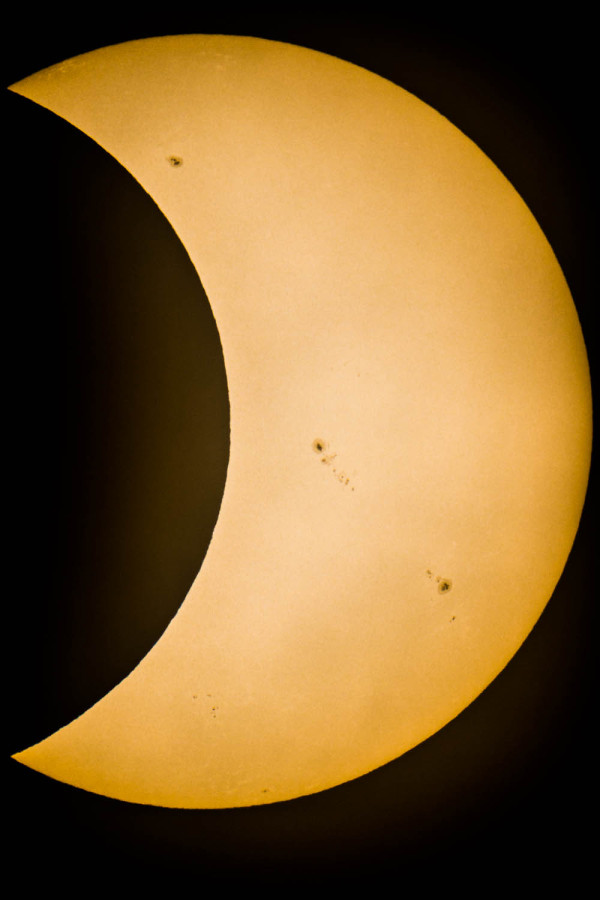
Eclipse? Opportunity for photographers to show off

May 24, 2012

Some photographers have the patience and skills to show off well.  Found this picture of last week’s eclipse, by Mark Langridge, on TwitPic:

Mark Langridge photo, May 20, 2012 annular eclipse

Mark Langridge photograph of the May 20, 2012 annular eclipse

Annular eclipse of May 20, 2012 - photo by Langridge via twitpic

Annular eclipse of May 20, 2012 – photo by Mark Langridge via twitpic

Mr. Langridge provided details; he used a Celestron telescope with his Nikon camera:

Celestron CGEM 800 HD, Canon EOS 60Da, Kendrick Astro baadar solar filter.

Blow this image up, or go to Langridge’s TwitPic site and see it in its large format, glorious detail.  You can see the mountains on the Moon . . .


Time lapse photos: NYC, before 1975

May 22, 2012

Why does time-lapse photography fascinate me so?  It reveals changes over time we too often miss, or don’t stop to appreciate.

Here’s an excerpt from a 1975 film, set to music recently released.  Watch closely, you’ll see the shadows of the World Trade Center passing over New York City.

Described at Youtube:

A music video for the gorgeous track “Exercise #3 (Building) by CFCF (Mike Silver). Song is from his upcoming EP titled “Exercises,” which arrives on April 24th via Paper Bag Records.

Footage is from the 1975 short film “Organism,” by Hilary Harris.

For more on CFCF:

http://paperbagrecords.com/artists/cfcf
http://soundcloud.com/cfcf
https://www.facebook.com/pages/CFCF/196418801490

edited by https://www.facebook.com/daviddeanburkhart

More:

Tip of the old scrub brush to Slacktivist.


Quick! Vote for Bill Adkins! Get a new printer for his classroom

May 16, 2012

We have a great art department at Molina High SchoolBill Adkins, and his colleagues, pull great work out of kids who too often are not expected to produce good art.

Adkins is in contest to get a fancy printer, based on votes from the internet.  Will you do Mr. Adkins, and especially his students, a great favor and go cast a vote for him right now?  Voting ends today, and he’s in the running but not in first.

Details:

I want to thank Mr. Rhee and Mr. Jones for their efforts encouraging their students to vote for my project.  I also thank the rest of you who have voted to help me win a new printer for the art department.  It’s still a very close race, I’m currently in 3rd place and voting ends tomorrow.  If you haven’t voted yet, I hope you will.  Your students are allowed to vote too.  Just go the this link:  http://www.weareteachers.com/teaching-ideas/grant/teaching-idea?app=24725&grantId=98 and click on vote for me.

Someday schools will provide equipment like this without contests on the internet — but not yet.   A vote for Adkins is a vote for educational excellence.

Thanks!

From an earlier post:


Feynman and Twain: How can a scientist appreciate the beauty of a flower, a pilot the beauty of a river?

April 25, 2012

Mark Twain wrote about how too much knowledge can spoil beauty for a beholder.  In Life on the Mississippi, Twain described how the natural beauty of the river changed for him once he started serious study to be a river pilot.  That wonderful sunset revealed the river was high, hiding objects of danger.  That beautiful little ripple told him a snag waited underwater to pierce his boat.

Cover of "Life on the Mississippi (Signet...

Cover via Amazon

     . . . The face of the water, in time, became a wonderful book — a book that was a dead language to the uneducated passenger, but which told its mind to me without reserve, delivering its most cherished secrets as clearly as if it uttered them with a voice. And it was not a book to be read once and thrown aside, for it had a new story to tell every day. Throughout the long twelve hundred miles there was never a page that was void of interest, never one that you could leave unread without loss, never one that you would want to skip, thinking you could find higher enjoyment in some other thing. There never was so wonderful a book written by man; never one whose interest was so absorbing, so unflagging, so sparkingly renewed with every re-perusal. The passenger who could not read it was charmed with a peculiar sort of faint dimple on its surface (on the rare occasions when he did not overlook it altogether); but to the pilot that was an ITALICIZED passage; indeed, it was more than that, it was a legend of the largest capitals, with a string of shouting exclamation points at the end of it; for it meant that a wreck or a rock was buried there that could tear the life out of the strongest vessel that ever floated. It is the faintest and simplest expression the water ever makes, and the most hideous to a pilot’s eye. In truth, the passenger who could not read this book saw nothing but all manner of pretty pictures in it painted by the sun and shaded by the clouds, whereas to the trained eye these were not pictures at all, but the grimmest and most dead-earnest of reading-matter.

Now when I had mastered the language of this water and had come to know every trifling feature that bordered the great river as familiarly as I knew the letters of the alphabet, I had made a valuable acquisition. But I had lost something, too. I had lost something which could never be restored to me while I lived. All the grace, the beauty, the poetry had gone out of the majestic river! I still keep in mind a certain wonderful sunset which I witnessed when steamboating was new to me. A broad expanse of the river was turned to blood; in the middle distance the red hue brightened into gold, through which a solitary log came floating, black and conspicuous; in one place a long, slanting mark lay sparkling upon the water; in another the surface was broken by boiling, tumbling rings, that were as many-tinted as an opal; where the ruddy flush was faintest, was a smooth spot that was covered with graceful circles and radiating lines, ever so delicately traced; the shore on our left was densely wooded, and the somber shadow that fell from this forest was broken in one place by a long, ruffled trail that shone like silver; and high above the forest wall a clean-stemmed dead tree waved a single leafy bough that glowed like a flame in the unobstructed splendor that was flowing from the sun. There were graceful curves, reflected images, woody heights, soft distances; and over the whole scene, far and near, the dissolving lights drifted steadily, enriching it, every passing moment, with new marvels of coloring.

I stood like one bewitched. I drank it in, in a speechless rapture. The world was new to me, and I had never seen anything like this at home. But as I have said, a day came when I began to cease from noting the glories and the charms which the moon and the sun and the twilight wrought upon the river’s face; another day came when I ceased altogether to note them. Then, if that sunset scene had been repeated, I should have looked upon it without rapture, and should have commented upon it, inwardly, after this fashion: This sun means that we are going to have wind to-morrow; that floating log means that the river is rising, small thanks to it; that slanting mark on the water refers to a bluff reef which is going to kill somebody’s steamboat one of these nights, if it keeps on stretching out like that; those tumbling ‘boils’ show a dissolving bar and a changing channel there; the lines and circles in the slick water over yonder are a warning that that troublesome place is shoaling up dangerously; that silver streak in the shadow of the forest is the ‘break’ from a new snag, and he has located himself in the very best place he could have found to fish for steamboats; that tall dead tree, with a single living branch, is not going to last long, and then how is a body ever going to get through this blind place at night without the friendly old landmark.

No, the romance and the beauty were all gone from the river. All the value any feature of it had for me now was the amount of usefulness it could furnish toward compassing the safe piloting of a steamboat. Since those days, I have pitied doctors from my heart. What does the lovely flush in a beauty’s cheek mean to a doctor but a ‘break’ that ripples above some deadly disease. Are not all her visible charms sown thick with what are to him the signs and symbols of hidden decay? Does he ever see her beauty at all, or doesn’t he simply view her professionally, and comment upon her unwholesome condition all to himself? And doesn’t he sometimes wonder whether he has gained most or lost most by learning his trade?  (From Life on the Mississippi, Chapter 9; from the University of Virginia Library, Electronic Text Center)

Oh, it’s great literature.  But I’ve always been troubled by the anti-science nature of Twain’s complaint, that if you know something really well, you’ll lose respect for its beauty. What better way to discourage a young person from learning science, from learning about the stars, the trees, the rivers and mountains?

It was not so for me. The more I learned about western trees, and grasses and wildflowers, the better I grew to love the dry, hot western desert mountains.  The more I yearned to learn about the geology that carved spectacular canyons and isolated pinyon pines from ponderosa with a sea of sagebrush — and the more I learned, the more I appreciated how delicately balanced the whole thing was.

Then I found Feynman.  He put into a few words what I felt.  He described a continuing discussion he had with artists, about beauty and the relationship of science to the appreciation of it.  He recorded an interview for the BBC in which he reiterated much of the story, with the added advantage of his wry delivery.

I have a friend who’s an artist, and he sometimes takes a view which I don’t agree with. He’ll hold up a flower and say, “Look how beautiful it is,” and I’ll agree. But then he’ll say, “I, as an artist, can see how beautiful a flower is. But you, as a scientist, take it all apart and it becomes dull.” I think he’s kind of nutty. […] There are all kinds of interesting questions that come from a knowledge of science, which only adds to the excitement and mystery and awe of a flower. It only adds. I don’t understand how it subtracts.  (From What Do You Care What Other People Think? page 28)


If you are a cowboy, and this is January, you’re listening to poetry in Elko

January 28, 2012

Cowboy poets, cowboy poetry, Ramblin’ Jack Elliott and Baxter Black!  Do you need any more reasons to head to Elko, Nevada, next weekend?

English: Panorama showing Elko, Nevada - Jaros...

Panorama of scenic, Great Basin town Elko, Nevada. Photos by Jaroslaw Binczarowski, image via Wikipedia

I get e-mail that makes me wish I were wealthy enough to travel next weekend:

For Immediate Release, January 28, 2012
Contact: Darcy Minter, 775.340.4240, dminter@westernfolklife.org

Southwest Ranch Country Exhibition Opens at the 28th National Cowboy Poetry Gathering

Exhibit Features Photography of Kurt Markus and Jay Dusard

Elko, Nevada—Opening in the Western Folklife Center’s Wiegand Gallery during the 28th National Cowboy Poetry Gathering, the exhibition Southwest Ranch Country sheds light on the material and visual landscape of America’s ranching Southwest. The artistry of the region is represented through the vivid photography of Kurt Markus and Jay Dusard, and handcrafted gear of some of the region’s master craftsmen. On display January 24 – September 8, 2012, the exhibition’s opening reception is Friday, February 3, from 3:15 to 5:30 pm. During the National Cowboy Poetry Gathering, February 2-4, the gallery will feature slide shows and gallery tours by Jay Dusard and Arizona cowboy poet Ross Knox, and leatherwork demonstrations by master saddlemakers Don Butler, Bob Park and Andy Stevens.

For this exhibition, photographer Kurt Markus, of Kalispell, Montana, has selected some of his favorite images from visits to ranches in the American Southwest. These western photographs capture lives of tedium, isolation and communal living among majestic sweeping landscapes, and demonstrate Markus’ poetic sensibility combined with his realistic approach to image-making. His work cuts across many genres and he has exhibited and published widely, in this country and abroad. His books include After Barbed Wire, Buckaroo, Boxers, and Cowpuncher.This is the first time that Markus’ Southwest Cowpuncher photographs have been printed for exhibition.

Jay Dusard, of Douglas, Arizona, has meticulously photographed the landscape of the American West for 45 years, and has punched cows, off and on, for over 50 years. For this exhibition, the Western Folklife Center features his monumental-size portraits of working cowboys of the American Southwest. Jay still shoots large format film, and the resulting images have resulted in award-winning exhibitions and extensive publication, including his acclaimed first book, The North American Cowboy: A Portrait. During the National Cowboy Poetry Gathering, Jay will present slide shows and stories from his ongoing and extensive work in the rural West.

The renaissance of ranch-related craftsmanship is alive and well in the American Southwest, with these artists putting their unique stamp on an ever-evolving style. In addition to the photography of Markus and Dusard, this exhibition brings together some of the finest Southwest artists and the work they enjoy doing as either occupation or sideline.

  • Keith Basso, Rawhide Braider, Heber, Arizona
  • Jay Begay, Jr., Navajo Weaver, Tuba City, Arizona
  • Scott Brown, Saddlemaker & Violinmaker, Salt Lake City, Utah via Texas
  • Bobby Burns, Saddlemaker, Clayton, New Mexico
  • Dawson Byrne, Bootmaker & Leatherworker, Wickenburg, Arizona
  • Robert Campbell, Bit & Spurmaker, Amarillo, Texas
  • Wilson W. Capron, Bit and Spurmaker, Midland, Texas
  • Leland Hensley, Rawhide Braider, Meridian, Texas
  • Jay T. Hudson, Leatherworker and Silverworker, Hobbs, New Mexico
  • Gene Klein, Silversmith, Miami, New Mexico
  • Buddy Knight, Blacksmith & Silverworker, Marfa, Texas
  • Jerry Lansing, Navajo Weaver, Shiprock, New Mexico
  • George & Kelly Martin, Leatherworkers & Bootmakers, Animas, New Mexico
  • Sarah Natani, Navajo Artist, Window Rock, Arizona
  • Scott Farrell/O’Farrell Hat Company, Hatmaker, Santa Fe, New Mexico
  • Bob Park, Leatherworker, Phoenix, Arizona
  • Keith “Pee Wee” Peebles, Silversmith, Marathon, Texas
  • James Redman, Bootmaker, Mertzon, Texas
  • Alfred R. Reynolds, Master Bootmaker, Wickenburg, Arizona
  • Tom Paul Schneider, Silverworker, Pearce, Arizona
  • Bud Shaul, Leatherworker, Yarnell, Arizona
  • Edith Simonsen, Navajo Weaver, Window Rock, Arizona
  • Rachel Simmons, Leatherworker, Chino Valley, Arizona
  • Baru Spiller, Silverworker, Wingate, Texas
  • Dew Westover, Bootmaker, Vernon, Texas
  • Stewart Williamson, Silverworker & Bit & Spurmaker, Portales, New Mexico

Southwest Ranch Country is presented with support from the Nevada Arts Council and Margaret T. Morris Foundation. Photographs available upon request.

The National Cowboy Poetry Gathering is the nation’s greatest celebration of the American West, its people, culture and traditions. The 28th Gathering will take place January 30 to February 4, 2012, in Elko, Nevada. Every January for the last 27 years, cowboys, ranchers, rural and urban people have traveled en masse to the small community of Elko, to join with friends, family and all those who share their love of rural life in the West. Together, they listen to poetry and music, learn about cowboy culture in the U.S. and around the world, experience great art, watch western films, learn a craft, and gather together to eat, drink and swap stories. Programs at the 28th Gathering will focus on the southwestern United States, specifically Arizona and New Mexico—which are celebrating their centennials this year. In addition to the Southwest Ranch Country exhibition, the Gathering will present poets and musicians from the region, as well as workshops and panel discussions focused on regional food, culture and agriculture.

The Western Folklife Center, a regional nonprofit organization, produces the National Cowboy Poetry Gathering. Visit the www.westernfolklife.org for more information about the National Cowboy Poetry Gathering and the Southwest Ranch Country exhibition. Tickets to the 28th National Cowboy Poetry Gathering can be purchased at http://www.westernfolklife.org, by calling 775-738-7508, toll-free 888-880-5885, or by stopping in to the Western Folklife Center’s ticket office, 501 Railroad Street, Elko.

The mission of the Western Folklife Center is to enhance the vitality of American life through the experience, understanding, and appreciation of the diverse cultural heritage of the American West.

***

28th National Cowboy Poetry Gathering Performers

Ramblin' Jack Elliott by Charlie Ekburg, Sweetlight Photography, Elko, NV.

Ramblin' Jack Elliott by Charlie Ekburg, Sweetlight Photography, Elko

Mike Beck & the Bohemian Saints, Monterey, California
Baxter Black, Benson, Arizona
Dave Bourne, Agoura Hills, California
Jerry Brooks, Sevier, Utah
Clarence Carnal, Grand Junction, Colorado
Ken Cook
, Martin, South Dakota
Doris Daley, Turner Valley, Alberta, Canada
Stephanie Davis, Columbus, Montana
John Dofflemyer, Lemon Cove, California
Ramblin’ Jack Elliott, Northern California
Rolf Flake, Gilbert, Arizona
Dick Gibford, New Cuyama, California
The Gillette Brothers, Crockett, Texas
Skip Gorman, Connie Dover & the Waddie Pals, Wyoming
DW Groethe, Bainville, Montana
Amy Hale Auker, Prescott, Arizona
R.W. Hampton, Cimarron, New Mexico
Carol Heuchan, Cooranbong, New South Wales, Australia
Yvonne Hollenbeck, Clearfield, South Dakota
Hot Club of Cowtown, Austin, Texas
Jess Howard, Wibaux, Montana
Tim Hus & The Rocky Mountain Two, Calgary, Alberta, Canada
Ross Knox, Benson, Arizona
Marley’s Ghost, Mill Valley, California
Michael Martin Murphey & The Rio Grande Band featuring Pat Flynn, Pueblo, Colorado
Wally McRae, Forsyth, Montana
Waddie Mitchell, Twin Bridges, Nevada
Andy Nelson, Pinedale, Wyoming
Joel Nelson, Alpine, Texas
Rodney Nelson, Almont, North Dakota
Glenn Ohrlin, Mountain View, Arkansas
Vess Quinlan, San Acacio, Colorado
Henry Real Bird, Garryowen, Montana
Pat Richardson, Merced, California
Randy Rieman, Dillon, Montana
Ronstadt Generations, Tucson, Arizona
Martha Scanlan, Birney, Montana
Georgie Sicking, Kaycee, Wyoming
Sourdough Slim, Paradise, California
R.P. Smith, Broken Bow, Nebraska
Jay Snider, Cyril, Oklahoma
Dave Stamey, Orange Grove, California
Gail Steiger, Prescott, Arizona
Rod Taylor, Cimarron, New Mexico
Ian Tyson, Longview, Alberta, Canada
Dick Warwick, Oakesdale, Washington
Andy Wilkinson & Andy Hedges, Lubbock, Texas
Wylie & The Wild West, Conrad, Montana
Paul Zarzyski, Great Falls, Montana


Western Folklife Center • 501 Railroad Street • Elko, Nevada • 89801 • 775.738.7508
dminter@westernfolklife.org
www.
westernfolklife.org

connect with us twitterfacebookyoutubeblog

Where are Charlie Kuralt and Stephen Fry when you really need them?

Elko, Nevada. Ruby Mountains in right background.

Elko, Nevada, Ruby Mountains in background to right. Notice the "E" on the mountain. Image via Wikipedia


Christy World War I poster to fetch more than $400 at auction

January 6, 2012

That’s a safe bet — the bid at the moment at Heritage Auctions is at $450.  How much is it worth?

Howard Chandler Christy World War I poster, 1918 - Third Liberty Loan - Heritage Auctions image

Howard Chandler Christy poster from 1918, for the Third Liberty Loan to finance World War I - Heritage Auctions image

Heritage Auctions describes the poster:

World War I Propaganda Poster by Howard Chandler Christy (Forbes, 1918). Third Liberty Loan Poster (20″ X 30″) “Fight or Buy Bonds.” War.
Howard Chandler Christy was so good at illustrating iconic beautiful women in uniquely styled poster art, that they soon became known as “Christy Girls.” He used some of these images to sell war bonds during WW I. His lovely art was instrumental in raising countless millions for the war effort. An unrestored poster with good color and an overall very presentable appearance. It may have tears, pinholes, edge wear, wrinkling, slight paper loss, and minor stains. Please see full-color, enlargeable image below for more details. Rolled, Fine+.

Posters from the wars are great teaching tools.  I tell my students to watch to see if their parents or grandparents have any of these old posters lying around.  $450 would buy books for a semester at college.

Heritage Auctions plans to sell this poster, and many others, this coming Sunday, January 8.


25 new gems added to Library of Congress National Film Registry

December 28, 2011

Some you’ve loved forever, some you’ve never heard of (but now ought to seek out to view):  The Library of Congress announced 25 new films added to the National Film Registry, the list of great films we all ought to know about.

This year’s list covers 82 years of cinema, from 1912’s “The Cry of the Children” through 1992’s “El Mariachi” to 1994’s “Forrest Gump.”  It’s a very diverse list, from big Hollywood productions through animation, test films and even a series of home movies.

Here’s the list, followed by the press release; the list with descriptions of each film is below the fold.

Films Selected to the 2011 National Film Registry

  1. Allures (1961)
  2. Bambi (1942)
  3. The Big Heat (1953)
  4. A Computer Animated Hand (1972)
  5. Crisis: Behind A Presidential Commitment (1963)
  6. The Cry of the Children (1912)
  7. A Cure for Pokeritis (1912)
  8. El Mariachi (1992)
  9. Faces (1968)
  10. Fake Fruit Factory (1986)
  11. Forrest Gump (1994)
  12. Growing Up Female (1971)
  13. Hester Street (1975)
  14. I, an Actress (1977)
  15. The Iron Horse (1924)
  16. The Kid (1921)
  17. The Lost Weekend (1945)
  18. The Negro Soldier (1944)
  19. Nicholas Brothers Family Home Movies (1930s-40s)
  20. Norma Rae (1979)
  21. Porgy and Bess (1959)
  22. The Silence of the Lambs (1991)
  23. Stand and Deliver (1988)
  24. Twentieth Century (1934)
  25. War of the Worlds (1953)

The press release:

December 28, 2011

2011 National Film Registry More Than a Box of Chocolates

“Forrest Gump,” “Bambi,” “Stand and Deliver” Among Registry Picks

“My momma always said, ‘Life was like a box of chocolates. You never know what you’re gonna get.’” That line was immortalized by Tom Hanks in the award-winning movie “Forest Gump” in 1994. Librarian of Congress James H. Billington today selected that film and 24 others to be preserved as cultural, artistic and historical treasures in the National Film Registry of the Library of Congress.

Spanning the period 1912-1994, the films named to the registry include Hollywood classics, documentaries, animation, home movies, avant-garde shorts and experimental motion pictures. Representing the rich creative and cultural diversity of the American cinematic experience, the selections range from Walt Disney’s timeless classic “Bambi” and Billy Wilder’s “The Lost Weekend,” a landmark film about the devastating effects of alcoholism, to a real-life drama between a U.S. president and a governor over the desegregation of the University of Alabama. The selections also include home movies of the famous Nicholas Brothers dancing team and such avant-garde films as George Kuchar’s hilarious short “I, an Actress.” This year’s selections bring the number of films in the registry to 575.

Under the terms of the National Film Preservation Act, each year the Librarian of Congress names 25 films to the National Film Registry that are “culturally, historically or aesthetically” significant. “These films are selected because of their enduring significance to American culture,” said Billington. “Our film heritage must be protected because these cinematic treasures document our history and culture and reflect our hopes and dreams.”

Annual selections to the registry are finalized by the Librarian after reviewing hundreds of titles nominated by the public (this year 2,228 films were nominated) and conferring with Library film curators and the distinguished members of the National Film Preservation Board (NFPB). The public is urged to make nominations for next year’s registry at NFPB’s website (www. loc.gov/film).

In other news about the registry, “These Amazing Shadows,” a documentary about the National Film Registry, will air nationally on the award-winning PBS series “Independent Lens” on Thursday, Dec. 29, at 10 p.m (check local listings). Written and directed by Paul Mariano and Kurt Norton, this critically acclaimed documentary has also been released on DVD and Blu-ray and will be available through the Library of Congress Shop (www.loc.gov/shop/).

For each title named to the registry, the Library of Congress Packard Campus for Audio Visual Conservation works to ensure that the film is preserved for future generations, either through the Library’s massive motion-picture preservation program or through collaborative ventures with other archives, motion-picture studios and independent filmmakers. The Packard Campus is a state-of-the-art facility where the nation’s library acquires, preserves and provides access to the world’s largest and most comprehensive collection of films, television programs, radio broadcasts and sound recordings (www.loc.gov/avconservation/). 

The Packard Campus is home to more than six million collection items, including nearly three million sound recordings. It provides staff support for the Library of Congress National Film Preservation Board, the National Recording Preservation Board and the National Registries for film and recorded sound.

Founded in 1800, the Library of Congress is the nation’s oldest federal cultural institution. It seeks to spark imagination and creativity and to further human understanding and wisdom by providing access to knowledge through its magnificent collections, programs and exhibitions. Many of the Library’s rich resources can be accessed through its website at www.loc.gov and via interactive exhibitions on a personalized website at myLOC.gov.

Below the fold you’ll find a description of each film.

Read the rest of this entry »


Washington crossing the Delaware – a slightly different view

December 26, 2011

Past in the Present has this wonderful, terse post up:

It’s the most wonderful time of the year

Unless you’re a Hessian.

Passage of the Delaware, by Thomas Sully (1819). Now in the Boston Museum of Fine Arts.

Passage of the Delaware, by Thomas Sully (1819). Now in the Boston Museum of Fine Arts.

  1. Hessian?  Do my students know what he’s talking about?
  2. What is the other famous painting of this event?
  3. Considering how famous that other painting is, isn’t it almost tragic this one isn’t more famous?
  4. Considering #3, how many other great paintings of U.S. history sit in museums, or in government buildings, waiting to be discovered?  Maybe bloggers could help, by finding those paintings, photographing them, and posting the photographs.

More: