Backyard birds: Goldfinch at the feeder

March 12, 2013

No, he’s not particularly gold — but this is winter, and if he’s going to get his breeding plumage, it will come in a couple of weeks.

We’ve had Niger thistle seed feeders out for years; this year one goldfinch (Spinus tristis) finally started to visit.  We’ve had as many as four at a time — but they’re probably headed north soon.

Here’s a shot of our first guest, from a couple of weeks ago.

Goldfinch at the feeder

A goldfinch male, checking out the feeder before bringing in his buddies — we hope.

If you’re north of Dallas, and you see this guy at your feeder this summer, tell him “hello” from us.

The non-breeding plumage isn’t so flashy as the bright yellow of the breeding males.  Some of the finches settle in to a beautiful, smooth olive-drab livery for much of the winter.  Close up, they look like good pen-ink-drawings by a master artist.

More:


Backyard birds: A convention of white-winged doves

February 8, 2013

The white dove was a short-lived interlude; the white-winged doves seem to be with us constantly.

One family in 2011; two families in 2012 — and our yard isn’t that big.

A very early version of the birds who visited, befriended, and plagued Snoopy — this drawing, while faithful to Shultz’s work, was done by another artist.

Earlier this week I looked out, and it looked like the early “Peanuts” comic strip when Snoopy opened his dog house to a group of pigeon-like birds for their poker game.  The birds took advantage of Snoopy’s largesse, and nearly over-ran him.  (Woodstock was a product of that flock of birds, the last remaining vestige by Charles Shultz‘s death.)

At least they didn’t drink our beer and try to make off with the Picasso.

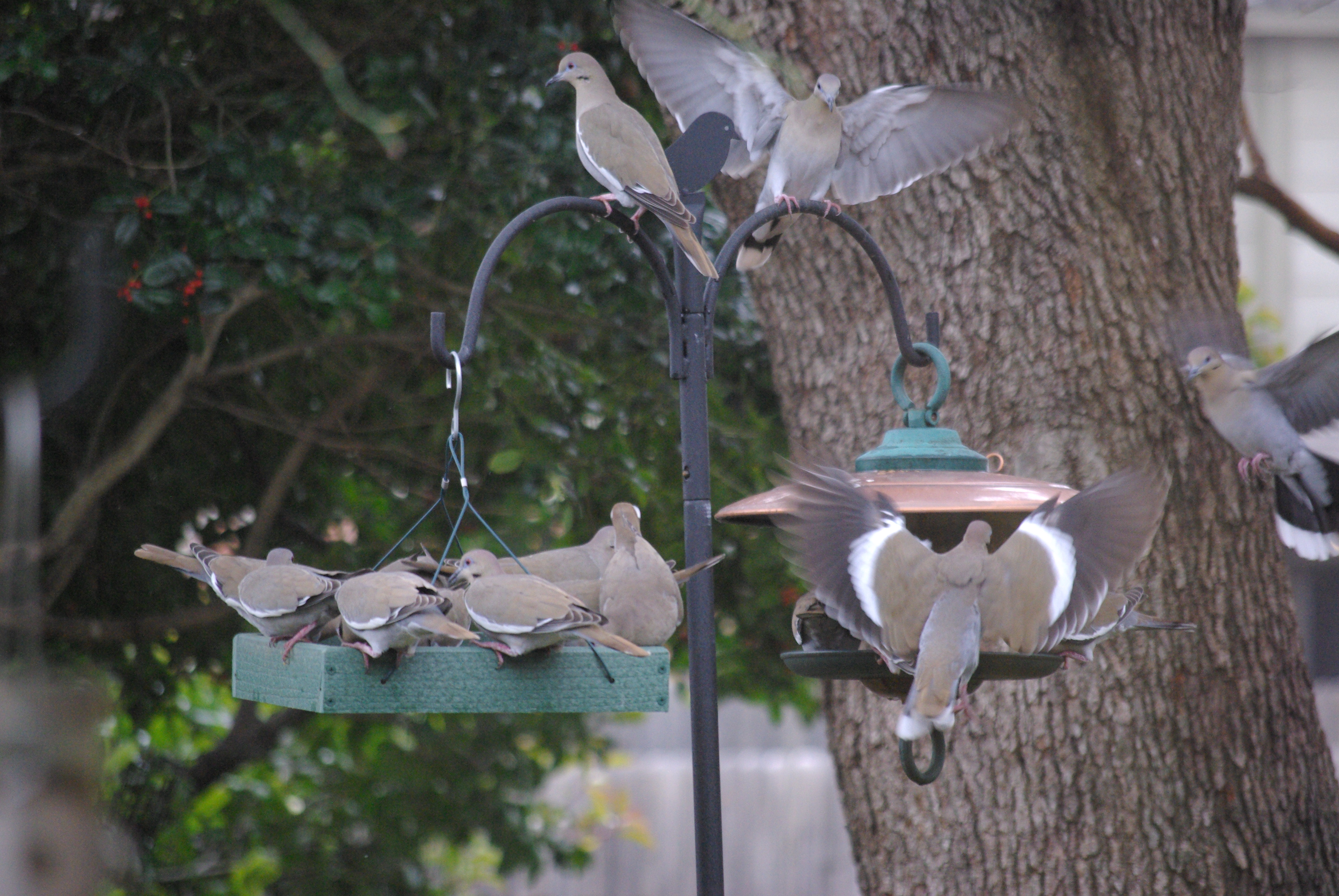
White-winged doves are really too big for any of our feeders -- but what are you going to tell a rampaging herd of them?  Photos by Ed Darrell - use encouraged with attribution.

White-winged doves are really too big for any of our feeders — but what are you going to tell a rampaging herd of them? Photos by Ed Darrell – use encouraged with attribution.

White-winged doves crowding at the bird feeders

Enough doves to frighten Alfred Hitchcock — Two of these birds is too many for either side of this feeding station. How many do you see here?

White winged doves jostle for position at the feeder.

Not enough room for all, and so they jostle and push each other off the feeders. See the display of the white stripe on the wings of one of our subjects here, from which the species gets its name.

Blue jays enforce the “too-long-or-too-many-at-the-feeder” rules here, but they can be distracted by peanuts put out by neighbors.  In any case, they were absent when we needed them.

We used to have mourning doves, but at some point in the last five years this bunch pushed them out.  We may be the only ones on the block who noticed.  (Yes, it’s “mourning” dove; Duncanville’s having misspelled it on “Morning Dove Lane” is their error.)

More:


Mystery white dove

February 3, 2013

It was last April.  Kathryn’s garden near the patio needed some work, and of course there are all the plants in pots, including the orange tree (which has since been joined by a pomegranate).

Birds visit often — we hang three or four birdfeeders.  Cardinals, house finches, the Carolina wren and her family, and a lot of white-winged doves commonly hang around.

Of a sudden a flutter of wings — and there he was:

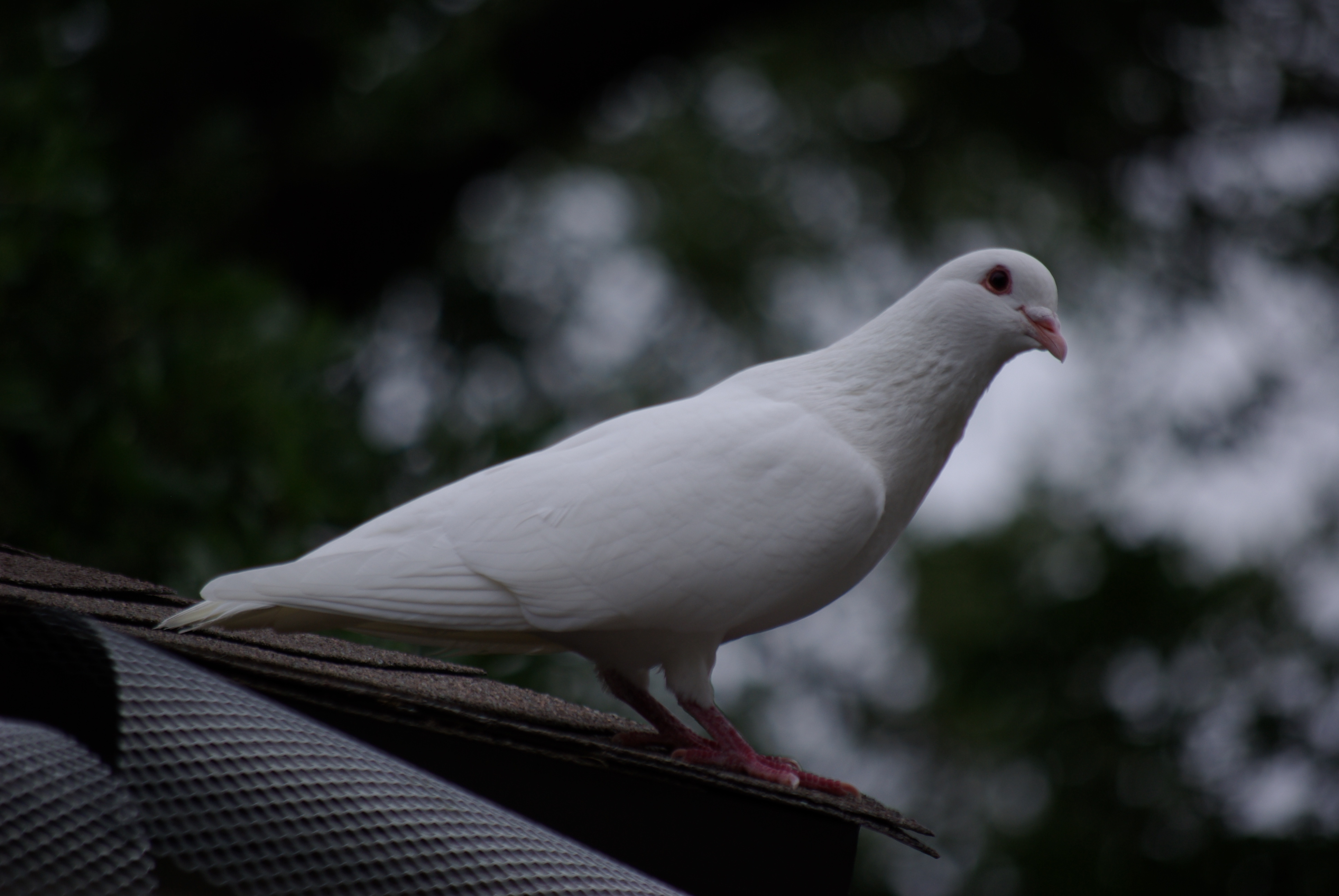
White dove

Where did this dove come from? For a few weeks in the spring, it haunted our yard.

We assumed it was male, but we have no way of knowing for sure.  At one point it seemed to make mating advances on some of the white-winged doves — but who knows.

The bird followed Kathryn around.  It ignored the feeders farther out in the yard, and concentrated on the feeders on the patio.  Then it would land on our patio table and watch.

Sometimes it splashed in the birdbaths.

White dove in the yard.

The bird appeared at ease around people. It would watch us work or play in the back yard.

Difficult to miss — the white was positively glowing.  When it flew in, it’s path suggested it came from a house up the alley a ways.  Was it a refugee from some cote, an escapee?  Or was it a trained bird just out for exercise?

A few times it arrived in the morning, and hung around for an hour or two.    Its usual pattern was to arrive in the early evening, grab a few seeds, do a lot of watching, and disappear.

With its color, we feared it would be a target for hawks.

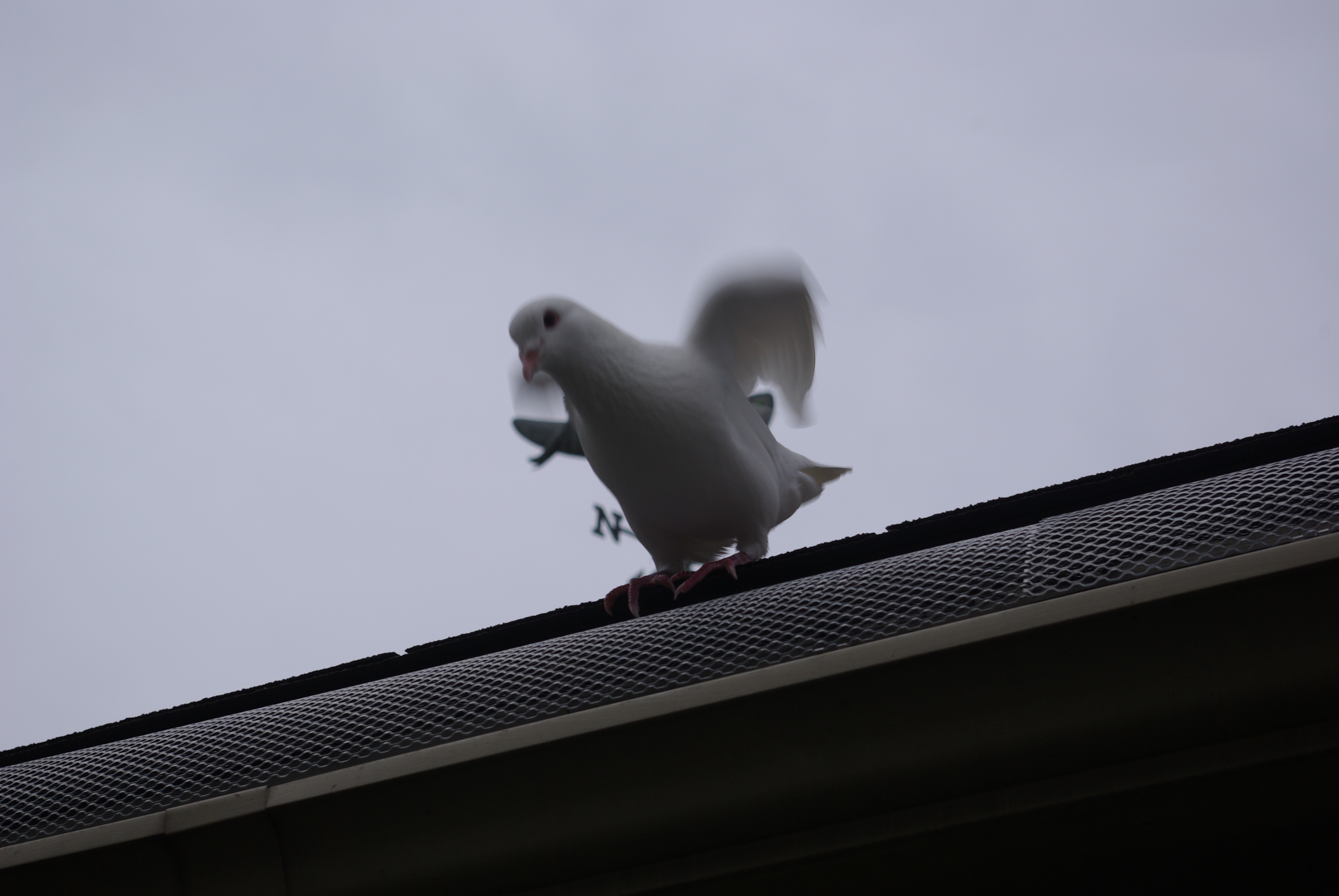
White dove ron the roof.

Where it flew to roost, we couldn’t determine.

One day it flew off, and didn’t return.

The mystery dove.  Where did it come from, was it tame?  Why was it here?  Where did it go?

More:


Occasional Tuesday tweet: Wren on the rose, Bewick’s or Carolina?

January 22, 2013

I’ve been calling these guys Bewick’s wrens (Thryomanes bewickii) for a couple of years, based on an identification I made a couple of years ago — but checking today to be sure, I’m thinking this is a Carolina wren (Thryothorus ludovicianus) instead.

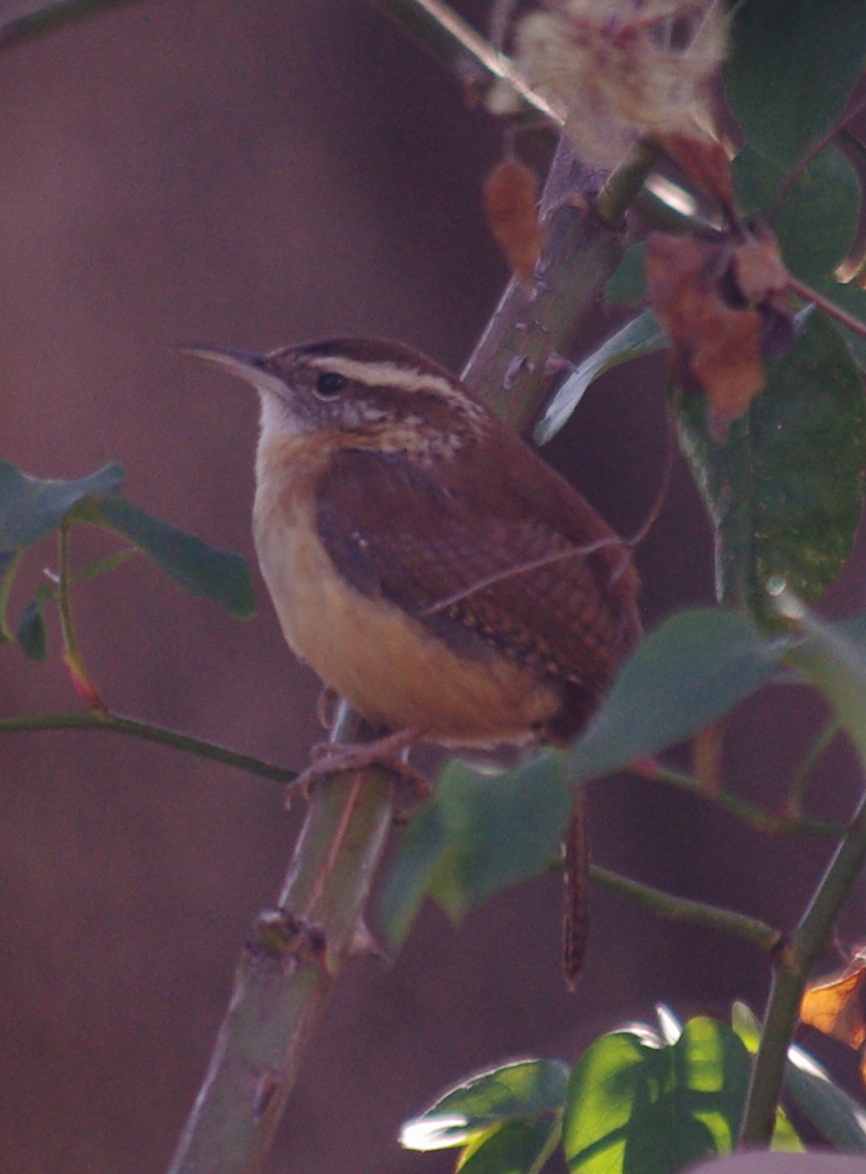
In any case, a couple of days ago it paused for a few minutes in our backyard rose arbor, long enough I could try to get a good shot with just a 200mm telephoto, and with colors dulled by the window.

Carolina wren, perhaps, in Dalls

Wren in the rose arbor — ruddy color suggests it’s a Carolina wren, but I’ve been calling it a Bewick’s wren; pausing for its photo on Inauguration Day – Photo by Ed Darrell

Bewick’s wrens probably have more grey on their bellies; this one looks ruddy enough to be a Carolina wren.  (I just learned “Bewick’s” is pronounced like “Buicks.”)

Wrens stick around all winter now; they didn’t just over a decade ago.  This family has been with us for at least three years — two young this year successfully fledged.  By now it’s almost impossible to tell which are the young, which the parents.

Gulf fritillary on blue porterweed, Dallas, Texas - Ed Darrell photo

Gulf fritillary butterfly on blue porterweed — a few feet from the rose arbor where the wren posed, but months apart. Photo: Ed Darrell

On our patio we have a saga continuing with Gulf fritillary butterflies (Agraulis vanillae), their larva, and passion vine.  It seems our neighbors eradicated passion vine, so when the frits start moving north in the spring, they find our passion vines as the only ones in town.  The females go nuts laying eggs, and at some point we have a surplus of larva who denude the vines in a week.  Late hatching larva probably die off.

The butterfly books suggest that we cull the larva, but we don’t have the heart.  At some point in the spring the wrens wake up to the issue, and they cull the larva for us.  The vines recover, a new wave of frits hatch out, and the cycle begins again.  From June through September, the passion vine loses any leaves it puts out within 48 hours, usually.  But the wrens probably eat well.

The wrens seem never to perch where we can see them when they sing.  I suspect these little guys of having a much better voice than most wrens, but the great arpeggios I hear may be another bird, perhaps a warbler, that I just don’t know (good reason to go spend time at the local Dogwood Canyon Audubon Center, yes?).

More:


White-breasted nuthatch in action

July 21, 2012

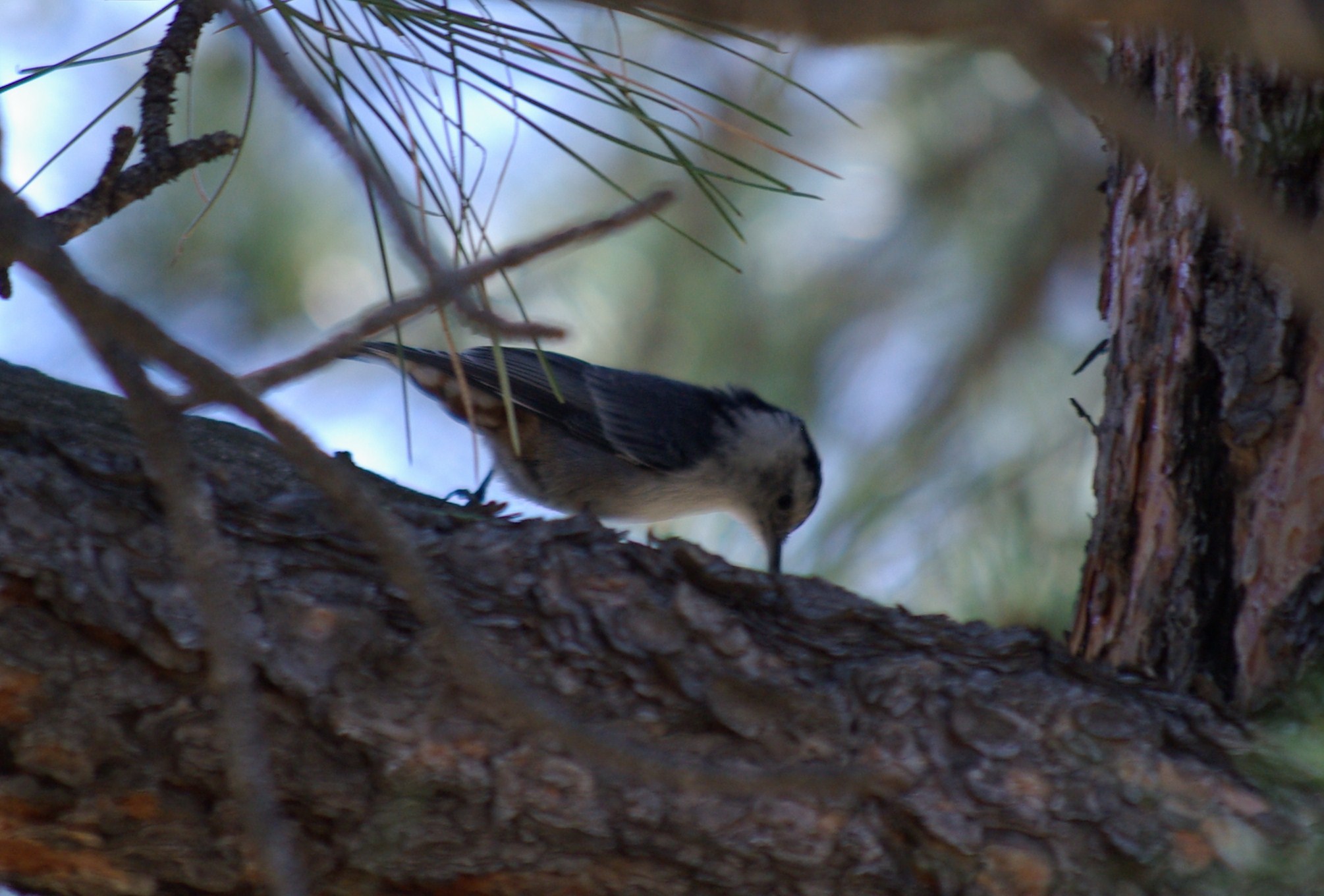
White-breasted nuthatch (Sitta carolinensis) (male?), cracking a nut on a pine limb, Peaceful Valley Scout Ranch, Colorado, July 2012:

White breasted nuthatch in action, Peaceful Valley Colorado, 2012 - photo by Ed Darrell - 061

White-breasted nuthatch (Sitta carolinensis)works over a seed, Colorado, 2012 – photo by Ed Darrell


Annals of DDT: Interior Dept compliments Rachel Carson’s research in Silent Spring

October 17, 2010

One of the most frequent hoax charges against Rachel Carson claims that she didn’t base Silent Spring on research.  Greater hoaxers claim that there is little or no evidence of harm to birds from DDT.

Rachel Carson's book stirs controversy, newspaper headlines

Rachel Carson’s book stirred controversy, as shown in newspaper headlines

These critics forget history, or they try to cover it up so you won’t know any better.  Carson provided more than 50 pages of citations to peer-reviewed research and communications with leading scientists in ornithology and chemistry about DDT and the damage it does.

Carson’s deep research won acknowledgment from the U.S. Department of the Interior, in this 1962 speech before the Audubon Society meeting in Corpus Christi, Texas, by the Special Assistant Assistant Secretary for Fish and Wildlife Robert M. Paul.

Paul told the birders that Interior was proud of the fact that so much of the research in the book relied on Interior’s research, from the U.S. Fish and Wildlife Service:

In addition, we are proud that so much of ‘Silent Spring“ is based on Fish and Wildlife Service research. And, with no modesty at all, we like to point out that Miss Carson is nobly carrying on a tradition that employees of the Department of the Interior, beginning with Walt Whitman nearly a century ago, have written some of the Nation’s most important books.

That’s quite the compliment to Carson, being compared even distantly to Walt Whitman.  It’s also a helluva brag for USFWS.

It’s also a 30-second response to the false charge that Carson’s work was not research based, or that research did not show DDT damage to wildlife.

Paul spoke to the Audubon Society about work to set up and operate the Federal Pest Control Board.

A .pdf of the speech can be found at the website for Interior, in a compilation of information from Interior about DDT between 1945 and 1998.  Full text below the fold.

Read the rest of this entry »


Monk parakeets in the locusts Chinese pistache

August 10, 2010

Terri Potts Smith showed up bright and early for work — was it in the spring? — and we talked in our first floor Dirksen Senate Office Building office about the grind we faced ahead with the hearing schedule for the Senate Labor Committee and subcommittees.  Suddenly she was transfixed by something out the window.

Having just recently learned that terrorists favored that particular corner for planting bombs under cars, I started a bit.  Terri explained, astonished, that a red bird flew into the tree out the window.

It was a cardinal (Cardinalis cardinalis), a common bird, but not one common to Utah, where both of us had grown up.

I think of that often these days, and am still constantly startled, to see green birds flit across the streets of Duncanville, Texas.

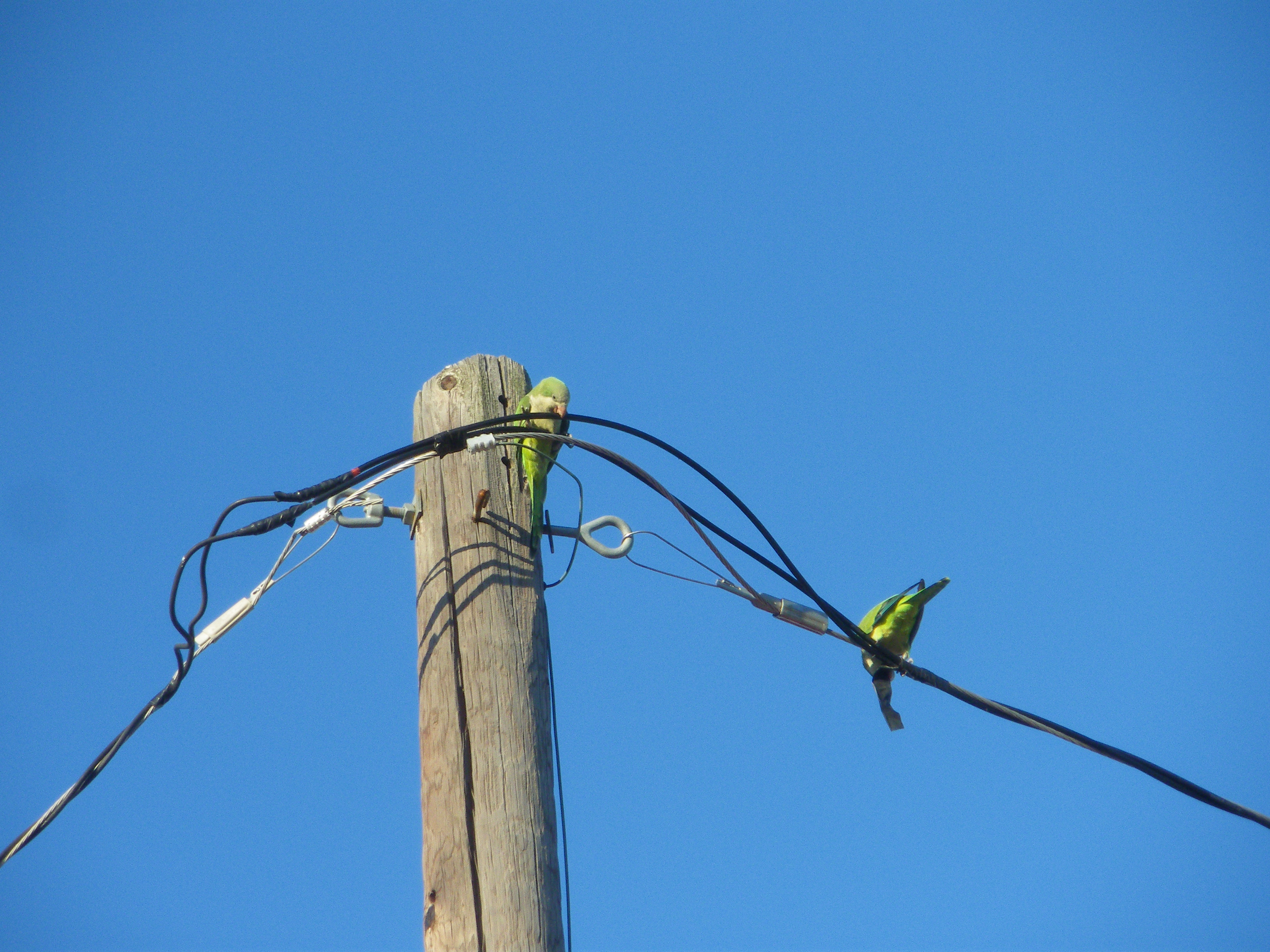
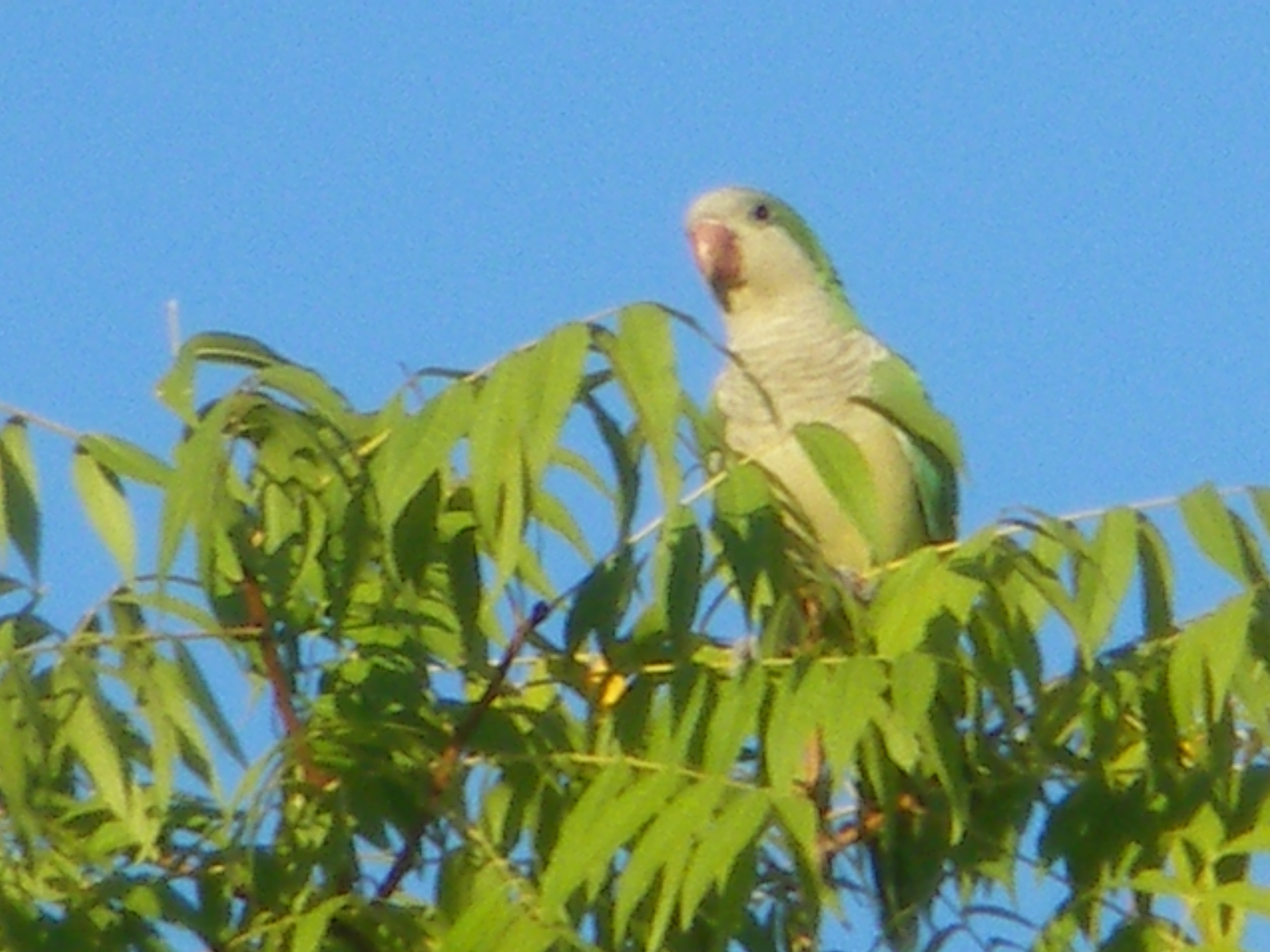
Monk parakeetsMyiopsitta monachus. Also known as the Quaker parrot.

Monk parakeets in the locusts, Duncanville, Texas, August 10, 2010 - photo by Ed Darrell, use with attribution encouraged

Monk parakeets profiled in the Chinese pistache, Duncanville, Texas, August 10, 2010 - photo by Ed Darrell; more than a dozen birds are hidden deeper in the tree.

Monk parakeets are invasive in Texas — it is thought the wild flocks developed from a few dozen escapees in the past three decades.  They favor nesting on tall electrical poles — the stadium lights of the high school and college football stadia host a lot, as do electrical transmission lines.  At Verizon Wireless we had at least one occasion when one of our cell tower climbers was attacked by one of the birds, apparently a mother just after the chicks had hatched.  Cell towers provide excellent habitat for the birds.

At the best sitings I’ve had, previously I lacked a camera.  Today I happened to have the small Pentax Optio V20.  20 to 30 of the birds roosted along an electrical wire.  They were happy to see me until I pulled out the camera.  (Pure conjecture:  They’re smart.  They’ve seen people with cameras before — and frequently, shortly after that some crew appears with a cherry-picker to destroy their nests.  Camera-shyness is a survival function for the birds.)

Cute little beggars.

Monk parakeets flocking -- collecting nesting materials?  Photo by Ed Darrell

Monk parakeets flocking -- collecting nesting materials?

All I observed was social activity and some preening, except for the one bird flitting around with a stick in its bill.

And the two who were trying to pull tape off of electrical transmission wires.

Monk parakeets assaulting an electrical transmission line.  Photo by Ed Darrell

Monk parakeets working to get a charge out of life, picking at insulation on an electrical wire.

Troublemakers.

Truth be told, I’ll take the monk parakeets in greater profusion, if we can reduce the populations of starlings, grackles and cowbirds.

Is there any evidence of the parakeets preying on songbirds?

Monk parakeet in the <del>locust</del> Chinese pistache tree - photo by Ed Darrell - IMGP2237

Monk parakeet in the Chinese pistache tree. All photos by Ed Darrell, use with attribution encouraged.

[Update: Oops.  Looked like a locust tree on a quick look.  A longer look, I wasn’t so sure.  Kathryn confirmed that it’s really a Chinese pistache, Pistacia chinensis.]

Add to FacebookAdd to NewsvineAdd to DiggAdd to Del.icio.usAdd to StumbleuponAdd to RedditAdd to BlinklistAdd to TwitterAdd to TechnoratiAdd to Furl


First cicada killer sighting of 2010

July 19, 2010

Cicada killer wasps appeared as early as July 7, in our yard.  This year we had a cold winter, with snows that appear to have stymied even the nasty, invasive Argentine fire ant.  But June was dry and hot.  July came with rains, and cicada killers don’t like wet soil to dig in.

For that matter, we don’t have many cicadas, either.

Plus, we had to tear down a planter box attached to the dining room window, since it hid termites too well.  No doubt that planter had young from the cicada killers in it.

Early yesterday evening, as we finished dinner, we watched the house finches (Carpodacus mexicanus) escorting their young to the bird feeders, the cardinal “babies” (Cardinalis cardinalis) breaking out of their baby feathering, we looked for the family of red-bellied woodpeckers (Melanerpes carolinus) — and there it was:  One lone cicada hawk zooming across the patio, yellow-and-black striped abdomen standing out among the other paper wasps (almost certainly Sphecius speciosa).

They’re back!

Earlier at Millard Fillmore’s Bathtub:

More:


The scientist’s work desk

July 8, 2010

This should be close to the top of “Best Places to Work.”

Condor flight pen observation booth - Amanda Holland photo, all rights reserved

Condor flight pen observation booth – Amanda Holland photo, all rights reserved

From my desk at the Senate Democratic Policy Committee I could look up to a crystal chandelier 10 feet across.  Out the west window was a view over the National Museum of Art, down the mall to the Washington Monument and Lincoln Memorial.  25 yards away, over specially-ordered Italian tile, was the gallery to the World’s Greatest Deliberative Body.  From my desk at the Senate Labor Committee I looked out on that grand Calder sculpture in the Hart Senate Office Building atrium.  A couple of my memorable offices.

The work spaces I miss?  That water tank in Shiprock, New Mexico, with the million-dollar view of the Shiprock; that trailer laboratory we parked in Huntington Canyon, Utah.   That old dock on the Sawkill in the Hudson Valley of New York, by the old snag where the pileated woodpeckers nested and raised their brood.

Cousin-in-law Amanda Holland took this photo of her work station, above.  This is a place where real science gets done.  Amanda wrote:

I get to sit here for hours at a time, recording condor behavior. It does not get old. These birds are AMAZING. You can see a couple condors perched on a snag in the back of the flight pen.

Real work, for real good.  That’s always the best place to work.


Lorrie Otto, environmental warrior

June 9, 2010

The Milwaukee Journal-Sentinel carries the news that Lorrie Otto has died.

When DDT spraying killed birds and bats in her yard, Lorrie Otto went to work to stop the destruction.  Otto won.  Someone should step up to take her place, in each of the things she did.

‘Nature Lady’ Otto helped lead DDT fight

Lorrie Otto leads Natural Landscape Tour in Milwaukee - Journal-Sentinel photo by Michael Sears

Caption from the Journal-Sentinel: Lorrie Otto (left) leads the "Natural Landscape Tour" along the banks of Lake Michigan in the 9700 block of N. Lake Drive. A video crew from NBC News photographed the event for a segment. Journal-Sentinel photo by Michael Sears

She began with natural yards, progressed to national causes

By Amy Rabideau Silvers of the Journal Sentinel

Posted: June 2, 2010

Lorrie Otto understood that it wasn’t nice to mess with Mother Nature.

And so the woman known as “the Nature Lady” planted her Bayside yard with native species and wildflowers – fighting for the right to keep her land natural and teaching others how to do the same. She rose to become an environmental warrior, a leader in the battle to ban DDT in Wisconsin and then nationally.

She shared her vision that average people could make a difference by eliminating the standard lawn for more ecological alternatives. The well-manicured lawn was not, she said, a healthy green space.

“They look like golf courses,” Otto once said, then corrected herself. “They look like cemeteries.”

Otto died of natural causes Saturday in Bellingham, Wash., where she moved in 2008 to be near her daughter. She was 90.

Otto served as a founder and leader with groups including Citizens Natural Resources Association of Wisconsin, the Riveredge Nature Center and Wild Ones. She became a nationally recognized naturalist and speaker, called “the godmother of natural landscaping.” Media credits include everything from Martha Stewart Living to “NBC Nightly News.”

“In recent years, a New Yorker article credited her and Rachel Carson for leading the movement,” said daughter Tricia Otto, referring to the author of the famous book “Silent Spring.”

Lorrie Otto, Milwaukee environmental activist, in 1999 - Milwaukee Sentinel-Journal photo

Milwaukee Journal-Sentinel photo: Lorrie Otto, shown in 1999, kept a lively prairie garden.

Otto was named to the Wisconsin Conservation Hall of Fame in 1999. The Schlitz Audubon Center’s annual natural yards tour is named in her honor.

“If suburbia were landscaped with meadows, prairies, thickets or forests, or combinations of these, then the water would sparkle, fish would be good to eat again, birds would sing and human spirits would soar,” Otto said.

She was born Mary Lorraine Stoeber, taking the name Lorrie after marriage. She grew up on a family dairy farm in Middleton and graduated from the University of Wisconsin in Madison.

During World War II, she saw an advertisement for the Women Airforce Service Pilots – what the ad called the “Cream of the Crop” – her daughter said.

“You had to be college-educated and have a pilot’s license,” Tricia said. “She went to the local airport and, with her own money, became a pilot.”

WASP pilots were civilians and the first women to fly American military planes. Just before she graduated, the war was coming to an end and the program quickly disbanded. She married her high school sweetheart, Owen Otto, and they settled in Bayside about 1952.

For Otto, the battles for natural landscaping and against DDT began in her own yard.

The former farm girl planted the family’s yard in a natural way, mostly to create “an enchanting place for my children to play.”

Soon Otto was confronting what she called “the lawn police” in Bayside. One day, a crew arrived and mowed part of her yard. She fought back, proving that her yard might look wild but that it did not contain weeds.

“She was so passionate,” Tricia said. “She would appear in court as an expert witness to defend someone whose yard was being persecuted.”

In the late 1950s, she learned of plans to develop the Fairy Chasm woodland area in her area. “She finally triumphed in 1969, when the Nature Conservancy purchased Fairy Chasm,” according to a copyrighted article by the National Wildlife Federation.

Those were also the days of routine DDT spraying, first to kill mosquitoes and then to kill the beetles destroying elm trees.

“Robins would go into convulsions. . . . I’d see the dead robins near the road,” she told The Milwaukee Journal in 1992. “Red bats would be dangling dead in the rosebushes.”

“She carried big bushel baskets of dead robins into village hall,” Tricia said. The official response ranged from indifferent to angry. “They said, ‘What do you want, lady, birds or trees?’ ”

Otto took the fight to the state level, finally deciding to sue. She contacted the Environmental Defense Fund, a fledgling out-of-state group that won a national reputation for action in Wisconsin. In 1970, Wisconsin banned the use of DDT. The federal ban was approved in 1972.

“She invited scientists from all over the country to her house, and they worked on the paper to present to Congress to get the ban on DDT,” said Dorothy Boyer, a friend and president of the Milwaukee North chapter of Wild Ones. “She had scientists sleeping in sleeping bags in her living room.”

Years later, she was still making new friends and encouraging others. One younger couple, Susannah and Lon Roesselet, began their own natural landscaping in Bayside a few years ago.

“One day the doorbell rang and this little white-haired woman was there, saying, ‘Hello, my name is Lorrie Otto,’ ” Susannah Roesselet said. “We knew about her. She stepped in and became our mentor. Our entire yard is now natural; she is everywhere. She’ll be missed, but she left her mark.”

When Otto finally had to leave her own home, she moved to Washington state to live with her daughter on a hundred acres of natural land.

“She was just having a ball,” Tricia said. “Living here, she said, you could believe the world was happy and whole.”

And Otto made plans for her own last plot of land, delighted to find a green burial cemetery and planting flowers on what would be her own grave. She will be buried without benefit of embalming or chemicals, returning to the earth she loved.

Otto is also survived by her sister, Betty Larson.

A Wisconsin gathering is being planned by friends.


Strange signs of wildlife

May 10, 2010

A good sign of wildlife recovery.  Photo by Amanda Holland, all rights reserved.

A good sign of wildlife recovery. Photo by Amanda Holland, all rights reserved.

A cousin-in-law spends a few months working on condor recovery in California.  We get photos from time to time.

This one isn’t particularly spectacular, but I love the irony, and the levels of meaning.


Blue jay, purple pepper

July 23, 2009

We’ve been bumping around 100° F for about a month now.  It’s Texas.  It’s hot.

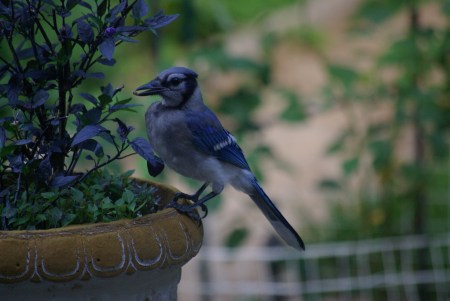
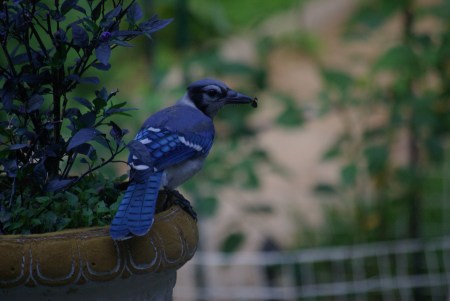
Sometimes the blue jays do all they can to stay out of the sun — like this guy, who was bent on getting some of Kathryn’s weird purple peppers.

Blue jay working to get a purple pepper

Blue jay working to get a purple pepper

Considering these shots were done in the shade, with just a 200 mm zoom, through a foggy window, they came out pretty well.

Blue Jay wrestles the pepper from the plant

Blue Jay wrestles the pepper, or something, from the plant.

The peppers eventually grow to be the size of a Bing cherry — too big for the jays, then.  They go after these peppers before they mature, and after they dry.

With her prize, the blue jay heads for its dining area in the live oak.

With her prize, the blue jay heads for its dining area in the live oak.

Mary K left us with her old bird feeder when she moved.  This year we’ve kept feeders in both the front and back yards.  Blue jays appear to have recovered from their West Nile devastation three years ago — we had one family nesting in the live oak earlier, in the spring — and Kathryn learned that the jays like peanuts still in the shell.

It’s been a good year for watching birds in our yard.  Still haven’t captured that little green hummer in a camera, though.


Birds plant their favorite flowers

July 6, 2009

In our yard, after Mrs. Bathtub (Trophy Wife™) works her wonders in the garden, the soil will grow almost anything.

Birds, even, take advantage of that fact, seeding their favorite plants all over.  They are especially fond of sunflowers and pequin peppers.

If we didn’t use cooked peanuts, the blue jays would make this neighborhood one of the largest peanut fields in the world.

A bird-planted sunflower in Kathryn's garden - copyright 2009, Ed Darrell

A bird-planted sunflower in Kathryn's garden - copyright 2009, Ed Darrell