Some there are—many, perhaps—who are offended by public displays of religion. Religion, they believe, is a personal matter; if it must be given external manifestation, that should not occur in public places where others may be offended. I can understand that attitude: It parallels my own toward the playing in public of rock music or Stravinsky. And I too am especially annoyed when the intrusion upon my inner peace occurs while I am part of a captive audience, as on a municipal bus or in the waiting room of a public agency.
Justice Antonin Scalia, dissenting to the Supreme Court’s denying to hear a case about high school graduations held in religious facilities, the denial of the writ of certiorari to Elmbrook vs. John Doe et al., 573 U.S. ______.
Justice Clarence Thomas joined Scalia in the dissent.
But, he argues, religion is protected by the First Amendment, our music choices are not.
Easter services at Elmbrook Church, in Brookfield, Wisconsin.
I suppose to some, high school graduation ceremonies are a lot like being forced to listen to rap music at intersections. To others, high school graduations may seem akin to religious experience. Not sure either view means the ceremonies should be held in churches.
From @HistoricalPics: This is what a school in Afghanistan looks like. Be thankful for what you have. pic.twitter.com/Dsfva1yNb4
A school in Afghanistan — probably the entire school.
Learning can occur almost anywhere. Some children go to great lengths to get an education, to improve their lives where they are, or to improve their chances of finding a better place to live.
I’ll wager this school has no wi-fi, no in-school suspension, few homework problems, and no difficulty with Common Core State Standards.
Afghanistan’s schools all seem to offer amazing hurdles to education, by U.S. standards. Look at these photos.
A line of girls on their way to school. In Afghanistan most of the cities have limited number of schools which are mostly far away from students home. From Everything Afghanistan
BBC featured a story on the Afghanistan schools project. Caption here: Many Afghan schools are outdoors or in makeshift shelters on barren, dusty earth. (These photos from 2009; photos by Ramon Mohamed, a teacher from Broomhill, Sheffield, England.)
Another outdoor Afghanistan classroom. Photo from BBC
2010 post from Reality of Life in Afghanistan: “Eight years since the repressive Taliban regime was overthrown, 42 per cent children still do not attend or have access to schools. (Photo: RFE/RL)”
Those of us who advocate for outdoor classrooms generally have something else in mind than these photographs from Afghanistan show.
Historian David McCullough works on his vintage, historic Royal typewriter. Photo by Dorie McCullough Lawson. via Levenger Press.
Branch banks of the Federal Reserve work hard to provide economic education; alas, in the era of state standards requiring “teach to the test,” a lot of this stuff goes unused.
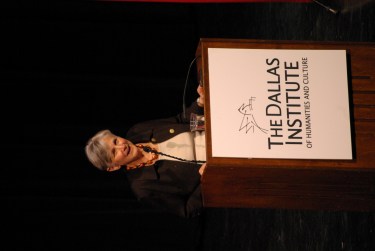
What is the value of education? The Dallas Branch of the Fed had historian David McCullough in for consultations; they asked him on video, and here’s his response.
“We must be an educated people. We cannot be a productive, original, innovative society if we aren’t educated.”
Isn’t the TAKS Test dead? Not yet — zombie like, it still prowls the nightmares of older students working to get a Texas diploma. Test review and practice in this post
You can do it; and if you’ve been out of class for a while, or if you just want to boost your score, here’s a review, and a few lines down here is a link to a place to take an on-line practice test which you can get scored. The practice test questions should be mostly phased out by now, but the topics will remain.
It’s spring, and a young person’s fancy and earnest wishes turn to acing these tests to get a high school diploma.
Here’s a generalized, much truncated list of things high school juniors need to know, according to the Texas Essential Knowledge and Skills (TEKS). This is a list from which the TAKS test questions will be drawn.
Earlier posts provided the definitions of each of these terms and phrases — check those out in your study, too.
We’ll add links to these terms as we find them — you may want to bookmark this post so you can find it again.
You can download a MicroSoft Word version of this study guide, essentially the same as here in a dozen posts, in one file that prints out to about 12 pages; click here to get the printed study guide.
My first use of the online version, I looked for education, and found this from William Feather (1889-1981), describing just what “an education” is:
An education isn’t how much you have committed to memory, or even how much you know. It’s being able to differentiate between what you do know and what you don’t. It’s knowing where to go to find out what you need to know; and it’s knowing how to use the information you get.
When and where did Feather say that? Things get murky — according to the list at the Library of Congress:
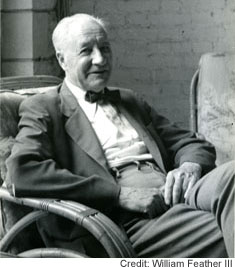
Publisher and writer William Feather, photo by William Feather III. Can we trust a bon mot attributed to such a jovial and scholarly looking fellow?
Attributed to WILLIAM FEATHER.—August Kerber, Quotable Quotes on Education, p. 17 (1968). Unverified.
An honest assessment that we don’t know for certain that Feather said exactly that. This book could be a valuable resource!
William A. Feather (August 25, 1889 – January 7, 1981) was an American publisher and author, based in Cleveland, Ohio.
Born in Jamestown, New York, Feather relocated with his family to Cleveland in 1903. After earning a degree from Western Reserve University in 1910, he began working as a reporter for the Cleveland Press. In 1916, he established the William Feather Magazine.[1] In addition to writing for and publishing that magazine, and writing for other magazines as H.L. Mencken‘s The American Mercury, he ran a successful printing business, and wrote several books.[2]
Feather’s definition appeals to me. Educated people know where to find the facts they need, and they know when it’s important to search for those facts, rather than stand on ignorance.
From Twitter: “Another e.g. pic to show that school transport in Asia needs attention on health & safety aspects pic.twitter.com/Mn2FbSSELX”
Do you think the students have wi-fi to finish their homework on the way to school?
(This is not necessarily representative of all Indian school buses.)
One wonders at the stories behind such “buses” and their use. It might make an interesting geography assignment, to find out how students get to school in other nations. What is the most exotic, bizarre, dangerous or luxurious ride?
In a meeting hall at Washington-on-the-Brazos, Texans meet to write the Texas Declaration of Independence, released March 2, 1836; image from Portal to Texas History
So, put some barbecue in the smoker, get a Shiner for you and your pet armadillo, sit back and enjoy the holiday. If you’re near Washington-on-the-Brazos, go to the ceremony. You’d better be sure you’ve got plenty of Blue Bell Ice Cream.
What? You don’t get the day off? You know, Texas schools don’t even take the day off any more. (In 2014, of course, it’s a Sunday.)
I thought things were going to change when the Tea Party got to Austin and Washington? What happened?
For Texas Independence Day, it’s appropriate to fly your U.S. flag — or your Texas flag, if you have one.
Original Manuscript, Texas Declaration of Independence, page 1 – Texas State Library and Archives Commission
Text from the image above:
The Unanimous
Declaration of Independence
made by the
Delegates of the People of Texas
in General Convention
at the Town of Washington
on the 2nd day of March 1836
When a government has ceased
to protect the lives, liberty and property
of the people, from whom its legitimate
powers are derived, and for the advance-
ment of whose happiness it was inst-
ituted, and so far from being a guaran-
tee for the enjoyment of those inesti-
mable and inalienable rights, becomes
an instrument in the hands of evil
rulers for their oppression.
Russ Walsh gives strong voice to support from public education in a variety of ways — his old blog, Russ on Reading, carried a good deal of serious thought about the Common Core curricula recently, especially as it relates to reading.
The Common Core State Standards in English/Language Arts has come under increasing scrutiny. Here is a collection of my posts from the past year on the Common Core and some of the concerns I have about the new standards and literacy instruction.
A note only because it’s necessary to keep reminding people in Texas: CSCOPE is/was not Common Core. Texas chose not to join in the Common Core Coalition years ago.
Spread the word; friends don't allow friends to repeat history.
From Susan Ohanian’s NCLB Cartoons: “Every year, the Coalitition for Better Education raises grassroots funds to put up these billboards. You can contribute. You can go forth and do likewise in your state.”
Dr. Diane Ravitch, former Assistant Secretary of Education for Research, said at her blog:
The corporate types who hate teachers’ unions and public schools have been running a billboard and mass media campaign in New York and New Jersey.
But they are not the only ones who know how to frame a message.
Here is a fabulous billboard posted on a major highway in Colorado by critics of the nutty testing regime imposed by No Child Left Behind and Race to the Top.
Spread the word; friends don't allow friends to repeat history.
As if anyone were looking and needed light. The heat is intense, and the light seems superfluous.
First, Jack Russell Weinstein, a philosopher in North Dakota, of all places, seems to me to have accurately found the issue in Common Core discussions, better than almost anyone else (including Diane Ravitch, at least for succinctness), in a short post at his blog PQED from which this is excerpted:
Jack Russell Weinstein presented the keynote address at the 2007 UND Undergraduate Philosophy Conference. (Photo credit: Wikipedia)
Philosophically then, the question is how to negotiate federal and local power in education. We are also concerned with what counts as expertise. If we combine the two, we are faced with a third issue: who negotiates all of this? When the National Governors’ Association created the new Common Core—the standards that many American school kids will now be evaluated against—they relied more heavily on business than on teachers. They asked Microsoft and the standardized testing companies what they thought, and minimized the input of those who actually teach. They then assumed a purpose that suited their needs: they concluded that students should graduate from high school career and college ready.
Now, these are good goals. Our students should be ready to move on to the next stage of life. But where is the love of literature, the ability to communicate needs and political ideas, the capacity to respect both difference and personal experience at the same time? Where is the understanding of the importance of math, science, and history, and the celebration of being alive, in the world, surrounded by art, music, comedy, and neighbors? Leaving these things out of schooling is a bit like teaching your child to kick a soccer ball while convincing her that she doesn’t deserve the chance. It’s like putting her on a soccer team only to teach her to despise the game. It’s like sending your kids to school while telling them that education and teachers have little value. Surely, the first goal of education, like the first goal of soccer, should be to show why it’s worth doing in the first place.
Why do teachers resist the mandates of Common Core?
Dr. Diane Ravitch discussed education reform’s problems in Dallas, in April 2010. Photo by Ed Darrell
We suggest money spent on the development of these major unresearched and unfunded mandates to implement CCSS be used to alleviate the lack of resources — unequal staffing, support services, and restoration of school libraries, music and art classes, as well as enrichment programs in these schools. Research has shown that this is the way to help even the playing field for the districts in poverty.
Teachers are mind-molders. When they embrace, create and implement meaningful change with their students, they are helping every child reach his or her potential. Teachers embrace constructive, researched change that result in better, meaningful learning. Resistance to the Common Core standards should be understood in this context.
Rabid CSCOPE critics in Texas, dedicated to the tasks of destroying teaching while failing to recognize what they do, won’t understand. First off they fail to recognize, as Dr. Weinstein explicitly does, that Common Core standards do not come from the federal government, botching the history of education and federal involvement from the get go. More important, few discussions start out with seeking the common ground we might find by asking the question, what is the purpose of this education system we work on?
Last time the SBOE approved social studies books in 2010, the process was contentious. This photo, from The Christian Science Monitor, shows protests on the books; photo by Larry Kolvoord, Austin American-Statesman
Good news a few days ago was that the Texas State Board of Education approved science books that teach real science, for use in Texas schools.
But the Road Goes On Forever, and the Tea Party Never Ends: Social studies books are up for review, now.
TEA is looking for nominations for reviewers for books in social studies, math and fine arts. Here’s the notice I got in e-mail:
The Texas Education Agency is now accepting nominations to the state review panels that will evaluate instructional materials submitted for adoption under Proclamation 2015.
Proclamation 2015 calls for instructional materials in the following areas:
♦ Social Studies, grades K-12
♦ Social Studies (Spanish), grades K-5
♦ Mathematics, grades 9-12
♦ Fine Arts, grades K-12
State review panels are scheduled to convene in Austin for one week during the summer of 2014 to review materials submitted under Proclamation 2015. The TEA will reserve hotel lodging and reimburse panel members for all travel expenses, as allowable by law.
Panel members should plan to remain on-site for five days to conduct the evaluation.
Panel members will be asked to complete an initial review of instructional materials prior to the in-person review.
Panel members will receive orientation and training both prior to the initial review and at the beginning of the in-person review.
Panel members might be asked to review additional content following the in-person review.
Because many of the samples will be delivered electronically, panel members should be comfortable reviewing materials on-screen rather than in print.
Panel members should also have a working knowledge of Microsoft Excel.
Upon initial contact by a representative of the TEA, state review panel nominees begin a “no-contact” period in which they may not have either direct or indirect contact with any publisher or other person having an interest in the content of instructional materials under evaluation by the panel. The “no contact” period begins with the initial communication from the Texas Education Agency and ends after the State Board of Education (SBOE) adopts the instructional materials. The SBOE is scheduled to adopt Proclamation 2015 materials at its November 2014 meeting.
Or, until that account is unsuspended by the forces supporting Donald Trump: Follow @FillmoreWhite, the account of the Millard Fillmore White House Library
We've been soaking in the Bathtub for several months, long enough that some of the links we've used have gone to the Great Internet in the Sky.
If you find a dead link, please leave a comment to that post, and tell us what link has expired.
Thanks!
Retired teacher of law, economics, history, AP government, psychology and science. Former speechwriter, press guy and legislative aide in U.S. Senate. Former Department of Education. Former airline real estate, telecom towers, Big 6 (that old!) consultant. Lab and field research in air pollution control.
My blog, Millard Fillmore's Bathtub, is a continuing experiment to test how to use blogs to improve and speed up learning processes for students, perhaps by making some of the courses actually interesting. It is a blog for teachers, to see if we can use blogs. It is for people interested in social studies and social studies education, to see if we can learn to get it right. It's a blog for science fans, to promote good science and good science policy. It's a blog for people interested in good government and how to achieve it.
BS in Mass Communication, University of Utah
Graduate study in Rhetoric and Speech Communication, University of Arizona
JD from the National Law Center, George Washington University


 Posted by Ed Darrell












 Millard Fillmore's Bathtub