Just stay quiet: Poster hoax about the Pledge of Allegiance

September 15, 2013

Anybody send this to you on Facebook (100 times, maybe?)

Hoax claims about the Pledge of Allegiance, found on Facebook and innumerable e-mails

Hoax claims about the Pledge of Allegiance, found on Facebook and innumerable e-mails

Clever, eh?  It repeats the McCarthy-era editing of the Pledge of Allegiance, and then comes up with this whopper:

. . . My generation grew up reciting this every morning in school, with my hand on my heart.  They no longer do that for fear of offending someone!

Let’s see how many Americans will re-post and not care about offending someone!

Not quite so long-lived as the Millard Fillmore Bathtub Hoax — which started in 1917 — but a lot more common these days.

Just as false.  Maybe more perniciously so.

Consider:

  1. Actually, 45 of our 50 states require the Pledge of Allegiance in public schools.  The five exceptions:  Iowa, Hawaii, Oklahoma, Vermont and Wyoming.  See any pattern there?
  2. None of the five states previously required the Pledge, and then stopped.
  3. None of the five states claim to not require the pledge in order to avoid offending anyone.  Oklahoma would be happy to offend people on such issues, most of the time.
  4. Reposting historically inaccurate claims, without fear of offending anyone, is no virtue.  It’s just silly.

The creator of that poster is probably well under the age of 50, and may have grown up with the hand-over-heart salute used after World War II.  That was not the original salute, and I’d imagine the author is wholly ignorant of the original and why it was changed.

Students pledging to the flag, 1899, 8th Division, Washington, D.C. Part of the Frances Benjamin Johnston 1890 - 1900 Washington, D.C., school survey.

Wikipedia image and caption: Students pledging to the flag, 1899, 8th Division, Washington, D.C. Part of the Frances Benjamin Johnston 1890 – 1900 Washington, D.C., school survey.

Wikipedia gives a concise history of the salute:

Swearing of the Pledge is accompanied by a salute. An early version of the salute, adopted in 1892, was known as the Bellamy salute. It started with the hand outstretched toward the flag, palm down, and ended with the palm up. Because of the similarity between the Bellamy salute and the Nazi salute, developed later, the United States Congress instituted the hand-over-the-heart gesture as the salute to be rendered by civilians during the Pledge of Allegiance and the national anthem in the United States, instead of the Bellamy salute. Removal of the Bellamy salute occurred on December 22, 1942, when Congress amended the Flag Code language first passed into law on June 22, 1942.

Students in an unnamed school in 1941, offering the Bellamy Salute for the Pledge of Allegiance.

Students in an unnamed school in 1941, offering the Bellamy Salute for the Pledge of Allegiance. Wikipedia image.

One might understand why the Bellamy Salute was changed, during war with Nazi Germany.

Arrogance and ignorance combine to form many different kinds of prejudices, all of them ugly.  The arrogant assumption that only “our generation” learned patriotism and that whatever goes on in schools today is not as good as it was “in our day,” regardless how many decades it’s been since the speaker was in a public school, compounds the ignorance of the fact that since 1980, forced patriotic exercises in schools have increased, not decreased.

Like much about our nation’s troubles, assumptions based on ignorance often are incorrect assumptions.  Consequently, they give rise to what is today clinically known as the Dunning Kruger Effect (or syndrome), so elegantly summed by by Bertrand Russell in the 1930s:

The trouble with the world is that the stupid are cocksure and the intelligent are full of doubt.

Humorously summed up by “Kin” Hubbard:

It isn’t what we don’t know that gives us trouble, it’s what we know that ain’t so.

Ignorance is a terrible disease, but one easily cured, by reading.  We can hope.

More:


Still, it’s what we know — that ain’t so — that gets us into trouble

September 10, 2013

Yes, yes, it’s the Dunning Kruger Effect.

It’s being gullible to hoaxes.

Gullible’s travels, etc. (illustration 1)

Gullible’s travels, etc. (illustration 1) (Photo credit: UIC Digital Collections)

And it’s not really understanding politics, or economics, but assuming that we do, that gets us moving in the wrong direction.

Is it dangerous?  The entire Tea Party is misled by their own wrong assumptions.  Mistaken belief in what intelligence sources found in Iraq helped get us into the second longest war in U.S. history (and perhaps the costliest ever). Erroneous beliefs about the economy contributed to the great Crash of 2008.  False beliefs about the economy short-circuited our recovery, after Obama got action to prevent our bottoming out.

They’re still at it.

Today I had a guy tell me that Paul Krugman, the Nobel winning economist from Princeton and the New York Times, was wrong when he advocated creating a housing bubble, back in 2002.

Krugman did that?  Really?

Maybe in the land of Gullible’s Travels.

https://twitter.com/Obomination1/status/377500188710944768

Turns out the claim is based on a carefully edited-out-of-context quote from a 2002 column Krugman wrote.  It’s a hoax quote, as it appears, and as it appears to make Krugman call for a housing bubble — which he didn’t do.

This guy afraid to put his name to his claims, “Obomination1” hadn’t bothered to check the source.  Any journalist worth the newspaper ink on his hands would have had a clattering Hemingway Brand® Sh** Detector at that point. Krugman advocating a housing bubble?

Not tough to find that quote, and track it back to an opposite-editorial page piece Krugman wrote for the New York Times on August 2, 2002, “Dubya’s Double Dip?”  In it, the usual-critic of Greenspan, Krugman, worried about the failure of the economy to recover except by excessive consumer spending — which both had a finite amount of capability, Krugman argued, and did not mend the organic problems of production that caused the recession whose pain was eased by the NASDAQ bubble but not cured in any way.  Put Krugman’s quote from the photo poster into real context (I’ve highlighted the quoted part below):

A few months ago the vast majority of business economists mocked concerns about a ”double dip,” a second leg to the downturn. But there were a few dogged iconoclasts out there, most notably Stephen Roach at Morgan Stanley. As I’ve repeatedly said in this column, the arguments of the double-dippers made a lot of sense. And their story now looks more plausible than ever.

The basic point is that the recession of 2001 wasn’t a typical postwar slump, brought on when an inflation-fighting Fed raises interest rates and easily ended by a snapback in housing and consumer spending when the Fed brings rates back down again. This was a prewar-style recession, a morning after brought on by irrational exuberance. To fight this recession the Fed needs more than a snapback; it needs soaring household spending to offset moribund business investment. And to do that, as Paul McCulley of Pimco put it, Alan Greenspan needs to create a housing bubble to replace the Nasdaq bubble.

Judging by Mr. Greenspan’s remarkably cheerful recent testimony, he still thinks he can pull that off. But the Fed chairman’s crystal ball has been cloudy lately; remember how he urged Congress to cut taxes to head off the risk of excessive budget surpluses? And a sober look at recent data is not encouraging.

Krugman wasn’t calling for the creation of a housing bubble at all.  He was warning there were other problems that needed to be solved then.  They weren’t solved, the housing bubble collapsed and took down a great deal of the world’s financial markets with it.

So, was Krugman “a loser” as my correspondent claims?  Or is my correspondent looking the wrong way through the telescope, and being suckered by a hoaxed-context quote?

Krugman continued:

On the surface, the sharp drop in the economy’s growth, from 5 percent in the first quarter to 1 percent in the second, is disheartening. Under the surface, it’s quite a lot worse. Even in the first quarter, investment and consumer spending were sluggish; most of the growth came as businesses stopped running down their inventories. In the second quarter, inventories were the whole story: final demand actually fell. And lately straws in the wind that often give advance warning of changes in official statistics, like mall traffic, have been blowing the wrong way.

Despite the bad news, most commentators, like Mr. Greenspan, remain optimistic. Should you be reassured?

Bear in mind that business forecasters are under enormous pressure to be cheerleaders: ”I must confess to being amazed at the venom my double dip call still elicits,” Mr. Roach wrote yesterday at cbsmarketwatch.com. We should never forget that Wall Street basically represents the sell side.

Bear in mind also that government officials have a stake in accentuating the positive. The administration needs a recovery because, with deficits exploding, the only way it can justify that tax cut is by pretending that it was just what the economy needed. Mr. Greenspan needs one to avoid awkward questions about his own role in creating the stock market bubble.

But wishful thinking aside, I just don’t understand the grounds for optimism. Who, exactly, is about to start spending a lot more? At this point it’s a lot easier to tell a story about how the recovery will stall than about how it will speed up. And while I like movies with happy endings as much as the next guy, a movie isn’t realistic unless the story line makes sense.

Had only Greenspan, Bush, and a few million more people only listened to Krugman, then, we might have been spared two decades of lousy economy growth.

But they didn’t.  It wasn’t Krugman who was “the loser,” on this — though he certainly is pained by America’s failure to follow his advice.

Bertrand Russell warned us of the Obomination1/Thiessens and others.  So did Will Rogers, and Kin Hubbard, and Daniel Boorstin, as well as Drs. Dunning and Kruger.

Those who don’t listen to Russell, Rogers, Hubbard, Boorstin, the repentant Mencken, and Krugman, are the losers, and they drag the rest of us with them.

By the way, Krugman’s Nobel was awarded in 2008, after the great shock of the housing bubble’s bursting, but before all the predictions he had made were played out.  He was right.

Santayana’s Ghost dines with von Hayek’s Ghost tonight, and they both smile pityingly at those who ignore Krugman and claim to ridicule him while failing to even check out the accuracy of what they thought Krugman said.

More:


Even when he’s almost correct, David Barton doctors his accounts of history to make them false: Misquoting John Adams

July 5, 2013

Here’s David Barton‘s screw-up of a John Adams letter:

David Barton cuts John Adams's words off

David Barton’s “Wallbuilders” website featured John Adams’s description of July 2 — but conveniently edited out Adams’s own words, to make it appear as something else. Barton misses the history! What sort of anti-American cuts the words of John Adams when Adams defends liberty’s heritage?

Other groups make the same error as David Barton's Wallbuilders, but without obvious cover ups, restricting their comments to "Independence Day." Accuracy helps, always.

Other groups make the same error as David Barton’s Wallbuilders, but without obvious cover ups, restricting their comments to “Independence Day.” Accuracy helps, always.

“The . . . day of July, 1776?”  What day?

[Barton’s site changes annually, but it keeps repeating the cover-up.]

Faithful readers, and good students of history know that John Adams thought, in 1776, that July 2 would be celebrated as Independence Day.  Why?  July 2, 1776, was the day the 2nd Continental Congress voted to declare the colonies independent of Britain, and no longer under the rule of the Crown or Parliament.

The Declaration of Independence — the press release explaining Richard Henry Lee’s resolution for independence — sat ready to be discussed.  The Congress did not adopt the Declaration until two days later, on July 4.

Our Independence Day celebration falls on the date of the adoption of the Declaration, not the date of the actual resolution declaring independence.

This is a point of great humor among historians.  Even John Adams, more prescient than most soothsayers, could not predict accurately when Americans would celebrate independence.  Here at Millard Fillmore’s Bathtub, we often make a post on or about July 2, noting that humorous discrepancy.

That’s interesting.  It’s inspiring to know these august figures, near-gods in the American pantheon of the 21st century, got things wrong.  It’s humorous.  It’s good history.

What in the hell was David Barton thinking?

What evil purpose is he trying to serve by hiding real history, in such a bizarrely petty way?  Why create a hoax when the words themselves support the point you’re wishing to make, that John Adams thought Americans should celebrate independence?

Screenshot of David Barton's webpage, showing his bizarre butchery of Adams's words.

Screenshot of David Barton’s webpage, showing his bizarre butchery of Adams’s words.

Sheesh! He comes so close to getting something accurate, but he can’t resist monkeying with the words of the Founders.  David Barton reminds me of the guy who cheated at golf so much that, one day when he hit a hole-in-one, he wrote “0!” on the scorecard.  A man who will lie to us about one of the most famous letters in American history will lie about anything, for fun.

More:

John Adams, ca 1816, by Samuel F.B. Morse (Bro...

‘David Barton said what?’ By the time this portrait was painted, Adams knew Americans would celebrate the 4th, and not the 2nd; he seems to be glaring right at David Barton, to tell Barton to quit jerking around with history – John Adams, ca 1816, by Samuel F.B. Morse (Brooklyn Museum) Wikipedia image


If you don’t at least check Snopes.com first . . .

June 24, 2013

checking snopes.com before forwarding dumb e-mails.

Definition of “gullible” in a dictionary. Profile photo on Facebook for “checking snopes.com before forwarding dumb e-mails.”

Hannum said there’s a sucker born every minute (and suckers credit it to Barnum).  Do you think it’s that seldom, with the internet?


Querying the Rachel Carson Critics (who turned out the light?)

June 19, 2013

Another question of mine that will probably never see the light of day.  This group has no answer, so why would they allow the question?

I stumbled across a blog-looking page from the American Council on Science and Health, an industry apologist propaganda site, on World Malaria Day, which was April 25.  You may recognize the name of the group as one of the industry-funded sites that constantly attacks Rachel Carson, and often the World Health Organization, with the unscientific and false claims that environmentalists bannned DDT and thereby condemned millions of Africans to die from malaria — which, ASCH claims, could have easily been eradicated with more DDT poisoning of Africa.

On World Malaria Day, ASCH took note, flirted with the facts (that DDT doesn’t work as it once was thought to work), but then backed away from the facts — that the ban on DDT in the U.S. came years AFTER WHO suspended the malaria eradication campaign in Africa when it was discovered DDT couldn’t kill DDT-adapted mosquitoes, already subject to years of abuse of DDT by agriculture and other industries.  ASCH said:

DDT kills mosquitoes, although not as well as it did 60 years ago. But it also irritates them and repels them, so the small amount sprayed inside homes effectively reduces the transmission of the malarial microbe substantially. The banning of DDT, based upon political anti-chemical bureaucrats and “environmentalists” inspired by Carson’s “Silent Spring” who ran our EPA in 1972, helped to impede the malaria control program led by the UN’s WHO.

Impede?  Impossible for a 1972 ban to have been responsible for the earlier suspension of the WHO campaign, not to mention EPA’s ban ended at the U.S. borders.  So I asked:

Screen capture of query to ACSH on how EPA's ban "impeded" WHO's campaign against malaria, ended years earlier.

Screen capture of query to ACSH on how EPA’s ban “impeded” WHO’s campaign against malaria, ended years earlier.

Ed Darrell Reply

June 19, 2013 at 5:16 am

Your comment is awaiting moderation.

I would be very interested in just how the 1972 ban on DDT in the U.S. “impeded” the UN’s antimalaria campaign, which stopped using DDT heavily seven years earlier, and was suspended in 1969.

After the ban on U.S. use of DDT, all of U.S. manufacture was dedicated to export to Africa and Asia, which greatly increased DDT supplies available there.

How did this impede?

Want to wager a guess as to whether they’ll ever allow the comment to see the light of day at their site, let alone answer it?

More:

Wall of Shame – Sites that continue to spread the pro-DDT hoax as fact:

DDT is good for me advertisement

“DDT is good for me advertisement” from circa 1955.  Photo image from the Crossett Library Bennington College.  This ad today is thought to be emblematic of the propaganda overkill that led to environmental disasters in much of the U.S. and the world.  DDT cleanups through the Superfund continue to cost American taxpayers millions of dollars annually.


Why it’s important to have accurate history and science on the internet: Don’t lie to kids about DDT

June 6, 2013

Great accomplishment by this kid from Hudson, Massachusetts — but troubling, too.  He’s winning a persuasive speech competition, persuading people against history, law and science, calling for a return of DDT.

Andrew Brandt of Hudson MA, persuasive speaking champion

Andrew Brandt of Hudson holds his winning certificate at the regional speech and debate tournament in New Hampshire in April. He was one of seven to advance to the national competition. (Photo/submitted)

Hudson – Andrew Barndt, 13, from Hudson will be traveling to Tulsa, Okla., in June to join more than 500 students competing in a National Speech and Debate Tournament.

Andrew has qualified to compete in the Persuasive Speech category with the National Christian Forensics and Communications Association (NCFCA). Home-schooled students aged 12 to 18 compete at local and regional tournaments around the country in the winter and spring, culminating in the national tournament in June.

In April, at the regional tournament in Concord, N.H., 27 students competed in the Persuasive Speech category. Andrew’s speech, “DDT: What You Think You Know May Not Be So,” was one of seven chosen to move on the national competition.

According to the NCFCA, “a persuasive speech is an original platform speech that attempts to persuade the audience to adopt a particular point of view or course of action.”

A competitor will give a speech three times in front of different three-judge panels. Judges can be other parents, members of the community or former competitors. The judges rank them on 17 criteria, including: using outside evidence, relating a clear thesis, demonstrating a logical flow of ideas, incorporating proper vocal technique, having good energy level and making eye contact. The top candidates advance to a final round and the winners are decided. Winners receive a trophy and recognition on the NCFCA website.

Andrew will present his winning speech at the national competition held at Oral Roberts University June 18-22. His speech has three parts: debunking the myth of birds’ eggs being harmed due to DDT, disproving the claim that DDT causes cancer in humans, and pointing out that DDT has saved hundred of millions of lives by reducing mosquitoes that carry malaria. He concludes by urging his listeners to repeal the ban on DDT.

“I’m an avid birdwatcher,” Andrew said. “which is how I became familiar with DDT in the first place.”

According to his mother, Ann Barndt, Andrew also competes in debate. “This year he and his brother, Jonathan, 16, partnered together as a team,” she said. “However, their record was not high enough to advance.”

She said the brothers did enjoy preparing for the tournaments, researching various aspects of the this year’s topic, the United Nations. They plan to partner together again next year.

“As for my future, I’m still thinking about how to merge [bird watching] with a sustainable livelihood,” Andrew said.

For more information about the tournament, visit www.ncfca.org.

At the site of the Hudson Community Advocate, I offered what I hope is gentle but persuasive advice to the kid, from one old debater to another:

I commend the young man on his speaking prowess — but he needs a lot of help with his research chops.

1. Birds eggs are harmed by DDT; worse, that’s just one of four ways DDT kills birds. It also poisons chicks outright, in the eggs, poisons the adults (especially migratory birds), and it disrupts the nervous systems of chicks so that, even when they do hatch, they don’t survive.

2. Although it’s a weaker carcinogen, DDT is listed as a “suspected human carcinogen” by the American Cancer Society, CDC and WHO. DDT’s carcinogenic qualities were evidenced long after EPA banned its use because it kills wildlife systems.

3. While DDT played a role in defeating malaria in some countries, it was overused, and it ceased to be so effective as it was. However, malaria rates of infection and total deaths from malaria now are much, much lower than they ever were with DDT. Since malaria deaths are reduced by more than 75%, it’s incorrect math to claim millions died without DDT, wholly apart from the history.

3.1 DDT has never been banned for use against malaria, anywhere. The U.S. ban on DDT, in fact, allowed manufacturing to continue in the U.S., with all DDT dedicated to export. So the U.S. ban, which saved the bald eagle, osprey, peregrine falcon and brown pelican, among others, also multiplied the amount of DDT available to fight malaria in Africa and Asia.

Andrew must be very, very persuasive, to persuade people that DDT, a deadly and mostly useless pollutant, should be revived. Good luck to him in his tournament, and good luck finding better sources next year.

Mr. Brandt must be excused, partly, for his error.  There remains a dedicated and well-funded disinformation assault on the reputation of Rachel Carson, author of Silent Spring, on the World Health Organization, on malaria fighters, on scientists and “environmentalists,” and this assault largely succeeds in ruthlessly elbowing aside the facts in internet searches, and elsewhere.  Fox News still employs serial-prevaricator Steven Milloy whose assault hoaxes on Carson and science of DDT should be more legendary than they are.  So-called Christian organizations join the political fray, while Christians like the Methodists actually fight malaria with the Nothing But Nets campaign — the workers are too busy to crow, the crowers are too busy to fight malaria.  (One may wonder about this Christian debate group — it caters to the small band of home schoolers.  Their evidence standards aside — standards which would disqualify most of the claims against Rachel Carson and for DDT — one wonders how a speaker would fare in this competition,  who praised Rachel Carson and the EPA for banning DDT, and for keeping the ban.  Accuracy of information is not among the criteria to be used in judging.)

The problem with lying to kids is they often believe the lies.  This isn’t a case of scientific disputes, or conflicting studies or information.  Not a jot nor tittle of Rachel Carson’s research citations has ever been questioned.  What she wrote about DDT in 1962 remains valid today, supported by more than a thousand follow-up studies and contradicted by none.  The destructive nature of DDT on bird populations is not questioned by scientists nor experienced bird watchers.  Where did this well-intentioned kid get led so far astray?

Science communicators?  What’s the solution to this problem?

More:


May 23, 1926: Mencken confessed the Millard Fillmore bathtub hoax, “any facts . . . got there accidentally”

May 23, 2013

Reasons for my annual observance of a moment of silence, here on May 23, for the failed confession of Mr. Mencken should be obvious to even a sleepy reader.  Alas, annually the need grows to call attention to the dangers of hoaxing, as hoaxes particularly in the political life of the U.S. grow in number, in viciousness, and in the numbers of gullibles suckered.  Here, again, is our annual reading of the confession with a few photographs and new links thrown in for easy learning:

May 23, 1926, H. L. Mencken‘s newspaper column confessed his hoax of nine years earlier — he had made up whole cloth the story of Millard Fillmore‘s only accomplishment being the installation of a plumbed bathtub in the White House (in the 1850s known as the Executive Mansion).

Alas, the hoax cat was out of the bag, and the hoax information still pollutes the pool of history today.

Text of the confession, from the Museum of Hoaxes:

Melancholy Reflections

On Dec. 28, 1917, I printed in the New York Evening Mail, a paper now extinct, an article purporting to give the history of the bathtub. This article, I may say at once, was a tissue of absurdities, all of them deliberate and most of them obvious…

This article, as I say, was planned as a piece of spoofing to relieve the strain of war days, and I confess that I regarded it, when it came out, with considerable satisfaction. It was reprinted by various great organs of the enlightenment, and after a while the usual letters began to reach me from readers. Then, suddenly, my satisfaction turned to consternation. For these readers, it appeared, all took my idle jocosities with complete seriousness. Some of them, of antiquarian tastes, asked for further light on this or that phase of the subject. Others actually offered me corroboration!

But the worst was to come. Pretty soon I began to encounter my preposterous “facts” in the writings of other men. They began to be used by chiropractors and other such quacks as evidence of the stupidity of medical men. They began to be cited by medical men as proof of the progress of public hygiene. They got into learned journals. They were alluded to on the floor of congress. They crossed the ocean, and were discussed solemnly in England and on the continent. Finally, I began to find them in standard works of reference. Today, I believe, they are accepted as gospel everywhere on earth. To question them becomes as hazardous as to question the Norman invasion.

* * *

And as rare. This is the first time, indeed, that they have ever been questioned, and I confess at once that even I myself, their author, feel a certain hesitancy about doing it. Once more, I suppose, I’ll be accused of taking the wrong side for the mere pleasure of standing in opposition. The Cincinnati boomers, who have made much of the boast that the bathtub industry, now running to $200,000,000 a year, was started in their town, will charge me with spreading lies against them. The chiropractors will damn me for blowing up their ammunition. The medical gents, having swallowed my quackery, will now denounce me as a quack for exposing them. And in the end, no doubt, the thing will simmer down to a general feeling that I have once more committed some vague and sinister crime against the United States, and there will be a renewal of the demand that I be deported to Russia.

I recite this history, not because it is singular, but because it is typical. It is out of just such frauds, I believe, that most of the so-called knowledge of humanity flows. What begins as a guess — or, perhaps, not infrequently, as a downright and deliberate lie — ends as a fact and is embalmed in the history books. One recalls the gaudy days of 1914-1918. How much that was then devoured by the newspaper readers of the world was actually true? Probably not 1 per cent. Ever since the war ended learned and laborious men have been at work examining and exposing its fictions. But every one of these fictions retains full faith and credit today. To question even the most palpably absurd of them, in most parts of the United States, is to invite denunciation as a bolshevik.

So with all other wars. For example, the revolution. For years past American historians have been investigating the orthodox legends. Almost all of them turn out to be blowsy nonsense. Yet they remain in the school history books and every effort to get them out causes a dreadful row, and those who make it are accused of all sorts of treasons and spoils. The truth, indeed, is something that mankind, for some mysterious reason, instinctively dislikes. Every man who tries to tell it is unpopular, and even when, by the sheer strength of his case, he prevails, he is put down as a scoundrel.

* * *

As a practicing journalist for many years, I have often had close contact with history in the making. I can recall no time or place when what actually occurred was afterward generally known and believed. Sometimes a part of the truth got out, but never all. And what actually got out was seldom clearly understood. Consider, for example, the legends that follow every national convention. A thousand newspaper correspondents are on the scene, all of them theoretically competent to see accurately and report honestly, but it is seldom that two of them agree perfectly, and after a month after the convention adjourns the accepted version of what occurred usually differs from the accounts of all of them.

Political boss Harry M. Daugherty (later Attor...

Political boss Harry M. Daugherty (later Attorney General of the United States), left, with Senator Warren G. Harding (later President of the United States) at Harding’s home in Marion, Ohio during the 1920 presidential campaign. (Photo credit: Wikipedia)

I point to the Republican convention of 1920, which nominated the eminent and lamented Harding. A week after the delegates adjourned the whole country believed that Harding had been put through by Col. George Harvey: Harvey himself admitted it. Then other claimants to the honor arose, and after a year or two it was generally held that the trick had been turned by the distinguished Harry M. Daugherty, by that time a salient light of the Harding cabinet. The story began to acquire corroborative detail. Delegates and correspondents began to remember things that they had not noticed on the spot. What the orthodox tale is today with Daugherty in eclipse, I don’t know, but you may be sure that it is full of mysterious intrigue and bold adventure.

Ambassador Myron T. Herrick was part of the U....

Ambassador Myron T. Herrick was part of the U.S. delegation to the International Chamber of Commerce which sailed on Kroonland in 1920. (Photo credit: Wikipedia)

What are the facts? The facts are that Harvey had little more to do with the nomination of Harding than I did, and that Daugherty was immensely surprised when good Warren won. The nomination was really due to the intense heat, and to that alone. The delegates, torn by the savage three cornered fight between Lowden, Johnson, and Wood, came to Saturday morning in despair. The temperature in the convention hall was at least 120 degrees. They were eager to get home. When it became apparent that the leaders could not break the deadlock they ran amuck and nominated Harding, as the one aspirant who had no enemies. If any individual managed the business it was not Harvey or Daugherty, but Myron T. Herrick. But so far as I know Herrick’s hand in it has never been mentioned.

* * *

English: Jack Dempsey and Georges Carpentier i...

Jack Dempsey and Georges Carpentier in arena before fight at Boyle’s Thirty Acres. (Photo credit: Wikipedia)

I turn to a more pleasant field — that of sport in the grand manner. On July 2, 1921, in the great bowl at Jersey City, the Hon. Jack Dempsey met M. Carpentier, the gallant frog. The sympathy of the crowd was overwhelmingly with M. Carpentier and every time he struck a blow he got a round of applause, even if it didn’t land. I had an excellent seat, very near the ring, and saw every move of the two men. From the first moment Dr. Dempsey had it all his own way. He could have knocked out M. Carpentier in the first half of the first round. After that first half he simply waited his chance to do it politely and humanely.

Yet certain great newspapers reported the next morning that M. Carpentier had delivered an appalling wallop in the second round and that Dr. Dempsey had narrowly escaped going out. Others told the truth, but what chance had the truth against that romantic lie? It is believed in to this day by at least 99.99 per cent of all the boxing fans in Christendom. Carpentier himself, when he recovered from his beating, admitted categorically that it was nonsense, but even Carpentier could make no headway against the almost universal human tendency to cherish what is not true. A thousand years hence schoolboys will be taught that the frog had Dempsey going. It may become in time a religious dogma, like the doctrine that Jonah swallowed the whale. Scoffers who doubt it will be damned to hell.

The moral, if any, I leave to psycho-pathologists, if competent ones can be found. All I care to do today is to reiterate, in the most solemn and awful terms, that my history of the bathtub, printed on Dec. 28, 1917, was pure buncombe. If there were any facts in it they got there accidentally and against my design. But today the tale is in the encyclopedias. History, said a great American soothsayer, is bunk.

Mencken’s confession gets much less attention than it deserves.  In a just world, this essay would be part of every AP U.S. history text, and would be available for printing for students to read individually in class and to discuss, debate and ponder.  Quite to the contrary, state legislatures today debate whether to require teaching of the hoax that disastrous climate change is not occurring, only 45% of Americans claim to know better for certain; more legislatures work hard to devise ways to insert hoaxes against biology (evolution and human reproduction, notably), astronomy and physics (Big Bang), history and even education (Islam is a root of socialist thought, President Obama is not Christian, weapons of mass destruction were found in Iraq after the U.S. invasion, teachers are socialists).

In 2013, the governing body of the Boy Scouts of America votes today on whether to allow homosexual boys to be Scouts — as if an 8-year-old kid joining Cub Scouts knows enough about sex and love, and sex predation, to threaten the Constitution of the U.S. if we allow him to learn how to put alphabet macaroni onto a board spelling out “Mom,” or to learn how to carve an automobile out of a block of wood and race it on a closed-course track.  The so-called Family Research Council (FRC) has conducted a campaign of vicious hoaxes against the measure, even going so far as to purloin official logos of the Boy Scouts to suggest they speak for BSA.  The hoax has millions of victims, they claim.

Meanwhile, in Washington, D.C., GOP Members of Congress call for investigations into wrongdoing evidenced in e-mails between the White House and State Department and CIA, over the attack on the U.S. diplomatic mission in Benghazi, Libya, and the death of Ambassador Chris Stevens.  To hear the GOP describe it, you’d never know that the GOP opposed President Obama’s actions to save the city of Benghazi from destruction by dictator Muammar Gadhafy a few months before, that the GOP slashed the security budget for all U.S. diplomatic missions, leaving Ambassador Stevens underprotected, that the GOP was opposed to much of the work of Ambassador Stevens, or that the incriminating e-mails were hoaxed up by GOP Congressional staff.

If you see pale faces among the GOP Congressional staff or the FRC this morning, it may be because the ghost of H. L. Mencken appeared to them last night to give them hell.  We could hope.

More:


Once again, the Earth Day/Lenin hoax trotted out: Earth Day honors Earth, our majestic home — not Lenin (2013 version)

April 22, 2013

This is mostly an encore post, repeated each year on April 22 — sad that it needs repeating.

You could write it off to pareidolia, once. Like faces in clouds, some people claimed to see a link. The first Earth Day, on April 22, 1970, coincided with Lenin’s birthday. There was no link — Earth Day was scheduled for a spring Wednesday. Now, years later, with almost-annual repeats of the claim from the braying right wing, it’s just a cruel hoax.

No, there’s no link between Earth Day and the birthday of V. I. Lenin:

One surefire way to tell an Earth Day post is done by an Earth Day denialist: They’ll note that the first Earth Day, on April 22, 1970, was an anniversary of the birth of Lenin.

Coincidentally, yes, Lenin was born on April 22 (new style calendar; it was April 10 on the calendar when he was born — but that’s a digression for another day).

It’s a hoax. There is no meaning to the first Earth Day’s falling on Lenin’s birthday — Lenin was not prescient enough to plan his birthday to fall in the middle of Earth Week, a hundred years before Earth Week was even planned.

About.com explains why the idea of a link between Earth Day and Lenin is silly:

Does Earth Day Promote Communism?
Earth Day 1970 was initially conceived as a teach-in, modeled on the teach-ins used successfully by Vietnam War protesters to spread their message and generate support on U.S. college campuses. It is generally believed that April 22 was chosen for Earth Day because it was a Wednesday that fell between spring break and final exams—a day when a majority of college students would be able to participate.

U.S. Sen. Gaylord Nelson, the guy who dreamed up the nationwide teach-in that became Earth Day, once tried to put the whole “Earth Day as communist plot” idea into perspective.

“On any given day, a lot of both good and bad people were born,” Nelson said. “A person many consider the world’s first environmentalist, Saint Francis of Assisi, was born on April 22. So was Queen Isabella. More importantly, so was my Aunt Tillie.”

April 22 is also the birthday of J. Sterling Morton, the Nebraska newspaper editor who founded Arbor Day (a national holiday devoted to planting trees) on April 22, 1872, when Lenin was still in diapers. Maybe April 22 was chosen to honor Morton and nobody knew. Maybe environmentalists were trying to send a subliminal message to the national subconscious that would transform people into tree-planting zombies. One birthday “plot” seems just about as likely as the other. What’s the chance that one person in a thousand could tell you when either of these guys were born.

My guess is that only a few really wacko conservatives know that April 22 is Lenin’s birthday (was it ever celebrated in the Soviet Union?). No one else bothers to think about it, or say anything about it, nor especially, to celebrate it.

Gaylord Nelson, Living Green image

Inventor of Earth Day teach-ins, former Wisconsin Governor and U.S. Senator Gaylord Nelson

Wisconsin’s U.S. Sen. Gaylord Nelson, usually recognized as the founder and father of Earth Day, told how and why the organizers came to pick April 22:

Senator Nelson chose the date in order to maximize participation on college campuses for what he conceived as an “environmental teach-in.” He determined the week of April 19–25 was the best bet; it did not fall during exams or spring breaks, did not conflict with religious holidays such as Easter or Passover, and was late enough in spring to have decent weather. More students were likely to be in class, and there would be less competition with other mid-week events—so he chose Wednesday, April 22.

In his own words, Nelson spoke of what he was trying to do:

After President Kennedy’s [conservation] tour, I still hoped for some idea that would thrust the environment into the political mainstream. Six years would pass before the idea that became Earth Day occurred to me while on a conservation speaking tour out West in the summer of 1969. At the time, anti-Vietnam War demonstrations, called “teach-ins,” had spread to college campuses all across the nation. Suddenly, the idea occurred to me – why not organize a huge grassroots protest over what was happening to our environment?

I was satisfied that if we could tap into the environmental concerns of the general public and infuse the student anti-war energy into the environmental cause, we could generate a demonstration that would force this issue onto the political agenda. It was a big gamble, but worth a try.

At a conference in Seattle in September 1969, I announced that in the spring of 1970 there would be a nationwide grassroots demonstration on behalf of the environment and invited everyone to participate. The wire services carried the story from coast to coast. The response was electric. It took off like gangbusters. Telegrams, letters, and telephone inquiries poured in from all across the country. The American people finally had a forum to express its concern about what was happening to the land, rivers, lakes, and air – and they did so with spectacular exuberance. For the next four months, two members of my Senate staff, Linda Billings and John Heritage, managed Earth Day affairs out of my Senate office.

Five months before Earth Day, on Sunday, November 30, 1969, The New York Times carried a lengthy article by Gladwin Hill reporting on the astonishing proliferation of environmental events:

“Rising concern about the environmental crisis is sweeping the nation’s campuses with an intensity that may be on its way to eclipsing student discontent over the war in Vietnam…a national day of observance of environmental problems…is being planned for next spring…when a nationwide environmental ‘teach-in’…coordinated from the office of Senator Gaylord Nelson is planned….”

Nelson, a veteran of the U.S. armed services (Okinawa campaign), flag-waving ex-governor of Wisconsin (Sen. Joe McCarthy’s home state, but also the home of Aldo Leopold and birthplace of John Muir), was working to raise America’s consciousness and conscience about environmental issues.

Lenin on the environment? Think of the Aral Sea disaster, the horrible pollution from Soviet mines and mills, and the dreadful record of the Soviet Union on protecting any resource. Lenin believed in exploiting resources, not conservation.

So, why are all these conservative denialists claiming, against history and politics, that Lenin’s birthday has anything to do with Earth Day?

Can you say “propaganda?”  Can you say “political smear?”

2013 Resources and Good News:

Good information for 2012:

Good information from 2011:

Good information from 2010:

2013 Wall of Shame:

Wall of Lenin’s Birthday Propaganda Shame from 2012:

Wall of Lenin’s Birthday Propaganda Shame from 2011:

Wall of Lenin’s Birthday Propaganda Shame from 2010:

Spread the word.  Have you found someone spreading the hoax, claiming Earth Day honors Lenin instead?  Give us the link in comments.


Rachel Carson/DDT hoaxing from the Ayn Rand Institute

April 21, 2013

Welcome, refugees and truth-seekers from WUWT:  If this site seems a little unusual to you, you should know that at Millard Fillmore’s Bathtub we try to stick to science, and we don’t censor opposing opinions.  Genuinely interested in the DDT/Malaria issue?  See this collection.

______________

A couple of physicists get together in a podcast from the Ayn Rand Institute, Poke in Your Eye to Eye, and demonstrate that they don’t know biology well, they know less about history, but they don’t hesitate to tell whoppers about Rachel Carson and the value of DDT“Silent Spring 50 Years Later [a special Earth Day podcast].

English: An image of the main entrance of Rach...

A better indication of the legacy of Rachel Carson: Schools across America named after the woman, to inspire children to explore science, and to read and write. Here, the main entrance of Rachel Carson Middle School in Herndon, Virginia. (Photo: Wikipedia)

Earth Day must be coming up.  The usual suspects trot out their usual disinformation and hoax campaigns — and it will continue through Earth Day on April 22, International Malaria Day on April 25, through Rachel Carson’s birthday, and probably all summer.

Mencken warned us that hoaxes, once out of the bottle, can’t be put back.  Twain (and others) remind us that whopping falsehoods travel around the world “while truth is getting its boots on.”  Amanda Maxham, who is listed as an astrophysicist at the Rand site, interviewed physicist Keith Lockitch — and they repeat almost all the hoary old false fables invented by Gordon Edwards and Steven Milloy about malaria, DDT, and Rachel Carson.

A few of the errors committed by the polemicists at the Ayn Rand Institute:

  • ‘DDT doesn’t breed mosquitoes more resistant to the stuff, but instead weakens the population through reducing diversity.’  Absolutely wrong.  Turns out the new alleles mosquitoes pick up that makes them resistant and immune to DDT, are ALSO the alleles that make mosquitoes resistant to the whole class of chemicals, and thereby foul up efforts to develop new pesticides.

    Tanzania - Removing DDT

    Cleaning up DDT in Africa: 40 tons of 50 year old DDT were found in Menzel Bourguiba Hospital, Tanzania – FAO photo

  • ‘Rachel Carson didn’t account for the value of DDT in eradicating malaria.’  They start out claiming DDT ended malaria in the U.S. (it didn’t; CDC had won the fight will just mop up operations left, by 1939; DDT wasn’t even available for another seven years), and run through the false claim that DDT alone had almost eradicated malaria from Sri Lanka, but listening to Rachel Carson, the nation stopped spraying and malaria roared back (the nation stopped ALL of its malaria fighting efforts due to costs and civil war; when the fight was taken up again, DDT was not useful; largely without DDT, Sri Lanka has once again nearly wiped out malaria).
  • ‘Because of a lack of DDT use, malaria continues to ravage the world killing a million people a year.’  Actually, malaria is at the lowest level in human history, killing less than a million a year, with great progress being made against the disease using the methods Rachel Carson urged in 1962.  Had we listened to Carson earlier, we could have saved a few million more lives, and perhaps have eradicated malaria already.  Also, it’s important to remember that DDT was never banned in Africa nor Asia; the ban on use of DDT on cotton crops in the U.S. did not cause any increase in malaria anywhere; since the ban on DDT use in the U.S. malaria has constantly declined in incidence and deaths.
  • ‘DDT is very effective because it’s ALSO repellent to mosquitoes, after it ceases to kill them.’  So in the end, they urge the use of a poisonous-to-wildlife, mildly carcinogenic substance, because it repels mosquitoes?  Bednets are more effective, cheaper, not-poisonous to wildlife, and they aren’t even suspected of causing cancer.

Rachel Carson’s life is a model for budding scientists, aspiring journalists, and teachers of ethics.  That so many people spend so much time making up false claims against her, in favor of a deadly toxin, and against science, tells us much more about the subrosa intentions of the claim fakers than about Rachel Carson.

Want the facts about Rachel Carson?  Try William Souder’s marvelous biography from last year, On a Farther Shore.  Want facts on DDT?  Try EPA’s official DDT history online (or look at some of the posts here at Millard Fillmore’s Bathtub). Want the facts about malaria?  Check with the world’s longest running, most ambitious malaria fighting campaign operated by the good people at the World Health Organization, Roll Back Malaria,  or see Sonia Shah’s underappreciated history, The FeverHow malaria has ruled mankind for 500,000 years.

More:

Roll Back Malaria, World Malaria Day logo for 2013

Roll Back Malaria, World Malaria Day logo for 2013

Wall of Shame (hoax spreaders to watch out for this week):


Perpetuating Crichton’s version of the DDT hoax

April 16, 2013

If you needed turf grass, would you buy it from someone who doesn’t know beans about pesticides and ecosystems?  Shouldn’t a turf grass provider know a bit more about ecology?

Fairy ring in grass

“Fairy ring” in turf grass — created by the pattern of spores dropping out of the mushrooms, not by fairies. Don’t tell the Saskatchewan Turfgrass Association. They appear to believe in fairies. (No, DDT won’t cure ’em.) Photo from Wikipedia, from Brisbane, Australia

Found this in the on-line newsletter of the Saskatchewan Turfgrass Association:

“State of Fear” written around 2006 by author Michael Crichton had interesting things to say about the once popular insecticide DDT. He wrote that arguably the greatest tragedy of the 20th Century was the removal of DDT for control of mosquitoes. DDT was the best insecticide on the market. Despite reviews to the contrary, no other products were as efficient, or as safe. Since the removal of DDT, it has been estimated that 30 to 50 million people have died unnecessarily. Before the removal of DDT, malaria had become almost a minor illness with only 50,000 deaths per year throughout the world. Remember the figures above are from 2006.

Nope.  Crichton’s still wrong; he hasn’t corrected his errors since he died.

Malaria deaths are at historic lows, probably the lowest they’ve been in human history — thanks to Rachel Carson‘s integrated vector management methods and hard work by African malaria fighters working without DDT, mostly.

So, after the lie gets around the world before the truth gets its boots on, does the lie ever stop?  Probably not.

We’re coming up on World Malaria Day on April 25.  Corporately-funded hoaxsters will be spreading a lot of disinformation about malaria, about DDT, and about Rachel Carson, over the next month or so.  And, probably for years beyond that.

More:

Save


Millard Fillmore: Still dead, still misquoted, 139 years later

March 8, 2013

Millard Fillmore wax head

A wax likeness of Millard Fillmore’s head, appearing to be for sale for $950.00 back in 2007. Did anyone ever buy it? Yes, it does bear an unusual resemblance to Tom Peters.

March 8, 2013, is the 139th anniversary of Millard Fillmore’s death.  Famous lore claims Fillmore’s last words were, “The nourishment is palatable.”

What a crock!

Manus reprints the text from the New York Times obituary that appeared on March 9:

Buffalo, N.Y., March 8 — 12 o’clock, midnight. — Ex-President Millard Fillmore died at his residence in this city at 11:10 to-night. He was conscious up to the time. At 8 o’clock, in reply to a question by his physician, he said the nourishment was palatable; these were his last words. His death was painless.

First, I wonder how the devil the writer could possibly know whether Fillmore’s death was painless?

And second, accuracy obsessed as I am, I wonder whether this is the source of the often-attributed to Fillmore quote, “The nourishment is palatable.” Several sources that one might hope would be more careful attribute the quote to Fillmore as accurate — none with any citation that I can find. Thinkexist charges ahead full speed; Brainyquote removed the quote after I complained in 2007. Wikipedia lists it. Snopes.com says the quote is “alleged,” in a discussion thread.

I’ll wager no one can offer a citation for the quote. I’ll wager Fillmore didn’t say it.

Let’s be more stolid:  The quote alleged to be Fillmore’s last words, isn’t.  No one says “palatable” when they’re dying, not even the man about whom it is claimed that Queen Victoria pronounced him the hansomest man she ever met (just try tracking that one down), and whose strongest legacy is a hoax about a bathtub, started 43 years after he died.  No one calls soup “sustenance.”

The alleged quote, the misquote, the distortion of history, was stolen from the obituary in the New York Times.  Millard Fillmore did not say, “The sustenance is palatable.”

What were Millard Fillmore’s last words?  They may be buried in the notebook of one of his doctors.  They may be recorded in some odd notebook held in the Buffalo and Erie County Historical Society, or in the Library of SUNY Buffalo, or in the New York State Library‘s dusty archives.

But the dying President Fillmore did not say, “The sustenance is palatable.”

Millard Fillmore: We’d protect his legacy, if only anyone could figure out what it is.

This is partly an encore post, based on a post from 2007.

More:


GOP “no-budget” hoax

January 28, 2013

If you repeat some hoary old falsehood often enough, people will begin to assume it’s got some accuracy to it, right?

Paul Ryan and Eric Cantor are at it again, complaining that the Senate hasn’t passed a budget.

But that’s false.  In fact, no only did the Senate pass a budget, but so did the House — and then (perhaps stupidly), they made it a law instead of the budget resolution the Congressional Budgeting process calls for.

Then-Senate Budget Committee Chairman Kent Conrad, D-North Dakota, explained last April how this worked:

We’ve got a budget, by law — and it’s a disaster.

We don’t need a budget resolution nearly so badly as we need some Congressional leadership who understand supply and demand, and who are committed to good government and not the destruction of America (even if unintentional).

Oliphant cartoon on GOP leading nation over fiscal cliff

Cartoon by Pulitzer Prize winner Pat Oliphant, syndicated by Go Comics

More:

Text of Sen. Conrad’s remarks, below the fold.

Read the rest of this entry »


“Penetration however slight”: Remembering a good and noble hoax – the U.S.S. Pueblo

January 23, 2013

January 23 is the anniversary of the North Koreans‘ capture of the spy boat, U.S.S. Pueblo, in 1968 — a beginning of a momentous year for bad events.  The saga of the Pueblo and its crew, including especially Cmdr. Lloyd Bucher, is of special interest to me because it features a series of some of the grandest, best and most humorously American hoaxes ever perpetrated by imprisoned people against their captors and wardens.  This is one of the great Kilroy stories of American history.  It should not be forgotten.  Especially with the role North Korea plays in contemporary angst, the Pueblo episode should not be forgotten. This is an encore post, with new links added.

1968 brought one chunk of bad news after another to Americans. The year seemed to be one long, increasingly bad disaster. In several ways it was the mark of the times between the feel-good, post-war Eisenhower administration and the feel-good-despite-the-Cold-War Reagan administration. 1968 was depressing.

Lloyd M. Bucher

USN Cmdr. Lloyd M. Bucher (Photo credit: Wikipedia)

What was so bad? Vietnam manifested itself as a quagmire. Just when Washington politicians predicted an end in sight, Vietcong militia launched a nationwide attack in South Vietnam on the Vietnamese New Year holiday, Tet, at the end of January. Civil rights gains stalled, and civil rights leaders came out in opposition to the Vietnam war. President Johnson fared poorly in the New Hampshire primary election, and eventually dropped out of the race for the presidency (claiming he needed to devote time to making peace in Vietnam). Labor troubles roiled throughout the U.S., including a nasty strike by garbage collectors in Memphis. It didn’t help to settle the strike that the sanitation workers were almost 100% African American, the leadership of Memphis was almost 100% white, and race relations in the city were not so good as they might have been – the strike attracted the efforts of the Southern Christian Leadership Conference, and Martin Luther King, Jr. – who was assassinated there in early April. In response, riots broke out in 150 American cities.

More below the fold, including the key confession to “penetration.” Read the rest of this entry »


World Malaria Report 2012: Malaria still declining, but more resources needed fast

January 4, 2013

Significant gains against malaria could be lost because funding for insecticide-treated bednets has dropped, and malaria parasites appear to be developing resistance to the pharmaceuticals used to clear the disease from humans, while insects that transmit the parasites develop resistance to insecticides used to hold their populations down.

Malaria room

African bedroom equipped with LLINs (insecticidal bednets) Photo: YoHandy/Flickr

UN’s World Health Organization (WHO) published its annual report on the fight against malaria last month, December 2012.  Accompanying the many page World Malaria Report 2012  were a press release and a FAQ; the fact-sheet appears unedited below.

Insecticidal bednets have proven to be a major, effective tool in reducing malaria infections.  Careful studies of several different projects produced a consensus that distributing the nets for free works best; people in malaria-infected areas simply cannot afford to pay even for life-saving devices, but they use the devices wisely when they get them.  Nets often get abbreviated in official documents to “LLINs,” an acronym for “long-lasting insecticidal nets.”

Generally, the report is good news.

Dramatic facts emerge from the report:  The “million-a-year” death toll from malaria has been whacked to fewer than 700,000, the lowest level in recorded human history.  More people may die, and soon, if aid does not come to replace worn bednets, distribute new ones, and if the drugs that cure the disease in humans, lose effectiveness.  Many nations where the disease is endemic cannot afford to wage the fight on their own.

Links in the Fact Sheet were added here, and do not come from the original report — except for the link to the WHO site itself.

Logo for World Health Organization

17 December 2012

World Malaria Report 2012

FACT SHEET

Malaria is a preventable and treatable mosquito-borne disease, whose main victims are children under five years of age in Africa.

The World Malaria Report 2012 summarizes data received from 104 malaria-endemic countries and territories for 2011. Ninety-nine of these countries had on-going malaria transmission.

According to the latest WHO estimates, there were about 219 million cases of malaria in 2010 and an estimated 660,000 deaths. Africa is the most affected continent: about 90% of all malaria deaths occur there.

Between 2000 and 2010, malaria mortality rates fell by 26% around the world. In the WHO African Region the decrease was 33%. During this period, an estimated 1.1 million malaria deaths were averted globally, primarily as a result of a scale-up of interventions.

Funding situation

International disbursements for malaria control rose steeply during the past eight years and were estimated to be US$ 1.66 billion in 2011 and US$ 1.84 billion in 2012. National government funding for malaria programmes has also been increasing in recent years, and stood at an estimated US$ 625 million in 2011.

However, the currently available funding for malaria prevention and control is far below the resources required to reach global malaria targets. An estimated US$ 5.1 billion is needed every year between 2011 and 2020 to achieve universal access to malaria interventions. In 2011, only US$ 2.3 billion was available, less than half of what is needed.

Disease burden

Malaria remains inextricably linked with poverty. The highest malaria mortality rates are being seen in countries that have the highest rates of extreme poverty (proportion of population living on less than US$1.25 per day).

International targets for reducing malaria cases and deaths will not be attained unless considerable progress can be made in the 17 most affected countries, which account for an estimated 80% of malaria cases.

  • The six highest burden countries in the WHO African region (in order of estimated number of cases) are: Nigeria, Democratic Republic of the Congo, United Republic of Tanzania, Uganda, Mozambique and Cote d’Ivoire. These six countries account for an estimated 103 million (or 47%) of malaria cases.
  • In South East Asia, the second most affected region in the world, India has the highest malaria burden (with an estimated 24 million cases per year), followed by Indonesia and Myanmar.  50 countries are on track to reduce their malaria case incidence rates by 75%, in line with World Health Assembly and Roll Back Malaria targets for 2015. These 50 countries only account for 3% (7 million) of the total estimated malaria cases.

At present, malaria surveillance systems detect only around 10% of the estimated global number of cases.  In 41 countries around the world, it is not possible to make a reliable assessment of malaria trends due to incompleteness or inconsistency of reporting over time.

This year, the World Malaria Report 2012 publishes country-based malaria case and mortality estimates (see Annex 6A). The next update on global and regional burden estimates will be issued in December 2013.

Malaria interventions

To achieve universal access to long-lasting insecticidal nets (LLINs), 780 million people at risk would need to have access to LLINs in sub-Saharan Africa, and approximately 150 million bed nets would need to be delivered each year.

The number of LLINs delivered to endemic countries in sub-Saharan Africa dropped from a peak of 145 million in 2010 to an estimated 66 million in 2012. This will not be enough to fully replace the LLINs delivered 3 years earlier, indicating that total bed net coverage will decrease unless there is a massive scale-up in 2013. A decrease in LLIN coverage is likely to lead to major resurgences in the disease.

In 2011, 153 million people were protected by indoor residual spraying (IRS) around the world, or 5% of the total global population at risk. In the WHO African Region, 77 million people, or 11% of the population at risk were protected through IRS in 2011.

The number of rapid diagnostic tests delivered to endemic countries increased dramatically from 88 million in 2010 to 155 million in 2011. This was complemented by a significant improvement in the quality of tests over time.

In 2011, 278 million courses of artemisinin-based combination therapies (ACTs) were procured by the public and private sectors in endemic countries – up from 182 million in 2010, and just 11 million in 2005. ACTs are recommended as the first-line treatment for malaria caused by Plasmodium falciparum, the most deadly Plasmodium species that infects humans. This increase was largely driven by the scale-up of subsidized ACTs in the private sector through the AMFm initiative, managed by the Global Fund to Fight AIDS, Tuberculosis and Malaria.

Drug and insecticide resistance

Antimalarial drug resistance is a major concern for the global effort to control malaria. P. falciparum resistance to artemisinins has been detected in four countries in South East Asia: in Cambodia, Myanmar, Thailand and Viet Nam. There is an urgent need to expand containment efforts in affected countries. For now, ACTs remain highly effective in almost all settings, so long as the partner drug in the combination is locally effective.

Mosquito resistance to at least one insecticide used for malaria control has been identified in 64 countries around the world. In May 2012, WHO and the Roll Back Malaria Partnership released the Global Plan for Insecticide Resistance Management in malaria vectors, a five-pillar strategy for managing the threat of insecticide resistance.

www.who.int/malaria

You were perceptive.  You noted there is no call from malaria fighters for more DDT, nor for any change in DDT policy.  This is a report from medical personnel, from public health experts, the real malaria fighters.  It’s not a political screed.

More, and related articles:


A neglected 95th anniversary of Mencken and Millard Fillmore’s Bathtub – National Bathtub and Presidential Obscurity Day

December 28, 2012

A Millard Fillmore’s Bathtub December 28 tradition; mostly encore post, but worthy of note on National Bathtub and Presidential Obscurity Day

95 years ago today, on December 28, 1917, this column by H. L. Mencken was published in The New York Evening Mail:

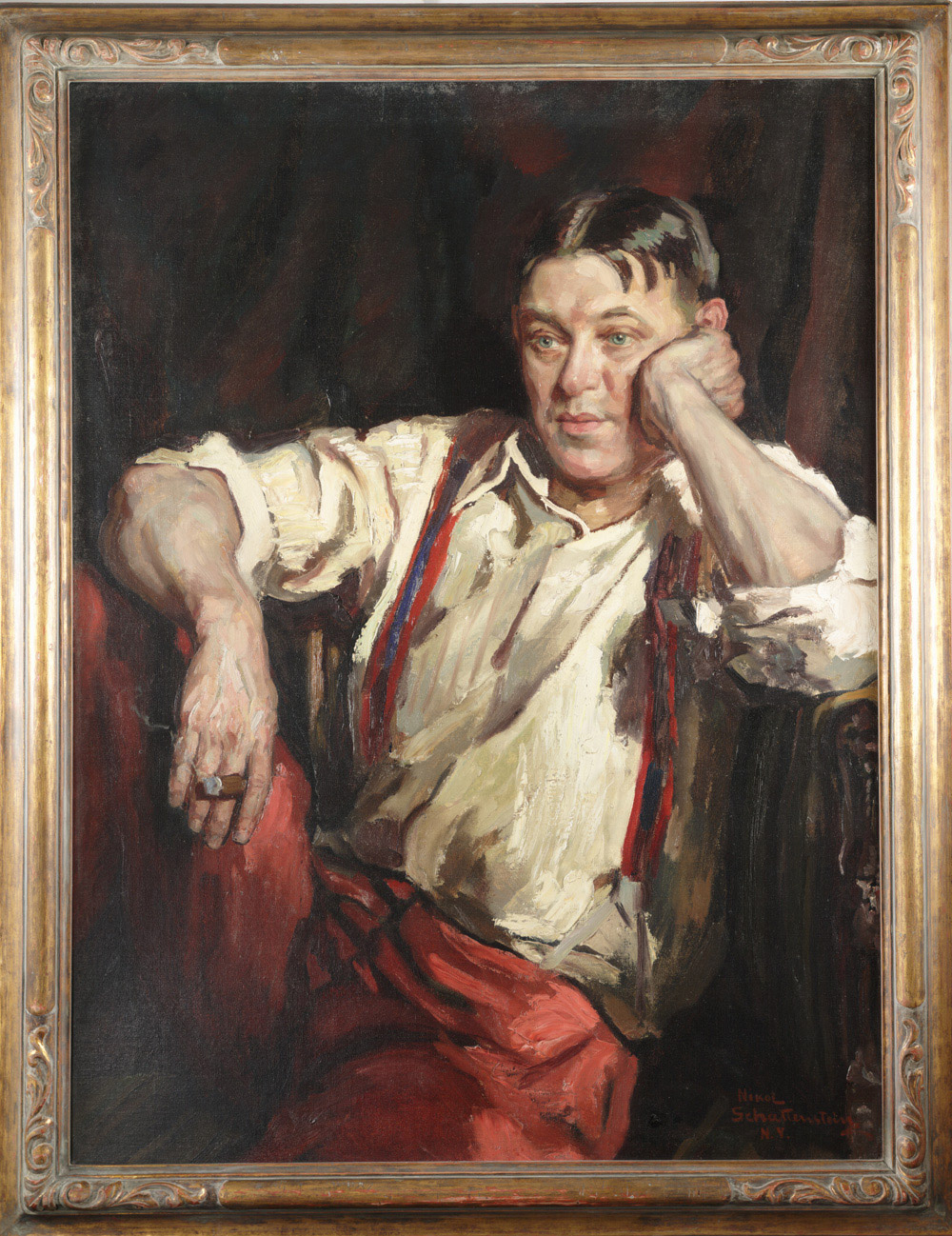
Portrait of H. L. Mencken

1927 Portrait of H. L. Mencken by Nikol Schattenstein; Enoch Pratt Free Library, Baltimore

A Neglected Anniversary

On December 20 there flitted past us, absolutely without public notice, one of the most important profane anniversaries in American history, to wit, the seventy-fifth anniversary of the introduction of the bathtub into These States. Not a plumber fired a salute or hung out a flag. Not a governor proclaimed a day of prayer. Not a newspaper called attention to the day.

True enough, it was not entirely forgotten. Eight or nine months ago one of the younger surgeons connected with the Public Health Service in Washington happened upon the facts while looking into the early history of public hygiene, and at his suggestion a committee was formed to celebrate the anniversary with a banquet. But before the plan was perfected Washington went dry (This was war-time Prohibition, preliminary to the main catastrophe. — HLM), and so the banquet had to be abandoned. As it was, the day passed wholly unmarked, even in the capital of the nation.

Bathtubs are so common today that it is almost impossible to imagine a world without them. They are familiar to nearly everyone in all incorporated towns; in most of the large cities it is unlawful to build a dwelling house without putting them in; even on the farm they have begun to come into use. And yet the first American bathtub was installed and dedicated so recently as December 20, 1842, and, for all I know to the contrary, it may still be in existence and in use.

Curiously enough, the scene of its setting up was Cincinnati, then a squalid frontier town, and even today surely no leader in culture. But Cincinnati, in those days as in these, contained many enterprising merchants, and one of them was a man named Adam Thompson, a dealer in cotton and grain. Thompson shipped his grain by steamboat down the Ohio and Mississippi to New Orleans, and from there sent it to England in sailing vessels. This trade frequently took him to England, and in that country, during the ’30s, he acquired the habit of bathing.

The bathtub was then still a novelty in England. It had been introduced in 1828 by Lord John Russell and its use was yet confined to a small class of enthusiasts. Moreover, the English bathtub, then as now, was a puny and inconvenient contrivance — little more, in fact, than a glorified dishpan — and filling and emptying it required the attendance of a servant. Taking a bath, indeed, was a rather heavy ceremony, and Lord John in 1835 was said to be the only man in England who had yet come to doing it every day.

Thompson, who was of inventive fancy — he later devised the machine that is still used for bagging hams and bacon — conceived the notion that the English bathtub would be much improved if it were made large enough to admit the whole body of an adult man, and if its supply of water, instead of being hauled to the scene by a maid, were admitted by pipes from a central reservoir and run off by the same means. Accordingly, early in 1842 he set about building the first modern bathroom in his Cincinnati home — a large house with Doric pillars, standing near what is now the corner of Monastery and Orleans streets.

There was then, of course, no city water supply, at least in that part of the city, but Thompson had a large well in his garden, and he installed a pump to lift its water to the house. This pump, which was operated by six Negroes, much like an old-time fire engine, was connected by a pipe with a cypress tank in the garret of the house, and here the water was stored until needed. From the tank two other pipes ran to the bathroom. One, carrying cold water, was a direct line. The other, designed to provide warm water, ran down the great chimney of the kitchen, and was coiled inside it like a giant spring.

The tub itself was of new design, and became the grandfather of all the bathtubs of today. Thompson had it made by James Cullness, the leading Cincinnati cabinetmaker of those days, and its material was Nicaragua mahogany. It was nearly seven feet long and fully four feet wide. To make it water-tight, the interior was lined with sheet lead, carefully soldered at the joints. The whole contraption weighed about 1,750 pounds, and the floor of the room in which it was placed had to be reinforced to support it. The exterior was elaborately polished.

In this luxurious tub Thompson took two baths on December 20, 1842 — a cold one at 8 a.m. and a warm one some time during the afternoon. The warm water, heated by the kitchen fire, reached a temperature of 105 degrees. On Christmas day, having a party of gentlemen to dinner, he exhibited the new marvel to them and gave an exhibition of its use, and four of them, including a French visitor, Col. Duchanel, risked plunges into it. The next day all Cincinnati — then a town of about 100,000 people — had heard of it, and the local newspapers described it at length and opened their columns to violent discussions of it.

The thing, in fact, became a public matter, and before long there was bitter and double- headed opposition to the new invention, which had been promptly imitated by several other wealthy Cincinnatians. On the one hand it was denounced as an epicurean and obnoxious toy from England, designed to corrupt the democratic simplicity of the Republic, and on the other hand it was attacked by the medical faculty as dangerous to health and a certain inviter of “phthisic, rheumatic fevers, inflammation of the lungs and the whole category of zymotic diseases.” (I quote from the Western Medical Repository of April 23, 1843.)

The noise of the controversy soon reached other cities, and in more than one place medical opposition reached such strength that it was reflected in legislation. Late in 1843, for example, the Philadelphia Common Council considered an ordinance prohibiting bathing between November 1 and March 15, and it failed of passage by but two votes. During the same year the legislature of Virginia laid a tax of $30 a year on all bathtubs that might be set up, and in Hartford, Providence, Charleston and Wilmington (Del.) special and very heavy water rates were levied upon those who had them. Boston, very early in 1845, made bathing unlawful except upon medical advice, but the ordinance was never enforced and in 1862 it was repealed.

This legislation, I suspect, had some class feeling in it, for the Thompson bathtub was plainly too expensive to be owned by any save the wealthy; indeed, the common price for installing one in New York in 1845 was $500. Thus the low caste politicians of the time made capital by fulminating against it, and there is even some suspicion of political bias in many of the early medical denunciations. But the invention of the common pine bathtub, lined with zinc, in 1847, cut off this line of attack, and thereafter the bathtub made steady progress.

The zinc tub was devised by John F. Simpson, a Brooklyn plumber, and his efforts to protect it by a patent occupied the courts until 1855. But the decisions were steadily against him, and after 1848 all the plumbers of New York were equipped for putting in bathtubs. According to a writer in the Christian Register for July 17, 1857, the first one in New York was opened for traffic on September 12, 1847, and by the beginning of 1850 there were already nearly 1,000 in use in the big town.

After this medical opposition began to collapse, and among other eminent physicians Dr. Oliver Wendell Holmes declared for the bathtub, and vigorously opposed the lingering movement against it in Boston. The American Medical Association held its annual meeting in Boston in 1849, and a poll of the members in attendance showed that nearly 55 per cent of them now regarded bathing as harmless, and that more than 20 per cent advocated it as beneficial. At its meeting in 1850 a resolution was formally passed giving the imprimatur of the faculty to the bathtub. The homeopaths followed with a like resolution in 1853.

But it was the example of President Millard Fillmore that, even more than the grudging medical approval, gave the bathtub recognition and respectability in the United States. While he was still Vice-President, in March, 1850, he visited Cincinnati on a stumping tour, and inspected the original Thompson tub. Thompson himself was now dead, but his bathroom was preserved by the gentlemen who had bought his house from the estate. Fillmore was entertained in this house and, according to Chamberlain, his biographer, took a bath in the tub. Experiencing no ill effects, he became an ardent advocate of the new invention, and on succeeding to the Presidency at Taylor’s death, July 9, 1850, he instructed his secretary of war, Gen. Charles M. Conrad, to invite tenders for the construction of a bathtub in the White House.

This action, for a moment, revived the old controversy, and its opponents made much of the fact that there was no bathtub at Mount Vernon, or at Monticello, and that all the Presidents and other magnificoes of the past had got along without any such monarchical luxuries. The elder Bennett, in the New York Herald, charged that Fillmore really aspired to buy and install in the White House a porphyry and alabaster bath that had been used by Louis Philippe at Versailles. But Conrad, disregarding all this clamor, duly called for bids, and the contract was presently awarded to Harper & Gillespie, a firm of Philadelphia engineers, who proposed to furnish a tub of thin cast iron, capable of floating the largest man.

This was installed early in 1851, and remained in service in the White House until the first Cleveland administration, when the present enameled tub was substituted. The example of the President soon broke down all that remained of the old opposition, and by 1860, according to the newspaper advertisements of the time, every hotel in New York had a bathtub, and some had two and even three. In 1862 bathing was introduced into the Army by Gen. McClellan, and in 1870 the first prison bathtub was set up at Moyamensing Prison, in Philadelphia.

So much for the history of the bathtub in America. One is astonished, on looking into it, to find that so little of it has been recorded. The literature, in fact, is almost nil. But perhaps this brief sketch will encourage other inquirers and so lay the foundation for an adequate celebration of the centennial in 1942.

(Text courtesy of Poor Mojo’s Almanac(k))

The entire history was a hoax composed by Mencken.

Even conservative wackoes appreciate the column.

Content with his private joke, Mencken remained silent about the hoax until a follow-up article, “Melancholy Reflections,” appeared in the Chicago Tribune on May 23, 1926, some eight years later. This was Mencken’s confession. It was also an appeal for reason to the American public.

His hoax was a joke gone bad. “A Neglected Anniversary” had been printed and reprinted hundreds of times in the intervening years. Mencken had been receiving letters of corroboration from some readers and requests for more details from others. His history of the bathtub had been cited repeatedly by other writers and was starting to find its way into reference works. As Mencken noted in “Melancholy Reflections,” his “facts” “began to be used by chiropractors and other such quacks as evidence of the stupidity of medical men. They began to be cited by medical men as proof of the progress of public hygiene.” And, because Fillmore’s presidency had been so uneventful, on the date of his birthday calendars often included the only interesting tidbit of information they could find: Fillmore had introduced the bathtub into the White House. (Even the later scholarly disclosure that Andrew Jackson had a bathtub installed there in 1834—years before Mencken claimed it was even invented—did not diminish America’s conviction that Fillmore was responsible.)

(No, dear reader, probably not correct; surely John Adams brought a bathtub with him when he moved into the White House, then called the President’s Mansion.  Plumbing, hot water, and finally hot water to a bathtub in the president’s residence, were installed between 1830 and 1853, as best I can determine.)

Mencken wrote an introduction to the piece in a later bookA Mencken Chrestomathy (Alfred A. Knopf, 1949):

The success of this idle hoax, done in time of war, when more serious writing was impossible, vastly astonished me. It was taken gravely by a great many other newspapers, and presently made its way into medical literature and into standard reference books. It had, of course, no truth in it whatsoever, and I more than once confessed publicly that it was only a jocosity… Scarcely a month goes by that I do not find the substance of it reprinted, not as foolishness but as fact, and not only in newspapers but in official documents and other works of the highest pretensions.

There’s a moral to the story:  Strive for accuracy!

So, Dear Reader, check for accuracy, and question authority.

Fact checks — what else might need to be corrected in this story?

Resources:

Finally, Dear Readers — have you noticed someone falling victim to the hoax of Millard Fillmore’s Bathtub recently?  Give us details in comments, please.