Quote of the moment: Gold standard a “barbarous relic” – Keynes

January 18, 2012

Portrait of John Maynard Keynes as a younger man

Portrait of John Maynard Keynes as a younger man (who is the artist? where does it hang?)

  • In truth, the gold standard is already a barbarous relic.
    • John Maynard Keynes, Monetary Reform (1924), p. 172

    Did Keynes foresee the rise of Ron Paul, even in 1924?

    Gold Key, weighing one kilogram is used to acc...

More, resources:


Einstein probably didn’t say that

January 7, 2012

Aphorisms that sound great, but to whom we have forgotten proper attribution, often get pinned on great people who did not say them.

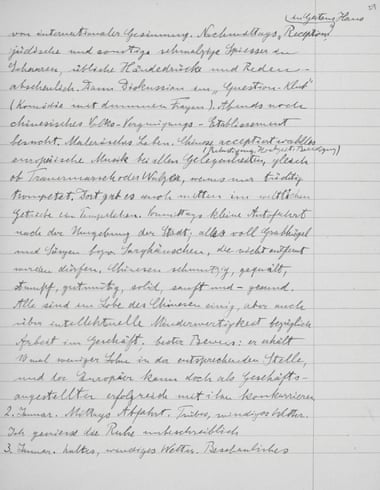
Einstein's journals featuring comments on his first tour of Japan, in 1922 - Morgan Library via The New Yorker

Einstein’s journals featuring comments on his first tour of Japan, in 1922 – Morgan Library via The New Yorker

It’s a common problem. But I think everyone should strive to accurately cite quotations.

Occasionally the misattribution takes on added significance because of the reputation of the person to whom it is misattributed. This becomes a larger problem, because it often dragoons the reputation of some great person into a service they would not intend.

In the masthead of Climate Change Dispatch (“because the debate is not over”) we find this quotation, design to puncture the bubble arrogance surrounding all those climate scientists, I suppose:

“The only thing more dangerous than ignorance is arrogance.”
—Albert Einstein

You know where I’m going with this. Einstein didn’t say it, so far as I can find.

I can’t find any source older than about 2000 that even has the quote. Most attribute it to Einstein. It does not appear in any halfway scholarly collection of Einstein quotes, however. It’s not at the WikiQuotes site. It’s not in any of my three editions of Bartlett’s Familiar Quotations.

Just to check such claims, I ordered The Ultimate Quotable Einstein (collected and edited by Alice Calaprice) from Princeton University Press.  Alas, they had exhausted their stock.  When my favorite Border’s Books was closing out, I found the book in the reference section.

The quote does not appear in any form in The Ultimate Quotable Einstein, that I have found.

Keepers of the Climate Change Dispatch site said the quote came from a book about Einstein read years ago, but now forgotten. (Yes, I asked.)

I suppose it’s possible there is another, much over-looked source for the quote out there. If you can find it, please let me know.

But for the immediate future, I would advise you to put the quote attributed to Einstien on your “no-he-didn’t-say-it” list.

One more example of how people attribute aphorisms to famous people, and as used to poke at climate scientists, another example of our getting into trouble, not because of what we don’t know, but because of what we know that just is not true.

Ironic, too.  It’s not that the current purveyors don’t know about the quote or about Einstein, but that they are arrogantly insisting on the veracity of a false quote.

I wonder if the masthead there will ever change.

Update: Climate Change Dispatch is every bit as reprobate on science and policy, but they’ve dropped the quote falsely attributed to Einstein, at least as of August 2021.


Encore quote of the moment: Robert Kennedy on what really matters

December 18, 2011

This is borrowed from Harry Clarke (with a few minor corrections in the text):

Robert F. Kennedy speech at the University of Kansas, Lawrence, March 18, 1968

Robert F. Kennedy speech at the University of Kansas, Lawrence, March 18, 1968 - Photo by George Silk, Time-Life Pictures/Getty Images

RFK said this in 1968. In a speech I heard today it was quoted and it stirred me.

Too much and for too long, we seem to have surrendered personal excellence and community value in the mere accumulation of material things. Our Gross National Product, now, is over eight hundred billion dollars a year, but that GNP — if we judge the United States of America by that — that GNP counts air pollution and cigarette advertising and ambulances to clear our highways of carnage. It counts special locks for our doors and the jails for the people who break them. It counts the destruction of the redwoods and the loss of our natural wonder in chaotic sprawl. It counts napalm and it counts nuclear warheads, and armored cars for the police to fight the riots in our cities. It counts Whitman’s rifle and Speck’s knife, and the television programs which glorify violence in order to sell toys to our children.

Yet the Gross National Product does not allow for the health of our children, the quality of their education, or the joy of their play. It does not include the beauty of our poetry or the strength of our marriages, the intelligence of our public debate or the integrity of our public officials. It measures neither our wit nor our courage, neither our wisdom nor our learning, neither our compassion nor our devotion to our country; it measures everything, in short, except that which makes life worthwhile. And it can tell us everything about America except why we are proud that we are Americans.

Kennedy delivered these words in an address at the University of Kansas, Lawrence, Kansas, on March 18, 1968.

Here’s a video production from the Glaser Progress Foundation which includes an audio recording of the speech:

More resources:

Most of this post appeared originally here in 2009.  We need the reminder.


Quote of the moment: John Kenneth Galbraith pokes fun at conservative politics

October 25, 2011

John Kenneth Galbraith, BusinessWeek image

Economist John Kenneth Galbraith, Economist image

The modern conservative is engaged in one of man’s oldest exercises in moral philosophy; that is, the search for a superior moral justification for selfishness.

John Kenneth Galbraith
“Stop the Madness,” Interview with Rupert Cornwell, Toronto Globe and Mail (6 Jul 2002)

(I find this attributed to Galbraith at several places — where and when did he say that?)

John Kenneth Galbraith, in paper mache, by Frank Lerner, for Time Magazine cover February 16, 1968

John Kenneth Galbraith, in papier-mache by Gerald Scarfe, photo by Frank Lerner, for Time Magazine cover February 16, 1968


Quote of the moment: Walter M. Miller, Leibowitz’s shopping list

October 22, 2011

Cover of Miller's Canticle for Liebowitz

Cover of Miller's Canticle for Liebowitz

“Pound pastrami, can kraut, six bagels—bring home for Emma.”

– Walter M. Miller, A Canticle for Leibowitz


Quote of the moment: Trouble? It comes from “what we know that ain’t so.”

October 15, 2011

Kin Hubbard and Will Rogers

Kin Hubbard and Will Rogers, image from Lilly Library, Indiana University, Bloomington, Indiana

It was a warning from a prophet of the past, and it applies to almost every controversy you can think of in 2011:

It isn’t what we don’t know that gives us trouble, it’s what we know that ain’t so.

The only problem is, to whom do we attribute it?  Was it Will Rogers who said, or Frank McKinney “Kin” Hubbard, or Artemus Ward?

Virtue may be its own reward, but ignorance costs everybody, especially when it is elected or promoted to power.

More:


Quote of the moment: Mike Mansfield

September 20, 2011

Senate Majority Leader Mike Mansfield, D-Montana

Senate Majority Leader Mike Mansfield, D-Montana; oil on canvas by Aaron Shikler, 1978 - Wikimedia image

Mike Mansfield was born on March 16, 1903.  Best boss I ever had.

Robert A. Nowlan’s Born This Day attributed this quote to Mansfield:

After all, even a politician is human.

Laconic as he was, Mansfield didn’t say anything more meaty than that?

Read about Mansfield at the Bathtub, here.  Mansfield died on October 5, 2001.


Quote of the moment: Diane Ravitch, history won’t be kind to those who attacked teachers

August 29, 2011

Attacking Teachers Attacks My Future

"Attacking Teachers Attacks My Future" sign carried by students supporting teachers at the Wisconsin Capitol Building, February 16, 2011. Photo by BlueRobot, Ron Chandenais

Of one thing I feel sure—history will not be kind to those who gleefully attacked teachers, sought to fire them based on inaccurate measures, and worked zealously to reduce their status and compensation. It will not admire the effort to insert business values into the work of educating children and shaping their minds, dreams, and character. It will not forgive those who forgot the civic, democratic purposes of our schools nor those who chipped away at the public square. Nor will it speak well of those who put the quest for gain over the needs of children. Nor will it lionize those who worshipped data and believed passionately in carrots and sticks. Those who will live forever in the minds of future generations are the ones who stood up against the powerful on behalf of children, who demanded that every child receive the best possible education, the education that the most fortunate parents would want for their own children.

Now is a time to speak and act. Now is a time to think about how we will one day be judged. Not by test scores, not by data, but by the consequences of our actions.

Diane Ravitch, writing at Bridging Differences, a blog of EdWeek, June 28, 2011

See more photos from Ron Chandenais, here.


Encore quote of the moment: Wolfgang Pauli, “not even wrong”

August 5, 2011

Talking about Tea Party and Republican economics in the next few months?  You’ll need to have Wolfgang Pauli’s wisdom at your fingertips:

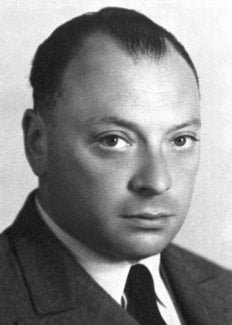
Wolfgang Pauli, circa 1945 - Nobel Foundation photo

Wolfgang Pauli, circa 1945 – Nobel Foundation photo

That’s not right. It’s not even wrong.

Wolfgang Pauli (1900-1958), as quoted by R. Peierls

From Wikipedia:

Peierls (1960) writes of Pauli, “… a friend showed him the paper of a young physicist which he suspected was not of great value but on which he wanted Pauli’s views. Pauli remarked sadly ‘That’s not right. It’s not even wrong'”. (Peierls R (1960). “Wolfgang Ernst Pauli, 1900-1958”. Biographical memoirs of fellows of the Royal Society 5: 174-92. Royal Society (Great Britain))

Pauli won the Nobel Prize in Physics in 1945: ” At this stage of the development of atomic theory, Wolfgang Pauli made a decisive contribution through his discovery in 1925 of a new law of Nature, the exclusion principle or Pauli principle. The 1945 Nobel Prize in Physics has been awarded to Pauli for this discovery.”

A mostly encore post.


Quote of the moment: August 3, 1914, “Lamps are going out all over Europe”

August 3, 2011

According to Time Magazine’s edition of August 30, 1943:

Portrait of Sir Edward Grey at Balliol College; 1928 portrait by Sir James Guthrie

Portrait of Sir Edward Grey, 1st Viscount Grey of Fallodon, KG FRS (1862-1933), at Balliol College; 1928 portrait by Sir James Guthrie

On Aug. 3, 1914, Sir Edward Grey of the British Foreign Office, watched London’s street lamps being lit. Mused Sir Edward: “The lamps are going out all over Europe; we shall not see them lit again in our lifetime.”

On the same day, Germany declared war on France, Britain’s ally, as “entangling alliances” increasingly drew European powers into the conflict started by Austria’s declaration of war on Serbia a few days earlier.

Time explained further in that 1943 issue:

Sir Edward lived to see the lights come up; died when they flickered in 1933. Others saw the lights blow out again. Europe’s darkness this time spread to Africa, Asia, Australia, America; in the universal war, even neutrals had to accept the night. Among the world’s blacked-out cities: London, Berlin, Rome, Paris, Bern, Budapest, Helsinki, Honolulu. Dimmed-out cities: Moscow, New York, Rio de Janeiro, Cape Town, Bombay.

Portent. From Egypt last week came a hopeful ray for another dawn: Cairo turned on its lights, first of the war-benighted cities to do so. From Shepherds Hotel, caravansary for restless polyglots, lights blazed out again on the Mid-East mosaic: tanned cosmopolites sipping gin & limes on Shepheard’s terrace; rattletrap taxis twisting up dust from the swarming streets; soft-voiced dragomans swishing at flies and barefooted fellahin ignoring them. Dawn’s early ray found Cairo unchanged, unchallenging; but the city was free from fear.

More:


Quote of the moment: John Adams, celebrating the 2nd of July

July 1, 2011

“The Second Day of July 1776 will be the most memorable Epocha, in the History of America. . . . It ought to be solemnized with Pomp and Parade, with Shews, Games, Sports, Guns, Bells, Bonfires, and Illuminations from one End of this Continent to the other from this Time forward forever more.”
John Adams to Abigail Adams, July 3, 1776

1776 filled the calendar with dates deserving of remembrance and even celebration.  John Adams, delegate from Massachusetts to the Second Continental Congress, wrote home to his wife Abigail that future generations would celebrate July 2, the date the Congress voted to approve Richard Henry Lee’s resolution declaring independence from Britain for 13 of the British colonies in America.

Two days later, that same Congress approved the wording of the document Thomas Jefferson had drafted to announce Lee’s resolution to the world.

Today, we celebrate the date of the document Jefferson wrote, and Richard Henry Lee is often a reduced to a footnote, if not erased from history altogether.

Who can predict the future?

(You know, of course, that Adams and Jefferson both died 50 years to the day after the Declaration of Independence, on July 4, 1826.  In the 50 intervening years, Adams and Jefferson were comrades in arms and diplomacy in Europe, officers of the new government in America, opposing candidates for the presidency, President and Vice President, ex-President and President, bitter enemies, then long-distance friends writing almost daily about how to make a great new nation.  Read David McCullough‘s version of the story, if you can find it.)

Update, July 4, 2013: You may want to check the updated version of this post, with more links, and even more history.

2015 edition, with more links for teachers and historians, here.


Quote of the moment: John Kennedy, “What do our opponents mean . . . ‘Liberal?'”

June 24, 2011

From the website of PBS’s American Experience:

Acceptance of the New York Liberal Party Nomination

John Fitzgerald Kennedy
September 14, 1960

What do our opponents mean when they apply to us the label “Liberal?” If by “Liberal” they mean, as they want people to believe, someone who is soft in his policies abroad, who is against local government, and who is unconcerned with the taxpayer’s dollar, then the record of this party and its members demonstrate that we are not that kind of “Liberal.” But if by a “Liberal” they mean someone who looks ahead and not behind, someone who welcomes new ideas without rigid reactions, someone who cares about the welfare of the people — their health, their housing, their schools, their jobs, their civil rights, and their civil liberties — someone who believes we can break through the stalemate and suspicions that grip us in our policies abroad, if that is what they mean by a “Liberal,” then I’m proud to say I’m a “Liberal.”

But first, I would like to say what I understand the word “Liberal” to mean and explain in the process why I consider myself to be a “Liberal,” and what it means in the presidential election of 1960.

John F. Kennedy during the 1960 campaign

John F. Kennedy during the 1960 campaign - Kennedy accepted the nomination of the New York Liberal Party on September 14, 1960; this photo may be from that event

In short, having set forth my view — I hope for all time — two nights ago in Houston, on the proper relationship between church and state, I want to take the opportunity to set forth my views on the proper relationship between the state and the citizen. This is my political credo:

I believe in human dignity as the source of national purpose, in human liberty as the source of national action, in the human heart as the source of national compassion, and in the human mind as the source of our invention and our ideas. It is, I believe, the faith in our fellow citizens as individuals and as people that lies at the heart of the liberal faith. For liberalism is not so much a party creed or set of fixed platform promises as it is an attitude of mind and heart, a faith in man’s ability through the experiences of his reason and judgment to increase for himself and his fellow men the amount of justice and freedom and brotherhood which all human life deserves.

I believe also in the United States of America, in the promise that it contains and has contained throughout our history of producing a society so abundant and creative and so free and responsible that it cannot only fulfill the aspirations of its citizens, but serve equally well as a beacon for all mankind. I do not believe in a superstate. I see no magic in tax dollars which are sent to Washington and then returned. I abhor the waste and incompetence of large-scale federal bureaucracies in this administration as well as in others. I do not favor state compulsion when voluntary individual effort can do the job and do it well. But I believe in a government which acts, which exercises its full powers and full responsibilities. Government is an art and a precious obligation; and when it has a job to do, I believe it should do it. And this requires not only great ends but that we propose concrete means of achieving them.

Our responsibility is not discharged by announcement of virtuous ends. Our responsibility is to achieve these objectives with social invention, with political skill, and executive vigor. I believe for these reasons that liberalism is our best and only hope in the world today. For the liberal society is a free society, and it is at the same time and for that reason a strong society. Its strength is drawn from the will of free people committed to great ends and peacefully striving to meet them. Only liberalism, in short, can repair our national power, restore our national purpose, and liberate our national energies. And the only basic issue in the 1960 campaign is whether our government will fall in a conservative rut and die there, or whether we will move ahead in the liberal spirit of daring, of breaking new ground, of doing in our generation what Woodrow Wilson and Franklin Roosevelt and Harry Truman and Adlai Stevenson did in their time of influence and responsibility.

Our liberalism has its roots in our diverse origins. Most of us are descended from that segment of the American population which was once called an immigrant minority. Today, along with our children and grandchildren, we do not feel minor. We feel proud of our origins and we are not second to any group in our sense of national purpose. For many years New York represented the new frontier to all those who came from the ends of the earth to find new opportunity and new freedom, generations of men and women who fled from the despotism of the czars, the horrors of the Nazis, the tyranny of hunger, who came here to the new frontier in the State of New York. These men and women, a living cross section of American history, indeed, a cross section of the entire world’s history of pain and hope, made of this city not only a new world of opportunity, but a new world of the spirit as well.

Tonight we salute Governor and Senator Herbert Lehman as a symbol of that spirit, and as a reminder that the fight for full constitutional rights for all Americans is a fight that must be carried on in 1961.

Many of these same immigrant families produced the pioneers and builders of the American labor movement. They are the men who sweated in our shops, who struggled to create a union, and who were driven by longing for education for their children and for the children’s development. They went to night schools; they built their own future, their union’s future, and their country’s future, brick by brick, block by block, neighborhood by neighborhood, and now in their children’s time, suburb by suburb.

Tonight we salute George Meany as a symbol of that struggle and as a reminder that the fight to eliminate poverty and human exploitation is a fight that goes on in our day. But in 1960 the cause of liberalism cannot content itself with carrying on the fight for human justice and economic liberalism here at home. For here and around the world the fear of war hangs over us every morning and every night. It lies, expressed or silent, in the minds of every American. We cannot banish it by repeating that we are economically first or that we are militarily first, for saying so doesn’t make it so. More will be needed than goodwill missions or talking back to Soviet politicians or increasing the tempo of the arms race. More will be needed than good intentions, for we know where that paving leads.

In Winston Churchill’s words, “We cannot escape our dangers by recoiling from them. We dare not pretend such dangers do not exist.”

And tonight we salute Adlai Stevenson as an eloquent spokesman for the effort to achieve an intelligent foreign policy. Our opponents would like the people to believe that in a time of danger it would be hazardous to change the administration that has brought us to this time of danger. I think it would be hazardous not to change. I think it would be hazardous to continue four more years of stagnation and indifference here at home and abroad, of starving the underpinnings of our national power, including not only our defense but our image abroad as a friend.

This is an important election — in many ways as important as any this century — and I think that the Democratic Party and the Liberal Party here in New York, and those who believe in progress all over the United States, should be associated with us in this great effort. The reason that Woodrow Wilson and Franklin Roosevelt and Harry Truman and Adlai Stevenson had influence abroad, and the United States in their time had it, was because they moved this country here at home, because they stood for something here in the United States, for expanding the benefits of our society to our own people, and the people around the world looked to us as a symbol of hope.

I think it is our task to re-create the same atmosphere in our own time. Our national elections have often proved to be the turning point in the course of our country. I am proposing that 1960 be another turning point in the history of the great Republic.

Some pundits are saying it’s 1928 all over again. I say it’s 1932 all over again. I say this is the great opportunity that we will have in our time to move our people and this country and the people of the free world beyond the new frontiers of the 1960s.


Nope: Lincoln didn’t say that

June 24, 2011

Delightful little feature at Arizona Central (azcentral.com), “AZ Fact Check ’11, Keeping Arizona honest” — Arizona Central is a feature of the Arizona Republic, as I recall (somebody correct me if I err).

I’ve noted before that Abraham Lincoln gets credit for a lot of things he didn’t say.  AZ Fact Check ’11 corrected an Arizona State Senator on attributing to Lincoln a quote against helping people do things they should be doing for themselves.  It’s another case of Twitter getting an elected official in trouble (not a lot of trouble, though, really).

The issue: Whether senator correctly quoted Lincoln

Who said it: Al Melvin, state senator

Arizona State Sen. Al Melvin, Dist 26

Arizona State Sen. Al Melvin, R-District 26

by Alia Beard Rau – June 22, 2011, 11:23 am

What we’re looking at
Sen. Al Melvin, R-Tucson, tweeted a quote that he credited to President Abraham Lincoln.

The comment
“Abe Lincoln: ‘You cannot help people permanently by doing for them what they could and should do for themselves.’ We need to learn from this.”

The forum
Posted on Melvin’s Twitter account June 21.

Analysis
Melvin on June 21 posted several quotes to his Twitter account relating to encouraging individuals to help themselves rather than giving them handouts. He attributed the quotes to Abraham Lincoln.

And Melvin isn’t alone. Others, including President Ronald Reagan, attributed these same quotes to Lincoln.

But according to several books, articles and the website Snopes that deals with debunking urban legends, Lincoln never said the quote.

Historian Arthur Schlesinger addressed the issue in a Washington Post column that ran Sept. 6, 1992.

“. . . in his Houston speech to the Republican National Convention, Ronald Reagan fell for one of the great hoaxes of American history, surpassed in taking people in only by H.L. Mencken`s enchanting fable about Millard Fillmore’s installing the first bathtub in the White House,” Schlesinger wrote. “The author of the less than immortal words Lincoln never said was an ex-clergyman from Erie, Pa., named William J.H. Boetcker.”

Boetcker in 1916 and 1917 produced two booklets based on lectures he gave. The quotes, including the one Melvin cites, are in those booklets.

According to Schlesinger, a conservative group in 1942 put out a leaflet titled “Lincoln on Limitation.” It listed legitimate Lincoln quotes on one side and legitimate Boetcker quotes on the other. Some versions attributed Boetcker’s quotes to Boetcker while others did not, leaving some readers to assume all were from Lincoln.

During the 1940s and 1950s, the quotes were mentioned or printed by increasingly legitimate sources and credited to Lincoln.

“Ever since, Lincoln scholars have been busy swatting the fake quotes down,” Schlesinger wrote. “In the 1960s, the Republican National Committee even warned its speakers, ‘Do not use them as Lincoln’s words!’ but to no avail.”

Bottom line: Historians appear to agree that Lincoln never said the quote that Melvin attributed to Lincoln. The quote was from William J.H. Boetcker.

Sources

They got me at that part where they listed sources with links. What a great little feature!

“We Engrave Herewith The Portrait – From A Photograph By Brady – Of Hon. Abram Lincoln, Of Illinois, The Republican Candidate For President” followed by a sketch of his career. Text below image reads “Hon. Abram Lincoln, Of Illinois, Republican Candidate For President./Photographed By Brady.”

_____________

Nota bene:  I failed to see this notice at that site:  “Fact Check is a service of The Arizona Republic, 12 News and the Walter Cronkite School of Journalism and Mass Communication at Arizona State University. It is not affiliated with www.FactCheck.org, a project of the Annenberg Public Policy Center of the University of Pennsylvania.”

Save

Save


Quote of the moment: Power of a first-year Congressman = 1/435 X 1/2 X 1/3

May 19, 2011

This was “Quote of the Day” for Jim Wallis’s group’s newsletter, Sojourner:

“I went in with the youthful vigor that I could single-handedly change the world. But you fast come to the realization that you’re 1/435th of one-half of one-third of the government.”

– Rep. Blake Farenthold (R-TX) on first-year Republican members of Congress finding out how difficult it is to get things done in Washington.
(USA Today)

The math equation would be:  1 Congressman = 1/435 × 1/2 × 1/3.

The math might vary, depending on the Congressman.

Republican Texas Congressman Blake Farenthold, prior to election

Republican Texas Congressman Blake Farenthold, prior to election

As a freshman Congressman, among other things James Madison wrote the official Congressional response to George Washington’s inaugural address, and proposed and passed the first ten amendments to the Constitution, now known as the Bill of Rights, and the 27th Amendment (which was not ratified until 1992).  We have no pictures of James Madison in rubber ducky pyjamas.


Quote of the moment, on shaping lives: Lord of the Rings or Atlas Shrugged

May 13, 2011

Good donkey quote of the day candidate:

Atlas Shrugged, by Ayn Rand

Atlas Shrugged, by Ayn Rand

There are two novels that can change a bookish fourteen-year old’s life: The Lord of the Rings and Atlas Shrugged. One is a childish fantasy that often engenders a lifelong obsession with its unbelievable heroes, leading to an emotionally stunted, socially crippled adulthood unable to deal with the real world. The other, of course, involves hobbits orcs.

Attributed to John Rogers, whoever that is. (Got a better source?  Let us know in comments.)

Tip of the old scrub brush to Kent commenting at PennLive.com.

Lord of the Rings trilogy

Lord of the Rings trilogy, by J. R. R. Tolkien