Could Abraham Lincoln ever live up to Millard Fillmore’s record?

March 4, 2010

Alexander Stephens, Portage Publications image

Alexander Stephens, Portage Publications image

Elektratig found the most delightful thing, and wrote about it on his blog — Georgia politician and future vice president of the Confederacy, Alexander Stephens wondering about this new guy on the hustings, Abraham Lincoln, and comparing him to Millard Fillmore, in a letter from July 1860.  You gotta read it there.

You couldn’t make this stuff up.  Real history is always better than fiction.  There’s a delightful surprise around every bend of the river.

Also:


Arctic Ocean gives up more methane than scientists predicted

March 4, 2010

Here’s another point of science that will give rational people concern, and which cannot in any way be explained as “no problem” by stolen e-mails:  Methane releases from the floor of the East Siberian Arctic are much larger than predicted.

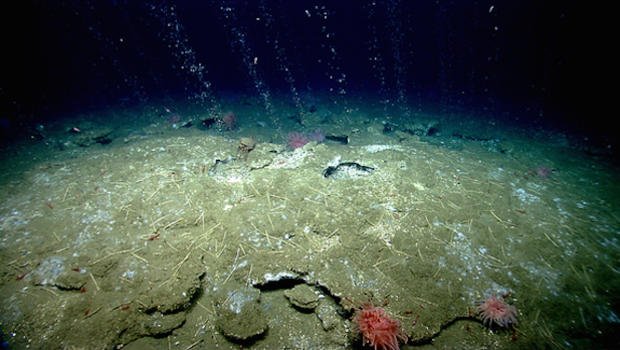
Methane hydrates releasing methane gas in bubbles in the ocean - i.treehugger image

Underwater methane gas plumes, Photo: NOAA Okeanos Explorer Program, 2013

Methane is a more powerful greenhouse gas than carbon dioxide.  Frozen forms of methane dot the bottoms of our oceans.  Warming of the oceans might be able to trigger an explosive thawing of the methane hydrates, as the frozen forms are known, seriously adding to our worldwide greenhouse gas problems.

Story here at Global ChangeScience article on which that post is based, here.

Cool SONAR pictures of methane bubbling up from the floor of the Arctic Ocean, but scary once you realize what they are, at this vintage post at Millard Fillmore’s Bathtub.

Is there any chance this research will merit a mention at the climate denialist blogs?


Shakiest states — geologically, that is

March 4, 2010

USGS map of states with the most quakes

Quake rankings of states

Which states shake the most?  Here are the top 20.

Surprised that Maine makes the list?

Much more from the US Geological Survey here, “Top Earthquake States.”


Diane Ravitch’s “U-turn”: The teachers were right

March 4, 2010

Were I to advise Diane Ravitch right now, I’d tell her to change all her computer passwords and redouble the security on her servers.  Why?  After what happened to the scientists who study global warming, I expect many of the same wackoes are working right now to get her e-mails, knowing that the mere act of stealing them will be enough to indict her change of heart on education in America.

It’s much the same mob crowd in both cases.  [I’m hopeful it’s not a mob.]

Dr. Ravitch thinks big thoughts about education.  She stands in the vanguard of those people who are both academically astute in education, and who can make a case that appeals to policy makers.  Working under Checker Finn at the old Office of Educational Research and Improvement, we quickly got familiar with Ravitch’s works and views.  Finn and Ravitch, good friends and like-minded in education issues, were the running backs and sticky-handed receivers for any conservative education quarterback, back in the Day.

Finn was Assistant Secretary of Education for Research under Bill Bennett.  Ravitch succeeded Finn, under Lamar Alexander.  While Bennett and Alexander took troubling turns to the right, and Finn stayed much where he was, Ravitch has been looking hard at what’s working in schools today.

Ravitch doesn’t like the conservative revolution’s results in education.  She’s changed her views.  Says one of the better stories about her changing views, in The New York Times:

Once outspoken about the power of standardized testing, charter schools and free markets to improve schools, Dr. Ravitch is now caustically critical. She underwent an intellectual crisis, she says, discovering that these strategies, which she now calls faddish trends, were undermining public education. She resigned last year from the boards of two conservative research groups.

“School reform today is like a freight train, and I’m out on the tracks saying, ‘You’re going the wrong way!’ ” Dr. Ravitch said in an interview.

This is big stuff, and good news to teachers who, since I was at Education in 1987, have been telling policy makers the same things Ravitch is saying now.

David Gardner and Milton Goldberg wrote in the report of the Excellence in Education Commission in 1983 that America faces a “rising tide of mediocrity” because of bad decisions.  That’s true of much education reform today, too.

Gardner and Goldberg also said that, had a foreign nation done that damage to us, we’d regard it as an act of war.

Maybe Ravitch’s turn can help mediate an end to the Right’s War on Education and pogroms against teachers.

Here in Texas the conservatives on the Texas State Board of Education didn’t like Ravitch’s views when she was in the conservative camp, so Texas has started, finally, to vote out commissioners who don’t get it, who prefer a state of war on Texas’s children to promoting public education

Let’s hope more people listen to Ravitch now.

More:

Be sure to listen to the NPR interview from Morning Edition, yesterday (you can read it, too).

And, in next Sunday’s New York Times Magazine, a story about how to build a better teacher; do you know the difference between testing and teaching?


Hope in Texas: McLeroy voted off of state school board

March 3, 2010

Two earthquakes ravage American nations, tsunamis, freakishly large snowstorms, still trouble in Iraq and Afghanistan, Iran in turmoil and ruled by some sort of crazy, North Koreans still starve so the nation can make a nuclear sabre to rattle.

Good news?

Texas State Board of Education member Don McLeroy lost a primary election challenge to attorney Tom Ratliff, representing the area around Beaumont, Texas. The news is that McLeroy is out — notice that the Texas Tribune doesn’t name the winner until the seventh paragraph.

Another prominent, but much more reasonable Republican member of the SBOE also lost:  Geraldine “Tincy” Miller, in Dallas.  Miller was so expected to win that race that almost no one was watching, and little is in public about the winner of the race.

Election results from Tuesday’s primary election in Texas mean that the State Board of Education will change dramatically.  It would be almost impossible for any of the changes to be bad ones.  McLeroy led the anti-evolution force on the board.  McLeroy was the ringleader to gut and racialize English standards earlier, and he’s been the point man in the attempt to gut and de-secularize social studies standards.

Board member Cynthia Dunbar, another “social conservative,” did not run for re-election.

In the governor’s race, anti-education, anti-science Gov. Rick Perry won big over the state’s popular Republican U.S. Sen. Kay Hutchison. Third place in that race went to the Teabagger candidate.

No Teabagger won any race in Texas.

It’s not that Texas has suddenly gained reason.  The dissension on the SBOE, demonstrated by the Texas Senate’s rejection of McLeroy’s renomination to be chairman of the body, just got to be too much.  Texans like their crazies to be sane enough to get things done, and not so noisily crazy as to attract attention to the state’s shared insanity.

Sunlight cast on the actions of the board, especially by groups like the Texas Freedom Network, informed Texans.  And now the people of Texas have spoken.

More:

Add to FacebookAdd to NewsvineAdd to DiggAdd to Del.icio.usAdd to StumbleuponAdd to RedditAdd to BlinklistAdd to TwitterAdd to TechnoratiAdd to Furl


Annals of global warming: Glaciological map of Antarctica’s Palmer Land Area, 1947-2009

March 3, 2010

Are the ice fields of Antarctica increasing or decreasing?  How do we know?

U.S. Geological Survey released a study of the change in glaciation in Antarctica between 1947 and 2009.  Serious student of climate change will heed what the maps show — better bookmark the site.  The study and publication were done in a joint effort of USGS, the British Antarctic Survey, the Scott Polar Research Institute, and the Bundesamt für Kartographie und Geodäsie (same page, in English, here).

Coastal-Change and Glaciological Map of the Palmer Land Area, Antarctica: 1947—2009

By Jane G. Ferrigno,1 Alison J. Cook,2 Amy M. Mathie,3 Richard S. Williams, Jr.,4 Charles Swithinbank,5 Kevin M. Foley,1 Adrian J. Fox,2 Janet W. Thomson,6  and Jörn Sievers

Introduction

Cover of USGS publication, Coastal-Change and Glaciological Map of the Palmer Land Area, Antarctica: 1947—2009

Cover of USGS publication, Coastal-Change and Glaciological Map of the Palmer Land Area, Antarctica: 1947—2009

Reduction in the area and volume of the two polar ice sheets is intricately linked to changes in global climate, and the resulting rise in sea level could severely impact the densely populated coastal regions on Earth. Antarctica is Earth’s largest reservoir of glacial ice. Melting of the West Antarctic part alone of the Antarctic ice sheet would cause a sea-level rise of approximately 6 meters (m), and the potential sea-level rise after melting of the entire Antarctic ice sheet is estimated to be 65 m (Lythe and others, 2001) to 73 m (Williams and Hall, 1993). The mass balance (the net volumetric gain or loss) of the Antarctic ice sheet is highly complex, responding differently to different climatic and other conditions in each region (Vaughan, 2005). In a review paper, Rignot and Thomas (2002) concluded that the West Antarctic ice sheet is probably becoming thinner overall; although it is known to be thickening in the west, it is thinning in the north. The mass balance of the East Antarctic ice sheet is thought by Davis and others (2005) to be positive on the basis of the change in satellite-altimetry measurements made between 1992 and 2003.

Measurement of changes in area and mass balance of the Antarctic ice sheet was given a very high priority in recommendations by the Polar Research Board of the National Research Council (1986), in subsequent recommendations by the Scientific Committee on Antarctic Research (SCAR) (1989, 1993), and by the National Science Foundation’s (1990) Division of Polar Programs. On the basis of these recommendations, the U.S. Geological Survey (USGS) decided that the archive of early 1970s Landsat 1, 2, and 3 Multispectral Scanner (MSS) images of Antarctica and the subsequent repeat coverage made possible with Landsat and other satellite images provided an excellent means of documenting changes in the cryospheric coastline of Antarctica (Ferrigno and Gould, 1987). The availability of this information provided the impetus for carrying out a comprehensive analysis of the glaciological features of the coastal regions and changes in ice fronts of Antarctica (Swithinbank, 1988; Williams and Ferrigno, 1988). The project was later modified to include Landsat 4 and 5 MSS and Thematic Mapper (TM) images (and in some areas Landsat 7 Enhanced Thematic Mapper Plus (ETM+) images), RADARSAT images, aerial photography, and other data where available, to compare changes that occurred during a 20- to 25- or 30-year time interval (or longer where data were available, as in the Antarctic Peninsula). The results of the analysis are being used to produce a digital database and a series of USGS Geologic Investigations Series Maps (I-2600) (Williams and others, 1995; Swithinbank and others, 2003a,b, 2004; Ferrigno and others, 2002, 2005, 2006, 2007, 2008, and in press; and Williams and Ferrigno, 2005) (available online at http://www.glaciers.er.usgs.gov).

The paper version of this map is available for purchase from the USGS Store.

What’s the condition of glaciers in Antarctica?  Now you can look it up.

The pamphlet accompanying the maps says under “Discussion”:

The most noticeable and dramatic changes that can be seen on the Palmer Land area map are the retreat of George VI, Wilkins, Bach, and northern Stange Ice Shelves. The northern ice front of George VI Ice Shelf was at its farthest extent during our period of observation between 1966 and 1974. It retreated, losing 906 km2 between 1974 and 1992 and 87 km2 between 1992 and 1995. After 1995, it retreated an additional 1 km to more than 6 km by 2001. The southern George VI ice front retreated considerably from 1947 to the late 1960s. From the late 1960s to 1973, there was additional substantial retreat, the greatest during the period of measurements.  From 1973 to 2001, there was overall noticeable retreat.

Wilkins Ice Shelf had four ice fronts up till 2009; all retreated during the time period of our study, but Wilkins “a” and “b” have had the most dramatic change, including extensive calving in 2009 that eliminated ice front “b” and threatened the future of the ice shelf. During the period of observation, the Bach Ice Shelf front maintained a fairly consistent profile, and advanced or retreated at the same time along the entire ice front. The overall trend of Bach Ice Shelf is retreat. On the northern Stange Ice Shelf during the period of observation, the 1947, 1965–66, 1973, and 1986 ice fronts were more advanced, and the 1997 and 2001 ice fronts were more in retreat. However, the earlier data are less accurate geographically, and it is difficult to quantitatively analyze them. The later satellite images are more accurate, and it is possible to measure overall advance from 1986 to 1989, then retreat from 1989 to 1997 and from1997 to 2001; the net result was retreat.

The three coastal-change and glaciological maps of the Antarctic Peninsula (I–2600–A, –B, and –C) portray one of the most rapidly changing areas on Earth. The changes exhibited in the region are widely regarded as among the most profound and unambiguous examples of the effects of global warming yet seen on the planet.

Resources:


Free, detailed maps of Germany

March 3, 2010

Need maps of Germany for geography or world history?

Germany’s geodetic and cartography agency, Bundesamt für Kartographie und Geodäsie, in Frankfurt,  has three detailed maps available in .pdf form at it’s website.

These .pdfs are suitable for papers sizes roughtly 8.5 by 11 inches in the U.S. — but they probably would scale up nicely for poster-size maps, too.  The maps are in color, and in German.


Climate skeptics right! A titanic win from leaked documents . . .

March 1, 2010

Titanic sinking, an artist's rendering

RMS Titanic sank? No one alive today saw it sink. According to Salt's site, iIntercepted memoranda raise doubts about alleged boat's alleged sinking, and alleged engineering and design errors.

Alun Salt has the full story:

I don’t know about you but I’ve been absolutely riveted by the recent release of records from a break-in at the White Star line. No really, it’s not just a stream of bilge from people who may not be experts but reckon something. Frankly I can’t get enough of hearing about the same claim that one memo by one of the workers on the Titanic project clearly confirms the ship was ‘unsinkable’. This should finally put to rest the biggest hoax of the 20th century, that the Titanic sunk in the North Atlantic. Still there’s always someone who isn’t going to find a bit of a memo quoted out-of-context convincing so it’s worth recapping the clear evidence that the ’sinking’ of the Titanic is a scam.

Specifics, with applause by Anthony Watts and Joanne Nova, at Archaeoastronomy.  (Well, no, not really;  neither Watts nor Nova would link to such a reasonable site as Salt’s.)


Oklahoma earthquake

March 1, 2010

While attention was on Hawaii, wondering about the tsunami’s effects there, Oklahoma got hit with an earthquake of magnitude 4.1, a big one for such a flat, geologically inactive state (link goes to USGS site).

Epicenter of Oklahoma earthquake, February 27, 2010

Epicenter of Oklahoma earthquake, February 27, 2010

Most likely there is no connection between the Oklahoma quake and any other shaking on Earth in the past week or so.


Birthers: Still crazy after all these months

March 1, 2010

The New Mexico paralegal who claims to know more about the law than any federal judge including the Supreme Court has resurfaced here, at this post.  He seems bent on making a case against President Obama’s eligibility for the presidency no matter how many fables he has to invent.

Don’t birthers eventually get a good night’s sleep and wake up and wonder why they waste their time on such a loser issue?

No, no, I guess not.

Previous posts at Millard Fillmore’s Bathtub:

Special kind of birther crazy:


Utah legislative craziness takes dark turn

March 1, 2010

Today I discussed legislative craziness, and she was surprised to discover Utah’s wackoes like Rep. Chris Buttars are national, and perhaps international stars of legislative dysfunction.  In my e-mail I get notes talking about a silly resolution from South Dakota’s legislature.

Then I stumbled into this:  “Utah bill criminalizes miscarriage.

From what I’ve read of the bill, I agree that’s what it would do.  It’s sitting on the Utah governor’s desk right now, deserving a veto, but probably headed into the Utah Code.

If it becomes law, women might be well advised to avoid any activity while in Utah, certainly not skiing or snowmobiling, nor hiking or river running, nor even jogging.  A woman who had a miscarriage within a week of skiing in Utah would be hard put to provide evidence exculpating her from a charge that her actions caused the miscarriage.  The contest of expert testifiers could be tremendously expensive.  Colorado, Wyoming, Idaho, California and other states offer all of those activities, but without the specter of a murder charge to women who miscarry later.

No, there’s no excuse for a woman who doesn’t know she’s pregnant.

Yes, I know the bill was designed to punish the bizarre behavior of some people who attempt to induce abortion by physical activity early in a pregnancy.  No, I don’t think this bill does that job well, either.

You legislative drafters, take a look at the bill.  The language is bizarre, it seems to me — it backs into a law by defining what is not covered.  I see some great ambiguities.  The bill excuses medical abuse of the fetus — failing to get medical care for the mother, for example, which leads to death of the fetus — but calls into question any action a woman might take in seeking an abortion from a medical practitioner.  It seems to me that the bill directly strives to outlaw all medical abortions, though one section says that seeking an abortion is not covered.

Debaters would have a field day with the enforceability problems of this bill.

Oy.  From Chris Buttars, the craziness disease has spread to the entire Utah legislature.

Is there a quarantine law in Utah, for people who carry dangerous infections?

Resources:

  • Best description and discussion I’ve seen on the bill, at the New York Times; it confronts head on the chief problem with this proposed law:  It criminalizes the activities of a desperate young woman who needs counseling and other help, but does not need to be jailed, nor deserve it:

Lynn M. Paltrow, the executive director of National Advocates for Pregnant Women, a nonprofit group based in New York, said the focus on the child obscured the bleak story of the teenager, who also deserves, she said, empathy from the world, and the law.

“Almost nobody is speaking for her,” Ms. Paltrow said. “Why would a young woman get to a point of such desperation that she would invite violence against herself? Anybody that desperate is not going to be deterred by this statute.”