What rocks Yosemite? Granite

July 7, 2013

Yosemite’s Nature Notes #20 (I’m behind):  A short film discussing the astonishing manifestations of granite in Yosemite National Park.

English: El Capitan in Yosemite National Park ...

El Capitan in Yosemite National Park viewed from the Valley Floor — one of the more famous granite formations in the Park. Wikipedia image

The film is simply named, “Granite.”  Steven Bumgardner produced the film.

Yosemite’s chief formations are granite, an igneous rock.  Much of the terrain was carved in the granite by glaciers and glaciation — so what Yosemite shows is how fire and ice combine to make rock, to make rock formations, and to make rocks of astonishing beauty.

(This is not a place to bolster creationist ideas.  This is real science, looking at God’s handiwork first hand.)

A North Carolina university makes field trips to Yosemite?  I’d love to take that class!

Watching this film, you get a sense of how important it can be to the education of our children to travel in the summers, to take vacations to our National Parks, and to places like Yosemite.

Where are you taking your kids this summer?  Kids, where are you going?

Enjoy it.  Geology lessons are often fun, and this one, on film, is more fun than most.

More:

Close-up of granite from Yosemite National Par...

Close-up of granite from Yosemite National Park, valley of the Merced River – Wikipedia image


Annals of global warming: Arizona wildfires 2013 and “the new normal”

July 6, 2013

A burned home is seen in an unidentified neighborhood west of Highway 89 in Yarnell, Arizona July 3, 2013. Reuters

A burned home is seen in an unidentified neighborhood west of Highway 89 in Yarnell, Arizona July 3, 2013. Reuters, via International Business Times

From a much longer story you should read by Felicity Barringer and Kenneth Chang  in The New York Times, Tuesday, July 2, 2013, page A13 of the National Edition:

Since 1970, Arizona has warmed at a rate 0.72 degrees per decade, the fastest among the 50 states, based on an analysis of temperature data by Climate Central, an independent organization that researches and reports on climate. Even as the temperatures have leveled off in many places around the world in the past decade, the Southwest has continued to get hotter.

“The decade of 2001 to 2010 in Arizona was the hottest in both spring and the summer,” said Gregg Garfin, a professor of climate, natural resources and policy at the University of Arizona and the executive editor of a study examining the impact of climate change on the Southwest.

Warmer winters mean less snowfall. More of the winter precipitation falls as rain, which quickly flows away in streams instead of seeping deep underground.

The soils then dry out earlier and more quickly in May and June. “It’s the most arid time of year,” Dr. Garfin said. “It’s windy as well.”

The growing season also starts earlier, so there is more to burn.

“The fire season has lengthened substantially, by two months, over the last 30 years,” said Craig D. Allen, a research ecologist at the United States Geological Survey station at Bandelier National Monument in New Mexico.

The fire potential is exacerbated by the past policy, beginning around 1900, of putting out all fires. Fires are a natural way of clearing out the underbrush. With that natural rhythm disrupted, the flammable material piled up, so when it did catch fire, it ignited a giant fire that burned hotter and wider.

This total-suppression policy began to ease as early as the 1950s, when scientists began to see fire’s role in ecosystems. It was completely abandoned nearly two decades ago.

But in the 1970s, the Southwest entered a wet period, part of a climate cycle that repeats every 20 to 30 years. “That wet period helped keep a lid on fires,” Dr. Allen said. “And it also allowed the forests to fluff up.”

Since 1996, the climate pattern, known as the Pacific decadal oscillation, has swung to the dry end of the spectrum, and the region is caught in a long-term drought.

Stephen J. Pyne, one of the nation’s leading fire historians and a professor at Arizona State University, said, “How we live on the land, what we decide we put on public and private lands, how we do things and don’t do things on the land, changes its combustibility.”

In many landscapes, he added, “you’ve enhanced the natural combustibility” by building hundreds of thousands of homes in fire-prone areas, and for years suppressing natural fires, allowing a buildup of combustible materials like the “slash” debris left behind by logging.

The article explains how this is the dry phase of the Pacific Decadal Oscillation; so we can hope the wet phase will be wet enough to suppress fires.  However, the simple fact of additional effects brought on by PDO does not mean warming goes away when the PDO switches phases.  Note especially the lengthening fire season over three decades; incrementally, warming is making these well-known cycles, warmer, and too often, destructive or more destructive.

More: 

Sign welcoming visitors to Yarnell, Arizona:

Sign welcoming visitors to Yarnell, Arizona, with wildfire in the background: “Elevation 4,850 ft., ‘Where the desert breeze meets the mountain air.'” Sedonaeye.com image


English: Monthly values for the Pacific decada...

Monthly values for the Pacific decadal oscillation index, 1900 – 2010 Black line:121-month smooth Data source: http://jisao.washington.edu/pdo/PDO.latest (Photo credit: Wikipedia)


Even when he’s almost correct, David Barton doctors his accounts of history to make them false: Misquoting John Adams

July 5, 2013

Here’s David Barton‘s screw-up of a John Adams letter:

David Barton cuts John Adams's words off

David Barton’s “Wallbuilders” website featured John Adams’s description of July 2 — but conveniently edited out Adams’s own words, to make it appear as something else. Barton misses the history! What sort of anti-American cuts the words of John Adams when Adams defends liberty’s heritage?

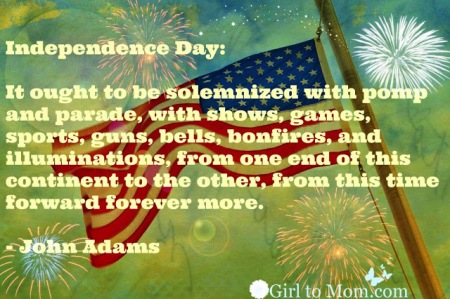
Other groups make the same error as David Barton's Wallbuilders, but without obvious cover ups, restricting their comments to "Independence Day." Accuracy helps, always.

Other groups make the same error as David Barton’s Wallbuilders, but without obvious cover ups, restricting their comments to “Independence Day.” Accuracy helps, always.

“The . . . day of July, 1776?”  What day?

[Barton’s site changes annually, but it keeps repeating the cover-up.]

Faithful readers, and good students of history know that John Adams thought, in 1776, that July 2 would be celebrated as Independence Day.  Why?  July 2, 1776, was the day the 2nd Continental Congress voted to declare the colonies independent of Britain, and no longer under the rule of the Crown or Parliament.

The Declaration of Independence — the press release explaining Richard Henry Lee’s resolution for independence — sat ready to be discussed.  The Congress did not adopt the Declaration until two days later, on July 4.

Our Independence Day celebration falls on the date of the adoption of the Declaration, not the date of the actual resolution declaring independence.

This is a point of great humor among historians.  Even John Adams, more prescient than most soothsayers, could not predict accurately when Americans would celebrate independence.  Here at Millard Fillmore’s Bathtub, we often make a post on or about July 2, noting that humorous discrepancy.

That’s interesting.  It’s inspiring to know these august figures, near-gods in the American pantheon of the 21st century, got things wrong.  It’s humorous.  It’s good history.

What in the hell was David Barton thinking?

What evil purpose is he trying to serve by hiding real history, in such a bizarrely petty way?  Why create a hoax when the words themselves support the point you’re wishing to make, that John Adams thought Americans should celebrate independence?

Screenshot of David Barton's webpage, showing his bizarre butchery of Adams's words.

Screenshot of David Barton’s webpage, showing his bizarre butchery of Adams’s words.

Sheesh! He comes so close to getting something accurate, but he can’t resist monkeying with the words of the Founders.  David Barton reminds me of the guy who cheated at golf so much that, one day when he hit a hole-in-one, he wrote “0!” on the scorecard.  A man who will lie to us about one of the most famous letters in American history will lie about anything, for fun.

More:

John Adams, ca 1816, by Samuel F.B. Morse (Bro...

‘David Barton said what?’ By the time this portrait was painted, Adams knew Americans would celebrate the 4th, and not the 2nd; he seems to be glaring right at David Barton, to tell Barton to quit jerking around with history – John Adams, ca 1816, by Samuel F.B. Morse (Brooklyn Museum) Wikipedia image


Fly your flag today! July 4, 2013, 237 years since the Declaration of Independence

July 4, 2013

It’s a day of tradition — oddly enough, since we are in reality a very new nation, and Lee’s resolution to declare independence from Britain came on July 2.

A soak in Millard Fillmore’s Bathtub is nothing if not a steeping in tradition.  Fly your flag today, to celebrate the independence of the American colonies of Britain.

Fourth of July: NPR has already read the Declaration of Independence (or will soon, if you’re up early), PBS is ready to broadcast the Capitol Fourth concert  (maybe a rebroadcast is available, if you’re off at your own town’s fireworks — check your local listings), your town has a parade somewhere this weekend, or a neighboring community does, and fireworks are everywhere.

At the White House, traditionally, new citizens are sworn in — often people who joined our armed forces and fought for our nation, before even getting the privileges of citizenship.  Fireworks on the Capital Mall will be grand, with the White House hosting a few thousand military people and their families from some of the best views.  Traditionally, five photographers, chosen by lottery, get to shoot photos of the fireworks from the windows of the Washington Monument; will that occur, with the Monument shut down from public view for repair from the earthquake?

There will be great fireworks also in Baltimore Harbor over Fort McHenry, the fort whose siege inspired Francis Scott Key to write the “Star-spangled Banner” from his boat in the harbor, in 1814. Firworks will frighten the bluebirds nesting at Yorktown National Battlefield.  I suspect there will be a grand display at Gettysburg, on the 150th anniversary of the end of that battle. July 4, 1863, also marked the end of the Siege of Vicksburg; tradition holds that Vicksburg did not celebrate the 4th of July for 83 years after that. I’ll wager there will be fireworks there tonight.  In Provo, Utah, the city poobahs will have done all they can to try to live up to their self-proclaimed reputation as having the biggest Independence Day celebration in the nation.  The celebration in Prescott, Arizona, is muted by the tragic deaths of 19 Hot Shot firefighters last week; will drought halt the fireworks, too?  There will be fireworks around the Golden Gate Bridge, in Anchorage, Alaska, reflecting on the waters of Pearl Harbor, and probably in Guam, American Samoa, and the Northern Marianas Islands.

Fireworks on the Fourth is a long tradition — a tradition that kept John Adams and Thomas Jefferson alive, until they both died on the 50th anniversary of the Declaration of Independence, in 1826, the sounds of the fireworks letting Adams know the celebration had begun (Adams erroneously celebrated that Jefferson, the Declaration’s author, still lived, unable to know Jefferson had passed just hours earlier).

Remember to put your flag up today.

Astronaut Eugene Cernan and the U.S. Flag -- Apollo 17 on the Moon (NASA photo)

Last flag on the Moon: Astronaut Eugene Cernan and the U.S. Flag — Apollo 17 on the Moon (NASA photo)

If you’re not on the Moon, here are some tips on flag etiquette, how to appropriately fly our national standard.

Also:

Lunar Reconnaissance Orbiter photo of Apollo 17 landing site

Lunar Reconnaissance Orbiter photo of Apollo 17 landing site

This is mostly an encore post, but I so love that photo of the flag with the Earth in the distance.

Happy birthday, Kathryn!

Fireworks in Duncanville, Texas, for July 4

Fireworks in Duncanville, Texas, for July 4 — Kathryn Knowles’s birthday. We’re always happy the town chimes in with the celebratory spirit.

Tip of the old scrub brush to Thomas Jefferson, Richard Henry Lee, John Adams, Benjamin Franklin, Roger Sherman, Robert Livingston, and the cast of thousands of patriots including George Washington.


One more time: Basic climate science with Bill Nye

July 4, 2013

What year is this? 2013?

Shouldn’t the Sputnik Revolution in science education have obviated the need for this video, like 30 years ago?

One more time, the basics of climate change/global warming, with Bill Nye the Science Guy explaining; from the ClimateRealityProject.org:

http://vimeo.com/climatereality/climate101

climate change, CO2, global warming, science, Bill Nye, environmental protection, Clean Air, Air Pollution

More:

Newsweek, March 4, 1957,

Cover of Newsweek Magazine, from March 4, 1957; notice this concern about U.S. science competency came seven months before Sputnik was launched by the Soviet Union. Science deniers then delayed action until after the Soviets demonstrated clearly that the U.S. was behind. (Image from Computer History.org)


For the birds, scientists at work

July 2, 2013

A scientist at work:

Amanda Holland with one of her research subjects, in South Carolina

Amanda Holland with one of her research subjects, in South Carolina

Kathryn’s cousin, Amanda Holland, moved from researching condors in California, to buzzards in Georgia and South Carolina (for the University of Georgia, I think).

Here she is with one of her research subjects.  Much lore is out there about handling carrion-eating birds for research — they vomit on you only if they like you, for example — but wholly apart from that, how great is this photo of a scientist at work?

I told her to copyright the photo (it is), and to hand on to the meme.  Can’t you see a character in Game of Thrones, or some other fantasy, who carries her own vultures to clean up after she devastates some other army in battle?

Eagles and falcons and owls are okay, but what other bird could conceal the results of the battle, so the warrior princess could move on in stealth?

Science field work looks like great stuff.  My experience is that it’s tiring, and sometimes lonely (though in very beautiful locations) — but the psychic rewards of actually increasing knowledge keep a lot of scientists going.  There’s not a lot of money in it.

Look at the friends you could make!


Quote of the moment, still: John Adams, July 2 “the most memorable Epocha in the History of America”

July 2, 2013

“The Second Day of July 1776 will be the most memorable Epocha, in the History of America. . . . It ought to be solemnized with Pomp and Parade, with Shews, Games, Sports, Guns, Bells, Bonfires, and Illuminations from one End of this Continent to the other from this Time forward forever more.”
John Adams to Abigail Adams, July 3, 1776

1776 filled the calendar with dates deserving of remembrance and even celebration. John Adams, delegate from Massachusetts to the Second Continental Congress, wrote home to his wife Abigail that future generations would celebrate July 2, the date the Congress voted to approve Richard Henry Lee’s resolution declaring independence from Britain for 13 of the British colonies in America.

Continental congress DSC_0607

Scene of the crime — Independence Hall in Philadelphia, where the Second Continental congress approved the resolution to declare the colonies independent from Britain – (Photo credit: diablodale)

Two days later, that same Congress approved the wording of the document Thomas Jefferson had drafted to announce Lee’s resolution to the world.

Today, we celebrate the date of the document Jefferson wrote, and Richard Henry Lee is often a reduced to a footnote, if not erased from history altogether.

Who can predict the future?

(You know, of course, that Adams and Jefferson both died 50 years to the day after the Declaration of Independence, on July 4, 1826. In the 50 intervening years, Adams and Jefferson were comrades in arms and diplomacy in Europe, officers of the new government in America, opposing candidates for the presidency, President and Vice President, ex-President and President, bitter enemies, then long-distance friends writing almost daily about how to make a great new nation. Read David McCullough‘s version of the story, if you can find it.)

(Yes, this is mostly an encore post.)

More, and Related articles:

The Lee Resolution.

The Lee Resolution, passed by the Second Continental Congress on July 2, 1776 – Wikipedia image (Wait a minute: Are those numbers added correctly? What are they?)


Two portraits of Pete Seeger (with Judy Collins)

July 2, 2013

A couple of photos I stumbled on recently.

The Seeger family in 1921; the youngest one is Pete, in his father’s lap:

Seeger family, 1921

The Seeger Family, 1921 Pete Seeger, the now-93 year-old folk singer, is sitting on his father’s lap.  Pete’s father was musicologist Charles Louis Seeger, Jr.; his mother was the violinist Constance de Clyver Edson.  The other two children are probably Pete’s older brothers Charles, III, and John.  This photo probably was taken while Charles and Constance toured the American south to teach music, after his having to leave UCLA because of his pacifist stance during World War I.

And 92 years later, with Judy Collins:

Judy Collins and Pete Seeger, photo by David Rocco, at the Clearwater Festival in Hudson, New York, June 15, 2013.

Judy Collins and Pete Seeger, photo by the preservationist David Rocco, at the Clearwater Festival in Hudson, New York, June 15, 2013. (We think that’s Pete’s wife, Toshi, on the far right edge of the photo.)

More:


Google Reader’s dead? You can still follow Millard Fillmore’s Bathtub

July 1, 2013

Ta-ta, Google Reader. There are other Translating Fish in the Sea.

Ta-ta, Google Reader. There are other Translating Fish in the Sea.

A lot of readers subscribed to Millard Fillmore’s Bathtub through Google Reader.  Alas for them, and for reading at this blog, Google Reader will close down on July 1, 2013.

Education automation guru Larry Ferlazzo points to a number of alternatives, almost all of which work here, too:

There are plenty of alternatives to Google Reader if you still want to subscribe using an RSS Reader (see The Best Alternatives To Google Reader Now That It’s Being Shut Down).

After trying out fifteen or twenty alternatives out there, including the new Digg Reader, I have yet to find a service that I think is a great replacement.

However, there’s no value in letting the “perfect be the enemy of the good.”

I’ve finally determined that Feedly is my primary alternative — with a caveat.

I really like Mr. Reader, which is only an iPad app. However, it “syncs” with Feedly. So I’ll be using Feedly on my desktop and on my iPhone, but Mr. Reader on my iPad.

I hope you’ll continue to follow, after the Google Reader shutdown.

On the right side of this blog you’ll find a button for RSS subscriptions, and to follow me on Twitter.  You can find me on Google Plus, but I generally don’t post everything there (I should consider it, I know).  You can subscribe to this blog on e-mail — again, with a button on the right side.

Are there other feeds, or other ways to follow that you think I should use?  Please let me know in comments.

More: