What if the old curmudgeon teaching economics married that cute, brainy geography teacher?

April 23, 2010

Or, was it the cute curmudgeon teaching econ and the old cartographer in geography?

I think I’ll add this to my TAKS review.  What other classroom uses can you find for it?

I found it at Cool InfoGraphics.

Seriously, geography and economics teachers, this is big stuff:

Follow the Money” is a video summarizing the results from the project by Northwestern University grad students Daniel Grady and Christian Thiemann.  Using data from the website Where’s George?, they have been able to track the movement of U.S. paper currency.  What can you learn from this?  That there are natural borders within the U.S. that don’t necessarily follow state borders, and it can also be used to predict the spread of disease because it maps movement of people within the U.S.

From Maria Popova on BrainPickings.org: This may sound like dry statistical uninterestingness, but the video visualization of the results is rather eye-opening, revealing how money — not state borders, not political maps, not ethnic clusters — is the real cartographer drawing our cultural geography.  The project was a winner at the 2009 Visualization Challenge sponsored by the National Science Foundation and AAA.

Tip of the old scrub brush to VizWorld and Maitri’s VatulBlog


You’re not using this technology in your classroom?

April 12, 2010

Here’s another opportunity to put real, cutting edge technology in your classroom.  In fact, your kids could probably invent all sorts of new uses for it.

Have you even heard of this stuff?  Can you use it, live, with the equipment you’ve got?

Blaise Aguera y Arcas  of MicroSoft demonstrated augmented-reality maps using the power of Bing maps, Flickr, Worldwide Telescope, Video overlays and Photosynth, to an appreciative and wowed audience at TEDS:

My prediction:  One more advance in computer technology that classrooms will not see in a timely or useful manner.

But have you figured out how to use this stuff in your geography, history, economics or government classes?  Please tell us about it in comments. Give examples and links, please.


Mexico earthquake: What do we know?

April 5, 2010

Baja California — that’s in Mexico, you European readers — got hit with a large earthquake tonight, a 7.2 on the logarithmic Richter Scale according to some early reports. At least one person died; Mexicali, on the border with California, reports many people trapped.  A state of emergency has been declared.

BBC gives the facts:

A 7.2 magnitude earthquake has hit the Mexican peninsula of Baja California, killing at least one person and causing tremors as far away as Nevada.

The quake struck at 1540 (2240 GMT), 26km (16 miles) south-west of Guadalupe Victoria in Baja California, at a depth of 32km, said the US Geological Survey.

Some people are still trapped in their homes in the city of Mexicali, where a state of emergency has been declared.

It was the worst quake to hit the region for many years, officials said.

The US Geological Survey said some 20 million people felt tremors from the largest quake to hit the area since 1992.

My students with Mexico connections tend to come from farther east, and higher in the mountains — I don’t think I have a single student who visits Baja California on breaks.  But the news will prompt questions from them tomorrow.

The U.S. Geological Survey (USGS) tracks earthquakes around the world.  It should have solid information.  Data on the April 4 7.2 quake are here.

Here’s the tectonic summary:

A magnitude 7.2 earthquake occurred at 3:40:40 p.m. (local time at the epicenter) on Sunday, 4 April 2010 in Baja California, approximately 75 km south of the Mexico-USA border. The earthquake occurred at shallow depth (approximately 10 km) along the boundary zone between the North American and Pacific plates. Since earthquakes have been recorded instrumentally, only two similar sized earthquakes have been recorded in the area. The first was the 1892 earthquake estimated at magnitude 7.0-7.2 along the Laguna Salada fault just south of the USA-Mexico border. The second was the 1940 Imperial Valley magnitude 6.9 earthquake which occurred in southernmost California. Today’s event is located nearly in line with these earthquakes along the plate boundary, but is situated farther to the south. There are several active faults in the vicinity of today’s earthquake, and the particular fault that generated this quake has not yet been determined. Faulting is complex in this region, because the plate boundary is transitional between the ridge-transform system in the Gulf of California and the continental transform system in the Salton Trough. Most of the major active faults are right-lateral strike-slip faults with a northwest-southeast orientation, similar in style to the San Andreas fault to the north. Other faults in the vicinity with the same orientation include the Cerro Prieto fault and the Laguna Salada fault.

USGS hosts good maps, too, like this “shake map” (click the map to go to the USGS site for more information):

USGS "shake map" for the April 4 7.2 quake near Mexicali, Mexico

USGS "shake map" for the April 4 7.2 quake near Mexicali, Mexico - Click to go to USGS site

What other questions can we anticipate?  Somebody will ask whether this quake is related to the Haiti and Chilean quakes (probably not closely related).  Somebody will wonder about the Pacific Ring of Fire, and this quake’s relation to volcanoes and general earthquake activity around the Pacific (high relationship).  Someone will want to know about quakes in your area.  Is this the precursor to “the Big One?”

The USGS site is a good place to start on all of those questions.


Education board shames Texas: Social studies follies, part A

March 31, 2010

John Sherffius, one of my favorite editorial cartoonists, laid out the problem in his cartoon of March 18:

John Sherffius, Boulder Daily Camera, March 18, 2010 - Texas social studies standards

John Sherffius, Boulder Daily Camera, March 18, 2010

You may purchase a copy of the cartoon — or the original — here.

SBOE isn’t exactly asking that the Bible be rewritten — or at least, not directly.  Suggesting we replace Thomas Jefferson as a founder with John Calvin in high school standards, is just as silly.

Tip of the old scrub brush to What Would Jack Do, “Lone Star Laughing Stock,” and Steven Schafersman.


Shakiest states — geologically, that is

March 4, 2010

USGS map of states with the most quakes

Quake rankings of states

Which states shake the most?  Here are the top 20.

Surprised that Maine makes the list?

Much more from the US Geological Survey here, “Top Earthquake States.”


Free, detailed maps of Germany

March 3, 2010

Need maps of Germany for geography or world history?

Germany’s geodetic and cartography agency, Bundesamt für Kartographie und Geodäsie, in Frankfurt,  has three detailed maps available in .pdf form at it’s website.

These .pdfs are suitable for papers sizes roughtly 8.5 by 11 inches in the U.S. — but they probably would scale up nicely for poster-size maps, too.  The maps are in color, and in German.


Oklahoma earthquake

March 1, 2010

While attention was on Hawaii, wondering about the tsunami’s effects there, Oklahoma got hit with an earthquake of magnitude 4.1, a big one for such a flat, geologically inactive state (link goes to USGS site).

Epicenter of Oklahoma earthquake, February 27, 2010

Epicenter of Oklahoma earthquake, February 27, 2010

Most likely there is no connection between the Oklahoma quake and any other shaking on Earth in the past week or so.


Geography education vs. geography learning

January 29, 2010

Angst over the state of education never goes away:

Much more important is the way we seem to have turned away from the very idea of education that sustains a healthy, vibrant liberal democracy.  As I write this I am conscious of how unfashionable it sounds. However, there has been a steady erosion of the notion that education can and should fuel our individual ability to think critically about the world as we find it – which requires knowledge and understanding of how the world has come to be. We are swamped with a language of targets, skills and 21st century ‘learning to learn’, but have forgotten what it is that distinguishes learning (a word that now seems to carry huge weight and always deemed a good thing in itself, when clearly it is not) from education.  All worthwhile education is, in the end self-education, based on the student’s curiosity, their need to know and readiness to rise to the challenge of finding out. Indeed, offering challenge to young people is one way to motivate them – so different from today’s orthodoxy which says we should make learning accessible, bite-sized and achievable by all.

These guys write from England, however, and they write from the vantage point of teaching geography and having just published their book on how better to teach geography.

See their take on what geography teachers should be teaching about Haiti right now.


Annals of Global Warming: Bering Strait, choke point and butterfly effect

January 17, 2010

From the National Science Foundation, we get more stuff that students in high school ought to learn, stuff which would give the conservatives on the Texas State Board of Education full-fledged conniptions, stuff that just doesn’t fit into Texas’s Teach-To-The-Test™ education standards.

Reading the press release brings home two points to me.  First, for the sake of Texas social studies standards, this story tells the physical effects of “choke points.”  The Bering Strait limited human migration to populate the America’s, meeting the definition of choke point favored by Texas Essential Knowledge and Skills (TEKS), and this story sheds light on that issue.  But it also points out that choke points affect more than just humans.  This was a key finding of the President’s Commission on Americans Outdoors that led to a recommendation that we create green corridors favorable for animal migration.  In the Bering Strait, it’s migration of ice and cold and warm water that get choked off — and that, too, affects human history.  Second, this may enlighten students to the butterfly effect noted in the science we call chaos, where a small physical perturbation in one area can have enormous consequences later, and far away, in the dynamic systems that keep our planet alive.  (Yeah, the Bering Strait is bigger than a butterfly.  I know.)

Press Release 10-003

Global Ice Age Climate Patterns Influenced by Bering Strait

Small geographic feature has large impacts on climate

Ice pouring through the Bering Strait, from the Arctic to Pacific Ocean - NASA photo via NSF

Ice is shown choking the Bering Strait in recent times; the ice moves from the strait south to the Bering Sea. Credit: NASA

January 10, 2010

In a vivid example of how a small geographic feature may have far-reaching impacts on climate, new research shows that water levels in the Bering Strait helped drive global climate patterns during ice age episodes dating back more than 100,000 years.

The international study, led by scientists at the National Center for Atmospheric Research (NCAR) in Boulder, Colo., found that the repeated opening and closing of the narrow strait due to fluctuating sea levels affected currents that transported heat and salinity in the Atlantic and Pacific Oceans.

As a result, summer temperatures in parts of North America and Greenland oscillated between comparatively warm and cold phases, causing ice sheets to alternate between expansion and retreat and affecting sea levels worldwide.

While the findings do not directly bear on current global warming, according to Steve Nelson, National Science Foundation (NSF) program director for NCAR, they highlight the complexity of Earth’s climate system and the fact that seemingly insignificant changes can lead to dramatic tipping points for climate patterns, especially in and around the Arctic.

“The global climate is sensitive to impacts that may seem minor,” says NCAR scientist Aixue Hu, the project’s lead scientist. “Even small processes, if they are in the right location, can amplify changes in climate around the world.”

The research results are published this week in the journal Nature Geoscience.

Funded by NSF and the U.S. Department of Energy, the scientists used the latest generation of supercomputers to study past climate at a level of detail that would have been impossible just a few years ago.

Hu and his colleagues set out to solve a key mystery of the last glacial period: Why, starting about 116,000 years ago, did northern ice sheets repeatedly advance and retreat for about the next 70,000 years? The enormous ice sheets held so much water that sea levels rose and dropped by as much as about 100 feet (30 meters) during these intervals.

In other cases, scientists have associated such major oscillations in climate with fluctuations in Earth’s orbit around the Sun. But in the time period the research team looked at, the orbital pattern did not correspond with the geologic movement of the ice sheets and associated sea level changes.

The researchers considered an alternative possibility: that changes in the Bering Strait, the main gateway in the Northern Hemisphere between the Atlantic and Pacific Oceans, might have affected ocean currents across much of the globe.

Although small–the strait is currently about 50 miles (80 kilometers) wide between Russia and the westernmost islands of Alaska–it allows water to circulate from the relatively fresh north Pacific to the saltier north Atlantic via the Arctic Ocean. This flow is instrumental to regulating the strength of a current known as the meridional overturning circulation, a key driver of heat from the tropics to the poles.

Using the NCAR-based Community Climate System Model, a powerful computer tool for studying worldwide climate, the researchers compared the responses of ice age climate to conditions in the Bering Strait.

They ran the model on new supercomputers at NCAR and the Department of Energy’s Oak Ridge National Laboratory, enabling them to focus on smaller-scale geographic features that, until recently, could not be captured in long-term simulations of global climate.

The simulations accounted for the changes in sea level, revealing a recurring pattern–each time playing out over several thousand years–in which the reopening and closing of the strait had a far-reaching impact on ocean currents and ice sheets.

As the climate cooled because of changes in Earth’s orbit, northern ice sheets expanded. This caused sea levels to drop worldwide, forming a land bridge from Asia to North America and nearly closing the Bering Strait.

With the flow of comparatively fresh water from the Pacific to the Atlantic choked off, the Atlantic grew more saline. The saltier and heavier water led to an intensification of the Atlantic’s meridional overturning circulation, a current of rising and sinking water that, like a conveyor belt, pumps warmer water northward from the tropics.

This circulation warmed Greenland and parts of North America by about 3 degrees Fahrenheit (1.5 degrees Celsius)–enough to reverse the advance of ice sheets in those regions and reduce their height by almost 400 feet (112 meters) every thousand years. Although the Pacific cooled by an equivalent amount, it did not have vast ice sheets that could be affected by the change in climate.

Over thousands of years, the Greenland and North American ice sheets melted enough to raise sea levels and reopen the Bering Strait.

The new inflow of fresher water from the Pacific weakened the meridional overturning circulation, allowing North America and Greenland to cool over time. The ice sheets resumed their advance, sea levels dropped, the Bering Strait again mostly closed, and the entire cycle was repeated.

The combination of the ocean circulation and the size of the ice sheets–which exerted a cooling effect by reflecting sunlight back into space–affected climate throughout the world.

The computer simulations showed that North America and Eurasia warmed significantly during the times when the Bering Strait was open, with the tropical and subtropical Indian and Pacific Oceans, as well as Antarctica, warming slightly.

The pattern was finally broken about 34,000 years ago, the point in Earth’s 95,000-year orbital cycle at which the planet was so far from the Sun at certain times of year that the ice sheets continued to grow even when the Bering Strait closed.

When the orbital cycle brought Earth closer to the Sun in the northern winter, the ice sheets retreated sufficiently about 10,000 years ago to reopen the strait. This helped lead to a relatively stable climate, nurturing the rise of civilization.

“This kind of study is critical for teasing out the nuances of our climate system,” says NCAR scientist Gerald Meehl, a co-author of the paper. “If we can improve our understanding of the forces that affected climate in the past, we can better anticipate how our climate may change in the future.”

In addition to NCAR, the study team included researchers from the National Center for Scientific Research (CNRS) in France, University of Colorado in Boulder, Catholic University of Louvain in Belgium, Australian National University and Harvard University.

-NSF-
Download the high-resolution JPG version of the image [of ice flowing through the Bering Strait, above]. (1.4 MB)

Bering Strait, NASA photo via National Science Foundation

The Bering Strait separates the U.S. and Russia by only 90 kilometers. Credit: NASA

Download the high-resolution JPG version of the image. (570 KB)

Currents move warm and cold water across the Arctic Ocean - UCAR map

Altered currents once produced ocean warming (right, dark red) that melted ice sheets. Credit: UCAR

Download the high-resolution JPG version of the image. (680 KB)

Media Contacts
Cheryl Dybas, NSF (703) 292-7734 cdybas@nsf.gov
David Hosansky, NCAR/UCAR (303) 497-8611 hosansky@ucar.edu

The National Science Foundation (NSF) is an independent federal agency that supports fundamental research and education across all fields of science and engineering. In fiscal year (FY) 2009, its budget is $9.5 billion, which includes $3.0 billion provided through the American Recovery and Reinvestment Act. NSF funds reach all 50 states through grants to over 1,900 universities and institutions. Each year, NSF receives about 44,400 competitive requests for funding, and makes over 11,500 new funding awards. NSF also awards over $400 million in professional and service contracts yearly.

Get News Updates by Email

Useful NSF Web Sites:
NSF Home Page: http://www.nsf.gov
NSF News: http://www.nsf.gov/news/
For the News Media: http://www.nsf.gov/news/newsroom.jsp
Science and Engineering Statistics: http://www.nsf.gov/statistics/
Awards Searches: http://www.nsf.gov/awardsearch/

Bookmark those sites, teachers.

More:


Social studies train wreck at Texas State Board of Education: Live! A Nation at Risk

January 13, 2010

Steve Schafersman will live blog the hearings on social studies standards before the Texas State Board of Education (SBOE) today, at Evo-Sphere.  Schafersman is president of Texas Citizens for Science, and a long-time activist for better education in Texas on all topics.

Rapid updates or live-blogging should be available at the blog of the Texas Freedom Network, TFN Insider.

It’s Item #6 on the SBOE agenda, with a title that tips off the trouble:

Item #6 — Public Hearing Regarding Proposed Revisions to 19 TAC Chapter 113, Texas Essential Knowledge and Skills for Social Studies, and Chapter 118, Texas Essential Knowledge and Skills for Economics with Emphasis on the Free Enterprise System and Its Benefits.

Schafersman e-mailed an introduction to the meeting:

Some say the Social Studies public testimony by the religious right, liberals, etc., then the SBOE debate, motions to amend, votes, etc. is a bigger circus than adopting the science standards. Judge for yourself. You can watch the entire circus, carnival, and sideshow on the webcast video at http://www.texasadm in.com/cgi- bin/tea.cgi

This is Texas democracy in action, when sullen and tight-lipped State Board members listen to public testifiers for 3 minutes each and profoundly ignore them since they already know what they are going to do. But I, at least, feel better after speaking so I don’t later feel responsible for the crappy amendments, changes, and policies that come out of this horrible Board because I did nothing. The proposed Social Studies standards written by the panels composed of teachers and professors are excellent (when have I heard this before), but the SBOE can’t wait to shamelessly impose their own Religious Right agenda on them.

You’ll recall that SBOE has at every possible turn disregarded the advice of famous and serious historians, respected free-market-advocating economists, geographers and educators on these standards.  Economists, for example, want Texas kids to learn about “capitalism,” since that’s what it’s called by economists and policy makers, and colleges.  SBOE thinks “capitalism” sounds too subversive, and wishes instead to require Texas kids to learn about “free enterprise” instead.

‘A rose by any other name’ you think, until you start thinking of how Texas kids do on standardized tests, college admission exams, and the punchline on the joke, about Texas kids being told not to study capitalism.  No siree, no capitalism in the fictional home of J. R. Ewing, never mind the real-life capitalists like T. Boone Pickens or H. Ross Perot (Jr. and Sr.).

In Dallas, the city prepares to name a street after Cesar Chavez, the great Hispanic union organizer and advocate for working Americans.  In Austin, SBOE works to strike all mentions of Chavez, because they dislike the politics of heroes of our ethnic minorities (soon to be a majority in Texas).  In Washington historians and policy-makers follow the legacy of Thurgood Marshall, the great civil rights attorney and first African-American to sit on the U.S. Supreme Court.  In Austin, SBOE thinks Marshall should be left out of history books.  Many of us suspect he’s anathema to the white right-wing in Austin:  A smart, successful and noble man of color.

Mel and Norma Gabler died years ago, but their history lingers in the halls of education policy in Austin.  It’s Shakespearean.

This is a massive battle.  David Barton worked for 30 years to gut history standards nationally to teach a history of America that never was, and as the official religionist appointee of the right-wing SBOE members, he stands on the brink of accomplishing much of the revisionism he’s advocated.  See the Texas Tribune story on the issue, “Hijacking History.”

Generally we shouldn’t negotiate with terrorists, Ronald Reagan said.  At the SBOE, we’ve put the terrorists in charge of history and economic curricula — if not the terrorist themselves, at least the terrorists’ camels’ noses.  Texas’s process has earned flashing red-light, claxon-sounding repeating of the words of Ronald Reagan’s Commission on Excellence in Education:  If a foreign nation did this to us, we’d consider it an act of war [excerpt below the fold].

Make no mistake about it.  SBOE’s goal is to roll back any of the reforms left from Reagan’s Commission’s work.  Our nation is more at risk from foreign competition than ever before.  SBOE plans to give away a bit more of our future to China, this week.

Our saving grace is the general incompetence of SBOE members to make significant reform in Texas’s wounded schools, reeling from unworkable and damaging requirements under the No Child Left Behind Act and a testing program that severely limits what can be taught in any social studies course other than those bastions of learning left in International Baccalaureate programs and Advanced Placement courses (estimates are that between 5% and 10% of Texas high school students can take one of those good courses).  Whatever silliness, craziness or lies SBOE orders to  be taught, it can’t be taught and tested well.  Inertia preventing change works to save America in this case.

In business, most CEOs at least appreciate the value of having good front-line employees who are the ones who really deliver the service or product and produce the profit of the enterprise (even if they don’t treat those employees so well as the employees deserve).  Education may be the last bastion of flogging the horse that should be pulling the cart instead.  In this case, having well-trained teachers in the classroom is the last hope for Texas, Texas parents and Texas students — and Texas’s economic future and future in liberty.  Teachers are the last defense of freedom in Texas.  Today SBOE will make another assault on the ramparts that protect the teachers in their work.

When will the French fleet arrive to lend aid?  Will it arrive at all?  And if it arrives, will Texas kids know better than to shoot at the ships?

Carol Haynes, who claims to have a doctorate in some discipline, told the board how to rewrite the standards to completely change the history of the civil rights movement in their last hearing on the topic.  According to Haynes, apparently, Dr. Martin Luther King, Jr., was opposed to civil rights and Barry Goldwater was in favor — the Board didn’t offer to correct her revisionism, but instead asked her to go beyond her three minutes in fawning acceptance. This appears to be SBOE’s approval of various Other Universe hypotheses offered by Star Trek, allowing any damned thing at all to be taught as history (except the right stuff).  Haynes is scheduled to testify again (#128), probably very late at night, but perhaps in time for the 10:00 p.m. Texas television news broadcasts.  Oy.

Excerpt from the Report of the Commission on Excellence in Education, A Nation at Risk, below the fold.

ae_summer2015mehta_opener-1100x736

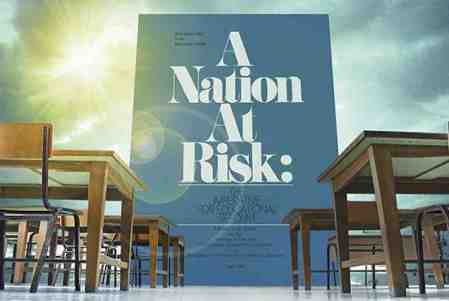
Cover of A Nation at Risk: The Imperative for Educational Reform, the 1983 report that started the education reform mess. AFT graphic.

Stand up for your nation, it’s children and future; sound the alarm:

Add to FacebookAdd to NewsvineAdd to DiggAdd to Del.icio.usAdd to StumbleuponAdd to RedditAdd to BlinklistAdd to TwitterAdd to TechnoratiAdd to Furl


Read the rest of this entry »


Trouble at Texas Board of Education: Social studies

January 11, 2010

Here is a news rundown of stories on the Texas State Board of Education, who have been planning for a year now to mess up social studies standards for Texas public schools, this week.

Get on your horse and warn Texans:  The Idiots are coming to get your good schoolbooks:

Add to FacebookAdd to NewsvineAdd to DiggAdd to Del.icio.usAdd to StumbleuponAdd to RedditAdd to BlinklistAdd to TwitterAdd to TechnoratiAdd to Furl


Annals of Global Warming: Black soot and glaciers in Tibet

January 5, 2010

Another in a series on the history of global warming; this comes from the Earth Observatory at NASA (visit that site — the image is more stunning, larger):

tibet_geos5_2009269

Black Soot and the Survival of Tibetan Glaciers

Posted December 15, 2009
Black Soot and the Survival of Tibetan Glaciers

Color bar for Black Soot and the Survival of Tibetan Glaciers
download large image (677 KB, JPEG) acquired September 26, 2009
download large animation image (9 MB, M4V) acquired August 1, 2009 – November 9, 2009

On the Tibetan Plateau, temperatures are rising and glaciers are melting faster than climate scientists would expect based on global warming alone. A recent study of ice cores from five Tibetan glaciers by NASA and Chinese scientists confirmed the likely culprit: rapid increases in black soot concentrations since the 1990s, mostly from air pollution sources over Asia, especially the Indian subcontinent. Soot-darkened snow and glaciers absorb sunlight, which hastens melting, adding to the impact of global warming.

NASA climate scientists combine satellite and ground-based observations of soot and other particles in the air with weather and air chemistry models to study how the atmosphere moves pollution from one place to another. This image is from a computer simulation of the spread of black soot (“black carbon” to climate scientists) over the Tibetan Plateau from August through November 2009. It shows black carbon aerosol optical thickness on September 26, 2009. (Aerosol optical thickness is scale that describes how much pollution was in the air based on how much of the incoming sunlight the particles absorbed.) Places where the air was thick with soot are white, while lower concentrations are transparent purple.

The highest concentrations of black soot are in the right-hand side of the image, over the densely populated coastal plain of China. But high concentrations occur over India, as well, and the black soot spreads across the southern arc of the Tibetan Plateau, which is defined by the towering peaks of the Himalaya Mountains. (Note: Topography has been exaggerated to highlight features that influence air movement). The animation shows how the black carbon pollution from India often circulates at high concentrations for several days against the base of the Himalaya, periodically “sloshing” over the rim of the mountains and spilling northward over the plateau, before being carried away over the Bay of Bengal or the Arabian Sea.

Writing about the implications of the study for the Goddard Institute for Space Studies Website, NASA climate scientist and study co-author James Hansen said, “[C]ontinued, ‘business-as-usual’ emissions of greenhouse gases and black soot will result in the loss of most Himalayan glaciers this century, with devastating effects on fresh water supplies in dry seasons. The black soot arises especially from diesel engines, coal use without effective scrubbers, and biomass burning, including cook stoves. Reduction of black soot via cleaner energies would have other benefits for human health and agricultural productivity. However, survival of the glaciers also requires halting global warming, which depends upon stabilizing and reducing greenhouse gases, especially carbon dioxide.”

NASA image by Gregory Shirah, Goddard Scientific Visualization Studio, based on model simulations from the Goddard Earth Observing System Model, Version 5 (GEOS-5). Caption by Rebecca Lindsey.


Geography quiz: In space, who will accept your teeming masses?

December 3, 2009

Lady Liberty from space, European Space Agency photo

What is this famous landmark?

This could be an interesting geography or history bell ringer.  What are these famous sites pictured above?

Answer below the fold.

Read the rest of this entry »


Geography Awareness Week, November 15-21

November 6, 2009

Geography Awareness week is sneaking up — November 15-21.

Got your special lesson plans ready, teachers?


Where did North Dakota go?

August 15, 2009

I think it was during the Los Angeles Olympics that I read a story about a guy in Albuquerque, New Mexico, who had called the toll-free number to purchase tickets to some Olympic events.  The seats were available and everything went fine, through the giving of the credit card number — until the woman asked him for his mailing address. [I’ll keep searching for that story . . .]

When he gave his mailing address in Albuquerque, New Mexico, the woman said, “I’m sorry, we can’t sell tickets outside the United States,” or words to that effect.

Despite the man’s pleas that New Mexico is part of the U.S., the woman refused to complete the sale.

Now, Google has lost North Dakota.

Photo below, from Art Hunt’s recent cross country driving extravaganza.

Art Hunt said:  The trip was not without its glitches, such as when we discovered we had apparently reached the end of the world

Art Hunt said: "The trip was not without its glitches, such as when we discovered we had apparently reached the end of the world"