Use of evidence in science: Homeopathy and nutritionists take a laughable hit

October 9, 2009

Dara O’Briain?  Never heard of him before.

But he’s spot on here, isn’t he?

(Warning:  Not exactly safe for work or school — the “f” word is spoken aloud.]

An ironic tip of the old scrub brush to Gandolf, in comments at Dunamis Word, in an otherwise futile discussion with creationists who claim to have an ounce of rationality left in them.


Does Idaho exist? Does McDonald’s sell French Fries?

August 19, 2009

Fun discourse on the nature of what we know, and how we know it, at Alaska blog What do I know?

Steve makes his point with solid commentary on the birthers, gay marriage, and health care reform debates.

Why don’t other philosophers — Beckwith, Monton and Dembski come to mind — adopt similarly rational views?

As one born in Idaho, I love the title.  No, you can’t see my birth certificate.  You don’t think Idaho exists?  Where, then, do the McDonald’s French Fries come from?

Tip of the old scrub brush to Dr. Bumsted.

Share this story; who can prove Idaho exists?

Add to FacebookAdd to NewsvineAdd to DiggAdd to Del.icio.usAdd to StumbleuponAdd to RedditAdd to BlinklistAdd to TwitterAdd to TechnoratiAdd to Furl


Hall of Fame: Debunking the Moon landing hoax hoax

December 10, 2006

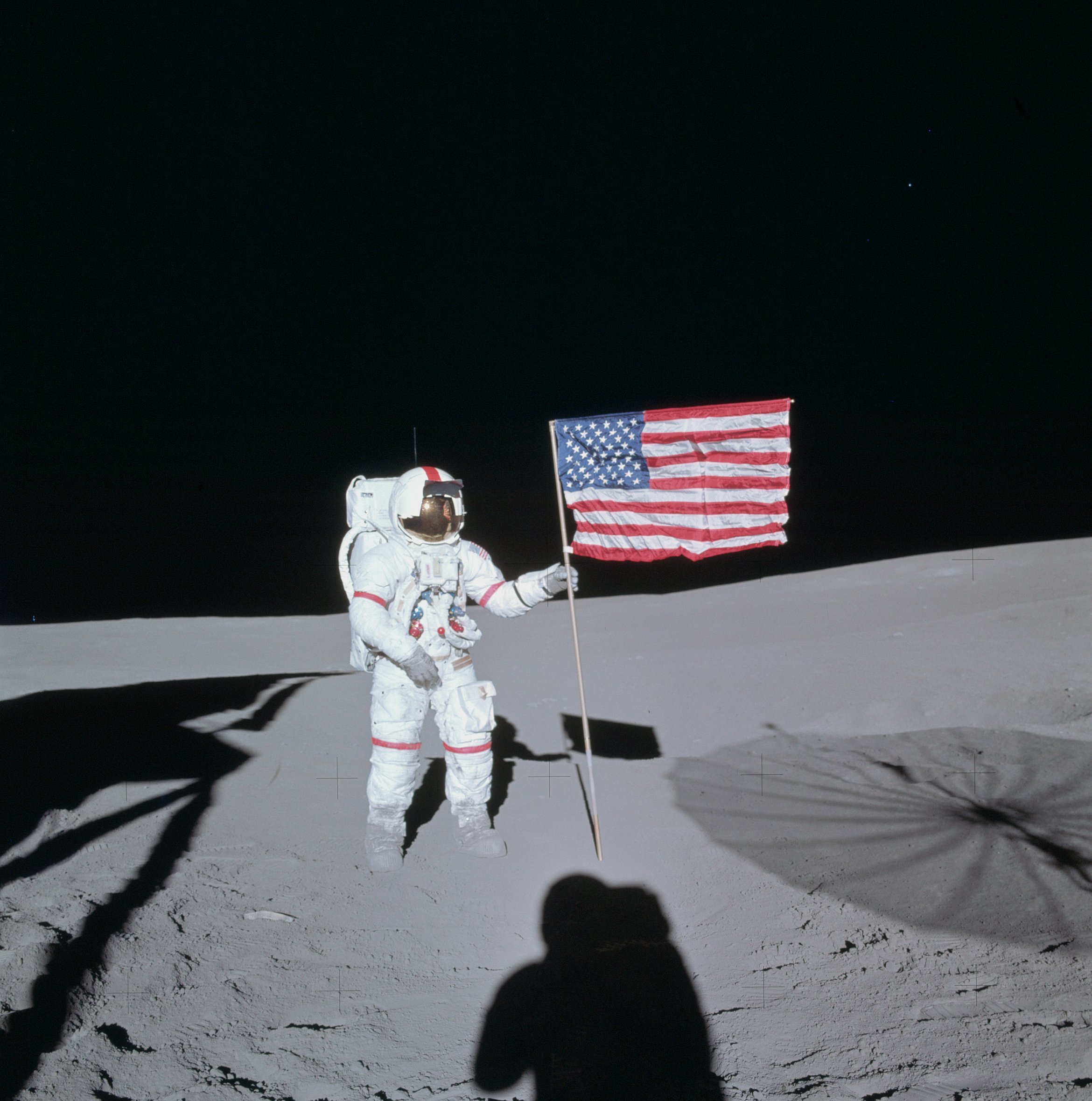
Apollo 14 on the moon - Alan Shepard?

Photo from Apollo 14 Moon Mission


In a classroom discussion of “how do we know what we know” about history, another student brought up the allegations that the National Aeronautics and Space Administration (NASA) faked the manned Moon landings. That makes about a dozen times this year a kid has mentioned this claim (who thinks to start counting these things?). The kid was pretty unshakable in his convictions — after all, he said, how can a flag wave in a vacuum?

I usually mention a couple of things that the fake claimers leave out — that dozens, if not hundreds, of amateur astronomers tracked the astronauts on their way to the Moon, that many people intercepted the radio transmissions from the Moon, that one mission retrieved debris from an earlier unmanned landing, etc. Younger students who lack experience in serious critical thinking have difficulty with these concepts. They also lack the historic background — the last manned Moon landing occurred when their parents were kids, perhaps. They didn’t grow up with NASA launches on television, and the whole world holding its breath to see what wonders would be found in space.

Phil Plait runs a fine blog called Bad Astronomy. Five years ago he got fed up with the Fox Television program claiming the Moon landings were hoaxes, and he made a significant reply that should be in some hall of fame for debunking hoaxes. Since the claim that the Moon landings were hoaxes is, itself, a hoax, I have titled this “Debunking the Moon landing hoax hoax.”

In any case, if you’re wondering about whether the Moon landings were hoaxes, you need to see Phil Plait’s post. Phil writes:

From the very first moment to the very last, the program is loaded with bad thinking, ridiculous suppositions and utterly wrong science. I was able to get a copy of the show in advance, and although I was expecting it to be bad, I was still surprised and how awful it was. I took four pages of notes. I won’t subject you to all of that here; it would take hours to write. I’ll only go over some of the major points of the show, and explain briefly why they are wrong.

Also, consider these chunks of evidence, which Phil does not mention so far as I know:

First, the first Moon landing left a mirror on the surface, off of which Earth-bound astronomers may bounce laser transmissions in order to measure exactly the distance from the Earth to the Moon. Read the rest of this entry »


Based on a true story — except, not Texas. Not a chainsaw. Not a massacre.

October 8, 2006

Nota bene: Be sure to see update, here.

First, there was the woman who squealed in class when I mentioned Travis County, the Texas county in which resides Texas’s capital city, Austin. She said later she had thought it was a fictional county. By the way, she asked, was the rest of the “Texas chainsaw massacre” story true, too? (I have never seen any of these movies; I understand the 2003 version was set in Hewitt, Texas, which is a real, small Texas town near Waco, between Dallas and Austin — but not in Travis County. I’m not sure what Travis County has to do with any of the movies.)

Logs awaiting processing at a sawmill in Nacogdoches County, Texas - Ron Billings photo

Victims of a real Texas chainsaw massacre: Victims await “processing” at a sawmill in Nacogdoches County. Photo by Ron Billings, Texas Forest Service.

Since then, in the last couple of weeks I have had at least a dozen requests to teach the history behind the movie, the “true story.” The movies are all highly fictionalized, I note. Perhaps I should plan a day to discuss real Texas murders, and just what fiction is, especially from Hollywood.

According to Snopes.com, one of my favorite debunking sites, there was never a Texas chainsaw massacre. There was a Wisconsin farmer who stole corpses from the local cemetery, and upon whom was based the earlier Alfred Hitchcock movie, Psycho. There was the chainsaw exhibit at Montgomery Ward seen by writer/director Toby Hooper, when he needed inspiration to finish a screen treatment. That’s about it.

But it’s nearing Halloween, and the studios in Hollywood hope to make money.

There are real Texas crimes that would be good fodder for movies, in the hands of intelligent and creative people. One wonders why more movies aren’t done on the real stories. Read the rest of this entry »