Cover of Popular Science, February 1946; Google Books and Ebay image
Experiments in Ontario by the Dept. of Lands and Forests show what happens when DDT is used out of doors. Damage to trees was limited to burning of leaf edges. Carnivorous water beetles and some other aquatic animals were not greatly affected but died because the insects on which they fed were destroyed. Other aquatic insects were killed directly. Crayfish, which feed on insects and themselves serve as fish food, were very susceptible. Minnows were killed by contact and trout died from eating poisoned insects. Six kinds of frogs and two kinds of snakes were killed, either by contact or by eating poisoned insects. Any DDT field spray is likely to destroy more than half of these amphibians. (page 72)
There is an interesting reference to a case of several human deaths due to DDT — these reports of human deaths disappeared from research reports rather quickly, and today critics of environmental protection policies often say that no human ever died from DDT. What happened to those reports, and are there others?
A further objection to the wide use of DDT in larvae control is the dangers of contaminating the water supply. Fear of this led us to abandon plans to use DDT extensively at Bear Mountain Park. Heavy rains might wash the DDT into reservoirs. We were not fully aware of the deadly effects of the chemical then, but we received word from Okinawa later than several natives had died from eating DDT, and post-mortem examination revealed nerve lesions similar to those produced by strychnine. (p. 72)
Brownfielders working against Rachel Carson sometimes claim she manufactured controversy about DDT with the publication of her book in 1962. Go see this article from 16 years earlier, and see the warnings offered by the author, Dr. C. H. Curran, who was Associate Curator, Department of Insects and Spiders, at the American Museum of Natural History.
Yet we can find precedents to this science-base scare in many health scares of recent decades, and also in environmental scares since the DDT cancer scare triggered by Silent Spring, politicised by the EDF and legalized by the newly formed EPA. (See Scared to Death which finds a repeating pattern to these science-based scares.)
This woman might be corrected; global warming denialists will staunchly insist she knows what she’s doing and doesn’t need YOUR advice.
He fails to even think that Rachel Carson was right. Lewin demonstrates incompetence at history, law and science, and the first point of the Scout Law, all in one sentence.
So much error. So little time to correct.
Carson didn’t claim DDT caused cancer. She noted that we create thousands of chemicals that may cause cancer, that cancers were rising in frequency, and that there was no testing of the new substances prior to their marketing. Was there a DDT/cancer scare? Lewin doesn’t offer any evidence. (We had to correct Matt Ridley on this a couple of weeks ago — see his post here.)
EDF (Environmental Defense Fund, now known as Environmental Defense) was on DDT without Carson — suing to stop DDT spraying (for no good reason) on Long Island in 1968. EDF relied on science that was courtroom ready. (I had misremembered the year of EDF’s suit in an earlier version of this post; my apologies to the two or three who may have read it.) EDF’s suits established, on the basis of science, that DDT is an uncontrollable poison in the wild. Lewin ignores science and law in his off-hand indictment of Carson’s book and ED.
EPA didn’t act against DDT until 1972. EPA banned DDT use on agricultural crops in the U.S. because DDT kills non-target species and, basically, entire ecosystems. EPA was specific: The ban had nothing to do with cancer. Once again, Lewin ignores history, science and law.
So, in Lewin’s guest post, we see the pattern that continues at Watts’s place — unfair and wrong indictments of science, ignorance of history, little understanding of law.
All while trying to mock scientists: ‘Of course scientists are almost always wrong,’ Watts’s blog argues, once again.
Watts won’t let me correct his errors there, even though he’s still coddling those who misdescribe Rachel Carson as a mass murderer, while denying he does it himself. Consequently his readers won’t be alerted to this post because Watts or his minions will edit out the automatic ping his blog gets that this post is here. Propaganda promoting falsehood can’t stand the sunlight of fact and truth.
Just because there’s a scare doesn’t mean there’s not a reason to be scared. DDT is a deadly toxin, so long-lived that it almost cannot ever be eradicated from the environment. It kills everything small, quickly, unless so much of it is used that the small things evolve quickly to be resistant and immune to it.
So, if we are to assume, as Lewin wrote, that the anti-warming bunch is to warming what the campaign against Rachel Carson by the DDT manufacturers was to DDT’s harms, we get a hint of what’s really up at Watts Up: Any anti-warming claim is a hoax. Why put it so cryptically, if that’s what they meant to say?
When Lewin looks at the history of DDT and Rachel Carson, he’s looking at the false history, and he draws the wrong conclusions. Should we trust a guy so sloppy with the facts to be right on anything else?
Spread the word; friends don't allow friends to repeat history.
Or is this one more case of using environmentalists as scapegoats by the hard right, and other know-nothings and know-not-enoughs?
Jackson’s piece makes mild defense of a great idea in government, I think. To me, the critics appear hysterical in comparison.
In tracking this down, I discovered that Matt Ridley had been given some really bum information about Rachel Carson, DDT and malaria, which appears in his new book, The Rational Optimist. To his credit, Ridley made a quick correction of the grossest distortions. He defends the premises, still, however, which I find troubling. There may be subject for a later comment.
Disinformation is insidious. Claims against the accuracy and reputation of Rachel Carson follow the stories of Millard Fillmore’s bathtub, but with darker, malignant intent.
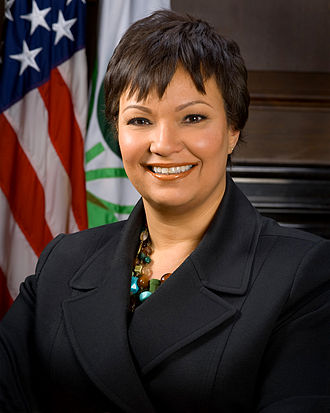
Seriously: What does Lisa Jackson overstate here?
The EPA Turns 40
‘Job-killing’ environmental standards help employ more than 1.5 million people.
Forty years ago today, the U.S. Environmental Protection Agency opened its doors, beginning a history of improvements to our health and environment. We reach this milestone exactly one month after the midterm elections strengthened the influence of groups and individuals who threaten to roll back the EPA’s efforts.
Last month’s elections were not a vote for dirtier air or more pollution in our water. No one was sent to Congress with a mandate to increase health threats to our children or return us to the era before the EPA’s existence when, for example, nearly every meal in America contained elements of pesticides linked to nerve damage, cancer and sometimes death. In Los Angeles, smog-thick air was a daily fact of life, while in New York 21,000 tons of toxic waste awaited discovery beneath the small community of Love Canal. Six months before the EPA’s creation, flames erupted from pollution coating the surface of Cleveland’s Cuyahoga River, nearly reaching high enough to destroy two rail bridges.
These are issues that are above politics. The last 40 years have seen hard-won advances supported by both sides of the aisle, and today the EPA plays an essential role in our everyday lives. When you turn on the shower or make a cup of coffee, the water you use is protected from industrial pollution and untreated sewage. In fact, drinking water in Cleveland was recently shown to be cleaner than a premium brand of bottled water. You can drive your car or catch a bus without breathing dangerous lead pollution. At lunch, would you prefer your food with more, or less, protection from pesticides?
The most common arguments against these protections are economic, especially as we continue to recover from the worst downturn since the Great Depression. Fortunately, the last 40 years show no evidence that environmental protection hinders economic growth. Neither the recent crisis nor any other period of economic turmoil was caused by environmental protection. In fact, a clean environment strengthens our economy.
Special interests have spent millions of dollars making the case that we must choose the economy or the environment, attacking everything from removing lead in gasoline to cleaning up acid rain. They have consistently exaggerated the cost and scope of EPA actions, and in 40 years their predictions have not come true.
We have seen GDP grow by 207% since 1970, and America remains the proud home of storied companies that continue to create opportunities. Instead of cutting productivity, we’ve cut pollution while the number of American cars, buildings and power plants has increased. Alleged “job-killing” regulations have, according to the Commerce Department, sparked a homegrown environmental protection industry that employs more than 1.5 million Americans.
Even in these challenging times, the EPA has been part of the solution, using Recovery Act investments in water infrastructure, clean-diesel innovation and other projects to create jobs and prepare communities for more growth in the years ahead.
The EPA’s efforts thrive on American ingenuity and entrepreneurship. Holding polluters accountable sparks innovations like the Engelhard Corporation’s catalytic converter, which pioneered the reduction of toxic emissions from internal combustion engines, and DuPont’s replacements for chlorofluorocarbons (CFCs), which protected the ozone layer while turning a profit for the company. One executive told me that the EPA’s recent standards for greenhouse gas emissions from cars will help create hundreds of jobs in a state where his company operates—a state whose U.S. senators have both opposed the EPA’s authority to regulate greenhouse gases.
These attacks are aimed at the EPA, but their impacts are felt by all Americans. Pollutants like mercury, smog and soot are neurotoxins and killers that cause developmental problems and asthma in kids, and heart attacks in adults. We will not strengthen our economy by exposing our communities and our workers to more pollution.
In these politically charged times, we urge Congress and the American people to focus on results from common-sense policies, not inaccurate doomsday speculations. That is how we can confront our nation’s economic and environmental challenges and lay a foundation for the next 40 years and beyond.
Ms. Jackson is administrator of the Environmental Protection Agency.
* [Oops. Same birthday as Donna. Happy birthday, Donna! Happy EPA’s 40th (yours, too? can’t be much more, can it?)]
Spread the word; friends don't allow friends to repeat history.
The Daily Telegraph’s James Delingpole got suckered by the anti-Rachel Carson propaganda, and wrote a bitter piece complaining about how environmentalists are ruining the environment and people’s lives (double whammy: environmentalists worry about people over profits, and the environment over corporations, so Delingpole hoped to tweak ’em at both ends). Lots of discussion, too much to read and most of it nasty and off target.
It was a smaller part of Delingpole’s generally anti-science, contrary-to-fact rant about global warming.
Being pro-DDT has become as religious an exercise as being for creationism taught in public schools. There’s no good evidence to support the point, but there are a tiny handful of people who are gullible enough to spread whatever they say. That tiny handful of advocates never gets the facts on their side, nor they on the side of the facts, but they appear deluded enough that they get their panties in a wad if you point out that their claims are false. “I’m not a liar!” they’ll retort with indignation good enough to make them rivals of the Portugal soccer squad’s acting, or just crazy enough to fail to recognize their errors.
And so the falsehoods spiral on virally.
Rachel Carson’s ghost should get busier. DDT can’t stop malaria, and now rarely slows it at all. Rachel Carson was right — and had we listened in 1962, malaria might be a lot less prevalent today.
Spread the word; friends don't allow friends to repeat history.
One of the most frequent hoax charges against Rachel Carson claims that she didn’t base Silent Spring on research. Greater hoaxers claim that there is little or no evidence of harm to birds from DDT.
Rachel Carson’s book stirred controversy, as shown in newspaper headlines
These critics forget history, or they try to cover it up so you won’t know any better. Carson provided more than 50 pages of citations to peer-reviewed research and communications with leading scientists in ornithology and chemistry about DDT and the damage it does.
Paul told the birders that Interior was proud of the fact that so much of the research in the book relied on Interior’s research, from the U.S. Fish and Wildlife Service:
In addition, we are proud that so much of ‘Silent Spring“ is based on Fish and Wildlife Service research. And, with no modesty at all, we like to point out that Miss Carson is nobly carrying on a tradition that employees of the Department of the Interior, beginning with Walt Whitman nearly a century ago, have written some of the Nation’s most important books.
That’s quite the compliment to Carson, being compared even distantly to Walt Whitman. It’s also a helluva brag for USFWS.
It’s also a 30-second response to the false charge that Carson’s work was not research based, or that research did not show DDT damage to wildlife.
Paul spoke to the Audubon Society about work to set up and operate the Federal Pest Control Board.
“3 Billion and Counting” premiered at a tiny New York venue a couple of weeks ago, the latest skirmish in the War on Science. Physician-to-the-stars Dr. Rutledge Taylor claims that malaria could be eradicated if only DDT had not been banned from Africa.
What? No, no, you’re right: DDT has never been banned from Africa, not even under the 2001 Persistent Organic Pollutants Treaty. The film comes out of Hollywood, starring a Hollywood physician. Perhaps that should clue us in that it is not a serious documentary, and not to be taken at face value.
Nor at any value.
Taylor engaged a publicist and conducted a national campaign to launch the movie. In that campaign he someone appeared on Howard Stern’s radio show. [There’s a guy in comments who claims it wasn’t Taylor, though Taylor wrote it in the first person. Odd as hell.]
The problem with DDT is that it worked too well in stomping out malaria. The science proves that it minimally impacted the environment. But this information was suppressed. Wonder why and by whom? This movies addresses and uncovers the answers to these questions..Questions that many of us had about this issue.
I tried, without success I’m sure, to set him straight:
Royce,
First, DDT was not the weapon that eradicated malaria in the U.S. We worked for 30 years to improve medical care, beef up the Public Health Service and county public health officers, educate people on how to drain mosquito breeding areas near their homes, be certain people with malari were fully treated to a cure, and to raise incomes to improve housing so that people could live in a home where mosquitoes could not enter at night (the times malaria-carrying mosquitoes bite). By 1939, malaria was essentially eliminated from the U.S. DDT was not available for use for another seven years.
Earlier we had defeated malaria and yellow fever in Panama, during the construction of the Panama Canal — long before any insecticide existed. Beating malaria is possible with discipline, accurate information, and sustained effort. No pesticide is necessary.
Second, DDT has never been out of use in Africa since 1946, nor in Asia. DDT is in use right now by the World Health Organization (WHO) and at least five nations in Africa who have malaria problems. If someone told you DDT is not being used, they erred.
Unfortunately, overuse of DDT by agricultural interests, in the early 1960s, bred mosquitoes that are resitant and immune to DDT. DDT simply is not the effective pesticide it once was, and for the WHO project to eradicate malaria, this problem was the death knell. WHO had to fall back to a malaria control position, because pro-DDT groups sprayed far too much of the stuff, in far to many places, mostly outside.
Third, all serious studies indicate that DDT greatly affects environment, with doses of the stuff multiplying from application through the top of the trophic levels in the ecosystem. A minimal dose of DDT to kill mosquito larva in an estuary, for example, multiples many times as zooplankton and the mosquito larva soak it up. The next level of consumers get about a ten-times dose from what was sprayed, and that multiplies exponentially as other creatures consume the lower-level consumers. By the time an insect or crustacean-eating bird gets the critter, the dose is millions of times stronger, often to fatal levels for the bird.
If the dose is sub-lethal, it screws up the reproduction of the bird. DDT in the egg kills the chick before it can fledge from the nest, often before it can hatch. If by some miracle the chick does not die from acute DDT poisoning, the eggshells produced by a DDT-tainted female bird are often too thin to survive the growth of the embryo — either way the chicks die. (There are a couple of studies done on plant-eating birds which showed that the chicks did not die before hatching — they died shortly after hatching.)
DDT is astoundingly effective at screwing up the reproduction of birds.
Fourth, studies show that humans exposed to DDT rarely get an acutely toxic dose, but that their children get screwed up reproductive systems, and there is a definite link from DDT exposure to the children of the mother — the cancer goes to the next generation. DDT is not harmless to people at all — it is just not acutely toxic, generally.
Fifth, as I note above, DDT is no longer highly effective in controlling mosquitoes. Where once it killed them dead, they have developed immunity, and now digest the stuff as if it were food. There are studies that show DDT is also weakly repellent, but there are better, less-toxic repellents, and there is no reason to use something so deadly to all other creatures in the ecosystem to get a weak repellent effect.
Because of the biomagnification, DDT kills the predators of mosquitoes much more effectively, and for a much longer period, than it kills mosquitoes. This sets the stage for mosquitoes to come roaring back, with all the natural checks on mosquito population out of commission.
Why use a poison that is not very effective, but very deadly, when there are better alternatives available?
Malaria death rates are the lowest they have been in human history. There is no good case to be made that more DDT could provide any benefit.
DDT is still manufactured in astonishing quantity in North Korea, for one. DDT is used in Africa and Asia, but no one with any sense uses it to eradicate malaria — DDT screwed up that chance 50 years ago.
Rutledge’s movie appears to be sinking from release (it’s played two theaters that I can find, for less than a week at each). It may be far underwater already. It would be to DDT what “Expelled” was to creationism, but it lacks the cloying, gullible religious fanatics to push it.
Thank God.
Mystery photo: If spraying pesticides to fight malaria isn't allowed in Africa as Rutledge Taylor argues, why are these pesticide sprayers pictured in this photo? Publicity still from "3 Billion and Counting" via Rotten Tomatoes website
U.S. President’s Malaria Initiative (PMI) Africa Indoor Residual Spraying (AIRS) Project found this warehouse with 119 tons of leftover, surplus and expired DDT in Ethiopia. In total, PMI AIRS Progect found 930 tons of unused DDT in Ethiopia, in 1,600 tons of expired pesticides total. Other nations have other surplus DDT stocks. Africa never suffered a shortage of DDT.
Watch the video, and you can see God trying to stop her from talking, putting that frog in her throat.
I only respond to the first six minutes or so — you get the idea. McIlhinney leaves no falsehood untold, no crazy charge not leveled at Rachel Carson and “environmentalists.”
Here’s the film clip of McIlhinney misleading the masses:
Here is my quick and dirty response:
1. Environmentalists are not calling for a ban on coal, oil or gas. Fear talk. Why would anyone tell such a whopping lie? How do we know the film lies? Who is this “environmentalist” they fear to name?
2. Rachel Carson was right — DDT kills ecosystems. Carson said we needed to restrict the use of DDT in order to keep it viable as a pesticide. But few listened (not McIlhinney, that’s for sure). Consequently, DDT became ineffective against mosquitoes that carry malaria, scuttling the World Health Organization’s ambitious campaign to eradicate malaria. Had that not happened, and had we eradicated malaria by 1975 as planned, millions of lives could have been saved. McIlhinney is the one with blood on her hands.
3. DDT has never been banned worldwide, was never banned in Africa, and is still used in those places it still works, under a special treaty signed in 2001. McIlhinney hopes you won’t know about that treaty, and fails to mention it herself. What’s she trying to hide?
4. Carson did not say DDT was the sole culprit for the decline of birds — but by 1962, it was the sole culprit preventing their recovery. Bald eagles and brown pelicans have come off the endangered species list, populations recovering in almost lock-step with the decline of DDT in the birds’ flesh — proof that Carson was right.
5. Under U.S. law, no agency could ban a useful pesticide without mountains of evidence that the pesticide was dangerous. Four separate court proceedings looked at DDT, two before the EPA acted, and two appeals after EPA banned DDT use on crops. All four courts found DDT to be dangerous and uncontrollable in the wild. The two appeals of EPA’s labeling change were both decided on summary judgment — the science was so powerfully on Carson’s side. In May 1963 the President’s Science Advisory Council reported on their fact checking of Carson’s book — they said Carson was dead right in everything but one: Carson was too easy on DDT. That panel, with its significant population of Nobel winners, called for quick action against DDT. Why doesn’t McIlhinney give the facts here?
6. The claim that EPA’s ban influenced WHO is pure bullfeathers. WHO had to end its malaria eradication campaign, using DDT, in 1965 — the mosquitoes were immune to the stuff. EPA didn’t act until seven years later, and EPA’s jurisdiction extends only to the borders of the U.S. In fact, EPA’s “ban” left DDT to be manufactured in the U.S. for export to Africa. Can’t McIlhinney read a calendar? The “ban” in 1972 did not travel back through time to stop WHO from using DDT. (For that matter, WHO never completely stopped DDT — wherever it could work, they used it, and still do.)
7. DDT has always been available for any government in Africa to use. What that guy in the film is really saying is racist: He’s claiming Africans were too stupid to use DDT, though it was cheap and available, and though it would save their lives. Don’t listen to him. Africans are not stupid: They’d use DDT were it effective and safe. Shame on McIlhinney for entertaining such a claim.
8. Malaria did not skyrocket after DDT was banned in the U.S. Mosquitoes don’t migrate that far. There was an uptick in malaria 20 years later, when the pharmaceuticals that cure malaria in humans, ceased to be effective.
But today, malaria rates are the lowest they’ve been in recorded history, and malaria death rates are the lowest they’ve been in human history. When the U.S. banned DDT spraying on cotton in 1972, about 2 million people a year died from malaria. Today, the death toll is under 900,000. Don’t be frightened or stampeded by erroneous, large figures.
In the end, we can’t poison Africa to health, and if we could, it would be immoral to do that instead of building health care to fight diseases.
Children die because hard-hearted politicos like Ann McIlhinney frustrate the work of malaria fighters, and mislead policy makers away from solutions that would save children’s lives.
Shame on her.
Spread the word; friends don't allow friends to repeat history.
DDT doesn’t work against bedbugs, and hasn’t worked against them since the late 1950s.
Astroturf organizations, so-called “think-tanks” set up by corporate interests jumped on bedbugs as another way of attacking the 46-years dead Rachel Carson, environmentalists, scientists and government — falsely. The Heartland Institute is singled out as one group spreading false claims in favor of poison and against environmental protection.
The recent resurgence of bedbugs is more related to changes in fighting other pests than in the discontinuation of DDT against them. Had DDT been the magic answer, bedbugs should have made a resurgence in 1960 when DDT use against them was stopped, not 2010, a full half-century later.
The many screeds in favor of DDT are politically driven, not science driven.
Think about that — every claim that we need DDT to fight bedbugs is a planted, political advertisement, and not a fact-based policy argument. Each of those claims is based in a political smear, and not based on science.
The really weird part is that so many writers and bloggers spread the false claims without being paid. Selling one’s soul for money is understandable; giving one’s soul away for nothing is stupid, or evil, or both.
Newsweek reported:
DDT “devastated” bedbug populations when it was introduced in the 1940s, says Richard Cooper, technical director for Cooper Pest Solutions and a widely quoted authority on bedbug control. Mattresses were soaked in it, wallpaper came pre-treated with it. It also killed boll weevils, which fed on cotton buds and flowers (by far, the majority of DDT was applied to cotton fields), and, incidentally, it killed bald eagles and numerous other species of birds, the phenomenon that gave Carson her title. In the laboratory, DDT can cause cancer in animals; its effect on human beings has long been debated, but since it accumulates up the food chain, and stays in the body for years, the consensus among public-health experts was that it was better to act before effects showed up in the population. But long before the United States banned most uses of it in 1972, DDT had lost its effectiveness against bedbugs—which, like many fast-breeding insects, are extremely adept at evolving resistance to pesticides. “Bloggers talk about bringing back DDT,” says Bob Rosenberg, director of government affairs for the National Pest Management Association, “but we had stopped using it even before 1972.”
Continuing comedy/tragedy at Watts Up With That, Anthony Watts’ staunchly anti-global-warming-science blog.
Funny in the denial of the obvious, funny in the dance to get around the science, tragic in that anyone grants much credence to the denials of the obvious and science — Watts steams on.
Watts and his moderators haven’t completely blocked my comments, and I can sneak one in on occasion just slipping under their radar. We are all plagued by a recent spate of pro-DDT publicity, prompted by what I am not sure but encompassing a full-court press from anti-science moguls like Paul Driessen, pro-poison advocates, and a film by a crank (quack?) physician-to-the-stars who appears fearful of revealing his full name, Rutledge Taylor and “3 Billion and Counting.” (Taylor’s film is sort of the “Expelled!” of the Chronically Obsessed with Rachel Carson (COWRC) set, but without the charm and science of Ben Stein’s film, since the scientists refused to sit for an interview with Taylor.) (Taylor’s publicity refers to him as “Dr. Rutledge.” Perhaps he aspires to the heights of academic and science credence granted Dr. Phil.)
Dancing on the edge of science is treacherous, as Watts and Goklany may have discovered. Goklany claims I make many errors in my comments, but he cites no evidence suggesting I err at all. I merely pointed to the decline in death totals from malaria, and to the real work of the Gates Foundation. Nothing in those comments has been tagged as incorrect.
In comments, however, truth breaks out. Franklin’s adage about truth winning in a fair fight holds true, especially on a topic like malaria and DDT, where Watts and Goklany together, even were they the acme of broadcast meteorology and dissident engineering, can’t snuff out factual comments fast enough to keep up the tirade. [You fellows there on the side: Stop your betting about whether Goklany is a creationist! Gambling is not allowed here, especially when the fix is in. He confesses he is “an engineer,” after all.]
Sometime, perhaps this week, I hope to get a substantial comment about the flurry of crank science on DDT, and Rutledge Taylor’s contemptible falsehoods. But I am without time, and without computer most of the day.
Decades later, the site of Velsicol’s DDT manufacturing at St. Louis, Michigan, along the Pine River, remains a still-recovering-from-contamination site. Velsicol denied DDT is dangerous in a letter to the publisher of Silent Spring. In 1999 EPA began a $100 million Superfund clean-up of Velsicol’s site. Even with new, better cleanup methods, it’s still a hazard. Photo from Penny Park, by the Pine River Superfund Citizen Task Force
When it comes to the St. Louis area Superfund sites, there must be a thousand sidebars – those quirky little stories that all played a role in what happened at the Velsicol Chemical plant, in the city and indeed the country throughout the last several decades.
And, I suspect, there are a thousand more yet to come out.
Several years ago, the PBS series “American Experience” showcased Rachel Carson, the woman who wrote “Silent Spring,” published in 1962. That was the book which became the force that led to the ban, for the most part, of DDT use in the U.S.
Velsicol in St. Louis was the largest manufacturer of DDT in the country.
In the program, Carson recalled the bad old days.
To say the chemical company didn’t much care for her is an understatement. They flat out called her a liar.
Not only was she up to no good with her “sinister influence.” She was also a “tool of the Communist menace.”
Nor did they care much for the New Yorker magazine, which published excerpts from her book shortly before publication. At least the same could be said for her publisher Houghton Mifflin.
Alma College Professor Ed Lorenz had traveled to Yale and perused Carson’s papers that are kept there.
He found a five-page letter written to the publisher from Velsicol’s lawyer outlining in great detail all the discrepancies, misstatements and misunderstandings on Carson’s part as well as the inaccuracies found in the New Yorker series.
Letter from Velsicol Chemical to publisher of Silent Spring, threatening to sue if alleged errors in Silent Spring were not corrected. No changes were made, and Velsicol did not sue. Letter image from the archives of Alma College.
Certainly wouldn’t want to see all those errors in the book due out, so a letter from Velsicol was in order. A letter that would “call several matters to your attention from legal and ethical standpoints.”
Louis McLean, the attorney, requested a meeting with the publisher so they could discuss all that and more besides.
The editor in chief wrote back and thanked him for the letter, forwarding on a copy to Carson.
“We have reviewed carefully the sources for the statements in her book, in the light of the points you bring up in your letter,” Paul Brooks wrote in response. “While there may be room for differences of opinion, we still believe, after thorough examination, that Miss Carson’s presentation is accurate and fair. Since our concern as well as yours is factual accuracy, we do not believe that a meeting would serve any useful purpose.”
Velsicol didn’t sue.
E.B. White, then the publisher of the New Yorker wrote to Carson, remarking on her courage for, “putting on the gloves and going in with this formidable opponent. This will be an Uncle Tom’s Cabin of a book, I feel – the sort that will help turn the tide.”
It did, at least in the U.S.
And one last item for the “It’s a small world department:” Did you know that the mother of Bernie Davis, the former Alma College professor and former county commissioner, was Carson’s administrative assistant?
She too was interviewed on “American Experience,” Lorenz said.
America is vexed with a non-centrally organized, but persistent, campaign to smear Rachel Carson and her work, with inaccurate claims about her research and the science of environmental protection — smears that would be laughable were there not so many ill-informed people who give them credence. In contrast, there is no paid lobby to spread the good works of Rachel Carson — the truth simply stands on its own.
More about DDT and Alma, Michigan, at Millard Fillmore’s Bathtub:
Steven Milloy, Roger Bate, and Richard Tren hope you never see this television production — they hope you never even hear about it. It’s one more indication that Rachel Carson was right.
They hope you never even hear about it. It’s set for telecast in South Africa next Tuesday:
This week, Special Assignment looks at those affected by the dangerous DDT chemical and also those who say it is a necessary evil to prevent many South Africans from dying.
“I have problems with my balls,” says ‘George’. “I was born without testicles,” adds ‘Joseph’, yet another man born in the Limpopo area. These two and many other young men in Venda share a common story.
Each year, South Africa sprays more than 90 tonnes of the toxic DDT chemical in homesteads in KwaZulu-Natal and Limpopo areas. Though DDT, a persistent organic chemical which can remain in the environment for as much as 40 years is banned across the world, South Africa still uses it to control malaria in the country. Recent studies have however showed that DDT is harmful to humans with hundreds of kids born in the Venda area showing signs of genital deformities. The chemical has also been associated with breast cancer; diabetes; and spontaneous abortion. Yet it remains South Africa’s best option for the prevention of malaria which kills millions of people each year across Africa. This week, Special Assignment looks at those affected by this chemical and also those who say it is a necessary evil to prevent many other South Africans from dying.
Where are the examples of American democracy and freedom, of American know-how and imagination, and of American heroes?
Artist's rendering of U.S. pavilion at Shanghai Expo 2010 - corporate sponsorship failed to replace government support prohibited by "money-saving" 1990s law
For those things, visitors have to search elsewhere at the Expo: for the statue of Rachel Carson, outside the Broad Air Conditioning pavilion; for a tribute to Frank Gehry, at an exhibit sponsored by the city of Bilbao, Spain (Gehry would have designed a great U.S. pavilion!); and for videos of an American girl, describing what makes cities livable, look to the Russian pavilion. (Incredibly, the Russians shot the video in front of the U.S. Capitol, smartly appropriating an American symbol of freedom.) Carson, Gehry and the girl are Americans worth celebrating.
What will the millions of Chinese who visit the Expo think of the United States? The most sophisticated of them, especially the 45,000 a day who get inside the U.S. pavilion, will see a country determined to promote its corporations rather than its people or its political system. The rest — and this is even scarier — may visit the Expo, a microcosm of the world in 2010, and not think about the U.S. at all.
What in the hell were we thinking?
Bernstein explained what happened:
Seeing a statue of Rachel Carson, the crusading American environmentalist, at the World Expo in Shanghai moved me almost to tears. After all, Carson is a symbol of independent thought and action, both vital U.S. exports.
Too bad the statue wasn’t at the U.S. pavilion. But that building, sponsored in part by Carson’s nemesis, Dow Chemical, was never going to be a celebration of the power of individuals. Indeed, the pavilion, with its bland tribute to “community,” says little about what makes America, and Americans, special.
Check out Bernstein’s piece, “A World Expo flop by the U.S.,” with the subhead: “Our pavilion at the 2010 World Expo in Shanghai is a huge disappointment, failing to showcase the best of the United States.”
Tren is unlikely to respond here; I gather he does not want to answer questions.
I will comment more completely later — I’m still not sure just what AFM does to fight malaria. It’s humorous that he calls my question an “ad hominem” attack; I ask the questions because Tren has led the fight in the unholy smear campaign against Rachel Carson, against the U.S. Fish and Wildlife Service, against dozens of other scientists and science itself, against saving the bald eagle, against wise use of pesticides, against bed nets, against fighting malaria other than poisoning Africa. Most recently, as Tren mentions, he published a book that repeats much of the inaccurate claims and hoaxes he has relied on before. But he’s concerned about attacks on him personally, and not the substance.
Why am I concerned at all? The AFM-led assault on the World Health Organization, Rachel Carson, malaria fighters in public health, scientists and environmentalists has come at an extremely high cost in human life. It is impossible to know how many people have died needlessly from malaria, yellow fever, leishmaniasis, dengue fever and other insect-borne diseases in the absence of medical care or prevention programs in lieu of DDT, but it must be millions — many of them could have been saved but for policy-makers’ beliefs that an increase in DDT could poison these people to health quickly and cheaply. The campaign in favor of DDT has hampered serious efforts to fight malaria especially, such as Nothing But Nets and USAID’s support for prophylactic measures to beat the disease.
Does Tren answer the question well, what does AFM actually do to fight malaria?
Help me find some substance here in Tren’s letter (unedited by me in any way):
Paul,
It’s hard to know whether or not to respond to this. To say that we are ‘under fire’ because of the sniping and ad-hominem attacks from a blogger who has, for some or other reason, decided to take issue with my organization is an exaggeration to say the least. However even though your post has so far received zero comments I’d like to make a few things clear for the record.
AFM was founded in South Africa in 2000 and we opened an office in the United States in 2003. We maintain an office and a presence in South Africa as well as an office in the Washington DC. You say that we have focused most of our attention on one issue – the desirability of using DDT in mosquito control programs. Actually we focus on malaria control programs, not mosquito control programs; but to an extent you are correct. We have focused on this issue because DDT continues to play an important role in malaria control in many southern African programs (and in some other countries) and over the years other countries, such as Uganda have attempted to use DDT but have been harshly criticized and domestic and international groups forcing DDT spraying programs to close down. AFM defends DDT because of its outstanding record in saving lives and because it is under attack. The scare stories and smear campaigns against this insecticide are so pervasive and the misunderstanding about it so widespread that it is vital for some group or individual to provide a counterbalance, based on sound science.
AFM was a critical voice in securing an exemption for the use of DDT in the Stockholm Convention, and our research and advocacy work helped to usher in far-reaching reforms to US support for malaria control. We recently published a major book on DDT and its role in malaria control – The Excellent Powder – see http://www.excellentpowder.org. Additionally, we have responded to several recent publications that seek to limit the use of DDT (and interestingly other insecticides such as pyrethroids), with letters in Environmental Health Perspectives, British Journal of Urology International and working papers published on our own website. We have publicly exposed and criticized the way in which anti-insecticide advocacy groups, like Pesticide Action Network, have lobbied against indoor residual spraying programs that are funded and maintained by the President’s Malaria Initiative (PMI). All of these letters and papers can be accessed from our website – if any of your readers have any difficulty in accessing them, I’d be happy to forward them.
A word on our critical review of a paper published in British Journal of Urology International. Several researchers from the University of Pretoria published a paper in late 2009 claiming that DDT use in IRS would increase the chance that a boy would be born with a urogenital birth defect by around 33%. This paper was widely covered in the media and caused considerable problems for the malaria control programs in southern Africa. One scientist in particular even claimed on a public TV program that DDT was linked to the case of intersex South African athlete, Caster Semenya; this was further promoted in the print media causing great concern among people living in malaria areas. As we documented in our review, the research paper was very deeply flawed and the conclusions of the authors were premature to say the least. Although it required a considerable investment of time and effort, we respond with a formal review of both the paper and the outrageous claims made in the media for which there was no scientific evidence. Our letter to the journal, which was co-authored by some senior malaria scientists from South Africa, was published in the journal. Although the authors of the paper were given ample opportunity to respond to our criticisms, they declined – which is telling.
You make the point that we have focused on DDT – true, we have done so because there is a need for someone to respond to the never-ending claims of harm. Someone has to stand up and defend the malaria control programs that are using DDT and implementing effective malaria control measures – perhaps if some of the other advocacy groups or individuals stepped up and helped to defend IRS and the use of public health insecticides, we wouldn’t have to spend so much of our time and energy doing it.
In addition to defending the use of public health insecticides, we strongly advocate for investments in new insecticides and against regulations and policies that may hamper access to insecticides or investment in new insecticides. For instance in 2008/9 we coordinated a response to proposed EU regulation of insecticides that could limit access to insecticides. (The various documents that I describe are available on our website) As an example of our work in this regard, we recently held a successful policy briefing on Capitol Hill (in Washington, D.C.) involving stakeholders from advocacy groups, donor agencies and the private sector. Again details of this are available on our website.
Aside from our advocacy and defense of public health insecticides, we have been successful in exposing the ongoing use of sub-standard malaria medicines as well as fake medicines in Africa. Our research studies have been published in Malaria Journal, PLoS One, and other journals. In order to maintain this project and to get safe and effective malaria medicines out to communities we have raised funds for malaria treatments and have focused on increasing access in Uganda. Again, details are available on our website.
Lastly AFM is involved in a research and advocacy program to remove import tariffs and non-tariff barriers from malaria commodities. As malaria programs are scaled up, it is increasingly important to ensure that barriers to access are removed – import tariffs and non-tariff barriers can be significant and AFM is very excited to be involved in this important area of research and advocacy. See http://www.m-tap.org for more details.
So, I hope that this helps to answer the questions about what we do. We are a policy and research group, we have never pretended to be anything else and our track record stands for itself.
Paul, if you want to have a discussion about our work, I’d be happy to correspond with you and your colleagues on a basis of cordiality and respect. I would be delighted to debate our work on DDT, public health insecticides, drug quality and import tariffs and non-tariff barriers, but let’s leave the sniping bloggers and their misleading and biased comments out of this.
Richard Tren
Spread the word; friends don't allow friends to repeat history.
Here’s a news story that Richard Tren and Donald North hope neither you nor anyone else will read. It says that Malawi is pondering whether to use DDT for Indoor Residual Spraying (IRS) to fight malaria this season — and it lists several other nations that use DDT in exactly that way.
Why do the Chronically Obsessed With Rachel Carson (COWRC) like Tren and North hope you won’t see it?
It says DDT is being used broadly against malaria, in several nations on two continents. That directly contradicts one of their favorite claims, that environmentalists (always unnamed) prevent the use of DDT anywhere. It also shows clearly that DDT is not banned in Africa, another claim they like to blame on unnamed environmentalists and “left” do-gooders.
Facts of the malaria fight are that the consensus among serious malaria-warriors favors the integrated pest management schemes Rachel Carson wrote would be the savior of pesticides, in 1962 (in international circles, it’s called integrated vector management, “vectors” being the carriers of disease). Quite to the contrary of Rachel Carson’s being the cause of needless deaths to malaria, her methods are saving lives. The death toll from malaria is lower now than it was when DDT was used more broadly, and used outdoors.
Malawi is contemplating to start using DDT, an organochlorine pesticide, as a precaution in the fight against malaria in the country.
Chris Kang'ombe, Malawi Secretary for Health - Nyasa Times
Principal Secretary in the Ministry of Health Chris Kang’ombe (pictured) said in Lilongwe during the launch of this year’s anti-malaria campaign themed, “Malungo zii (Kick out malaria)”.
“We know that our friends from Zambia and other countries are using it as an indoor residual spraying and it is working, so we are looking into it if we can do the same,” said Kang’ombe.
According to 2004-2009 statistical data provided by the UN, World Bank, WHO and UNAIDS, there were 4,204,468 reported malaria cases, 12,950 estimated malaria deaths and 7,132 reported malaria deaths in Malawi.
“We sent a team to Zambia to do a research on the use of DDT in fighting malaria and once the recommendations are made we will see what to do. We know that they are successful but we have to look at what effects DDT has on environment and agriculture taking into consideration that our economy is agro-based,” he said.
Some commentators and activists have raised concerns about DDT contaminating the environment if it is used in vector control. As with the other insecticides used in IRS, DDT causes minimal or zero contamination of the wider environment. Because DDT does not escape into the wider environment, it poses little or no threat to wildlife.
Results from the 2008 MIS demonstrated the dramatic progress Zambia is making in its fight to control malaria. Since 2006, malaria parasite prevalence in children has been reduced by 50%, and moderate to severe anemia has been reduced by more than 60%.
DDT is not only highly effective in malaria control, but it is also significantly cheaper than the other insecticides that are suitable for indoor residual spraying (IRS). It is easy to use and safe for both the residents of houses sprayed and the sprayers themselves.
More people than ever are sleeping under bed nets and two-thirds of all households are protected by at least one ITN or indoor residual spraying.
Use of DDT to fight malaria has been increasing since it was endorsed in 2006 by the World Health Organization and the President’s Malaria Initiative (PMI), a U.S. aid program launched by former President Bush.
USAID provides approximately $26 million per year to Malawi under PMI to purchase and distribute about 1,600,000 long life insecticide-treated bed nets, according to its Malawi office fact sheet.
“It is also used to purchase and distribute a national supply of over 6.6 million doses of life saving artemisinin-based combination therapy (ACT) drugs, implement an Indoor Residual Spraying (IRS) programme for 28,000 households and provide preventive treatment for malaria nationwide for pregnant women attending antenatal care,” reads part of the report.
PMI activities began in Malawi in 2007 and the U.S. government has committed a total of $107 million for addressing malaria over the five year period of 2007-2012.
“With six million cases of malaria per year in Malawi, the fight against malaria is far from over but through close collaborations between the governments of the United States and Malawi and other partners, we are making progress,” said Curt Reintsma, USAID Mission Director.
In 2009, data showed that use of ITNs by vulnerable children improved to 61% from 37% in 2005.
“We rededicate our partnership between Malawi and the United States to defeat this preventable and treatable killer,” said Reintsma.
Kang’ombe said the ministry has been implementing several malaria control strategies aimed at reducing the burden of malaria to a level of no public health significance in Malawi. These strategic areas which are coordinated by the NMCP includes; Malaria Case Management, Intermittent Preventive Treatment for pregnant women (IPTp) where women are routinely provided with at least 2 doses of SP during pregnancy.
“Integrated Vector Management is another major strategy that the ministry of health is implementing as one of the control measures for malaria in Malawi. This involves distribution of Insecticide Treated Mosquito nets and Indoor Residual Spraying. Operational Research, Monitoring and Evaluation and Information, Education and Communication/Advocacy are some of the cross cutting strategic areas that are also being implemented,” said Kang’ombe adding.
Some nations which are using DDT are: Ethiopia, South Africa, India, Mauritius, Myanmar, Yemen, Uganda, Mozambique and Swaziland, Zimbabwe, North Korea, Eritrea, Gambia, Namibia and Zambia.
DDT may have a variety of human health effects, including reduced fertility, genital birth defects, breast cancer, diabetes and damage to developing brains. Its metabolite, DDE and can block male hormones.
Jerry Fuhrman missed the point — continues to blame environmentalists for the lawsuits brought by conservative businessmen
Glenn Reynolds at Instpundit had the good sense not to comment on the story — he’d probablyget itwrong again (Oy! Reynolds posted a link to Milloy’s junk science emporium, pouring out junk science about DDT with more than 100 points, most of them fiction, all of them together, wrong. Reynolds is a law professor, and he can’t see through Milloy and Edwards’ tales? I hope Reynolds doesn’t teach evidence, or civil procedure . . .)
Spread the word; friends don't allow friends to repeat history.
Or, until that account is unsuspended by the forces supporting Donald Trump: Follow @FillmoreWhite, the account of the Millard Fillmore White House Library
We've been soaking in the Bathtub for several months, long enough that some of the links we've used have gone to the Great Internet in the Sky.
If you find a dead link, please leave a comment to that post, and tell us what link has expired.
Thanks!
Retired teacher of law, economics, history, AP government, psychology and science. Former speechwriter, press guy and legislative aide in U.S. Senate. Former Department of Education. Former airline real estate, telecom towers, Big 6 (that old!) consultant. Lab and field research in air pollution control.
My blog, Millard Fillmore's Bathtub, is a continuing experiment to test how to use blogs to improve and speed up learning processes for students, perhaps by making some of the courses actually interesting. It is a blog for teachers, to see if we can use blogs. It is for people interested in social studies and social studies education, to see if we can learn to get it right. It's a blog for science fans, to promote good science and good science policy. It's a blog for people interested in good government and how to achieve it.
BS in Mass Communication, University of Utah
Graduate study in Rhetoric and Speech Communication, University of Arizona
JD from the National Law Center, George Washington University



 Posted by Ed Darrell





 Millard Fillmore's Bathtub
Delingpole: Wrong and bitter on DDT
November 21, 2010The Daily Telegraph’s James Delingpole got suckered by the anti-Rachel Carson propaganda, and wrote a bitter piece complaining about how environmentalists are ruining the environment and people’s lives (double whammy: environmentalists worry about people over profits, and the environment over corporations, so Delingpole hoped to tweak ’em at both ends). Lots of discussion, too much to read and most of it nasty and off target.
It was a smaller part of Delingpole’s generally anti-science, contrary-to-fact rant about global warming.
Chris Goodall fixed all of Delingpole’s errors on DDT at Carbon Commentary.
Being pro-DDT has become as religious an exercise as being for creationism taught in public schools. There’s no good evidence to support the point, but there are a tiny handful of people who are gullible enough to spread whatever they say. That tiny handful of advocates never gets the facts on their side, nor they on the side of the facts, but they appear deluded enough that they get their panties in a wad if you point out that their claims are false. “I’m not a liar!” they’ll retort with indignation good enough to make them rivals of the Portugal soccer squad’s acting, or just crazy enough to fail to recognize their errors.
And so the falsehoods spiral on virally.
Rachel Carson’s ghost should get busier. DDT can’t stop malaria, and now rarely slows it at all. Rachel Carson was right — and had we listened in 1962, malaria might be a lot less prevalent today.
Spread the word; friends don't allow friends to repeat history.