Some guy who goes by Joeyess seems to be the one who put this together — wrote the song? Performed?
Call it sequencing. Students often ask — at least once a week — whether I was a hippie. They figure that’s a possibility since I don’t like much of the rock of the ’80s, and they don’t know much history of the ’50s and ’60s. They don’t believe me when I tell them I thought college was a better idea. They look confused when I tell them I was a plainclothes hippie.
Noodling around the radio dial the other day, I wondered how an antiwar movement could work with ClearChannel running so much of the radio formats, and none of the formats being exactly friendly to the slightest political commentary.
So, take a look. Tell us what you think in comments.
Political folk music in the Internet Age, Pete Seeger channeled through Lawrence Lessig (profanity in lyric makes it NSFW, NSFC, alas):
From the National Guard Image Gallery: Fort Wagner, South Carolina, July 18, 1863; "The Old Flag Never Touched the Ground": The 54th Massachusetts Volunteer Infantry Regiment was recruited in the spring of 1863 by Governor John Andrew, who had secured the reluctant permission of the War Department to create a regiment of African-American soldiers. Like all Massachusetts Civil War soldiers, the 54th's men were enlisted in the Massachusetts Volunteer Militia. These Guardsmen would serve as a test case for many skeptical whites who believed that blacks could not be good soldiers. The battle that proved they could was fought on Morris Island, at the mouth of Charleston Harbor. Following three days of skirmishes and forced marches with little rest, and 24 hours with no food, the regimental commander, Colonel Robert Gould Shaw, requested the perilous honor of leading the attack of Fort Wagner, a sand and palmetto log bastion. As night fell, 600 men of the 54th advanced with bayonets fixed. Despite withering cannon and rifle fire, the men sustained their charge until they reached the top of the rampart. There, Colonel Shaw was mortally wounded. There, also, Sergeant William Carney, who had earlier taken up the National Colors when the color sergeant had been shot, planted the flag and fought off numerous attempts by the Confederates to capture it. Without support, and faced with superior numbers and firepower, the 54th was forced to pull back. Despite two severe wounds, Sergeant Carney carried the colors to the rear. When praised for his bravery, he modestly replied, "I only did my duty; the old flag never touched the ground." Carney was awarded the Medal of Honor for his actions, the first African-American to receive the award. The 54th Massachusetts suffered 270 casualties in the failed assault, but the greater message was not lost: some 180,000 African-American soldiers followed in the footsteps of these gallant Guardsmen, and proved that African-American soldiers could, indeed, fight heroically if given the opportunity.
This is one of a series of artworks describing the history of the National Guard. A sizable gallery of art covers the first muster of a militia in Salem, Massachusetts, in 1637, through rescue and recovery efforts after Hurricane Katrina in 2005. Along the way are highlights such as Lexington and Concord, Teddy Roosevelt’s New Mexico Rough Riders in Cuba, including Fort Wagner and the return of General Lafayette. With some caution on accuracy, these are good for classroom use (the Rough Riders picture shows a man on horseback, but I understand the Rough Riders’ horses had not yet arrived when they stormed up San Juan Hill; it took more than 30 years for Carney to get his medal, etc.).
Is it time? Is there any chance we could bring the Pueblo home?
Regular readers here probably know of my admiration for the resistance put up against North Korea (NPRK) by the captive crew of the U.S.S. Pueblo during their 11 months’ imprisonment in 1968.
In a recent comment to a post I did back in 2006, a reader named Bob Liskey offered an interesting, and rational way by which NPRK could demonstrate lasting good faith in negotiations with the U.S., especially over the state of their energy generation and nuclear weapons production:
We made every effort to avoid the catastrophe of a second Korean War and the use of nuclear weapons such a war. Much better and saner than a RAMBO approach.
At this point in time, I would like to see the OBAMA administration suggest to NK that if they really want to improve and normalize relations with the USA then they ought to return the USS PUEBLO as a clear intent to improve and normalize relations. I would like to see the USS PUEBLO returned to the USA and docked at SAN DIEGO as a memorial to the crew and DUAYNE HODGES and those who undertake secret and dangerous missions on behalf of the USA.
Mr. Liskey offered several other chunks of history of the incidents in 1968 you may want to read, including just how close we were to the brink of using nuclear weapons to retaliate against NPRK, an issue that is not much discussed elsewhere, I think. Interesting reading.
What’s Bill Richardson doing this week? Since he’s not on track to be Secretary of Commerce, maybe we could borrow him to establish a pillar of world peace in North Korea, instead?
Mr. President? Sec. Clinton? Do you ever drop down into the Bathtub? What about Bob Liskey’s suggestion?
Spread the word; friends don't allow friends to repeat history.
Associated Press 1941 file photo of a small boat assisting in rescue of Pearl Harbor attack victims, near the U.S.S. West Virginia, as the ship burns.
Today is the 65th [67th] anniversary of Japan’s attack on the U.S.’s Pacific Fleet at Pearl Harbor, Hawaii.
Our local newspaper, The Dallas Morning News, has a front-page story on survivors of the attack, who have met every five years in reunion at Pearl Harbor. Today [2006] will be their last official reunion. The 18-year-olds who suffered the attack, many on their first trips away from home, are in their 80s now. Age makes future reunions impractical.
From the article:
“We’re like the dodo bird. We’re almost extinct,” said Middlesworth, now an 83-year-old retiree from Upland, Calif., but then – on Dec. 7, 1941 – an 18-year-old Marine on the USS San Francisco.
Nearly 500 survivors from across the nation were expected to make the trip to Hawaii, bringing with them 1,300 family members, numerous wheelchairs and too many haunting memories.
Memories of a shocking, two-hour aerial raid that destroyed or heavily damaged 21 ships and 320 aircraft, that killed 2,390 people and wounded 1,178 others, that plunged the United States into World War II and set in motion the events that led to atomic bombings of Hiroshima and Nagasaki.
“I suspect not many people have thought about this, but we’re witnessing history,” said Daniel Martinez, chief historian at the USS Arizona Memorial. “We are seeing the passing of a generation.”
Another article notes the work of retired history professor Ron Marcello from the University of North Texas, in Denton, in creating oral histories from more than 350 of the survivors. This is the sort of project that high school history students could do well, and from which they would learn, and from which the nation would benefit. If you have World War II veterans in your town, encourage the high school history classes to go interview the people. This opportunity will not be available forever.
There is much to be learned, Dr. Marcello said:
Dr. Marcello said that in doing the World War II history project, he learned several common themes among soldiers.
“When they get into battle, they don’t do it because of patriotism, love of country or any of that. It’s about survival, doing your job and not letting down your comrades,” he said. “I heard that over and over.”
Another theme among soldiers is the progression of their fear.
“When they first got into combat, their first thought is ‘It’s not going to happen to me.’ The next thought is ‘It might happen to me,’ and the last thought is ‘I’m living on borrowed time. I hope this is over soon,’ ” Dr. Marcello said.
Dr. Marcello said the collection started in the early 1960s. He took charge of it in 1968. Since Dr. Marcello has retired, Todd Moye has taken over as the director.
October 31 hosts several famous anniversaries. It is the anniversary of Nevada’s statehood (an October surprise by Lincoln for the 1864 campaign?). It is the anniversary of the cleaving of western, catholic Christianity, as the anniversary of Martin Luther’s tacking his 95 theses to the door of the church in Wittenburg, Germany in 1517, the formal start of the Reformation. Maybe the original Christian trick or treat.
U.S.S. Reuben James sinking, October 31, 1941 - National Archives photo
October 31 is also the anniversary of the sinking of the World War I era Clemson-class, four-stack destroyer, U.S.S. Reuben James, by a German U-boat. Woody Guthrie memorialized the sad event in the song, Reuben James, recorded by the Almanac Singers with PeteSeeger (see also here, and here), and later a hit for the Kingston Trio. The Reuben James was sunk on October 31, 1941 — over a month before the Japanese attack on Pearl Harbor. Details via Wikipedia (just to make you school librarians nervous):
This history figures into the current presidential campaign in a small way: One of the internet hoax letters complaining about Barack Obama claims that the U.S. entered World War II against Germany although the Germans had not fired a single round against the U.S. The 115 dead from the crew of 160 aboard the James testify to the inaccuracy of that claim, wholly apart from the treaty of mutual defense Germany and Japan were parties to, which required encouraged Germany to declare war upon any nation that went to war with Japan (see comments from Rocky, below). After the U.S. declaration of war on Japan, Germany declared war on the U.S., creating a state of war with Germany.
This history also reminds us that many Americans were loathe to enter World War II at all. By October 1941, Japan had been occupying parts of China for ten years, and the Rape of Nanking was four years old. The Battle of the Atlantic was in full swing, and the Battle of Britain was a year in the past, after a year of almost-nightly bombardment of England by Germany. Despite these assaults on friends and allies of the U.S., and the losses of U.S. ships and merchant marines, the U.S. had remained officially neutral.
Many Americans on the left thought the sinking of the Reuben James to be the sort of wake-up call that would push Germany-favoring Americans to reconsider, and people undecided to side with Britain. The political use of the incident didn’t have much time to work. Five weeks later Japan attacked Pearl Harbor, and by the end of 1941, the U.S. was at war with the Axis Powers.
Letter to the U.S. Navy asking the fate of friends aboard the U.S.S. Reuben James, November, 1941
Telegram informing his family of the death of Gene Guy Evans, of Norfolk, Virginia, lost in the torpedoing of the U.S.S. Reuben James
The Kingston Trio sings, as the names of the dead scroll:
Spread the word; friends don't allow friends to repeat history.
Big bang for the buck: Hunt’s analysis suggests doubling the research budgets might drive as much as a trillion dollar increase in our economy. Sure it’s optimistic — but read what he says. And then consider: Which platform offers the greatest hope of cures or treatments for cancers? Which platform offers the best hope for a cure or treatments for Alzheimer’s disease?
The two industries I mention here – pharma and biotech – are intimately interwoven with the basic biomedical research enterprise, and a significant amount of the innovation that drives these industries originates (or originated) in the NIH-funded biomedical research laboratory. In this respect, the NIH budget is an investment, and a wildly-successful one. Even if we don’t take the face-value numbers I have pulled from Wiki here (that show an annual return of some 1000%, and more than 750,000 high-paying jobs the tax receipts from which would probably pay much of the NIH tab by themselves), and instead factor in that some of these receipts and jobs are not American, it is still easy to see that basic biomedical research returns considerably more than the investment made by the government. (And this doesn’t begin to weigh the intangibles, the ways that the research enterprise gives back to society as a whole.)
Science bloggers have been not so noisy as this issue might need: The closest John McCain came to supporting science, the driver of our economy, was when he offered to assault education, and that’s the opposite of supporting science. Obama’s mentions are encouraging, but not frequent enough nor strident enough.
Think of just three of the issues that are affected by basic science research, that will be yelled about during the campaign:
It’s largely forgotten now, especially in history texts in high schools. After the Spanish-American War, when the U.S. wrested several territories from Spain, including Guam, Cuba, Puerto Rico and the Philippines, the U.S. quickly got mired in one of the original guerrilla wars in the Philippines. It took 15 years, but the U.S. finally put down the rebellion — 15 brutal, bloody years. The conduct of that war shocked many people, including Mark Twain.
This piece was written partly in response to that war.
Many Americans, like Twain, who questioned the war, in turn had their patriotism questioned. Why wouldn’t they get on board with the war, and kill off those Filipino rebels? the critics asked.
300 popped up on some channel last night, and we got a time delay recording to watch it, which I did, mostly. Interesting stylization. Cartoonish characterizations, which one should expect from a movie intended as homage to the graphic novel that directly spawned it.
A monument to Leonidas I - Inscription, "Molon Lave," which roughly translates to "Come and get it!"
Several sources dated the climax of the battle as August 11, 480 B.C. — 2488 years ago yesterday. (The battle is said to have occurred during the Olympics that year, too.)
World history classes dig through that period of history in the first semester. Teachers, it’s time to think about how we’re going to facilitate this history this year. As always, some bright student will wave a hand in the air and ask, “Mr. Darrell! How do they know what happened if no one survived, and nobody had their Sony videocorder?”
At least one other student in the course of the day will be surprised to discover the movie wasn’t a filmed-on-the-spot documentary. But apart from that, how do we knowthe events well enough to pin it down to one day? And, since the Greeks surely didn’t use the Gregorian calendar, since it wasn’t invented until the 18th century — how do we know the date?
The short answer is “Herodotus.” The longer answer may resonate better: This is one dramatic battle in a year-long fight for the history of the world. The Greeks were understandably and justifiably proud that they had turned back Xerxes’s armies and navy (The Battle of Salamis, a bit after Thermopylae). So, these events were preserved in poetry, in the chronicles, in song, in sculpture, and in every other medium available to the Greeks. Your AP English students will probably tell you the movie reminds them of The Iliad. There’s an entré for discussion.
Turning points in history: Had Xerxes succeeded in avenging his father’s, Darius’s, defeats, and subjugated the Greeks, history would be much different. The culture the Romans built on, the trading patterns from east to west and around the Mediterranean, the technologies, the myths, and the stories of the battles, would be different. (Remember, one of Darius’s defeats was at the Battle of Marathon, from which we get the modern marathon racing event, the traditional close of the modern Olympics.)
How do we know?
How do you handle that question? Tell us in comments, please.
Resources and commentary on Thermopylae, Leonidas, and the 300:
Controversy – all characters in the movie have cadrtoonish portrayals. Cartoonish bravery and valor is easy to explain away. Persians are portrayed bizarrely, in often-offensive caricatures. This would be a good time to remind students of the achievements of various Persian cultures, and those of Xerxes I himself.
The Pentagon is spending about $6 billion a month on the war in Iraq, or about $200 million a day, according to the CBO [Congressional Budget Office]. That is about the same as the gross domestic product of Nigeria.
Unfortunately the act got very little coverage in the U.S. press, so far as I can tell. (Please feel free to post links to articles you know about in comments.)
Mark this carefully, you’ll not read it often here: Kudos and thank you to Rice and the Bush Administration.
In a resolution adopted unanimously after a day-long debate on women, peace and security, Council members said women and girls are consistently targeted during conflicts “as a tactic of war to humiliate, dominate, instil fear in, disperse and/or forcibly relocate civilian members of a community or ethnic group.”
The effect is to also prolong or deepen conflicts and to exacerbate already dire security and humanitarian conditions, particularly when the perpetrators of violent crimes against women go unpunished for their actions.
The resolution demands that all parties immediate stop sexual violence against civilians and begin taking measures, from the training of troops and upholding of military discipline procedures, to protect women and girls.
Sexual violence crimes should be excluded from amnesties reached at the end of conflicts, the 15-member Council added, calling on States to also strengthen their judicial and health-care systems to provide better assistance to victims of violence.
The resolution was adopted after dozens of speakers told the Council about the appalling effects of sexual violence during armed conflicts, with Secretary-General Ban Ki-moon saying the problem had reached “unspeakable and pandemic proportions” in some countries.
Mr. Ban announced he will soon appoint a UN envoy tasked entirely with advocating for an end to violence against women.
Opening today’s meeting, United States Secretary of State Condoleezza Rice said the truest test of the will of the international community was the protection it gave to the most vulnerable.
“When women and girls are raped, we cannot be silent… we must be their advocates,” Ms. Rice said.
International law develops quickly, but often out of sight of most people. This action is another in a long string of international agreements that build on the laws of war, and the laws of human rights. As part of the string of treaties including the Geneva Conventions on war, this offers a 21st century turn on the laws that gave rise to the International Red Cross, the rules of war, the war crimes trials following World War II, the drive for NATO and the UN to intervene in Bosnia, and it provides commentary on events and genocides in Turkey, World War II China and Europe, Cambodia, Guatemala, San Salvador, Rwanda, Congo and Darfur — and other places we don’t even know about yet. Each class will differ; these materials suggest topics for in-class debates about current issues seen through a lens of the experience of history.
The resolution and debates offer opportunities for Document Based Questions for AP and pre-AP course practice.
A look at some of the events in a reverse chronology of the issue, from the archives of the New York Times, reveals both the difficulty of getting this simple acknowledgement made, and the horrors of rape as a tactic or weapon.
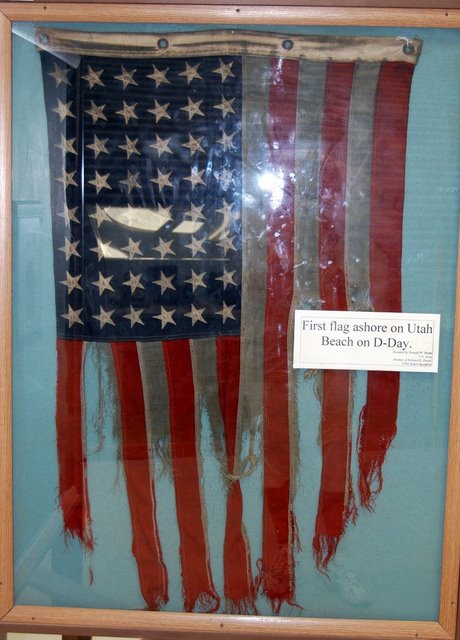
Today is the 64th anniversary of the Invasion of Normandy in World War II, a date generally called D-Day. No, you don’t have to fly your flag. This is not one of the days designated by Congress for flag-flying.
You may fly your flag the entire weekend. Please fly your flag today.
Memorial Day, traditionally observed on May 30, now observed the last Monday in May, is a day to honor fallen veterans of wars. Traditionally, family members visit the cemetery where loved ones are interred and leave flowers on the grave.
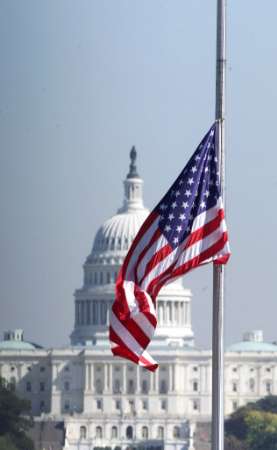
On Memorial Day itself, flags on poles or masts should be flown at half-staff from sunrise to noon. At noon, flags should be raised to full-staff position.
When posting a flag at half-staff, the flag should be raised to the full-staff position first, with vigor, then slowly lowered to half-staff; when retiring a flag posted at half-staff, it should be raised to the full staff position first, with vigor, and then be slowly lowered. Some people attach black streamers to stationary flags, though this is not officially recognized by the U.S. Flag Code.
1. Memorial Day was first officially proclaimed by a general officer. His name was: A. Robert E. Lee; B. John A. Logan; C. Douglas MacArthur D. George Washington.
2. The first state to officially recognize Memorial Day was A. Virginia; B. Rhode Island; C. New York; D. Georgia.
3. The use of poppies to commemorate Memorial Day started in A. 1870 B. 1915 C. 1948; D. 1967.
4. The original date of Memorial Day was A. May 30; B. July 4; C. May 28; D. Nov 11.
5. Which U.S. Senator has tried repeatedly to pass legislation that would restore the traditional day of Memorial Day observance? A. John McCain B. Ted Kennedy C. Saxby Chambliss D. Daniel Inouye.
The answers, again provided by the Tifton Gazette:
OK, now for the answers. General John Logan, national commander of the Grand Army of the Republic, proclaimed May 30, 1968 as Memorial Day in his General Order Number 11, issued on May 5, 1868. The purpose was to honor the dead from both sides in the War Between the States. Subsequently flowers were placed on the graves of both Union and Confederate soldiers in Arlington National Cemetery on May 30 of that year.
New York was the first state to officially recognize the Memorial Day, in 1873. Southern states, though paying tribute to their dead on separate dates, refused to use May 30 as the official date until after World War I, when the holiday was broadened to honor those who died in any war.
In 1915 a woman named Moina Michael, inspired by the poem, “In Flanders Fields,” (by Canadian Colonel John McRae) began wearing red poppies on Memorial Day to honor our nation’s war dead. The tradition grew and even spread to other countries. In 1922 the VFW became the first veterans’ organization to sell the poppies made by disabled veterans as a national effort to raise funds in support of programs for veterans and their dependents. In 1948 the US Post Office issued a red 3-cent stamp honoring Michael for her role in founding the national poppy movement.
As stated above, May 30 was the original Memorial Day. In 1971, with the passage of the national Holiday Act, Congress changed it so that Memorial Day would be celebrated on the last Monday of May. Some citizens feel that turning it into a “three-day weekend” has devalued the importance and significance of this special holiday. In fact, every time a new Congress has convened since 1989, Senator Daniel Inouye of Hawaii has introduced a bill to the Senate calling for the restoration of May 30th as the day to celebrate Memorial Day.
In his 1999 introductory remarks to the bill, Senator Inouye declared:
“Mr. President, in our effort to accommodate many Americans by making the last Monday in May, Memorial Day, we have lost sight of the significance of this day to our nation. Instead of using Memorial Day as a time to honor and reflect on the sacrifices made by Americans in combat, many Americans use the day as a celebration of the beginning of summer. My bill would restore Memorial Day to May 30 and authorize the flag to fly at half mast on that day.
In addition, this legislation would authorize the President to issue a proclamation designating Memorial Day and Veterans Day as days for prayer and ceremonies honoring American veterans. This legislation would help restore the recognition our veterans deserve for the sacrifices they have made on behalf of our nation.” (from the 1999 U.S. Congressional Record).
War in the Congo is not about liberty, it’s not really about the politics of a nation, at least, not a nation as any book defines it. At this point, the conflict is over who controls deposits of ores, some fo them rare, from which today’s modern technological devices are manufactured. The world needs to worry about blood diamonds, but also blood cell phones, blood iPods and blood computers.
Seriously, when does “never again” begin?
Spread the word; friends don't allow friends to repeat history.
Or, until that account is unsuspended by the forces supporting Donald Trump: Follow @FillmoreWhite, the account of the Millard Fillmore White House Library
We've been soaking in the Bathtub for several months, long enough that some of the links we've used have gone to the Great Internet in the Sky.
If you find a dead link, please leave a comment to that post, and tell us what link has expired.
Thanks!
Retired teacher of law, economics, history, AP government, psychology and science. Former speechwriter, press guy and legislative aide in U.S. Senate. Former Department of Education. Former airline real estate, telecom towers, Big 6 (that old!) consultant. Lab and field research in air pollution control.
My blog, Millard Fillmore's Bathtub, is a continuing experiment to test how to use blogs to improve and speed up learning processes for students, perhaps by making some of the courses actually interesting. It is a blog for teachers, to see if we can use blogs. It is for people interested in social studies and social studies education, to see if we can learn to get it right. It's a blog for science fans, to promote good science and good science policy. It's a blog for people interested in good government and how to achieve it.
BS in Mass Communication, University of Utah
Graduate study in Rhetoric and Speech Communication, University of Arizona
JD from the National Law Center, George Washington University


 Posted by Ed Darrell







 Millard Fillmore's Bathtub