August 25, 1944: Liberation of Paris

August 24, 2015

Front page of the New York Times on August 26, 1944, noting the liberation of Paris after Allied troops reached there, following D-Day.

Front page of the New York Times on August 26, 1944, noting the liberation of Paris after Allied troops reached there, following D-Day.

On August 26, 1944, on a front page filled with other news from the war in Europe and the Pacific, the New York Times carried the story from the Associated Press:

Allied Forces Help French to Rid Capital of Nazis


By THE ASSOCIATED PRESS

SUPREME HEADQUARTERS, Allied Expeditionary Force, Aug. 25 — The Paris radio announced late tonight that the French capital had been liberated and that the German commander had signed a document ordering his troops to cease fire immediately.

The announcement followed entry of American and French troops into the capital during the day. There was no immediate confirmation here.

The latest word at headquarters was that American and French troops had joined Fighting French patriots on the Ile de la Cite in the heart of the capital after bitter fighting with Germans and French collaborationist militiamen.

Gen. Charles de Gaulle, President of the French Committee of National Liberation, said in a speech broadcast from Paris:

“France will take her place among the great nations which will organize the peace. We well not rest until we march, as we must, into enemy territory as conquerors.”

Allies invaded Europe at Normandy the previous June.

August, 1944: American soldiers watch as the Tricolor flies from the Eiffel Tower again. (Image: National Archives), via Brain Pickings

August, 1944: American soldiers watch as the Tricolor flies from the Eiffel Tower again. (Image: National Archives), via Brain Pickings

Wikipedia gives the unadorned, but detail-rich version of the story; note the vast array of national forces who joined to oust the Germans, including Spanish Republicans-in-exile:

The Liberation of Paris (also known as the Battle for Paris) was a military combat that took place during World War II from 19 August 1944 until the German garrison surrendered the French capital on 25 August 1944. Paris had been ruled by Nazi Germany since the signing of the Second Compiègne Armistice on 22 June 1940, after which the Wehrmachtoccupied northern and western France.

The liberation began when the French Forces of the Interior—the military structure of the French Resistance—staged an uprising against the German garrison upon the approach of the US Third Army, led by General George Patton. On the night of 24 August, elements of General Philippe Leclerc‘s 2nd French Armoured Division (the Régiment de marche du Tchad, a mechanised infantry unit led by Captain Raymond Dronne and composed primarily of exiled Spanish republicans), made its way into Paris and arrived at the Hôtel de Ville shortly before midnight. The next morning, 25 August, the bulk of the 2nd Armored Division and US 4th Infantry Division entered the city. Dietrich von Choltitz, commander of the German garrison and the military governor of Paris, surrendered to the French at the Hôtel Meurice, the newly established French headquarters, while General Charles de Gaulle arrived to assume control of the city as head of the Provisional Government of the French Republic.

Victory parades followed on August 26 and August 29. Paris was spared destruction ordered by German Chancellor Adolf Hitler when his commander simply failed to carry out the destruction, perhaps because his forces had been overrun more quickly than he’d imagined, perhaps because French underground and other resistance fighters simply prevented it.

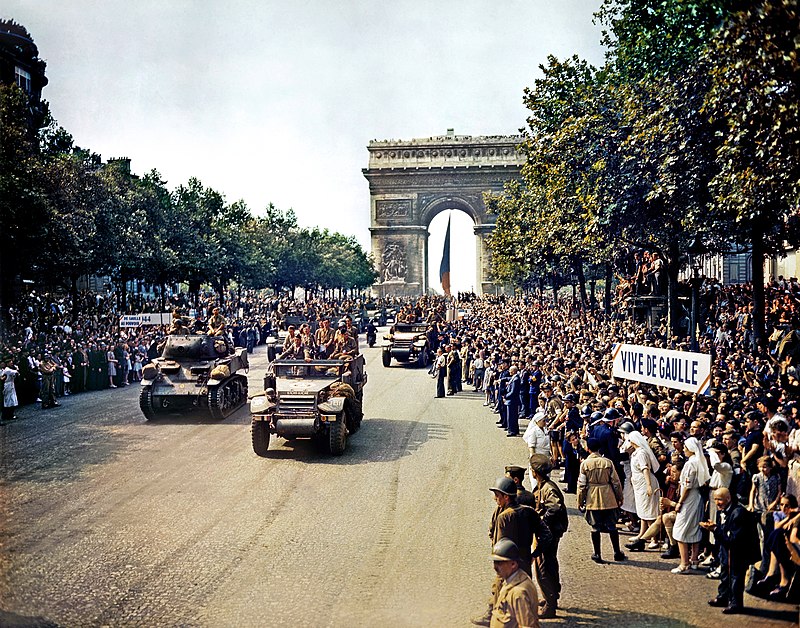
From Wikipedia, a rare color photograph:

From Wikipedia, a rare color photograph: “Crowds of French patriots line the Champs Elysees to view Free French tanks and half tracks of General Leclerc’s 2nd Armored Division passes through the Arc du Triomphe, after Paris was liberated on August 26, 1944. Among the crowd can be seen banners in support of Charles de Gaulle.” Jack Downey, U.S. Office of War Information – This image is available from the United States Library of Congress’s Prints and Photographs division under the digital ID fsac.1a55001.

More:


August 24, 79 C.E.: Vesuvius spoke, with thunder

August 24, 2015

Much as the GOP Caucus and other climate-change deniers, Roman officials in Pompeii and Herculaneum refused to be alarmed at the ground shaking, and obvious eruptions from Mount Vesuvius, on August 24, 79 C.E.

In the past week we have earthquakes in California, Nepal, British Columbia, and other places. The old Earth keeps rumbling.

Oddly, we now pay more attention to earthquakes than to other things that can cause greater, rolling disasters.

Santayana’s Ghost wonders if we ever learn from history.

Vesuvius, asleep for now. National Geographic photo by Robert Clark

Vesuvius, asleep for now (2013). National Geographic photo by Robert Clark

More:

Yes, this is mostly an encore post. Fighting ignorance requires patience.

Yes, this is mostly an encore post. Fighting ignorance requires patience.


Fly your flag August 21, for Hawaii Statehood in 1959

August 21, 2015

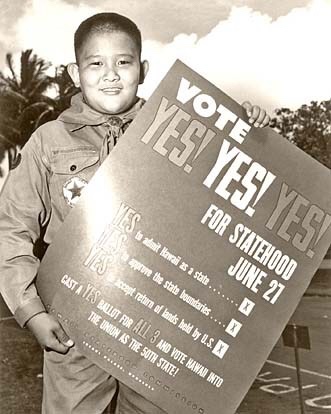
"On June 14, 1959, Boy Scout Milton Motooka helped get the word out for Hawaii’s statehood plebiscite to be held 13 days later. A new documentary will focus on Hawaii’s statehood." Hawaiians voted yes in the plebiscite, and statehood was declared two months later. (Whatever became of Scout Motooka?)

It’s been 56 years since the youngest state entered the union — the longest stretch in which the U.S. has not added another state.

"On June 14, 1959, Boy Scout Milton Motooka helped get the word out for Hawaii’s statehood plebiscite to be held 13 days later. A new documentary will focus on Hawaii’s statehood." Hawaiians voted yes in the plebiscite, and statehood was declared two months later. (Whatever became of Scout Motooka?)

“On June 14, 1959, Boy Scout Milton Motooka helped get the word out for Hawaii’s statehood plebiscite to be held 13 days later. A new documentary will focus on Hawaii’s statehood.” Hawaiians voted yes in the plebiscite, and statehood was declared two months later. (Whatever became of Scout Motooka?)

“On June 14, 1959, Boy Scout Milton Motooka helped get the word out for Hawaii’s statehood plebiscite to be held 13 days later. A new documentary will focus on Hawaii’s statehood.” Hawaiians voted yes in the plebiscite, and statehood was declared two months later. (Whatever became of Scout Motooka?)

June’s plebiscite smoothed the path for statehood, declared two months later.

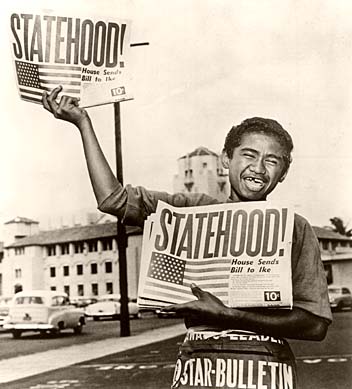
A newsboy happily hawks the Honolulu Star-Bulletin with the headline showing the state had achieved statehood, August 21, 1959. Star-Bulletin photo

13-year-old paperboy Chester Kahapea happily hawks a commemorative edition of the Honolulu Star-Bulletin with the headline showing the state had achieved statehood after the U.S. House of Representatives passed the law authorizing Hawaii as a state. Star-Bulletin photo by Murray Befeler.

Hawaii’s official statehood day is August 21, commemorating the day in 1959 when Hawaii was recognized as a member of the union of the United States of America.  Hawaiians should fly their flags to day in honor of the date (you may, too).

Hawaii formally celebrates the day on the third Friday in August, this year coincidentally on the 21st.  I hope you joined in the festivities (it’s a holiday in Hawaii) — but under the U.S. Flag Code, you may certainly fly your flags on August 21, regardless which day of the week that is.

Specimen copy of the ballot used by Hawaiians in a June 27, 1959, plebiscite to approve conditions of statehood. Image from Hawaii Magazine, 2009

Specimen copy of the ballot used by Hawaiians in a June 27, 1959, plebiscite to approve conditions of statehood. Image from Hawaii Magazine, 2009

After the U.S. annexed Hawaii in 1898 (in action separate from the Spanish-American War) attempts at getting Hawaii admitted as a state got rolling.  After World War II, with the strategic importance of the islands firmly implanted in Americans’ minds, the project picked up some steam.  Still, it was 14 years after the end of the war that agreements were worked out between the people of Hawaii, the Hawaiian royal family, Congress and the executive branch.  The deal passed into law had to be ratified by a plebiscite among Hawaiian citizens.  The proposition won approval with 94% of votes in favor.

Some native Hawaiian opposition to statehood arose later, and deference to those complaints has muted statehood celebrations in the 21st century.

Other than the tiny handful of loudmouth birthers, most Americans today are happy to have Hawaii as a state, the fifth richest in the U.S. by personal income.  The nation has a lot of good and great beaches, but the idea of catching sun and surf in Hawaii on vacation might be considered an idealized part of the American dream.

U.S. and Hawaii flags flying together.

U.S. and Hawaii flags flying together.

More:

From Prologue, the blog of the National Archives: This petition, rolled onto a wooden spool, was signed by 116,000 supporters of Hawaii statehood and presented to the U.S. Senate on February 26, 1954. (RG 46, Records of the U.S. Senate)

From Prologue, the blog of the National Archives: This petition, rolled onto a wooden spool, was signed by 116,000 supporters of Hawaii statehood and presented to the U.S. Senate on February 26, 1954. (RG 46, Records of the U.S. Senate)


U.S. postage stamp issued in 2009 commemorating the 50th anniversary of Hawaii's admission to the union.

U.S. postage stamp issued in 2009 commemorating the 50th anniversary of Hawaii’s admission to the union.


Contrast the first class postage price above with the airmail postage price of this stamp issued in 1959 — August 21, 1959 7¢ Rose Hawaii Statehood C55 26432. Wikipedia image

Contrast the first class postage price above with the airmail postage price of this stamp issued in 1959 — August 21, 1959 7¢ Rose Hawaii Statehood stamp. Wikipedia image


This is an encore post.

This is an encore post.


Malaria No More notes milestone: Malaria at all time low

August 20, 2015

"End Malaria Now" demonstration from Jolkona.org, Seattle

“End Malaria Now” demonstration from Jolkona.org, Seattle

Remarkable progress against malaria marks the 21st century — but there was even more progress between 1960 and 2000. This progress usually is not noted in screeds against the World Health Organization (WHO), or Rachel Carson, or “crazy environmentalists.”

Through the 1950s, WHO estimated malaria deaths worldwide at about 5 million people each year. In about a decade of WHO’s malaria eradication campaign in temperate zones, the toll is estimated to have dropped to about 4 million dead each year.  WHO suspended the eradication campaign in 1963 when it was discovered that mosquitoes in central Africa were already resistant and immune to DDT, which was the chief pesticide used for Indoor Residual Spraying to temporarily knock down local mosquito populations. WHO tried to find substitutes for DDT, but by 1969 formally ended the program and stopped asking for money for eradication.

The fight against malaria continued, however. In 1972 the U.S. flooded malaria-prone nations with DDT which had been intended for use on U.S. crops, after the U.S. prohibited DDT on U.S. crops. For a dozen years all U.S. DDT production got channeled into Africa and Asia to fight disease.  U.S. makers had gotten out of DDT production by 1985 as production shifted to other nations.

Despite DDT’s failure, progress was made in medical care and especially in education on how to prevent mosquito bites.  The death toll dropped toward 1 million annually until about 1990. In the late 1980s, the medicines used to cure humans from malaria parasites failed, as the parasites developed their own resistance to the drugs. Through the 1990s, malaria deaths remained constant, or even rose.

A flood of concern in the late 1990s produced a coalition of malaria fighters with funding through the United Nations and non-governmental organizations (NGOs) such as the Gates Foundation and Wellcome Trust. In 1999, most of these groups agreed to fight harder, using “integrated vector management,” a variety of methods calculated to prevent mosquitoes from developing resistance to new pesticides, and prevent the malaria parasites from developing resistance to pharmaceuticals.

Plus, in nations where houses often were leaky to mosquitoes, these agencies provided bednets to prevent bites of malaria-carriers at peak biting periods, when people slept. By 2008, deaths dropped below a million each year for the first time, and progress has continued.

Beating malaria is a top goal of the United Nations’ Millennium Development Goals (MDGs); Malaria No More reported on a recently-completed report on those goals, which noted the progress against malaria.

Here is the press release from Malaria No More.

Malaria Deaths Reach All Time Low, U.N. Secretary General’s Final MDG Report Shows

NEW YORK, NY – July 6, 2015 – Malaria deaths have reached an all-time low and 6.2 million lives have been saved from the disease between 2000-2015, according to a new United Nations report announced by U.N. Secretary-General Ban Ki-moon’s office today. The final report on progress of the Millennium Development Goals (MDGs), which are set to expire this year, highlights an historic 69 percent decline in the rate of child deaths from malaria in Africa.

The report provides an update to all eight MDG Goals. The unprecedented global leadership over the past ten years to combat malaria has not only surpassed the disease-specific MDG target (Goal 6, Combat HIV/AIDS, Malaria and Other Diseases), but those efforts also contributed to critical progress toward achieving Goals 4 (Reduce Child Mortality) and 5 (Improve Maternal Health).

“Malaria is one of the standout successes of the MDGs thanks to continuous innovation, bold endemic country leadership and steadfast donor commitment,” said Ray Chambers, the U.N. Secretary-General’s Special Envoy for Malaria and Financing the Health MDGs. “We need to build on this success to ensure no child, woman or man dies from a mosquito bite and that we ultimately eradicate this disease.”

Thanks to the leadership of the United States, the Global Fund to Fight AIDS, Tuberculosis and Malaria and other international donors, malaria financing has grown dramatically from 2000-2015 to more than $3 billion annually, and political leadership has fueled the delivery of more than 1 billion mosquito nets to Africa along with hundreds of millions of effective tests and treatments.

Although these results have successfully surpassed the MDG target, the fight against malaria is not finished. Malaria remains a major global health security challenge with an estimated 3.3 billion people at risk globally. Thanks to recent success in achieving real and measureable progress, coupled with steadfast political leadership and a promising pipeline of transformative new technologies, malaria-affected regions have set ambitious goals for elimination including transformative 2020 targets in Southern Africa, Southeast Asia and the Caribbean.

“Malaria is one of the oldest and deadliest diseases in human history,” said Martin Edlund, CEO of Malaria No More. “For the first time in history we have the opportunity to capitalize on our success and end malaria within a generation; we can’t afford to miss that opportunity.”

Click here to download the full report.

Chart from USNews.com:

Estimated change in malaria incidence rate (cases per 1,000 population at risk) and malaria mortality rate (deaths per 100,000 persons at risk), 2000-2015. USNews.com chart, based on MDG report.

Estimated change in malaria incidence rate (cases per 1,000 population at risk) and malaria mortality rate (deaths per 100,000 persons at risk), 2000-2015. USNews.com chart, based on MDG report.

Save


Forgotten Texas history: Battle of Medina, August 18, 1813

August 19, 2015

1813?

Most deadly battle ever in Texas?

Back in 2006, reporter Art Chapman in the Fort Worth Star-Telegram made a plea to remember the deadliest battle for Texas independence, fought years before the Texas Revolution (in an article that may be gone from the internet).

In 2013 the Battle of Medina lay buried under seven more years of newspapers and historic events.  We need to fight to remember history.  This is another punch in that fight.

Billy Calzada photo, 2011 Reenactment of the Battle of Medina (in Texas)

Caption from Tropas de Ulramar: Re-enactors dressed as participants in the Battle of Medina fire a musket volley during a ceremony on Saturday, Aug. 20, 2011, commemorating the 198th anniversary of the Battle of Medina. The event was sponsored by the Texas Society – Sons of the American Revolution. The Battle of Medina was fought on Aug. 18, 1813, when a Spanish army, attempting to win Texas from the Republican Army of the North, which was supported by the United States and included veterans of the American Revolution, won a battle fought south of San Antonio near Espey. It is thought that about 800 Republicans died in the battle. [Other estimates put the death toll on the Texas side at 1,500]
Photo: BILLY CALZADA

Two years after the bicentennial, does anyone remember it yet? 

The long drive for Texas independence from Mexico may be more clearly seen in the light of the continents-long struggles for independence that included not only the American Revolution, but also revolutions in the nations of Haiti, Mexico, Chiapas, and others across Central America and South America. The Battle of Medina was a part of that earlier history. Fought on August 18, 1813, it was more deadly than any other battle in the wars for Texas independence, it is linked to Mexico’s long history of struggle. It occurred in the same year that Haiti got independence, and in the middle of the War of 1812, which helps to obscure the history of the battle.

Chapman’s report said:

“Contrary to popular belief, the struggle for democracy in Texas did not begin with the Anglo-led revolution of 1835-36,” author and historian James Haley wrote in a recent Austin American-Statesman article. “In fact, the yearning for liberty had its own ongoing legacy in Latin America.

“As early as 1810, movements for independence began simultaneously in Venezuela and Argentina. It was also in 1810, on Sept. 16, that the Mexican priest Father Miguel Hidalgo y Costilla raised his famous grito, the cry for social justice that opened the Mexican campaign for independence, a date now celebrated as Diez y Seis.”

America was drawn into that campaign when it funded a small force under the control of Bernardo Gutierrez de Lara, one of Father Hidalgo’s emissaries. A former Army officer, Augustus Magee, went along with the expedition to offer military advice. The Gutierrez-Magee Expedition, also called the Green Flag Rebellion because of its banner, soon captured Nacogdoches. All went well for the expedition — too well — and Texas independence was quickly claimed. Spain took immediate measures to quell the insurrection.

It ended at the Battle of Medina, “the biggest, bloodiest battle ever fought on Texas soil,” a South Texas historian says.

Spanish forces slaughtered more than 1,000 of the rebels, perhaps as many as 1,500. The battle methods, and total extirpation of the losing forces, would recur in the Texas Revolution.

Fewer than 100 republic troops survived the battle, Thonhoff said. Those not killed in the battle were later chased down and executed. Retaliation went on for days. Royalist forces swept into San Antonio and took revenge on anyone they suspected of aiding the rebel forces. One of the royalist officers was a young Lt. Antonio Lopez de Santa Anna.

The bodies of soldiers killed in battle were left where they fell. It would be nine years before their bones were gathered and buried in a communal grave.

This story should translate well to the Texas-required 7th-grade history course. Here is a cause — the archaeological excavation and historical marking of the battlefield itself — which lends itself well to getting students to write letters to state legislators and state education authorities. Here is news of an archaeological site that could provide work for a generation of diggers, and experience for countless school kids taken on tour. And the story of the battle is one of those relatively unknown gems that excite students who realize, after they discover it, that they know something that most others do not know.

English: Medina Battle -State Marker- Near Lem...

Medina Battle -State of Texas historic marker Near Leming, Texas. Wikipedia image

As well, this should be supplement to world history courses, which in my experience too often overlook the independence wars and successes in Central and South America. The article mentions independence movements in Argentina and Venezuela. The United States fought Britain in the War of 1812, which was the western fallout of England’s simultaneous war with Napoleon (who was on the road to getting his comeuppance in Russia). Haiti’s drive for independence from France racked that Caribbean nation. A mapping exercise showing the various independence movements occurring between 1800 and 1826 provides links to parts of the narrative of American nations’ independence that often gets overlooked.

The battle also ties together several otherwise loose threads in the Texas history curriculum.

  • The Gutierrez-McGee Expedition falls into that time period and that type of movement to steal Texas known as the filibusters.
  • The treachery of the Green Flag Rebels in executing the Spanish officers in San Antonio after the Spanish had surrendered raises issues of ethics in battle that are rich for discussion.
  • Incompetence with which the Texian forces were led into the battle, missing completely the feint the Spanish troops made until they were already into a classic battle trap, is another place to emphasize the importance of having good leaders especially in rebellion (this will become clear to students, perhaps, when they study the events of 1775 and 1776 and Washington’s leadership, in the 8th grade curriculum in Texas).
  • Santa Anna’s presence as a young officer at the Battle of Medina suggests that he got the idea of “no quarter” early in his career; see how the tactic plays out 23 years later at the Battle of the Alamo, the Battle of Coleto, Goliad, and the Battle of San Jacinto, with an older Santa Anna in command.
  • In the context of Texas’ becoming a “majority-minority” state with a very large population with historical ties to Mexico, the Battle of Medina deserves greater consideration in Texas history curricula.

Partly due to the brutality of the Spanish victors to the survivors, wounded and dead, the battlefield itself was not cleaned up for years — bodies lay across a wide area.  Medina was a touchy point, a point of embarrassment perhaps to local Mexicans and Texians, a loyalty test for the Spanish rulers.  So the battle site was ignored and hushed up.  200 years later, we don’t know the exact site of the battle.  A lot of work remains to be done, exploration of archives in Spain, Mexico and Texas, exploration of map collections, archaeological and paleontological work on the suspected sites of the battle.  But every year this work remains undone, the story becomes that much more difficult to find.  It is unlikely we’ll ever know all that we probably should about the Battle of Medina.

Other sources you may find useful:


Battle of Medina reenactment, Pleasanton Express photo

Photo from the Pleasanton Express: “A Color Guard representing the U.S.A., Spain, Texas and Mexico, plus descendants of the men who fought and died in [The Battle of Medina] will be presented at the Battle of Medina ceremony.

Yes, this is mostly an encore post. Fighting ignorance requires patience.

Yes, this is mostly an encore post. Fighting ignorance requires patience.


Malaria Twitterstorm, summer of 2015

August 18, 2015

Several good developments in the War on Malaria, worldwide — along with some alarming signs.  Maybe there will be time to blog seriously about each of these things later. Let’s get them known, and keep discussion going for the best way to beat malaria in a post-DDT world.

QPharm Tweeted about DSM 265, an experimental, one-dose treatment developed by the Medicines for Malaria Venture (MMV); the video is useful for the background those new to the issue can get on the problems of treating malaria, which make great hurdles for campaigns to eradicate malaria.

Here’s the video the Tweet leads to.

MMV said:

DSM265 is a selective inhibitor of the plasmodial enzyme called DHODH. DHODH is a key enzyme in the replication of the parasite. If we can inhibit that enzyme with DSM265, we can stop the life of the parasite.

Voice of America reported on Rollback Malaria’s call for $100 billion to be spent in the next 15 years, to stamp out the disease.

Malaria deaths are, in 2015, at an “all time low.” Deaths hover around 500,000 per year, most in Africa, and most among children under the age of 5. A staggering total, until compared to the post-World War II estimates of more than 5 million deaths per year, or the more than 3 million deaths per year in 1963, the year the World Health Organization (WHO) had to stop its ambitious campaign to eradicate malaria when pesticide DDT, upon which the campaign was based, produced resistance in mosquitoes in areas where the campaign had not yet reached.

Beating malaria is one of the Millennium Development Goals of the United Nations; this year’s report on MDG acknowledged the great progress already made.

Another non-governmental malaria-fighting organization discussed the news; see the press release from Malaria No More.

Medical News Today Tweeted out a tout for its own coverage of malaria — notable for a good, basic explanation of malaria and how to fight it.  I wish critics of Rachel Carson and WHO were familiar with half of these basic facts.

Medical News Now's Fast Facts on Malaria

Medical News Now’s Fast Facts on Malaria. Notable, that annual deaths now are way below the million mark. Good news!

One malaria vaccine has won approval for final testing. Good news, though anyone who follows vaccines knows it will take a while to test, and anyone who knows malaria fighting knows there are four different parasites, and delivery of any medical care is tough in far too many parts of the world where any form of malaria is endemic. Even small good news is good news.

http://twitter.com/midasmedcomms/status/624491200905527296

http://twitter.com/SarahLMartinez1/status/629403365269635072

Are we better informed about malaria now? Do we understand spreading a lot more DDT is not the answer?


Ed Brayton, Dispatches from the Culture Wars, moving to Patheos

August 12, 2015

Our old friend Ed Brayton, high priest and chief bottle washer at Dispatches from the Culture Wars through all these years — as a solo blog, at the late, Seed Magazine Science Blogs, and then for the past few years at FreeThought Blogs — is pulling back from his administrative work at FtB. He’s also moving Dispatches to Patheos.

Masthead for Ed Brayton's Dispatches from the Culture Wars

Masthead for Ed Brayton’s Dispatches from the Culture Wars

There’s been angst. Brayton established FtB and is known as the owner of the network; it’ll take a committee to try to replace him there.

The most famous photograph of the Paparazzi-eluding Ed Brayton. From his Twitter pate, @edbrayton.

The most famous photograph of the Paparazzi-eluding Ed Brayton. From his Twitter page, @edbrayton.

Ed’s been a good friend to Millard Fillmore’s Bathtub over the years, encouraging and making key starter suggestions (along with P. Z. Myers of Pharyngula).  More important, Brayton’s been a staunch defender of thinking issues through. He’s stood up firmly for religious freedom, academic freedom and good science, among a bunch of other issues over the years.

Change your bookmarks to get the freshest stuff. As he does live in Michigan and knows Michigan politics, he’s probably the go to guy for straight dope on the Courser scandals, for example.

Good luck, wish you well, Ed.

Good luck FreethoughtBlogs, too.


Wellcome Trust interactive on malaria parasites’ lifecycle

August 12, 2015

Screen capture of the Wellcome Trust HTML presentation on the life cycle of malaria parasites. Malaria fighters know all this almost instinctively; too often policy makers fail to understand it, and so they recommend policies that do not make medical or economic sense in fighting the disease. Click image to go to Wellcome Trust site for full presentation.

Screen capture of the Wellcome Trust HTML presentation on the life cycle of malaria parasites. Malaria fighters know all this almost instinctively; too often policy makers fail to understand it, and so they recommend policies that do not make medical or economic sense in fighting the disease. Click image to go to Wellcome Trust site for full presentation.

Britain’s Wellcome Trust takes as one of its key missions the fight against malaria.  The Trust is a charitable foundation created from profits of pharmaceutical development and sales.

Recently I found this HTML animation presentation on the life cycle of the malaria parasite, something all malaria fighters must know to be effective.

It’s also something that DDT advocates seem unable to comprehend.  Malaria is not a virus, nor is it a venom mosquitoes manufacture, but it is a parasite that infects (and disables) both mosquitoes and humans. Mosquitoes catch the parasite from an infected human host. After the malaria parasite completes a couple of cycles in the gut of the mosquito, the parasite can be transmitted back to humans by a mosquito bite. And the cycle continues.

Since complete eradication of malaria-carrying mosquitoes is practically impossible in almost all cases, beating malaria requires an interruption in the cycle of transmission of the parasite, plus the curing of the disease in infected human hosts.

For example, the old World Health Organization (WHO) malaria eradication campaign, which operated from 1955 to 1963, DDT was used to temporarily knock down a population of mosquitoes, with hopes human hosts would be ridded of malaria parasites so that, in six months or so, when the mosquito populations roared back, there would be no malaria in local humans to infect mosquitoes. Consequently, mosquitoes can’t transmit a parasite they don’t have.

Lost on far too many people: Humans must be cured of malaria to prevent transmission. Beating malaria takes a lot more than just killing mosquitoes.

Check out the interactive:  Malaria parasite life cycle

While you’re there, snoop around to see what else Wellcome Trust is up to in the malaria fight.


Annals of global warming: Time to change maps of Arctic ice

August 11, 2015

National Geographic Society reminded us they’ve had to change maps of the arctic.

National Geographic Society composed this GIF to compare their maps over past 16 years: A GIF of National Geographic atlases from 1999 through 2014 shows how Arctic ice has melted over time.

National Geographic Society composed this GIF to compare their maps over past 16 years: A GIF of National Geographic atlases from 1999 through 2014 shows how Arctic ice has melted over time.

President Barack Obama noted the change in his announcement of U.S. actions to fight climate change. National Geo added details beyond what the president said.

As the ocean heats up due to global warming, Arctic sea ice has been locked in a downward spiral. Since the late 1970s, the ice has retreated by 12 percent per decade, worsening after 2007, according to NASA. May 2014 represented the third lowest extent of sea ice during that month in the satellite record, according to the National Snow and Ice Data Center (NSIDC).

Ice loss is accelerated in the Arctic because of a phenomenon known as the feedback loop: Thin ice is less reflective than thick ice, allowing more sunlight to be absorbed by the ocean, which in turn weakens the ice and warms the ocean even more, NASA says.

Because thinner ice is flatter, it allows melt ponds to accumulate on the surface, reducing the reflectiveness of the ice and absorbing more heat. (See pictures of our melting world in National Geographic magazine.)

“You hear reports all the time in the media about this,” Valdés said. “Until you have a hard-copy map in your hand, the message doesn’t really hit home.”

(More at National Geo’s site.)

At the last edition of the National Geographic Atlas, a video described why and how changes were made.

We used to think the old Earth was so massive, little could humans do to change it. While it’s probably still true the rock will survive after humans are extinct, we now know we can foul our nest enough to make it uncomfortable, or impossible for our species to stay here.

Global warming is changing the planet. Maps must be changed to show the new face.

Have we acted soon enough, and hard enough to save space for humans to live?

Tip of the old scrub brush to Chris Tackett on Twitter.


Flags in Missouri: Displayed backwards?

August 10, 2015

It’s interesting trying to find photographs of the U.S. flag displayed with a state flag, as I do for posts on each state’s statehood day celebration.  Today is Missouri’s anniversary of admission to the union in 1821, and I looked high and low for a good photo.

Along the way I found a photo of three flags displayed at the Missouri Capitol Building. They flew half-staff to honor a recently deceased state official, so I didn’t think it illustrated a statehood celebration well.

When flown on flagpoles in a row, of even height, the U.S. flag always flies on it’s own right, or to the left of a viewing audience (see paragraph f of this part of the U.S. Flag Code).

That’s not where it’s flown at the Missouri Capitol.

U.S. flag always flies on the viewer's left. What's going on in this photo of the Missouri Capitol? Caption from the New York Daily News: Flags around the Missouri Capitol complex in Jefferson City were lowered to half staff after the suicide of state Auditor Tom Schweich on Feb. 26. On March 30, a spokesman for the office, Robert Jackson, committed suicide. Photo: AP

U.S. flag always flies on the viewer’s left. What’s going on in this AP photo of the Missouri Capitol? Caption from the New York Daily News: “Flags around the Missouri Capitol complex in Jefferson City were lowered to half staff after the suicide of state Auditor Tom Schweich on Feb. 26. On March 30, a spokesman for the office, Robert Jackson, committed suicide. Photo: AP”

Anybody know what’s up? Do these three flagpoles “face” the Capitol?

While we’re at it: The black flag is the POW-MIA flag. The flag in the center is the state flag of Missouri. What is the flag on the photo’s left?


Missouri Statehood Day, August 10 (Does Missouri care?)

August 10, 2015

Under the U.S. Flag Code, Missourians are encouraged to fly the Stars and Stripes on August 10 to honor Missouri’s entering the union in 1821 as the 24th state.

Does Missouri celebrate this event at all? I’m not finding much on celebrations in 2015. Perhaps the state is preoccupied with other events.

Missouri and U.S. flags adorn the Missouri House of Representatives on opening day 2015. St. Louis Post-Dispatch caption:

Missouri and U.S. flags adorn the Missouri House of Representatives on opening day 2015. St. Louis Post-Dispatch caption: “The opening day of the Missouri House of Representatives 98th General Assembly at the Missouri State Capitol on Wednesday, Jan. 7, 2015. Photo by Cristina Fletes-Boutte, cfletes-boutte@post-dispatch.com”

Surely Missourians know the date. Plans for the bicentennial in 2021 promise a huge celebration then.

I can find a record of a modest celebration of statehood in 2014.

If you find news of any activities relating to the commemoration of Missouri statehood in 2015, please let us know in comments.

With or without fanfare, Missourians, you may fly your flags to day to honor statehood.


“Damn the torpedoes” Day: Battle of Mobile Bay, August 5, 1864

August 5, 2015

Julius O. Davidson's painting (published by Louis Prang) of the Battle of Mobile Bay, August 5, 1864.

Julius O. Davidson’s painting (published by Louis Prang) of the Battle of Mobile Bay, August 5, 1864.

It was 151 years ago today:  Especially with the excellent help of Tom Petty, whose 1979 album “Damn the Torpedoes” propelled him to stardom, the phrase “Damn the torpedoes!” remains one of the most used phrases out of history.

Just try to find someone who can tell you who first said it, and what the circumstances were. It’s a sign that history instruction is not what it should be on some matters.

August 5 marks the 151st anniversary of the Battle of Mobile Bay in 1864, when the Union Navy under the command of Admiral David Farragut took Mobile from Confederate forces.

U.S. Heritage Protection Services — a division of the National Park Service — gives a straight up, unemotional description of the fight, which was a key victory for the Union, shutting down much of the Confederacy’s ability to trade with foreign nations and supply its army:

Photograph from circa 1855-1865 of then-Rear Admiral David Glasgow Farragut, the commander of the Union forces at the Battle of Mobile Bay, and the man to who is attributed the famous line,

Photograph from circa 1855-1865 of then-Rear Admiral David Glasgow Farragut, the commander of the Union forces at the Battle of Mobile Bay, and the man to who is attributed the famous line, “Damn the Torpedoes!”

Other Names: Passing of Forts Morgan and Gaines

Location: Mobile County and Baldwin County

Campaign: Operations in Mobile Bay (1864)

Date(s): August 2-23, 1864

Principal Commanders: Adm. David G. Farragut and Maj. Gen. Gordon Granger [US]; Adm. Franklin Buchanan and Brig. Gen. Richard L. Page [CS]

Forces Engaged: Farragut’s Fleet (14 wooden ships and 4 monitors) and U.S. army forces near Mobile [US]; Buchanan’s Flotilla (3 gunboats and an ironclad), Fort Morgan Garrison, Fort Gaines Garrison, and Fort Powell Garrison [CS]

Estimated Casualties: 1,822 (US 322; CS 1,500)

Description: A combined Union force initiated operations to close Mobile Bay to blockade running. Some Union forces landed on Dauphin Island and laid siege to Fort Gaines. On August 5, Farragut’s Union fleet of eighteen ships entered Mobile Bay and received a devastating fire from Forts Gaines and Morgan and other points.  After passing the forts, Farragut forced the Confederate naval forces, under Adm. Franklin Buchanan, to surrender, which effectively closed Mobile Bay. By August 23, Fort Morgan, the last big holdout, fell, shutting down the port. The city, however, remained uncaptured.

Results(s): Union victory

World War I recruiting poster showing Admiral David Farragut lashed to the mast of his ship, and offering the quote for which Farragut is famous.

World War I recruiting poster showing Admiral David Farragut lashed to the mast of his ship, and offering the quote for which Farragut is famous. Image from the collection of the Library of Congress, via Wikipedia

Nota bene:

  • Was Farragut lashed to the rigging? Wikipedia’s listing:An anecdote of the battle that has some dramatic interest has it that Farragut was lashed to the mast during the passage of Fort Morgan. The image it brings to mind is of absolute resolve: if his ship were to be sunk in the battle, he would go down with her. The truth is more prosaic; while he was indeed lashed to the rigging of the mainmast, it was a precautionary move rather than an act of defiance. It came about after the battle had opened and smoke from the guns had clouded the air. In order to get a better view of the action, Farragut climbed into Hartford‘s rigging, and soon was high enough that a fall would certainly incapacitate him and could have killed him. Seeing this, Captain Drayton sent a seaman aloft with a piece of line to secure the admiral. He demurred, saying, “Never mind, I am all right,” but the sailor obeyed his captain’s orders, tying one end of the line to a forward shroud, then around the admiral and to the after shroud.[50]Later, when CSS Tennessee made her unsupported attack on the Federal fleet, Farragut climbed into the mizzen rigging. Still concerned for his safety, Captain Drayton had Flag-Lieutenant J. Crittenden Watson tie him to the rigging again.[51] Thus, the admiral had been tied to the rigging twice in the course of the battle.
  • Did Farragut actually say, “Damn the torpedoes, full speed ahead?  Mobile Bay had been mined by the Confederates, to hold off exactly the sort of Union attack Farragut mounted. Mines, in that time, were known as “torpedoes,” not the underwater-missiles made famous by World War II movies.  Farragut had an iron-clad ship, Tecumseh, under his command leading the attack; legend holds that other ships slowed to allow Tecumseh to cross them and move ahead.  Farragut asked why the attack was slowing, and upon hearing that they feared torpedoes (mines), he later was reputed to have said “Damn the torpedoes,” and urged moving at all speed.  Did he say, “full speed ahead?”  Accounts differ on that, even in legend.  In one version he shouted to the ship Brooklyn, “Go ahead!”  That’s unlikely in the din of sailing, coupled with the din of battle.  Another account has him shouting (vainly) to the Hartford, “Four bells, Captain Drayton.”  Yet another version, that almost makes sense, has him shouting to the Metacomet, which was lashed to the Hartford’s side, “Go ahead, Jouett, full speed.”  The entire quote must be listed as attributed, and the only part most versions agree on is “Damn the torpedoes.”  A World War I recruiting poster probably inscribed the quote into history (see the poster in this post).  Alas, Tecumseh hit a torpedo early in the battle, and sank, killing most of its crew.
  • Political importance:  Coupled with Gen. William Tecumseh Sherman‘s March Across Georgia, and the Fall of Atlanta, the Battle of Mobile Bay gave credence to the idea that the fortunes of the Civil War had turned in the Union’s favor.  This victory probably contributed greatly to the re-election of President Abraham Lincoln against opponents who urged simply ending the war without victory.
  • Mobile Bay was an important port? Mobile Bay stands as a monument to poor soil conservation practices, today.  Maps of the battle show a much larger bay than exists today; since 1864, silting from the river has filled in the bay, making it much less useful, and much less important to shipping.

H. H. Lloyd & Co's 1861 map of Mobile Bay, Alabama

1861 map of Mobile Bay: “H.H. Lloyd & Co’s Campaign Military Charts Showing The Principal Strategic Places Of Interest. Engraved Expressly To Meet A Public Want During The Present War. Compiled From Official Data By Egbert L. Viele, Military and Civil Engineer; and Charles Haskins. Published Under The Auspices Of The American Geographical And Statistical Society. Entered … 1861 by H.H. Lloyd & Co. H.H. Lloyd & Co’s Military Charts. Sixteen Maps On One Sheet.”

LandSat image of Mobile Bay, from NASA, 2003 (via Wikipedia)

LandSat image of Mobile Bay, from NASA, 2003 (via Wikipedia).  The Northern Bay is almost completely silted in by the Mobile River and others.

Whether Admiral David G. Farragut actually said, “Damn the torpedoes!” the phrase remains an often-used quotation to urge action in the face of uncertainty, hopefully, to victory.  Farragut’s forces won the Battle of Mobile Bay on August 5, 1864, a key maritime battle of the Civil War.  Whatever he said, it must have been inspiring.

What torpedoes are you damning today?

More:

This is an encore post.

This is an annual event. Much of this is an encore post.


Recent photos of peppered moths

August 5, 2015

Peppered moth, from Lepi-Photos: Geometridae : Enomminae; Peppered Moth; BISTON betularia (Linnaeus,1758)

Creationists deny such photos can exist, a peppered moth actually resting on a living plant. Peppered moth, from Lepi-Photos: Geometridae : Enomminae; Peppered Moth; BISTON betularia (Linnaeus,1758)

Look, Mother Creationist: No glue!

Collection of recent photos of peppered moths found on Twitter:

http://twitter.com/lophocroa/status/627371115246043136

http://twitter.com/ItWasntSteph/status/624863520753061888

http://twitter.com/Cymbelinelister/status/624487595268042752

It appears moth trapping is a favorite nature-observing activity in parts of Britain. One may find naturalists showing off their captures on Twitter during the non-winter months, now. Dozens of photos, made by digital cameras Thomas Kettlewell could only dream of in some science-fiction fantasy; moths captured in-situ, bearing witness against creationism, and for natural selection.

http://twitter.com/JDP_60/status/621077984020156416

More:


Milky Way over New Zealand

August 3, 2015

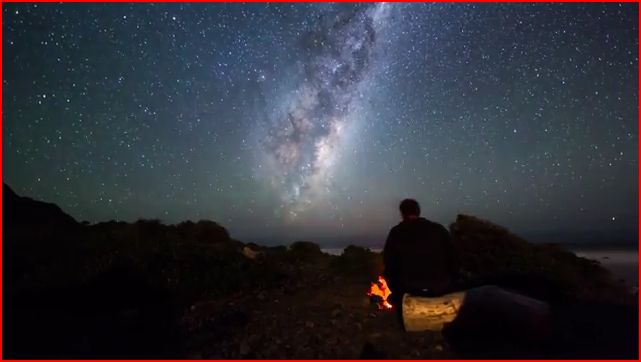
Screen capture of one frame of Mark Gee's short film, "After Dark."

Screen capture of one frame of Mark Gee’s short film, “After Dark.”

Great little .gif, of the night sky in New Zealand.

From a Tweet by BBC Earth.  It’s taken from a slightly longer film put together by Mark Gee.

1440 individual photographs captured over 13 hours cut together into one incredible time-lapse video.

Photographer and videographer Mark Gee shot this breath-taking footage of the southern skies around his hometown of Wellington, New Zealand. The stunning one-minute clip is a collection of Mark’s most memorable night sky moments over the past year.

The majority of the video was shot on Wellington’s South Coast (watch out for air traffic) while the campfire and the camping scenes were filmed in Cape Palliser and the Tararua Ranges.

From Gee’s Youtube site, the longer film (1 minute!):


Colorado Statehood Day, August 1 – Fly your flags

July 31, 2015

Colorado won proclamation as a state on August 1, 1876, the 38th state in the United States.

U.S. and Colorado flags flutter from the same flagpole.  Denver Library image

U.S. and Colorado flags flutter from the same flagpole. Denver Library image

According to Colorado newspaperman and politician Jerry Koppel, Colorado’s path to statehood started in 1864, in an attempt to get another Republican state to boost Abraham Lincoln’s re-election chances.  Coloradans rejected the proposed constitution in a plebiscite, however, which pushed the effort into the next Lincoln administration — which, sadly, a month into Lincoln’s new term, became the Andrew Johnson administration.

High politics:  Colorado took a tortuous path to statehood.  While Colorado was not frustrated so often nor so long as it’s nextdoor neighbor, Utah, laws proposed to bring the state into the union were vetoed twice by President Andrew Johnson.  History from the Andrew Johnson National Historical Site in Greenville, Tennessee:

Colorado Statehood

First Veto:

1. There was such a small population in the area, Johnson felt Colorado would fare better as a territory without the added taxation of statehood.

2. Also due to the small population, Colorado would have only one representative to speak for the people in Congress. (New York, on the other hand, had thirty-one).

3. Johnson felt the citizens of Colorado were not prepared for, and not all wanted, statehood. Johnson wanted to hold a census or an election there first. This would ascertain the number of people in the area, as well as find out what their strongest desire was.

Second veto:

1. Johnson didn’t agree with the Edmunds Amendment which said that Nebraska and Colorado had to give equal suffrage to blacks and whites as a statehood condition. Johnson felt this was unconstitutional because Congress couldn’t regulate a state’s franchise, and the people had not been allowed to vote on it.

2. After holding a census, Johnson felt the population was still too small for statehood.

NOTE: In addition, Johnson did not feel right about adding new states to the Union when the Confederate States had not yet been readmitted to the Union and were still unrepresented.

Congress sustained the veto.

Jerome B. Chaffee. Library of Congress descrip...

Jerome B. Chaffee, one of Colorado’s first U.S. Senators, and the man who earlier pushed through Congress the law admitting Colorado into the Union. Library of Congress description: “Chaffee, Hon. J.B. of Colorado” (Photo credit: Wikipedia)

Colorado Republican and millionaire Jerome Chaffee, serving as the Colorado Territory delegate to Congress, managed to get a statehood bill passed in 1875, in the second term of President Ulysses S Grant; Grant signed the law.   Colorado drafted a state constitution that passed muster, Coloradans approved it, and President Grant declared Colorado the 38th state on August 1, 1876.  Chaffee was elected one of the first U.S. Senators from Colorado by the new state legislature.  In an odd footnote, President Grant’s son, Ulysses S Grant, Jr., married Chaffee’s daughter Fannie in 1881.

In 1875, Chaffee claimed 150,000 people lived in the state, but most historians think that figure was inflated; the 1880 census counted 194,000 people. Some historians doubt that count was accurate.

No doubt there are at least that many people in Colorado today.  Several counties in the northeast corner of the state got together in 2013 to explore the possibility of separating from Colorado to form their own state.  Does the political cauldron in Colorado ever cool? (Did those secessionists ever cool?)

Happy statehood day, to the Centennial State.

More:

An American flag hangs in front of a burning structure in the Black Forest, a thickly wooded rural region north of Colorado Springs, Colo. Authorities reported early Saturday that 473 houses had been incinerated.  Air Force photo

One of the more dramatic images from Colorado in recent years, courtesy the U.S. Air Force. Captioned in the Las Vegas Review-Journal, June 15, 2013: “An American flag hangs in front of a burning structure in the Black Forest, a thickly wooded rural region north of Colorado Springs, Colo. Authorities reported early Saturday that 473 houses had been incinerated.”

PRCA Rodeo in Steamboat Springs, Colorado; photo from SeaSweetie's Pages

PRCA Rodeo in Steamboat Springs, Colorado; photo from SeaSweetie’s Pages

Yes, this is mostly an encore post. Fighting ignorance requires patience.

Yes, this is mostly an encore post. Fighting ignorance requires patience.