Another hoax goes viral: No, Volkswagen is NOT closing Chattanooga plant

March 2, 2014

U.S. flag flies at a United Auto Workers  union hall (UAW).  Reuters photo, via The Economist

U.S. flag flies at a United Auto Workers union hall (UAW). Reuters photo, via The Economist

No, Volkswagen did not announce that it will pull out of Tennessee and close its billion-dollar automaking plant in Chattanooga. Those reports are based on a hoax.

Most people understand anything that comes from The Onion is parody at best, bad hoax at worst. It took me a while to catch on to The Daily Currant, another hoax site on the internet.

How long will it take others to catch on to the fact that “National Report” is a nasty hoax site, and nothing reported there can be taken at face value, since most of it is completely false?

National Report put up a parody post, quoting real statements from real people, but with a lead claiming Volkswagen decided to close down the Chattanooga plant.  Within a week or so, it had 63,000 shares on Facebook.

I started seeing the reports on Twitter last week, but they’ve been buzzing around for a few a while, since the union vote at the Chattanooga VW plant.  Here’s the earliest I found:

Union leaders in Europe, accustomed to good relationships with management and looking out for workers, announced they might oppose further expansion of VW in the American south without unionization — but that’s the closest real news comes to what “National Report” claims.

“Unfair labor praxis?”  What sorts of clues must a parody site drop before people start seeing through the hoax? Check out the author’s bio-line, while you’re at it.

Could we hope for a little bit of skepticism?  After the contentious, national headline-making union vote at the Chattanooga plant, wouldn’t it make sense that an announcement the plant would close, would also make headlines? But check the Chattanooga News-Free Press.  Stories there are about moving on, in Chattanooga, after the VW vote.

Nothing about closing the plant, from the newspaper that would surely be all over such a story. Or, check Volkswagen’s corporate website in the U.S. — closing their only U.S. plant would merit some mention there, don’t you think? What do we see:

Feb 21, 2014 VOLKSWAGEN GROUP SEEKS TO ACQUIRE ALL SHARES OF SCANIA

  • Volkswagen Group today resolved to make a voluntary tender offer of SEK 200 (approx. €22.26) per share to the shareholders of Scania Aktiebolag (“Scania”) for all Scania A and Scania B shares

Feb 21, 2014 ANDREAS RENSCHLER NAMED BOARD OF MANAGEMENT MEMBER FOR COMMERCIAL VEHICLES AT VOLKSWAGEN GROUP

  • At its meeting today, the Supervisory Board of Volkswagen Group appointed Andreas Renschler (55) as member of the Board of Management with responsibility for Commercial Vehicles effective February…

Feb 21, 2014 VOLKSWAGEN REPORTS SUCCESSFUL FISCAL YEAR 2013

  • With sales revenue of EUR 197.0 billion (previous year: EUR 192.7 billion), the Group’s operating profit of EUR 11.7 billion (EUR 11.5 billion) exceeded the record prior-year figure.

Feb 14, 2014 VOLKSWAGEN CHATTANOOGA EMPLOYEES VOTE AGAINST UNION REPRESENTATION

  • Volkswagen Chattanooga employees have voted in a secret ballot election against United Auto Workers (UAW) representation.

Nothing there. Google it, Bing! it, Yahoo! it, search on Twitter or Facebook, you’ll find repeats of the hoax story, but zero confirmation from any authoritative or official source, and no mentions on mainstream media who don’t deal in hoaxes. So, can we knock off the harmful hoax recirculation?

VW is in Chattanooga to stay.  VW built a $1 billion dollar, energy-efficient, state-of-the-car-making-art plant to use U.S. parts to make Volkswagens for sale in the Americas. VW is proud of it: “First and only LEED Platinum certified Auto Plant worldwide. LEED Platinum certified Volkswagen Academy.”  That’s not the sort of investment a company walks away from unless in extremis — and VW is doing okay.

VW may be troubled.  Their kanben manufacturing methods require active participation of the workers, and generally such a system works better when the workers are organized.  The Washington Post noted shortly before the vote:

If a majority of Volkswagen’s 1,570 hourly workers vote yes, it would mark the first time in nearly three decades of trying that the UAW has successfully organized a plant for a foreign brand in the United States. This time, the union has a powerful ally: Volkswagen itself, which is hoping the union will collaborate in a German-style “works council” and help manage plant operations.

Voting against a union, then, was a bit of a poke in the eye of management of Volkswagen in Chattanooga.  But it was also a poke in the eye the United Auto Workers and unions in the U.S., and conservatives are not disinclined to take a shot at friends, or work against the interests of the U.S., if they can take a shot at unions.  Tennessee conservatives like Sen. Bob Corker have sworn allegiance away from the U.S. already, promising never to increase taxes regardless how badly the nation might need it (consider how such a pledge would have crippled the U.S. in fighting either of the two world wars). So Republican elected officials let their hatred of unions overcome their love of economic development, Tennessee and the U.S. — and they interfered in the election trying to tilt it against the union, Volkswagen be damned.

But close the plant?  No.

Where does such a wild, and inflammatory story come from?

We’ve discussed “National Report” hoaxes here at Millard Fillmore’s Bathtub before.

This is just one more complete falsehood, designed to get people worked up unnecessarily and snare the unwary.  National Report created the hoax almost whole cloth, duping many by offering real quotes from real people, which do not say what the headline claims.

Do false reports cause any damage?  Sometimes.  Consider this: Tennessee U.S. Sen. Bob Corker promised VW would announce plant expansion in Tennessee almost immediately, if the workers rejected the union.  Oops.  Hasn’t happened.

What else did Corker fib about? Why are so many people giving credence to National Report, an admitted fib site?

More:

Caption from Nashville Tennessean: Sen. Bob Corker speaks to reporters in Chattanooga, Tenn., Saturday, Feb. 15, 2014, about the defeat of the United Auto Workers in a three-day election at the Volkswagen plant in the city. The multiyear effort to organize Volkswagen's only U.S. plant was defeated on a 712-626 vote Friday night amid heavy campaigning on both sides. (AP Photo/Erik Schelzig) / AP

Master hoaxer? Sen. Bob Corker, R-Tennessee, promised VW workers the company would announce an expansion in Chattanooga “within two weeks” if the unionization vote failed. March 1 marked the end of that two-week period. Caption from Nashville Tennessean: Sen. Bob Corker speaks to reporters in Chattanooga, Tenn., Saturday, Feb. 15, 2014, about the defeat of the United Auto Workers in a three-day election at the Volkswagen plant in the city. The multiyear effort to organize Volkswagen’s only U.S. plant was defeated on a 712-626 vote Friday night amid heavy campaigning on both sides. (AP Photo/Erik Schelzig) / AP


Texas Independence Day, March 2 – fly your Texas flag today

March 2, 2014

Texans writing the Texas Declaration of Independence, 1836

In a meeting hall at Washington-on-the-Brazos, Texans meet to write the Texas Declaration of Independence, released March 2, 1836; image from Portal to Texas History

So, put some barbecue in the smoker, get a Shiner for you and your pet armadillo, sit back and enjoy the holiday.  If you’re near Washington-on-the-Brazos, go to the ceremony.  You’d better be sure you’ve got plenty of Blue Bell Ice Cream.

What?  You don’t get the day off?  You know, Texas schools don’t even take the day off any more.  (In 2014, of course, it’s a Sunday.)

I thought things were going to change when the Tea Party got to Austin and Washington?  What happened?

For Texas Independence Day, it’s appropriate to fly your U.S. flag — or your Texas flag, if you have one.

Original Manuscript, Texas Declaration of Independence - Texas State Library and Archives Commission

Original Manuscript, Texas Declaration of Independence, page 1 – Texas State Library and Archives Commission

Text from the image above:

The Unanimous
Declaration of Independence
made by the
Delegates of the People of Texas
in General Convention
at the Town of Washington
on the 2nd day of March 1836

When a government has ceased
to protect the lives, liberty and property
of the people, from whom its legitimate
powers are derived, and for the advance-
ment of whose happiness it was inst-
ituted, and so far from being a guaran-
tee for the enjoyment of those inesti-
mable and inalienable rights, becomes
an instrument in the hands of evil
rulers for their oppression.

[Complete text, and images of each page, at the Texas State Library and Archives Commission site.]

Resources for Texas Independence Day

Resources at Millard Fillmore’s Bathtub

More:

This is mostly an encore post.


Happy 142nd birthday, Yellowstone National Park!

March 1, 2014

142 years ago today, @YellowstoneNPS became America's first national park. RT to wish them a very happy birthday! pic.twitter.com/drka6iq0Tc

Tweet from the Department of Interior: 142 years ago today, @YellowstoneNPS became America’s first national park. RT to wish them a very happy birthday! pic.twitter.com/drka6iq0Tc

Ken Burns called the National Parks probably the best idea America has had.

Certainly a great idea — really born on this day, 142 years ago, with the designation of Yellowstone National Park.

Yellowstone NP contains the world’s largest collection of geysers. It is the heart of the largest, nearly-intact temperate zone ecosystem on Earth as well, contained in 3,468 square miles (8,983 km²), a laboratory and playground for geologists, geographers, botanists, zoologists, and almost anyone else who loves the nature and the wild.

Only 142 years old?  In the U.S., we have more than 300 units in the National Park System, now, including National Historic Places as well as the best of the wild.  Around the world, how much land has been saved, for the benefit of humanity, by this idea?  Not enough.

What’s your favorite memory of Yellowstone? What’s your favorite feature?

More:

Great Fountain Geyser in Yellowstone, the first U.S. national park, erupts every 9 to 15 hours, shooting water up to 220 feet high.  Photograph by Michael Melford

From National Geographic: Great Fountain Geyser in Yellowstone, the first U.S. national park, erupts every 9 to 15 hours, shooting water up to 220 feet high. Photograph by Michael Melford


Ready for his close-up, on the Anhinga Trail

February 27, 2014

Department of Interior caption:  Everglades National Park --   This Alligator decided he wanted to stand out from all the others along the Anhinga Trail! (SD)

Department of Interior caption: Everglades National Park — This Alligator decided he wanted to stand out from all the others along the Anhinga Trail! (SD)


North Korea: A hole in the fabric of the 21st century

February 25, 2014

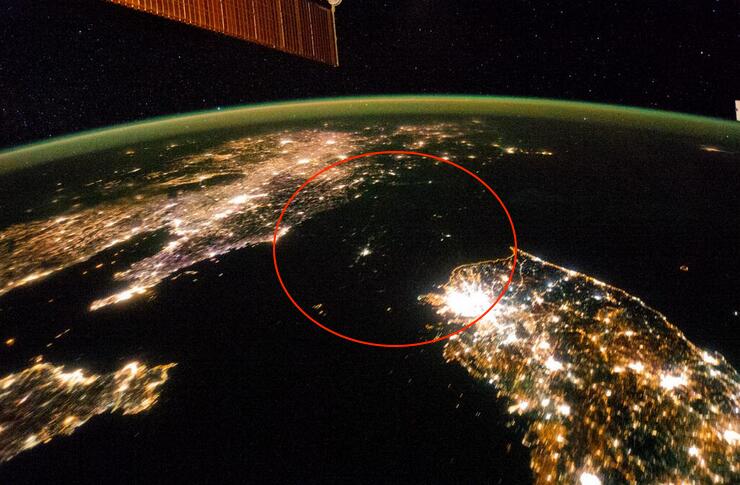
Here’s a photograph of one of the greatest, and longest-running tragedies of our time.

No, that’s not a stretch of water in the red circle.  That’s North Korea, at night, blacked out by a lack of electrical lights.

Tweetpic from the Washington Post: North Korea looks like a sea of misery in this photo from space http://wapo.st/1c1B84q  via @KnowMoreWP pic.twitter.com/nB3g8fa63Q

Tweetpic from the Washington Post: North Korea looks like a sea of misery in this photo from space http://wapo.st/1c1B84q via @KnowMoreWP pic.twitter.com/nB3g8fa63Q

It’s a photo from the International Space Station taken in January.

The KnowMore blog from the Post describes the tragedy, and points to even more disturbing stories:

North Korea appears as nothing more than a shadow in the above photograph, taken at night aboard the International Space Station last month. South Korea’s eastern coastline is indistinguishable from the demilitarized zone along the border with the North, as though the Sea of Japan flowed into the Yellow Sea and Pyongyang were an island in a strait separating South Korea from China.

North Korea’s interior is nearly invisible from orbit at night, just as what happens inside the country on a day-to-day basis is largely invisible to the outside world. U.N. investigators managed to shine a little light into North Korea’s darkest corners last month.  [Click here to get to the U.N. report]

I’ve used similar photos in class.  It’s a powerful exercise.  North Korea is as dark as undeveloped and largely unpopulated areas of the Congo River Basin, the Australian Outback, the Arabian Peninsula’s “Empty Quarter,” and almost as dark as Antarctica.

No doubt stargazing is good in some of those dark spots in North Korea.  This is one case where the absence of light pollution does NOT indicate good planning, but instead an amazing paucity of rational development.


Carbon dioxide(CO²) emissions since 1820, Rosling visualization

February 23, 2014

Monthly average atmospheric carbon dioxide concentration at Mauna Loa Observatory, Hawaii (CDIAC)

Monthly average atmospheric carbon dioxide concentration at Mauna Loa Observatory, Hawaii (CDIAC)

Gee, while we’re exploring Hans Rosling‘s and Gapminder’s videos at Vimeo, let’s take a look at the animated chart showing CO² emissions since 1820.

Anything we can learn there?

What did we learn?

  • CO² emissions from humans rose a lot after the start of the industrial revolution
  • When nations industrialize, CO² output rises dramatically (But, what’s with Brunei? Flaring of oil wells?)

What else?

More:

Use this quiz to introduce subjects such as global health, the effects of HIV, population growth and carbon dioxide emissions, or as starting point to discuss what development is. What do the indicators in these quizzes say about the world?

Gapminder quiz on global development: “About the Quiz/Teacher’s guide Use this quiz to introduce subjects such as global health, the effects of HIV, population growth and carbon dioxide emissions, or as starting point to discuss what development is. What do the indicators in these quizzes say about the world?”


Hans Rosling says “Don’t Panic!” Defusing the population bomb?

February 23, 2014

Yes, that famous Rosling guy with the bouncing bubble, animated charts from TEDS.

TEDS star Hans Rosling, not in over his head.

TEDS star Hans Rosling, not in over his head.

Why not panic?  Rosling’s group, Gapminder, explains:

The world might not be as bad as you might believe!

Don’t Panic – is a one-hour long documentary produced by Wingspan Productions and broadcasted on BBC on the 7th of November 2013.

The visualizations are based on original graphics and stories by Gapminder and the underlaying data-sources are listed here.
Hans’s — “All time favorite graph”, is an animating bubble chart which you can interact with online here and download offline here.

Hans presents some results from our UK Ignorance Survey described here.

Director & Producer; Dan Hillman, Executive Producer: Archie Baron. ©Wingspan Productions for BBC, 2013.    A DVD version of this film is available to order from Wingspan Productions.

Alas, we can’t embed the film.  You must view the video — for free — at the Gapminder site, here.


Photography as an instrument of history: Ukraine’s Independence Square

February 21, 2014

Tweet from the Wall Street Journal shows, in very dramatic form, how photographs can be used to record history and current events, telling a story that words just cannot.

 WSJ Wall Street Journal - #Ukraine's Independence Square: then and now http://on.wsj.com/1d9q7IL  pic.twitter.com/vzqPKj79Cb

WSJ Wall Street Journal – #Ukraine’s Independence Square: then and now http://on.wsj.com/1d9q7IL pic.twitter.com/vzqPKj79Cb

In Ukraine, there’s an enormous difference between 2009 and 2014.  In five years, Kiev is a different city.

Do we attribute the differences to corrupt government, to the assault on democratic institutions, or to the movement to end the corruption and boost democracy?

It’s more impressive that I can show in a link here; at the WSJ site, the two photos are interactive — you can grab the middle line with your mouse and move it to see the damage in 2014.  Check it out.

Are there similar photographic comparisons for Syria, Egypt, Yemen, Venezuela, Brazil, China, Britain, the United States?  If you know of some, or if you have created some, will you share?


Annals of Global Warming: January 2014 ranks 4th warmest January since 1880

February 21, 2014

Wonk Blog at the Washington Post headlined,

Last month was one of the warmest Januaries ever. No, really

And so it was.

Caption from AGU Blog: This is why the global temperature is not taken in your backyard in January. When you average the entire globe for an entire year, a much different picture emerges. NASA Aqua satellite image of a cold and snowy Mid-Atlantic Wednesday morning.

Caption from AGU Blog: This is why the global temperature is not taken in your backyard in January. When you average the entire globe for an entire year, a much different picture emerges. NASA Aqua satellite image of a cold and snowy Mid-Atlantic Wednesday morning.

Information from the National Climatic Data Center (NCDC) of NOAA:

Global Highlights:

  • The combined average temperature over global land and ocean surfaces for January was the warmest since 2007 and the fourth warmest on record at 12.7°C (54.8°F), or 0.65°C (1.17°F) above the 20th century average of 12.0°C (53.6°F). The margin of error associated with this temperature is ± 0.08°C (± 0.14°F).
  • The global land temperature was the highest since 2007 and the fourth highest on record for January, at 1.17°C (2.11°F) above the 20th century average of 2.8°C (37.0°F). The margin of error is ± 0.18°C (± 0.32°F).
  • For the ocean, the January global sea surface temperature was 0.46°C (0.83°F) above the 20th century average of 15.8°C (60.5°F), the highest since 2010 and seventh highest on record for January. The margin of error is ± 0.04°C (± 0.07°F).

Introduction:

Temperature anomalies and percentiles are shown on the gridded maps below. The anomaly map on the left is a product of a merged land surface temperature (Global Historical Climatology Network, GHCN) and sea surface temperature (ERSST.v3b) anomaly analysis developed by Smith et al. (2008). Temperature anomalies for land and ocean are analyzed separately and then merged to form the global analysis. For more information, please visit NCDC’s Global Surface Temperature Anomalies page. The January 2014 Global State of the Climate report includes percentile maps that complement the information provided by the anomaly maps. These maps on the right provide additional information by placing the temperature anomaly observed for a specific place and time period into historical perspective, showing how the most current month, season, or year-to-date compares with the past.

Temperatures:

In the atmosphere, 500-millibar height pressure anomalies correlate well with temperatures at the Earth’s surface. The average position of the upper-level ridges of high pressure and troughs of low pressure—depicted by positive and negative 500-millibar height anomalies on the January 2014 map—is generally reflected by areas of positive and negative temperature anomalies at the surface, respectively.

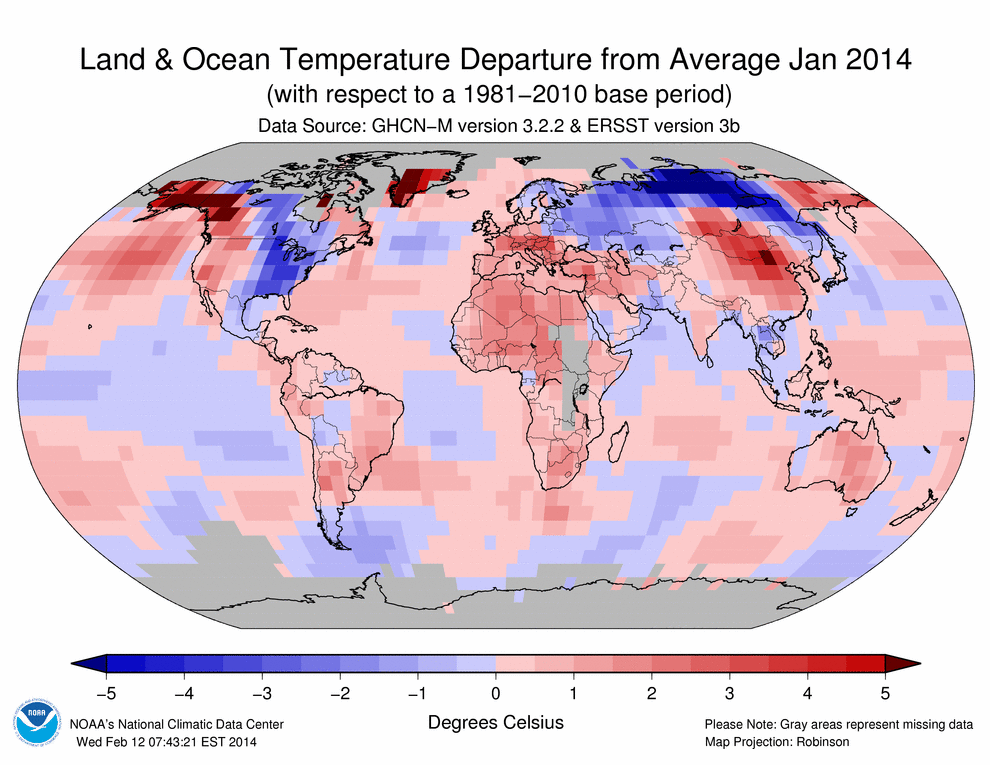
January 2014 Blended Land and Sea Surface Temperature Anomalies in degrees Celsius

January 2014 Blended Land and Sea Surface Temperature Anomalies in degrees Celsius

January 2014 Blended Land and Sea Surface Temperature Percentiles

January 2014 Blended Land and Sea Surface Temperature Percentiles

The combined global land and ocean average temperature during January 2014 was 0.65°C (1.17°F) above the 20th century average. This was the warmest January since 2007 and the fourth highest since records began in 1880. This marks the ninth consecutive month (since May 2013) with a global monthly temperature among the 10 highest for its respective month. The Northern Hemisphere land and ocean surface temperature during January 2014 was also the warmest since 2007 and the fourth warmest since records began in 1880 at 0.75°C (1.35°F) above average. The Southern Hemisphere January 2014 temperature departure of +0.55°C (+0.99°F) was the warmest since 2010 and the fourth warmest January on record.

During January 2014, most of the world’s land areas experienced warmer-than-average temperatures, with the most notable departures from the 1981–2010 average across Alaska, western Canada, Greenland, Mongolia, southern Russia, and northern China, where the departure from average was +3°C (+5.4°F) or greater. Meanwhile, parts of southeastern Brazil and central and southern Africa experienced record warmth with temperature departures between 0.5°C to 1.5°C above the 1981–2010 average, contributing to the highest January Southern Hemisphere land temperature departure on record at 1.13°C (2.03°F) above the 20th century average. This was also the warmest month for the Southern Hemisphere land since September 2013 when temperatures were 1.23°C (2.21°F) above the 20th century average. Some locations across the globe experienced departures that were below the 1981–2010 average. These areas include the eastern half of the contiguous U.S., central Canada, and most of Scandinavia and Russia. The most notable cold anomalies were in Russia, where in some areas the departure from average was 5°C (9°F) below average. Overall, the Northern Hemisphere land surface temperature was 1.17°C (2.11°F) above average—the warmest January since 2007 and the fourth warmest since records began in 1880.

Select national information is highlighted below. (Please note that different countries report anomalies with respect to different base periods. The information provided here is based directly upon these data):

  • France’s nationally-averaged January 2014 temperature was 2.7°C (4.9°F) above the 1981–2010 average, tying with 1988 and 1936 as the warmest January on record.
  • Spain experienced its warmest January since 1996 and the third warmest since national records began in 1961, with a temperature of 9°C (48.2°F) or 2°C (3.6°F) above the 1971–2000 average.
  • The January temperature in Switzerland was 2.4°C (4.3°F) above the 1981–2010 average—the fifth warmest January since national records began 150 years ago.
  • Austria experienced its fifth warmest January since national records began in 1768. The nationally-averaged temperature was 3.3°C (5.9°F) above the 1981–2010 average. However, in some regions across the southern parts of the country, the temperatures were the highest on record. In Klagenfurt, the temperature departure was 5°C (9°F)—the highest since January 1813.
  • China, as a whole, recorded an average temperature of -3.4°C (25.9°F) or 1.6°C (2.9°F) above average during January 2014. This was the second highest January value, behind 2002, since national records began in 1961.
  • In Argentina, persistence of extremely high temperatures across central and northern parts of the country resulted in several locations setting new maximum, minimum, and mean temperature records for the month of January.
  • Warm temperatures engulfed much of Australia during January 2014. Overall, the national average mean temperature was 0.91°C (1.64°F) above the 1961–1990 average. This was the 12th highest January temperature since national records began in 1910. Regionally, the January 2014 temperature ranked among the top 10 warmest in Queensland, Victoria, and South Australia.

Across the oceans, temperature departures tend to be smaller than across the land surfaces. According to the percentiles map, much-warmer-than-average conditions were present across parts of the Atlantic Ocean, the northeastern and western Pacific Ocean, and parts of the Indian Ocean. Record warmth was observed across parts of the northern Pacific Ocean (south of Alaska), parts of the western Pacific Ocean, south of South Africa, and across parts of the Atlantic Ocean. Overall, the global ocean surface temperature in January was +0.46°C (+0.83°F)—the warmest since 2010 and the seventh warmest on record.

More at the NCDC/NOAA site.

Warming denialists will scream about these data.

More:


Lightning strike in Monument Valley, Navajo Nation

February 20, 2014

Lightning strikes in Monument Valley, on the Navajo Reservation, Utah.  Photography by Carolyn Slay (Oak Ridge, TN); Monument Valley, UT

Lightning strikes in Monument Valley, on the Navajo Reservation, Utah. Photography by Carolyn Slay (Oak Ridge, TN); Monument Valley, UT Feb. 20 2014 Via smithsonianmag.com.

Lightning strike in Monument Valley, photo by Carolyn Slay of Oak Ridge, Tennessee; Smithsonian Magazine Tumblr Photo of the Day, February 20, 2014.

Rocks on the right can also be seen in this photo; can you help pinpoint the location of the photographer, and names of any of the other formations?


Birds know better

February 19, 2014

[Species?] on a sign; distributed by USFWS; photo by Allie Stewart.

Eastern phoebe on a sign; distributed by USFWS; photo by Allie Stewart.

Borrowed from the Facebook page of USFWS Southeast Region:

This one is for the birds, or should we say bird watchers! In 2011 there were 47 million birders who generated $107 billion in industry output, 660,000 jobs and $13 billion in local, state and federal tax revenue. Take a look our birding report to learn more: http://1.usa.gov/1d0W06i (Photo: Allie Stewart)

More:


No, the Fed has NOT discouraged saving

February 19, 2014

Fed can’t explain it, but, no, low interest rates appear not to have discouraged savings.  Tea Party catastrophe mongers won’t change their claims, though, I’ll bet.

Do they even look at the facts?

http://twitter.com/RexNutting/status/434364071568093184

Also:  No, the Fed is not “flooding the nation with increased money supply.”

According to Rex Nutting at MarketWatch:

According to Rex Nutting at MarketWatch: “The Fed is not flooding the economy with money. The growth of the money supply has actually slowed since the adoption of QE3. Yes, the Fed has conjured about $1 trillion in the past year to buy super-safe Treasury and mortgage-backed bonds from the private sector in a bid to force investors to put their money into riskier investments that will help the economy grow a bit faster.

Nutting’s column at MarketWatch is worth the read just for the links he provides to documents that explain what the Fed does and how the economy works — documents that appear beyond the reading and perhaps beyond the ken of far too many critics of the Fed and actions we need to take to get to robust economy.

(Why, yes, Nutting is a veteran of the Daily Utah Chronicle and Utah’s journalism program.  Why do you ask?)


February 18, 1885: Twain’s novel Huck Finn, published in the U.S.

February 18, 2014

Today is the 129th anniversary of the U.S. publication of Mark Twain’s Adventures of Huckleberry Finn, another installment in the novelization with great embellishment of the childhood of Samuel Clemens in Hannibal, Missouri, before the Civil War.  Earlier installments included The Adventures of Tom Sawyer.  

Cover and binding of the first edition of Mark Twain's The Adventures of Huckleberry Finn. Wikipedia image

Cover and binding of the first edition of Mark Twain’s The Adventures of Huckleberry Finn. Mark Twain was the pen name of Samuel L. Clemens. Wikipedia image

It is THE great American novel. It is the novel in which America faces its coming-of-age, in the metaphysical ramblings of a 13-year-old boy in the dark, on a raft in the Mississippi River, with an escaped slave who is a good friend, and has saved his life. Huck Finn confronts reality: Should he do what the preachers say to do, or should he do the moral thing instead?

America, most of it, grew up with that realization, coming even as it did, a generation after the Emancipation Proclamation.

In a good school, one probably unaffected by the damage done to learning by George Bush’s “No Child Left Behind Act,” nor more recent purges of quality in the classroom such as “value-added teaching,” “Racing to the Top,” or Common Core State Standards or the folderol conservative backlash against education in general, Tom Sawyer is often a child’s introduction to Twain, and to book-length literature.

In my youth, Tom Sawyer was so popular with teachers, and reading aloud by teachers was considered such a great idea, I think I heard the book three times. I know Mrs. Eva Hedberg, in my third grade class in Burley, Idaho, read parts of it.  My recollection is that Mrs. Elizabeth Driggs and Mr. Herbert Gilbert both read it to us, in fourth and fifth grade, in Pleasant Grove, Utah.  (There were other books; I think I heard five of the Laura Ingalls Wilder books between those three teachers.  Reading was golden to them. Mrs. Hedberg even gave me credit for reading encyclopedia, cover to cover, with each letter of the alphabet counted as a book. Our World Book volume for the letter S had disappeared; I’ve never been good at snakes.)

Twain once remarked that he didn’t think a youth could read the Bible and ever draw a clean, fresh breath of air again.  Tom Sawyer can similarly haunt the life of a person, though generally to higher moral standards.

I had hoped they’d continue to The Adventures of Huckleberry Finn.  When they didn’t, I borrowed it from the Pleasant Grove Junior High Library and read it through.  I read it in the middle of the modern civil rights struggle, between 1963’s horrors and the Voting Rights Act of 1965, just as our Vietnam tragedy was really ramping up.

Wait. I remember Mr. Gilbert being stopped by a question on Huck’s father, Pap. This was in Deep Mormonia, in Utah County. Pap drank a bit. Well, that’s not accurate. Pap drank to excess, often. Most of my fellow students had no knowledge of the drinking of alcohol. Their parents didn’t drink, not in front of the children if they did, since imbibing alcohol was a violation of the LDS Church’s Word of Wisdom, a commandment that they treat their bodies as temples, not as amusement parks.  That bodily purity rule put alcohol, tobacco and caffeine off-limits. Most of the parents simply didn’t drink. It would have put sugar off-limits, too, had there been enough sugar to abuse as late-20th century America did. Also, there was the issue of the LDS Church having significant holdings in the U & I Sugar Company (Utah and Idaho), which made sugar from beets, and blessed the church with a significant stream of income, from the Coca-Cola bottlers alone. But I digress.

Maybe we did hear some of Huck Finn.  I didn’t hear all of it — mumps, or something.  And I checked it out on my own later.

One line jumped out at me from the start.  It is a powerful lesson in government and democracy.

In the course of the novel, Huck falls in with a couple of crooks, the Duke and the King.  They make their swindles in land deals on lands to which they don’t have title.

In Chapter XXVI (26), Huck accompanies the two swindlers to an orphanage of sorts.  The duke and the king decide to sell the orphanage, and leave town before their purchasers discover the sales are frauds.  Early on in their hustings they collect a bag of gold. Then Huck sits down to dinner with one of the girls at the place, and he meets a few others who all treat him rather kindly, and in the course of an hour or two he begins to have second thoughts, fearing for the fate of the orphans.

Meanwhile with investments coming in so fast, the duke and the king ponder leaving town earlier than planned, with at least the bag of gold, fearing they might be discovered.   In the course of their conversation, overheard by Huck hiding in the room, the king works to convince the duke that most of the town’s people remain bamboozled:

Well, the king he talked him blind; so at last he give in, and said all right, but said he believed it was blamed foolishness to stay, and that doctor hanging over them.  But the king says:

“Cuss the doctor!  What do we k’yer for him?  Hain’t we got all the fools in town on our side?  And ain’t that a big enough majority in any town?”

Savor that one, and let it sink in for a bit. “Hain’t we got all the fools in town on our side? And ain’t that a big enough majority in any town?”

James Madison and Thomas Jefferson trafficked in democratic institutions at a metaphysical level, understanding men were no angels, as Madison put it, but with a bit of education a people should be able to rule themselves as well as, or better than, a tiny elite, even if that elite were educated.  But they understood at the wholesale political level that a check was necessary on the people; in 1822 Madison defended free public education in a letter:

A popular Government, without popular information, or the means of acquiring it, is but a Prologue to a Farce or a Tragedy; or perhaps both.  Knowledge will forever govern ignorance.  And a people who mean to be their own governours, must arm themselves with the power which knowledge gives.

In Huck Finn, just over a half-century later, Twain was writing about applied politics, the theory, not the hypothesis, on a retail level.  Without education for the masses, the group who cynically bamboozles for money or power wins once they’ve got every fool in town on their side.

We have a political system that is more subject to corruption due to lack of education than lack of money.

To an honest politician, this is a huge burden.  You won the election?  You got the vote of every fool in town?  Then it’s up to you to act wisely, despite their foolishness.  Robert Redford’s character in “The Candidate” pulls an upset win in a U.S. Senate race — the film closes with the candidate, rather scared, sitting down with the party-provided campaign advisor, and asking in all earnestness:  “What do we do now?”

Happy anniversary, Huck Finn.  Perhaps we should fly the flag today in honor of the publication of the book.  We would fly it a bit nervously, perhaps.

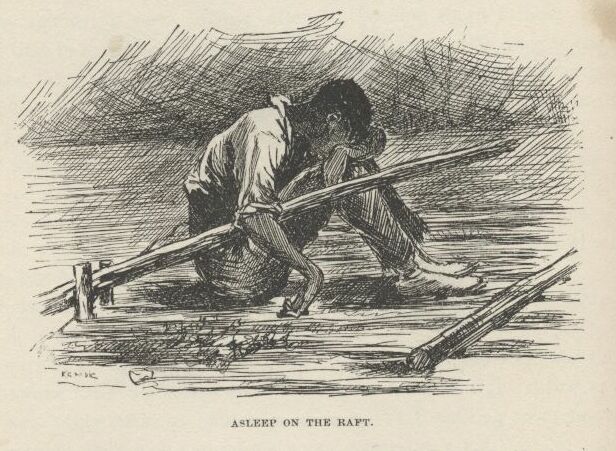
Illustration by E. W. Kemble,  from The Adventures of Huckleberry Finn

“Asleep on the raft” — Illustration by E. W. Kemble, from The Adventures of Huckleberry Finn

Twain himself hired E. W. Kemble to illustrate the first edition.

Save


Presidents Day 2014: Fly your flag today

February 17, 2014

Come on, you didn’t really need me to remind you, did you? It’s Presidents’ Day on most calendars, though the official U.S. holiday is Washington’s Birthday.

You’re already flying your flag today, right?  Let’s recapitulate from last year

Dr. Bumsted reminds us we need to emphasize that the federal holiday is Washington’s Birthday, not a day to honor presidents generically.  See the explanation from the U.S. National Archives.

Presidents Day is February 17, 2014 — fly your U.S. flag today.

National Park Service photo, Lincoln Memorial through flags at Washington Monument

The Lincoln Memorial, seen through flags posted at the Washington Monument, Washington, D.C.; National Park Service Photo via About.com

Oddly enough, some controversy arises from time to time over how to honor President Washington and President Lincoln, and other presidents.  Sometimes the controversy simmers over how to honor great Americans — if Lincoln deserves a day, why not FDR?  Why not Jefferson? — and sometimes the controversy covers more mundane ground — should the federal government give workers a day off?  Should it be on a Monday or Friday to create a three-day weekend to boost tourism?  About.com explains the history of the controversy:

Presidents’ Day is intended (for some) to honor all the American presidents, but most significantly George Washington and Abraham Lincoln. According to the Gregorian or “New Style” calendar that is most commonly used today, George Washington was born on February 22, 1732. But according to the Julian or “Old Style” calendar that was used in England until 1752, his birth date was February 11th. Back in the 1790s, Americans were split – some celebrated his birthday on February 11th and some on February 22nd.

When Abraham Lincoln became president and helped reshape our country, it was believed he, too, should have a special day of recognition. Tricky thing was that Lincoln’s birthday fell on February 12th. Prior to 1968, having two presidential birthdays so close together didn’t seem to bother anyone. February 22nd was observed as a federal public holiday to honor the birthday of George Washington and February 12th was observed as a public holiday to honor Abraham Lincoln’s birthday.

In 1968, things changed when the 90th Congress was determined to create a uniform system of federal Monday holidays. They voted to shift three existing holidays (including Washington’s Birthday) to Mondays. The law took effect in 1971, and as a result, Washington’s Birthday holiday was changed to the third Monday in February. But not all Americans were happy with the new law. There was some concern that Washington’s identity would be lost since the third Monday in February would never fall on his actual birthday. There was also an attempt to rename the public holiday “Presidents’ Day”, but the idea didn’t go anywhere since some believed not all presidents deserved a special recognition. [Take THAT you Franklin Pierce and Millard Fillmore fans!]

Even though Congress had created a uniform federal holiday law, there was not a uniform holiday title agreement among the individual states. Some states, like California, Idaho, Tennessee and Texas chose not to retain the federal holiday title and renamed their state holiday “President’s Day.” From that point forward, the term “Presidents’ Day” became a marketing phenomenon, as advertisers sought to capitalize on the opportunity for three-day or week-long sales.

In 1999, bills were introduced in both the U.S. House (HR-1363) and Senate (S-978) to specify that the legal public holiday once referred to as Washington’s Birthday be “officially” called by that name once again. Both bills died in committees.

Today, President’s Day is well accepted and celebrated. Some communities still observe the original holidays of Washington and Lincoln, and many parks actually stage reenactments and pageants in their honor. The National Park Service also features a number of historic sites and memorials to honor the lives of these two presidents, as well as other important leaders.

Fly your flag, read some history, enjoy the day.

More, Resources, and Related Articles:

English: Air Force One, the typical air transp...

President’s airplane, Air Force 1, flying over Mount Rushmore National Monument, in South Dakota – Image via Wikipedia; notice, contrary to Tea Party fears, the bust of Obama is not yet up on Rushmore (and also note there remains no room for another bust).

Yes, this is mostly an encore post.  This event occurs every year.


Millard Fillmore: Ready for his closeup with CBS Sunday Morning?

February 16, 2014

Millard Fillmore as

Millard Fillmore as “Bad President,” by jimmyemery at deviantart. How will Mo Rocca’s story portray Fillmore?

If other news doesn’t interfere, Millard Fillmore is scheduled to get a Presidents Day treatment from reporter and humorist Mo Rocca, on CBS’s “Sunday Morning with Charles Osgood,” on February 16.

What a fine collision!  Fillmore’s story is really pretty good.  Osgood and Sunday Morning are top of the genre.  Rocca is smart, and often funny.  Even if they perform below their par, the segment should be enlightening.

Blogging for the venerable Buffalo News, TV writer and critic Alan Pergament gives more details:

If you’re tired of me telling you how wonderful “CBS Sunday Morning” with Charles Osgood is, better look away now.

Correspondent Mo Rocca — whose chicken wing piece ran on Super Bowl Sunday — is back again this Sunday with a piece on President Millard Fillmore.

Rocca visited the Fillmore home in East Aurora on the same week he was here to sample chicken wings.

According to a CBS spokesperson, Rocca explains in the piece “why Fillmore should be remembered for more than just his unusual name.”

The spokesperson added that University at Buffalo professor Claude Welch is one of the experts that Rocca spoke to “about what made the 13th president stand out.”

“Sunday Morning” airs at 9 a.m. Sundays on Channel 4, the local CBS affiliate.

The timing of the Fillmore piece makes sense since this is President’s Day weekend.

Prof. Welch delivered the annual address at Fillmore’s grave this year, on Fillmore’s birthday, January 7 (delayed a couple of days this year because of cold and snow).

“Sunday Morning” runs from 8:00 to 9:30 a.m. on KTVT, Channel 11, in Dallas.  I’ll be ringing bells, and I’ll have to record the show.  Check your local schedule. 

You could do worse on Presidents Day Eve than to learn something more about Fillmore, arguably the man who set up World War II in the Pacific.

That’s something even H. L. Mencken didn’t blame Fillmore for.