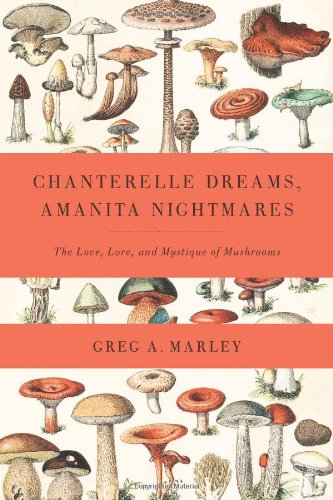
Cover of Chanterelle Dreams, Amanita Nightmares, by Greg Marley
Saturday, October 30 from 4-6:00 pm
at Farmers Fare on Route 90 in Rockport [Maine]
Light refreshments served and beverages available
Chanterelle Dreams, Amanita Nightmares: The Love, Lore and Mystique of Mushrooms
Welcome a new book by Greg Marley, celebrating the wonder and mystery of mushrooms. Enjoy a readable, captivating and informative collection of great mushroom stories. From world-class edibles (with recipes) to the most deadly, learn about the mushrooms in your neighborhood and how to invite them into your life, or even how to grow your own.
Hey, if you’re in the neighborhood, drop in.
Spread the word; friends don't allow friends to repeat history.
I almost never remember on time: September 8 is International Literacy Day, a day designated by the United Nations to celebrate literacy.
From the Dag Hammerskjöld Library:
Literacy is a cause for celebration since there are now close to four billion literate people in the world. However, literacy for all – children, youth and adults – is still an unaccomplished goal and an ever moving target. A combination of ambitious goals, insufficient and parallel efforts, inadequate resources and strategies, and continued underestimation of the magnitude and complexity of the task accounts for this unmet goal. Lessons learnt over recent decades show that meeting the goal of universal literacy calls not only for more effective efforts but also for renewed political will and for doing things differently at all levels – locally, nationally and internationally.
In its resolution A/RES/56/116, the General Assembly proclaimed the ten year period beginning 1 January 2003 the United Nations Literacy Decade. In resolution A/RES/57/166, the Assembly welcomed the International Plan of Action for the Decade and decided that Unesco should take a coordinating role in activities undertaken at the international level within the framework of the Decade.
The additional resources links on this page are provided for information purposes only and do not necessarily represent an endorsement by the United Nations.
It’s fascinating to me that activities on International Literacy Day seem to be noted in out-of-the-way U.S. newspapers, and even there not much. Do Americans care about literacy, really?
I half expect the Texas State Board of Education to pass a resolution condeming literacy, since the UN worries about it.
Spread the word; friends don't allow friends to repeat history.
The pen didn’t kill the book. The typewriter didn’t kill the book. The pencil didn’t kill the book. Radio didn’t kill the book. Movies didn’t kill the book. Television didn’t kill the book. Telephone didn’t kill the book. Personal computers didn’t kill the book (much to the chagrin, perhaps, of the designers of the Apple Lisa — and if you remember that, and it’s coming with all the works of Shakespeare loaded on the harddrive, you’re older than your colleagues think you are).
In “A Dangling Conversation,” recorded in 1966 by Simon and Garfunkel, Paul Simon’s lyrics say, “We speak of things that matter/With words that must be said./’Can analysis be worthwhile?/Is the theatre really dead?'” Some other questions are similarly and equally unstuck in time, and I think “Is the book dead?” is one of them.
So long as there are books, and readers who demand books, there is a need for a bookstore. They may move to our libraries, but we’ll still need and want them.
Spread the word; friends don't allow friends to repeat history.
[From ARI’s monthly newsletter Impact, 06/2000]
“Ayn Rand, born Alisa Rosenbaum, based her professional first name on a Finnish one [see above]. The source of her last name, however, has been a mystery.
“Although its origin is still uncertain, recent biographical research by Drs. Allan Gotthelf and Michael Berliner has eliminated one possible source. An oft-repeated story claims that Ayn Rand took her last name from her Remington Rand typewriter while she was living in Chicago in 1926. This is false and we would like to put the error to rest.
“While still in Russia, c. 1925, and long before Remington-Rand typewriters were produced, Alisa Rosenbaum had adopted the name ‘Rand.’ Letters written in 1926 from Ayn Rand’s family in Russia already refer to the name ‘Rand.’ These were sent from Russia before Ayn Rand had communicated from America. The Remington and Rand companies did not merge until 1927; ‘Rand’ did not appear on their (or any) typewriters until the early 1930s.
“One lead to the actual source of the name comes from Ayn Rand herself. In 1936, she told the New York Evening Post that ‘Rand is an abbreviation of my Russian surname.’ Originally, we thought that this was a red herring in order to protect her family from the Soviet authorities.
“In 1997 Dr. Berliner noted an interesting coincidence when looking at a copy of Miss Rand’s 1924 university diploma. On the diploma was the name Rosenbaum in the Cyrillic alphabet:
The last three letters clearly look like the Roman letters ‘ayn.’ Richard Ralston then noticed that by covering those letters—and dropping out the second and fourth letters—what remains bears a strong resemblance to the Roman letters ‘Rand.’
“Although far from certain, it appears that the quote in the New York Evening Post may not have been a decoy.”
Her most often used typewriter was a Remington, I’ve read (but can’t find a reference now that I need it). So far as I have found, however, typewriters were always manufactured under the “Remington” marque, and never as “Remington-Rand.” Contrary to the implications from the ARI, Remington typewriters were produced from Reconstruction times (circa 1870), originally by the Remington Arms company. Typewriter manufacturing was spun off from the arms producer in 1886; that company merged with Rand, forming Remington-Rand in 1927.
Spread the word; friends don't allow friends to repeat history.
These different cultures foster different types of learning. The great essayist Joseph Epstein once distinguished between being well informed, being hip and being cultivated. The Internet helps you become well informed — knowledgeable about current events, the latest controversies and important trends. The Internet also helps you become hip — to learn about what’s going on, as Epstein writes, “in those lively waters outside the boring mainstream.”
But the literary world is still better at helping you become cultivated, mastering significant things of lasting import. To learn these sorts of things, you have to defer to greater minds than your own. You have to take the time to immerse yourself in a great writer’s world. You have to respect the authority of the teacher.
Right now, the literary world is better at encouraging this kind of identity. The Internet culture may produce better conversationalists, but the literary culture still produces better students.
It’s better at distinguishing the important from the unimportant, and making the important more prestigious.
Evidence of mosquito resistance to the drug has been recently reported.
Shah is skeptical of a surge of private charity that emphasizes the use of mosquito nets following the decline of government-led anti-malaria programs in the 1990s. Acknowledging the contributions of Bill Gates and former Presidents George W. Bush and Bill Clinton, she lists Veto the ‘Squito, a youth-led charity; Nothing but Nets, an anti-malarial basketball charity; and World Swim Against Malaria. She quotes The New York Times as decrying “hip ways to show you care.”
Her own comment: “Just because something is simple doesn’t necessarily mean that people will do it.”
“(T)he schools, roads, clinics, secure housing and good governance that enable regular prevention and prompt treatment must be built,” she concludes. “Otherwise the cycle of depression and resurgence will begin anew; malaria will win, as it always has.”
Anti-environmentalists, anti-scientists, and other conservatives won’t like the book: It says we can’t beat malaria cheaply by just spreading a lot of poison on Africa and Africans.
Especially if you’re doing the noble thing and vacationing in the Gulf of Mexico in Alabama, or Mississippi, or Louisiana, you may want to read this. If you’re vacationing in the Hamptons, Martha’s Vinyard, or Cannes, buy several copies to pass out at dinner with your friends.
Jeffrey Robbins, a human character in the animated cartoon series, “The Gargoyles”
The written word is all that stands between memory and oblivion. Without books as our anchors, we are cast adrift, neither teaching nor learning. They are windows on the past, mirrors on the present, and prisms reflecting all possible futures. Books are lighthouses, erected in the dark sea of time.
I’ve lived with Wallace Stegner’s work since I first got to the University of Utah. Stegner was the biographer of Bernard DeVoto, whose works I read in a couple of different classes.
More important, Stegner wrote about the West and wild spaces and places, and how to save them — and why they should be saved.
In conjunction with the University of Utah, KUED is honoring alumni Wallace Stegner – the “Dean” of western writers. WALLACE STEGNER, a biographical film portrait, celebrates the 2009 centennial of his birth. Wallace Stegner was an acclaimed writer, conservationist, and teacher. He became one of America’s greatest writers. His books include the Pulitzer Prize-winning “Angle of Repose” and “Beyond the Hundredth Meridian.” His “The Wilderness Letter” became the conscience of the conservation movement. Wallace Stegner mentored a generation’s greatest writers including Ken Kesey, Edward Abbey, and Larry McMurtry. Former Supreme Court Justice Sandra Day O’Connor was a student.
It’s difficult to tell from the photo, but his typewriter here looks a lot like a Royal.
The Writers Room is a non-profit that offers cheap working space to writers. In the old days, that meant a desk and a chair where a writer could use a legal pad and write longhand, or put a typewriter down to type a manuscript.
In 2010, there was just one guy left using a typewriter. Everyone else had switched to computers. Boing Boing said:
Greenwich Village’s Writers Room, a low-cost place for writers to rent workspace, has banned mechanical typewriters from its premises, giving Skye Ferrante, the sole remaining typewriter user the choice of switching to a laptop or going elsewhere. He’s not going to switch. Ferrante’s been using the Writers Room for six years, and is distressed at the news that he’s got to leave.
Skye Ferrante at his 1929 Royal typewriter - now banned from the Writers Room - photo by Hagen for New York Daily News
“I was told I was the unintended beneficiary of a policy to placate the elderly members who have all since died off,” said Ferrante, a Manhattan native who’s writing children’s books. “They offered me a choice to switch to a laptop or refund my money, which to me is no choice at all.”
Ferrante was peeved, but not completely surprised.
A growing number of scowls had replaced the smiles that once greeted the arrival of his black, glass-key typewriter.
“The minute the sign came down, I realized there was antagonism from some of the new members,” he said. “They gave me an attitude when they saw me setting up the typewriter.”
Ferrante’s connection to typewriters runs deep. He owns at least five of the old-school machines, his devices of choice since his teens.
“There’s a different commitment when you know you’re making a mark on the page, when you strike a key and bleed ink on the page,” he said.
When evolutionists study these worldwide resistance movements, they see four classes of adaptations arising, because an insect under attack has four possible routes to survival.
Jonathan Weiner, author of The Beak of the Finch, a story of evolution in our time
First, it can simply dodge. Strains of malarial mosquitoes in Africa used to fly into a hut, sting someone, and then land on the hut wall to digest their meals. In the 1950s and 1960s health workers began spraying hut walls with DDT. Unfortunately in every village there were always a few mosquitoes that would fly in through the window, bite, and fly right back out. Millions of mosquitoes died, but these few survived and multiplied. Within a short time almost all of the mosquitoes in the villages were hit-and-run mosquitoes.
Second, if an insect cannot dodge, it can evolve a way to keep the poison from getting under its cuticle. Some diamondback moths, if they land on a leaf that is tainted with pyrethroids, will fly off and leave their poisoned legs behind, an adaptive trick known as “legdrop.”
Third, if the insect can’t keep the poison out, it may evolve an antidote. A mosquito species called Culex pipiens can now survive massive doses of organophosphate insecticides. The mosquitoes actually digest the poison, using a suite of enzymes known as esterases. The genes that make these esterases are known as alleles B1 and B2. Many strains of Culex pipiens now carry as many as 250 copies of the B1 allele and 60 copies of the B2.
Because these genes are virtually identical, letter by letter, from continent to continent, it seems likely that they came from a single lucky mosquito. The mutant, the founder of this particular resistance movement, is thought to have lived in the 1960s, somewhere in Africa or Asia. The genes first appeared in Californian mosquitoes in 1984, in Italian mosquitoes in 1985, and in French mosquitoes in 1986.
Finally, if the insect can’t evolve an antidote,it can sometimes find an internal dodge. The poison has a target somewhere inside the insect’s body. The insect can shrink this target, or move it, or lose it. Of the four types of adaptations, the four survival strategies, this is the hardest for evolution to bring off — but [entomologist Martin] Taylor thinks this is how Heliothis [virescens, a cotton boll-eating moth] is evolving now.
“It always seems amazing to me that evolutionists pay so little attention to this kind of thing,” says Taylor. “And that cotton growers are having to deal with these pests in the very states whose legislatures are so hostile to the theory of evolution. Because it is evolution itself they are struggling against in their fields each season. These people are trying to ban the teaching of evolution while their own cotton crops are failing because of evolution. How can you be a creationist farmer any more?”
Night out for the boys — well, for Kenny and me — while Kathryn had some of the girls over.
Kenny introduced me to a Dallas sushi venue, Asian Mint. His appearing-to-be deep-fried Texas Roll was a pleasant, crunchy blend of oriental and Texas. The mango sauce added a sweet smoothness. My more standard tuna came with a little internal heat — the wasabi perfectly blended (Kenny is the one who doesn’t like horseradish heat, having somehow missed that gene from my grandfather).
We closed off the night at Half-Price Books, at the store on Northwest Highway fans and employees fondly deem “the mother ship.” (Years ago, across the street to the east, the store was in an old, converted restaurant which had a pirate’s ship inside; the store kept the ship as a kids’ reading area. Was that the origin of “mother ship?”)
Books? Today?
I don’t read enough. 20 years ago I found a study that said if you read one book a month, 12 books a year, you’re in the 99th percentile of readers.
The coffee mug with Einstein on it says “Coffee makes me smart.” Kenny, our family’s most-tech savvy early-adopter — a high commendation in a family where Mom and Dad have been in computers since mainframes were the way to go — agreed that it’s more likely books that make us smart. We don’t read enough, but we stay in the 99th percentile.
What an easy, easy way to get ahead! Get a book: Read it.
Michael D. Green, the real estate impresario for Murray Hill who formerly headed the Louis August Jonas Foundation when I had so much fun there, used to say that he was not educated, but he read the book reviews. Reading the book reviews would be better than not knowing. At a Manhattan cocktail party he could hold his ground with just about anyone. I’ve never found a topic on which he didn’t know something, usually cutting-edge. His book recommendations are always epiphanies.
Steve Schafersman sends along a press release; Texas college biology departments continue to advance science and education despite foggings from the State Board of Education. Odd thought: You can be relatively certain that you can avoid Don McLeroy, David Bradley or Cynthia Dunbar, by being at the Alkek Library Teaching Theatre on the evening of March 23; learning will be occurring there at that time, and so it is a cinch that the leaders of the Austin Soviet will not be there:
Evolution expert to deliver lecture at Texas State
SAN MARCOS — Jerry A. Coyne, professor in the Department of Ecology and Evolution at the University of Chicago, will present an evening talk and book signing at 7 p.m. Tuesday, March 23, at the Alkek Library Teaching Theatre on the campus of Texas State University-San Marcos.
Jerry Coyne and friend (image stolen from Larry Moran's Sandwalk; pretty sure he won't mind)
Admission is free and doors will open at 6:30 p.m. A book signing with light refreshments will take place following the lecture.
Coyne is an evolutionary biologist whose work focuses on understanding the origin of species. He has written more than 100 peer-reviewed scientific papers on the subject.
In addition, he is a regular contributor to The New Republic, the Times Literary Supplement, and other periodicals. He runs the popular Why Evolution is True blog, and is an internationally known defender of evolution and critic of creationism and intelligent design.
The book Why Evolution is Truehas received widespread praise for providing a clear explanation of evolution, while succinctly summarizing the facts supporting this revolutionary theory.
Coyne’s lecture is sponsored by the Department of Biology and the Philosophy Dialogue Series at Texas State. Contact Noland Martin (512) 245-3317 for more information. For more information about Coyne and his book, please visit his blog: http://www.jerrycoyne.uchicago.edu. [and Why Evolution is True]
This lecture is part of a larger series on philosophy and science, featuring a few lectures that appear designed solely to irritate P. Z. Myers:
Philosophy dialogue to take up evolution, identity
Texas State philosopher Jeffrey Gordon will be among the speakers at the university’s Philosophy Dialogue Series in the next two weeks. Texas State photograph.
STAFF REPORT
The Philosophy Dialogue Series at Texas State will present evolution and identity as its discussion topic for the next two weeks in Room 132 of the Psychology Building on campus.
Following is the schedule of events, giving the discussion titles, followed by the speakers.
March 16: 12:30 p.m. – Evolution and the Culture Wars, Victor Holk and Paul Valle (Dialogue students). 3:30 p.m. – Arabic Culture 101: What You Need to Know, Amjad Mohammad (Arabic Language Coordinator).
March 17: 2 p.m. – Phenomenology of Humor, Jeffrey Gordon (Philosophy)
March 18: 12:30 p.m. – Stayin’ Alive: Does the Self Survive? Blaze Bulla and Sky Rudd (Dialogue students).
March 19: 10 a.m. – Sustainability group, topic be announced, Laura Stroup (Geography). 12:30 p.m. – Talk of the Times, open forum.
March 23: 12:30 p.m. – Evolution: An Interdisciplinary Panel Discussion, Harvey Ginsberg (Psychology), Peter Hutcheson (Philosophy), Kerrie Lewis (Anthropology), Rebecca Raphael (Philosophy & Religious Studies). Special guest panelist, Jerry Coyne, University of Chicago (Evolutionary Biology). Evening lecture – Why Evolution is True, Jerry Coyne, University of Chicago, time and place to be announced.
March 25: 12:30 p.m. – Constructing a Masculine Christian Identity: Sex, Gender, and the Female, and Martyrs of Early Christianity, L. Stephanie Cobb, Hofstra University (Religion and Women’s Studies).
March 26: 10 a.m. – Sustainability Group: Civic Ecology, and The Human Rights of Sustainability, Vince Lopes (Biology), Catherine Hawkins (Social Work). 12:30 p.m. – Talk of the Times, open forum.
Sponsors of the Philosophy Dialogue Series include: the American Democracy Project, the College of Liberal Arts, Common Experience, the Gina Weatherhead Dialogue Fund, the New York Times, the National Endowment for the Humanities, Phi Sigma Tau, University Seminar, the University Honors Program, the Provost and Vice President for Academic Affairs and the Vice President for Student Affairs.
For more information about this topic, contact Beverly Pairett in the Department of Philosophy at (512) 245-2285, or email philosophy@txstate.edu. A complete schedule of discussion topics and presentations can be found at http://www.txstate.edu/philosophy/dialogue-series/Dialogue-Schedule.html.
Probably can’t make it to San Marcos from Dallas on a school night. San Marcos biology and social studies students, and teachers, should plan to be there.
Spread the word; friends don't allow friends to repeat history.
Or, until that account is unsuspended by the forces supporting Donald Trump: Follow @FillmoreWhite, the account of the Millard Fillmore White House Library
We've been soaking in the Bathtub for several months, long enough that some of the links we've used have gone to the Great Internet in the Sky.
If you find a dead link, please leave a comment to that post, and tell us what link has expired.
Thanks!
Retired teacher of law, economics, history, AP government, psychology and science. Former speechwriter, press guy and legislative aide in U.S. Senate. Former Department of Education. Former airline real estate, telecom towers, Big 6 (that old!) consultant. Lab and field research in air pollution control.
My blog, Millard Fillmore's Bathtub, is a continuing experiment to test how to use blogs to improve and speed up learning processes for students, perhaps by making some of the courses actually interesting. It is a blog for teachers, to see if we can use blogs. It is for people interested in social studies and social studies education, to see if we can learn to get it right. It's a blog for science fans, to promote good science and good science policy. It's a blog for people interested in good government and how to achieve it.
BS in Mass Communication, University of Utah
Graduate study in Rhetoric and Speech Communication, University of Arizona
JD from the National Law Center, George Washington University


 Posted by Ed Darrell





 Millard Fillmore's Bathtub