To aid researchers looking for news from Africa on malaria and DDT, I’ll reproduce the entire news story from Uganda’s New Vision here. Stories from this outlet frequently trouble me, in the unquestioning way writers take quotes from people where a more probing reporter might be more skeptical. I am not sure of the status of New Vision among Uganda’s media, but it’s one of the few available to us here on a regular basis.
So, here’s the story, on DDT usage to fight malaria. A couple of points we need to remember: First, it’s clear that DDT is not banned in Uganda, and that DDT usage goes on, despite the crocodile tears of Richard Tren, Roger Bate, and the Africa Fighting Malaria, Astroturf™ group; second, this story relates difficulties in using DDT, including cost. It’s not that the stuff itself is expensive. DDT doesn’t work on all mosquitoes anymore, and it’s dangerous to much other wildlife. Malaria fighters must do serious work in advance to be sure the populations of mosquitoes targeted will be reduced by DDT — that is, that the bugs are not immune to DDT — and care must be taken to control the applications, to be sure it’s applied in great enough concentrations, and only indoors, where it won’t contaminate the wild.
INDOOR residual spraying as a strategy to control malaria in Uganda is too costly and has affected the programme countrywide.
According to Dr. Seraphine Adibaku, the head of the Malaria Control Programme, this is why other malaria control strategies such as use of insecticide-treated nets and Artemisinin-based combination therapy are considered to be ahead of indoor residual spraying.
The Government is implementing the indoor residual spraying using pyrethrum-based and carbon-based insecticides in 10 malaria-endemic districts in the northern and eastern regions.
They include Amolatar, Apac, Kitgum, Kumi and Bukedea.
“About three million people in the 10 districts have been covered. We have reached over 90% of the population,” Adibaku said.
She added that under the Presidential Malaria Initiative, the budget for indoor residual spraying is sh4.5b per district each year.
Adibaku said it would be much cheaper if the ministry distributed insecticide-treated mosquito nets.
She, however, said indoor spraying has an advantage of delivering immediate impact compared to treated nets.
Adibaku disclosed that the health ministry is re-evaluating the effectiveness of using DDT for malaria control.
Dr. Joaquim Saweka, the World Health Organisation (WHO) resident representative in Uganda, said indoor residual spraying is highly effective and has been successful in Zanzibar and Rwanda.
He, however, added that it is capital intensive and needs a lot of money for each application done twice a year.
Saweka cited his previous posting in Ghana during which a town of 300,000 inhabitants required $3m for spraying each year.
He said with the high cost of spraying and low financial resources available, Uganda needs to prioritise usage of insecticide-treated mosquito nets.
Saweka added that Uganda is on the right path to eradicating malaria with efforts in prevention, diagnosis and treatment as well as universal coverage of insecticide-treated nets.
Health minister Dr. Richard Nduhura yesterday kicked off a nationwide programme to distribute 11,000 bicycles to health volunteers who will diagnose and treat malaria in homes. The programme is supported by the Global Fund.
It is part of the Government’s home-based management of malaria, which is part of a larger national strategy to deliver treatment to children within 24 hours after diagnosis.
Spread the word; friends don't allow friends to repeat history.
Here’s a cool breeze: Pest Away Exterminators in New York explains, patiently, that DDT no longer works against bedbugs, and is otherwise ill-advised in most applications.
It was highly effective when it was first introduced.
It nearly wiped out bed bugs in America.
It is NO LONGER effective in treating bed bugs.
It is more dangerous than people realized.
In 1939, DDT (Dichloro-Diphenyl-Trichloroethane) was introduced as the “miracle pesticide.” It was effectively used in military and civilian arenas to control lice, malaria, mosquitoes and bed bugs. It nearly wiped out all bed bugs in an allegedly “safe” method, but by the 1960’s, bed bugs had built up a resistance and potential immunity to DDT.
In 1962, Rachel Carson wrote Silent Spring, which essentially demonized DDT and helped launch the environmental movement. By 1972, DDT was banned in the USA, but DDT is still used very effectively in other countries to control Malaria. Although there is a public outcry to bring DDT back, it’s very unlikely that it would have any meaningful effect on controlling bed bugs.
Jeff Eisenberg founded the company in 1991, after a career with a large accounting firm. It appears his training on the importance of accuracy in numbers, and honesty in facing tough situations, carried over to his new business. Good on him.
Spread the word; friends don't allow friends to repeat history.
Who blames Rachel Carson, an environmentalist icon, because her crusading writings against DDT led to the ban of this insecticide in countries around the world — followed by a resurgence of malaria that killed, and continues to kill, millions of people in tropical Third World countries?
To which I responded:
Rachel Carson Homestead painting of Ms. Carson: “Rachel Carson, a child of the Allegheny Valley, was a writer and an ecologist. There have been great writers whose descriptions of natural history and stories of the natural world charm and delight readers; and there have been scientists whose work excites the public attention. Rachel Carson rises to a heroic stature because her conscience called for action, not only words.” (Painting by Minette Bickel)
Who blames Rachel Carson?
Only someone ignorant of malaria and DDT, or someone with a real political axe to grind.
Malaria did not “resurge” when DDT was banned on cotton crops in the U.S. The U.S. ban did not extend to Africa, and DDT has never been banned in Africa nor most of Asia.
Malaria deaths have declined steadily over the past 50 years, generally as DDT use was reduced. In 1959 and 1960, the peak years of DDT use, 4 million people died from malaria, worldwide. WHO cut back on DDT use in 1965 when mosquitoes began showing serious resistance and immunity to the stuff, but by 1972, when the U.S. banned agricultural use of DDT (but continued exports), about 2 million people died annually from malaria.
Today, largely without DDT, malaria deaths are down to under 900,000 — a 75% reduction in deaths from peak DDT use.
Instead, since 2000 we’ve been using integrated vector management (IVM) to hold mosquito populations down, and we’ve been using improved medical care to treat humans who have malaria. IVM and beefed up medical care was what Rachel Carson recommended in her book, Silent Spring, in 1962.
So, there is no cause-effect relationship between Ms. Carson and the U.S. ban on DDT, nor between that ban and malaria deaths. In fact, there are fewer malaria deaths now than when DDT was used irresponsibly.
Carson was right. It’s a good thing wise people listened to her.
Who knows what comments see the light of day over there?
How many times will conservative commentators of all stripes abuse the DDT/Rachel Carson story before they start getting it right? How much does that skew their views from the accurate and wise view?
Spread the word; friends don't allow friends to repeat history.
The extreme right-wing Heritage Foundation lashed out at health care workers and scientists fighting malaria in Africa and Asia for World Malaria Day, April 25 (HF’s post showed up on May 5). If these malaria fighters really were smart, HF’s Jane Abel wrote, they’d just poison Africa with DDT instead of protecting children with bednets and working to improve medical care. According to Abel, DDT is safe for everyone but mosquitoes, and more effective than anything else malaria fighters use — so they are stupid and venal, she asserts, for not using DDT.
Here’s her post:
Environmentalists celebrated World Malaria Day last week (and Earth Day the week prior). Meanwhile, thousands of African children died of malaria.
While these activists may make themselves feel like they’re saving the world, they are ignoring the best possible solution to Africa’s malaria problem: the use of DDT to wipe out the Anopheles mosquito.
Even though the World Health Organization resumed promotion of DDT in September 2006—realizing it had the best track record for saving the lives of 500 million African children—environmentalists are still emphasizing the use of bed nets instead. DDT treatments almost completely eradicated the disease in Europe and North America 50 years ago, but today an African child dies every 45 seconds of malaria.
Providing sub-Saharan Africans with bed nets has had far from acceptable success in delivering the amount of protection needed from mosquitoes. The World Bank touts the fact that 50 percent of children in Zambia are now sleeping under nets as a good thing, but what about the other half who are left defenseless against a killer disease? The Democratic Republic of the Congo had only 38 percent of children under nets in 2010.
One would question why, in the 21st century, people should have to live inside of a net in order to be safe from malaria. The world has a better solution, and it’s not the quarantine of African infants. Dr. John Rwakimari, as head of Uganda’s national malaria program, described DDT, which is nontoxic to humans, as “the answer to our problems.”
World Malaria Day 2011 had the theme of “Achieving Progress and Impact” and aims to have zero malaria deaths by 2015. If the world really wants to make progress and increase the number of lives saved from malaria, it needs to embrace for Africans the best possible technologies available today, and that means DDT.
Here’s my response, which I predict will not show up at HF’s blog in any form*:
DDT is toxic to humans — just not greatly and acutely so. Ms. Abel should be aware of recent studies that indicate even limited, indoor use of DDT in the end produces a death toll similar to malaria. But we digress on just one of the errors assumed by Ms. Abel.
Please do not forget that malaria is a parasite disease, and that mosquitoes are only the carriers of it. To truly eradicate malaria, we need to cure the humans — and if we do that, the mosquitoes do not matter. With no infected humans, mosquitoes have no well of disease to draw from. Without infected humans, mosquitoes cannot spread malaria.
Only 38 percent of children in Congo sleep under bednets? I’ll wager that’s twice the percentage of kids that were ever protected from malaria in Congo by DDT. In actual tests in Africa over the past decade, bednets have proven to reduce malaria by 50 to 85 percent; DDT, on the other hand, reduces malaria only 25 to 50 percent under the best conditions. If we have to go with one and not the other, bednets would be the better choice. Nets are much, much cheaper than DDT, too. DDT applications must be repeated every 6 months, at a cost of about $12 per application per house. Nets cost about $10, and they last five years. Nets protect kids for $2 a year, better than DDT; DDT protects kids for $24 a year (that’s 12 times the cost), but not as effectively as nets.
Also, it’s important to remember that DDT has never been banned in Africa. DDT non-use is much more a result of the ineffectiveness of DDT in many applications — why should we expect Africans to throw away hard-earned money on a pesticide that doesn’t work?
Finally, it’s also good to understand that, largely without DDT, malaria deaths are, today, at the lowest point in human history. Fewer than 900,000 people a year die from malaria today. That’s 25% of the death toll in 1960, when DDT use was at its peak.
Ms. Abel assumes that all Africans are too stupid to use DDT, though it might save their children. He states no reason for this assumption, but we should question it. If Africans do not use DDT, it may well be because the local populations of mosquitoes are not susceptible; or it could be because other solutions, like bednets, are more effective, and cheaper.
Ms. Abel has not made a case that DDT is the best solution to use against malaria. DDT cannot improve a nation’s medical care delivery systems, to quickly diagnose and appropriately treat malaria in humans. DDT cannot make mosquitoes extinct, we know from 66 year of DDT use that mosquitoes always come roaring back. DDT cannot prevent mosquitoes from spreading malaria as effectively as bednets.
Maybe, just maybe, as evidenced by the dramatic reductions in malaria deaths, we might assume that modern Africans and health care workers know what they’re doing fighting malaria — and they do not need, want, or call for, a lot more DDT than is currently in use.
It’s too bad Heritage Foundation fell victim to so much junk science, and that the otherwise august press release operation pushes the grand DDT hoaxes. Just once, wouldn’t it be nice if these conservative echo chambers would, instead of recycling the old, wrong press releases of other conservatives, would do a little research on their own, and get the facts right?
_______________
* It’ll be fun to watch. I sent my response early, early in the morning while rushing to get a presentation ready, and I made a couple of egregious typos, including identifying Jonathan Weiner as “Stephen Weiner.” If HF wished to embarrass me, they’d publish that one out of their moderation queue — but I’ll bet that even with my typos, they can’t allow the facts through. Also, for reasons I can’t figure, some guy named Thurman showed as the author of HF’s piece on May 5. So I had referred to Mr. Thurman instead of Ms. Abel. Interesting technical glitch, or story, there.
_______________
Update, May 8: As we should have expected, Steven Milloy’s Junk Science Side Bar also went on record as favoring the poisoning of Africa rather than the fighting of malaria. Milloy makes claims that DDT will beat malaria (ostensibly before it kills all life in Africa), but his sources don’t support the claim. Milloy is always very careful to never mention that, largely without DDT, the death toll from malaria is at the lowest point in human history. Instead he notes that while malaria fighters promoted World Malaria Day, lots of African kids died of malaria. That’s true, but misleading. Because of the malaria-fighting efforts of those Milloy tries to impugn, far fewer African kids die. Contrary to Milloy’s insane and offensive claims, it’s not alright that “only people” die. Milloy asserts implicitly that, but for environmentalists, thousands or millions of children would survive that do not know. That’s not true: Because of the work that Milloy denigrates, millions fewer die. It wasn’t environmentalists who overused DDT and rendered it ineffective in the fight against malaria, it was Milloy’s funders. Follow the money.
Spread the word; friends don't allow friends to repeat history.
Monday, April 25,is World Malaria Day. Across the globe, public health and malaria experts will be highlighting the urgent need to do more to tackle this preventable disease that kills more than 800,000 people (mostly in Africa) every year.
Here in the United States, a small group of advocates will, once again, use the day to call for widespread use of the pesticide DDT to control malaria. This despite broad, global agreement that widespread spraying of DDT inside people’s homes is not the best way to tackle malaria and can harm human health.
Those pressing for DDT’s widespread use are few, but they are loud and persistent. They are not public health experts, and they are all closely affiliated with right-wing think tanks. These calls to “bring back DDT” are a dangerous distraction from true malaria prevention.
Debbie West
Barnstable
Ms. West is right.
Spread the word; friends don't allow friends to repeat history.
Here’s one story that critics of science and scientists who study global warming will try to avoid mentioning: Malaria’s spread in Tanzania appears to be due to deforestation plus a warming climate that altered historic rainfall patterns.
It’s anecdotal evidence, partly. The case reinforces the point Al Gore made in An Inconvenient Truth,that climate change can smooth the path for the spread of diseases like malaria.
Mbeya — Tanzania’s southern highlanders have long worried about pneumonia and other respiratory illnesses brought on by the cool, wet weather. But as climate change contributes to warmer temperatures in the region, residents are facing a new health threat: malaria.
In Rungwe, a highland district in the south-western Mbeya region bordering Malawi and Zambia, malaria is fast replacing coughs, fever and pneumonia as the most serious local health problem. The change has taken by surprise the region’s residents, who live over 1,000 metres (3,200 feet) above sea level and outside Tanzania’s traditional malarial zones.
Ms Asha Nsasu, 32, of Isebe village, had no idea she had contracted malaria when she was sent to Makandana District Hospital in late December. “I felt weak. I thought it was pneumonia,” Nsasu said. “Then they told me it was malaria.”
In 2009, health centres in Rungwe district reported 100,966 malaria cases, a jump of 25 per cent from 2006, hospital records show.
Malaria is now the biggest public health threat facing Rungwe district, which lies about 940 kilometres (590 miles) southwest of Dar es Salaam, according to the Tukuyu Medical Research Centre, part of the National Institute for Medical Research. One third of outpatients visiting the hospital were diagnosed with the mosquito-borne illness in 2007, according to records from that year, making it the most common disease for outpatients.
Most highland areas in Tanzania are experiencing a growing burden of malaria cases, officials at the Tukuyu Centre said. Climatic changes brought on in part by local environmental degradation are contributing to the growing prevalence of malaria in the district, said Mr Gideon Ndawala, Rungwe district’s malaria coordinator.
“People have cleared the forests, rain has decreased, temperatures have risen,” Mr Ndawala said in an interview. “(When) I first reported on the district in 1983, it was very cold and it rained throughout the year except from mid-September to early November. The weather was not favourable for mosquito breeding,” he said.
Now, however, temperatures are higher and rain more erratic, he said, and mosquito populations – which thrive on warmer temperatures and breed in pools of stagnant water – are on the rise. Worst hit by the surge in malaria are Tukuyu district town, Ikuti, Rungwe Mission and Ilolo, according to district health officials.
Half a century ago, these traditionally cool areas saw no mosquitoes and did not register any malaria cases, but now the weather is warmer, said Mr Ambakisye Mwakatobe, a 76-year-old man from Bulyaga village in Rungwe.
“In the past, we never saw mosquito nets here. I saw a net for the first time at the age of 20, when I joined Butimba Teachers College in 1957,” he said, in an interview at his village home.
Mzee Mwakatobe said cases of malaria began to appear several decades ago but residents did not relate them to warming temperatures, believing the mosquitoes instead were arriving on buses from lower regions.
“It was in the 1970s when we started getting malaria here. I thought it was the buses from Kyela and Usangu that brought mosquitoes,” he admitted. But “the weather also started to change in those years,” he said.
A half-century ago, “it was very cold here and it rained throughout the year. Three things were compulsory: a sweater, pullover or heavy jacket; an umbrella or raincoat; and gumboots,” he added. “There was frost all day long and cars had to put their lights on.
“But today things have changed,” he said. “Look, now we even put on light shirts. There is no need for sweaters, gumboots or umbrellas.”
Scientists agree that the changing weather is feeding into Rungwe’s worsening malaria problem.
“Up until 1960, districts like Rungwe, Mbeya, Mufindi, Njombe, Makete and Iringa in the southern highland regions were malaria free. Today is quite different – malaria prevalence is high,” said Mr Akili Kalinga, a research scientist at Tukuyu Medical Research Centre.
Malaria accounts for 30 per cent of the burden of disease in Tanzania and is a huge drain on productivity, according to a report produced by research scientists for the Sixth Africa Malaria Day in 2006. In response to the rising malaria caseload, the government is taking steps to stem the disease’s expansion.
Measures include public health education in newly vulnerable districts on home cleanliness and water storage, how to eliminate the places of still water where mosquitoes live and breed, and the use of mosquito nets and fumigation, said Dr Sungwa Ndagabwene, Rungwe’s medical officer.
“The government is taking serious measures to fight malaria. We started with a ‘mosquito nets for all’ campaign – saying every person should sleep under bed nets,” Mr Ndagabwene said.
The government also has begun spraying the inside of homes with insecticide, first in the Kagera Region and now throughout the Lake zone, near Lake Victoria, he said. It plans to expand the spraying programme, which has helped cut malaria transmission in Zanzibar, to the rest of the Tanzania’s malaria-affected regions.
Such spraying programmes aim to kill mosquitoes that land on the inside walls of homes. Spraying can protect homes for between four to ten months depending on the insecticide, according to the World Health Organisation (WHO).
WHO has approved 12 insecticides it considers safe for such spraying programmes, including DDT – a controversial endocrine disruptor that has proved one of the most effective ways to control mosquito populations but that has also been linked to environmental damage and health problems including cancer.
Mr Ndagabwene said spraying the chemical only indoors limited its environmental impact. WHO officials have said they believe the benefits of using the pesticide outweigh its risks. The Stockholm Convention bans the use of DDT but exempts countries that choose to use the chemical to control malaria.
Tanzania is one of the world’s worst malaria-affected countries, recording 14 to 18 million clinical cases annually and 60,000 deaths, 80 per cent of them in children under five years old, according to a 2010 malaria reduction plan put together by USAID.
Children under five and pregnant women are most affected by the disease, official health figures show. (AlertNet)
The author is a freelance writer based in Dar es Salaam
Rollback Malaria (RBM) was established in 1998 in part to reinvigorate the worldwide fight against malaria, and in part to facilitate the negotiations for what became the Stockholm Convention, the Persistent Organic Pesticides Treaty of 2001.
That’s about the time the ungodly assault on WHO and Rachel Carson started, by hysterical DDT advocates. We now know that Roger Bate, Richard Tren, Donald Roberts and their comrades in pens are stuck in that 1998 fight.
Here’s a short account, from RBM, about just what happened:
The DDT Controversy
In 1999 the RBM Secretariat was called upon to help resolve a controversy emerging from intergovernmental negotiations to establish an international environmental treaty. At the centre of this controversy was DDT, former hero of the malaria eradication campaign and current totemic villain of the environmental movement. The treaty being negotiated was intended to eliminate the production and use of twelve persistent organic pollutants. DDT, still used for malaria control in over 20 countries, was included among ‘the dirty dozen’ chemicals slated for elimination, eliciting a strong reaction from public health activists and malaria specialists who claimed that its elimination would result in unacceptable increases in malaria morbidity and mortality. Environmental specialists and others claimed that environmentally friendly alternatives to DDT, although more expensive, could easily be deployed to guard against such a negative impact.
The controversy over the role of DDT in malaria vector control and the dangers posed to the environment escalated and attracted considerable media attention. The controversy was perpetuated in part because of a relatively weak evidence base on the human toxicity of DDT, the cost-effectiveness of proposed alternatives, and the probable impact of public health use of DDT (compared to agricultural use) on the environment. Resolution was also hampered by the relative lack of public health expertise among the Intergovernmental Negotiating Committee delegates, who were primarily active in the fields of foreign and environmental policy.
The challenges presented to the RBM Secretariat in responding to the controversy were many and varied. They included: evaluation of the evidence base and the drafting of policy guidance (a WHO normative role); a major communications effort; and the establishment of new cross-sectoral partnerships and working relationships. In the process, RBM formed new and highly effective ‘partnerships’ or ‘working relations’ with the United Nations Environment Programme (UNEP), the US Environmental Protection Agency, the environmental policy apparatus of core RBM partners, as well as a variety of health and environmental NGOs. RBM conducted country and informal expert consultations and convened and chaired a special working group on DDT which was able to establish a position on the use of the insecticide in public health and the process for evaluating and moving to alternatives. The weight of WHO’s technical authority contributed greatly toward establishing the credibility of the working group. Information about the treaty negotiations and the WHO position on DDT was disseminated to health specialists via the WHO regional networks and to treaty focal points via UNEP.
The RBM Secretariat led the WHO delegation to all meetings of the Intergovernmental Negotiating Committee and prepared information and media events for each, supporting the participation of health/malaria specialists from a number of countries. The RBM Secretariat also served as the media focal point on malaria and DDT and provided interviews and information to all major media, as well as presentations to professional meetings and interest groups.
RBM’s objectives throughout this process were:
to establish consensus on the present and future role of DDT and alternatives in malaria control;
to encourage greater involvement of public health specialists in country-level discussions about the treaty and in country delegations to the negotiating sessions;
to provide information to negotiators and others that would reduce controversy and result in a win-win situation for public health and the environment (in which the longer term goal of DDT elimination is achieved through strengthened, more robust malaria control);
to benefit from the media attention to inform the public about malaria; and
to mobilize resources to support malaria control from outside the health sector.
All of these objectives have been met and the final treaty, known as the ‘Stockholm Convention on Persistent Organic Pollutants’ provides for the continued public health use of DDT and international assistance for the development and implementation of alternatives.
Resources to support the initial work of the RBM Secretariat were provided by environmental agencies/offices. In addition, the Pan American Health Organization (PAHO) and the WHO Regional Office for the Americas (AMRO) and most recently the WHO Regional Office for Africa (AFRO) have been awarded project development grants from the Global Environment Facility (GEF) to promote regional efforts to strengthen malaria control and reduce reliance on DDT.
This week, EPA bashing took front and center on the performance stage that passes as Congress these days. There is a school of thought that thinks EPA should be eviscerated because EPA is carrying out the mandate an earlier Congress gave it, to clean up the air. Especially, the recent assailants claim, EPA should not try to reduce carbon emissions, because clean air might cost something.
Steven Milloy, who makes crude and false claims against William Ruckelshaus, a great lawyer and the hero of the Saturday Night Massacre. Why does Milloy carry such a pathetic grudge?
Wholly apart from the merits, or great lack of merits to those arguments, the anti-EPA crowd is just ugly.
78-year-old William Ruckelshaus, the Hero of the Saturday Night Massacre, a distinguished lawyer and businessman, and the founding Director of EPA who was called back to clean it up after the Reagan administration scandals, granted an interview on EPA bashing to Remapping Debate, an ambitious, independent blog from the Columbia School of Journalism designed to provide information essential to policy debates that too-often gets overlooked or buried. [Remapping Debate sent a note that they are not affiliated with CSJ; my apologies for the error.]
Ruckelshaus, as always, gave gentlemanly answers to questions about playing politics with science, and bashing good, honest and diligent government workers as a method of political discourse.
He’s the 20th century’s only mass murderer to survive and thrive (as a venture capitalist) in the 21st century.
Milloy owes Ruckelshaus an apology and a complete retraction. I rather hope Ruckelshaus sues — while Milloy will claim the standards under New York Times vs. Sullivan as a defense, because Ruckelshaus is a public figure, I think the only question a jury would have to deal with is how much malice aforethought Milloy exhibits. Malice is obvious. Heck, there might not even be a question for a jury — Milloy loses on the law (nothing he claims against Ruckelshaus is accurate or true in any way).
This is much more damning than what got two NPR officials to lose their jobs.
Who will stand up for justice here? Rep. Upton? Rep. Boehner? Anthony Watts?
I tried to offer a correction, and since then have written Milloy demanding an apology and retraction — neither comment has surfaced yet on Milloy’s blog. Here’s the truth Milloy hasn’t printed:
No, Sweeney did not rule that DDT is not a threat to the environment. He said quite the opposite. Sweeney wrote, in his ruling:
20. DDT can have a deleterious effect on freshwater fish and estuarine organisms when directly applied to the water.
21. DDT is used as a rodenticide. [DDT was used to kill bats in homes and office buildings; this was so effective that, coupled with accidental dosing of bats from their eating insects carrying DDT, it actually threatened to wipe out some species of bat in the southwest U.S.]
22. DDT can have an adverse effect on beneficial animals.
23. DDT is concentrated in organisms and can be transferred through food chains.
On that basis, two federal courts ruled that DDT must be taken off the market completely. Sweeney agreed with the findings of the courts precisely, but he determined that the law did not give him the power to order DDT off the market since the newly-proposed labels of the DDT manufacturers restricted use to emergency health-related tasks. With the benefit of rereading the two federal courts’ decisions, Ruckelshaus noted that the courts said the power was already in the old law, and definitely in the new law. [See, for example, EDF v. Ruckelshaus, 439 F. 2d 584 (1971)]
DDT was banned from use on crops in the U.S. as an ecosystem killer. It still is an ecosystem killer, and it still deserves to be banned.
Ruckelshaus’s order never traveled outside the U.S. DDT has never been banned in most nations of the world, and even though DDT has earned a place on the list of Dirty Dozen most dangerous pollutants, even under the Persistent Organic Pollutants Treaty of 2001, DDT is available for use to any country who wishes to use it.
Please get your facts straight.
Would you, Dear Reader, help spread the word on Facebook, Reddit, Twitter, or any other service you have, that the Brown Lobby has gone too far in it’s error-based propaganda against clean air and those who urge a better environment? Please?
Spread the word; friends don't allow friends to repeat history.
Tuesday morning, March 8, the Republican-controlled House of Representatives Committee on Energy and Commerce opened hearings on global warming, staging an assault on science with a series of witnesses, some of whom recently have made a career out of mau-mauing scientists.
Dr. Donald Roberts’ testimony to the House Committee on Energy and Power, on March 8, 2011, presented a grand collection of Bogus History, coupled with Bogus Science. Roberts has an unfortunate history of presenting doctored data and false claims to Congress.
One witness took after the EPA directly and Rachel Carson by implication, with a specious claim that DDT is harmless. Donald Roberts is a former member of the uniformed public health service. Since retiring, and perhaps for a while before, he started running with a bad crowd. Of late he’s been working with the Merry Hoaxsters of the unrooted Astroturf organization Africa Fighting Malaria (AFM), a group dedicated to publishing editorials tearing down the reputation of Rachel Carson, the World Health Organization (WHO) and the Environmental Protection Agency (EPA).
(That would all be purple prose, were it not accurate in its description of people, organizations and their actions.)
Why was Roberts testifying at a hearing on global warming? He’s carrying water for the anti-science, “please-do-nothing” corporate crowd. It’s a tactic from the old tobacco lobbyist book: Roberts claims that scientists got everything wrong about DDT, and that the ban on DDT done in error has wreaked havoc in the third world. Therefore, he says, we should never trust scientists. If scientists say “duck!” don’t bother, in other words.
Roberts is in error. Scientists, especially Rachel Carson, were dead right about DDT. Because corporate interests refused to listen to them, the overuse and abuse of DDT rendered it ineffective in the fight against malaria, and DDT use as part of a very ambitious campaign to eradicate malaria had to be abandoned in 1965. The entire campaign had to be abandoned as a result, and more than 30 million kids have died since.
So don’t grant credence to Roberts now. He’s covering up one of the greatest industrial screw-ups in history, a screw up that, by Roberts’ own count, has killed 30 million kids. What in the world would motivate Roberts to get the story so wrong, to the detriment of so many kids?
Roberts said:
Putting issues of EPA budget aside, I want to introduce my technical comments with a quote from a recent Associated Press article with a lead statement “none of EPA’s actions is as controversial as its rules on global warming.” In my opinion, this is wrong.
Dr. Donald Roberts testifying to the House Energy Committee, March 8, 2011. Screen capture from Committee video.
Roberts is correct here in his opinion. It is simply wrong that EPA’s rules on global warming and controls of the pollutants that cause it should be controversial. Among air pollution scientists the rules are not controversial. Among climate scientists the rules are not controversial. Roberts and his colleagues at the so-called Competitive Enterprise Institute, Africa Fighting Malaria (AFM), and American Enterprise Institute (AEI) work hard to manufacture controversy where the science does not support their case.
It is wrong. Roberts should be ashamed.
Roberts said:
Almost forty years ago EPA banned DDT in the United States. Its action against DDT was extraordinarily controversial, and still is. As activists advanced fearful claims against DDT, the EPA was warned, over and over again, a ban would destroy critically important disease control programs and millions upon millions of poor people in developing countries would die as consequence. Leaders of the World Health and Pan American Health Organizations, and even the U.S. Surgeon General warned against the ban. The EPA banned DDT anyway, and the doomsday predictions of those public health leaders proved prescient.
EPA’s ban on DDT in the U.S. was limited to the United States. Roberts doesn’t say it flat out, but he implies that the U.S. ban on spraying DDT on cotton fields in Texas and Arkansas — and cotton was about the only crop where DDT was still used — somehow caused a ban on DDT in Africa, or Asia, or South America, or other places where malaria still occurs.
I’m also not sure that health officials “pleaded” to stop the U.S. ban on any grounds, but certainly they did not plead with Ruckelshaus to keep spraying DDT on cotton. Roberts is making stuff up in effect, if not in intent.
Probably more to the point, health officials had stopped significant use of DDT in Africa in 1965, seven years before EPA acted in the U.S., because overuse of DDT on crops in Africa had bred mosquitoes that were resistant and immune to the stuff. Since 1955, in close cooperation with the malaria-fighting experts from the Rockefeller Foundation including the great Fred Soper, WHO carried on a methodical, militant campaign to wipe out malaria. The program required that public health care be beefed up to provide accurate malaria diagnoses, and complete treatment of human victims of the parasitic disease. Then an army of house sprayers would move in, dosing the walls of houses and huts with insecticide. Most malaria-carrying mosquitoes at the time would land on the walls of a home or hut after biting a human and getting a blood meal, pausing to squeeze out heavy, excess water to make flight easier. If the wall were coated with an insecticide, the mosquito would die before being able to bite many more people, maybe before becoming capable of spreading malaria.
DDT was Soper’s insecticide of choice because it was long-lasting — six months or more — and astonishingly deadly to all small creatures it contacted.
But, as Malcolm Gladwell related in his 2001 paean to Soper in The New Yorker, Soper and his colleagues well understood they were racing against the day that mosquitoes became resistant enough to DDT that their program would not work. They had hoped the day would not arrive until the late 1970s or so — but DDT is such an effective killer that it greatly speeds evolutionary processes. In the mid-1960s, before an anti-malaria campaign could even be mounted in most of Subsaharan Africa, resistant and immune mosquitoes began to stultify the campaign. By 1965, Soper’s crews worked hard to find a substitute, but had to switch from DDT. By 1972 when the U.S. banned DDT use on cotton in the U.S., it was too late to stop the resistance genes from killing WHO’s anti-malaria program. In 1969 WHO formally abandoned the goal of malaria eradication. The fight against malaria switched to control.
Roberts claims, implicitly, that people like those who worked with Soper told EPA in 1971 that DDT was absolutely essential to their malaria-fighting efforts. That could not be accurate. In 1969 the committee that oversaw the work of the UN voted formally to end the malaria eradication project. In effect, then, Roberts claims UN and other health officials lied to EPA in 1971. It is notable that Soper is credited with eradicating malaria from Brazil by 1942, completely without DDT, since DDT was not then available. Soper’s methods depended on discipline in medical care and pest control, and careful thought as to how to beat the disease — DDT was a help, but not necessary.
Interestingly, the only citation Roberts offers is to his own, nearly-self-published book, in which he indicts almost all serious malaria fighters as liars about DDT.
Can Roberts’ testimony be trusted on this point? I don’t think we should trust him.
In fact, DDT and the eradication campaign had many good effects. In 1959 and 1960, when DDT use was at its peak in the world, malaria deaths numbered about 4 million annually. The eradication campaign ultimately was ended, but it and other malaria-fighting efforts, and general improvements in housing and sanitation, helped cut the annual death toll to 2 million a year by 1972.
After the U.S. stopped spraying DDT on cotton, mosquitoes did not migrate from Texas and Arkansas to Africa. As noted earlier, the EPA order stopping agricultural use, left manufacturing untouched, to increase U.S. exports. So the ban on DDT in the U.S. increased the amount of DDT available to fight malaria.
Malaria fighting, under Soper’s standards, required great discipline among the malaria fighters — the sort of discipline that governments in Subsaharan Africa could not provide. Had WHO not slowed its use of DDT because of mosquito resistance to the stuff, WHO still would not have been able to mount eradication campaigns in nations where 80% of residences could not be sprayed regularly.
Advances in medical care, and better understanding of malaria and the vectors that spread it, helped continue the downward trend of malaria deaths. There was a modest uptick in the 1980s when the parasites themselves developed resistance to the drugs commonly used to treat the disease. With the advent of pharmaceuticals based on Chinese wormwood, or artemisinin-based drugs, therapy for humans has become more effective. Today, the annual death toll to malaria has been cut to under a million, to about 900,000 per year — a 75% drop from DDT’s peak use, a 50% drop from the U.S. ban on farm use of DDT.
With the assistance of WHO, most nations who still suffer from malaria have adopted a strategy known as Integrated Vector Management, or IVM (known as integrated pest management or IPM in the U.S.). Pesticides are used sparingly, and insect pests are monitored regularly and carefully to be sure they are not developing genetic-based resistance or immunity to the pesticides. This is the method that Rachel Carson urged in 1962, in her book, Silent Spring. Unfortunately, much of the malaria-suffering world didn’t come to these methods until after the turn of the century.
Progress against malaria has been good since 2001, using Rachel Carson’s methods.
Don Roberts’ blaming of science, EPA, WHO, and all other malaria fighters is not only misplaced, wrong in its history and wrong in its science, but it is also just nasty. Is there any way Roberts could not know and understand the facts?
These are the facts Roberts works to hide from Congress:
“Science” and scientists were right about DDT. DDT is a dangerous substance, uncontrollable in the wild according to federal court findings and 40 years of subsequent research. If we were to judge the accuracy of scientists about DDT, we would have to conclude that they were deadly accurate in their judgment that use of DDT should be stopped.
If the ban on DDT was controversial in 1972, it should not be now. All research indicates that the judgment of EPA and its director, William Ruckelshaus, was right.
EPA was not warned that a ban on agricultural use of DDT would harm public health programs, in the U.S., nor anywhere else in the world. In any case, EPA’s jurisdiction ends at U.S. borders — why would WHO say anything at all?
DDT use to fight malaria had been curtailed in 1965, years before the U.S. ban on farm use, because overuse of DDT on crops had bred DDT-resistant and DDT-immune mosquitoes. Consequently, there was not a huge nor vociferous lobby who warned that health would be put at risk if DDT were banned. Claims that these warnings were made are either false or grossly misleading.
Malaria death rates declined to less than 50% of what they were when DDT was banned from farm use in the U.S. — there was no “doomsday” because the U.S. stopped spraying DDT on cotton, and there never has been a serious shortage of DDT for use against malaria, anywhere in the world.
How much of the rest of the testimony against doing something about global warming, was complete hoax?
[Editor’s note: My apologies. I put this together on three different machines while conducting other activities. On proofing, I find several paragraphs simply disappeared, and edits to make up for the time of composing and fix tenses, got lost. It should be mostly okay, now, and I’ll add in the links that disappeared shortly . . . oh, the sorry work of the part-time blogger.]
Update, 2015: Video of the hearing, from YouTube:
Spread the word; friends don't allow friends to repeat history.
Researchers have engineered transgenic fungi that drill into mosquitoes and kill the malaria parasite inside — the first tool of its kind — a February 25, 2011 study in Science reported.
Used in conjunction with traditional insecticide methods against mosquitoes, experts say this bioinsecticide has the potential to greatly improve malaria eradication efforts.
Mosquito infected with pathogenic fungus Metarhizium Image: Courtesy of Raymond St. Leger
“This is a great example of trying to be innovative and use novel ways to look at this problem,” said Matt Thomas, a disease ecologist at Penn State who was not involved in the research. “It’s a move outside the existing insecticide paradigm, which has dominated parasite and vector control for 40-50 years.”
Difficulties in developing this solution for use in the field promise no quick results. Testing remains to be done on the process — and then there is the issue of how to infect the proper species of mosquito in the field. Additionally, since this process involves genetic modification, there will be a raft of government approvals to contend with before deploying it, if it ever is deployed.
Unfortunately, putting the new technique into action may not be an easy task. “There are already difficult challenges in taking forward biopesticide technology,” said Thomas. “Now we’re adding in the additional regulatory and ethical issues around genetically modified organisms. It’s not a hurdle we should just dismiss as unimportant.”
Another in a continuing series, showing the errors in JunkScience.com’s list of “100 things you should know about DDT.” (No, these are not in order.) In the summer of 2009, the denialists have trotted this error out again.
At the astonishingly truthfully-named site “Junk Science,” Steven Milloy creates a series of hoaxes with a page titled “100 things you should know about DDT.” It is loaded with hoaxes about DDT, urging its use, and about Rachel Carson, and about EPA and the federal regulation of DDT, and about malaria and DDT’s role in the ambitious but ill-fated campaign to eradicate malaria operated by the World Health Organization (WHO) from 1955, officially until 1969. Milloy knows junk science, and he dishes it out with large ladles.
Among what must be 100 errors, Milloy makes this claim, I suppose to suggest that William Ruckelshaus was biased when Rickelshaus headed the Environmental Protection Agency:
14. William Ruckelshaus, the administrator of the U.S. Environmental Protection Agency who made the ultimate decision to ban DDT in 1972, was a member of the Environmental Defense Fund. Ruckelshaus solicited donations for EDF on his personal stationery that read “EDF’s scientists blew the whistle on DDT by showing it to be a cancer hazard, and three years later, when the dust had cleared, EDF had won.”
This is a false statement on Milloy’s site. After finding no credible source for the claim that Ruckelshaus was ever affiliated with EDF in any way, I contacted Ruckelshaus’s office, and got confirmation that Ruckelshaus was not and never has been affiliated with EDF. It should be a clue that this claim appears only at sites who impugn Ruckelshaus for his action in banning DDT use in U.S. agriculture.
Hiding the truth in plain view: Junk Science is a site that promotes junk science, an unintended flash of honesty at a site that otherwise promotes hoaxes about science. Note the slogan. Does this site cover its hoaxes by stating plainly that it promotes “all the junk science that’s fit to debunk?”
It is also highly unlikely that he ever wrote a fund-raising letter for the group, certainly not while he was a public official. The implicit claim of Junk Science.com, that William Ruckelshaus was not a fair referee in the DDT case, is a false claim.
I asked Milloy to correct errors at his site, and he has steadfastly refused.
Here is what Milloy’s point #14 would say, with the falsehoods removed:
14. William Ruckelshaus [was] the administrator of the U.S. Environmental Protection Agency who made the ultimate decision to ban DDT in 1972[.], was a member of the Environmental Defense Fund. Ruckelshaus solicited donations for EDF on his personal stationery that read “EDF’s scientists blew the whistle on DDT by showing it to be a cancer hazard, and three years later, when the dust had cleared, EDF had won.”
Below the fold: William D. Ruckelshaus’s “official” biography, if you call him today, February 17, 2011. You should note, there is no mention of any work with EDF.
USAID-paid tools and pesticides used to prevent malaria in a campaign coordinated with the government in Tanzania. USAID photo.
The U.S. Agency for International Development (USAID) issued a statement on their support for the use of DDT, where appropriate. I don’t have a date — if you know the date, please let me know — but for the record, here’s the statement.
Those who claim the U.S. discourages the use of DDT to the detriment of African and Asians, are incorrect in their claims, once again.
USAID activities for malaria control are based on a combination of internationally-accepted priority
interventions and country-level assessments for achieving the greatest public health impact, most importantly, the reduction of child mortality (deaths).
Contrary to popular belief, USAID does not “ban” the use of DDT in its malaria control programs. From a purely technical point of view in terms of effective methods of addressing malaria, USAID and others have not seen DDT as a high priority component of malaria programs for practical reasons. In many cases, indoor residual spraying of DDT, or any other insecticide, is not cost effective and is very difficult to maintain. In most countries in Africa where USAID provides support to malaria control programs, it has been judged more cost-effective and appropriate to put US government funds into preventing malaria through insecticide-treated nets, which are every bit as effective in preventing malaria and more feasible in countries that do not have existing, strong indoor spraying programs.
USAID country missions provide support to national malaria control programs in about 21 countries in sub-Saharan Africa, where the burden of malaria deaths is the highest. This support covers a broad range of activities, according to local priorities, resource availability and complementary activities by other donors and multinational institutions in each country.
International efforts to fight malaria are largely coordinated by Roll Back Malaria (RBM), a global partnership that includes leaders from across Africa, African health institutions, the World Health Organization (WHO), UNICEF, World Bank, UNDP, multi-lateral agencies, international, national and local NGOs, and the private sector. USAID is a key RBM partner. RBM has identified three priority interventions to reduce deaths and illness from malaria. These are consistent with USAID ’s priority areas for investment in malaria. These are:
1. Insecticide-Treated Nets (ITNs) for young children and pregnant women.
2. Prompt and Effective Treatment with an anti-malarial drug within 24 hours of onset of fever
3. Intermittent Preventive Therapy (IPT) for pregnant women as a part of the standard ante –
natal services.
Each of these interventions is backed by solid evidence of effectiveness under program conditions and effective in reducing the sickness and death from malaria, especially in Africa. For example, proper use of ITNs can reduce overall child deaths by up to 30% and significantly reduce sickness in children and pregnant women.
DDT in Malaria Programs
DDT is only used for malaria control through the spraying of interior house walls – Indoor Residual Spraying, or (IRS). A number of other insecticides can also be used for IRS, and are in many countries when those alternative insecticides are safer and equally effective. IRS, when efficiently conducted in appropriate settings, is considered to be as efficacious as ITNs in controlling malaria.
In most countries in Africa where USAID provides support to malaria control programs, it has been judged more cost-effective and appropriate to put US government funds into other malaria control activities than IRS. USAID has funded non-IRS support to malaria control programs in countries in which DDT is being used, for example, Eritrea, Zambia, Ethiopia and Madagascar.
USAID regulations (22 CFR 216) require an assessment of potential environmental impacts of supporting either the procurement or use of pesticides in any USAID assisted project, but if the evidence assembled in preparing such an environmental review indicates that DDT is the only effective alternative and it could be used safely such as interior wall spraying undertaken with WHO application protocols, then that option would be considered. The U.S. government is signatory to the Stockholm Convention on Persistent Organic Pollutants (the POPS treaty), which specifically allows an exemption for countries to use DDT for public health use in vector control programs, as long as WHO guidelines are followed and until a safer and equally effective alternative is found. The US voted in favor of this exemption.
There are a few situations in which IRS with DDT is generally found to be appropriate. For example, in South Africa when certain mosquitoes developed resistance to the major alternative class of insecticides, the synthetic pyrethroids, DDT was used. Such situations are relatively rare, however, and demonstrate the value of the provisions of the POPs Treaty, which restrict and document use of DDT, but provide for its use when appropriate.
USAID Interventions
USAID is emphasizing prevention via mosquito nets dipped in pyrethriods – a synthetic insecticide originally found in chrysanthemums. USAID is supporting an innovative Africa regional public-private venture for the commercial distribution of ITNs. In 2003 USAID’s NetMark Project launched insecticide-treated net products in Zambia, Senegal, Ghana, and Nigeria selling more than 600,000 nets and 500,000 insecticide re-treatments during its first five months of operation. In 2004, NetMark will launch in at least five more countries in Africa.
USAID also invests in development of new tools for malaria control, particularly vaccine development and the response to increasing drug resistance. USAID is funding projects to discover and dispense new drugs such as Arteminisin-based combination therapies (ACT), which have proven to be more effective against malaria than the traditional drugs chloroquine and mefloquine. USAID also supports the development of new policies and strategies for use of these new therapies, as well as the improvement of both public and private health systems. Since 1998, the agency has aggressively supported the development of the combination therapy as a safe and effective alternative treatment. In addition, USAID and its global partners in RBM are working to ensure sustained financing of the drugs. USAID has played a critical role in drawing attention to the spread of drug resistance in Africa and in assisting countries in effectively treating malaria, including the use of combination therapy.
In summary, USAID directs its support for malaria control programs based on evidence for maximum impact on reducing child deaths. Based on this criterion, for most countries with USAID support for malaria control in sub-Saharan Africa, indoor residual spraying (regardless of the choice of insecticide) has not been judged to be the most effective use of US government funds. USAID continues to plan its support for national malaria control programs in sub -Saharan Africa on a country by country basis, and will continue to strive to use US taxpayer funds as efficiently and effectively as possible with the most appropriate tools at our disposal to reduce deaths from malaria.
USAID activities for malaria control are based on a combination of internationally accepted priority interventions and country-level assessments for achieving the greatest public health impact, most importantly, the reduction of child mortality (deaths).
USAID backs a comprehensive approach to prevent and treat malaria. This includes:
Spraying with insecticides (“indoor residual spraying,” or IRS) in communities: IRS is the organized, timely spraying of an insecticide on the inside walls of houses or dwellings. It is designed to interrupt malaria transmission by killing adult female mosquitoes when they enter houses and rest on the walls after feeding, but before they can transmit the infection to another person. IRS has been used for decades and has helped eliminate malaria from many areas of the world, particularly where the mosquitoes are indoor-resting and where malaria is seasonally transmitted. USAID and the President’s Malaria Initiative (PMI) activities include conducting environmental assessments, training spray teams, procuring insecticide and equipment, and developing and evaluating spraying activities.
Insecticide-treated mosquito nets (ITNs): Bednets treated with insecticide have been proved highly effective in killing mosquitoes. In addition, the netting acts as a protective barrier. Consistently sleeping under an ITN can decrease severe malaria by 45 percent, reduce premature births by 42 percent, and cut all-cause child mortality by 17 to 63 percent. PMI is expanding access to free and highly subsidized nets while also creating commercial markets in African countries.
Lifesaving drugs: Artemisinin-based combination therapies (ACTs) are the most effective and rapidly acting drugs currently available for treating malaria. PMI activities include purchasing ACT drugs; setting up management and logistics systems for their distribution through the public and private sectors; and training health care workers and community caregivers in their use.
Intermittent preventive treatment for pregnant women (IPTp): Each year, more than 30 million African women living in malaria-endemic areas become pregnant and are at risk for malaria. IPTp involves the administration of at least two doses of sulfadoxine-pyrimethamine (SP) to a pregnant woman through antenatal care services. The treatment helps to protect pregnant women against maternal anemia and low birthweight, which contributes to between 100,000 and 200,000 infant deaths annually in Africa. PMI activities include purchasing SP, training health care workers in administering the drug, and providing information about IPTp to pregnant women.
USAID and DDT
USAID supports indoor residual spraying (IRS) with DDT as an effective malaria prevention strategy in tropical Africa in those specific situations where it is judged to be the best insecticide for IRS both epidemiologically and entomologically and based on host-country policy. Its use for IRS to prevent malaria is an allowable exception under the Stockholm Convention – also known as the Persistent Organic Pollutants Treaty or POPs Treaty – when used in accordance with WHO guidelines and when safe, effective, and affordable alternatives are not available. For a variety of reasons, some countries do not conduct IRS or have not registered DDT for use in their malaria control programs. The reasons may include the epidemiological situation of the country, the organizational capacity of the program, or in some cases, concerns related to their agricultural export market. The Stockholm Convention aims to eventually end the use of all POPs, including DDT.
The determination of which of the WHO-approved insecticides to use for USAID’s IRS programs is made in coordination with the host-country malaria control program, with the primary objective of preventing as many malaria infections and deaths as possible. That determination is based on cost-effectiveness; on entomological factors; on local building materials; and on host-country policy. USAID adheres to strict environmental guidelines, approval processes, and procedures for the use of DDT and all other WHO-approved insecticides in its malaria control programs. As part of our environmental assessments and safer use action plans, we help countries build capacity for safe and judicious use of all chemicals used in their malaria control programs, including DDT
The fact is that DDT is more effective and less expensive than many other insecticides in many situations; as a result, it is a very competitive choice for IRS programs. DDT specifically has an advantage over other insecticides when long persistence is needed on porous surfaces, such as unpainted mud walls, which are found in many African communities, particularly in rural or semi-urban areas.
USAID has never had a “policy” as such either “for” or “against” DDT for IRS. The real change in the past two years has been a new interest and emphasis on the use of IRS in general – with DDT or any other insecticide – as an effective malaria prevention strategy in tropical Africa. (Recent successful applications of IRS, particularly in the southern Africa region, have also contributed to the keen interest among donors and among African malaria control programs.) For example, in Fiscal Year 2005, USAID supported less than $1 million of IRS in Africa, with programs utilizing insecticides purchased by the host government or another donor. For fiscal year 2007, in the PMI and in other bilateral programs, USAID will support over $20 million in IRS programs in Africa, including the direct purchase of insecticides. This dramatic increase in the scale of our IRS programs overall is the greatest factor in DDT’s recent prominence in USAID programs.
President’s Malaria Initiative (PMI) E-Newsletter
This e-newsletter provides readers with thelatestPMI news, country-specific activities, plus Q&A with Admiral R.TimothyZiemer, U.S. Malaria Coordinator.
Tanks of pesticide (DDT?) used for Indoor Residual Spraying (IRS) against malaria in Africa bear the labels to indicate USAID paid for the tools and the pesticide, contrary to hoaxsters’ claims.
Update: If you’re here from a religious discussion group that veered off into malaria and DDT, you’d do well to use this site’s search feature, and search for DDT. Most of the statements from those favoring DDT in your discussion are pure, buncombe, junk science, as this site and severalothers reveal.
Spread the word; friends don't allow friends to repeat history.
Roger Bate and Richard Tren, the Dynamic Duo of DDT, have been busy lately. Bate appears to have found additional funding from the radical right-wing American Enterprise Institute, where I gather he has been prowling the halls trying to sell others there on the idea that DDT is an easy solution to malaria, and only mad, despotic environmentalist megalomaniacs have stopped DDT from saving Africa from malaria, the American economy from depression, and Major League Baseball from the designated hitter rule. (I thought it odd that his bio doesn’t mention his work for tobacco interests as integral to his organizing.)
Graphic from a 1950s-era ad for DDT. No, it's not right -- it's Madison Avenue then, expressing the claims of the "DDT-is-good-for-you" hoaxsters of today.
I don’t exaggerate much, if at all.
So, I’ll bore you with rebuttals over the space of the next few days. Especially among the right-wing echo chambers, comments are frequently moderated to oblivion when they are allowed at all.
For example, there is a site that calls itself Minnesota Prager Discussion Group — a site for Dennis Prager groupies. Here’s a post that may have been prompted by a Dennis Prager broadcast, but which cites a scurrilous pamphlet written by Bates and Tren, with Donald Roberts, carrying all sorts of calumny against environmentalists, health care professionals, diplomats, environmentalists and scientists — cloaked in a high degree of disrespect for readers who, they hope, have never bothered to read Rachel Carson and have forgotten everything they may have ever read about DDT and environmental harms it causes.
DDT Still Critical in Fight against Insect-Borne Diseases
Through a mix of environmental fervor, self-interest and disregard for evidence-based policy, United Nations (UN) agencies are misleading the public about the insecticide DDT — mistakenly claiming it is not needed and can be eliminated globally by 2020, says Donald Roberts, emeritus professor of tropical medicine at Uniformed Services University of the Health Sciences, Roger Bate, the Legatum Fellow in Global Prosperity at the American Enterprise Institute, and Richard Tren, the executive director of Africa Fighting Malaria.
UN agencies are misleading the public by claiming that malaria can be controlled without insecticides, notably DDT; the stated aim is to stop DDT use globally by 2020.
UN agencies are committing scientific fraud by deliberately and incorrectly interpreting data on malaria control using noninsecticide methods.
While DDT is no panacea, it is still a critical weapon in the battle against malaria and other insect-borne diseases, say Roberts, Bate and Tren.
Source: Roger Bate, Donald Roberts and Richard Tren, “The United Nations’ Scientific Fraud against DDT,” American Enterprise Institute, January 21, 2011.
Above information came from the National Center of Policy Analysis
Dennis Prager regularly reminds his listeners that many tens of thousands of lives can be saved by approving DDT uses in certain areas in Africa.
Oy. Helluva lotta error and deception packed in a couple hundred words.
So, I tried to help the “discussion group” get to some more accurate understanding of DDT and malaria.
4. In actual practice over the last decade, bednets have proven to reduce malaria by 50% to 85% in areas where they are deployed; DDT is only 25% to 50% effective.
5. Bednets cost about $10 and last about five years — $2.00 per year. DDT costs upwards of $12 per application, and must be applied twice per year — $24.00 per year. Bednets stop mosquitoes cold. DDT depends on mosquitoes biting people first, then resting on a DDT-coated wall — and we hope that it’s a young mosquito that has not yet contracted malaria itself and is not shedding the parasites.
6. Malaria deaths, worldwide, are lower now than at any other time in human history. Since the U.S. stopped using DDT on cotton in 1972, the death rate to malaria has been cut in half. The death toll to malaria is, today, less than 25% of what it was when DDT use was at its peak. Statistically, it appears that cutting DDT use also cuts malaria.
7. We know that’s not the case, but those statistics prove that we can beat malaria without DDT — as indeed, the U.S. Army beat malaria without DDT to build the Panama Canal by 1915, 24 years before DDT was discovered to have any insecticidal properties. In the U.S., with the great aid of the Tennessee Valley Authority, malaria was essentially wiped out by 1939 — seven years before DDT became available for use against mosquitoes. No nation relying on DDT has been able to eradicate malaria.
Roger Bate, Donald Roberts and Richard Tren commit health care terrorism when they tell their fraud-laced stories against the UN and the health care professionals who fight malaria. Shame on them.
Did the author read anything I wrote? He responded, politely for a guy who didn’t quite get it:
Ed Darrell: Thank you very much for this information.
Let us assume every item you mention is accepted beyond debate..
Malaria still ravages populations in Africa. We are not beating malaria without DDT.
Dennis Prager agrees with you regarding the value of bed nets and from his visits to Africa, has encouraged financial support to increase their availability.
The question still remains, why is DDT still banned rather than being available for use where needed?
My responses:
Sometimes the facts stare us in the face and we can’t see them.
You said:
Malaria still ravages populations in Africa. We are not beating malaria without DDT.
We have cut malaria 75% from when DDT was heavily used. We are beating malaria as best we can since DDT advocates overused DDT and made it ineffective against most populations of mosquitoes. (WHO’s program to eradicate malaria was effectively ended in 1965 because overuse of DDT by large agricultural interests had bred mosquitoes resistant to and immune to DDT; today, every mosquito on Earth carries the alleles that make them resistant and immune to DDT.)
It doesn’t matter how much we whine about DDT being “banned,” DDT doesn’t work to beat malaria now, and it was never intended to be more than a very temporary solution while medical care, treating the humans, did the real work.
When we beat malaria (as in the U.S.), the fact that humans do not have the disease means that mosquitoes cannot catch it from humans. That means the mosquito bites go back to being annoyances, and we don’t need to worry about them.
Malaria is a disease of humans. If we concentrate on the mosquitoes, we can reduce it, temporarily. If we concentrate on treating the disease, and preventing the disease in humans, we can forget about mosquitoes.
Dennis Prager agrees with you regarding the value of bed nets and from his visits to Africa, has encouraged financial support to increase their availability.
Then why is he talking smack against them? He’s talking untruths about DDT, untruths carried by the anti-bednet lobby, like the so-called “Africa Fighting Malaria” lobbying group. Bednets are twice to almost four times as effective as DDT, if they are used exclusive of each other. You don’t get that impression from Prager. Bednets cost a fraction of what DDT treatments cost. Bednets are effective longer than DDT treatments.
We can beat malaria without DDT. We can’t beat malaria without bednets. If he has no truck against bednets, Prager should get out of the bed of the anti-bednet, pro-DDT lobby, and talk about beating malaria.
The question still remains, why is DDT still banned rather than being available for use where needed?
No, the question is, why aren’t you listening?
DDT is not banned anywhere in Africa, and never has been. DDT is freely available to any government who wishes to use it — or private groups who wish to use it.
DDT doesn’t work as it once did, plus, it’s a deadly poison to fish, amphibians, reptiles, birds and small mammals. DDT is unsafe in use outside of Indoor Residual Spraying, where it is increasingly less effective — and Africans are nervous about IRS because their children keep getting sick with strange new diseases even when the kids are safe from malaria. There may be no solid connection between the new syndromes and DDT, but since DDT is not a panacea, not as effective as untreated bednets, and much less effective than treated bednets — why take a chance?
Opposition to DDT today comes from Dennis Prager’s and AFM’s friends in business in Africa. The only serious opposition to DDT I’ve found in Africa was in Uganda, where businessmen sued to stop spraying two years ago.
What in the world makes you think there isn’t all the DDT out there that health workers need?
Any discussion of fighting malaria that involves DDT takes away from the serious fight to beat malaria. A lot of westerners think DDT is a magic potion, and that if we just poison the hell out of Africa with the stuff, we can beat malaria without serious effort, without serious research, without improving the lives of the poor people of Africa who are victimized by the disease.
We beat malaria in the U.S. by improving housing, beefing up public health services, and increasing incomes of families of victims. It took 20 years of concentrated work — all before DDT was even discovered to kill bugs.
To beat malaria in Africa, we must improve housing, beef up medical care, both diagnoses and treatment of the disease, and improve the lives of the families of victims to prevent new disease-causing bites.
It’s tough work. Prager appears not to have the stomach for it. If so, he should say so, instead of claiming, falsely, that DDT could do the job.
Malaria proves a tough foe, difficult to beat. DDT could play a very small role in the defeat of malaria, but more DDT won’t help, and malaria isn’t winning because DDT isn’t available. DDT is readily available. DDT doesn’t work anymore, and DDT was never intended to be a sole weapon.
And:
Lancet recently devoted most of an issue to fighting malaria, and how to beat it. Lancet is perhaps the world’s leading medical journal, certainly among the top three, with no axe to grind, and concerned with improving the condition of humans throughout the world — from a medical care perspective.
The articles come from the world’s leading malaria fighters and those in the vanguard of research on how to beat malaria.
Can you and Dennis Prager please get on board with the campaign to beat malaria? Howling about false, junk science claims that DDT should be used to poison Africa isn’t a ticket to get on that malaria-fighting train.
Mr. Ray responded again:
Thank you again for your interaction. It has been my understanding that many of the claims about the toxicity of DDT to the living groups you have listed has been exaggerated, particularly in regard to the bird populations.
As you might note, malaria control is not my field of expertise, but I have read this claim from two sources over the past decade, but I cannot refer you to them.
I shall remember your ‘corrections’ in any discussion I might have in the future about DDT.
I am certain Dennis has no connections with any businesses in Africa dealing with DDT.
Denial among people who admit that they don’t know much about the topic is really quite amazing, isn’t it?
I made one more comment, but Ray has held it in his site’s moderation queu for enough days I am convinced he plans to leave it there. Here is what I posted that he has not yet let through:
Thank you again for your interaction. It has been my understanding that many of the claims about the toxicity of DDT to the living groups you have listed has been exaggerated, particularly in regard to the bird populations.
Peer review research over the past 40 years has borne out the early research from 1945 through 1961 that showed DDT is a killer of birds, reptiles, fish, amphibians and small mammals. I am unaware of any study anywhere that denies this toxicity, except with regard to insects who produce new generations quickly enough to evolve resistance and immunity.
In fact, Carson may have underestimated the impact of DDT on birds, says Michael Fry, an avian toxicologist and director of the American Bird Conservancy’s pesticides and birds program. She was not aware that DDT—or rather its metabolite, DDE—causes eggshell thinning because the data were not published until the late 1960s and early 1970s. It was eggshell thinning that devastated fish-eating birds and birds of prey, says Fry, and this effect is well documented in a report (pdf) on DDT published in 2002 by the Department of Health and Human Services’ Agency for Toxic Substances and Disease Registry (ATSDR). The report, which cites over 1,000 references, also describes how DDT and its breakdown products accumulate in the tissues of animals high up on terrestrial and aquatic food chains—a process that induced reproductive and neurological defects in birds and fish.
DDT kills birds outright, through acute poisoning. That was what first sounded the alarms at Michigan State University, the University of Wisconsin, and a dozen other places across the U.S. DDT accumulates in fat tissues, and poisons the brains of migrating birds when they are under stress during migration. DDT poisons chicks of birds in the eggs, killing them outright, or making them unable to feed after hatching. DDT makes female birds unable to lay competent eggs (thins the eggshells), which means even if the chick is free of the toxins, the egg can’t protect it through incubation. DDT scrambles the sex organs of birds, making hermaphrodites, and making both genders unable to mate successfully.
Most of these death mechanisms apply in other species, too. The saving grace for humans is that we are so large. DDT doses required for much of this documented damage is much higher than we get. Still, in humans, modest amounts of DDT mimic estrogen, producing premature onset of menses in little girls, and swollen mammaries and shrunken testes in boys.
There are several studies that indicate the carcinogenic effects of DDT are weak in humans. Those studies frequently are touted as having “proven DDT harmless.” Not at all. They only show that DDT isn’t as bad as tobacco in causing cancers. That’s not an endorsement of health.
As you might note, malaria control is not my field of expertise, but I have read this claim from two sources over the past decade, but I cannot refer you to them.
Any source you have will trace back to the junk science promulgated by Steven Milloy, a former henchman of the tobacco lobby, and Gordon Edwards, a formerly respected entomologist who appears to have gone off the deep end with an obsession against Rachel Carson. Neither ever published any research to back up their claims. Edwards is dead, and Milloy is a long-time political propagandist — you won’t see any research from them.
Search Pub-Med. Check the ornithology and wildlife journals. Under U.S. law, were DDT not a deadly toxin, EPA could not ban it. DDT manufacturers sued EPA to overturn the ban, and they lost twice. The courts agree that the evidence against DDT is more than sufficient for regulation of the stuff as EPA did.
I shall remember your ‘corrections’ in any discussion I might have in the future about DDT.
The hoax case for DDT, and against Rachel Carson, the UN, the World Health Organization and all of science and medical care, is getting a significant set of boosts from Tren, Bate and Roberts this winter. Let us hope, if only for the sake of truth and accuracy, that their stuff doesn’t get any more traction than it already has.
Other recent postings on DDT and malaria and policy
“This illustrates how with proper medication, the most lethal condition in Africa can be reduced to bad ten days instead of a death sentence.”
Sometimes it may pay to remember that malaria is disease caused by a parasite who must live part of its life cycle in humans, and part of its life in mosquitoes. Killing mosquitoes only works until the next susceptible mosquito comes along to bite an infected human.
The goal of malaria prevention and eradication campaigns generally is to cure the humans, so regardless how many mosquitoes may be in a given location and regardless how many people they may bite, there is no malaria pool for the mosquitoes to draw from, to spread to other humans.
To beat malaria, we need to prevent the spread of the disease. At some point that requires providing quick and accurate diagnoses of which parasites cause the infection, and a complete and completed regimen of therapeutic pharmaceuticals to actuall cure the human victims. DDT is mostly a bystander in that crucial part of the fight.
Clooney was in Sudan in December to work with Google and the UN on a human rights project that combines satellite imagery analysis and field reports to prevent a new war from occurring in the troubled country.
“We want to let potential perpetrators of genocide and other war crimes know that we’re watching, the world is watching,” he said in a statement at the time. “War criminals thrive in the dark. It’s a lot harder to commit mass atrocities in the glare of the media spotlight.”
Do you consider it odd that Clooney’s contracting malaria might gather more news in western outlets than his actual trip to Sudan, to call attention to the campaign against genocide?
Spread the word; friends don't allow friends to repeat history.
NBC News’s World Blog carried a series on malaria and fighting it around the world. Here’s part I:
PAILIN, Cambodia – The border crossing between Thailand and Cambodia at Pailin has a rather bleak feel about it at the best of times. In the heavy monsoon rain, the dingy checkpoints are reduced to gray smudges.
Or, until that account is unsuspended by the forces supporting Donald Trump: Follow @FillmoreWhite, the account of the Millard Fillmore White House Library
We've been soaking in the Bathtub for several months, long enough that some of the links we've used have gone to the Great Internet in the Sky.
If you find a dead link, please leave a comment to that post, and tell us what link has expired.
Thanks!
Retired teacher of law, economics, history, AP government, psychology and science. Former speechwriter, press guy and legislative aide in U.S. Senate. Former Department of Education. Former airline real estate, telecom towers, Big 6 (that old!) consultant. Lab and field research in air pollution control.
My blog, Millard Fillmore's Bathtub, is a continuing experiment to test how to use blogs to improve and speed up learning processes for students, perhaps by making some of the courses actually interesting. It is a blog for teachers, to see if we can use blogs. It is for people interested in social studies and social studies education, to see if we can learn to get it right. It's a blog for science fans, to promote good science and good science policy. It's a blog for people interested in good government and how to achieve it.
BS in Mass Communication, University of Utah
Graduate study in Rhetoric and Speech Communication, University of Arizona
JD from the National Law Center, George Washington University


 Posted by Ed Darrell


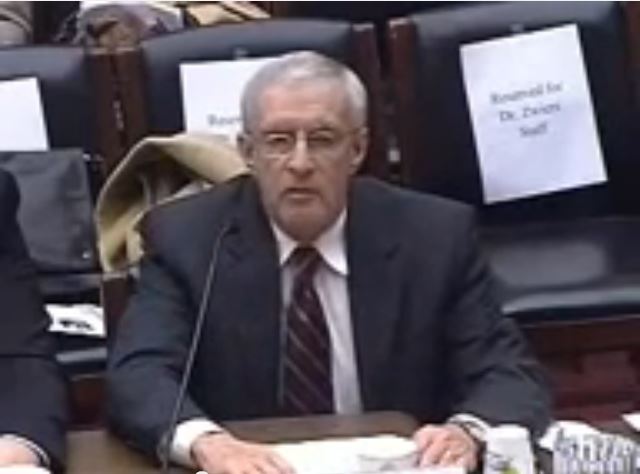





 Millard Fillmore's Bathtub