In the last two weeks we’ve seen a virtual-world assault by Richard Tren, Roger Bate and Don Roberts, alternately telling fantastic tales about how Rachel Carson from beyond the grave organized a mass murder that rivals Joseph Stalin, or saying that environmentalists conspire to keep life-saving chemicals from getting to Africa and Asia.
Fraud? That’s all on Bate. Here are things Bate will not tell you:
No malaria fighting organization claims it needs more DDT.
DDT has never been banned in Africa, nor Asia.
If any nation wishes to use DDT to fight malaria, that nation need only write a letter to the World Health Organization informing WHO of that fact.
If anyone violates the Persistent Organic Pollutants Treaty (POPs) and uses DDT without telling WHO first, there is no penalty.
Malaria death rates are, now, at the lowest level in human history. While there is a threat of a resurgence of malaria, the threat comes because the malaria parasites themselves develop resistant to the pharmaceuticals used to treat the disease in humans — no connection to DDT.
DDT use cannot stop malaria. Consider: India is one of two or three nations today who still manufacture DDT, and India uses more DDT than all the rest of the world’s nations put together. Malaria is still a problem for India.
Beating malaria requires more than poisoning the hell out of Africa.
Roger Bate: Walking science, history, law and policy fraud. His claims are hoaxes.
Or is this one more case of using environmentalists as scapegoats by the hard right, and other know-nothings and know-not-enoughs?
Jackson’s piece makes mild defense of a great idea in government, I think. To me, the critics appear hysterical in comparison.
In tracking this down, I discovered that Matt Ridley had been given some really bum information about Rachel Carson, DDT and malaria, which appears in his new book, The Rational Optimist. To his credit, Ridley made a quick correction of the grossest distortions. He defends the premises, still, however, which I find troubling. There may be subject for a later comment.
Disinformation is insidious. Claims against the accuracy and reputation of Rachel Carson follow the stories of Millard Fillmore’s bathtub, but with darker, malignant intent.
Seriously: What does Lisa Jackson overstate here?
The EPA Turns 40
‘Job-killing’ environmental standards help employ more than 1.5 million people.
Forty years ago today, the U.S. Environmental Protection Agency opened its doors, beginning a history of improvements to our health and environment. We reach this milestone exactly one month after the midterm elections strengthened the influence of groups and individuals who threaten to roll back the EPA’s efforts.
Last month’s elections were not a vote for dirtier air or more pollution in our water. No one was sent to Congress with a mandate to increase health threats to our children or return us to the era before the EPA’s existence when, for example, nearly every meal in America contained elements of pesticides linked to nerve damage, cancer and sometimes death. In Los Angeles, smog-thick air was a daily fact of life, while in New York 21,000 tons of toxic waste awaited discovery beneath the small community of Love Canal. Six months before the EPA’s creation, flames erupted from pollution coating the surface of Cleveland’s Cuyahoga River, nearly reaching high enough to destroy two rail bridges.
These are issues that are above politics. The last 40 years have seen hard-won advances supported by both sides of the aisle, and today the EPA plays an essential role in our everyday lives. When you turn on the shower or make a cup of coffee, the water you use is protected from industrial pollution and untreated sewage. In fact, drinking water in Cleveland was recently shown to be cleaner than a premium brand of bottled water. You can drive your car or catch a bus without breathing dangerous lead pollution. At lunch, would you prefer your food with more, or less, protection from pesticides?
The most common arguments against these protections are economic, especially as we continue to recover from the worst downturn since the Great Depression. Fortunately, the last 40 years show no evidence that environmental protection hinders economic growth. Neither the recent crisis nor any other period of economic turmoil was caused by environmental protection. In fact, a clean environment strengthens our economy.
Special interests have spent millions of dollars making the case that we must choose the economy or the environment, attacking everything from removing lead in gasoline to cleaning up acid rain. They have consistently exaggerated the cost and scope of EPA actions, and in 40 years their predictions have not come true.
We have seen GDP grow by 207% since 1970, and America remains the proud home of storied companies that continue to create opportunities. Instead of cutting productivity, we’ve cut pollution while the number of American cars, buildings and power plants has increased. Alleged “job-killing” regulations have, according to the Commerce Department, sparked a homegrown environmental protection industry that employs more than 1.5 million Americans.
Even in these challenging times, the EPA has been part of the solution, using Recovery Act investments in water infrastructure, clean-diesel innovation and other projects to create jobs and prepare communities for more growth in the years ahead.
The EPA’s efforts thrive on American ingenuity and entrepreneurship. Holding polluters accountable sparks innovations like the Engelhard Corporation’s catalytic converter, which pioneered the reduction of toxic emissions from internal combustion engines, and DuPont’s replacements for chlorofluorocarbons (CFCs), which protected the ozone layer while turning a profit for the company. One executive told me that the EPA’s recent standards for greenhouse gas emissions from cars will help create hundreds of jobs in a state where his company operates—a state whose U.S. senators have both opposed the EPA’s authority to regulate greenhouse gases.
These attacks are aimed at the EPA, but their impacts are felt by all Americans. Pollutants like mercury, smog and soot are neurotoxins and killers that cause developmental problems and asthma in kids, and heart attacks in adults. We will not strengthen our economy by exposing our communities and our workers to more pollution.
In these politically charged times, we urge Congress and the American people to focus on results from common-sense policies, not inaccurate doomsday speculations. That is how we can confront our nation’s economic and environmental challenges and lay a foundation for the next 40 years and beyond.
Ms. Jackson is administrator of the Environmental Protection Agency.
* [Oops. Same birthday as Donna. Happy birthday, Donna! Happy EPA’s 40th (yours, too? can’t be much more, can it?)]
Spread the word; friends don't allow friends to repeat history.
Barack Obama continued George W. Bush’s Africa-oriented fight against malaria. The President’s Malaria Initiative (PMI)continues to target malaria for control and, if possible, eradication.
These Malaria Operational Plans have been endorsed by the U.S. Global Malaria Coordinator and reflect collaborative discussions with the national malaria control programs and partners in country. If any further changes are made to these plans, it will be reflected in revised postings.
How long before some wag complains that Obama’s program is anti-Africa because it doesn’t propose enough poisoning of the place? “Not enough DDT!” they will complain, I wager. And, for the record, I make this prediction not having read any of the country operational plans — in nearly complete ignorance of what the plans actually propose. Can you find “enough” DDT in any country’s plan?
Don’t ask me what work she’s done, because I couldn’t tell you. I can tell — based on the headlines of the clipping services — that Mandy Moore is popular.
Ironically, in her brief tour of Africa and — shall we label it? — probably-shallow understanding of the issues, Ms. Moore has a deeper understanding of malaria and how to fight it than the most erudite of the DDT denialists, like Michael Crichton, or Rutledge Taylor. Innocence wins.
For ABC News, the actress talked about charity work in Africa:
It’s a case of a celebrity doing “Do a Good Deed” duty, most likely. In the video, Mandy Moore puts DDT denialists to shame. In writing? Moore doesn’t come off as well. (Did she write that piece herself? Maybe she should write what she talks.)
Spread the word; friends don't allow friends to repeat history.
Howard Stern may not re-up with Sirius, I hear. That would make it easier to avoid the quackings of one of the latest and greatest cranks on DDT and malaria.
Bedbugs did not develop resistance to DDT as reported in the 1950s and confirmed by recent detailed studies
No one studied bedbugs in the past three decades or so
DDT was banned to kill people, not due to any danger
Mosquito nets are “antiquated”
DDT doesn’t harm birds, doesn’t thin eggshells
Linus Pauling’s vitamin C studies show that DDT works
William Ruckelshaus completely banned DDT use everywhere, by himself, with no science to back the action
Taylor claims to have five file cabinets full of the studies on DDT, but it becomes clear that he hasn’t read any of them. For example, he cites the erroneous claim that DDT saved 500 million lives, from a 1970 study by the National Academy of Sciences — but he’s not got the honor to tell his listeners that NAS then concluded that despite its value, DDT is too dangerous to keep using.
Howard got Dr. Rutledge Taylor on the line to discuss his DDT advocacy: “This is the guy who believes in DDT.” Robin remembered Dr. Rutledge’s infamous YouTube video: “He drank it!” Dr. Rutledge said anti-DDT activists cited faulty–or just plain old–research: “There’s not been a study on DDT and bedbugs in 30 years…it’s the safest pesticide on the planet.” Howard asked about the common claim that DDT thins bird eggs, so Dr. Rutledge said he’d never seen proof: “Total bullshit. I’ve got every study going back to 1940.”
Howard asked if Dr. Rutledge was really dating 80s pop star Debbie Gibson, and the doc confirmed it: “She’s right here. Right now.” Debbie grabbed the phone: “I’m the crazy-supportive girlfriend up in the middle of the night making this phone call with him. Look, he’s saving the world and I wrote ‘Shake Your Love.’ It’s a match made in heaven.” Howard joked: “Does Dr. Rutledge ever bring DDT into the bedroom? Rub it on you?” The doc laughed: “It’s better than chocolate.”
Back in the olden days, broadcasters had to demonstrate that they broadcast in the public interest. Sirius needs to make no such demonstration. Otherwise, Stern’s Know-Nothing rants on DDT, alone, would put their license into question.
Instead of urging people to donate $10 to Nothing But Nets to save a kid from malaria, Taylor insists that people should go see his movie, “3 Billion and Counting,” instead.
Fortunately, the movie is no longer in release. So, Dear Reader, make Howard Stern apoplectic, and save a kid’s life, by sending $10 to Nothing But Nets, and ignore Stern completely.
The facts? You can’t get them from Stern or Taylor:
Since EPA banned use of DDT on agricultural crops annual malaria deaths have fallen by more than half; in 1972 about 2 million people died from malaria worldwide — today, fewer than 900,000 people die from malaria worldwide; it appears that the “ban” on DDT caused a drop in malaria deaths, exactly contrary to Taylor’s claims
Recovery of the bald eagle, osprey, brown pelican and peregrine falcon is attributed directly to the reduction of DDT residues in the tissues of adult birds; DDT hampers the ability of birds to form competent eggs, plus it hampers the ability of chicks to survive to fledging
Spread the word; friends don't allow friends to repeat history.
Map from The Lancet, accompanying article: "Malaria is caused by five species of a parasite that can be carried from human to human by mosquitoes. Over the last 150 years, the portion of the world where malaria is still endemic has shrunk, but the disease is still endemic in 99 countries. However 32 of these countries, most of them on the edges of the endemic zone, are attempting to eradicate the disease, while the rest are trying to reduce infections and deaths though control measures."
The Daily Telegraph’s James Delingpole got suckered by the anti-Rachel Carson propaganda, and wrote a bitter piece complaining about how environmentalists are ruining the environment and people’s lives (double whammy: environmentalists worry about people over profits, and the environment over corporations, so Delingpole hoped to tweak ’em at both ends). Lots of discussion, too much to read and most of it nasty and off target.
It was a smaller part of Delingpole’s generally anti-science, contrary-to-fact rant about global warming.
Being pro-DDT has become as religious an exercise as being for creationism taught in public schools. There’s no good evidence to support the point, but there are a tiny handful of people who are gullible enough to spread whatever they say. That tiny handful of advocates never gets the facts on their side, nor they on the side of the facts, but they appear deluded enough that they get their panties in a wad if you point out that their claims are false. “I’m not a liar!” they’ll retort with indignation good enough to make them rivals of the Portugal soccer squad’s acting, or just crazy enough to fail to recognize their errors.
And so the falsehoods spiral on virally.
Rachel Carson’s ghost should get busier. DDT can’t stop malaria, and now rarely slows it at all. Rachel Carson was right — and had we listened in 1962, malaria might be a lot less prevalent today.
Spread the word; friends don't allow friends to repeat history.
Lancet is one of the premiere research journals in the world for all of science, but especially for issues of health and medicine.
Image from Lancet – Mother and child under a mosquito bite-preventing bednet.
On October 29, 2010, Lancet published a special report, “Malaria Elimination.” Much science. Much history. No call for more DDT.
A plan for research is laid out. Plans to eradicate malaria from more than 90 nations are laid out, explained and debated. Calls for more research are made. Calls for disciplined action from nations and health care organizations, and donor organizations.
Get the real science, real history, real policy. Environmentalists are not evil villains there. malaria is the villain in that story, and serious health care researchers and deliverers discuss serious methods to beat the disease. Consequently, DDT has only a bit part.
ACSH can’t resist the spin. Implicit the debunking may be, but the study thoroughly debunks ACSH’s claim that more DDT will help defeat malaria. India is the world’s greatest user of DDT, using more than all the rest of the world together. Clearly a surplus usage of DDT has not created the miracle end to malaria that ACSH and other hoaxsters claim it would.
Still, ACSH sticks to their views, even when those views are grossly wrong. ACSH said, “ACSH has called for resumed use of indoor residual spraying of small amounts of DDT to prevent mosquito bites, repel mosquitoes, and reduce malaria deaths.”
No word from India on whether it will dramatically reduce DDT use to meet ACSH’s call for “small amounts.”
ACSH’s press release calls attention to a Wall Street Journal Blog article describing WHO’s response to the Lancet-published study of India malaria deaths — WHO questions the “verbal autopsy” methodology, and says it stands by its estimates of malaria deaths in the nation:
“The new study uses verbal autopsy method which is suitable only for diseases with distinctive symptoms and not for malaria,” WHO’s India representative Nata Menabde said in an email statement Thursday.
The WHO says it takes into account only confirmed cases of malaria and surveys those using healthcare facilities.
Malaria symptoms include fever, flu-like illness and muscle aches. Malaria is endemic to parts of India, where many people live in mosquito-infested areas. Confirming the presence of malaria requires tests like the “Peripheral Smear for Malarial Parasite” and “Rapid Malaria Antigen”.
Lancet said the determinations made by its field researchers were reviewed by two of 130 trained doctors for all the 6,671 districts who determined whether or not the person had died from malaria.
The data concluded that 205,000 deaths before the age of 70, mainly in rural areas, were caused by malaria each year – 55,000 in early childhood, 30,000 among children ages five to 14 and 120,000 people 15 and older.
The WHO called for further review of the study.
“Malaria has symptoms common with many other diseases and cannot be correctly identified by the local population,” Dr. Menabde said, adding: “The findings of the study cannot be accepted without further validation.”
Glenn Reynolds at Instapundit picked up on McKenzie’s piece — but reflecting his pro-poison and anti-humanitarianism bias, he tacked on a gratuitous slap at health workers, scientists and governments who tried to eradicate malaria in the 20th century:
Malaria has always been one of humanity’s biggest killers, but it may be far bigger than we realised. An unprecedented survey of the disease suggests that it kills between 125,000 and 277,000 people per year in India alone. In contrast, the World Health Organization puts India’s toll at just 16,000.
Other countries using similar accounting methods, such as Indonesia, may also be underestimating deaths from malaria. That means it could be killing many more than the WHO’s official estimate of nearly 1 million people a year worldwide, suggesting more money should be spent to fight it.
“Allowed” to fail? Reynolds assumes someone wanted the program to fail? Reynolds assumes someone could have stopped the failure, other than the pro-DDT forces who overused the stuff and drove mosquitoes to evolve resistance, or other than the governments of Subsaharan Africa who could not mount massive health care campaigns due to the instability of their governments? It’s too bad the program failed — it was mighty ambitious. “Allowed to fail” is an undeserved slap at malaria fighters like Fred Soper.
This slip to finger-pointing is what I warned about in my post: Though India is the world’s greatest manufacturer of DDT, and though more DDT is used in India today than the rest of the world combined, someone will look at the undercount story, blame the imaginary ban on DDT, blame Rachel Carson (who never advocated a ban on DDT), and make some smug political snark.
Reynolds was pulled away from the snark, fortunately. Reader Kevin O’Brien wrote to Reynolds about the difficulties of beating any disease, using smallpox as his launching point. Beating smallpox was a massive effort, made easier by the fact that the pox resided only in humans, as opposed to the malaria parasite’s two-species life cycle. O’Brien’s missive to Reynolds, a few errors included, is the best commentary Reynolds has had on DDT and disease in some time.
One frequently-obnoxious blogger pulled back from the brink is not enough, though.
Foolish hope that DDT could be a magic bullet against malaria, like Bolt’s, helps frustrate workable plans to fight the disease. Policy makers being convinced that some political conspiracy keeps DDT from working to beat malaria, in effect kills children. Fighting malaria requires long, hard work, to bolster health care systems in entire nations, to accurately and quickly diagnose malaria, and to provide complete treatment to cure human victims. That work is hampered by policy makers and popular opinion who hold that DDT would be cheaper and quicker, and effective. Bolt takes any source, no matter how scurrilous, in his unholy condemnation of conservationists and scientists, especially Rachel Carson. His sole source to condemn Carson is a publication from the far, far-fringe.
How many children will Bolt’s brown lies kill? one could ask.
Watch. Advocates of poisoning Africa and Asia will claim scientists and environmental activists are somehow to blame for any underreporting, and they will call for more DDT use, claiming a ban has made India a refuge for malaria. Those reports will fail to mention India’s heavy DDT use already, nor will they suggest an ineffectiveness of the nearly-sacred powder.
Andrew Bolt, you’ve made me a prophet — a saddened and disappointed prophet. It’s good to see Glenn Reynolds step back from the brink of hysteria. It’s too bad Bolt took the plunge. Others will probably follow Bolt.
How far will the bad claims spread?
Spread the word; friends don't allow friends to repeat history.
Malaria hotspots in India. Image from Nature magazine, 2010. News report on Lancet study that suggests mortality from malaria in India may be significantly higher than WHO reports indicate.
Good news from the war on malaria has been that annual deaths are calculated to be fewer than 1 million annually, as low as 880,000 a year — the lowest human death toll from malaria in human history.
Researchers in India suggest that deaths there are grossly underreported, however — not the 15,000 estimated by the World Health Organization, but closer to 200,000 deaths a year, nearly 15 times as great.
Reading that news, DDT partisans might get a little race of the pulse thinking that this might improve the urgency for the case for using more DDT, as advocated in several hoax health campaigns and media, such as the recent film “3 Billion and Counting.”
The problem, though, is that India is one of the few places where DDT manufacturing continues today, and India is one of the nations where DDT use is relatively unregulated and heavy. In short, if DDT were the miracle powder it’s claimed to be, any finding that malaria deaths are 15 times greater than reported by WHO is nails in the coffin of DDT advocacy.
Researchers based their estimate on interviews with family members of more than 122,000 people who died between 2001 and 2003. The numbers “greatly exceed” the WHO estimates of 15,000 malaria deaths in India each year, the researchers wrote in the study, published today in the journal The Lancet.
“It shows that malaria kills far more people than previously supposed,” said one of the study authors, Prabhat Jha of the Center for Global Health Research in Toronto, in a statement. “This is the first nationwide study that has collected information on causes of death directly from communities.”
Remote regions may have an undocumented malaria burden, because conventional methods of tracking the disease are flawed, according to the authors. In India, the government malaria data, which is used by the Geneva-based WHO, only counts patients who had tested positive for the disease at a hospital or clinic. Others who died of symptoms closely resembling the malady but didn’t get a blood test aren’t included, co-author Vinod Sharma of the Indian Institute of Technology in New Delhi said in an interview today.
The lack of accurate data may hinder efforts by governments and aid organizations to provide diagnosis and treatment to the population at risk, the authors said.
Watch. Advocates of poisoning Africa and Asia will claim scientists and environmental activists are somehow to blame for any underreporting, and they will call for more DDT use, claiming a ban has made India a refuge for malaria. Those reports will fail to mention India’s heavy DDT use already, nor will they suggest an ineffectiveness of the nearly-sacred powder.
The article in the Lancet became available on-line on October 21 — it’s a 4.5 megabyte .pdf document: “Adult and child malaria mortality in India: a nationally representative mortality survey.” A team of researchers is listed as authors of the study: Neeraj Dhingra, Prabhat Jha, Vinod P Sharma, Alan A Cohen, Raju M Jotkar, Peter S Rodriguez, Diego G Bassani, Wilson Suraweera,Ramanan Laxminarayan, Richard Peto, for the Million Death Study Collaborators.
Accurate counts of infections and deaths provide essential information for effective programming of the fight against the disease. Researchers point no particular fingers, but make the case in the article that better methods of counting and estimating malaria deaths must be found.
There are about 1·3 million deaths from infectious diseases before age 70 in rural areas in which fever is the main symptom. If there are large numbers of deaths from undiagnosed and untreated malaria in some parts of rural India then any method of estimating overall malaria deaths must rely, directly or indirectly, on evidence of uncertain reliability from non-medical informants and, although our method of estimating malaria mortality has weaknesses, indirect methods may be even less reliable. The major source of uncertainty in our estimates arises from the possible misclassifi cation of malaria deaths as deaths from other diseases, and vice versa. There is no wholly satisfactory method to quantify the inherent uncertainty in this, and indeed the use of statistical methods to quantify uncertainty can convey a false precision. However, even if we restrict our analyses to deaths immediately classifi ed by both physician coders as malaria, WHO estimates (15 000 deaths per year at all ages)1 are only one-eighth of our lower bound of malaria deaths in India (125 000 deaths below the age of 70 years; of which about 18 000 would have been in health-care facilities).
Our study suggests that the low WHO estimate of malaria deaths in India (and only 100 000 adult malaria deaths per year worldwide) should be reconsidered. If WHO estimates of malaria deaths in India or among adults worldwide are likely to be serious underestimates, this could substantially change disease control strategies, particularly in the rural parts of states with high malaria burden. Better estimates of malaria incidence and of malaria mortality in India, Africa, and elsewhere will provide a more rational foundation for the current debates about funding for preventive measures, about the need for more rapid access to malaria diagnosis, and about affordable access in the community to effective antimalarial drugs for children and adults.
“3 Billion and Counting” premiered at a tiny New York venue a couple of weeks ago, the latest skirmish in the War on Science. Physician-to-the-stars Dr. Rutledge Taylor claims that malaria could be eradicated if only DDT had not been banned from Africa.
What? No, no, you’re right: DDT has never been banned from Africa, not even under the 2001 Persistent Organic Pollutants Treaty. The film comes out of Hollywood, starring a Hollywood physician. Perhaps that should clue us in that it is not a serious documentary, and not to be taken at face value.
Nor at any value.
Taylor engaged a publicist and conducted a national campaign to launch the movie. In that campaign he someone appeared on Howard Stern’s radio show. [There’s a guy in comments who claims it wasn’t Taylor, though Taylor wrote it in the first person. Odd as hell.]
The problem with DDT is that it worked too well in stomping out malaria. The science proves that it minimally impacted the environment. But this information was suppressed. Wonder why and by whom? This movies addresses and uncovers the answers to these questions..Questions that many of us had about this issue.
I tried, without success I’m sure, to set him straight:
Royce,
First, DDT was not the weapon that eradicated malaria in the U.S. We worked for 30 years to improve medical care, beef up the Public Health Service and county public health officers, educate people on how to drain mosquito breeding areas near their homes, be certain people with malari were fully treated to a cure, and to raise incomes to improve housing so that people could live in a home where mosquitoes could not enter at night (the times malaria-carrying mosquitoes bite). By 1939, malaria was essentially eliminated from the U.S. DDT was not available for use for another seven years.
Earlier we had defeated malaria and yellow fever in Panama, during the construction of the Panama Canal — long before any insecticide existed. Beating malaria is possible with discipline, accurate information, and sustained effort. No pesticide is necessary.
Second, DDT has never been out of use in Africa since 1946, nor in Asia. DDT is in use right now by the World Health Organization (WHO) and at least five nations in Africa who have malaria problems. If someone told you DDT is not being used, they erred.
Unfortunately, overuse of DDT by agricultural interests, in the early 1960s, bred mosquitoes that are resitant and immune to DDT. DDT simply is not the effective pesticide it once was, and for the WHO project to eradicate malaria, this problem was the death knell. WHO had to fall back to a malaria control position, because pro-DDT groups sprayed far too much of the stuff, in far to many places, mostly outside.
Third, all serious studies indicate that DDT greatly affects environment, with doses of the stuff multiplying from application through the top of the trophic levels in the ecosystem. A minimal dose of DDT to kill mosquito larva in an estuary, for example, multiples many times as zooplankton and the mosquito larva soak it up. The next level of consumers get about a ten-times dose from what was sprayed, and that multiplies exponentially as other creatures consume the lower-level consumers. By the time an insect or crustacean-eating bird gets the critter, the dose is millions of times stronger, often to fatal levels for the bird.
If the dose is sub-lethal, it screws up the reproduction of the bird. DDT in the egg kills the chick before it can fledge from the nest, often before it can hatch. If by some miracle the chick does not die from acute DDT poisoning, the eggshells produced by a DDT-tainted female bird are often too thin to survive the growth of the embryo — either way the chicks die. (There are a couple of studies done on plant-eating birds which showed that the chicks did not die before hatching — they died shortly after hatching.)
DDT is astoundingly effective at screwing up the reproduction of birds.
Fourth, studies show that humans exposed to DDT rarely get an acutely toxic dose, but that their children get screwed up reproductive systems, and there is a definite link from DDT exposure to the children of the mother — the cancer goes to the next generation. DDT is not harmless to people at all — it is just not acutely toxic, generally.
Fifth, as I note above, DDT is no longer highly effective in controlling mosquitoes. Where once it killed them dead, they have developed immunity, and now digest the stuff as if it were food. There are studies that show DDT is also weakly repellent, but there are better, less-toxic repellents, and there is no reason to use something so deadly to all other creatures in the ecosystem to get a weak repellent effect.
Because of the biomagnification, DDT kills the predators of mosquitoes much more effectively, and for a much longer period, than it kills mosquitoes. This sets the stage for mosquitoes to come roaring back, with all the natural checks on mosquito population out of commission.
Why use a poison that is not very effective, but very deadly, when there are better alternatives available?
Malaria death rates are the lowest they have been in human history. There is no good case to be made that more DDT could provide any benefit.
DDT is still manufactured in astonishing quantity in North Korea, for one. DDT is used in Africa and Asia, but no one with any sense uses it to eradicate malaria — DDT screwed up that chance 50 years ago.
Rutledge’s movie appears to be sinking from release (it’s played two theaters that I can find, for less than a week at each). It may be far underwater already. It would be to DDT what “Expelled” was to creationism, but it lacks the cloying, gullible religious fanatics to push it.
Thank God.
Mystery photo: If spraying pesticides to fight malaria isn't allowed in Africa as Rutledge Taylor argues, why are these pesticide sprayers pictured in this photo? Publicity still from "3 Billion and Counting" via Rotten Tomatoes website
Good works are oft’ interred with the bones of the good workers, according to that Brutus Mark Antony guy — and at Watts Up With That, many work to bury any good workers, too.
Among these, Affordable Medicines for Malaria (AMFM), is one of the cleverest, and may even work. The idea is that AMFM will buy ACT (artemisinin combination therapy – something else the Wattoids didn’t know about) drugs directly from the manufacturers in huge amounts at deep discount, and pass the drugs on to the distributors, public health agencies, private wholesale pharmacies, and NGOs at so far below cost that even counterfeit drugs cost more. The private wholesalers can take their profit.
One may hope someone will find the magic bullet to fight malaria. There’s the Ghost of Santayana pacing the chalkboard again, however: Our experience shows that magic is not real, no magic bullet has ever existed against malaria, and DDT is not now the magic bullet it never was in the first place. “Those who cannot remember the past are condemned to repeat it,” Ghost of Santayana mutters.
A special place in hell is reserved for those who remember the past, but tell false tales about it instead.
Spread the word; friends don't allow friends to repeat history.
U.S. President’s Malaria Initiative (PMI) Africa Indoor Residual Spraying (AIRS) Project found this warehouse with 119 tons of leftover, surplus and expired DDT in Ethiopia. In total, PMI AIRS Progect found 930 tons of unused DDT in Ethiopia, in 1,600 tons of expired pesticides total. Other nations have other surplus DDT stocks. Africa never suffered a shortage of DDT.
Watch the video, and you can see God trying to stop her from talking, putting that frog in her throat.
I only respond to the first six minutes or so — you get the idea. McIlhinney leaves no falsehood untold, no crazy charge not leveled at Rachel Carson and “environmentalists.”
Here’s the film clip of McIlhinney misleading the masses:
Here is my quick and dirty response:
1. Environmentalists are not calling for a ban on coal, oil or gas. Fear talk. Why would anyone tell such a whopping lie? How do we know the film lies? Who is this “environmentalist” they fear to name?
2. Rachel Carson was right — DDT kills ecosystems. Carson said we needed to restrict the use of DDT in order to keep it viable as a pesticide. But few listened (not McIlhinney, that’s for sure). Consequently, DDT became ineffective against mosquitoes that carry malaria, scuttling the World Health Organization’s ambitious campaign to eradicate malaria. Had that not happened, and had we eradicated malaria by 1975 as planned, millions of lives could have been saved. McIlhinney is the one with blood on her hands.
3. DDT has never been banned worldwide, was never banned in Africa, and is still used in those places it still works, under a special treaty signed in 2001. McIlhinney hopes you won’t know about that treaty, and fails to mention it herself. What’s she trying to hide?
4. Carson did not say DDT was the sole culprit for the decline of birds — but by 1962, it was the sole culprit preventing their recovery. Bald eagles and brown pelicans have come off the endangered species list, populations recovering in almost lock-step with the decline of DDT in the birds’ flesh — proof that Carson was right.
5. Under U.S. law, no agency could ban a useful pesticide without mountains of evidence that the pesticide was dangerous. Four separate court proceedings looked at DDT, two before the EPA acted, and two appeals after EPA banned DDT use on crops. All four courts found DDT to be dangerous and uncontrollable in the wild. The two appeals of EPA’s labeling change were both decided on summary judgment — the science was so powerfully on Carson’s side. In May 1963 the President’s Science Advisory Council reported on their fact checking of Carson’s book — they said Carson was dead right in everything but one: Carson was too easy on DDT. That panel, with its significant population of Nobel winners, called for quick action against DDT. Why doesn’t McIlhinney give the facts here?
6. The claim that EPA’s ban influenced WHO is pure bullfeathers. WHO had to end its malaria eradication campaign, using DDT, in 1965 — the mosquitoes were immune to the stuff. EPA didn’t act until seven years later, and EPA’s jurisdiction extends only to the borders of the U.S. In fact, EPA’s “ban” left DDT to be manufactured in the U.S. for export to Africa. Can’t McIlhinney read a calendar? The “ban” in 1972 did not travel back through time to stop WHO from using DDT. (For that matter, WHO never completely stopped DDT — wherever it could work, they used it, and still do.)
7. DDT has always been available for any government in Africa to use. What that guy in the film is really saying is racist: He’s claiming Africans were too stupid to use DDT, though it was cheap and available, and though it would save their lives. Don’t listen to him. Africans are not stupid: They’d use DDT were it effective and safe. Shame on McIlhinney for entertaining such a claim.
8. Malaria did not skyrocket after DDT was banned in the U.S. Mosquitoes don’t migrate that far. There was an uptick in malaria 20 years later, when the pharmaceuticals that cure malaria in humans, ceased to be effective.
But today, malaria rates are the lowest they’ve been in recorded history, and malaria death rates are the lowest they’ve been in human history. When the U.S. banned DDT spraying on cotton in 1972, about 2 million people a year died from malaria. Today, the death toll is under 900,000. Don’t be frightened or stampeded by erroneous, large figures.
In the end, we can’t poison Africa to health, and if we could, it would be immoral to do that instead of building health care to fight diseases.
Children die because hard-hearted politicos like Ann McIlhinney frustrate the work of malaria fighters, and mislead policy makers away from solutions that would save children’s lives.
Shame on her.
Spread the word; friends don't allow friends to repeat history.
Or, until that account is unsuspended by the forces supporting Donald Trump: Follow @FillmoreWhite, the account of the Millard Fillmore White House Library
We've been soaking in the Bathtub for several months, long enough that some of the links we've used have gone to the Great Internet in the Sky.
If you find a dead link, please leave a comment to that post, and tell us what link has expired.
Thanks!
Retired teacher of law, economics, history, AP government, psychology and science. Former speechwriter, press guy and legislative aide in U.S. Senate. Former Department of Education. Former airline real estate, telecom towers, Big 6 (that old!) consultant. Lab and field research in air pollution control.
My blog, Millard Fillmore's Bathtub, is a continuing experiment to test how to use blogs to improve and speed up learning processes for students, perhaps by making some of the courses actually interesting. It is a blog for teachers, to see if we can use blogs. It is for people interested in social studies and social studies education, to see if we can learn to get it right. It's a blog for science fans, to promote good science and good science policy. It's a blog for people interested in good government and how to achieve it.
BS in Mass Communication, University of Utah
Graduate study in Rhetoric and Speech Communication, University of Arizona
JD from the National Law Center, George Washington University


 Posted by Ed Darrell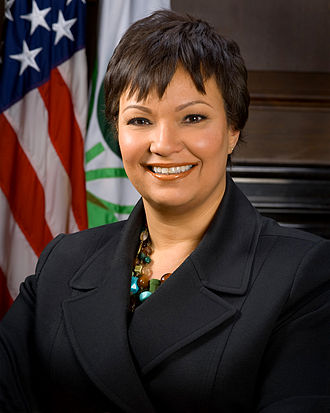





 Millard Fillmore's Bathtub
Delingpole: Wrong and bitter on DDT
November 21, 2010The Daily Telegraph’s James Delingpole got suckered by the anti-Rachel Carson propaganda, and wrote a bitter piece complaining about how environmentalists are ruining the environment and people’s lives (double whammy: environmentalists worry about people over profits, and the environment over corporations, so Delingpole hoped to tweak ’em at both ends). Lots of discussion, too much to read and most of it nasty and off target.
It was a smaller part of Delingpole’s generally anti-science, contrary-to-fact rant about global warming.
Chris Goodall fixed all of Delingpole’s errors on DDT at Carbon Commentary.
Being pro-DDT has become as religious an exercise as being for creationism taught in public schools. There’s no good evidence to support the point, but there are a tiny handful of people who are gullible enough to spread whatever they say. That tiny handful of advocates never gets the facts on their side, nor they on the side of the facts, but they appear deluded enough that they get their panties in a wad if you point out that their claims are false. “I’m not a liar!” they’ll retort with indignation good enough to make them rivals of the Portugal soccer squad’s acting, or just crazy enough to fail to recognize their errors.
And so the falsehoods spiral on virally.
Rachel Carson’s ghost should get busier. DDT can’t stop malaria, and now rarely slows it at all. Rachel Carson was right — and had we listened in 1962, malaria might be a lot less prevalent today.
Spread the word; friends don't allow friends to repeat history.