Apparently they think that “fix the economy” means something more akin to “fix your dog” than increase jobs.
If you’re unemployed, or facing layoff, you will be happy to know how the Republicans have your back. Or, happy to know they’re doing something behind your back. Or they’re trying to put you flat on your back. Or something.
Spread the word; friends don't allow friends to repeat history.
Northern Light Productions made the film for the “Canyon Visitor Education Center in Yellowstone National Park. The film offers a compelling overview of the ‘big picture’ geology that has shaped and continues to influence Yellowstone and its ecosystem.”
Big picture geology? How about making this film available to schools to talk about geology, geography, and history?
Yellowstone National Park annually gets about three million visitors. Yellowstone is one of those places that ever American should see — but at that rate, it would be more than 100 years before everybody gets there.
We need good, beautifully shot, well-produced, interesting films on American landmarks in the classroom.
How do we get this one freed for America’s kids, Yellowstone Park?
Spread the word; friends don't allow friends to repeat history.
It’s highly improbable that dangerous levels of radiation would drift more than a few miles from the damaged nuclear power plants in Japan, but maybe seeing some actual readings might convince people there’s not much to worry about — other than our sympathy for Japan, the Japanese people and especially those workers who have stayed on the site of the power plant to work to secure the reactors so they do not become hazards to the population at large. Those workers may be exposed to significant, harmful radiation, and they deserve all the thanks you can give them.
Below is a map of the contiguous 48 states of the U.S., showing live readings from about a dozen sampling sites across the nation. The map should update about every minute (if it doesn’t, and you want to see updates, click through to the Radiation Network site).
Normal background levels are about 25 to 75; a low-level warning might be given if readings are sustained at 100. These numbers are Counts Per Minute (CPM), a very crude measure from a Geiger counter showing how many radioactive particles or rays hit the sensor in a minute. It does not distinguish alpha, beta or gamma, and it may be dependent on the design of the Geiger counter, especially the size of the sensor — differently designed machines give different readings even right next to each other.
So it’s a crude count, but it’s a map of counts.
Radiation Network map of radiation in the U.S. Read legend, use with caution. Click map to go to Radiation Network site.
Here is legend information for the map:
Sampling station symbols, Radiation Network
At left is a symbol used on the map to mark “nuclear sites” by the Radiation Network. Note that a nuclear “site” is not necessarily a nuclear power station. For example, there are nuclear sites designated near Moab, Utah; there are a couple of ore refining facilities or tailing ponds there, but no nuclear power station. The map shows a nuclear site in the Texas Panhandle. There is no nuclear power station there.
Instructions on how to read the map, from RadNet:
How to Read the Map:
Referring to the Map Legend at the bottom left corner of the map, locate Monitoring Stations around the country that are contributing radiation data to this map as you read this, and watch the numbers on those monitoring stations update as frequently as every minute (your browser will automatically refresh). The numbers represent radiation Counts per Minute, abbreviated CPM, and under normal conditions, quantify the level of background radiation, i.e. environmental radiation from outer space as well as from the earth’s crust and air. Depending on your location within the US, your elevation or altitude, and your model of Geiger counter, this background radiation level might average anywhere from 5 to 60 CPM, and while background radiation levels are random, it would be unusual for those levels to exceed 100 CPM. Thus, the “Alert Level” for the National Radiation Map is 100 CPM, so if you see any Monitoring Stations with CPM value above 100, further indicated by an Alert symbol over those stations, it probably means that some radioactive source above and beyond background radiation is responsible.
Notice the Time and Date Stamp at the bottom center of the Map. That is Arizona Time, from where we service the Network, and your indication of how recently the Radiation Levels have been updated to the Map.
(Please note: Any White circles on the map represent Monitoring Stations that are running Simulations, instead of using a real Geiger counter, so any Alert levels that may occur over those stations are to be ignored since they represent only momentary testing.)
Remember, “alert level” is sustained count above 100. But again, be alert that this is only counts per minute, and may be difficult to translate to an accurate radiation reading.
The Radiation Network is an all volunteer operation, no government funding or other involvement. In fact, the network is seeking volunteers to get a Geiger counter and hook it up to the internet to provide even more real-time readings. See “How to Participate in the Nationwide Radiation Network.”
If you’re a denier of global warming/climate change, you should use your usual denial tool, claiming that because radiation at background levels is “normal,” no level of radiation can be harmful. In fact, if you’d make that claim and volunteer to go staff the crews trying to cool the reactors, the entire world would salute you.
Should you be concerned? MIT’s Technology Review explains that the levels of radiation at the plant site itself are quite low, though higher than normal (article by Courtney Humphries). The article also explains that radiation levels rapidly drop the farther from the plant one is; while we may be able to detect increases in radiation attributable to the radiation from Fukushima site, it is highly unlikely that radiation will exceed safety standards:
In terms of potential health dangers from radiation from the Fukushima Daiichi Nuclear Power Station, “the people who are in the most immediate danger from acute and severe radiation doses are those people who are on site at the moment and who are desperately trying to keep the reactors under control,” says Jacqueline Williams, a radiation oncologist at the University of Rochester Medical Center.
Moving away from the immediate vicinity of the plant, radiation levels drop very rapidly. James Thrall, radiologist-in-chief at Massachusetts General Hospital, says that radiation levels are inversely proportional to the square of the distance from the source: The level at two miles from the source are one-quarter what they are at one mile, and “at 10 miles away, it’s almost an infinitesimal fraction,” he says. Individual exposure also varies widely depending on whether a person is outside or indoors, or shielded with protective clothing. Japanese authorities have evacuated the population living within a 20-kilometer radius of the plant, and have warned those living within 30 kilometers to stay indoors. Some experts say that people living beyond this range have no cause for concern at this time. “This has nothing to do with the general population,” McBride says.
The trickier question is whether lower doses of radiation—well below the threshold of acute illness—could lead to long-term health consequences for those in that area. Thrall says that epidemiological studies on survivors of nuclear attacks on Japan have found that those receiving 50 millisieverts or more had a slightly elevated cancer risk—about 5 percent higher than expected—and that risk seemed to rise with higher exposures. But scientists still vigorously debate whether that risk can be extrapolated down to even lower exposures.
After the nuclear disaster at Chernobyl, the population experienced a surge in thyroid cancers in children. However, scientists found that the culprit was not radiation in the air but radioactive contamination of the ground, which eventually found its way into cow’s milk. Thrall points out that in Japan, this is highly unlikely because the authorities are carefully monitoring the water and food supplies and keeping the public informed, which did not happen at Chernobyl.
Rollback Malaria (RBM) was established in 1998 in part to reinvigorate the worldwide fight against malaria, and in part to facilitate the negotiations for what became the Stockholm Convention, the Persistent Organic Pesticides Treaty of 2001.
That’s about the time the ungodly assault on WHO and Rachel Carson started, by hysterical DDT advocates. We now know that Roger Bate, Richard Tren, Donald Roberts and their comrades in pens are stuck in that 1998 fight.
Here’s a short account, from RBM, about just what happened:
The DDT Controversy
In 1999 the RBM Secretariat was called upon to help resolve a controversy emerging from intergovernmental negotiations to establish an international environmental treaty. At the centre of this controversy was DDT, former hero of the malaria eradication campaign and current totemic villain of the environmental movement. The treaty being negotiated was intended to eliminate the production and use of twelve persistent organic pollutants. DDT, still used for malaria control in over 20 countries, was included among ‘the dirty dozen’ chemicals slated for elimination, eliciting a strong reaction from public health activists and malaria specialists who claimed that its elimination would result in unacceptable increases in malaria morbidity and mortality. Environmental specialists and others claimed that environmentally friendly alternatives to DDT, although more expensive, could easily be deployed to guard against such a negative impact.
The controversy over the role of DDT in malaria vector control and the dangers posed to the environment escalated and attracted considerable media attention. The controversy was perpetuated in part because of a relatively weak evidence base on the human toxicity of DDT, the cost-effectiveness of proposed alternatives, and the probable impact of public health use of DDT (compared to agricultural use) on the environment. Resolution was also hampered by the relative lack of public health expertise among the Intergovernmental Negotiating Committee delegates, who were primarily active in the fields of foreign and environmental policy.
The challenges presented to the RBM Secretariat in responding to the controversy were many and varied. They included: evaluation of the evidence base and the drafting of policy guidance (a WHO normative role); a major communications effort; and the establishment of new cross-sectoral partnerships and working relationships. In the process, RBM formed new and highly effective ‘partnerships’ or ‘working relations’ with the United Nations Environment Programme (UNEP), the US Environmental Protection Agency, the environmental policy apparatus of core RBM partners, as well as a variety of health and environmental NGOs. RBM conducted country and informal expert consultations and convened and chaired a special working group on DDT which was able to establish a position on the use of the insecticide in public health and the process for evaluating and moving to alternatives. The weight of WHO’s technical authority contributed greatly toward establishing the credibility of the working group. Information about the treaty negotiations and the WHO position on DDT was disseminated to health specialists via the WHO regional networks and to treaty focal points via UNEP.
The RBM Secretariat led the WHO delegation to all meetings of the Intergovernmental Negotiating Committee and prepared information and media events for each, supporting the participation of health/malaria specialists from a number of countries. The RBM Secretariat also served as the media focal point on malaria and DDT and provided interviews and information to all major media, as well as presentations to professional meetings and interest groups.
RBM’s objectives throughout this process were:
to establish consensus on the present and future role of DDT and alternatives in malaria control;
to encourage greater involvement of public health specialists in country-level discussions about the treaty and in country delegations to the negotiating sessions;
to provide information to negotiators and others that would reduce controversy and result in a win-win situation for public health and the environment (in which the longer term goal of DDT elimination is achieved through strengthened, more robust malaria control);
to benefit from the media attention to inform the public about malaria; and
to mobilize resources to support malaria control from outside the health sector.
All of these objectives have been met and the final treaty, known as the ‘Stockholm Convention on Persistent Organic Pollutants’ provides for the continued public health use of DDT and international assistance for the development and implementation of alternatives.
Resources to support the initial work of the RBM Secretariat were provided by environmental agencies/offices. In addition, the Pan American Health Organization (PAHO) and the WHO Regional Office for the Americas (AMRO) and most recently the WHO Regional Office for Africa (AFRO) have been awarded project development grants from the Global Environment Facility (GEF) to promote regional efforts to strengthen malaria control and reduce reliance on DDT.
Photographer Timothy H. O’Sullivan toured the western territories — not yet states — for either the U.S. Army Corps of Engineers or the U.S. Geological Survey, around 1868 and 1869. Color photography hadn’t been perfected. His plates were black and white only.
He had been one of the photographers who captured parts of the Civil War on film, with particularly poignant photos of the battlefield at Gettysburg, Pennsylvania, within hours after the battle ended on July 4, 1863.
O’Sullivan’s photos appear in the collection at the Library of Congress, and at the George Eastman House (Eastman was the founder of Kodak, as you know).
In this post we compare O’Sullivan’s photo up what he called “Great Cottonwood Canon of the Wahsatch,” what is today one of the beautiful canyons leading out of Salt Lake City, Big Cottonwood, in the Wasatch Front. O’Sullivan took a shot up the canyon, then very much unroaded, at an enormous block of granite that came to be known as Storm Mountain.
In 1869:
"Great Cottonwood Canyon, Wahsatch Mountains," 1869 photo by Timothy H. O'Sullivan - USGS photo from Eastman collection
Rich Legg of Salt Lake City captured the same mountain in 2006, and graciously consented to let us use it here for comparison. This is Storm Mountain, now:
Big Cottonwood Canyon, Utah, 2006 - photo by Rich Legg, copyright and rights reserved; image here by express permission
Note from LeggNet blog: This recent capture was made in Big Cottonwood Canyon just outside of Salt Lake City. The striking shadows along with the jagged ridges create a dramatic lighting effect.
Legg’s camera and film allowed a quicker shot, I’ll wager (if he used film at all — it may be an electronic image).
The granite didn’t change much. Storm Mountain is literally a fraction of a mile outside the city limits of Salt Lake City. A photo the other way would show dramatic change. A photo of Storm Mountain, which consists chiefly of naked granite, appears almost unchanged in over a century. It’s difficult even to find places where the vegetation has changed.
In the past 20 years we have seen comparisons of America’s and the world’s glaciers, from photos through the late 19th and 20th centuries, compared to photos of today. The archives of landscape photos held by groups like the George Eastman House offer opportunities for historians and land managers and policy makers to compare American lands from more than a century ago, to those same lands today. Much of those older photo archives are available on line, at least for searching. Will scholars make methodical use of these resources?
Spread the word; friends don't allow friends to repeat history.
Oh, those jocular Tea Partiers! Now they want to bring back child labor, in Maine, and in Missouri. They’re serious when they say they oppose all the “progressive agenda” from the Progressive Era. Look out Women’s Christian Temperance Union and anti-child abuse laws. (Tea Partiers get all get their marching orders from Tea Bag Central — surely other states will follow; let us know if similar bills are in the hopper in your state legislature, eh?)
I keep finding good and interesting stuff in the Imperial War Museum. Have you ever been there? I wish they would do more online. “War Shapes Lives,” a motto on their website. An understatement of history. This painting hangs in the museum, John Singer Sargent’s “Gassed.” At the museum, you may view it in its majesty, 20 feet along the wall, 7½ feet high.
Gassed, by John Singer Sargent. Imperial War Museum
Spread the word; friends don't allow friends to repeat history.
And this one, which makes me happy we didn’t have this toilet when our kids were toddlers, and at war with each other, or just happy to study hydraulics with frequent flushes, frequently with stuff that shouldn’t be flushed:
Click image to test Kohler toilets [Update, August 2012: Alas, Kohler seems to have deactivated the interactive site.] [BUT, see update below.]
Kohler, clearly, had someone with Sen. Paul’s, er, um, problem, in mind!
So, Rand Paul no longer has a reason to be full of s—. It’s time he vote to endorse saving energy, as appliance and lightbulb manufacturers have done. Why is Paul so opposed to American business anyway?
Update: The Trophy Wife™ suggested somebody stage a showdown, or flush off between Jo the Plumber and Sen. Rand Paul. Jo the Plumber could see how well the Republican budget whacks flush away . . . “H.R. 1: Flushes cleanly! 382 pages gone! Appropriately disposed of! What do you want to flush next?”
Perhaps someone adept at editing flash videos could make that happen . . .
Update, May 2020: Fortunately, Kohler did a video of their interactive ad, and that still exists. I admit I enjoyed pointing to odd objects in the game, which Jo the Plumber then dutifully flushed. Video gives you an idea of what the toilet can handle, enough to handle Rand Paul and Donald Trump together, probably.
Spread the word; friends don't allow friends to repeat history.
In what must be one of the most bizarre but informative exchanges we’ve ever heard from a Tea Partier, Kentucky Sen. Rand Paul reveals what bugs so many Tea Partiers. His toilets don’t work, and haven’t for 20 years.
That’s not supposed to be a straight line for a gag.
You can’t get the information from just listening to him, however — you have to have some additional facts so you can read between the lines.
From this exchange at the Senate Committee on Energy and Natural Resources, we learn:
Rand Paul trivializes abortion and women’s rights. He appears to think babies are similar to incandescent light bulbs; he’s pretty clueless about either pregnancies or light bulbs. Could there be a more offensive way to introduce this topic, than to claim his right to buy an incandescent light bulb and waste energy is equal, somehow, to a woman’s right to choose whether to carry a baby?
Rand Paul doesn’t know how to shop. Rand Paul isn’t much of a plumber. He apparently bought a defective toilet some years ago, one that either doesn’t work or just can’t deal with the amount of effluent he personally produces, and he blames government for his bowel issues and his plumbing issues. Well-working, low-water-use toilets have been available for decades in Europe and Asia, and are now available in the U.S., but he can’t be bothered to shop for them. If he could maintain his old, water-wasting toilet, he’d have no kick, of course. But he can’t be bothered to shop for a plumber who knows plumbing, and he can’t figure out how to do it himself.
Rand Paul is incompetent at economics and constitutional law, at the same time. Rand Paul thinks government should regulate things for his satisfaction, keeping products available that are no longer economical to produce — and if government fails to force businesses to do his bidding, it’s government’s fault; but the fact that Paul lives in the 19th century in his mind and no one else wants what he wants, never occurs to him.
Rand Paul wants government to subsidize his bad choices.
Oy.
Let’s go to the video:
Can somebody get Rand Paul a competent plumber? Can somebody show him how to use Google or Bing or Yahoo! to shop for good toilets and good plumbers? The nation needs Paul to return to sanity, decency, and sanitation.
Am I wrong to think Paul is making an attack on wise conservation in general? Why?
Paul’s smug, self-satisfied invincibility of incompetence and learned helplessness is appalling. (Take that, Protein Wisdom; it’s just you, Jeff G. — everybody else sees Ms. Morgan as composed against Paul’s overweening smugness.)
Can somebody explain this to me: This moment of extreme embarrassment to Sen. Paul is posted by his office at his YouTube site. What were they thinking?
Somebody give a medal to Energy’s Deputy Assistant Secretary Kathleen Morgan for not teeing off on the guy. Letting him twist in the wind is good enough.
By the way, the bill Paul complains about? The manufacturers agreed to the standards voluntarily, and have already agreed to comply — the bill adds no regulations they say they cannot meet; Hogan’s statement noted:
S.398 codifies agreements that were negotiated, signed, and promoted by a cross-section of stakeholders representing consumer advocacy groups, manufacturers, manufacturer trade associations, and energy efficiency advocacy organizations, all of whom support this bill. The negotiated consensus agreements would establish energy conservation standards for 14 products, several of which are in the midst of DOE’s ongoing standards and test procedure rulemakings.
“The law that they are taking to the airwaves to condemn was signed by that notorious tree-hugger George W. Bush (and voted for by 54 congressional Republicans). Because its energy-efficiency standards can’t be met by tungsten-based incandescent lightbulbs, 100-watt bulbs will be obsolete come Jan. 1, with the rest phased out by 2014.
Incandescent bulbs waste about 90 percent of the energy that goes into them, much of it in generating more heat than light (a lot like this debate).
By contrast, alternative lightbulbs are far more energy-efficient. Compact Fluorescent Lamps (CFLs) use about a quarter of the energy of traditional lightbulbs and last 10 times longer. Halogen and LED lightbulbs also save significant amounts of energy.
Spread the word; friends don't allow friends to repeat history.
Here are some Headlines from newspapers over the years. Can you guess when they were written?
1. “Attack Mounted on Dropouts/City Sets Standards for Schools”
2. “New York’s Great Reading Score Scandal”
3. “Diagnostic reading tests are being given this week to 150,000 high school students as the first step in a new program—the largest and most systematic ever. …We intend to follow through…to overcome deficiencies.”
4. “The University of California (Berkeley) found that 30 to 40 percent of entering freshmen were not proficient in English.”
5. “Hope for the Blackboard Jungle: … Every year New Yorkers’ performance had been getting a little worse, until by YEAR? only 32 percent of the city’s pupils [were] doing as well or better than the national average.”
6. “Even Boston’s ‘brightest students’ didn’t know ‘whether water expanded or contracted when it freezes.’ And while 70 percent of this elite group knew that the U.S. had imposed an embargo in 1812 only five knew what ’embargo’ meant.”
7. “Tougher Standards in Our High. The average freshman is a year and three months behind national standards in reading.”
8. “City Pupils Remain Behind … Official Asserts the Tests Suggest Difficulty in Early Grades. Last fall 40.1 percent were reported on grade level or above … but in March, 43 percent … were reading at grade level or above”; and “Bleak drop out stats are raising concern.”
9. “Our standard for high school graduation has slipped badly. Fifty years ago a high school diploma meant something. … We have misled our students. … and our nation.”
10, “During the past 40 or 50 years those who are responsible for education have progressively removed from the curriculum … the western culture which produced the modern democratic state.”
The quotes above come from mainstream publications over the past 150 years. The earliest is 1845, the latest . . .
Want solid information on climate change (global warming) and the problems it poses?
Several opportunities present themselves, from the National Academies of Science, America’s premiere science advisory group:
America’s Climate Choices Final Report in Review
The final report of the America’s Climate Choices suite of studies is in the final stages of peer review and will be released this Spring. An official release date will be announced as soon as possible. The report is authored by the Committee on America’s Climate Choices, which was responsible for providing overall direction, coordination, and integration of the America’s Climate Choices activities.
Warming World, a publication from the National Academies of Science
“Warming World: Impacts by Degree” Explains Findings of NRC Report
Emissions of carbon dioxide from the burning of fossil fuels have ushered in a new epoch, beginning to be called the Anthropocene, during which human activities will largely determine the evolution of Earth’s climate. That’s one of the main conclusions from Climate Stabilization Targets: Emissions, Concentrations, and Impacts over Decades to Millennia (NRC, 2011) an expert consensus report released last July and published this year. Now a new 36-page booklet based on the report, “Warming World: Impacts by Degree” is available to help policymakers, students, and the general public better understand the report’s important conclusions.
The report concludes that, because carbon dioxide is so long-lived in the atmosphere, increases in this gas can effectively lock the Earth and many future generations in a range of impacts, some of which could be severe. Therefore, emission reduction choices made today matter in determining impacts that will be experienced not just over the next few decades, but also into the coming centuries and millennia. Policy choices can be informed by recent advances in climate science that show the relationships among increasing carbon dioxide, global warming, related physical changes, and resulting impacts. The report identifies (and quantifies when possible) expected impacts per degree of warming, including those on streamflow, wildfires, crop productivity, the frequency of very hot summers, and sea-level rise and its associated risks and vulnerabilities.
Report Sets Research Agenda to Study Earth’s Past Climate
Without a reduction in emissions, by the end of this century atmospheric carbon dioxide could reach levels that Earth has not experienced for more than 30 million years. Critical insights into how Earth’s atmosphere, oceans, and ecosystems would function in this high carbon dioxide environment are contained in the records of Earth’s geological past, concludes Understanding Earth’s Deep Past: Lessons for Our Climate Future, a National Research Council report from the Board on Earth Sciences that was released on March 1, 2011.
“Ancient rocks and sediments hold the only records of major, and at times rapid, transitions across climate states and offer the potential for a much better understanding of the long-term impact of climate change,” said Isabel Montañez, chair of the committee that wrote the report and a professor in the department of geology at the University of California, Davis. The research could also yield information on the tipping points for climate change–the threshold of greenhouse gas accumulation in the atmosphere at which abrupt climate change will occur.
The report sets out a research agenda for an improved understanding of Earth system processes during the transition to a warmer world. High-priority research initiatives include gaining a better understanding of the sensitivity of climate to increased atmospheric carbon dioxide, the amount of sea-level rise as the ice sheets melt, and the resilience of ecosystems to climate change.
Webinar on Transportation and Climate Change
On Thursday, March 24 from 2:00-3:00 p.m., the National Academies Transportation Research Board will host the first of a 2-part webinar series that looks the threats of climate change to transportation facilities and operations and at resources for adapting. The cost of the webinar is $109 (the webinars are free to employees of TRB sponsors). To sign up and/or to learn more, please visit http://www.trb.org/ElectronicSessions/Blurbs/164935.aspx.
Teaching is a lonely profession, oddly enough. All too often teachers get stuck on an island away from other adults, away from socializing with colleagues even just a few feet away in the next room. Different from most other professions, teachers in most schools are required to function without basic support for much of what they do, or with minimal support.
Consequently, teachers organizing to support teachers is difficult and too rare.
Unions become vital organizations to fight against unhealthy social isolation, to fight for teachers, to fight for education.
On March 22 union teachers in New York will wear red as an expression of solidarity with and support for teachers under attack in Wisconsin, Tennessee, Texas, Ohio, Indiana, and dozens of other places that we don’t know much about because, after all, brutal legislative attacks on teachers and teaching are so commonplace these days — “dog bites man” stories.
I was asked to join a group of bloggers who will blog on the importance of teaching, the importance of education, and why we support teacher unions on March 22.
If you teach and blog, will you join us? If you had a teacher who made a difference in your life, and blog, will you join us?
As we all know, teachers and our unions, along with those of other public sector employees, face unprecedented attacks in the national media and from local and state governments. It is easy for politicians and the media to demonize the “unions” and their public faces; it is far more difficult to demonize the millions of excellent teachers who are proud union members. Those of us who are excellent teachers and who stand in solidarity with our unions are probably no stranger to the question “Well, why are you involved with the union if you’re a good teacher?” It’s time for us to stand up and answer that question loudly and clearly.
On Tuesday, March 22, teachers in NYC will wear red in solidarity with our brothers and sisters who are under attack in Wisconsin, Ohio, Indiana, Tennessee and elsewhere. We also stand with teachers in places like Idaho, California, and Texas who are facing massive layoffs. We would like to take this stand on the web as well. We encourage you to publish a piece on March 22 entitled “Why Teachers Like Me Support Unions.” In this piece, please explain your own reasons for being a proud union member and/or supporter. Including personal stories can make this a very powerful piece. It would be great to also explain how being a union member supports and enables you to be the kind of teacher that you are. We want these posts to focus not only on our rights, but also on what it takes to be a great teacher for students, and how unions support that.
After you have published your post, please share it through the form that will go live on March 22 at http://www.edusolidarity.us. Posts should also be shared on Twitter using the tag #edusolidarity.
Happy Einstein Day! Almost fitting that he was born on π Day, no? I mean, is there an E=mc² Day?
Albert Einstein was born on March 14, 1879, in Ulm, Germany, to Hermann and Pauline Einstein. 26 years later, three days after his birthday, he sent off the paper on the photo-electric effect, the paper that would win him the Nobel Prize in Physics five years later, in 1921. In that same year of 1905, he published three other papers, solving the mystery of Brownian motion, describing what became known as the Special Theory of Relativity and solving the mystery of why measurements of the light did not show any effects of motion as Maxwell had predicted, and a final paper that noted a particle emitting light energy loses mass. This final paper amused Einstein because it seemed so ludicrous in its logical extension that energy and matter are really the same stuff at some fundamental point, as expressed in the equation demonstrating an enormous amount of energy stored in atoms, E=mc².
Albert Einstein as a younger man - Nobel Foundation image
Any one of the papers would have been a career-capper for any physicist. Einstein dashed them off in just a few months, forever changing the field of physics. And, you noticed: Einstein did not win a Nobel for the Special Theory of Relativity, nor for E=mc². He won it for the photo electric effect. Irony in history.
106 years later Einstein’s work affects us every day. Relativity theory at some level I don’t understand makes possible the use Global Positioning Systems (GPS), which revolutionized navigation and mundane things like land surveying and microwave dish placement. Development of nuclear power both gives us hope for an energy-rich future, and gives us fear of nuclear war. Sometimes, even the hope of the energy rich future gives us fear, as we watch and hope nuclear engineers can control the piles in nuclear power plants damaged by earthquakes and tsunami in Japan.
If Albert Einstein was a genius at physics, he was more dedicated to pacifism. He resigned his German citizenship to avoid military conscription. His pacifism made the German Nazis nervous; Einstein fled Germany in the 1930s, eventually settling in the United States. In the U.S., he was persuaded by Leo Szilard to write to President Franklin Roosevelt to suggest the U.S. start a program to develop an atomic weapon, because Germany most certainly was doing exactly that. But Einstein refused to participate in the program himself, sticking to his pacifist views. Others could, and would, design and build atomic bombs. (Maybe it’s a virus among nuclear physicists — several of those working on the Manhattan Project were pacifists, and had great difficulty reconciling the idea that the weapon they worked on to beat Germany, was deployed on Japan, which did not have a nuclear weapons program.)
Einstein was a not-great father, and probably not a terribly faithful husband at first — though he did think to give his first wife a share of a Nobel Prize should he win it in the divorce settlement. Einstein was a good violinist, a competent sailor, an incompetent dresser, and a great character. His sister suffered a paralyzing stroke. For many months Albert spent hours a day reading to her the newspapers and books of the day, convinced that mute and appearing unconscious, she would benefit from hearing the words. He said he did not hold to orthodox religions, but could there be a greater show of faith in human spirit?
Einstein in 1950, five years before his death
When people hear clever sayings, but forget to whom the bon mots should be attributed, Einstein is one of about five candidates to whom all sorts of things are attributed, though he never said them. (Others include Lincoln, Jefferson, Mark Twain and Will Rogers). Einstein is the only scientist in that group. So, for example, we can be quite sure Einstein never claimed that compound interest was the best idea of the 20th century. This phenomenon is symbolic of the high regard people have for the man, even though so few understand what his work was, or meant.
A most interesting man. A most important body of work. He deserves more study and regard than he gets.
Or, until that account is unsuspended by the forces supporting Donald Trump: Follow @FillmoreWhite, the account of the Millard Fillmore White House Library
We've been soaking in the Bathtub for several months, long enough that some of the links we've used have gone to the Great Internet in the Sky.
If you find a dead link, please leave a comment to that post, and tell us what link has expired.
Thanks!
Retired teacher of law, economics, history, AP government, psychology and science. Former speechwriter, press guy and legislative aide in U.S. Senate. Former Department of Education. Former airline real estate, telecom towers, Big 6 (that old!) consultant. Lab and field research in air pollution control.
My blog, Millard Fillmore's Bathtub, is a continuing experiment to test how to use blogs to improve and speed up learning processes for students, perhaps by making some of the courses actually interesting. It is a blog for teachers, to see if we can use blogs. It is for people interested in social studies and social studies education, to see if we can learn to get it right. It's a blog for science fans, to promote good science and good science policy. It's a blog for people interested in good government and how to achieve it.
BS in Mass Communication, University of Utah
Graduate study in Rhetoric and Speech Communication, University of Arizona
JD from the National Law Center, George Washington University


 Posted by Ed Darrell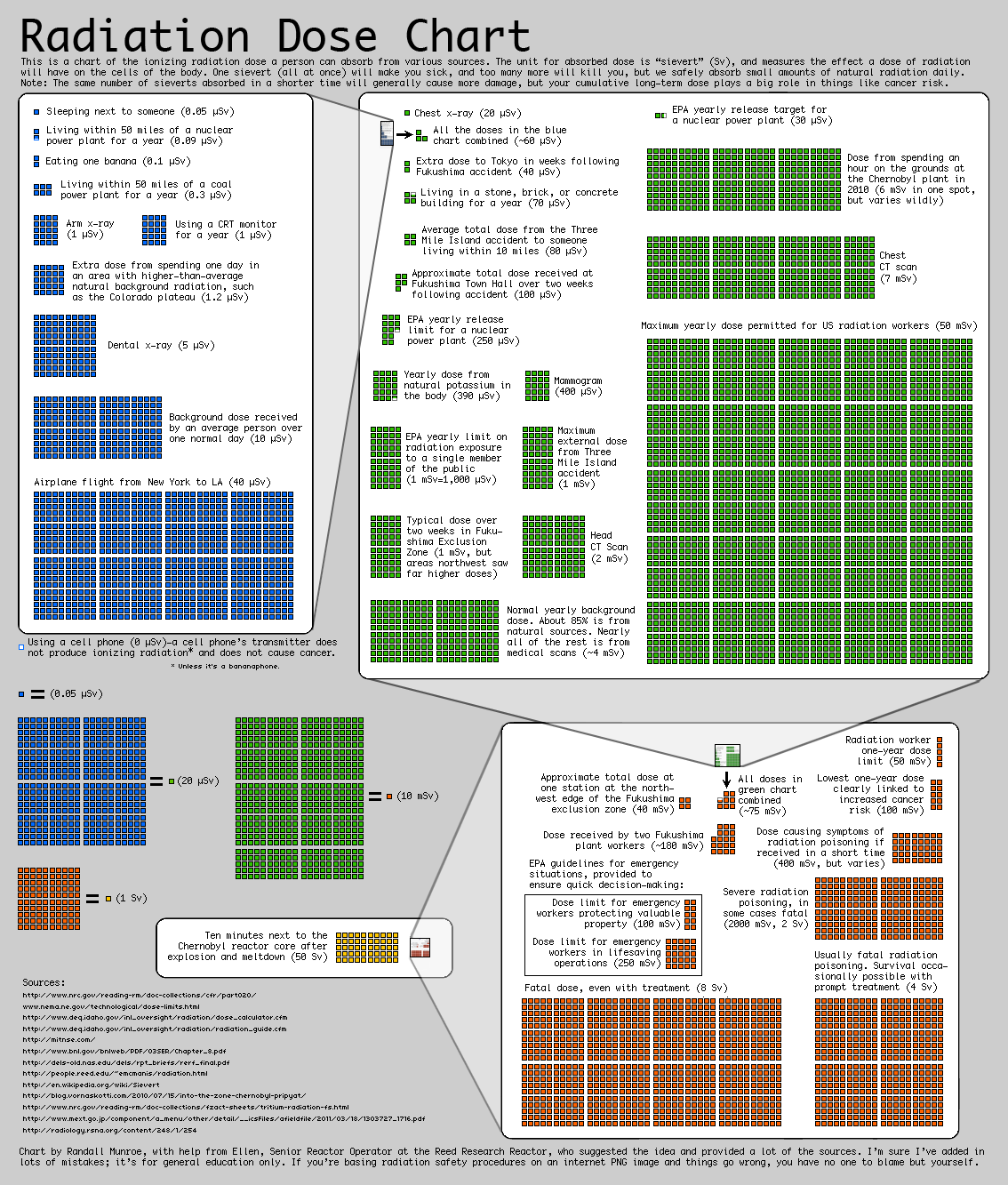











 Millard Fillmore's Bathtub