Fly your flags today in Minnesota: 157th Minnesota Statehood Day, May 11

May 11, 2015

Flag etiquette following the U.S. Flag Code urges Americans to fly U.S. flags on the day of statehood for the state in which you reside.

Minnesota joined the Union on May 11, 1858.

Minnesota Capitol Chandelier, lit for Statehood Day, May 11.

Caption from the Minneapolis Star-Tribune: The Minnesota Capitol chandelier was illuminated today, May 10, 2013 in celebration of Statehood Day. It has 92 bulbs surrounded by 40,000 crystal beads strung together and was recently painstakingly cleaned and refurbished. The fixture is traditionally lit once per year on Statehood Day. Minnesota became a part of the United States as Minnesota Territory in 1849, and became the 32nd U.S. state on May 11, 1858.

At the Library of Congress’s outstanding American Memory site, a much more detailed history of Minnesota statehood is featured on “Today in History,” reproduced here in its entirety:

The Star of the North

facade of a domed building
Capitol Building, exterior, St. Paul, MN
St. Paul, Minnesota 1902
American Landscape and Architectural Design, 1850-1920

On May 11, 1858, Minnesota became the 32nd state admitted into the Union. Minnesota’s application for statehood was submitted to President James Buchanan in January, but became entangled with the controversial issue of Kansas statehood, delaying it for several months until it was finally approved by Congress.

Known as the “Land of 10,000 Lakes,” or “Star of the North,” Minnesota is the northern terminus of the Mississippi River’s traffic and the westernmost point of an inland waterway which extends through the Great Lakes and, with the St. Lawrence Seaway, to the Atlantic Ocean.

The Ojibwa (Chippewa) and Dakota (Sioux) were among the tribal peoples who first made this land their home. For them state borders were non-existent, and their territory extended far beyond what is today Minnesota. The French claimed this region from the mid-1600s to the mid-1700s, developing a strong fur trade but ceding lands east of the Mississippi to Britain. The U.S. acquired the area and its rich natural resources through the Treaty of Paris (1783), and the Louisiana Purchase (1803).

U.S. administration of the northwest lands formally began with the 1787 passage of the Northwest Ordinance. The ordinance, one of the most important pieces of legislation passed by the Continental Congress, set out the requirements for a territory to become a state. The American Memory collection Continental Congress and the Constitutional Convention, 1774-1789 features a discussion of the Incorporation of the Western Territories. For additional information on England’s yielding of land west of the Appalachian Mountains, see the Today in History feature on the Surrender of Fort Sackville. A representation of Fort Sackville is accessible on The George Rogers Clark National Historic Park site.

From the 1820s on, protected the growth of the area now called Minnesota. During the Civil War, the fort served as a training center for thousands of young Minnesota volunteers who joined the Union Army. Twenty-four thousand soldiers who trained at the fort fought in the Union Army, serving gallantly at Gettysburg or during the Indian Outbreak. Once a military outpost at the edge of a small settlement, Fort Snelling is now located at the center of Minnesota’s “Twin Cities”—Minneapolis and St. Paul.

wheat bundle stacks
Wheat Bundle Stacks, Fosston, Minnesota, circa 1900.
The Northern Great Plains, 1880-1920

a horse in a farming rig in a field
Horse powered threshing rig, Blue Earth, Minnesota, 1898.
The Northern Great Plains, 1880-1920

Until the second half of the nineteenth century, immigration into Minnesota was slow. However, as the value of the state’s woodlands and fertile prairie was realized, settlers poured into the region with New England lumbermen leading the way. Between 1850 and 1857, the state population skyrocketed from 6,077 to over 150,000. As a large state with land for homesteading, Minnesota attracted immigrants from Norway, Sweden, Finland, and those seeking to own land in the United States. An 1878 brochure published by the Minnesota State Board of Immigration, describes the many reasons for moving to the state.

19th century advertisements to get people to move to Minnesota. Library of Congress images

19th century advertisements to get people to move to Minnesota. Library of Congress images; see description and link details below

Advertisement for a steamboat company
Northern Line Packet Co.,
Advertisement for a steamship company in The Minnesota Guide. A Handbook of Information for the Travelers, Pleasure Seekers and Immigrants…, 1869.
Pioneering the Upper Midwest: Books from Michigan, Minnesota, and Wisconsin, ca. 1820-1910

Still a leader in farming, lumbering, milling, and medical research, Minnesota is also an important center for the printing industry and a major producer of iron ore. Its largest city, Minneapolis, is home to the University of Minnesota, numerous museums, and theaters such as the Tyrone Guthrie Theater and the Walker Arts Center, and the world’s largest cash grain market.

St. Paul is the state capital.

Bird's eye view of Duluth
Bird’s Eye View of Duluth, Minnesota, copyright 1914.
Taking the Long View, 1851-1991

More:

U.S. and Minnesota flags flying together. Minnesota state flag photo by AlexiusHoratius - Own work. Licensed under Creative Commons, via Wikipedia

U.S. and Minnesota flags flying together. Minnesota state flag photo by AlexiusHoratius – Own work. Licensed under Creative Commons, via Wikipedia

Yes, this is mostly an encore post. Fighting ignorance requires patience.

Yes, this is mostly an encore post. Fighting ignorance requires patience.


Difficult classrooms: Sierra Leone, after Ebola

May 9, 2015

Schools in Sierra Leone closed during the Ebola crisis, and stayed shuttered for nine months.

In early April 2015, schools started to reopen.

Al Jazeera photo:  Sierra Leone schools reopen after nine-month Ebola shutdown http://alj.am/1DEqOKU

Al Jazeera photo: Sierra Leone schools reopen after nine-month Ebola shutdown http://alj.am/1DEqOKU

Education is important. Children in tough, crisis-riven parts of the world, do what they can to learn.  It’s not easy.

CBS News:  More than 8,000 schools reopen in Sierra Leone after Ebola outbreak http://cbsn.ws/1JH6k52

CBS News: More than 8,000 schools reopen in Sierra Leone after Ebola outbreak http://cbsn.ws/1JH6k52 “Sierra Leone health officials check passengers transiting at the border crossing with Liberia in Jendema, March 28, 2015. Getty”

Al Jazeera assembled a report from wire services:

More than 8,000 schools reopened for the country’s estimated 1.8 million students, whose education was interrupted by the health crisis. Sierra Leone’s government and the U.N.’s children’s agency, UNICEF, have promised to check temperatures regularly and promote hand washing to discourage the spread of Ebola in the schools.

“This marks a major step in the normalization of life in Sierra Leone,” said Roeland Monasch, UNICEF’s representative in Sierra Leone. “It is important that all children get into school including those who were out of school before the Ebola outbreak. Education for all is a key part of the recovery process for the country.”

Though few children returned to school in the capital Freetown, government workers and aid workers were optimistic that attendance would increase in the days ahead, according to Leslie Scott, national director for aid agency World Vision.

“The skepticism is based on fear of Ebola because people are not very confident of sending their children if schools are not well prepared,” he said.

At the Prince of Wales secondary school in the west of Freetown, hundreds of pupils showed up in a compound that medical charity Doctors Without Borders used as an Ebola care center just a few weeks before. The compound has been decontaminated but classrooms are still being prepared.

“Some of the kids are standing here (in the sun) because their classrooms are still being painted,” said school principal Rodney Coker, who added that the turnout was impressive.

By contrast, Emmanuel Caulker, principal of the Jaiama Secondary School in Kono district, said only 13 children showed up, compared to an expected 500, a turnout echoed by other schools.

“We have also not received our teaching and learning materials promised by the government,” Caulker told Reuters.

Sierra Leone’s Ministry of Education, Science and Technology said it hopes that the year’s academic curriculum can still be covered before the end of the school year. A small number of junior secondary schools have been open since late March for exams.

UNICEF and World Vision said they had trained teachers to support children affected by the virus. In all, more than 9,000 children were orphaned by Ebola in Sierra Leone.


Fly your flag for Victory Europe Day, May 8, 2015 – 70th anniversary

May 8, 2015

Yes, you should be flying your flag today for Victory Europe Day (VE Day)!

Caption from Pinterest, World War Items: A huge American flag unfurled in New York’s Herald Square on VE Day on May 8, 1945. This 80x160 foot flag was hung from the eighth floor balcony of Macy’s New York department store, covering the façade from 34th and 35th Streets along Broadway. Beneath it were placed a set of British, Chinese, French and Russian flags, held by two giant mailer fists. (AP Photo)

Caption from Pinterest, World War Items: A huge American flag unfurled in New York’s Herald Square on VE Day on May 8, 1945. This 80×160 foot flag was hung from the eighth floor balcony of Macy’s New York department store, covering the façade from 34th and 35th Streets along Broadway. Beneath it were placed a set of British, Chinese, French and Russian flags, held by two giant mailer fists. (AP Photo)

VE Day is not one listed in the Flag Code for flying the colors, but in most years there is a proclamation from the President urging that we do fly the flag.

This year President Obama noted the 70th anniversary of VE Day with his weekly message:


Signs of life: This is the Moon?

May 6, 2015

Saw this first on Twitter; found it on Pinterest with a claim it’s from Albuquerque, New Mexico.

Either way, it’s a very patient photographer, or one who really knows how to take advantage of serendipitous coincidence. Anyone know?

“Seems legit,” said @OMGFunniest_. Chere Brown on Pinterest said, “Well-played, Albuquerque.”

Albuquerque does have a Moon Street, in the 87111 Zipcode. Can any of our Albuquerque readers verify?


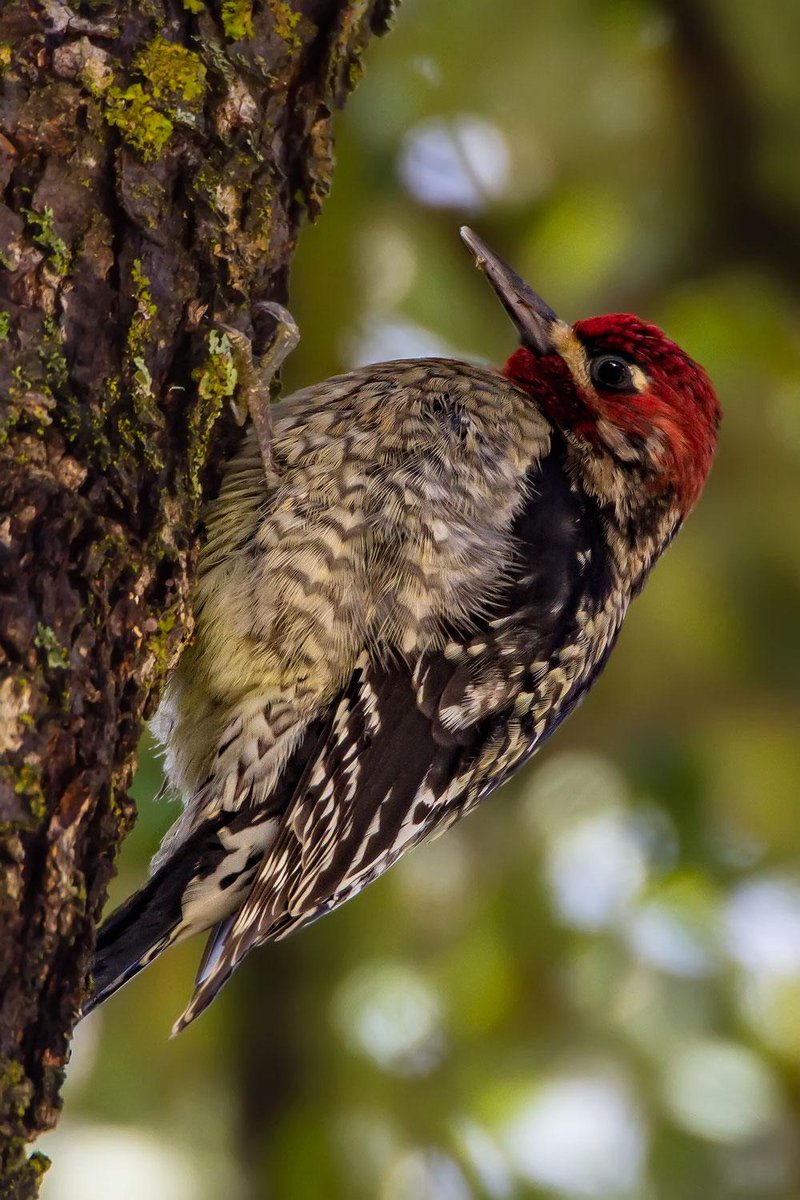
Red-breasted sapsucker in Yosemite

May 6, 2015

I really like this close-up of a woodpecker; from Twitter.

Wonder how long birds live? Red-breasted sapsuckers can live at least 7 years! Photo by Ann & Rob Simpson #Yosemite

Wonder how long birds live? Red-breasted sapsuckers can live at least 7 years! Photo by Ann & Rob Simpson #Yosemite


Cinco de Mayo: NOT Mexico’s Independence Day; should Confederate sympathizers celebrate?

May 5, 2015

(Mostly an encore post, from 2009, with updates)

You thought Cinco de Mayo was Independence Day for Mexico?

No, it’s not.

History.com has a nice explanation, with a nice little video

NPR’s blogs explain: “Cinco de Mayo: Whose holiday is it, anyway?”

“It ain’t about the Margaritas: The real meaning of Cinco de Mayo,” at NPR’s The Takeaway.

Perhaps the U.S. should celebrate the day, too, at least in those states who were not in the old Confederacy. On May 5, 1862, Mexicans under the command of 33 year old Commander General Ignacio Zaragoza Seguín stopped the quick advance of superior French forces trying to invade Mexico to take it over, at the Battle of Puebla. While France did eventually defeat Mexican forces (after getting 30,000 men in reinforcements), the spirit of May 5 inspired Mexicans to continue to fight for freedom. And ultimately, Mexican forces overpowered and captured the French forces and Emperor Maximilian, who was executed.

Thus ended a great hope for the Confederacy, that a French-supported Mexican Army would lend aid to the Confederates in their struggle to secede from the Union.

It is one of the great what-ifs of history: What if France had kept Mexico, and what if French-led Mexican forces backed up the Confederate Army, as Confederates and the French hoped?

One thing is rather sure: Had that happened, and had the Confederacy been successful, we wouldn’t be celebrating Cinco de Mayo in Texas today.

What do the scholars of Lincoln have to add?

Battle of Puebla, Wikimedia (artist?)

Battle of Puebla, Wikimedia (artist?)

Mexican Independence Day is September 16.

_______________________________________

Update: A reader sends a note that Seguin was a Texan. So the Mexican hero of the Battle of Puebla was a Texan. You couldn’t make this stuff up — real history is always more interesting than fiction.


Moon rise over Joshua Tree National Park

May 5, 2015

Four minutes of a glorious full Moon rising over Joshua Tree National Park — reduced to a 6-second Vine.

I do like a little well-done time lapse. In this one, the action of the clouds playing peek-a-boo with the Moon is a lot of fun. It’s just the sort of astronomical action I love to watch in the National Parks.

Desert sunset at Jumbo Rocks Campground, Joshua Tree NP. Photo by Brad Sutton/NPS

Desert sunset at Jumbo Rocks Campground, Joshua Tree NP. Photo by Brad Sutton/NPS

I wonder where Lian Law took that time-lapse of the Moon.  Anyone know?

More:

Screen capture of the Moon rise Vine video by Lian Law, National Park Service.

Screen capture of the Moon rise Vine video by Lian Law, National Park Service.


What dates do we fly the flag in May?

May 2, 2015

"Allies Day, May 1917" -- 1917 oil on canvas by Childe Hassam; National Gallery of Art, Washington, D.C.

“Allies Day, May 1917” — 1917 oil on canvas by Childe Hassam; National Gallery of Art, Washington, D.C. Allies Day is no longer celebrated.

May has three days designated for flying the U.S. flag out of the specific days mentioned in the U.S. Flag Code, and three statehood days, when residents of those states should fly their flags.

Interestingly, the three designated days all float, from year to year:

  • Mother’s Day, second Sunday in May (May 10, in 2015)
  • Armed Forces Day, third Saturday in May (May 16)
  • Memorial Day, the last Monday in May (May 25)

Residents of these states celebrate statehood; South Carolina and Wisconsin share May 23:

  • Minnesota, May 11 (1858, the 32nd state)
  • South Carolina, May 23 (1788, the 8th state)
  • Wisconsin, May 23 (1848, the 30th state)
  • Rhode Island, May 29 (1790, the last of the 13 original colonies to ratify the Constitution)

This year President Obama issued a proclamation calling on citizens to fly the flag on May 1, Law Day (I missed that one).

May 8 marks the 70th anniversary of Victory in Europe Day, the day the Axis Powers in Europe surrendered at the end of World War II.  Some years that day is marked by a proclamation calling for flag flying.  (You may fly your flag then even if Congress and the President do nothing.)

In recent years President Obama has proclaimed May 15 as Peace Officers Memorial Day, with flags to fly at half-staff. We might expect another such declaration in 2015.

May 22 is National Maritime Day, under a Joint Resolution from Congress from 1933. President Obama may be expected to proclaim that day as a day to fly the flag, too.

Gee, eleven events on ten days to fly the U.S. flag.  May could be quite busy for flag fliers.

  1. Law Day, May 1
  2. Victory in Europe Day, May 8
  3. Mothers Day, May 10
  4. Minnesota Statehood, May 11
  5. Peace Officers Memorial Day, May 15 (half-staff flags)
  6. Armed Forces Day, May 16
  7. National Maritime Day, May 22
  8. South Carolina Statehood, AND Wisconsin Statehood, May 23
  9. Memorial Day, May 25
  10. Rhode Island Statehood, May 29

Young public school artists draw award-winning inspiration from endangered species.

May 1, 2015

Young artists inspired by #endangeredspecies:1st prize D Starovoytov,6th grade http://1.usa.gov/1Koe2RY  @EcoSchoolsUSA  From @USFWSRefuges

Young artists inspired by #endangeredspecies:1st prize D Starovoytov,6th grade http://1.usa.gov/1Koe2RY @EcoSchoolsUSA From @USFWSRefuges

Maybe someone can make that 6th grader’s day, or life, by asking to purchase that piece (watercolor?) for a few thousands of dollars, to go into a college fund.

The USFWS blog, A Talk on the Wildside, announced the winners of the agency’s 2015 Saving Endangered Species Youth Art Contest.

David Starovoytov, a sixth-grader from California, won the Grand Prize with his art of a Kentucky arrow darter, a beautiful fish found only in eastern Kentucky. During the breeding season, the males are blue-green with scarlet spots and scarlet-orange vertical bars on their body.  The Kentucky arrow darter is a candidate for federal listing under the Endangered Species Act (ESA). Federal candidates warrant ESA protection but are sometimes precluded from listing by other higher priority listing actions (other species are more imperiled and take priority).  Each year, the Service publishes a list and summarizes the current status for all candidate species in its Candidate Notice of Review (CNOR). The CNOR helps landowners and natural resource managers plan conservation to address threats to candidate species. The Kentucky Department of Fish and Wildlife Resources has identified the Kentucky arrow darter as a species of greatest conservation need and has been hard at work conserving it through captive breeding and other projects.  A key threat to the Kentucky arrow darter is degradation of habitat through surface coal mining and other human activities.  Changes in water quality have a profound impact on all aquatic species, including the Kentucky arrow darter.

The darter itself has an interesting story. Cool that a California kid heard the story, and made such a nice work of art.

The rest of the press release, and other winners:

AlligatorFourteen-year-old Seungeun Yi, of California, took second place with art of an American alligator, actually one of our greatest ESA successes. As recently as the 1950s, American alligator populations were at all-time lows as market-hunting and habitat loss decimated the species. ESA protection prohibited hunting, and the alligator began to recover, and states throughout the South helped make sure the population increased. We declared the animal fully recovered in 1987, but related species are still in trouble, so the American alligator is listed as “threatened due to similarity of appearance.

San Francisco garter snake

Another Californian, Mark Deaver, 8, won the Grades k-2 Category with his art of an endangered San Francisco garter snake. The San Francisco garter snake with its turquoise body and orange, black and red-orange stripes, is often called the most beautiful snake in the United States. Because they are so beautiful, some people collect them illegally. But the more significant threat comes from habitat loss. We are working with the California Department of Fish and Wildlife, the National Park Service, Golden Gate National Parks Conservancy, the California Department of Parks and Recreation and other partners to provide habitat for the snake.

eagle

Difei Li, 10, of New Jersey, won the Grades 3-5 Category with art of a bald eagle. Perhaps the ESA success story, the bald eagle population bottomed out in 1963 with just 417 nesting pairs in the contiguous United States. Habitat destruction and degradation, illegal shooting and the widespread use of DDT had sent the eagle population plummeting after World War II. Protecting habitat, banning most DDT use and a host of conservation actions by the American public helped bald eagles make a remarkable recovery. Though removed from the endangered species list in 2007 because their populations recovered sufficiently, bald eagles are protected under the Migratory Bird Treaty Act and the Bald and Golden Eagle Act.

Northern aplomado falconClaire Noelle Kiernicki, 12, of  Illinois, won the Grades 6-8 Category with art of an endangered Northern aplomado falcon. Once widespread throughout the American Southwest, the aplomado falcon disappeared in South Texas in the 1940s and 1950s because of widespread loss of habitat.  An aggressive captive breeding and re-introduction effort has improved population numbers and the aplomado falcon is making a comeback in southern Texas.

bat

Adam Pavan, 15, of California, won the Grades 9-12 Category with art of an endangered Hawaiian hoary bat. Also known as the ‘ope‘ape‘a, populations are believed to be threatened by habitat loss, pesticides, predation, and roost disturbance. Its decline may be primarily due to the reduction of tree cover in historic times, and they may be indirectly impacted by the use of pesticides. Conservation plans guide the management and use of forests to reduce negative efforts to known bat populations and, continued support for the ‘ope‘ape‘a research cooperative.

Congratulations to all the entrants and thank you for helping spread the word about the endangered species of  the United States and its waters.