April is the month to fly your flags!

April 5, 2017

Is April the cruelest month?

It’s cruel to people who want to fly U.S. flags often, but only on designated flag-flying dates. (April is also National Poetry Month, so it’s a good time to look up poetry references we should have committed to heart).

For 2017, these are the three dates for flying the U.S. flag; Easter is a national date, the other two are dates suggested for residents of the states involved.

One date, nationally, to fly the flag. That beats March, which has none (in a year with Easter in April and not March). But March has five statehood days, to April’s two.

Take heart! You may fly your U.S. flag any day you choose, or everyday as many people do in Texas (though, too many do not retire their flags every evening . . .).

Three dates to fly Old Glory in April, by the Flag Code and other laws on memorials and commemorations.

  • Easter, April 16
  • Maryland, April 28, 1788, 7th state
  • Louisiana, April 30, 1812 – 18th state

Some people have abused the flag in April.

Caption from The Guardian: Ted Landsmark (centre): ‘I had a sense that something really significant had happened.’ Boston, April 5, 1976. Photograph: stanleyformanphotos.com

Caption from The Guardian: Ted Landsmark (centre): ‘I had a sense that something really significant had happened.’ Boston, April 5, 1976. Photograph: stanleyformanphotos.com

See “That’s me in the picture: Ted Landsmark is assaulted in Boston, at an ‘anti-bussing’ protest, 5 April 1976,” Abigail Radnor, The Guardian, April 17, 2015; and “The U.S. Flag in the 20th Century (Part 2),” The Portland Flag Association.

More:

Save

Save

Save

Save


Malaria uptick in Botswana: No, more DDT can’t help

March 28, 2017

Health workers in Botswana use a cell phone to report malaria diagnoses and commencement of treatment, enabling real-time tracking of malaria outbreaks and rapid public health service responses. Photo from MalariaNoMore.

Interested, and interesting, to discover Botswana has a Facebook page where it appears is posted almost every press release or news item from the government.

I found it because some wag claimed on Twitter that Botswana faces a malaria crisis, and therefore DDT should be ‘brought back from the dead.’

Botswana did post about a malaria outbreak, but the nation appears to have good sense about how to fight malaria. The Tweeter missed that Botswana is already doing what a nation would use DDT for, Indoor Residual Spraying (IRS), and that phrase alone means Botswana’s malaria fighters are alert to any need for DDT should it arise, but also to the severe limitations on DDT use. DDT doesn’t work in about 95% of the nations on Earth.

Botswana is among the ten nations remaining on Earth who use DDT when and where they find a population of mosquitoes still susceptible to DDT. Almost all nations on Earth signed the Persistent Organic Pollutants Treaty (POPs, or Stockholm Agreement), which requires annual reporting of DDT use. But there are 11 other pesticides the World Health Organization (WHO) recommends for IRS. Botswana is unlikely to use DDT where it won’t work, which is most places.

Botswana is one of the DDT Ten in 2016, too. But this is down from 43 nations in 2001. DDT’s effectiveness and time as a tool to fight malaria is mostly gone, vanishing quickly.

Botswana has DDT if it can find a use for it; no more DDT is needed. A malaria outbreak in Botswana is no reason to remove the ban on DDT use on U.S. farms.

Here is the story/press release from Botswana’s government:

MALARIA CASES RISE IN OKAVANGO

North West District has been hard hit by a malaria epidemic with 670 recorded cases and five deaths since the beginning of the rainy season.

Head of the District Health Management Team, Dr Malebogo Pusoentsi revealed this at a press conference aimed at evaluating efforts made in the district to control the disease, recently.

A task force was in the district to assess and appreciate the situation as well as discuss what more could be done going forward.

Dr Pusoentsi said the highly affected region was Okavango which recorded over 90 per cent of the cases.

Highly affected areas include Shakawe, Xakao and Seronga in the Okavango District while in Ngami, Tsau and Mababe were the most affected.

Out of the affected people, it was reported that males were mostly affected as compared to females, and that more than 30 per cent of the affected were children. The most affected areas were said to be schools.

Dr Pusoentsi explained that malaria infection in humans was mainly transmitted through the sting of the female anopheles mosquito, adding that the disease in people could present clinically as either uncomplicated, complicated or asymptomatic, especially for people living in malaria endemic areas.

She stated that prevention of malaria remained a priority with strategies aimed at vector control. She said two strategies have been used to control mosquitoes in the area such as indoor residual spraying and the distribution of the long lasting insecticide treated nets. She added that 57 000 nets having been distributed across the country.

Regarding indoor spraying, Dr Pusoentsi revealed that for the transmission period of 2016/17, the district achieved an average of 69 per cent coverage as compared to the 85 per cent target.

Asked if the district was winning the battle, she said they were on the right track as health officials have doubled up efforts to tackle the epidemic.

She said social mobilisation was effective as the community and leadership were taught to make malaria a priority in their agenda, adding that if one member of a family was affected, chances were high that the rest of the family were also at risk.

Furthermore, Dr Pusoentsi explained that many opportunities still existed at community level to effectively control the spread of malaria, citing the cleaning of surroundings to minimise the breeding spaces for the mosquitoes.

Another strategy was to work collaboratively to ensure community knowledge and participation during the epidemic period. She urged the community to visit health facilities if they experience any symptoms of malaria so that they could be assisted on time.

She noted that common signs and symptoms include high temperature, headache and rigors, pallor and vomiting.

Dr Pusoentsi also noted that Botswana was among the countries which were aiming to eliminate malaria by 2018, adding that as part of the strategy, all efforts and investments had been put in place to control the spread.

Effective surveillance mechanism, she said had been put in place to monitor the disease burden and response efficiency at all times.

In addition, she pointed out that case management and drug supply had been strengthened to ensure quality management of cases of malaria to avoid deaths. (BOPA)

Save


Can we fly the U.S. flag in March?

March 27, 2017

U.S. flag displayed by horse-mounted marchers in a San Francisco St. Patrick's Day Parade (perhaps 2014); image from United Irish Societies of San Francisco (UISSF).

U.S. flag displayed by horse-mounted marchers in a San Francisco St. Patrick’s Day Parade (perhaps 2014); image from United Irish Societies of San Francisco (UISSF).

I usually put up a post near the first of the month listing the occasions upon which U.S. laws urge us to fly Old Glory. March usually slips by without such  post.

No good reason, other than in most years, March offers no regular commemorations upon which flag flying is urged. The odd year is when Easter comes early. Easter is one of the holidays the Flag Code says flags should be flown.

But, most years, Easter falls in April, as it does in 2017.

The Flag Code urges residents of states to fly the U.S. flag on the anniversary of their state’s entering the union, on statehood day. Those are the only dates in March, most years.

Flag fly dates, for March (already past, in 2017):

  • March 1, Ohio statehood (1803, 17th state)
  • March 1, Nebraska statehood (1867, 37th state)
  • March 3, Florida (1845, 27th state)
  • March 4, Vermont statehood (1791, 14th state)
  • March 15, Maine statehood (1820, 23rd state)

A lot of St. Patrick’s Day revelers and parade marchers display the flag, but it’s not an official U.S. observance. I keep hoping, but I get little traction for a law urging flying the flag to observe Freedom Day, on the birth anniversary of the Father of the Constitution, James Madison.

People gathered on the lawn of James Madison's home in Montpelier, Virginia, to display the U.S. flag in a card display, 2011.  AP photo?

People gathered on the lawn of James Madison’s home in Montpelier, Virginia, to display the U.S. flag in a card display, 2011. AP photo?

Much irony, and great history, in the U.S. colors being shown so dramatically on St. Patrick’s Day, a day relatively uncommemorated in Ireland, and commemorated in the U.S. chiefly to help overcome bias against Irish immigrants.

I’ll try to keep up better, next year.

Sure, you may fly the U.S. flag every day in March. You need not wait for sanction from a Presidential Proclamation or a Congressional Resolution. You may fly the flag every day. (Just follow flag etiquette when you do.)

U.S. colors led the St. Patrick's Day parade in Seattle, Washington, in 2014. Photo from IrishClub.org

U.S. colors led the St. Patrick’s Day parade in Seattle, Washington, in 2014. Photo from IrishClub.org

U.S. colors stood out in a field of green at the St. Paul, Minnesota, St. Patrick's Day parade, 2015(?). Photo from VisitStPaul.com.

U.S. colors stood out in a field of green at the St. Paul, Minnesota, St. Patrick’s Day parade, 2015(?). Photo from VisitStPaul.com.

Members of the Yorktown Irish Pipes and Drums Corps march in the 35th annual Northern Westchester-Putnam St. Patrick Day Parade, in Mahopac, New York, 2011. Photo by Seth Harrison

U.S. flag displayed as members of the Yorktown Irish Pipes and Drums Corps march in the 35th annual Northern Westchester-Putnam St. Patrick Day Parade, in Mahopac, New York, 2011. Photo by Seth Harrison


Happy coincidence: Pi Day is Albert Einstein’s birthday

March 14, 2017

How many ways can we say happy birthday to a great scientist born on Pi Day?  So, an encore post.

E=mcc - logo from AIP

E=energy; m=mass; c=speed of light

Happy Einstein Day! to us.  Albert’s been dead since 1955 — sadly for us.  Our celebrations now are more for our own satisfaction and curiosity, and to honor the great man — he’s beyond caring.

Almost fitting that he was born on π Day, no? I mean, is there an E=mc² Day? He’s 138 years old today, and famous around the world for stuff that most people still don’t understand. 

Fittingly, perhaps, March 14 now is celebrated as Pi Day, in honor of that almost magical number, Pi, used to calculate the circumference of a circle. Pi is 3. 1415~, and so the American date 3/14 got tagged as Pi Day.

Albert Einstein was born on March 14, 1879, in Ulm, Germany, to Hermann and Pauline Einstein.

26 years later, three days after his birthday, he sent off the paper on the photo-electric effect; that paper would win him the Nobel Prize in Physics in 1921.

In that same year of 1905, he published three other papers, solving the mystery of Brownian motion, describing what became known as the Special Theory of Relativity and solving the mystery of why measurements of the light did not show any effects of motion as Maxwell had predicted, and a final paper that noted a particle emitting light energy loses mass. This final paper amused Einstein because it seemed so ludicrous in its logical extension that energy and matter are really the same stuff at some fundamental point, as expressed in the equation demonstrating an enormous amount of energy stored in atoms, E=mc².

Albert Einstein as a younger man - Nobel Foundation image

Albert Einstein as a younger man – Nobel Foundation image

Any one of the papers would have been a career-capper for any physicist. Einstein dashed them all off in just a few months, forever changing the fields of physics. And, you noticed: Einstein did not win a Nobel for the Special Theory of Relativity, nor for E=mc². He won it for the photo-electric effect. Irony in history. Nobel committee members didn’t understand Einstein’s other work much better than the rest of us today.

117 years later, Einstein’s work affects us every day. Relativity theory at some level I don’t fully understand makes possible the use Global Positioning Systems (GPS), which revolutionized navigation and mundane things like land surveying and microwave dish placement.

Development of nuclear power both gives us hope for an energy-rich future, and gives us fear of nuclear war. Sometimes, even the hope of the energy rich future gives us fear, as we watch and hope nuclear engineers can control the piles in nuclear power plants damaged by earthquakes and tsunami in Japan.

English: Albert Einstein on a 1966 US stamp

Albert Einstein on a 1966 US stamp (Photo credit: Wikipedia)

If Albert Einstein was a genius at physics, he was more dedicated to pacifism. He resigned his German citizenship to avoid military conscription. His pacifism made the German Nazis nervous; Einstein fled Germany in the 1930s, eventually settling in the United States. In the U.S., he was persuaded by Leo Szilard to write to President Franklin Roosevelt to suggest the U.S. start a program to develop an atomic weapon, because Germany most certainly was doing exactly that. But while urging FDR to keep up with the Germans, Einstein refused to participate in the program himself, sticking to his pacifist views. Others could, and would, design and build atomic bombs. (Maybe it’s a virus among nuclear physicists — several of those working on the Manhattan Project were pacifists, and had great difficulty reconciling the idea that the weapon they worked on to beat Germany, was deployed on Japan, which did not have a nuclear weapons program.)

English: USSR stamp dedicated to Albert Einste...

Everybody wanted to claim, and honor Einstein; USSR issued this stamp dedicated to Albert Einstein Русский: Почтовая марка СССР, посвящённая Альберту Эйнштейну (Photo credit: HipStamp)

Einstein was a not-great father, and probably not a terribly faithful husband at first — though he did think to give his first wife, in the divorce settlement, a share of a Nobel Prize should he win it. Einstein was a good violinist, a competent sailor, an incompetent dresser, and a great character.

His sister suffered a paralyzing stroke. For many months Albert spent hours a day reading to her the newspapers and books of the day, convinced that though mute and appearing unconscious, she would benefit from hearing the words. He said he did not hold to orthodox religions, but could there be a greater show of faith in human spirit?

Einstein in 1950, five years before his death

Einstein in 1950, five years before his death

When people hear clever sayings, but forget to whom the bon mots should be attributed, Einstein is one of about five candidates to whom all sorts of things are attributed, though he never said them. (Others include Lincoln, Jefferson, Mark Twain and Will Rogers). Einstein is the only scientist in that group. So, for example, we can be quite sure Einstein never claimed that compound interest was the best idea of the 20th century. This phenomenon is symbolic of the high regard people have for the man, even though so few understand what his work was, or meant.

A most interesting man. A most important body of work. He deserves more study and regard than he gets, in history, diplomacy and science.

Does anyone know? What was Albert Einstein’s favorite pie?

More, Resources:


Brazil’s Yellow Fever outbreak: Medical stuff we should know, from NAIAD

March 9, 2017

Accurate information can be the greatest tool in the fight against diseases, infectious or vector-borne. NAIAD slide.

Accurate information can be the greatest tool in the fight against diseases, infectious or vector-borne. NAIAD slide.

Brazil endures an outbreak of Yellow Fever in early 2017. Mosquitoes transmit Yellow Fever from one mammal host to another. Famously, Yellow Fever had to be controlled to allow construction of the Panama Canal between 1910 and 1915.

It should be just a matter of days, or perhaps a few hours, before harpies on the right and in anti-science trenches demand “return” of DDT to fight this outbreak, arguing that EPA didn’t know what it was doing when it banned DDT from farm use, and probably dropping cheap shots at Rachel Carson and “environmentalists.”

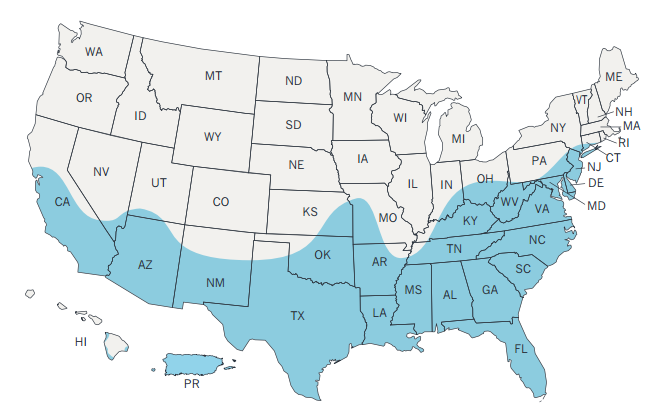
Yellow Fever is usually carried by mosquitoes in the species Aedes aegypti, a nasty little bug that carries several diseases to humans including Zika virus and West Nile virus.

Distribution of Aedes aegypti mosquitoes in the U.S. Map by U.S. CDC, via Wikipedia

Distribution of Aedes aegypti mosquitoes in the U.S. Map by U.S. CDC, via Wikipedia

Astute observers know that A. aegypti are almost ubiquitous in warmer human cities, so the transmission of the disease requires only that a host (usually human) shows up infected with the pathogen, and an epidemic might occur.

Those observers also know that all mosquitoes are resistant or immune to DDT and frequently to other pesticides as well, their having been bombarded with pesticides for 60 or more years, and consequently having evolved resistance alleles. So spraying with DDT won’t work.

That’ won’t stop those who relish slandering Carson or who wish to impugn the humanity and good motives of environmentalists.

Get facts, first.

Come Dr. Anthony Fauci and Dr. Cahtharine Paules of the U.S.’s National Institute of Allergy and Infectious Diseases (NAIAD), part of the National Institutes of Health (NIH) to offer information to calm the hyperventilated, and to inform the serious and concerned citizen with an article in the New England Journal of Medicine, explaining Brazil’s problem, Yellow Fever, and what U.S. residents need to do, and this press release from NAIAD to get the key points across quickly.

Will anyone listen?

Yellow Fever in the Americas

Current Outbreak Merits Close Watch
March 8, 2017

The unusually large outbreak of yellow fever now occurring in rural Brazil deserves careful attention by world health authorities, notes Anthony S. Fauci, M.D., director of the National Institute of Allergy and Infectious Diseases (NIAID), one of the National Institutes of Health. Writing in a Perspectives piece for the New England Journal of Medicine, Dr. Fauci and his associate Catharine I. Paules, M.D., note that this latest outbreak of a serious mosquito-borne virus comes as Zika virus, which is spread by the same mosquito as yellow fever virus, continues to affect countries throughout the Americas.

Historically, yellow fever has claimed millions of lives, including many thousands in the United States. The Philadelphia epidemic of 1793, for example, killed approximately ten percent of the city’s population. In its most serious form, yellow fever symptoms include high fever, hemorrhagic manifestations, kidney failure, liver malfunction and jaundice (yellowish appearance of the eyes and skin, which gives the disease its name.)

A vaccine has been available since 1937 and confers lifelong immunity in up to 99 percent of those who receive it. Extensive immunization campaigns, along with effective mosquito control—especially in developed countries—have reduced yellow fever cases worldwide. Nevertheless, localized outbreaks in parts of Africa and Central and South America account for an estimated 84,000 to 170,000 severe cases of disease and between 29,000 and 60,000 deaths annually.

The Brazilian outbreak is a manifestation of the “sylvatic,” or jungle, transmission cycle in which forest-dwelling mosquitoes spread the virus primarily to non-human primates, with humans serving only as incidental hosts. At this time, there is no evidence that the outbreak is transforming into its “urban” cycle, but authorities should remain alert for this possibility, the authors note. In the urban cycle, yellow fever virus is usually spread by city-dwelling Aedes aegypti mosquitoes directly to people. An urban cycle of yellow fever in Angola and the Democratic Republic of Congo that began in late 2015 caused 961 confirmed cases and 137 deaths. During that outbreak, write Drs. Fauci and Paules, the world’s emergency vaccine stockpile reserve was exhausted, limiting the number of available vaccine doses and making the outbreak more difficult to control. To prevent a similar occurrence during a future yellow fever outbreak in Brazil or elsewhere, “early identification of cases and rapid implementation of public health management and prevention strategies, such as mosquito control and appropriate vaccination, are critical,” they write.

In an era of frequent international travel, an increase in domestic cases in Brazil has the potential to spread yellow fever to non-endemic areas and could pose serious disease-control challenges, Drs. Fauci and Paules observe. They urge clinicians, especially those in the United States and other places where yellow fever is uncommon, to inform themselves about yellow fever symptoms and to adopt a high index of suspicion for this diagnosis, particularly when examining travelers returning from affected regions.

ARTICLE:
CI Paules and AS Fauci. Yellow fever: Once again on the radar screen in the Americas. New England Journal of Medicine DOI: 10.1056/NEJMp1702172 (2017).

WHO:
Dr. Fauci is available to discuss this article.

CONTACT:
To schedule interviews, please contact Anne A. Oplinger, (301) 402-1663, aoplinger@niaid.nih.gov.

Map of Brazil showing confirmed cases of Yellow Fever

Map of Brazil showing confirmed cases of Yellow Fever “in the current outbreak,” as of March 2017. Information from Brazil’s Ministry of Health. NEJM image.


Obama’s 8 years of oppression

March 7, 2017

Nelson Mandela explains to Bill Clinton what life was like in a prison cell for 27 years, from Mandela's Robben Island cell, in 2008. AP photo. Somehow, the administration of President Obama doesn't seem at all like that prison.

Nelson Mandela explains to Bill Clinton what life was like in a prison cell for 27 years, from Mandela’s Robben Island cell #5, March 27, 1998. Mandela spent 18 of his 27 prison years there. AP photo. Somehow, the administration of President Obama doesn’t seem at all like that prison.

A friend, Marian Domansky Fisher, posted this on her Facebook page, from a friend of hers.

Agree? Disagree?

To anyone who “suffered for the last 8 years under President Obama,” please read this response from Scott Mednick when a Facebook friend told him, “We suffered for 8 years. Now it’s your turn.”

Here is Scott’s reply:

“I am surprised you would wish suffering upon me. That of course is your right, I suppose. I do not wish harm on anyone. Your statement seems to continue an ‘US v THEM’ mentality. The election is over. It is important to get past campaigning and campaign rhetoric and get down to what is uniting not dividing and what is best for ALL Americans.

There will never be a President who does everything to everyone’s liking. There are things President Obama (and President Clinton) did that I do not like and conversely there are things I can point to that the Presidents Bush did that I agree with. So I am not 100% in lock step with the outgoing President but have supported him and the overall job he did.

And, if you recall, during the Presidential Campaign back in 2008 the campaign was halted because of the “historic crisis in our financial system.”

Wall Street bailout negotiations intervened in the election process. The very sobering reality was that there likely could be a Depression and the world financial markets could collapse.

The United States was losing 800,000 jobs a month and was poised to lose at least 10 million jobs the first year once the new President took office. We were in an economic freefall.

So let us recall that ALL of America was suffering terribly at the beginning of Obama’s Presidency.

But I wanted to look back over the last 8 years and ask you a few questions. Since much of the rhetoric before Obama was elected was that he would impose Sharia Law, Take Away Your Guns, Create Death Panels, Destroy the Economy, Impose Socialism and, since you will agree that NONE of this came to pass, I was wondering:

Why have you suffered so?

So let me ask:

Gays and Lesbians can now marry and enjoy the benefits they had been deprived of. Has this caused your suffering?

When Obama took office, the Dow was 6,626. Now it is 19,875. Has this caused your suffering?

We had 82 straight months of private sector job growth – the longest streak in the history of the United States. Has this caused your suffering?

Especially considering where he the economy was when he took over, an amazing 11.3 million new jobs were created under President Obama (far more than President Bush). Has this caused your suffering?

Obama has taken Unemployment from 10% down to 4.7%. Has this caused your suffering?

Homelessness among US Veterans has dropped by half. Has this caused your suffering?

Obama shut down the US secret overseas prisons. Has this caused your suffering?

President Obama has created a policy for the families of fallen soldiers to have their travel paid for to be there when remains are flown home. Has this caused your suffering?

We landed a rover on Mars. Has this caused your suffering?

He passed the Matthew Shepard Hate Crimes Prevention Act. Has this caused your suffering?

Uninsured adults has decreased to below 10%: 90% of adults are insured – an increase of 20 Million Adults. Has this caused your suffering?

People are now covered for pre-existing conditions. Has this caused your suffering?

Insurance Premiums increased an average of $4,677 from 2002-2008, an increase of 58% under Bush. The growth of these insurance premiums has gone up $4,145 – a slower rate of increase. Has this caused your suffering?

Obama added Billions of dollars to mental health care for our Veterans. Has this caused your suffering?

Consumer confidence has gone from 37.7 to 98.1 during Obama’s tenure. Has this caused your suffering?

He passed the Lilly Ledbetter Fair Pay Act. Has this caused your suffering?

His bi-annual Nuclear Summit convinced 16 countries to give up and destroy all their loose nuclear material so it could not be stolen. Has this caused your suffering?

He saved the US Auto industry. American cars sold at the beginning of his term were 10.4M and upon his exit 17.5M. Has this caused your suffering?

The deficit as a percentage of the GDP has gone from 9.8% to 3.2%. Has this caused your suffering?

The deficit itself was cut by $800 Billion Dollars. Has this caused your suffering?

Obama preserved the middle class tax cuts. Has this caused your suffering?

Obama banned solitary confinement for juveniles in federal prisons. Has this caused your suffering?

He signed Credit Card reform so that rates could not be raised without you being notified. Has this caused your suffering?

He outlawed Government contractors from discriminating against LGBT persons. Has this caused your suffering?

He doubled Pell Grants. Has this caused your suffering?

Abortion is down. Has this caused your suffering?

Violent crime is down. Has this caused your suffering?

He overturned the scientific ban on stem cell research. Has this caused your suffering?

He protected Net Neutrality. Has this caused your suffering?

Obamacare has extended the life of the Medicare insurance trust fund (will be solvent until 2030). Has this caused your suffering?

President Obama repealed Don’t Ask Don’t Tell. Has this caused your suffering?

He banned torture. Has this caused your suffering?

He negotiated with Syria to give up its chemical weapons and they were destroyed. Has this caused your suffering?

Solar and Wind Power are at an all time high. Has this caused your suffering?

High School Graduation rates hit 83% – an all time high. Has this caused your suffering?

Corporate profits are up by 144%. Has this caused your suffering?

He normalized relations with Cuba. Has this caused your suffering?

Reliance on foreign oil is at a 40 year low. Has this caused your suffering?

US Exports are up 28%. Has this caused your suffering?

He appointed the most diverse cabinet ever. Has this caused your suffering?

He reduced the number of troops in both Iraq and Afghanistan. Has this caused your suffering?

Yes, he killed Osama Bin Laden and retrieved all the documents in his possession for analysis. Perhaps THIS caused your suffering?

From an objective standpoint it would appear that the last 8 years have seen some great progress and we were saved from a financial collapse. Things are not perfect. Things can always be better. We are on much better footing now than we were in 2008.

I look forward to understanding what caused you to suffer so much under Obama these last 8 years.

Imprisonment can be a state of mind, similar to Learned Helplessness.

It seems odd, to me, that anyone would wish such a thing on anyone.


Elk on the Utah skyline

March 7, 2017

Utah’s wildlife managers were plugging the deadline to apply for permits to take an elk in the wild, and they added this picture:

Utah elk in the sagebrush, with mountains in the background. Photo from Utah Division of Wildlife Resources,

Utah elk in the sagebrush, with mountains in the background. Photo from Utah Division of Wildlife Resources, “courtesy Jim Shuler.”

Don’t know the location, but I’m guessing south of Provo, since the mountains in the back look a little redder than they would be just from afternoon sunlight (anyone know?).

In my original home town, Burley, Idaho, we got Challenge Dairy products. For reasons I don’t remember or know, my mother bought Challenge butter over others, from a large display in the small Sparr’s Grocery (did I get the name right? Still there?) . I liked their stuff because they had the coolest logo. I regretted losing access to that stuff when we moved to Utah.

Butter box from Challenge Dairy showing the full logo for the company.

Butter box from Challenge Dairy showing the full logo for the company.

That photo above reminded me of the Challenge logo.

Surprised to discover Challenge Dairy is a California co-op, and not an Idaho concern.

Today we get Challenge Butter in our local Tom Thumb supermarkets in North Texas — but Tom Thumb was bought by Safeway, which was bought by Albertson’s, both of whom have deep history in the west.

Deadline for Utah elk permits was March 2, by the way. Probably about the same time next year, for 2018, if you’re looking to hunt.


Disney showed how to beat malaria in the Americas, without DDT

February 26, 2017

Still photo from Walt Disney's "Winged Scourge," a wanted poster for "Anopheles, alias Malaria Mosquito." The 1943 film short suggested ways to cut populations of the malaria-spreading mosquitoes of the genus Anopheles. Disease prevention would aid the war effort in 1943, it was hoped.

Still photo from Walt Disney’s “Winged Scourge,” a wanted poster for “Anopheles, alias Malaria Mosquito.” The 1943 film short suggested ways to cut populations of the malaria-spreading mosquitoes of the genus Anopheles. Disease prevention would aid the war effort in 1943, it was hoped.

Malaria’s scourge hobbled economic progress across the Americas, and critically in World War II, that hobbled the war effort to defeat the Axis powers, Germany and Japan.

U.S. government recruiting of Hollywood film makers to produce propaganda films hit a zenith in the war. Even animated characters joined in. Cartoonists produced short subject cartoons on seeveral topics.

In 1943 the Disney studios distributed this film starring the Seven Dwarfs, among the biggest Disney stars of the time. The film was aimed at Mexico, Central America and South America, suggesting ways people could actually fight malaria. Versions were made in Spanish and English (I have found no Portuguese version for Brazil, but I’m still looking.)

the lost Disney described the film:

The first of a series of health-related educational shorts produced by the Disney studios and the Coordinator of Inter-American Affairs for showing in Latin America. It was also the only one to use established Disney characters (the Seven Dwarfs).

In this propaganda short, the viewers are taught about how the mosquito can spread malaria. A young mosquito flies into a house and consumes the blood of an infected human. She then consumes the blood of a healthy human, transmitting the disease into him. It turns out that this is actually a film within a film and the Seven Dwarves are watching it. They volunteer to get rid of the mosquito by destroying her breeding grounds.

A Spanish-language version of the film:

Fighting malaria in the U.S. became a grand campaign in Franklin Roosevelt’s administration. Roosevelt administration officials saw malaria as a sapper of wealth, especially in the rural south. Part of the charge of the Tennessee Valley Authority was to wipe out malaria. By 1932, public health agencies in malaria-affected counties were beefed up to be able to promptly diagnose and treat human victims of malaria. TVA taught methods of drying up mosquito breeding places around homes and outdoor work areas. Sustained campaigns urged people to make their homes tighter, against weather, and to install screens on windows and doors to prevent mosquito entry especially at peak biting periods, dusk to after midnight.

U.S. malaria deaths and infections plunged by 90% between 1933 and 1942 — just in time to allow southern military bases to be used for training activities for World War II. After the war, the malaria-fighting forces of the government became the foundation for the Centers for Disease Control (CDC). With the introduction of DDT after 1945, CDC had another weapon to completely wipe out the remaining 10% of malaria cases and deaths.

It’s worth noting that in the end, it is the disease malaria that is eradicated, not the mosquitoes. In most places in the world, eradication of a local population of disease carriers is a temporary thing. A few remaining, resistant-to-pesticide-or-method mosquitoes can and do quickly breed a new population of hardier insects, and often surrounding populations will contribute new genetic material. Eradication of a vector-borne disease requires curing the disease in humans, so that when the mosquitoes come roaring back, they have no well of disease from which to draw new infection.

More:

Save

Save

Save


Typewriter of the moment: Milan Karanovic, Bosnian ethnographer

February 22, 2017

Ethnographer? It’s a person who makes a systematic study of a people and its culture, a subdivision of anthropology, sociology, history and geography all at once.

Milan Karanovic, trained as a priest, studied folk and cultural trends of Bosnians, roughly from 1900 to World War II.

And this is his typewriter:

Typewriter of Bosnian ethnographer Milan Karanovic. Take careful note of special keys to accommodate Bosnian spellings. Typewriter on display in the National Museum of Bosnia and Herzegovina. Photo courtesy of Jonathan Halabi.

Typewriter of Bosnian ethnographer Milan Karanovic. Take careful note of special keys to accommodate Bosnian spellings. Typewriter on display in the National Museum of Bosnia and Herzegovina. Photo courtesy of Jonathan Halabi.

Photo of Milan Karanovich, National Museum of Bosnia and Herzegovina. "Zivot i rad" translates to "life and work." Image by Jonathan Halabi.

Photo of Milan Karanovich, National Museum of Bosnia and Herzegovina. “Zivot i rad” translates to “life and work.” Image by Jonathan Halabi.

Milan Karanovic was born in 1883 in Great Novljansko Rujiška. In his teens he moved to Sarajevo, graduated high school and attended seminary, graduating by 1909 and assuming duties as a parish priest (Orthodox?) in the Krajina region village of Rujnić. We know he published a study of the “village” of Sarajevo in 1907. On the wrong side of local authorities in World War I, he spent much of the war in prison. His publications resumed by 1925, and proliferated through 1937. He died in 1955.

The typewriter is an Optima Elite. I’m guessing this model was made during or after World War II; Optima used the Olympia name into World War II. After the war, Olympia factories in the zones controlled by the Soviet Union changed to Optima. Judging from photos, this machine may have been built in the 1950s, giving Karanovic only a few years to use it. I’m open to the idea that the Optima name was used earlier — this history of corporations and machines is out of my range. If you have better information, please feel free to contribute in comments.


Annals of Global Warming: Mexican plums blooming early in Dallas

February 17, 2017

Spring comes a few hours earlier every year as the planet warms; plants that used to blossom in March and April, now blossom in February. Mexican plum blossoms in Dallas, Texas, February 17, 2017. Photo by Ed Darrell, please share with attribution

Spring comes a few hours earlier every year as the planet warms; plants that used to blossom in March and April, now blossom in February. Mexican plum blossoms in Dallas, Texas, February 17, 2017. Photo by Ed Darrell, iPhone 6; please share with attribution.

Spring comes earlier every year in Dallas. Our Mexican plums used to blossom in March and April; for the past three years, we’ve had blossoms well before spring even comes. Last year we had a cold snap that took the young fruit out, after a premature blossoming.

It’s a sign of creeping global warming. Every year I marvel at Al Gore’s powers to convince our Mexican plum to blossom early, part of the “global warming conspiracy” so many fear.

That is, this is a symptom of global warming that cannot be faked, that is from observation, and not from models.

With flowers on fruit trees come hopes of a bountiful harvest. Dreading the underlying meaning of such an early blossom does not change our hopes, nor the birds’ hopes, for a good plum harvest.

More:

Save


February 15 is Shoulders of Giants Day

February 15, 2017

February 15th is Shoulders of Giants Day (unless you’re still on the Julian calendar).

Or should be. 

Famous quotations often get cited to the wrong famous person. ‘Somebody said something about standing on the shoulders of giants — who was it? Edison? Lincoln? Einstein? Jefferson?’  It may be possible someday to use Google or a similar service to track down the misquotes.

The inspiration, perhaps

Robert Burton, author of "Anatomy of Melancholy"

Robert Burton, melancholy scholar at Oxford

A dwarf standing on the shoulders of a giant may see farther than a giant himself.

Robert Burton (February 8, 1577-January 25, 1640), vicar of Oxford University, who wrote The Anatomy of Melancholy to ward off his own depressions

The famous quote

Sir Isaac Newton, by Sir Godfrey Keller, 1689

Sir Isaac Newton, by Sir Godfrey Keller, 1689

If I have seen further (than you and Descartes) it is by standing on the shoulders of Giants.

Sir Isaac Newton, letter to Robert Hooke, February 5, 1675, Julian/February 15, 1676, Gregorian

Newton consciously paid tribute to others who had plowed his science fields before, even if he came up with different crops, er, answers. All science is based on something that comes before it, and in the modern world science advances, oddly, by trying to disprove what scientists thought happened before.

But the sentiment applies equally well in business, in politics, in raising children. We are products of what we learn, and what we learn is a result of culture, which is a result of history. We all stand on the shoulders of those who came before us.

It’s our job to try to see farther, and not just look down, at how far up we are.

Someone will ask (since we so often discuss it), ‘can we fly our flags today?’

Of course you may fly your U.S. flag today. It’s not a day designated by law, but you may fly it in honor of Sir Isaac Newton’s letter if you wish. The U.S. flag code suggests times Americans may fly their flags, but does not require it, nor does law forbid flying the flag for other occasions, or just for every day.

Maybe better, climb to the top of the flag pole. What can you see, aided by a giant’s height?

Other references:

Inscription on the edge of Britain's 2-pound coin; in this photo, four coins are used, to show the entire inscription. Flickriver image

Inscription on the edge of Britain’s 2-pound coin; in this photo, four coins are used, to show the entire inscription. Flickriver image, 1875Brian

Yes, this is mostly an encore post. Fighting ignorance requires patience.

Yes, this is mostly an encore post. Fighting ignorance requires patience. But, nanos gigantum humeris insidentes.


Save

Save

Save

Save

Save


Suicide with DDT: DDT can kill humans

February 13, 2017

Label on a can of DDT. BigPictureEducation image

Label on a can of DDT. BigPictureEducation image

It’s a footnote, but an important one right now, when the anti-science, anti-environmental protection, anti-learning wing of American culture again gears up to attack the memory of Rachel Carson, the science findings that led to the ban on crop use of DDT in America, and upon health care and medicine and science in general.

DDT kills. DDT can kill humans.

Daily Beast, usually a sober-enough, accurate enough online news organ that has absorbed the old print magazine Newsweek, recently carried a column by Paul Offitt, repeating the hoax claims that DDT was banned contrary to science, by a conspiracy of power-made environmentalists, that DDT is harmless to humans, and that had DDT not been banned, millions of humans would have survived malaria.

Long-time readers of this organ know each of those points is false, hoaxes ginned up to impugn science, leftists, environmental protection, or just for the hell of it. Offitt’s is just the first of several of these hoax-based articles which will cause us all grief this spring, I predict.

Probably the most difficult-to-explain hoax claim is the one that says DDT is “harmless” to humans.

DDT usually doesn’t come in a dose great enough to kill humans outright.  That should not be mistaken for safety. DDT was known to kill early on, and as it turns out, it has become a method of human suicide across Asia. Unfortunately for policy study, those cases rarely get reported in science journals.

Some medical researcher should study the issue, to determine how widespread DDT suicide might be, what physicians do to save a person so poisoned, if they ever can. And I often wonder, is any suicide by insecticide reported as “DDT,” though it may be some other toxin?

I stumbled across the story of a DDT suicide in India some time back. It was a short report. I found no follow ups.

Some time ago I was surprised to hear an author talking about DDT suicide, which she had mentioned in one of her stories. The story was published in The New Yorker, “A Sheltered Woman.” The magazine interviewed the author, Yiyun Li; Li explained why she mentioned DDT suicide in the story.

This week’s story, “A Sheltered Woman,” is about a baby nurse named Auntie Mei, a Chinese immigrant who has established a solid career for herself looking after infants and their breast-feeding mothers in the Bay Area. When did the character of Auntie Mei first come to you?

A year ago, while rummaging through old things, I found a notebook that I had bought at a garage sale in Iowa City when I first came to America—I had paid five cents for it. The notebook was in a good shape; though it remained unused. A character occurred to me: she paid a dime and asked if there was a second notebook so she did not have to have the change back. Such greed, the character said, laughing at herself. From that moment on I knew I had a story.

Auntie Mei keeps a distance between herself and her charges, rarely staying longer than the first month of a baby’s life and establishing an orderly regime in the households she enters. Yet her disciplined approach starts to falter when she’s faced with Chanel, a disgruntled young mother, and her son. Why is Chanel able to unsettle Auntie Mei? Did you know this would happen when you starting thinking of the way the two characters would interact?

Auntie Mei’s life has a reliable pattern: the moment she enters a house to take care of a new set of mother and infant she can already see the exit point. But any pattern is breakable. When I started the story, I knew that the situation would change for Auntie Mei. Chanel, by not being ready to be a mother, forces Auntie Mei into a dilemma: When the baby in her charge is not loved by his parents, should she step in and offer her love? And what danger would she find herself in if she does not suppress that love?

You said in a recent interview that your characters don’t struggle as immigrants but are concerned rather with internal struggles and with the problems they’ve brought with them from China. That’s certainly the case here, where Auntie Mei is haunted by the legacy of the two women who raised her, her mother and her grandmother, who rejected the men in their lives. Does Auntie Mei’s childhood reflect anything in particular about Chinese-village life? Could you imagine a similar situation had she grown up in America?

Part of Auntie Mei’s childhood reflects Chinese-village life. For instance, her mother threatened to kill herself with DDT. DDT was banned in the United States in 1972, but, when I grew up, it was widely used in China, and, in the countryside, suicides by DDT were common. The peculiarities of Auntie Mei’s grandmother and mother would have been less readily accepted had she grown up in America, or even in a big city in China. However, Auntie Mei’s struggle is not specific to China. I imagine it’s a situation that can happen in any country. Our knowledge of history in general is limited, but at least there are historians who strive to enlighten the public. The murkiest history is within one’s own family, and oftentimes things remain unexplored and unsaid, and what is said may be misrepresentation or even distortion. Auntie Mei is not alone in her struggle with a shadowy past. In fact, I wonder how many people are truly exempted from the past.

One more anecdote, but one we may put stock into. DDT suicide is a thing. DDT can kill humans acutely, when the dose is great enough. Statements that DDT is harmless are inaccurate.

It’s a good short story, by the way.


No, Rachel Carson didn’t cause an increase in malaria; bonus film to WGBH American Experience “Rachel Carson”

February 7, 2017

Rachel Carson at a microscope, American Experience/RetroReport image. Did Carson's work cause an increase in malaria? Is she to blame for continued malaria deaths? No, answers a short film bonus to "Rachel Carson," the 2017 PBS film.

Rachel Carson at a microscope, American Experience/RetroReport image. Did Carson’s work cause an increase in malaria? Is she to blame for continued malaria deaths? No, answers a short film bonus to “Rachel Carson,” the 2017 PBS film.

A straight up, historic look at the question of Rachel Carson’s fault in stopping malaria.

Anti-environmentalists and corporate hoaxsters argue that Rachel Carson should be blamed for an imaginary increase in malaria deaths, after the U.S. banned DDT use on crops.

In conjunction with WGBH’s American Experience film on Carson released early in 2017, this short film focusing on malaria as a continuing plague puts to rest the idea that Carson should be blamed at all.

Soaking in the bathtub, we find the film not strident enough in defense of Carson; but for those strident nuts who claim Carson a murderer, it may have some good effect. And of course, you, intelligent dear reader, will be persuaded more gently.

Where malaria is the question, DDT is not the answer. Where malaria still exists, it’s not Rachel Carson’s fault.

More:


Quote of the moment: Ann Richards, open doors of government, let people in

February 1, 2017

Texas Gov. Ann Richards in the Governor's Office, with the motorcycle she got on her birthday. Texas State Library image.

Texas Gov. Ann Richards in the Governor’s Office, with the motorcycle she got on her birthday. Texas State Library image.

Sarah Weddington wrote:

Ann now rests at the Texas State Cemetery in Austin. Her grave marker reads, “Today we have a vision of a Texas where opportunity knows no race, no gender, no color—a glimpse of what can happen in government if we simply open the doors and let the people in.”

Weddington wrote a remembrance to Richards in The Texas Observer, October 12, 2012. This quote comes from Richards’s speech at her inauguration as Texas Governor, January 15, 1991.

Richards served Texas as governor, 1991 to 1995.

Let the sunshine in, then!

Texas Gov. Ann Richards's grave marker in the Texas State Cemetery, Austin, Texas, reverse. Quote comes from her 1991 inaugural address. Image from Findagrave.com

Texas Gov. Ann Richards’s grave marker in the Texas State Cemetery, Austin, Texas, reverse. Quote comes from her 1991 inaugural address. Image from Findagrave.com

More:

Save


February 2017, dates to fly the U.S. flag

January 31, 2017

Photo #: 80-G-K-21225 (color)

Caption from the U.S. Navy, via Wikipedia: Photo #: 80-G-K-21225 (color) “First Recognition of the American Flag by a Foreign Government,” 14 February 1778. Painting in oils by Edward Moran, 1898. It depicts the Continental Navy Ship Ranger, commanded by Captain John Paul Jones, receiving the salute of the French fleet at Quiberon Bay, France, 14 February 1778. Earlier in the month, after receipt of news of the victory at Saratoga, France recognized the independence of the American colonies and signed a treaty of alliance with them. The original painting is in the U.S. Naval Academy Museum, Annapolis, Maryland. Official U.S. Navy Photograph, now in the collections of the National Archives. [A larger version is available for download at Wikipedia.]

You want to mark your calendar so you remember to put your U.S. flag up on those dates designated by law and tradition, right?

Which dates in February?

  • Massachusetts statehood, February 6 (6th state, 1788)
  • Lincoln’s birthday, February 12 (yes, it’s still designated in law as a date to fly the flag)
  • Oregon statehood, February 14 (33rd state, 1859)
  • Arizona statehood, February 14 (48th state, 1913)
  • Washington’s birthday, now designated President’s Day, the third Monday in February, February 20 in 2017

You may fly your flag on state holidays, too — which of those dates do we see in February?  Is there a good list?

Though we don’t mark it usually, February 14 is the anniversary of the first recognition of the Stars and Stripes by a foreign government, in 1778.  The French fleet recognized the ensign carried by Capt. John Paul Jones, at Quiberon Bay — painting of the event is at the top of this post.

February 23 is the anniversary of the raising of the U.S. flag on Iwo Jima, in 1945 — 72 years ago.  We should probably watch for proclamations to fly the flag on that date, an anniversary made more important simply because so few survivors of from among the veterans of that war and that fight can be expected to live to see the 80th anniversary. Regardless any official, formal proclamation to fly the flag for the Iwo Jima events, you may always fly your flag.

Please visit earlier posts at Millard Fillmore’s Bathtub, on the death of Joe Rosenthal, the photographer who took the widely-released iconic photo; on the death of Charles Lindberg, pictured in the first flag-raising on Mt. Suribachi; on the death of Raymond Jacobs, the last-surviving veteran from the flag raisings; and on my visit to the Sunset Parade at the Iwo Jima-themed U.S. Marine Memorial overlooking Washington, D.C.

A Youtube poster edited a part of the Army’s documentary, “To the Shores of Iwo Jima,” showing the flag raising on film, and added in some other images for a less-than-three-minute look.

Yes, this is mostly an encore post. Fighting ignorance requires patience.

Yes, this is mostly an encore post. Fighting ignorance requires patience.

Save

Save