American poet Langston Hughes was born February 1, 1902, in Joplin, Missouri. poets.org image
Langston Hughes’s birthday kicks off Black Heritage Month, a month many academic and history organizations dedicate to emphasizing the history of Africans in the U.S. in an attempt to offset the historical slighting of those stories.
Today is the 55th anniversary of the Greensboro sit-in. Be sure to read Howell Raines‘ criticism of news media coverage of civil rights issues in a 2010 article in the New York Times: “What I am suggesting is that the one thing the South should have learned in the past 50 years is that if we are going to hell in a handbasket, we should at least be together in a basket of common purpose.”
This is mostly an encore post; please holler quickly if you find a link that does not work.
Four young men turned a page of history on February 1, 1960, at a lunch counter in a Woolworth’s store in Greensboro, North Carolina.
Ezell A. Blair, Jr. (now Jibreel Khazan), Franklin E. McCain, JosephA. McNeil, and David L. Richmond, sat down at the counter to order lunch. Because they were African Americans, they were refused service. Patiently, they stayed in their seats, awaiting justice.
On July 25, nearly six months later, Woolworth’s agreed to desegregate the lunch counter. One more victory for non-violent protest.
Caption from Smithsonian Museum of American History: Ezell A. Blair, Jr. (now Jibreel Khazan), Franklin E. McCain, Joseph A. McNeil, and David L. Richmond leave the Woolworth store after the first sit-in on February 1, 1960. (Courtesy of Greensboro News and Record)
News of the “sit-in” demonstration spread. Others joined in the non-violent protests from time to time, 28 students the second day, 300 the third day, and some days up to 1,000. The protests spread geographically, too, to 15 cities in 9 states.
Smithsonian caption: “On the second day of the Greensboro sit-in, Joseph A. McNeil and Franklin E. McCain are joined by William Smith and Clarence Henderson at the Woolworth lunch counter in Greensboro, North Carolina. (Courtesy of Greensboro News and Record)”
Part of the old lunch counter was salvaged, and today is on display at the Smithsonian Institution’s Museum of American History. The museum display was the site of celebratory parties during the week of the inauguration as president of Barack Obama.
Part of the lunch counter from the Woolworth’s store in Greensboro, North Carolina, now displayed at the Smithsonian’s Museum of American History, in Washington, D.C.- photo from Ted Eytan, who wrote: [“Ever eaten at a lunch counter in a store?”] The words . . . were said by one of the staff at the newly re-opened National Museum of American History this morning to a young visitor. What she did, very effectively, for the visitor and myself (lunch counters in stores are even before my time) was relate yesterday’s inequalities to those of today, by explaining the importance of the lunch counter in the era before fast food. This is the Greensboro, North Carolina lunch counter, and it was donated to the Smithsonian by Woolworth’s in 1993.
As it came to me. Similar to a module we used to use in Orrin Hatch speeches back in the Pleistocene (probably would have gotten him voted out if he used the old module now, let alone this one).
Joe gets up at 6 a.m. and fills his coffeepot with water to prepare his morning coffee. The water is clean and good because some tree-hugging liberal fought for minimum water-quality standards. With his first swallow of water, he takes his daily medication. His medications are safe to take because some stupid commie liberal fought to ensure their safety and that they work as advertised.
All but $10 of his medications are paid for by his employer’s medical plan because some liberal union workers fought their employers for paid medical insurance – now Joe gets it too.
He prepares his morning breakfast, bacon and eggs. Joe’s bacon is safe to eat because some girly-man liberal fought for laws to regulate the meat packing industry.
In the morning shower, Joe reaches for his shampoo. His bottle is properly labeled with each ingredient and its amount in the total contents because some crybaby liberal fought for his right to know what he was putting on his body and how much it contained.Joe dresses, walks outside and takes a deep breath. The air he breathes is clean because some environmentalist wacko liberal fought for the laws to stop industries from polluting our air.
He walks on the government-provided sidewalk to subway station for his government-subsidized ride to work. It saves him considerable money in parking and transportation fees because some fancy-pants liberal fought for affordable public transportation, which gives everyone the opportunity to be a contributor.
Joe begins his work day. He has a good job with excellent pay, medical benefits, retirement, paid holidays and vacation because some lazy liberal union members fought and died for these working standards. Joe’s employer pays these standards because Joe’s employer doesn’t want his employees to call the union.
Hal Coffman in the New York American, 1912. Via Superitch
If Joe is hurt on the job or becomes unemployed, he’ll get a worker compensation or unemployment check because some stupid liberal didn’t think he should lose his home because of his temporary misfortune.
It is noontime and Joe needs to make a bank deposit so he can pay some bills. Joe’s deposit is federally insured by the FDIC [FSLIC] because some godless liberal wanted to protect Joe’s money from unscrupulous bankers who ruined the banking system before the Great Depression.
Joe has to pay his Fannie Mae-underwritten mortgage and his below-market federal student loan because some elitist liberal decided that Joe and the government would be better off if he was educated and earned more money over his lifetime. Joe also forgets that in addition to his federally subsidized student loans, he attended a state funded university.
Joe is home from work. He plans to visit his father this evening at his farm home in the country. He gets in his car for the drive. His car is among the safest in the world because some America-hating liberal fought for car safety standards to go along with the tax-payer funded roads.
He arrives at his boyhood home. His was the third generation to live in the house financed by Farmers Home Administration because bankers didn’t want to make rural loans.
The house didn’t have electricity until some big-government liberal stuck his nose where it didn’t belong and demanded rural electrification.
He is happy to see his father, who is now retired. His father lives on Social Security and a union pension because some wine-drinking, cheese-eating liberal made sure he could take care of himself so Joe wouldn’t have to.
Joe gets back in his car for the ride home, and turns on a radio talk show. The radio host keeps saying that liberals are bad and conservatives are good. He doesn’t mention that the beloved Republicans have fought against every protection and benefit Joe enjoys throughout his day. Joe agrees: “We don’t need those big-government liberals ruining our lives! After all, I’m a self-made man who believes everyone should take care of themselves, just like I have.”
Thom Hartmann recites:
Spread the word; friends don't allow friends to repeat history.
January 30 marks the anniversary of the birth of Franklin Delano Roosevelt, in 1882. He marked his 61st birthday in an airplane, flying back to the U.S. from a wartime conference in Casablanca.
Rick’s Cafe Americain existed only in fiction, an invention of Murray Burnett and his playwright partner Joan Alison. Casablanca was a rendezvous for people engaged in some secret negotiations related to the war, however.
Historian Micheal Beschloss tweeted a photo of President Franklin Roosevelt on the airplane, flying to Casablanca to meet with Britain’s Prime Minister Winston Churchill, on January 14, 1943 — the first time a sitting president had flown in an airplane. Roosevelt’s cousin Theodore flew in 1910, almost two years after he’d left the presidency.
FDR became 1st sitting POTUS to fly, traveling to Casablanca to see Winston Churchill, 71 years ago today: #NARApic.twitter.com/tMRwYf5X5w
Photo from the FDR library, showing President Roosevelt in a happy conversation with the TWA pilot of the Boeing 314, Otis Bryan.
These photos may have been taken on a second flight Roosevelt took once he got to Africa; here are some more details from Air & Space:
The Casablanca Conference, held 70 years ago this week [article from 2013], is remembered today for the agreement by Franklin D. Roosevelt and Winston Churchill to demand unconditional surrender from their Axis enemies. But even before the leaders sat down to talk, FDR made history. His trip across the Atlantic, in a Boeing 314 flying boat, was the first time a sitting U.S. president flew on an airplane.
Nobody was more impressed than his pilots. The flights had been planned in secrecy, and when Roosevelt and his entourage showed up at the Pan American airways base in Miami on the morning of January 11, 1943, to board the Dixie Clipper, “[the crew] were very much surprised to learn the identity of our guest,” recalled Pan Am pilot Howard M. Cone, Jr. Cone, a 34-year-old veteran of transoceanic flights, flew Roosevelt, advisor Harry Hopkins and several military leaders on one Clipper, while another flying boat carried the presidential staff.
Cone said the President was an “excellent passenger” and a “good air sailor” on his 15,000-mile round-trip, displaying an impressive knowledge of geography on a journey that included stops in Trinidad and Brazil. Once in Africa, Roosevelt boarded a TWA C-54 piloted by 35-year-old Captain Otis F. Bryan, who flew him from Bathurst, Gambia to Morocco. The trip back from Casablanca included a flyover of the harbor at Dakar, Senegal, at an altitude of 3,000 feet.
In a War Department press conference following their return to the States, the two airline pilots couldn’t stop effusing about their VIP passenger’s ability to “make you feel perfectly at home. We felt at ease as long as he was,” said Bryan. Roosevelt even joined in the ritual of signing “short snorters” for the crew — dollar bills autographed by all the passengers on a flight.
The President also celebrated his 61st birthday on the way back, dining on caviar, olives, celery, pickles, turkey, dressing, green peas, cake, and champagne. (Captain Cone, reported the New York Times, drank coffee instead.)
It will take more sleuthing to identify all the people in the photos. 71 years ago this week.
Yeah, it’s processed. Nice image, good photography, deft hand at the computer.
Happy Statehood Day, Kansas.
Photo from the Wichita Eagle. Caption there: Star trails paint the night sky above the Home on the Range Cabin. Home on the Range cabin built was 1872 by Brewster Higley, author to the words of Home on the Range song. —The photo is a composite photo of more than 500 individual photos to capture the night sky. (May 2, 2014) Read more here: http://www.kansas.com/news/state/article8132118.html#storylink=cpy
Photo of a cabin built in 1872 by Brewster Higley, the lyricist to the so-old-and-loved-it’s-almost-traditional “Home On the Range.” A bill in the Kansas State Senate proposes to designate part of U.S. Highway 36 as the Home On the Range Memorial Highway.
(Who took the photo? The Wichita Eagle didn’t give a credit!)
Spread the word; friends don't allow friends to repeat history.
Located in the historical records of the U.S. House of Representatives and the U.S. Senate at the Center for Legislative Archives are many documents that illustrate the important role Congress plays in the statehood process. On January 29, 1861 Kansas became the 34th state; 2011 marks its 150th anniversary. Here is a small sampling of the many congressional records that tell the story of Kansas’s tumultuous path to statehood.
“Happy birthday, Kansas!”Margaret Hays in the Louisburg Herald.
[excerpt] We have many “firsts” to prove the ingenuity and lasting power of Kansans. Where else would you find another state that can claim so many innovations? Kansas people are responsible for (in no particular order) the Slurpee, the bumper sticker, the bulldozer, the Oh, Henry! candy bar, the helicopter, dial telephone, Mentholatum, time-release medicine capsules and even the autopilot. I’ll be working on this list when you see me tomorrow. I’ll be the one in the sunflower shirt, proclaiming that “there’s no place like home.”
“Kansas, a study in absurdity,” Henry J. Waters III, Columbia Daily Tribune [excerpt] Consumed by the mythical idea a state can perform the essential duties of statehood without public revenue, Kansas Gov. Sam Brownback led his arch-conservative Republican colleagues down a primrose path, slashing taxes with the dream the economy would be stimulated so much tax revenue would increase. After a season of this foolishness, the state budget is in shambles and Brownback scrambles for a budget-saving retreat.
Four-cent U.S. Postal Service stamp issued in 1961, honoring the centennial of Kansas’s statehood with the state flower, the sunflower. Wikimedia image
Spread the word; friends don't allow friends to repeat history.
Poster for the National Cowboy Poetry Gathering in Elko, Nevada, January 26-31, 2015
Probably won’t be a red carpet, but frankly, I’d rather the bottom-feeder TV entertainment news programs would interview cowboys coming in from the dusty trail to recite their saddle-born poetry than interview women in ugly gowns at some Hollywood awards show.
I’d watch to hear the cowboys recite in verse. Cowboy poetry is probably one of the best-attended entertainment events in heaven, I figure.
Some year I’m going to make it to this festival. Alas, not this year.
You?
Press release from Western Folklife Center:
31st National Cowboy Poetry Gathering Begins January 26
(ELKO, NV)— The 31st National Cowboy Poetry Gathering is January 26-31, in Elko, Nevada. The Elko Gathering is the nation’s oldest and largest annual celebration of the cultural traditions of the ranching and rural West. Every year, thousands travel to this high desert town in the heart of winter, to listen, learn and share. Through poetry, music and stories, ranch people express the beauty, humor, creativity and challenges of a life deeply connected to the earth and its bounty.
At the 31st Gathering, more than 55 poets, musicians and musical groups from the U.S., Canada, Australia and Mexico will perform on seven stages at four different venues. The line-up includes poets Baxter Black, Jerry Brooks, John Dofflemyer, Linda M. Hasselstrom, Yvonne Hollenbeck, Wally McRae, Waddie Mitchell and Paul Zarzyski. Musicians and bands include Gretchen Peters, Tom Russell, Ian Tyson, The Western Flyers, Wylie & The Wild West, Eli Barsi, Cowboy Celtic, Don Edwards, Corb Lund & The Hurtin’ Albertans, Gary McMahan and many more! The Gathering also features hands-on workshops in traditional western arts, exhibitions, western dances, films, discussions, open-mic sessions and more. Tickets to the National Cowboy Poetry Gathering can be purchased at http://www.westernfolklife.org, or by calling 888-880-5885.
The 31st National Cowboy Poetry Gathering will also celebrate a little-known corner of Mexico—Baja California Sur—and its rich ranchero culture. The Gathering will welcome Baja’s vaqueros, who will share with their American cowboy counterparts the traditional acoustic music, ranch cuisine, local art and craftwork, traditional lore and humor of their Californio roots. For nearly 300 years, ranching families have carved out an existence in the rugged, arid environment of the sierra of the lower California (Baja) peninsula. These ranching families are the direct descendents of Spanish missionary soldiers, and continue to maintain their horseback traditions, using riding equipment patterned after the horse gear of their Spanish ancestors. They are a living link between Spain and the American buckaroo.
The 31st National Cowboy Poetry Gathering is produced by the Western Folklife Center and supported by NV Energy, Newmont Mining Corporation, Barrick Gold of North America, Nevada Humanities, Nevada Arts Council, National Endowment for the Arts, Elko Convention and Visitors Authority, the City of Elko and many more foundations, businesses and individuals.
The Western Folklife Center is dedicated to exploring, presenting and preserving the diverse and dynamic cultural heritage of the American West.
31st National Cowboy Poetry Gathering Poets and Musicians
Eli Barsi, Moosomin, Saskatchewan, Canada
Mike Beck, Monterey, CA
Baxter Black, Benson, AZ
Dave Bourne, Agoura Hills, CA
Jerry Brooks, Sevier, UT
Cowboy Celtic, Turner Valley, Alberta, Canada
John Dofflemyer, Lemon Cove, CA
Elizabeth Ebert, Lemmon, SD
Don Edwards, Hico, TX
Thatch Elmer, Bear River, WY
Dick Gibford, New Cuyuma, CA
DW Groethe, Bainville, MT
Kenny Hall, Tropic, UT
Linda M. Hasselstrom, Hermosa, SD
Chuck Hawthorne, Manor, TX
Andy Hedges, Lubbock, TX
Carol Heuchan, Cooranbong, New South Wales, Australia
Brenn Hill, Hooper, UT
Yvonne Hollenbeck, Clearfield, SD
Ross Knox, Midpines, CA
Corb Lund & The Hurtin’ Albertans, Edmonton, Alberta, Canada
San Antonio is probably the biggest city represented on that list of performers; most of the others in Texas and Utah (the ones I know best) are small towns, tiny towns. No tuxedoes or Dior gowns there, I’ll bet.
Wouldn’t it be great if the entire event were streamed, and broadcast, and available on DVD?
Unfortunately, we will not have a live broadcast of the National Cowboy Poetry Gathering this year. Funding we were hoping to receive did not come through. However, we will be documenting the Gathering in other ways this year, by filming in the G Three Bar Theater and throughout the event. Stay tuned to our website, Facebook page and YouTube channel to see videos of this year’s Gathering as well as all the great videos of past events. We will also be posting lots of great photographs on Facebook, Twitter and Instagram!
You know, if Entertainment Tonight doesn’t have a full crew there in Elko, the world will be much the poorer for it.
One of my all-time favorite poems, “Reincarnation,” performed by its author, Wallace McRae.
National Heritage Fellow Wallace McRae performs his classic poem “Reincarnation” with friend and fellow Montana poet Paul Zarzyski at the 25th National Cowboy Poetry Gathering in Elko, Nevada. (15,083)
Spread the word; friends don't allow friends to repeat history.
As on every federal holiday, citizens and residents of the U.S. should fly their U.S. flags today, on the holiday marking the birth of the Rev. Dr. Martin Luther King, Jr.
Rev. King, and the U.S. flag. (No information on place or time of photo; please feel free to lend light and facts.)
Great timing in 2015: January 16 is Religious Freedom Day in the U.S. Not a holiday (sadly), Religious Freedom Day commemorates the heritage of religious freedom in the U.S.
Statue of Thomas Jefferson, author of the Virginia Statute for Religious Freedom, in Colonial Williamsburg, Va.
January 16 is the anniversary of the adoption of the Virginia Statute of Religious Freedom in 1786. Thomas Jefferson drafted the law in 1779, in his work to create a body of new laws suitable for a new republic based on freedom. After the Treaty of Paris ended the American Revolutionary War in 1783, the 13 independent states in America continued in a difficult federation. Patrick Henry in Virginia proposed in 1785 to roll back part of the Virginia Bill of Rights, and reestablish government paychecks to the clergy — partly to fund educated people in towns who could organize schools in their non-preaching hours, but partly to reestablish the church in government. Fellow legislator James Madison managed to delay consideration of the bill, urging such important matters needed time to develop public support.
Madison had other ideas. He composed a petition eventually signed by thousands of Virginians, the Memorial and Remonstrance, defending religious freedom and stating the necessity of separating church and state to preserve religious freedom. When the legislature reconvened in 1786, Henry had moved on to another term as governor; the legislature rejected Henry’s proposal and instead took up the bill Jefferson proposed earlier, and passed it.
The Virginia Statute for Religious Freedom remains in effect, unaltered, today. It is generally regarded as the best statement on separation of state and church in law. Within a year Madison was shepherding the construction of a new charter for the 13 American states that would become the Constitution; and in 1789, Madison proposed a much-refined religious freedom amendment to the U.S. Constitution, which was ratified as the First Amendment in 1791.
Every January 16, we honor the work of defenders of religious freedom, Thomas Jefferson, James Madison, the Virginia Assembly, and all who work today to keep religious freedom alive.
Presidential Proclamation — Religious Freedom Day, 2015
RELIGIOUS FREEDOM DAY, 2015
– – – – – – –
BY THE PRESIDENT OF THE UNITED STATES OF AMERICA
A PROCLAMATION
From many faiths and diverse beliefs, Americans are united by the ideals we cherish. Our shared values define who we are as a people and what we stand for as a Nation. With abiding resolve, generations of patriots have fought — through great conflict and fierce debate — to secure and defend these freedoms, irrevocably weaving them deep into the fabric of our society. Today, we celebrate an early milestone in the long history of one of our country’s fundamental liberties.
On January 16, 1786, the Virginia Statute for Religious Freedom was adopted. It was one of the first laws in our Nation to codify the right of every person to profess their opinions in matters of faith, and it declares that “no man shall be compelled to frequent or support any” religion. Drafted by Thomas Jefferson and guided through the Virginia legislature by James Madison, this historic legislation served as a model for the religious liberty protections enshrined in our Constitution.
The First Amendment prohibits the Government from establishing religion. It protects the right of every person to practice their faith how they choose, to change their faith, or to practice no faith at all, and to do so free from persecution and fear. This religious freedom allows faith to flourish, and our Union is stronger because a vast array of religious communities coexist peacefully with mutual respect for one another. Since the age of Jefferson and Madison, brave women and men of faith have challenged our conscience; today, our Nation continues to be shaped by people of every religion and of no religion, bringing us closer to our founding ideals. As heirs to this proud legacy of liberty, we must remain vigilant in our efforts to safeguard these freedoms.
We must also continue our work to protect religious freedom around the globe. Throughout the world, millions of individuals are subjected to discrimination, abuse, and sanctioned violence simply for exercising their religion or choosing not to claim a faith. Communities are being driven from their ancient homelands because of who they are or how they pray, and in conflict zones, mass displacement has become all too common.
In the face of these challenges, I am proud the United States continues to stand up for the rights of all people to practice their faiths in peace. Promoting religious freedom has always been a key objective of my Administration’s foreign policy because history shows that nations that uphold the rights of their people — including the freedom of religion — are ultimately more just, more peaceful, and more successful. In every country, individuals should be free to choose and live their faith based upon the persuasion of the mind — and of the heart and soul. Today, let us continue our work to protect this tradition and advance the cause of religious freedom worldwide.
NOW, THEREFORE, I, BARACK OBAMA, President of the United States of America, by virtue of the authority vested in me by the Constitution and the laws of the United States, do hereby proclaim January 16, 2015, as Religious Freedom Day. I call on all Americans to commemorate this day with events and activities that teach us about this critical foundation of our Nation’s liberty, and that show us how we can protect it for future generations at home and around the world.
IN WITNESS WHEREOF, I have hereunto set my hand this fifteenth day of January, in the year of our Lord two thousand fifteen, and of the Independence of the United States of America the two hundred and thirty-ninth.
I finally found reports of the ceremonies at Millard Fillmore’s gravesite, from January 7, Fillmore’s 215th birth anniversary. This one comes from the Seneca (New York) Bee:
Historian delivers annual address at Fillmore memorial
by MARY BEST
Reporter
Frigid temperatures didn’t turn away a crowd at the 50th annual Millard Fillmore Commemoration Ceremony at Forest Lawn Cemetery on Jan. 7.
The program, presented by the University at Buffalo and co-hosted by Forest Lawn and the Buffalo Club, was celebrated on Fillmore’s 215th birthday. Robert Goller, Town of Aurora historian, gave the memorial address.
New York Air National Guard Col. Kevin Rogers began the ceremony by laying a wreath at Fillmore’s grave site from President Barack Obama, in keeping with tradition of past presidents. Deputy Mayor of the City of Buffalo Ellen Grant also presented a wreath, later adorned with pins from representatives of Fillmore’s legacy organizations.
Fillmore returned to Buffalo following his loss of the 1852 presidential election. He had a hand in establishing and ensuring the survival of many organizations including the Albright Knox Art Gallery, the Buffalo and Erie County Public Library System, the SPCA serving Erie County and the University at Buffalo.
Due to the subzero wind chill, Goller delivered the memorial address from the Margaret L. Wendt Archive and Resource Center after the wreath dedications.
Goller began his address describing Fillmore’s humble beginnings, including the rough journey Fillmore took from Central New York on foot to arrive to his family’s home in Aurora.
“It’s easy to forget that in Millard Fillmore’s day, there wasn’t even a railroad to take the future president halfway across New York State,” Goller said.
The Aurora Historical Society, which runs the Millard Fillmore National Historic Landmark Museum, is also raising funds to commemorate Fillmore’s legacy by commissioning a presidential site to include a statue and a recreation of Fillmore’s law office. Goller also noted Fillmore’s role presiding over the Senate as vice president during a turbulent time in history, which dealt with slavery and secession.
Fillmore’s greatest legacy, however, happened after his time at the White House was over, an often overlooked period of time, according to Goller.
“While Fillmore’s presidency was relatively short, he was probably one of the most effective at using the power of the post-presidency to lend support to important efforts,” Goller said. “The word retirement certainly didn’t describe Millard Fillmore after he left the White House, and we have a much better community today because of it.”
Goller ended by noting the revitalization of Buffalo, most notably the development at the waterfront. He credited Fillmore with igniting the fire when he showed the same passion in the Western New York Community more than a century ago.
“We must not forget that it’s the people, not necessarily the buildings that make the community thrive,” Goller said. “Today we honor one of those people who saw potential in our community and maybe do our best as stewards of our community to continue Millard Fillmore’s legacy of civic pride and community spirit.”
email: @beenews.commbest
Spread the word; friends don't allow friends to repeat history.
Tommy Caldwell and Kevin Jorgeson on January 14 completed their free-climb ascent of the 3,000-foot Dawn Wall on El Capitan in Yosemite National Park — labeled the toughest free climb in the world.
Wow. Just wow.
The path up, the Dawn Wall on El Capitan. San Francisco Chronicle graphic by John Blanchard, on a photo by Nate Ptacek/Patagonia
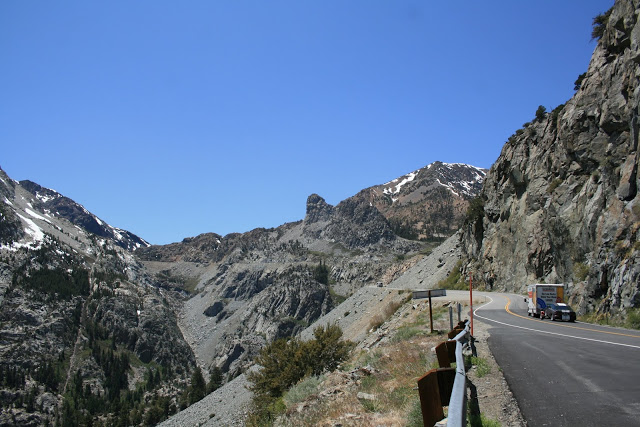
Up on the Tioga Pass, Dana Village, Bennettville and the abandoned Golden Crown Mine tell part of the story of the 1890s gold rush in the Sierra Nevada.
Mining in California, okay. Mining at 11,000 feet in the Sierra Nevada, and staying there all winter?
Great history, geography, and explanation that every U.S. history student should know, about gold rushes, about boom towns, about mining entrepreneurs and investors, about failed enterprises and about the aftermath.
Sitting on the crest of the Sierra Nevada, Tioga Pass is a gateway to Yosemite’s past. In 1880, a gold and silver rush erupted here, and miners flocked to Tioga Hill in droves.
Today, the ghosts of these miners work can be seen in the stone walls of Dana Village, rusty machinery at Bennettville, and the log cabins of the Golden Crown Mine. Even today’s popular Tioga Road was once a simple wagon road built to access the wealth of minerals that were never found.
It’s another great production by Steven Bumgardner, featuring two National Park Service rangers, Yenyen Chan and Greg Stock.
107th Airlift Wing Honors Millard Fillmore During Annual Ceremony at Presidents Grave Wednesday, Jan. 7
New York Air National Guard Col. Kevin Rogers places a wreath from President Barack Obama at the gravesite of President Millard Fillmore on Jan. 7, 2015. (Photo by Tech Sgt. Brandy Fowler, 107th AW)
BUFFALO, NY (01/07/2015)(readMedia)– New York Air National Guard Col. Kevin Rogers marked the 215th birthday of President Millard Fillmore by laying a wreath from President Barack Obama at the grave of the 13th President on Wednesday, Jan. 7.
The tribute from the 107th Airlift Wing Inspector General, was part of the 50th graveside ceremony marking Fillmore’s birth conducted at Forest Lawn Cemetery by the University of Buffalo.
Fillmore, who was president from 1850 to 1853, was one of the founders of the University of Buffalo. He was also the school’s first Chancellor and instrumental in founding Buffalo’s General Hospital and local libraries and museums.
The University of Buffalo has hosted a graveside ceremony for Fillmore for the past 50 years. The ceremony also encompasses another tradition: the presentation of wreaths form the current president at the gravesites of past presidents on their Birthday.
The 107th Airlift Wing, based at Niagara Falls Air Reserve Station, traditionally places a wreath on Fillmore’s Grave. The New York National Guard also places wreaths on the graves of President Martin Van Buren in Kinderhook and President Chester Arthur in Albany.
Fillmore was born in 1800 in Moravia New York. He was a lawyer and served in the New York State Assembly. He served in the United States Congress from 1833 to 1835 and again from 1837 to 1845.
Fillmore ran unsuccessfully for governor of New York in 1844 but was defeated. He ran successfully for the position of State Comptroller in 1847 and was the first person to serve in that office as the state’s financial watchdog.
In 1848 Fillmore was nominated to run as vice president with the popular General Zachery Taylor, a hero of the Mexican War. Taylor died suddenly and Fillmore became president. He approved the bills that put in place the Compromise of 1850 designed to allow Texas to enter the Union as a Slave State in exchange for California entering it as a Free State. The measure also banned the sale of slaves in the District of Columbia.
Fillmore, the last member of the Whig Party to serve as president, returned home to Buffalo after losing the election of 1852. During the Civil War Fillmore, a former Major in the New York Militia, commanded a Buffalo home guard regiment called the Union Corps. He died in 1874.
The New York Air National Guard’s 107th Airlift Wing shares Niagara Falls Air Reserve Station with the Air Force Reserve’s 914th Airlift Wing. The unit is currently in the process of transitioning to a mission flying remotely piloted MQ-9 aircraft after previously flying the C-130 transport aircraft and the KC-135 refueling plane.
Members of the 107th Airlift Wing also respond to New York state emergencies and were heavily involved in responding to the lake effect snowstorm which hit Erie County in November.
Spread the word; friends don't allow friends to repeat history.
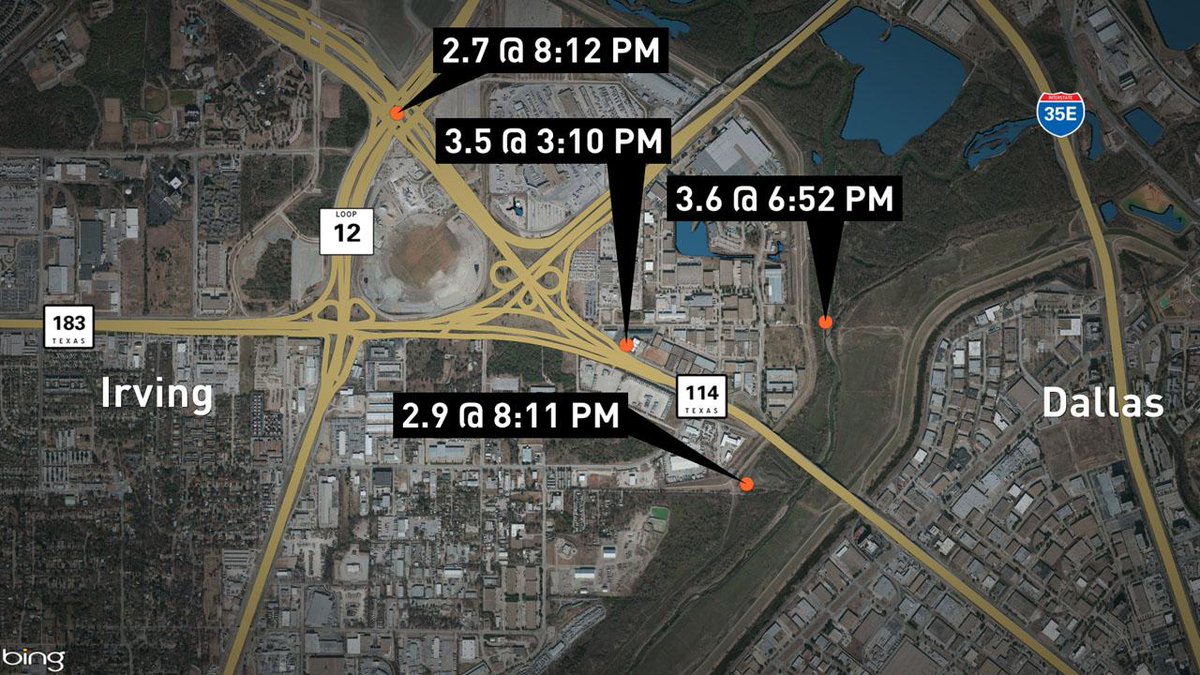
WFAA Channel 8 map of four quakes confirmed by 10:00 p.m. news casts, showing how close the quakes are in proximity to each other and the site of the old Cowboys Football Stadium.
This Tweet from our local NBC TV affiliate sums it up nicely.
.@USGS confirms a 7th earthquake of the day in North Texas – latest was 1.6M at 11:02 p.m. http://t.co/pgrIs5aflI
North Texas shook yesterday — not big quakes, but a bunch of ’em — and that doesn’t sit well with Texas oil executives, since it seems likely gas and oil drilling, especially hydraulic fracturing (fracking), and especially waste-water reinjection seem to be causes.
I grew up in Utah. We had quakes you could feel, at least weekly. Our home sat less than a mile west of the Wasatch Fault. Many mornings my mother would stand drinking her coffee, looking over the stove and out our kitchen window at Mt. Timpanogos, remarking on the earthquakes. Most often we couldn’t feel them, but the power and telephone lines that slashed through our $10 million view of the mountain would dance in sine waves during quakes. It was pretty cool.
Along the more famous faults, one rarely comes on more than a couple of quakes a day.
Dallas — more accurately, Irving — is far away from most major faults, and rarely has more than a couple of quakes a year in recent human history.
DALLAS (CBSDFW.COM/AP) – Nine earthquakes, three of them with a 3-point magnitude or greater, rocked North Texas Tuesday into early Wednesday, knocking items off walls, causing cracks to appear in ceilings and generally rattling nerves across the region.
“The last one really shook,” said CBS 11 anchor and reporter Ken Molestina, who felt the the earth move in the White Rock Lake area of Dallas.
The latest quake, reported just before 1 a.m. Wednesday, measured in at a 3.1 magnitude, and was centered near the convergence of State Highway 114, Loop 12, and the Airport Freeway near the old Texas Stadium site in Irving.
Others felt the temblor in the Uptown area of Dallas and as far away as Bedford and Mesquite.
Here’s a list of the quakes in order of when they happened:
7:37 a.m. 2.3 magnitude
3:10 p.m. 3.5 magnitude
6:52 p.m. 3.6 magnitude
8:11 p.m. 2.9 magnitude
8:12 p.m. 2.7 magnitude
9:54 p.m. 1.7 magnitude
10:05 p.m. 2.4 magnitude
11:02 PM 1.6 magnitude
12:59 AM 3.1 magnitude
Rafael Abreu, a geophysicist with the USGS, spoke with NewsRadio 1080 KRLD and said while the Irving earthquakes happened only hours apart, given the strength and intensity, “we’re not calling it an aftershock.”
At last count Tuesday night, there had been 24 or more earthquakes in the Irving area since November 1, 2014.
Jokes fly, too. Not this much shaking since Elvis toured the area heavily in 1957, some say.
Screen capture of USGS reports of four earthquakes in or near Irving, Texas, on January 6, 2014
Recent studies show earthquakes in other areas linked to oil and gas drilling and extraction. All of these quakes are in close proximity to working wells or wells being drilled.
What’s the Earth trying to tell us?
Details from USGS on biggest quake, January 6, 2014
Wilderness Society Tweeted: Stars over Yosemite’s El Capitan (in honor of @kjorgeson & @tommycaldwell1). Have a good night! (Photo by Justin Kern, flickr)
Actually, this photo probably is not from the past few days, when Kevin Jorgeson and Tommy Caldwell worked to free climb the rock — but the Milky Way is there if they care to look!
Not just the whole world is watching — the whole universe shines down.
(Have you been following their climbing exploits?)
More:
Follow the climbers on Twitter, @kjorgeson and @tommycaldwell1
Or, until that account is unsuspended by the forces supporting Donald Trump: Follow @FillmoreWhite, the account of the Millard Fillmore White House Library
We've been soaking in the Bathtub for several months, long enough that some of the links we've used have gone to the Great Internet in the Sky.
If you find a dead link, please leave a comment to that post, and tell us what link has expired.
Thanks!
Retired teacher of law, economics, history, AP government, psychology and science. Former speechwriter, press guy and legislative aide in U.S. Senate. Former Department of Education. Former airline real estate, telecom towers, Big 6 (that old!) consultant. Lab and field research in air pollution control.
My blog, Millard Fillmore's Bathtub, is a continuing experiment to test how to use blogs to improve and speed up learning processes for students, perhaps by making some of the courses actually interesting. It is a blog for teachers, to see if we can use blogs. It is for people interested in social studies and social studies education, to see if we can learn to get it right. It's a blog for science fans, to promote good science and good science policy. It's a blog for people interested in good government and how to achieve it.
BS in Mass Communication, University of Utah
Graduate study in Rhetoric and Speech Communication, University of Arizona
JD from the National Law Center, George Washington University


 Posted by Ed Darrell


![Caption from the University of Buffalo: Aurora [New York] town historian Robert Goller delivers the commemorative address indoors at the Margaret L. Wendt Archive and Resource Center in Forest Lawn. Photo: Douglas Levere - See more at: http://www.buffalo.edu/ubreporter/campus/campus-host-page.host.html/content/shared/university/news/ub-reporter-articles/stories/2015/01/fillmore_commemoration.detail.html#/imagegallery/5](https://i0.wp.com/www.buffalo.edu/content/dam/www/reporter/2015%20Photos/01/millard-fillmore-2015/Millard-Fillmore-Historian.jpg)








 Millard Fillmore's Bathtub